Nematode Diseases of Perennials Management Dr James A
- Slides: 28
Nematode Diseases of Perennials Management Dr. James A. La. Mondia Plant Pathologist/Nematologist The Connecticut Agricultural Experiment Station, Valley Laboratory Windsor, CT
Perennials: Nematode Management • Thresholds lower than annuals • Fewer chances for control • Host differences – perennial roots
Nematode Disease Management • Preventative approach best • • Sanitation and inspection Rotation with resistance Root pruning Heat treatment
Nematode Disease Management Sanitation and inspection Host status evaluation : Labor-intensive inspection can focus on common susceptible species
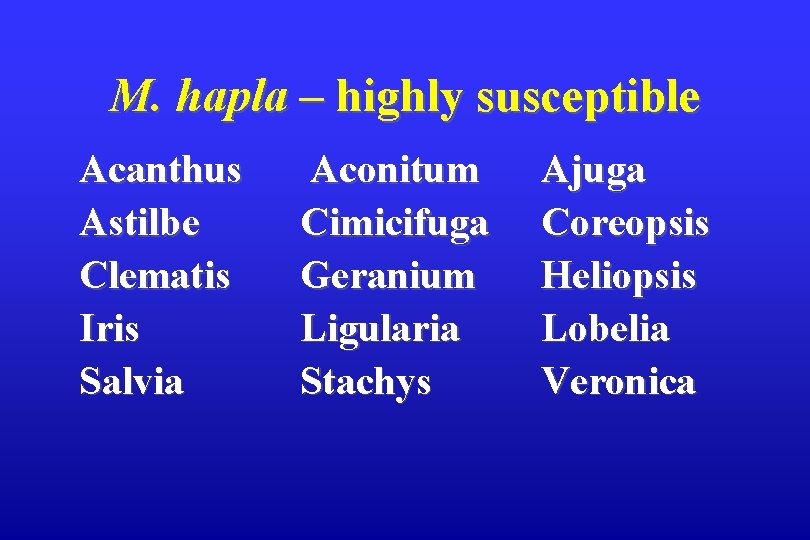
M. hapla – highly susceptible Acanthus Astilbe Clematis Iris Salvia Aconitum Cimicifuga Geranium Ligularia Stachys Ajuga Coreopsis Heliopsis Lobelia Veronica
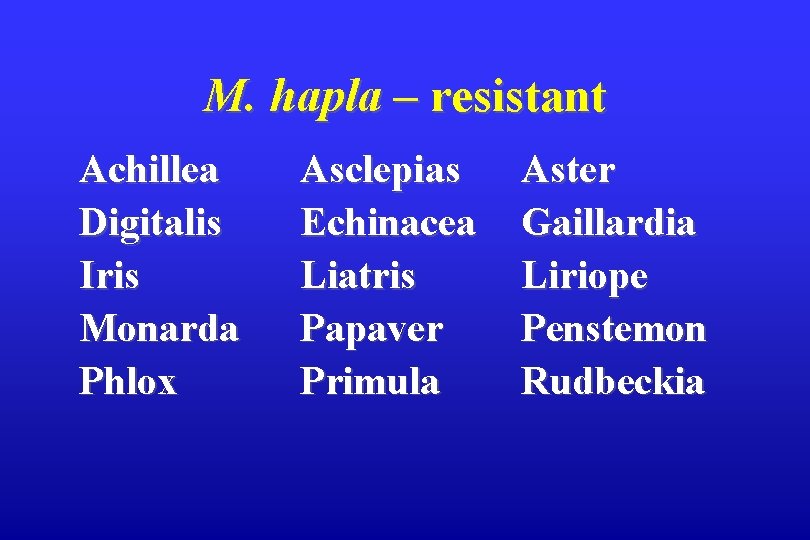
M. hapla – resistant Achillea Digitalis Iris Monarda Phlox Asclepias Echinacea Liatris Papaver Primula Aster Gaillardia Liriope Penstemon Rudbeckia
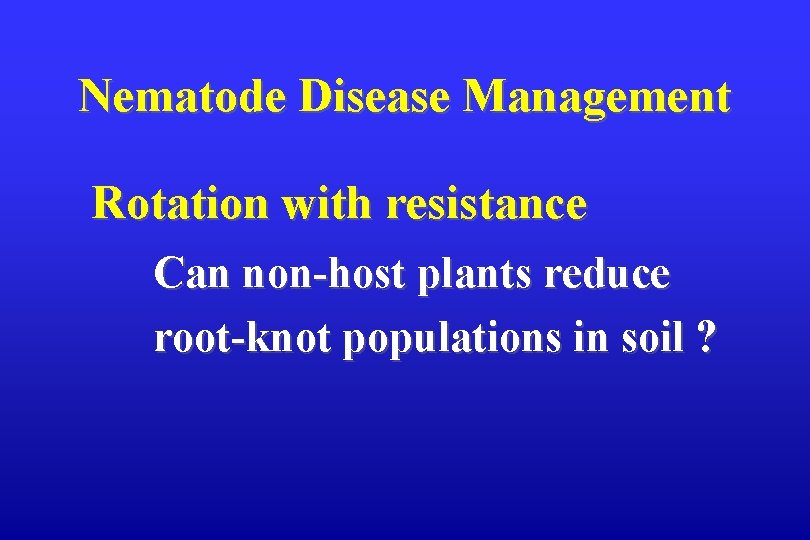
Nematode Disease Management Rotation with resistance Can non-host plants reduce root-knot populations in soil ?
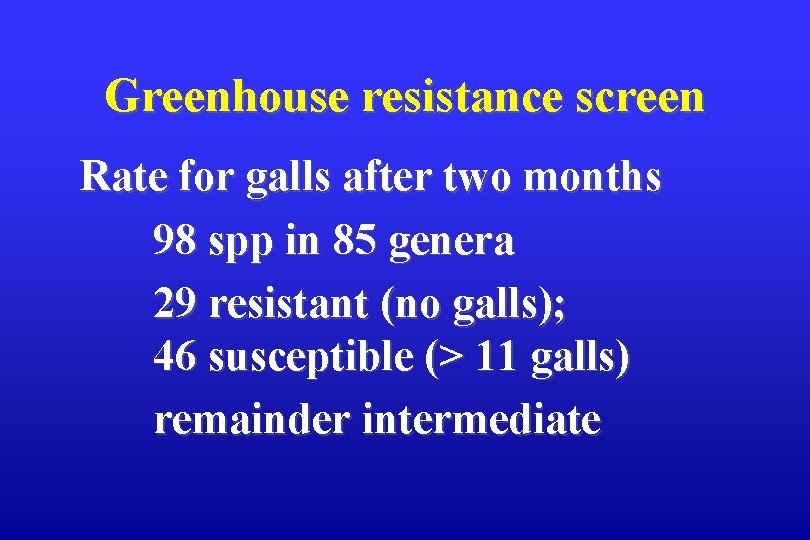
Greenhouse resistance screen Rate for galls after two months 98 spp in 85 genera 29 resistant (no galls); 46 susceptible (> 11 galls) remainder intermediate
Effect of Resistance on Meloidogyne hapla • Inoculate with 10, 000 eggs/pot • 2 -6 months growth, bioassay • Evaluate root galling and egg production.
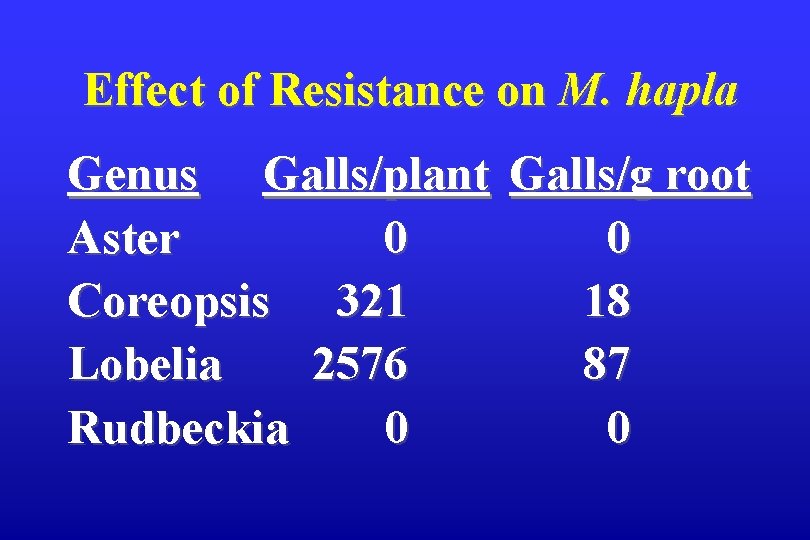
Effect of Resistance on M. hapla Genus Galls/plant Galls/g root Aster 0 0 Coreopsis 321 18 Lobelia 2576 87 Rudbeckia 0 0
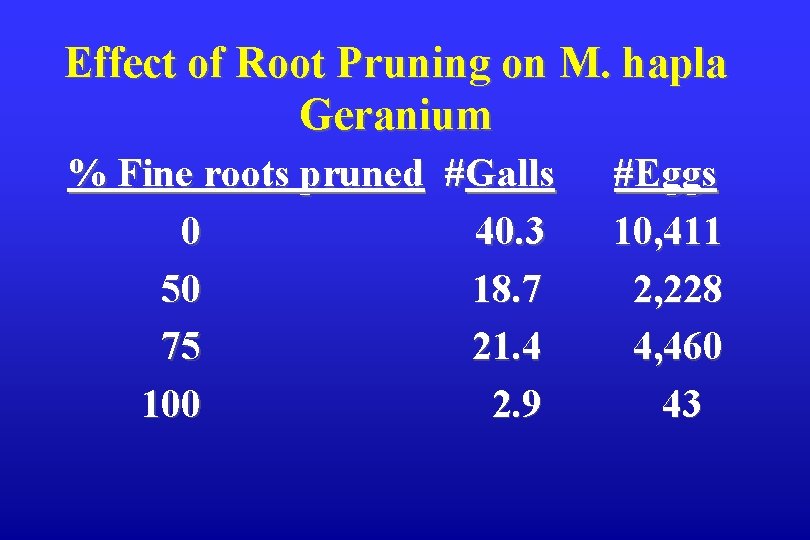
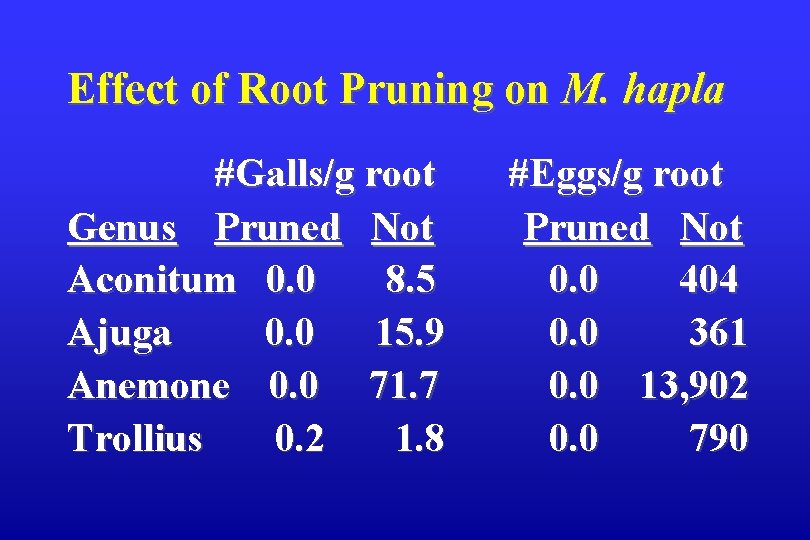
Nematode Disease Management Root pruning M. hapla J 2 typically infects at or near root tips. Can pruning reduce infection?
Effect of Root Pruning on Meloidogyne hapla • Inoculate with 10, 000 eggs/pot • Three months growth, root prune, two months growth • Evaluate root galling and egg production.
Effect of Root Pruning on M. hapla Geranium % Fine roots pruned #Galls 0 40. 3 50 18. 7 75 21. 4 100 2. 9 #Eggs 10, 411 2, 228 4, 460 43
Effect of Root Pruning on M. hapla #Galls/g root Genus Pruned Not Aconitum 0. 0 8. 5 Ajuga 0. 0 15. 9 Anemone 0. 0 71. 7 Trollius 0. 2 1. 8 #Eggs/g root Pruned Not 0. 0 404 0. 0 361 0. 0 13, 902 0. 0 790
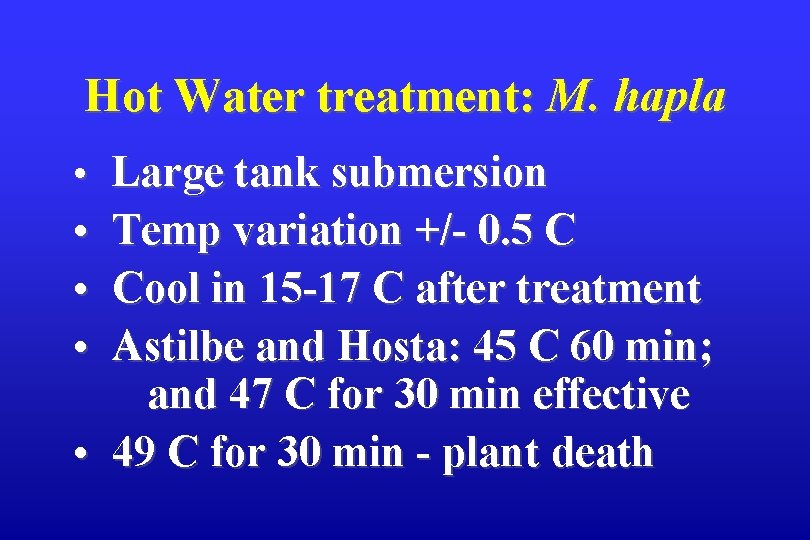
Hot Water treatment: M. hapla • Large tank submersion • Temp variation +/- 0. 5 C • Cool in 15 -17 C after treatment • Astilbe and Hosta: 45 C 60 min; and 47 C for 30 min effective • 49 C for 30 min - plant death
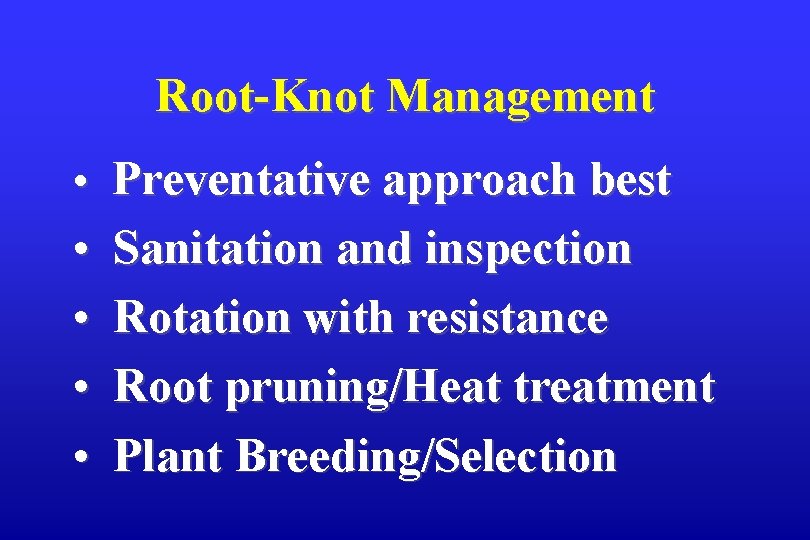
Root-Knot Management • Preventative approach best • • Sanitation and inspection Rotation with resistance Root pruning/Heat treatment Plant Breeding/Selection
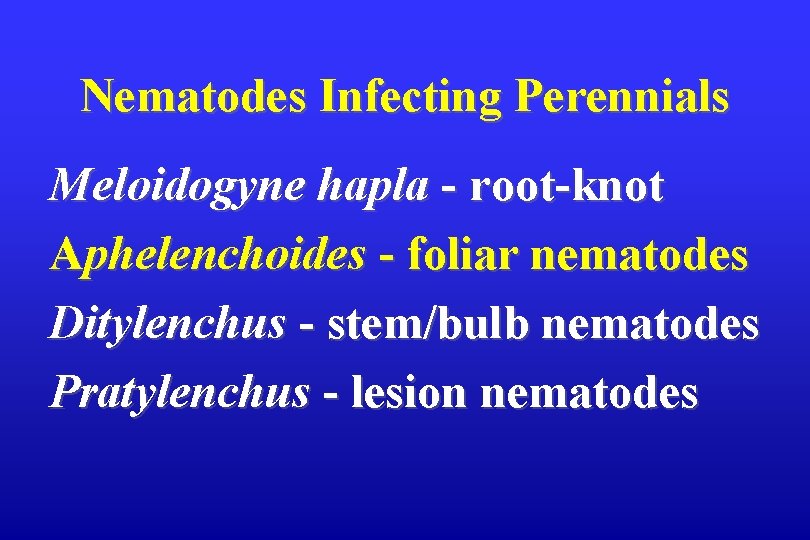
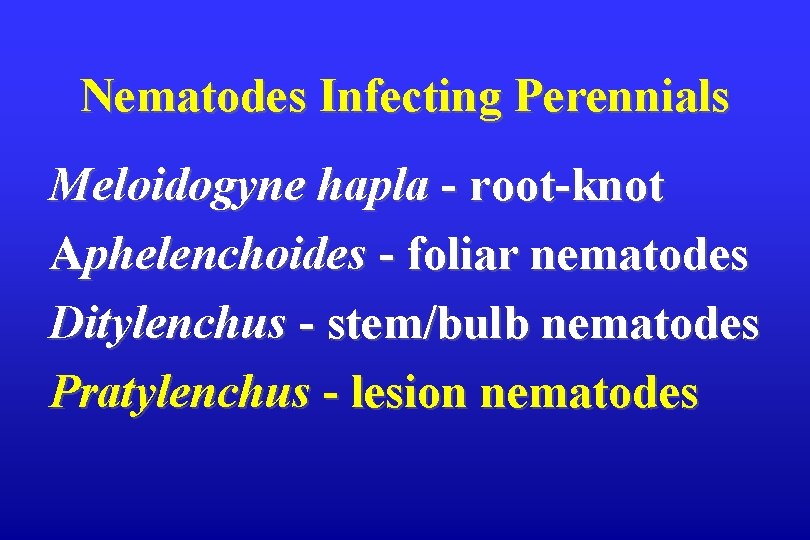
Nematodes Infecting Perennials Meloidogyne hapla - root-knot Aphelenchoides - foliar nematodes Ditylenchus - stem/bulb nematodes Pratylenchus - lesion nematodes
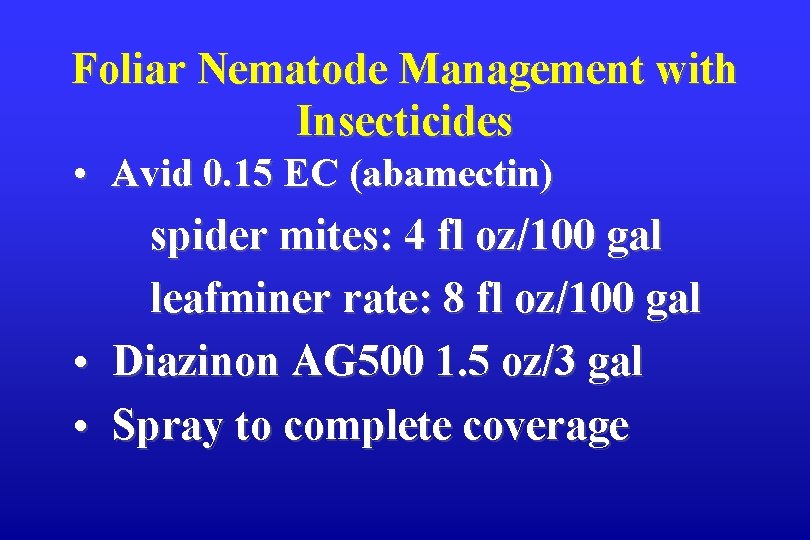
Foliar Nematode Management with Insecticides • Avid 0. 15 EC (abamectin) • • spider mites: 4 fl oz/100 gal leafminer rate: 8 fl oz/100 gal Diazinon AG 500 1. 5 oz/3 gal Spray to complete coverage
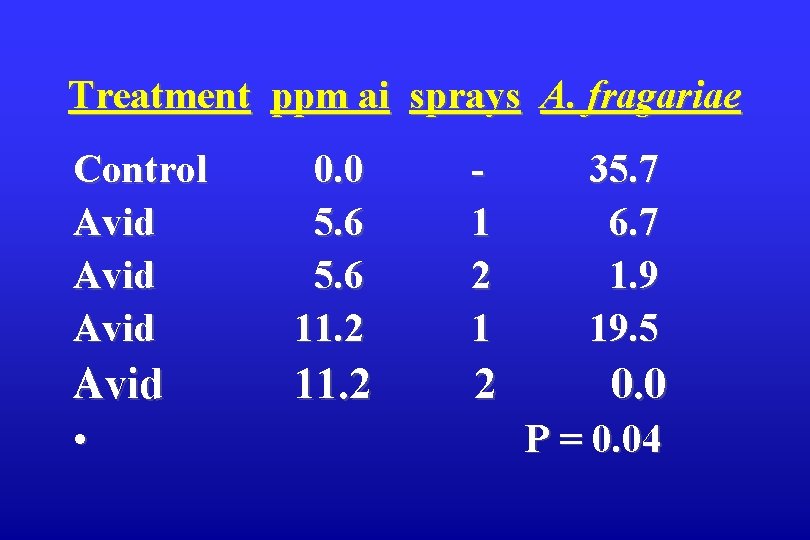
Treatment ppm ai sprays A. fragariae Control Avid 0. 0 5. 6 11. 2 1 35. 7 6. 7 1. 9 19. 5 Avid 11. 2 2 0. 0 • P = 0. 04
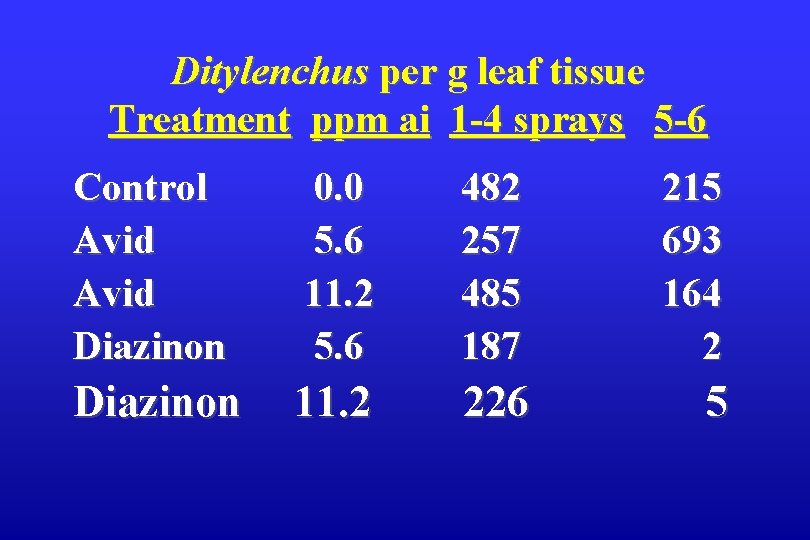
Ditylenchus per g leaf tissue Treatment ppm ai 1 -4 sprays 5 -6 Control Avid Diazinon 0. 0 5. 6 11. 2 5. 6 482 257 485 187 215 693 164 2 Diazinon 11. 2 226 5
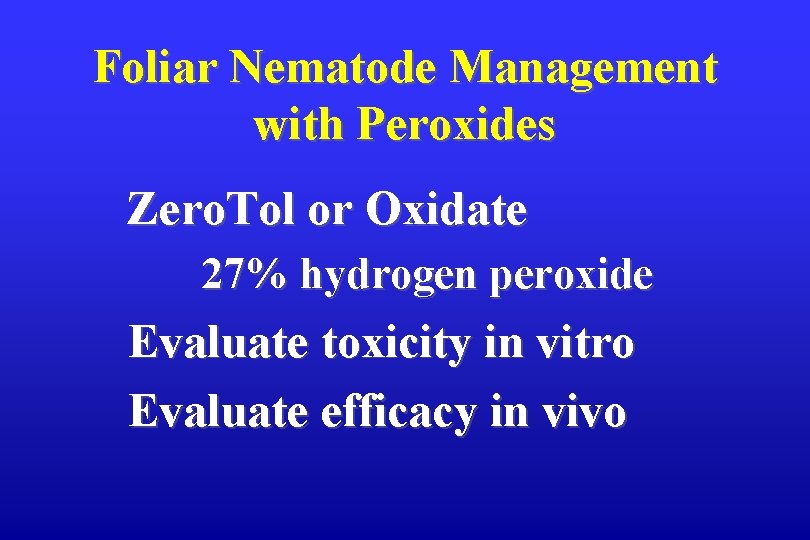
Foliar Nematode Management with Peroxides Zero. Tol or Oxidate 27% hydrogen peroxide Evaluate toxicity in vitro Evaluate efficacy in vivo
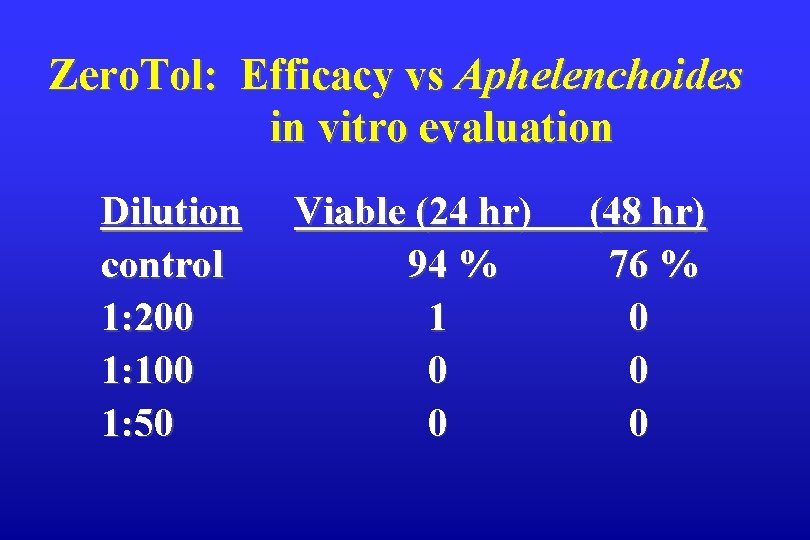
Zero. Tol: Efficacy vs Aphelenchoides in vitro evaluation Dilution control 1: 200 1: 100 1: 50 Viable (24 hr) 94 % 1 0 0 (48 hr) 76 % 0 0 0
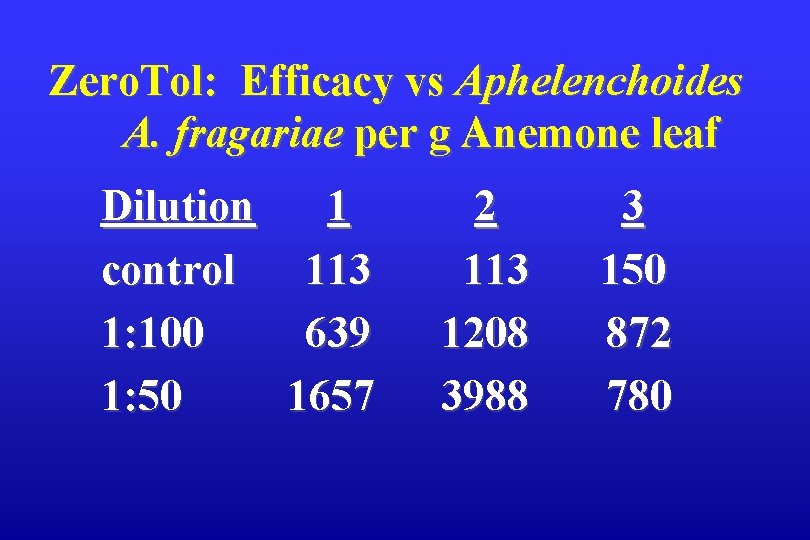
Zero. Tol: Efficacy vs Aphelenchoides A. fragariae per g Anemone leaf Dilution 1 control 113 1: 100 639 1: 50 1657 2 113 1208 3988 3 150 872 780
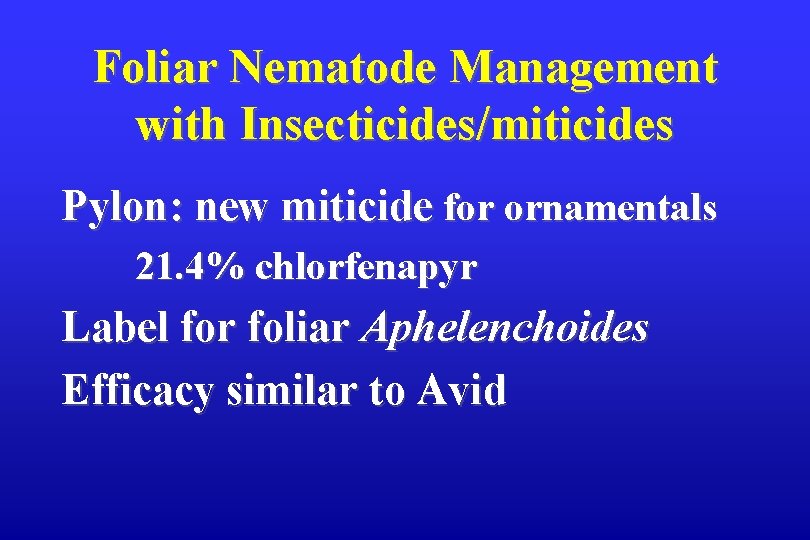
Foliar Nematode Management with Insecticides/miticides Pylon: new miticide for ornamentals 21. 4% chlorfenapyr Label for foliar Aphelenchoides Efficacy similar to Avid
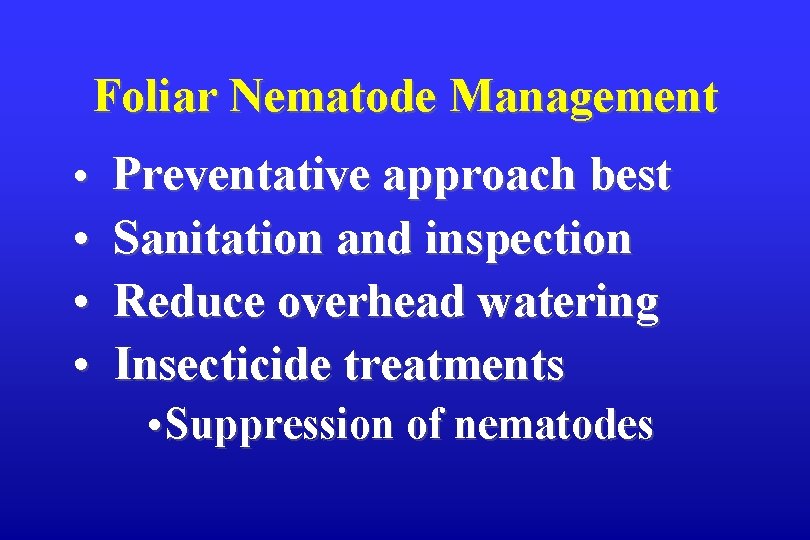
Foliar Nematode Management • Preventative approach best • • • Sanitation and inspection Reduce overhead watering Insecticide treatments • Suppression of nematodes
Nematodes Infecting Perennials Meloidogyne hapla - root-knot Aphelenchoides - foliar nematodes Ditylenchus - stem/bulb nematodes Pratylenchus - lesion nematodes
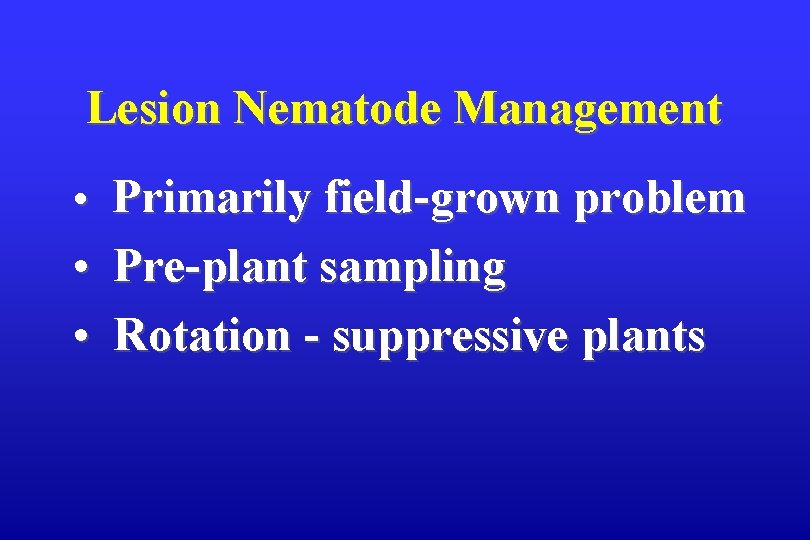
Lesion Nematode Management • Primarily field-grown problem • Pre-plant sampling • Rotation - suppressive plants
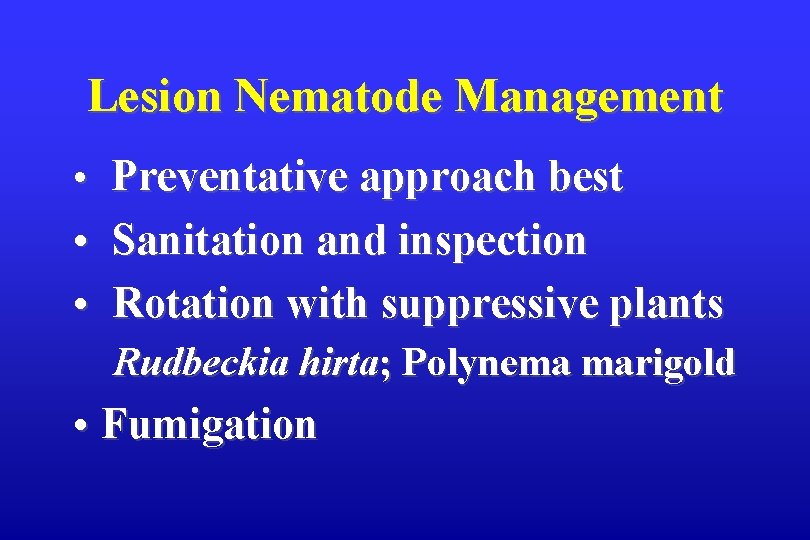
Lesion Nematode Management • Preventative approach best • Sanitation and inspection • Rotation with suppressive plants Rudbeckia hirta; Polynema marigold • Fumigation