
Invertebrates 3 Nematoda and Annelida Phylum Nematoda The
Invertebrates 3 Nematoda and Annelida
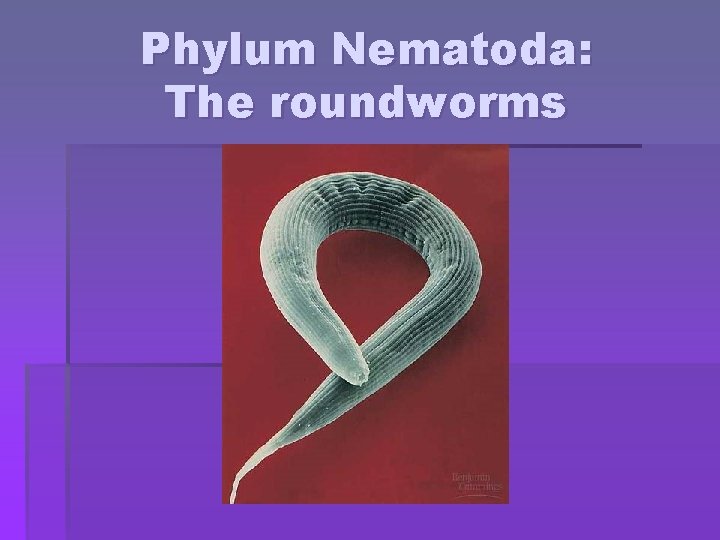
Phylum Nematoda: The roundworms

Evolutionary relationships
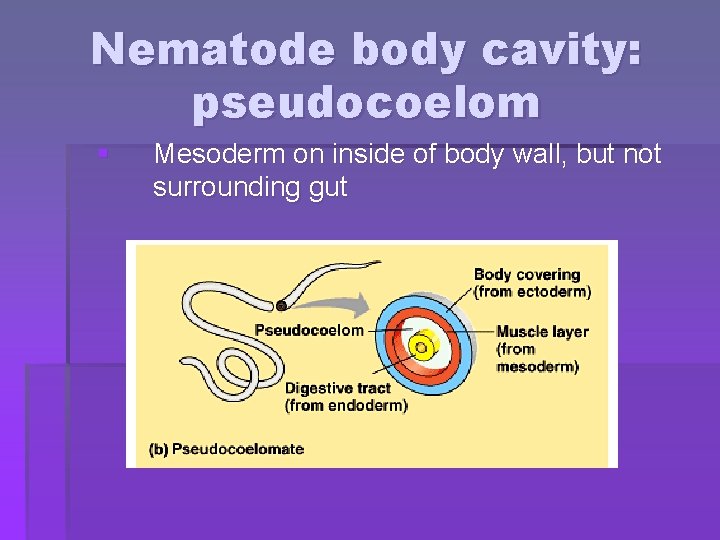
Nematode body cavity: pseudocoelom § Mesoderm on inside of body wall, but not surrounding gut
Body plan § Feeding/digestive system § § § Gas exchange § § § Body surface Intestinal surface (minimal) Body cavity (pseudocoelom) No circulatory system Excretory system/osmotic regulation § § Nematodes suck! Complete digestive system Exists, not well-understood Locomotion: § Have only longitudinal muscles § Demo: The nematode swim!
Body plan (cont. ) § Nervous system § § § “Brain”: nerve ring Four nerve cords (where? ) Ganglia along ventral cord Unique connection of muscles and nerves Sensory structures
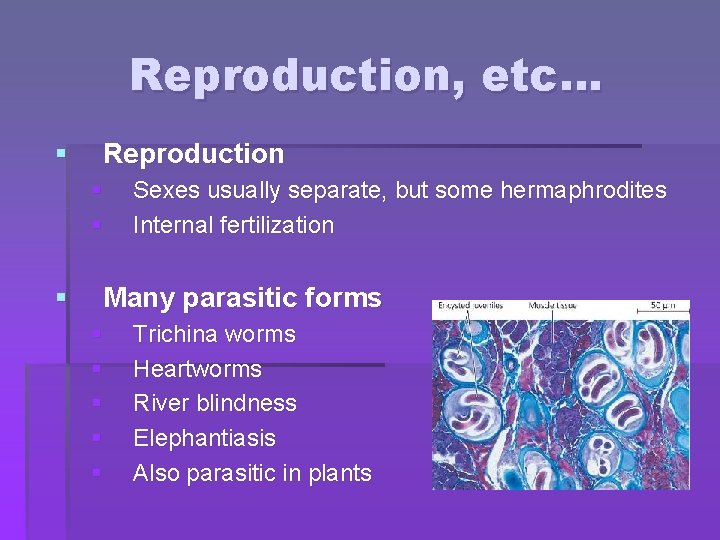
Reproduction, etc… § Reproduction § § § Sexes usually separate, but some hermaphrodites Internal fertilization Many parasitic forms § § § Trichina worms Heartworms River blindness Elephantiasis Also parasitic in plants
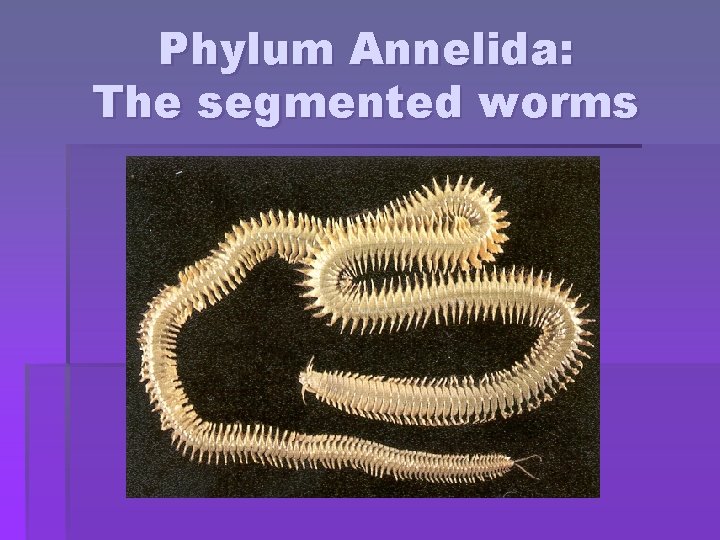
Phylum Annelida: The segmented worms
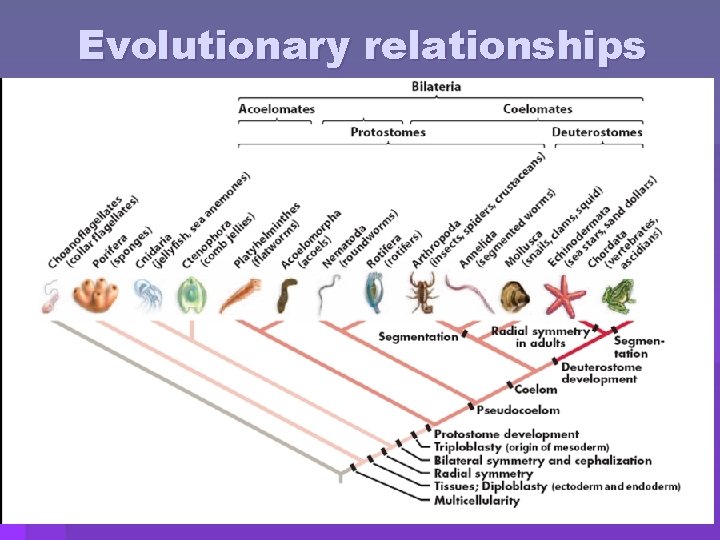
Evolutionary relationships
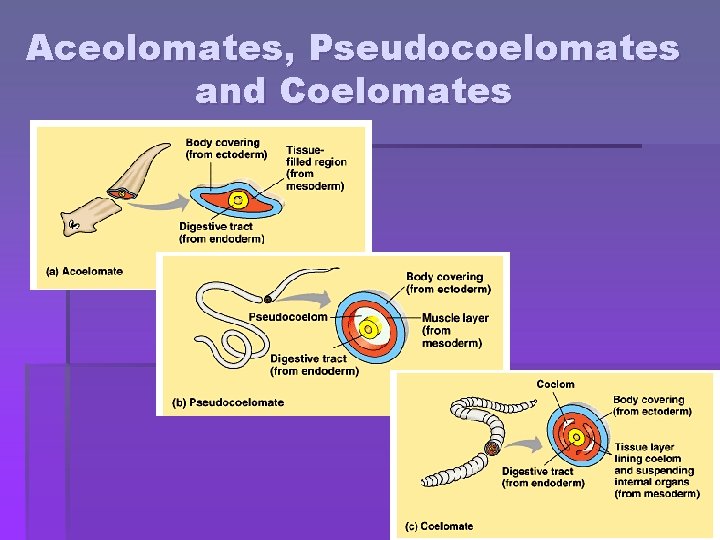
Aceolomates, Pseudocoelomates and Coelomates
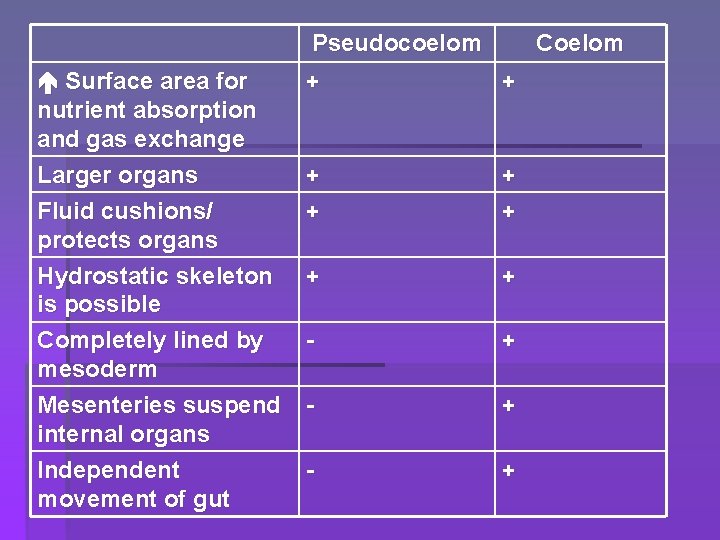
Pseudocoelom Surface area for nutrient absorption and gas exchange Larger organs Fluid cushions/ protects organs Hydrostatic skeleton is possible Completely lined by mesoderm Mesenteries suspend internal organs Independent movement of gut Coelom + + + + - + - +
Basic Annelida features § Have all features of protostomes (know!) § Have body segmentation (new feature) § Repetition of body parts § Similar structures found in each region § Some specialization of regions § Some continuous parts (digestive system)
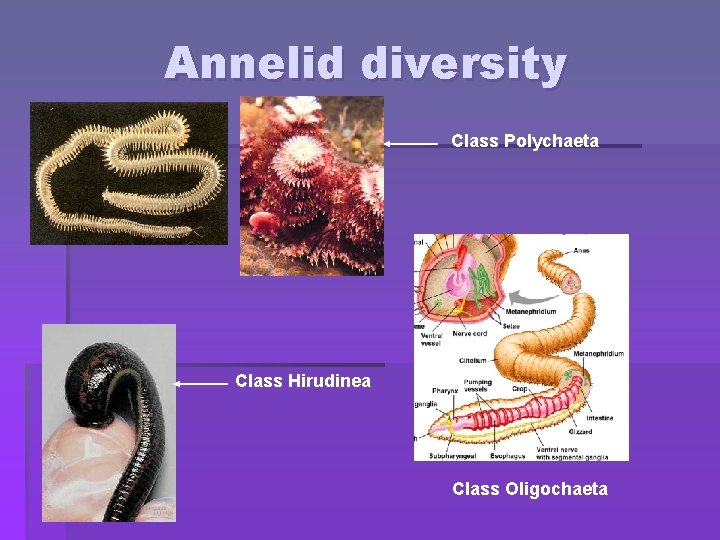
Annelid diversity Class Polychaeta Class Hirudinea Class Oligochaeta
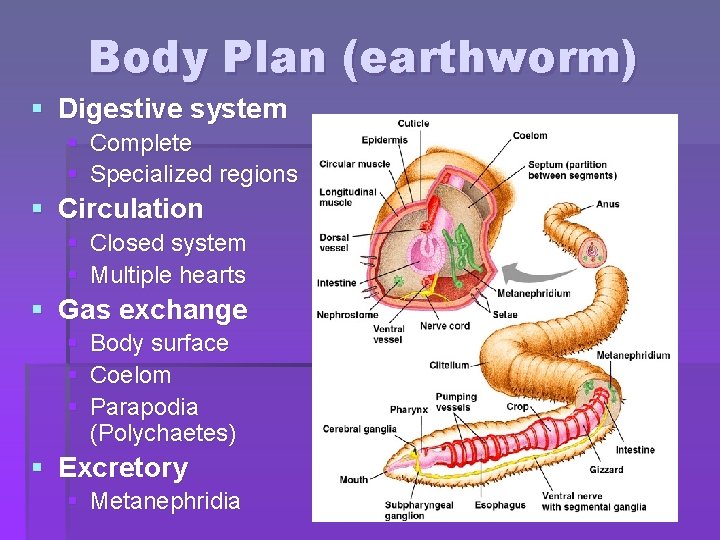
Body Plan (earthworm) § Digestive system § Complete § Specialized regions § Circulation § Closed system § Multiple hearts § Gas exchange § § § Body surface Coelom Parapodia (Polychaetes) § Excretory § Metanephridia
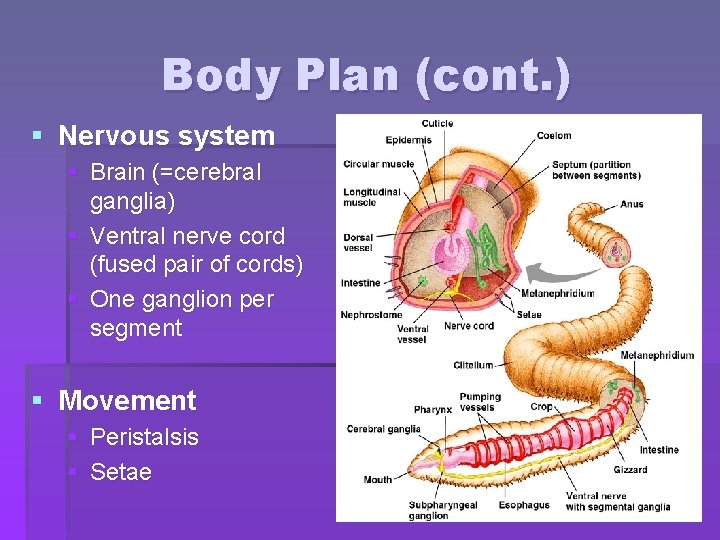
Body Plan (cont. ) § Nervous system § Brain (=cerebral ganglia) § Ventral nerve cord (fused pair of cords) § One ganglion per segment § Movement § Peristalsis § Setae
Feeding in different classes § Class Oligochaeta: Earthworms § § § Earth suckers (create vacuum by expanding muscular pharnyx) Why important in ecosystem? Class Polychaeta: Marine segmented worms § § § Many are tentacle feeders Many other feeding modes Class Hirudinea: Leeches § § Food suckers (create vacuum by expanding pharynx, digestive tract) How do blood sucking leeches feed? . What three substances do blood sucking leeches secrete to aid in the process? NOTE: Not all leeches are blood suckers!
- Slides: 16