
Nematodes of Dogs Cats Toxocara sp Significance the

- Slides: 98
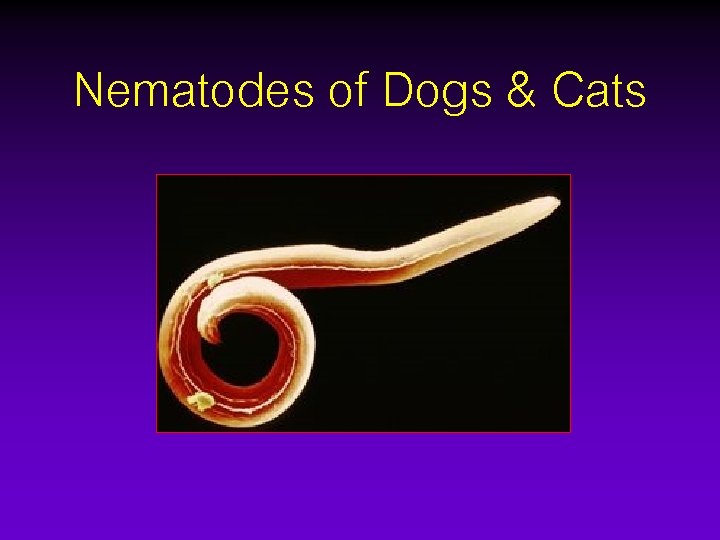
Nematodes of Dogs & Cats
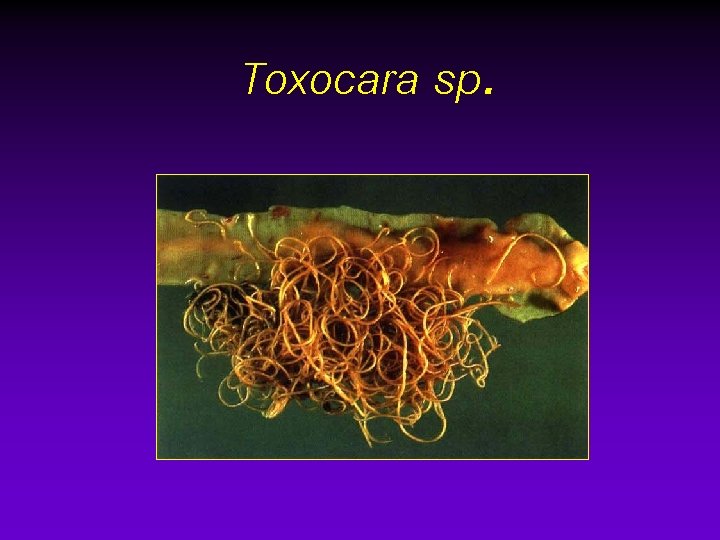
Toxocara sp.
Significance • the most important parasites • infection at birth • death: first two weeks (lung migration( • larval migration
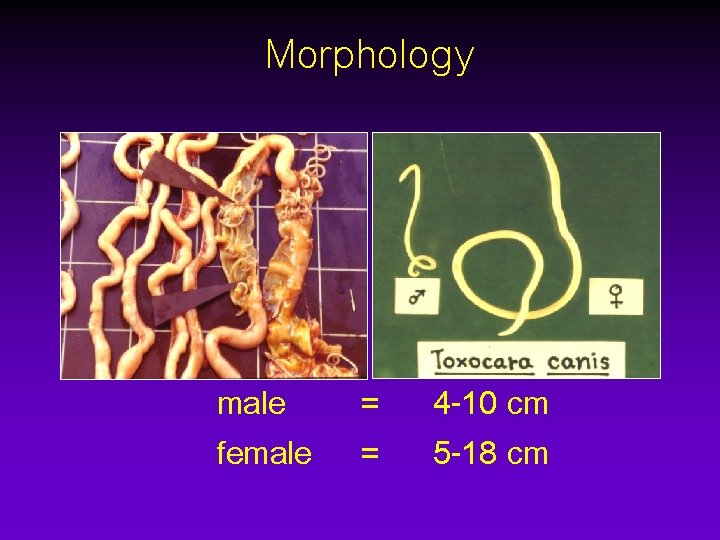
Morphology male female = = 4 -10 cm 5 -18 cm
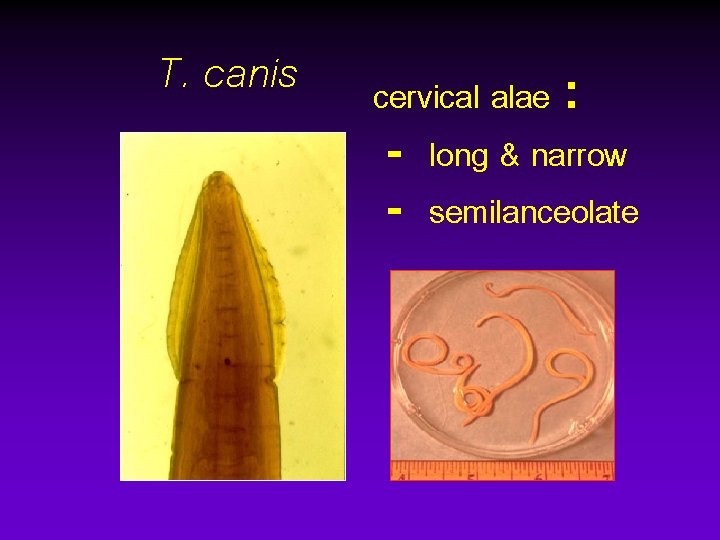
T. canis cervical alae : - long & narrow - semilanceolate
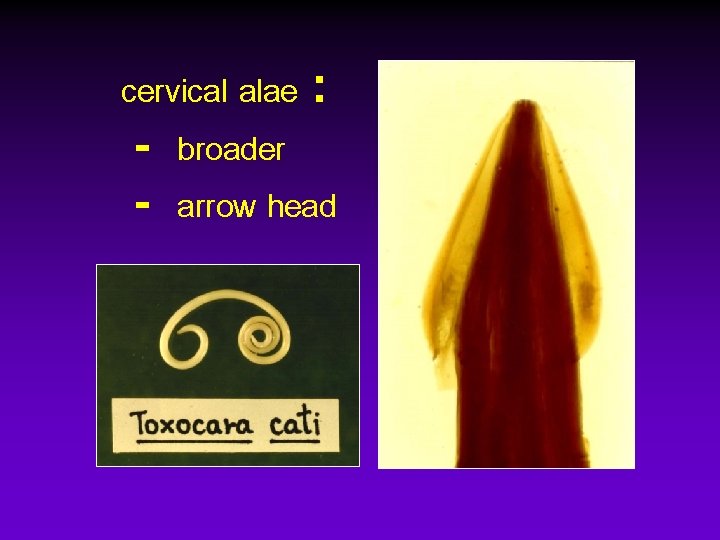
cervical alae : - broader - arrow head
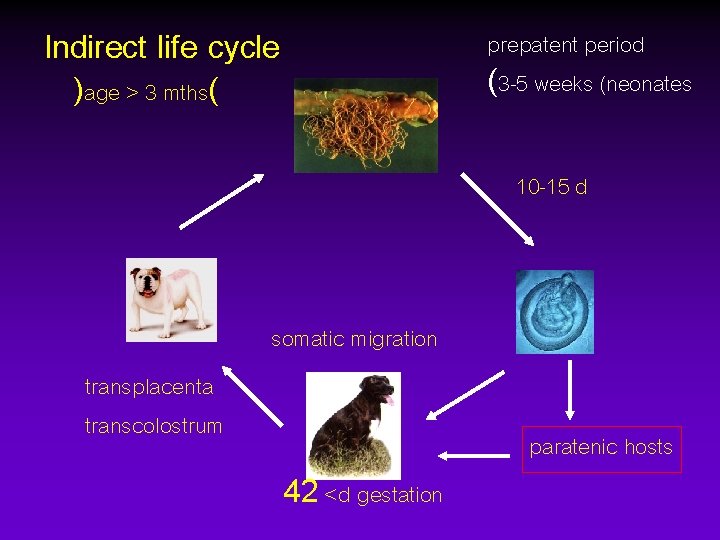
Life cycle • modes of transmission: T. canis • transplacenta • transcolostrum • direct ingestion • paratenic host
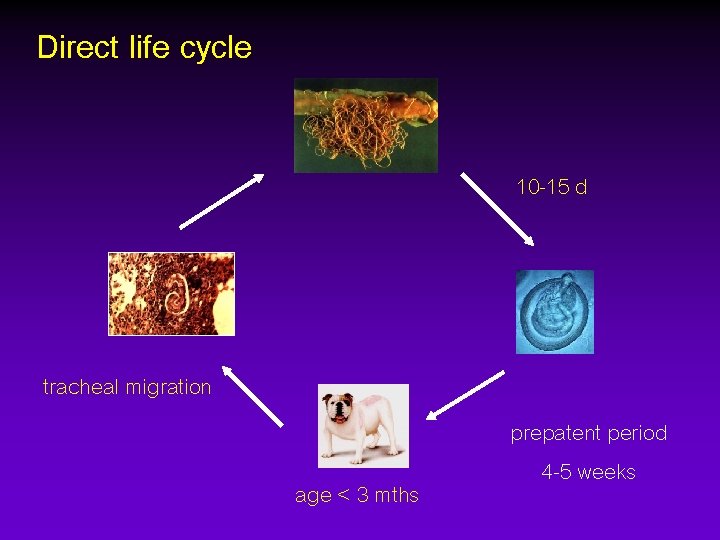
Direct life cycle 10 -15 d tracheal migration age < 3 mths prepatent period 4 -5 weeks
Indirect life cycle prepatent period (3 -5 weeks (neonates )age > 3 mths( 10 -15 d somatic migration transplacenta transcolostrum paratenic hosts 42 <d gestation
Life cycle • Toxocara cati: • direct ingestion • paratenic host • no prenatal transmission
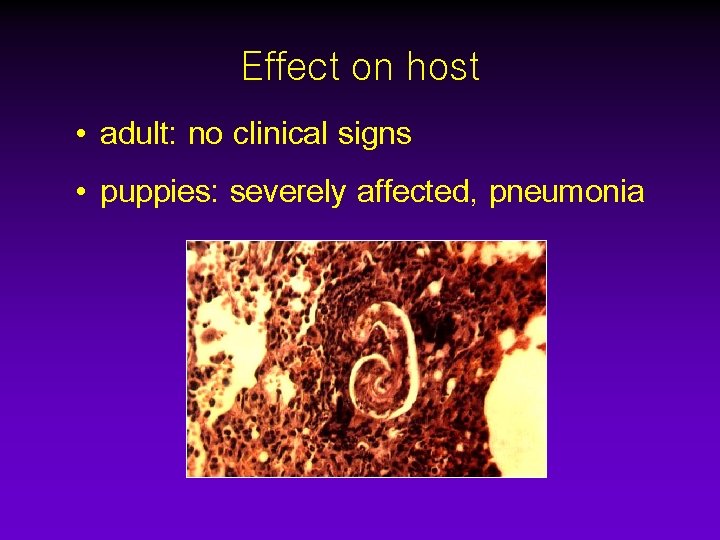
Effect on host • adult: no clinical signs • puppies: severely affected, pneumonia
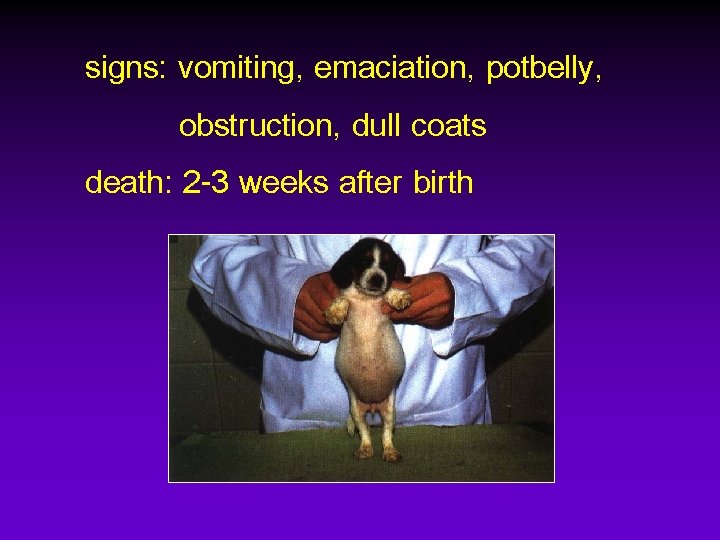
signs: vomiting, emaciation, potbelly, obstruction, dull coats death: 2 -3 weeks after birth
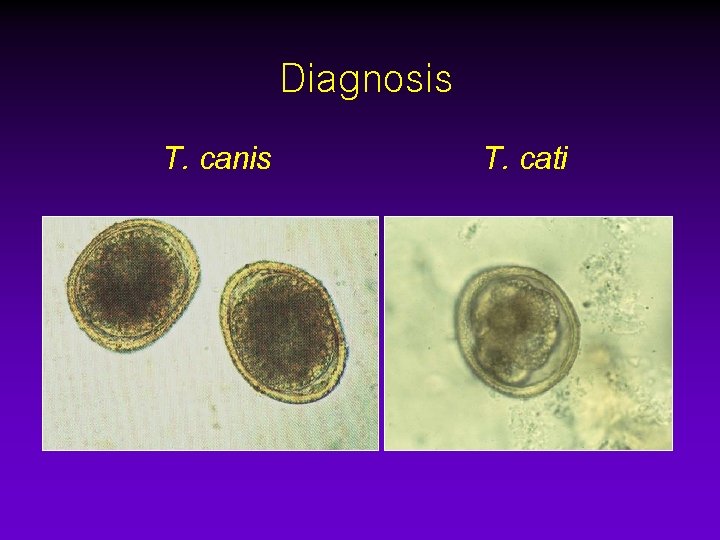
Diagnosis T. canis T. cati
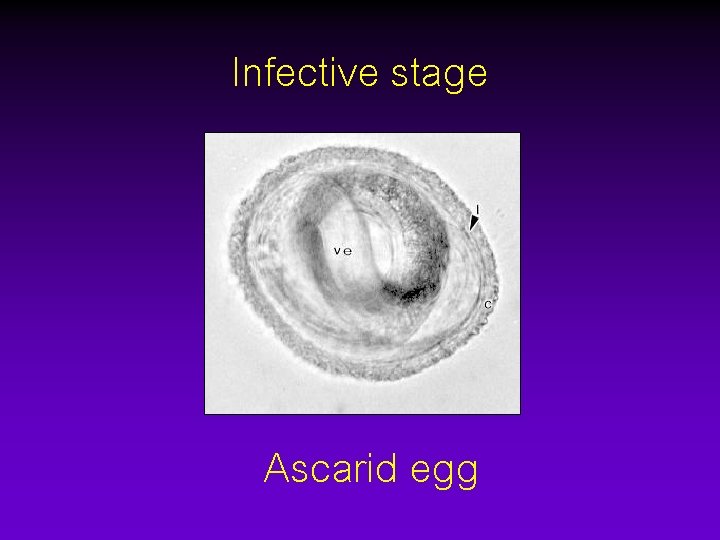
Infective stage Ascarid egg
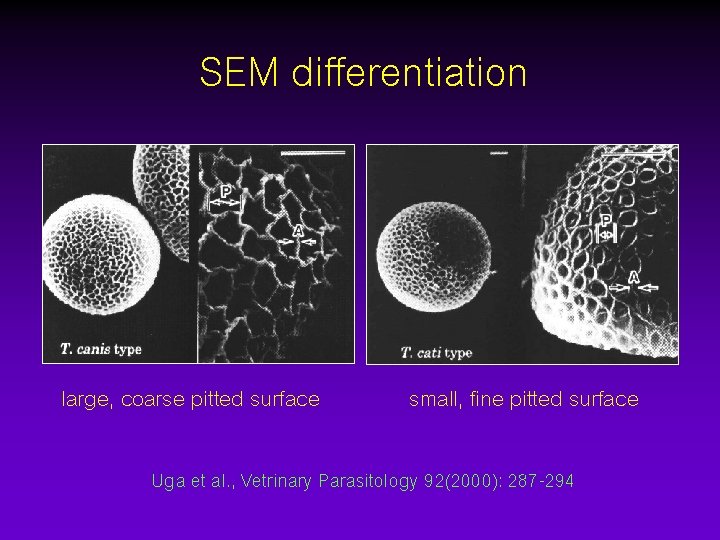
SEM differentiation large, coarse pitted surface small, fine pitted surface Uga et al. , Vetrinary Parasitology 92(2000): 287 -294
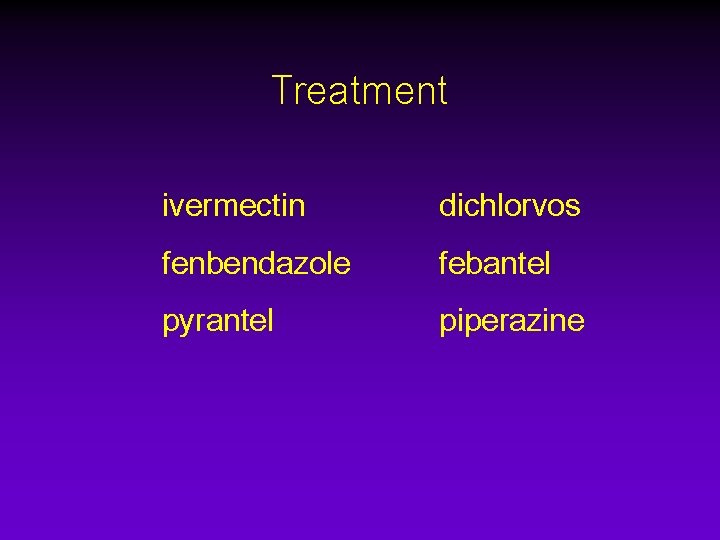
Treatment ivermectin fenbendazole pyrantel dichlorvos febantel piperazine
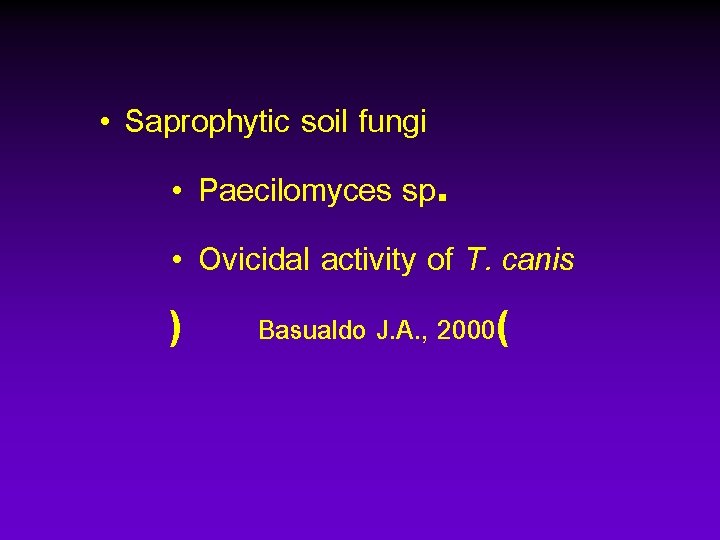
• Saprophytic soil fungi • Paecilomyces sp. • Ovicidal activity of T. canis ) Basualdo J. A. , 2000(
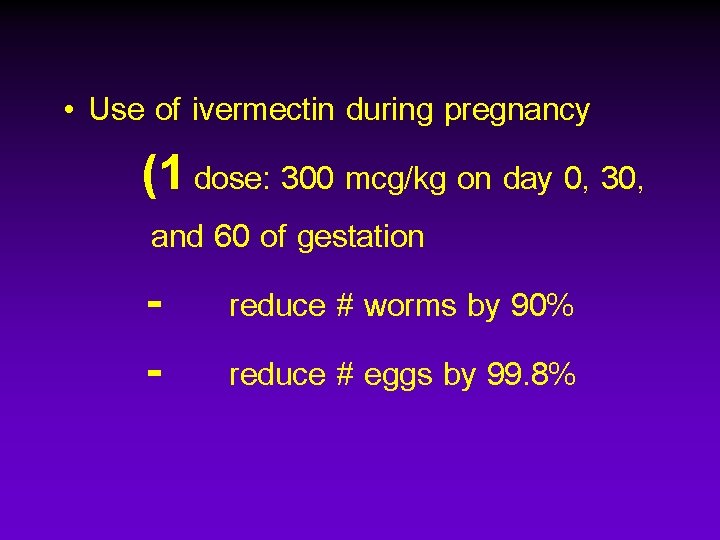
• Use of ivermectin during pregnancy (1 dose: 300 mcg/kg on day 0, 30, and 60 of gestation - reduce # worms by 90% - reduce # eggs by 99. 8%
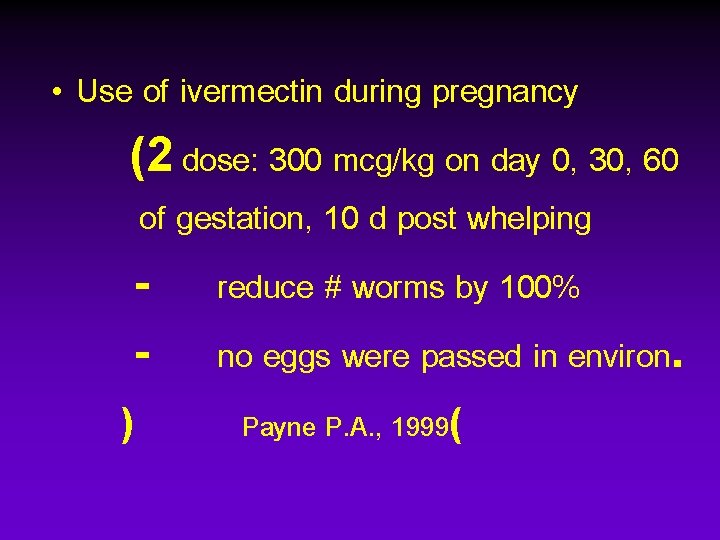
• Use of ivermectin during pregnancy (2 dose: 300 mcg/kg on day 0, 30, 60 of gestation, 10 d post whelping - reduce # worms by 100% - no eggs were passed in environ. ) Payne P. A. , 1999(
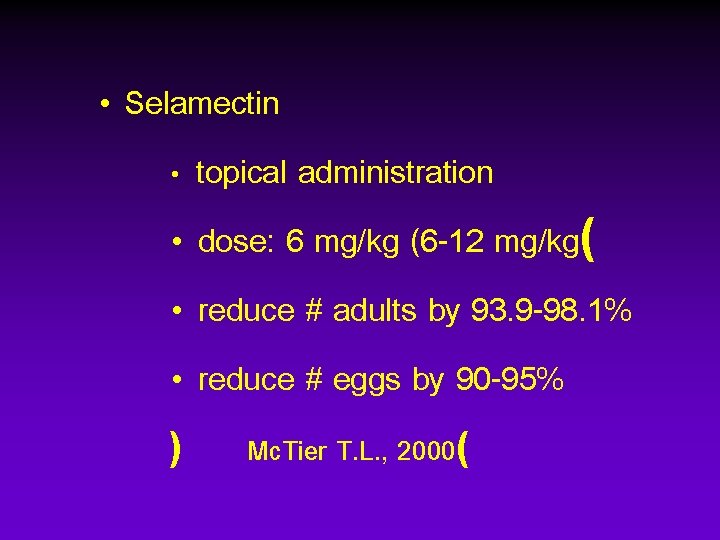
• Selamectin • topical administration • dose: 6 mg/kg (6 -12 mg/kg( • reduce # adults by 93. 9 -98. 1% • reduce # eggs by 90 -95% ) Mc. Tier T. L. , 2000(
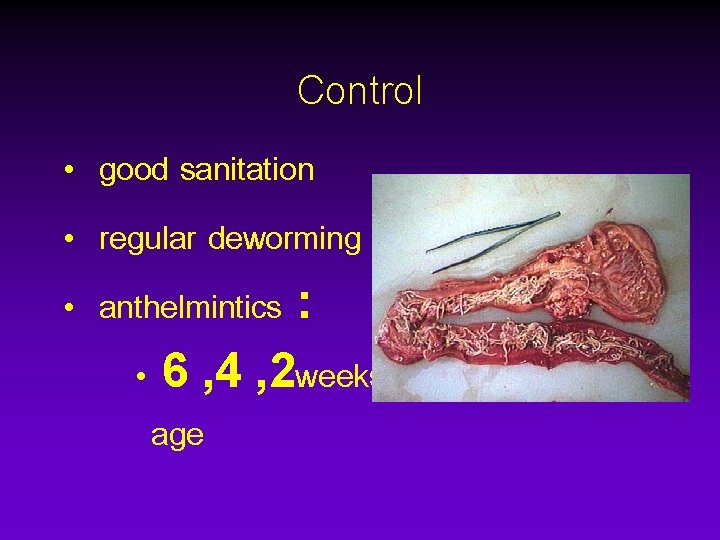
Control • good sanitation • regular deworming • anthelmintics : • 6 , 4 , 2 weeks of age
Public Health • visceral larva migrans (T. canis: ( • children: chronic granulomatous – liver, lung, brain, eye • ocular larva migrans • choroidoretinitis
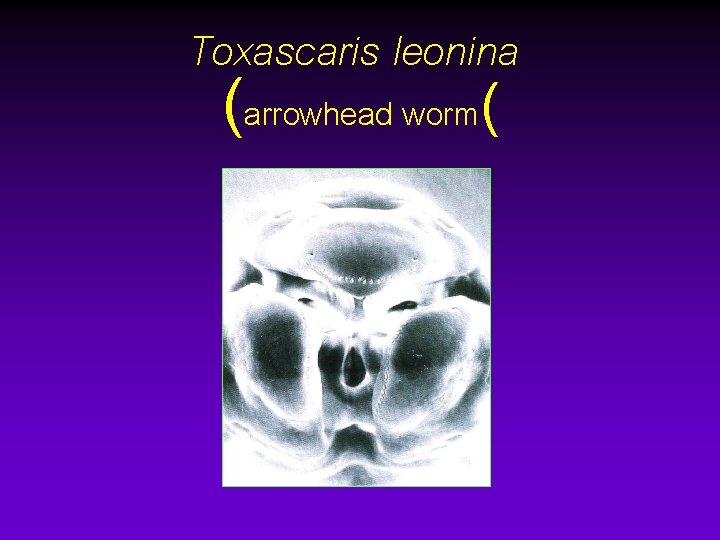
Toxascaris leonina (arrowhead worm(
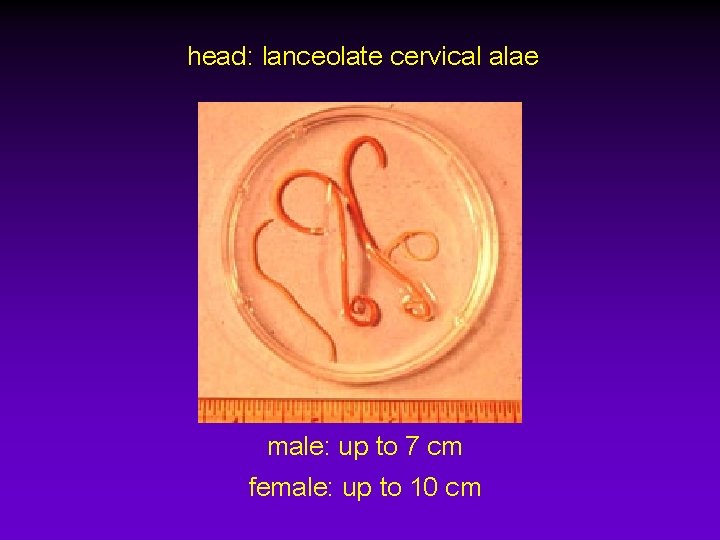
head: lanceolate cervical alae male: up to 7 cm female: up to 10 cm
Life cycle • transmission: • direct ingestion • paratenic host • no larval migration • prepatent period = 8 -10 weeks
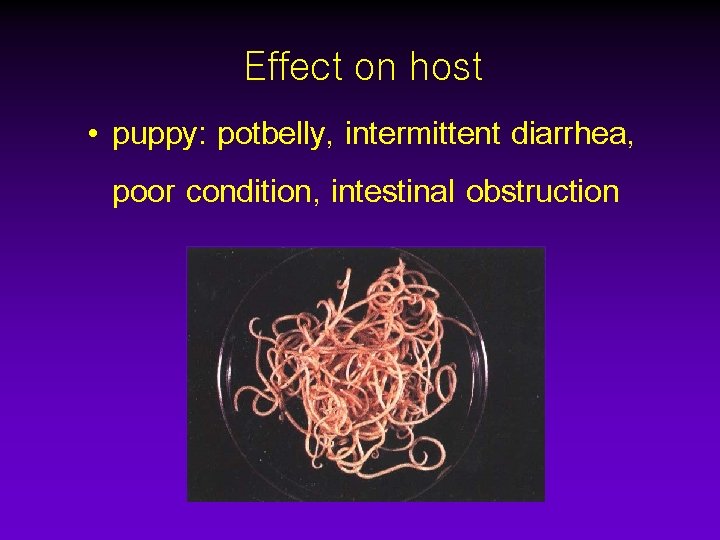
Effect on host • puppy: potbelly, intermittent diarrhea, poor condition, intestinal obstruction
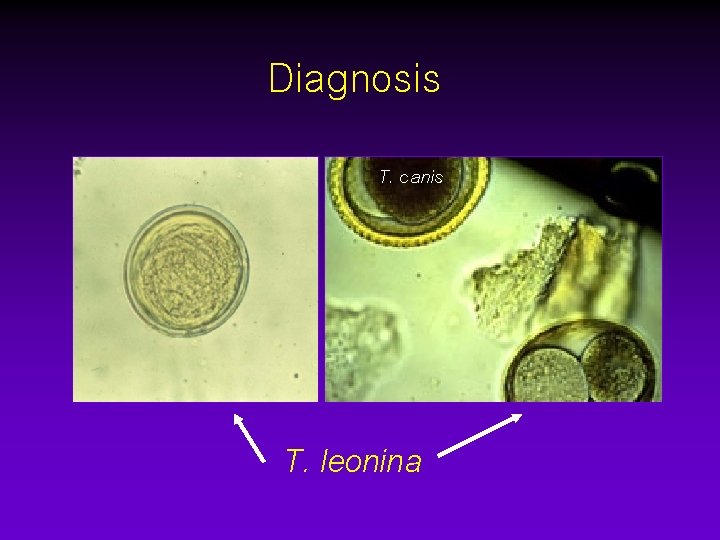
Diagnosis T. canis T. leonina
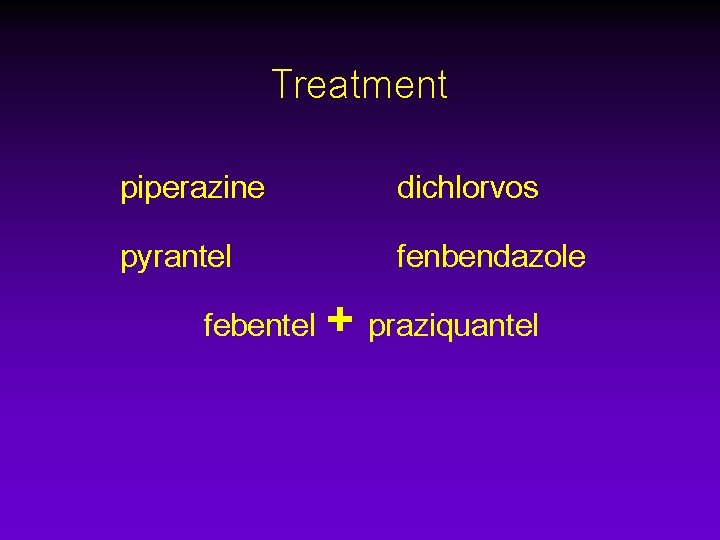
Treatment piperazine dichlorvos pyrantel fenbendazole febentel + praziquantel
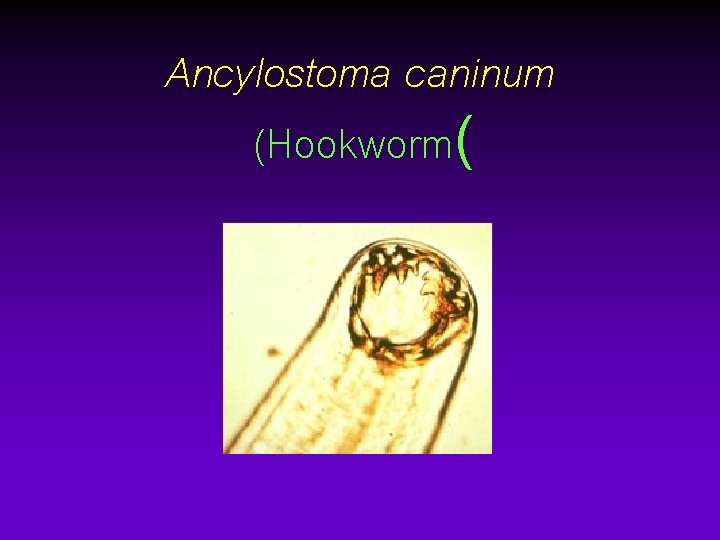
Ancylostoma caninum (Hookworm(
Ancylostoma caninum • Geographic distribution – temperate climates – worldwide • Significance – very important – causes deaths (all ages( – causes heavy blood losses
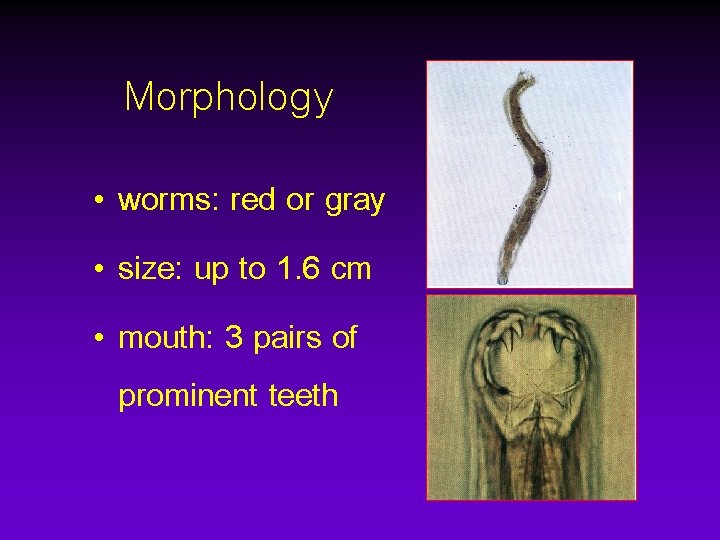
Morphology • worms: red or gray • size: up to 1. 6 cm • mouth: 3 pairs of prominent teeth
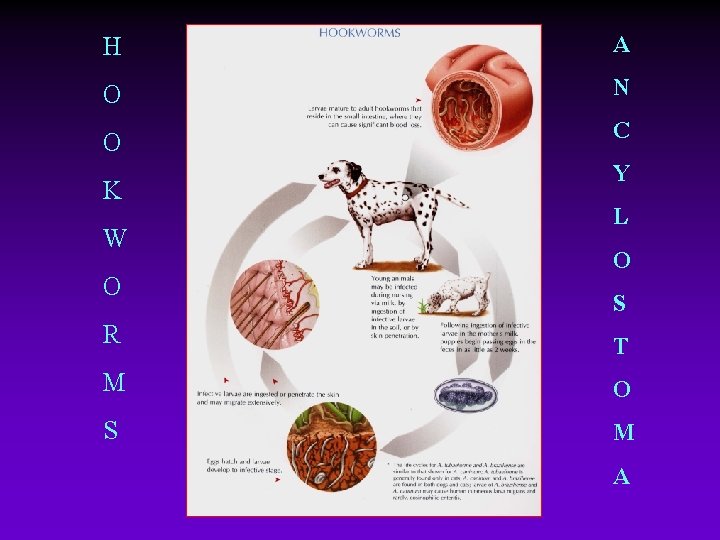
Life cycle modes of infection: . 1 eating (infective eggs(. 2 skin penetration (larvae( tracheal migration
Life cycle modes of infection: • intrauterine infection • transcolostrum • paratenic host prepatent period = 15 -18 days
H O O K W O R M S A N C Y L O S T O M A
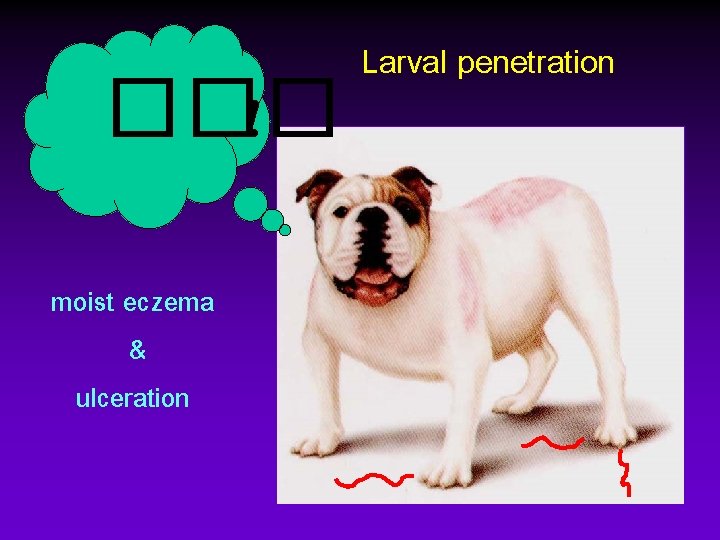
��� ! moist eczema & ulceration Larval penetration
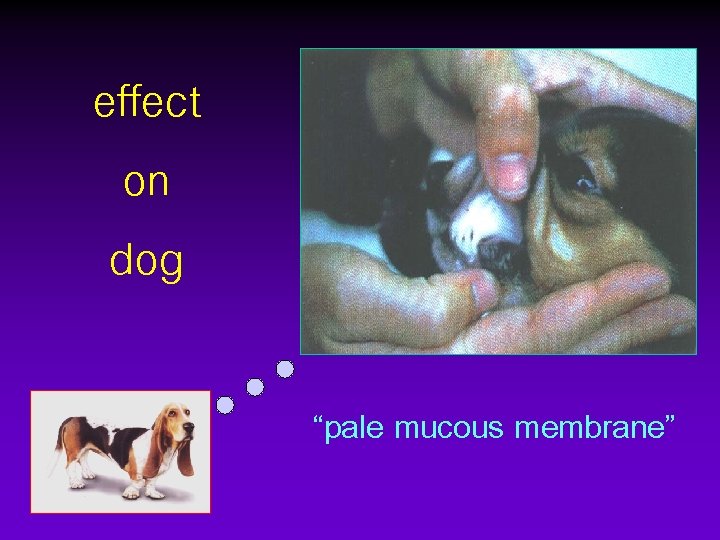
effect on dog “pale mucous membrane”
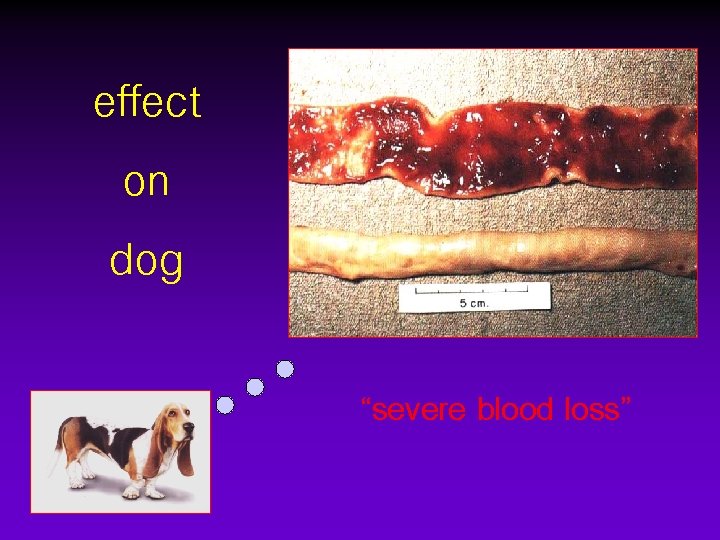
effect on dog “severe blood loss”
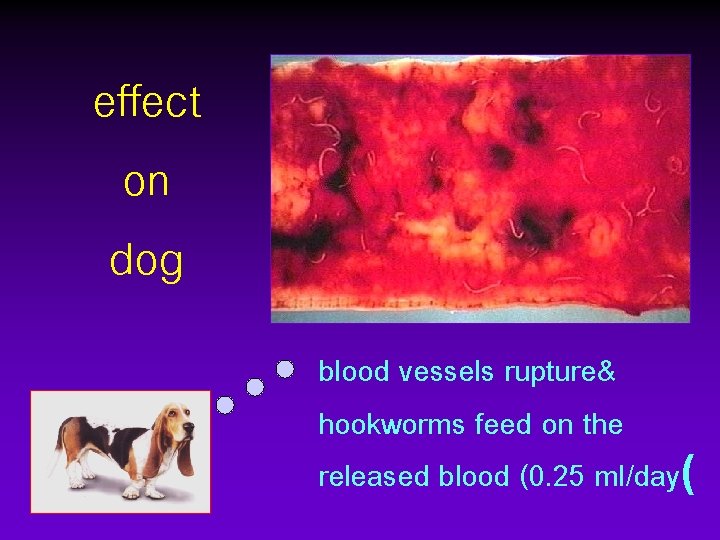
effect on dog blood vessels rupture& hookworms feed on the released blood (0. 25 ml/day(
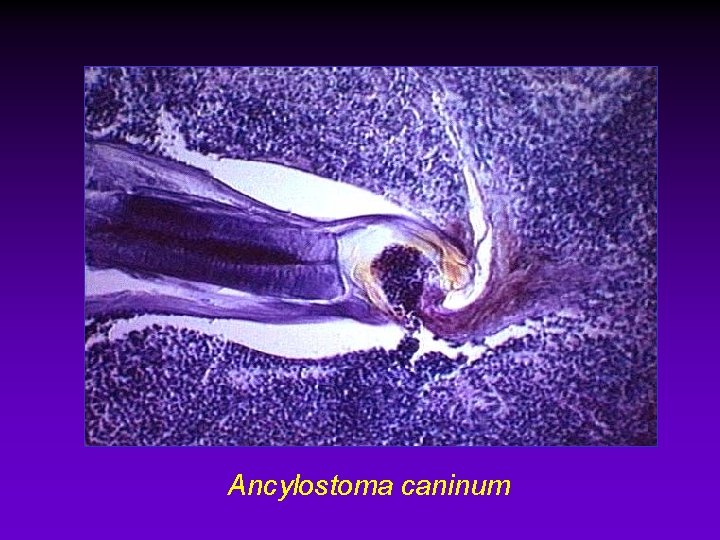
Ancylostoma caninum
Clinical signs • factors: dose, age, immune status • dermatitis • puppy pneumonia • diarrhea: dark in color (blood & mucus(
Clinical signs • severe blood loss : • iron-deficiency anemia • edema, weakness, weight loss • poor coat condition
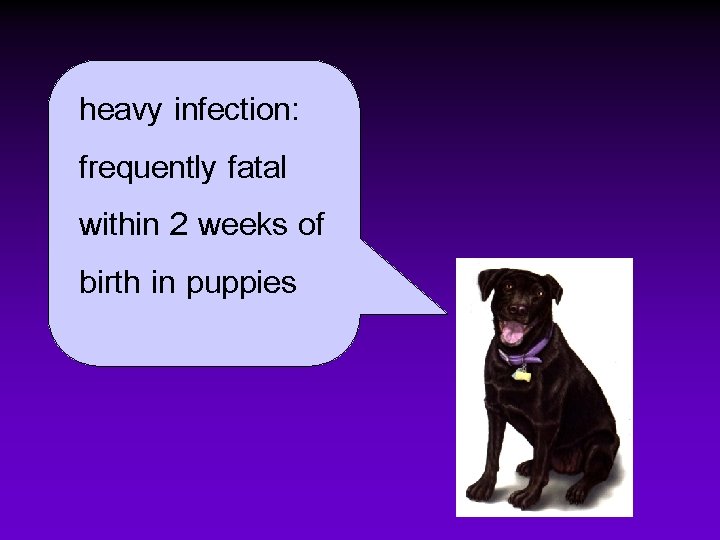
heavy infection: frequently fatal within 2 weeks of birth in puppies
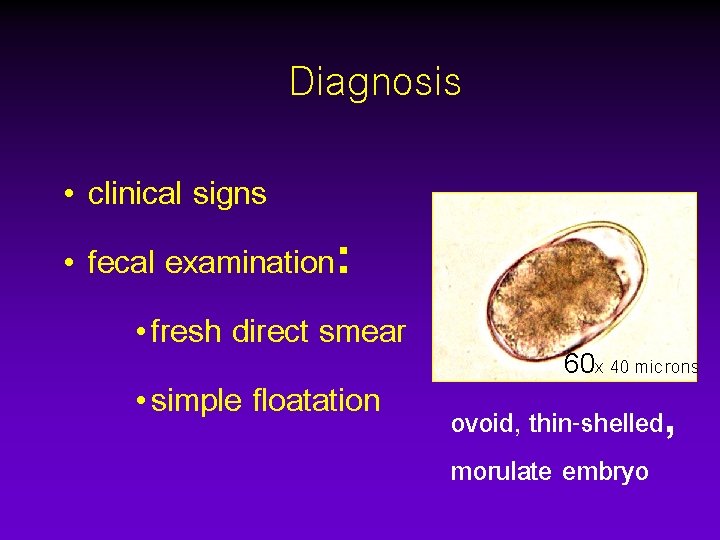
Diagnosis • clinical signs • fecal examination: • fresh direct smear 60 x 40 microns • simple floatation ovoid, thin-shelled, morulate embryo
Treatment • supportive care: blood transfusions, iron supplement • anthelmintics: fenbendazole, ivermectin, tetrahydropyrimidine (pyrantel(
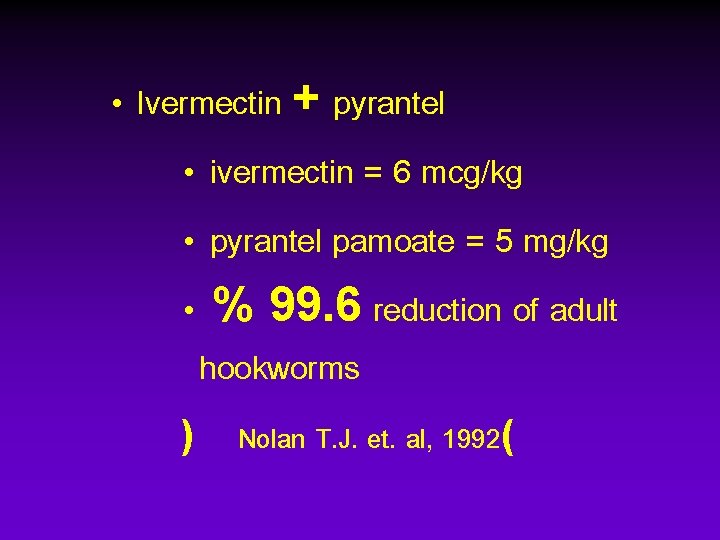
• Ivermectin + pyrantel • ivermectin = 6 mcg/kg • pyrantel pamoate = 5 mg/kg • % 99. 6 reduction of adult hookworms ) Nolan T. J. et. al, 1992(
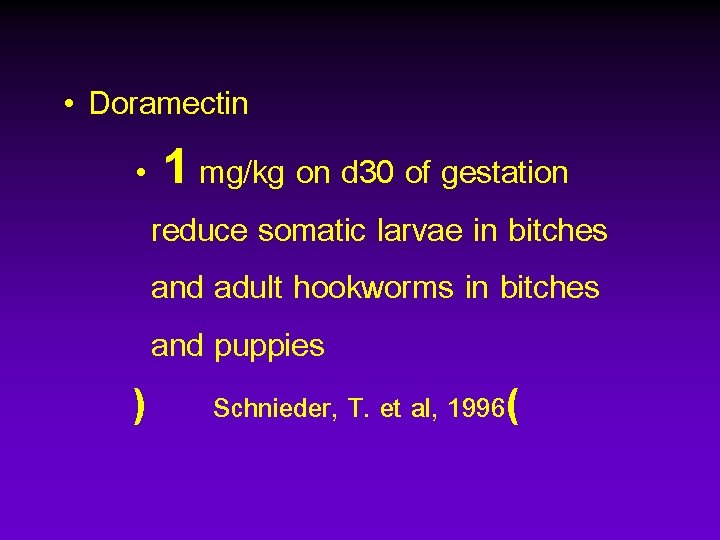
• Doramectin • 1 mg/kg on d 30 of gestation reduce somatic larvae in bitches and adult hookworms in bitches and puppies ) Schnieder, T. et al, 1996(
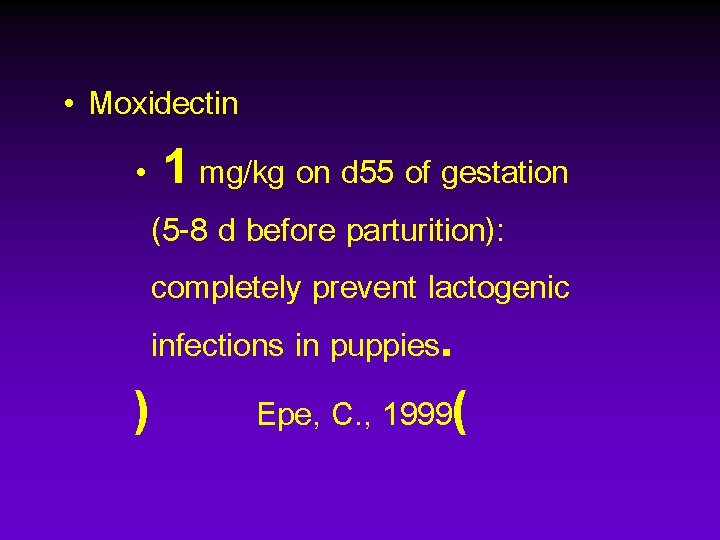
• Moxidectin • 1 mg/kg on d 55 of gestation (5 -8 d before parturition): completely prevent lactogenic infections in puppies. ) Epe, C. , 1999(
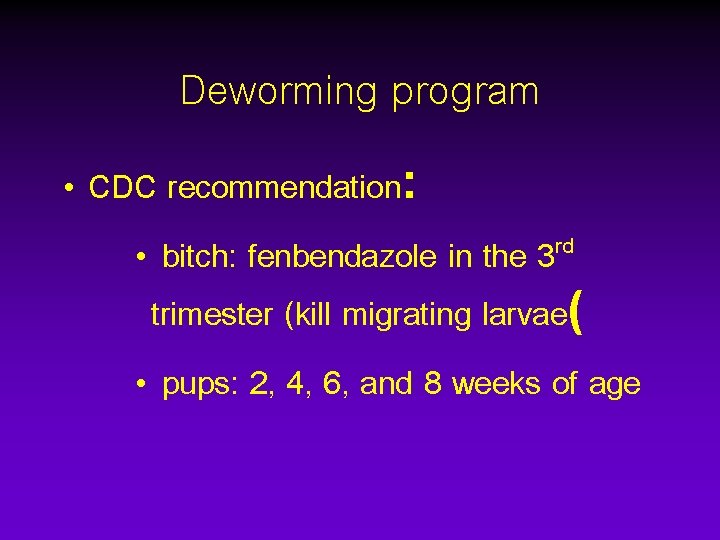
Deworming program • CDC recommendation: • bitch: fenbendazole in the 3 rd trimester (kill migrating larvae( • pups: 2, 4, 6, and 8 weeks of age
Control • feces elimination • keep kennel-floor dry • regular deworming • treat bitch with ivermectin
Effect on man • Adult Ancylostoma caninum • excretory/secretory antigens • causes hypersensitivity in man • human eosinophilic enteritis
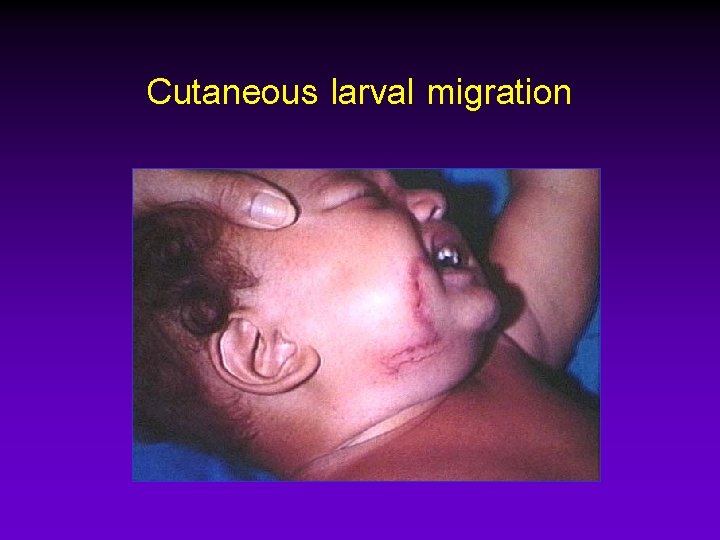
Cutaneous larval migration
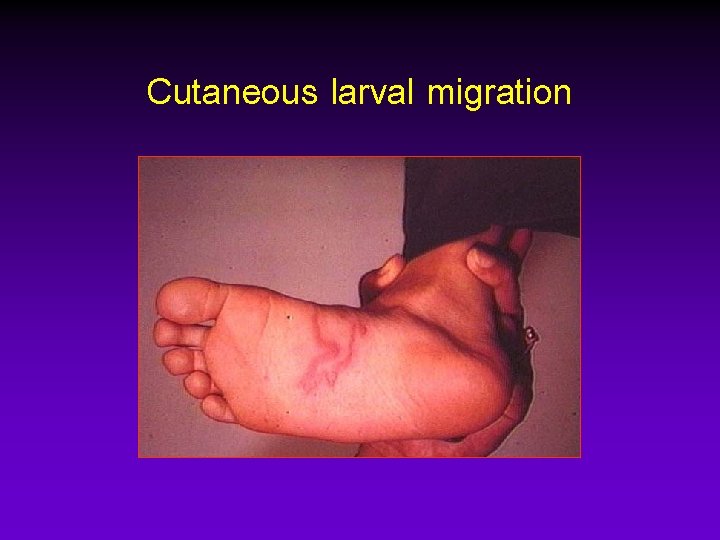
Cutaneous larval migration
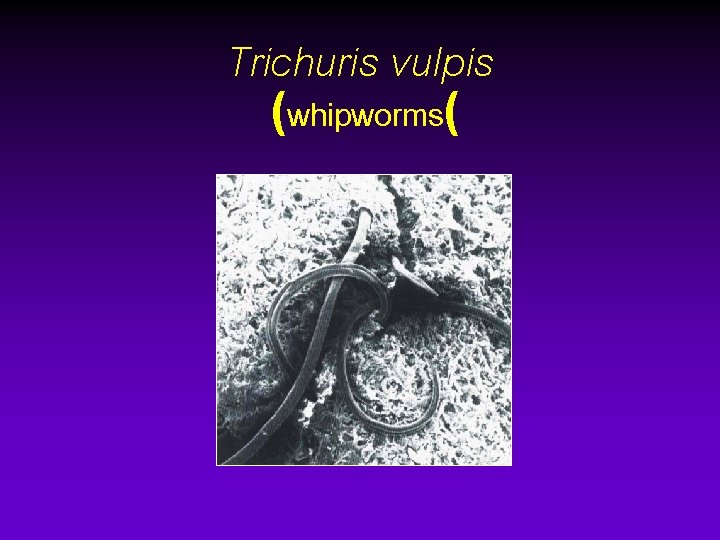
Trichuris vulpis (whipworms(
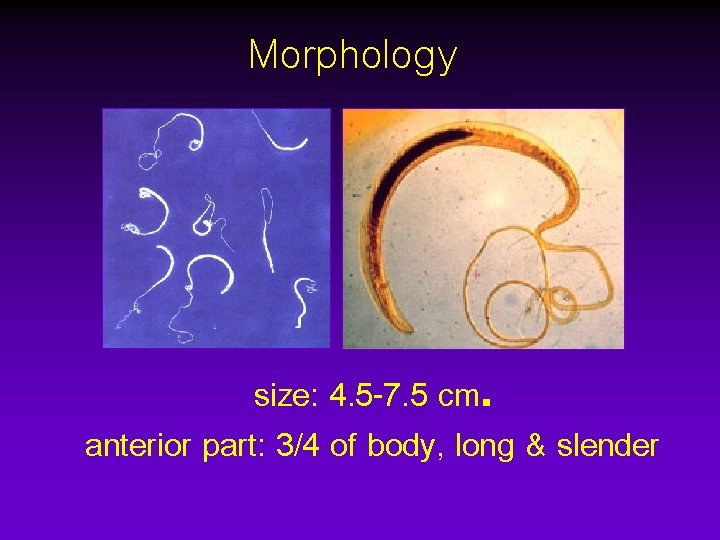
Morphology size: 4. 5 -7. 5 cm. anterior part: 3/4 of body, long & slender
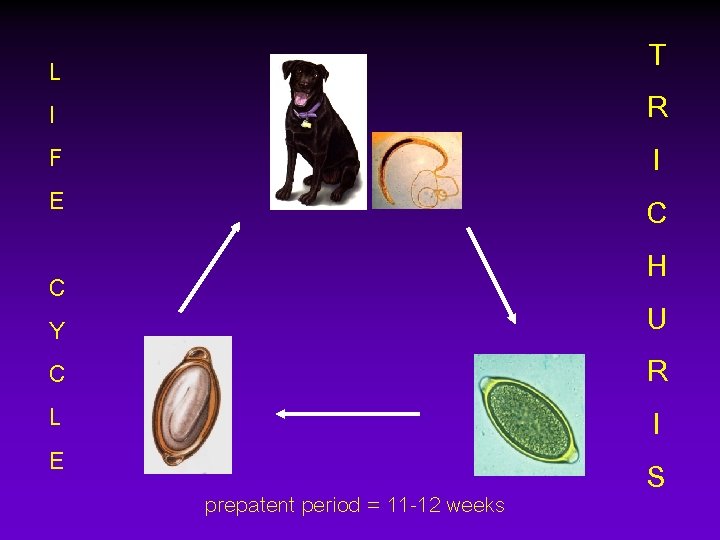
Life cycle • location: caecum • infection: direct ingestion of infective egg
L I F E C Y C L E prepatent period = 11 -12 weeks T R I C H U R I S
Effect on host • intestine: irritation of caecum & large intestine • profuse diarrhea, loss of weight, unthriftiness • anemia in heavy infection
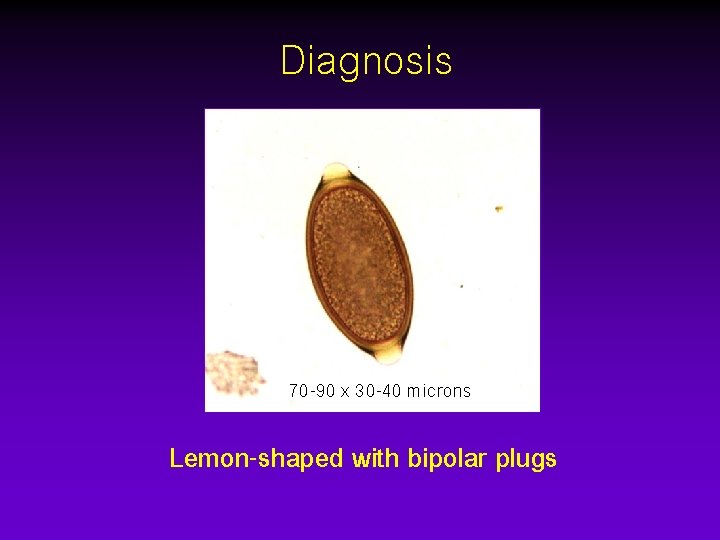
Diagnosis 70 -90 x 30 -40 microns Lemon-shaped with bipolar plugs
Treatment mebendazole dichlorvos fenbendazole febantel avermectins are not as effective.
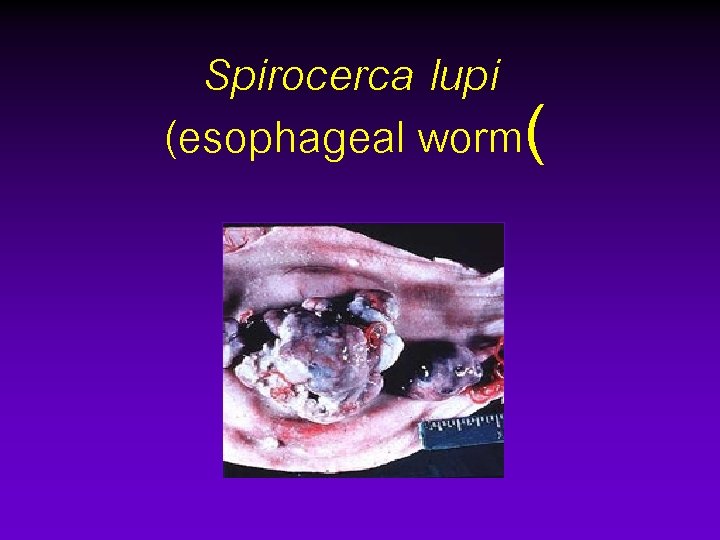
Spirocerca lupi (esophageal worm(
• Definitive host • dogs • Intermediate host • coprophagous beetles • lizards, chickens, mice (paratenic host(
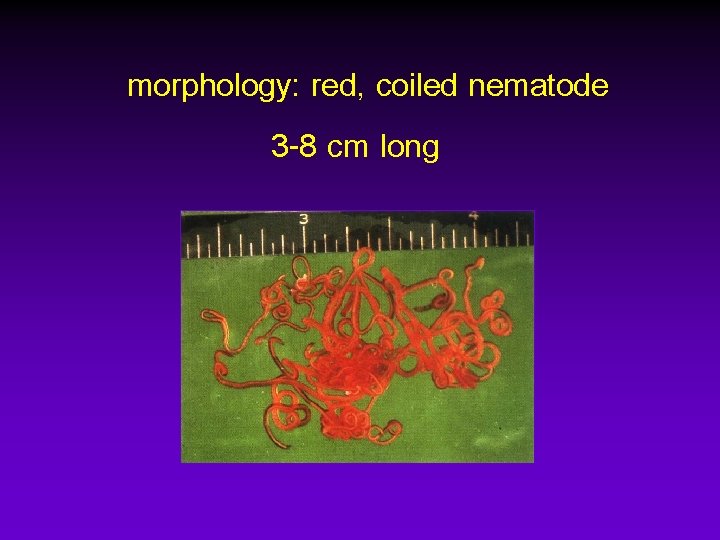
morphology: red, coiled nematode 3 -8 cm long
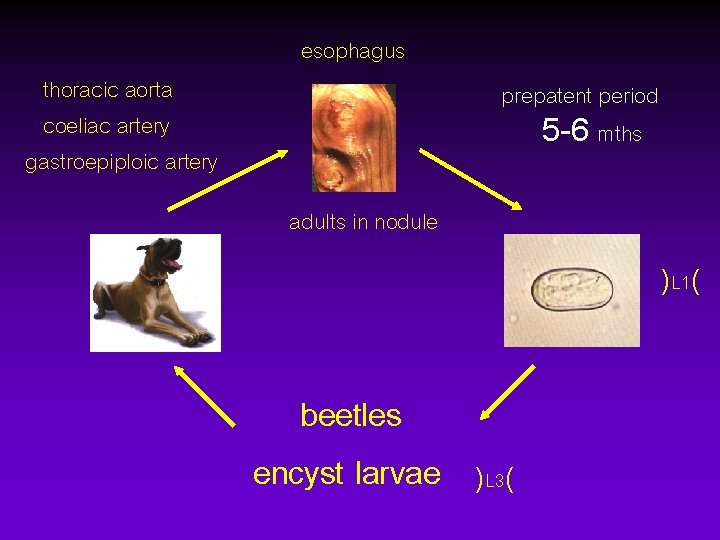
thoracic aorta coeliac artery gastroepiploic artery esophagus prepatent period 5 -6 mths adults in nodule )L 1( beetles encyst larvae )L 3(
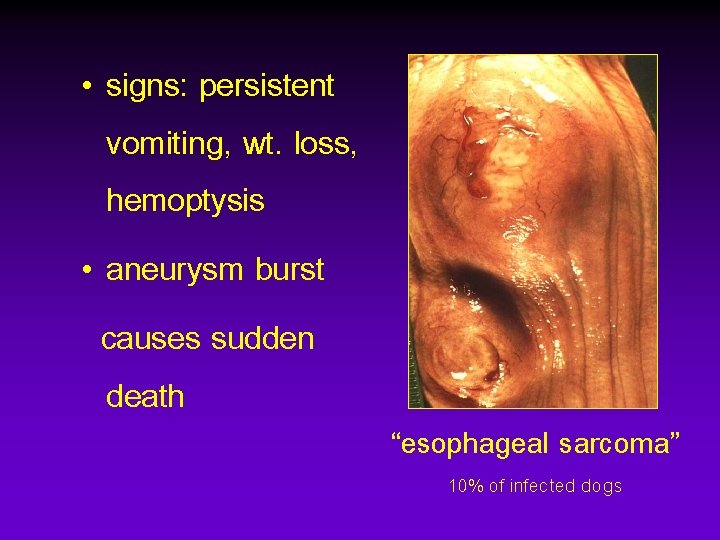
Effect on host • larval migration: aorta • haemorrhage • granuloma, stenosis • aneurysm, rupture
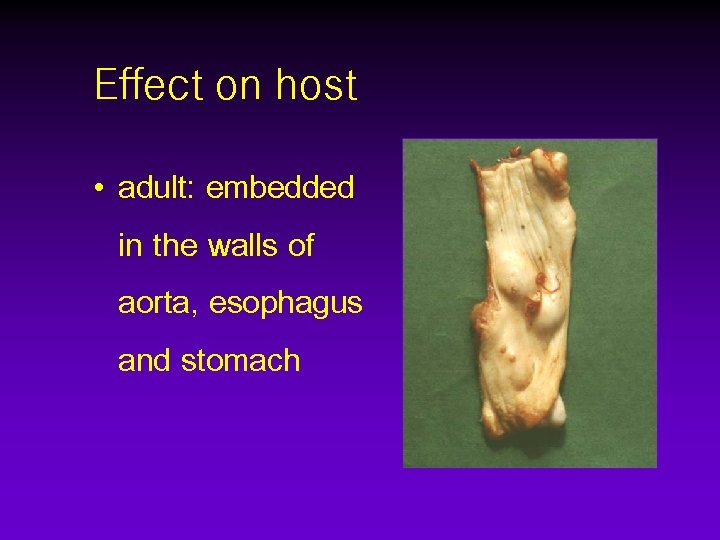
Effect on host • adult: embedded in the walls of aorta, esophagus and stomach
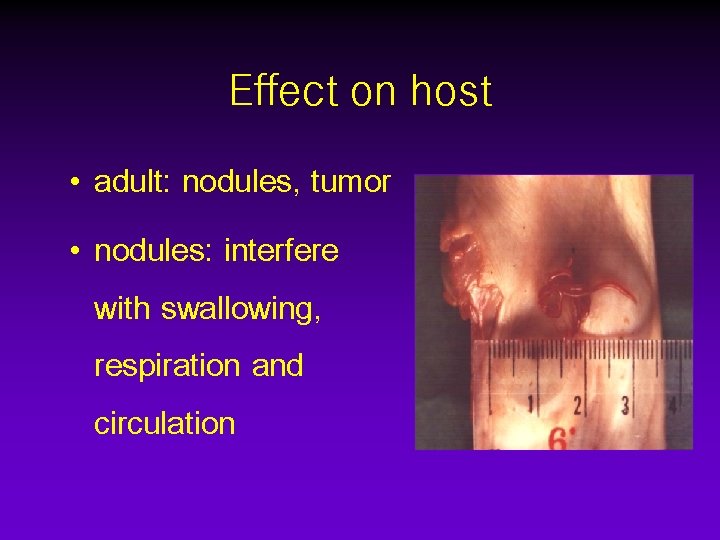
Effect on host • adult: nodules, tumor • nodules: interfere with swallowing, respiration and circulation
• signs: persistent vomiting, wt. loss, hemoptysis • aneurysm burst causes sudden death “esophageal sarcoma” 10% of infected dogs
Diagnosis • • floatation method radiography endoscopy necropsy
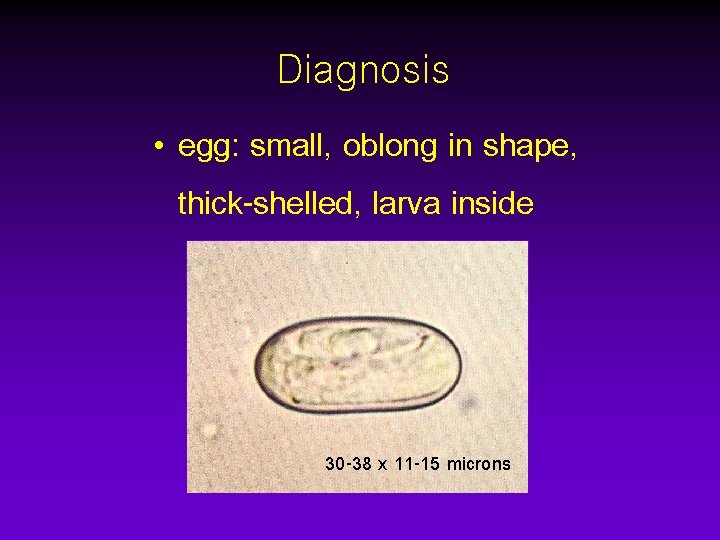
Diagnosis • egg: small, oblong in shape, thick-shelled, larva inside 30 -38 x 11 -15 microns
Treatment • fenbendazole • avermectins
Control • isolate infected animals • dispose of the vomit and feces • keep dogs from eating beetles, paratenic hosts
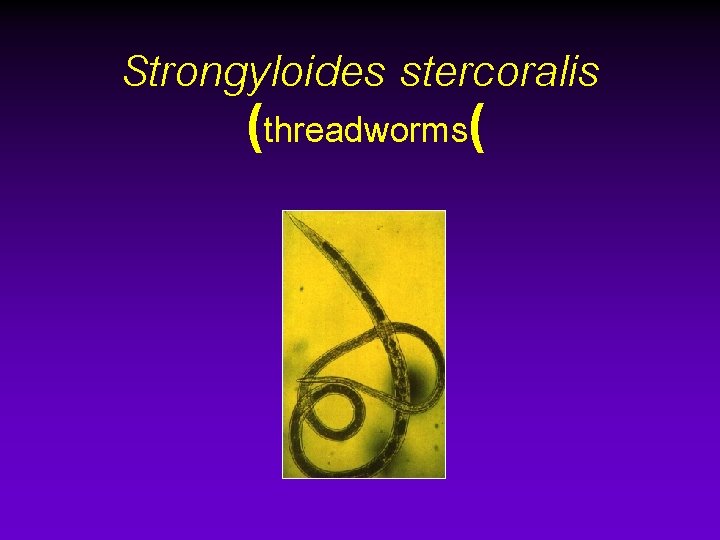
Strongyloides stercoralis (threadworms(
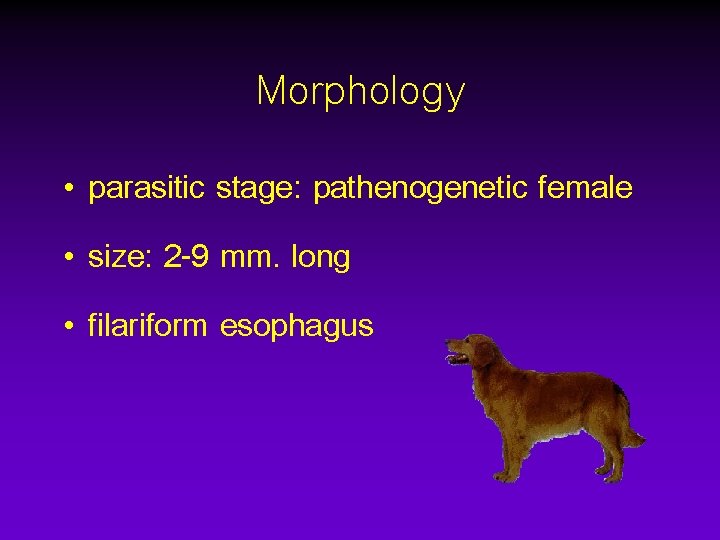
Morphology • parasitic stage: pathenogenetic female • size: 2 -9 mm. long • filariform esophagus
Life cycle • host: dogs, cats, men • direct life cycle: free-living, parasitic • prepatent period = 7 days
Life cycle • modes of infection: • skin penetration • ingestion (rare( • hyperinfection (mucosal migration( • autoinfection (perianal area(
Significance • reinfection: kennel situation • causes severe disease only in young animals • heavy infection: death in puppies
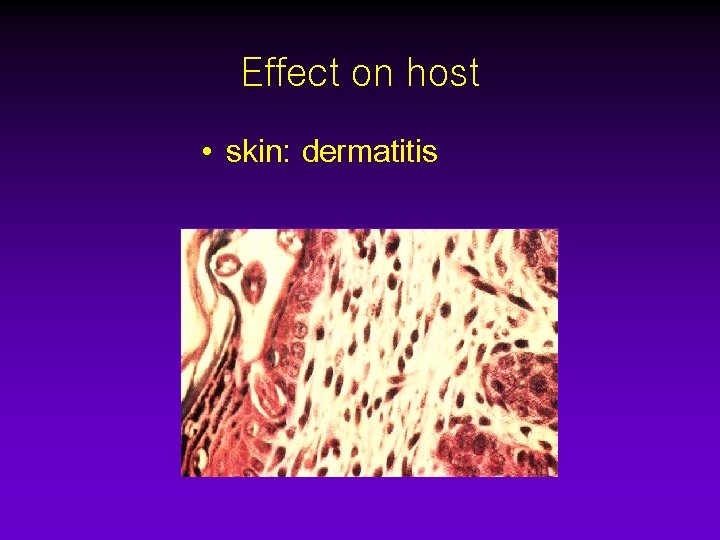
Effect on host • skin: dermatitis
intestine: irritation, catarrhal inflammation, mucosal erosion, necrosis signs: diarrhea (blood), low appetite, weight loss, dehydration, weakness, death
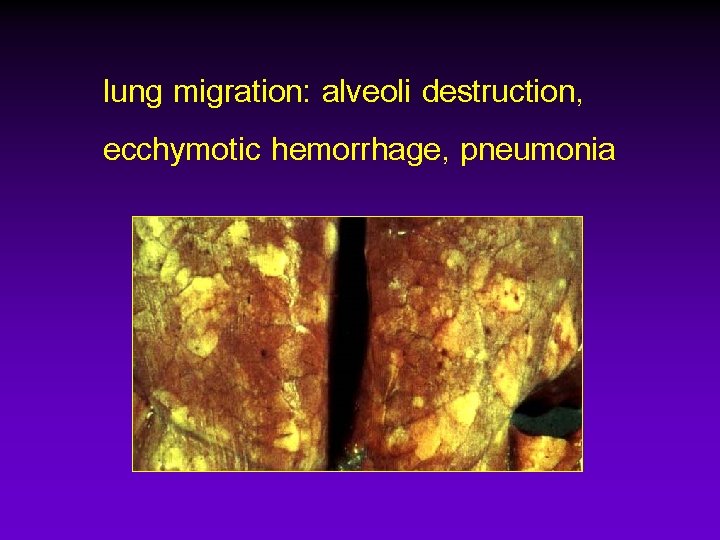
lung migration: alveoli destruction, ecchymotic hemorrhage, pneumonia
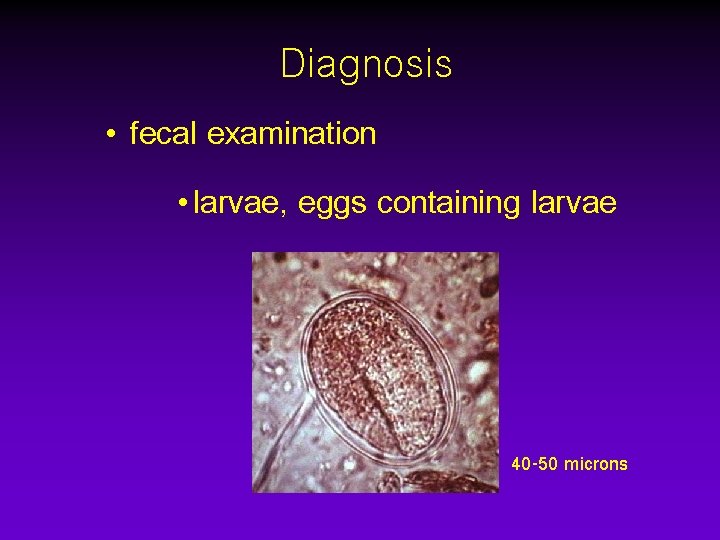
Diagnosis • fecal examination • larvae, eggs containing larvae 40 -50 microns
Treatment Dichlorvos Fenbendazole Control clean & dry floor
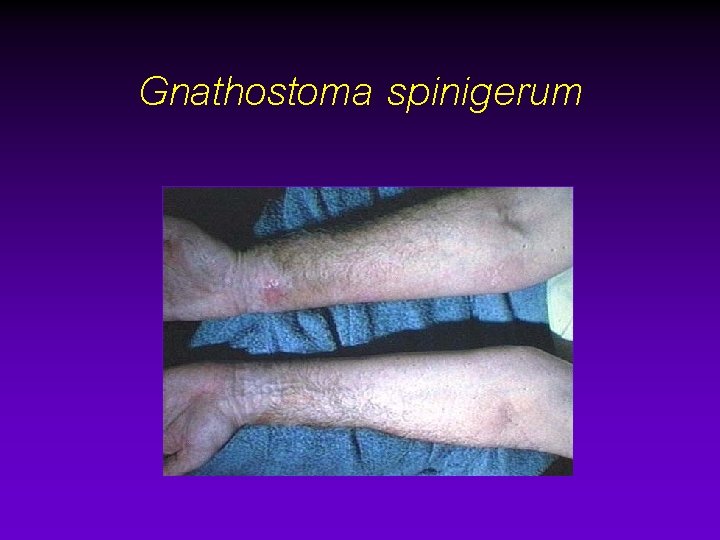
Gnathostoma spinigerum
G. spinigerum • size: 1 -3 cm. long • head bulb: “ballonets” • head & anterior part: spines
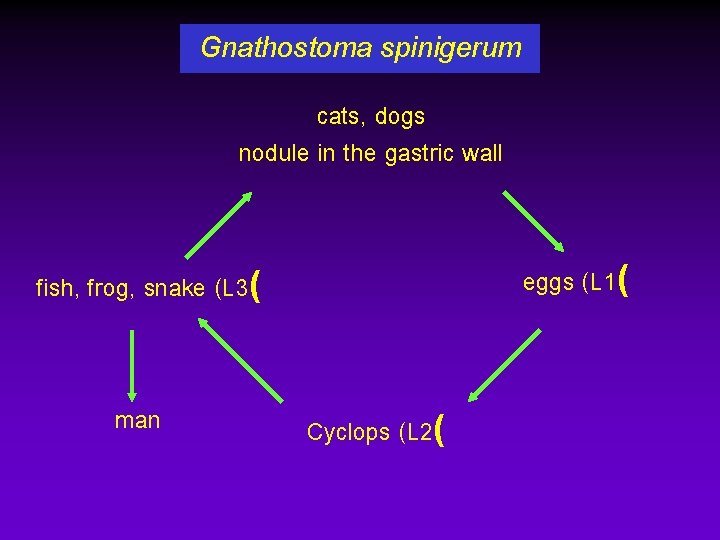
Life cycle • prepatent period: 7 months • 1 st int. host: Cyclops nd • 2 int. host: fresh water fish, reptiles • location: stomach
Gnathostoma spinigerum cats, dogs nodule in the gastric wall eggs (L 1( fish, frog, snake (L 3( man Cyclops (L 2(
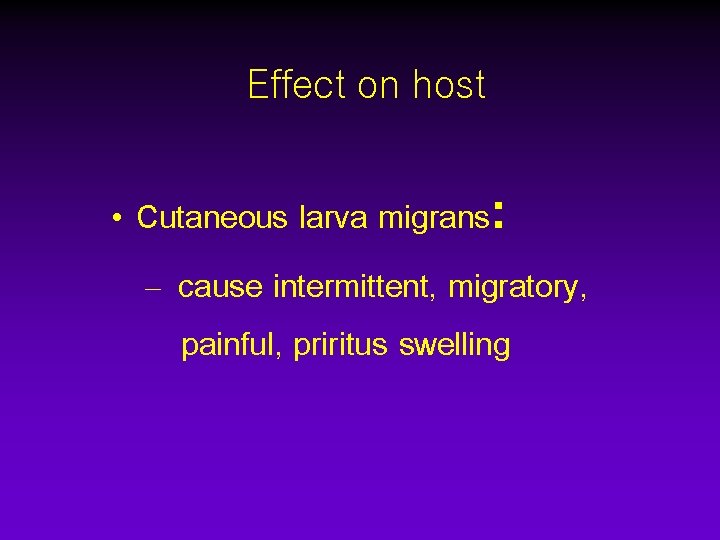
Effect on host • Cutaneous larva migrans: – cause intermittent, migratory, painful, priritus swelling
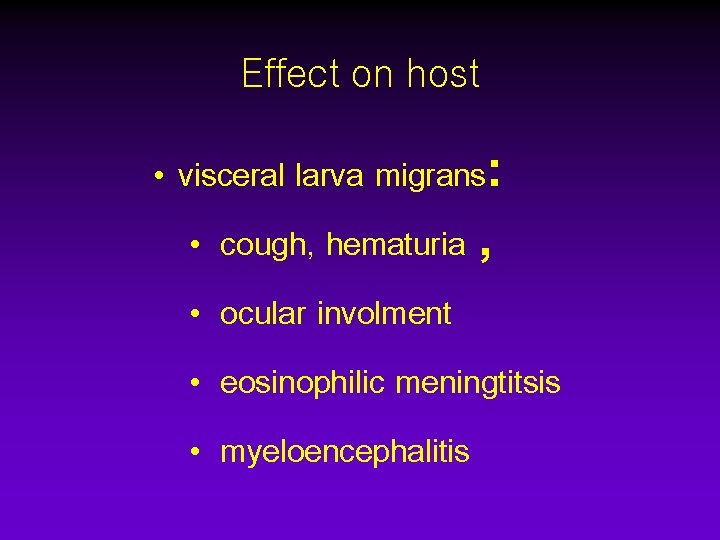
Effect on host • visceral larva migrans: • cough, hematuria , • ocular involment • eosinophilic meningtitsis • myeloencephalitis
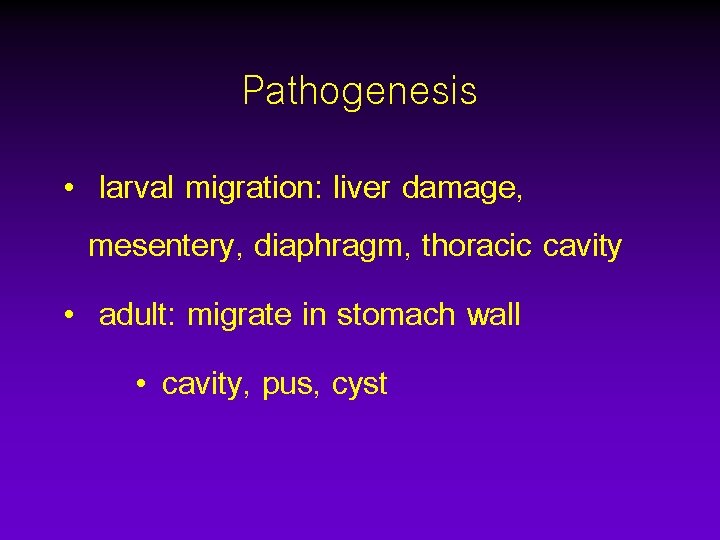
Pathogenesis • larval migration: liver damage, mesentery, diaphragm, thoracic cavity • adult: migrate in stomach wall • cavity, pus, cyst
Diagnosis • egg: rare in feces Treatment • no specific drug (albendazole(
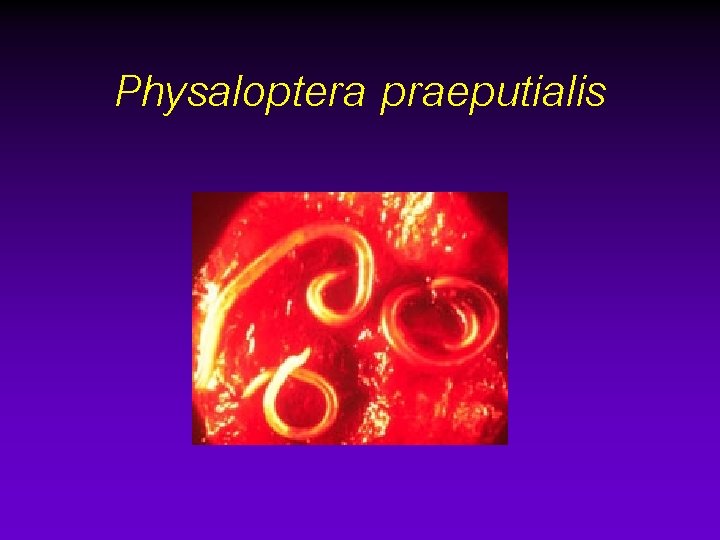
Physaloptera praeputialis
Morphology • size: 1. 5 -4. 8 cm long • body: large, thick, stout nematodes • egg: contain a larva when laid
Life cycle • host: dogs, cats, other carnivores • intermediate hosts : • crickets, cockroaches, beetles • prepatent period = 41 -83 days
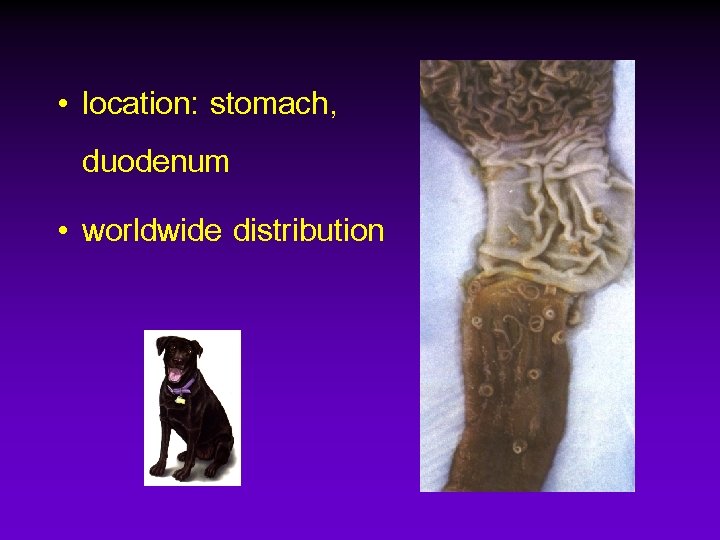
• location: stomach, duodenum • worldwide distribution
Effect on host • adult • irritation: firmly attach to the lining of the gastric mucosa • bleeding, mucosa erosion • digestion interference
Clinical signs • loss of condition • vomiting (possibly bloody, mucoid( • anorexia
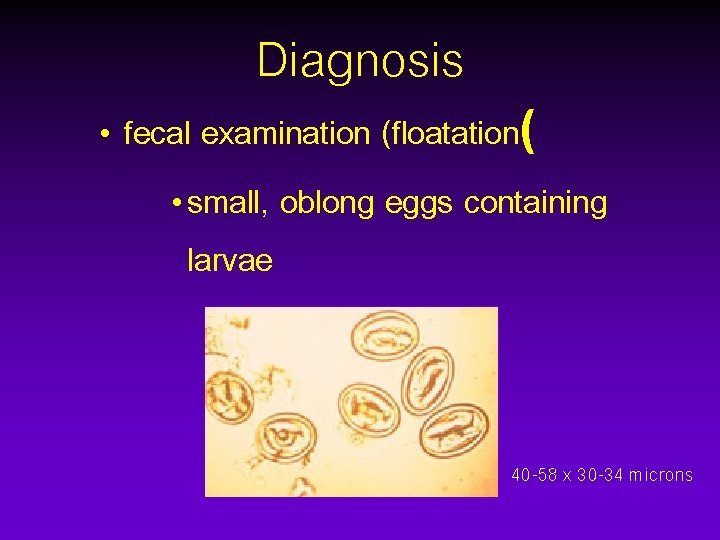
Diagnosis • fecal examination (floatation( • small, oblong eggs containing larvae 40 -58 x 30 -34 microns
Treatment • anthelmintics • dichlorvos, benzimidazoles, avermectins • control pets’ eating habits