
MultiView Geometry Cont Stereo Constraints Review p p
- Slides: 29
Multi-View Geometry (Cont. )
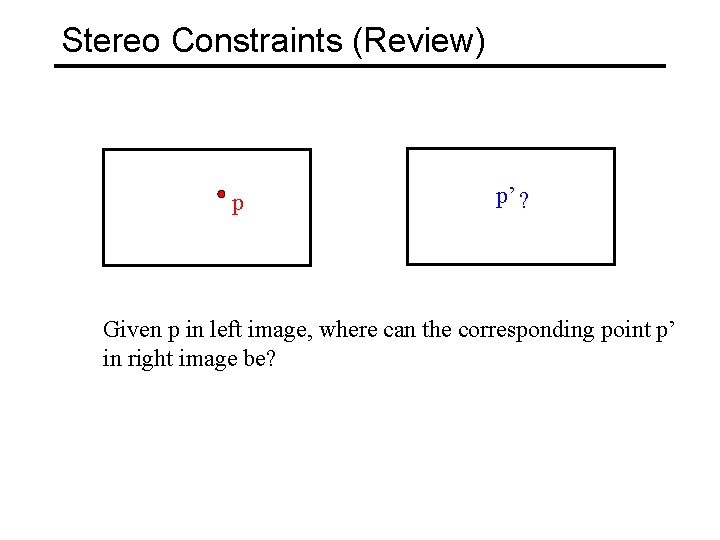
Stereo Constraints (Review) p p’ ? Given p in left image, where can the corresponding point p’ in right image be?
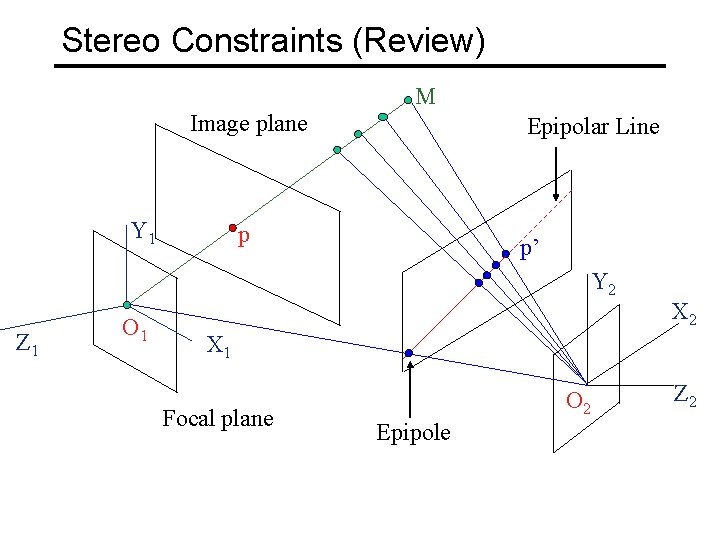
Stereo Constraints (Review) M Image plane Y 1 Epipolar Line p p’ Y 2 Z 1 O 1 X 2 X 1 Focal plane O 2 Epipole Z 2
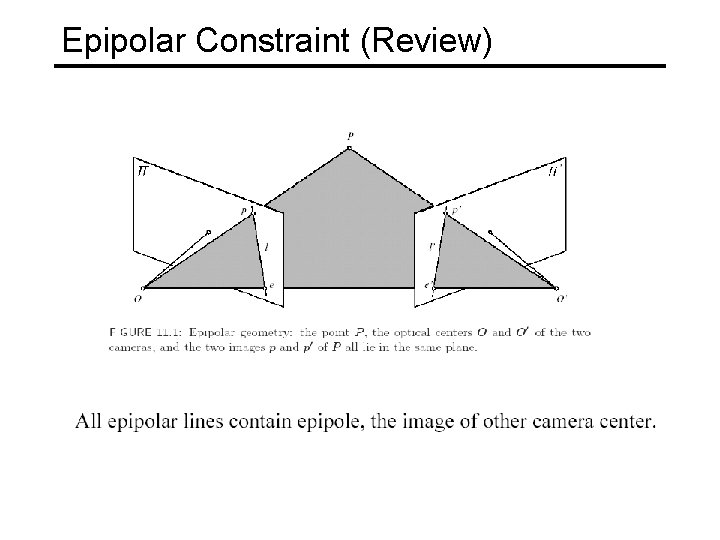
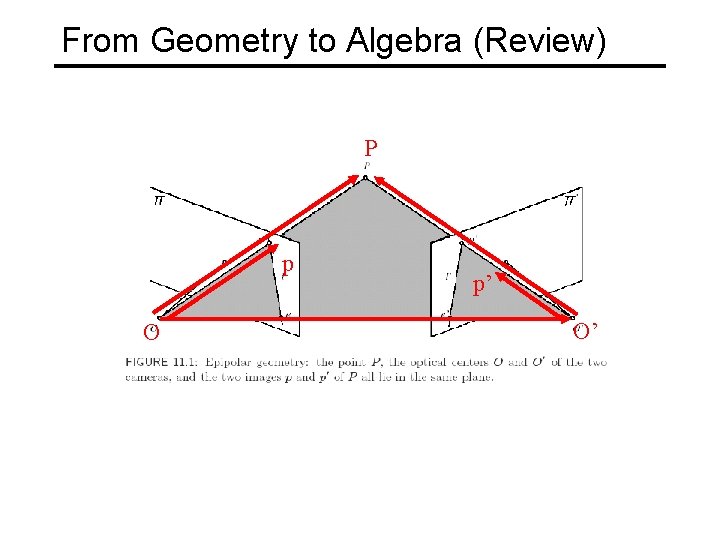
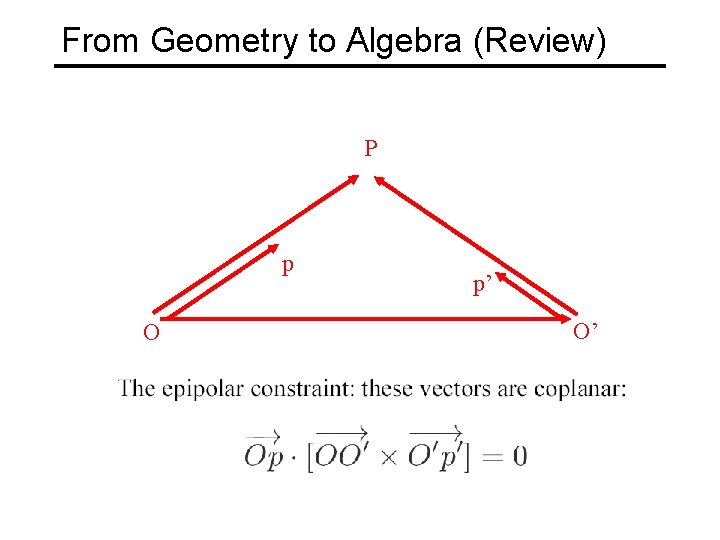
Epipolar Constraint (Review)
From Geometry to Algebra (Review) P p O p’ O’
From Geometry to Algebra (Review) P p O p’ O’
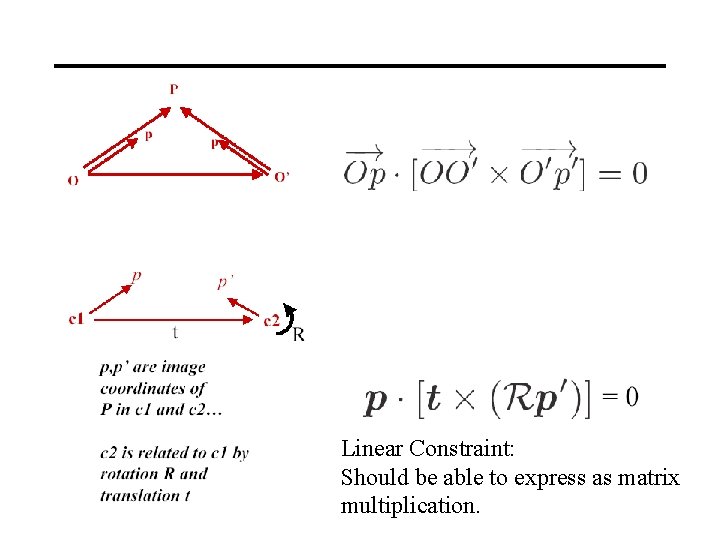
Linear Constraint: Should be able to express as matrix multiplication.
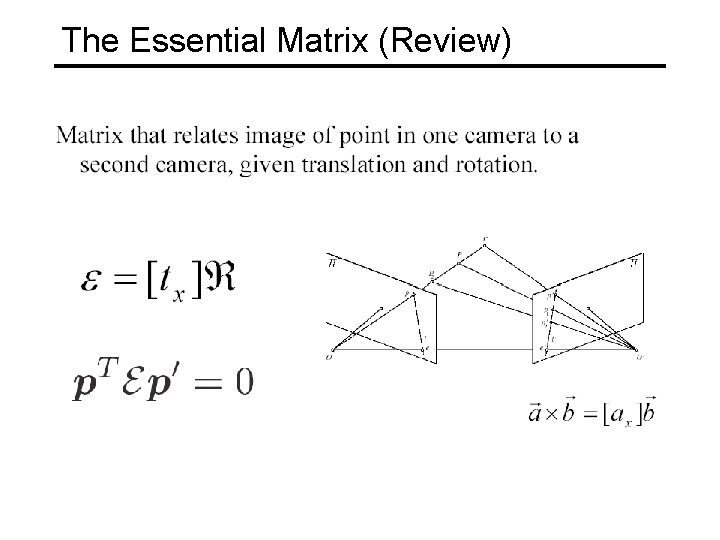
The Essential Matrix (Review)
The Essential Matrix • Based on the Relative Geometry of the Cameras • Assumes Cameras are calibrated (i. e. , intrinsic parameters are known) • Relates image of point in one camera to a second camera (points in camera coordinate system). • Is defined up to scale • 5 independent parameters
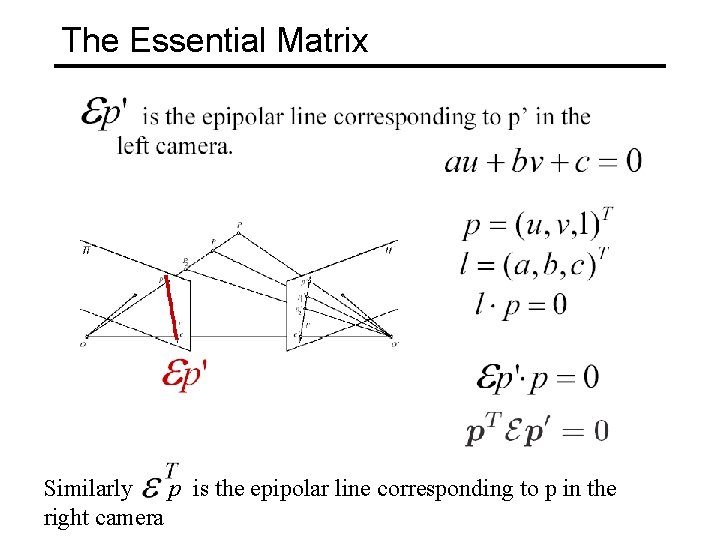
The Essential Matrix Similarly p is the epipolar line corresponding to p in the right camera
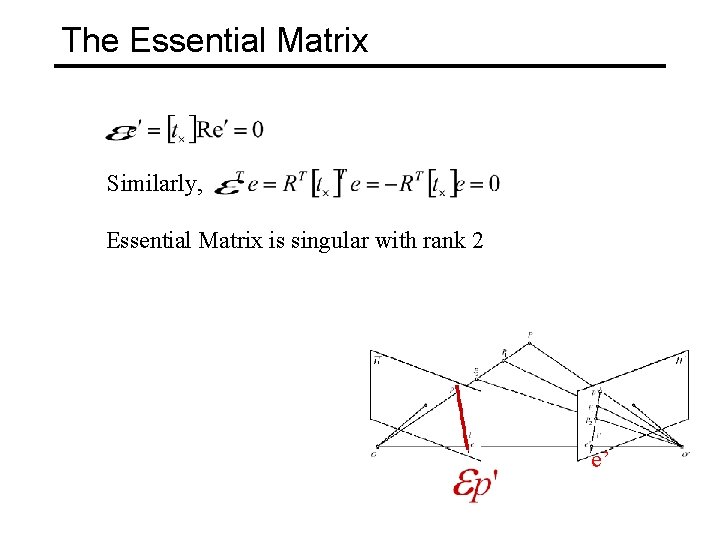
The Essential Matrix Similarly, Essential Matrix is singular with rank 2 e’
Small Motions and Epipolar Constraint
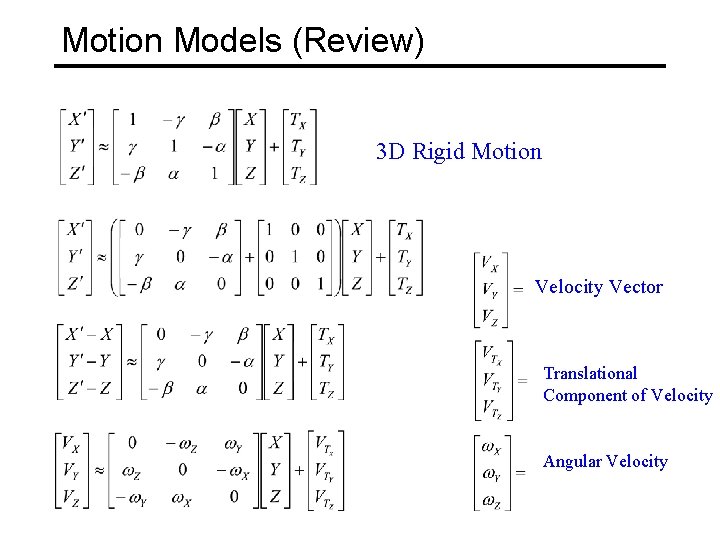
Motion Models (Review) 3 D Rigid Motion Velocity Vector Translational Component of Velocity Angular Velocity
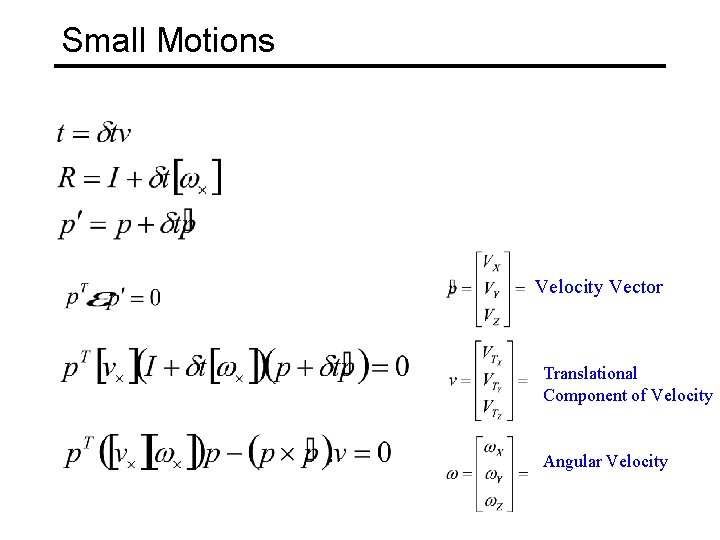
Small Motions Velocity Vector Translational Component of Velocity Angular Velocity
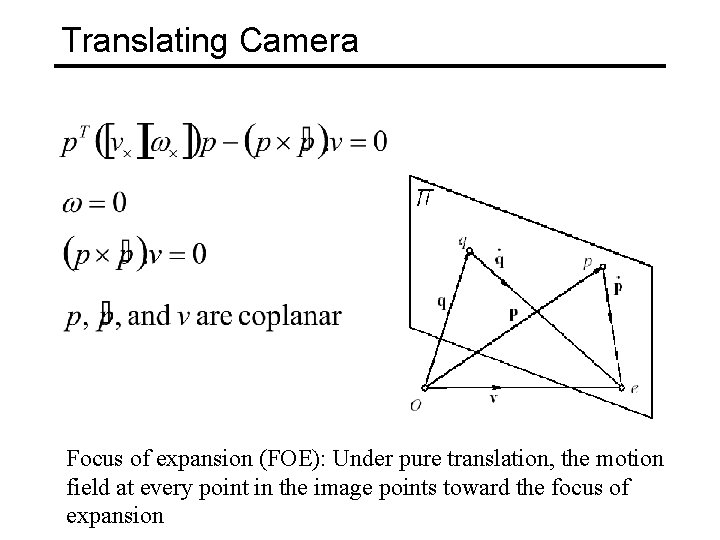
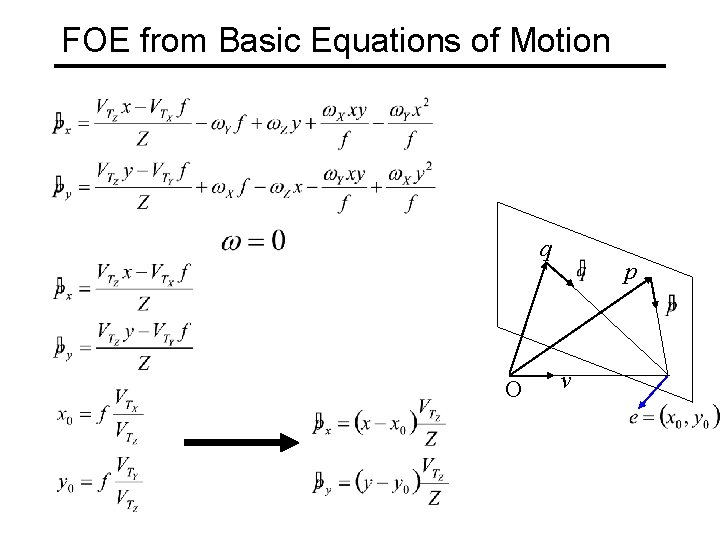
Translating Camera Focus of expansion (FOE): Under pure translation, the motion field at every point in the image points toward the focus of expansion
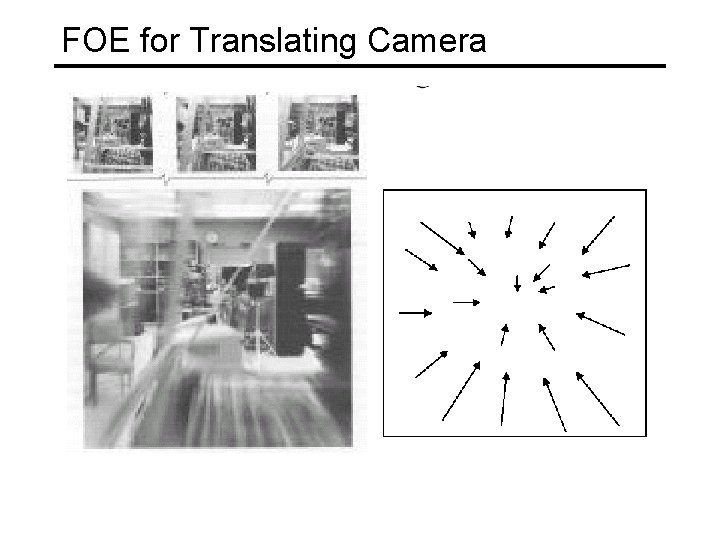
FOE for Translating Camera
FOE from Basic Equations of Motion q O p v
What if Camera Calibration is not known
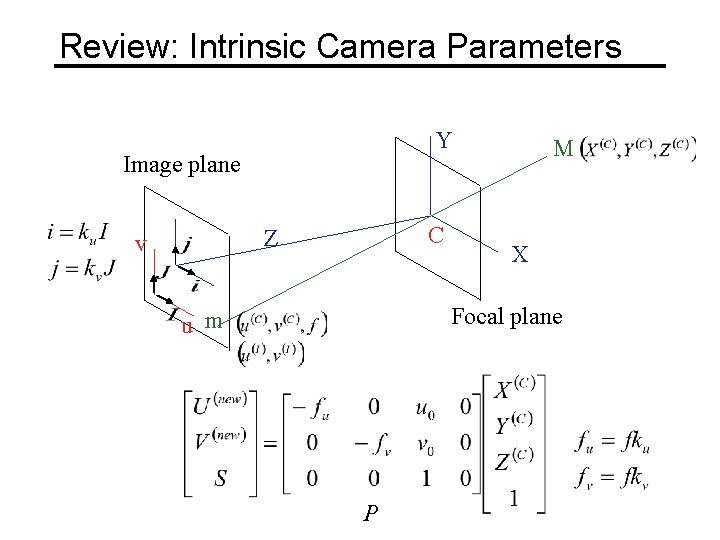
Review: Intrinsic Camera Parameters Y Image plane C Z v M X Focal plane u m P
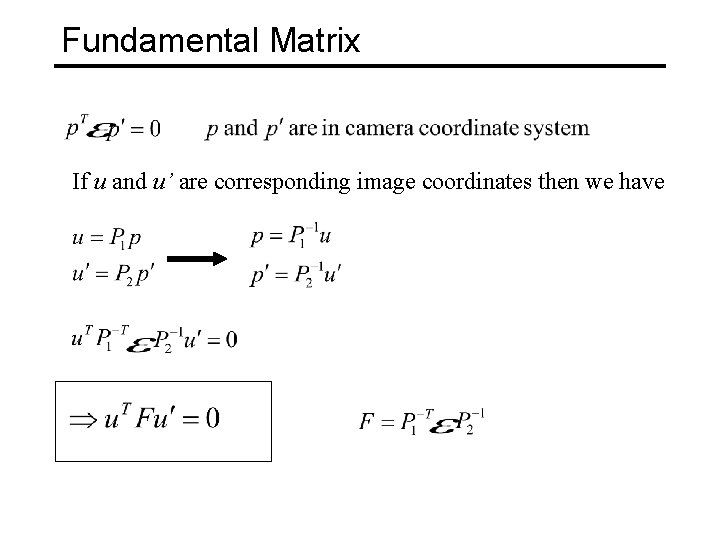
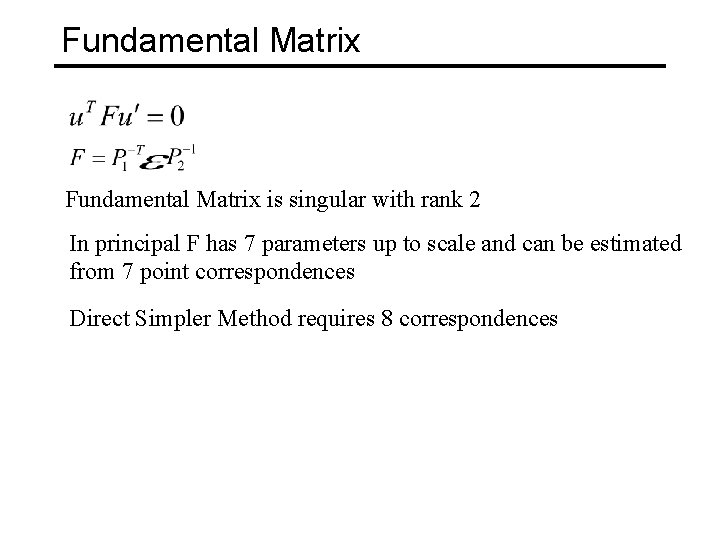
Fundamental Matrix If u and u’ are corresponding image coordinates then we have
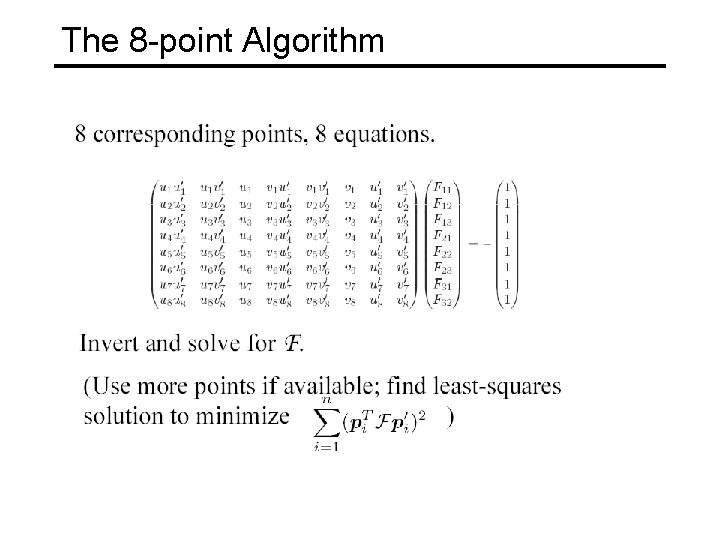
Fundamental Matrix is singular with rank 2 In principal F has 7 parameters up to scale and can be estimated from 7 point correspondences Direct Simpler Method requires 8 correspondences
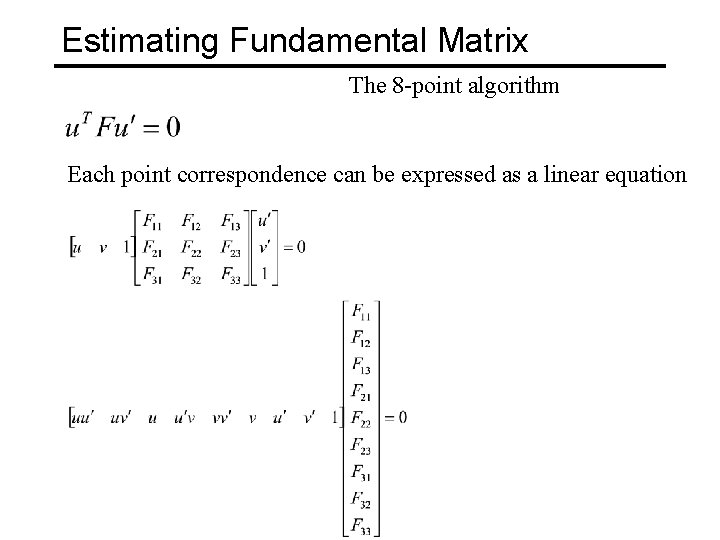
Estimating Fundamental Matrix The 8 -point algorithm Each point correspondence can be expressed as a linear equation
The 8 -point Algorithm
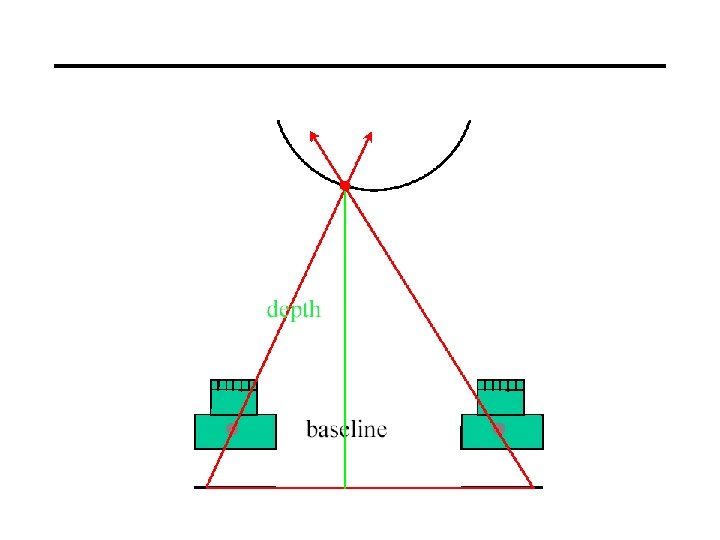
Shape from Stereo
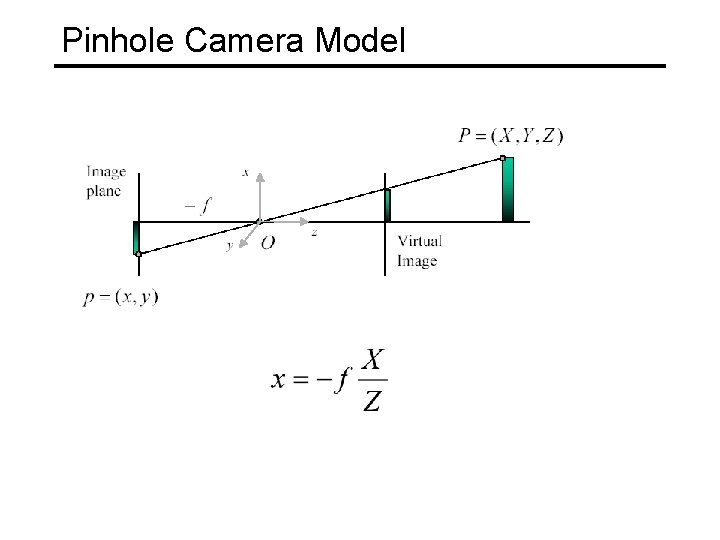
Pinhole Camera Model
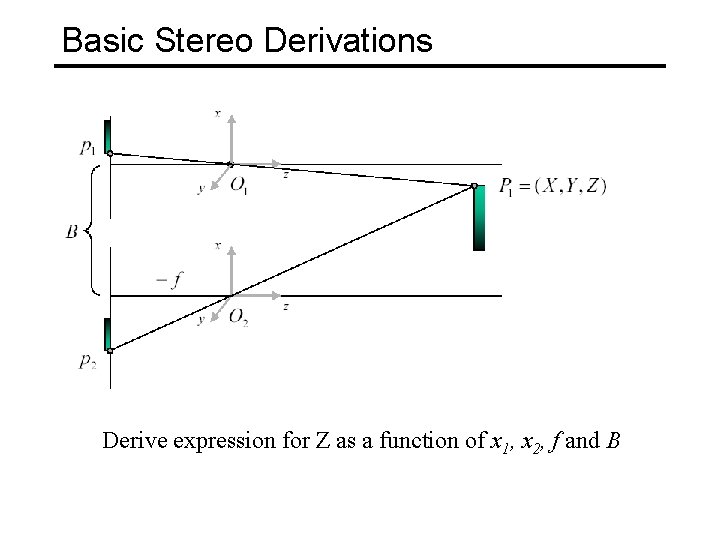
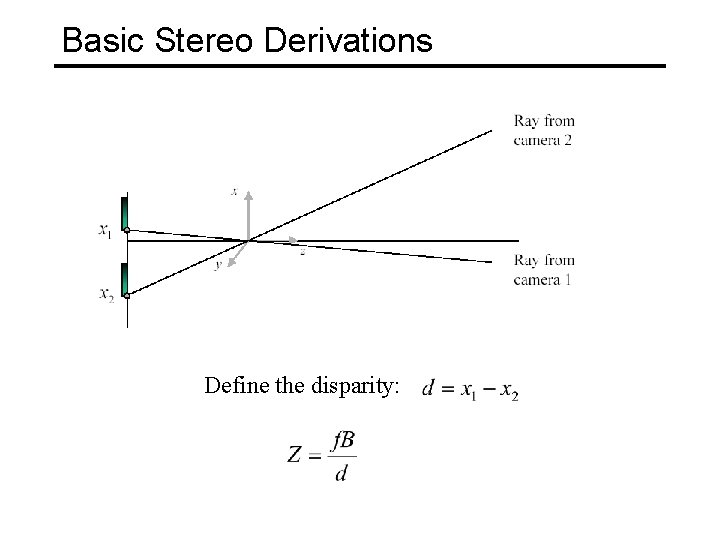
Basic Stereo Derivations Derive expression for Z as a function of x 1, x 2, f and B
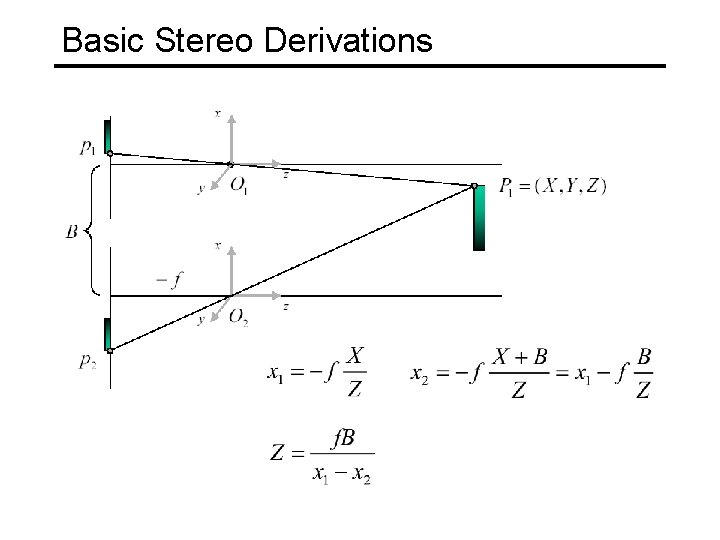
Basic Stereo Derivations
Basic Stereo Derivations Define the disparity: