Management of CNS Oligometastases Liam A Mulroy Radiation

- Slides: 52
Management of CNS Oligometastases Liam A. Mulroy Radiation Oncology October 2011
Disclosures No financial disclosures! ¡ But. . . ¡ LAM 2011 2
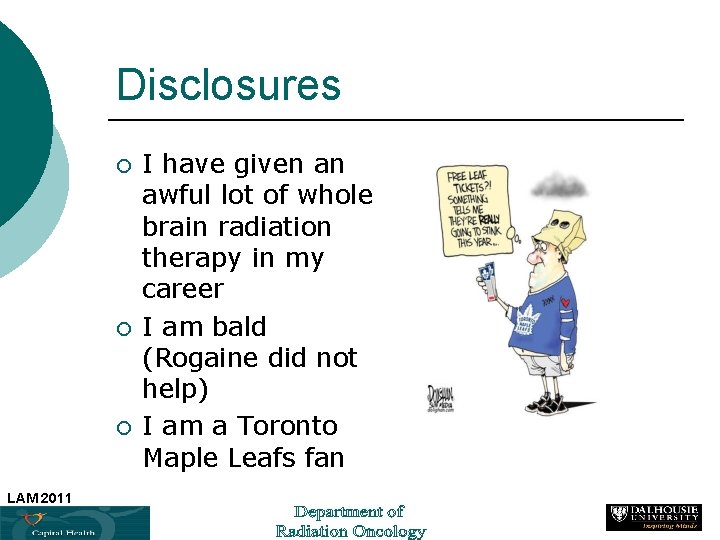
Disclosures ¡ ¡ ¡ I have given an awful lot of whole brain radiation therapy in my career I am bald (Rogaine did not help) I am a Toronto Maple Leafs fan LAM 2011 3
Presentation Outline I ¡ ¡ ¡ ¡ What is Oligometastatic Disease? Prognostic Factors: From RPA to GPA WBRT and SRS: Current Perspectives Neurocognitive Impairment from RT Hippocampal Avoidance(HA) IMRT for WBRT and SIB of Metastases Example Case Conclusions LAM 2011 4
What is Oligometastatic Disease? I’m not sure. . . ¡ Oligo means “a few” ¡ RTOG 95 -08 and EORTC 2295226001 enrolled patients with 1 -3 mets ¡ JROSG-99 -1 enrolled 1 -4 mets ¡ PMH “oligo brain mets clinic” accepts patients with up to 6 mets ¡ LAM 2011 5
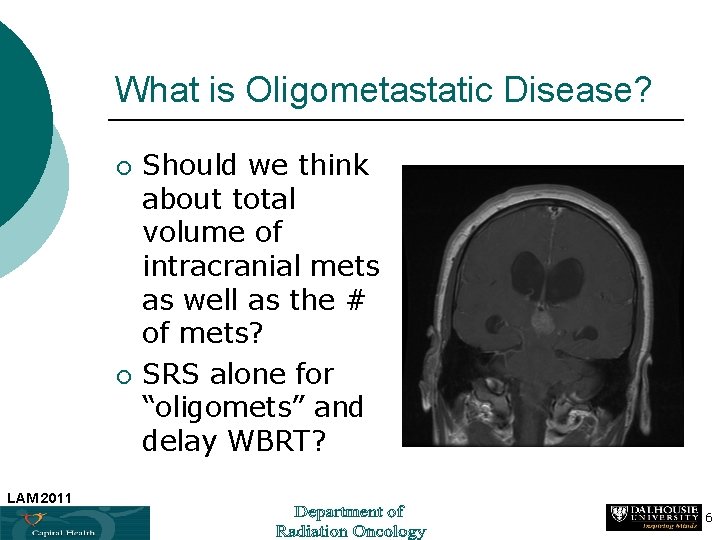
What is Oligometastatic Disease? ¡ ¡ Should we think about total volume of intracranial mets as well as the # of mets? SRS alone for “oligomets” and delay WBRT? LAM 2011 6
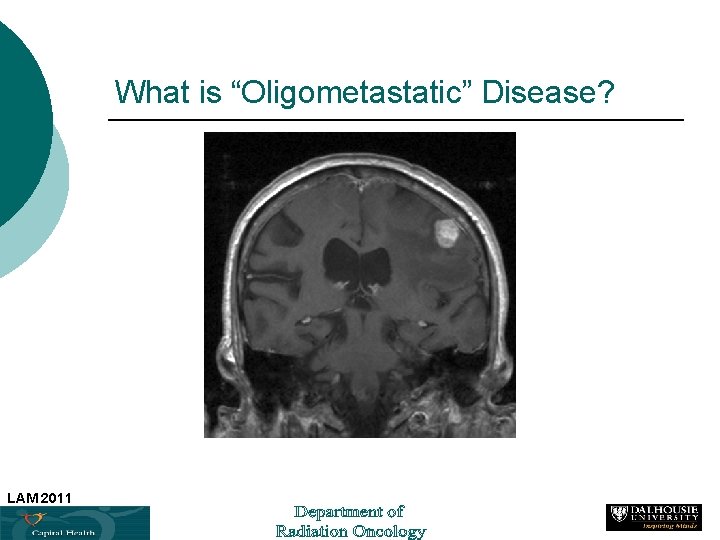
What is “Oligometastatic” Disease? LAM 2011 7
What is Oligometastatic Disease? ¡ ¡ LAM 2011 Should we think about the total volume of intracranial metastases? M. Follwell/PMH presentation at CARO 2011: Baseline Cumulative Volume >6. 0 cc predictive for decreased O. S. ¡ ¡ I am still confused about “oligometastatic” disease…. RCT have included 1 -4 mets 8
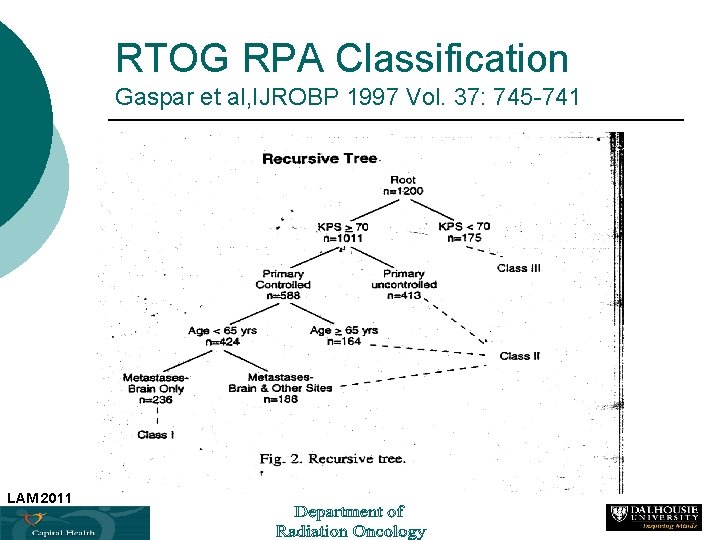
RTOG RPA Classification Gaspar et al, IJROBP 1997 Vol. 37: 745 -741 LAM 2011
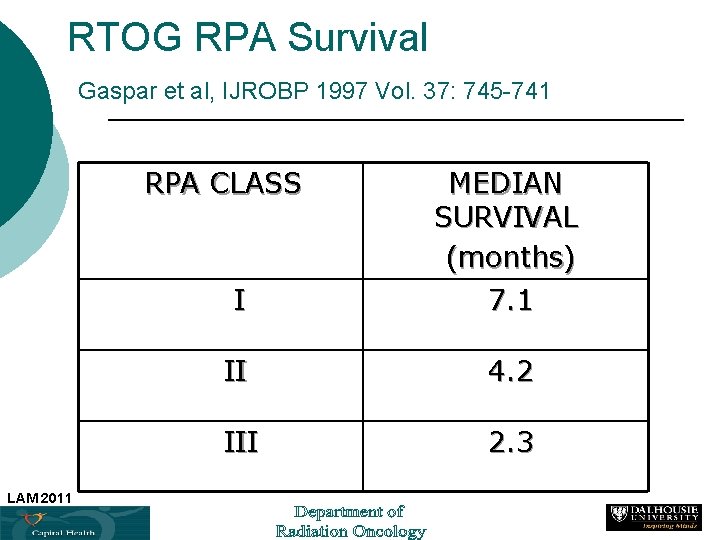
RTOG RPA Survival Gaspar et al, IJROBP 1997 Vol. 37: 745 -741 RPA CLASS LAM 2011 I MEDIAN SURVIVAL (months) 7. 1 II 4. 2 III 2. 3
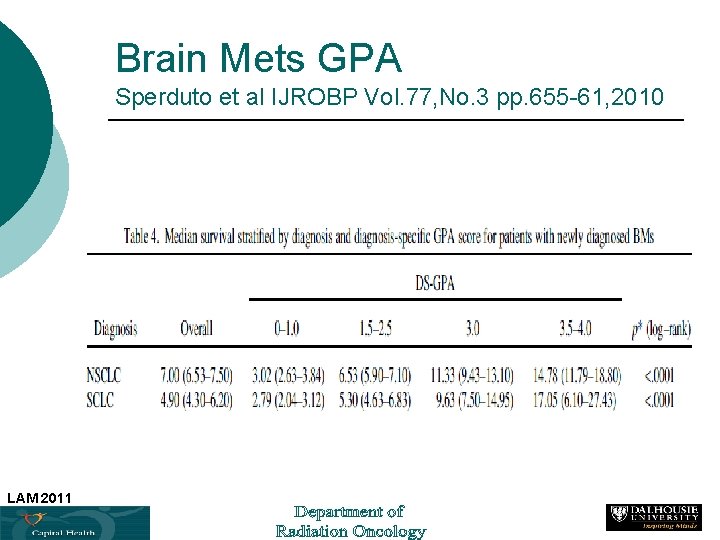
Brain Mets DS GPA Sperduto et al IJROBP Vol. 77, No. 3 pp. 655 -61, 2010 Disease specific and includes patients treated with S, SRS and WBRT ¡ Far more complicated than traditional RTOG RPA ¡ GPA score out of 4 makes sense in USA ¡ LAM 2011
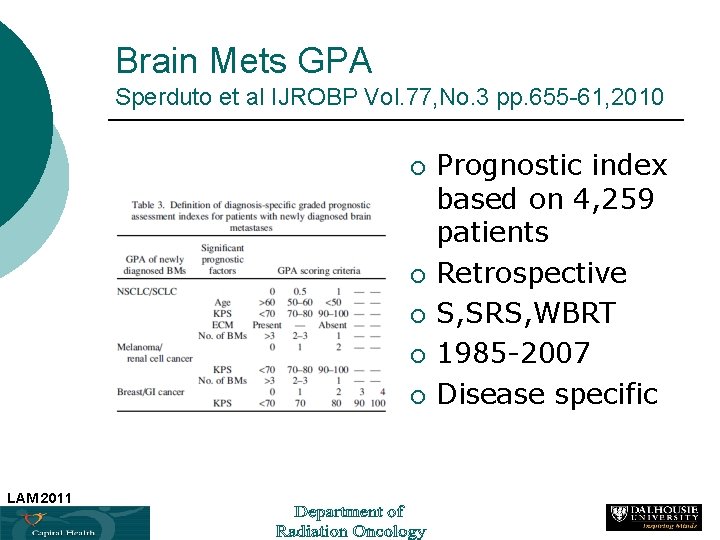
Brain Mets GPA Sperduto et al IJROBP Vol. 77, No. 3 pp. 655 -61, 2010 ¡ ¡ ¡ LAM 2011 Prognostic index based on 4, 259 patients Retrospective S, SRS, WBRT 1985 -2007 Disease specific
Brain Mets GPA Sperduto et al IJROBP Vol. 77, No. 3 pp. 655 -61, 2010 LAM 2011
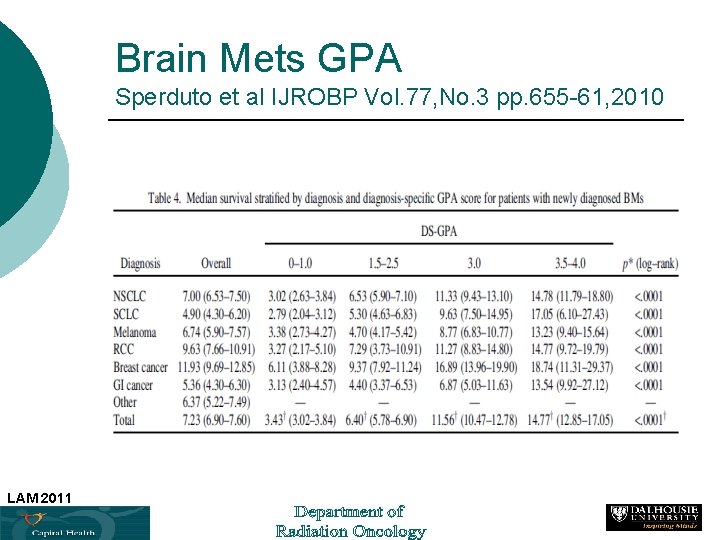
Brain Mets GPA Sperduto et al IJROBP Vol. 77, No. 3 pp. 655 -61, 2010 LAM 2011
Brain Metastases: Current Perspectives ¡ WBRT improves CNS disease control i. e. micrometastases in the rest of the brain ¡ WBRT results in significant neurocognitive impairment ¡ WBRT does not improve overall survival LAM 2011 15
Brain Metastases: Current Perspectives ¡ What are some of the endpoints to be considered when assessing RT (WBRT or SRS) for brain metastases? ¡ ¡ ¡ Local Control of existing mets CNS Control (mets and “micro-mets”) Overall Survival LAM 2011 16
Brain Metastases: Current Perspectives ¡ What are some of the endpoints to be considered when assessing RT (WBRT or SRS) for brain metastases? ¡ ¡ Quality of Life Functional Independence Neurocognitive Function Steroid Requirements LAM 2011 17
Brain Metastases: Current Perspectives ¡ LAM 2011 What other aspects should be considered when assessing RT (WBRT or SRS) for brain metastases? ¡ ¡ ¡ $$$$ Availability and timely access to RT How much RT, how often to deliver RT in patients with limited life expectancy? 18
Brain Metastases: Current Perspectives ¡ Which are the most important endpoints when assessing whole brain radiation therapy? ¡ Remember that the treatment intent is palliative. . LAM 2011 19
Early Season Overachievers LAM 2011 20
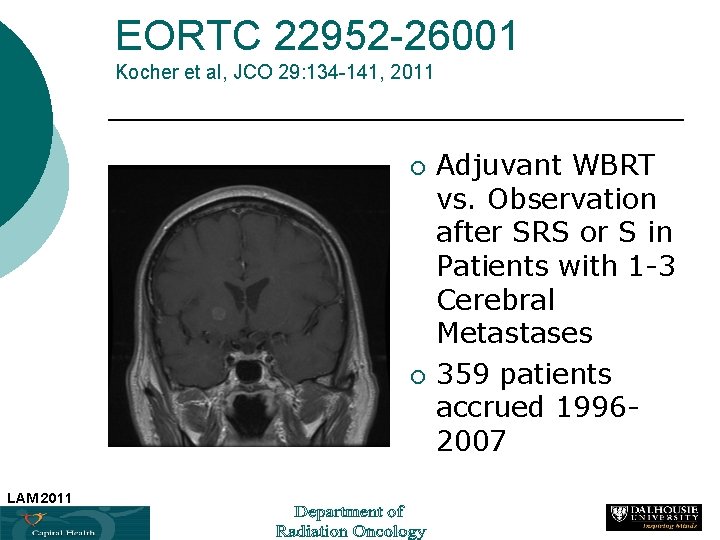
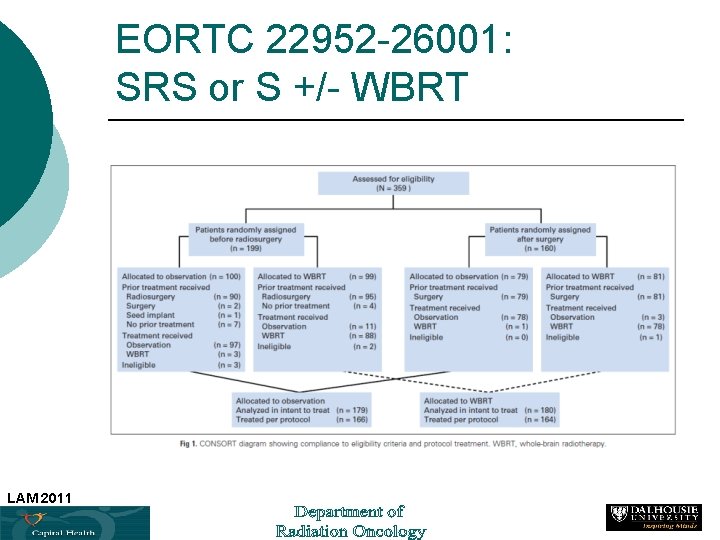
EORTC 22952 -26001 Kocher et al, JCO 29: 134 -141, 2011 ¡ ¡ Adjuvant WBRT vs. Observation after SRS or S in Patients with 1 -3 Cerebral Metastases 359 patients accrued 19962007 LAM 2011 21
EORTC 22952 -26001 ¡ ¡ ¡ SRS in 199, S in 160 53% NSCLC S arm: 95% had single mets; larger lesions vs. SRS and more often in post. fossa ¡ ¡ ¡ WBRT 30 Gy/10 fr. SRS 20 Gy peripheral dose, maximum lesion diameter 35 mm Patient groups well balanced LAM 2011 22
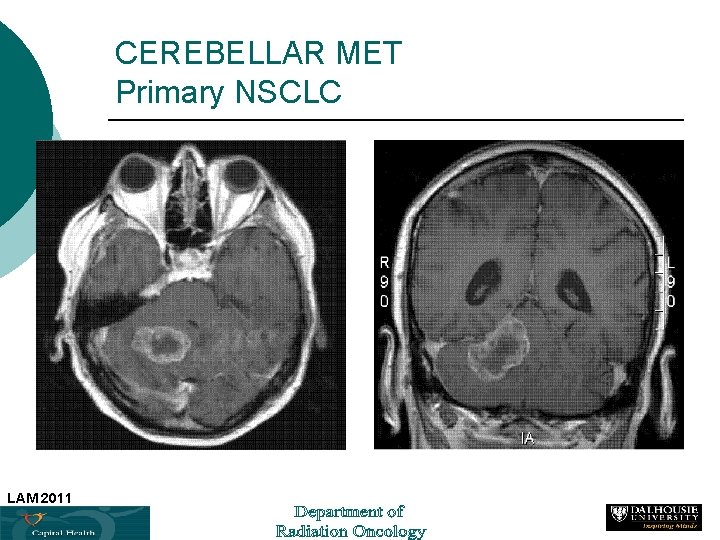
CEREBELLAR MET Primary NSCLC LAM 2011
EORTC 22952 -26001: SRS or S +/- WBRT LAM 2011 24
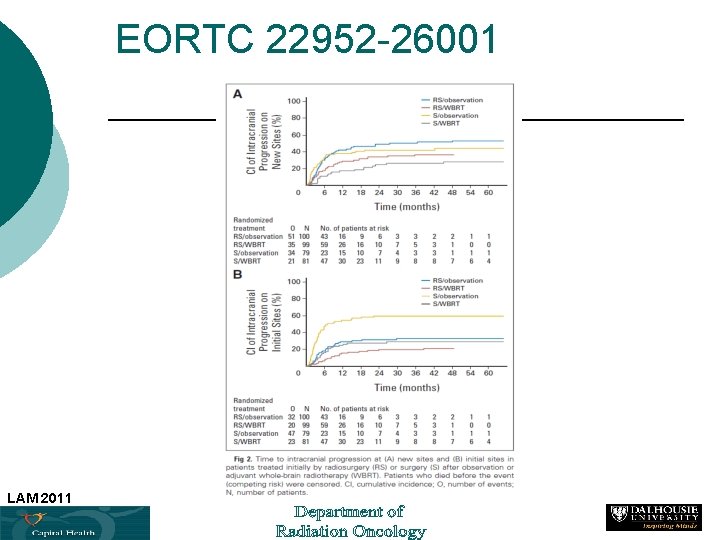
EORTC 22952 -26001 LAM 2011 25
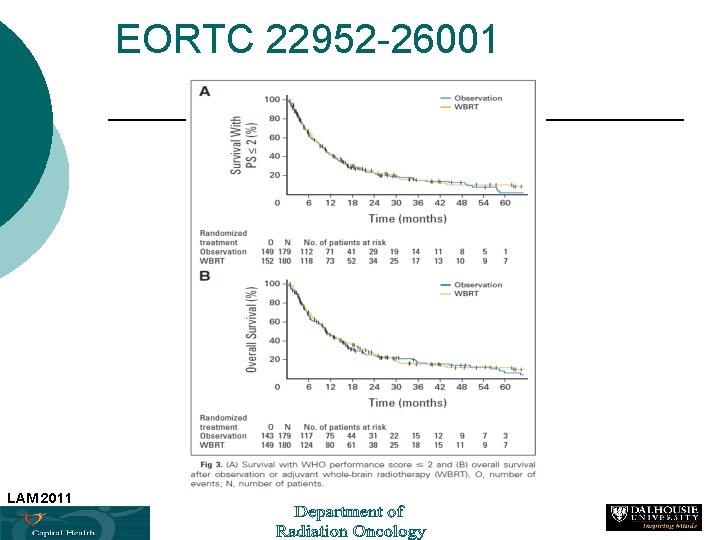
EORTC 22952 -26001 LAM 2011 26
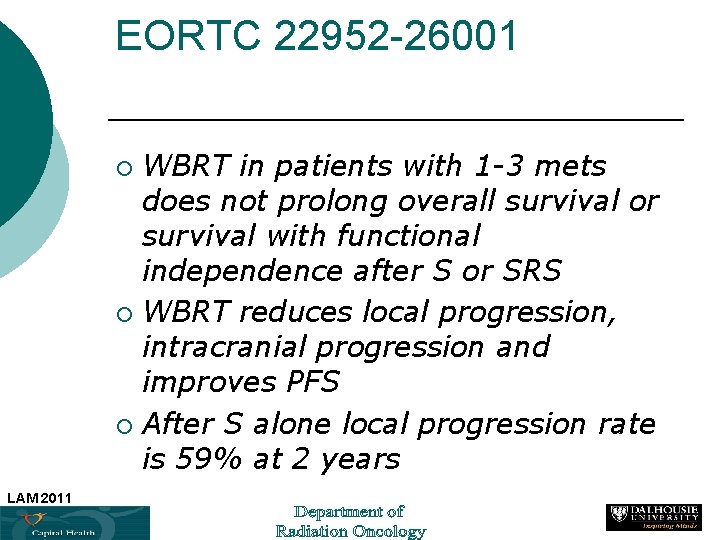
EORTC 22952 -26001 WBRT in patients with 1 -3 mets does not prolong overall survival or survival with functional independence after S or SRS ¡ WBRT reduces local progression, intracranial progression and improves PFS ¡ After S alone local progression rate is 59% at 2 years ¡ LAM 2011 27
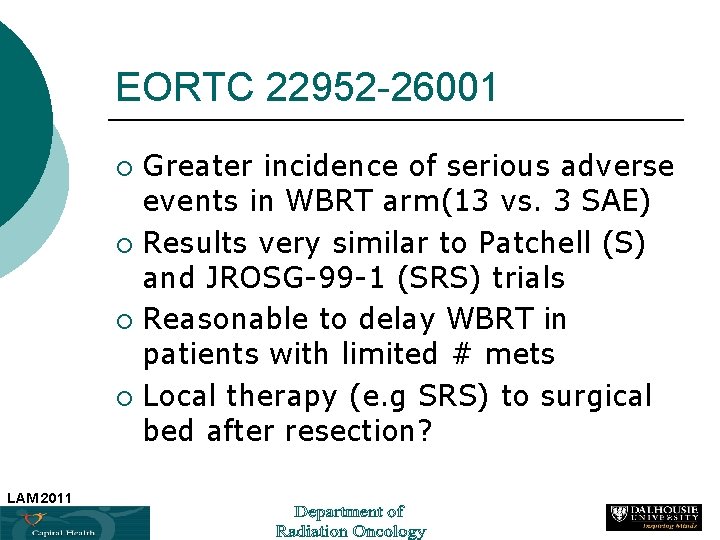
EORTC 22952 -26001 Greater incidence of serious adverse events in WBRT arm(13 vs. 3 SAE) ¡ Results very similar to Patchell (S) and JROSG-99 -1 (SRS) trials ¡ Reasonable to delay WBRT in patients with limited # mets ¡ Local therapy (e. g SRS) to surgical bed after resection? ¡ LAM 2011 28
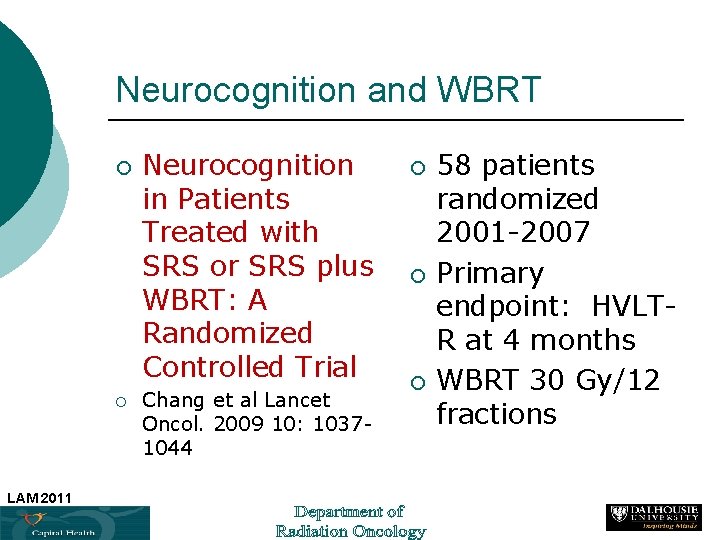
Neurocognition and WBRT ¡ ¡ Neurocognition in Patients Treated with SRS or SRS plus WBRT: A Randomized Controlled Trial Chang et al Lancet Oncol. 2009 10: 10371044 ¡ ¡ ¡ 58 patients randomized 2001 -2007 Primary endpoint: HVLTR at 4 months WBRT 30 Gy/12 fractions LAM 2011 29
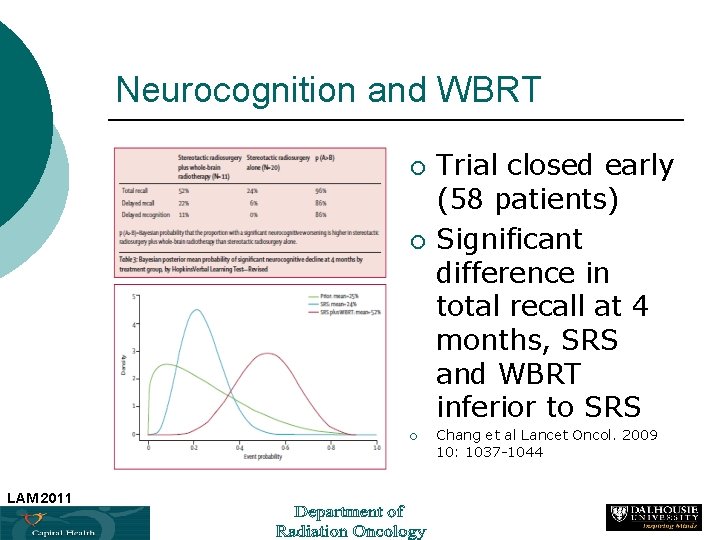
Neurocognition and WBRT ¡ ¡ ¡ Trial closed early (58 patients) Significant difference in total recall at 4 months, SRS and WBRT inferior to SRS Chang et al Lancet Oncol. 2009 10: 1037 -1044 LAM 2011 30
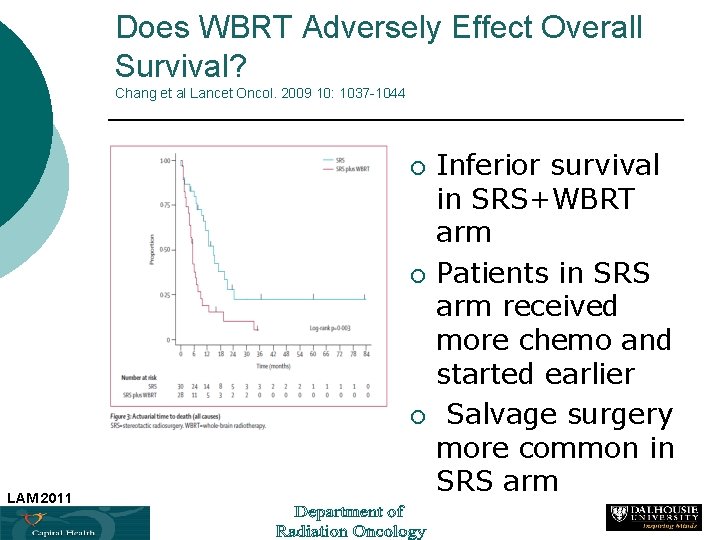
Does WBRT Adversely Effect Overall Survival? Chang et al Lancet Oncol. 2009 10: 1037 -1044 ¡ ¡ ¡ LAM 2011 Inferior survival in SRS+WBRT arm Patients in SRS arm received more chemo and started earlier Salvage surgery more common in SRS arm 31
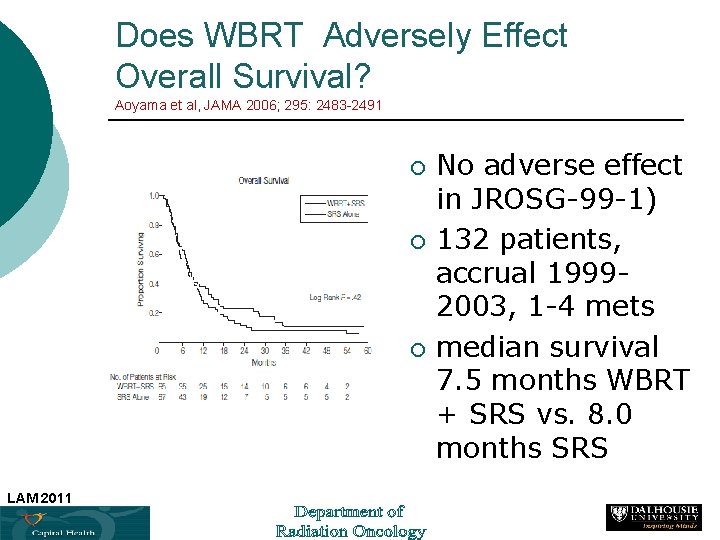
Does WBRT Adversely Effect Overall Survival? Aoyama et al, JAMA 2006; 295: 2483 -2491 ¡ ¡ ¡ No adverse effect in JROSG-99 -1) 132 patients, accrual 19992003, 1 -4 mets median survival 7. 5 months WBRT + SRS vs. 8. 0 months SRS LAM 2011 32
Does WBRT Adversely Effect Overall Survival? Negative effect in Chang trial not seen in JROSG-99 -1, EORTC 2295226001(reviewed earlier) and a surgical trial published by Patchell ¡ No survival benefit as an “adjuvant” therapy ¡ LAM 2011 33
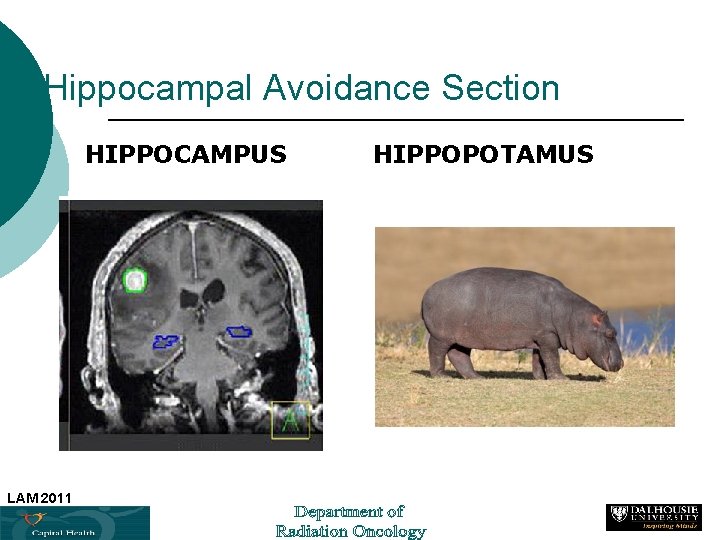
Hippocampal Avoidance Section HIPPOCAMPUS HIPPOPOTAMUS LAM 2011 34
Hippocampal Avoidance Emerging evidence suggests that a neural stem cell compartment in the hippocampus is key to the pathogenesis of neurocognitive deficits observed after cranial RT ¡ Neural progenitor cells are anatomically clustered within the dentate gyrus of the hippocampus ¡ LAM 2011 35
Hippocampal Avoidance LAM 2011 36
Hippocampal Avoidance Following RT neural progenitor cells become less proliferative, more apoptotic, more likely to adopt a gliogenic fate ¡ Inflammation in the area surrounding the neural stem cells is a major contributing factor to RT effect ¡ LAM 2011 37
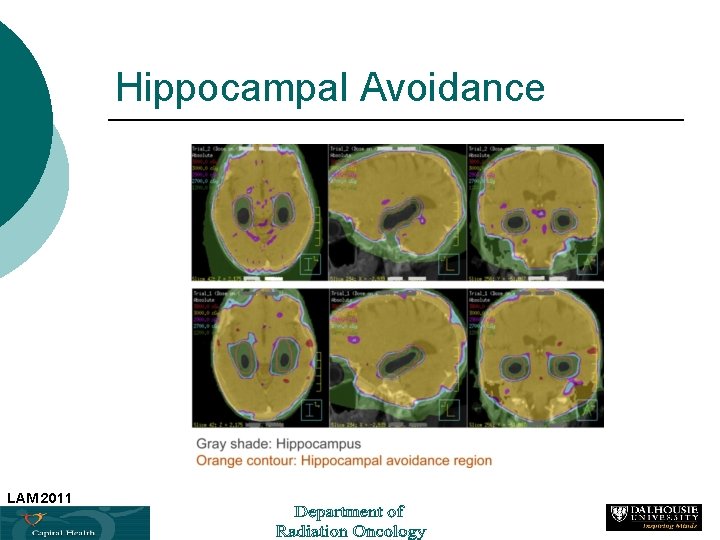
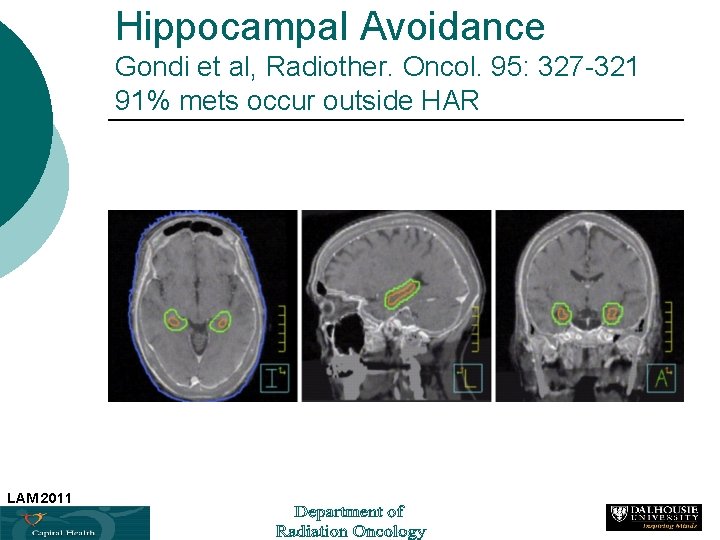
Hippocampal Avoidance Hippocampus + 5 mm= Hippocampal Avoidance Region ¡ Planning study by Gondi et al (5 patients) showed mean HAR of 3. 3 cubic cm ¡ HAR represents approx. 2% of whole brain volume ¡ LAM 2011 38
Hippocampal Avoidance Gondi et al, Radiother. Oncol. 95: 327 -321 91% mets occur outside HAR LAM 2011 39
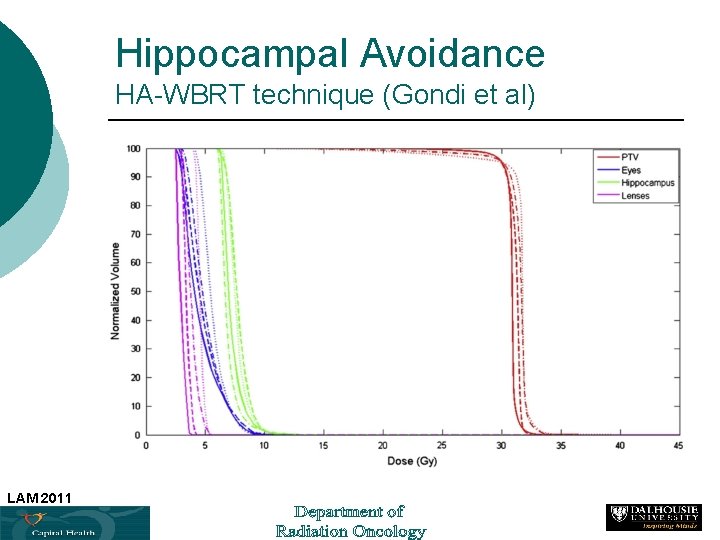
Hippocampal Avoidance HA-WBRT technique (Gondi et al) LAM 2011 40
Hippocampal Avoidance Save the hippos! ¡ ¡ ¡ HA-WBRT may prevent/reduce neurocognitive impairment RTOG 0933 is evaluating HA-WBRT and NCF HA-WBRT should only be done within clinical trials at this time LAM 2011 41
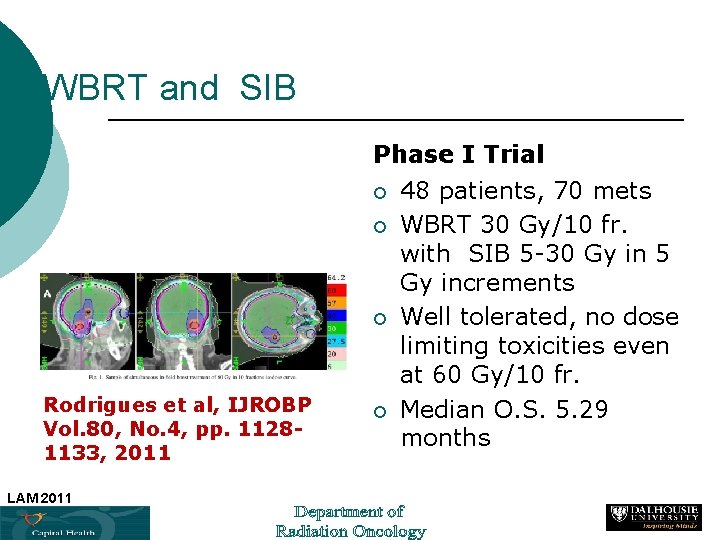
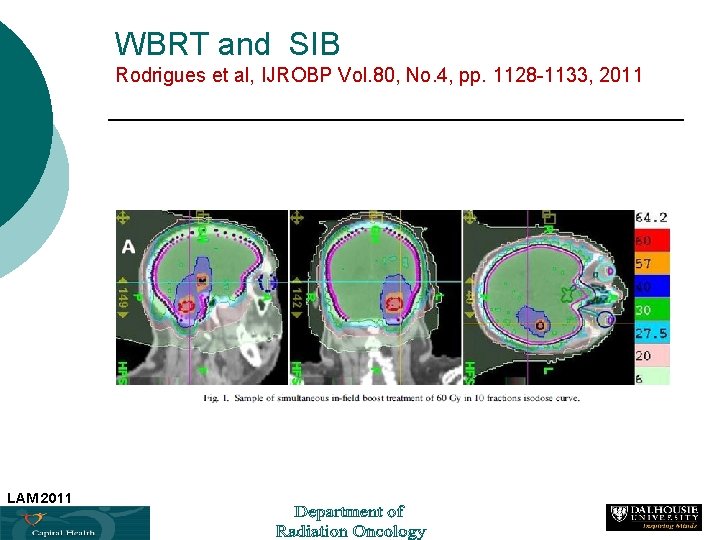
WBRT and SIB=simultaneous integrated boost of metastases ¡ Tomotherapy or VMAT are efficient ways of delivering SIB with WBRT ¡ UWO (Rodrigues et al) performed an elegant Phase I clinical to assess safety of this approach using helical tomotherapy ¡ LAM 2011 42
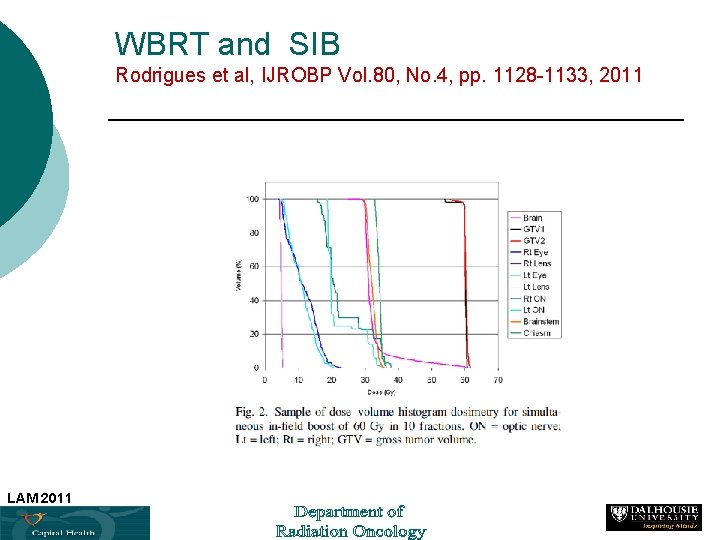
WBRT and SIB Phase I Trial ¡ ¡ ¡ Rodrigues et al, IJROBP Vol. 80, No. 4, pp. 11281133, 2011 ¡ 48 patients, 70 mets WBRT 30 Gy/10 fr. with SIB 5 -30 Gy in 5 Gy increments Well tolerated, no dose limiting toxicities even at 60 Gy/10 fr. Median O. S. 5. 29 months LAM 2011 43
WBRT and SIB Rodrigues et al, IJROBP Vol. 80, No. 4, pp. 1128 -1133, 2011 LAM 2011 44
WBRT and SIB Rodrigues et al, IJROBP Vol. 80, No. 4, pp. 1128 -1133, 2011 LAM 2011 45
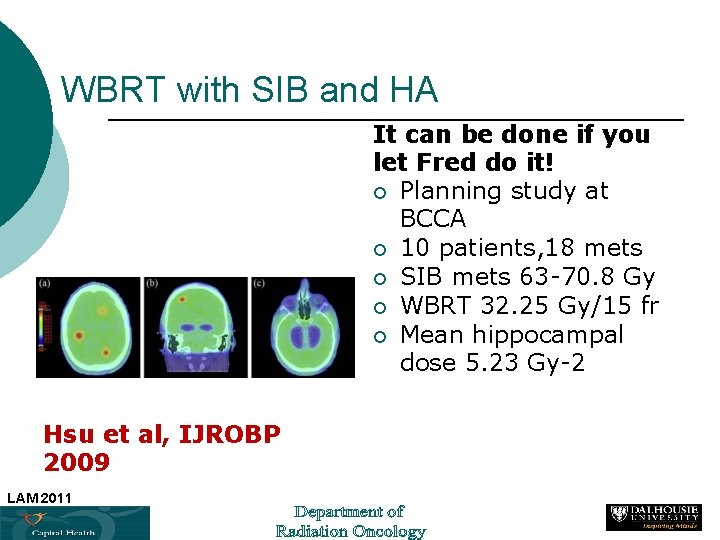
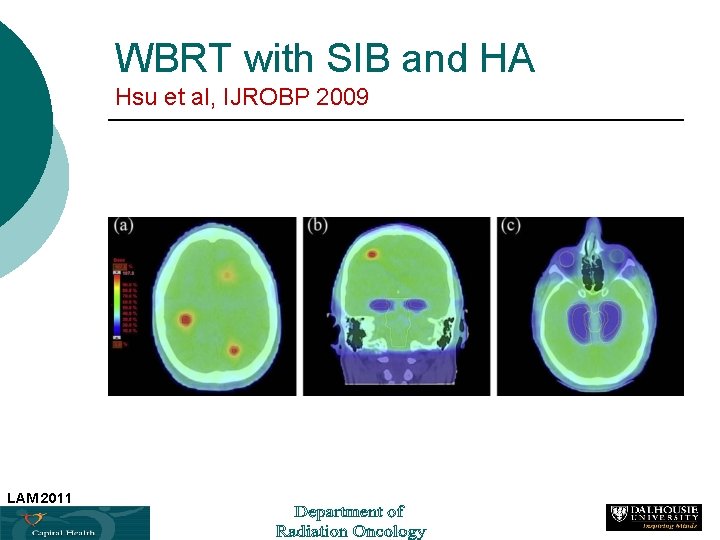
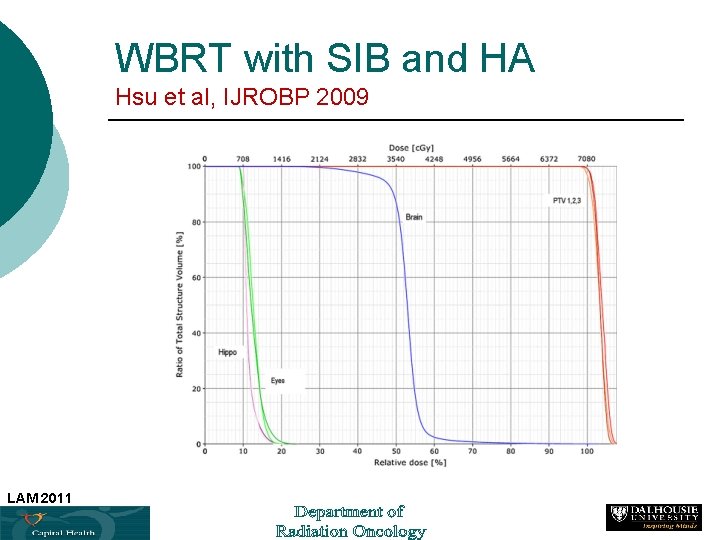
WBRT with SIB and HA It can be done if you let Fred do it! ¡ Planning study at BCCA ¡ 10 patients, 18 mets ¡ SIB mets 63 -70. 8 Gy ¡ WBRT 32. 25 Gy/15 fr ¡ Mean hippocampal dose 5. 23 Gy-2 Hsu et al, IJROBP 2009 LAM 2011 46
WBRT with SIB and HA Hsu et al, IJROBP 2009 LAM 2011 47
WBRT with SIB and HA Hsu et al, IJROBP 2009 LAM 2011 48
LAM 2011
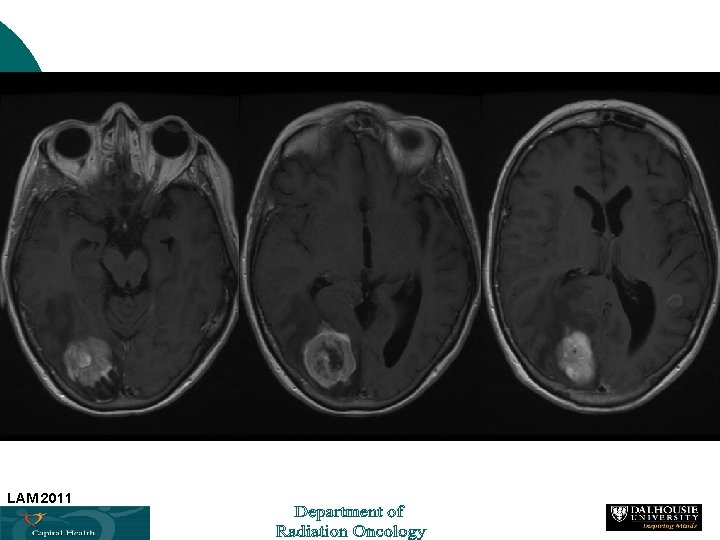
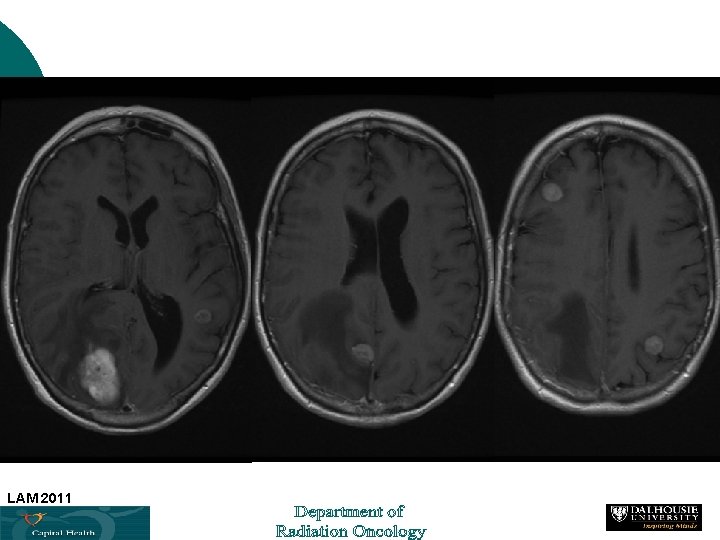
Example Case Various options. . . ¡ 63 year old female, metastatic breast cancer, excellent condition ¡ RTOG RPA class 2 ¡ GPA 3 or 4, median survival 16 -18 months ¡ 6 mets, largest/symptomatic met excised ¡ LAM 2011 50
LAM 2011
Conclusions Various management options should be considered and treatment should be individualized ¡ WBRT should not be abandoned but must evolve/improve ¡ HA-WBRT and SIB should be studied - in clinical trials that Atlantic Canadians can participate in ¡ LAM 2011 52