
Management of Persistent Post Concussion Symptoms David Cudmore





- Slides: 126
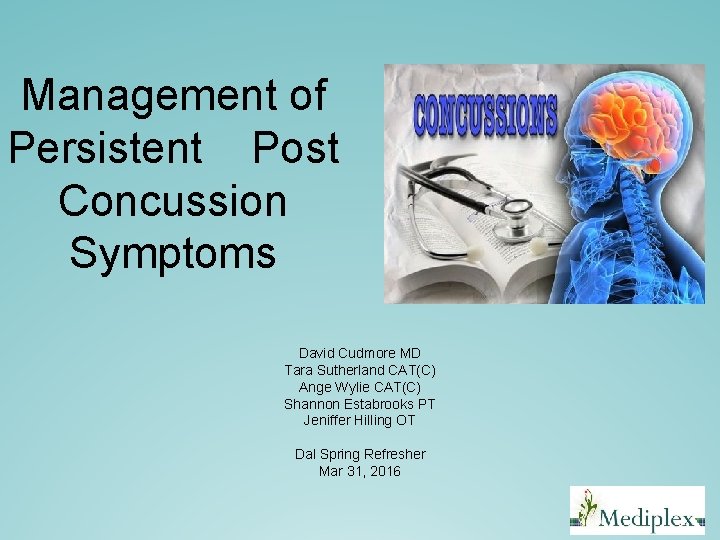
Management of Persistent Post Concussion Symptoms David Cudmore MD Tara Sutherland CAT(C) Ange Wylie CAT(C) Shannon Estabrooks PT Jeniffer Hilling OT Dal Spring Refresher Mar 31, 2016
No conflict of interest
Presentation Outline Medical • Diagnosis • Investigations • Rx Athletic Therapy • Return to LEARN • Return to PLAY/Activity Physiotherapy • Management of balance and visual problems Occupational Therapy • Return to WORK
Our Concussion Clinic Model • Referrals from ER, community physicians, and other primary healthcare providers. • Seen by AT and MD • Referred to other team members as required: OT, PT, Mental Health, Social Work, Massage Therapy, Osteopathy, Craniosacral Therapy
Management of Persistent Post Concussion Symptoms
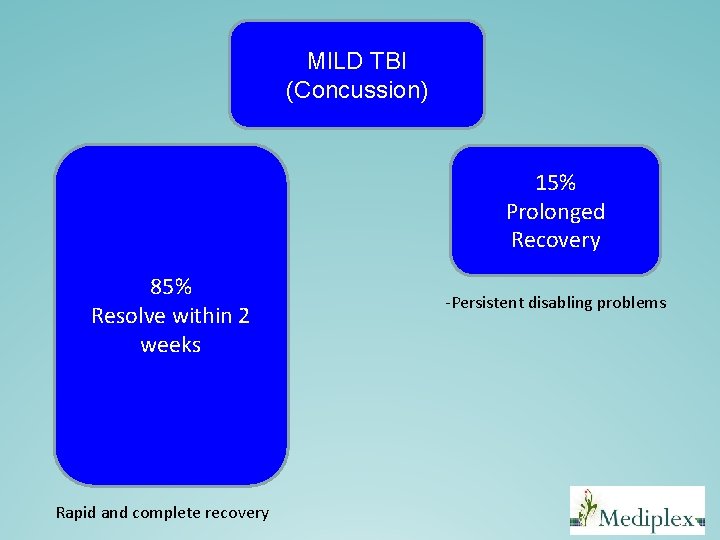
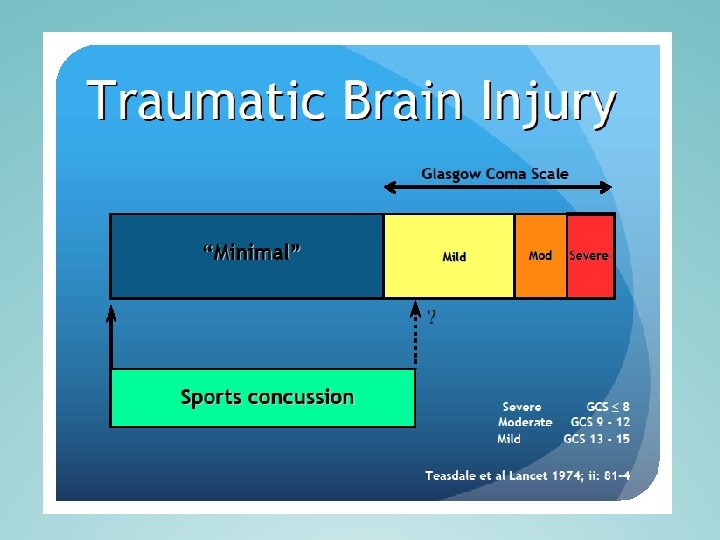
MILD TBI (Concussion) 15% Prolonged Recovery 85% Resolve within 2 weeks Rapid and complete recovery -Persistent disabling problems
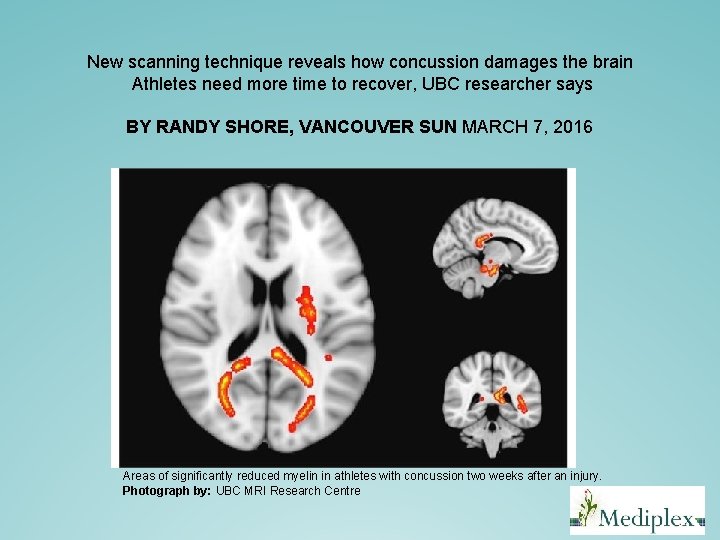
New scanning technique reveals how concussion damages the brain Athletes need more time to recover, UBC researcher says BY RANDY SHORE, VANCOUVER SUN MARCH 7, 2016 Areas of significantly reduced myelin in athletes with concussion two weeks after an injury. Photograph by: UBC MRI Research Centre
Can we predict who will have persistent post concussion symptoms?
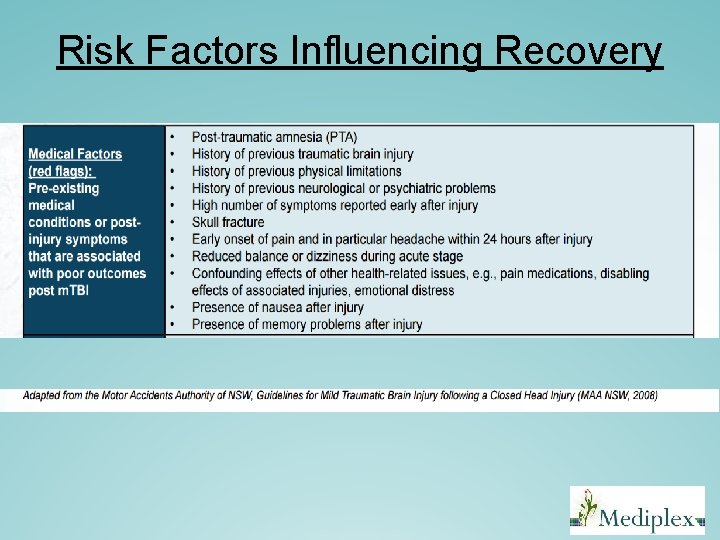
Risk Factors Influencing Recovery
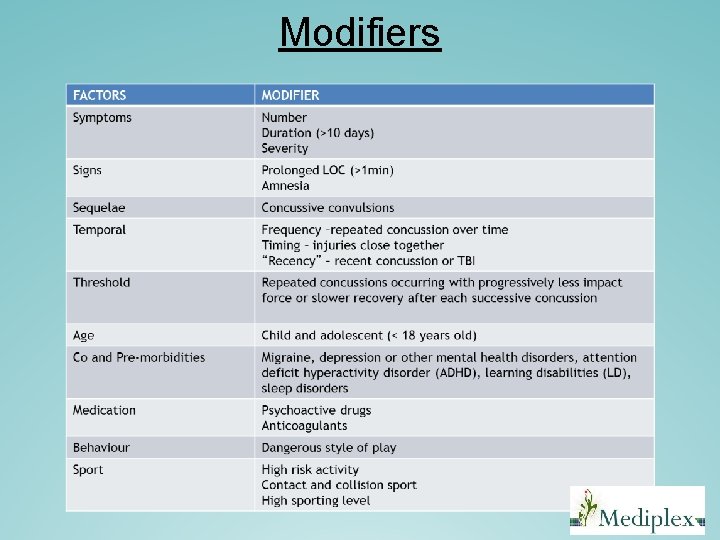
Modifiers
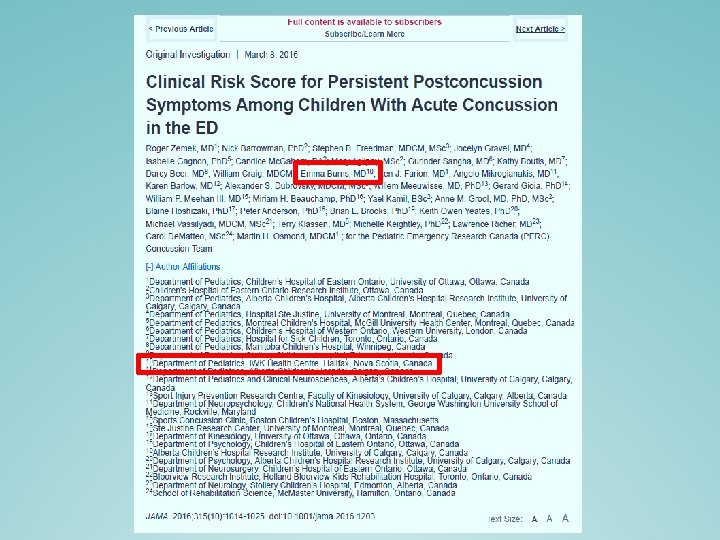
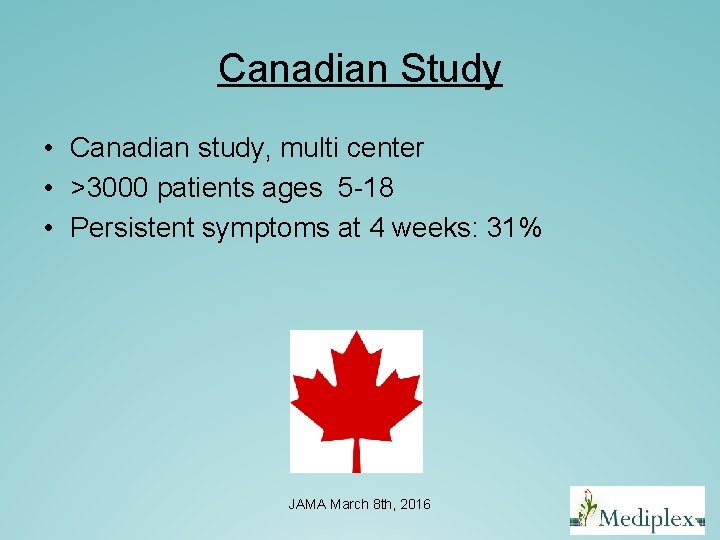
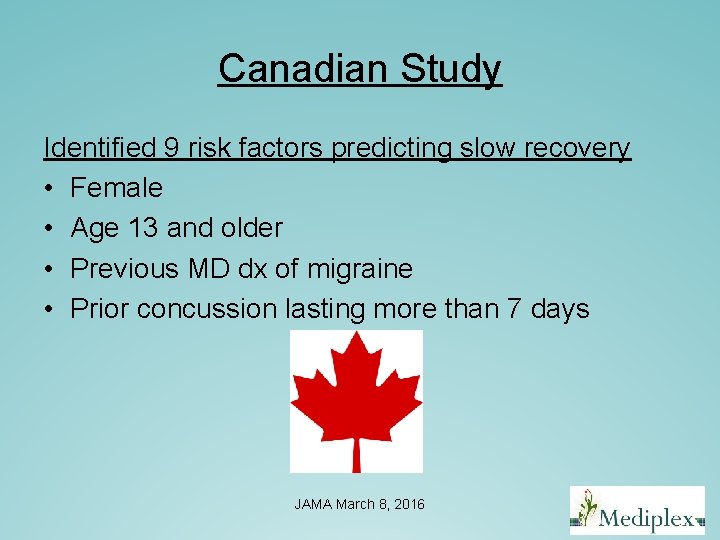
Canadian Study • Canadian study, multi center • >3000 patients ages 5 -18 • Persistent symptoms at 4 weeks: 31% JAMA March 8 th, 2016
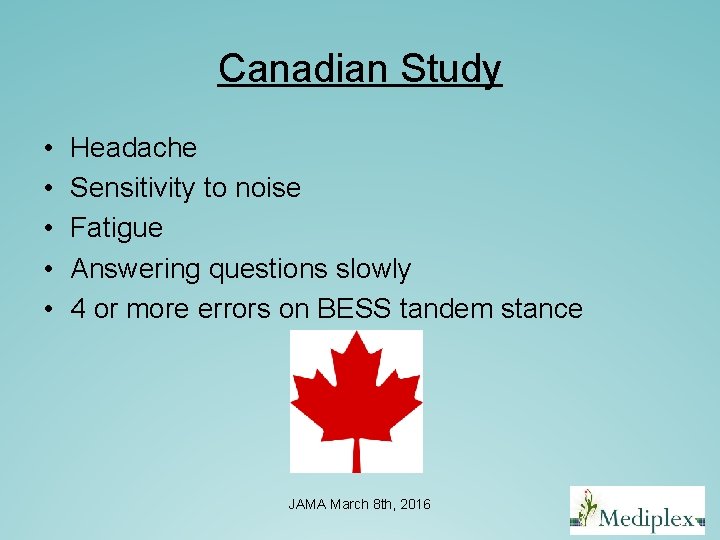
Canadian Study Identified 9 risk factors predicting slow recovery • Female • Age 13 and older • Previous MD dx of migraine • Prior concussion lasting more than 7 days JAMA March 8, 2016
Canadian Study • • • Headache Sensitivity to noise Fatigue Answering questions slowly 4 or more errors on BESS tandem stance JAMA March 8 th, 2016
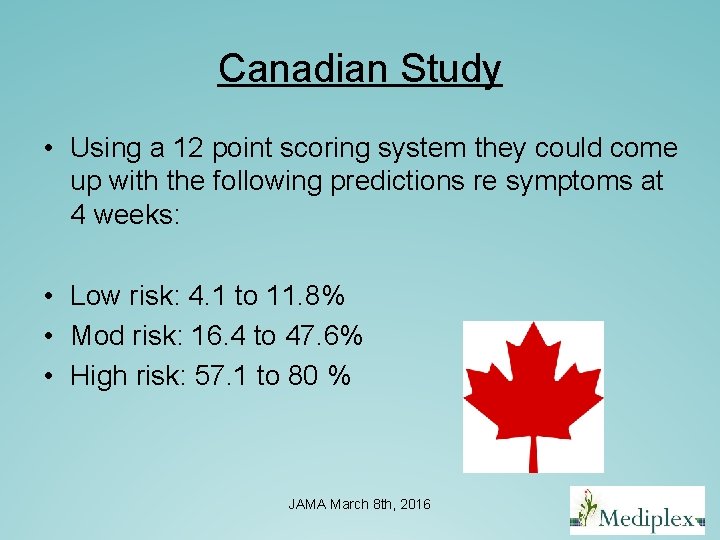
Canadian Study • Using a 12 point scoring system they could come up with the following predictions re symptoms at 4 weeks: • Low risk: 4. 1 to 11. 8% • Mod risk: 16. 4 to 47. 6% • High risk: 57. 1 to 80 % JAMA March 8 th, 2016
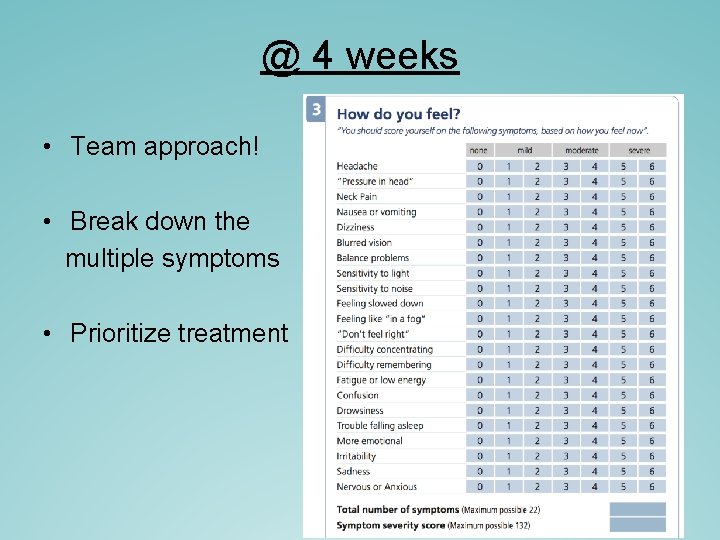
@ 4 weeks • Team approach! • Break down the multiple symptoms • Prioritize treatment
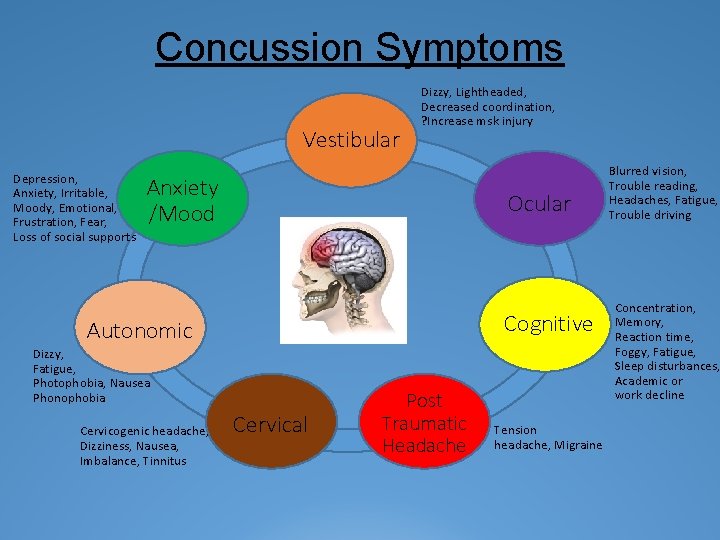
Concussion Symptoms Vestibular Depression, Anxiety, Irritable, Moody, Emotional, Frustration, Fear, Loss of social supports Dizzy, Lightheaded, Decreased coordination, ? Increase msk injury Anxiety /Mood Ocular Cognitive Autonomic Dizzy, Fatigue, Photophobia, Nausea Phonophobia Cervicogenic headache, Dizziness, Nausea, Imbalance, Tinnitus Cervical Post Traumatic Headache Tension headache, Migraine Blurred vision, Trouble reading, Headaches, Fatigue, Trouble driving Concentration, Memory, Reaction time, Foggy, Fatigue, Sleep disturbances, Academic or work decline
Medical Responsibilities • • Diagnosis Imaging Labs Medications Referrals Letters to schools, employers, WCB Follow up
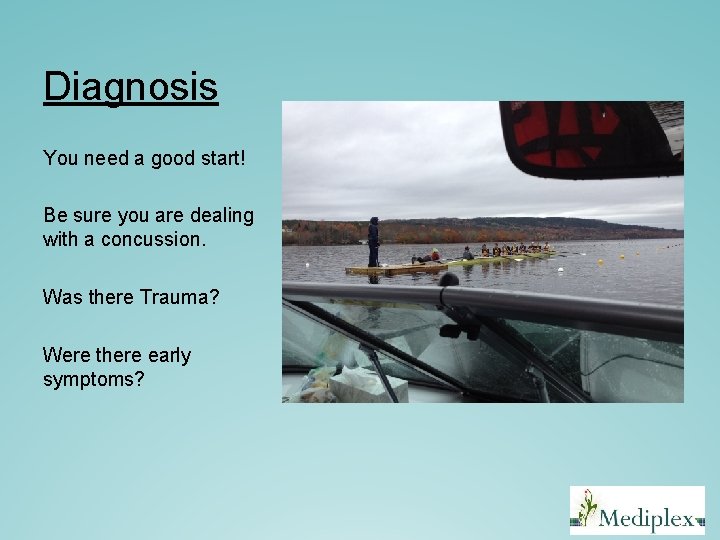
Diagnosis You need a good start! Be sure you are dealing with a concussion. Was there Trauma? Were there early symptoms?
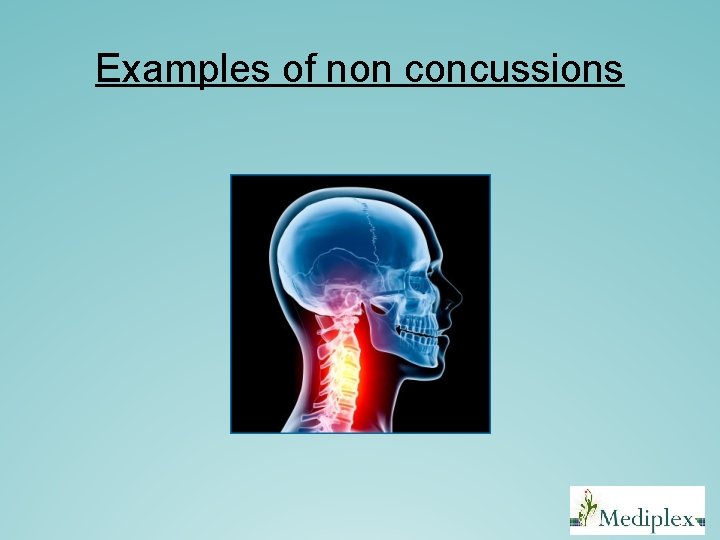
Examples of non concussions
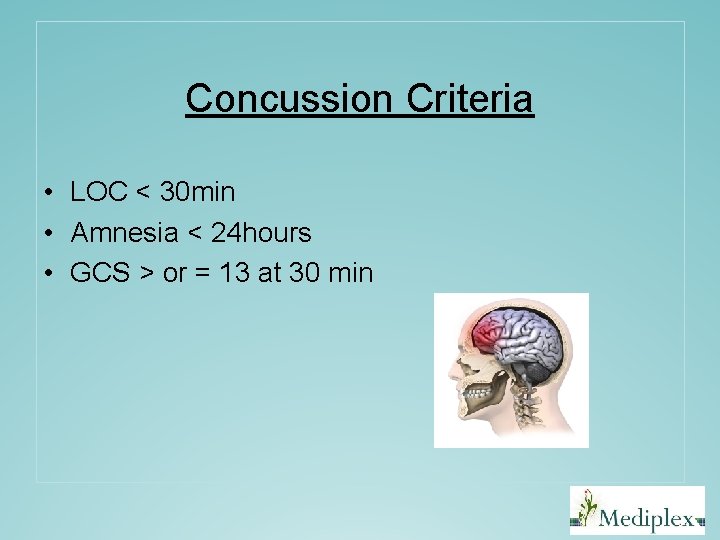
Concussion Criteria • LOC < 30 min • Amnesia < 24 hours • GCS > or = 13 at 30 min
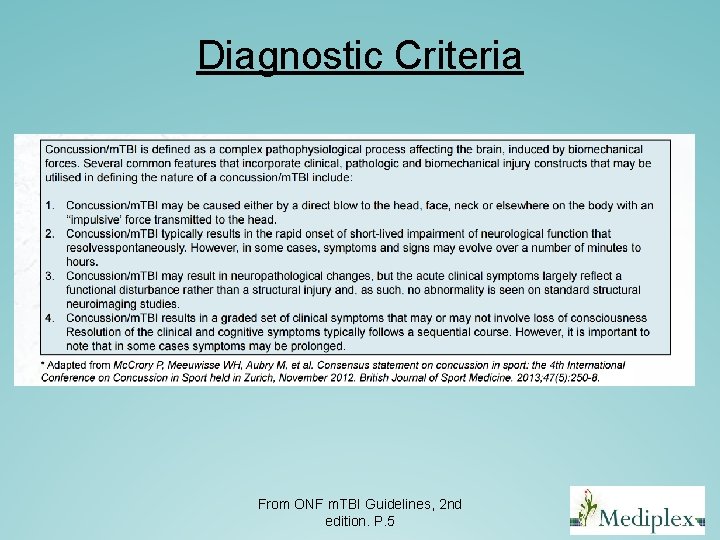
Diagnostic Criteria From ONF m. TBI Guidelines, 2 nd edition. P. 5
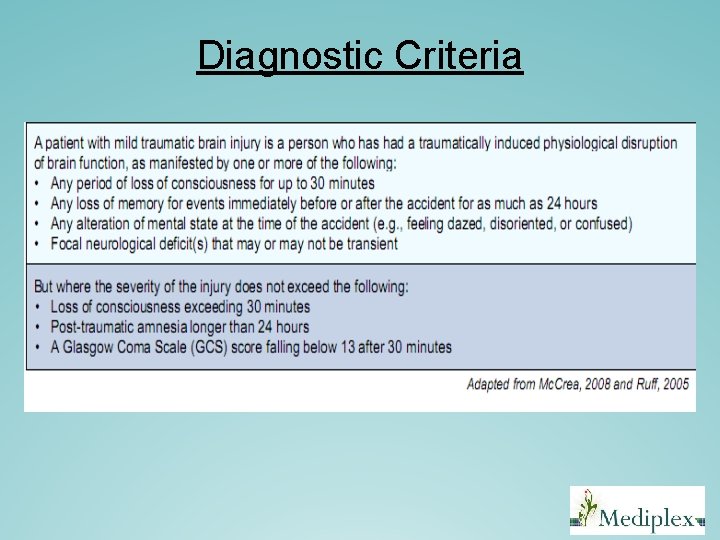
Diagnostic Criteria
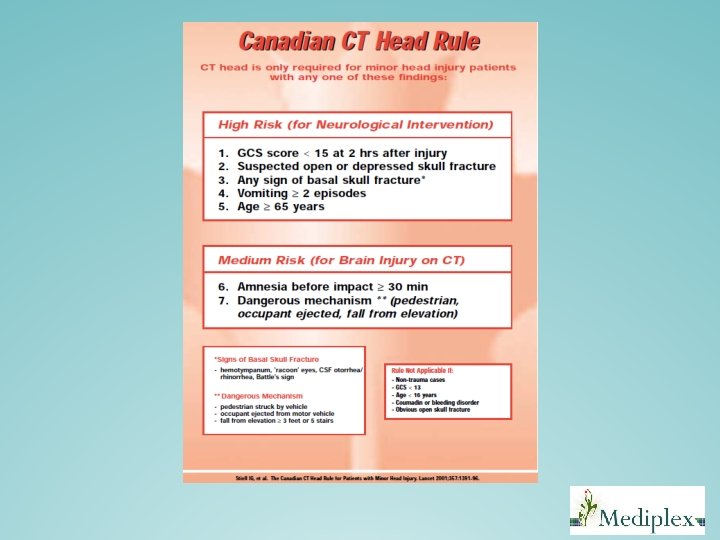
IMAGING • • CT Rarely useful MRI possibly @ 3 -6 mths Plain C Spine CT/ MRI C Spine
Laboratory • Rule out medical conditions when necessary for non specific symptoms – Fatigue – Nausea
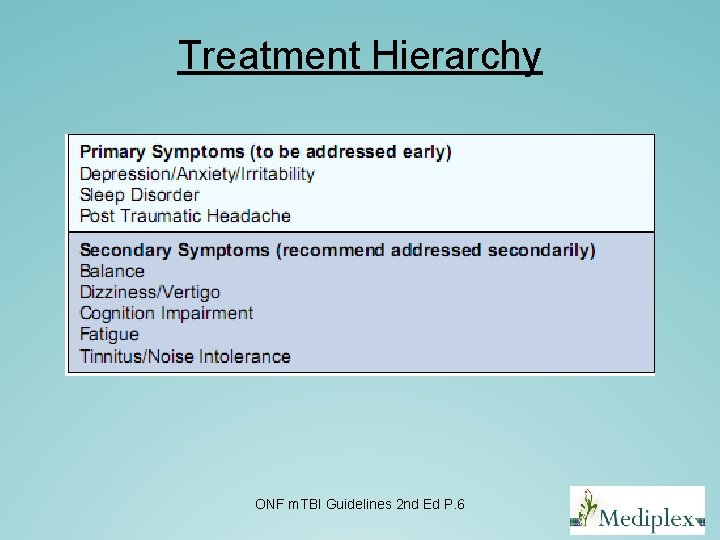
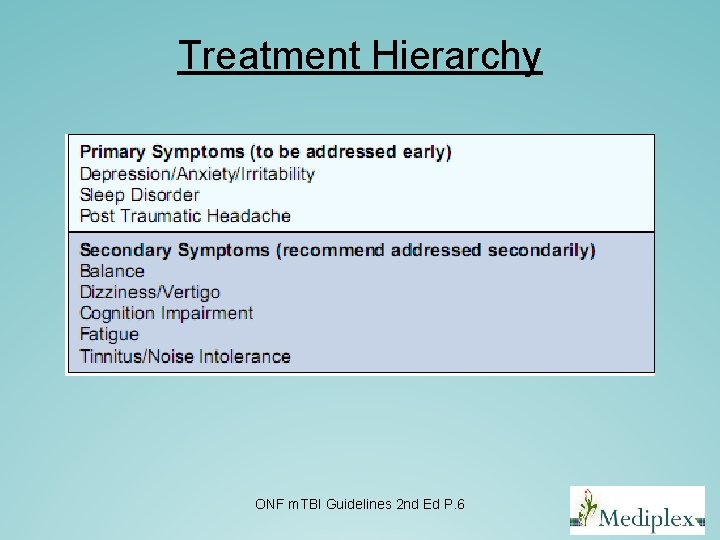
Treatment Hierarchy ONF m. TBI Guidelines 2 nd Ed P. 6
Medications • Depression/ Anxiety/ Irritability – Citalopram (Celexa) – Escitalopram (Cipralex) – Sertraline (Zoloft) • Monitor with PHQ-9 and GAD 7 scales
Medications • Sleep – Zopiclone (Imovane) – Lorazepam (Ativan) – Melatonin? ?
Medications • Headache – No Narcotics – OTC tylenol, NSAIDS (caution regarding rebound) – Amitriptyline (Elavil) 10 -20 mg qhs daily
Treatment Hierarchy ONF m. TBI Guidelines 2 nd Ed P. 6
Referral to other team members
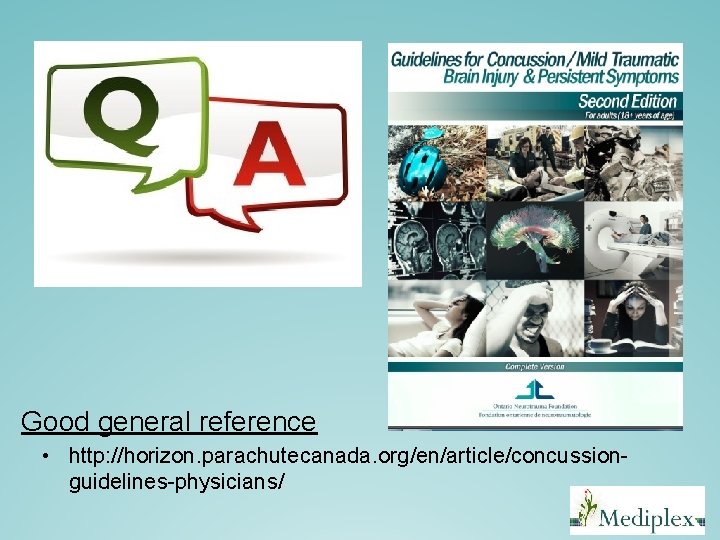
Good general reference • http: //horizon. parachutecanada. org/en/article/concussionguidelines-physicians/
Return to Learn, Academic Modifications for Concussions Angela Wylie CAT(C). , M. Ed. , ATTH. , BSc. HKin.
Why is a Return to Learn Plan Important? Working in the Antigonish Concussion Clinic, I have seen first hand how students can struggle to get back on track academically post concussion. Taking time off from classes can be seen as a “vacation” by educators. Missing time until completely symptom free is not practical.
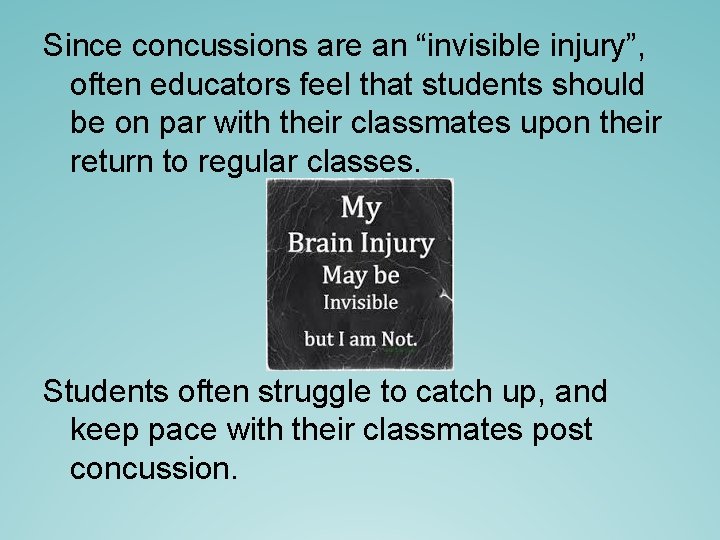
Since concussions are an “invisible injury”, often educators feel that students should be on par with their classmates upon their return to regular classes. Students often struggle to catch up, and keep pace with their classmates post concussion.
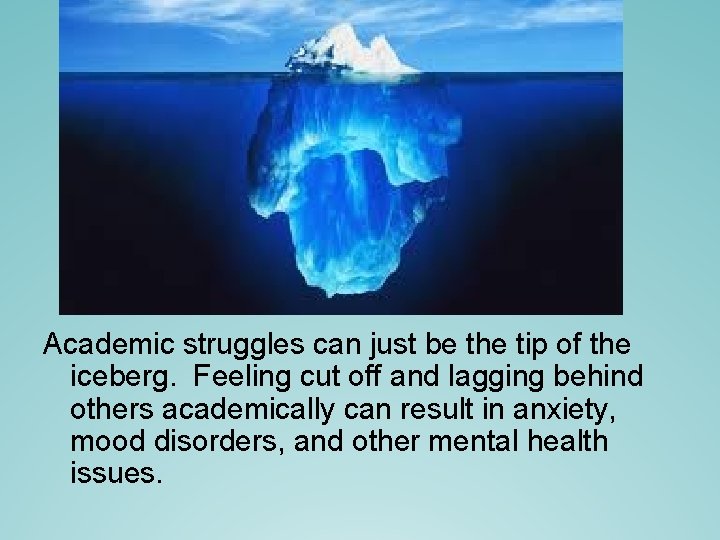
Academic struggles can just be the tip of the iceberg. Feeling cut off and lagging behind others academically can result in anxiety, mood disorders, and other mental health issues.
Why is this important cont’d We already know that different people learn in different ways…. this is even more evident in those recovering from concussion symptoms. Return to Learn (RTL) protocols have evolved from Return to Play protocols. They can help students, parents, and educators navigate the return to school with more confidence and success.
The majority (80– 90%) of concussions resolve in a short (7– 10 days) period, although the recovery time frame may be longer in children and adolescents. It is during these longer recovery times that a return to learn protocol may need to be referenced.
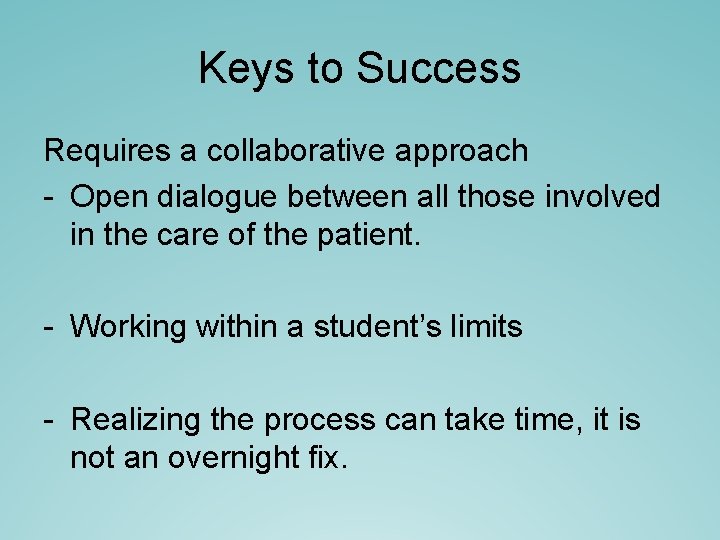
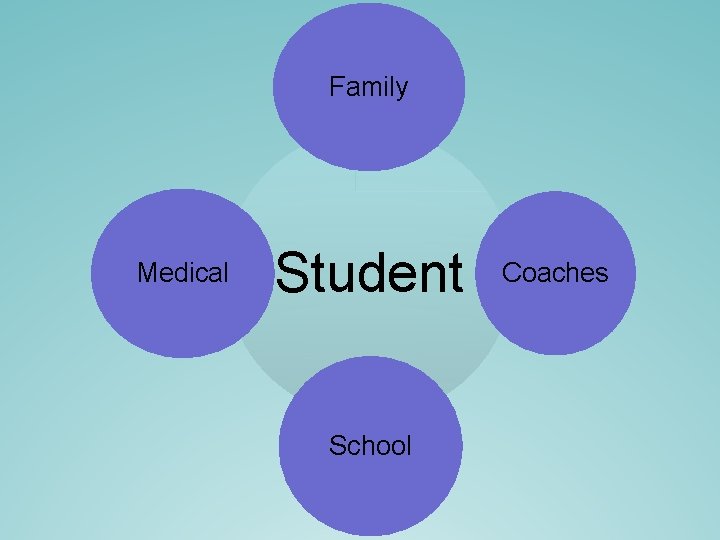
Keys to Success Requires a collaborative approach - Open dialogue between all those involved in the care of the patient. - Working within a student’s limits - Realizing the process can take time, it is not an overnight fix.
Family Medical Student School Coaches
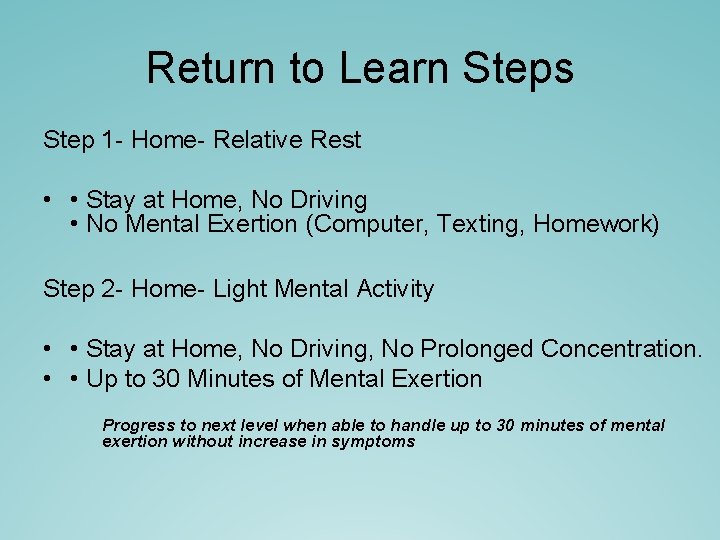
Return to Learn Steps Step 1 - Home- Relative Rest • • Stay at Home, No Driving • No Mental Exertion (Computer, Texting, Homework) Step 2 - Home- Light Mental Activity • • Stay at Home, No Driving, No Prolonged Concentration. • • Up to 30 Minutes of Mental Exertion Progress to next level when able to handle up to 30 minutes of mental exertion without increase in symptoms
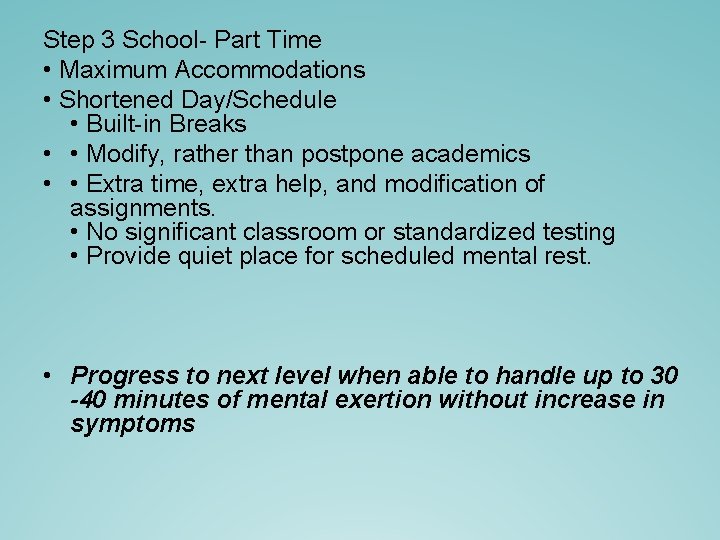
Step 3 School- Part Time • Maximum Accommodations • Shortened Day/Schedule • Built-in Breaks • • Modify, rather than postpone academics • • Extra time, extra help, and modification of assignments. • No significant classroom or standardized testing • Provide quiet place for scheduled mental rest. • Progress to next level when able to handle up to 30 -40 minutes of mental exertion without increase in symptoms
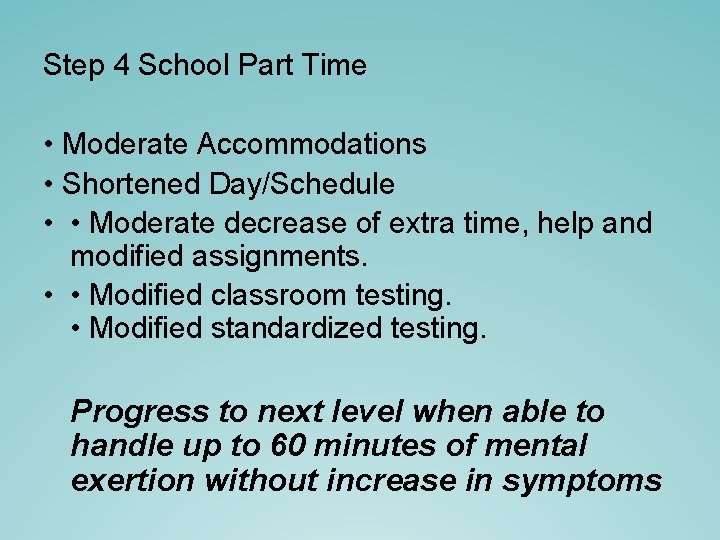
Step 4 School Part Time • Moderate Accommodations • Shortened Day/Schedule • • Moderate decrease of extra time, help and modified assignments. • • Modified classroom testing. • Modified standardized testing. Progress to next level when able to handle up to 60 minutes of mental exertion without increase in symptoms
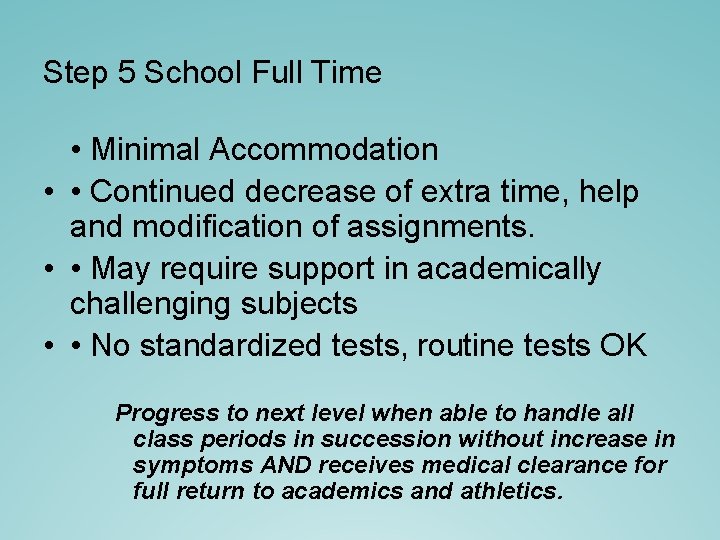
Step 5 School Full Time • Minimal Accommodation • • Continued decrease of extra time, help and modification of assignments. • • May require support in academically challenging subjects • • No standardized tests, routine tests OK Progress to next level when able to handle all class periods in succession without increase in symptoms AND receives medical clearance for full return to academics and athletics.
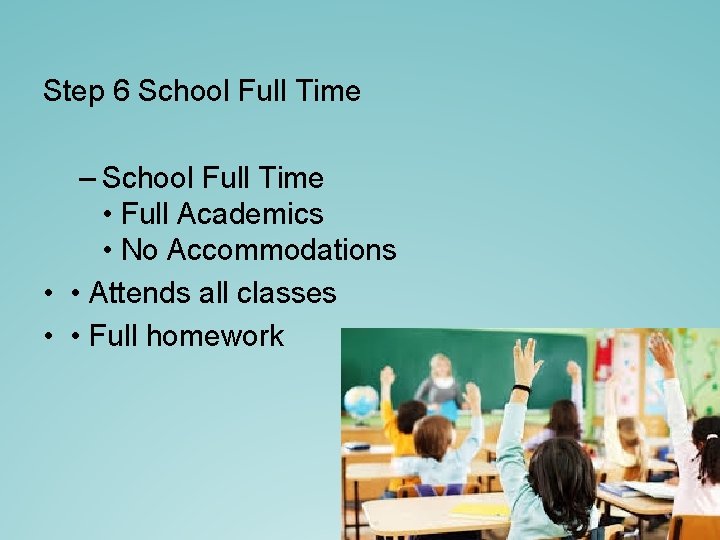
Step 6 School Full Time – School Full Time • Full Academics • No Accommodations • • Attends all classes • • Full homework
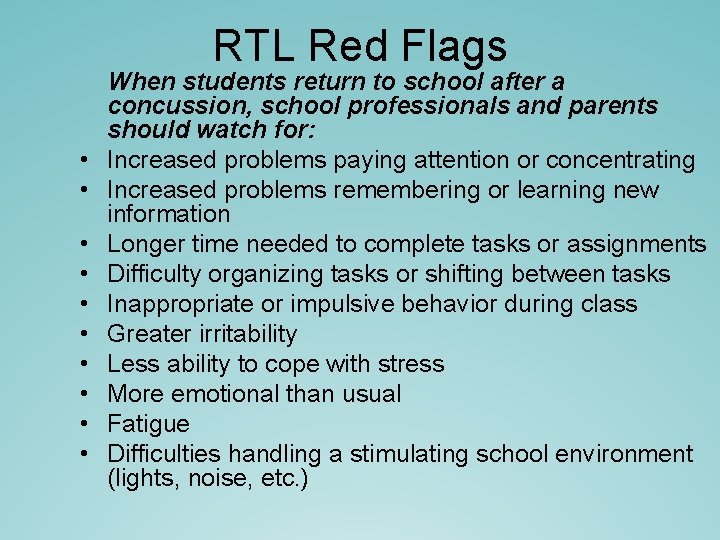
RTL Red Flags • • • When students return to school after a concussion, school professionals and parents should watch for: Increased problems paying attention or concentrating Increased problems remembering or learning new information Longer time needed to complete tasks or assignments Difficulty organizing tasks or shifting between tasks Inappropriate or impulsive behavior during class Greater irritability Less ability to cope with stress More emotional than usual Fatigue Difficulties handling a stimulating school environment (lights, noise, etc. )
Challenges implementing a RTL Not everyone has access to a team of experts to provide collaboration between the students, family, and school staff. Maintaining academic progress and recovering from concussion can be conflicting goals. Often one suffers at the cost of the other, if balance is not achieved. Not all educators are willing to change their testing methods. If extended computer time is not on par, perhaps oral testing, or a mixed method assignment would be preferable.
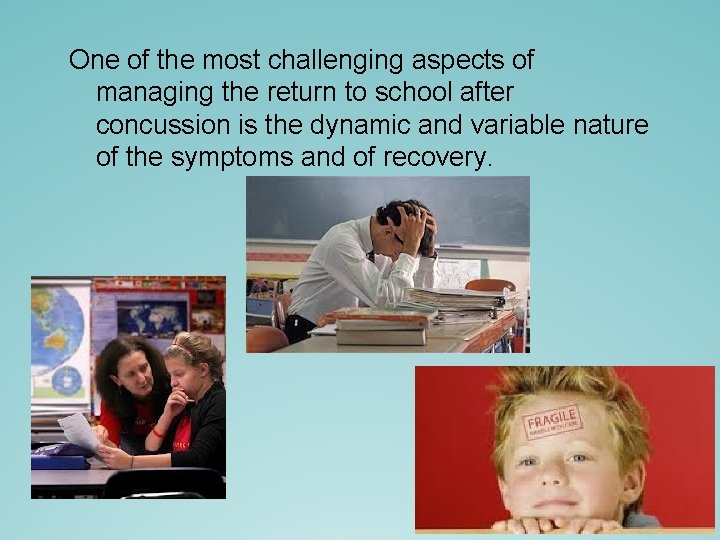
One of the most challenging aspects of managing the return to school after concussion is the dynamic and variable nature of the symptoms and of recovery.
Mc. Crory, P. , Meeuwisse, W. H. , Aubry, M. , Cantu, B. , Dvořák, J. , Echemendia, R. J. , . . . & Turner, M. (2013). Consensus statement on concussion in sport: the 4 th International Conference on Concussion in Sport held in Zurich, November 2012. British journal of sports medicine, 47(5), 250 -258. The article states “It was agreed by the panel that no return to sport or activity should occur before the child/adolescent athlete has managed to return to school successfully” (p. 183). It also highlights “the concept of ‘cognitive rest’ with special reference to a child’s need to limit exertion with activities of daily living that may exacerbate symptoms. School attendance and activities may also need to be modified to avoid provocation of symptoms” (p. 183).
Baker, J. G. , Rieger, B. P. , Mc. Avoy, K. , Leddy, J. Master, C. L. , Lana, S. J. , & Willer, B. S. (2014). Principles for return to learn after concussion. International journal of clinical practice, 68(11), 1286 -1288. A Qualitative perspective and expands further upon the ideas presented in the Mc. Crory et al article. This article examines the variety of Return to Learn protocols, with the focus being the ultimate wellbeing of the student. It also indicates the importance of continued study of concussion literature to provide the best outcome for those suffering.
Baker et al. , (2014) This article states that “there is a rapidly growing knowledge base on concussion, particularly regarding what is now understood to be multiple injury pathways and recovery trajectories”(p. 1288). The authors also summarize “there is growing attention to return to learn but no consensus yet or accepted guidelines. We have proposed a set of principles, a graduated return to learn protocol, and a set of core academic accommodations that is informed by the broader concussion literature as well as the work of others who have written on this topic” (p. 1288).
References Baker, J. G. , Rieger, B. P. , Mc. Avoy, K. , Leddy, J. Master, C. L. , Lana, S. J. , & Willer, B. S. (2014). Principles for return to learn after concussion. International journal of clinical practice, 68(11), 1286 -1288. Mc. Avoy, K. (2011). Returning to Learning: Going Back to School Following a Concussion. Communique Online. April. Mc. Crory, P. , Meeuwisse, W. H. , Aubry, M. , Cantu, B. , Dvořák, J. , Echemendia, R. J. , . . . & Turner, M. (2013). Consensus statement on concussion in sport: the 4 th International Conference on Concussion in Sport held in Zurich, November 2012. British journal of sports medicine, 47(5), 250 -258. Mc. Grath, N. (2010). Supporting the Student-Athlete’s Return to the Classroom After a Sport Related Concussion. Journal of Athletic Training, 45(5), 492 -498.
Return to Play /Activity Tara Sutherland CAT(C) BA BPHEd M. Kin, Dip SIM
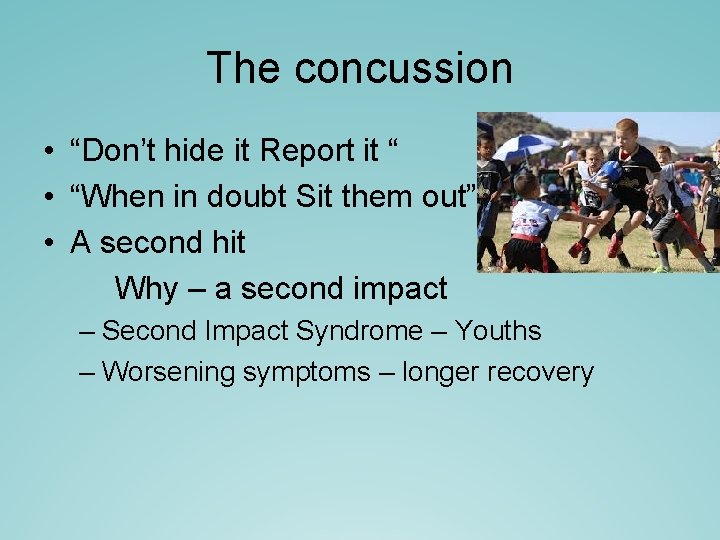
The concussion • “Don’t hide it Report it “ • “When in doubt Sit them out” • A second hit Why – a second impact – Second Impact Syndrome – Youths – Worsening symptoms – longer recovery
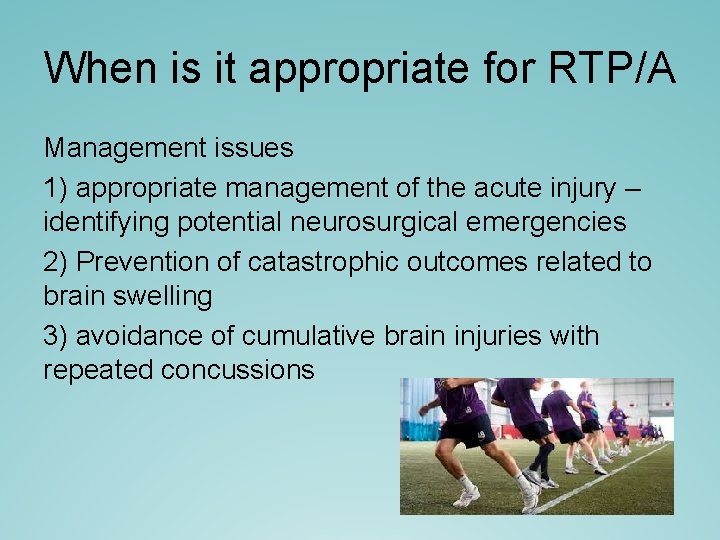
When is it appropriate for RTP/A Management issues 1) appropriate management of the acute injury – identifying potential neurosurgical emergencies 2) Prevention of catastrophic outcomes related to brain swelling 3) avoidance of cumulative brain injuries with repeated concussions
Concussion in Sport Group • 4 th International Conference on Concussion in Sport – Zurich 2012 – Mc. Crory, P. , Meeuwisse, W. H. , Aubry, M. , Cantu, B. , Dvořák, J. , Echemendia, R. J. , . . . & Turner, M. (2013). Consensus statement on concussion in sport: the 4 th International Conference on Concussion in Sport held in Zurich, November 2012. British journal of sports medicine, 47(5), 250 -258 – Graduated RTP protocol – RTP protocol following a concussion follows a stepwise process
RTP/A • 24 hours min between steps – conservative • may progress to next level providing asymptomatic at current level • If symptoms return – pushing to hard - return to rest and when asymptomatic again can start again at previous level after a minimum period of 24 hours
RTP/A Guidelines 1. No activity – rest till asymptomatic – recovery 2. Light aerobic activity 10 - 20 min – walk – stationary bike Max HR<70% - increased HR 3. Sport specific exercise – moderate jogging , skating –limited head and body movement 4. Non contact drills – more intense – close to typical routine – exercise and coordination and cognitive load – can add in light weight 5. Full contact ( medical clearance) restore confidence – assess functional skills by coaching staff 6. Game /Activity
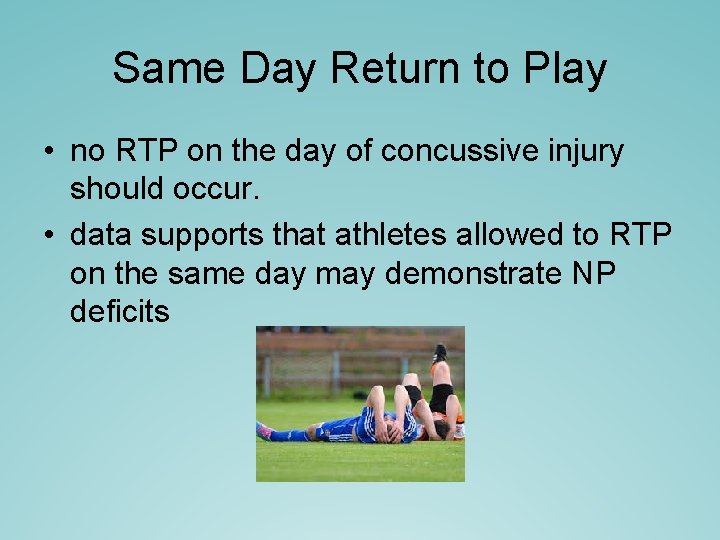
Same Day Return to Play • no RTP on the day of concussive injury should occur. • data supports that athletes allowed to RTP on the same day may demonstrate NP deficits
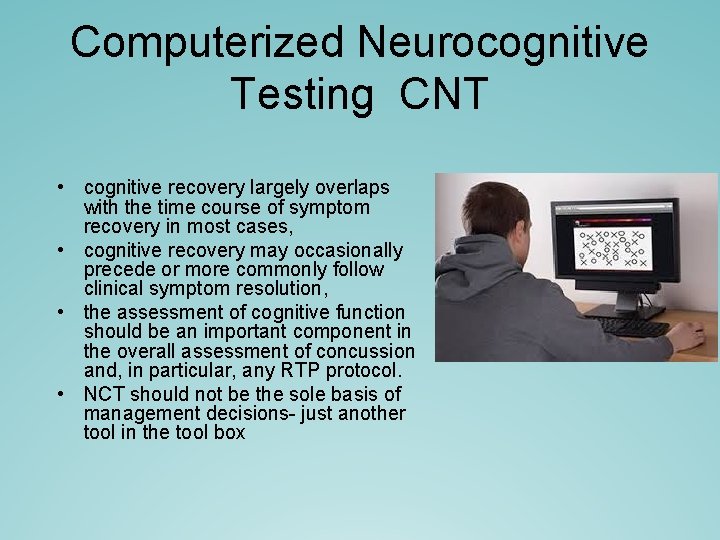
Computerized Neurocognitive Testing CNT • cognitive recovery largely overlaps with the time course of symptom recovery in most cases, • cognitive recovery may occasionally precede or more commonly follow clinical symptom resolution, • the assessment of cognitive function should be an important component in the overall assessment of concussion and, in particular, any RTP protocol. • NCT should not be the sole basis of management decisions- just another tool in the tool box
CNT • • advantages have to do with efficiency and accuracy. inexpensive and quick to administer. no possibility of scoring error or tester bias. scientific advantage is the wealth of data that can be generated that are simply not possible in conventional testing, for example, reaction times in milliseconds and response variability. CNT’s have disadvantages as well. Computerized tests are run on a tight clock, so reaction time and processing speed are central to someone’s performance. Often there is no tester present to maintain the patient’s focus, or to ease off when he or she grows weary Lack of supervision
Vestibular-ocular therapy following concussion: A physiotherapy perspective Shannon Estabrooks, BSc. PT, BSc. Bio, Sport Dip PT
Objectives • Review of the vestibular system and equilibrium • Introduce types of vestibular-ocular conditions • Describe the signs and symptoms of patients w vestibular-ocular dysfunction • Gain awareness of evaluation techniques and treatment options
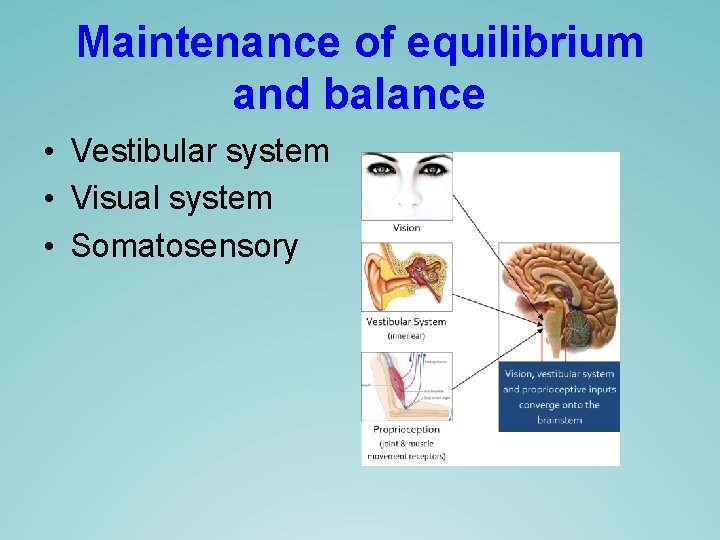
Maintenance of equilibrium and balance • Vestibular system • Visual system • Somatosensory
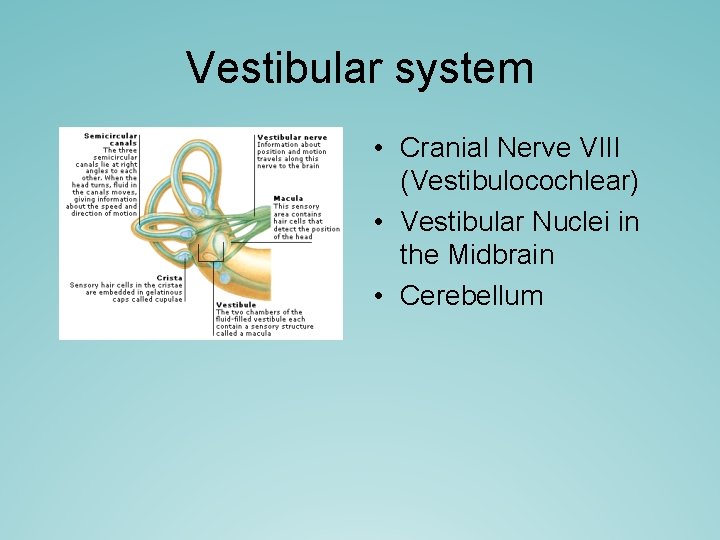
Vestibular system • Cranial Nerve VIII (Vestibulocochlear) • Vestibular Nuclei in the Midbrain • Cerebellum
Primary functions of the vestibular system Gaze Stability via Vestibulo-ocular reflex (VOR): compensates for head movements by moving the eyes at a velocity equal to the head velocity in the opposite direction to the head Postural Stability via Vestibulo-spinal reflex (VSR): assists with visual and somatosensory cues to maintain balance
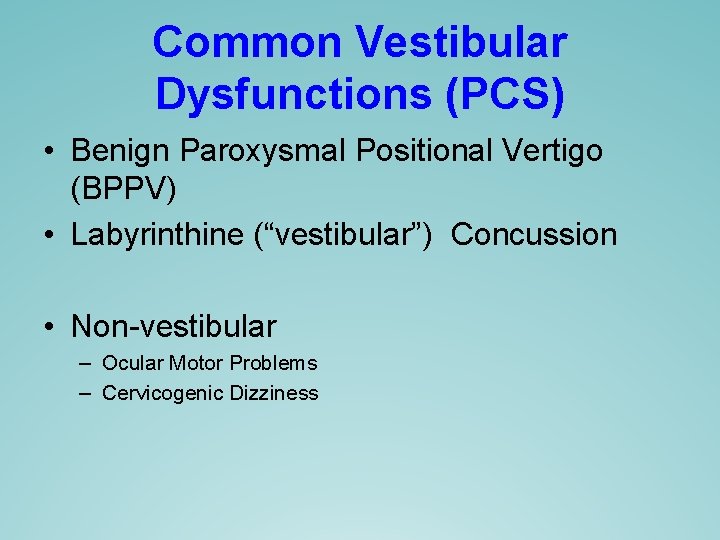
Common Vestibular Dysfunctions (PCS) • Benign Paroxysmal Positional Vertigo (BPPV) • Labyrinthine (“vestibular”) Concussion • Non-vestibular – Ocular Motor Problems – Cervicogenic Dizziness
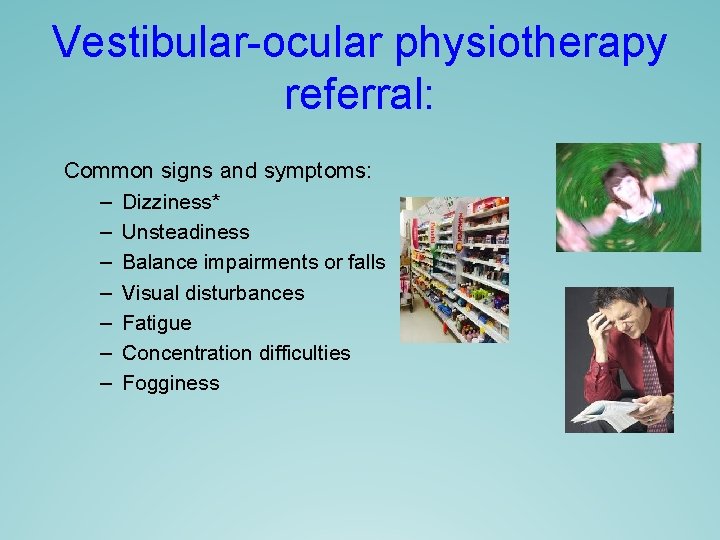
Vestibular-ocular physiotherapy referral: Common signs and symptoms: – Dizziness* – Unsteadiness – Balance impairments or falls – Visual disturbances – Fatigue – Concentration difficulties – Fogginess
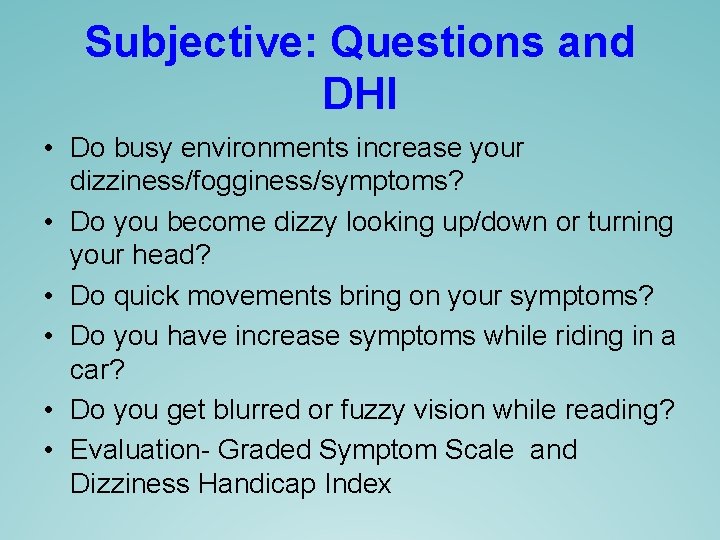
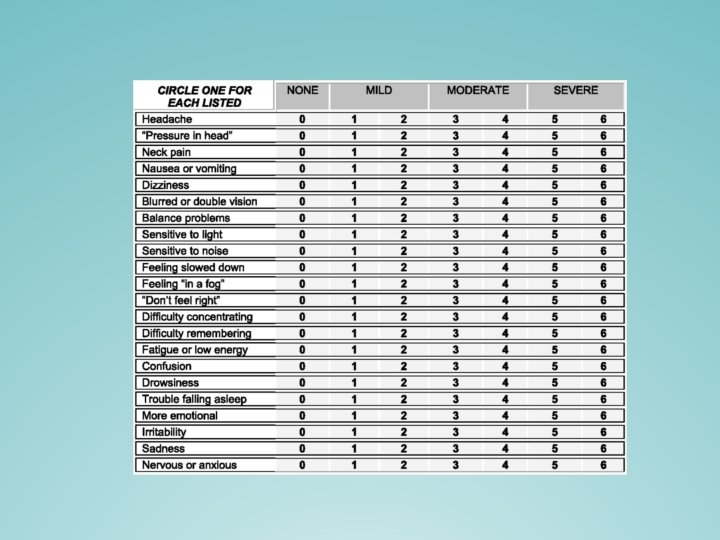
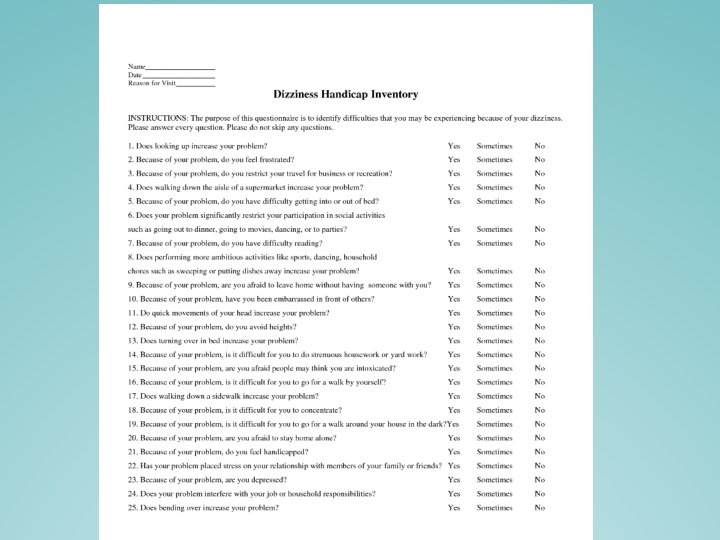
Subjective: Questions and DHI • Do busy environments increase your dizziness/fogginess/symptoms? • Do you become dizzy looking up/down or turning your head? • Do quick movements bring on your symptoms? • Do you have increase symptoms while riding in a car? • Do you get blurred or fuzzy vision while reading? • Evaluation- Graded Symptom Scale and Dizziness Handicap Index
Graded Symptom Score
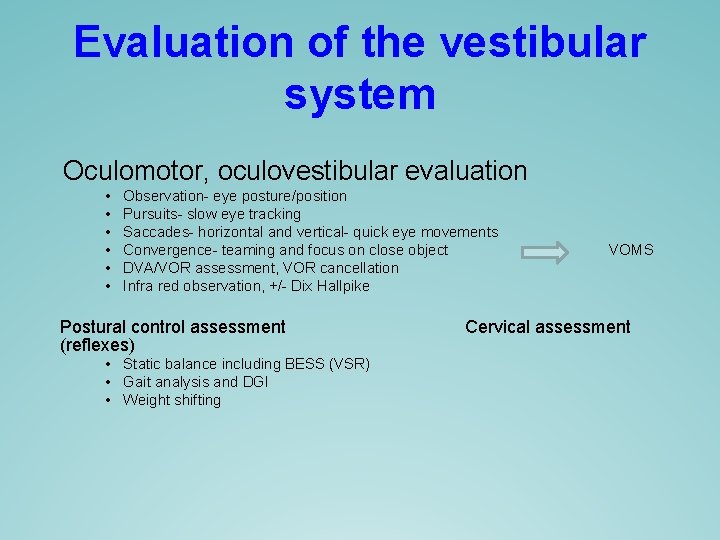
Evaluation of the vestibular system Oculomotor, oculovestibular evaluation • • • Observation- eye posture/position Pursuits- slow eye tracking Saccades- horizontal and vertical- quick eye movements Convergence- teaming and focus on close object DVA/VOR assessment, VOR cancellation Infra red observation, +/- Dix Hallpike Postural control assessment (reflexes) • Static balance including BESS (VSR) • Gait analysis and DGI • Weight shifting VOMS Cervical assessment
Infra-red testing, active and spontaneous
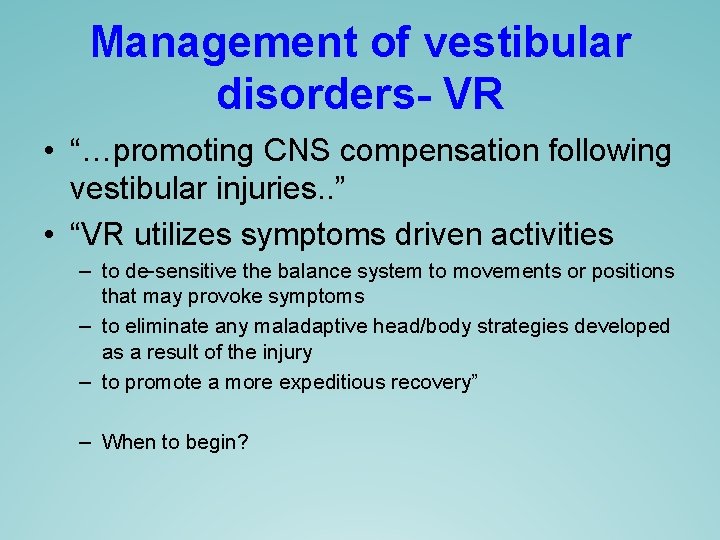
Management of vestibular disorders- VR • “…promoting CNS compensation following vestibular injuries. . ” • “VR utilizes symptoms driven activities – to de-sensitive the balance system to movements or positions that may provoke symptoms – to eliminate any maladaptive head/body strategies developed as a result of the injury – to promote a more expeditious recovery” – When to begin?
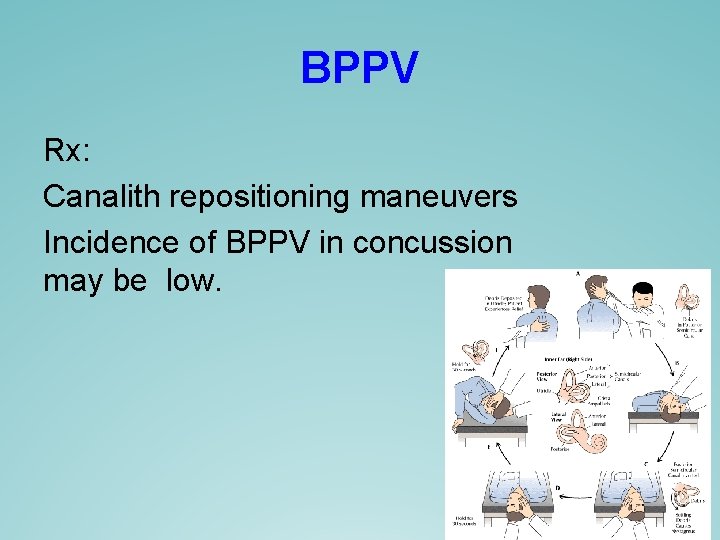
BPPV Rx: Canalith repositioning maneuvers Incidence of BPPV in concussion may be low.
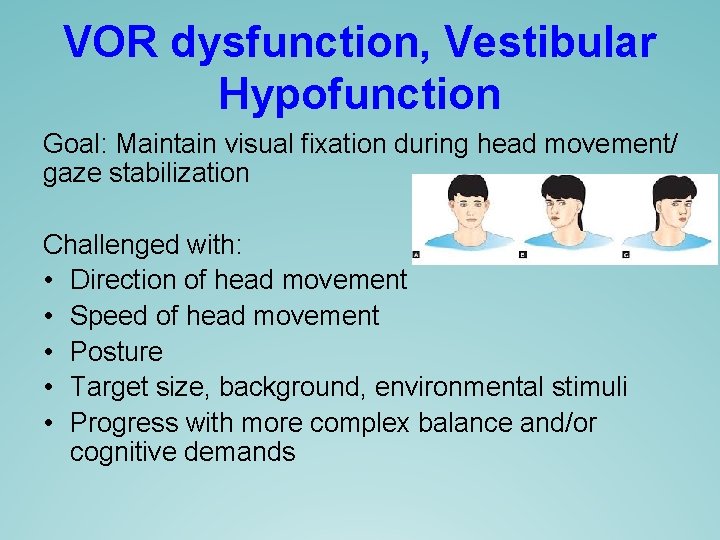
VOR dysfunction, Vestibular Hypofunction Goal: Maintain visual fixation during head movement/ gaze stabilization Challenged with: • Direction of head movement • Speed of head movement • Posture • Target size, background, environmental stimuli • Progress with more complex balance and/or cognitive demands
Visual Motion Sensitivity Rx Goal: Increase tolerance to provocative stimuli through habituation Rx may include: – Use of fixation point initially – Gradual exposure – Altering • Posture • Surface • Duration
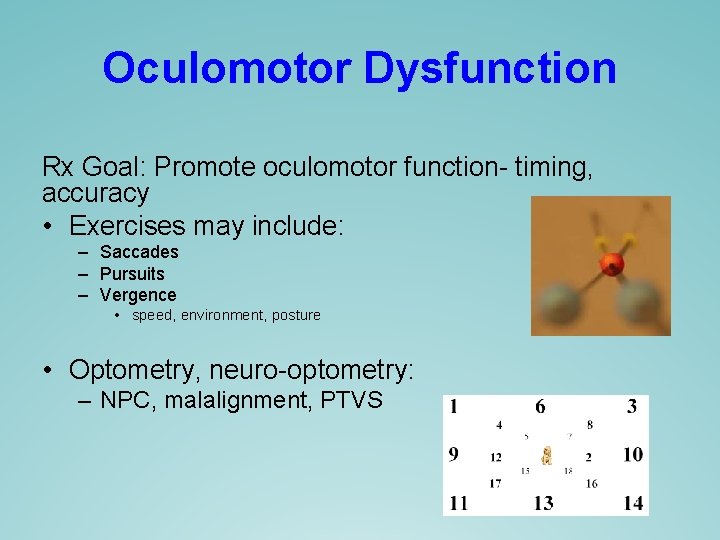
Oculomotor Dysfunction Rx Goal: Promote oculomotor function- timing, accuracy • Exercises may include: – Saccades – Pursuits – Vergence • speed, environment, posture • Optometry, neuro-optometry: – NPC, malalignment, PTVS
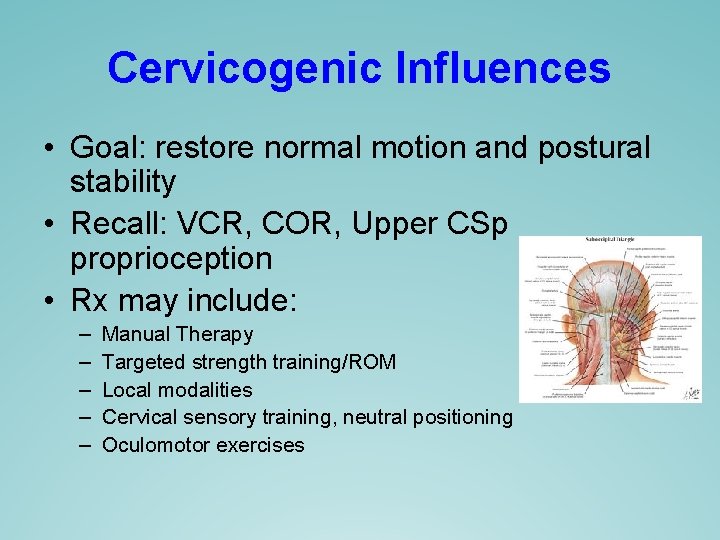
Cervicogenic Influences • Goal: restore normal motion and postural stability • Recall: VCR, COR, Upper CSp proprioception • Rx may include: – – – Manual Therapy Targeted strength training/ROM Local modalities Cervical sensory training, neutral positioning Oculomotor exercises
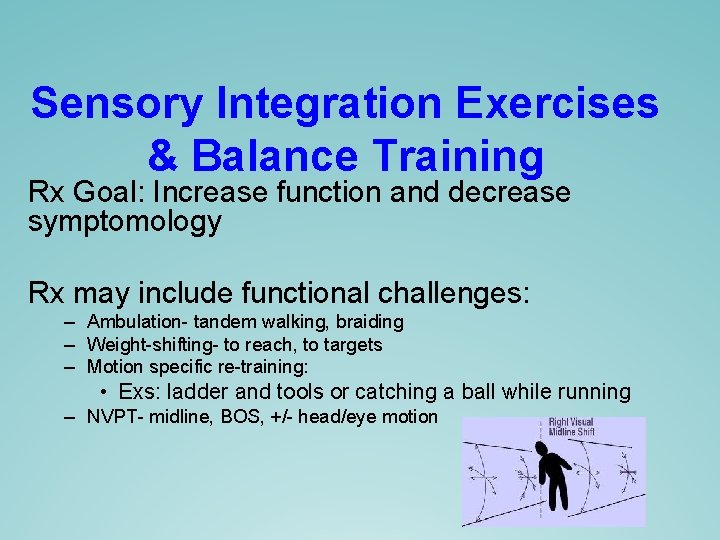
Sensory Integration Exercises & Balance Training Rx Goal: Increase function and decrease symptomology Rx may include functional challenges: – Ambulation- tandem walking, braiding – Weight-shifting- to reach, to targets – Motion specific re-training: • Exs: ladder and tools or catching a ball while running – NVPT- midline, BOS, +/- head/eye motion
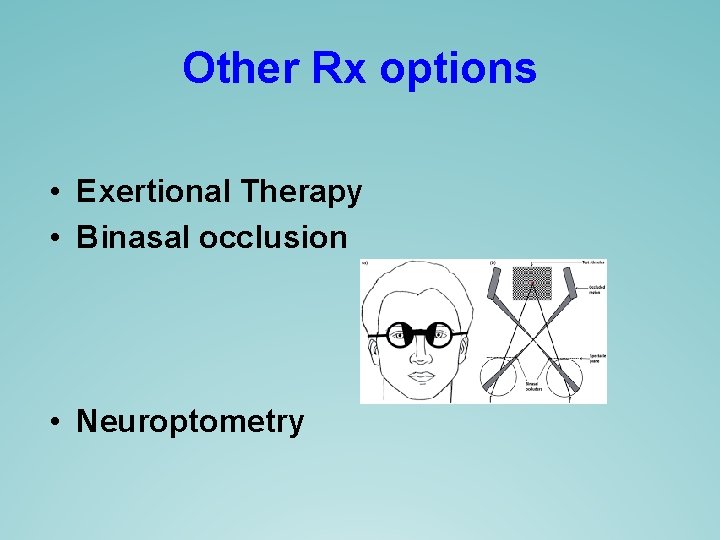
Other Rx options • Exertional Therapy • Binasal occlusion • Neuroptometry
Breagh, yoked prisms- posture and DGI
When you have seen one concussion, you have seen one concussion. Thank you. Questions?
Management of Persistent Post Concussion Symptoms: Occupational Therapy Dalhousie University Faculty of Medicine Continuing Professional Development 42 nd Dalhousie February Refresher Course: Therapeutics March 31, 2016, Jeniffer Hilling, B. Sc. O. T. (c) Occupational Therapist, CBI Health Center, Antigonish, N. S.
Objectives Identify who is appropriate for Occupational Therapy? Identify the occupational performance issues of a person with persistent post concussion symptoms. Identify other factors the client may be dealing with. Identify Intervention for cognitive deficits. Identify process of return to work after mild Traumatic Brain Injury (m. TBI); with acute and persistent symptoms.
Referrals Typically individuals are referred by: – Physicians who are offering a Concussion Management Program – Other health care providers, physiotherapist, psychologist – Insurance agencies Reason for referrals: Individuals are: – having difficulty managing their daily life; over or under functioning: sub symptom threshold – having challenges coping with symptoms – wanting to return to work and are unsure whether they are able to perform. – Identified with a “failed” return to work
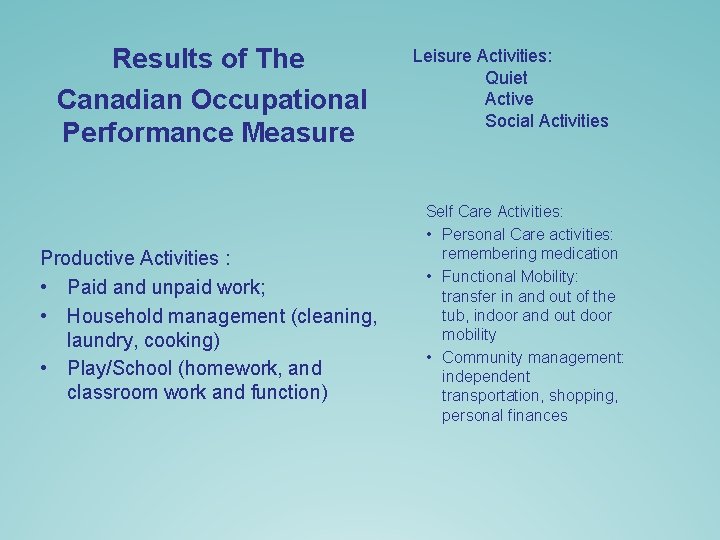
Occupational Performance Issues The Canadian Occupational Performance Measure identifies the activities of daily life that are being affected by the symptoms. Activities are rated (1 -10) according to: • Importance • Perceived Performance • Satisfaction of Performance This assessment provides an objective measure of the clients overall occupational performance
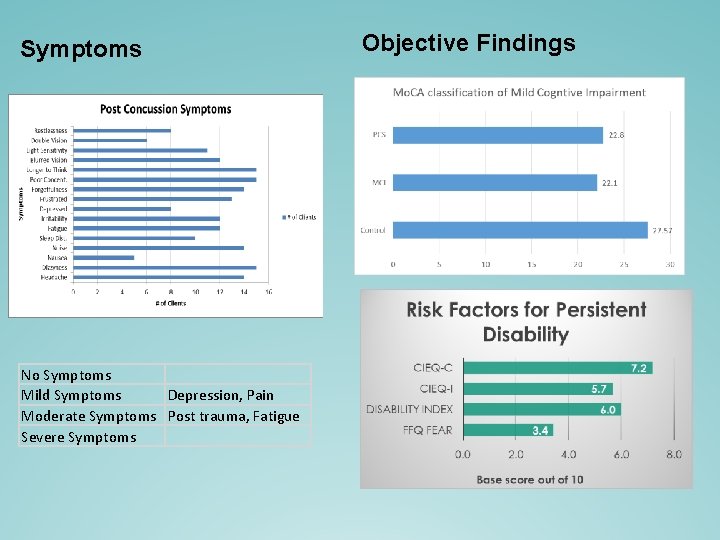
Persistent Symptoms experienced by clients; Identified with the use of the Rivermeade Post Concussion Symptom Scale
Other Symptoms: Screening for other symptoms which may be present: • Pain: The short-form Mc. Gill Pain Questionnaire ( MPQ-SF) • Depression: Patient Health Questionnaire (PHQ – 9) • PTSD: PTSD Check List – Civilian Version (PCL-C) • Fatigue: Fatigue Scale
Risk Factors Screening for psychosocial risk factors which may prolong recovery: • Perceived injustice: CIEQ – Injustice Subscale • Catastrophizing: CIEQ- Catastrophizing Subscale • Fear beliefs about the potential harm that could ensue from participation in physical activity: FFQ – Fear Subscale • Perceived Disability: GPDI – Disability Index
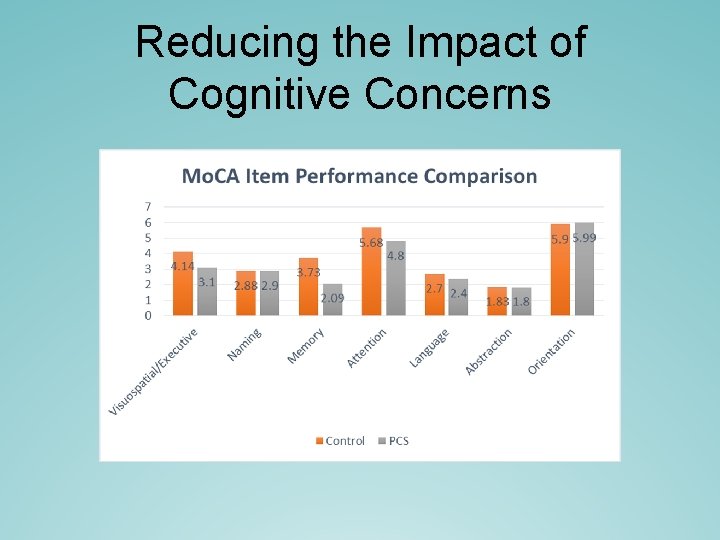
Cognitive/ Physical function Cognitive factors impacting clients’ function: • Montreal Cognitive Assessment (Mo. CAmini) Mo. CA© may be used, reproduced, and distributed WITHOUT permission. Ergonomic and Environmental barriers: home/work assessment Performance issues: observable motor and process skills.
Results of The Canadian Occupational Performance Measure Productive Activities : • Paid and unpaid work; • Household management (cleaning, laundry, cooking) • Play/School (homework, and classroom work and function) Leisure Activities: Quiet Active Social Activities Self Care Activities: • Personal Care activities: remembering medication • Functional Mobility: transfer in and out of the tub, indoor and out door mobility • Community management: independent transportation, shopping, personal finances
Symptoms No Symptoms Mild Symptoms Depression, Pain Moderate Symptoms Post trauma, Fatigue Severe Symptoms Objective Findings
Occupational Therapy Intervention Purpose is to address the functional implications of the prolonged symptoms. Tools used include: • Cognitive Rehabilitation Therapy • Cognitive Behavioural Therapy • Psychosocial Rehabilitation • Ergonomic / Environmental barrier reduction intervention
Reducing the Impact of Cognitive Concerns
Defining Cognition The Society of Cognitive Rehabilitation quotes Parente, R. & Herrmann, D. ( 1996) definition of cognition as: A complex collection of mental skills that include: attention, perception, comprehension, learning, remembering, problem solving, and reasoning. – These abilities allow us to understand our environment and to function within it.
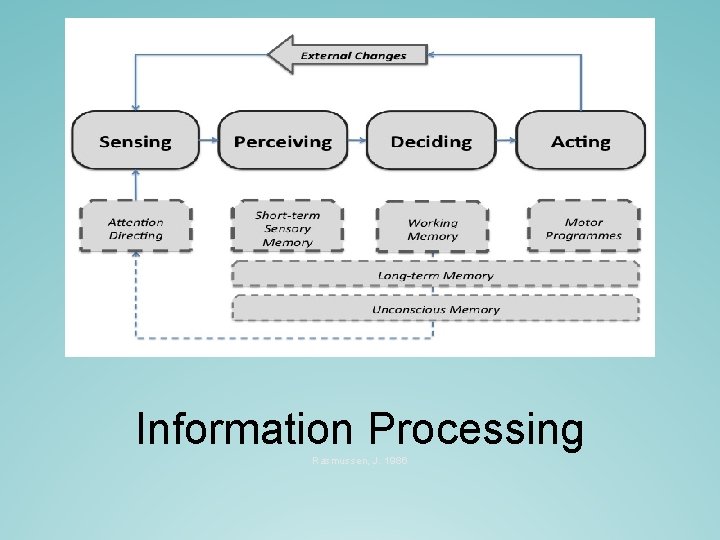
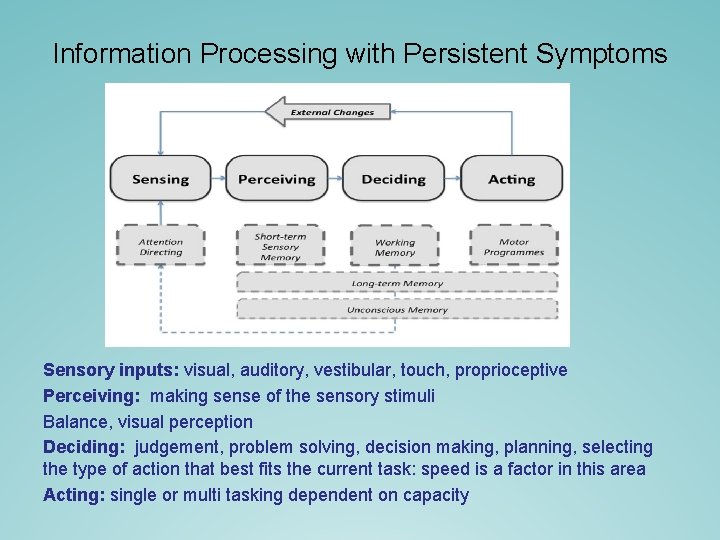
Information Processing Rasmussen, J. 1986
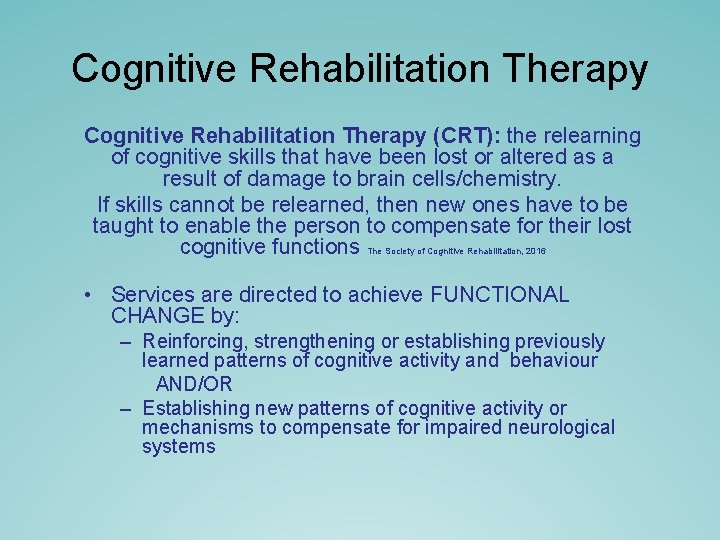
Cognitive Rehabilitation Therapy (CRT): the relearning of cognitive skills that have been lost or altered as a result of damage to brain cells/chemistry. If skills cannot be relearned, then new ones have to be taught to enable the person to compensate for their lost cognitive functions The Society of Cognitive Rehabilitation, 2016 • Services are directed to achieve FUNCTIONAL CHANGE by: – Reinforcing, strengthening or establishing previously learned patterns of cognitive activity and behaviour AND/OR – Establishing new patterns of cognitive activity or mechanisms to compensate for impaired neurological systems
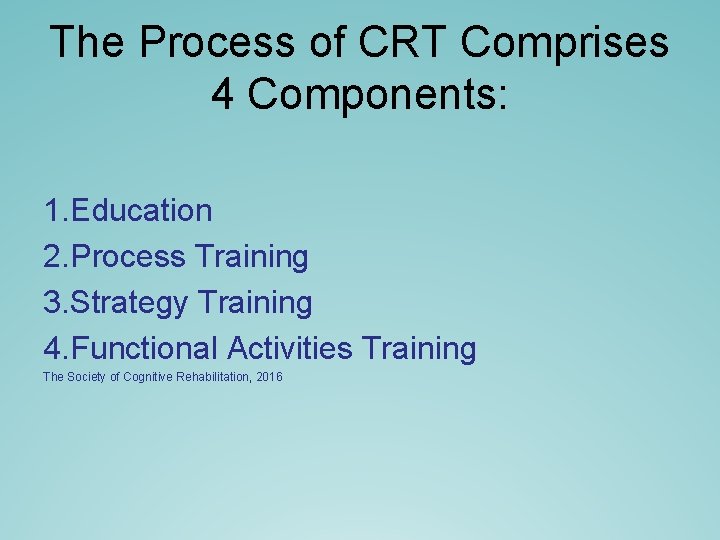
The Process of CRT Comprises 4 Components: 1. Education 2. Process Training 3. Strategy Training 4. Functional Activities Training The Society of Cognitive Rehabilitation, 2016
Information Processing with Persistent Symptoms Sensory inputs: visual, auditory, vestibular, touch, proprioceptive Perceiving: making sense of the sensory stimuli Balance, visual perception Deciding: judgement, problem solving, decision making, planning, selecting the type of action that best fits the current task: speed is a factor in this area Acting: single or multi tasking dependent on capacity
Returning to Work after m. TBI
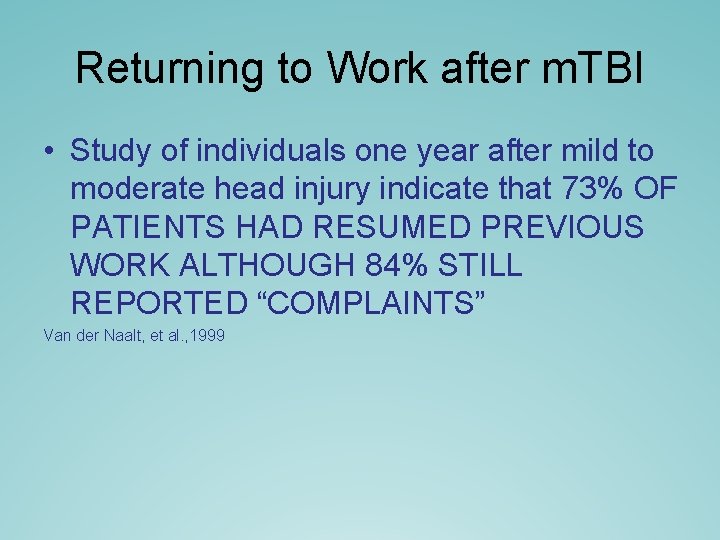
Returning to Work after m. TBI • Study of individuals one year after mild to moderate head injury indicate that 73% OF PATIENTS HAD RESUMED PREVIOUS WORK ALTHOUGH 84% STILL REPORTED “COMPLAINTS” Van der Naalt, et al. , 1999
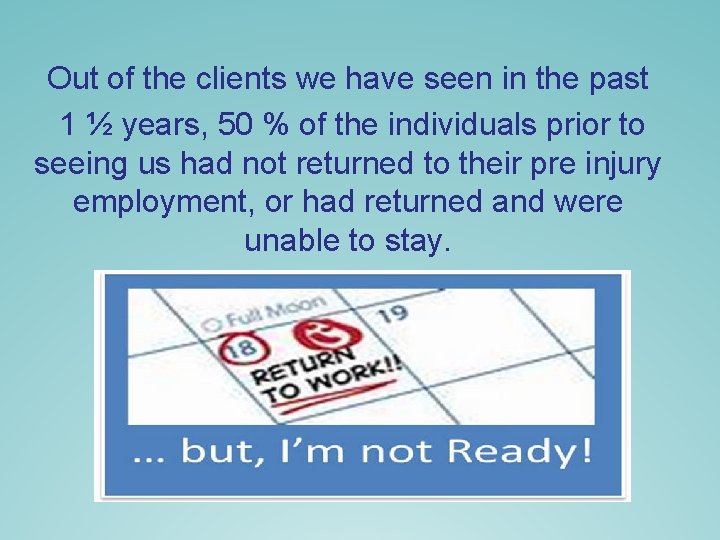
Out of the clients we have seen in the past 1 ½ years, 50 % of the individuals prior to seeing us had not returned to their pre injury employment, or had returned and were unable to stay.
Pre Injury, Injury and Post Injury Factors for a Delayed Return to work (RTW)
Preinjury Related Factors Pre Injury Factors: Having been sick listed the last year before injury • Note: mental health prior to injury is a predictor for post concussion symptoms but not for delayed RTW Vikane, E et al. , 2016
Injury Related Factors No Injury Related factors were identified as predictors for return to work: Vikane, E et al. , 2016 – Note that Intracranial injury noted on CT scan and post trauma amnesia were not predictors of delayed RTW – Although this is contradicting another study by Van Der Naalt et al. (1999) who did indicate that post trauma amnesia was a predictor of delayed RTW
Post Injury Factors Presence of…. – Pain: not specific to any particular pain area, but 6 symptoms or more that were reported – Severe and moderate perceived disability at 2 months; Glasgow Outcome Scale Extended ( GOSE >6) – Sick listed at the 2 month mark – Psychological distress and Symptom burden; Anxiety and depression: Hospital Anxiety and Depression Scale ( HAD) Rivermeade Post Concussion Symptoms Questionnaire >2 six to eight weeks after injury …. 6 -8 week mark post injury Vikane E et al. , 2016
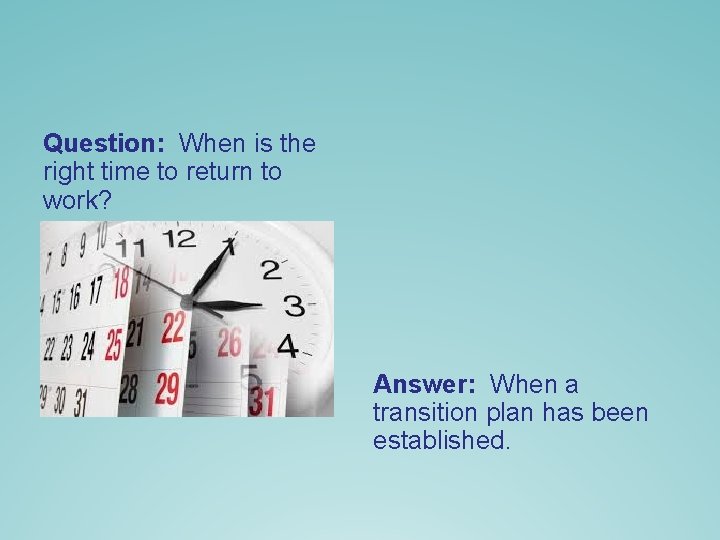
Question: When is the right time to return to work? Answer: When a transition plan has been established.
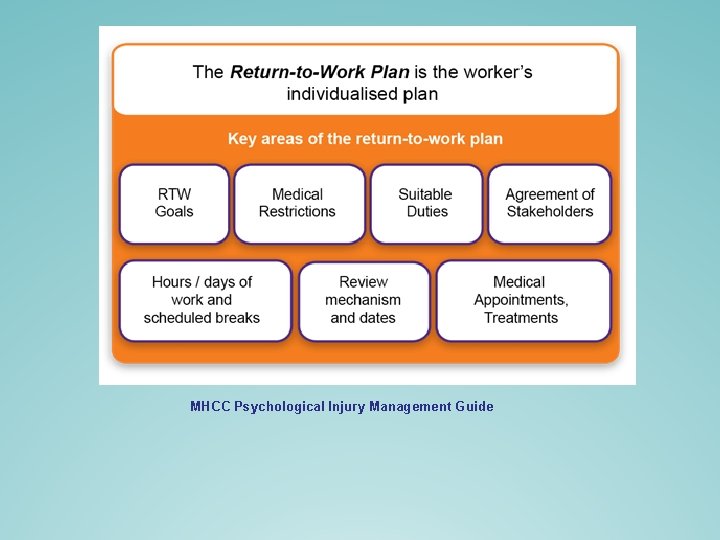
MHCC Psychological Injury Management Guide
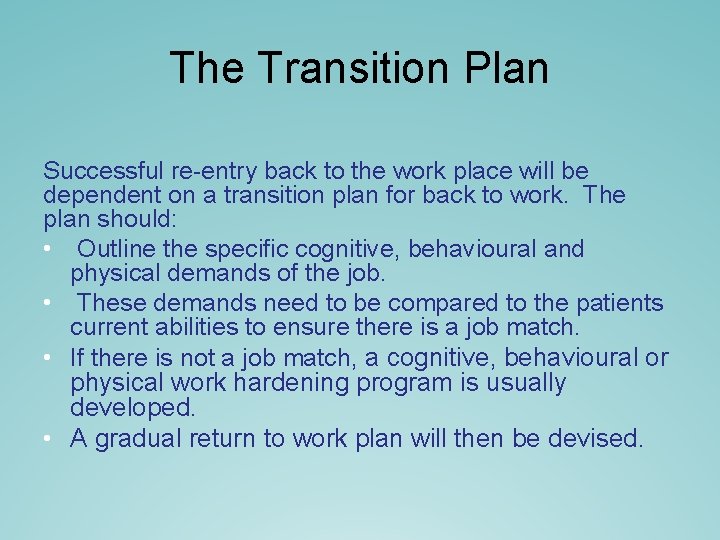
The Transition Plan Successful re-entry back to the work place will be dependent on a transition plan for back to work. The plan should: • Outline the specific cognitive, behavioural and physical demands of the job. • These demands need to be compared to the patients current abilities to ensure there is a job match. • If there is not a job match, a cognitive, behavioural or physical work hardening program is usually developed. • A gradual return to work plan will then be devised.
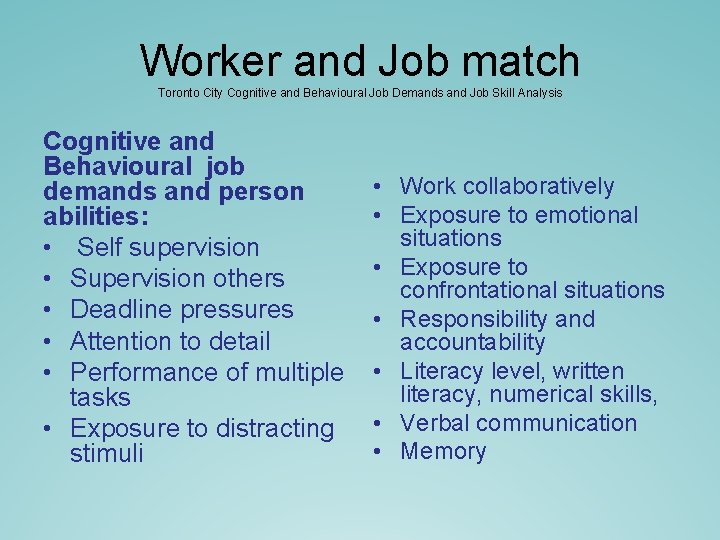
Worker and Job match Toronto City Cognitive and Behavioural Job Demands and Job Skill Analysis Cognitive and Behavioural job demands and person abilities: • Self supervision • Supervision others • Deadline pressures • Attention to detail • Performance of multiple tasks • Exposure to distracting stimuli • Work collaboratively • Exposure to emotional situations • Exposure to confrontational situations • Responsibility and accountability • Literacy level, written literacy, numerical skills, • Verbal communication • Memory
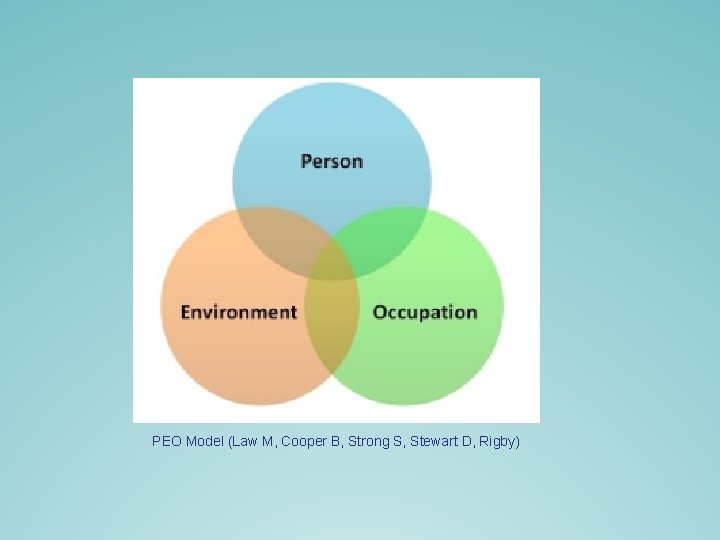
PEO Model (Law M, Cooper B, Strong S, Stewart D, Rigby)
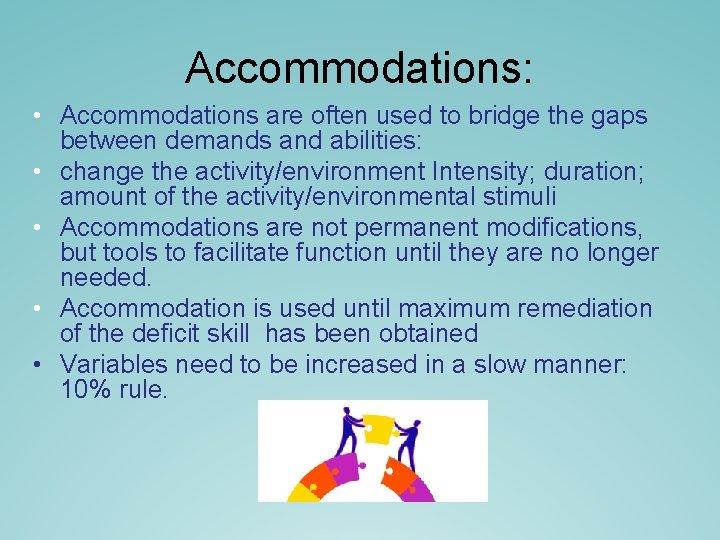
Accommodations: • Accommodations are often used to bridge the gaps between demands and abilities: • change the activity/environment Intensity; duration; amount of the activity/environmental stimuli • Accommodations are not permanent modifications, but tools to facilitate function until they are no longer needed. • Accommodation is used until maximum remediation of the deficit skill has been obtained • Variables need to be increased in a slow manner: 10% rule.
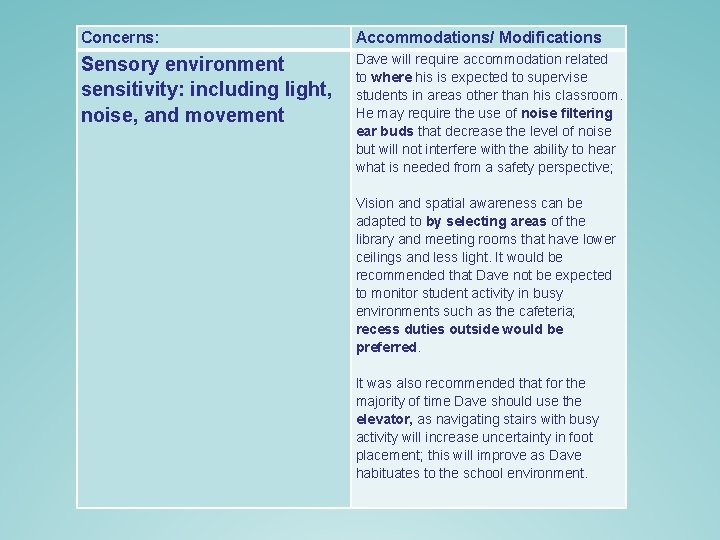
Concerns: Accommodations/ Modifications Sensory environment sensitivity: including light, noise, and movement Dave will require accommodation related to where his is expected to supervise students in areas other than his classroom. He may require the use of noise filtering ear buds that decrease the level of noise but will not interfere with the ability to hear what is needed from a safety perspective; Vision and spatial awareness can be adapted to by selecting areas of the library and meeting rooms that have lower ceilings and less light. It would be recommended that Dave not be expected to monitor student activity in busy environments such as the cafeteria; recess duties outside would be preferred. It was also recommended that for the majority of time Dave should use the elevator, as navigating stairs with busy activity will increase uncertainty in foot placement; this will improve as Dave habituates to the school environment.
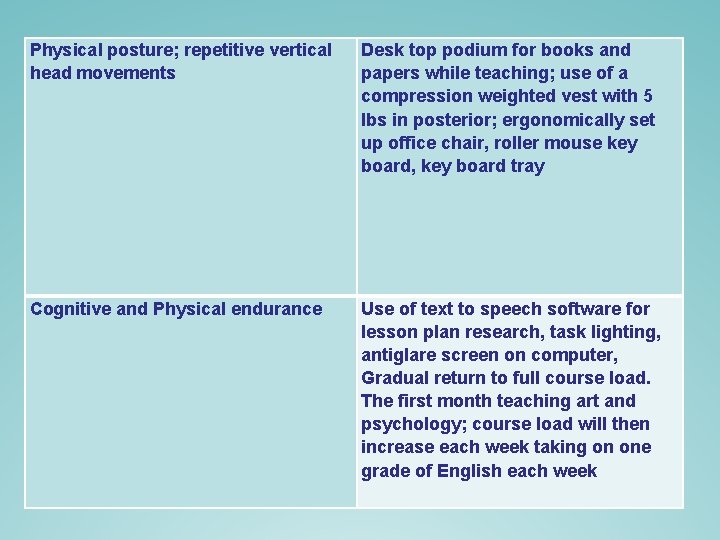
Physical posture; repetitive vertical head movements Desk top podium for books and papers while teaching; use of a compression weighted vest with 5 lbs in posterior; ergonomically set up office chair, roller mouse key board, key board tray Cognitive and Physical endurance Use of text to speech software for lesson plan research, task lighting, antiglare screen on computer, Gradual return to full course load. The first month teaching art and psychology; course load will then increase each week taking on one grade of English each week
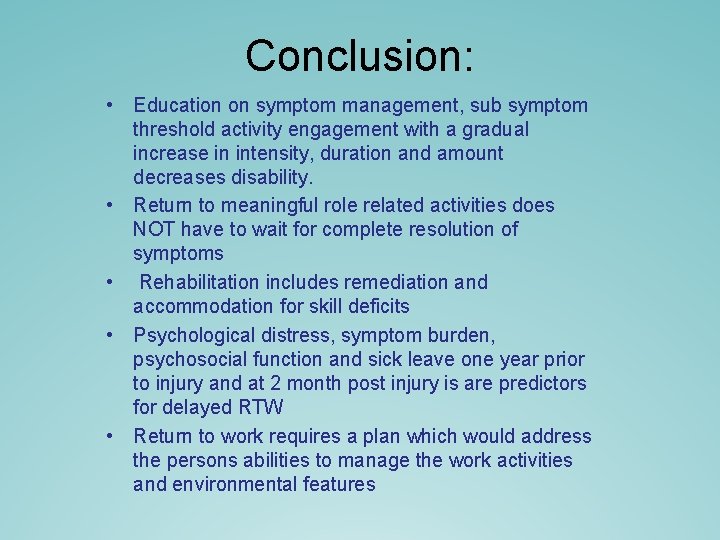
Conclusion: • Education on symptom management, sub symptom threshold activity engagement with a gradual increase in intensity, duration and amount decreases disability. • Return to meaningful role related activities does NOT have to wait for complete resolution of symptoms • Rehabilitation includes remediation and accommodation for skill deficits • Psychological distress, symptom burden, psychosocial function and sick leave one year prior to injury and at 2 month post injury is are predictors for delayed RTW • Return to work requires a plan which would address the persons abilities to manage the work activities and environmental features
Thank you • Clients • Dr. Cudmore, Tara Sutherland, Ange Wylie, Shannon Estabrooks, Amanda Stone • Liam Rowe, 3 rd year Kinesiology Student St. F. X. University