Lesson 3 1 Recommendations in Nutrition Evolution of
- Slides: 50
Lesson 3. 1 : Recommendations in Nutrition
Evolution of the Human Diet • At the conclusion of this session you should have an understanding of: – the important characteristics of the hunter gatherer diet and lifestyle – the impact of the domestication of plants and animals on the human diet and lifestyle – the major changes in dietary composition through human history – the western diet in evolutionary perspective, and the health implications
Paleolithic nutrition • Is this the type of diet for which humans are genetically programmed? – the human genome has changed little since paleolithic times • Behaviours and preferences which favoured survival of humans in the past may explain why diet and lifestyle have evolved as they have – maximising energy intake – minimising energy output • The therapeutic and preventive potential of the principles of the hunter gatherer diet (and lifestyle)
Why study the evolution of the human diet? ¨ Insights into: • health implications of our current diet and lifestyle • role of diet in the pathogenesis, prevention and treatment of a range of diet-related chronic diseases – CVD – type 2 diabetes – obesity – cancers
HOW? • archeological record – plant analysis, DNA analysis, radiocarbon and other dating techniques • surviving hunter gatherer populations – Australian Aborigines • subsistence agriculture • nutrient analyses of edible components of uncultivated plant foods and nondomesticated animals • molecular genetics – wild progenitors of current staple foods
Limitations • incomplete nature of archeological evidence – animal remains more robust than plant remains • large mammal bones most likely to survive – limitations of dating techniques • radiocarbon dating to 40, 000 yr • recent hunter gatherers retreated to marginal locations – may not be typical of paleolithic times • PCR techniques - risk of contamination
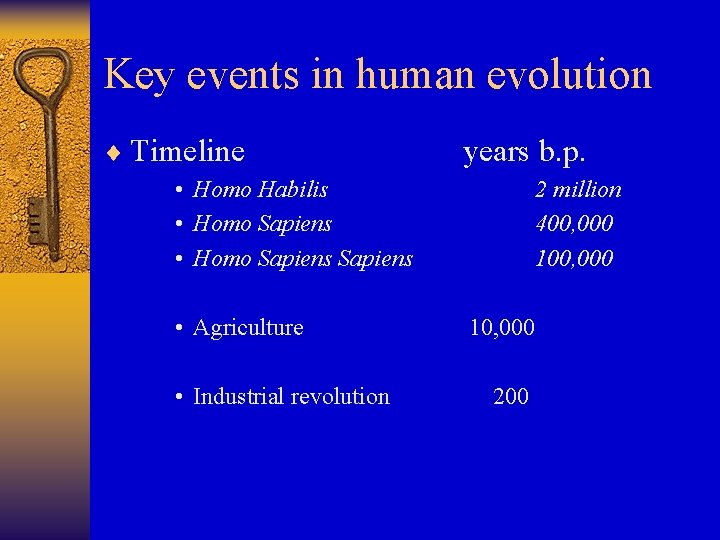
Key events in human evolution ¨ Timeline years b. p. • Homo Habilis • Homo Sapiens • Agriculture • Industrial revolution 2 million 400, 000 10, 000 200
Transition to agriculture • Paleolithic times – focus on big game hunting – over hunting, extinction of large species • Shift to broader spectrum hunting and gathering – small game, fish and shell fish – more plant food, including seeds • grinding stones, mortars, pestles • Agriculture developed in locally rich locations, eg, Fertile Crescent
The emergence of agriculture • developed independently in widely separated locations around the world • pressure on food supply – over hunting – climate change – population growth • sedentary communities in rich locales • role of humans in selecting plants and animals for domestication and in subsequent breeding programs – greater yields – capacity to support larger populations
Plant and animal breeding ¨ Plants ¨ Animals – already important in – gregarious, nonthe diet carnivorous – selected to increase yield and improve yield and palatability manageability • energy density • fibre • starch • fat • smaller size • more fat • greater milk output
The western diet • The consequence of human evolution – “Land of milk and honey” – high energy density – low energy output
The western diet • The exception in human history – high energy density – reduced micronutrient density – excess available energy – high in saturated fat – high in refined CHO, low in fibre – high n-6/n-3 PUFA ratio – high Na, low K
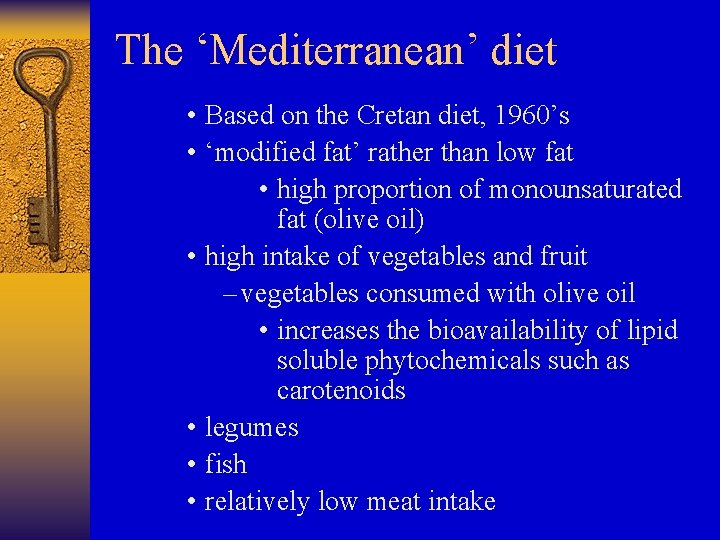
The ‘Mediterranean’ diet • Based on the Cretan diet, 1960’s • ‘modified fat’ rather than low fat • high proportion of monounsaturated fat (olive oil) • high intake of vegetables and fruit – vegetables consumed with olive oil • increases the bioavailability of lipid soluble phytochemicals such as carotenoids • legumes • fish • relatively low meat intake
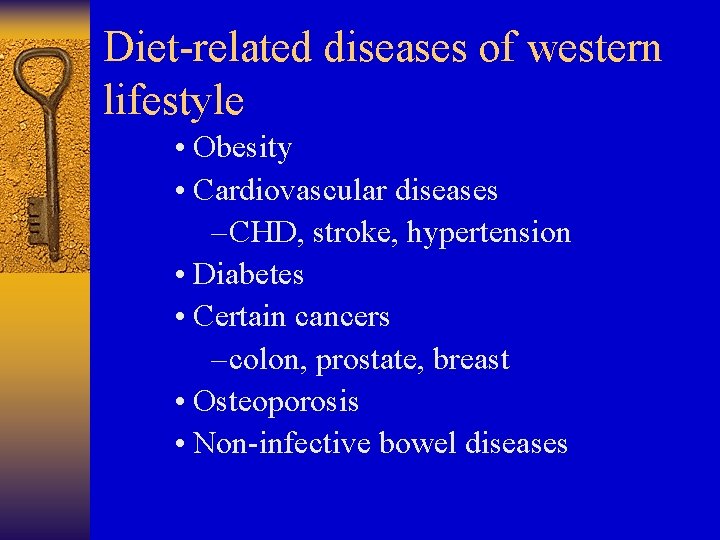
Diet-related diseases of western lifestyle • Obesity • Cardiovascular diseases – CHD, stroke, hypertension • Diabetes • Certain cancers – colon, prostate, breast • Osteoporosis • Non-infective bowel diseases
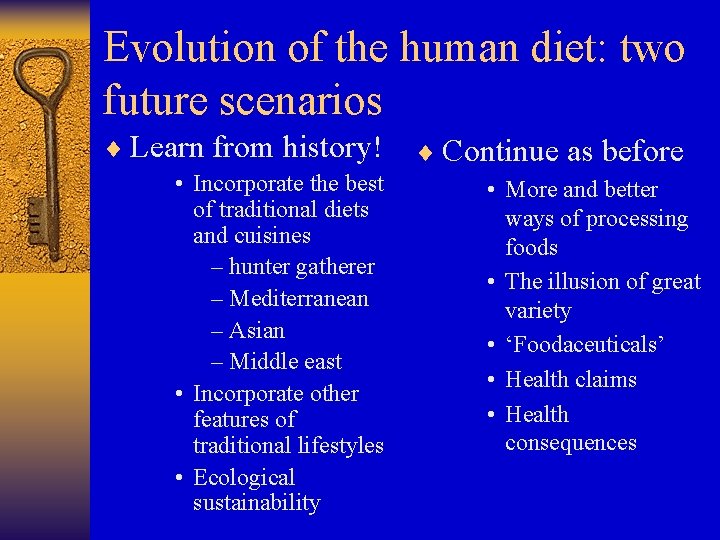
Evolution of the human diet: two future scenarios ¨ Learn from history! • Incorporate the best of traditional diets and cuisines – hunter gatherer – Mediterranean – Asian – Middle east • Incorporate other features of traditional lifestyles • Ecological sustainability ¨ Continue as before • More and better ways of processing foods • The illusion of great variety • ‘Foodaceuticals’ • Health claims • Health consequences
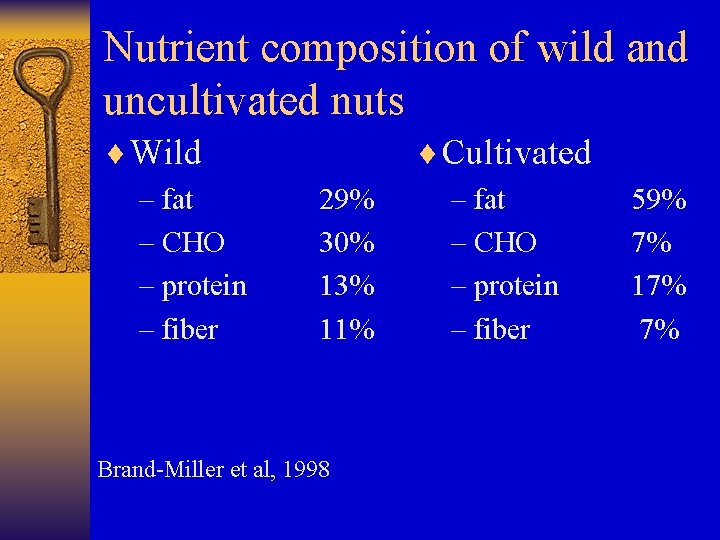
Nutrient composition of wild and uncultivated nuts ¨ Wild – fat – CHO – protein – fiber ¨ Cultivated 29% 30% 13% 11% Brand-Miller et al, 1998 – fat – CHO – protein – fiber 59% 7% 17% 7%
Nutrition ¨ Deficiency Diseases are rare ¨ Current Problems: – Excessive Calorie Intake – Nutrient Imbalance • Too much of a good thing!!
RDAs ¨ Recommended Dietary Allowances – Average amount of nutrients that should be consumed over time ¨ 2 ways to meet RDA – Follow 7 Dietary Guidelines – Follow Food Guide Pyramid
Nutrients 6 Basic Elements: ¨ Carbohydrates ¨ Fat ¨ Protein ¨ Vitamins ¨ Minerals ¨ Water
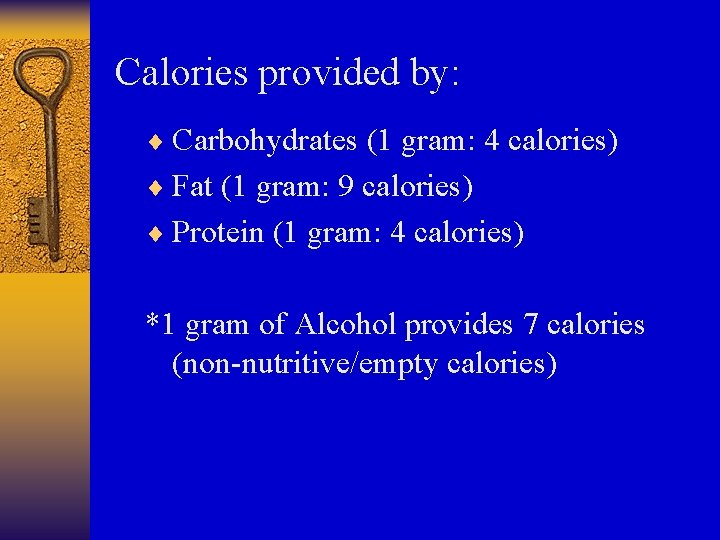
Calories provided by: ¨ Carbohydrates (1 gram: 4 calories) ¨ Fat (1 gram: 9 calories) ¨ Protein (1 gram: 4 calories) *1 gram of Alcohol provides 7 calories (non-nutritive/empty calories)
Recommended % of calories to obtain from each macronutrient ¨ Carbohydrates: 50 - 55% – 45% complex – 10% simple ¨ Fat: 25 - 30% – 10% Monounsaturated – 10% Polyunsaturated – <10% Saturated ¨ Protein: 15 - 20%
Daily Reference Values (DRVs) ¨ Recommended grams or mg for selected nutrients 2000 Calorie a day diet: – Fat: 65 grams – Cholesterol: <300 mg – Sodium: <2400 mg – Carbohydrate: 250 - 300 g – Fiber 20 - 30 g – Potassium: 3000 - 3500 mg
Protein Functions: ¨ Tissue growth/repair; forms parts of blood, hormones, enzymes, cell membranes Made up of amino acids (approx. 20) ¨ 9 essential amino acids (must be supplied by foods)
“Complete Protein ¨ Contains all essential amino acids ¨ Animal sources (careful with fats) ¨ Combined plant sources – Plant proteins are incomplete – e. g. peanut butter sandwich is a protein complement
How much protein is necessary? How much? ¨. 8 grams per kilogram of body weight (wt in lbs/2. 2) Excess Protein: ¨ Converted to fat ¨ Strains kidneys ¨ Body excretes calcium
Major Sources ¨ Meat, poultry, fish, eggs, milk and milk products, dry beans and peas, nuts ¨ Choose low fat sources!
Carbohydrates ¨ Functions: – Major source of energy – Essential for functioning of CNS
Simple Carbohydrates ¨ Sugars ¨ Rapidly absorbed ¨ Major sources: corn syrup, sugar, honey, "ose" endings
Complex Carbohydrates *Starch: ¨ Converts to glucose ¨ Provides steady energy source *Glycogen: Storage form of glucose
Sources Plant foods: ¨ Grains ¨ Tubers (potatoes) ¨ Legumes (beans and peas)
Fiber ¨ Part of food that resists digestion ¨ Insoluble fiber – Not digested by the body – Whole grains, wheat bran, skin of fruits & vegetables – Aids gastrointestinal function – Increases bulk in stool & prevents constipation – Reduces risk of colon cancer ¨ Soluble fiber – Found in grains (oats), fruits, vegetables – Lowers cholesterol levels – Prolongs sense of fullness
Fats Functions: ¨ insulates ¨ cushions organs ¨ carries fat soluble vitamins ¨ energy source ¨ raw material for hormones
Negative effects ¨ Obesity ¨ Increased cancer risk (breast, colon, uterus) ¨ Gall bladder disease ¨ Coronary disease (elevated cholesterol)
Types of Fats ¨ Saturated – mostly animal origin, egg yolks, lard, etc. ¨ Polyunsaturated – safflower, corn oil ¨ Monounsaturated – canola, olive oil ¨ Omega-3 Fatty acids – fish oils from fish not supplements ¨ *The less saturated the better!
Cholesterol ¨ Fat-like substance ¨ Used to form cell membranes, hormones ¨ Endogenous and exogenous sources ¨ Carried by lipoproteins
LDL and HDL ¨ LDL: Low density lipoprotein ¨ Most likely to cause atherosclerosis ¨ HDL: High density lipoprotein ¨ Removes excess cholesterol
Cholesterol Lowering Tips ¨ To Lower LDL – Lower saturated fat intake – Lower dietary cholesterol intake ¨ To Raise HDL – Exercise – Quit smoking – Moderate alcohol intake
Nicotine ¨ Contributes to 30% of coronary deaths ¨ Adversely affects LDL/HDL ¨ Constricts blood vessels ¨ Increases oxygen requirement ¨ Increases blood viscosity ¨ Linked with osteoporosis
Vitamins ¨ Organic compounds ¨ Helpers of bodily processes ¨ Fat soluble (A, D, E, K) ¨ Water soluble (B vitamins, C) – Folate helps prevent neurological birth defects ¨ Antioxidants (C, E, beta carotene) – Destroy free radicals
Minerals ¨ Inorganic ¨ 7 Major minerals – calcium, phosphorous, sodium, potassium, sulfur, sodium, chloride, magnesium ¨ Trace minerals – Very small amounts needed – 14 are essential to good health – iron, zinc ¨ Be weary of mineral supplements! *Calcium and iron: especially important for women.
Water ¨ “The forgotten nutrient” ¨ 8 -10, 8 -ounce glasses per day (minimum) ¨ Alcohol, caffeine, increases need for H 2 O ¨ Functions: – transport nutrients – carries away waste – regulates body temperature
Health Related Fitness ¨ Cardiorespiratory endurance – the ability to use oxygen for physical work ¨ Muscular strength – ability to exert maximum force against resistance ¨ Muscular endurance – ability of a muscle to exert sub-maximal force repeatedly ¨ Flexibility – range of motion at a joint ¨ Body Composition – amount of lean vs fat tissue in the body
Aerobic Capacity ¨ Decreases with age ¨ Decreases rapidly when training is discontinued
Benefits of Aerobic Exercise ¨ Research has proven all of the following benefits: – Lowers LDL, triglycerides – Raises HDL – Improves body composition – Reduces BP – Platelets less sticky – Improves functioning of CV system • Stronger heart • Lowers resting heart rate
Benefits of Aerobic Exercise – Helps control diabetes – Strengthens bones – Promotes joint stability – Reduces stress – Improves self-concept – Helps prevent lower back problems – Encourages other positive lifestyle changes
Principles of Conditioning ¨ Intensity: how vigorous Karvonen Formula THR= (MHR-RHR = HRR) X TI% + RHR MHR= 220 -age; HRR= heart rate reserve ¨ Choose intensity based on fitness level: Low: Fair: Avg: Good: Exc. : 60% 65% 70% 75% 80 -90%
Daily Routine ¨ Warm-up – 5 -10 minutes – Gradually elevate heart rate – Increase muscle temperature – Mild stretching ¨ Exercise component – 20 to 30 minutes ¨ Cool-Down – 5 -10 minutes of Light activity – Returns blood from muscles back to heart for redistribution – Aids in removal of metabolic waste products – No cool down? Possible dizziness, fainting
¨ Frequency: How often? 3 -5 days per week ¨ Duration: 20 -30 minutes ¨ Intermittent activity is OK ¨ Low intensity/longer duration is better for health enhancement!
Hypertension ¨ Silent Killer ¨ No symptoms ¨ Blood pressure: force exerted against arterial walls ¨ Systolic: pressure when heart contracts ¨ Diastolic: pressure in between beats
Treatment ¨ Weight loss ¨ Smoking cessation ¨ Reduce salt ¨ Reduce alcohol ¨ Potassium and calcium supplementation ¨ Relaxation ¨ Exercise ¨ Medication