Chapter 4 Nutrition Lesson 6 Maintaining a Healthy

- Slides: 20
Chapter 4 Nutrition Lesson 6 Maintaining a Healthy Weight Click for: >> Main Menu >> Chapter 4 Assessment Teacher’s notes are available in the notes section of this presentation. Next >>
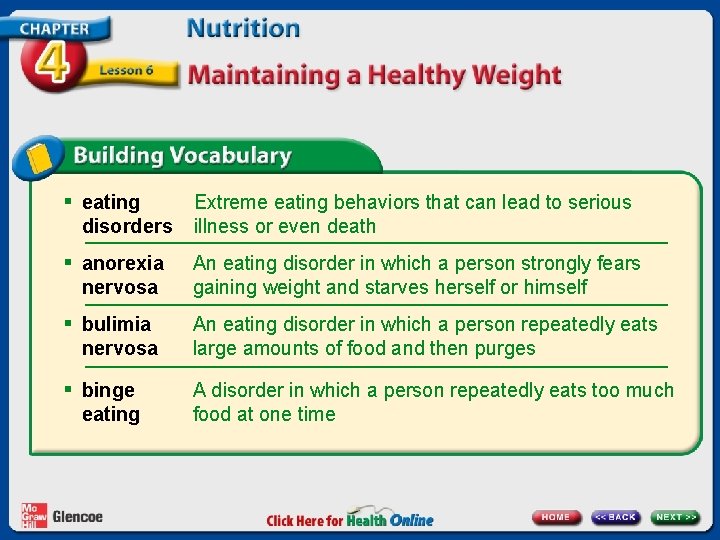
§ eating disorders § anorexia nervosa § bulimia nervosa § binge eating Extreme eating behaviors that can lead to serious illness or even death An eating disorder in which a person strongly fears gaining weight and starves herself or himself An eating disorder in which a person repeatedly eats large amounts of food and then purges A disorder in which a person repeatedly eats too much food at one time
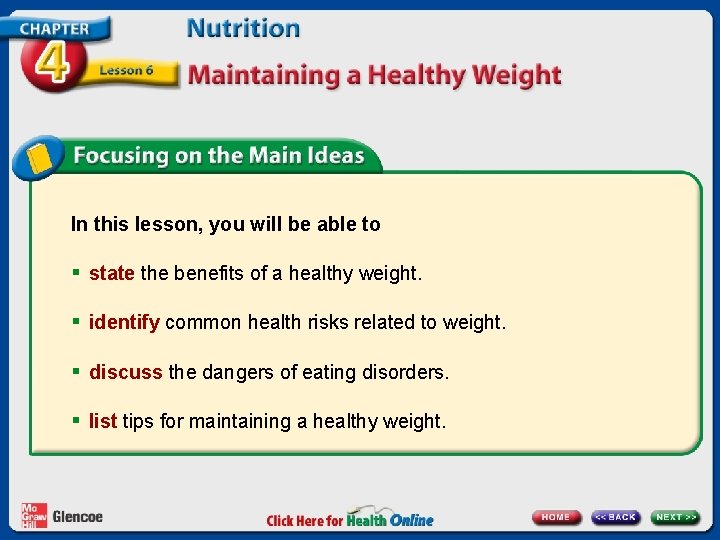
In this lesson, you will be able to § state the benefits of a healthy weight. § identify common health risks related to weight. § discuss the dangers of eating disorders. § list tips for maintaining a healthy weight.
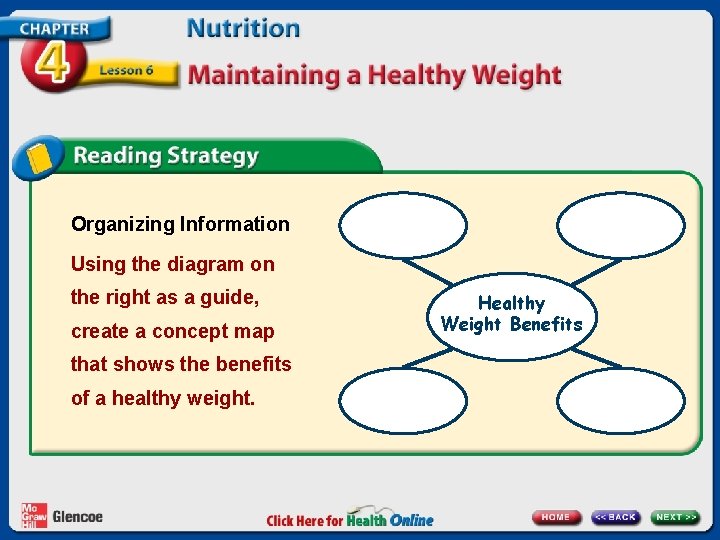
Organizing Information Using the diagram on the right as a guide, create a concept map that shows the benefits of a healthy weight. Healthy Weight Benefits
The Benefits of a Healthy Weight Being within a healthy weight range is important for wellness and helps you have a positive body image.
The Benefits of a Healthy Weight Being Overweight Being Underweight Increases risk of: • • • High blood pressure Cardiovascular disease Type 2 diabetes Cancer Bone and muscle damage Slow development Fatigue Immunity problems Moodiness
Eating Disorders People who feel bad about themselves or are depressed are more likely to develop eating disorders Extreme eating behaviors that can lead to serious illness or even death If you think that someone you know has an eating disorder, discuss this with an adult whom you trust.
Anorexia Nervosa People with anorexia nervosa believe they are overweight even if they are very thin. anorexia nervosa An eating disorder in which a person strongly fears gaining weight and starves herself or himself Anorexia can cause blood pressure to drop and heart damage.
Bulimia Nervosa People with bulimia nervosa may purge themselves by throwing up, using laxatives, or over exercising. bulimia nervosa An eating disorder in which a person repeatedly eats large amounts of food and then purges Bulimia can damage the colon, liver, kidneys, esophagus, and teeth.
Binge Eating Binge eating is also called compulsive overeating. binge eating A disorder in which a person repeatedly eats too much food at a time Binge eating can lead to weight gain, heart disease, diabetes, and some types of cancer.
Calories and Weight Your body converts food calories into energy and stores the extra calories as fat, which makes you gain weight. If you eat 250 fewer calories than your body burns each day, you can lose one pound after two weeks.
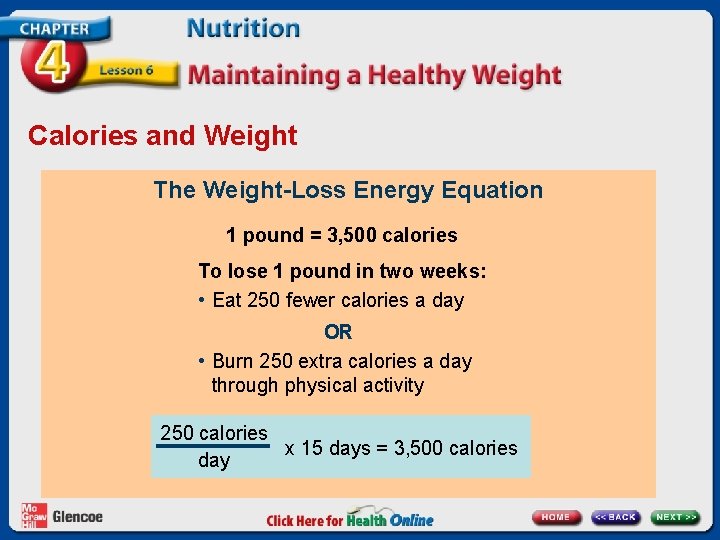
Calories and Weight The Weight-Loss Energy Equation 1 pound = 3, 500 calories To lose 1 pound in two weeks: • Eat 250 fewer calories a day OR • Burn 250 extra calories a day through physical activity 250 calories x 15 days = 3, 500 calories day
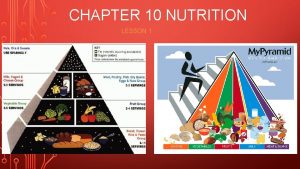
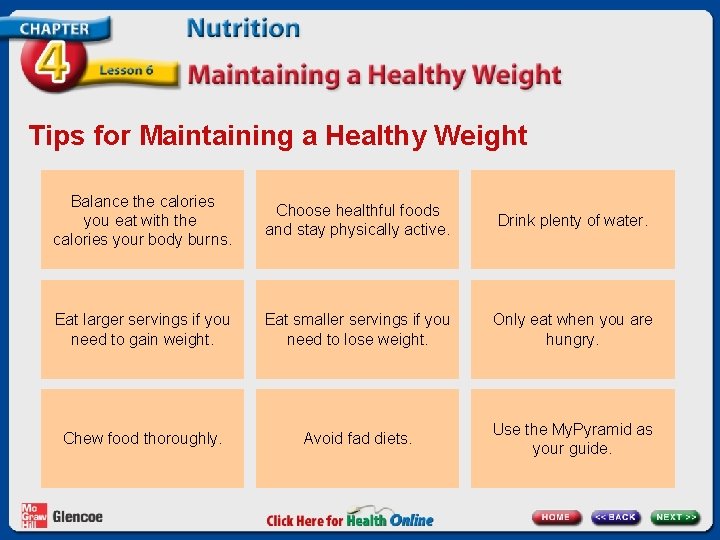
Tips for Maintaining a Healthy Weight Balance the calories you eat with the calories your body burns. Choose healthful foods and stay physically active. Drink plenty of water. Eat larger servings if you need to gain weight. Eat smaller servings if you need to lose weight. Only eat when you are hungry. Chew food thoroughly. Avoid fad diets. Use the My. Pyramid as your guide.
Lesson 6 Review What I Learned Vocabulary Define anorexia nervosa.
Lesson 6 Review What I Learned Restate Describe the symptoms of binge eating and how it can adversely affect health.
Lesson 6 Review What I Learned Describe What is a healthy way to manage your weight over time?
Lesson 6 Review What I Learned Explain Why is it better to avoid fad diets?
Lesson 6 Review Thinking Critically Apply How might family and friends help someone with an eating disorder?
Lesson 6 Review Thinking Critically Infer How can a teen “grow into” a healthy weight?
End of Chapter 4 Nutrition Lesson 6 Maintaining a Healthy Weight Click for: >> Main Menu >> Chapter 4 Assessment