SWGDRUG Scientific Working Group for the Analysis of

- Slides: 36
SWGDRUG Scientific Working Group for the Analysis of Seized Drugs Scott R. Oulton, Chair
Overview SWGDRUG history § In January 2011, the core committee: § § Approved SWGDRUG Recommendations 5. 1 § Implemented mass spectral library § Proposed a new document – Analysis of Clandestine Drug Laboratory Evidence § Proposed revision to Supplemental Document SD-3 § Developed a new survey to assess impact of SWGDRUG Recommendations § Current work projects and future topics
SWGDRUG History 1997: DEA and ONDCP co-sponsored formation of the Technical Working Group for the Analysis of Seized Drugs (TWGDRUG) 1999: Forensic scientists from the United States, England, Canada, Australia, Japan, Germany, the Netherlands, United Nations, international forensic organizations and academia were invited to meet in Washington, DC. 1999: SWGDRUG name adopted 2001: First edition of SWGDRUG Recommendations approved
SWGDRUG Mission To recommend minimum standards for the forensic examination of seized drugs and to seek their international acceptance.
SWGDRUG Document Development § Documents drafted by sub-committee § Drafts reviewed by core committee § Drafts posted on website § Posted at least 60 days for public comments § Drafts revised as needed § Final documents voted on by core committee as per SWGDRUG bylaws
SWGDRUG Subcommittees § Education and Training § Editorial/Communications and Reporting § Uncertainty § Clandestine Laboratory Analysis § Glossary
Document Dissemination SWGDRUG communicates work products via: § www. swgdrug. org § Presentations at local, national and international meetings § Development of standards/best practices/protocols utilizing a standards development organization
Core Committee
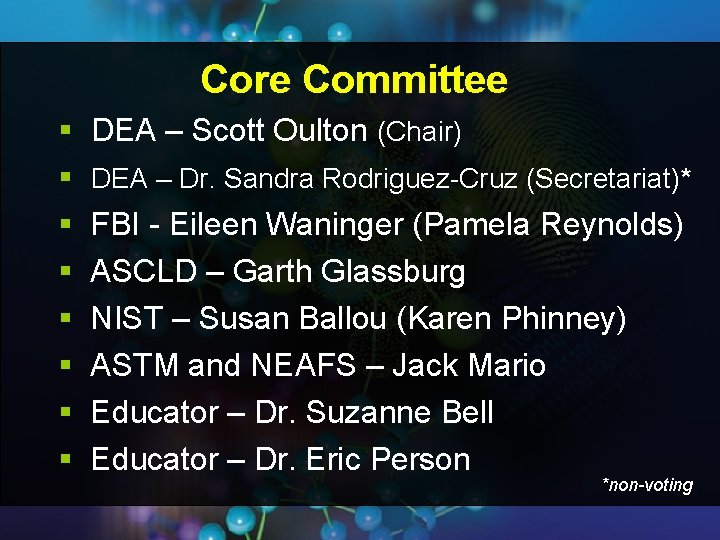
Core Committee § § § § DEA – Scott Oulton (Chair) DEA – Dr. Sandra Rodriguez-Cruz (Secretariat)* FBI - Eileen Waninger (Pamela Reynolds) ASCLD – Garth Glassburg NIST – Susan Ballou (Karen Phinney) ASTM and NEAFS – Jack Mario Educator – Dr. Suzanne Bell Educator – Dr. Eric Person *non-voting
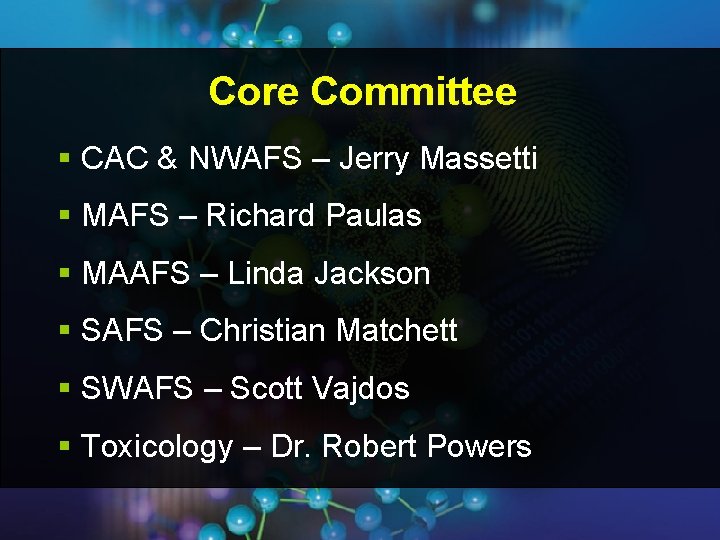
Core Committee § CAC & NWAFS – Jerry Massetti § MAFS – Richard Paulas § MAAFS – Linda Jackson § SAFS – Christian Matchett § SWAFS – Scott Vajdos § Toxicology – Dr. Robert Powers
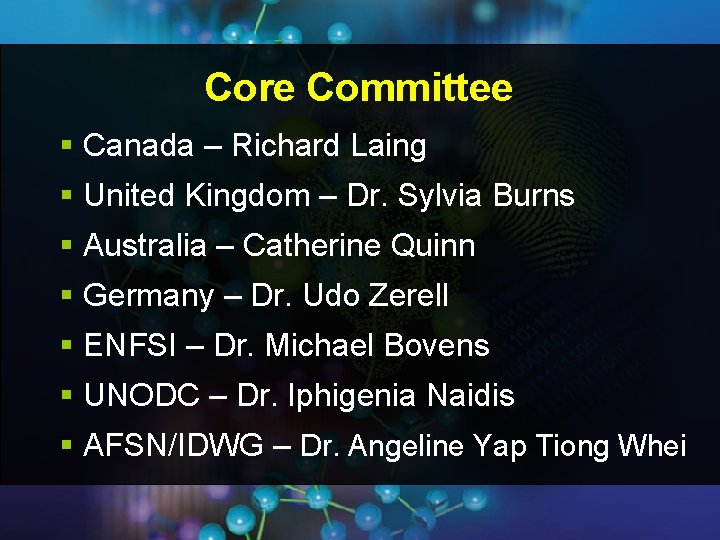
Core Committee § Canada – Richard Laing § United Kingdom – Dr. Sylvia Burns § Australia – Catherine Quinn § Germany – Dr. Udo Zerell § ENFSI – Dr. Michael Bovens § UNODC – Dr. Iphigenia Naidis § AFSN/IDWG – Dr. Angeline Yap Tiong Whei
SWGDRUG Recommendations
SWGDRUG Recommendations § The public comment period regarding the proposed report writing change ended in September 2010 § Comments/suggestions from public were considered § Current version: 5. 1, 2011 -01 -27 contains approved recommendations from the working group
Report Writing 9. 2 Reports issued by laboratories shall be accurate, clear, objective, and meet the requirements of the jurisdictions served. These reports shall include the following information: § title of report § identity and location of the testing laboratory § unique case identifier (on each page) § clear identification of the end of the report (e. g. , Page 3 of 3) § submitting agency § date of receipt of evidence § date of report § descriptive list of submitted evidence § identity and signature (or electronic equivalent) of analyst § results / conclusions § a list of analytical techniques employed § sampling § uncertainty. If elements listed above are not included on the report, the laboratory shall have documented reasons (i. e. specific accreditation, customer or jurisdictional considerations), for not doing so.
Part IIIA Sampling § 6 Reporting 6. 1 Statistically selected sample(s) Reporting statistical inferences for a population is acceptable when testing is performed on the statistically selected units. The language in the report must make it clear to the reader that the results are based on a sampling plan. 6. 2 Non-statistically selected sample(s) The language in the report must make it clear to the reader that the results apply to only the tested units. For example, 2 of 100 bags were analyzed and found to contain Cocaine.
SWGDRUG Mass Spectral Library
MS Library §SWGDRUG has compiled a mass spectral library from a variety of sources, containing drugs and drug-related compounds §All spectra were collected using EI-MS systems. §DISCLAIMER: Although SWGDRUG makes an effort to review the accuracy of spectra prior to entry, this library should only be used as an analytical tool. §Use traceable reference materials to support identifications of drugs
MS Library §The SWGDRUG library is available in two formats: §NIST MSSEARCH program §Software available free of charge on internet §Agilent Technologies §Currently contains 1371 compounds §The library will be updated often to keep up with emerging trends §Submissions are welcome
Analysis of Clandestine Drug Laboratory Evidence
Analysis of Clan Lab Evidence §In cooperation with Clandestine Laboratory Investigating Chemists (CLIC) a draft recommendation was approved for public comment §The comment period expires May 20, 2011 §This draft document provides guidance on the chemical analysis of items and samples related to suspected clandestine laboratories §There are many analytical schemes that can be utilized – no table of tests as in Part IIIB
Supplemental Documents
Supplemental Documents § Intended to be a resource for those responsible for implementing SWGDRUG Recommendations § Not all inclusive; many ways to implement Recommendations § Purpose is to provide examples to be used in conjunction with SWGRUG Recommendations § Comments/suggestions from public considered
Current Supplemental Documents § Supplemental Document SD-1 A Code of Professional Practice for Drug Analysts § Supplemental Document SD-2 Quality Assurance/Validation of Analytical Methods § Supplemental Document SD-3 Examples of Measurement Uncertainty for Weight Determinations
Supplement Document SD-3 Revision § This draft document was revised as a result of input received from the community and professional statisticians § Further explains approach in regards to correlations and assumptions § Will be posted on website soon to solicit input from forensic science community until May 20, 2011
Pending Supplemental Document § Supplemental Document SD-4 - Examples of Measurement Uncertainty for Purity Determinations § Contains several examples of estimating § measurement uncertainty for purity determinations (e. g. , bottom up, top down) Currently being drafted and expected to be released for public comment by July 2011
Feedback Mechanism
SWGDRUG Feedback § Soliciting Feedback § To determine the extent in which recommendations are being implemented within the forensic science community § With feedback, we can assess the value and utility of the SWGDRUG recommendations § Feedback questions were approved by core committee January 2011 § Link on website directing to www. surveymonkey. com § Accepting feedback until June 30, 2011
Seeking International Acceptance
Standard Developing Organization § SWGDRUG has brought all of their recommendations to the American Society for Testing and Materials (ASTM) § Except ethics § All SWGDRUG recommendations have been adopted by ASTM and have become internationally recognized standards/practices
ASTM DOCUMENTS (SWGDRUG-origin) § E 2326 -09 Standard Practice for Education and Training of Seized-Drug Analysts § E 2327 -10 Standard Practice for Quality Assurance of Laboratories Performing Seized-Drug Analysis § E 2329 -10 Standard Practice for Identification of Seized Drugs § E 2548 -07 Standard Guide for Sampling Seized Drugs for Qualitative and Quantitative Analysis § Pending Uncertainty Recommendations
Education and Training Subcommittee
Development of Training Program § SWGDRUG is working with ENFSI-DWG to develop an outline containing core competencies § Anticipated completion May 2011 § Phase 1 - Provide resources to community § Publish/Hyperlink to outline § Hyperlink to open source training programs (i. e. , Virginia Department of Forensic Science) § Phase 2 – Continue development of on-line training program
SWGDRUG Website
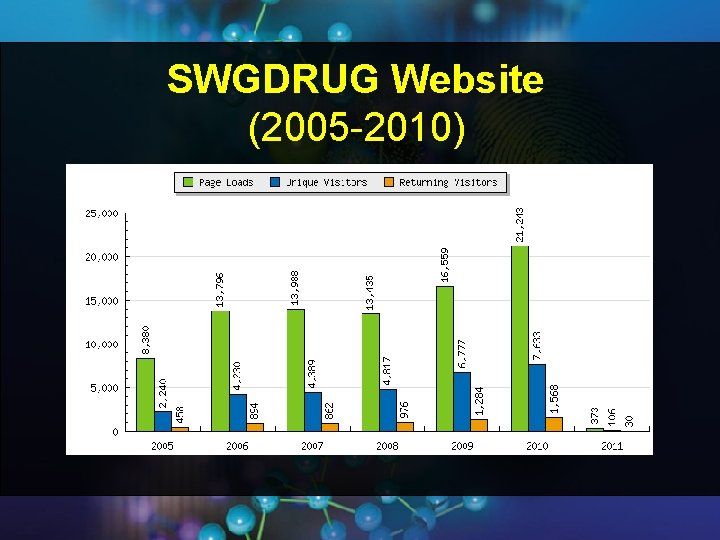
SWGDRUG Website (2005 -2010)
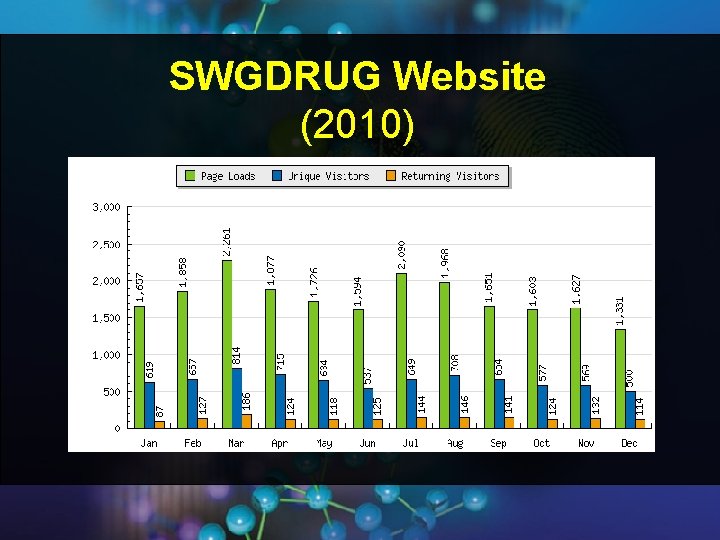
SWGDRUG Website (2010)
www. swgdrug. org