Laconic Function Evaluation and Applications Willy Quach Northeastern
- Slides: 40
Laconic Function Evaluation and Applications Willy Quach Northeastern University Hoeteck Wee CNRS and ENS Daniel Wichs Northeastern University
Outline • Introduce “Laconic Function Evaluation” (LFE). New primitive, dual to Fully Homomorphic Encryption. • Applications of LFE • Construction from Learning With Errors (LWE)
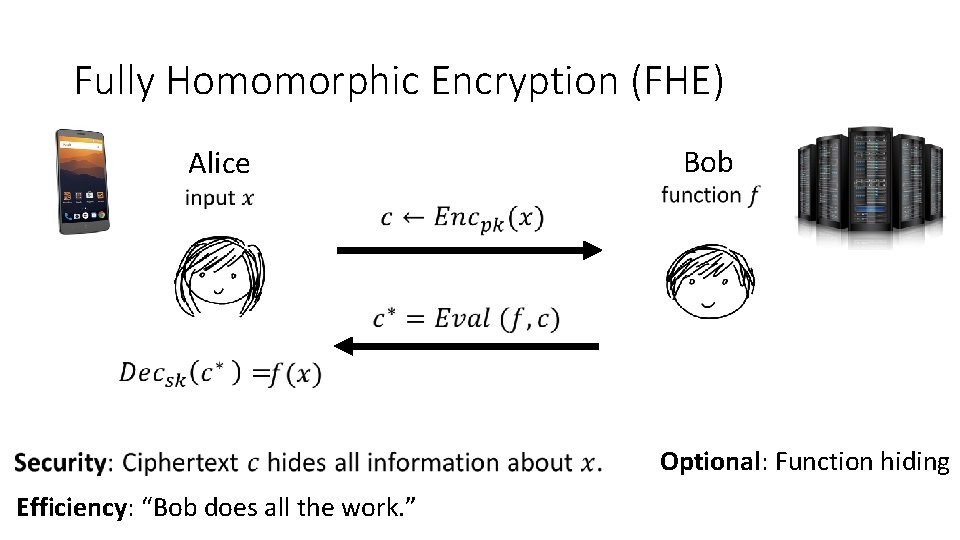
Fully Homomorphic Encryption (FHE) Alice Bob Optional: Function hiding Efficiency: “Bob does all the work. ”
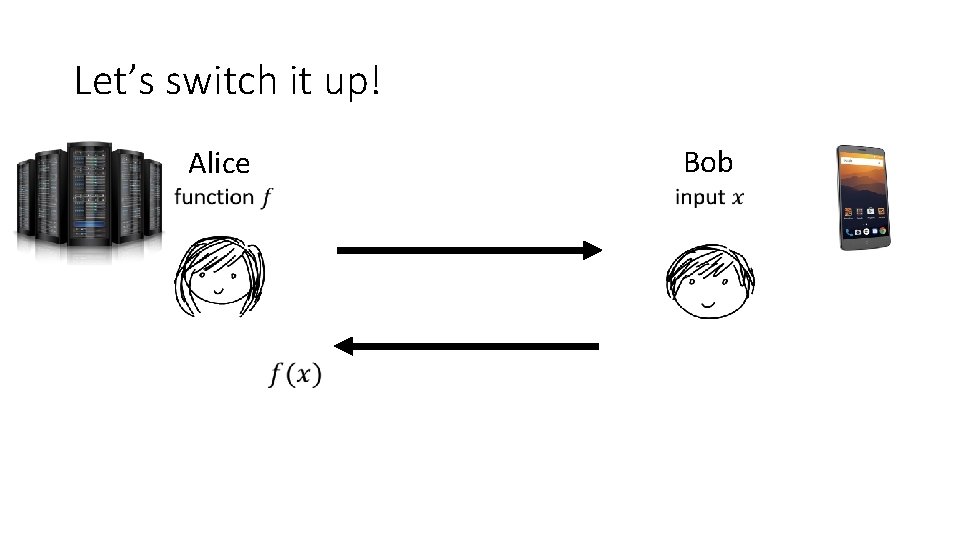
Let’s switch it up! Alice Bob
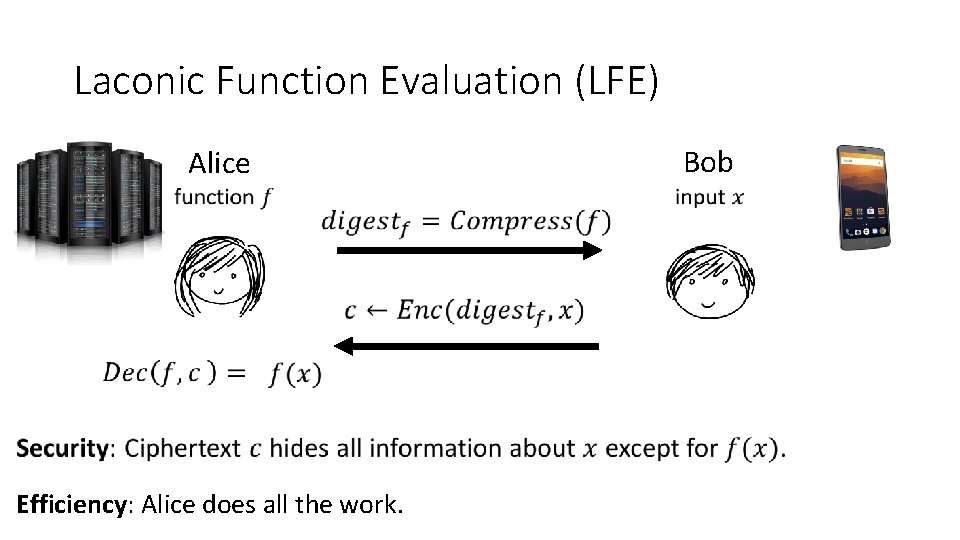
Laconic Function Evaluation (LFE) Alice Efficiency: Alice does all the work. Bob
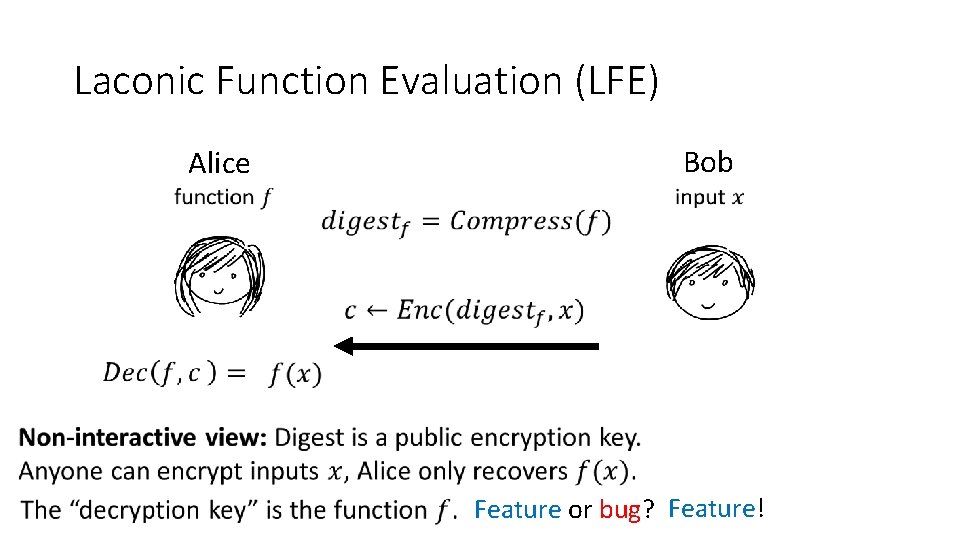
Laconic Function Evaluation (LFE) Alice Bob Feature or bug? Feature!
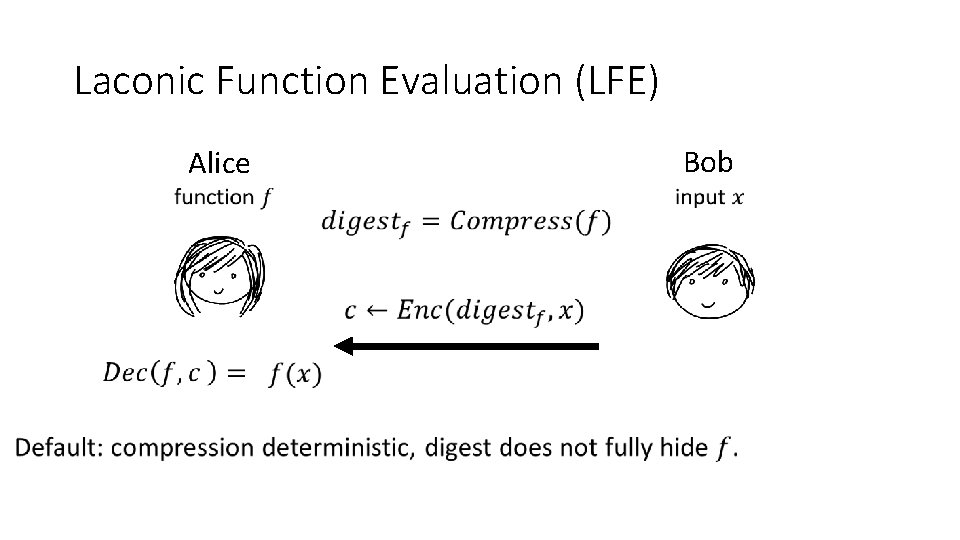
Laconic Function Evaluation (LFE) Alice Bob
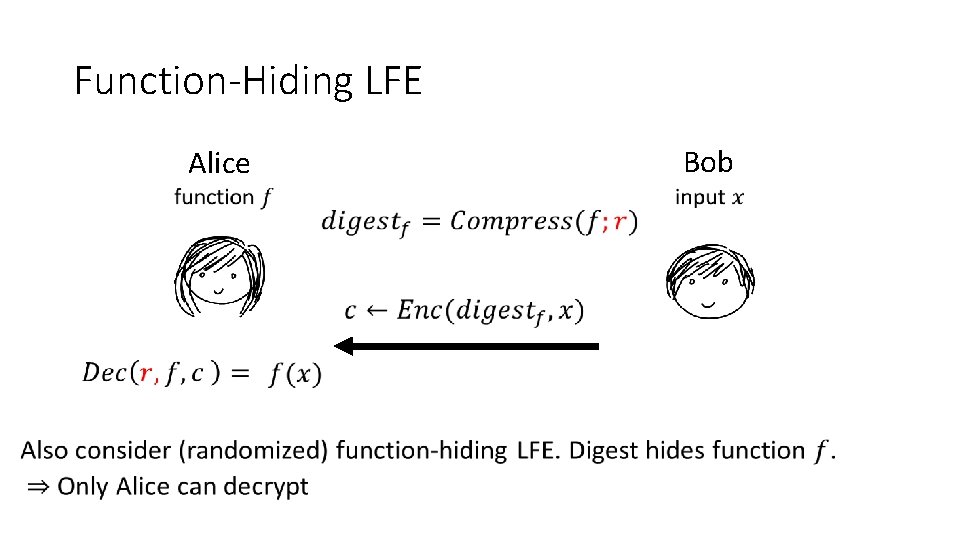
Function-Hiding LFE Alice Bob
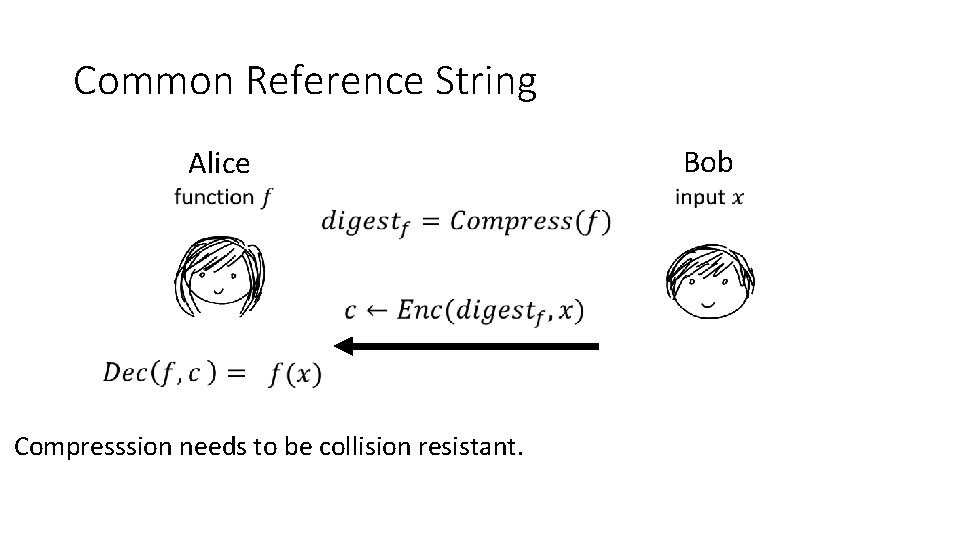
Common Reference String Alice Compresssion needs to be collision resistant. Bob
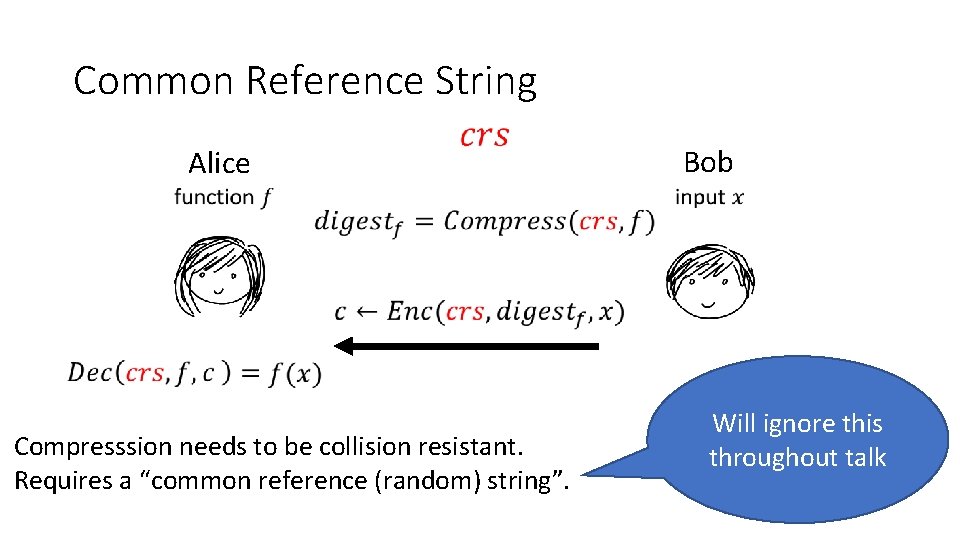
Common Reference String Alice Compresssion needs to be collision resistant. Requires a “common reference (random) string”. Bob Will ignore this throughout talk
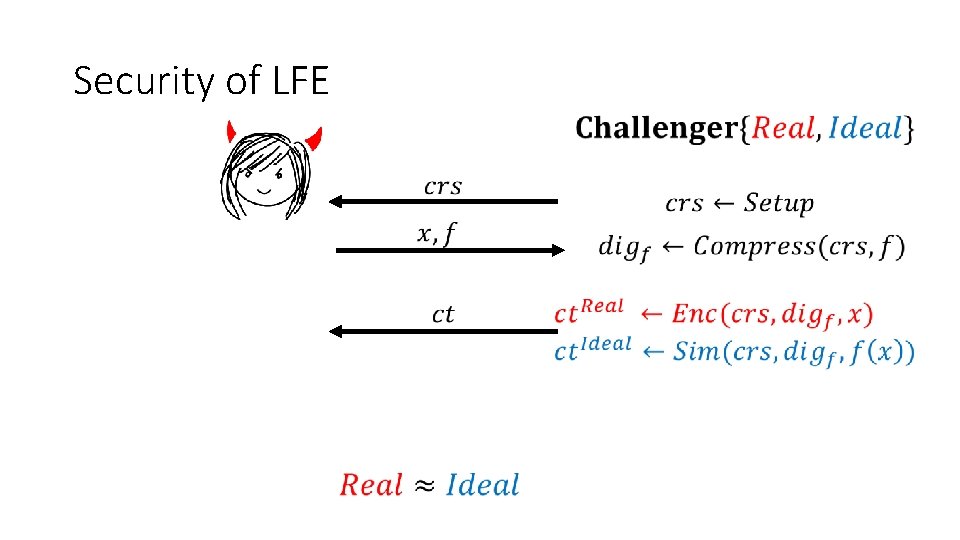
Security of LFE
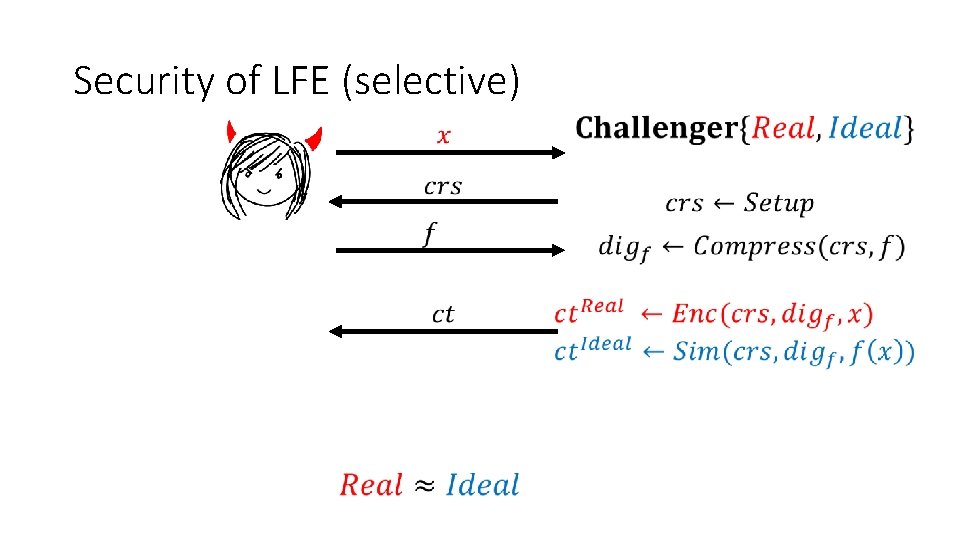
Security of LFE (selective)
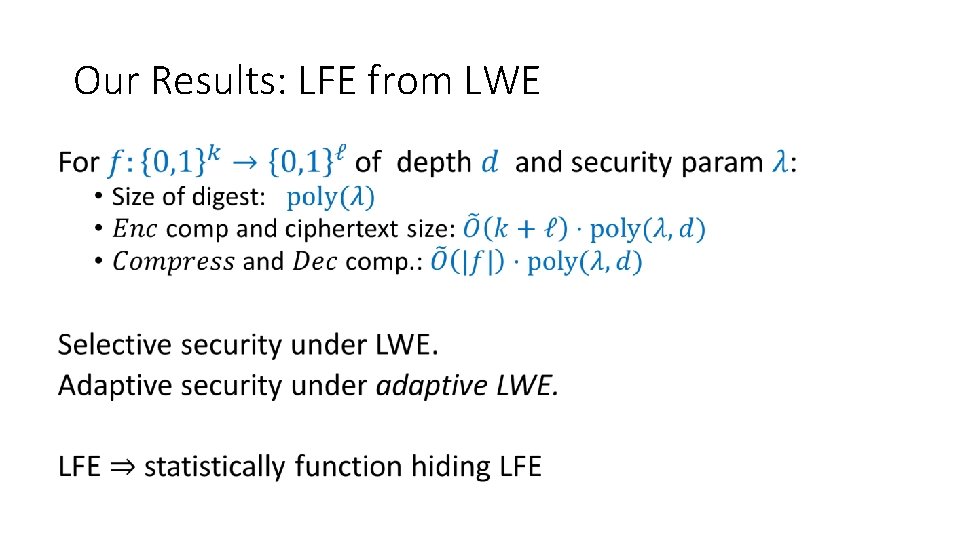
Our Results: LFE from LWE •
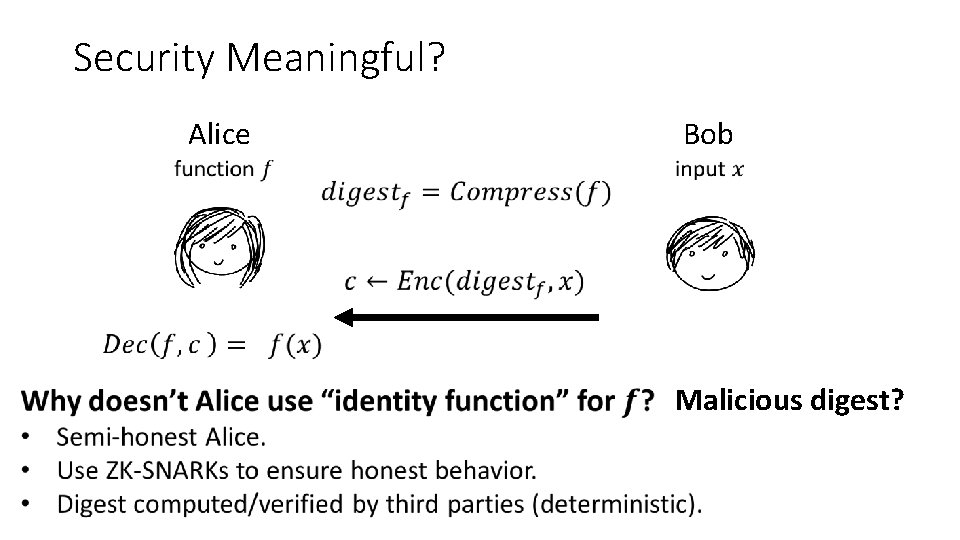
Security Meaningful? Alice Bob Malicious digest?
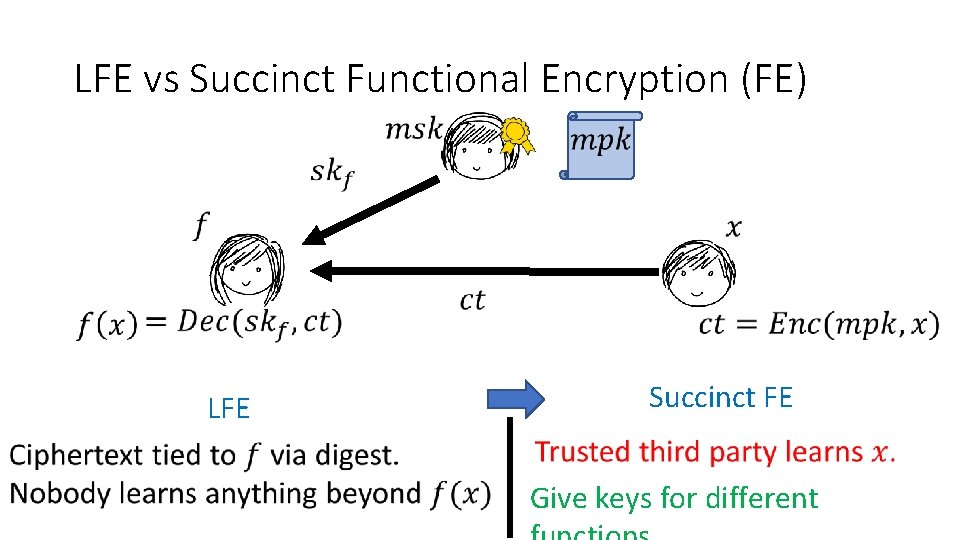
LFE vs Succinct Functional Encryption (FE) LFE Succinct FE Give keys for different
Outline • Introduce “Laconic Function Evaluation” (LFE). New primitive, dual to Fully Homomorphic Encryption. • Applications of LFE • Construction from Learning With Errors (LWE)
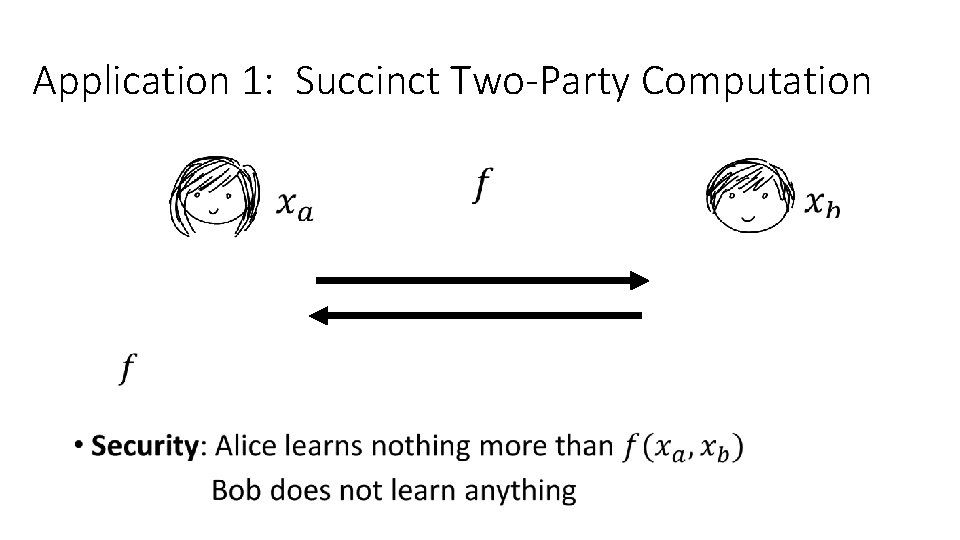
Application 1: Succinct Two-Party Computation •
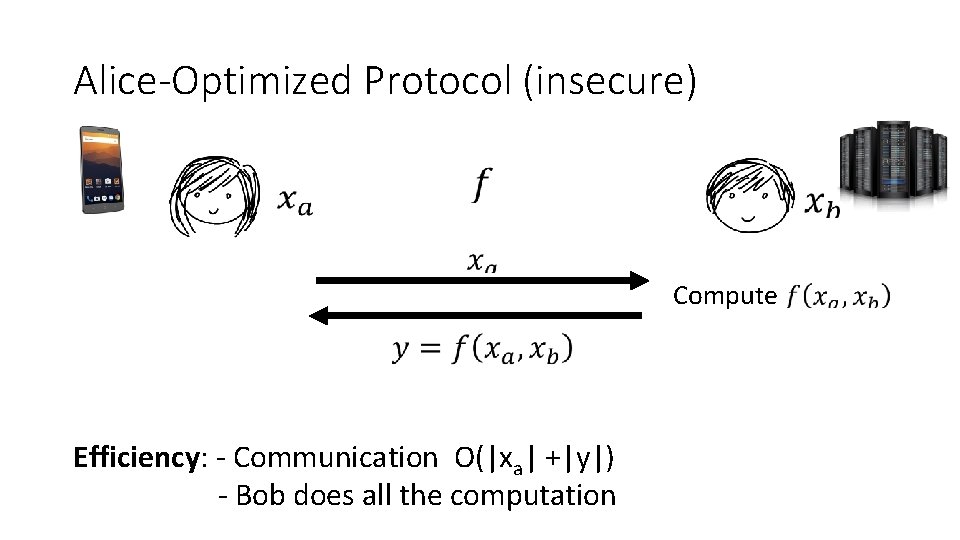
Alice-Optimized Protocol (insecure) Compute Efficiency: - Communication O(|xa| +|y|) - Bob does all the computation
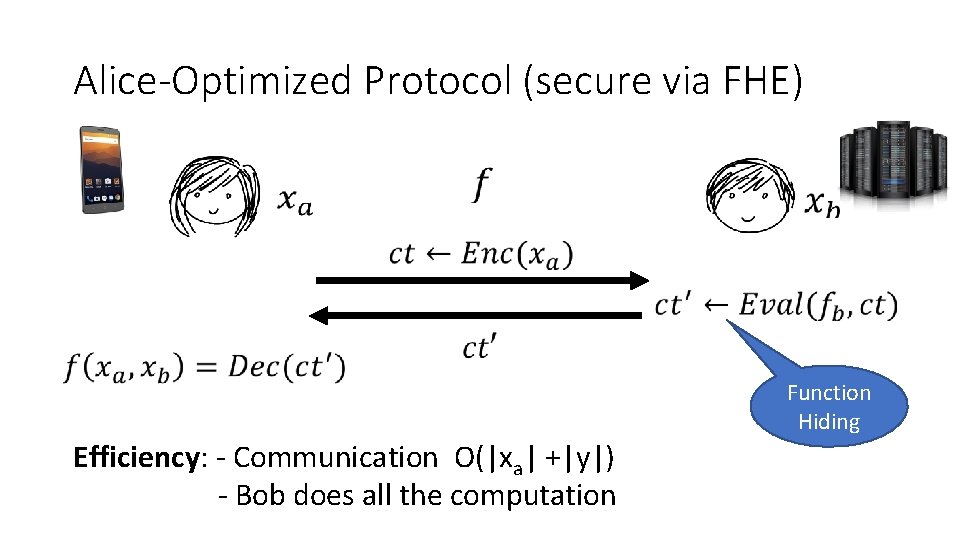
Alice-Optimized Protocol (secure via FHE) Function Hiding Efficiency: - Communication O(|xa| +|y|) - Bob does all the computation
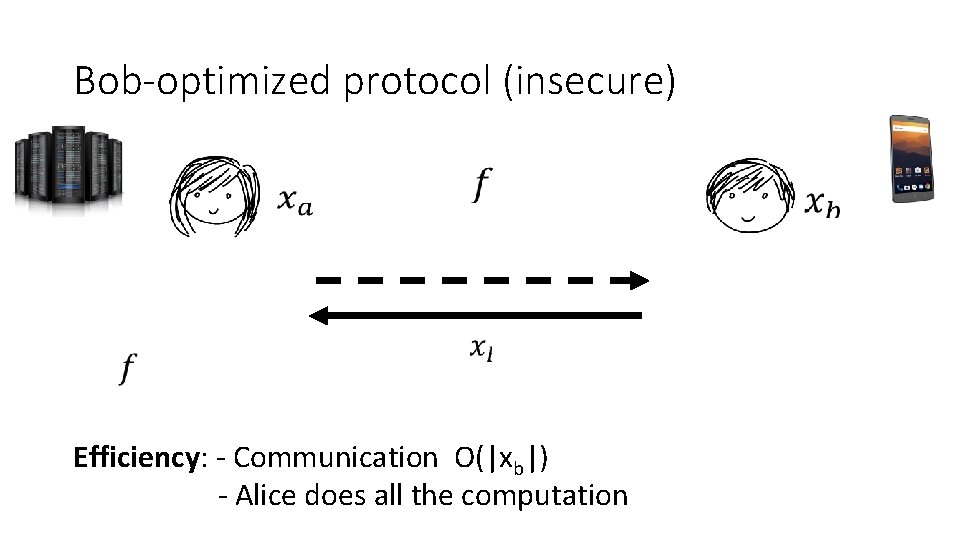
Bob-optimized protocol (insecure) Efficiency: - Communication O(|xb|) - Alice does all the computation
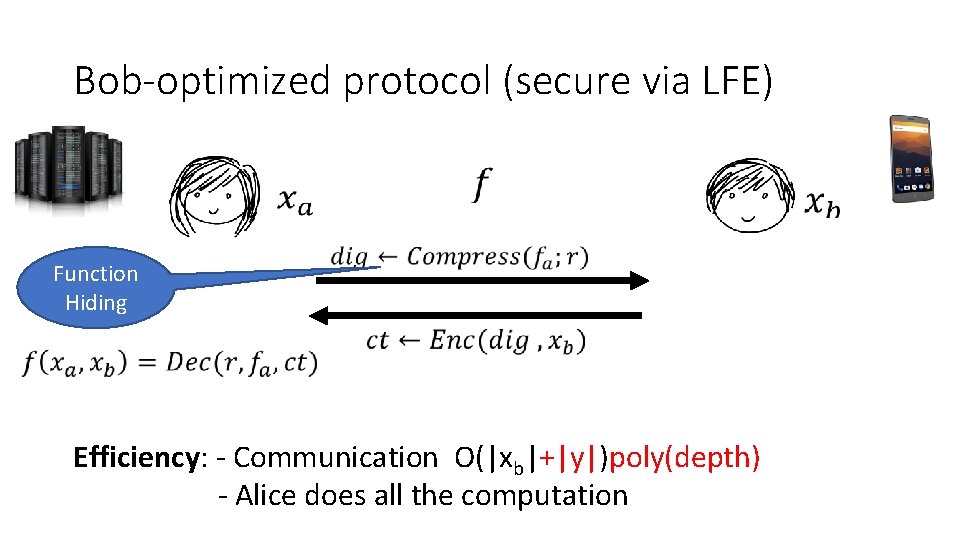
Bob-optimized protocol (secure via LFE) Function Hiding Efficiency: - Communication O(|xb|+|y|)poly(depth) - Alice does all the computation
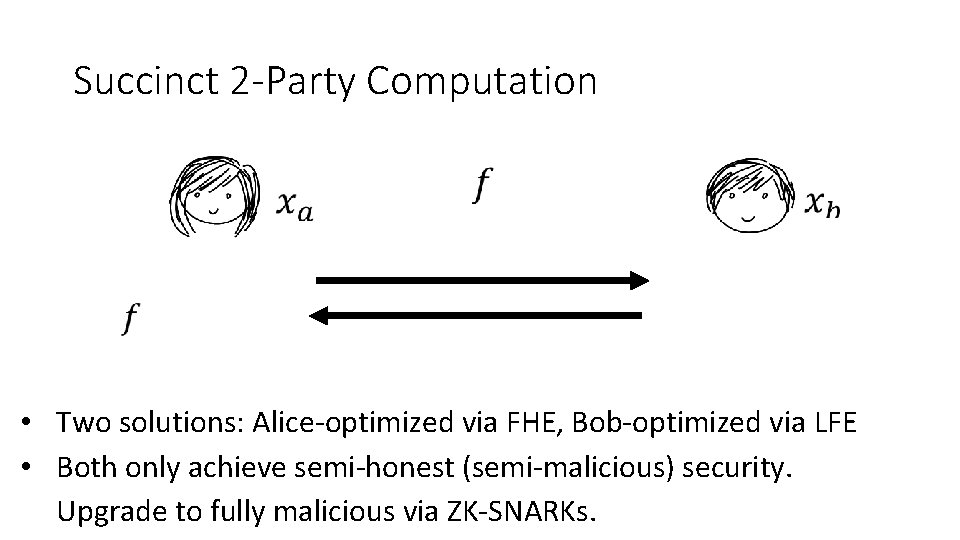
Succinct 2 -Party Computation • Two solutions: Alice-optimized via FHE, Bob-optimized via LFE • Both only achieve semi-honest (semi-malicious) security. Upgrade to fully malicious via ZK-SNARKs.
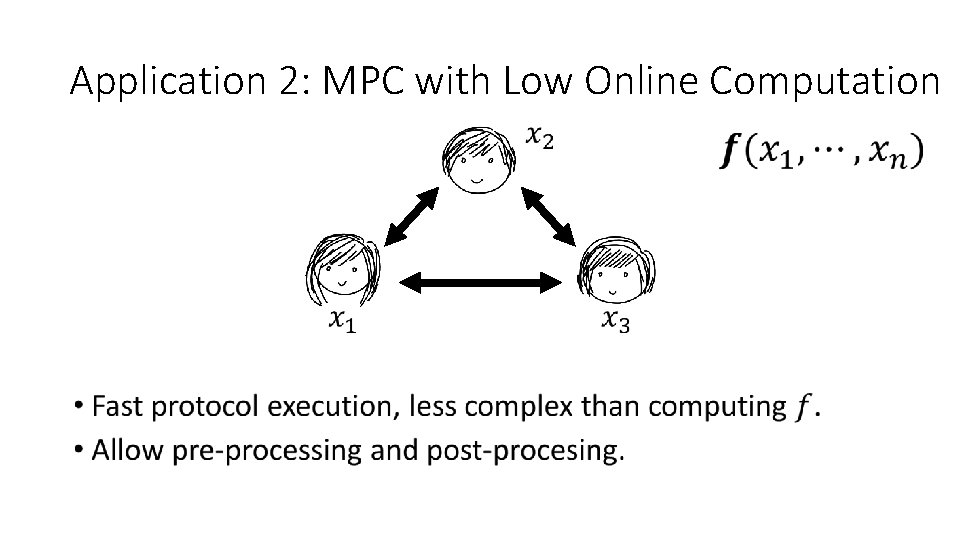
Application 2: MPC with Low Online Computation •
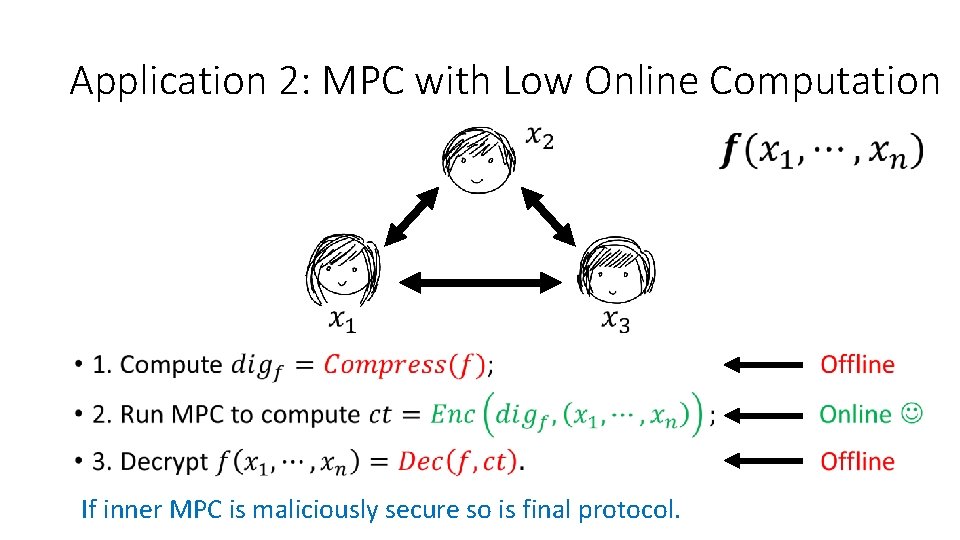
Application 2: MPC with Low Online Computation • If inner MPC is maliciously secure so is final protocol.
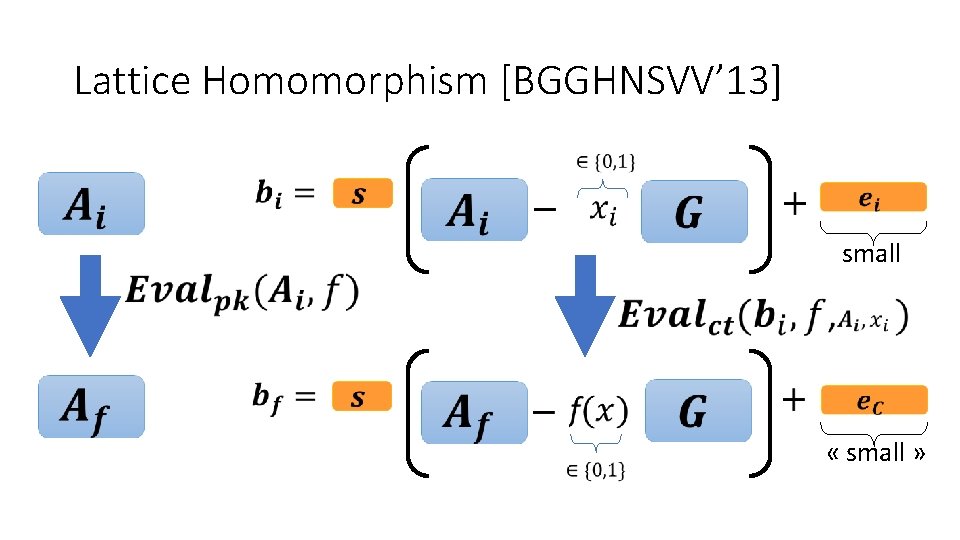
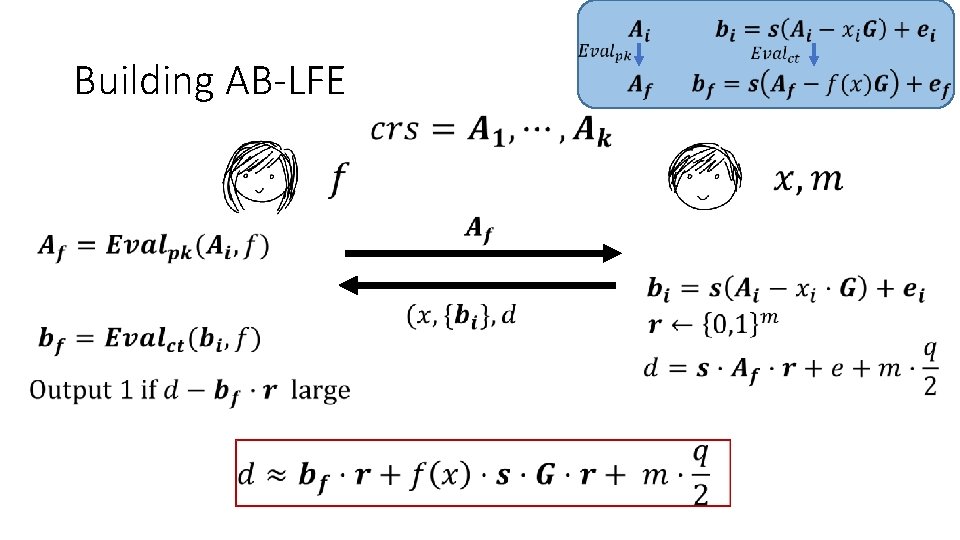
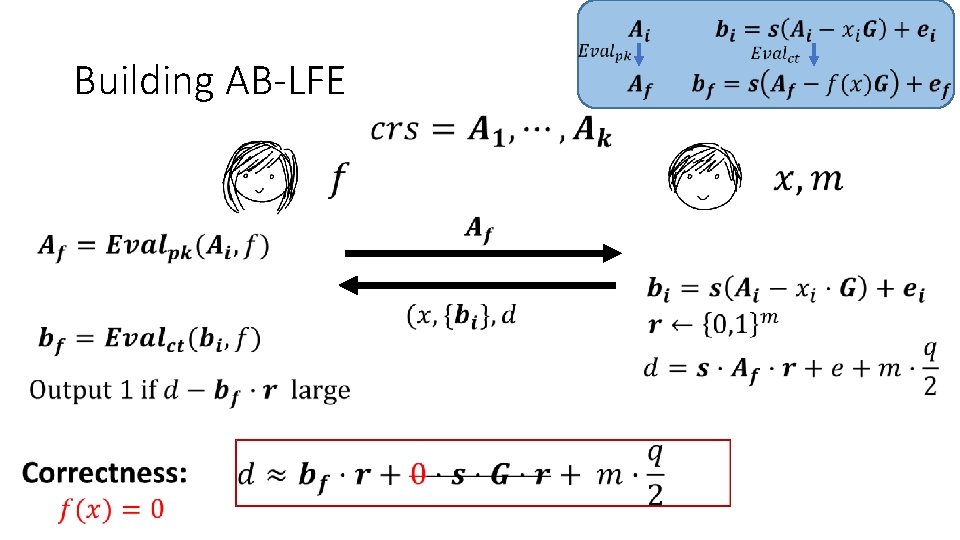
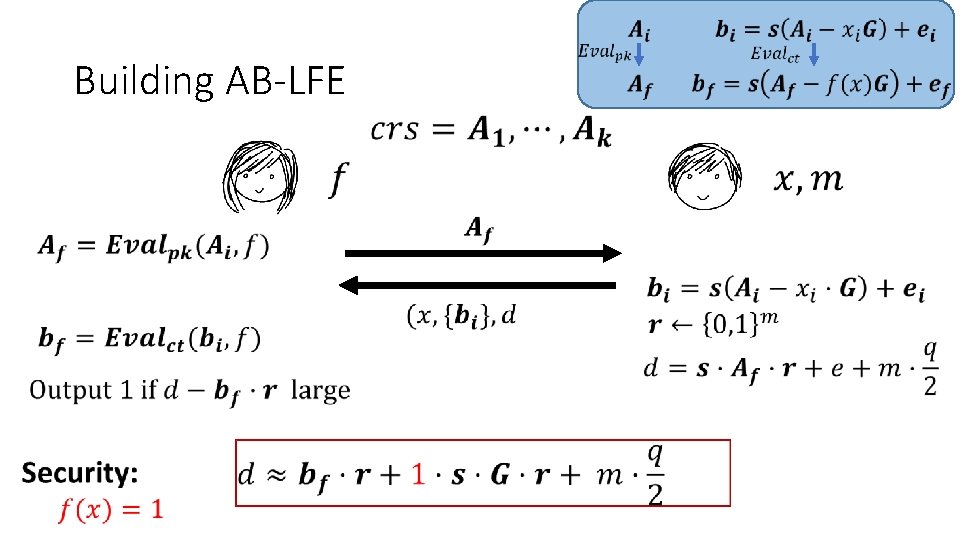
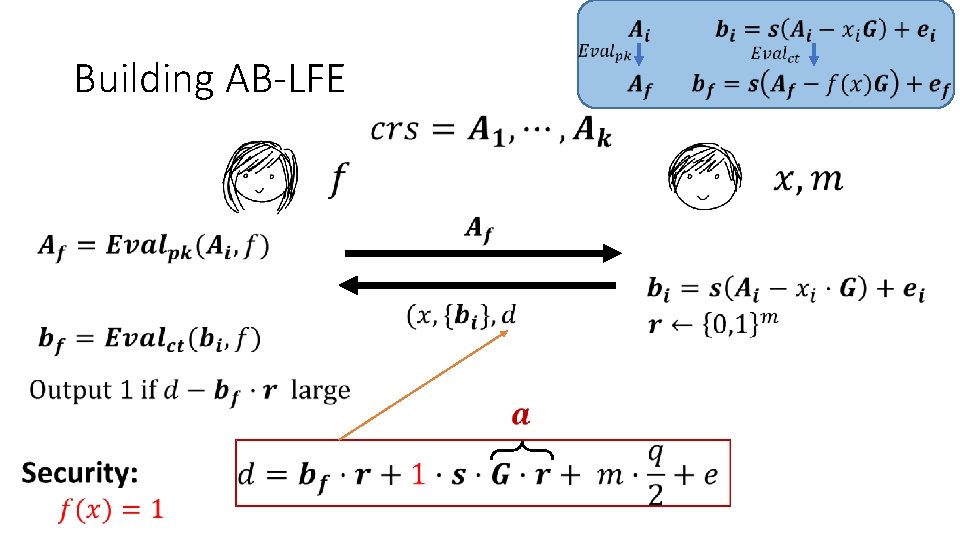
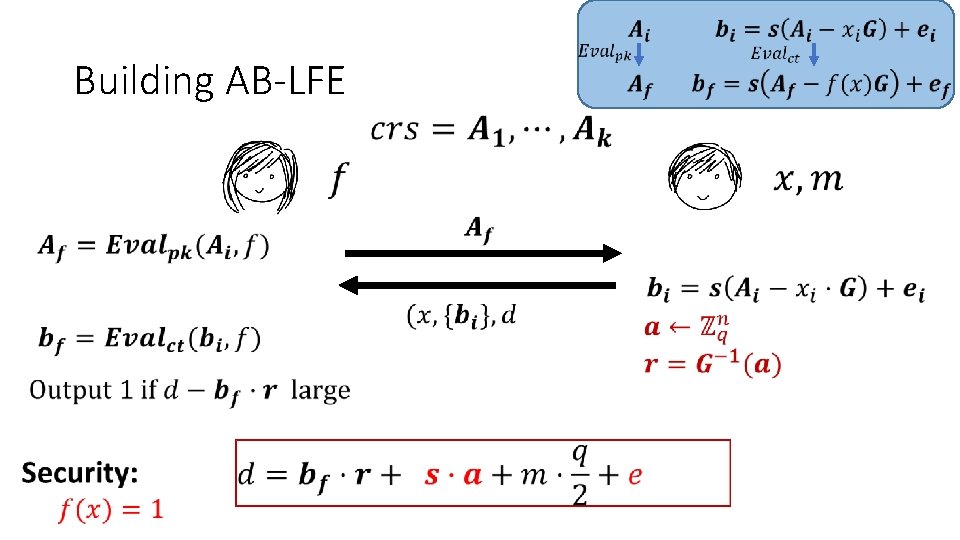
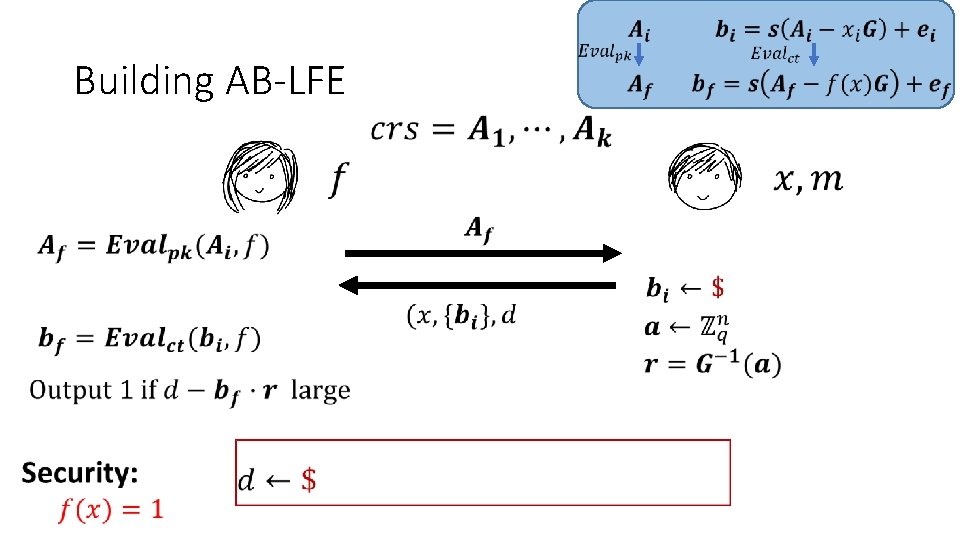
Outline • Introduce “Laconic Function Evaluation” (LFE). New primitive, dual to Fully Homomorphic Encryption. • Applications of LFE • Construction from Learning With Errors (LWE) 1. Attribute-Based LFE (AB-LFE) 2. Construct AB-LFE from LWE : adaptation of [BGGHNSVV’ 13] 3. AB-LFE to LFE via FHE : adaptation of [GKP+13]
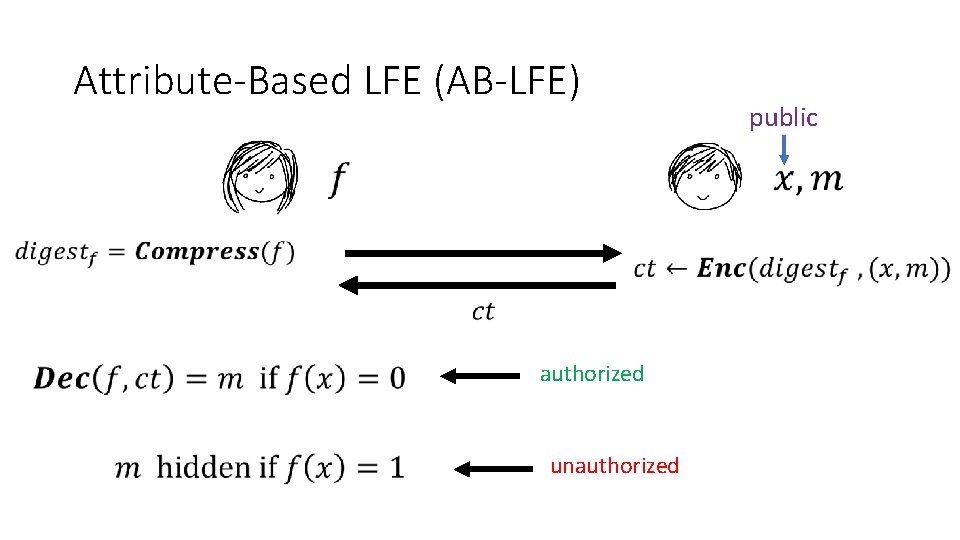
Attribute-Based LFE (AB-LFE) authorized unauthorized public
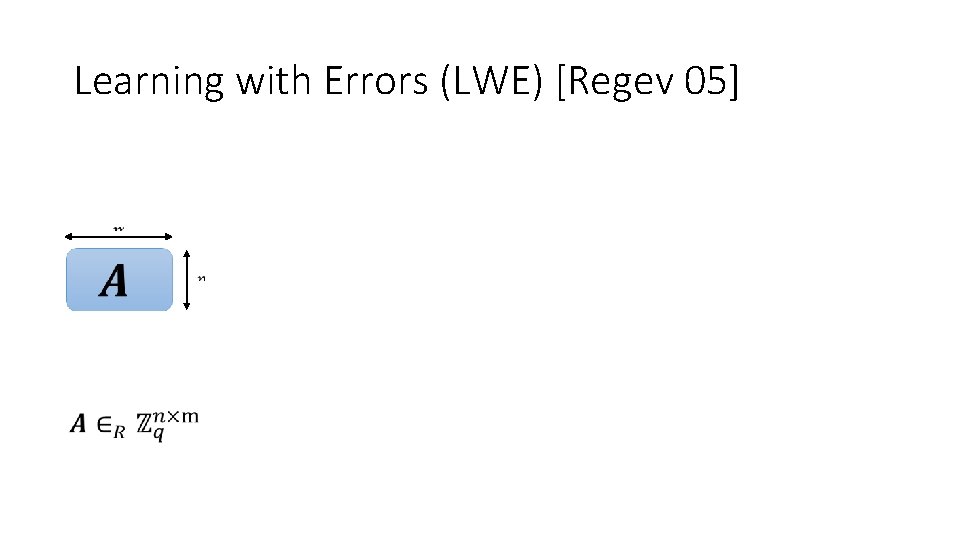
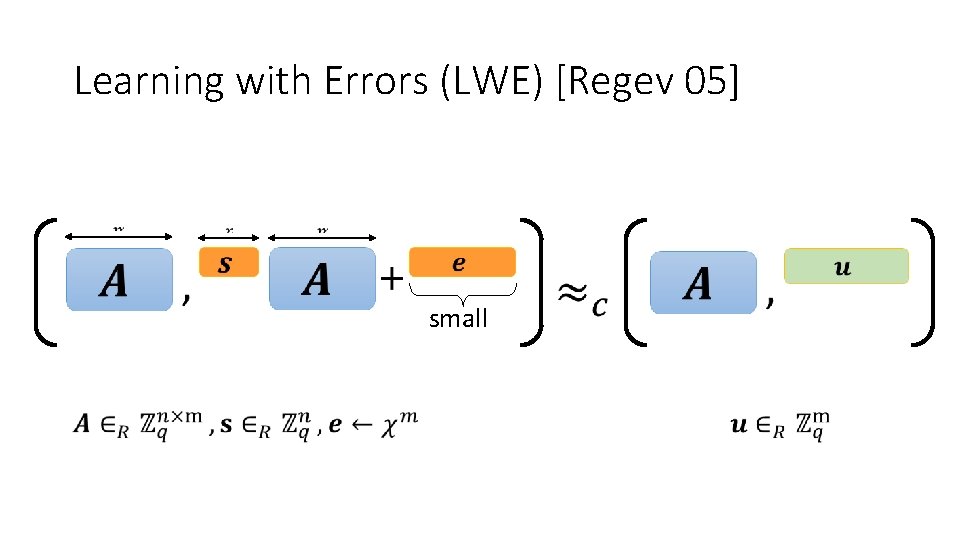
Learning with Errors (LWE) [Regev 05]
Learning with Errors (LWE) [Regev 05] small
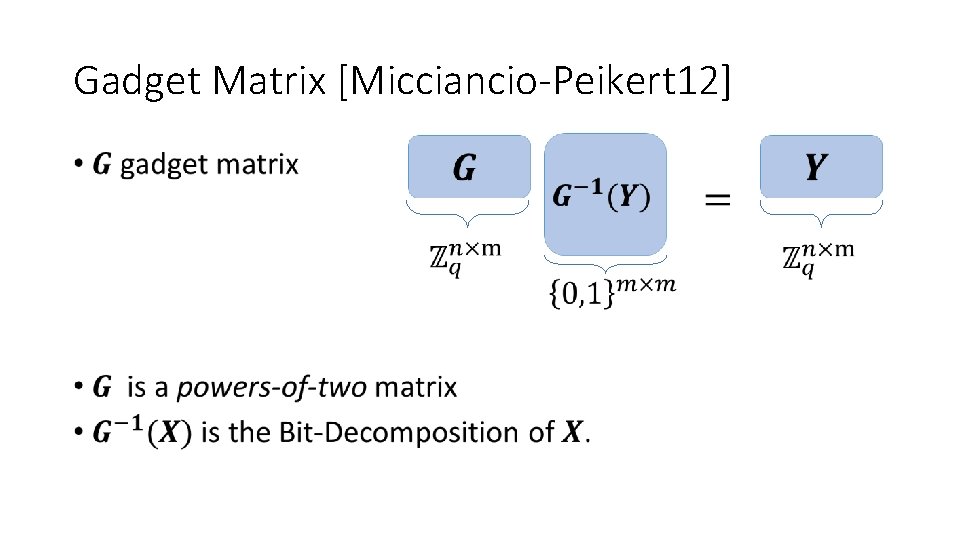
Gadget Matrix [Micciancio-Peikert 12] •
Lattice Homomorphism [BGGHNSVV’ 13] small « small »
Building AB-LFE
Building AB-LFE
Building AB-LFE
Building AB-LFE
Building AB-LFE
Building AB-LFE
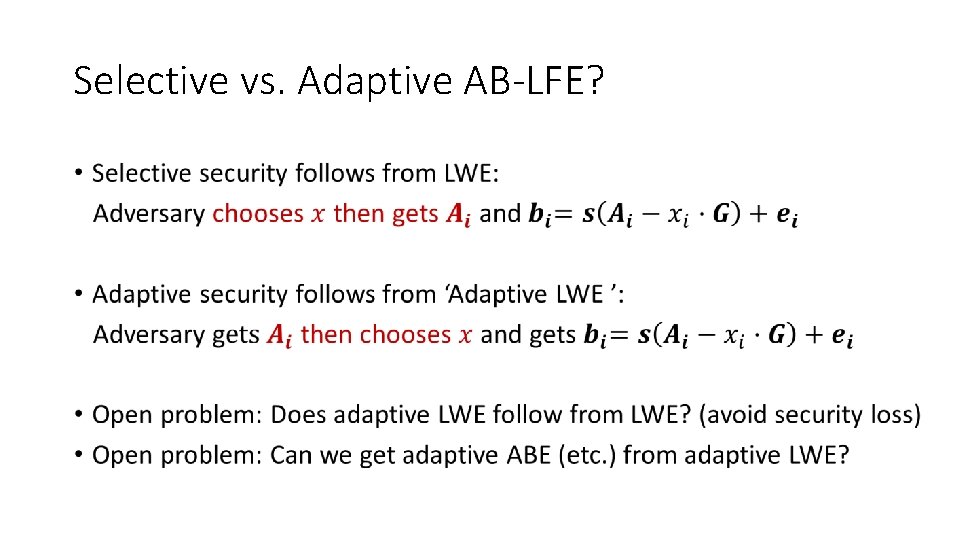
Selective vs. Adaptive AB-LFE? •
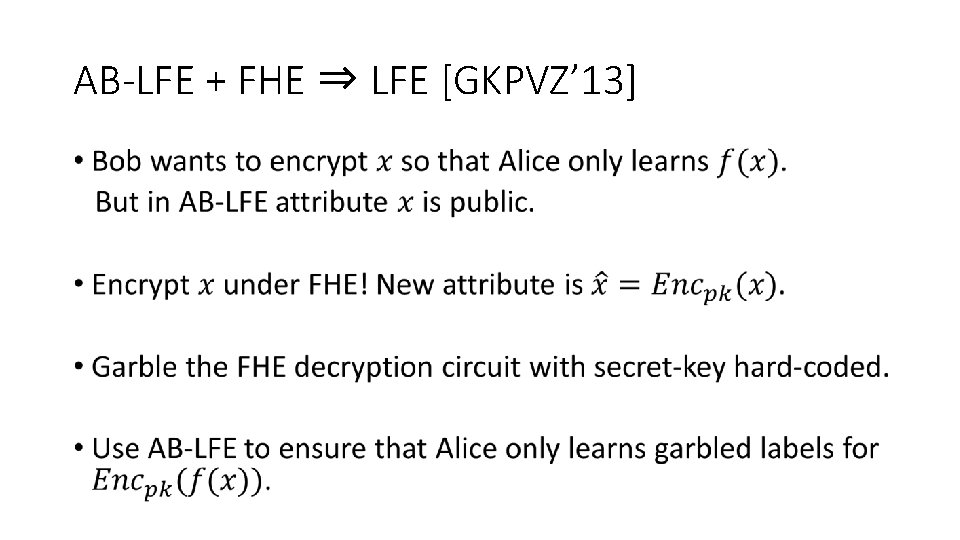
AB-LFE + FHE ⇒ LFE [GKPVZ’ 13] •
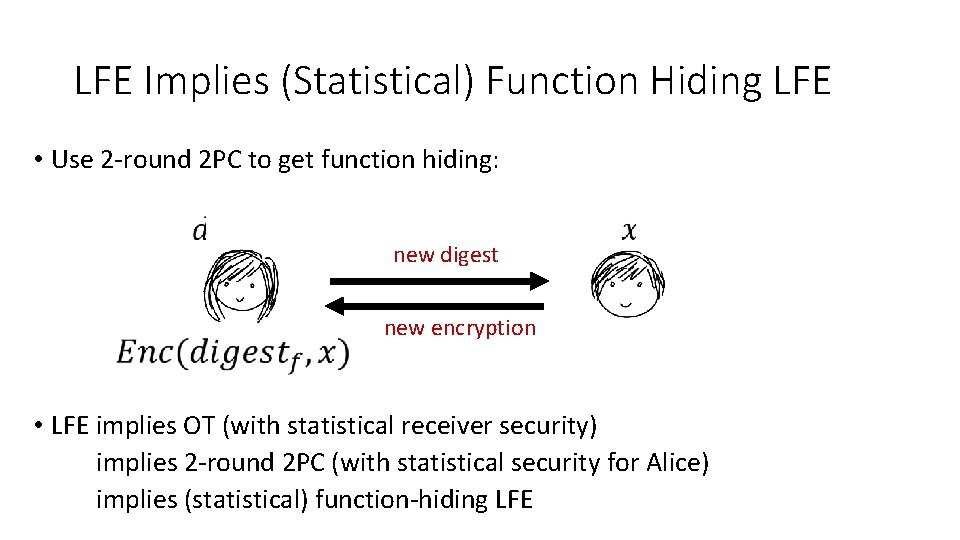
LFE Implies (Statistical) Function Hiding LFE • Use 2 -round 2 PC to get function hiding: new digest new encryption • LFE implies OT (with statistical receiver security) implies 2 -round 2 PC (with statistical security for Alice) implies (statistical) function-hiding LFE
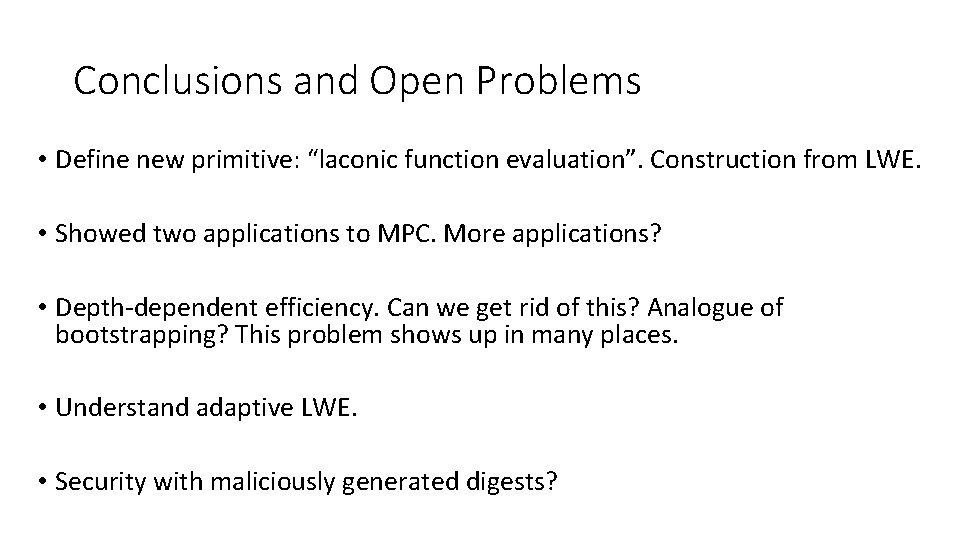
Conclusions and Open Problems • Define new primitive: “laconic function evaluation”. Construction from LWE. • Showed two applications to MPC. More applications? • Depth-dependent efficiency. Can we get rid of this? Analogue of bootstrapping? This problem shows up in many places. • Understand adaptive LWE. • Security with maliciously generated digests?