LESSON 1 CAT GOT YOUR TONGUE Words Relating

- Slides: 10
LESSON 1: CAT GOT YOUR TONGUE? Words Relating to Using Few Words or Being Quiet
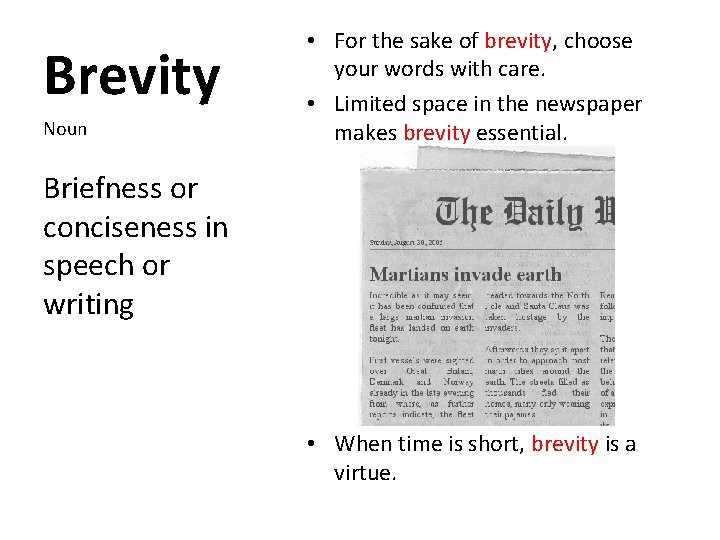
Brevity Noun • For the sake of brevity, choose your words with care. • Limited space in the newspaper makes brevity essential. Briefness or conciseness in speech or writing • When time is short, brevity is a virtue.
Concise Adjective • A concise explanation is preferable to a long-winded one. • Leslie’s essay is pretty wordy; she should try to be more concise. Using few words in speaking or writing • For a concise summary of the book, read the book jacket.
Laconic Adjective Using few words in speech • Because Bush’s laconic reply lacked specificity, it raised more questions than it answered. • It was just too hot to give more than a laconic response to the question. • Ms. Allen’s laconic explanation consisted of a single word: pepperoni.
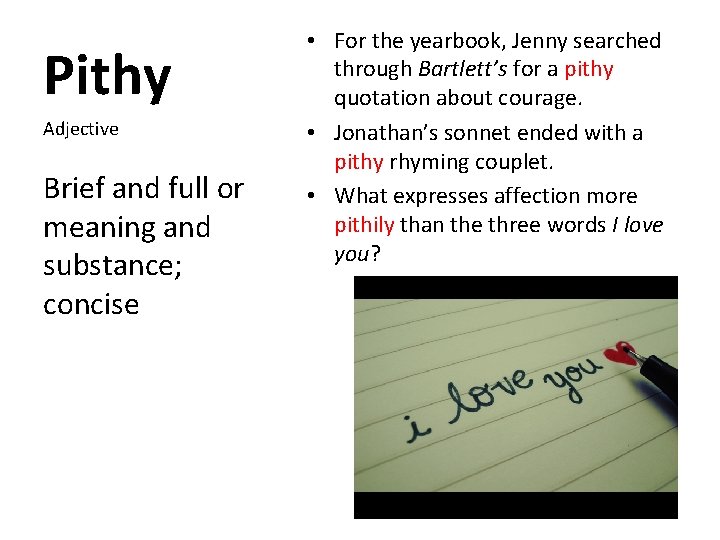
Pithy Adjective Brief and full or meaning and substance; concise • For the yearbook, Jenny searched through Bartlett’s for a pithy quotation about courage. • Jonathan’s sonnet ended with a pithy rhyming couplet. • What expresses affection more pithily than the three words I love you?
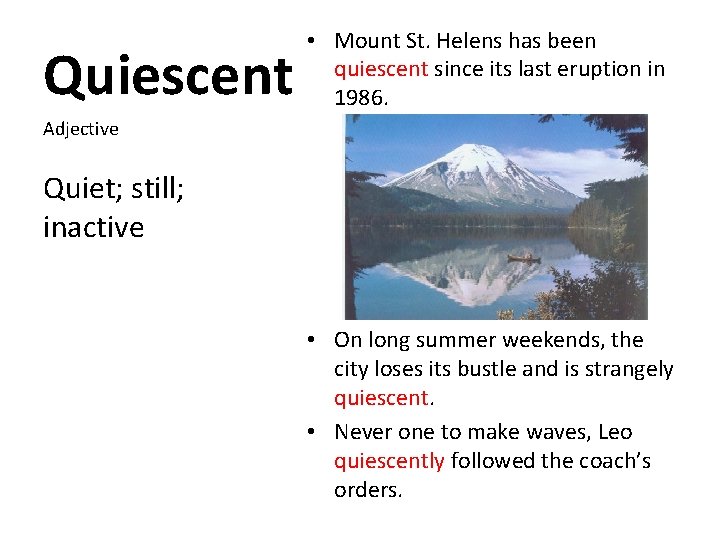
Quiescent • Mount St. Helens has been quiescent since its last eruption in 1986. Adjective Quiet; still; inactive • On long summer weekends, the city loses its bustle and is strangely quiescent. • Never one to make waves, Leo quiescently followed the coach’s orders.
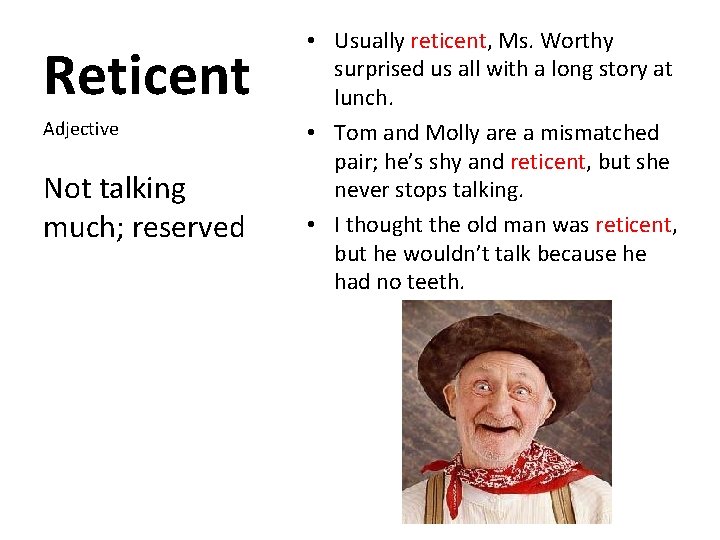
Reticent Adjective Not talking much; reserved • Usually reticent, Ms. Worthy surprised us all with a long story at lunch. • Tom and Molly are a mismatched pair; he’s shy and reticent, but she never stops talking. • I thought the old man was reticent, but he wouldn’t talk because he had no teeth.
Succinct • Mr. Phillips asked us to write a succinct summary of our term papers. Adjective Clearly and briefly stated; concise • The title succinctly conveys the point of my paper. • Let me state this as succinctly as I can: “No late papers. ”
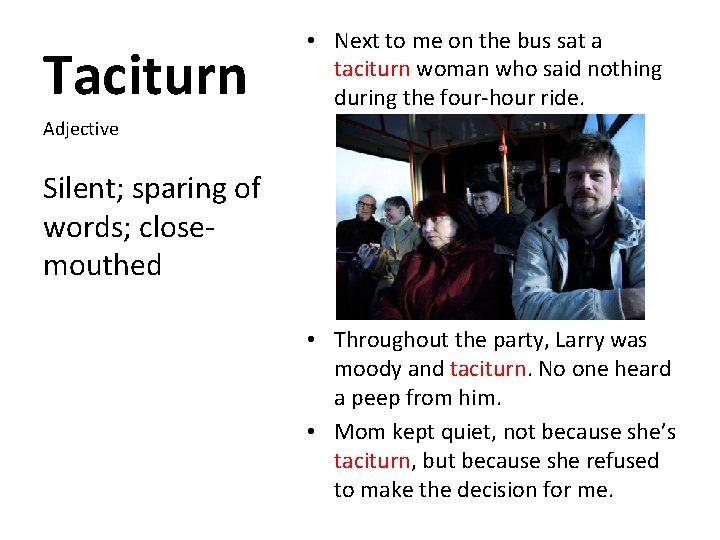
Taciturn • Next to me on the bus sat a taciturn woman who said nothing during the four-hour ride. Adjective Silent; sparing of words; closemouthed • Throughout the party, Larry was moody and taciturn. No one heard a peep from him. • Mom kept quiet, not because she’s taciturn, but because she refused to make the decision for me.
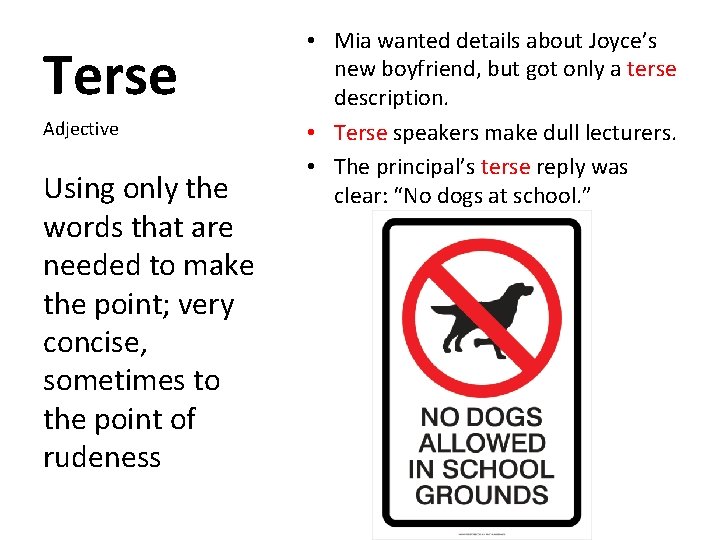
Terse Adjective Using only the words that are needed to make the point; very concise, sometimes to the point of rudeness • Mia wanted details about Joyce’s new boyfriend, but got only a terse description. • Terse speakers make dull lecturers. • The principal’s terse reply was clear: “No dogs at school. ”