JAPANESE ENCEPHALITIS Dr Sudhanshu Mishra Assistant Professor Community




- Slides: 46
JAPANESE ENCEPHALITIS Dr. Sudhanshu Mishra Assistant Professor Community Medicine
EPIDEMIOLOGY ▪ Agent ▪ Geographical Distribution ▪ Hosts ▪ Transmission ▪ Morbidity and Mortality
INTRODUCTION ▪ SYNONYMS: Japanese B Encephalitis, Arbovirus B Encephalitis, Mosquito-Borne Encephalitis, Russian Autumnal Encephalitis, Brain Fever, Summer Encephalitis. ▪ Definition: JE is an inapparent to acute arboviral infection of horses, pigs and humans. It’s a zoonotic disease i. e. infecting mainly animals and incidentally man.
ARBOVIRUSES (ABV) ▪ Viruses of vertebrates biologically transmitted by hematophagus insect vectors ▪ Special characteristic: Ability to multiply in arthropods ▪ Worldwide in distribution but far more numerous in tropical than in temperatezones ▪ India: Over 40 ABV detected, >10 are known to produce human disease
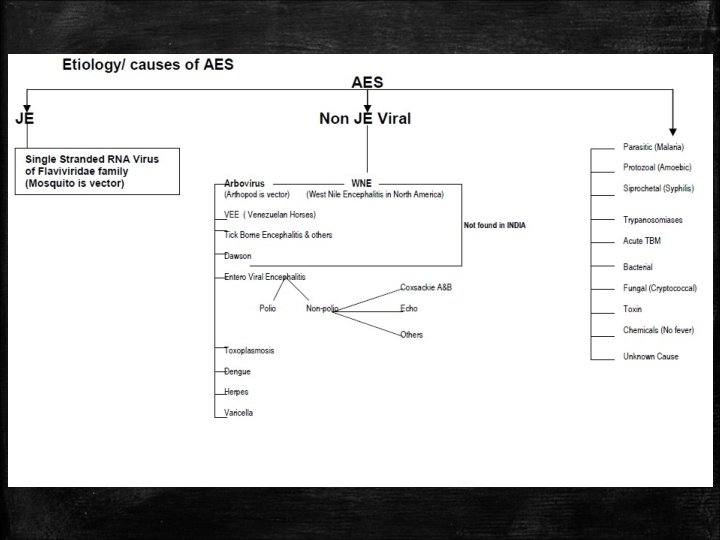
AETIOLOGY ▪ Zoonotic disease ▪ Family: Flaviviridae ▪ Genus: Flavivirus
JE - GLOBAL SCENARIO ▪ Major public health disease in Asia ▪ Virus first isolated in Japan in 1935 ▪ As per WHO estimates 50 thousand seriouscases and 10 thousand deaths each year ▪ Disease is prevalent in Indian Sub-continent, Nepal, India, Sri Lanka and some areas in Bangladesh 6
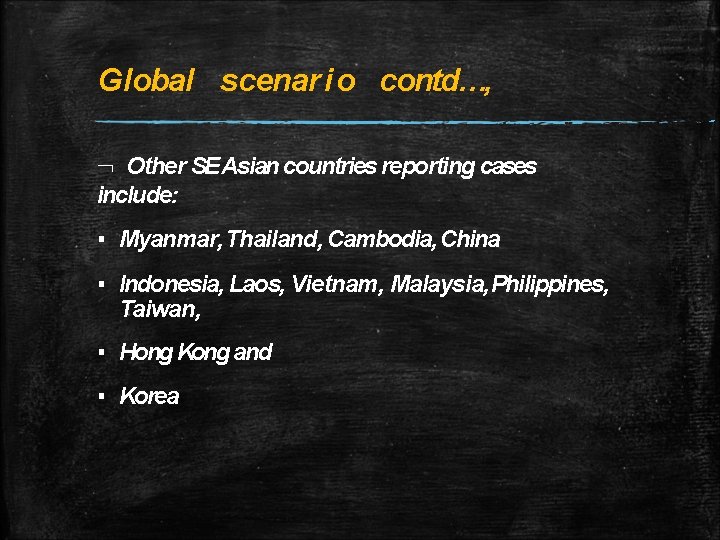
Global scenario contd…, Other SE Asian countries reporting cases include: ▪ Myanmar, Thailand, Cambodia, China ▪ Indonesia, Laos, Vietnam, Malaysia, Philippines, Taiwan, ▪ Hong Kong and ▪ Korea
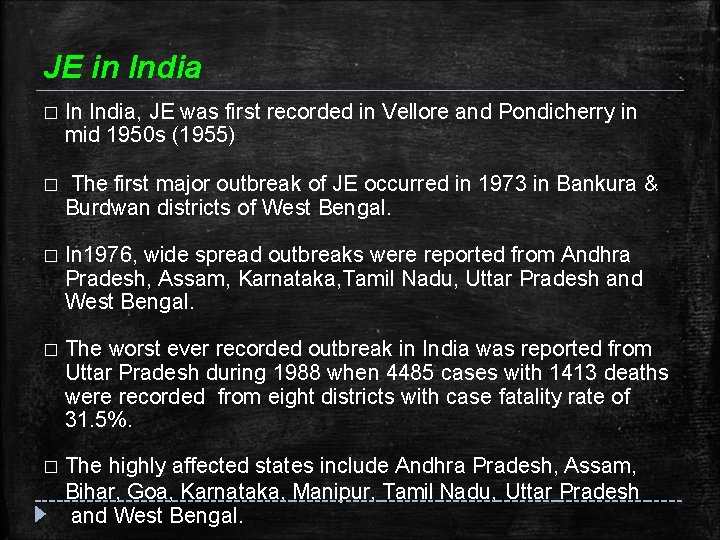
JE in India � In India, JE was first recorded in Vellore and Pondicherry in mid 1950 s (1955) � The first major outbreak of JE occurred in 1973 in Bankura & Burdwan districts of West Bengal. � In 1976, wide spread outbreaks were reported from Andhra Pradesh, Assam, Karnataka, Tamil Nadu, Uttar Pradesh and West Bengal. � The worst ever recorded outbreak in India was reported from Uttar Pradesh during 1988 when 4485 cases with 1413 deaths were recorded from eight districts with case fatality rate of 31. 5%. � The highly affected states include Andhra Pradesh, Assam, Bihar, Goa, Karnataka, Manipur, Tamil Nadu, Uttar Pradesh and West Bengal.
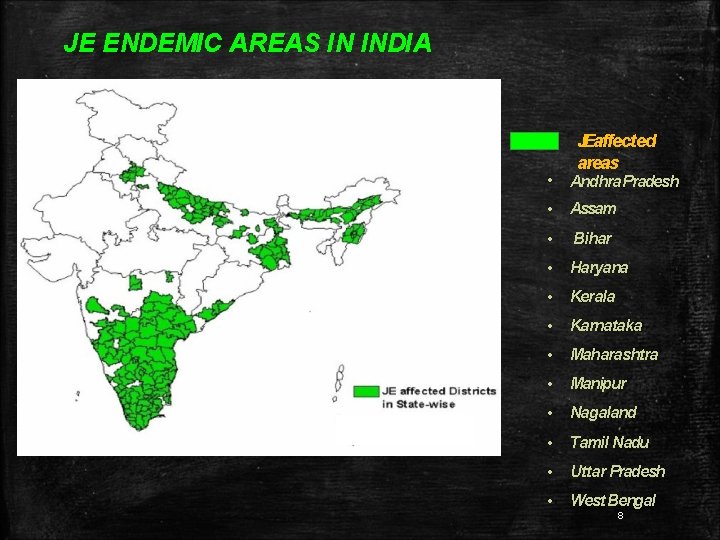
JE ENDEMIC AREAS IN INDIA JEaffected areas • Andhra Pradesh • Assam • Bihar • Haryana • Kerala • Karnataka • Maharashtra • Manipur • Nagaland • Tamil Nadu • Uttar Pradesh • West Bengal 8
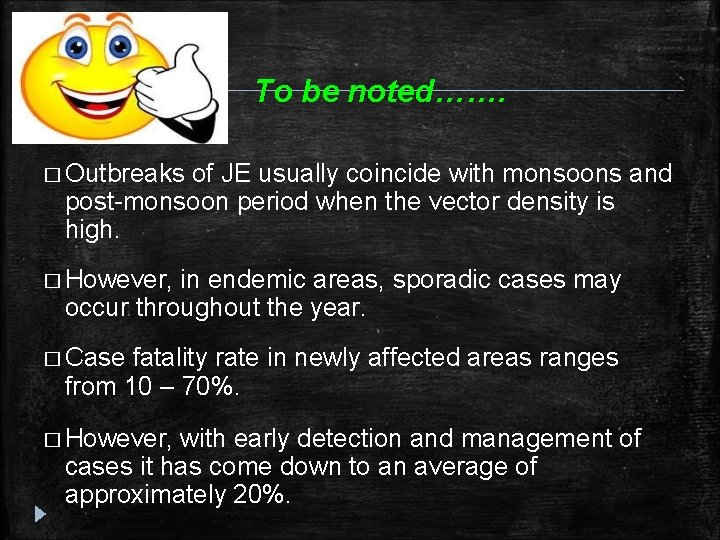
To be noted……. � Outbreaks of JE usually coincide with monsoons and post-monsoon period when the vector density is high. � However, in endemic areas, sporadic cases may occur throughout the year. � Case fatality rate in newly affected areas ranges from 10 – 70%. � However, with early detection and management of cases it has come down to an average of approximately 20%.
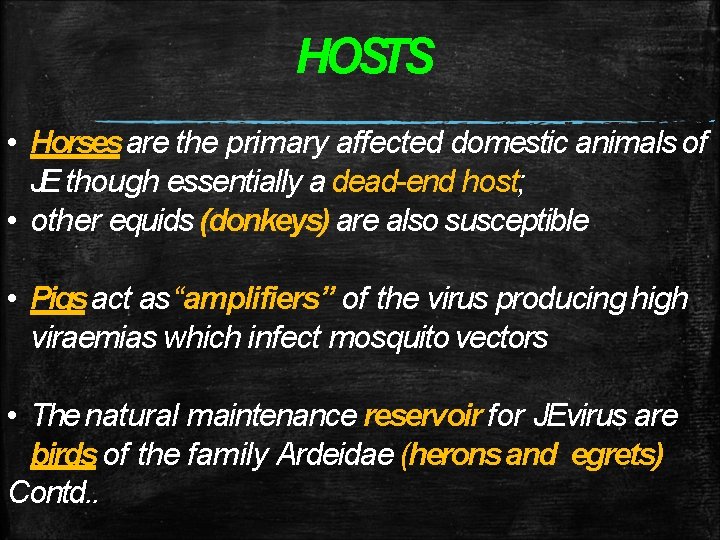
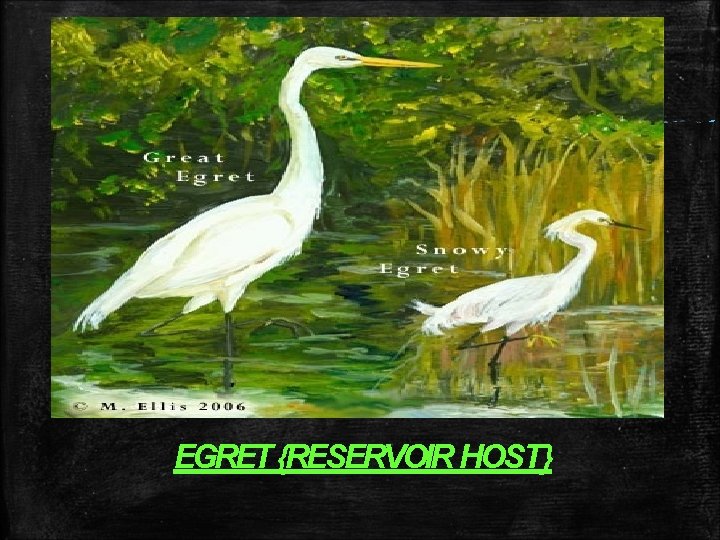
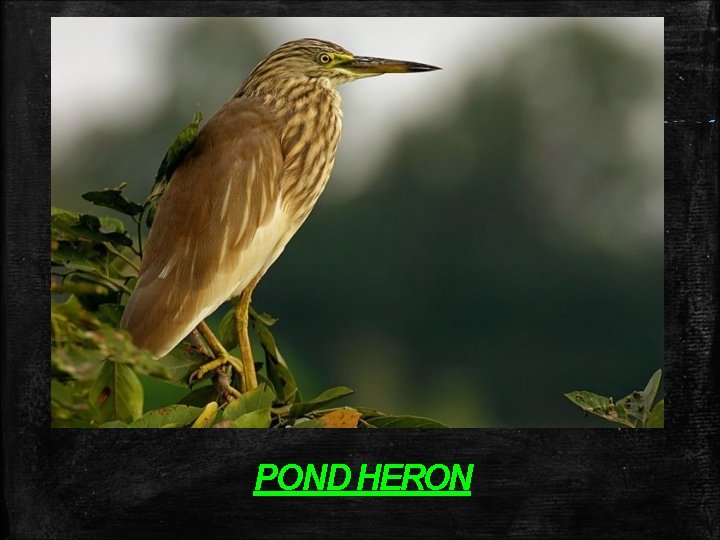
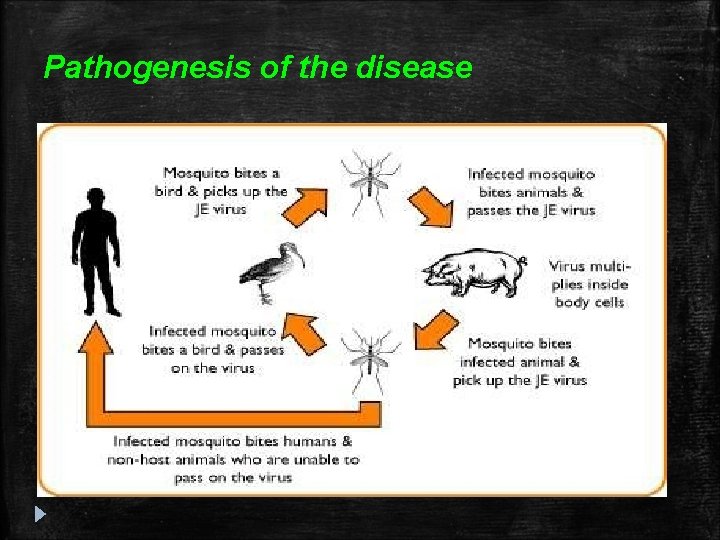
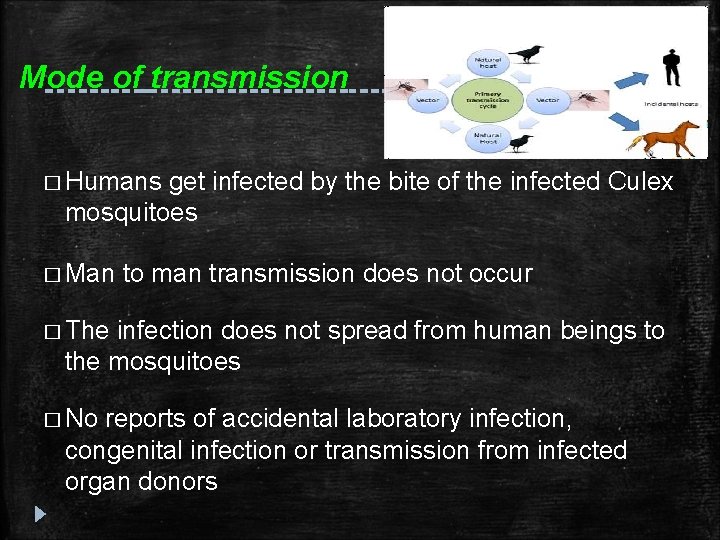
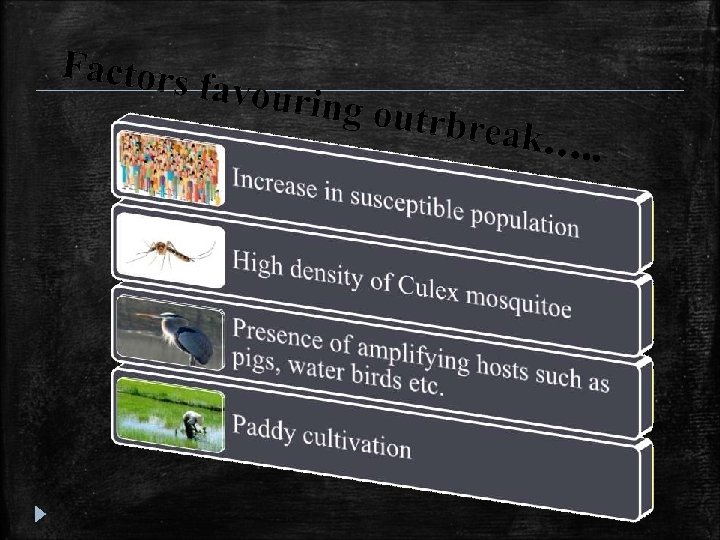
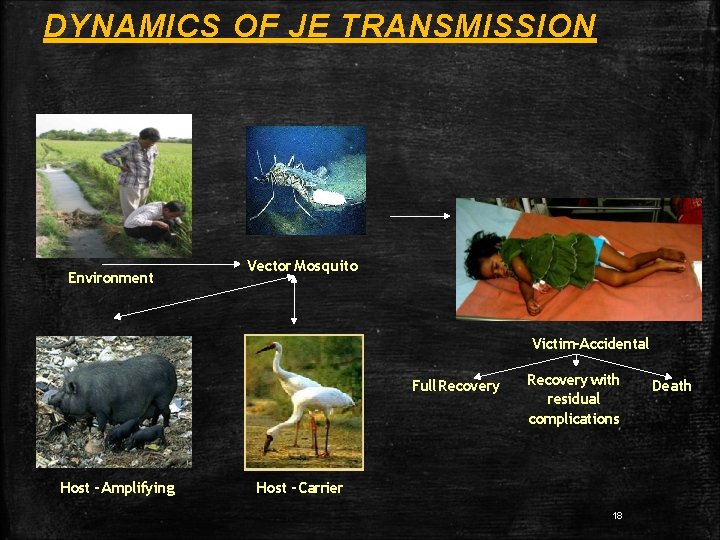
HOSTS • Horses are the primary affected domestic animals of JE though essentially a dead-end host; • other equids (donkeys) are also susceptible • Pigs act as “amplifiers” of the virus producing high viraemias which infect mosquito vectors • The natural maintenance reservoir for JEvirus are birds of the family Ardeidae (herons and egrets) Contd. .
EGRET {RESERVOIR HOST}
POND HERON
Pathogenesis of the disease
Mode of transmission � Humans get infected by the bite of the infected Culex mosquitoes � Man to man transmission does not occur � The infection does not spread from human beings to the mosquitoes � No reports of accidental laboratory infection, congenital infection or transmission from infected organ donors
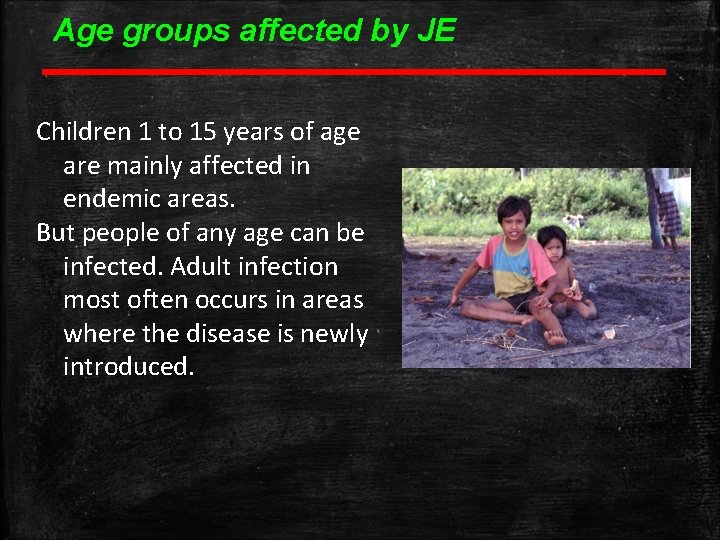
Age groups affected by JE Children 1 to 15 years of age are mainly affected in endemic areas. But people of any age can be infected. Adult infection most often occurs in areas where the disease is newly introduced.
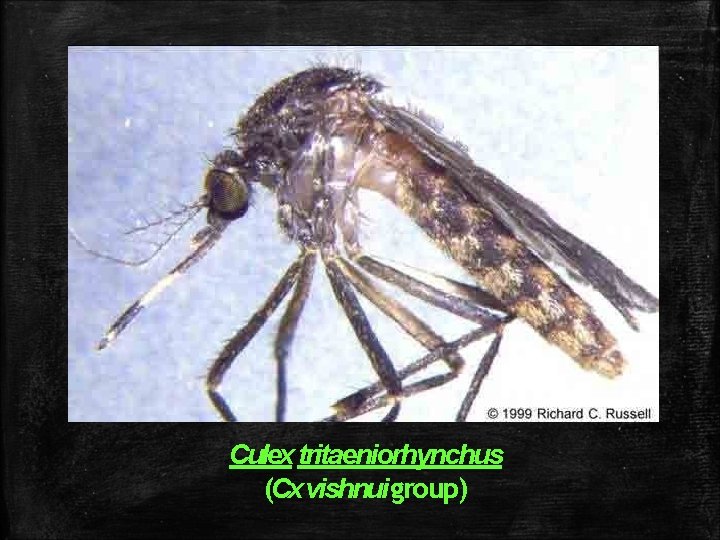
Mosquito Vectors ▪ C. Tritaeniorhynchus: Culex tritaeniorhynchus is the main vector in most of Asia, but other species that breed in rice paddies, ditches, and ground pools are also important ▪ C. Vishnui ▪ C. Gelidus ▪ Anopheles
Culex tritaeniorhynchus (Cx vishnui group)
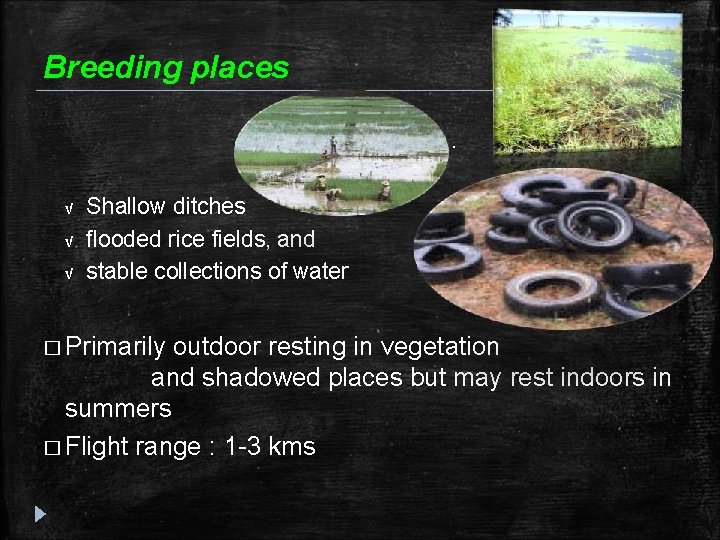
Breeding places � It √ √ breeds in. . . water pools, Shallow ditches flooded rice fields, and stable collections of water � Primarily outdoor resting in vegetation and shadowed places but may rest indoors in summers � Flight range : 1 -3 kms
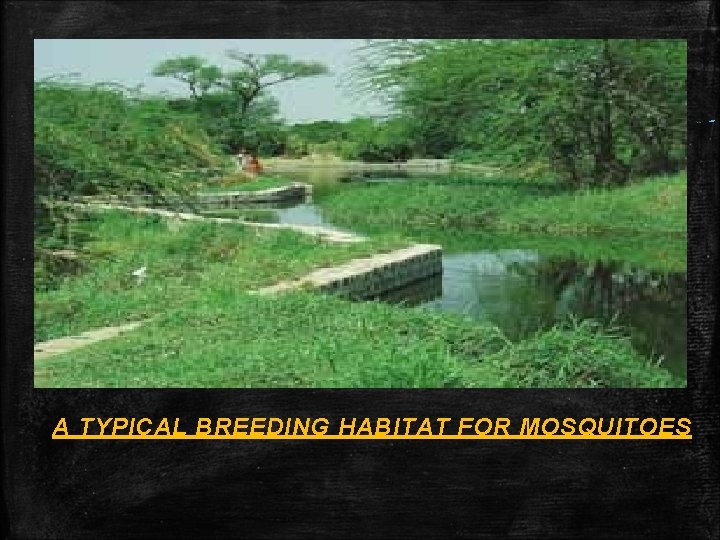
A TYPICAL BREEDING HABITAT FOR MOSQUITOES
Environment. . � Transmission related principally to temperature and humidity conducive to breeding and survival of the vector � Immune status of various population groups � Specific vectors for different geographical and ecological areas (rural, and agricultural locations) � Increased Rainfall � In temperate locations, transmission usually starts in April and may last until October � Piggeries within 4 -5 kms from human dwellings
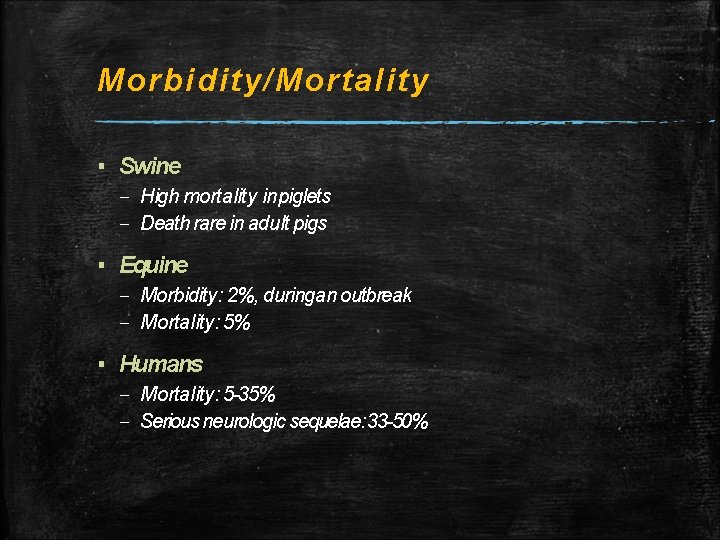
Morbidity/Mortality ▪ Swine – High mortality in piglets – Death rare in adult pigs ▪ Equine – Morbidity: 2%, duringan outbreak – Mortality: 5% ▪ Humans – Mortality: 5 -35% – Serious neurologic sequelae: 33 -50%
DYNAMICS OF JE TRANSMISSION Environment Vector Mosquito Victim-Accidental Full Recovery Host - Amplifying Recovery with residual complications Host - Carrier 18 Death
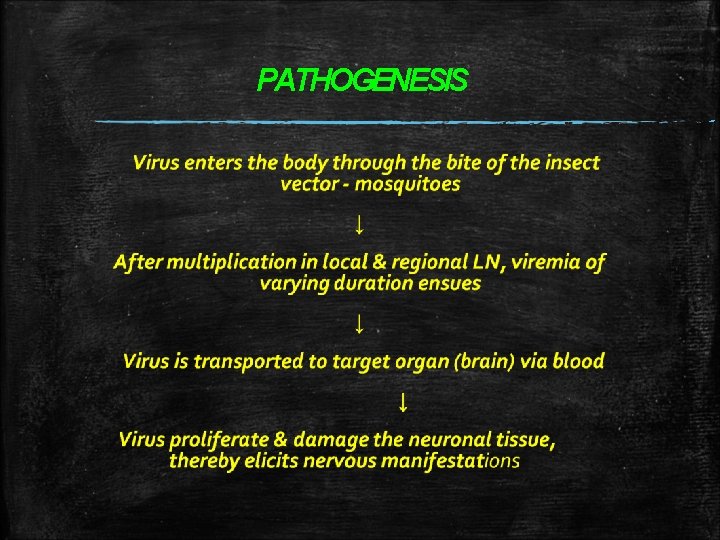
PATHOGENESIS
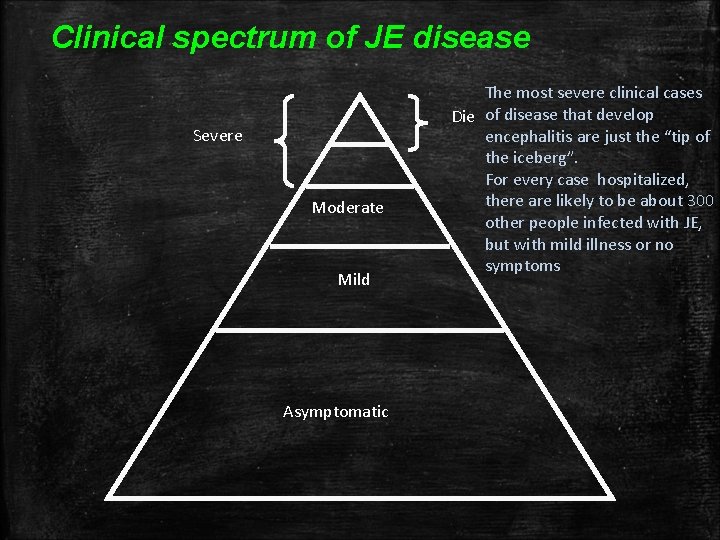
Clinical spectrum of JE disease Severe Moderate Mild Asymptomatic The most severe clinical cases Die of disease that develop encephalitis are just the “tip of the iceberg”. For every case hospitalized, there are likely to be about 300 other people infected with JE, but with mild illness or no symptoms
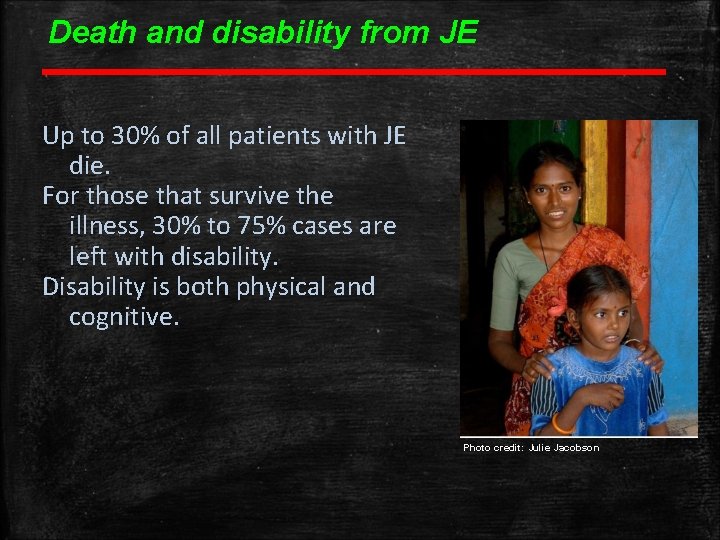
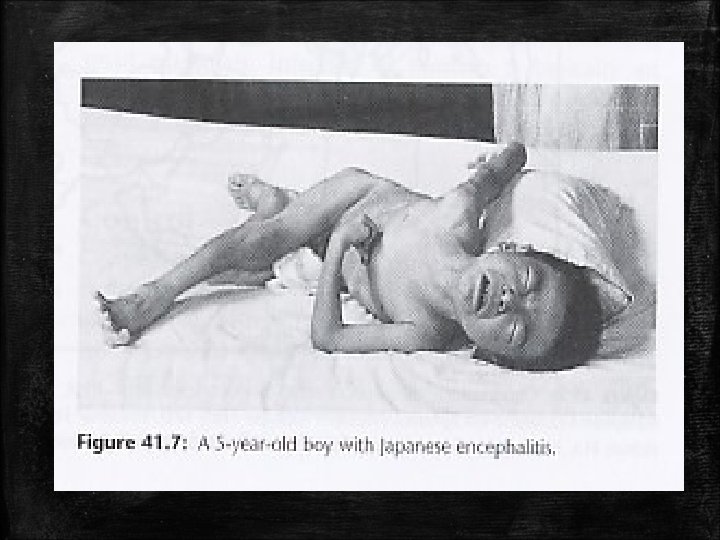
Death and disability from JE Up to 30% of all patients with JE die. For those that survive the illness, 30% to 75% cases are left with disability. Disability is both physical and cognitive. Photo credit: Julie Jacobson
JE IN MAN : CLINICAL FEATURES • Incubation Period - 5 to 15 days • Only 1 in 300 to 1 in 1000 infections develop into encephalitis, rest asymptomatic • Course of disease- 3 stages: a} Prodromal stage: Fever, headache, GIT disturbances, malaise. Duration- 1 to 6 days. b} Acute encephalitic stage: Fever, 38 to 40. 7°C, nuchal rigidity, focal CNS signs, convulsion & altered sensorium progressing in many cases to coma.
JE IN MAN : CLINICAL FEATURES c} Late stage and sequelae: Temperature & ESR touch normal level, neurological signs become stationary or tend to improve
Case Fatality Rate (CFR) : • Varies between 20 -40% but it may reach 58% & over , higher in children • 30 -50% of the people that survive the infection develop paralysis, brain damage, or other serious permanent sequelae • Average period between the onset of illness & death is about 9 days • In utero infection possible: Abortion of fetus 21
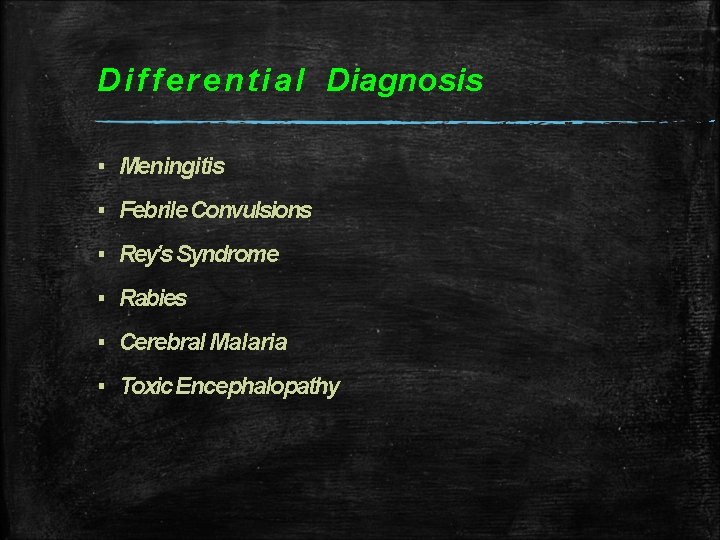
D i f f e r e n t i a l Diagnosis ▪ Meningitis ▪ Febrile Convulsions ▪ Rey’s Syndrome ▪ Rabies ▪ Cerebral Malaria ▪ Toxic Encephalopathy
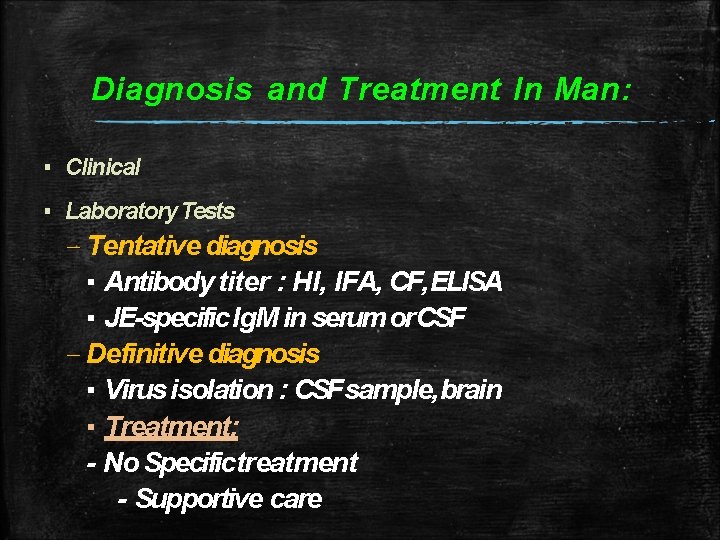
Diagnosis and Treatment In Man: ▪ Clinical ▪ Laboratory Tests – Tentative diagnosis ▪ Antibody titer : HI, IFA, CF, ELISA ▪ JE-specific Ig. M in serum or CSF – Definitive diagnosis ▪ Virus isolation : CSF sample, brain ▪ Treatment: - No Specifictreatment - Supportive care
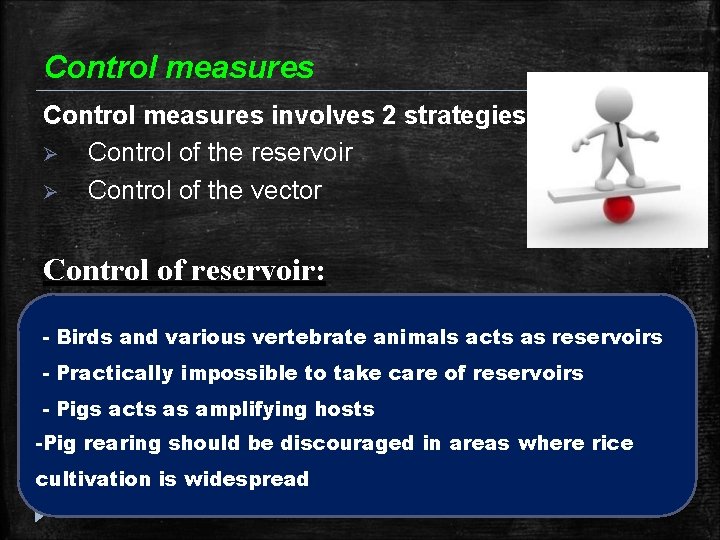
Control measures involves 2 strategies : Control of the reservoir Control of the vector Control of reservoir: - Birds and various vertebrate animals acts as reservoirs - Practically impossible to take care of reservoirs - Pigs acts as amplifying hosts -Pig rearing should be discouraged in areas where rice cultivation is widespread
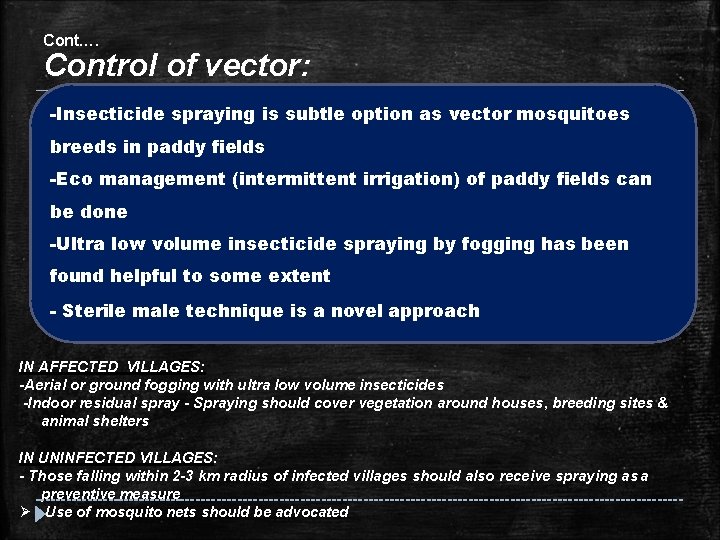
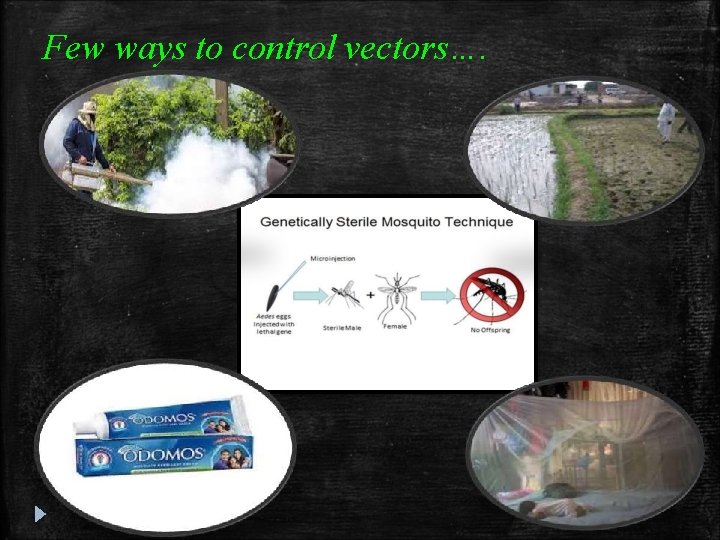
Cont…. Control of vector: -Insecticide spraying is subtle option as vector mosquitoes breeds in paddy fields -Eco management (intermittent irrigation) of paddy fields can be done -Ultra low volume insecticide spraying by fogging has been found helpful to some extent - Sterile male technique is a novel approach IN AFFECTED VILLAGES: -Aerial or ground fogging with ultra low volume insecticides -Indoor residual spray - Spraying should cover vegetation around houses, breeding sites & animal shelters IN UNINFECTED VILLAGES: - Those falling within 2 -3 km radius of infected villages should also receive spraying as a preventive measure Use of mosquito nets should be advocated
Few ways to control vectors….
AGRICULTURAL PRACTICES : - water management practice of Paddy cultivation At least one dry day every week - conserve water, reduce larval population increase rice grain yield, and reduce the emission of methane into the environment thereby reducing the Global warming effect. Using neem products as fertilizers will also reduce the mosquito population
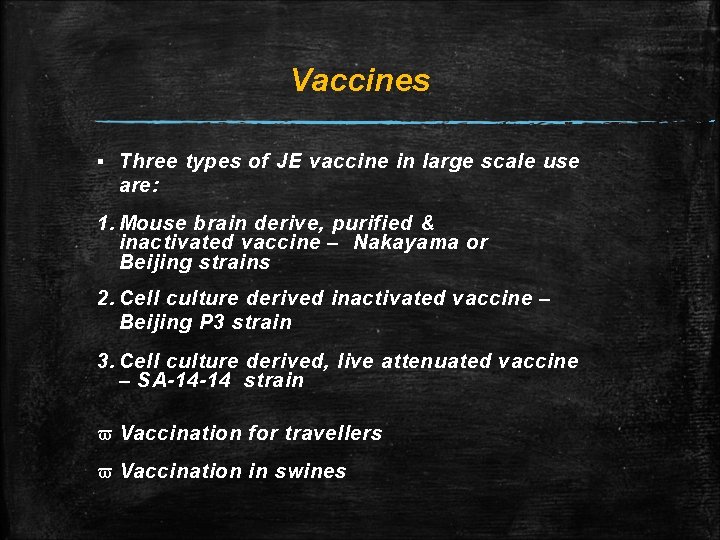
Vaccines ▪ Three types of JE vaccine in large scale use are: 1. Mouse brain derive, purified & inactivated vaccine – Nakayama or Beijing strains 2. Cell culture derived inactivated vaccine – Beijing P 3 strain 3. Cell culture derived, live attenuated vaccine – SA-14 -14 strain Vaccination for travellers Vaccination in swines
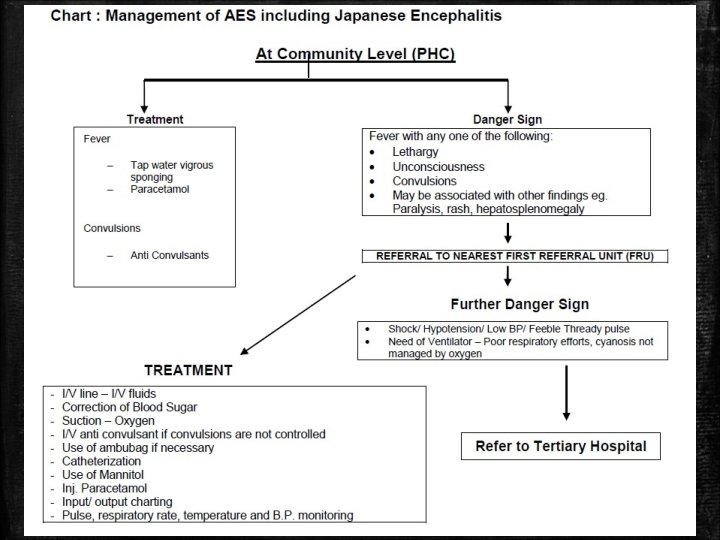
Guidelinesfor management of AES including JE in India(2009)
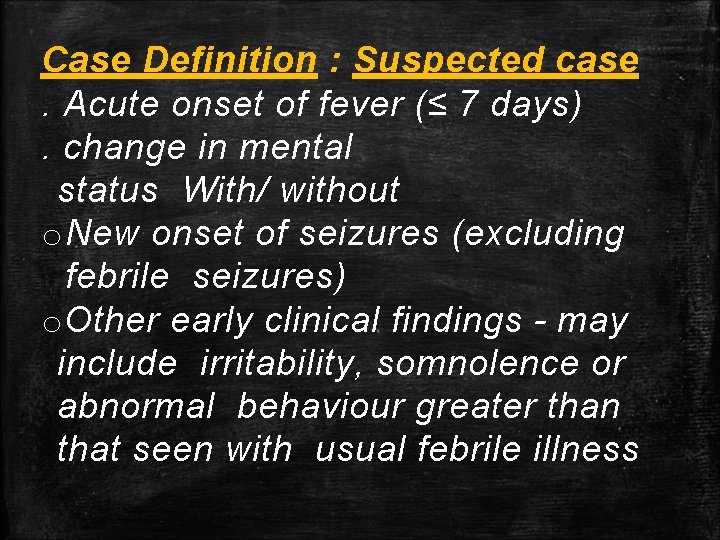
Case Definition : Suspected case. Acute onset of fever (≤ 7 days). change in mental status With/ without o New onset of seizures (excluding febrile seizures) o. Other early clinical findings - may include irritability, somnolence or abnormal behaviour greater than that seen with usual febrile illness
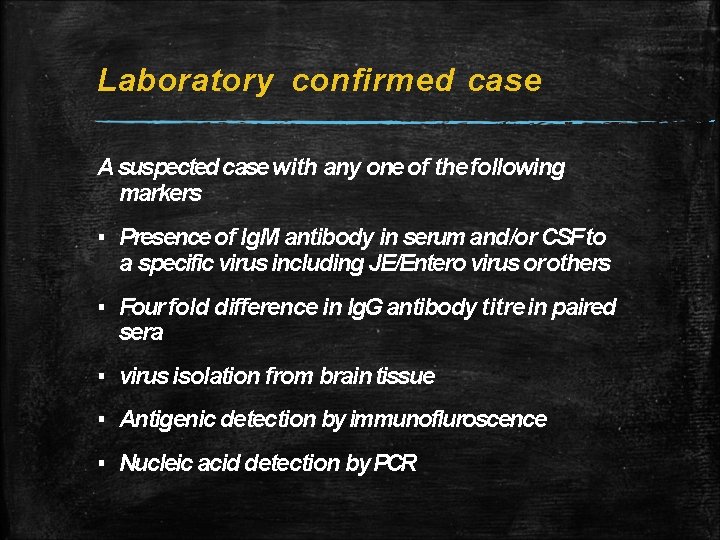
Laboratory confirmed case A suspected case with any one of the following markers ▪ Presence of Ig. M antibody in serum and/or CSF to a specific virus including JE/Entero virus orothers ▪ Four fold difference in Ig. G antibody titre in paired sera ▪ virus isolation from brain tissue ▪ Antigenic detection by immunofluroscence ▪ Nucleic acid detection by PCR
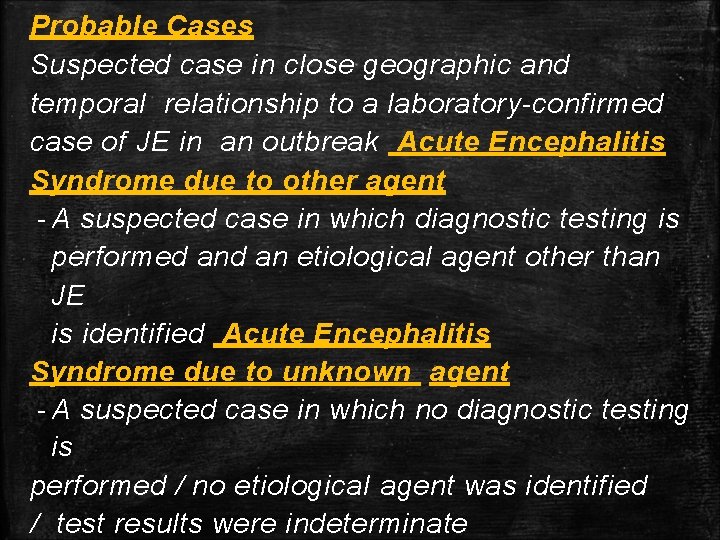
Probable Cases Suspected case in close geographic and temporal relationship to a laboratory-confirmed case of JE in an outbreak Acute Encephalitis Syndrome due to other agent - A suspected case in which diagnostic testing is performed an etiological agent other than JE is identified Acute Encephalitis Syndrome due to unknown agent - A suspected case in which no diagnostic testing is performed / no etiologica. I agent was identified / test results were indeterminate
Thank you