Introduction to Astronomy Size Scales Taxonomy Kathy Cooksey

- Slides: 74
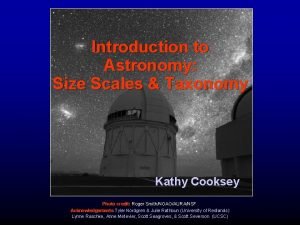
Introduction to Astronomy: Size Scales & Taxonomy Kathy Cooksey Photo credit: Roger Smith/NOAO/AURA/NSF Acknowledgements Tyler Nordgren & Julie Rathbun (University of Redlands) Lynne Raschke, Anne Metevier, Scott Seagroves, & Scott Severson (UCSC)
Assignments • APOD Presentations: July 10 Demo – http: //antwrp. gsfc. nasa. gov/apod/ap 070710. html • Astronomy Challenge – With every assignment comes a gift… introduce planisphere – Due Friday July 20 – Come to class with questions!! Please! – I’m free for study hall sessions
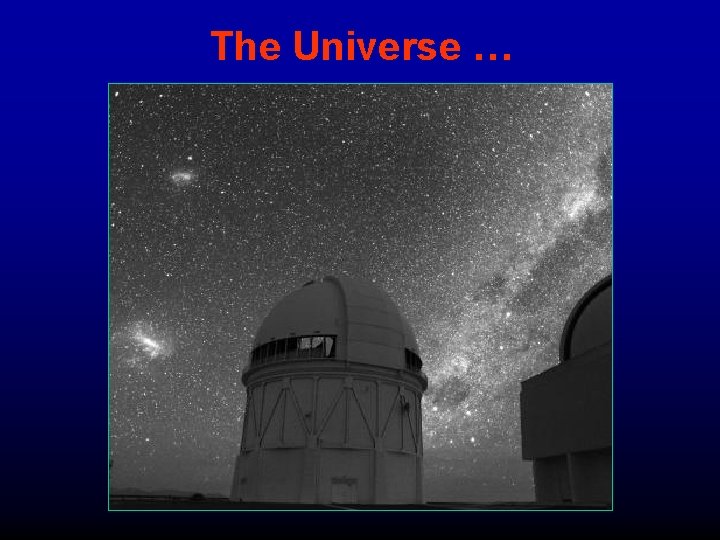
The Universe …
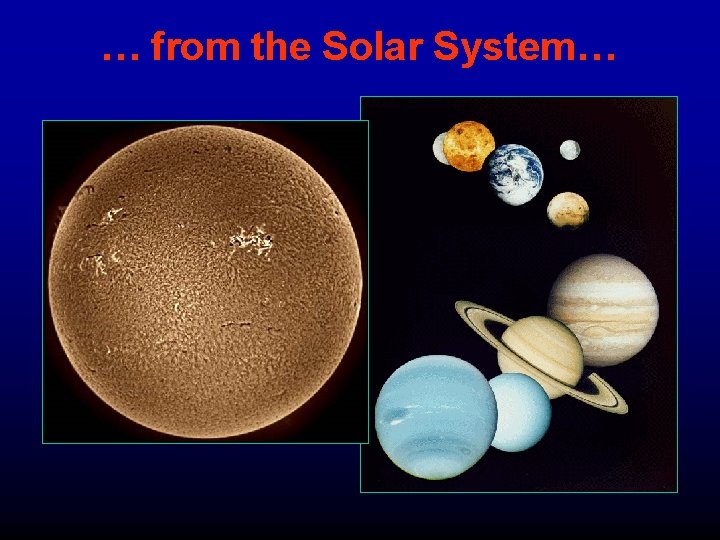
… from the Solar System…
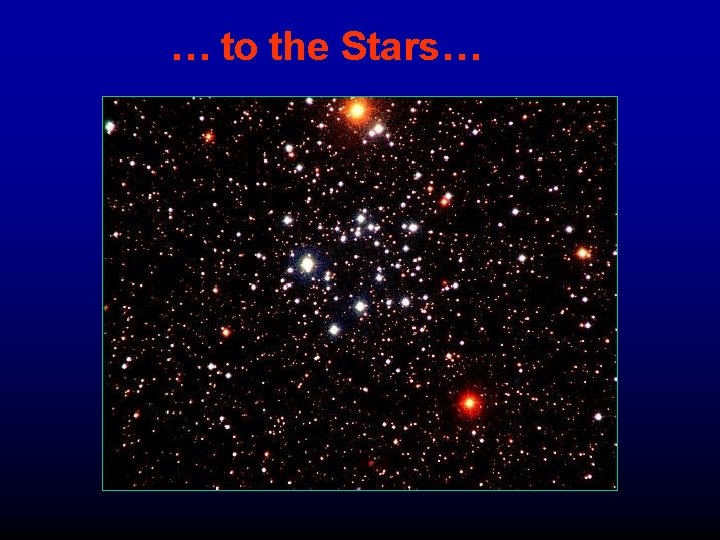
… to the Stars…
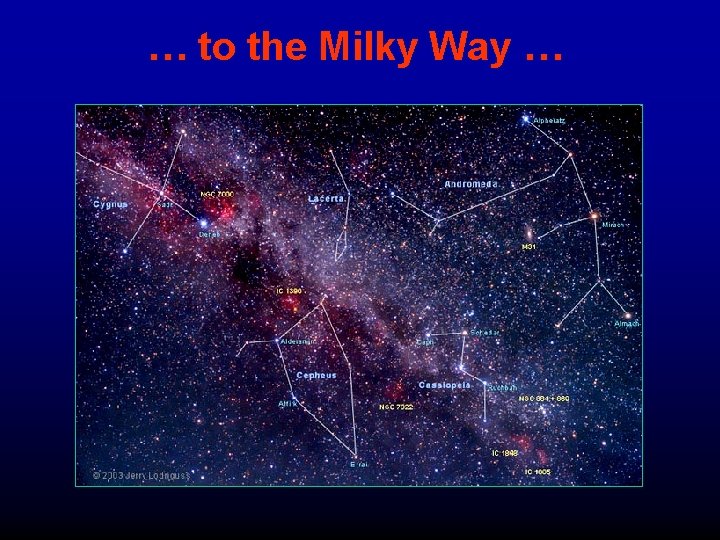
… to the Milky Way …
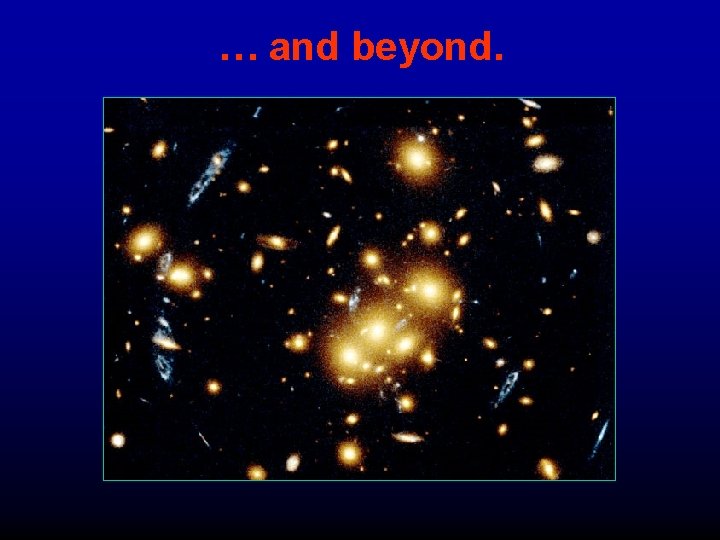
… and beyond.
Size Scales • • How well do you know your own neighborhood? Imagine we shrink our solar system down to the scale where our Sun were the size of a volleyball: – How big would the Earth be? – How far from the Sun would the Earth be? – How about Jupiter?
Concept Question What are the sizes of the planets if the Sun were 8” in diameter?
Powers of Ten
Powers of Homer D’oh!
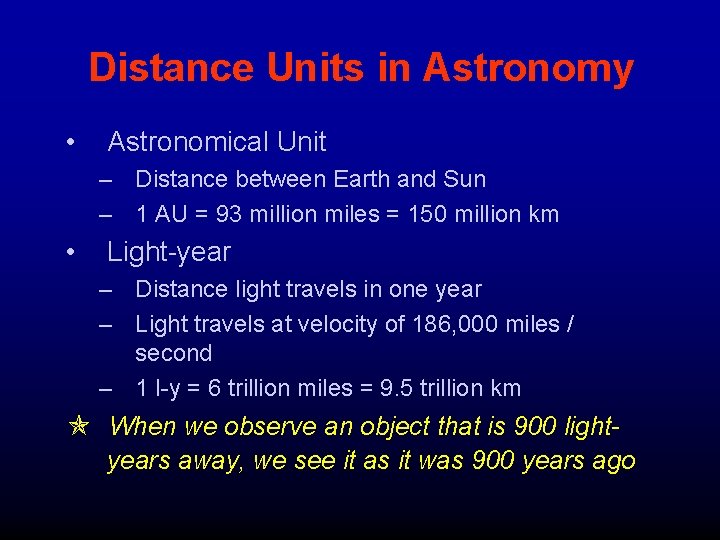
Distance Units in Astronomy • Astronomical Unit – Distance between Earth and Sun – 1 AU = 93 million miles = 150 million km • Light-year – Distance light travels in one year – Light travels at velocity of 186, 000 miles / second – 1 l-y = 6 trillion miles = 9. 5 trillion km When we observe an object that is 900 lightyears away, we see it as it was 900 years ago
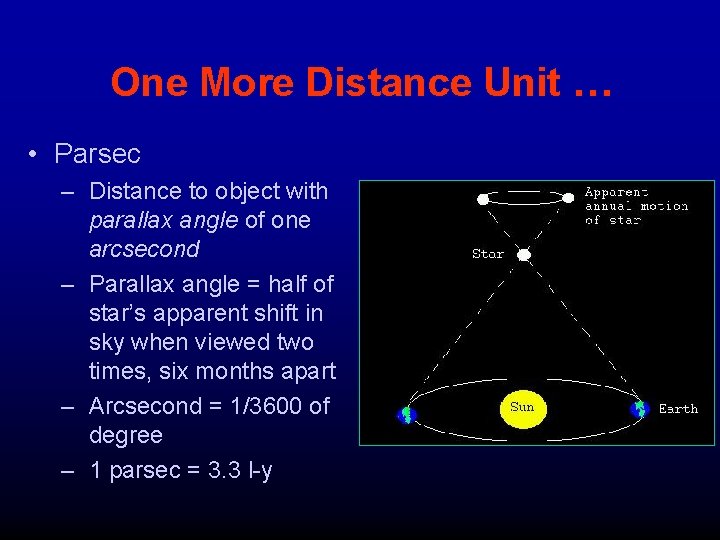
One More Distance Unit … • Parsec – Distance to object with parallax angle of one arcsecond – Parallax angle = half of star’s apparent shift in sky when viewed two times, six months apart – Arcsecond = 1/3600 of degree – 1 parsec = 3. 3 l-y
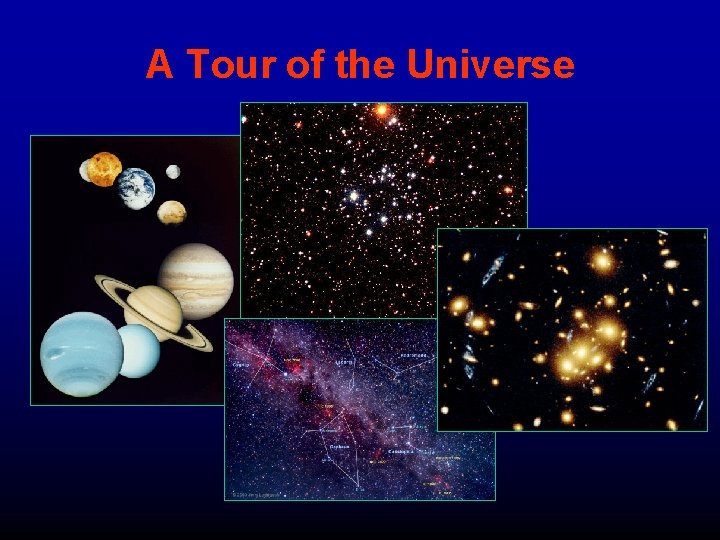
A Tour of the Universe
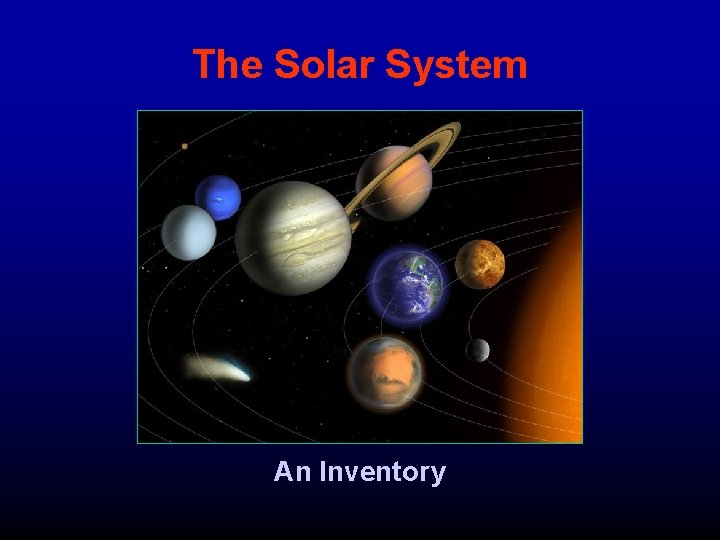
The Solar System An Inventory
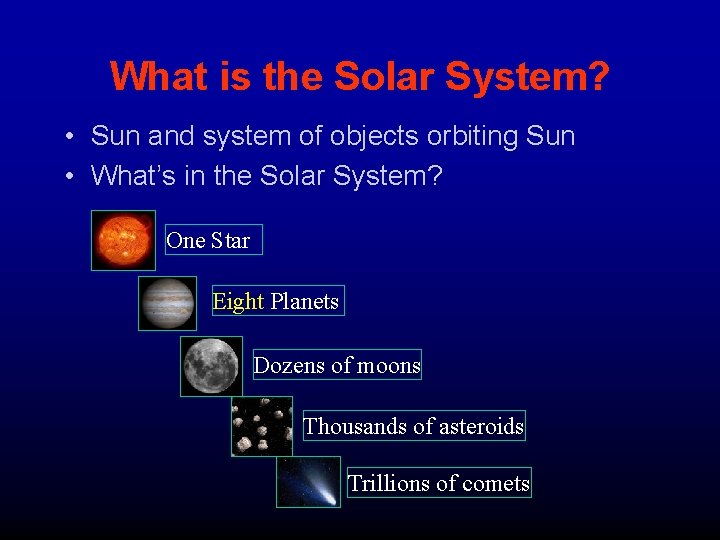
What is the Solar System? • Sun and system of objects orbiting Sun • What’s in the Solar System? One Star Eight Planets Dozens of moons Thousands of asteroids Trillions of comets
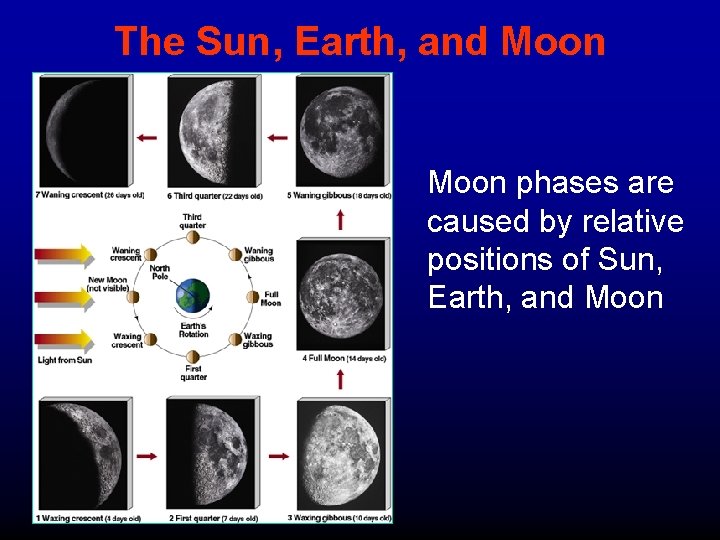
Concept Question What causes the moon to go through phases?
The Sun, Earth, and Moon phases are caused by relative positions of Sun, Earth, and Moon
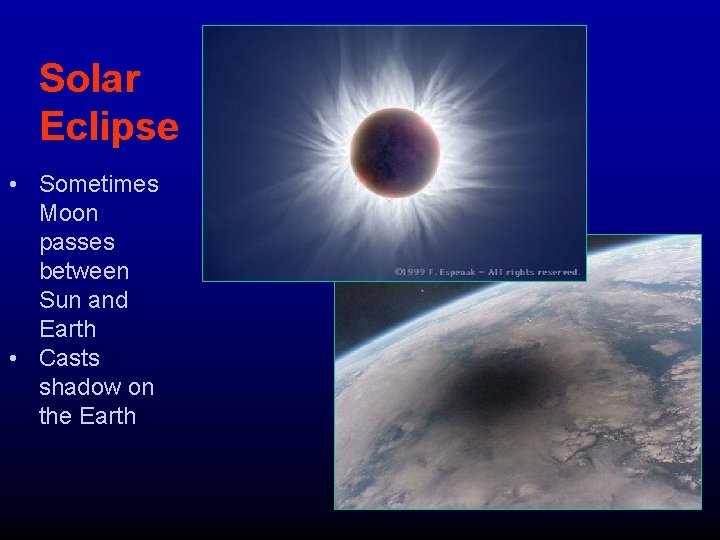
Solar Eclipse • Sometimes Moon passes between Sun and Earth • Casts shadow on the Earth
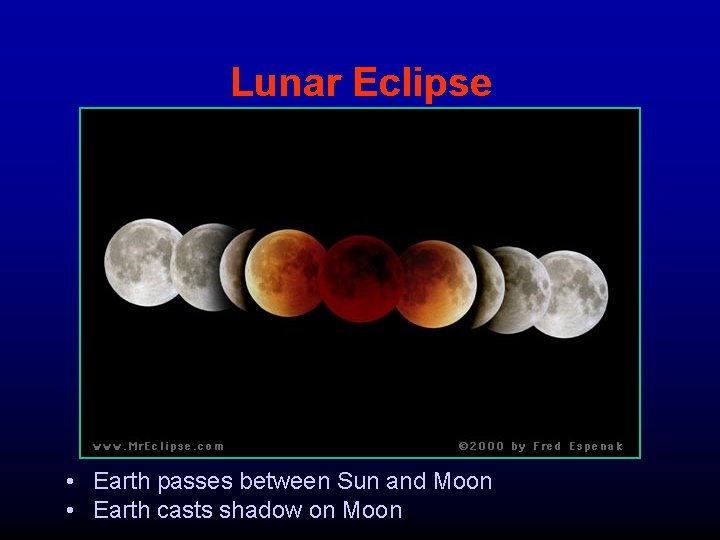
Lunar Eclipse • Earth passes between Sun and Moon • Earth casts shadow on Moon
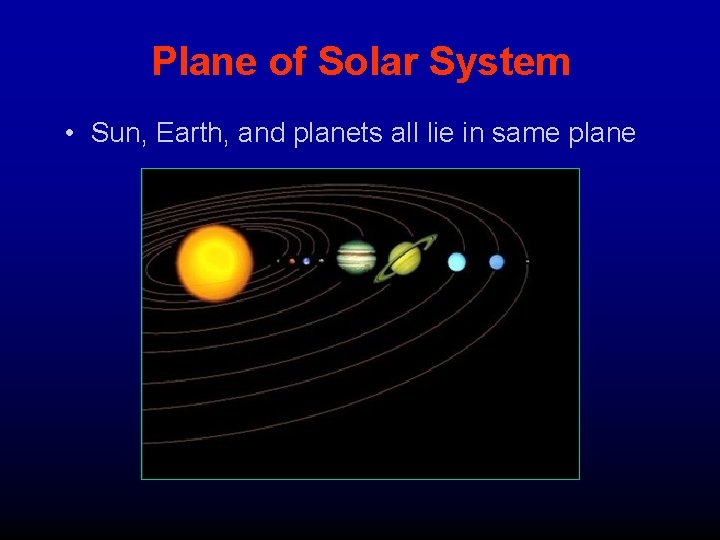
Plane of Solar System • Sun, Earth, and planets all lie in same plane
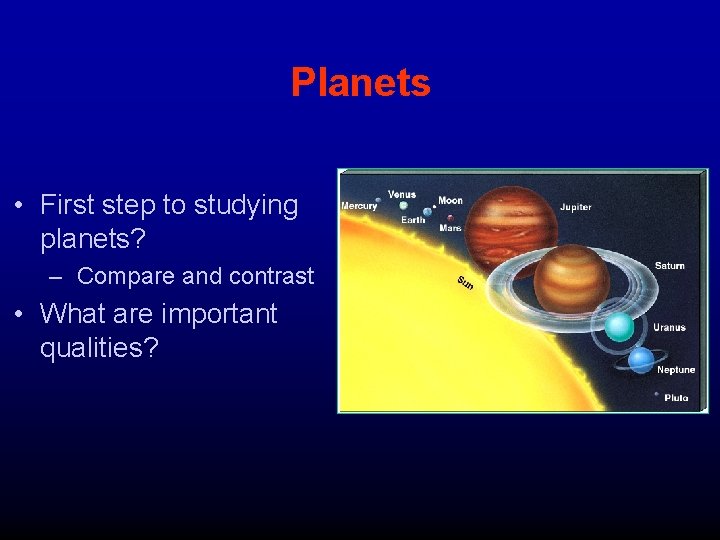
Planets • First step to studying planets? – Compare and contrast • What are important qualities?
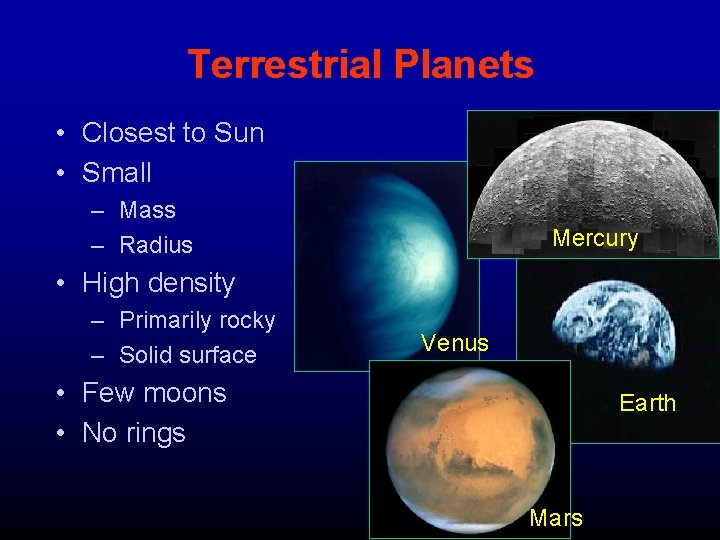
Terrestrial Planets • Closest to Sun • Small – Mass – Radius Mercury • High density – Primarily rocky – Solid surface Venus • Few moons • No rings Earth Mars
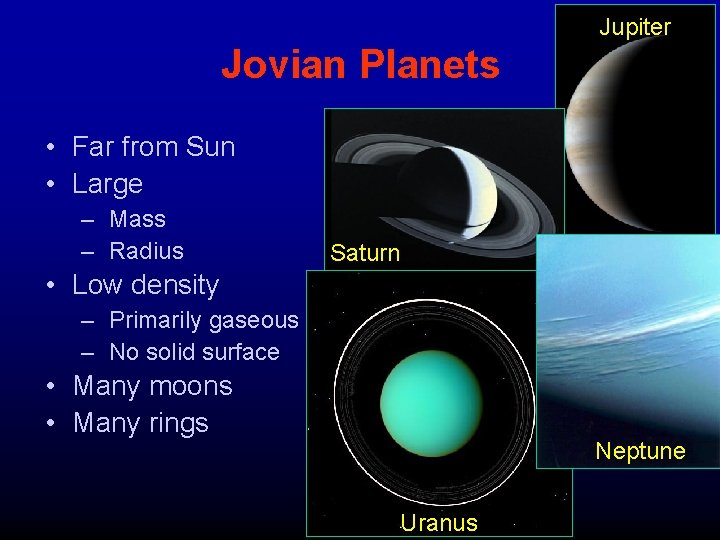
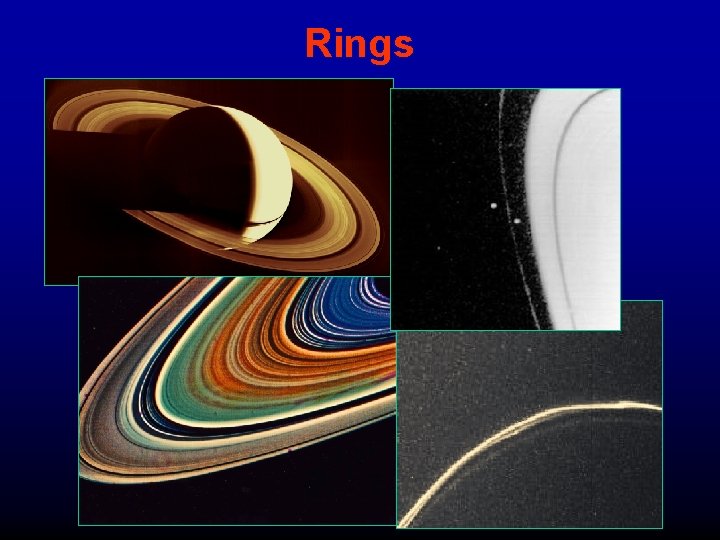
Jupiter Jovian Planets • Far from Sun • Large – Mass – Radius Saturn • Low density – Primarily gaseous – No solid surface • Many moons • Many rings Neptune Uranus
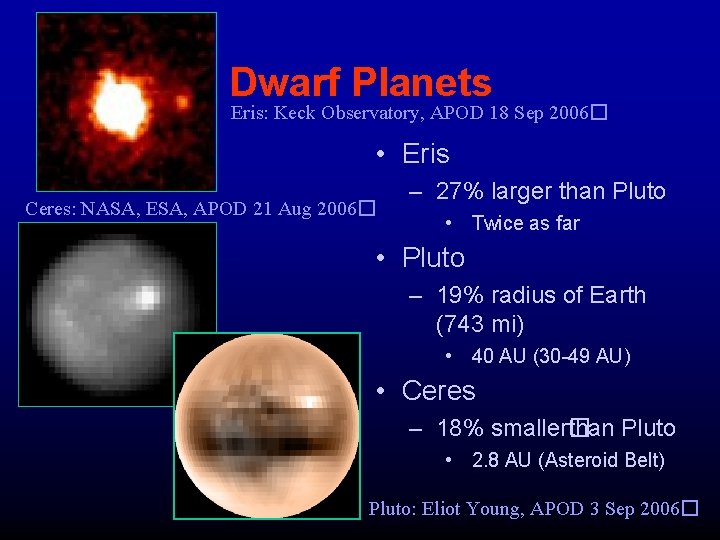
Dwarf Planets Eris: Keck Observatory, APOD 18 Sep 2006� • Eris Ceres: NASA, ESA, APOD 21 Aug 2006� – 27% larger than Pluto • Twice as far • Pluto – 19% radius of Earth (743 mi) • 40 AU (30 -49 AU) • Ceres – 18% smaller� than Pluto • 2. 8 AU (Asteroid Belt) Pluto: Eliot Young, APOD 3 Sep 2006�
Rings
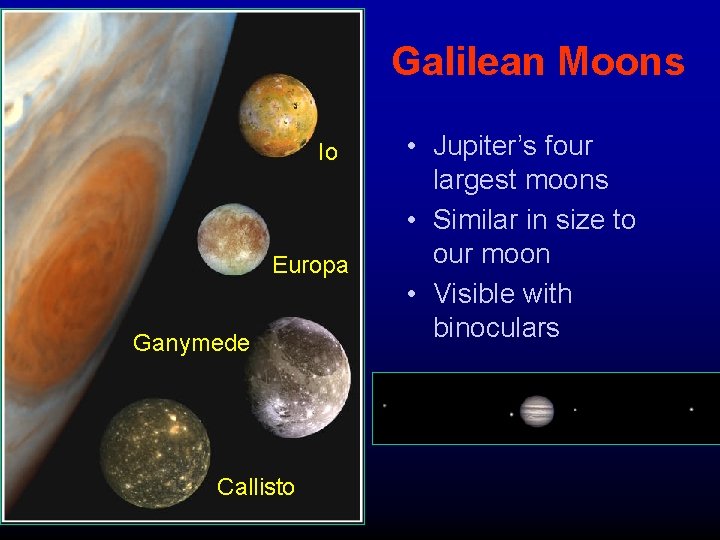
Galilean Moons Io Europa Ganymede Callisto • Jupiter’s four largest moons • Similar in size to our moon • Visible with binoculars
Scale Model of the Solar System Everyone up and out the door…
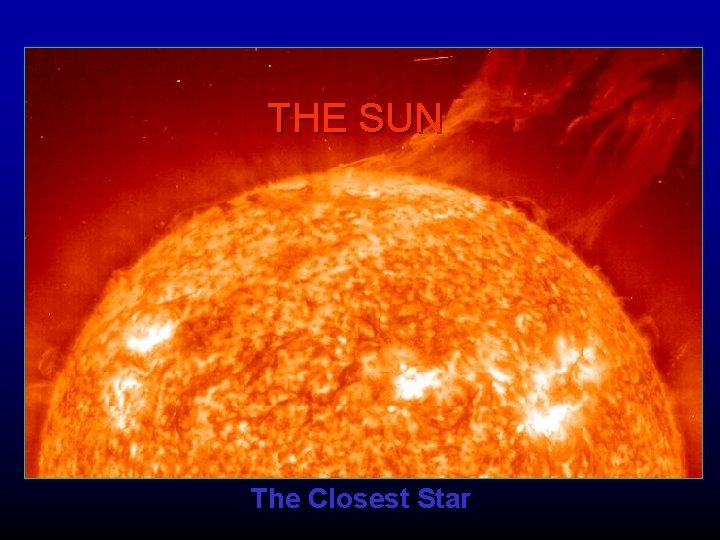
THE SUN The Closest Star
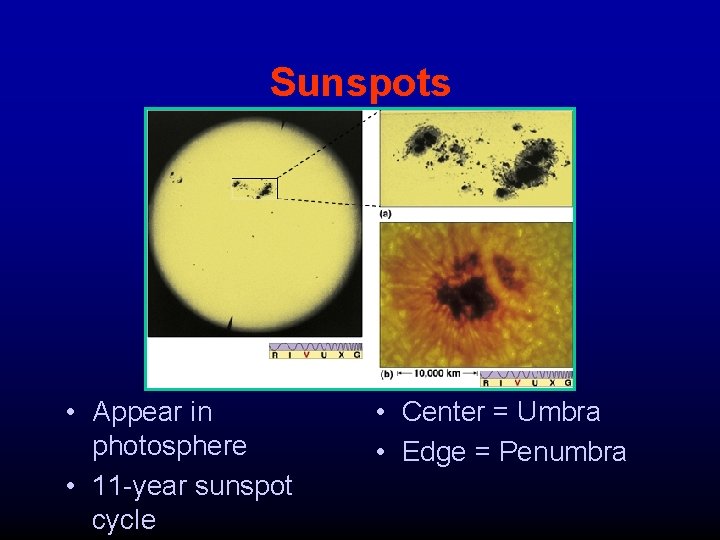
Sunspots • Appear in photosphere • 11 -year sunspot cycle • Center = Umbra • Edge = Penumbra
SOHO Images 2001 Sunspots
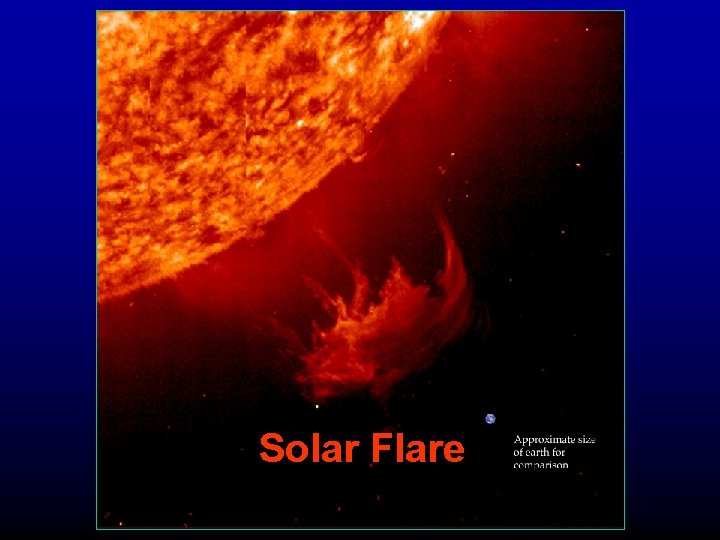
Solar Flare
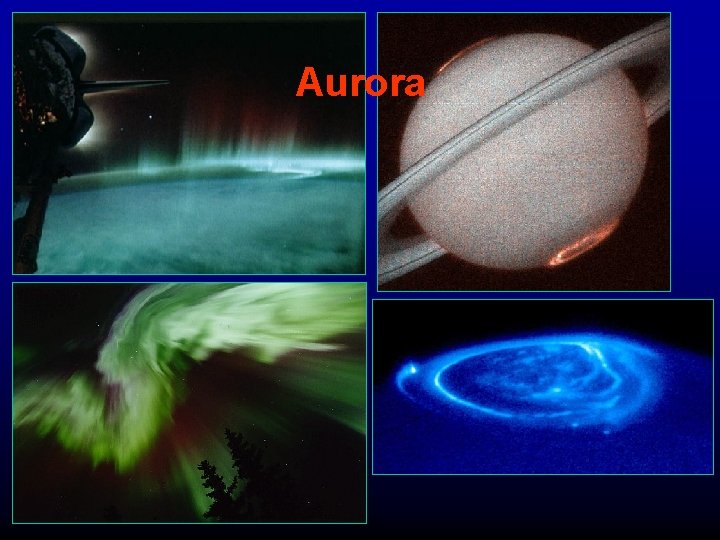
Aurora
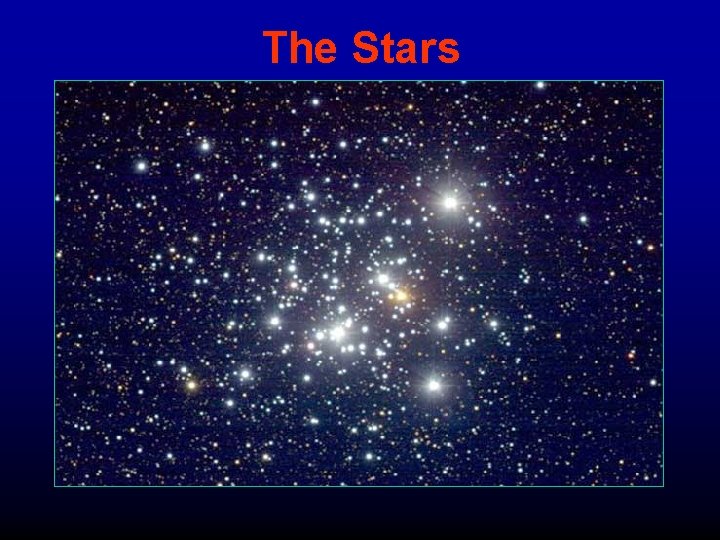
The Stars
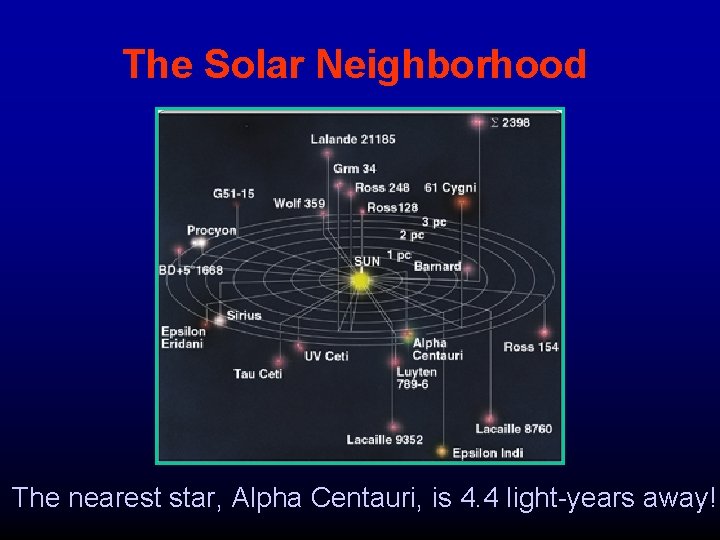
The Solar Neighborhood The nearest star, Alpha Centauri, is 4. 4 light-years away!
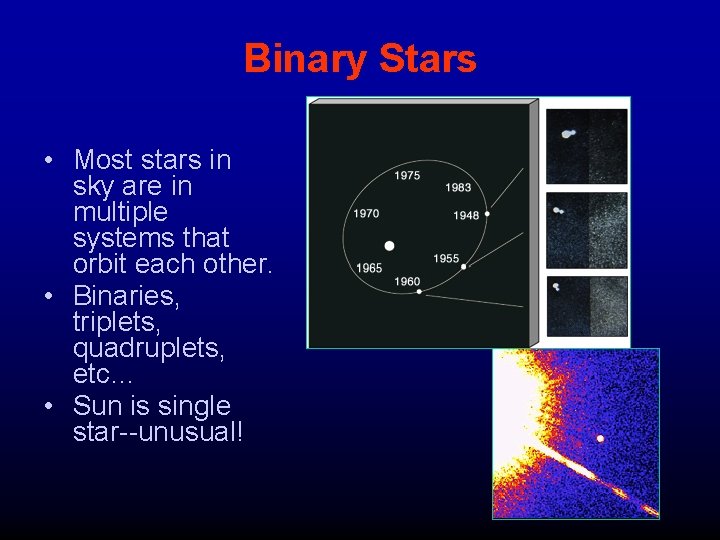
Binary Stars • Most stars in sky are in multiple systems that orbit each other. • Binaries, triplets, quadruplets, etc… • Sun is single star--unusual!
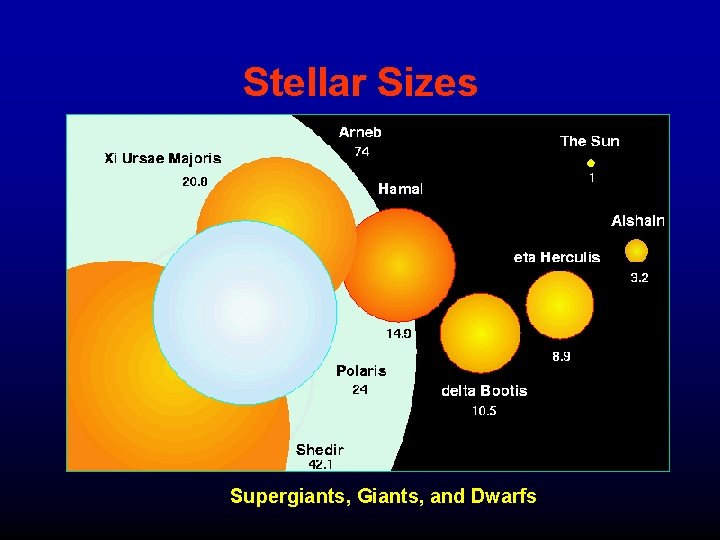
Stellar Sizes Supergiants, Giants, and Dwarfs
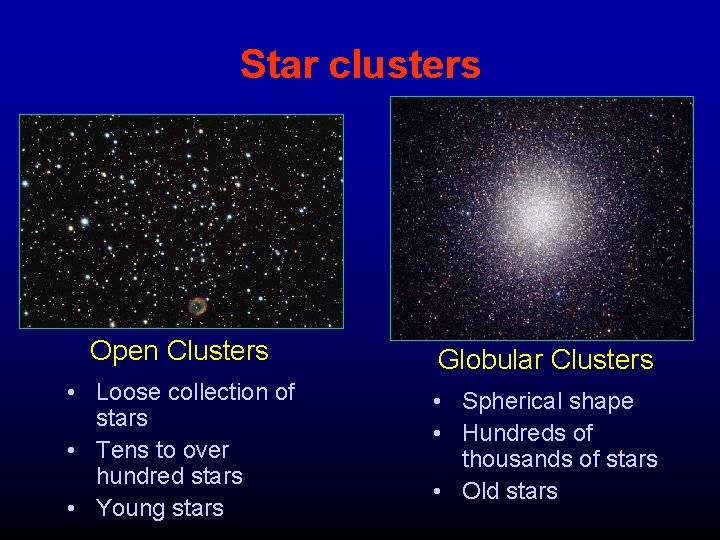
Star clusters Open Clusters Globular Clusters • Loose collection of stars • Tens to over hundred stars • Young stars • Spherical shape • Hundreds of thousands of stars • Old stars
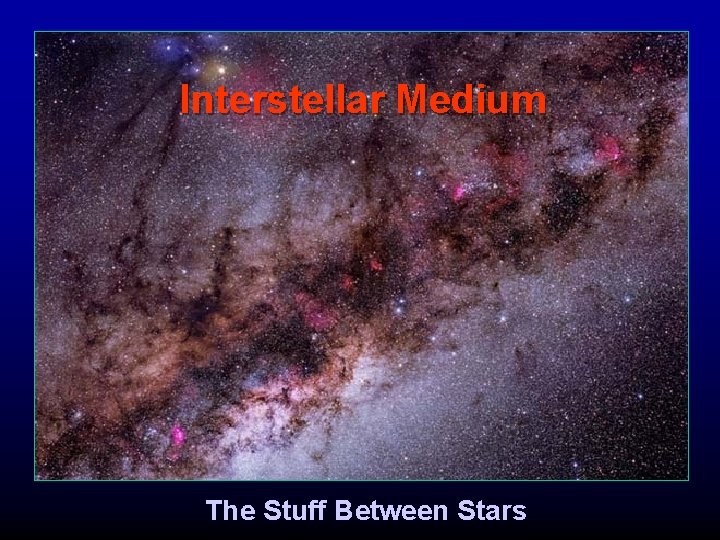
Interstellar Medium The Stuff Between Stars
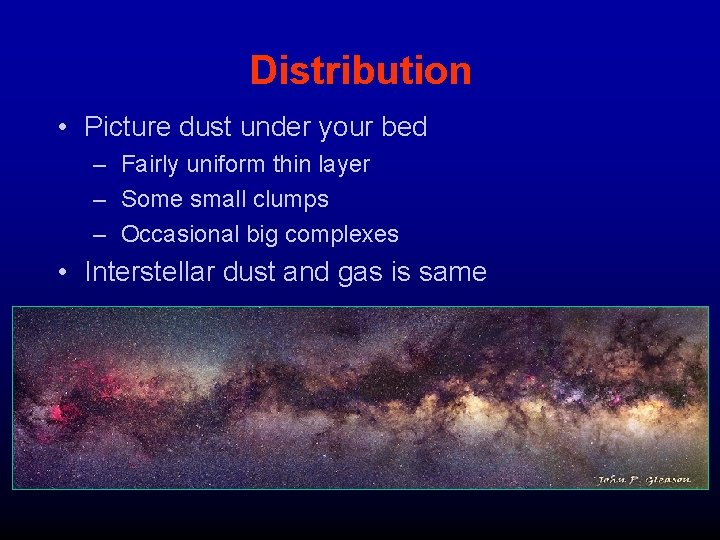
Distribution • Picture dust under your bed – Fairly uniform thin layer – Some small clumps – Occasional big complexes • Interstellar dust and gas is same
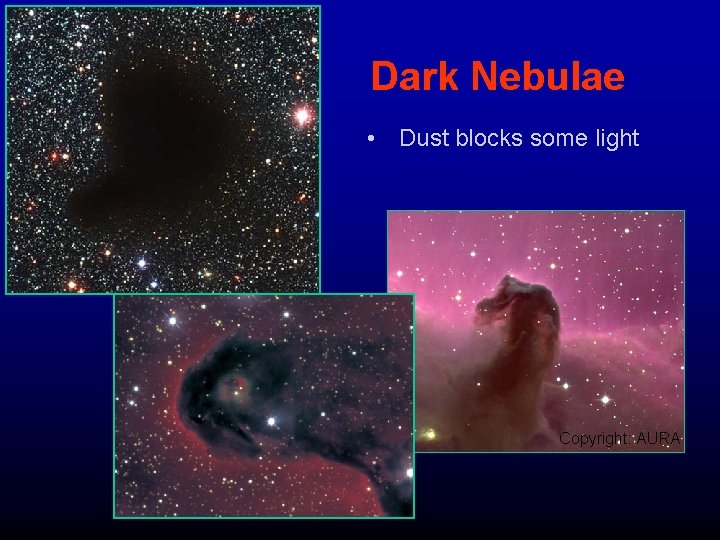
Dark Nebulae • Dust blocks some light Copyright: AURA
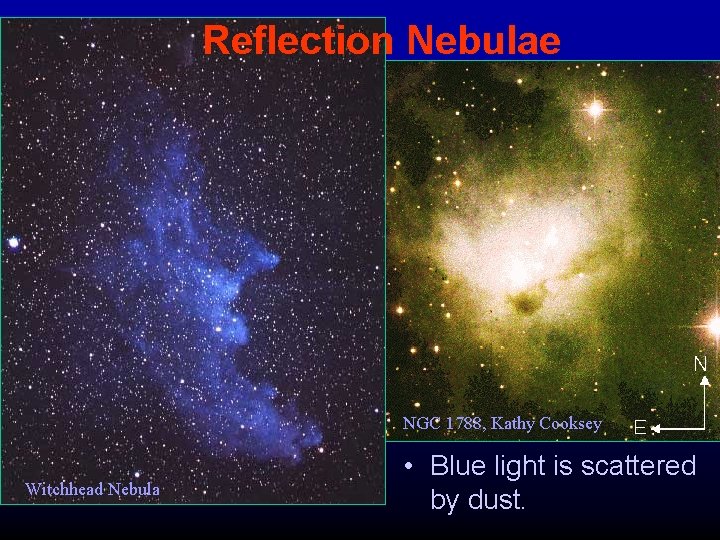
Reflection Nebulae NGC 1788, Kathy Cooksey Witchhead Nebula • Blue light is scattered by dust.
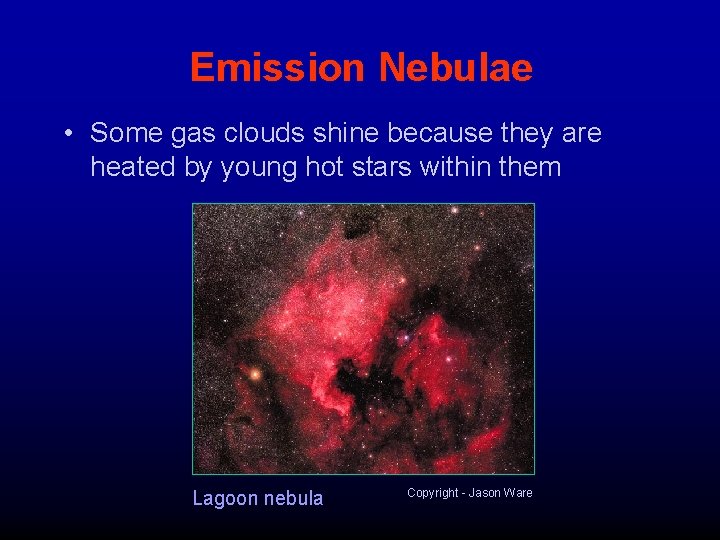
Emission Nebulae • Some gas clouds shine because they are heated by young hot stars within them Lagoon nebula Copyright - Jason Ware
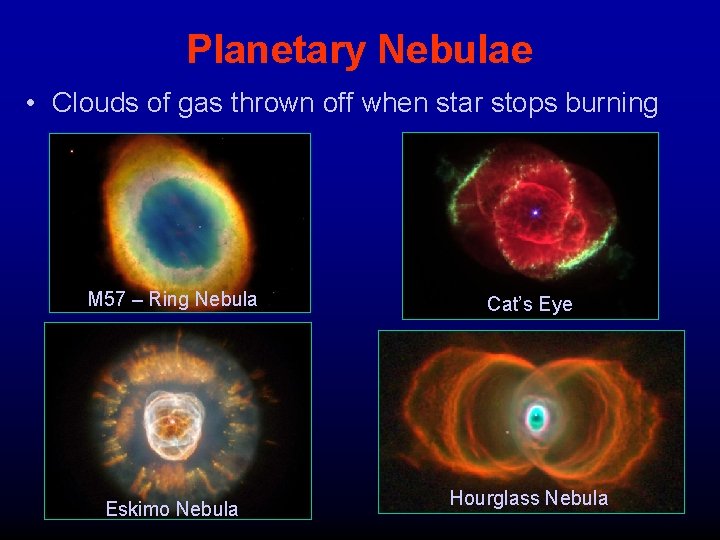
Planetary Nebulae • Clouds of gas thrown off when star stops burning M 57 – Ring Nebula Eskimo Nebula Cat’s Eye Hourglass Nebula
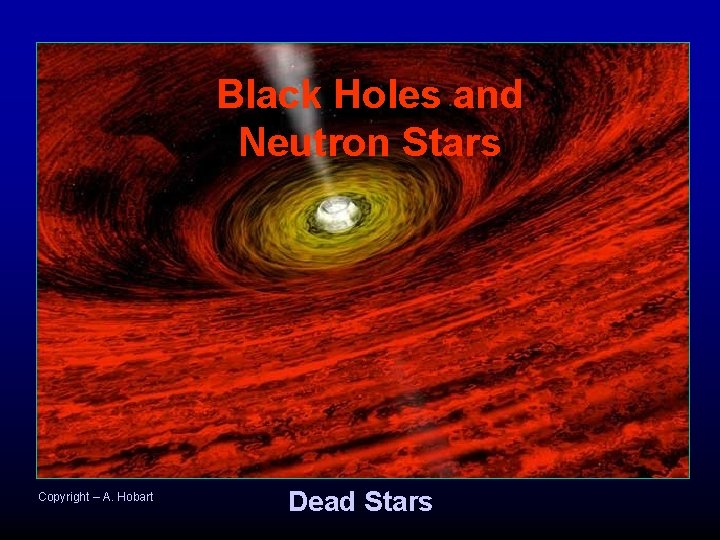
Black Holes and Neutron Stars Copyright – A. Hobart Dead Stars
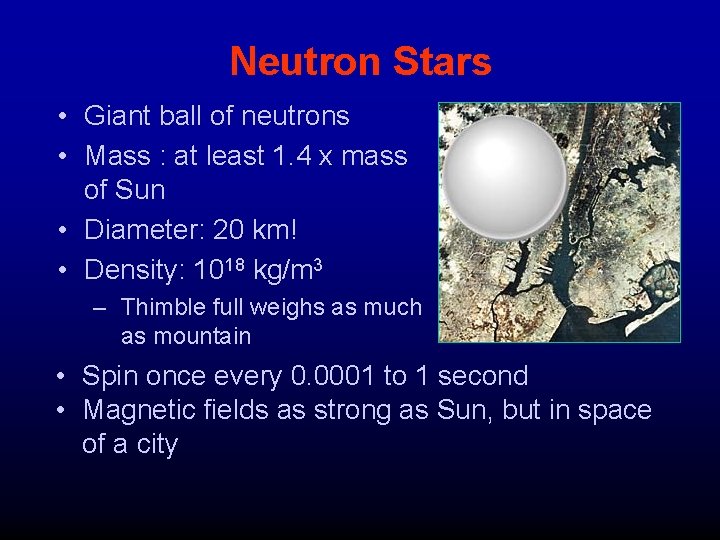
Neutron Stars • Giant ball of neutrons • Mass : at least 1. 4 x mass of Sun • Diameter: 20 km! • Density: 1018 kg/m 3 – Thimble full weighs as much as mountain • Spin once every 0. 0001 to 1 second • Magnetic fields as strong as Sun, but in space of a city
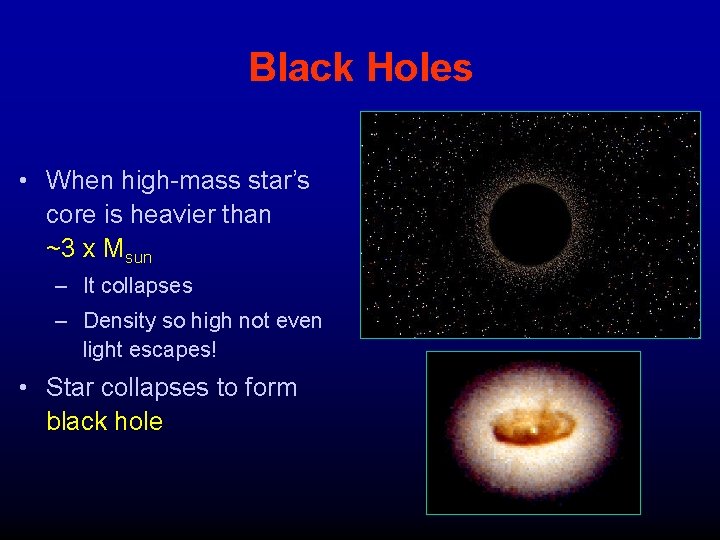
Black Holes • When high-mass star’s core is heavier than ~3 x Msun – It collapses – Density so high not even light escapes! • Star collapses to form black hole
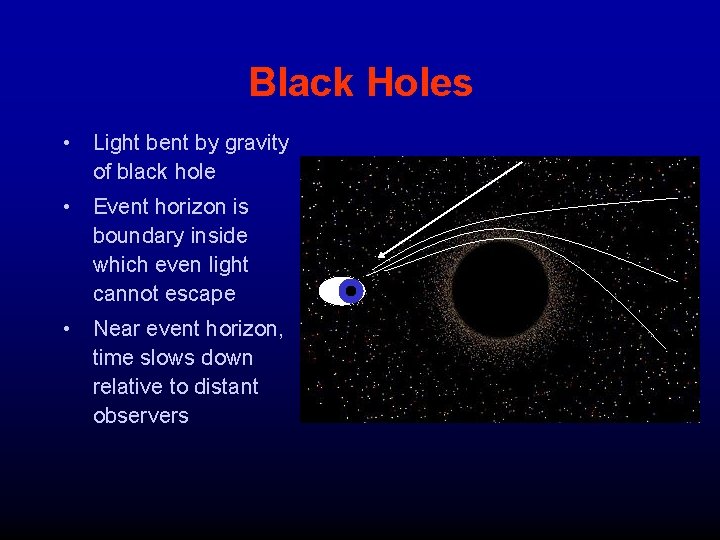
Black Holes • Light bent by gravity of black hole • Event horizon is boundary inside which even light cannot escape • Near event horizon, time slows down relative to distant observers
Seeing Black Holes • Can’t see black hole itself • Can see matter falling into hole. • Gravitational forces stretch and rip matter – Matter heats up Illustration Credit: M. Weiss • Very hot objects emit in Xrays (e. g. , interior of Sun) • Cygnus X-1
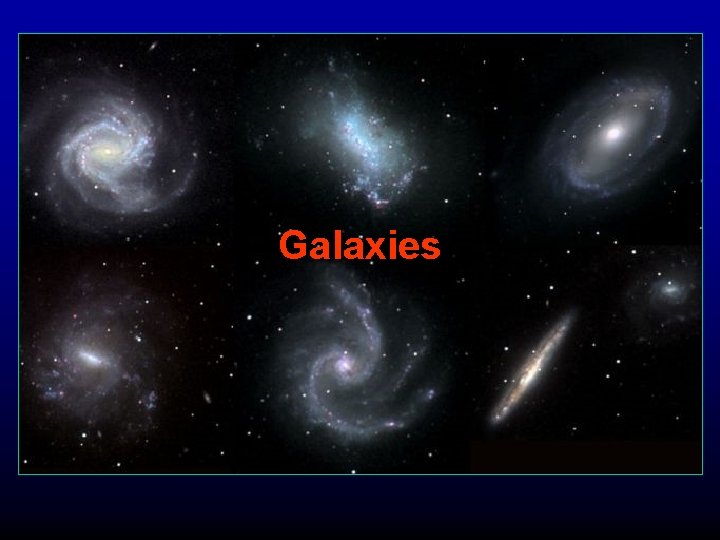
Galaxies
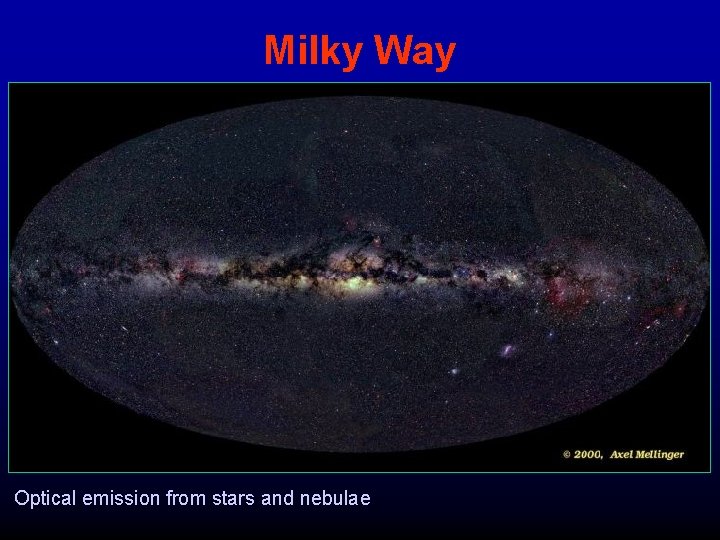
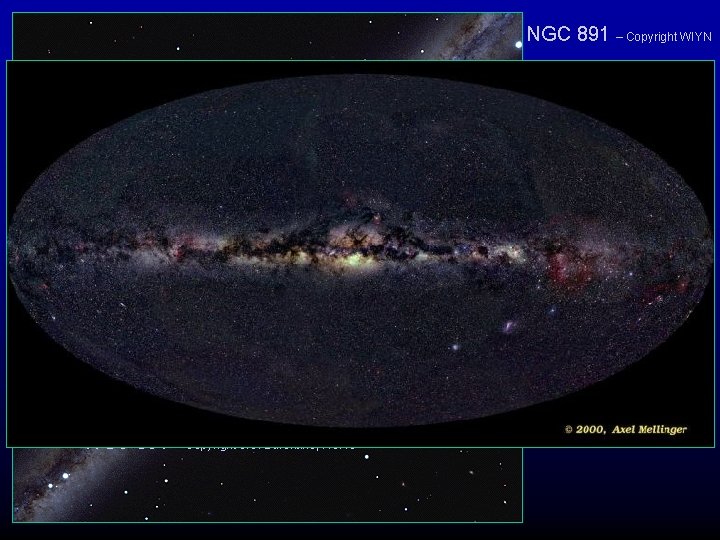
Milky Way Optical emission from stars and nebulae
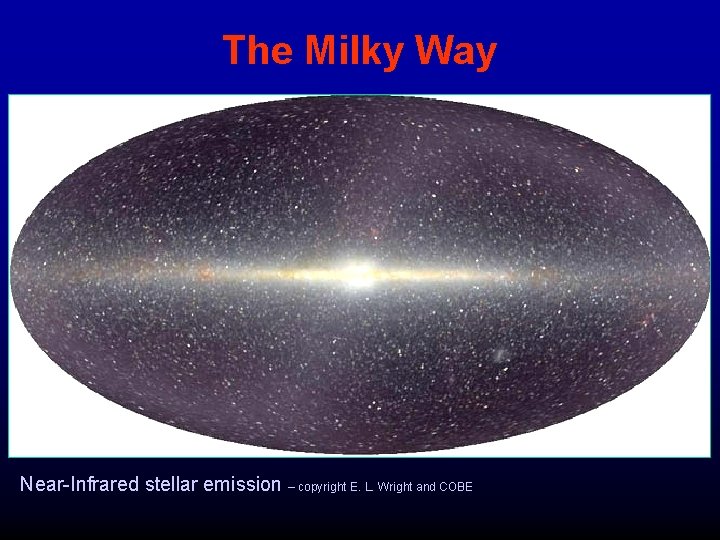
The Milky Way Near-Infrared stellar emission – copyright E. L. Wright and COBE
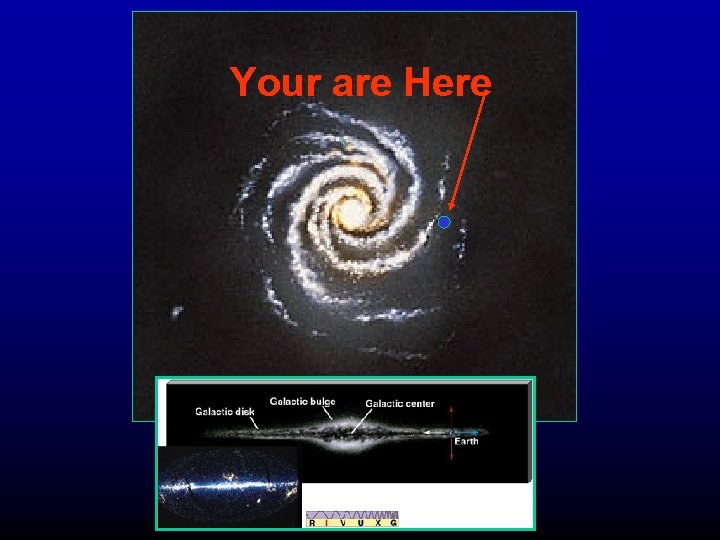
Your are Here
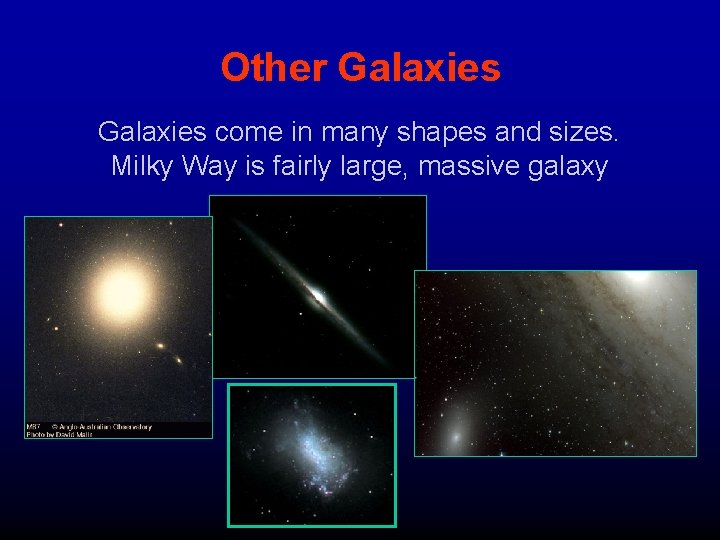
Other Galaxies come in many shapes and sizes. Milky Way is fairly large, massive galaxy
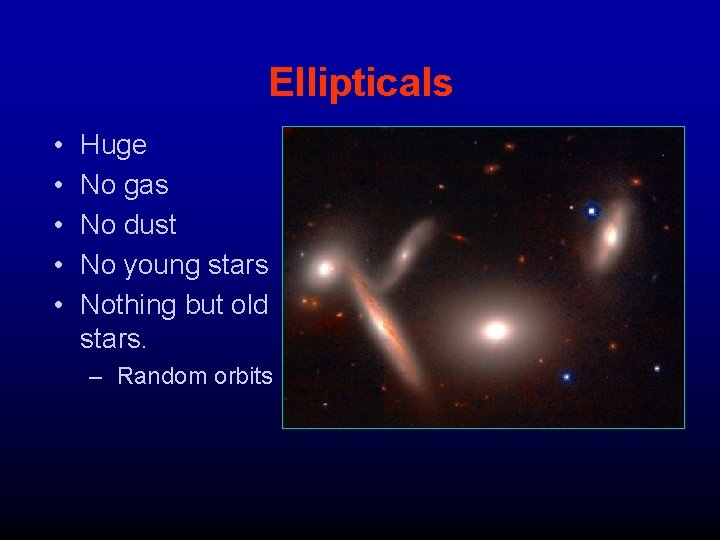
Ellipticals • • • Huge No gas No dust No young stars Nothing but old stars. – Random orbits
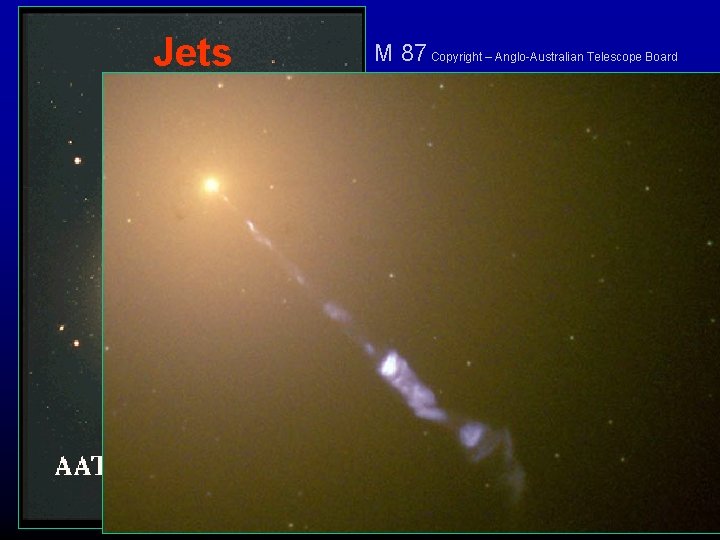
Jets M 87 Copyright – Anglo-Australian Telescope Board
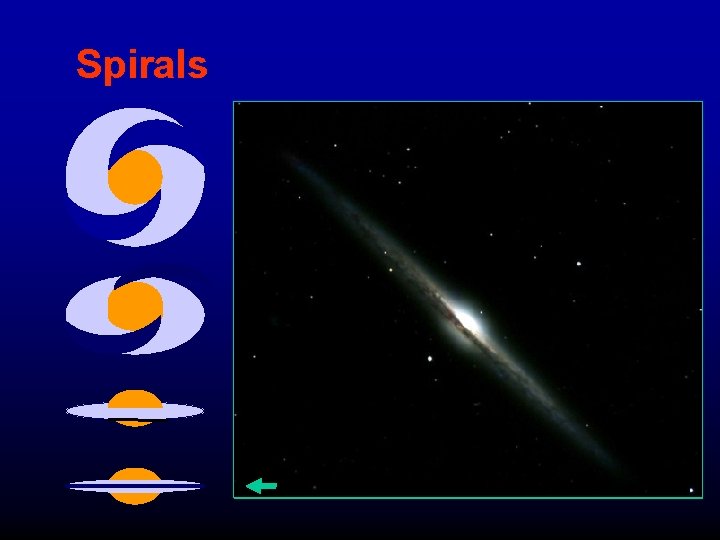
Spirals
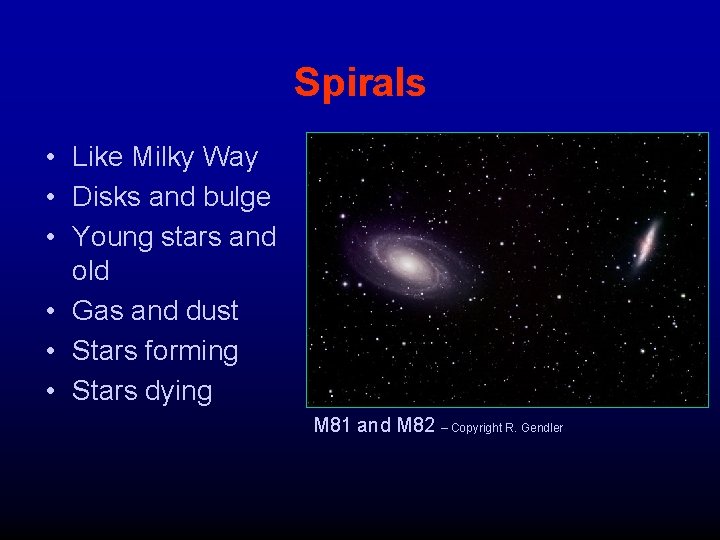
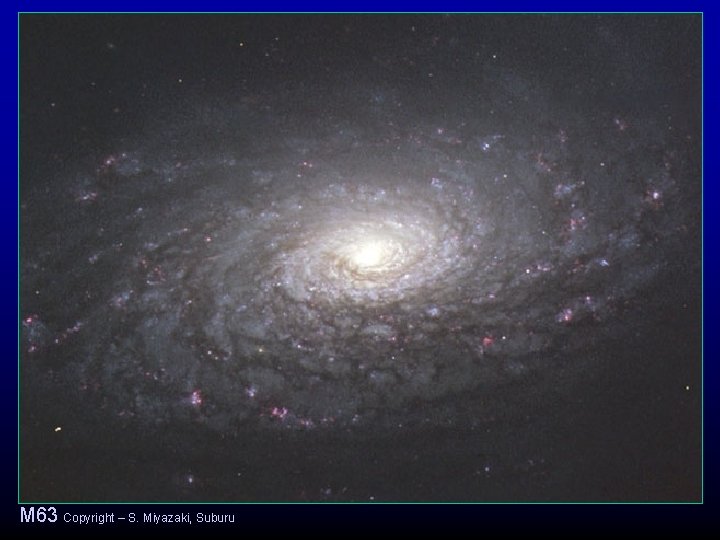
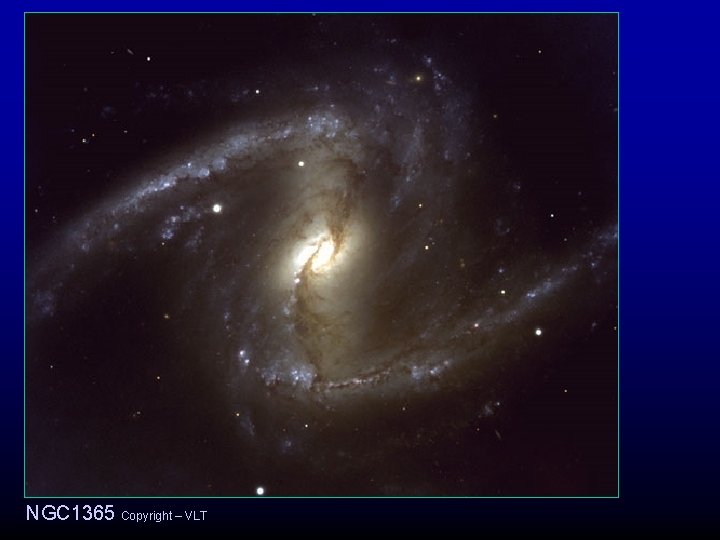
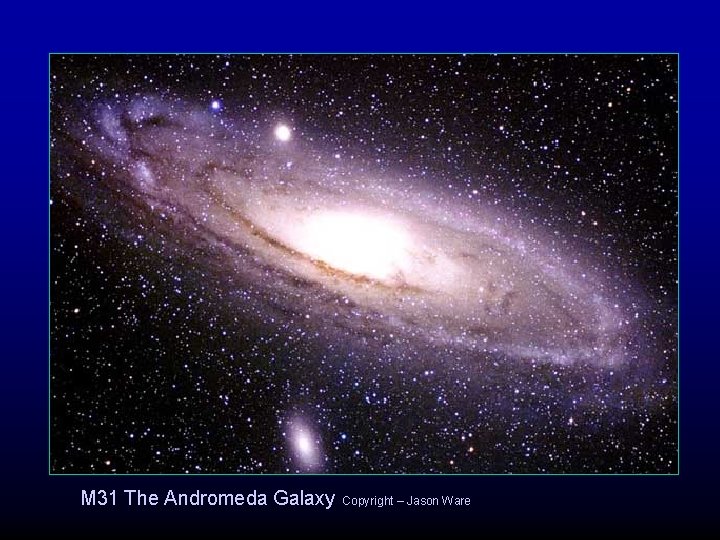
Spirals • Like Milky Way • Disks and bulge • Young stars and old • Gas and dust • Stars forming • Stars dying M 81 and M 82 – Copyright R. Gendler
M 63 Copyright – S. Miyazaki, Suburu
NGC 1365 Copyright – VLT
M 31 The Andromeda Galaxy Copyright – Jason Ware
NGC 891 – Copyright WIYN NGC 891 – Copyright J. C. Barentine, NOAO
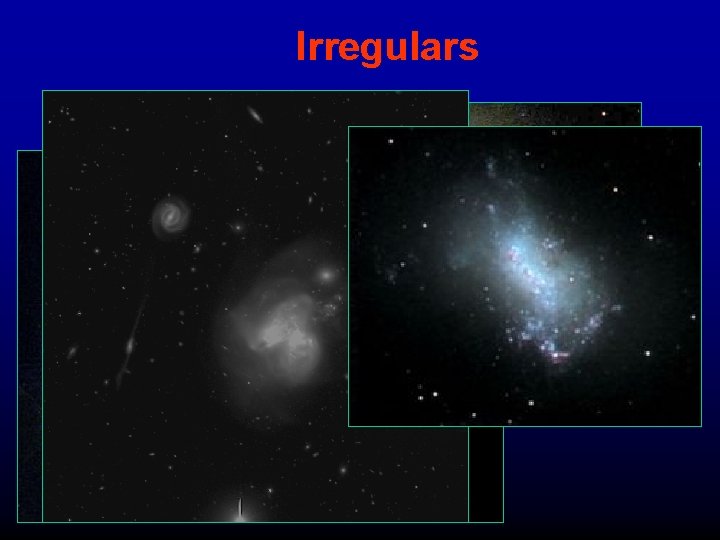
Irregulars
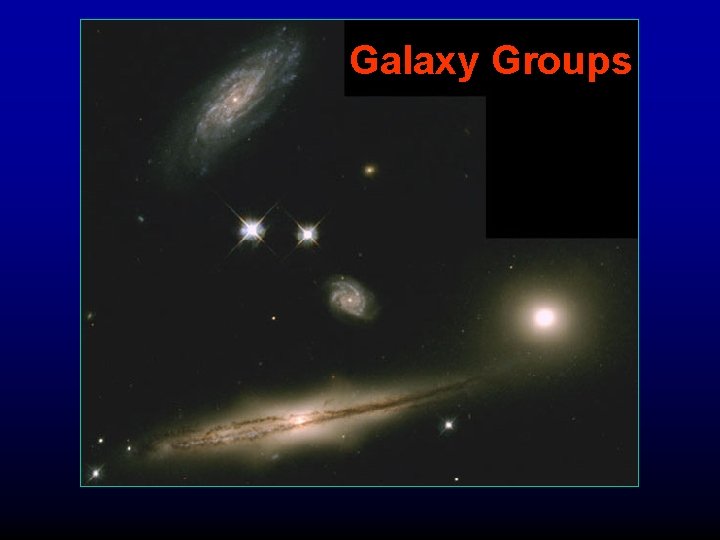
Galaxy Groups
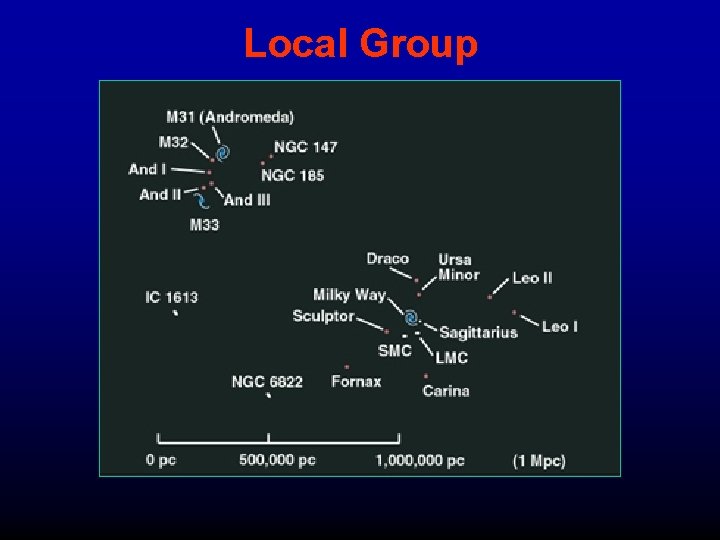
Local Group
Galaxy Mergers Patrik Jonsson, UCSC
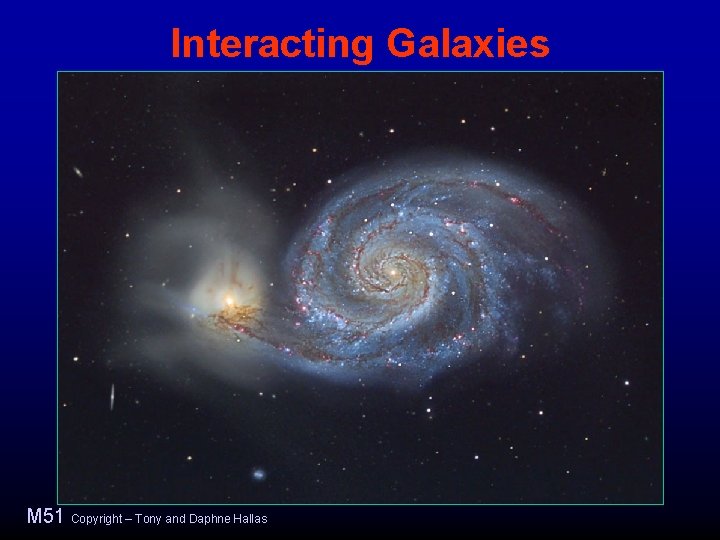
Interacting Galaxies M 51 Copyright – Tony and Daphne Hallas
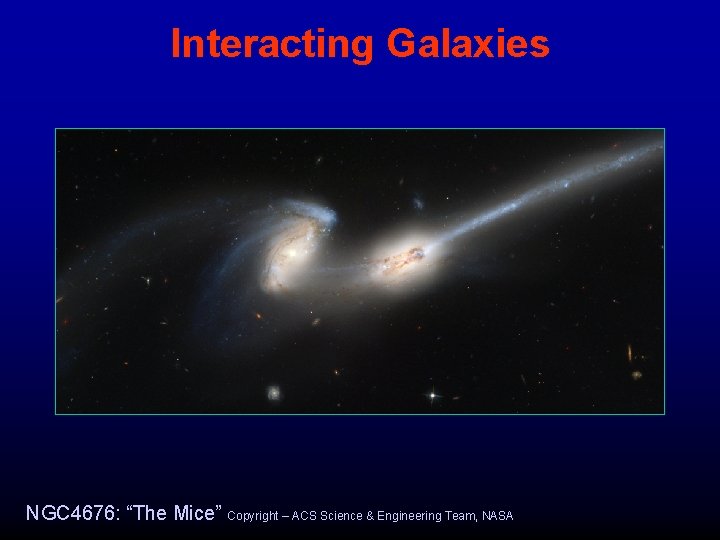
Interacting Galaxies NGC 4676: “The Mice” Copyright – ACS Science & Engineering Team, NASA
Interacting Galaxies Seyfert’s Sextet Copyright – J. English (U. Manitoba), C. Palma (PSU), et al. , NASA
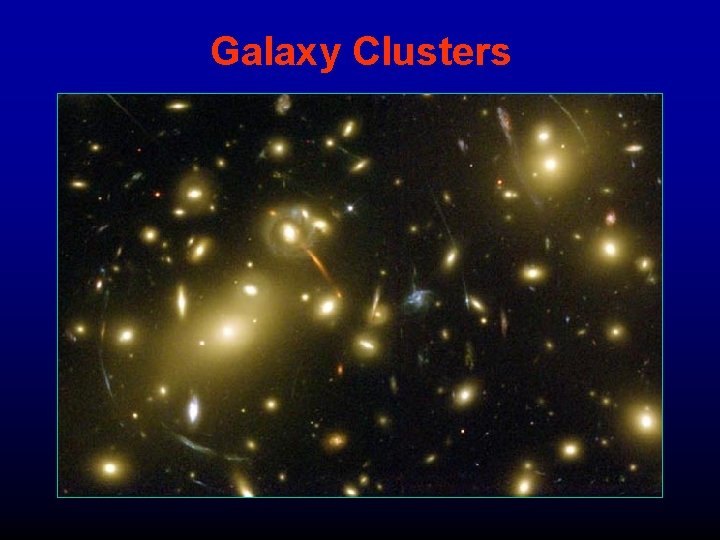
Galaxy Clusters
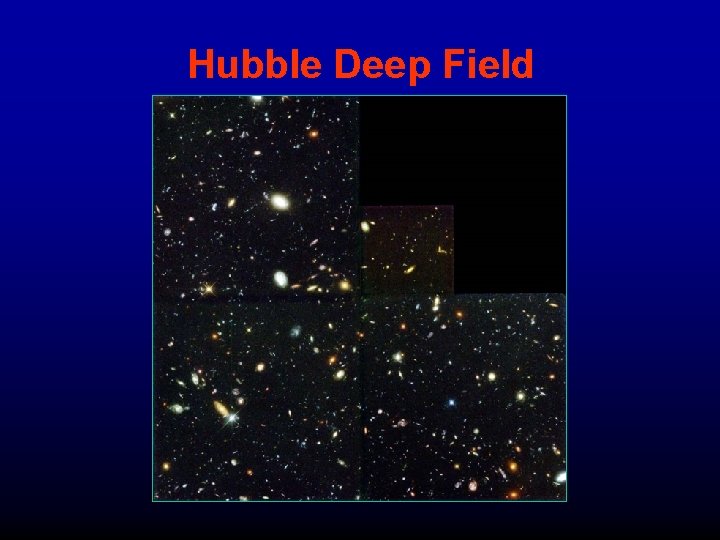
Hubble Deep Field
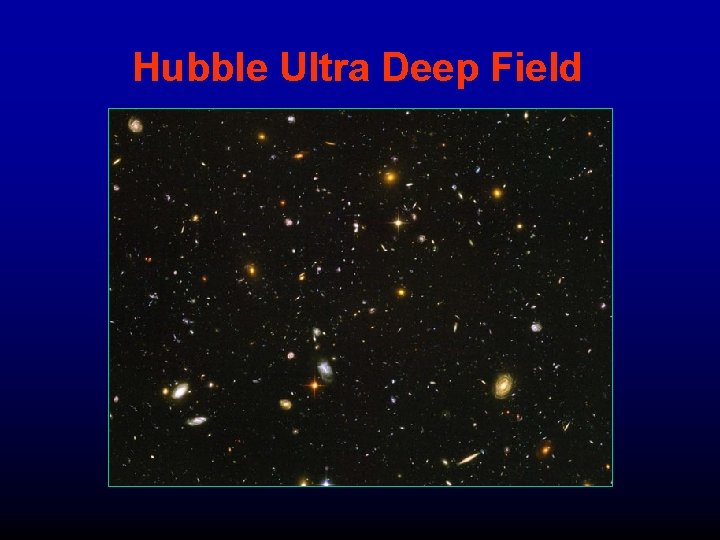
Hubble Ultra Deep Field
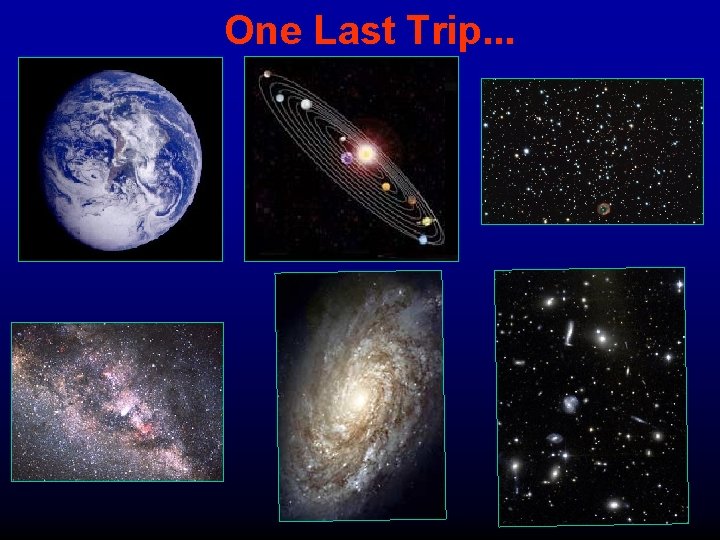
One Last Trip. . .
Summary • What new fact did you learn? – About the size of the Universe? – About what’s in the Universe? – About…?