
Better to be Bitter Kathy Casey Food Studios
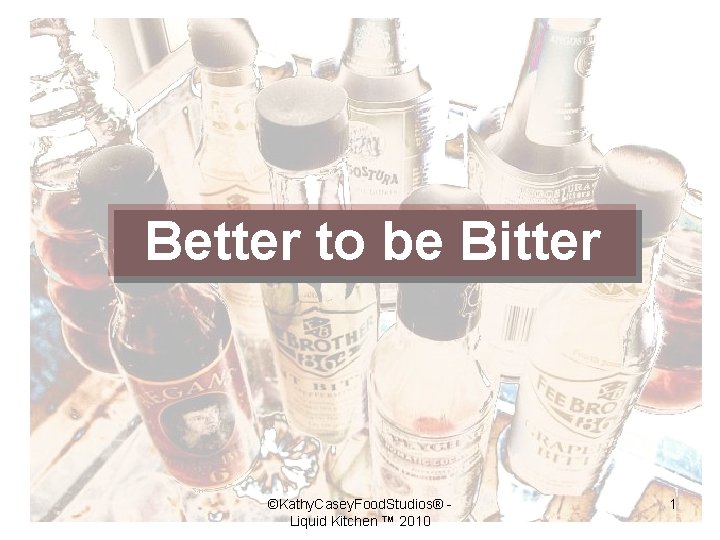
Better to be Bitter ©Kathy. Casey. Food. Studios® Liquid Kitchen ™ 2010 1
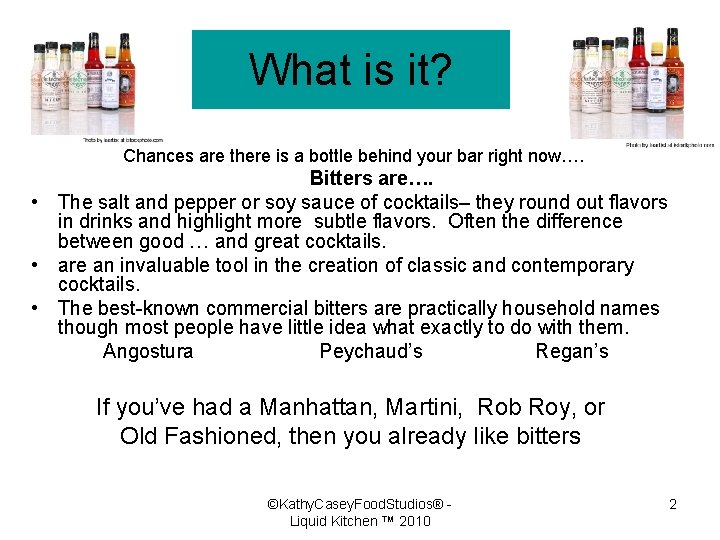
What is it? Chances are there is a bottle behind your bar right now…. Bitters are…. • The salt and pepper or soy sauce of cocktails– they round out flavors in drinks and highlight more subtle flavors. Often the difference between good … and great cocktails. • are an invaluable tool in the creation of classic and contemporary cocktails. • The best-known commercial bitters are practically household names though most people have little idea what exactly to do with them. Angostura Peychaud’s Regan’s If you’ve had a Manhattan, Martini, Rob Roy, or Old Fashioned, then you already like bitters ©Kathy. Casey. Food. Studios® Liquid Kitchen ™ 2010 2
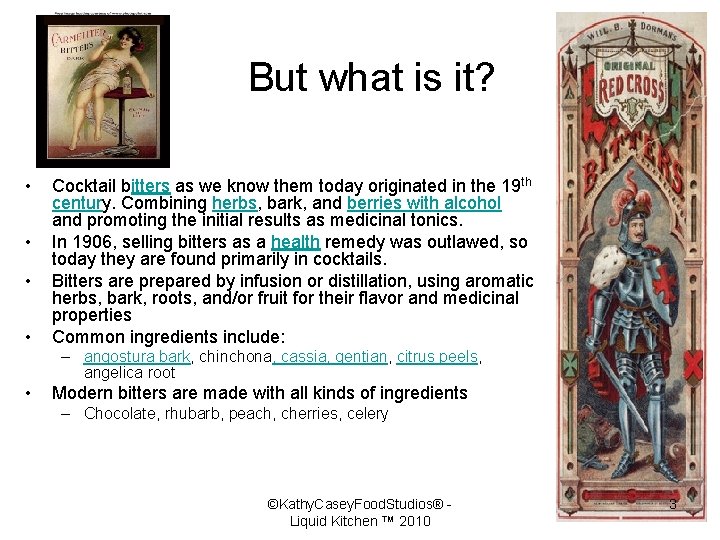
But what is it? • • Cocktail bitters as we know them today originated in the 19 th century. Combining herbs, bark, and berries with alcohol and promoting the initial results as medicinal tonics. In 1906, selling bitters as a health remedy was outlawed, so today they are found primarily in cocktails. Bitters are prepared by infusion or distillation, using aromatic herbs, bark, roots, and/or fruit for their flavor and medicinal properties Common ingredients include: – angostura bark, chinchona, cassia, gentian, citrus peels, angelica root • Modern bitters are made with all kinds of ingredients – Chocolate, rhubarb, peach, cherries, celery ©Kathy. Casey. Food. Studios® Liquid Kitchen ™ 2010 3
Potable/Un-Potable Non- POTABLE • Bitters are classified as non-potable not because they are “unsafe” for human consumption, but because of their strong flavors and high alcohol content (usually between 70 and 90 proof). • Also allows them to be sold in grocery stores…. there are no laws currently on selling cocktail bitters. • • POTABLE Bitters The best-known potable bitters are Fernet-Branca, Jägermeister, and Campari Poured as a digestive: to aid digestion after a big meal or pre-meal to stimulate the appetite. Can be drunk straight or mixed into cocktails Sweeter than non-potable bitters. ©Kathy. Casey. Food. Studios® Liquid Kitchen ™ 2010 4
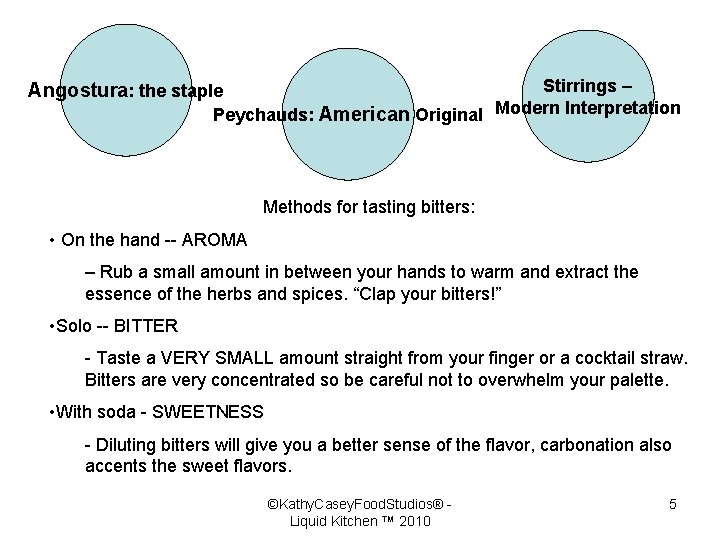
Stirrings – Peychauds: American Original Modern Interpretation Angostura: the staple Methods for tasting bitters: • On the hand -- AROMA – Rub a small amount in between your hands to warm and extract the essence of the herbs and spices. “Clap your bitters!” • Solo -- BITTER - Taste a VERY SMALL amount straight from your finger or a cocktail straw. Bitters are very concentrated so be careful not to overwhelm your palette. • With soda - SWEETNESS - Diluting bitters will give you a better sense of the flavor, carbonation also accents the sweet flavors. ©Kathy. Casey. Food. Studios® Liquid Kitchen ™ 2010 5
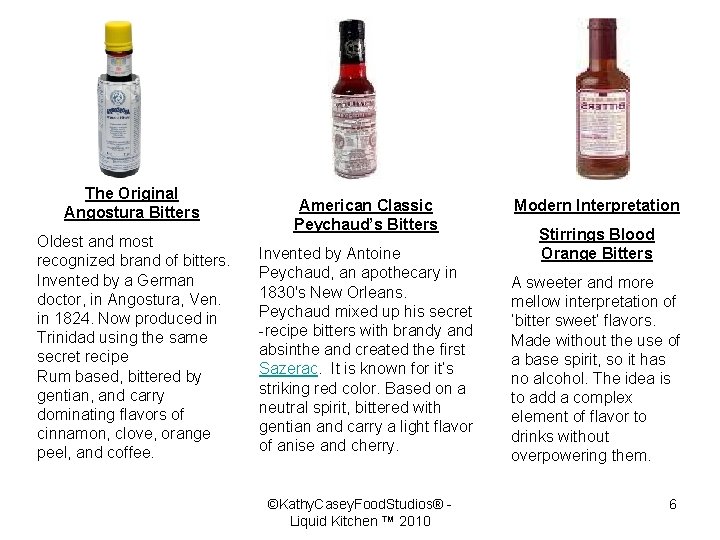
The Original Angostura Bitters Oldest and most recognized brand of bitters. Invented by a German doctor, in Angostura, Ven. in 1824. Now produced in Trinidad using the same secret recipe Rum based, bittered by gentian, and carry dominating flavors of cinnamon, clove, orange peel, and coffee. American Classic Peychaud’s Bitters Invented by Antoine Peychaud, an apothecary in 1830's New Orleans. Peychaud mixed up his secret -recipe bitters with brandy and absinthe and created the first Sazerac. It is known for it’s striking red color. Based on a neutral spirit, bittered with gentian and carry a light flavor of anise and cherry. ©Kathy. Casey. Food. Studios® Liquid Kitchen ™ 2010 Modern Interpretation Stirrings Blood Orange Bitters A sweeter and more mellow interpretation of ‘bitter sweet’ flavors. Made without the use of a base spirit, so it has no alcohol. The idea is to add a complex element of flavor to drinks without overpowering them. 6
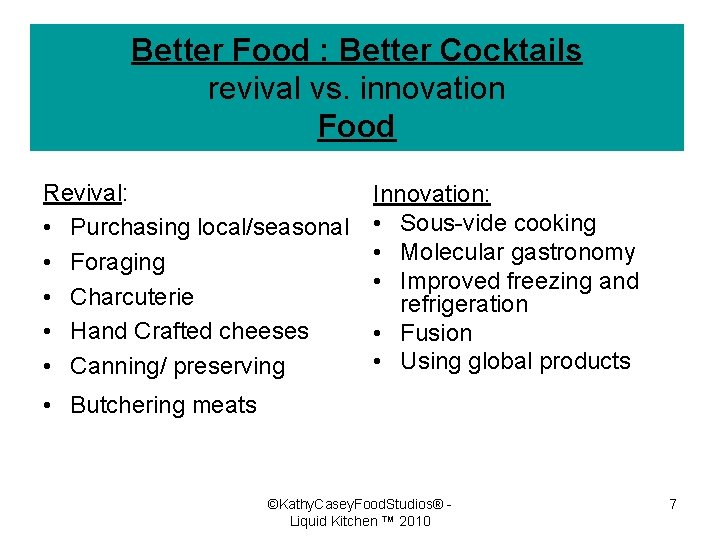
Better Food : Better Cocktails revival vs. innovation Food Revival: • Purchasing local/seasonal • Foraging • Charcuterie • Hand Crafted cheeses • Canning/ preserving Innovation: • Sous-vide cooking • Molecular gastronomy • Improved freezing and refrigeration • Fusion • Using global products • Butchering meats ©Kathy. Casey. Food. Studios® Liquid Kitchen ™ 2010 7
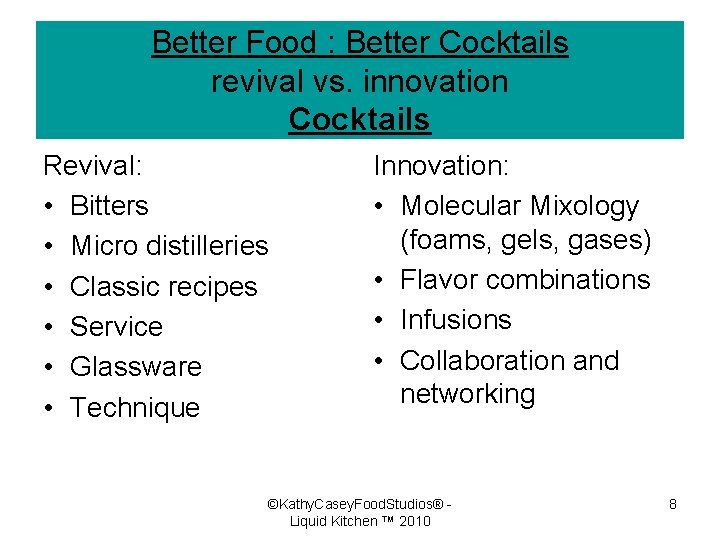
Better Food : Better Cocktails revival vs. innovation Cocktails Revival: • Bitters • Micro distilleries • Classic recipes • Service • Glassware • Technique Innovation: • Molecular Mixology (foams, gels, gases) • Flavor combinations • Infusions • Collaboration and networking ©Kathy. Casey. Food. Studios® Liquid Kitchen ™ 2010 8
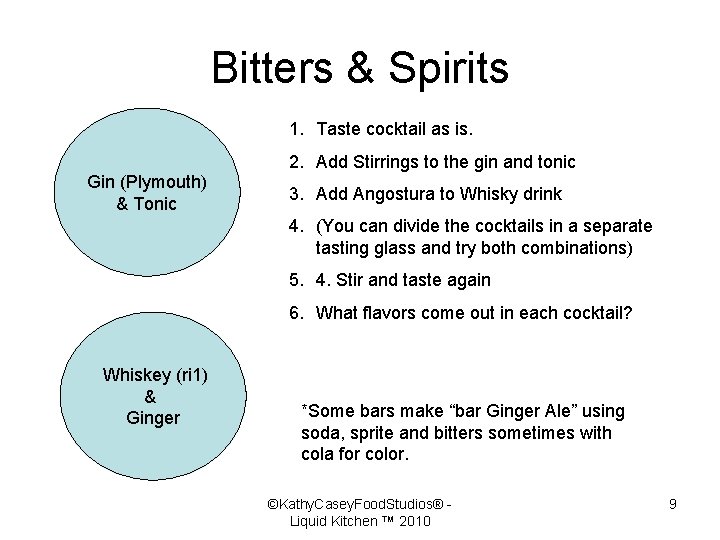
Bitters & Spirits 1. Taste cocktail as is. 2. Add Stirrings to the gin and tonic Gin (Plymouth) & Tonic 3. Add Angostura to Whisky drink 4. (You can divide the cocktails in a separate tasting glass and try both combinations) 5. 4. Stir and taste again 6. What flavors come out in each cocktail? Whiskey (ri 1) & Ginger *Some bars make “bar Ginger Ale” using soda, sprite and bitters sometimes with cola for color. ©Kathy. Casey. Food. Studios® Liquid Kitchen ™ 2010 9
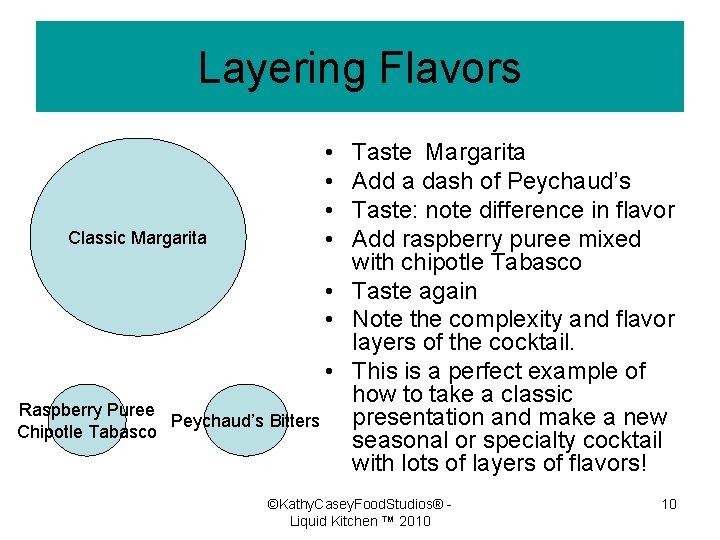
Layering Flavors • • Taste Margarita Add a dash of Peychaud’s Taste: note difference in flavor Classic Margarita Add raspberry puree mixed with chipotle Tabasco • Taste again • Note the complexity and flavor layers of the cocktail. • This is a perfect example of how to take a classic Raspberry Puree presentation and make a new Peychaud’s Bitters Chipotle Tabasco seasonal or specialty cocktail with lots of layers of flavors! ©Kathy. Casey. Food. Studios® Liquid Kitchen ™ 2010 10
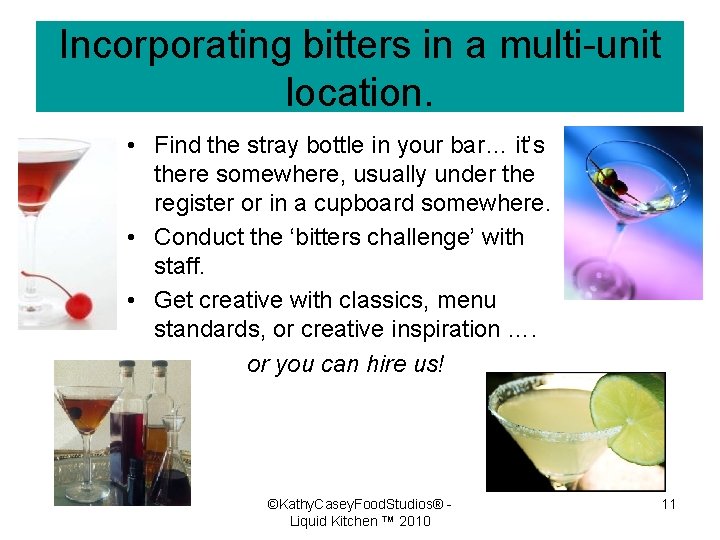
Incorporating bitters in a multi-unit location. • Find the stray bottle in your bar… it’s there somewhere, usually under the register or in a cupboard somewhere. • Conduct the ‘bitters challenge’ with staff. • Get creative with classics, menu standards, or creative inspiration …. or you can hire us! ©Kathy. Casey. Food. Studios® Liquid Kitchen ™ 2010 11
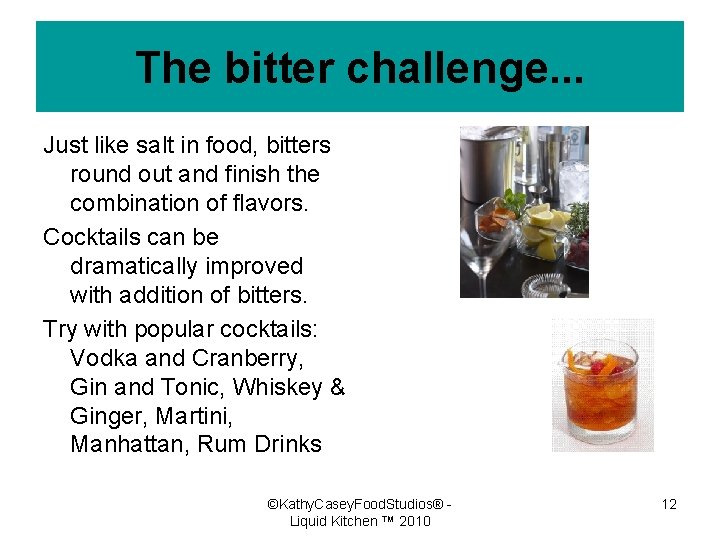
The bitter challenge. . . Just like salt in food, bitters round out and finish the combination of flavors. Cocktails can be dramatically improved with addition of bitters. Try with popular cocktails: Vodka and Cranberry, Gin and Tonic, Whiskey & Ginger, Martini, Manhattan, Rum Drinks ©Kathy. Casey. Food. Studios® Liquid Kitchen ™ 2010 12
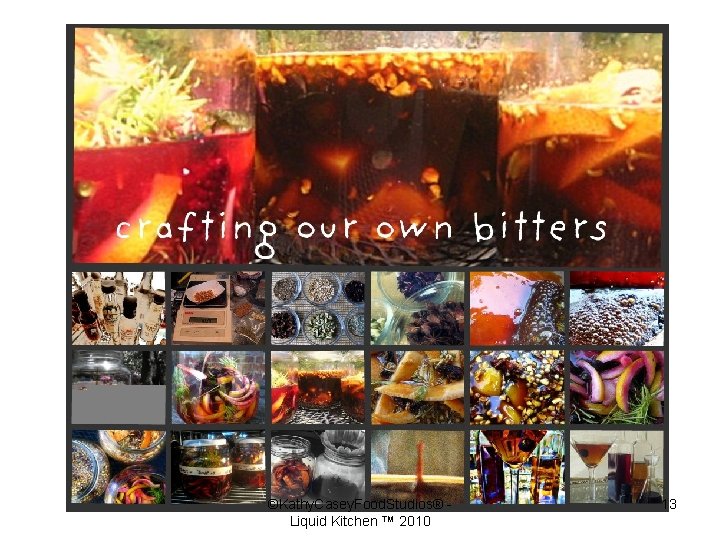
©Kathy. Casey. Food. Studios® Liquid Kitchen ™ 2010 13
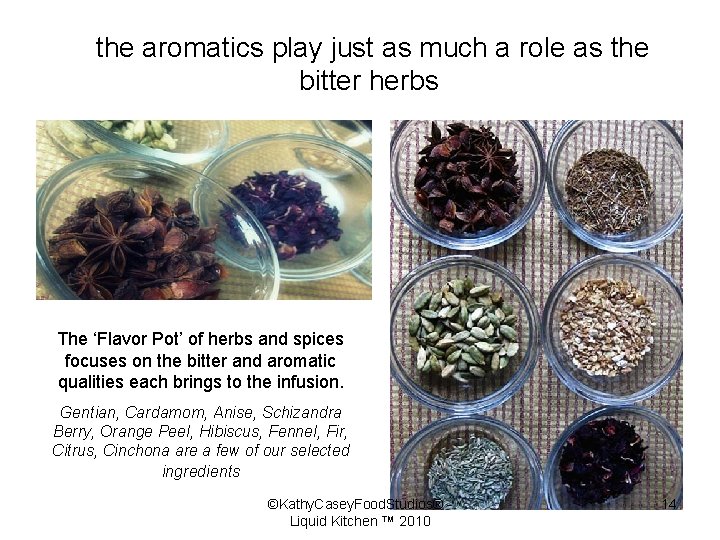
the aromatics play just as much a role as the bitter herbs The ‘Flavor Pot’ of herbs and spices focuses on the bitter and aromatic qualities each brings to the infusion. Gentian, Cardamom, Anise, Schizandra Berry, Orange Peel, Hibiscus, Fennel, Fir, Citrus, Cinchona are a few of our selected ingredients ©Kathy. Casey. Food. Studios® Liquid Kitchen ™ 2010 14
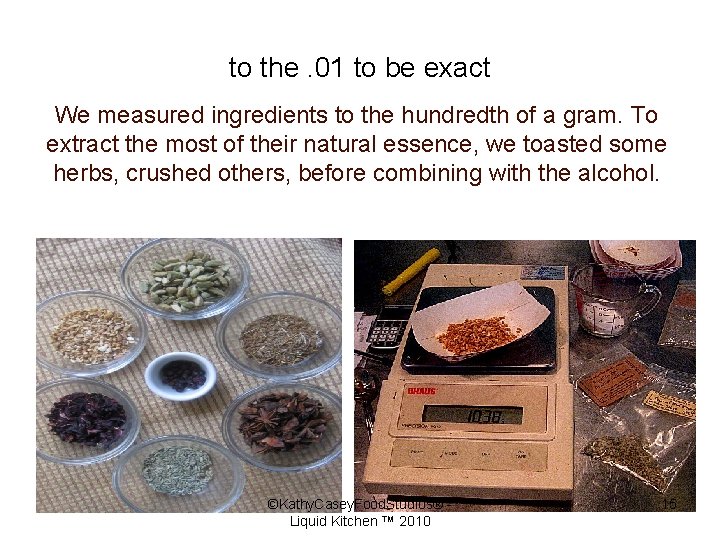
to the. 01 to be exact We measured ingredients to the hundredth of a gram. To extract the most of their natural essence, we toasted some herbs, crushed others, before combining with the alcohol. ©Kathy. Casey. Food. Studios® Liquid Kitchen ™ 2010 15
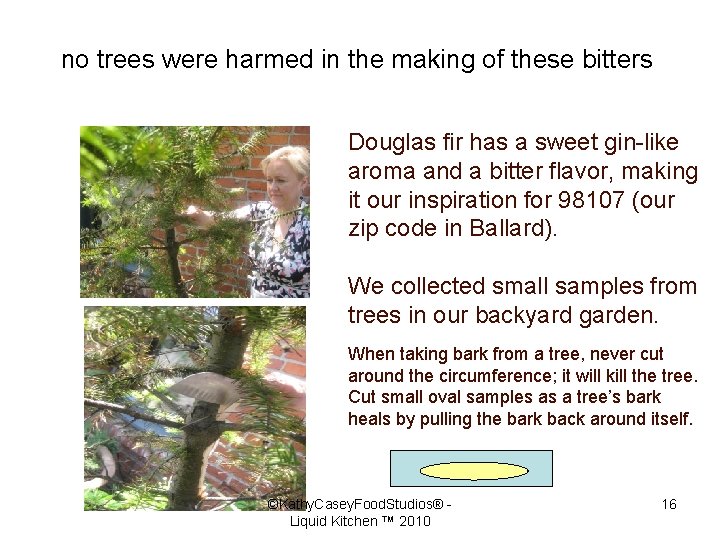
no trees were harmed in the making of these bitters Douglas fir has a sweet gin-like aroma and a bitter flavor, making it our inspiration for 98107 (our zip code in Ballard). We collected small samples from trees in our backyard garden. When taking bark from a tree, never cut around the circumference; it will kill the tree. Cut small oval samples as a tree’s bark heals by pulling the bark back around itself. ©Kathy. Casey. Food. Studios® Liquid Kitchen ™ 2010 16
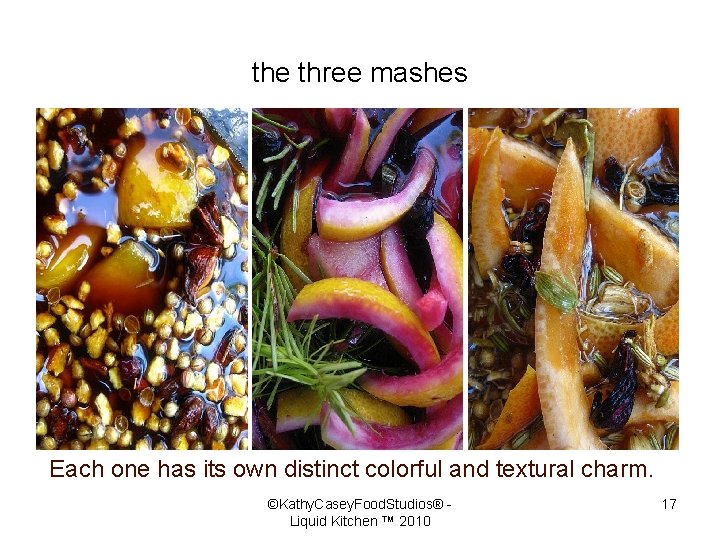
the three mashes Each one has its own distinct colorful and textural charm. ©Kathy. Casey. Food. Studios® Liquid Kitchen ™ 2010 17
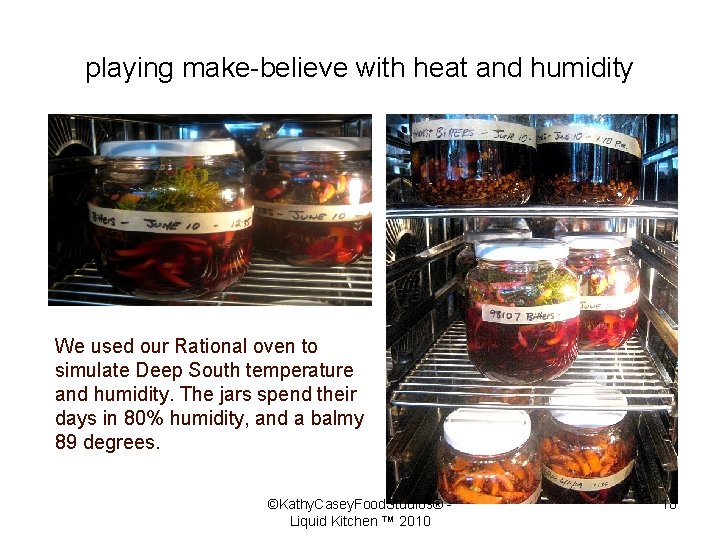
playing make-believe with heat and humidity We used our Rational oven to simulate Deep South temperature and humidity. The jars spend their days in 80% humidity, and a balmy 89 degrees. ©Kathy. Casey. Food. Studios® Liquid Kitchen ™ 2010 18
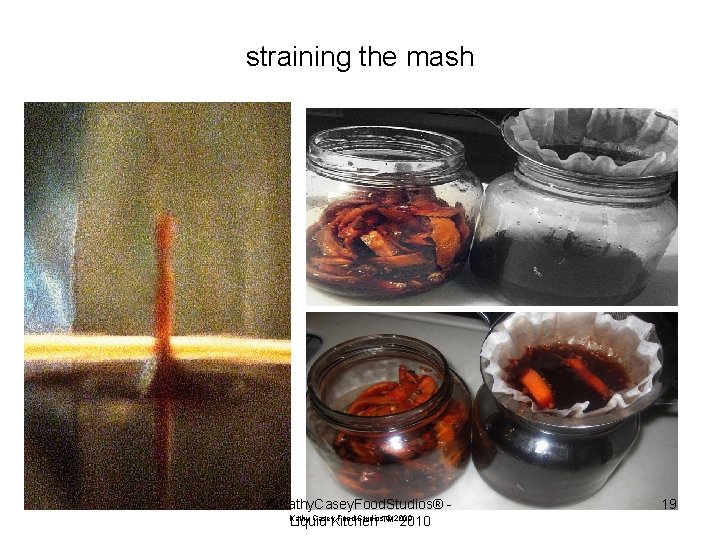
straining the mash ©Kathy. Casey. Food. Studios® Kathy Casey Food Studios ® 2009 Liquid Kitchen ™ 2010 19
Craft your own blend There as many methods as there are mixologists, but the most important thing is how the bitters perform in a cocktail. Alcohol Use a spirit with a high proof or alcohol content, such as grain alcohol, vodka, rye or whiskey. higher-proof alcohols extract flavor more quickly but can leave a harsh aftertaste. Aromatics Here’s where you get to personalize your bitters and experiment. commercial bitters ingredients such as gentian, and angelica root. Measure ingredients carefully; bitter herbs are potent and a can become overwhelming. If you want to make it again it is important to keep precise records of weights, time and volume of bitters. Aging and Agitating These are key steps in flavor development. Aging (or steeping) helps extract flavor. Too little time and your bitters will be flat; too much and they’ll be unbalanced. Agitating (giving the mixture a shake every now and then) ensures that those flavors are dispersed throughout the mix, with no unexpected taste spikes ©Kathy. Casey. Food. Studios® Liquid Kitchen ™ 2010 20
Simple Orange Bitters INGREDIENTS • 1 (750 -milliliter) bottle grain alcohol, such as Everclear 151 • 1/2 pound orange peel pieces • 1 tsp fennel seed • 1/2 tsp coriander seed • 4 cardamom pods • 20 drops gentian extract or aprox ½ teaspoon gentian root • ½ tsp. dry chinchona INSTRUCTIONS: Combine all ingredients in a 2 -quart jar with a tight fitting lid. Close and store at room temperature. Let steep 14 days, shaking the jar every other day. Strain alcohol from spices and store in a jar with a tight fitting lid in a dark place. ©Kathy. Casey. Food. Studios® Liquid Kitchen ™ 2010 21
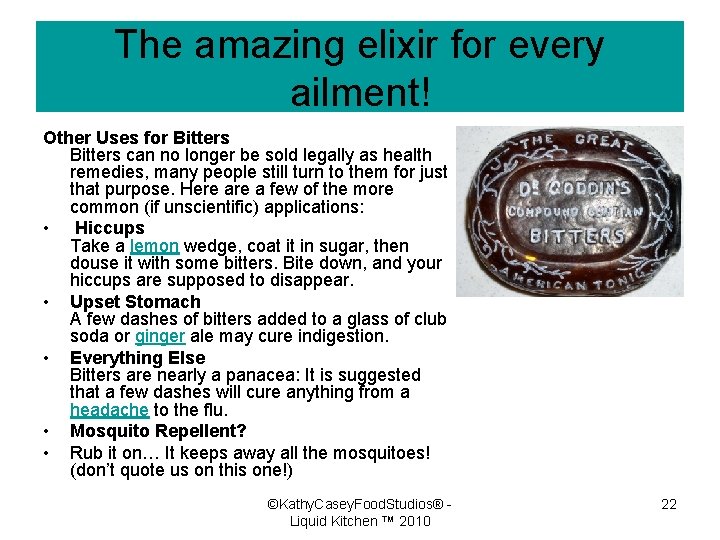
The amazing elixir for every ailment! Other Uses for Bitters can no longer be sold legally as health remedies, many people still turn to them for just that purpose. Here a few of the more common (if unscientific) applications: • Hiccups Take a lemon wedge, coat it in sugar, then douse it with some bitters. Bite down, and your hiccups are supposed to disappear. • Upset Stomach A few dashes of bitters added to a glass of club soda or ginger ale may cure indigestion. • Everything Else Bitters are nearly a panacea: It is suggested that a few dashes will cure anything from a headache to the flu. • Mosquito Repellent? • Rub it on… It keeps away all the mosquitoes! (don’t quote us on this one!) ©Kathy. Casey. Food. Studios® Liquid Kitchen ™ 2010 22
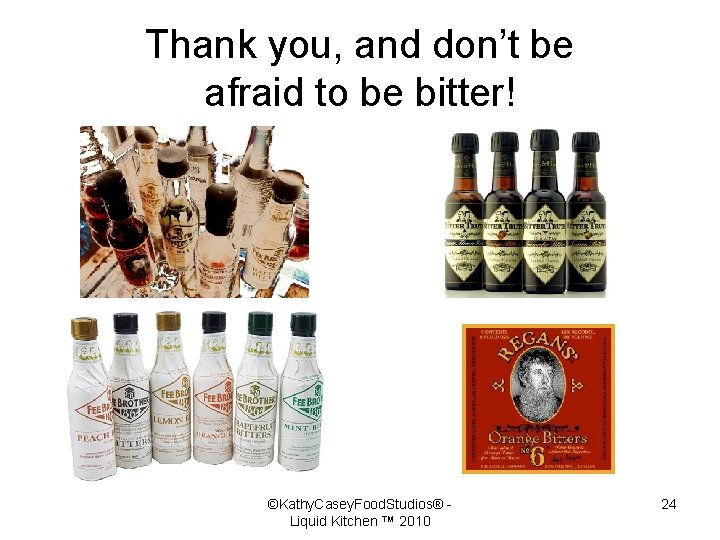
Other Brands on the market: Fee Brothers Bitters: Produced in Rochester New York since the 1950's. One of the most diverse lines of bitters. -Offered in a multitude of flavors such as grapefruit, mint, and peach, lemon, chocolate, and whiskey barrel aged bitters. Regan’s No. 6 Bitters: One of the newest bitters on the scene, Regans' Orange Bitter No. 6 is a shining star in the cocktail world. Gary and Mardee Regan, who in the 1990's wanted a better orange bitter created Regan’s. The result is a versatile bitter of orange peel, cardamom, caraway, coriander and other herbs inspired by an old recipe. -This products character is exceptionally rich and carry flavors of coriander, cardamom, and orange including orange peel. The Bitter Truth: The Bitter Truth was founded in 2006 by Stephan Berg and Alexander Hauck out of the frustration of being unable to find quality cocktail bitters in the European market. Since then, The Bitter Truth has expanded its portfolio to include other flavorings, liqueurs and spirits. -Offers various flavors from the lost Celery bitters to a rich Xocolatl Mole that exemplifies the subtle character of bitter chocolate. ©Kathy. Casey. Food. Studios® Liquid Kitchen ™ 2010 23
Thank you, and don’t be afraid to be bitter! ©Kathy. Casey. Food. Studios® Liquid Kitchen ™ 2010 24
- Slides: 24