Integrated Management of Childhood Illnesses IMCI Dr Pushpa


- Slides: 33
Integrated Management of Childhood Illnesses (IMCI) Dr. Pushpa Raj Sharma DCH, DTCH, FCPS Professor of Child Health Institute of Medicine, Kathmandu, Nepal
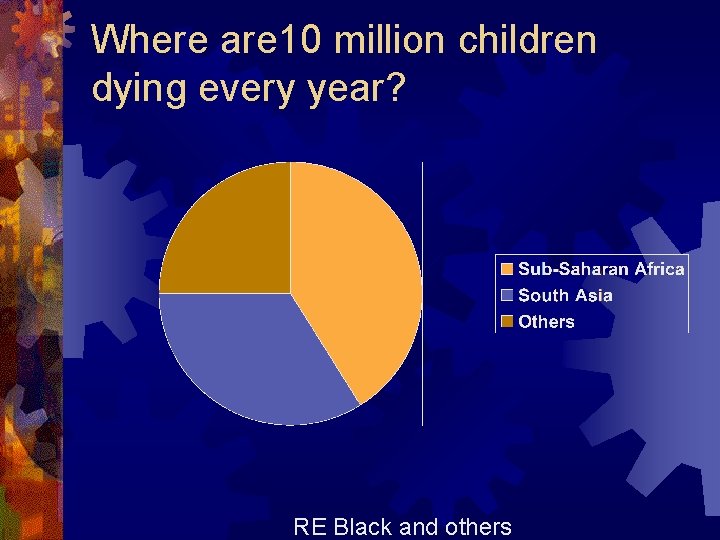
Where are 10 million children dying every year? RE Black and others
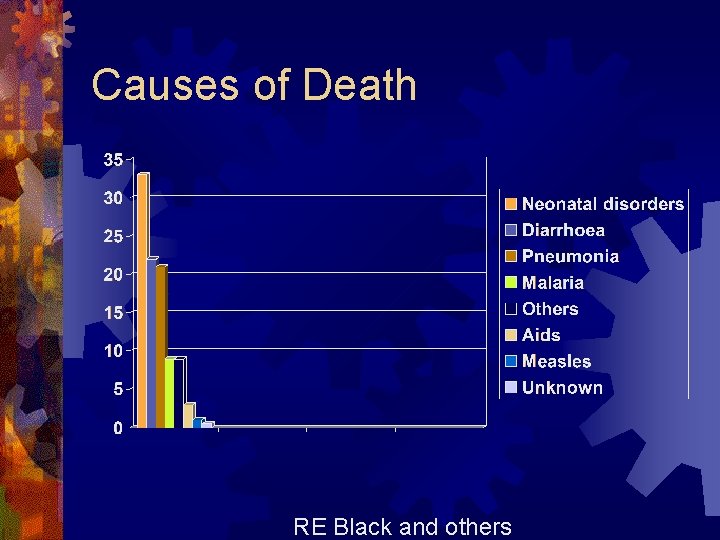
Causes of Death RE Black and others
Burden of the Paediatric Disease in Nepal ® 40, 000 deaths are pneumonia related. ® 30, 000 deaths are diarrhea related ® 40, 000 deaths are nutrition related ® 50% deaths are related with neonatal problems.
Burden of these diseases are due to: ® Unhygienic and unsafe environment ® Bad family practices ® Unequipped health facility ® Unskilled health worker ® Unavailability of health resources ® Poverty
Problems in different age groups: ® Neonatal period: resuscitation problems, infections, metabolic. ® Under five: infections, nutritional. ® Preadolescent: developmental, worms, skin. ® Adolescent: psychological, sexual habits, drugs.
Common causes of morbidity and mortality ® Morbidity Acute respiratory infections. ® Diarrhea ® Fever ® Ear infections ® Malnutrition ® Local skin infections ® Oral thrush ® ® Mortality Pneumonia ® Severe dehydration ® Meningitis/encephalitis ® Cerebral malaria ® Kwashiorkor/marasmus ® Sepsis ® Hypothermia ® Hypoglycemia ®
Previous programmes ® Training of health workers ® Vertical programmes ® Child problems were seen as a separate issues ® Very little counseling training ® Little emphasis on clinical practice
What is needed? ® National goal for reducing the morbidity and mortality. ® Holistic approach. ® Improving family practices. ® Equipping the health facility. ® Upgrading the health workers skills. ® Emphasis on counseling.
How to do it? ® Targeting the problem. ® All the components in one part. ® Optimal use of resources. ® Evidence based. ® Feasible. ® Acceptable by community.
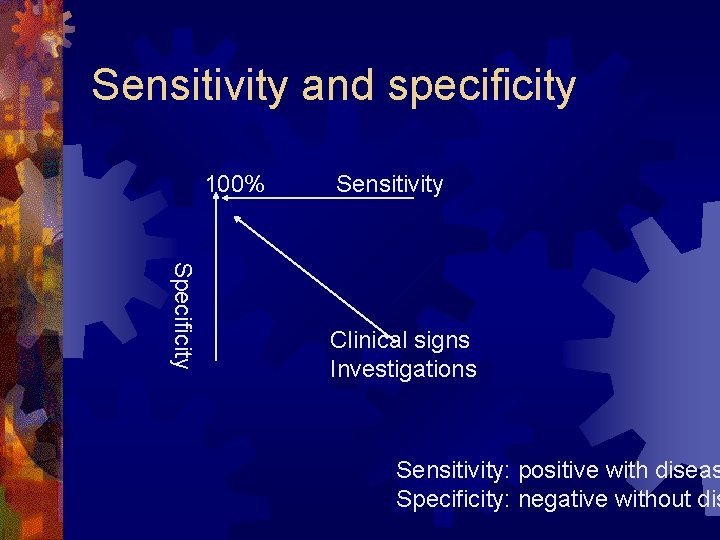
Sensitivity and specificity 100% Sensitivity Specificity Clinical signs Investigations Sensitivity: positive with diseas Specificity: negative without dis
The answer ® Integrated ® Management ® Childhood ® Illnesses ®IMCI of
How it helps? ® Targets the causes ® Identifies a child who needs urgent referral. ® Gives evidenced based clinical signs for the diagnosis of common problems. ® Provides guidelines for the appropriate treatment. ® Educates the parent. ® Upgrades the health care facility. ® Follow-ups the child.
Diseases that it covers ® Respiratory: pneumonia, cough/cold. ® Diarrhea: acute watery, dysentery, persistent. ® Fever: malaria, measles, meningitis, encephalitis. ® Ear problems: mastoditis, acute and chronic infections. ® Nutritional: kwashiorkor/marasmus, anemia
Conditions that it covers ® Nutritional: feeding problems, breast feeding, counseling. ® Neonatal sepsis. ® Local infections. ® Hypoglycemia, hypothermia. ® Oral thrush ® Immunization. ® Vit. A supplementation ® Deworming.
What it contains? 2 months up to 5 years ® Simple clinical signs of severe disease. ® Simple clinical signs to diagnose pneumonia. ® Simple clinical signs to identify three clinical types of diarrhea. ® Simple clinical signs to identify malaria. ® Simple clinical signs to identify ear infections. ® Simple clinical signs to identify malnutrition.
What it contains? Young infant. ® Simple clinical signs to identify for referral. ® Simple clinical signs to treat at health facility. ® Simple signs to identify good breast feeding.
What it contains? General ® Simple guidelines for nutrition. ® Simple guidelines for treatment of severe diseases, pneumonia, diarrhoea, dysentery, fever, malaria, ear infections, local infections, anaemia, malnutrition. ® Guidelines for counseling. ® Home care messages, safe practices. ® Immunization, vit A, deworming information.
What are the evidences? ® Trained health worker identified target disease better than doctors. ® Over prescriptions were reduced. ® Parents were more satisfied. ® Cost effective. ® Mortality and morbidity reduced. ® Health facility better equipped.
Some examples ® Simple questions and simple observations to find out the problem: severe disease. ® Does child vomits every thing? ® Is the child able to drink? ® History of convulsions? ® Is the child lethargic or unconscious?
Four main symptoms: 2 months up to 5 years ® Does the child has cough or difficulty breathing? ® Does the child has diarrhea? ® Does the child has fever? ® Does the child has ear problem?
Assess every child for: 2 months up to 5 years ® Malnutrition: ® Weight for age ® Oedema ® anaemia ® Immunization ® Vitamin A supplementation ® Deworming
If the answer is yes: ® For how long? ® Associated symptoms? ® Classify the illness ® Identify treatment ® Treat the child
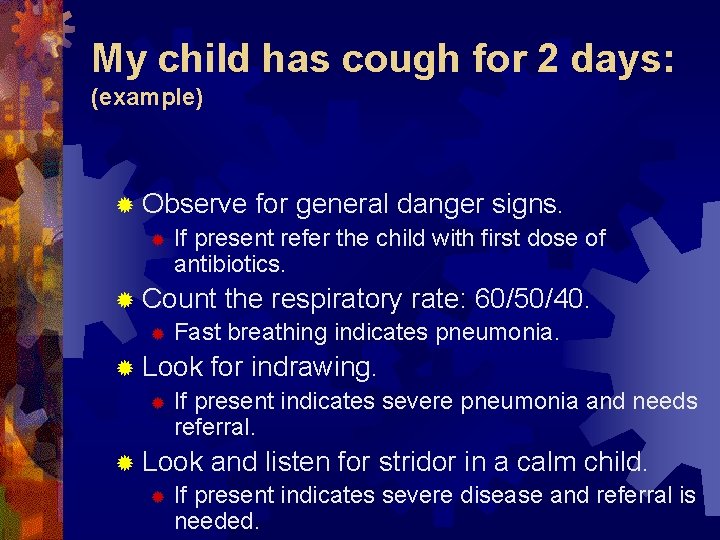
My child has cough for 2 days: (example) ® Observe for general danger signs. ® If present refer the child with first dose of antibiotics. ® Count the respiratory rate: 60/50/40. ® Fast breathing indicates pneumonia. ® Look for indrawing. ® If present indicates severe pneumonia and needs referral. ® Look and listen for stridor in a calm child. ® If present indicates severe disease and referral is needed.
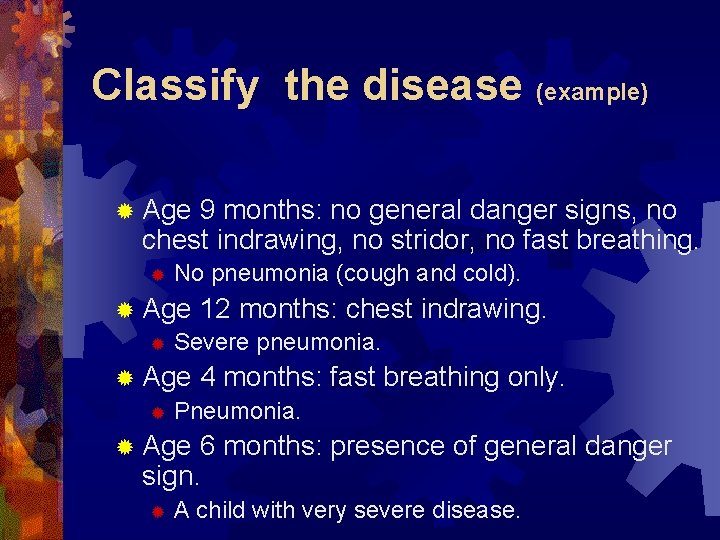
Classify the disease (example) ® Age 9 months: no general danger signs, no chest indrawing, no stridor, no fast breathing. ® No pneumonia (cough and cold). ® Age 12 months: chest ® Severe pneumonia. ® Age 4 months: ® Pneumonia. indrawing. fast breathing only. ® Age 6 months: presence of general danger sign. ® A child with very severe disease.
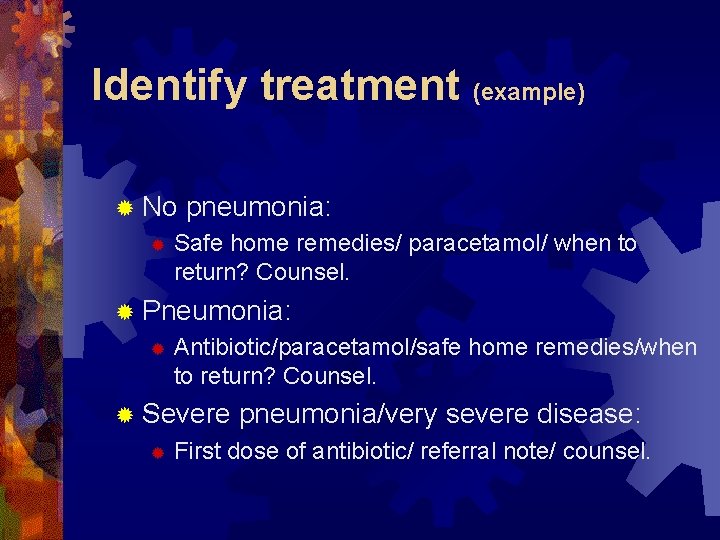
Identify treatment (example) ® No ® pneumonia: Safe home remedies/ paracetamol/ when to return? Counsel. ® Pneumonia: ® Antibiotic/paracetamol/safe home remedies/when to return? Counsel. ® Severe ® pneumonia/very severe disease: First dose of antibiotic/ referral note/ counsel.
Treat the child ® Essential drugs. ® Safe home care. ® Duration of treatment. ® When to return. ® Change of treatment. ® Counsel the parent. ® Other problems.
Other Options in IMCI ® Neonatal problems of first week ® Developmental pediatrics ® Perinatal problems ® Injury ® ……….
IMCI : model for other problems in pediatric diseases ® Entry questions. ® Threading questions. ® Evidenced based specific clinical signs. ® Treatment. ® Follow-up. ® Referral. ® Counsel.
History of IMCI in Nepal ® 1995 June: IMCI Introduced ® 1997 IMCI implemented in one district Mohattari. ® 1996: Orientation meeting, nutrition survey, necessary adaptations to generic materials. ® 1997: Nepali translation, TOT courses. ® 1998: Follow-up visits, review meeting, preservice training. ® 1999 CDD/ARI merged with IMCI ® 1999 Community Based IMCI ® Expansion: at present 13 district.
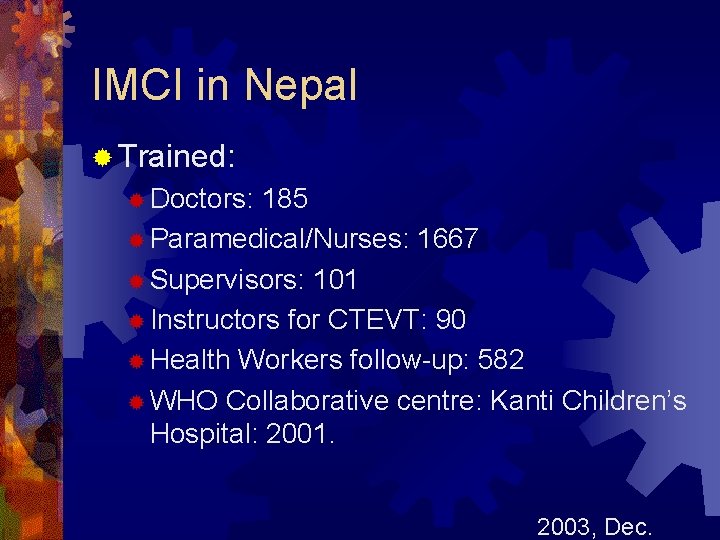
IMCI in Nepal ® Trained: ® Doctors: 185 ® Paramedical/Nurses: 1667 ® Supervisors: 101 ® Instructors for CTEVT: 90 ® Health Workers follow-up: 582 ® WHO Collaborative centre: Kanti Children’s Hospital: 2001. 2003, Dec.
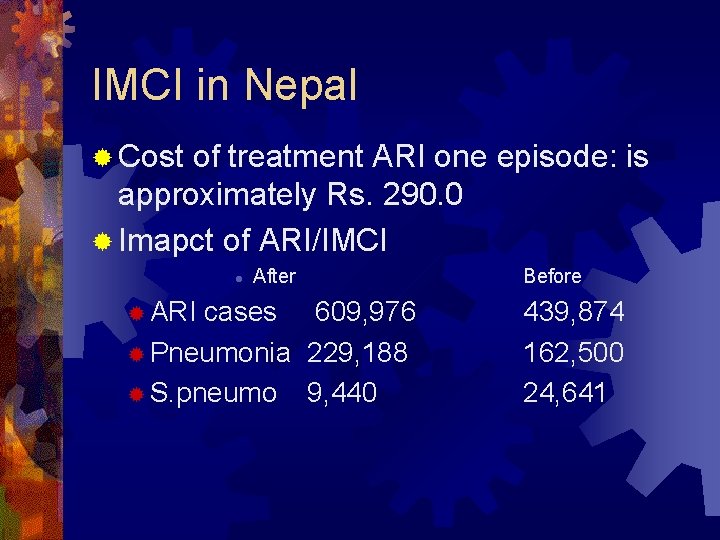
IMCI in Nepal ® Cost of treatment ARI one episode: is approximately Rs. 290. 0 ® Imapct of ARI/IMCI l ® ARI After cases 609, 976 ® Pneumonia 229, 188 ® S. pneumo 9, 440 Before 439, 874 162, 500 24, 641
Thank you. Any questions? Any clarifications? Any suggestions for this presentation?