ILM EPA Level 6 CMDA Level 7 SLMDA




- Slides: 38
ILM EPA Level 6 CMDA Level 7 SLMDA Jill Hansen ILM Specialist Technical Quality Manager Julie Rowlett ILM HE Business Manager 1
What we’ll cover • Gateway • Requirements of EPA at each level • Details of each assessment method • Best Practice in preparing for submission • L 6 and L 7 EPA Customer Guidance Packs and other sources of support 2
Gateway • Completion of a Gateway Declaration Form signed by the HEI, Employer and Apprentice. • Confirming that the On - Programme components have been completed the relevant business and management degree has been successfully completed L 2 Qualification in Maths and English has been evidenced/achieved the Apprentice has the KSB required by the standard and is eligible for EPA the Apprentice has been employed throughout their Apprenticeship the Apprentice will have completed a minimum of 12 months and 1 day on-programme before EPA 3
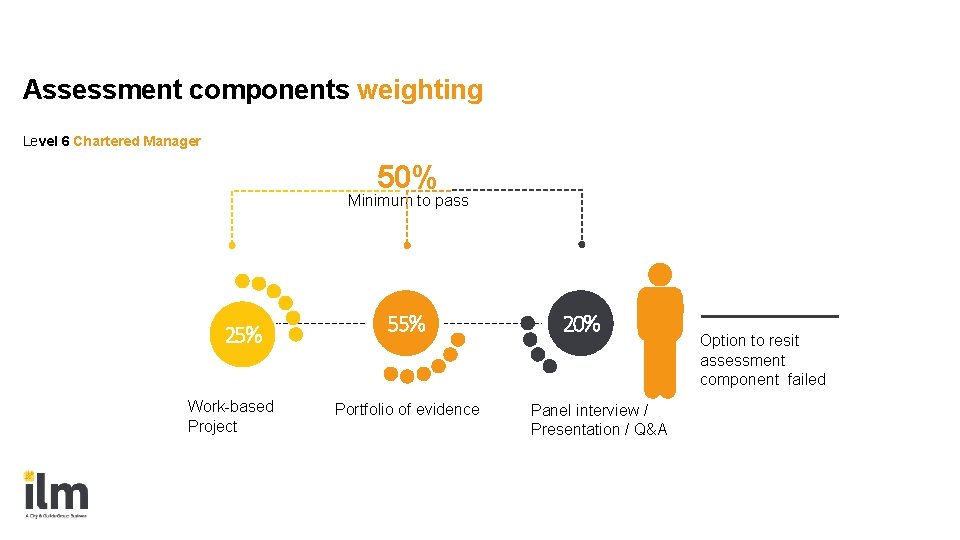
Assessment components weighting Level 6 Chartered Manager 50% Minimum to pass 25% Work-based Project 55% Portfolio of evidence 20% Panel interview / Presentation / Q&A Option to resit assessment component failed
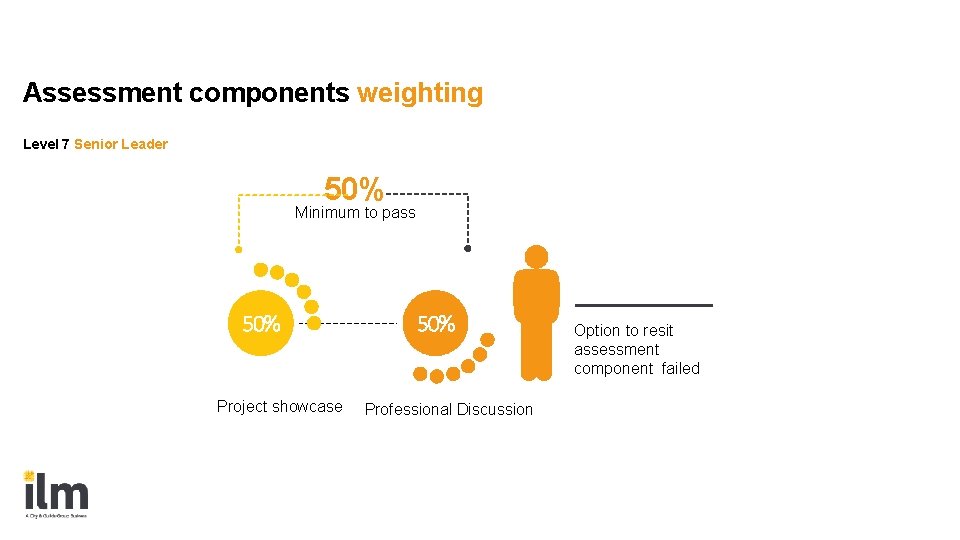
Assessment components weighting Level 7 Senior Leader 50% Minimum to pass 50% Project showcase 50% Professional Discussion Option to resit assessment component failed
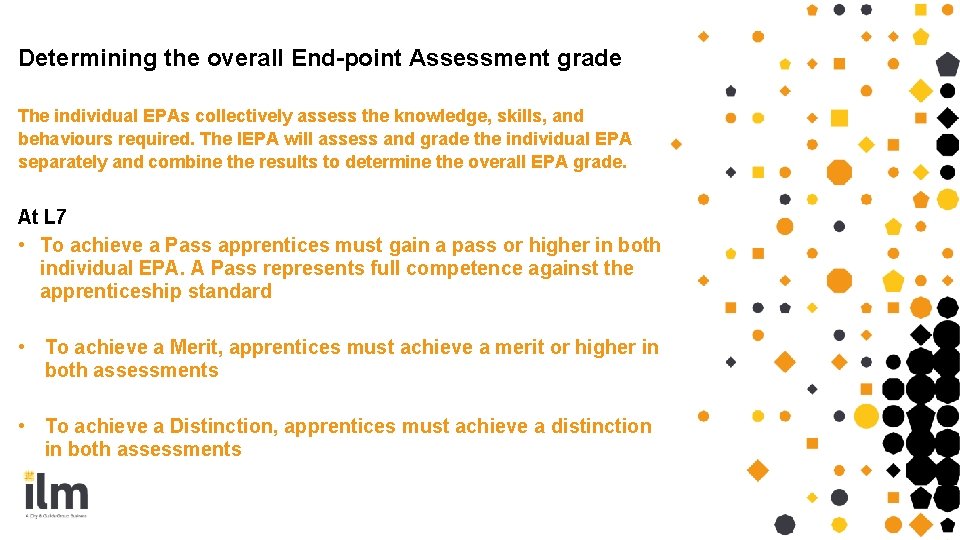
Determining the overall End-point Assessment grade The individual EPAs collectively assess the knowledge, skills, and behaviours required. The IEPA will assess and grade the individual EPA separately and combine the results to determine the overall EPA grade. At L 7 • To achieve a Pass apprentices must gain a pass or higher in both individual EPA. A Pass represents full competence against the apprenticeship standard • To achieve a Merit, apprentices must achieve a merit or higher in both assessments • To achieve a Distinction, apprentices must achieve a distinction in both assessments
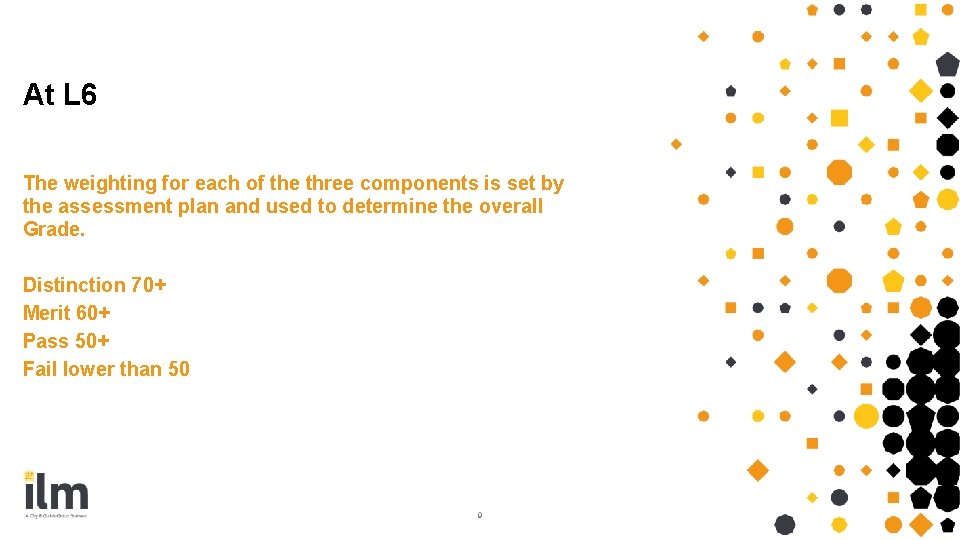
At L 6 The weighting for each of the three components is set by the assessment plan and used to determine the overall Grade. Distinction 70+ Merit 60+ Pass 50+ Fail lower than 50 9
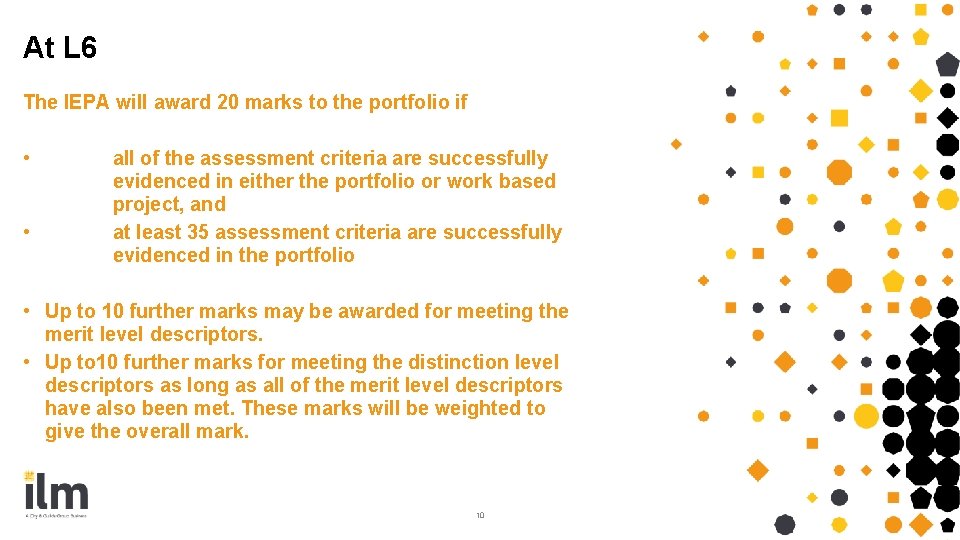
At L 6 The IEPA will award 20 marks to the portfolio if • • all of the assessment criteria are successfully evidenced in either the portfolio or work based project, and at least 35 assessment criteria are successfully evidenced in the portfolio • Up to 10 further marks may be awarded for meeting the merit level descriptors. • Up to 10 further marks for meeting the distinction level descriptors as long as all of the merit level descriptors have also been met. These marks will be weighted to give the overall mark. 10
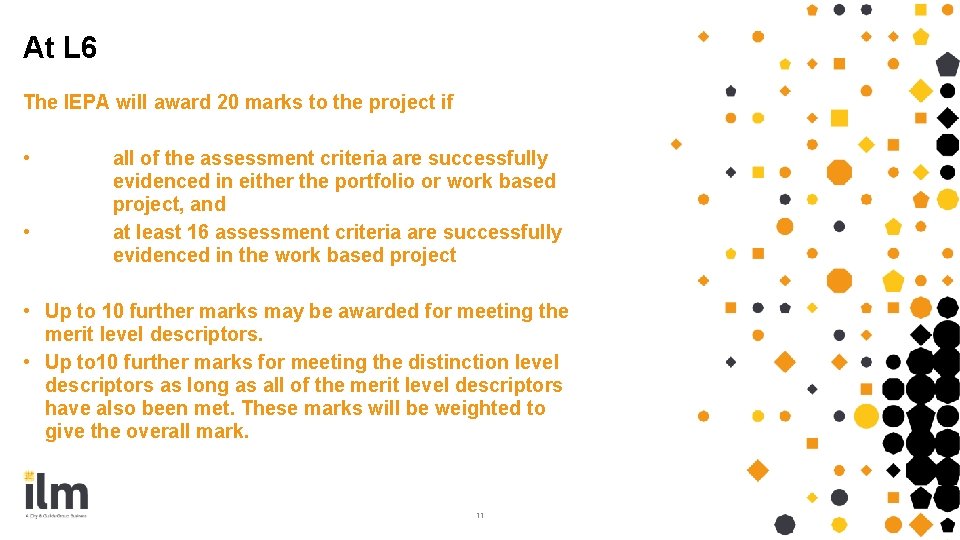
At L 6 The IEPA will award 20 marks to the project if • • all of the assessment criteria are successfully evidenced in either the portfolio or work based project, and at least 16 assessment criteria are successfully evidenced in the work based project • Up to 10 further marks may be awarded for meeting the merit level descriptors. • Up to 10 further marks for meeting the distinction level descriptors as long as all of the merit level descriptors have also been met. These marks will be weighted to give the overall mark. 11
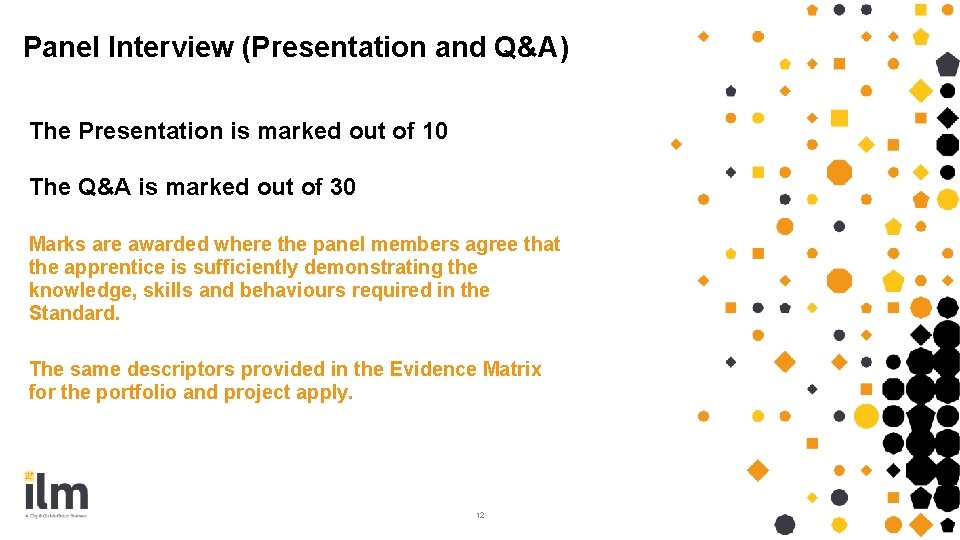
Panel Interview (Presentation and Q&A) The Presentation is marked out of 10 The Q&A is marked out of 30 Marks are awarded where the panel members agree that the apprentice is sufficiently demonstrating the knowledge, skills and behaviours required in the Standard. The same descriptors provided in the Evidence Matrix for the portfolio and project apply. 12
General guidance for the portfolio The Portfolio needs to holistically show: · Acquisition and demonstration of skills · Demonstration of behaviours · Evidence collected towards the end of their apprenticeship program, · Meaty in-depth pieces of work/ activities - likely to provide the most holistic evidence · Contextualisation by learners is key · Apprentice’s role in producing the work must be clear 13 13
Presentation Heading - Subheading October 2020 Quality of Evidence • Evidence must meet the requirements of VACS: • • Valid/Relevant – it must be obtained in a real working environment that accurately reflects the candidates day-to-day work. It must relate to the criteria being evidenced. Authentic – it must be the candidate’s own work, unguided and in a real working environment (where possible). It must be clear what role the candidate has played in producing the evidence presented • Current – the evidence must have been produced while the learner was on-programme/doing their apprenticeship. • Sufficient – the evidence must fully cover the criteria it’s intended to, partial coverage of an assessment criteria does not demonstrate full knowledge or competence. 14
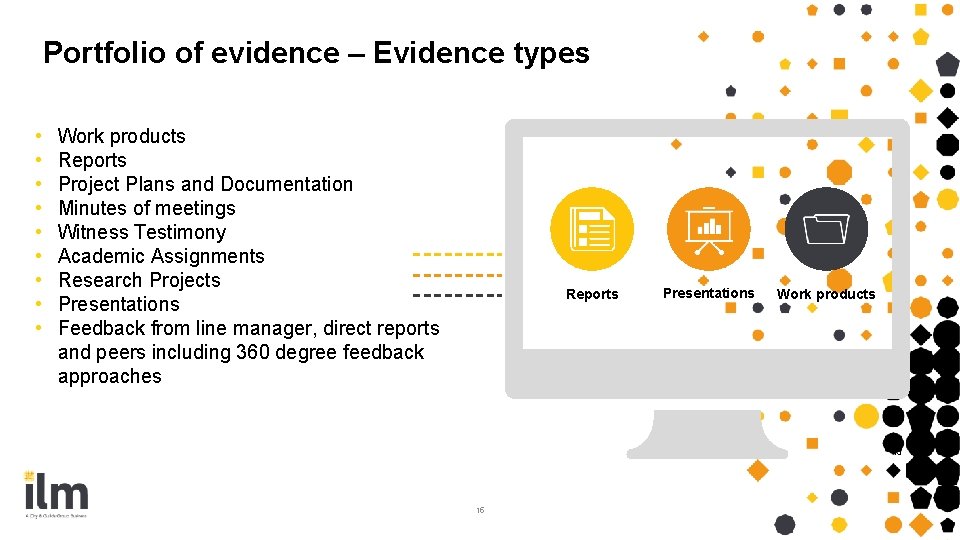
Portfolio of evidence – Evidence types • • • Work products Reports Project Plans and Documentation Minutes of meetings Witness Testimony Academic Assignments Research Projects Presentations Feedback from line manager, direct reports and peers including 360 degree feedback approaches Reports Presentations Work products 15 15
Presentation Heading - Subheading October 2020 Ensuring Apprentice Portfolios are ‘On-Track’ • The role of the Apprentice mentor / coach is essential in ensuring that an Apprentices evidence portfolio is being developed throughout the programme • Do not assume that Apprentices will find it easy to independently gather and reference their evidence – this is a real skill and they will need ongoing support • Regular review meetings should include a review of evidence gathered and some element of quality control to guide the Apprentice • A good e-Portfolio system will do a lot of this for you by enabling detailed reporting on progress towards the KSBs and a full view of all evidence uploaded for the University and Employer • Remember to also track any ‘ 20% OTJ’ activity alongside this 16
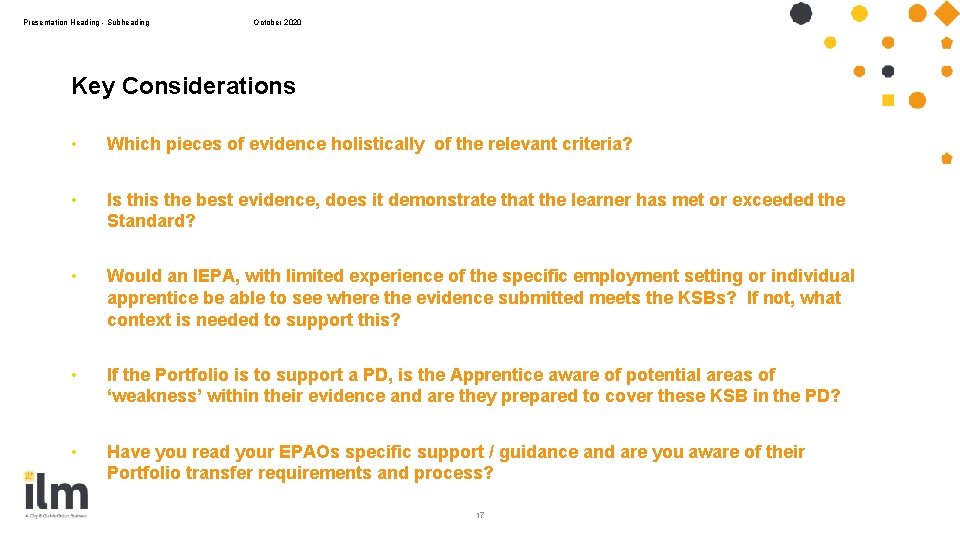
Presentation Heading - Subheading October 2020 Key Considerations • Which pieces of evidence holistically of the relevant criteria? • Is this the best evidence, does it demonstrate that the learner has met or exceeded the Standard? • Would an IEPA, with limited experience of the specific employment setting or individual apprentice be able to see where the evidence submitted meets the KSBs? If not, what context is needed to support this? • If the Portfolio is to support a PD, is the Apprentice aware of potential areas of ‘weakness’ within their evidence and are they prepared to cover these KSB in the PD? • Have you read your EPAOs specific support / guidance and are you aware of their Portfolio transfer requirements and process? 17
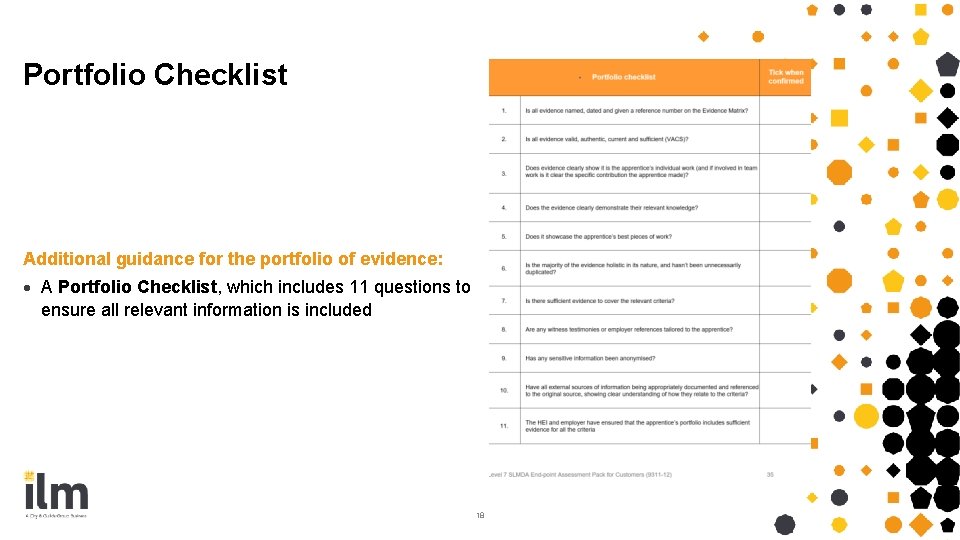
Portfolio Checklist Additional guidance for the portfolio of evidence: · A Portfolio Checklist, which includes 11 questions to ensure all relevant information is included 18
Professional Discussion L 7 Two components – 50 -60 minutes • Portfolio of Evidence – submitted in advance • Face to Face Professional Discussion 19
Project Showcase L 7 Three components - Face to face 1 hour and 20 minutes total • 4000 word project report - submitted in advance • Presentation 20 minutes • Q&A 25 -20 minutes 20
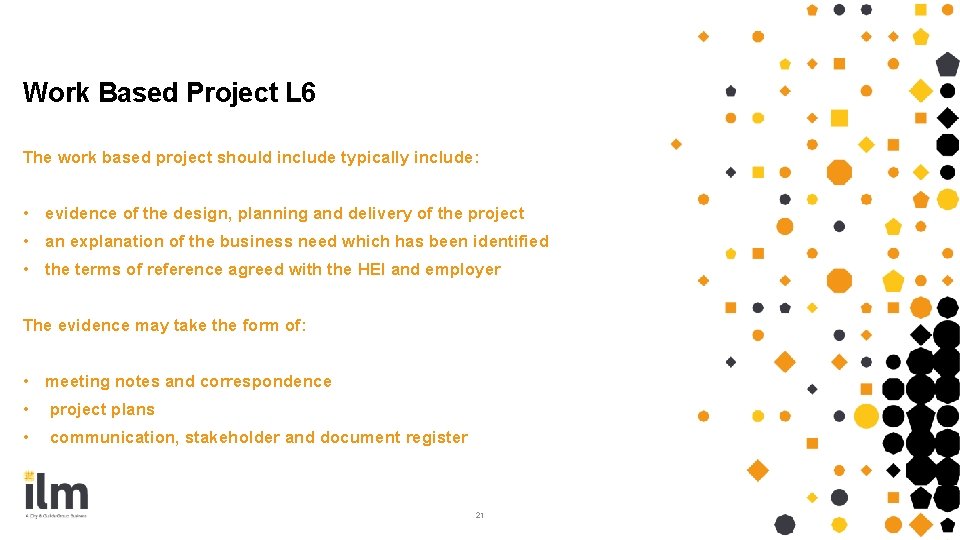
Work Based Project L 6 The work based project should include typically include: • evidence of the design, planning and delivery of the project • an explanation of the business need which has been identified • the terms of reference agreed with the HEI and employer The evidence may take the form of: • meeting notes and correspondence • project plans • communication, stakeholder and document register 21
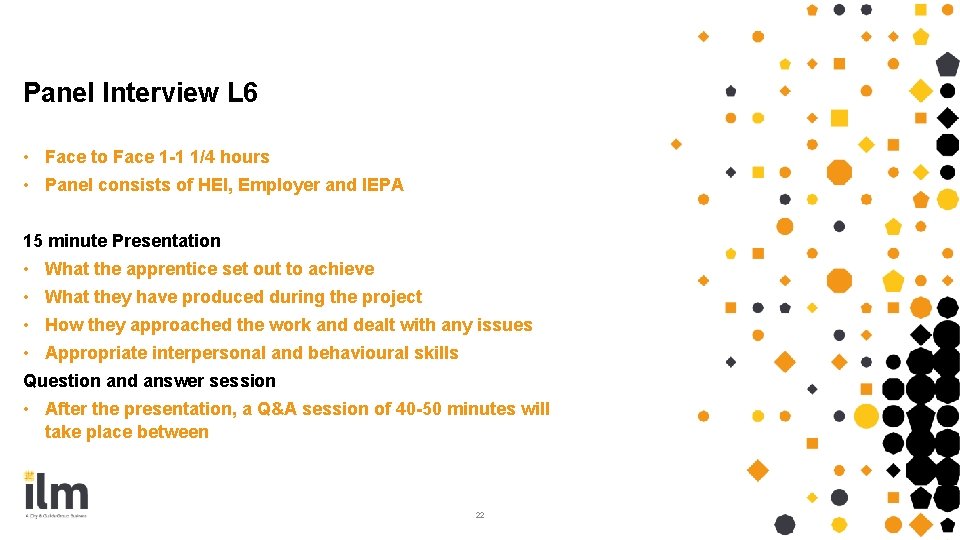
Panel Interview L 6 • Face to Face 1 -1 1/4 hours • Panel consists of HEI, Employer and IEPA 15 minute Presentation • What the apprentice set out to achieve • What they have produced during the project • How they approached the work and dealt with any issues • Appropriate interpersonal and behavioural skills Question and answer session • After the presentation, a Q&A session of 40 -50 minutes will take place between 22
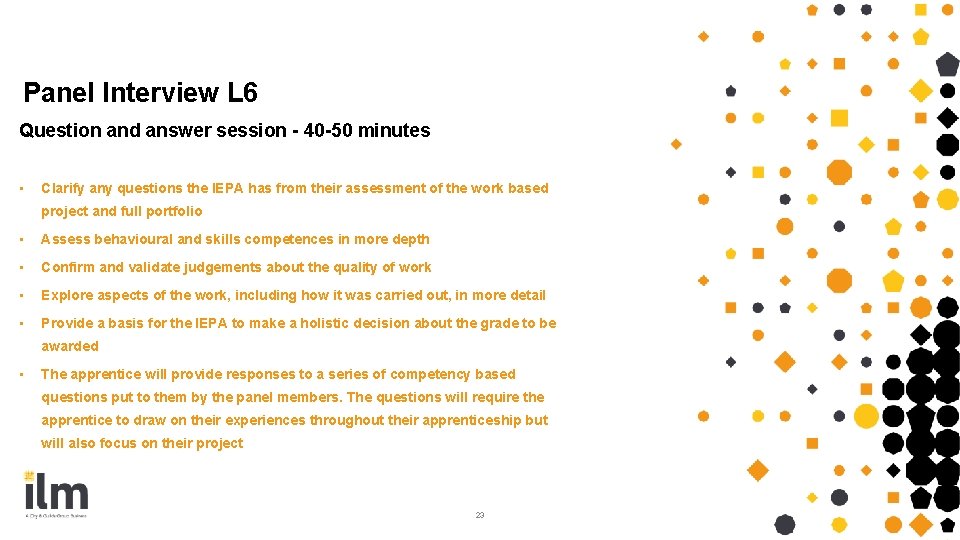
Panel Interview L 6 Question and answer session - 40 -50 minutes • Clarify any questions the IEPA has from their assessment of the work based project and full portfolio • Assess behavioural and skills competences in more depth • Confirm and validate judgements about the quality of work • Explore aspects of the work, including how it was carried out, in more detail • Provide a basis for the IEPA to make a holistic decision about the grade to be awarded • The apprentice will provide responses to a series of competency based questions put to them by the panel members. The questions will require the apprentice to draw on their experiences throughout their apprenticeship but will also focus on their project 23
The Documents 24
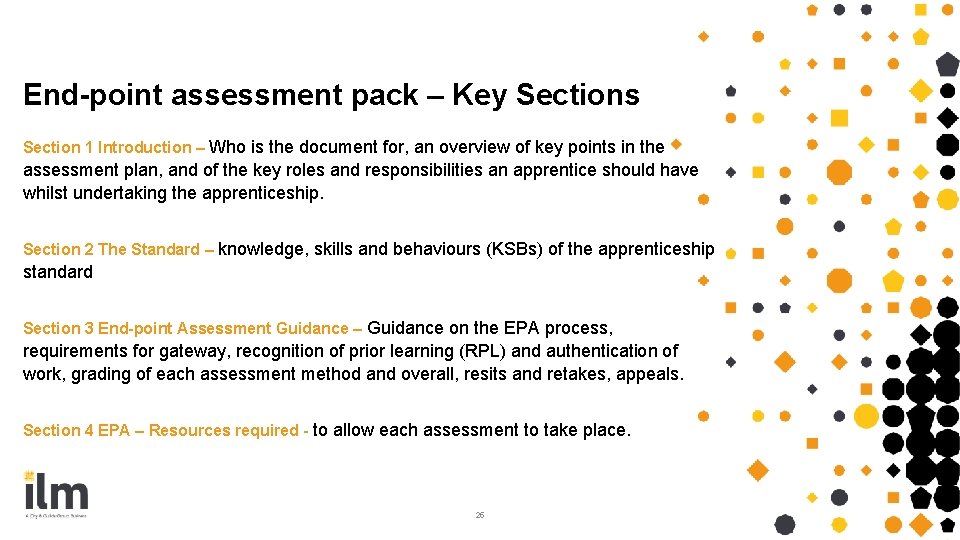
End-point assessment pack – Key Sections Section 1 Introduction – Who is the document for, an overview of key points in the assessment plan, and of the key roles and responsibilities an apprentice should have whilst undertaking the apprenticeship. Section 2 The Standard – knowledge, skills and behaviours (KSBs) of the apprenticeship standard Section 3 End-point Assessment Guidance – Guidance on the EPA process, requirements for gateway, recognition of prior learning (RPL) and authentication of work, grading of each assessment method and overall, resits and retakes, appeals. Section 4 EPA – Resources required - to allow each assessment to take place. 25
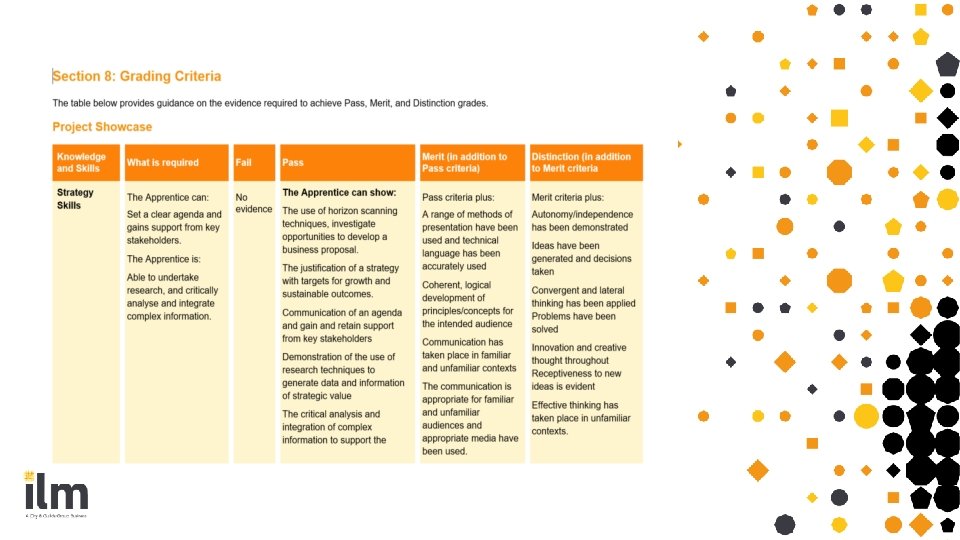
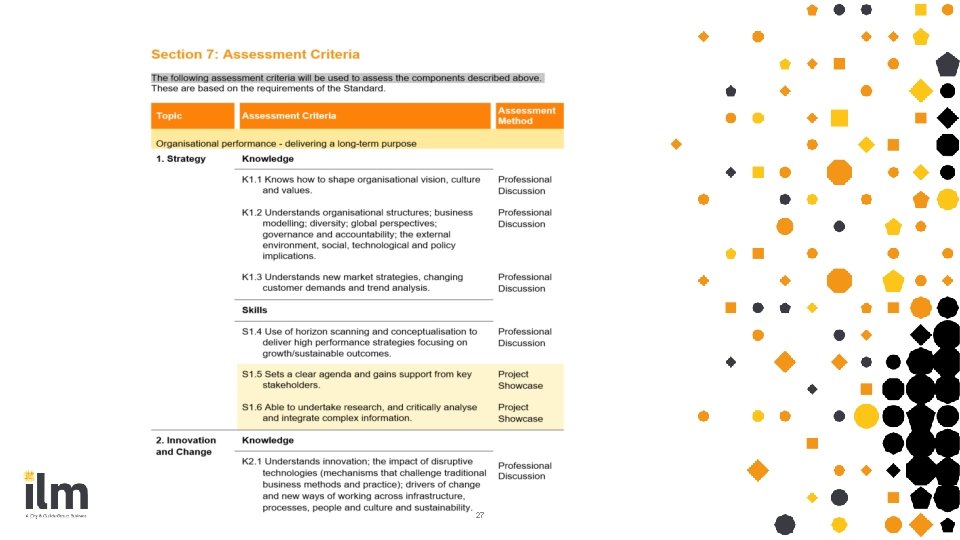
End-point assessment pack – Key Sections Section 5 EPA Timeline – on programme - prep – Gateway – EPA Section 6 Guidance for each assessment method – assessment specifications for each method, as well as instructions for both providers and apprentices on what will be assessed, how long assessments will last and what is required Section 7 Assessment Criteria - details what the apprentice is being assessed against in each method Section 8 Grading Criteria – details how the grade will be determined for each method (Level 7 only) 26
27
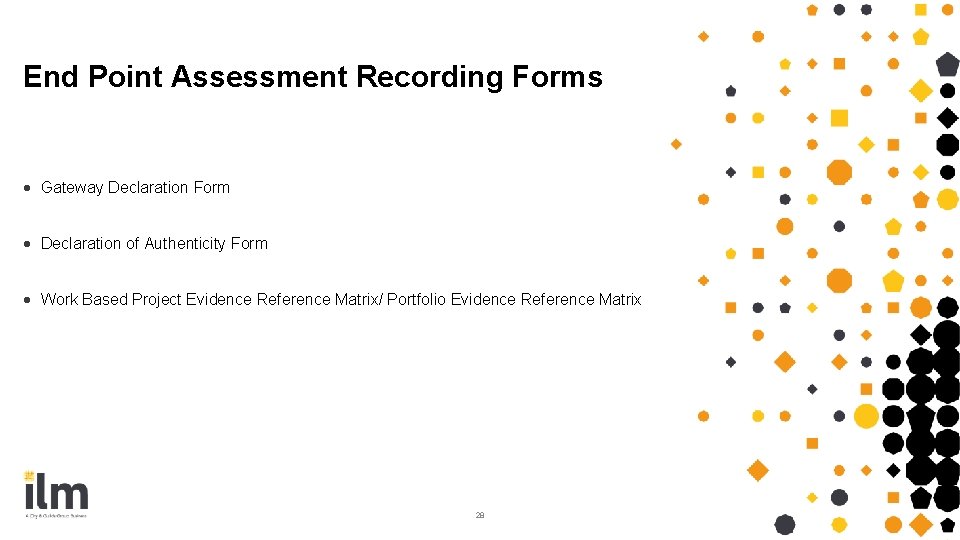
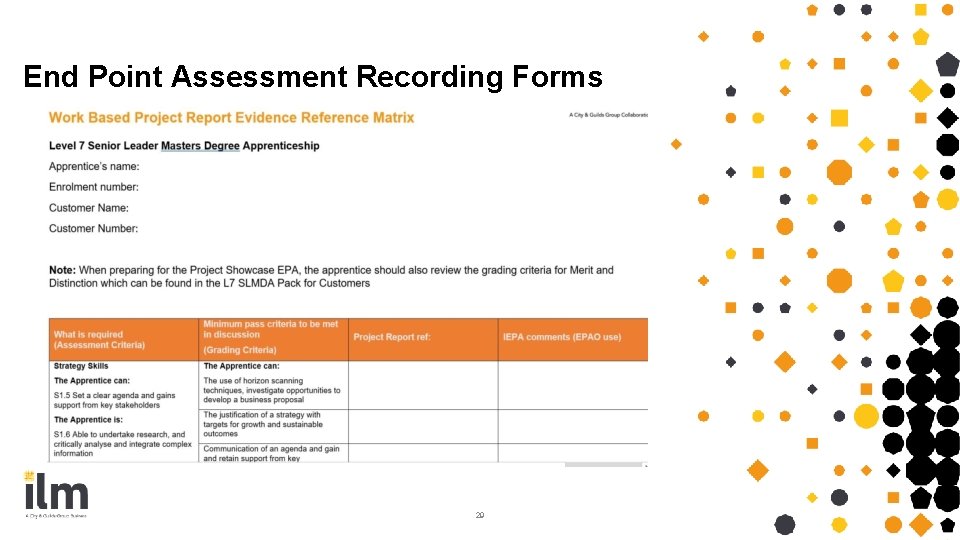
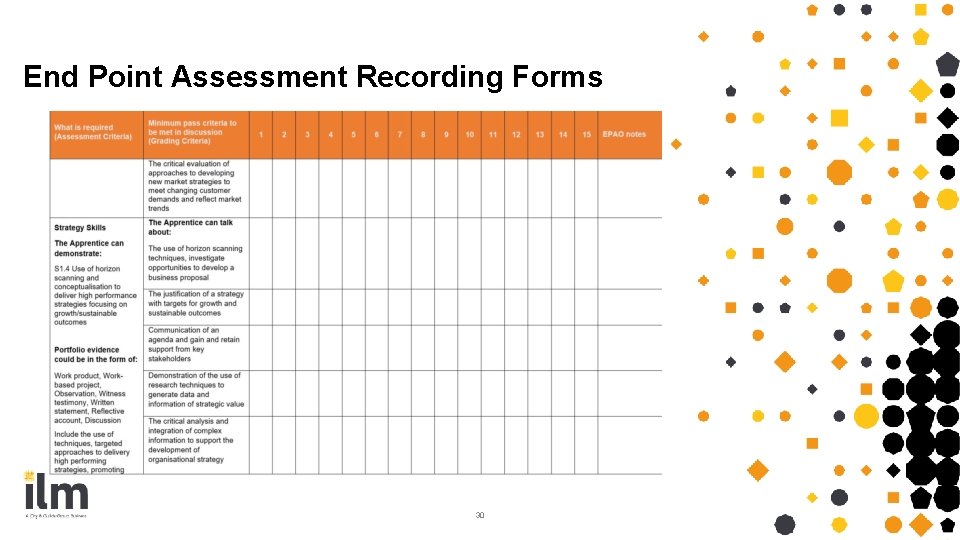
End Point Assessment Recording Forms · Gateway Declaration Form · Declaration of Authenticity Form · Work Based Project Evidence Reference Matrix/ Portfolio Evidence Reference Matrix 28
End Point Assessment Recording Forms 29
End Point Assessment Recording Forms 30
Presentation Heading - Subheading October 2020 Acknowledging Key Challenges – any good practice? • Motivating Apprentices to complete the Portfolio (and EPA!) • Covering all KSB in just 10 -15 pieces of Evidence (SLMDA example) • Finding the ‘hard to reach’ KSBs • Resourcing skilled Apprentice Coaches / Mentors • Employer role 31
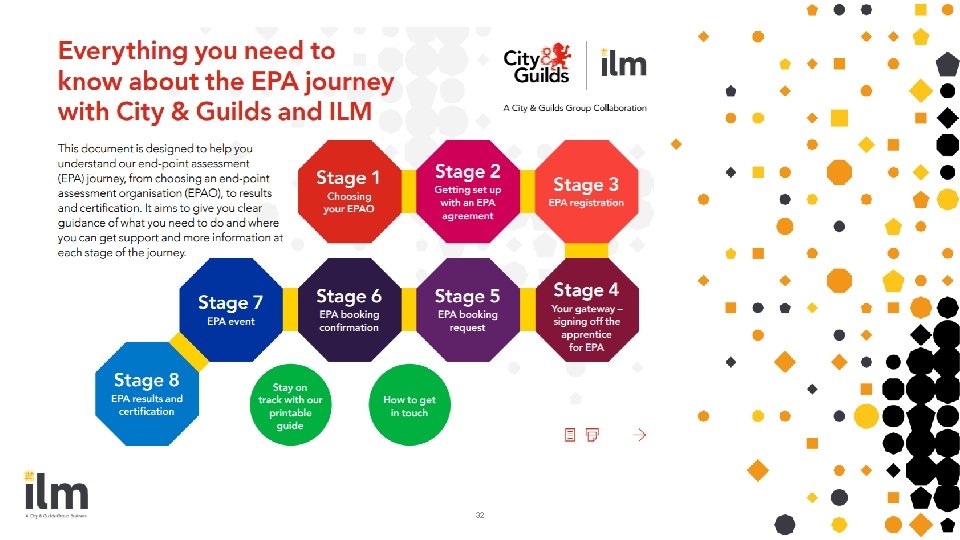
32
How ILM can add value to Apprentice achievement Embedded in EPA: • Innovative Digital credentials • Lifetime Royal Charter post-nominals (no annual fee) • Studying membership of The Institute of Leadership and Management (for duration of course) • Access to TILM resources • Pathway to professional membership On-programme addition (optional): • ILM Professional qualification through dualaccreditation
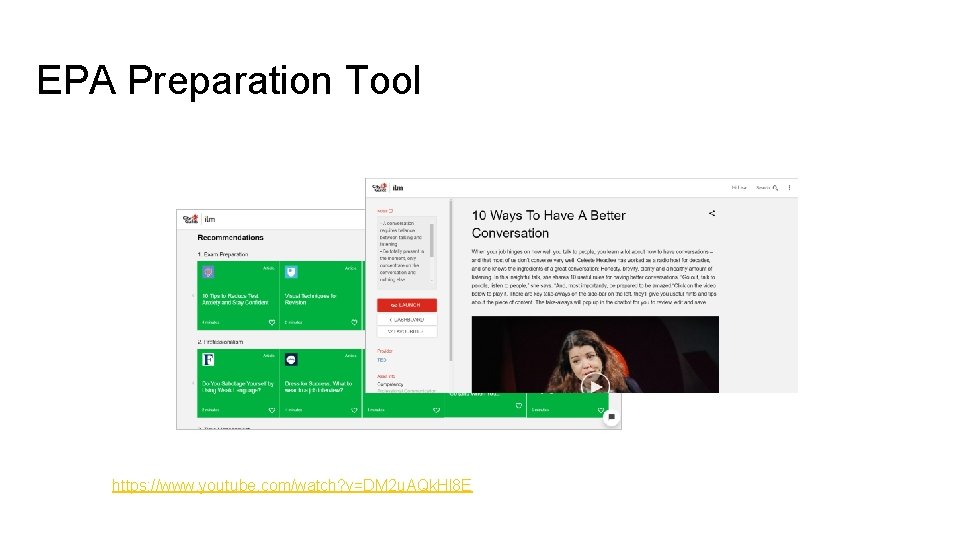
EPA Preparation Tool https: //www. youtube. com/watch? v=DM 2 u. AQk. Hl 8 E www. i-l-m. com
Questions answers 35
Presentation Heading - Subheading October 2020 Key documents and contacts Key Documents EPA Pack, Recording Forms Walled Garden Booking Guide EPA Portal Guide 8 Steps – EPA Journey Key Contacts EPA Support Team - epasupport@cityandguilds. com Jill Hansen, Specialist Technical Quality Manager for HEI – jill. hansen@i-l-m. com Karen Egan Technical Advisor for Leadership & Management – karen. egan@cityandguilds. com Rebecca Hollamby, EPA Partnership Manager - rebecca. hollamby@cityandguilds. com Joseph Ballantine, Industry Manager Leadership and Management - Joseph. Ballantine@i-l-m. com 36
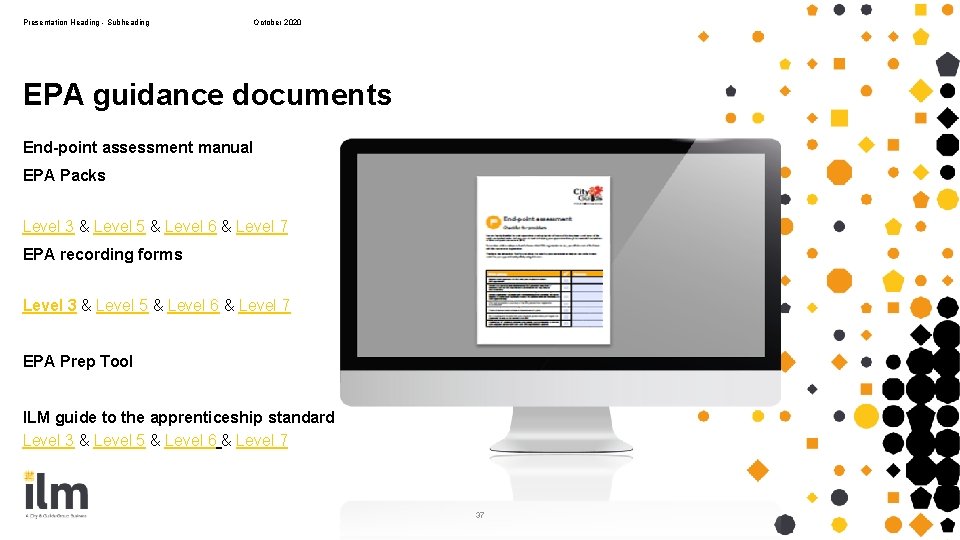
Presentation Heading - Subheading October 2020 EPA guidance documents End-point assessment manual EPA Packs Level 3 & Level 5 & Level 6 & Level 7 EPA recording forms Level 3 & Level 5 & Level 6 & Level 7 EPA Prep Tool ILM guide to the apprenticeship standard Level 3 & Level 5 & Level 6 & Level 7 37
Thank you 38