
EPAng Massively Parallel Evolutionary Placement of Genetic Sequences

- Slides: 11
EPA-ng: Massively Parallel Evolutionary Placement of Genetic Sequences Presented by Grant Greenberg and Vishal Rana
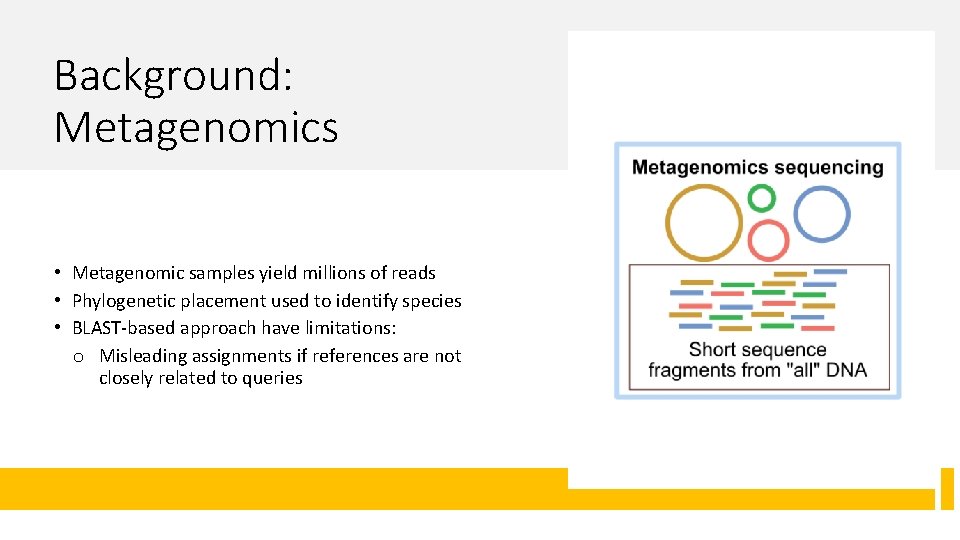
Background: Metagenomics • Metagenomic samples yield millions of reads • Phylogenetic placement used to identify species • BLAST-based approach have limitations: o Misleading assignments if references are not closely related to queries
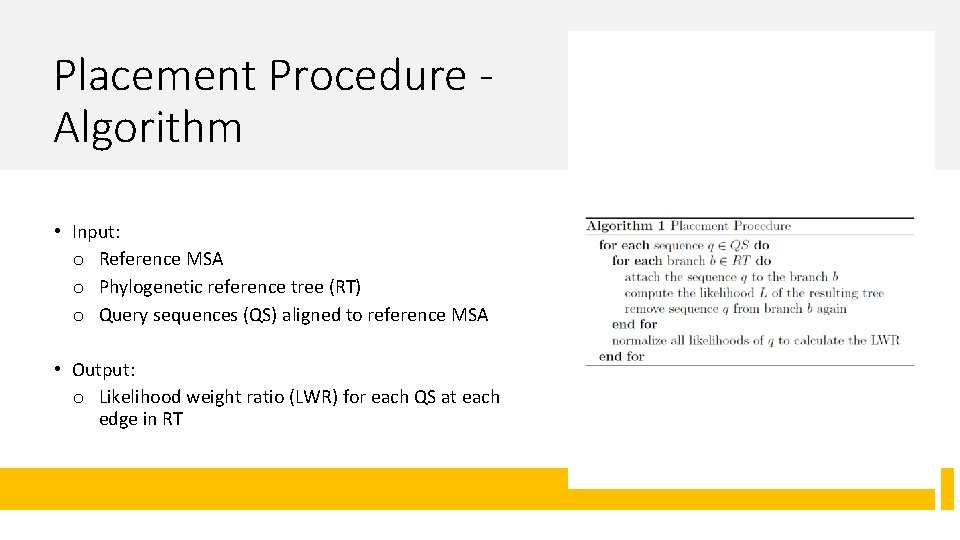
Placement Procedure Algorithm • Input: o Reference MSA o Phylogenetic reference tree (RT) o Query sequences (QS) aligned to reference MSA • Output: o Likelihood weight ratio (LWR) for each QS at each edge in RT
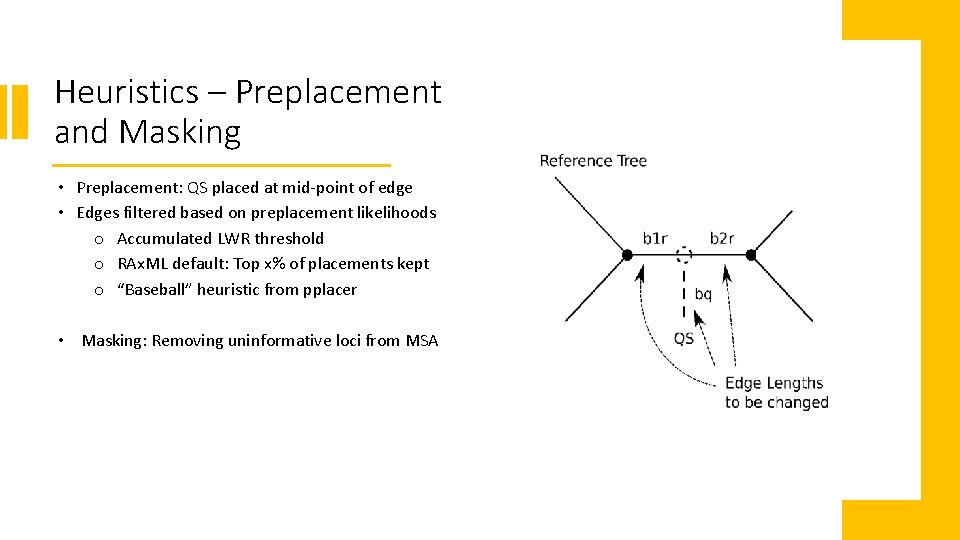
Heuristics – Preplacement and Masking • Preplacement: QS placed at mid-point of edge • Edges filtered based on preplacement likelihoods o Accumulated LWR threshold o RAx. ML default: Top x% of placements kept o “Baseball” heuristic from pplacer • Masking: Removing uninformative loci from MSA
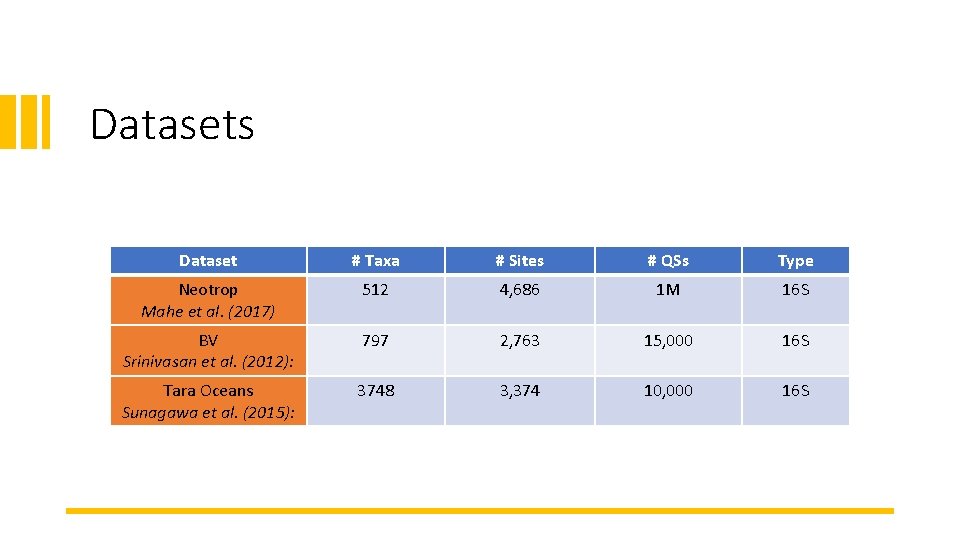
Datasets Dataset # Taxa # Sites # QSs Type Neotrop Mahe et al. (2017) 512 4, 686 1 M 16 S BV Srinivasan et al. (2012): 797 2, 763 15, 000 16 S Tara Oceans Sunagawa et al. (2015): 3748 3, 374 10, 000 16 S
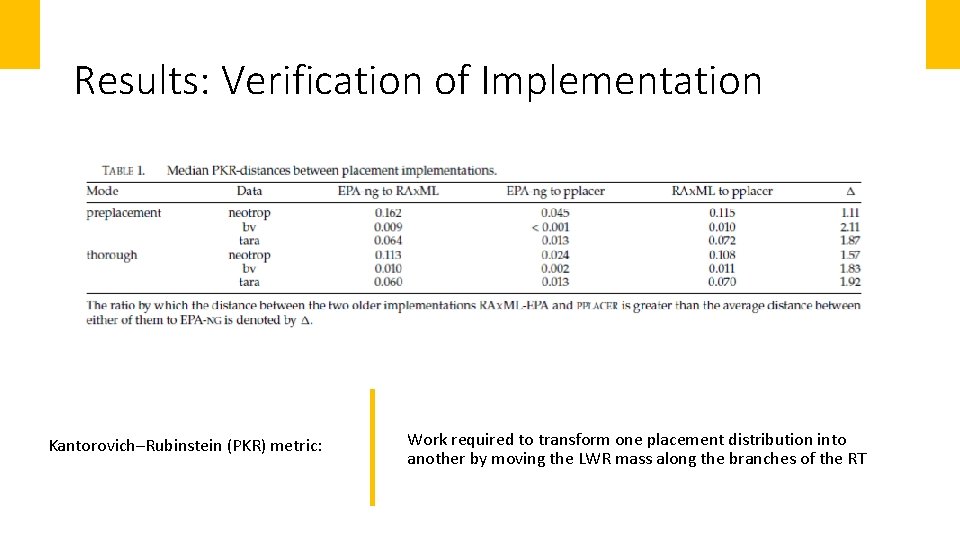
Results: Verification of Implementation Kantorovich–Rubinstein (PKR) metric: Work required to transform one placement distribution into another by moving the LWR mass along the branches of the RT
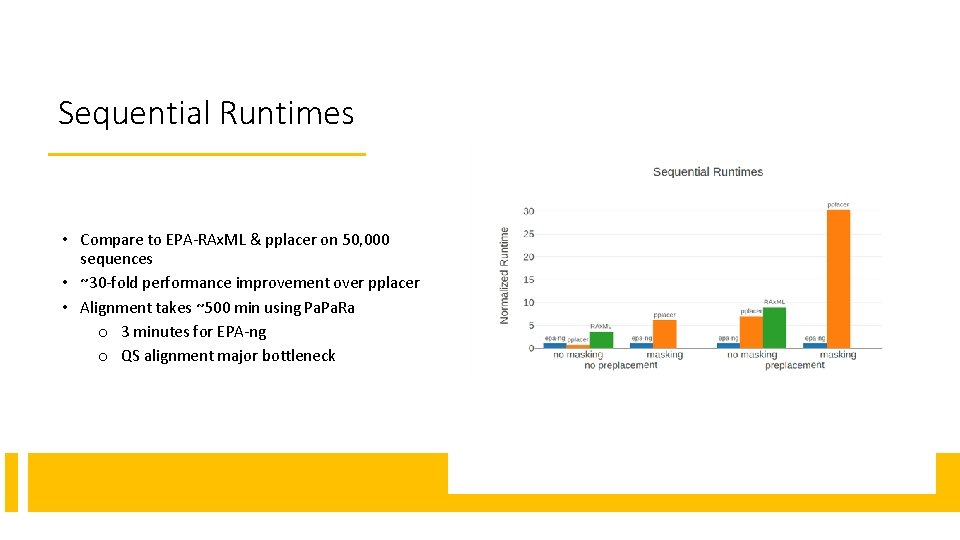
Sequential Runtimes • Compare to EPA-RAx. ML & pplacer on 50, 000 sequences • ~30 -fold performance improvement over pplacer • Alignment takes ~500 min using Pa. Ra o 3 minutes for EPA-ng o QS alignment major bottleneck
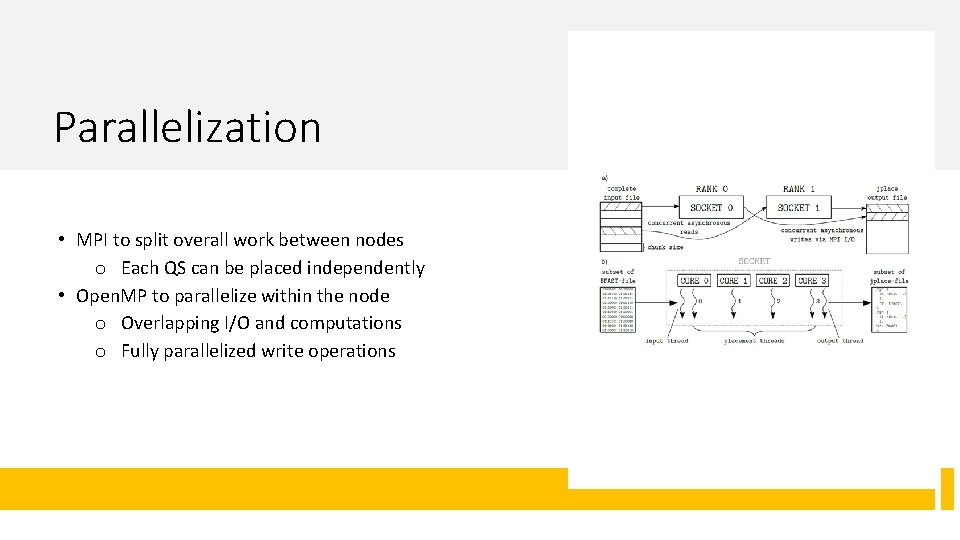
Parallelization • MPI to split overall work between nodes o Each QS can be placed independently • Open. MP to parallelize within the node o Overlapping I/O and computations o Fully parallelized write operations
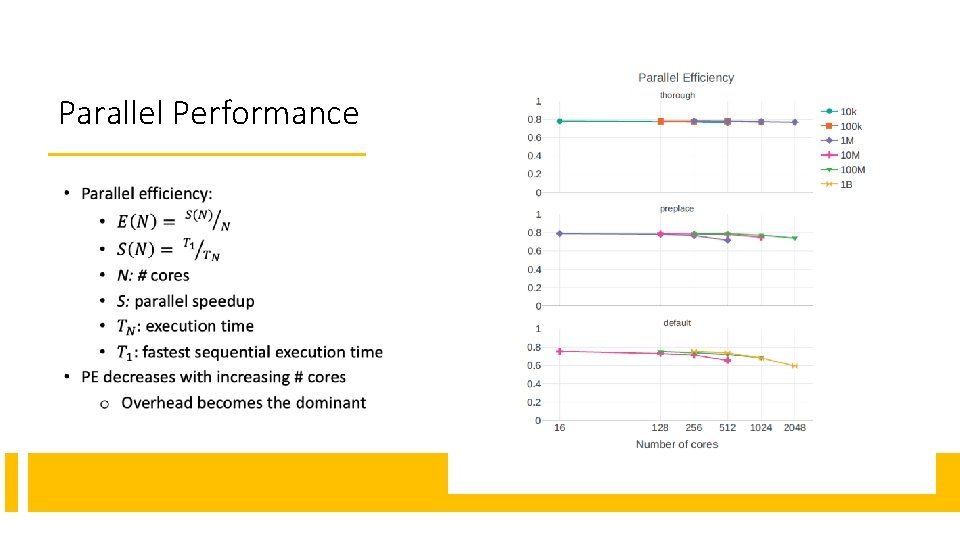
Parallel Performance
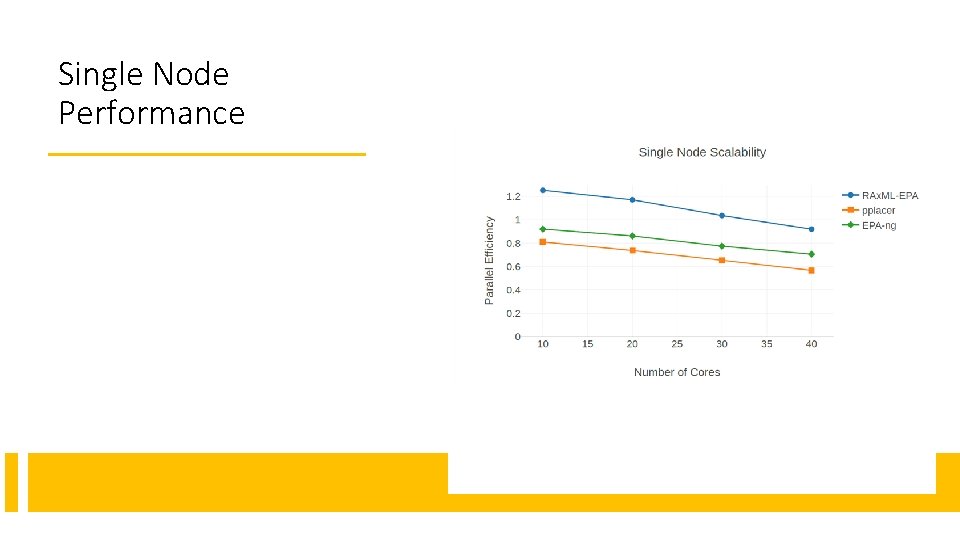
Single Node Performance
Thank you! Questions?