https www yenepoya edu in 8172019 8 49





- Slides: 49
https: //www. yenepoya. edu. in 8/17/2019 8: 49 AM Yenepoya College Priya. Nursing Aranha 1
RESTRAINTS Prepared by : Dr. Priya Reshma Aranha Asst. Professor Dept of Child Health Nursing Yenepoya Nursing College 8/17/2019 8: 49 AM Reviewed by: Prof. Umarani J Mrs. Renita Priya Dsouza Priya Aranha 2
Learning Objectives At the end of the class the student will be able to, • Get introduced to the topic • Describe the purposes of restraints • List down various restraints used for children • Explain nurses responsibility in applying and maintaining restraints in children 8/17/2019 8: 49 AM Priya Aranha 3
Children may need to be restrained for some diagnostic procedures, therapeutic procedures or during the physical examination and sometimes to protect from an injury An appropriate safe and comfortable restraint should be selected. The restraint may be provided manually with help of some device 8/17/2019 8: 49 AM Priya Aranha 4
Purposes To carry out the physical examination To provide the safety to child To protect the child from injury To complete the diagnostic and therapeutic procedures • To maintain the child in prescribed position • To reduce the discomfort of child during some tests and procedures like specimen collection • • 8/17/2019 8: 49 AM Priya Aranha 5
ARTICLES NEEDED 8/17/2019 8: 49 AM Priya Aranha 6
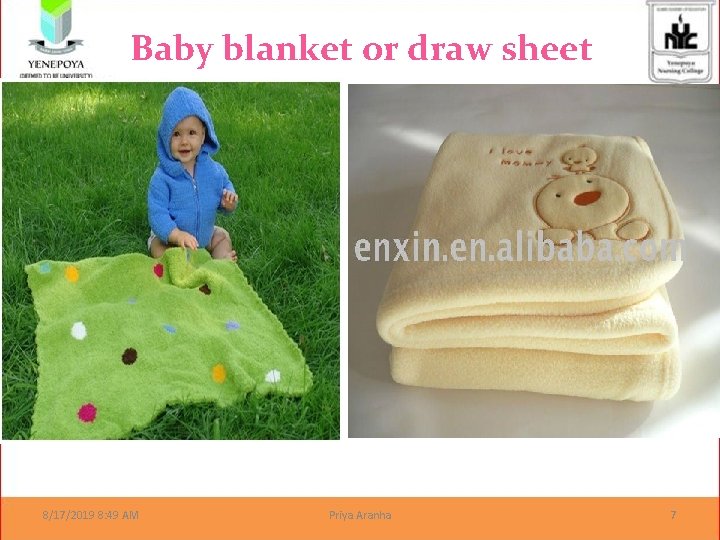
Baby blanket or draw sheet 8/17/2019 8: 49 AM Priya Aranha 7
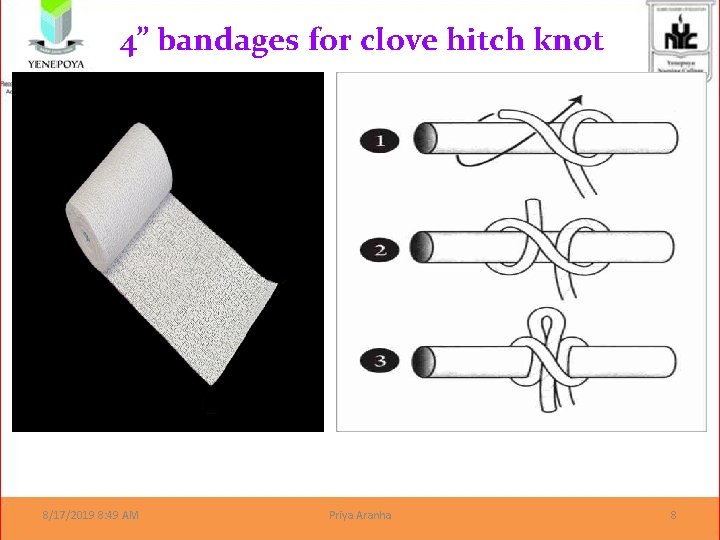
4” bandages for clove hitch knot 8/17/2019 8: 49 AM Priya Aranha 8
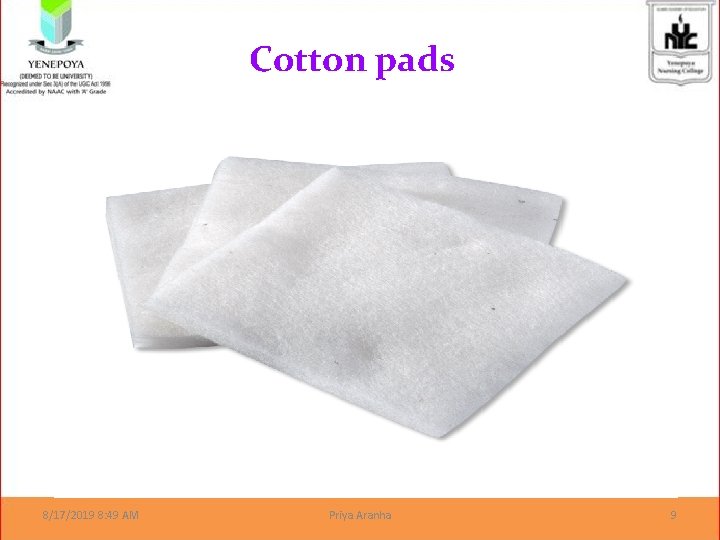
Cotton pads 8/17/2019 8: 49 AM Priya Aranha 9
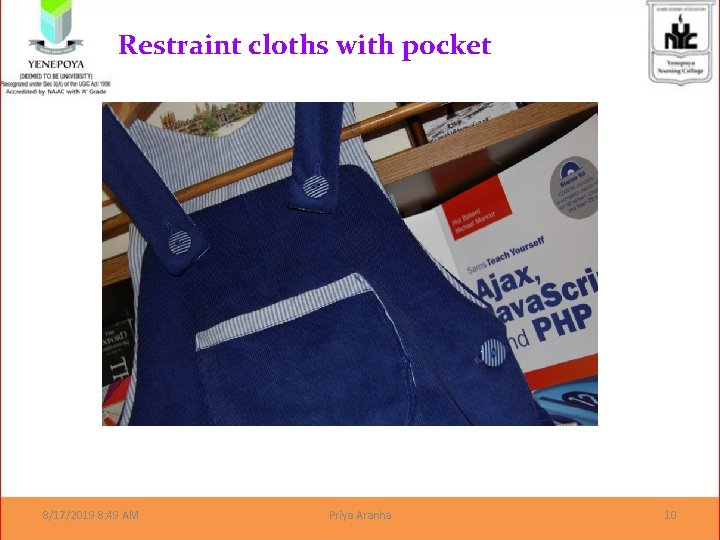
Restraint cloths with pocket 8/17/2019 8: 49 AM Priya Aranha 10
Wooden plasticks (spatula) to keep in for elbow restraint 8/17/2019 8: 49 AM Priya Aranha 11
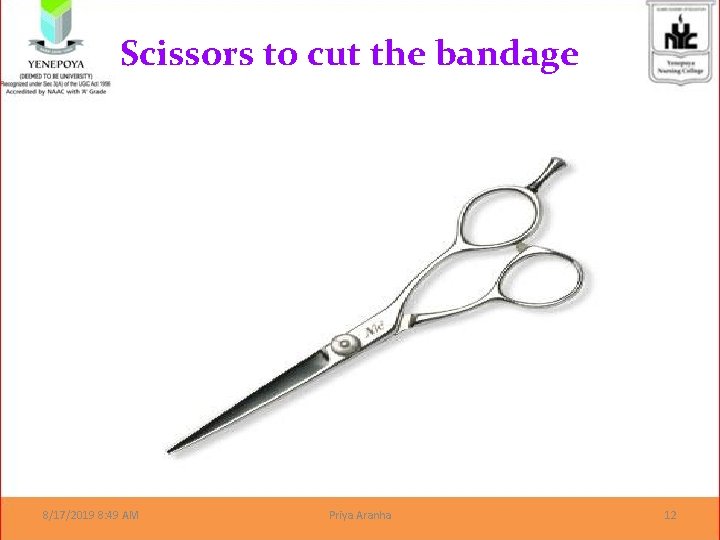
Scissors to cut the bandage 8/17/2019 8: 49 AM Priya Aranha 12
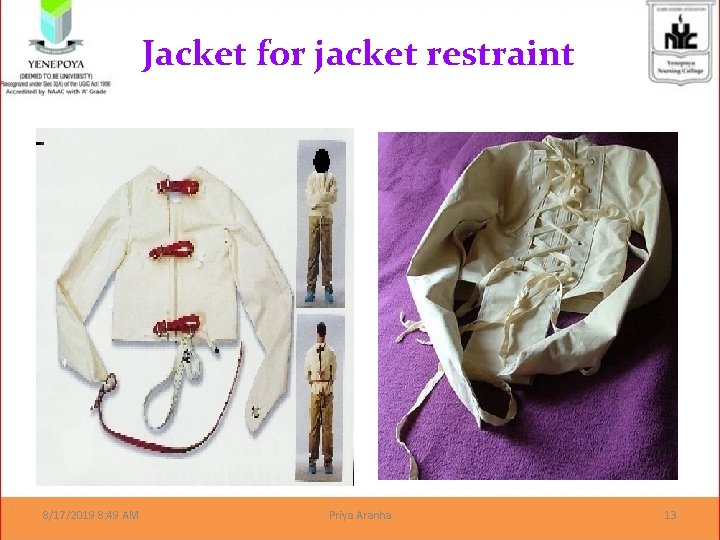
Jacket for jacket restraint 8/17/2019 8: 49 AM Priya Aranha 13
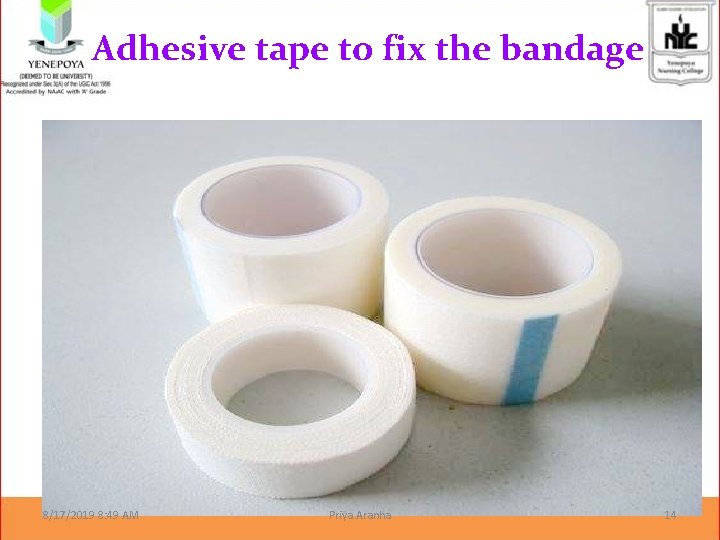
Adhesive tape to fix the bandage 8/17/2019 8: 49 AM Priya Aranha 14
POINTS TO REMEMBER WHILE RESTRAINING 8/17/2019 8: 49 AM Priya Aranha 15
• Always select the safe and appropriate restraint. • Restraint should not be too tight; it should not interfere with the normal circulation. • Use appropriate cotton pads for maintaining the comfort of child. • Restraint should demonstrate to the child, on the child doll to gain the cooperation and reduce the anxiety. • Explain the restraint and it to that the child should be able to understand. 8/17/2019 8: 49 AM Priya Aranha 16
• Always maintain comfort to the child and maintain body alignment. • Open the restraint knot, when the side rails are used. • Observe the restraint every 20 -30 minutes to prevent any complications. 8/17/2019 8: 49 AM Priya Aranha 17
• Change the side of child to prevent pressure sore. • Do not give too much tight knot. It should be easily releasable. • Do not provide purposeless restraining. • Do the recording and reporting properly. 8/17/2019 8: 49 AM Priya Aranha 18
TYPES OF RESTRAINING 8/17/2019 8: 49 AM Priya Aranha 19
Mummy restraint 8/17/2019 8: 49 AM Priya Aranha 20
• Mummy restraint is used for the children to restrict the moment of limbs • It is used to the children for examination, procedure and treatment of head, neck and face is required • For example like scalp vein puncture, ear examination, and eye irrigation, gastric and gastric lavage 8/17/2019 8: 49 AM Priya Aranha 21
PROCEDURE • Take blanket or draw sheet and spread it our the bed or table. • One corner of a small blanket is folded over. • The infant is placed on the blanket with the neck at the edge of the fold. • Keep one hand of baby near the body and wrap the baby's body by holding the corner of the sheet and tuck it under the body in opposite side. 8/17/2019 8: 49 AM Priya Aranha 22
• Now place another hand near the body and wrap the child’s body by holding another corner of sheet and tuck it. • Now take the rounded sheet at bottom near the leg and fold it towards the chest and tuck it upper level of sheet or we can pin it at lower of sheet. • It restrict all extremities. 8/17/2019 8: 49 AM Priya Aranha 23
8/17/2019 8: 49 AM Priya Aranha 24
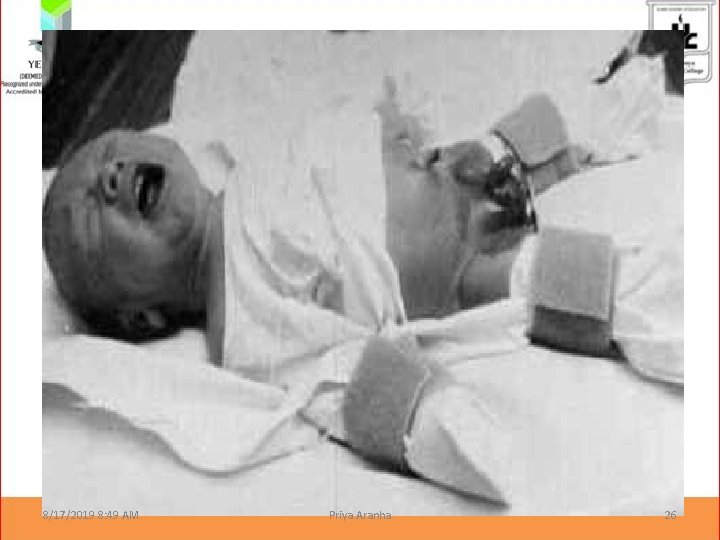
ELBOW AND KNEE RESTRAINT • Elbow and knee restraint is used to control the flexion of elbow and knee • In this a readymade cloth with 6 -10 pockets is used • Place the cotton on sides of elbow and knee and the knee the wooden or plastic strips on pocket cloth. These pockets are vertical 8/17/2019 8: 49 AM Priya Aranha 25
8/17/2019 8: 49 AM Priya Aranha 26
• Place the cloth on elbow and knee and adjust it with central location and tie the both side strips properly • This elbow restraint is used in case of face and head surgeries • Cleft lip and cleft palate, scalp vein infusion, heart injuries and sutures are good examples of using this elbow restraint 8/17/2019 8: 49 AM Priya Aranha 27
ABDOMINAL RESTRAINT This restraint is used to hold the infant in a supine position on the bed Abdominal restraint should not be too light, so that it cannot interfere with respiration and bowel movement For this restraint, use wide size wooden strips Place the cotton pad appropriately to provide the proper comfort 8/17/2019 8: 49 AM Priya Aranha 28
Extremity Restraint (Ankle & Wrist restraint) This involve the extremity (one or more) restraint to complete some procedures It is used to immobilize the extremities These are various method uses for ankle and wrist restraint 8/17/2019 8: 49 AM Priya Aranha 29
CLOVE HITCH KNOT RESTRAINT It used to immobilize the leg or arm The material for clove hitch can be soft cloth, crepe bandage and inch wide gauze bandage First apply the cotton pad over the wrist, ankle to provide comfort 8/17/2019 8: 49 AM Priya Aranha 30
• Prepare a figure of “eight” by the bandage and place it on the wrist or in the ankle and tie the bandage by knot • Knot should not be too tight, or too loose • Child can remove the knot, if it is too loose • To tight knot can interfere on blood circulation • The fingers and toes should be checked for discoloration or any skin rashes 8/17/2019 8: 49 AM Priya Aranha 31
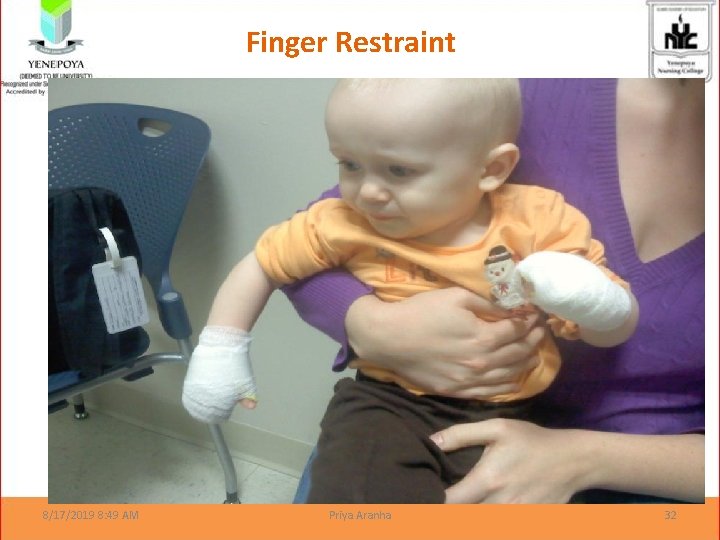
Finger Restraint 8/17/2019 8: 49 AM Priya Aranha 32
It can be completed by making a mitten The mitten course the all fingers of a hand restrict the movement of the fingers The hand can be wrapped by gauze or hand can be put in a bag like pouch and tie it properly at the wrist of child Finger restraint is used in case of facial surgeries, burns, intravenous infusion, any eczema of face and body parts Keep the mitten soft and it should not interfere 8/17/2019 8: 49 AM Priya Aranha circulation 33
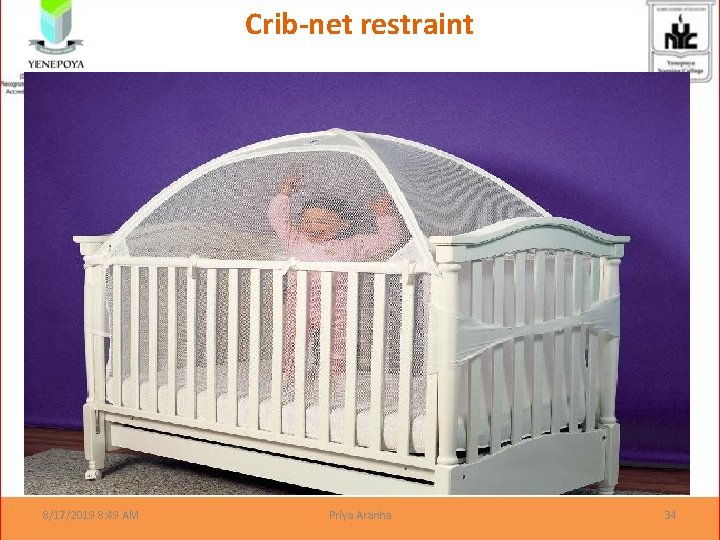
Crib-net restraint 8/17/2019 8: 49 AM Priya Aranha 34
In this a net is used to cover the child cot Net is attached to the cot frame This net restraint is used to prevent the children climbing over the side rails of cot Inside the crib net, the child is totally free to move, no movement is restricted It mainly prevents the child to climb and fall from the side rails cot 8/17/2019 8: 49 AM Priya Aranha 35
Jacket Restraint In this method, a jacket made up of soft cloth and leather is used This jacket has laces at the back and two long strips The laces are tied at back and long strips tie at the side below the rails under the mattress Child can sit and sleep in supine position while wearing jacket It can use on chair also 8/17/2019 8: 49 AM Priya Aranha 36
This restraint is used to avoid the child from climbing over the side rails, climbing out from chair, bed, cot, etc. It prevent the child from fall and injury Some other types eg. Chest restraints are also used for children who are sitting on a chair or wheel chair to maintain their position and to prevent them from fall and injury 8/17/2019 8: 49 AM Priya Aranha 37
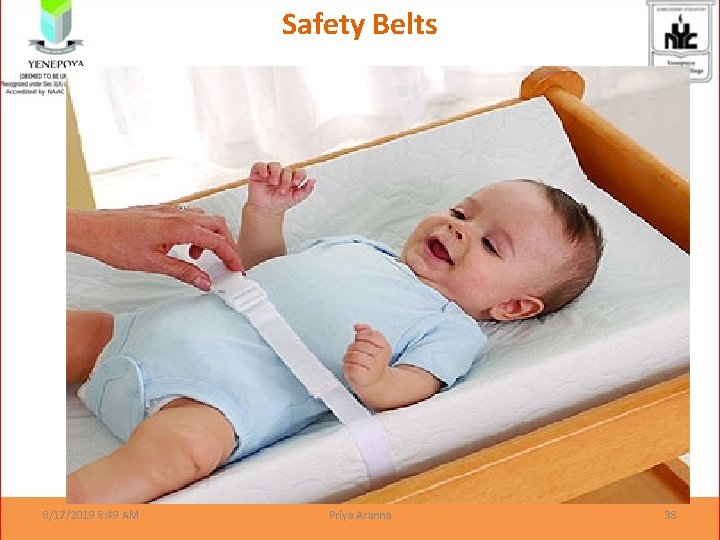
Safety Belts 8/17/2019 8: 49 AM Priya Aranha 38
These are made up of electrically non-conductive material These belts are used on stricter and operation labels to prevent the children from falling The belts go around the childs waist and tied to the frame of bed under the mattress 8/17/2019 8: 49 AM Priya Aranha 39
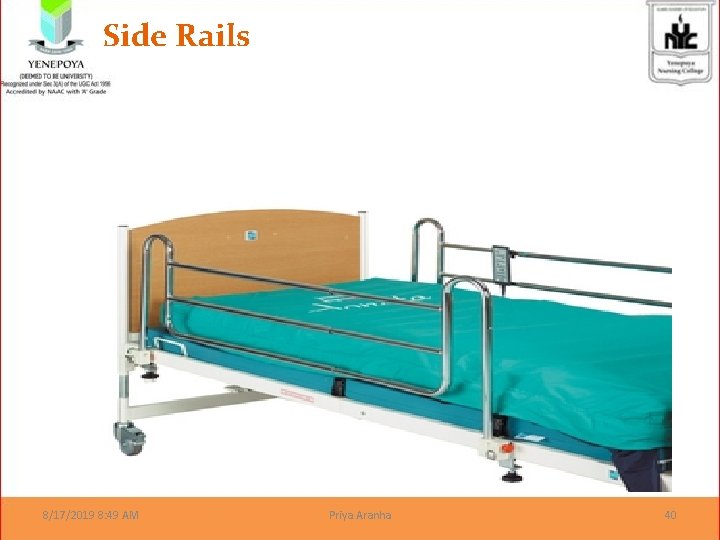
Side Rails 8/17/2019 8: 49 AM Priya Aranha 40
The rails are made up of iron or steel These can be raised when ever need arises and can be decreased as per convenience The main purpose of side rails are to prevent from fall and can be used for other restraints. These are used for children with convulsive disorders also 8/17/2019 8: 49 AM Priya Aranha 41
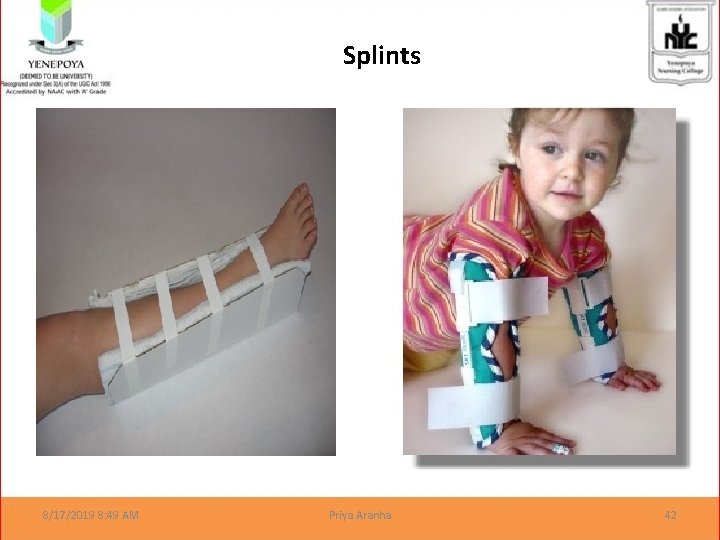
Splints 8/17/2019 8: 49 AM Priya Aranha 42
These are prepared devices which are used to restraint the movements of extremities These are made up of plastic, card board, hard paper, and cotton and gauze pieces These can be applied where ever needed 8/17/2019 8: 49 AM Priya Aranha 43
COMPLICATIONS OF RESTRAINTS 8/17/2019 8: 49 AM Priya Aranha 44
• If restraints are not used properly, it can cause various complications or hazards • It can interfere the child muscular development due to lack movement • If restraint is too tight, it cause obstruction in blood circulation tissue damage, redness, scar formation, discoloration of the skin etc • Dislocation of the shoulder joint may occur if the child struggles during application of arm restraints • Development of pressure sore, if the child is kept restricted for longer period of time and does not have frequent change of position and skin care • Hypostatic pneumonia due to immobility 8/17/2019 8: 49 AM Priya Aranha 45
• Ischemia or nerve damage due to constrictive restrains • Psychic injury to the child, the child feels that, he/she is punished, attention is self body image • Disturbance in psychosocial development • To avoid from these hazards, the care giver or nurse should follow the safety precautions • Use proper amount of cotton pads, and do not use too tight restraint • Always follow continuous observation on child • If any application occurs release the restraint and consult with doctor • Maintain proper recording and reporting 8/17/2019 8: 49 AM Priya Aranha 46
Evaluation • List various restraints used in children • What are the indications for restraints – clove hitch, mummy, elbow, mitten? • What is the care to be taken while applying restraints to children? • What are the complications of restraints? 8/17/2019 8: 49 AM Priya Aranha 47
References 1. Wong’s essentials of paediatrics nursing, 7 th edition, Marilyn J Hockenberry, Wilson, Winkelstein. 2005 2. Wongs essentials of paediatric nursing. First South Asia edition. 2013 3. Marlow text book of paediatric nursing, South asian edition. 2013 4. Marlow text book of paediatric nursing, 6 th edition. 1998. 5. Terry Kyle. Essentials of paediatric nursing. Wolter Kluwer. South Asian edition. 2009 6. Parul Datta, Textbook of Paediatric Nursing 8/17/2019 8: 49 AM Priya Aranha 48
8/17/2019 8: 49 AM Priya Aranha 49