Hazardous Materials Managing the Incident CHAPTER 2 Health



- Slides: 49
Hazardous Materials: Managing the Incident CHAPTER 2 Health and Safety
Learning Objectives Overview • Knowledge Objectives • Skills Objectives
Introduction • • • Toxicology Exposures Toxicity Health and Safety Management Program Personal Protective Equipment Site Safety Practices and Procedures
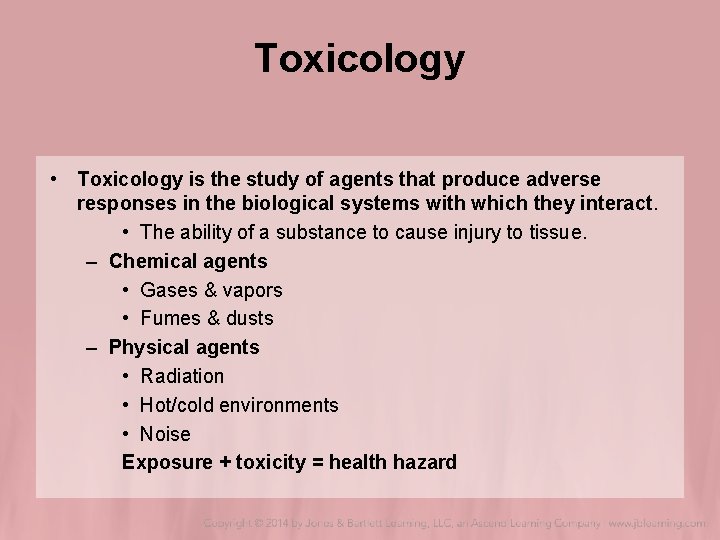
Toxicology • Toxicology is the study of agents that produce adverse responses in the biological systems with which they interact. • The ability of a substance to cause injury to tissue. – Chemical agents • Gases & vapors • Fumes & dusts – Physical agents • Radiation • Hot/cold environments • Noise Exposure + toxicity = health hazard
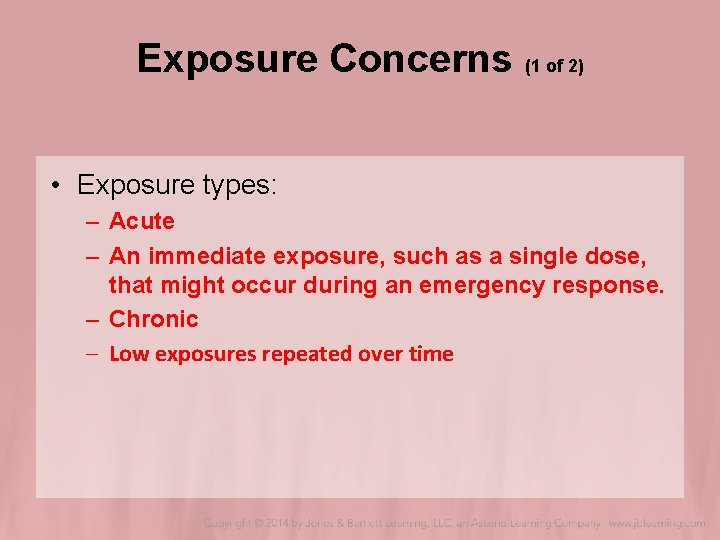
Exposure Concerns (1 of 2) • Exposure types: – Acute – An immediate exposure, such as a single dose, that might occur during an emergency response. – Chronic – Low exposures repeated over time
Toxicity • The ability of the chemical to harm your body once exposure has occurred • The level of toxicity depends on: – The nature of the chemical – The route of entry – Its ability to do harm to the body – The dose • Different people may react differently to the same level of exposure
Toxicity Concerns (1 of 2) • Factors that influence toxicity: – – – Concentration or dose Rate of absorption Rate of detoxification Rate of excretion Miscellaneous factors • Victims unique physical makeup
Toxicity Concerns (2 of 2) • Toxicity is measured in terms of the ability of a material to injure living tissue. – Lethal dose • concentration of an ingested, absorbed, or injected substance – Lethal concentration • concentration of an inhaled substance
Exposure Concerns “All substances are poisons; there is none which is not a poison. ” Paracelsus (1493– 1541) • Common methods of exposure • Inhalation • Ingestion • Skin absorption • Direct contact • Dose • The concentration or amount of a material to which the body is exposed over a specific period of time. • The right dose differentiates between a poison and a remedy • Dose makes the poison • Dose = concentration × time
Effects of Hazardous Materials Exposures • Target organs • Where a toxin exerts its effects • Not necessarily where the toxin is most highly concentrated • Local effect – Effect at the point of contact • Corrosive burn to the skin • Systemic effect – Enters the bloodstream and attacks target organs • Hydrofluoric acid can be absorbed through the skin and ultimately cause cardiac problems
Effects of Hazardous Materials Exposures • Types of harm events: – Thermal • Hot & cold – Mechanical • direct contact with fragments • blast effects or shock wave – Poisonous • Events related to exposure to toxins
Effects of Hazardous Materials Exposures • Types of harm events: – Corrosive • Chemical burns and/or tissue damage from exposure – Acids » Can cause severe tissue burns to the skin and permanent eye damage – Bases » Break down fatty skin tissue and penetrate deeply
Effects of Hazardous Materials Exposures • Types of harm events: – Asphyxiation • Simple • Chemical – Radiation • Waves or particles of energy emitted from radioactive sources – Etiological • Events created by uncontrolled exposures to living microorganisms
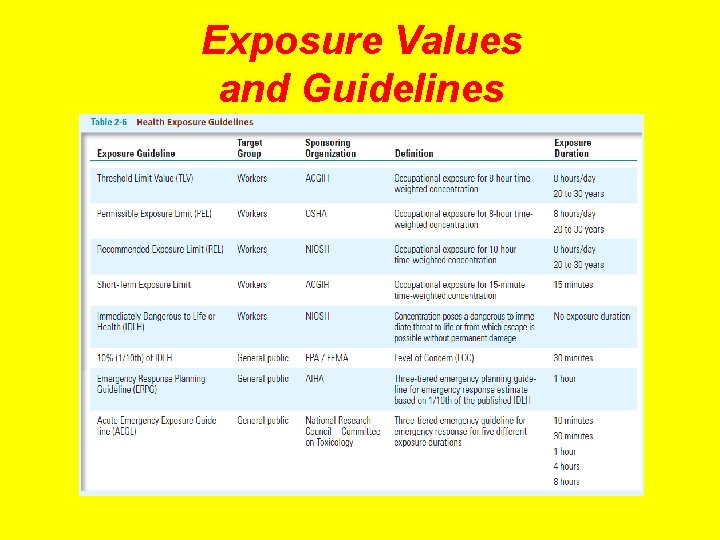
Exposure Values and Guidelines
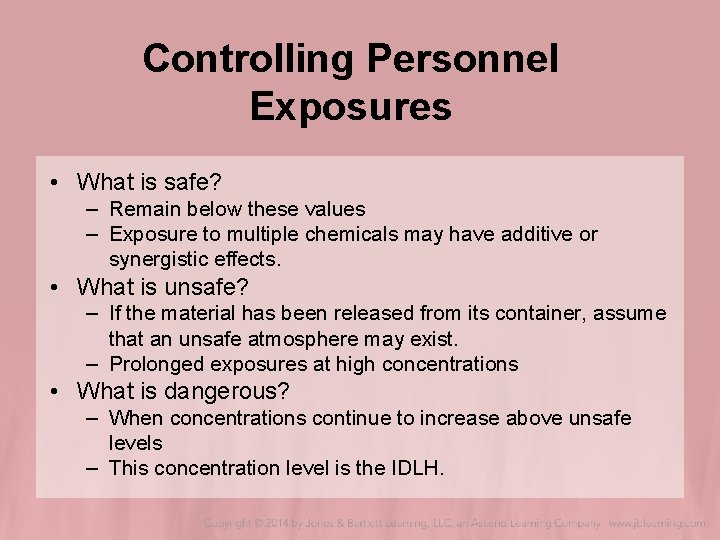
Controlling Personnel Exposures • What is safe? – Remain below these values – Exposure to multiple chemicals may have additive or synergistic effects. • What is unsafe? – If the material has been released from its container, assume that an unsafe atmosphere may exist. – Prolonged exposures at high concentrations • What is dangerous? – When concentrations continue to increase above unsafe levels – This concentration level is the IDLH.
Controlling Personnel Exposures • Outside or open air environment • Inside or limited air environment • Biological indicators – – Dead birds Discolored foliage Sick animals Signs and symptoms exhibited by humans
Carcinogens • Carcinogens are physical or chemical agents that cause abnormal cell growth and spread. • There as many as 2000 substances that various scientific and regulatory groups have labeled as “suspect, ” “probable, ” or “definite” human carcinogens.
Radioactive Materials (1 of 3) • Radiation can be classified into two types: – Nonionizing radiation • Characterized by its lack of energy to remove electrons from atoms – Ionizing radiation • Characterized by its ability to create charged particles, or ions, in anything it strikes
Radioactive Materials (2 of 3) • Ionizing radiation – Alpha particles • Largest of the common radioactive particles – Beta particles • Can penetrate materials much farther than large alpha particles – Gamma rays • Penetrates most materials very well – Considered a whole body hazard as internal organs can be penetrated and damaged – Neutron particles • Considered a whole-body hazard
Radioactive Materials (3 of 3) • Radiation exposure • Subjected to radiation emitted from a radioactive source • Radiation contamination – Radioactive material is in direct contact with person/object • Basic site safety concepts: – Time – Distance – Shielding • Half Life: – Time it takes for the activity of a radioactive material to decrease to one-half of its initial value
Exposure to Environmental Conditions (1 of 6) • During an incident, the physical working environment must constantly be evaluated. – Exposure to either hot or cold weather conditions over a sustained period of time can adversely affect both the physiological and psychological conditions of response personnel.
Exposure to Environmental Conditions (2 of 6) • Factors that influence an individual’s susceptibility to environmental conditions include: – Lack of physical fitness, acclimatization to the elements – Age – Level of hydration – Obesity – Alcohol and drug use (including prescription drugs), infection, allergies, chronic disease
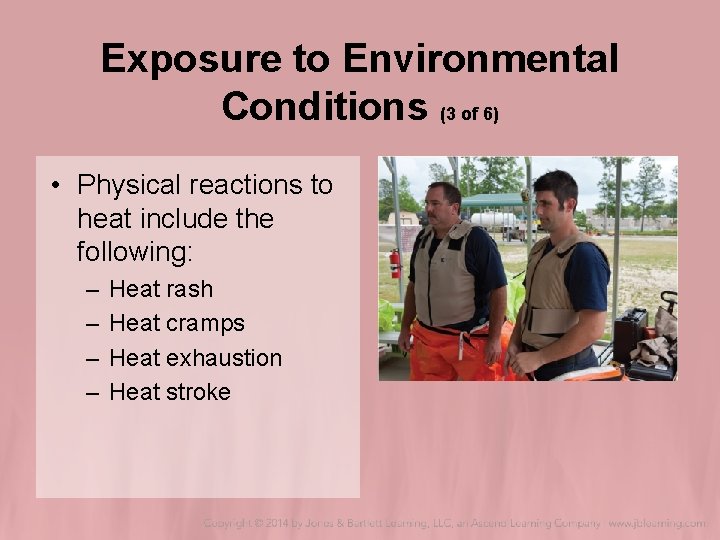
Exposure to Environmental Conditions (3 of 6) • Physical reactions to heat include the following: – – Heat rash Heat cramps Heat exhaustion Heat stroke
PPE Cooling Options • Air-cooled jackets and suits – Small air lines attached to either vests, jackets • Ice-cooled vests – Frozen ice or synthetic coolant packs that are part of a vest or jacket • Liquid-cooled vests and suits • Phase change cooling technology – Contain a unique phase-liquid change material (PCM) that functions as a heat sink
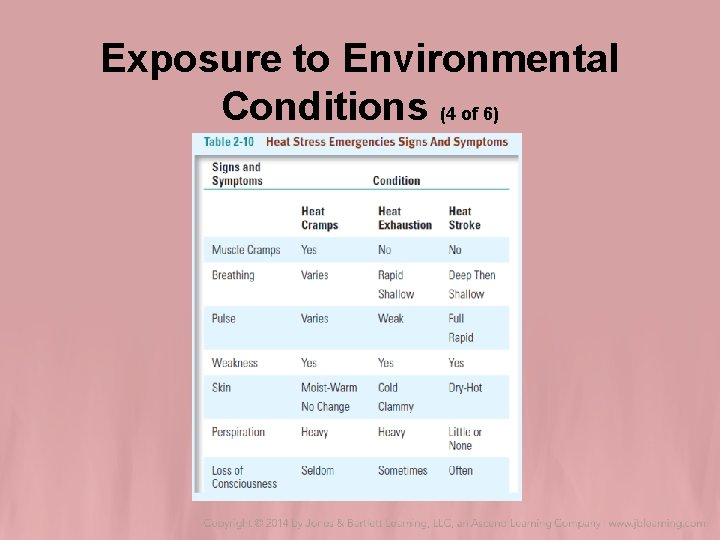
Exposure to Environmental Conditions (4 of 6)
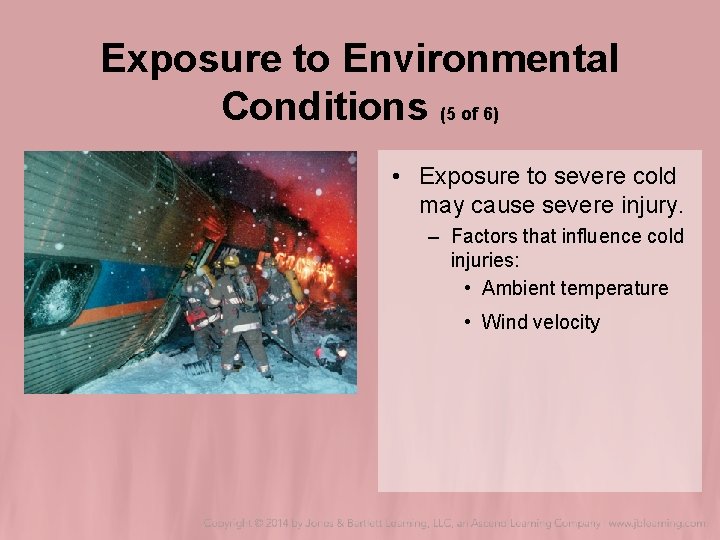
Exposure to Environmental Conditions (5 of 6) • Exposure to severe cold may cause severe injury. – Factors that influence cold injuries: • Ambient temperature • Wind velocity
Exposure to Environmental Conditions (6 of 6) • Hazardous materials incidents can often involve excessive noise levels. • Excessive noise levels can include the following: – Personnel being annoyed, startled, or distracted – Physical damage to ears – Interference with communications
Health and Safety Management Program (1 of 4) • Key areas: – Medical surveillance – Personal protective equipment – Site safety practices and procedures
Health and Safety Management Program (2 of 4) • Medical surveillance – The success of any medical program depends on management support and employee involvement. – NFPA 1582 • Standard on Comprehensive Occupational Medical Program for Fire Departments.
Health and Safety Management Program (3 of 4) • Medical surveillance – – – Pre-employment screening Periodic medical examinations Emergency treatment Nonemergency treatment Recordkeeping and program review Critical incident stress
Health and Safety Management Program (4 of 4) • Critical incident stress – Although not an element of the medical surveillance program, critical incident stress should be recognized as an issue that can potentially impact the health and welfare of responders.
Personal Protective Equipment Program • A comprehensive PPE program should include the following: – – – Hazard assessment Medical monitoring of personnel Equipment selection and use Training program Inspection, maintenance, and storage program
Personal Protective Equipment Program • A written PPE program is required under OSHA 1910. 120(q)(5) – It should include a policy statement with guidelines and procedures – Copies should be made available to all employees • A written respiratory protection program (RPP) is also required per OSHA 1910. 134(c)(1) • PPE training is required under OSHA 1910. 120 – It allows the user to become familiar with the equipment in a non-hazardous environment
Site Safety Practices and Procedures • Safety is not simply an organizational rule or a government regulation. • Safety is an attitude, a behavior, and a culture. • Safety MUST be an inherent part of all operations from the development of SOPs to the selection and purchase of PPE.
Site Safety Practices and Procedures • Safety truths – “What occurs during the initial 10 minutes will dictate what will occur for the next hour, and what occurs during the first hour will dictate what will occur for the initial eight hours of the incident. ”
Site Safety Practices and Procedures • Safety truths – “There is nothing wrong with taking a risk. However, always remember that there are good risks and bad risks—if there is much to be gained, then perhaps much can be risked. Of course, if there is little to be gained, then little should be risked. ”
Site Safety Practices and Procedures • Safety truths – “Final accountability always rests with the incident commander. ”
Site Safety Practices and Procedures • Site safety plan – Developed from SOPs and checklists • Used both to verify and document that safety elements are addressed – Components of a site safety plan should include – site map, control zones, communications – hazard and risk analysis of the identified hazardous materials – site monitoring, safety practices and procedures – decontamination practices – EMS support
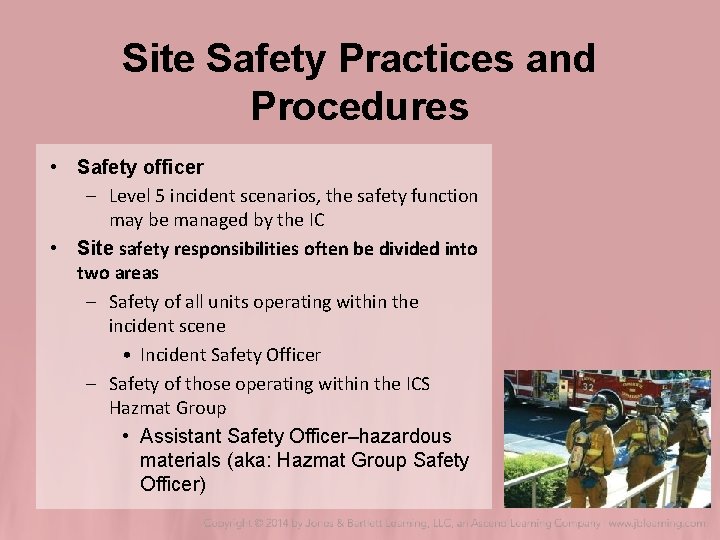
Site Safety Practices and Procedures • Safety officer – Level 5 incident scenarios, the safety function may be managed by the IC • Site safety responsibilities often be divided into two areas – Safety of all units operating within the incident scene • Incident Safety Officer – Safety of those operating within the ICS Hazmat Group • Assistant Safety Officer–hazardous materials (aka: Hazmat Group Safety Officer)
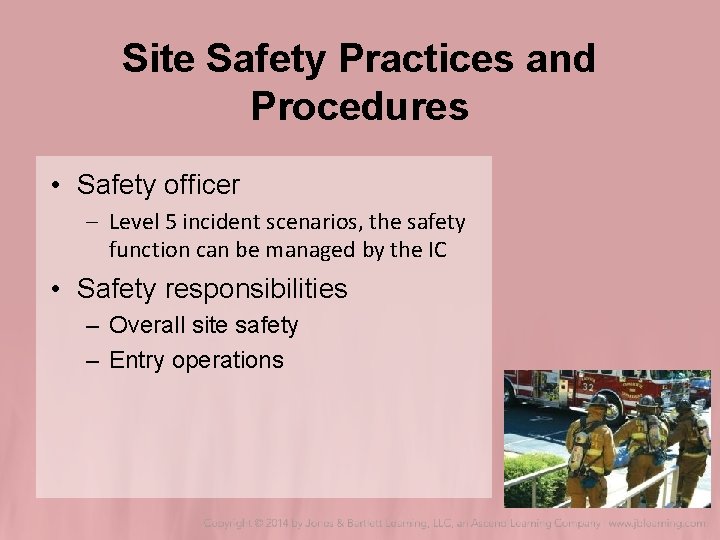
Site Safety Practices and Procedures • Safety officer – Level 5 incident scenarios, the safety function can be managed by the IC • Safety responsibilities – Overall site safety – Entry operations
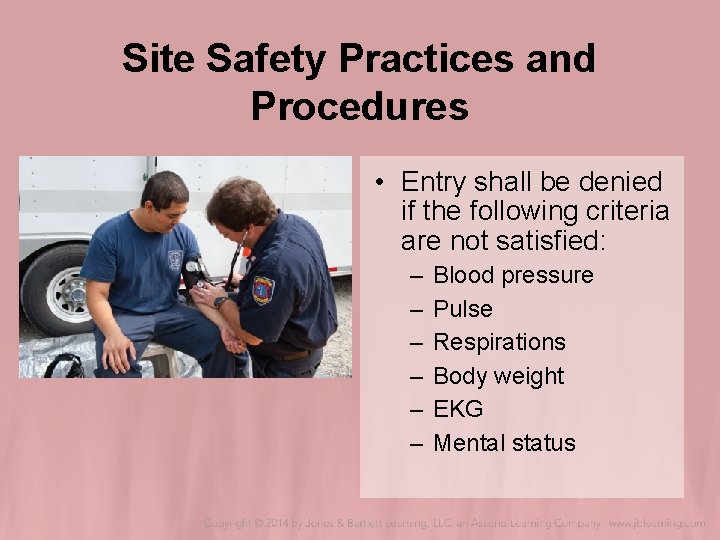
Site Safety Practices and Procedures • Hazmat medical monitoring and support – Ongoing, systematic evaluation of individuals at risk of suffering adverse effects • Obtain baseline vital signs • Identify and preclude from participation individuals who are at increased risk
Site Safety Practices and Procedures • Entry shall be denied if the following criteria are not satisfied: – – – Blood pressure Pulse Respirations Body weight EKG Mental status
Site Safety Practices and Procedures • Other criteria: – Lungs – Nausea and vomiting, diarrhea, fever, or heat exhaustion within the last 72 hours – Use of medication – Heavy alcohol consumption within the previous 24 hours or any alcohol within the past 2 hours
Site Safety Practices and Procedures • Emergency incident rehabilitation – An excellent risk management tool • particularly critical for “campaign” emergencies – IC may establish a rehabilitation group • Coordinates EMS support, treatment, and monitoring – Responsible for providing food and fluid replenishment, mental rest, and relief – NFPA 1584 • Standards on the Rehabilitation Process for Members During Emergency Operations and Training Exercises
Summary (1 of 4) • Personnel protection is the number one priority at any hazmat incident. • “Safety must be more than a policy or procedure. . . it is both an attitude and a responsibility that must be shared by all responders. ” • “Protective clothing is not your first line of defense but is your last line of defense. ”
Summary (2 of 4) • The human body can be subject to seven types of harm events: – – – – Thermal Mechanical Poisonous Corrosive Asphyxiation Radiation Etiological
Summary (3 of 4) • Ability of a substance to cause injury to a biological tissue – Toxicity • Route of exposure that is most common and dangerous is – Inhalation • Having direct contact with a chemical through skin absorption means – exposure
Summary (3 of 4) • Maximum concentration of a material which a person may be exposed for 8 hours each day, 40 hours a week – Threshold-limit value/time-weighted average, or PEL • Type of effect that occurs when a chemical enters the bloodstream and attacks target organs? – systemic
Summary (4 of 4) • The fundamental operating philosophy of every emergency response organization should be, “If we cannot do this safely, then we will not do it at all. ”