Implement a Unit Waste Management Plan 05 2
- Slides: 76
Implement a Unit Waste Management Plan 05 -2 -7501 January 2012
Terminal Learning Objective ü CONDITION: As an element designing a base camp in a deployed environment, and given access to environmental guidance provided in the references. ü STANDARD: Design an integrated waste management plan that addresses the waste streams generated by the base camp.
Safety, Risk and Environmental Concerns ü Safety Requirements: None ü Risk Assessment Level: Low ü Environmental Considerations: Training entirely of an administrative nature, with little or no environmental impact
References ü ü ü TM 38 -410 Storage and Handling of Hazardous Material FM 3 -34. 5 Environmental Considerations TC 3 -34. 489 The Soldier and the Environment FM 5 -19 Composite Risk Management AR 200 -1 Environmental Protection & Enhancement Waste Management Handbook for Deployed Forces (TM 3 -34. 56)
Learning Objective #1 Describe the components of an integrated waste management plan.
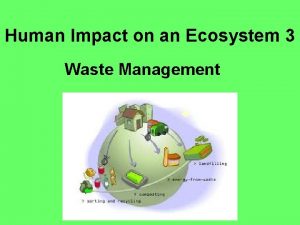
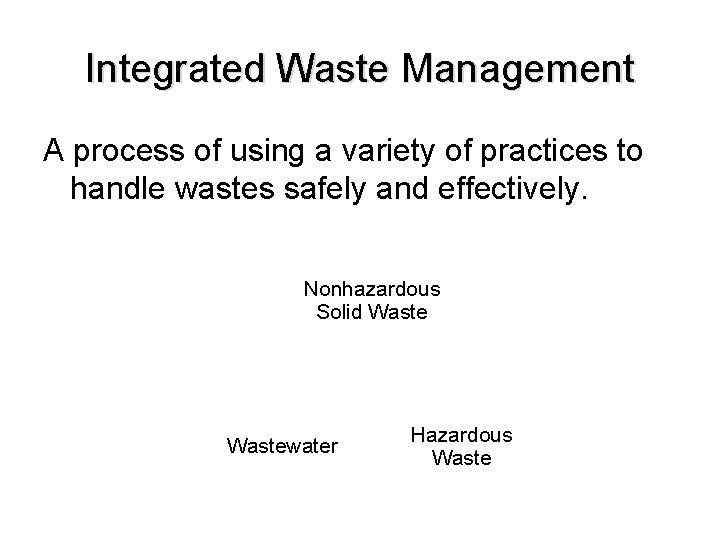
Integrated Waste Management A process of using a variety of practices to handle wastes safely and effectively. Nonhazardous Solid Wastewater Hazardous Waste
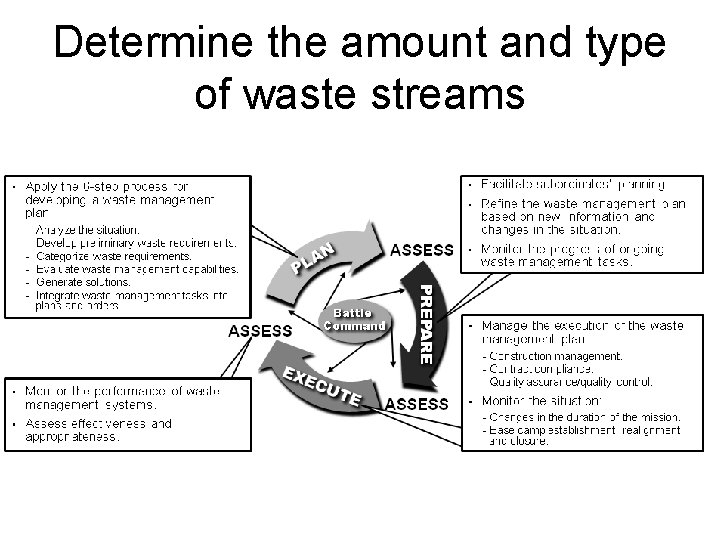
Determine the amount and type of waste streams
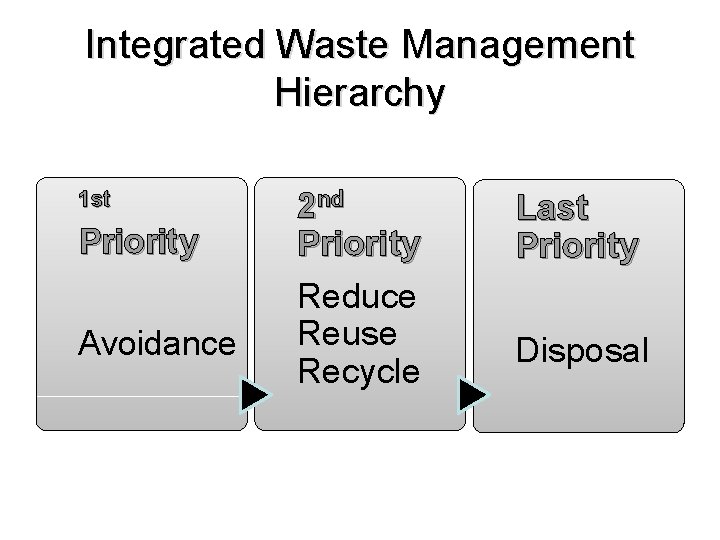
Integrated Waste Management Hierarchy 1 st Priority Avoidance 2 nd Priority Reduce Reuse Recycle Last Priority Disposal
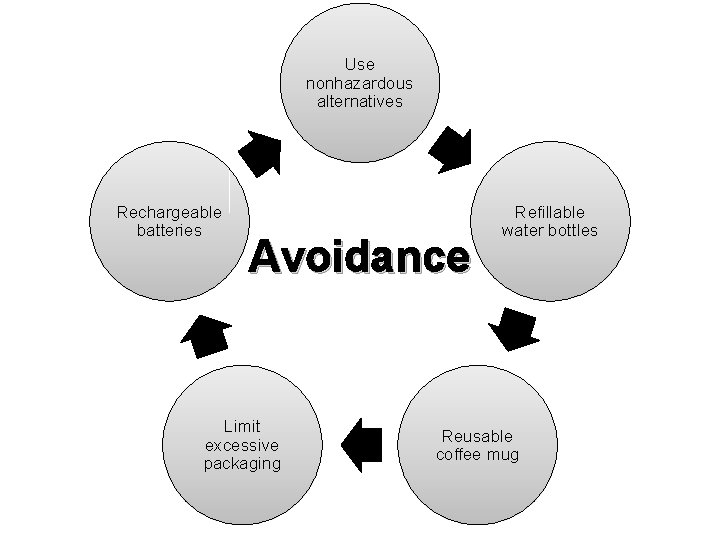
Use nonhazardous alternatives Rechargeable batteries Avoidance Limit excessive packaging Refillable water bottles Reusable coffee mug
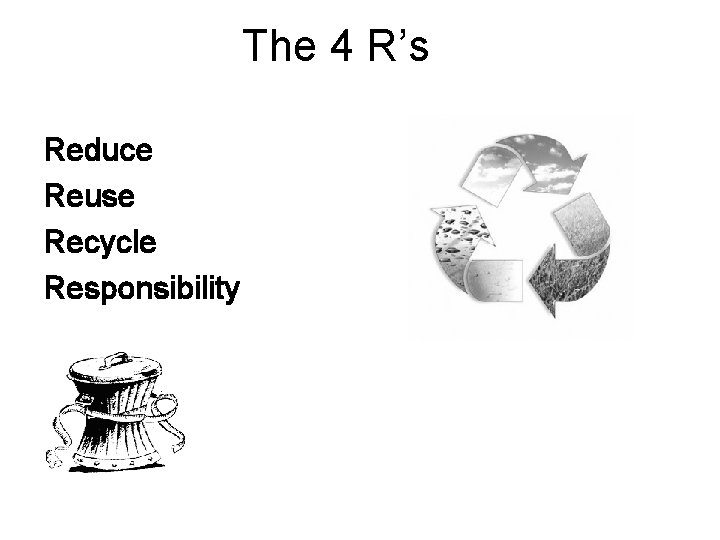
The 4 R’s Reduce Reuse Recycle Responsibility
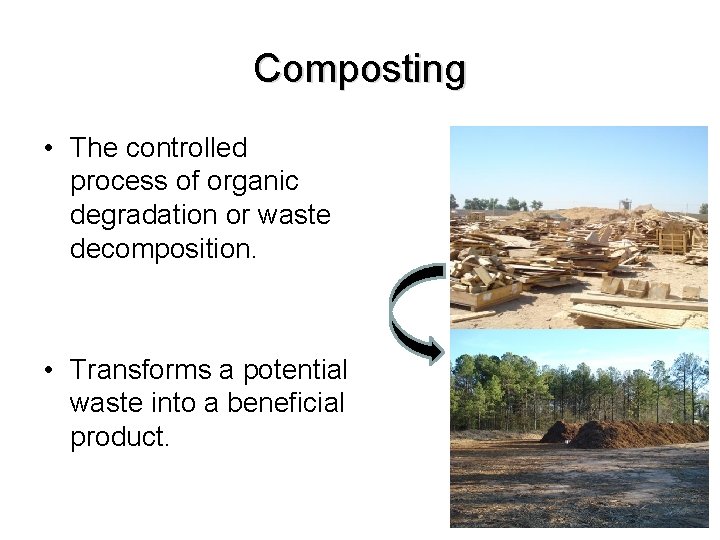
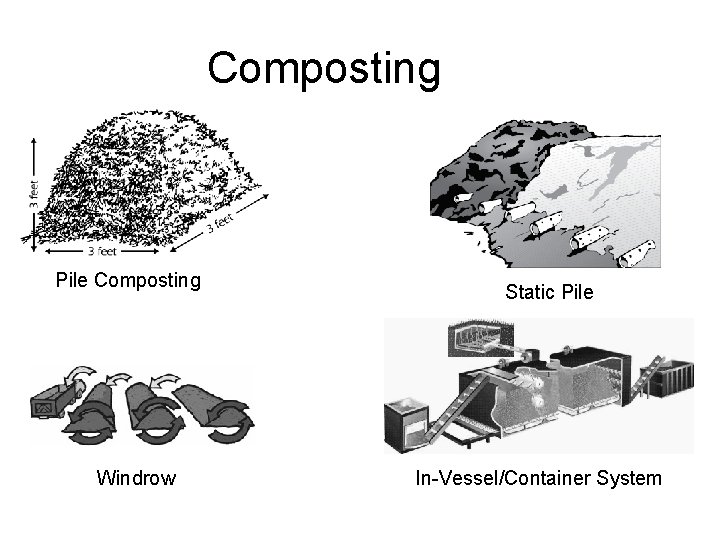
Composting • The controlled process of organic degradation or waste decomposition. • Transforms a potential waste into a beneficial product.
Composting Pile Composting Windrow Static Pile In-Vessel/Container System
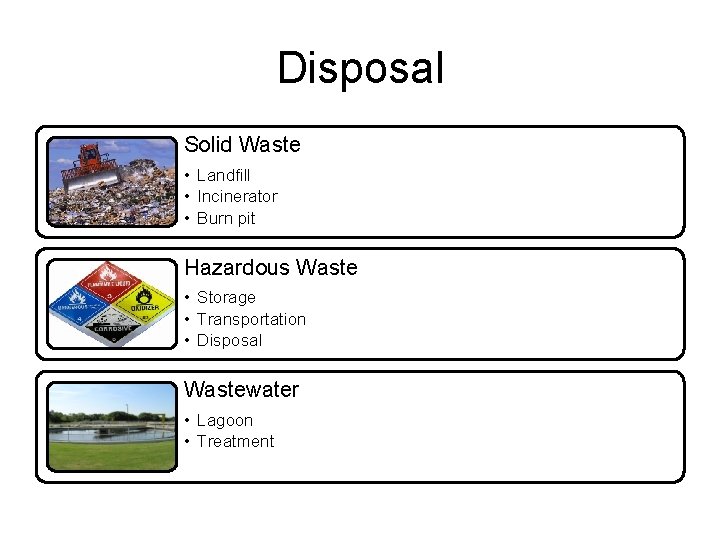
Disposal Solid Waste • Landfill • Incinerator • Burn pit Hazardous Waste • Storage • Transportation • Disposal Wastewater • Lagoon • Treatment
Check on Learning What are three Priorities in the integrated waste management hierarchy?
Learning Objective #2 Describe the methods of disposal for non-hazardous solid waste.
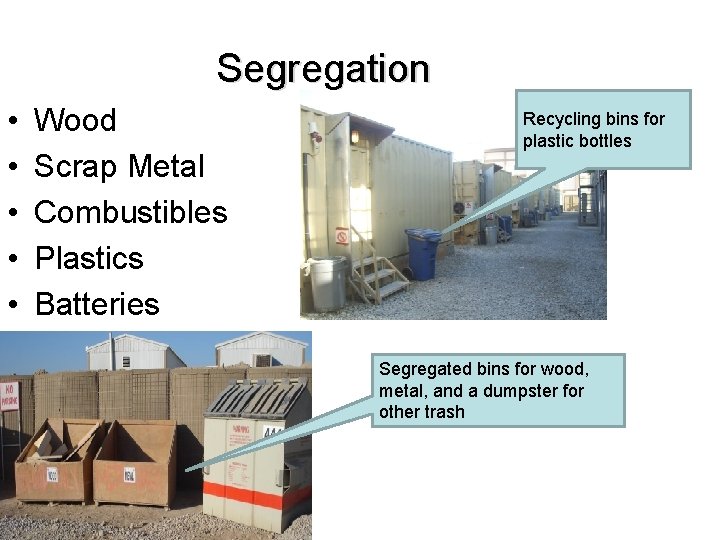
Segregation • • • Wood Scrap Metal Combustibles Plastics Batteries Recycling bins for plastic bottles Segregated bins for wood, metal, and a dumpster for other trash
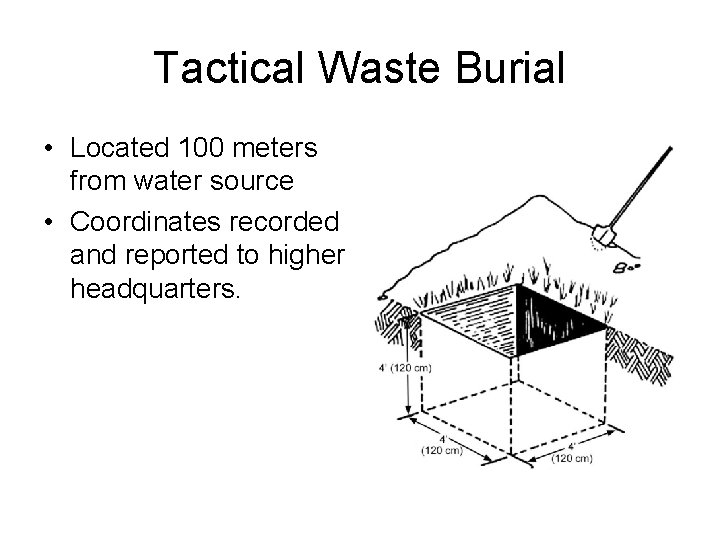
Tactical Waste Burial • Located 100 meters from water source • Coordinates recorded and reported to higher headquarters.
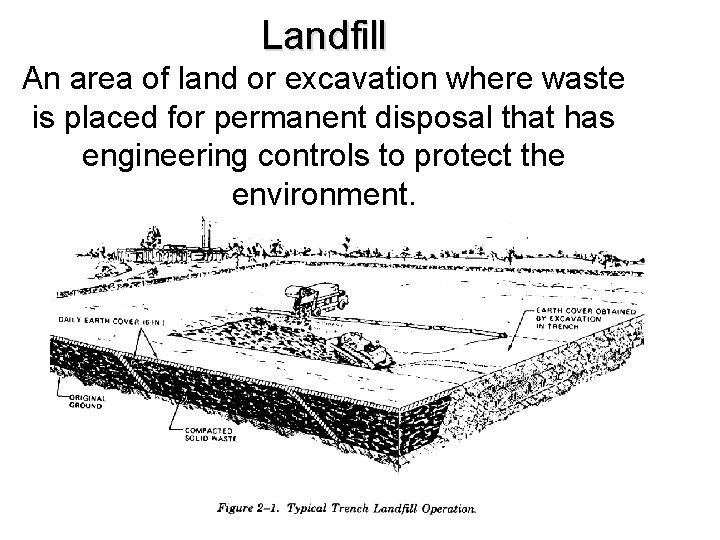
Landfill An area of land or excavation where waste is placed for permanent disposal that has engineering controls to protect the environment.
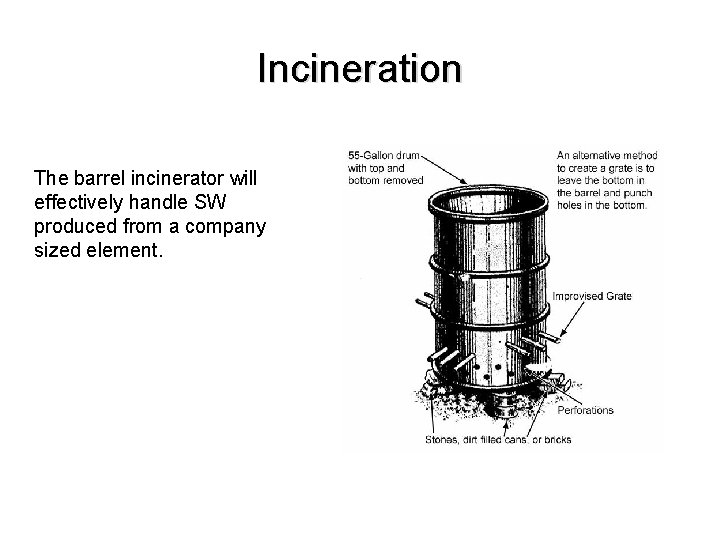
Incineration The barrel incinerator will effectively handle SW produced from a company sized element.
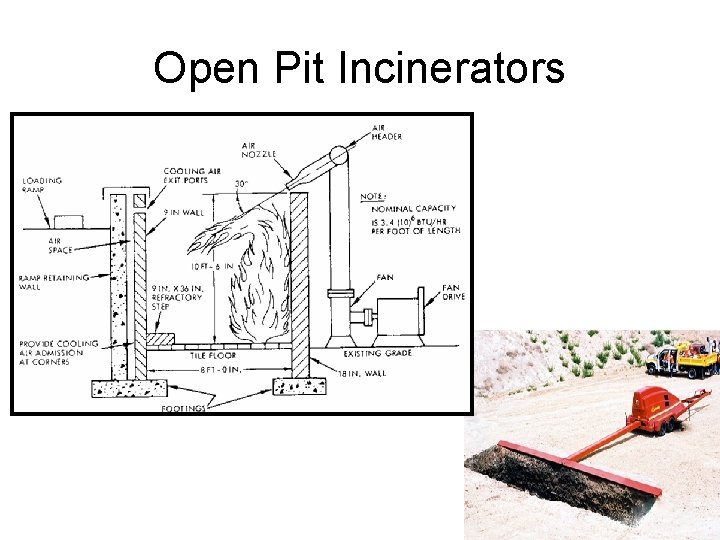
Open Pit Incinerators
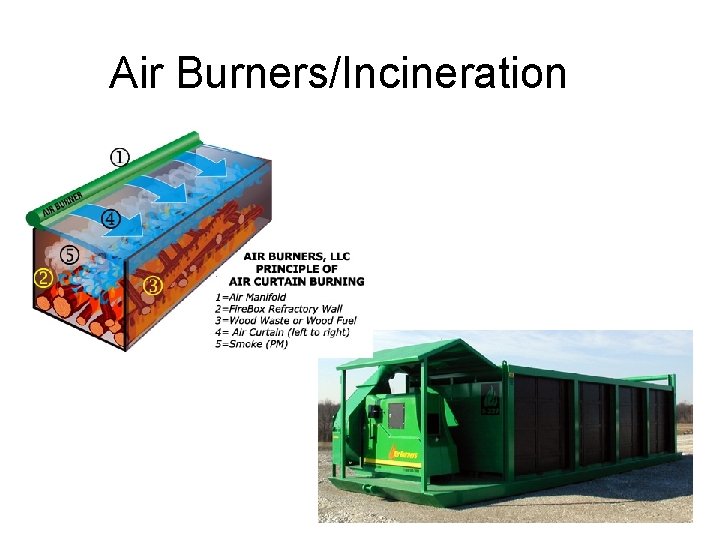
Air Burners/Incineration
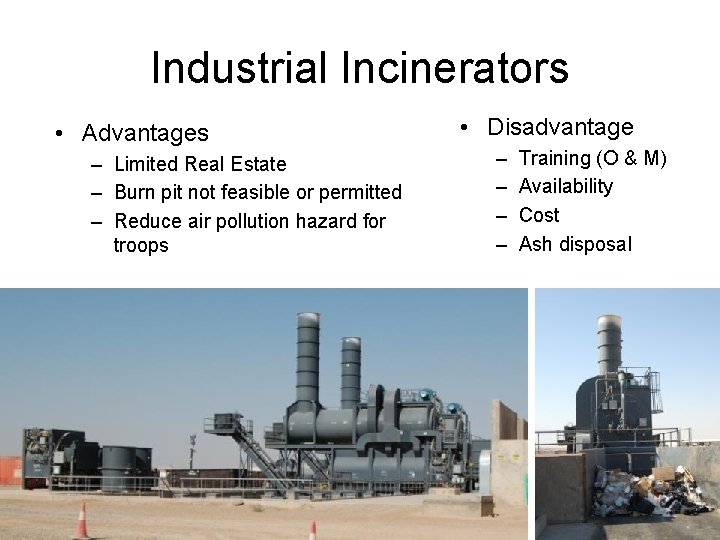
Industrial Incinerators • Advantages – Limited Real Estate – Burn pit not feasible or permitted – Reduce air pollution hazard for troops • Disadvantage – – Training (O & M) Availability Cost Ash disposal
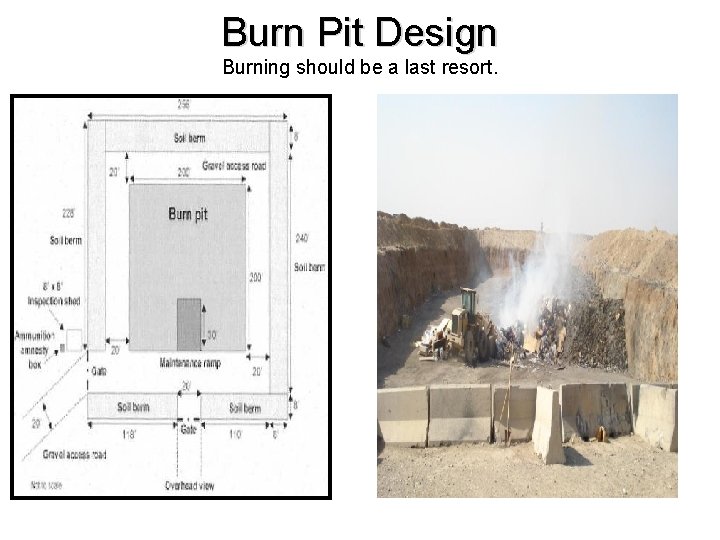
Burn Pit Design Burning should be a last resort.
Check on Learning What is the best management approach for collecting solid waste?
Learning Objective #3 Describe the methods of disposal for hazardous waste.
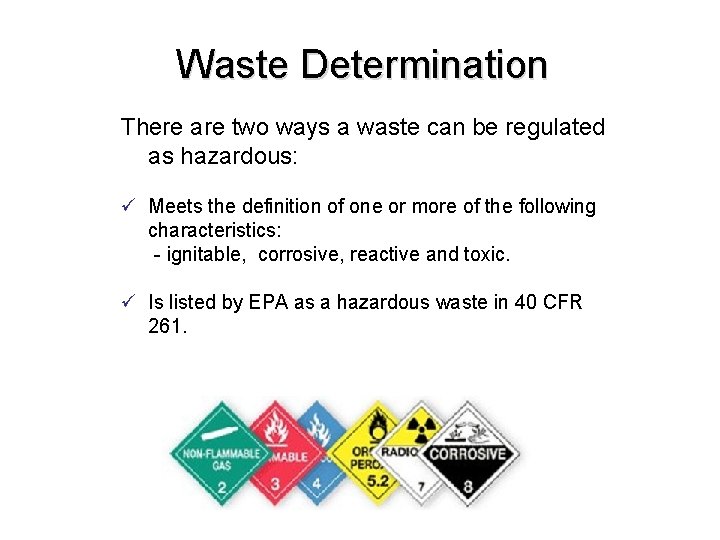
Waste Determination There are two ways a waste can be regulated as hazardous: ü Meets the definition of one or more of the following characteristics: - ignitable, corrosive, reactive and toxic. ü Is listed by EPA as a hazardous waste in 40 CFR 261.
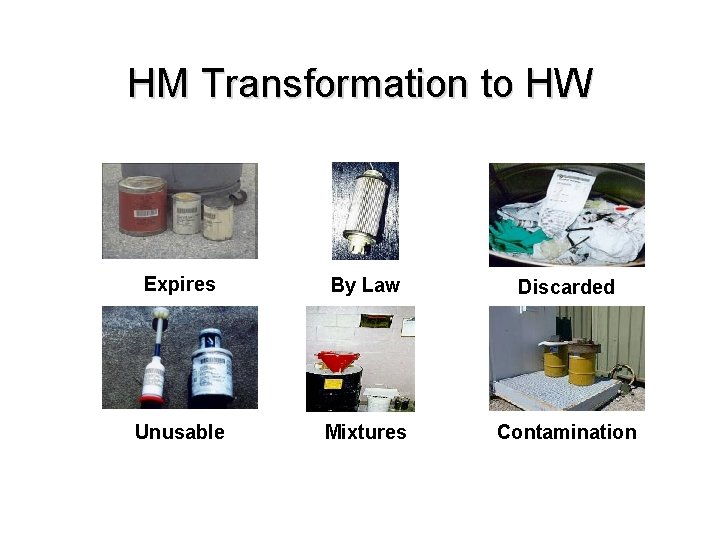
HM Transformation to HW Expires By Law Discarded Unusable Mixtures Contamination
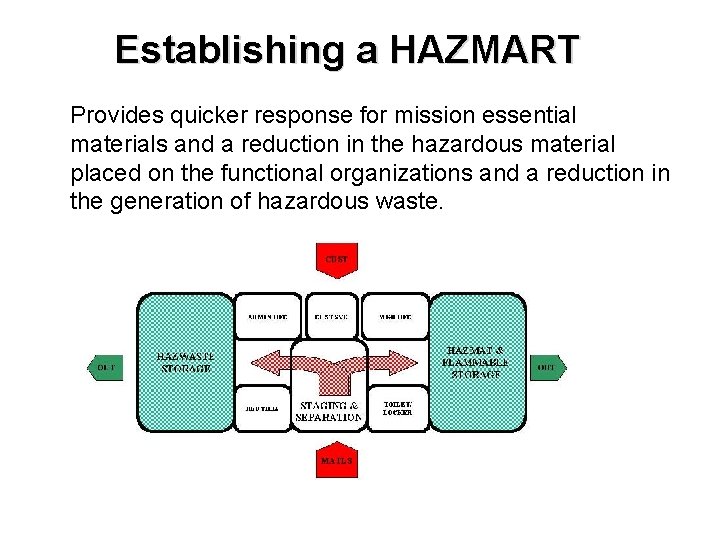
Establishing a HAZMART Provides quicker response for mission essential materials and a reduction in the hazardous material placed on the functional organizations and a reduction in the generation of hazardous waste.
HAZMART General Criteria • • Computer with database and barcode equipment Telephone/radio Intrinsically safe wiring/outlets Shelved storage bays Drum storage bays Spill containment pits Scales Safety area and equipment – – – Fire suppression/extinguishers Eyewash/Safety Shower Grounding equipment Spill Kits Overpack equipment and materials • Crane Chain Lifting device (3000 lbs max)
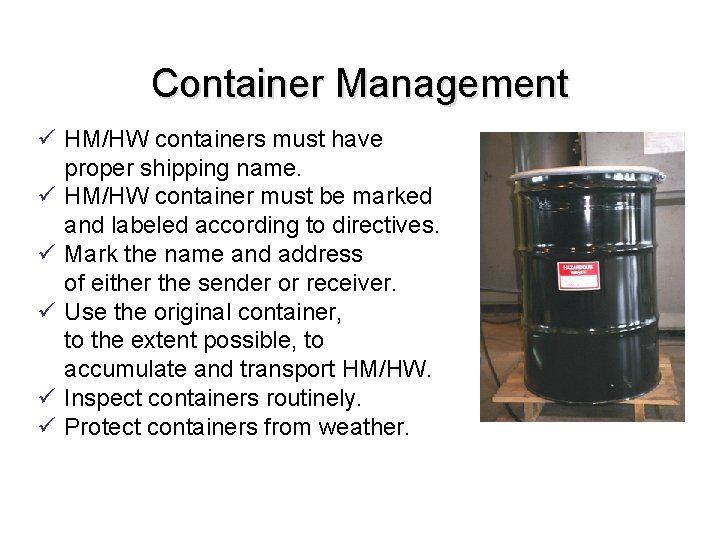
Container Management ü HM/HW containers must have proper shipping name. ü HM/HW container must be marked and labeled according to directives. ü Mark the name and address of either the sender or receiver. ü Use the original container, to the extent possible, to accumulate and transport HM/HW. ü Inspect containers routinely. ü Protect containers from weather.
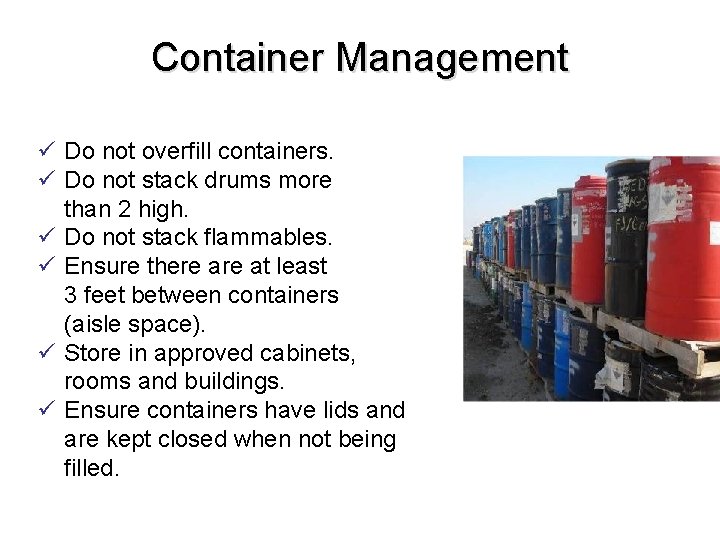
Container Management ü Do not overfill containers. ü Do not stack drums more than 2 high. ü Do not stack flammables. ü Ensure there at least 3 feet between containers (aisle space). ü Store in approved cabinets, rooms and buildings. ü Ensure containers have lids and are kept closed when not being filled.
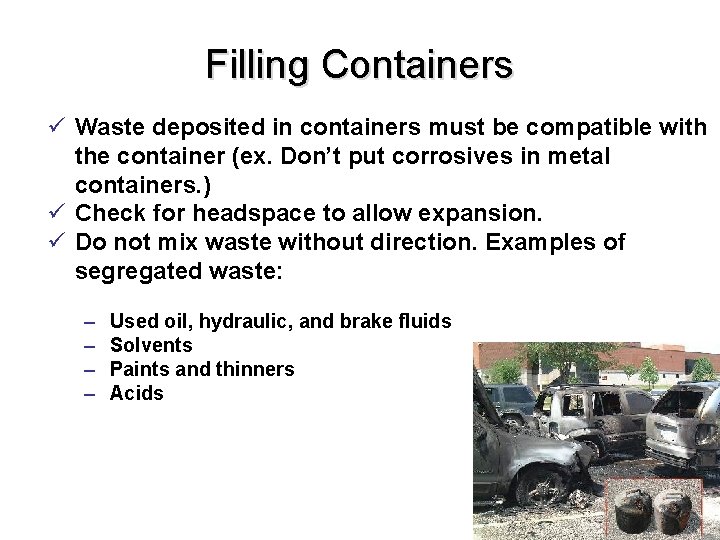
Filling Containers ü Waste deposited in containers must be compatible with the container (ex. Don’t put corrosives in metal containers. ) ü Check for headspace to allow expansion. ü Do not mix waste without direction. Examples of segregated waste: – – Used oil, hydraulic, and brake fluids Solvents Paints and thinners Acids
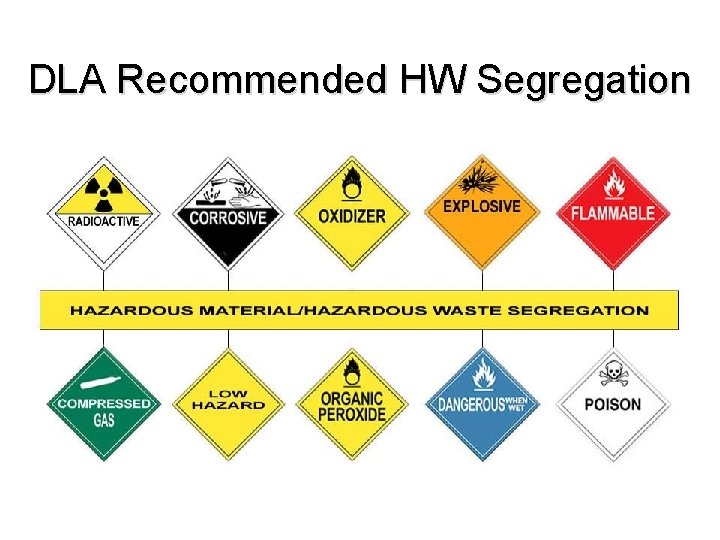
DLA Recommended HW Segregation
General HW Accumulation Requirements ü Countdown starts with the first drop of material in accumulation, check your SOP. ü Practice Good Housekeeping. • Segregation • Secondary containment • Adequate aisle space ü Inspect weekly for leaks/deterioration. ü Annotate on accumulation log. ü Accumulate by characteristics and separate by a dike, berm or wall in main accumulation area.
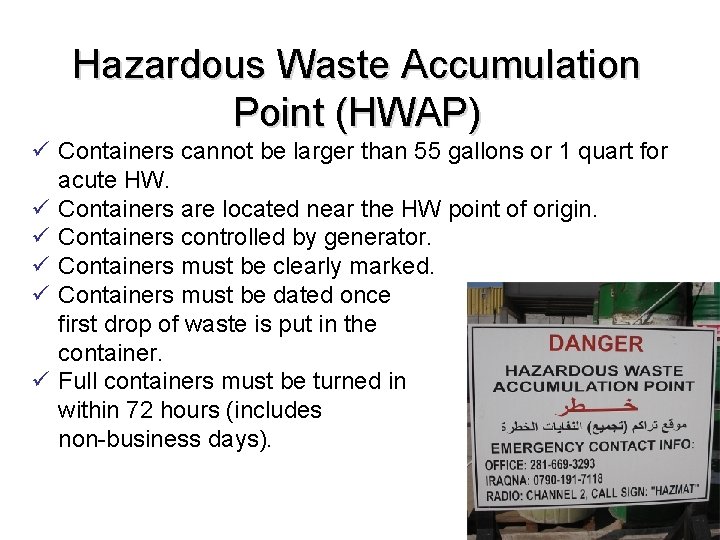
Hazardous Waste Accumulation Point (HWAP) ü Containers cannot be larger than 55 gallons or 1 quart for acute HW. ü Containers are located near the HW point of origin. ü Containers controlled by generator. ü Containers must be clearly marked. ü Containers must be dated once first drop of waste is put in the container. ü Full containers must be turned in within 72 hours (includes non-business days).
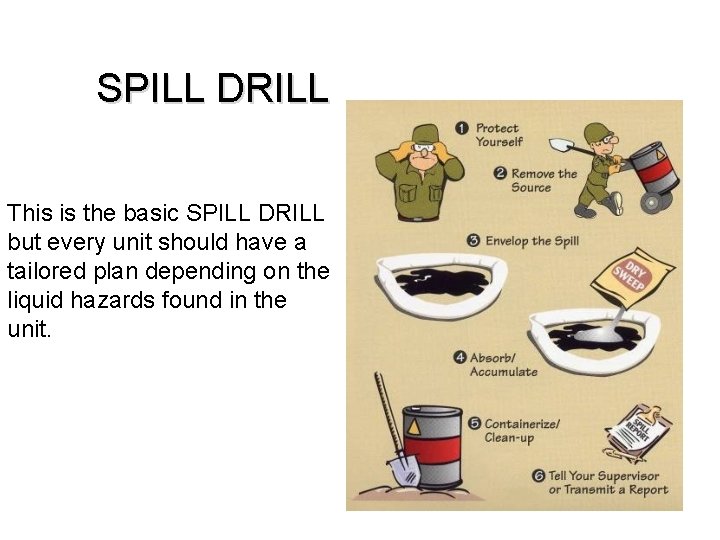
SPILL DRILL This is the basic SPILL DRILL but every unit should have a tailored plan depending on the liquid hazards found in the unit.
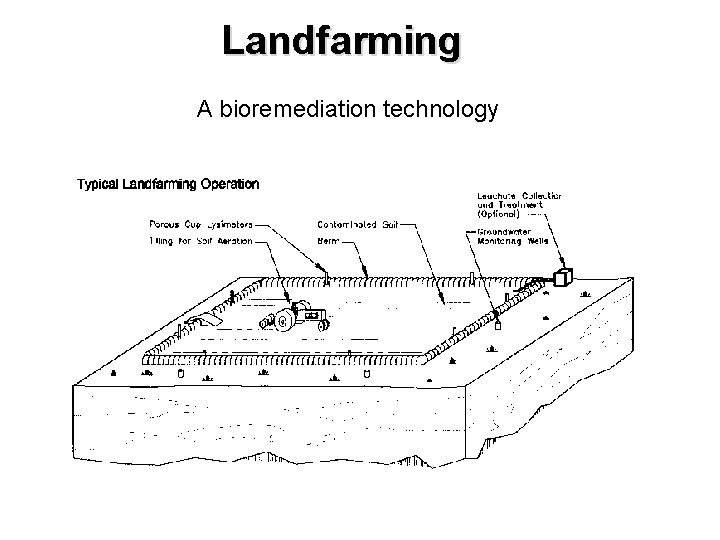
Landfarming A bioremediation technology
Check on Learning What are a few of the general hazardous waste accumulation requirements?
Learning Objective #4 Describe the methods of wastewater disposal.
Wastewater • Associated Health Threats – Untreated sewage contains pathogens – Pathogens cause a wide variety of illnesses from diarrhea to infections • Solution – Ensure wastewater is treated before released onto the ground or stream.
Wastewater • Grey Water – Shower water, DFAC, laundry, ROWPU brine – Evaporation pond or storage tank • Black water – Water contaminated with human waste – Not suitable for reuse – Must be treated in Lagoon, package plant, or facility capable of treating the waste
5 Step Process for Managing Wastewater 1. Analyze the Situation • • • The layout of the base camp Generation rates Available facilities 2. Develop Wastewater Requirements • • Determine requirements for each phase based on expected duration Evaluate available capabilities and resources
5 Step Process Continued 3. Evaluate Waste Management Capabilities • Manpower, equipment, materials, funding 4. Generate Solutions • • • Take advantage of existing structures Capability based solutions Suitable based on risks to human health 5. Integrate Waste Management Tasks into Plans and Orders • Include waste management plans in logistics rehearsals
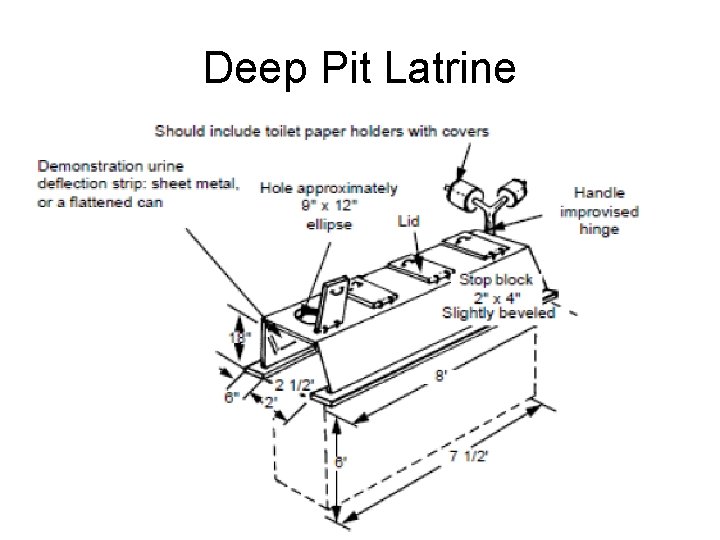
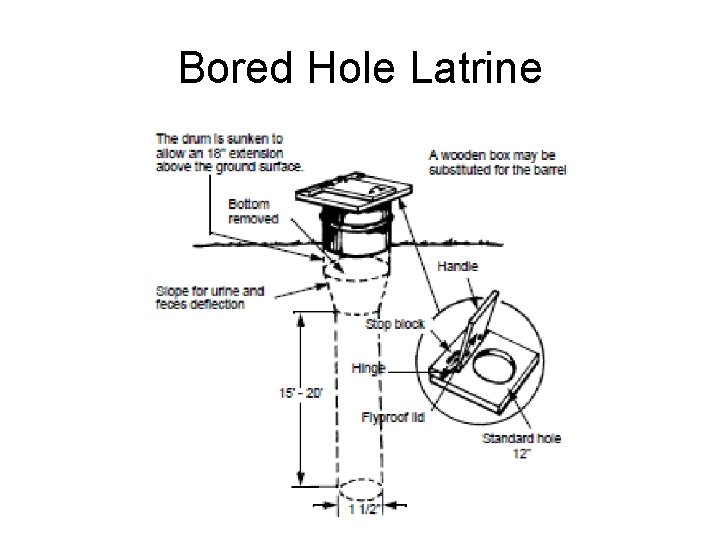
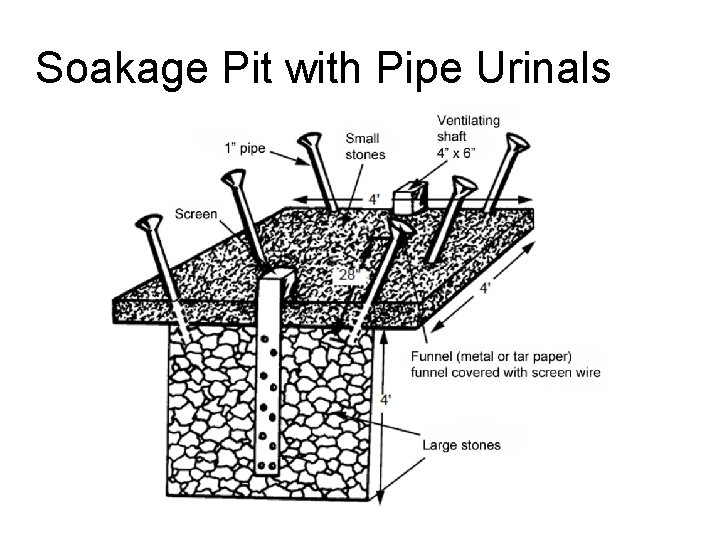
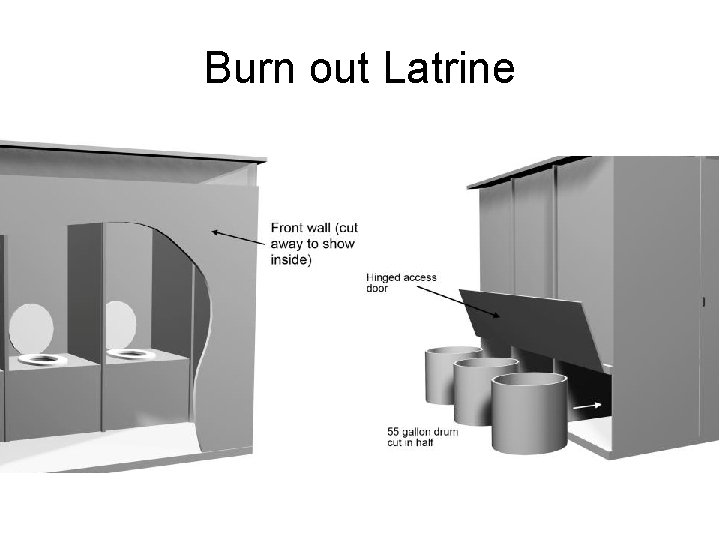
DISPOSAL OF HUMAN WASTES General Requirements for Latrines • Adequate numbers of latrines are 4% for males and 6% for females. • Constructed at least 100 yards and downwind from the DFAC • At least 100 yards and downhill from any surface water source, if possible or even further. • Not dug to ground water level. • Built at least 30 yards from the unit area or within reasonable distance for troops. • A drainage ditch is dug around the edges of the latrine. • Hand washing device is needed.
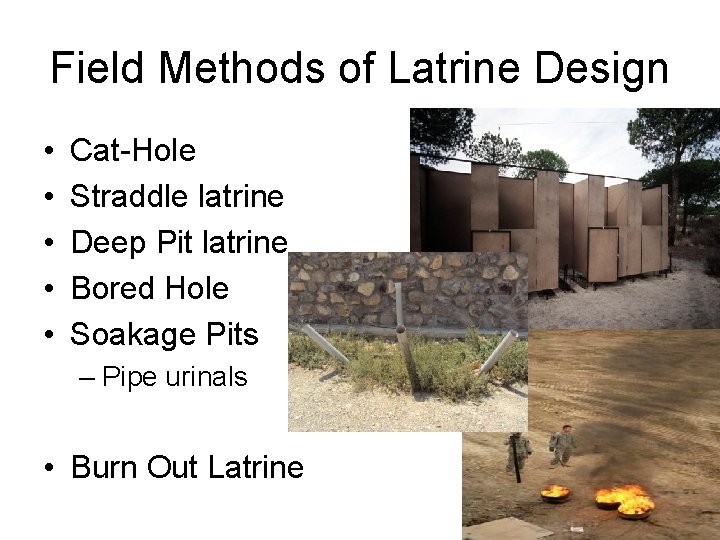
Field Methods of Latrine Design • • • Cat-Hole Straddle latrine Deep Pit latrine Bored Hole Soakage Pits – Pipe urinals • Burn Out Latrine
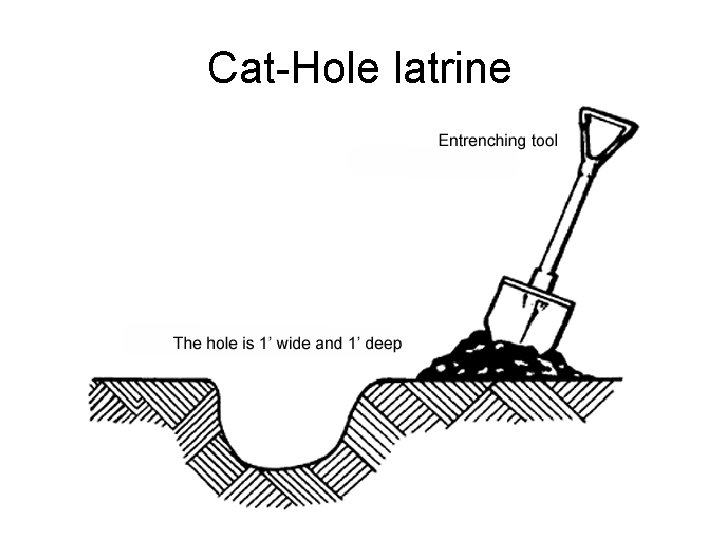
Cat-Hole latrine
Straddle Latrines • Temporary bivouac sites of (1 to 3 days) until more permanent facilities are made. • A trench is dug 1 foot wide, 2 1/2 feet deep, and 4 feet long. • 2 ft. of length used person.
Deep Pit Latrine
Bored Hole Latrine
Soakage Pit with Pipe Urinals
Burn out Latrine
Wastewater Treatment Systems • Sewage lagoons • Package Plants • Conventional Treatment Systems
Wastewater Lagoons • Anaerobic Lagoons are designed to hold and treat wastewater from 20 to 150 days. They are relatively deep (usually 8 to 15 feet) and work much like septic tanks. • Aerobic Lagoons. Wastewater usually must remain in aerobic lagoons from 3 to 50 days to receive adequate treatment. Wastewater treatment takes place naturally in many aerobic lagoons with the aid of aerobic bacteria and algae. Because they are so shallow (less than 3 feet), their bottoms need to be paved or lined with materials that prevent weeds from growing in them. • Facultative Lagoons. The wastewater in facultative lagoons naturally settles into three fairly distinct layers or zones. Different conditions exist in each zone, aerobic, anaerobic and a mix of both, and wastewater treatment takes place in all three. They are generally 8 to 15 feet deep.
Wastewater Lagoons Discharge Design • Continuous Discharge Lagoons. These lagoons release wastewater continuously to a holding pond, so the rate of output roughly equals the rate of input. The hydraulic flow pattern in the lagoon is designed so the wastewater remains in the lagoon long enough to receive treatment before it reaches the outlet. • Controlled Discharge Lagoons. In these lagoons, wastewater is discharged in controlled amounts, usually once or twice per year. This method is common in cold climates where discharges typically occur after spring thaw and again in fall.
Wastewater Lagoons Discharge Design • Complete Retention Lagoons. These lagoons are only practical in very dry climates where evaporation rate greatly exceeds rainfall amounts. Wastewater is never released from this type of lagoon. Instead it is allowed to evaporate.
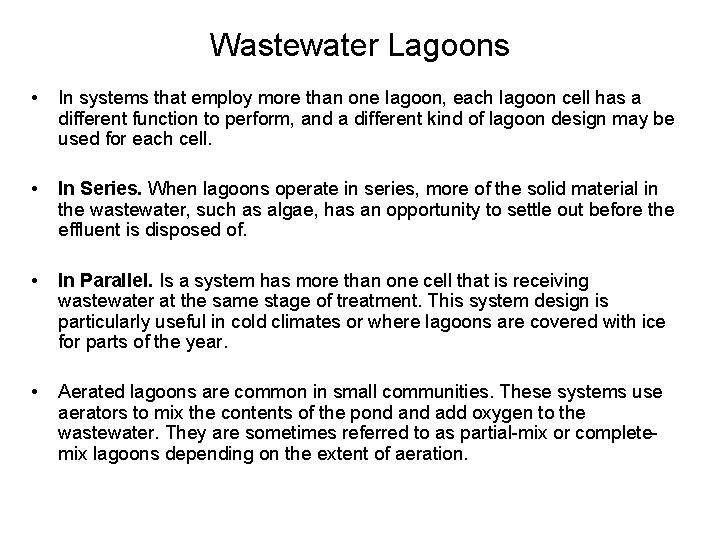
Wastewater Lagoons • In systems that employ more than one lagoon, each lagoon cell has a different function to perform, and a different kind of lagoon design may be used for each cell. • In Series. When lagoons operate in series, more of the solid material in the wastewater, such as algae, has an opportunity to settle out before the effluent is disposed of. • In Parallel. Is a system has more than one cell that is receiving wastewater at the same stage of treatment. This system design is particularly useful in cold climates or where lagoons are covered with ice for parts of the year. • Aerated lagoons are common in small communities. These systems use aerators to mix the contents of the pond add oxygen to the wastewater. They are sometimes referred to as partial-mix or completemix lagoons depending on the extent of aeration.
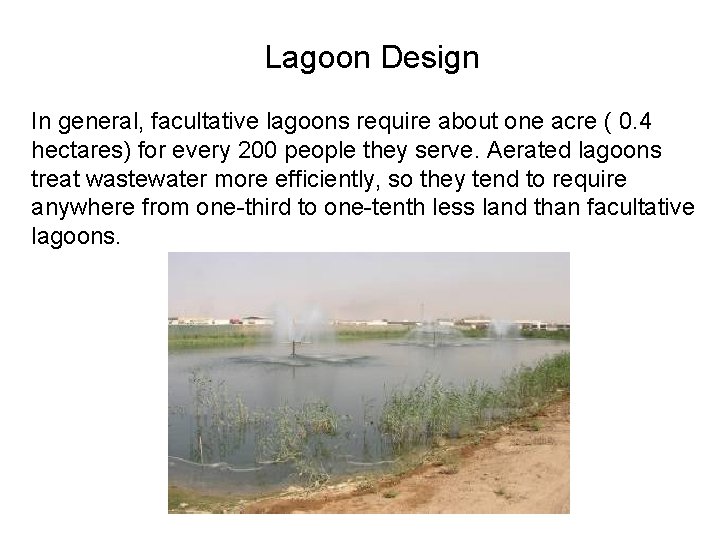
Lagoon Design In general, facultative lagoons require about one acre ( 0. 4 hectares) for every 200 people they serve. Aerated lagoons treat wastewater more efficiently, so they tend to require anywhere from one-third to one-tenth less land than facultative lagoons.
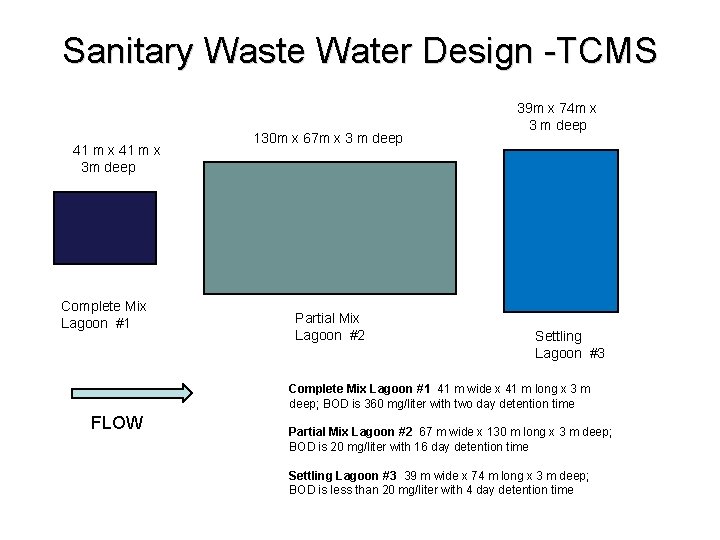
Sanitary Waste Water Design -TCMS 41 m x 3 m deep Complete Mix Lagoon #1 130 m x 67 m x 3 m deep Partial Mix Lagoon #2 39 m x 74 m x 3 m deep Settling Lagoon #3 Complete Mix Lagoon #1 41 m wide x 41 m long x 3 m deep; BOD is 360 mg/liter with two day detention time FLOW Partial Mix Lagoon #2 67 m wide x 130 m long x 3 m deep; BOD is 20 mg/liter with 16 day detention time Settling Lagoon #3 39 m wide x 74 m long x 3 m deep; BOD is less than 20 mg/liter with 4 day detention time
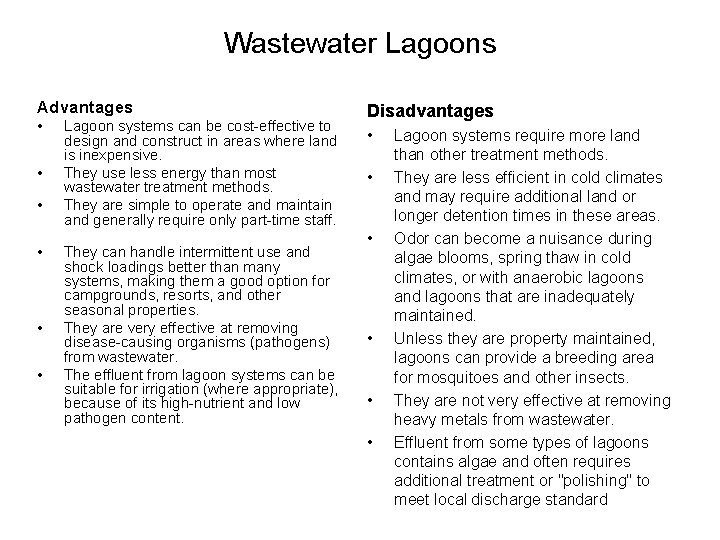
Wastewater Lagoons Advantages • • • Lagoon systems can be cost-effective to design and construct in areas where land is inexpensive. They use less energy than most wastewater treatment methods. They are simple to operate and maintain and generally require only part-time staff. They can handle intermittent use and shock loadings better than many systems, making them a good option for campgrounds, resorts, and other seasonal properties. They are very effective at removing disease-causing organisms (pathogens) from wastewater. The effluent from lagoon systems can be suitable for irrigation (where appropriate), because of its high-nutrient and low pathogen content. Disadvantages • • • Lagoon systems require more land than other treatment methods. They are less efficient in cold climates and may require additional land or longer detention times in these areas. Odor can become a nuisance during algae blooms, spring thaw in cold climates, or with anaerobic lagoons and lagoons that are inadequately maintained. Unless they are property maintained, lagoons can provide a breeding area for mosquitoes and other insects. They are not very effective at removing heavy metals from wastewater. Effluent from some types of lagoons contains algae and often requires additional treatment or "polishing" to meet local discharge standard
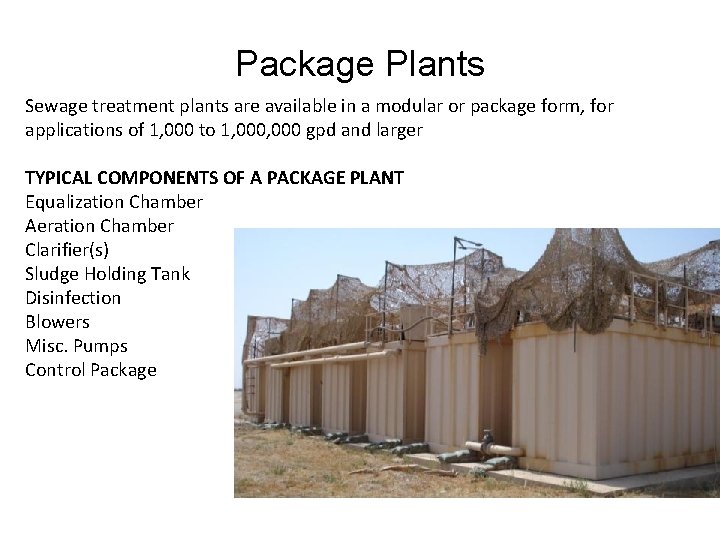
Package Plants Sewage treatment plants are available in a modular or package form, for applications of 1, 000 to 1, 000 gpd and larger TYPICAL COMPONENTS OF A PACKAGE PLANT Equalization Chamber Aeration Chamber Clarifier(s) Sludge Holding Tank Disinfection Blowers Misc. Pumps Control Package
Package Plants HOW A PACKAGE PLANTS WORKS 1. Wastewater gravity flows or is pumped to a mechanical separator. 2. It then flows into the equalization tank where the aeration process begins. 3. Wastewater from the tank then flows into the aeration chamber where the BOD, Suspended Solids, and Ammonia is reduced to design criteria levels. 4. The clarifiers are sized so as to allow enough retention time ( typically 24 hours ) for the flocking (aerated sludge or mixed liquor) to settle to the bottom of the clarifier's hopper where a small amount is continually removed and transported to the sludge holding tank. 5. Further aeration and concentration through decant-siphoning takes place in the sludge holding tank. 6. Water from the clarifier area continues to flow into the disinfection chamber where chlorination or UV treatment takes place. The water at this point has reached design effluent levels, is visually clear, and odorless, and ready to be discharged.
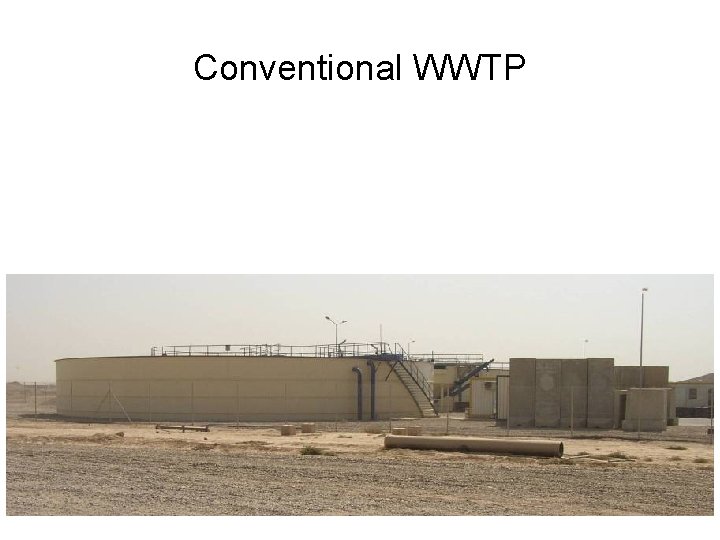
Conventional WWTP
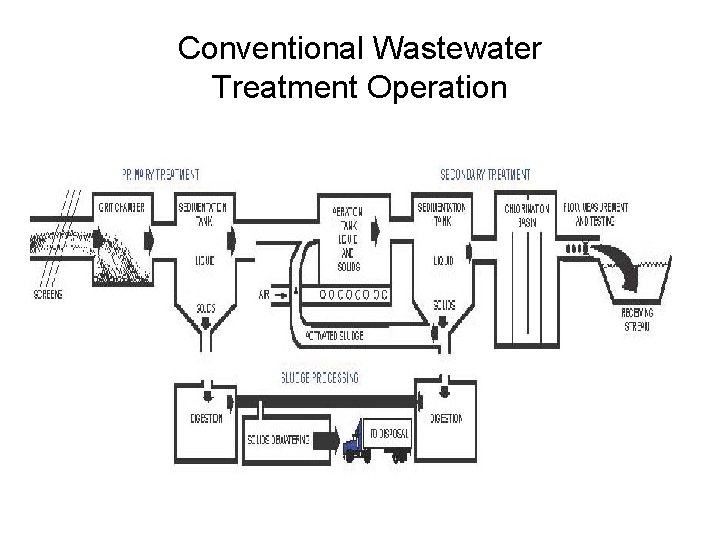
Conventional Wastewater Treatment Operation
Check on Learning What are three primary types of waste disposal systems?
Learning Objective #5 Describe the layout of an integrated waste management plan.
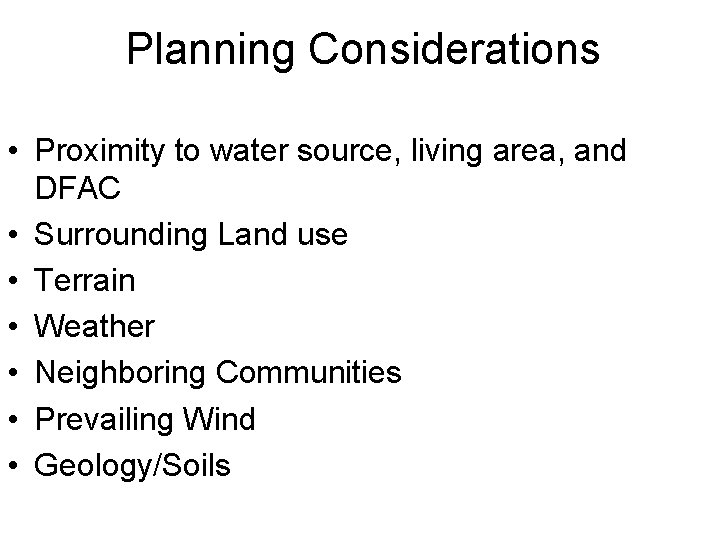
Planning Considerations • Proximity to water source, living area, and DFAC • Surrounding Land use • Terrain • Weather • Neighboring Communities • Prevailing Wind • Geology/Soils
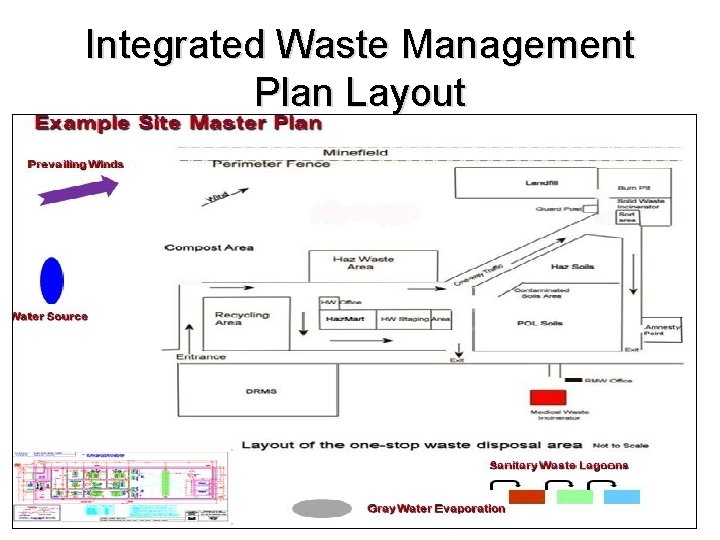
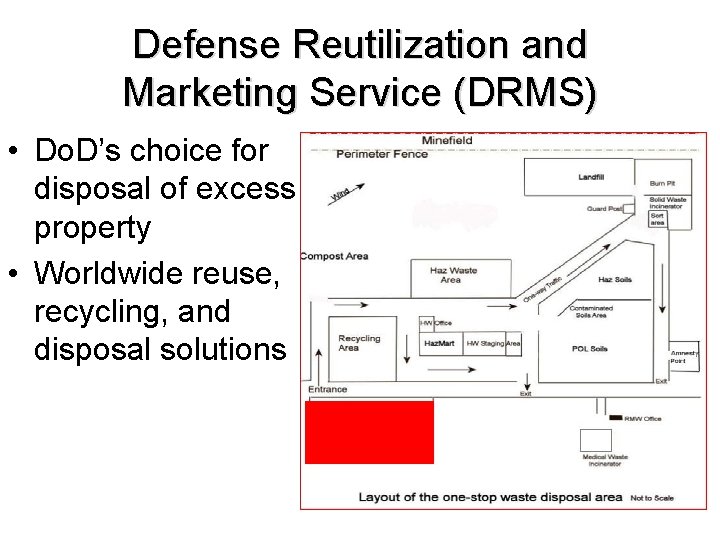
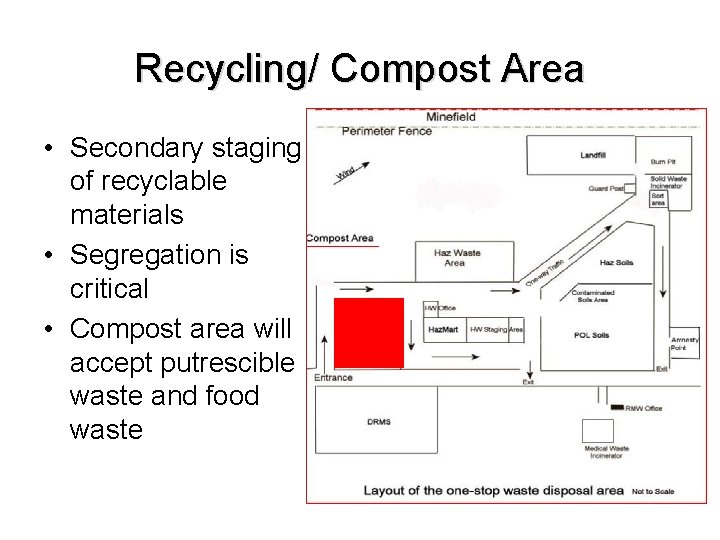
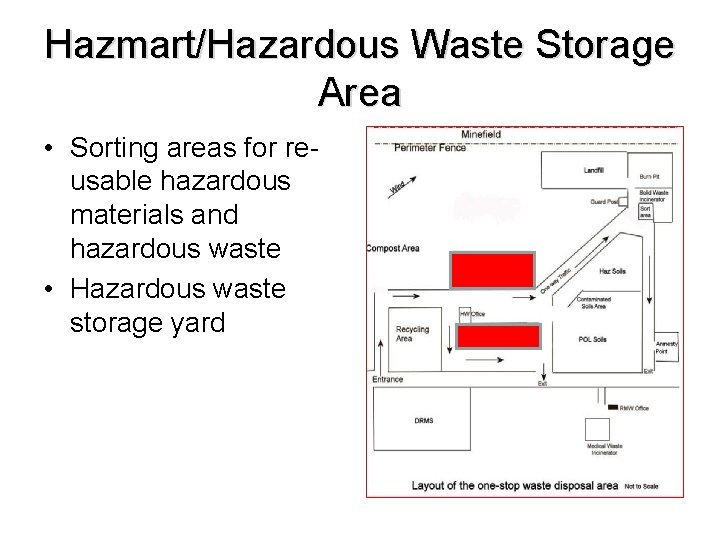
Integrated Waste Management Plan Layout
Defense Reutilization and Marketing Service (DRMS) • Do. D’s choice for disposal of excess property • Worldwide reuse, recycling, and disposal solutions
Recycling/ Compost Area • Secondary staging of recyclable materials • Segregation is critical • Compost area will accept putrescible waste and food waste
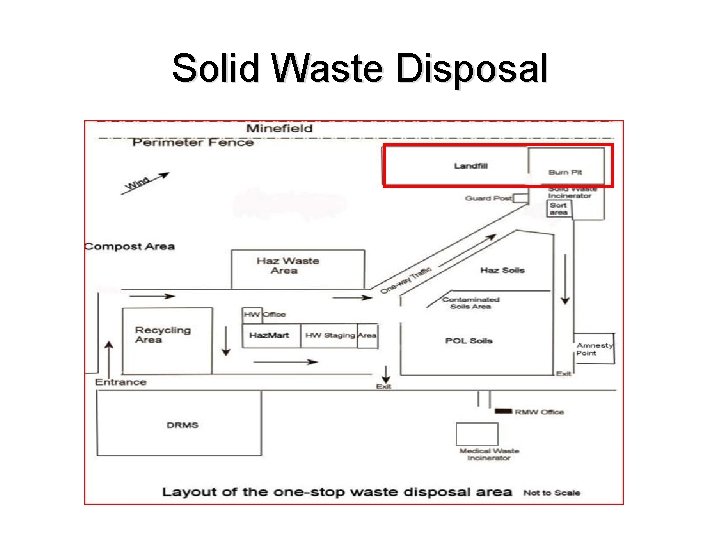
Solid Waste Disposal
Hazmart/Hazardous Waste Storage Area • Sorting areas for reusable hazardous materials and hazardous waste • Hazardous waste storage yard
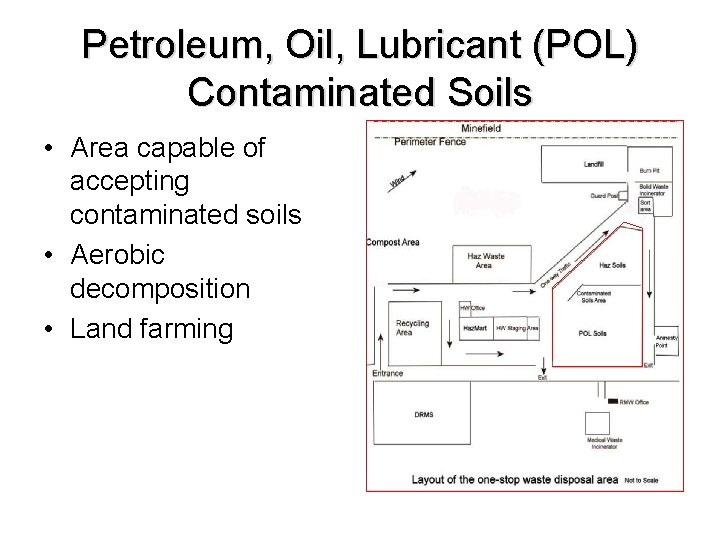
Petroleum, Oil, Lubricant (POL) Contaminated Soils • Area capable of accepting contaminated soils • Aerobic decomposition • Land farming
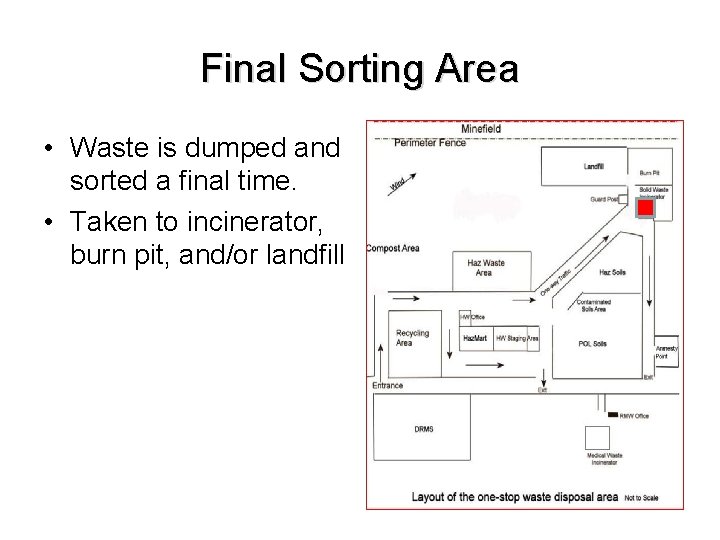
Final Sorting Area • Waste is dumped and sorted a final time. • Taken to incinerator, burn pit, and/or landfill
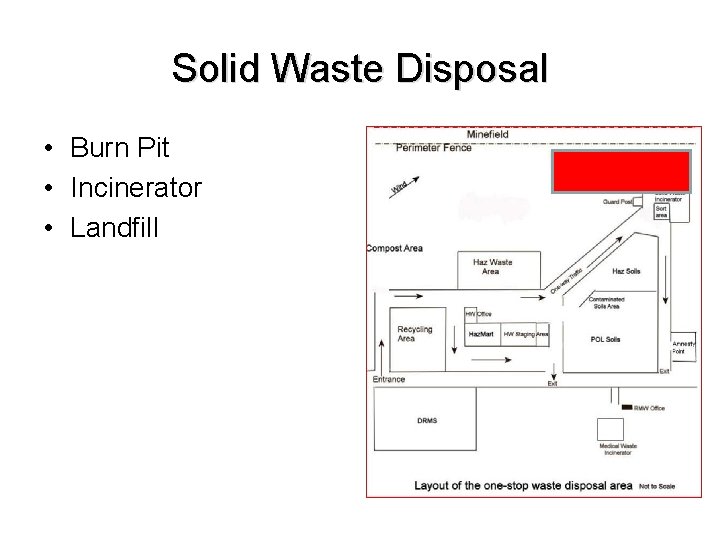
Solid Waste Disposal • Burn Pit • Incinerator • Landfill
Check on Learning What are some planning considerations for the layout of an integrated waste management area?
Summary • Taking into account environmental impacts before and during mission activities we can reduce or eliminate some of those impacts. • Those reductions can assist in expediting the time it will take to properly close the base camp and return our troops back to their families.