
CHAPTER 1 PROVIDING SAFE FOOD KEEPING FOOD SAFE









- Slides: 42
CHAPTER 1 PROVIDING SAFE FOOD KEEPING FOOD SAFE 1
Test Your Food Safety Knowledge (True or False) 1. A food borne-illness outbreak has occurred when two or more people experience the same illness after eating the same food. 2. Potentially hazardous food is usually moist. 3. Adults are more likely to become ill from contaminated food than preschool-age children are. 4. People taking certain medications, such as antibiotics, are at high risk for foodborne illness. 5. Cooked vegetables are not a potentially hazardous food. 2
Test Your Food Safety Knowledge (True or False) ANSWERS 1. A food borne-illness outbreak has occurred when two or more people experience the same illness after eating the same food. True 2. Potentially hazardous food is usually moist. True 3. Adults are more likely to become ill from contaminated food than preschool-age children are. False 4. People taking certain medications, such as antibiotics, are at high risk for foodborne illness. True 5. Cooked vegetables are not a potentially hazardous food. False 3
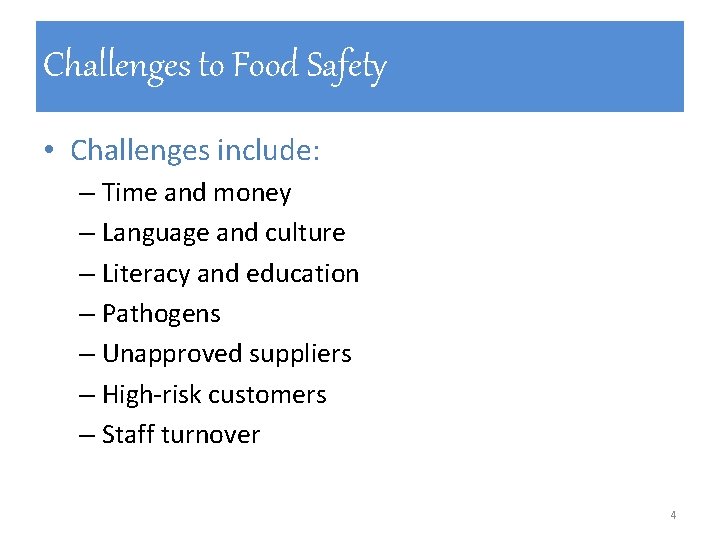
Challenges to Food Safety • Challenges include: – Time and money – Language and culture – Literacy and education – Pathogens – Unapproved suppliers – High-risk customers – Staff turnover 4
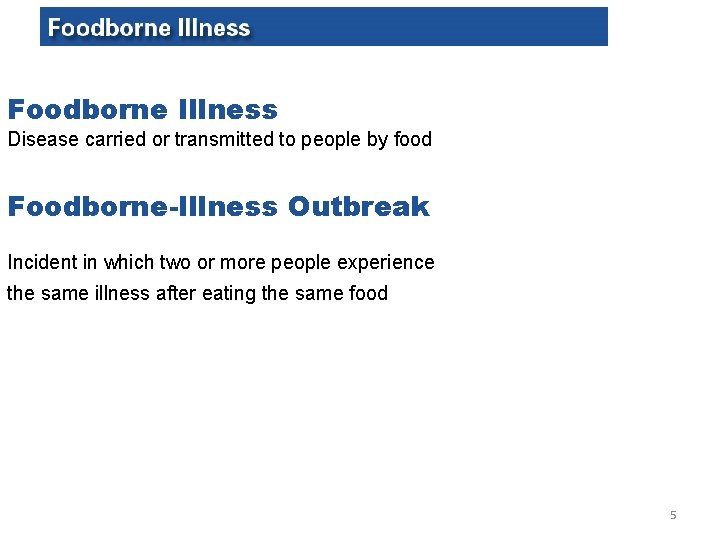
Foodborne Illness Disease carried or transmitted to people by food Foodborne-Illness Outbreak Incident in which two or more people experience the same illness after eating the same food 5
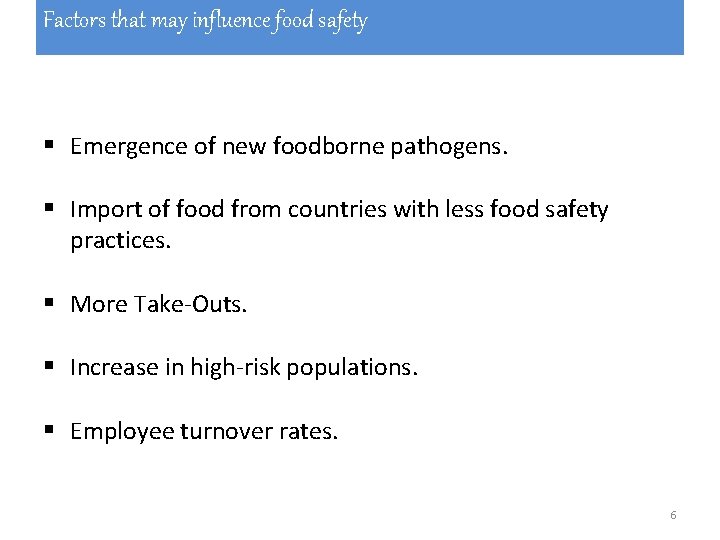
Factors that may influence food safety § Emergence of new foodborne pathogens. § Import of food from countries with less food safety practices. § More Take-Outs. § Increase in high-risk populations. § Employee turnover rates. 6
The Cost of Foodborne Illness • What do you think are potential costs of foodborne illness to a food service establishment? 7
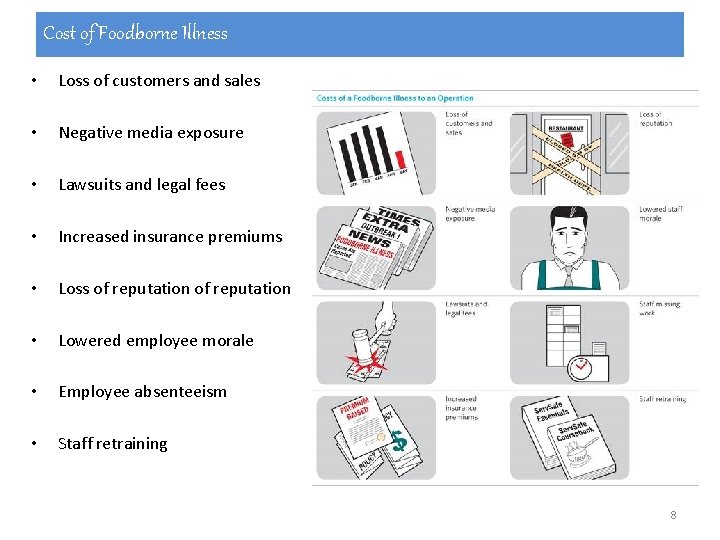
Cost of Foodborne Illness • Loss of customers and sales • Negative media exposure • Lawsuits and legal fees • Increased insurance premiums • Loss of reputation • Lowered employee morale • Employee absenteeism • Staff retraining 8
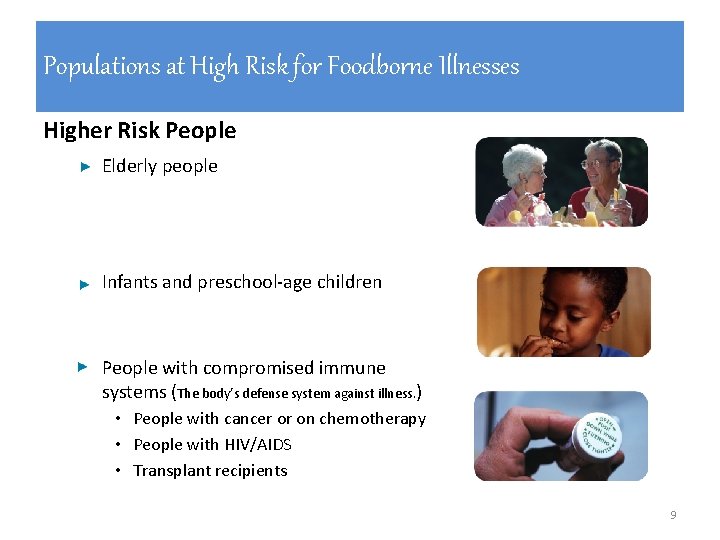
Populations at High Risk for Foodborne Illnesses Higher Risk People – Elderly people – Infants and preschool-age children People with compromised immune systems (The body’s defense system against illness. ) • People with cancer or on chemotherapy • People with HIV/AIDS • Transplant recipients 9
TCS Food • Food that contains moisture and protein and has a neutral or slightly acidic p. H. Such food requires time-temperature control to prevent the growth of microorganisms and the production of toxins. 10
Characteristics of Potentially Hazardous Food (TCS FOODS) TCS food typically: Ø Are moist Ø Contains protein Ø Has a neutral or slightly acidic p. H This food also has: Ø A history of involvement in foodborne-illness outbreaks Ø A natural potential for contamination due to methods used to produce/process it This food also requires: Ø Time-Temperature Control. 11
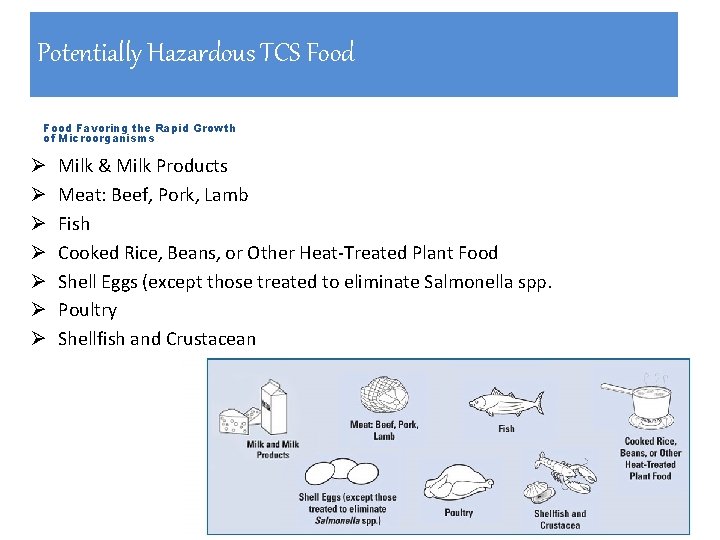
Potentially Hazardous TCS Food Favoring the Rapid Growth of Microorganisms Ø Ø Ø Ø Milk & Milk Products Meat: Beef, Pork, Lamb Fish Cooked Rice, Beans, or Other Heat-Treated Plant Food Shell Eggs (except those treated to eliminate Salmonella spp. Poultry Shellfish and Crustacean 12
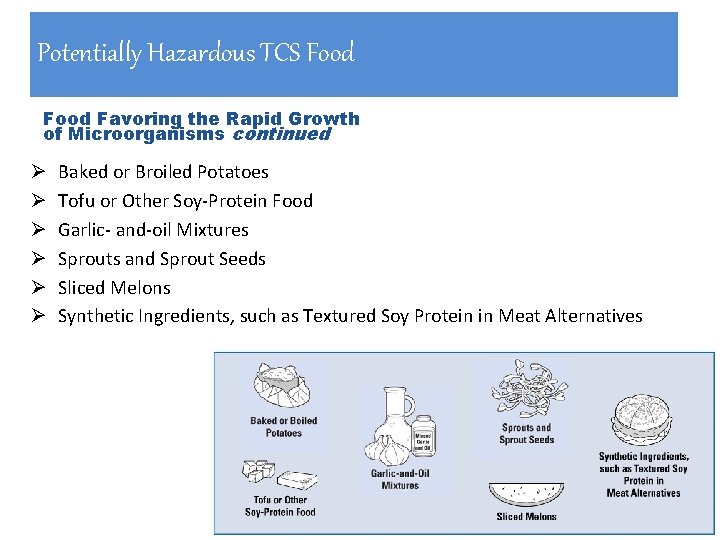
Potentially Hazardous TCS Food Favoring the Rapid Growth of Microorganisms continued Ø Ø Ø Baked or Broiled Potatoes Tofu or Other Soy-Protein Food Garlic- and-oil Mixtures Sprouts and Sprout Seeds Sliced Melons Synthetic Ingredients, such as Textured Soy Protein in Meat Alternatives 13
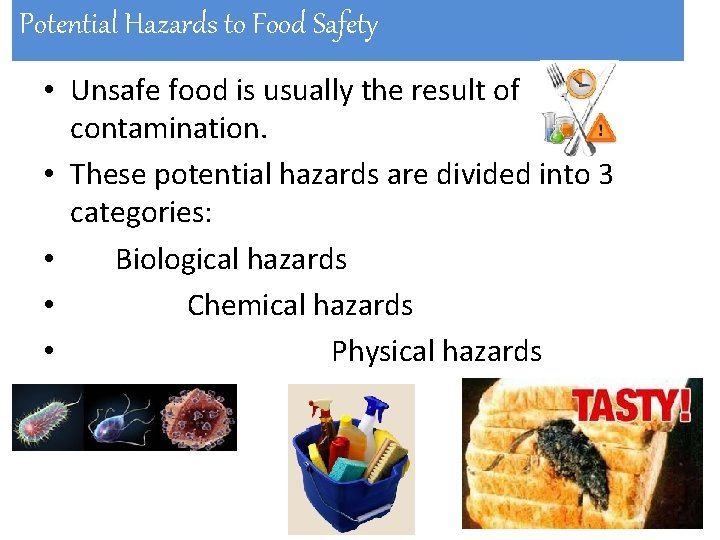
Potential Hazards to Food Safety • Unsafe food is usually the result of contamination. • These potential hazards are divided into 3 categories: • Biological hazards • Chemical hazards • Physical hazards 14
Potential Hazards to Food Safety Biological Hazards v. Viruses v. Bacteria v. Parasites v. Fungi 15
Potential Hazards to Food Safety Chemical Hazards v. Cleaners v. Sanitizers v. Polishes v. Machine lubricants v. Toxic metals 16
Potential Hazards to Food Safety Physical Hazards v. Hair v. Dirt v. Bandages v. Metal staples v. Broken glass v. Natural objects (e. g. , fish bones in a fillet) 17
How food becomes unsafe • Identified by the CDC: Ø Purchasing food from unsafe sources Ø Failing to cook food adequately Ø Holding food at improper temperatures Ø Using contaminated equipment Ø Poor personal hygiene 18
Factors that lead to unsafe food • Time-Temperature Abuse • Cross-Contamination • Poor Personal Hygiene 19
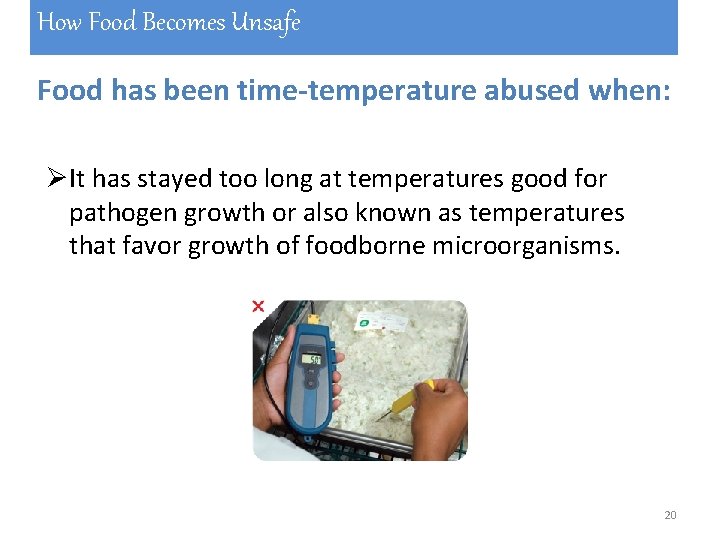
How Food Becomes Unsafe Food has been time-temperature abused when: ØIt has stayed too long at temperatures good for pathogen growth or also known as temperatures that favor growth of foodborne microorganisms. 20
How Food Becomes Unsafe Cross-contamination occurs when: ØPathogens are transferred from one food or surface to another 21
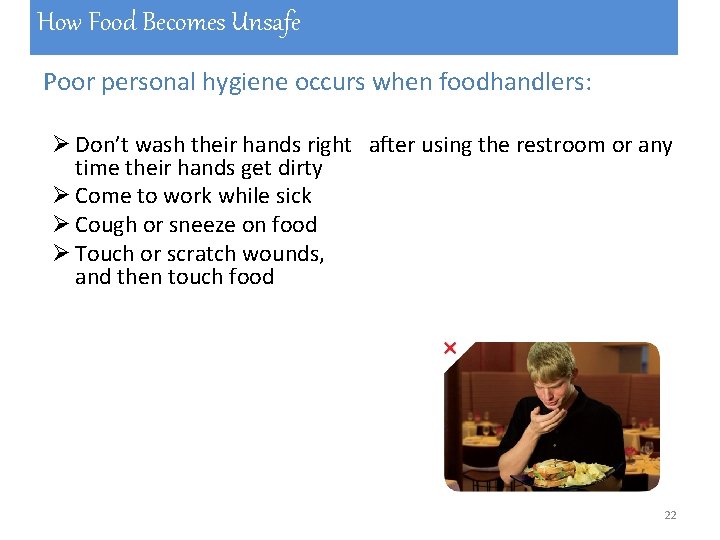
How Food Becomes Unsafe Poor personal hygiene occurs when foodhandlers: Ø Don’t wash their hands right after using the restroom or any time their hands get dirty Ø Come to work while sick Ø Cough or sneeze on food Ø Touch or scratch wounds, and then touch food 22
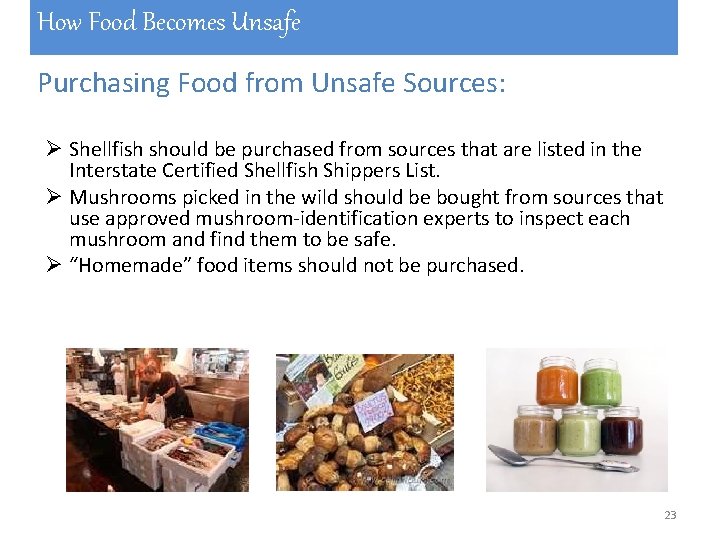
How Food Becomes Unsafe Purchasing Food from Unsafe Sources: Ø Shellfish should be purchased from sources that are listed in the Interstate Certified Shellfish Shippers List. Ø Mushrooms picked in the wild should be bought from sources that use approved mushroom-identification experts to inspect each mushroom and find them to be safe. Ø “Homemade” food items should not be purchased. 23
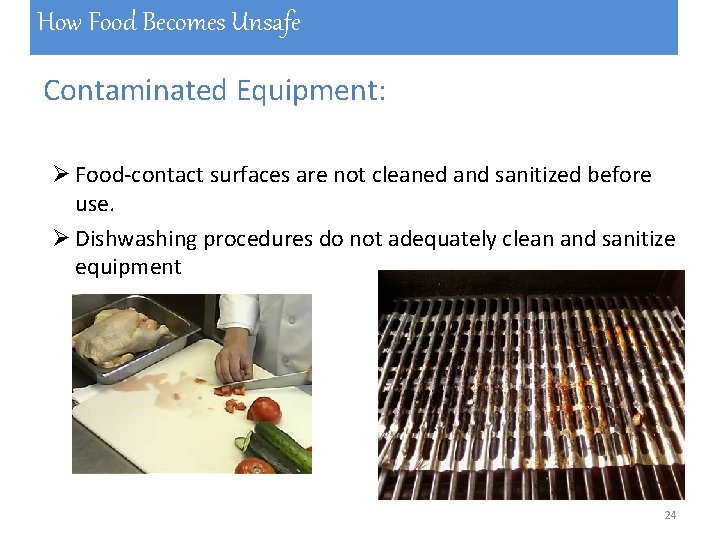
How Food Becomes Unsafe Contaminated Equipment: Ø Food-contact surfaces are not cleaned and sanitized before use. Ø Dishwashing procedures do not adequately clean and sanitize equipment 24
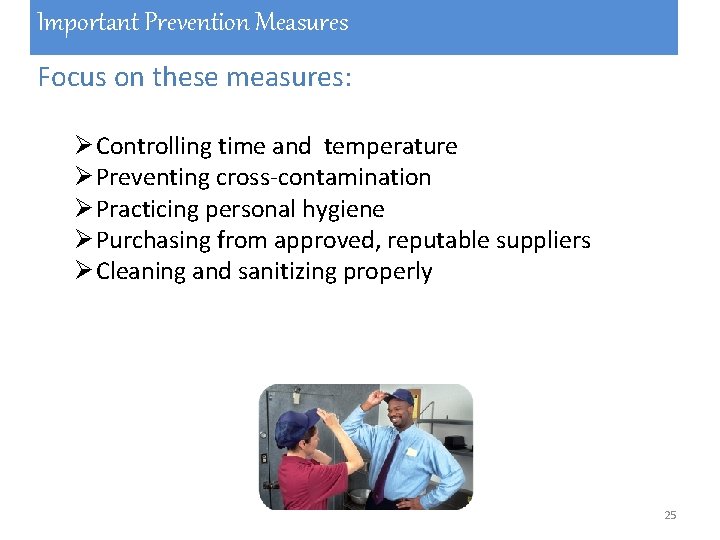
Important Prevention Measures Focus on these measures: Ø Controlling time and temperature Ø Preventing cross-contamination Ø Practicing personal hygiene Ø Purchasing from approved, reputable suppliers Ø Cleaning and sanitizing properly 25
The food safety responsibilities of a manager Focus on these measures: Ø Must serve safe food and train employees in safe food handling practices. Ø Must know about current regulations affecting the establishment. Ø Have a positive and supportive attitude towards food safety. 26
Meeting Food Safety Regulations Focus on these measures: ØEstablishment must meet city, county, and state food regulations. ØRegulatory agencies that inspect establishments share commitment to food safety. ØThey can assess fines and close establishments that serve unsafe food. ØIt is in the best interest of the establishment to work with local authorities. 27
Meeting Food Safety Regulations The Food and Drug Administration (FDA) recommends that state and local health departments hold the person in charge of a restaurant or food service establishment responsible for: Ø Illness carried or transmitted by food and their symptoms. Ø Types of toxic materials used in the operation and how to safely store, dispense, use, and discard them. Ø Major food allergens and their symptoms. Ø Relationship between personal hygiene and the spread of illness, especially as it relates to cross-contamination, bare-hand contact with ready-to-eat food, and hand washing. Ø Control the length of time that TCS food is at temperatures that support microorganism growth. Ø Hazards associated with eating raw and undercooked meat, poultry, eggs, and seafood. Ø Correct procedures for cleaning and sanitizing utensils and food-contact surfaces of equipment. 28
Marketing Food Safely Food Safety Commitment: Ø Marketing food safety efforts will help show employees and customers that the operations takes food safety seriously. Ø Offer training courses, and evaluate and update them as needed. Ø Discuss food safety expectations. Document foodhandling procedures, and update them as needed. Ø Show employees that safe foodhandling is appreciated. Ø Set a good example by following all food safety rules yourself. 29
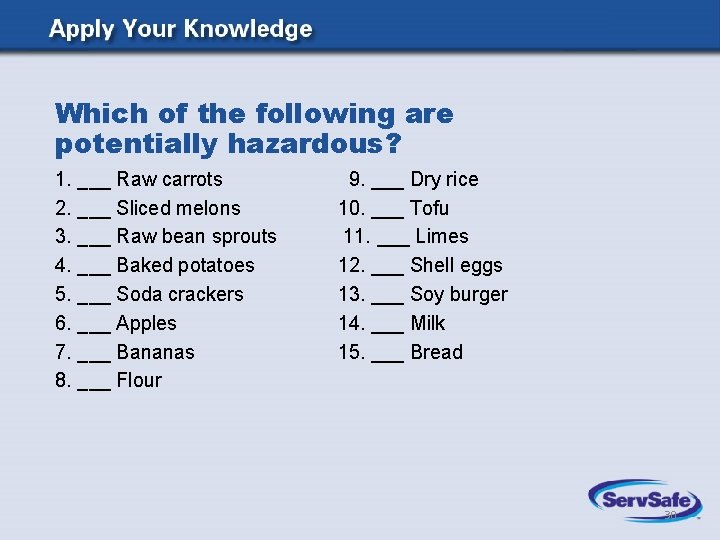
Which of the following are potentially hazardous? 1. ___ Raw carrots 2. ___ Sliced melons 3. ___ Raw bean sprouts 4. ___ Baked potatoes 5. ___ Soda crackers 6. ___ Apples 7. ___ Bananas 8. ___ Flour 9. ___ Dry rice 10. ___ Tofu 11. ___ Limes 12. ___ Shell eggs 13. ___ Soy burger 14. ___ Milk 15. ___ Bread 30
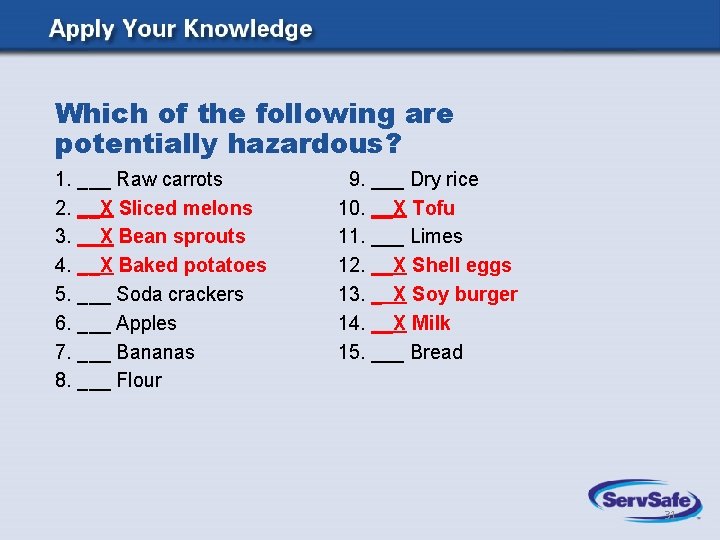
Which of the following are potentially hazardous? 1. ___ Raw carrots 2. __X Sliced melons 3. __X Bean sprouts 4. __X Baked potatoes 5. ___ Soda crackers 6. ___ Apples 7. ___ Bananas 8. ___ Flour 9. ___ Dry rice 10. __X Tofu 11. ___ Limes 12. __X Shell eggs 13. _ X Soy burger 14. __X Milk 15. ___ Bread 31
Why are elderly people at a higher risk for foodborne illness? A. They are more likely to spend time in a hospital. B. Their immune systems have weakened with age. C. Their allergic reactions to chemicals used in food production might be greater that those of younger people. D. They are likely to have smaller appetites. 32
Why are elderly people at a higher risk for foodborne illness? A. They are more likely to spend time in a hospital. B. Their immune systems have weakened with age. C. Their allergic reactions to chemicals used in food production might be greater that those of younger people. D. They are likely to have smaller appetites. 33
Which food would most likely cause a foodborne illness? A. Tomato juice B. Cooked rice C. Whole wheat flour D. Powdered milk 34
Which food would most likely cause a foodborne illness? A. Tomato juice B. Cooked rice C. Whole wheat flour D. Powdered milk 35
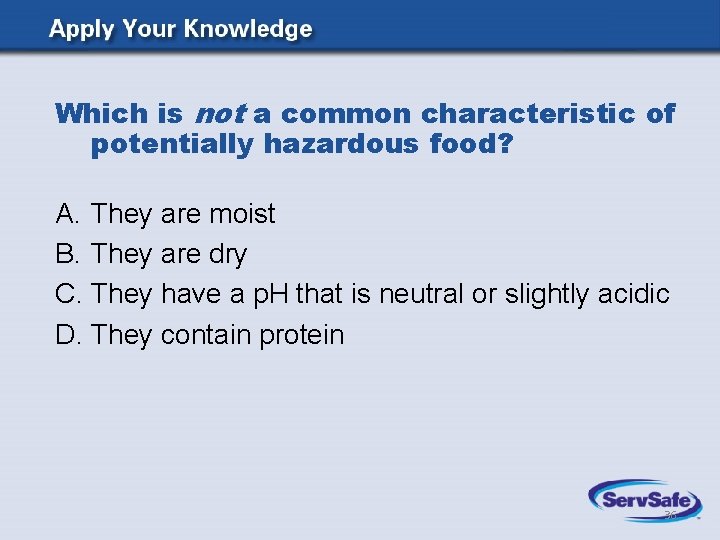
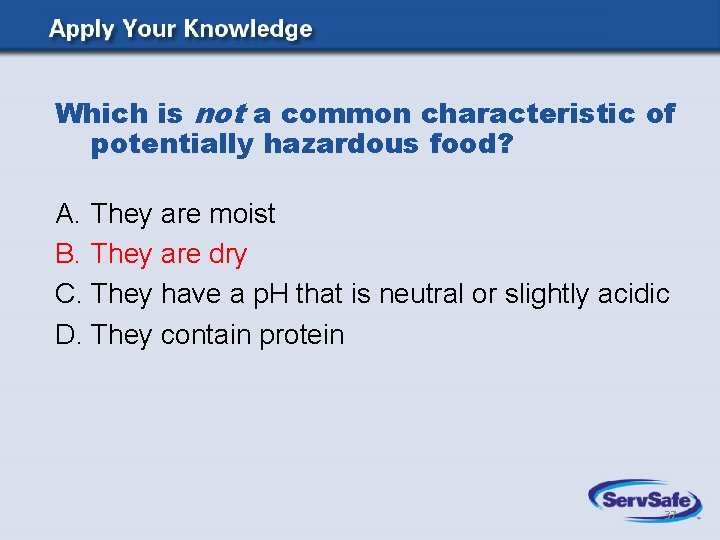
Which is not a common characteristic of potentially hazardous food? A. They are moist B. They are dry C. They have a p. H that is neutral or slightly acidic D. They contain protein 36
Which is not a common characteristic of potentially hazardous food? A. They are moist B. They are dry C. They have a p. H that is neutral or slightly acidic D. They contain protein 37
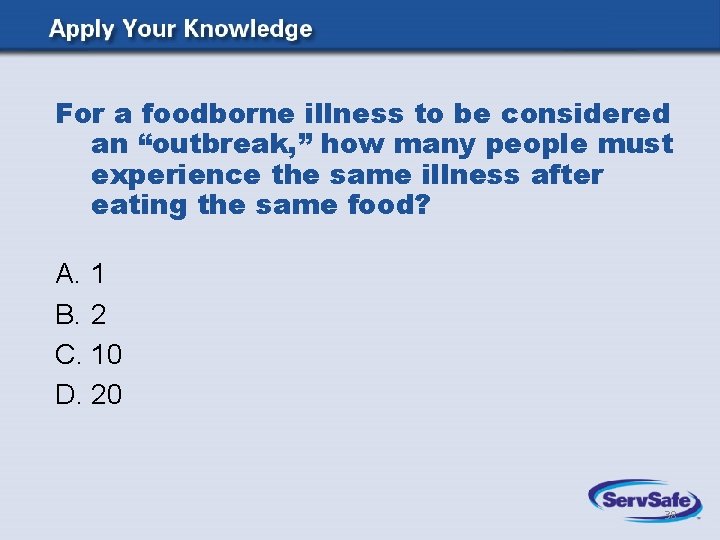
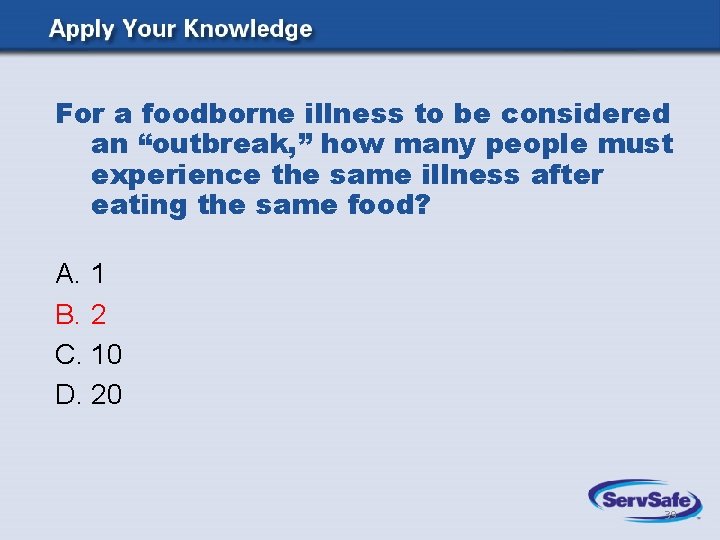
For a foodborne illness to be considered an “outbreak, ” how many people must experience the same illness after eating the same food? A. 1 B. 2 C. 10 D. 20 38
For a foodborne illness to be considered an “outbreak, ” how many people must experience the same illness after eating the same food? A. 1 B. 2 C. 10 D. 20 39
Which item is a potentially hazardous food? A. Raw carrots B. Dry rice C. Bread D. Raw bean sprouts 40
Which item is a potentially hazardous food? A. Raw carrots B. Dry rice C. Bread D. Raw bean sprouts 41
Something To Think About Many customers fell ill after eating at a buffet in a country club in New Mexico. Dozens required medical treatment. The culprit? Roast turkey, stuffing and gravy contaminated with the bacteria Staphylococcus aureus. More than one factor led to the outbreak. Several of the foodhandlers had the bacteria. Poor personal hygiene practices led them to contaminate the turkey. The problem was made worse when the cooked turkey was not cooled properly. Finally, the bacteria spread when the foodhandlers used the same utensils to handle the turkey and a variety of other food. What should have been done to prevent this incident? 42