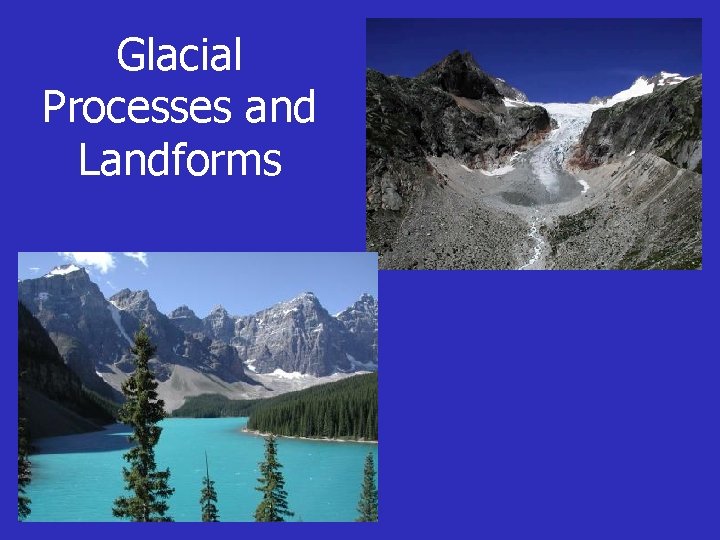
Glacial Processes and Landforms What is a glacier

- Slides: 39
Glacial Processes and Landforms
What is a glacier? How do glaciers form?
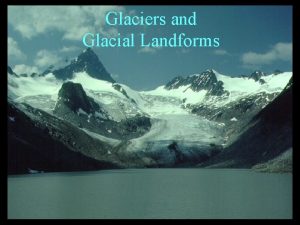
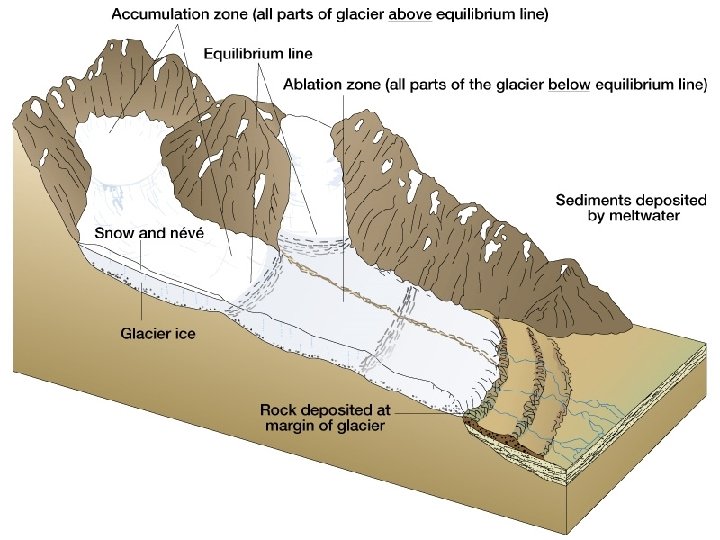
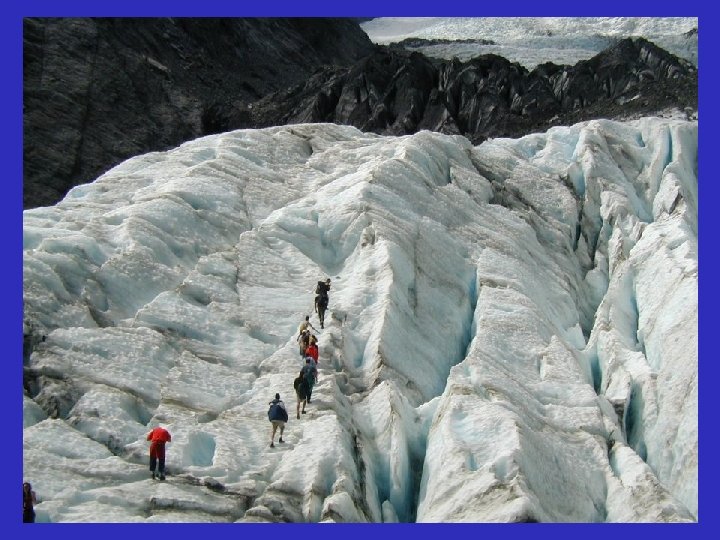
What is a glacier? • A glacier is simply the existence of year-round ice on the landscape. • There are two broad types: continental and alpine. How do glaciers form? • Glaciers form whenever snowfall exceeds snowmelt year after year. The snow accumulates incrementally, pressure increases, and it is changed into ice by this pressure.
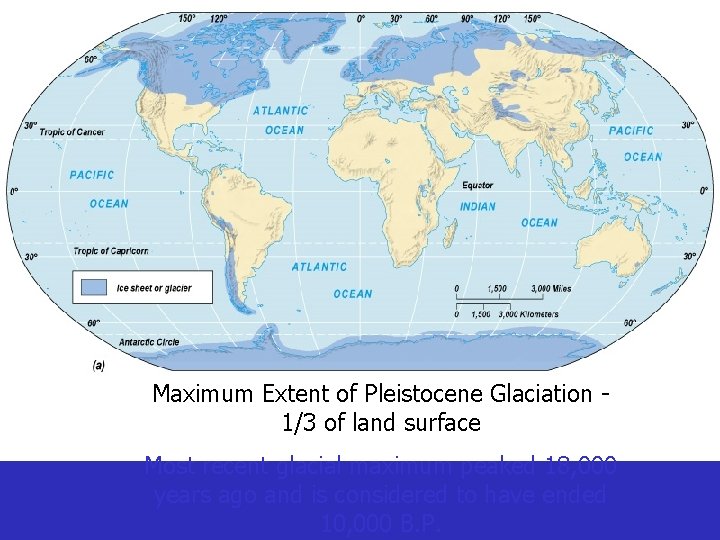
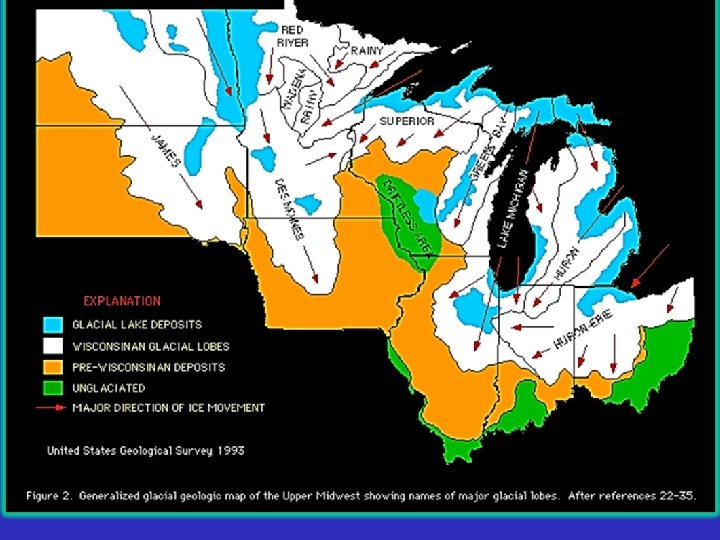
Maximum Extent of Pleistocene Glaciation 1/3 of land surface Most recent glacial maximum peaked 18, 000 years ago and is considered to have ended 10, 000 B. P.
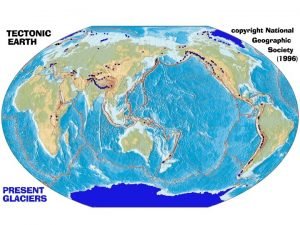
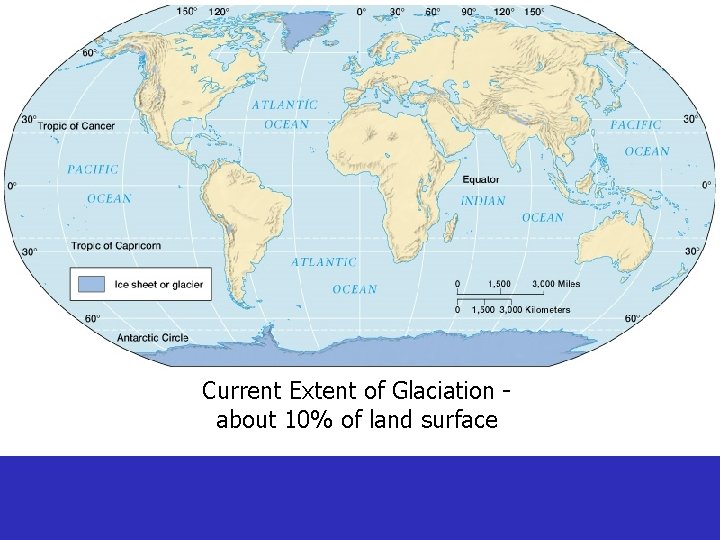
Current Extent of Glaciation about 10% of land surface
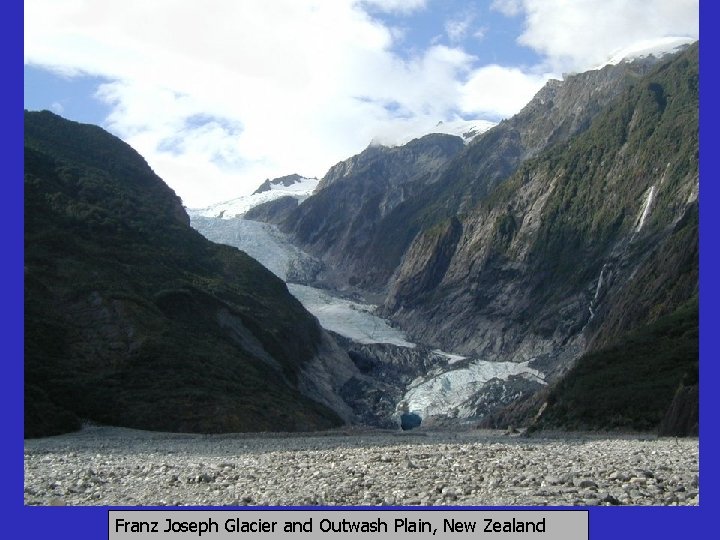
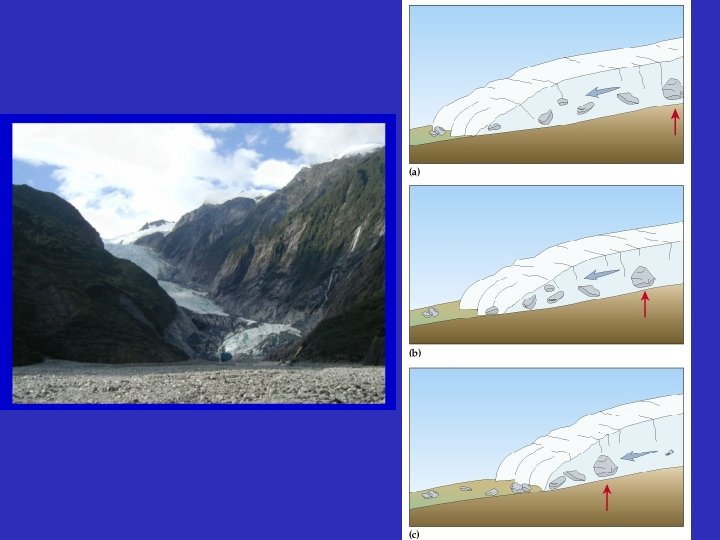
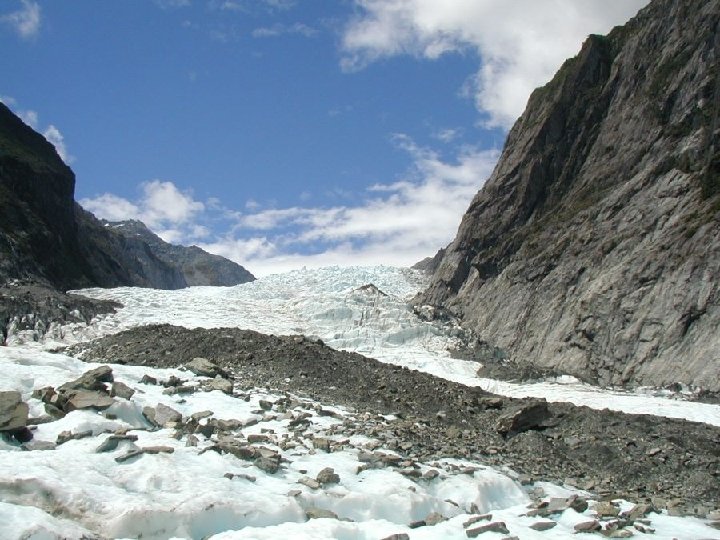
Franz Joseph Glacier and Outwash Plain, New Zealand
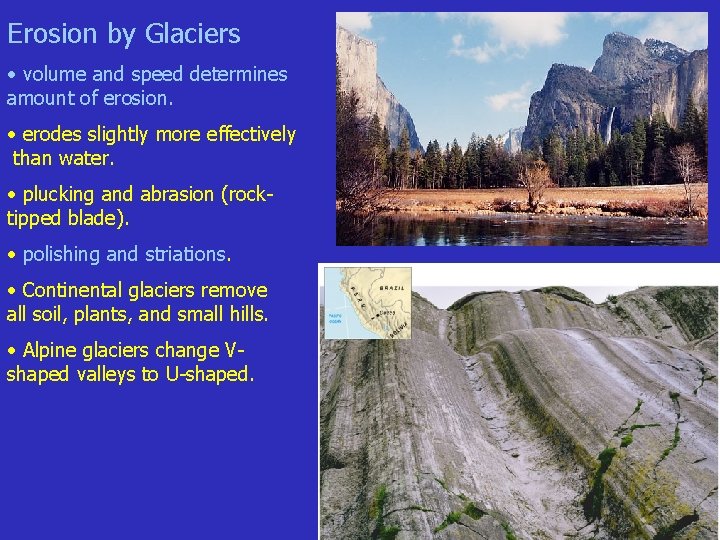
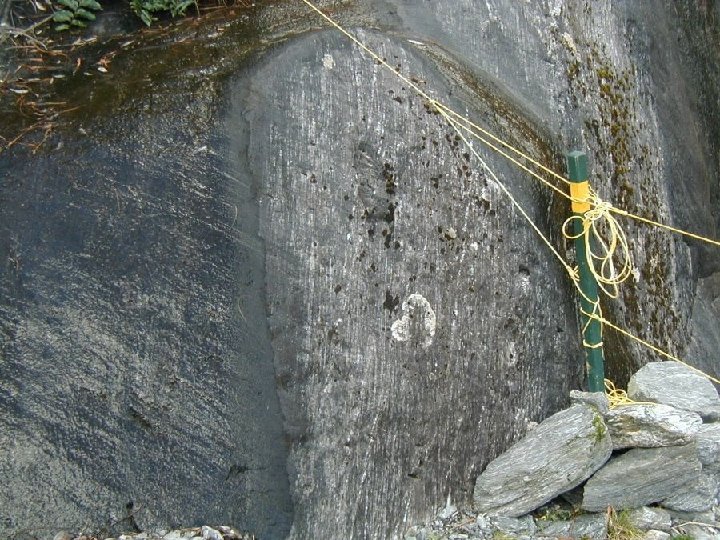
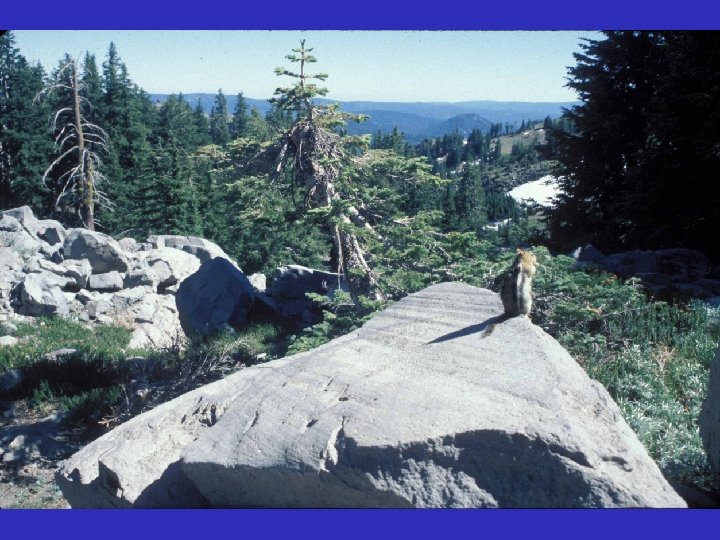
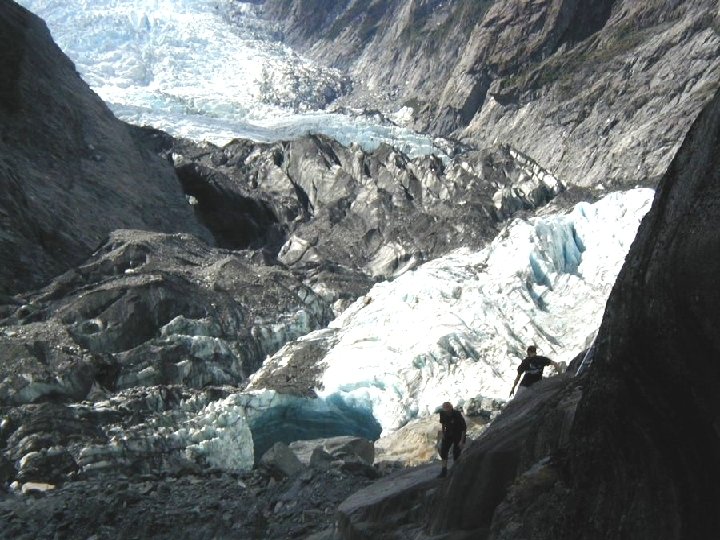
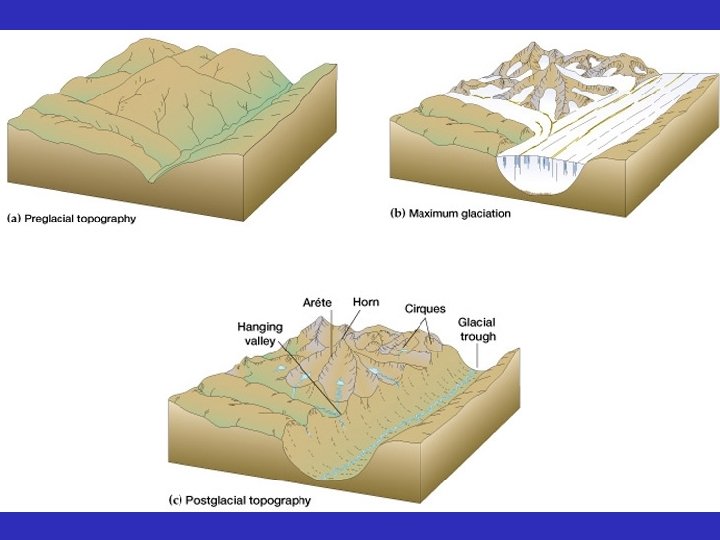
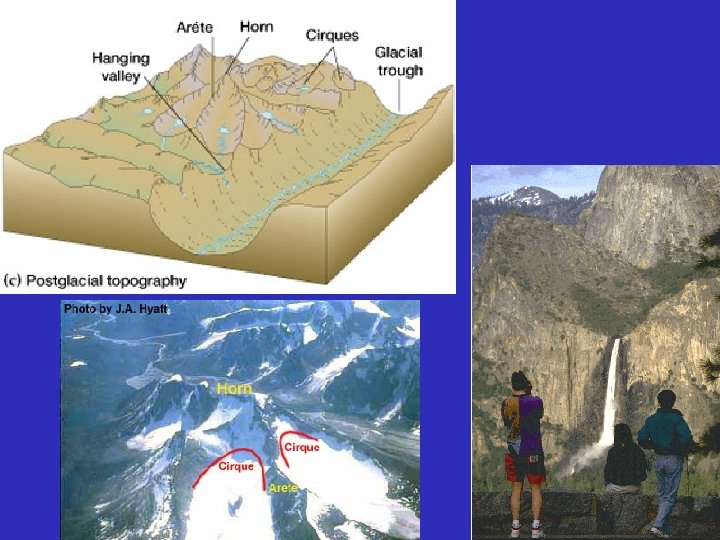
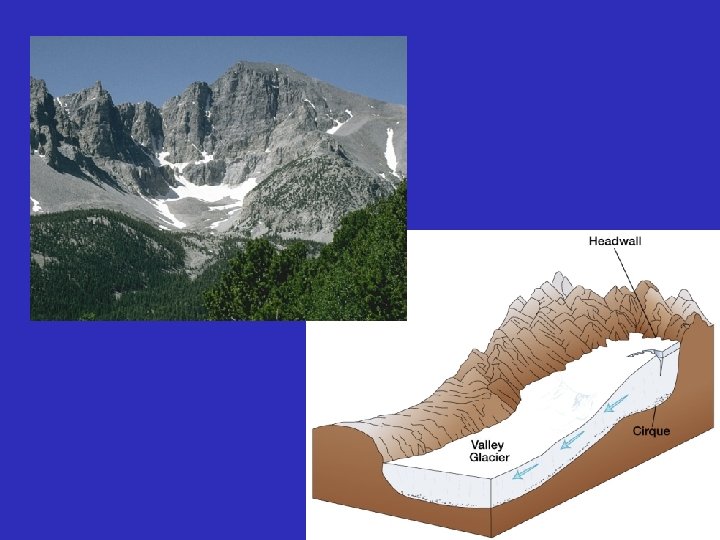
Erosion by Glaciers • volume and speed determines amount of erosion. • erodes slightly more effectively than water. • plucking and abrasion (rocktipped blade). • polishing and striations. • Continental glaciers remove all soil, plants, and small hills. • Alpine glaciers change Vshaped valleys to U-shaped.
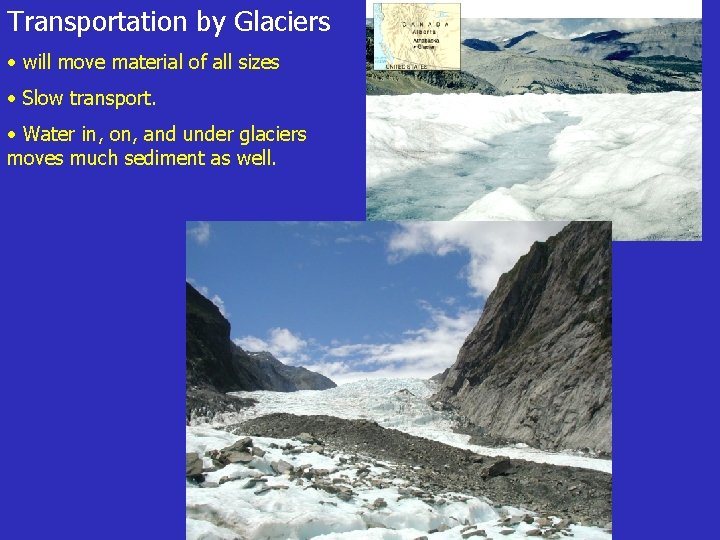
Transportation by Glaciers • will move material of all sizes • Slow transport. • Water in, on, and under glaciers moves much sediment as well.
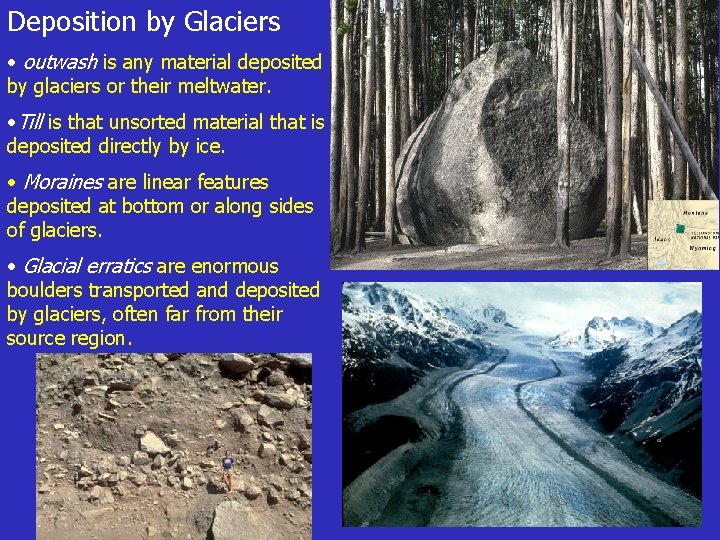
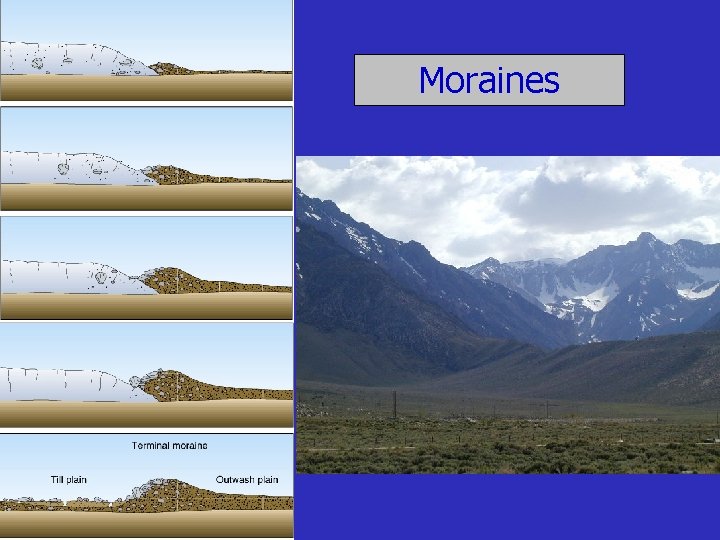
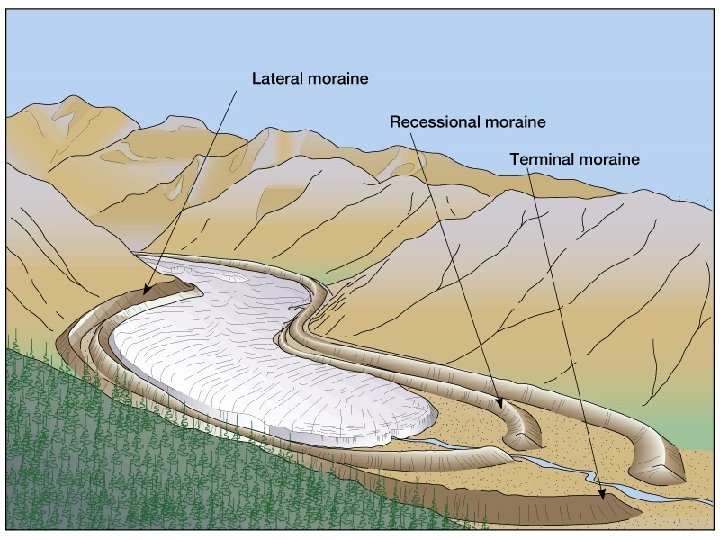
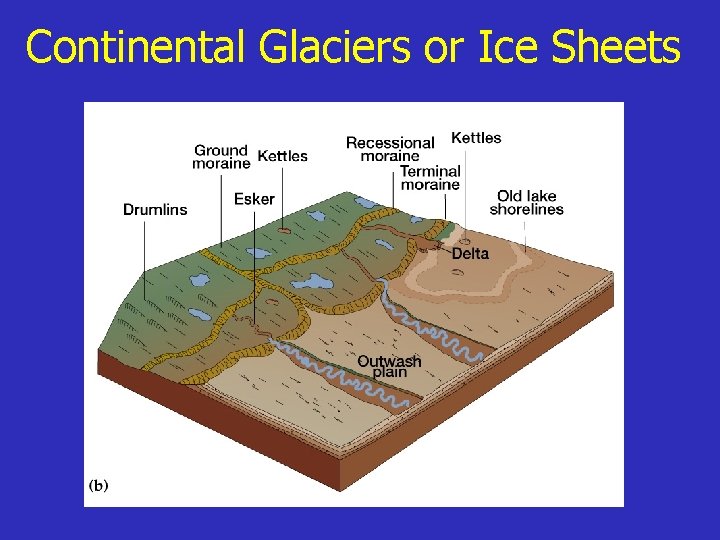
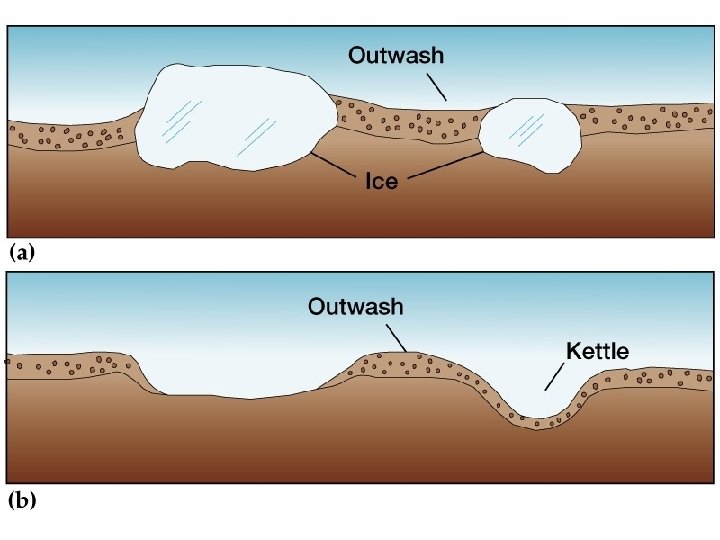
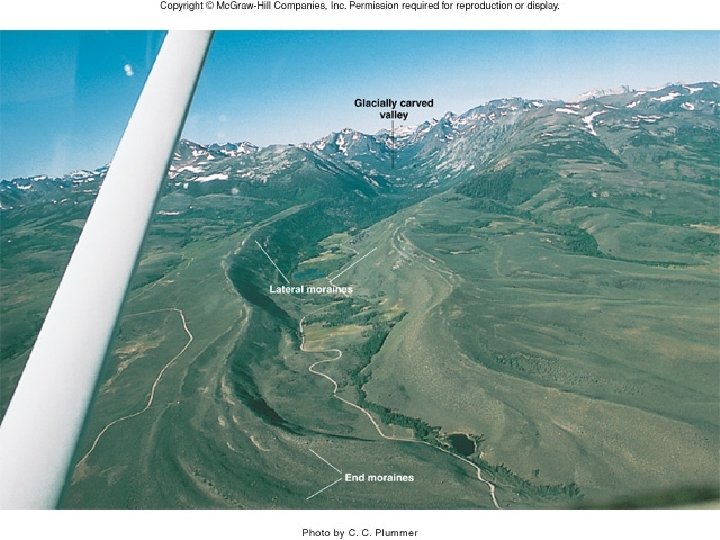
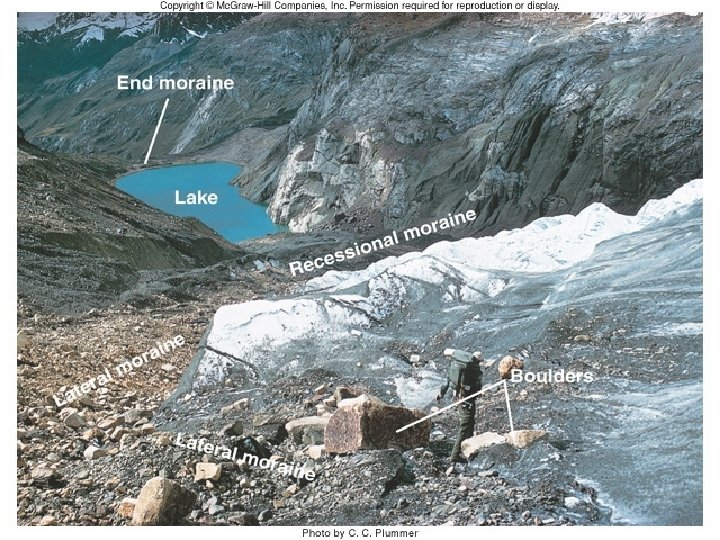
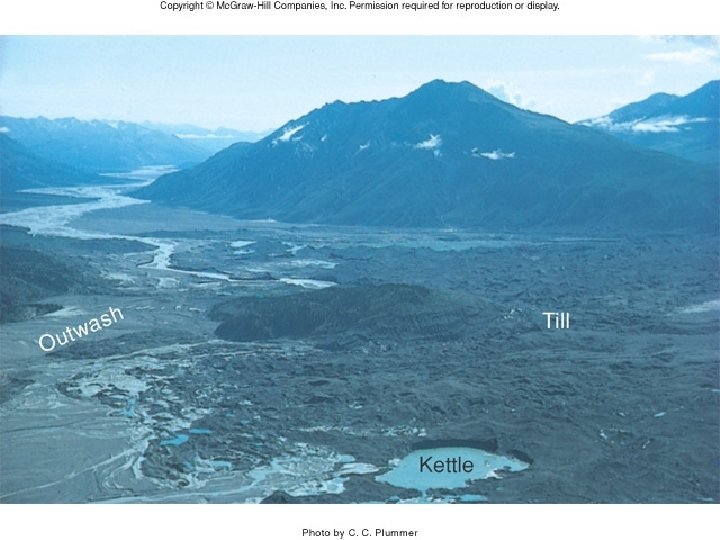
Deposition by Glaciers • outwash is any material deposited by glaciers or their meltwater. • Till is that unsorted material that is deposited directly by ice. • Moraines are linear features deposited at bottom or along sides of glaciers. • Glacial erratics are enormous boulders transported and deposited by glaciers, often far from their source region.
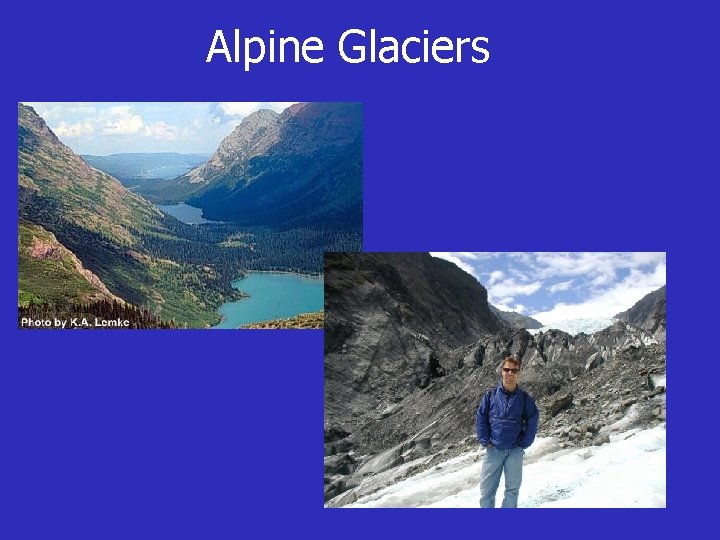
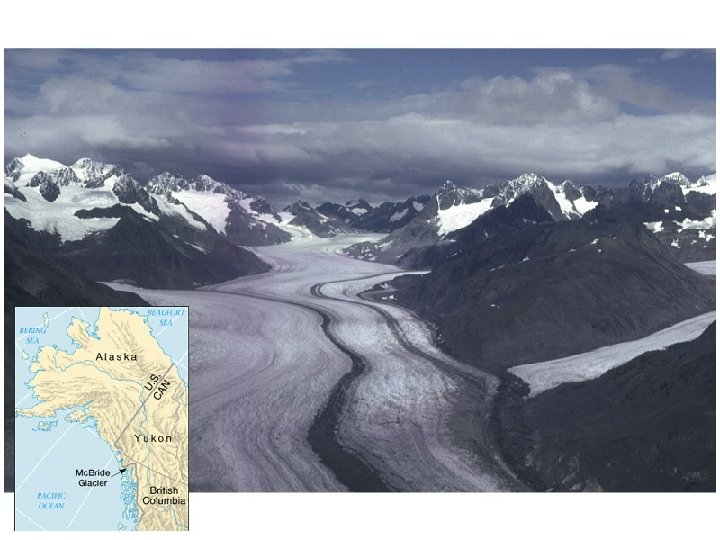
Alpine Glaciers
Moraines
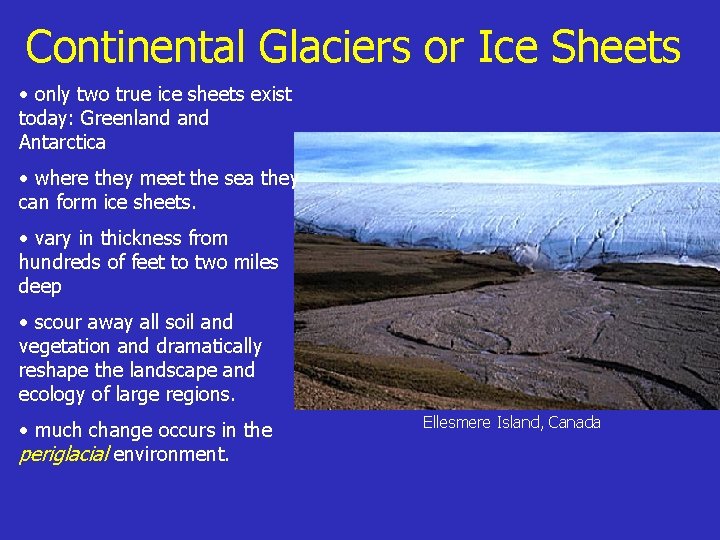
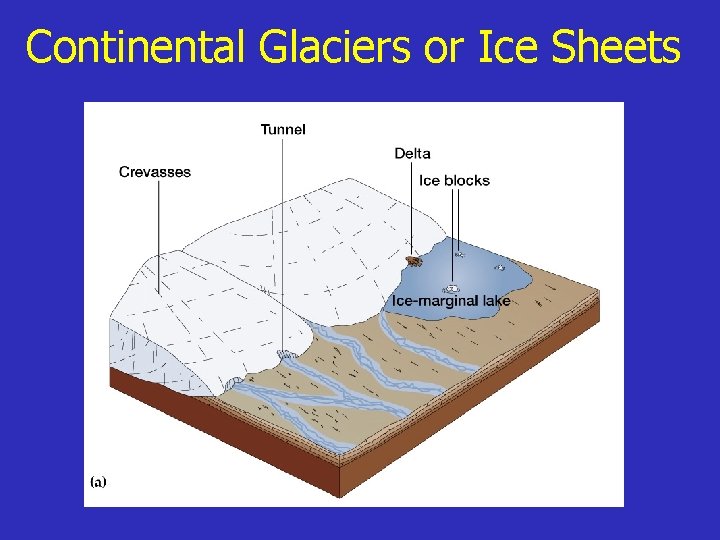
Continental Glaciers or Ice Sheets • only two true ice sheets exist today: Greenland Antarctica • where they meet the sea they can form ice sheets. • vary in thickness from hundreds of feet to two miles deep • scour away all soil and vegetation and dramatically reshape the landscape and ecology of large regions. • much change occurs in the periglacial environment. Ellesmere Island, Canada
Continental Glaciers or Ice Sheets
Continental Glaciers or Ice Sheets
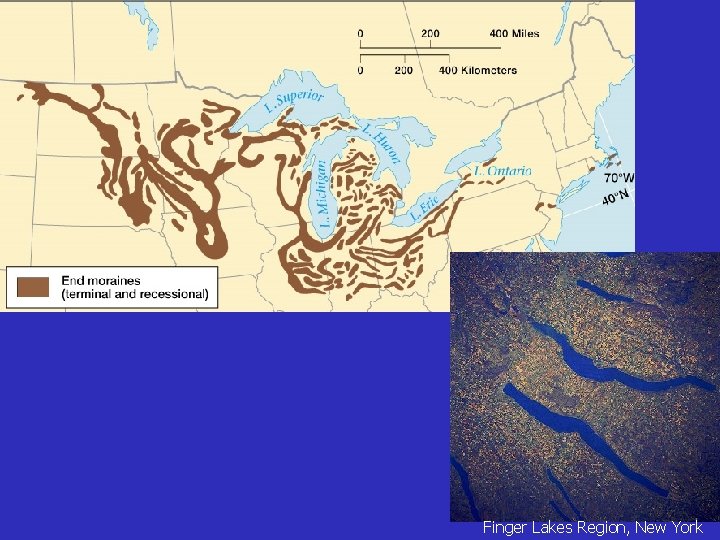
Finger Lakes Region, New York
Fjords