
Glaciers Section 9 4 Glaciers are any large
- Slides: 15
Glaciers Section 9. 4
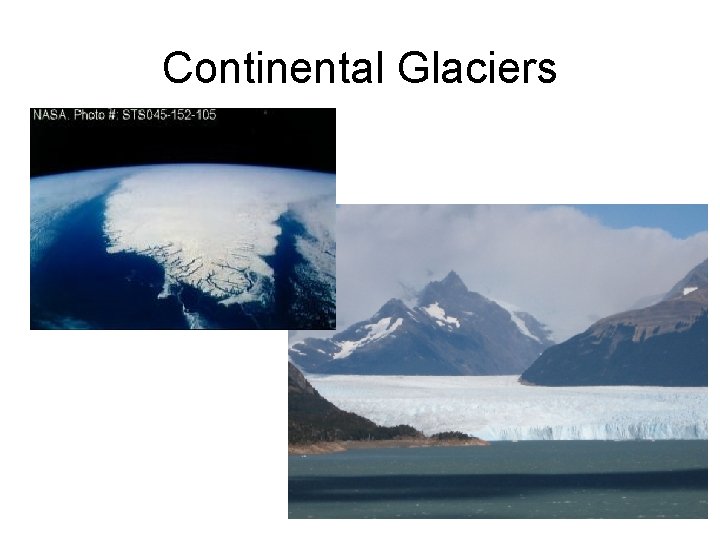
Glaciers are any large mass of ice that moves over land • Continental Glaciers - cover much of a continent or large island (10% of Earth’s land today - Antarctica, Greenland)
Continental Glaciers - spread out in all directions - during the last ice age, glaciers covered 1/3 of Earth and retreated 10, 000 years ago
Continental Glaciers
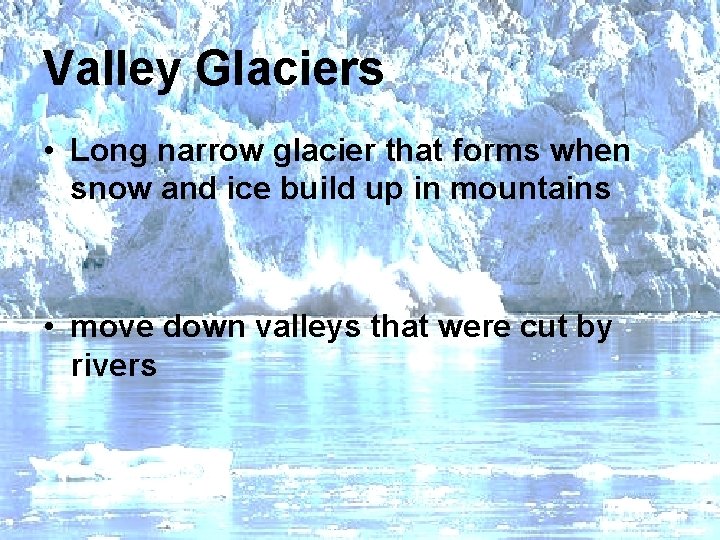
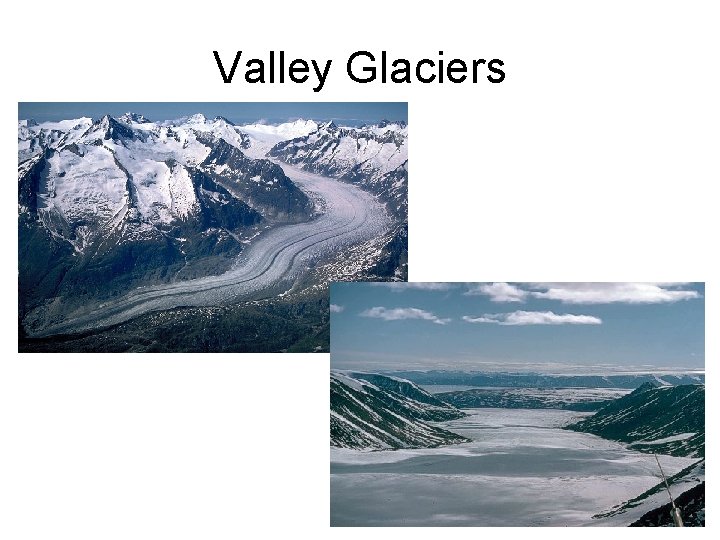
Valley Glaciers • Long narrow glacier that forms when snow and ice build up in mountains • move down valleys that were cut by rivers
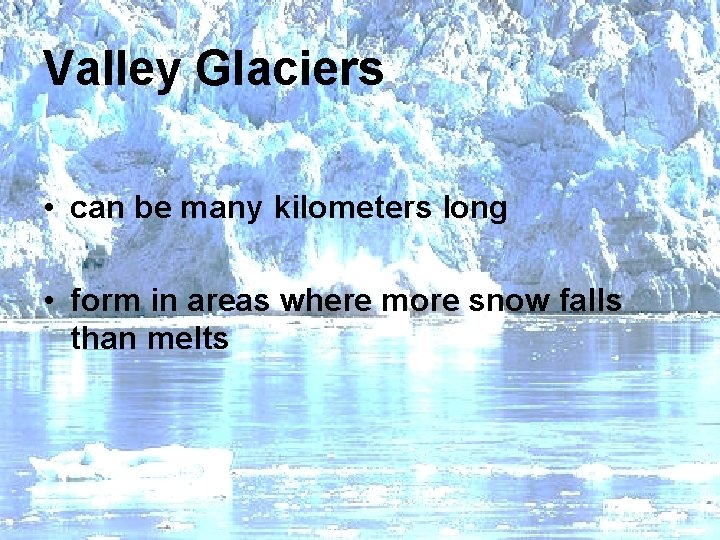
Valley Glaciers • can be many kilometers long • form in areas where more snow falls than melts
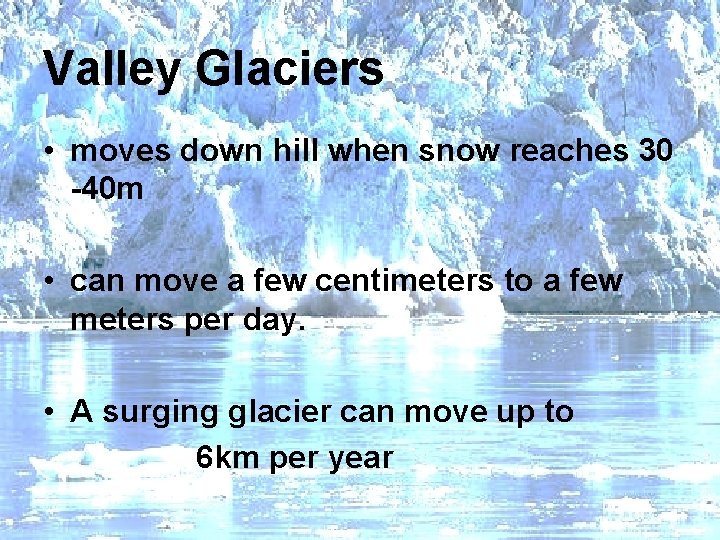
Valley Glaciers • moves down hill when snow reaches 30 -40 m • can move a few centimeters to a few meters per day. • A surging glacier can move up to 6 km per year
Valley Glaciers
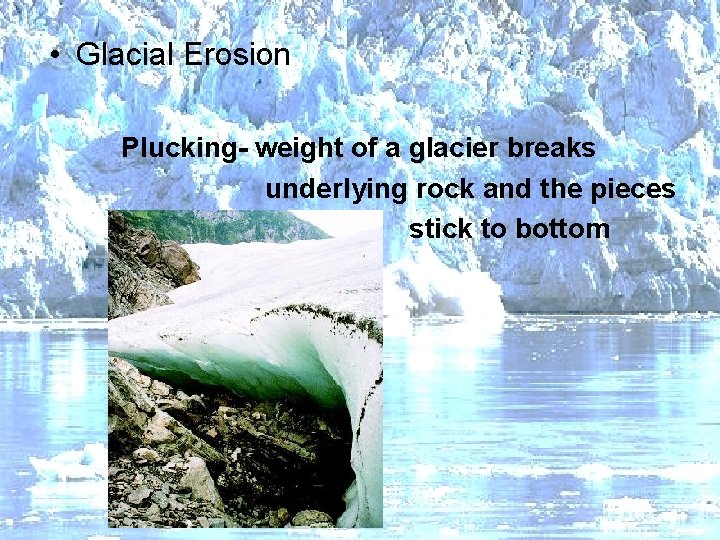
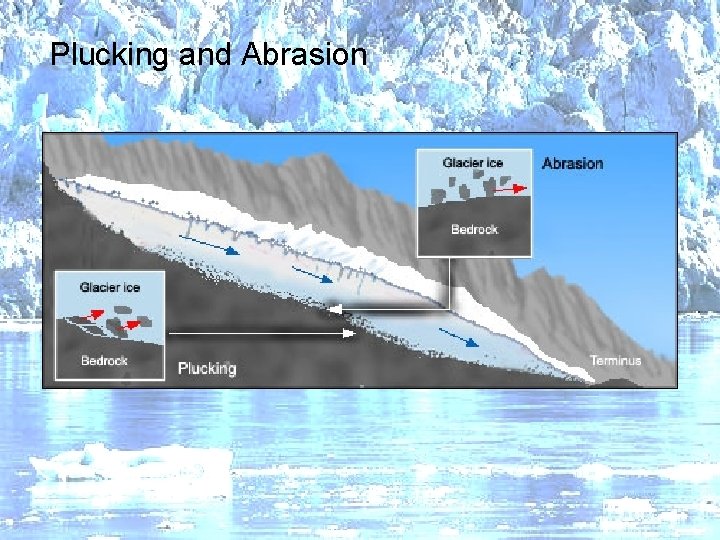
• Glacial Erosion Plucking- weight of a glacier breaks underlying rock and the pieces stick to bottom
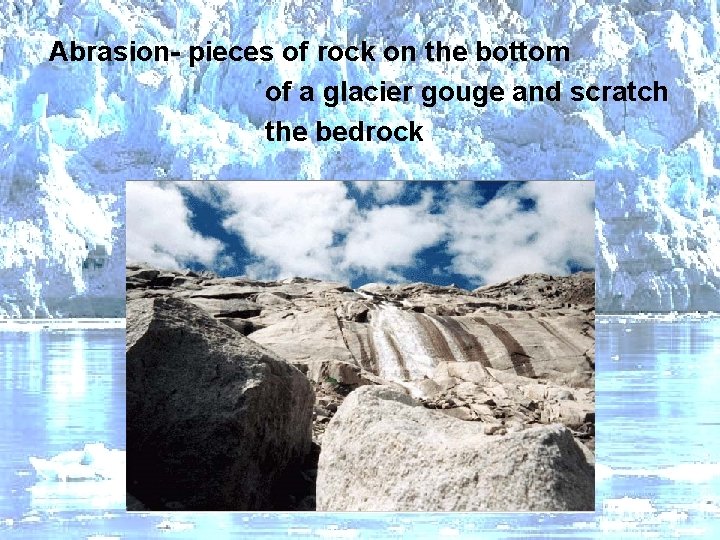
Abrasion- pieces of rock on the bottom of a glacier gouge and scratch the bedrock
Plucking and Abrasion
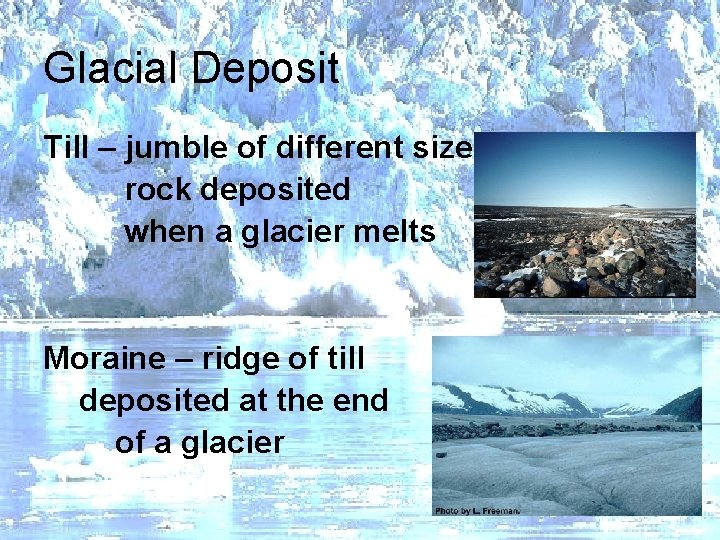
Glacial Deposit Till – jumble of different sized rock deposited when a glacier melts Moraine – ridge of till deposited at the end of a glacier
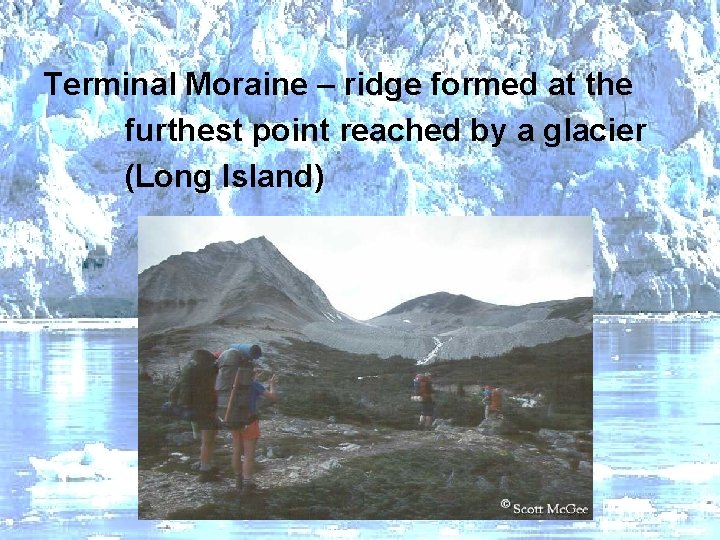
Terminal Moraine – ridge formed at the furthest point reached by a glacier (Long Island)
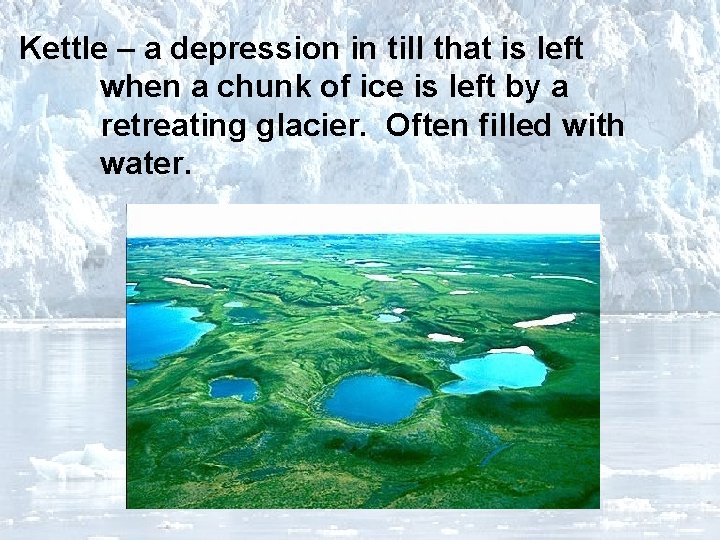
Kettle – a depression in till that is left when a chunk of ice is left by a retreating glacier. Often filled with water.
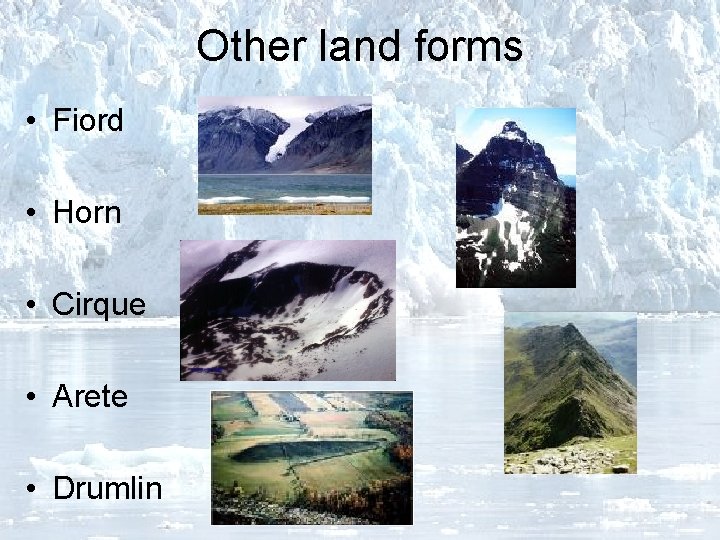
Other land forms • Fiord • Horn • Cirque • Arete • Drumlin