
Glaciers and Glacial Landforms Glacier Mass of ice
- Slides: 35
Glaciers and Glacial Landforms
Glacier - Mass of ice that persists throughout the year. • Accumulation and compaction of snow into ice. • Ice deforms and flows outward responding to gravity. • Flow generally from high to low altitude or high to low latitude. • Ice advance stops where melting equilibrates with flow. • Retreat by melting. • Alpine glaciers - ice fills and flows down valleys. • Ice caps - ice covers mountain peaks. • Ice sheets - ice covers most of continent.
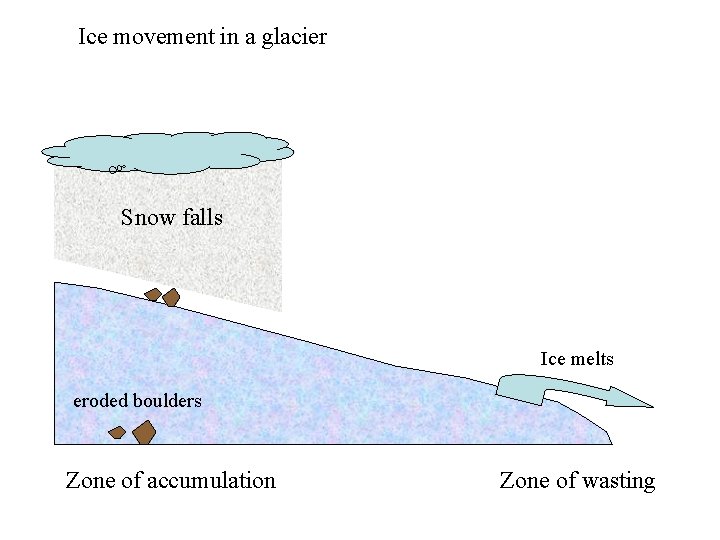
Ice movement in a glacier Snow falls Ice melts eroded boulders Zone of accumulation Zone of wasting
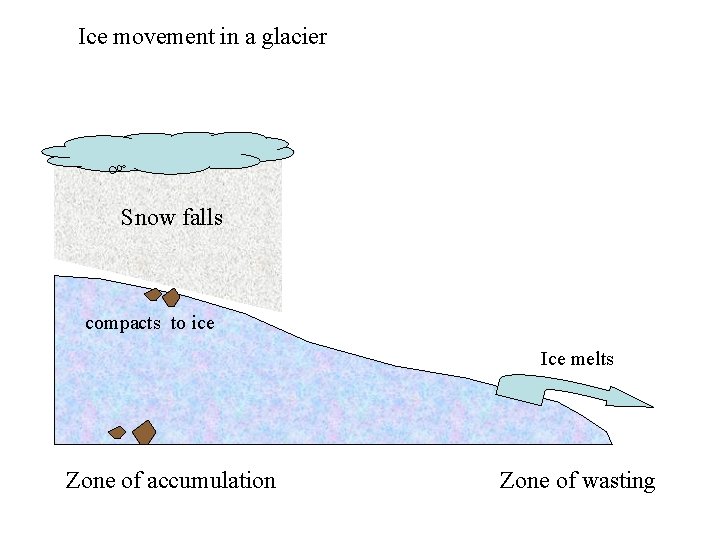
Ice movement in a glacier Snow falls compacts to ice Ice melts Zone of accumulation Zone of wasting
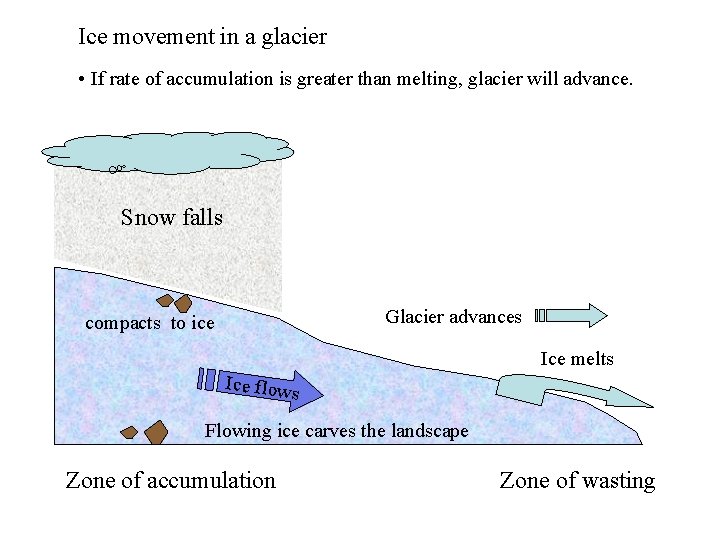
Ice movement in a glacier • If rate of accumulation is greater than melting, glacier will advance. Snow falls Glacier advances compacts to ice Ice melts Ice flows Flowing ice carves the landscape Zone of accumulation Zone of wasting
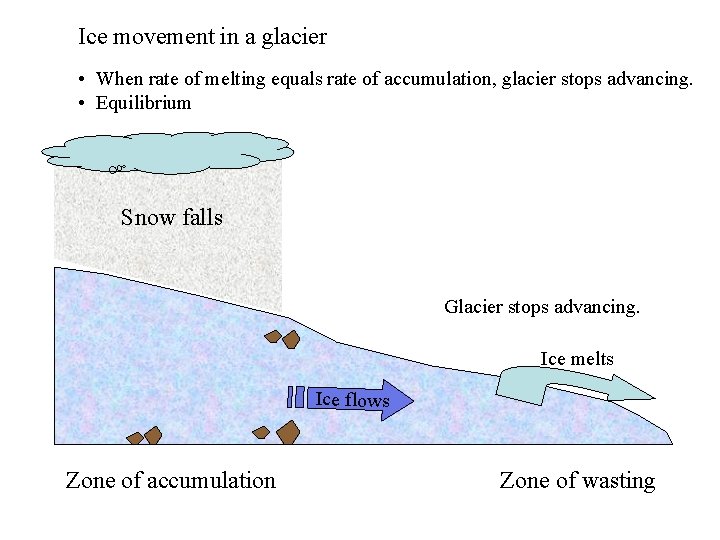
Ice movement in a glacier • When rate of melting equals rate of accumulation, glacier stops advancing. • Equilibrium Snow falls Glacier stops advancing. Ice melts Ice flows Zone of accumulation Zone of wasting
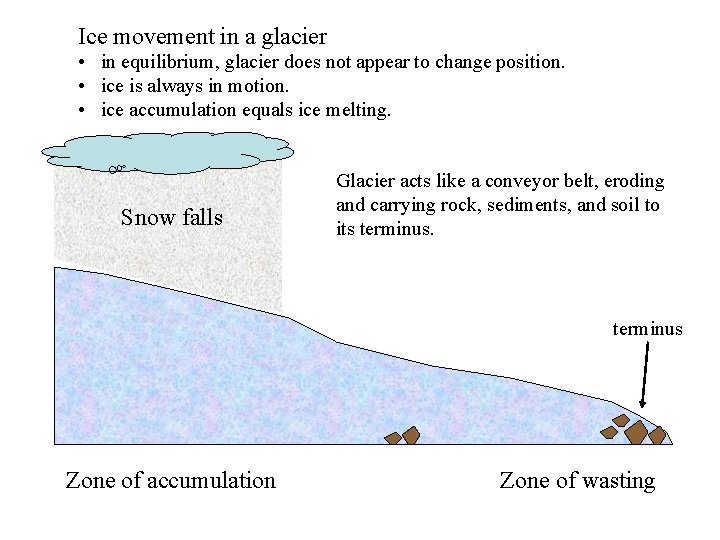
Ice movement in a glacier • in equilibrium, glacier does not appear to change position. • ice is always in motion. • ice accumulation equals ice melting. Snow falls Glacier acts like a conveyor belt, eroding and carrying rock, sediments, and soil to its terminus Zone of accumulation Zone of wasting
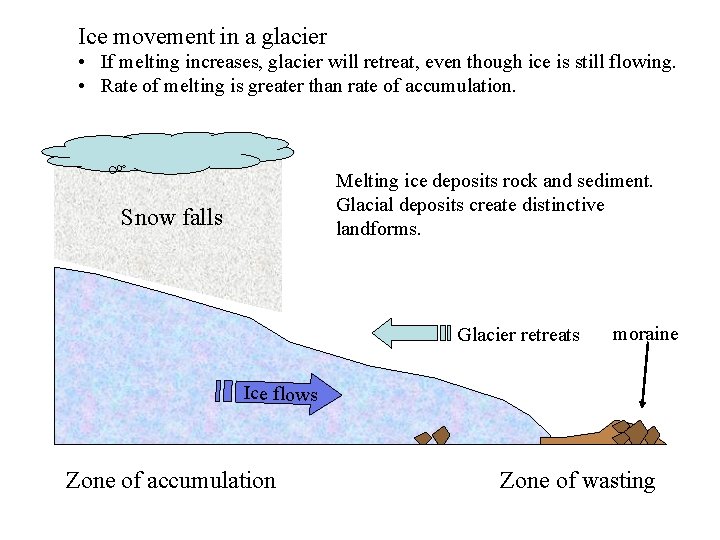
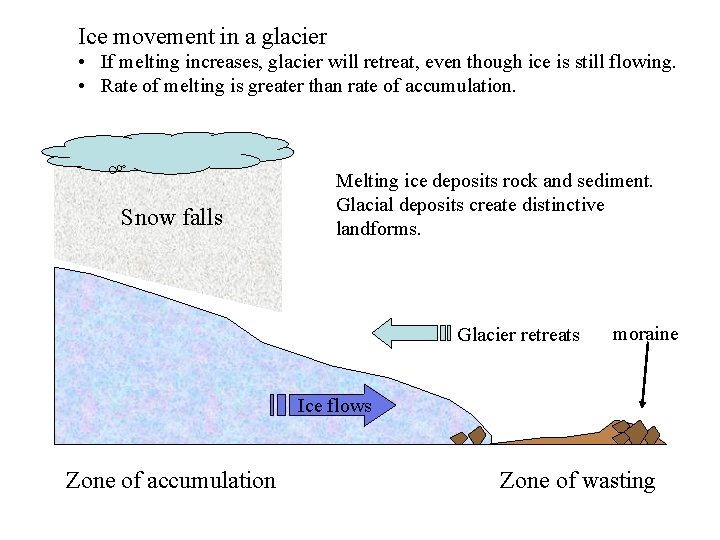
Ice movement in a glacier • If melting increases, glacier will retreat, even though ice is still flowing. • Rate of melting is greater than rate of accumulation. Melting ice deposits rock and sediment. Glacial deposits create distinctive landforms. Snow falls Glacier retreats moraine Ice flows Zone of accumulation Zone of wasting
Ice movement in a glacier • If melting increases, glacier will retreat, even though ice is still flowing. • Rate of melting is greater than rate of accumulation. Snow falls Melting ice deposits rock and sediment. Glacial deposits create distinctive landforms. Glacier retreats moraine Ice flows Zone of accumulation Zone of wasting
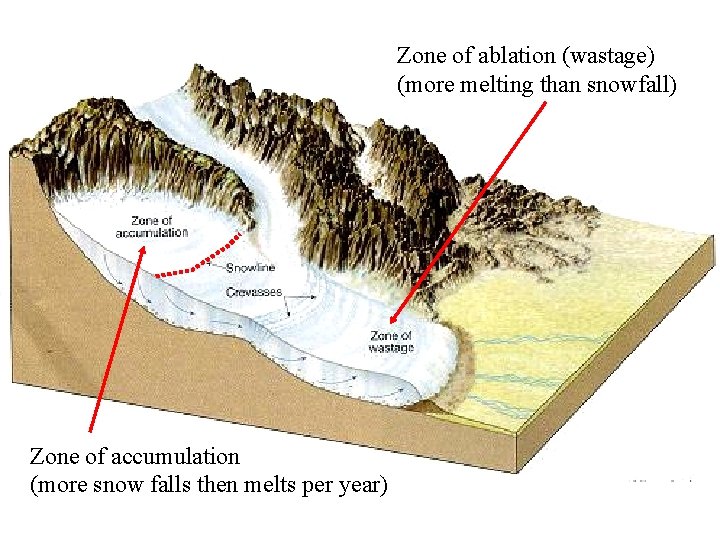
Zone of ablation (wastage) (more melting than snowfall) Zone of accumulation (more snow falls then melts per year)
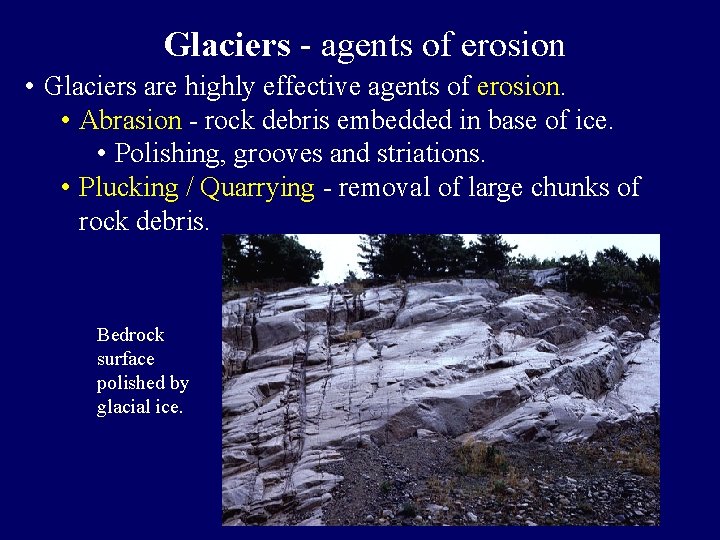
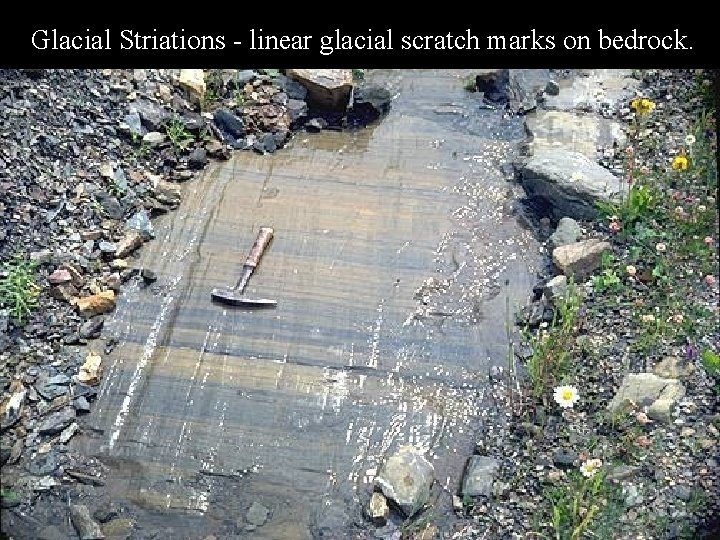
Glaciers - agents of erosion • Glaciers are highly effective agents of erosion. • Abrasion - rock debris embedded in base of ice. • Polishing, grooves and striations. • Plucking / Quarrying - removal of large chunks of rock debris. Bedrock surface polished by glacial ice.
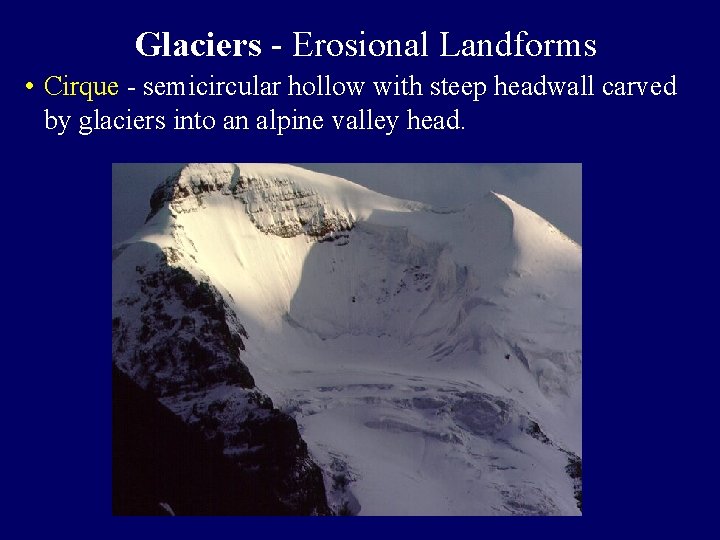
Glaciers - Erosional Landforms • Cirque - semicircular hollow with steep headwall carved by glaciers into an alpine valley head.
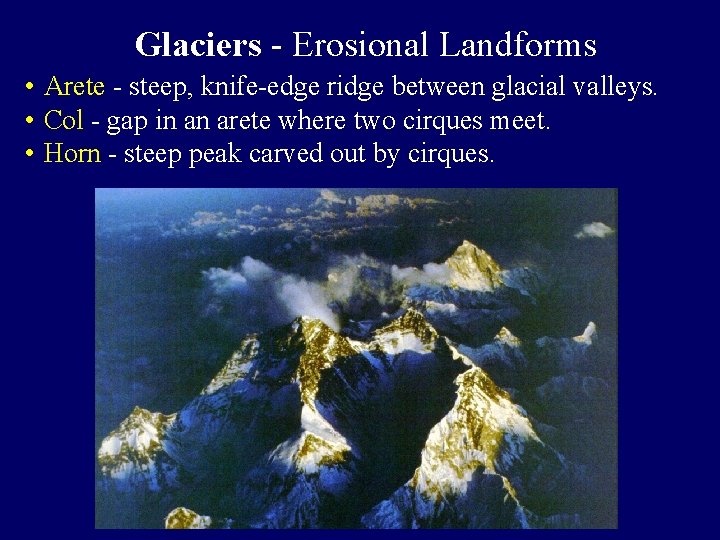
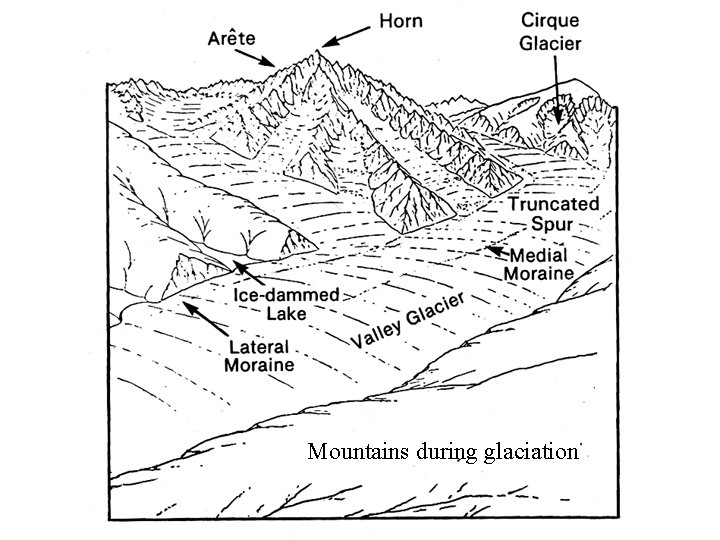
Glaciers - Erosional Landforms • Arete - steep, knife-edge ridge between glacial valleys. • Col - gap in an arete where two cirques meet. • Horn - steep peak carved out by cirques.
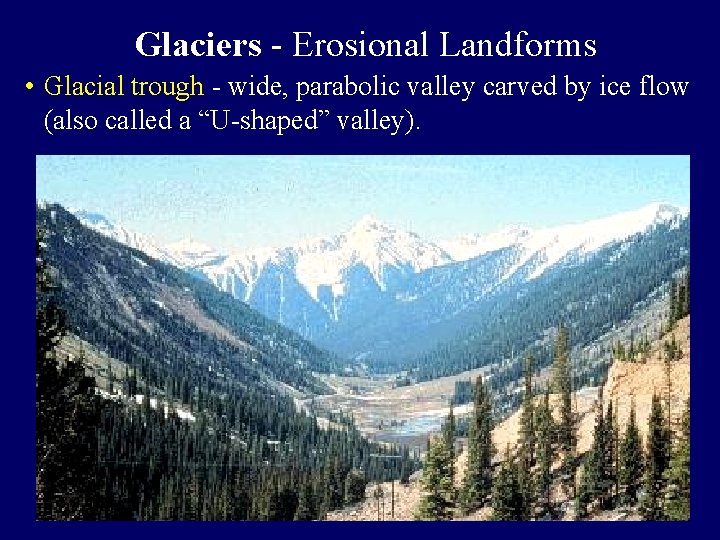
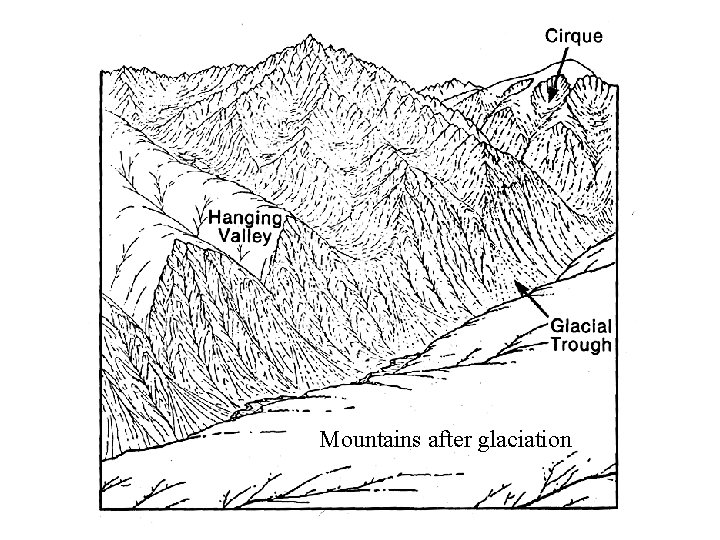
Glaciers - Erosional Landforms • Glacial trough - wide, parabolic valley carved by ice flow (also called a “U-shaped” valley).
Mountains during glaciation
Mountains after glaciation
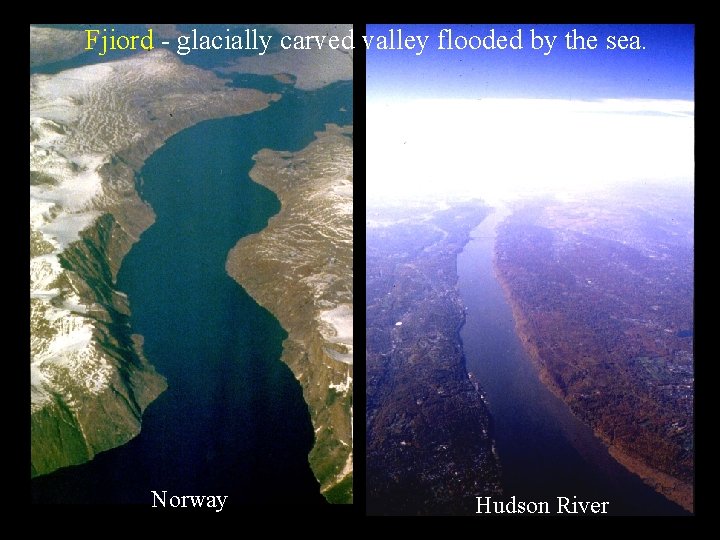
Fjiord - glacially carved valley flooded by the sea. Norway Hudson River
Glacial Striations - linear glacial scratch marks on bedrock.
Glaciers - Agents of Deposition • Glaciers are highly effective agents of deposition. • Drift - rock debris deposited by glaciers. • Glacial Lake Deposits - pebble, sand, clay and silt sediments accumulated in meltwater lakes. • Loess - very fine, wind-blown rock flour.
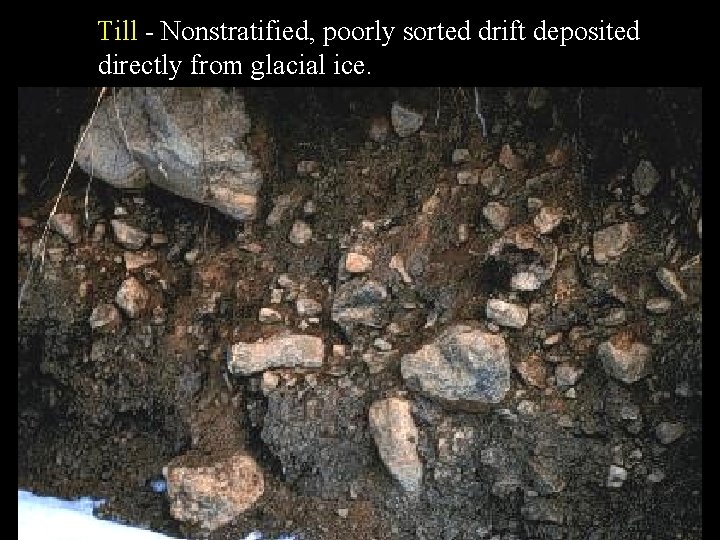
Till - Nonstratified, poorly sorted drift deposited directly from glacial ice.
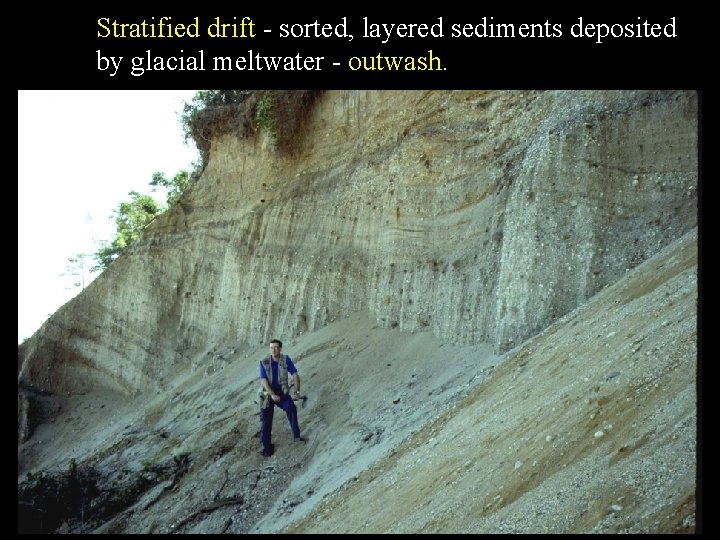
Stratified drift - sorted, layered sediments deposited by glacial meltwater - outwash.
Glaciers - Depositional Landforms • Ice contact deposits - sediments melted directly out from the ice. • Outwash deposits - sediments deposited by meltwater flowing from the ice.
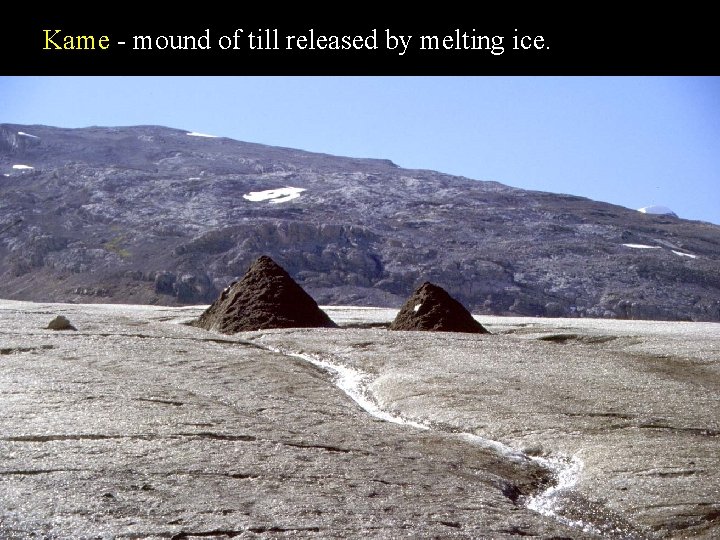
Kame - mound of till released by melting ice.
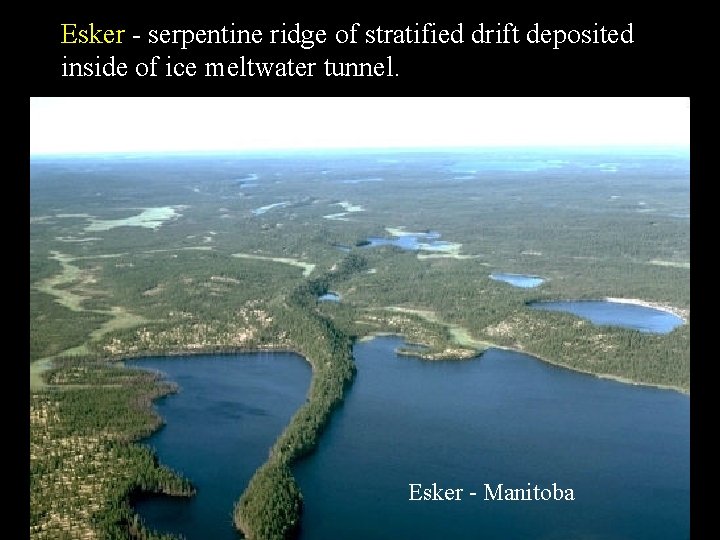
Esker - serpentine ridge of stratified drift deposited inside of ice meltwater tunnel. Esker - Manitoba
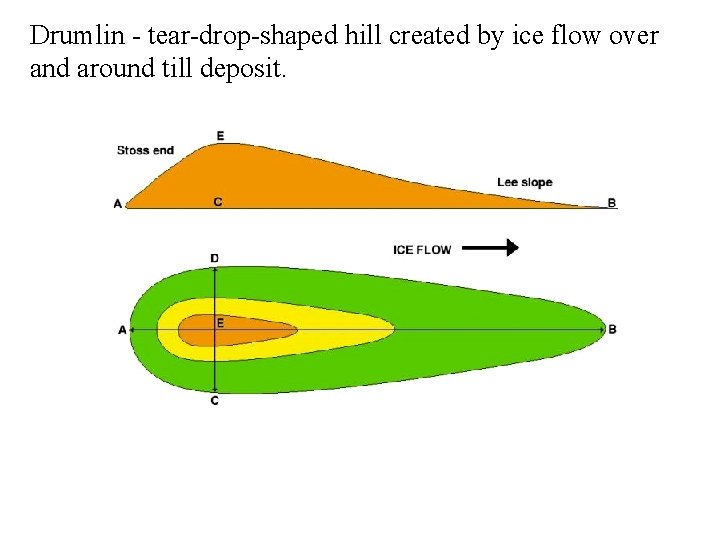
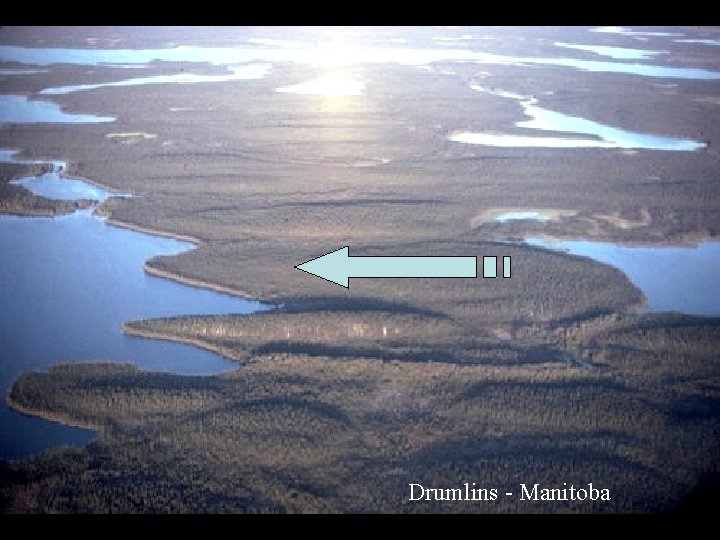
Drumlin - tear-drop-shaped hill created by ice flow over and around till deposit.
Drumlins - Manitoba
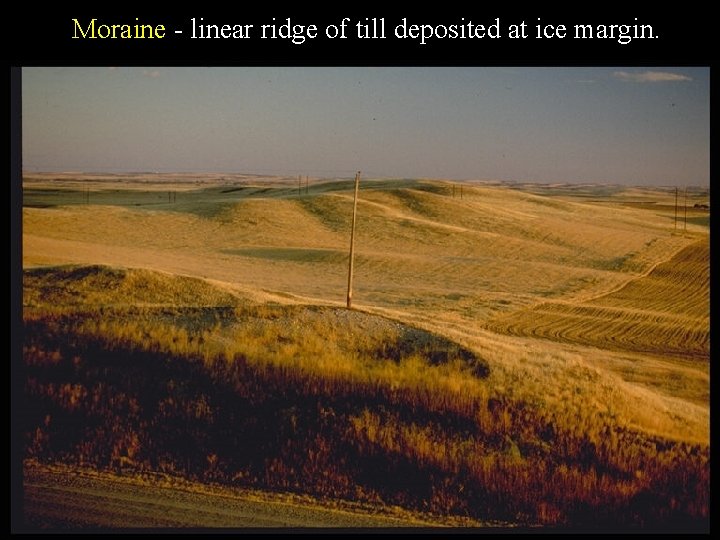
Moraine - linear ridge of till deposited at ice margin.
Glaciers - Depositional Landforms • Outwash features - deposition by meltwater in the outwash plain (region in front of ice receiving flow of meltwater). • Erratics - boulder size and larger blocks of rock deposited by melting glacial ice.
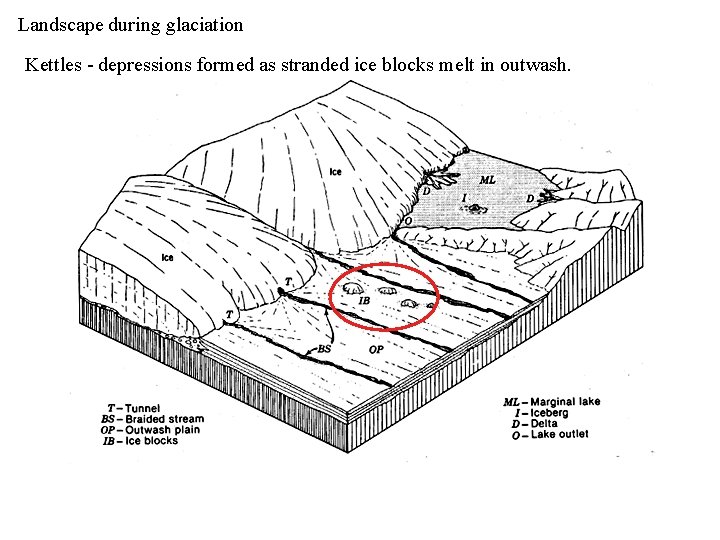
Landscape during glaciation Kettles - depressions formed as stranded ice blocks melt in outwash.
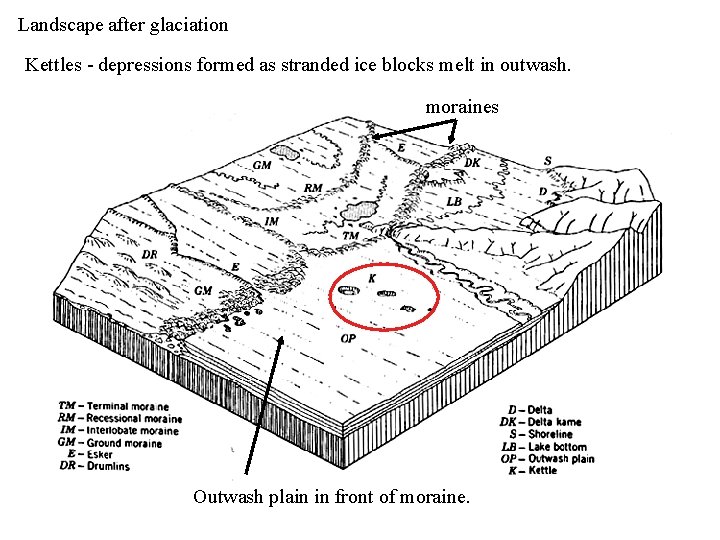
Landscape after glaciation Kettles - depressions formed as stranded ice blocks melt in outwash. moraines Outwash plain in front of moraine.
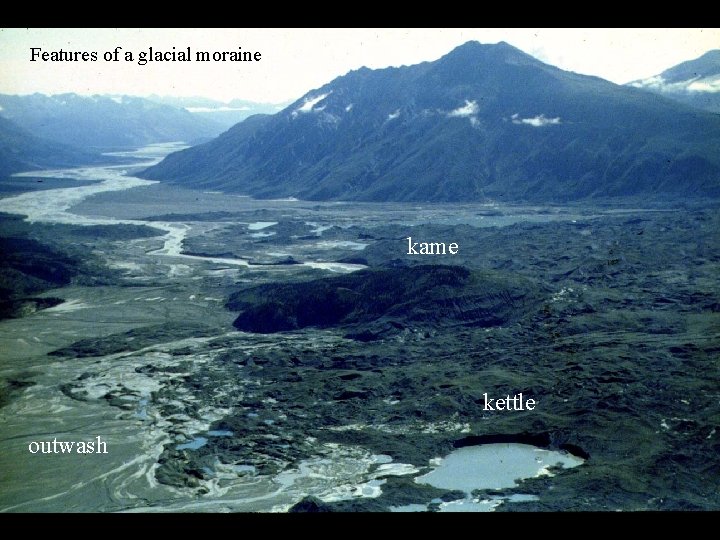
Features of a glacial moraine kame kettle outwash
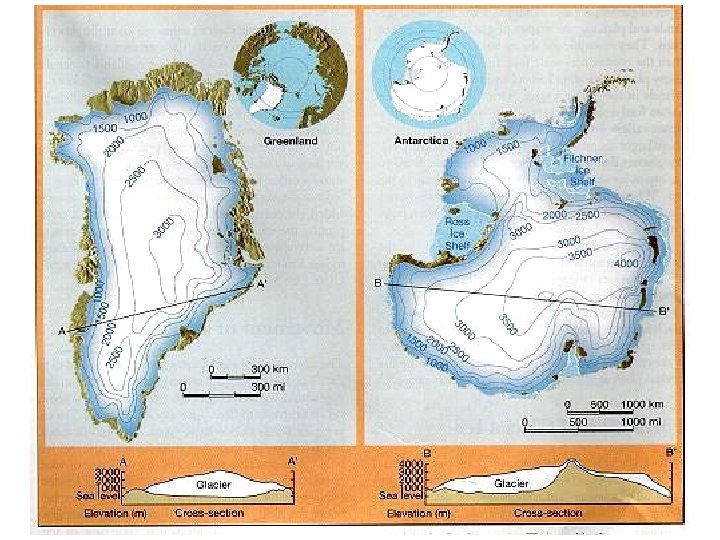
Ice Caps and Ice Sheets - unconfined by topography. • Ice Cap - less than 50, 000 km 2. • Ice Sheet - cover major portion of a continent. • Ice thicker than topography. • Ice flows in direction of slope of the glacier. • Greenland Antarctica - 3000 to 4000 m thick (10 13 thousand feet or 1. 5 to 2 miles!)
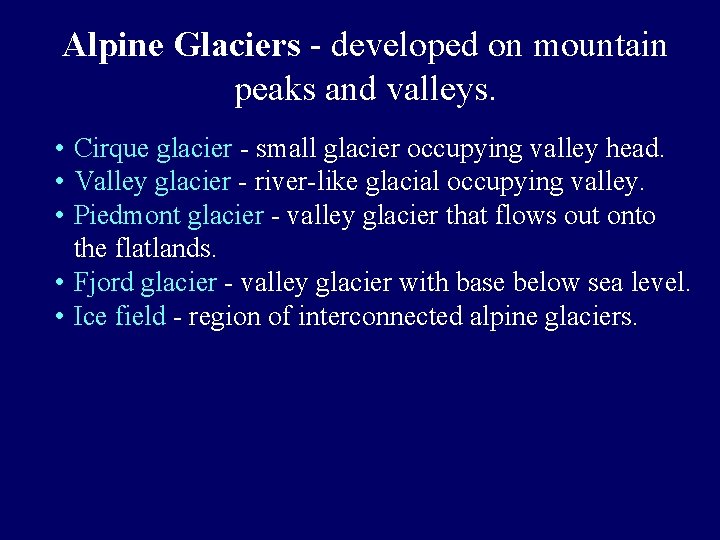
Alpine Glaciers - developed on mountain peaks and valleys. • Cirque glacier - small glacier occupying valley head. • Valley glacier - river-like glacial occupying valley. • Piedmont glacier - valley glacier that flows out onto the flatlands. • Fjord glacier - valley glacier with base below sea level. • Ice field - region of interconnected alpine glaciers.
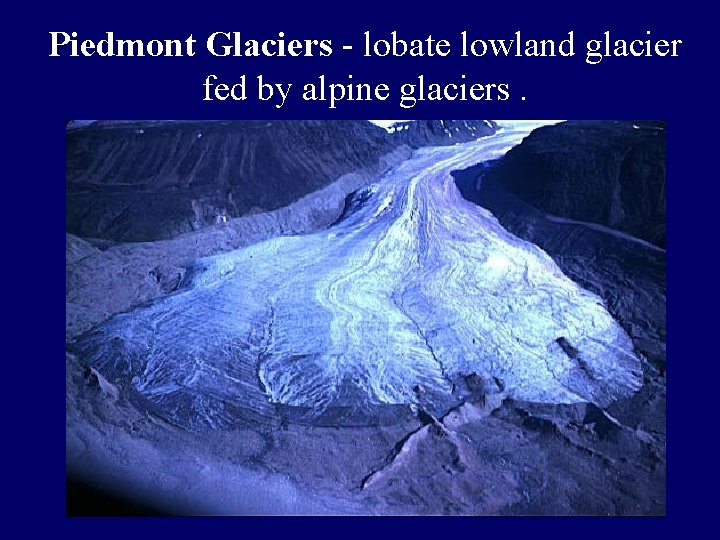
Piedmont Glaciers - lobate lowland glacier fed by alpine glaciers.