GEOS 22060 GEOS 32060 ASTR 45900 What makes






- Slides: 36
GEOS 22060/ GEOS 32060 / ASTR 45900 What makes a planet habitable? Lecture 9 Thursday 26 April 2018
Today • Reminder: Graduate students + undergraduates who choose the term paper option: Send term paper topics to kite@uchicago. edu before end Fri 27 for approval. Term papers due in at the start of the final (10: 30 a-12: 30 p , Thu 7 June , HGS 180) • Seeking volunteers for Yang et al. 2013 ‘Stabilizing cloud feedback dramatically expands the habitable zone of tidally locked planets’ (to be presented on Tue 8 May) • Homework 3 is due in class Tue 1 May • Office hours after class today • Wrap-up of impact erosion • Runaway greenhouse
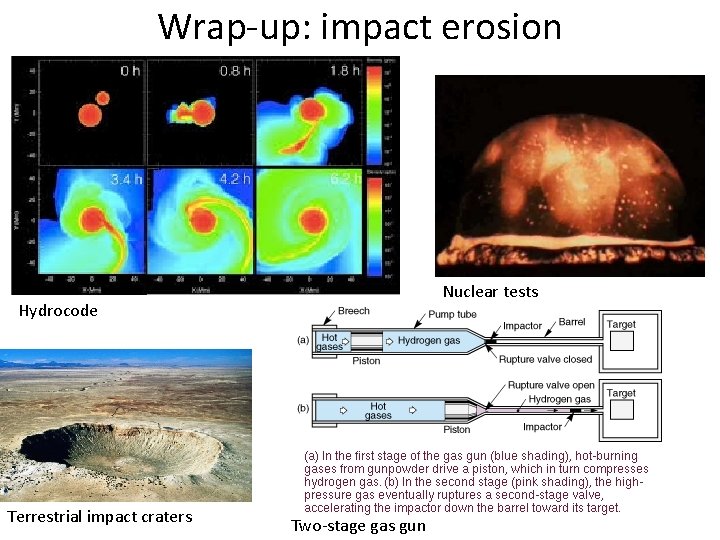
Wrap-up: impact erosion Nuclear tests Hydrocode Terrestrial impact craters Two-stage gas gun
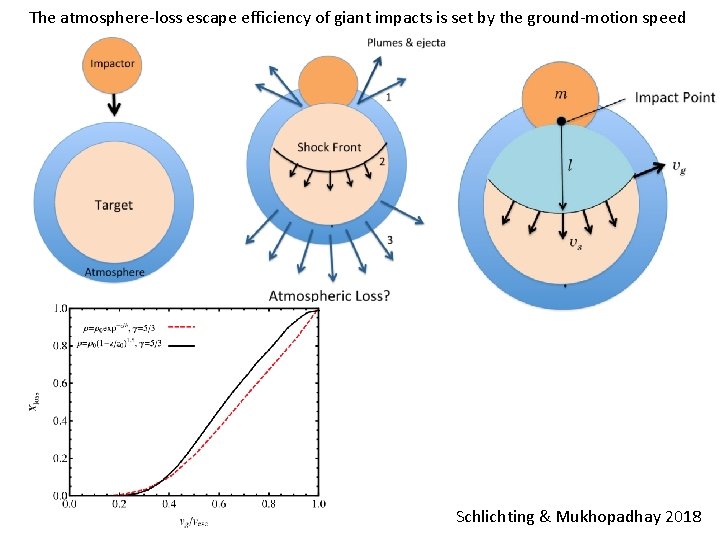
The atmosphere-loss escape efficiency of giant impacts is set by the ground-motion speed Schlichting & Mukhopadhay 2018
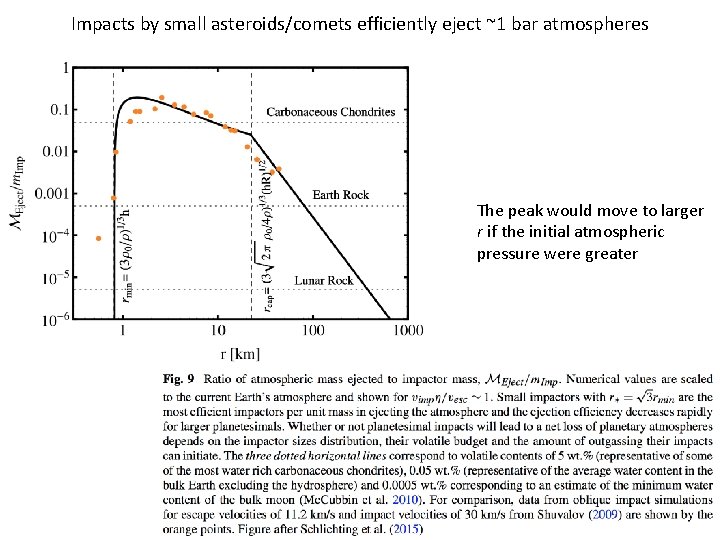
Impacts by small asteroids/comets efficiently eject ~1 bar atmospheres The peak would move to larger r if the initial atmospheric pressure were greater
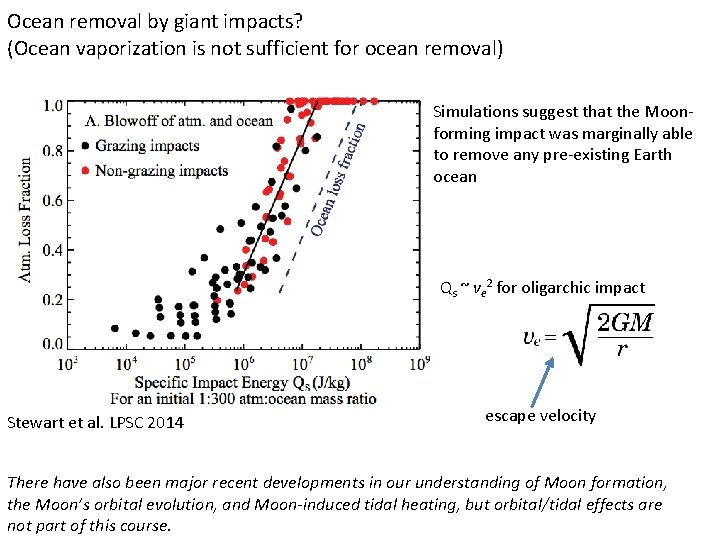
Ocean removal by giant impacts? (Ocean vaporization is not sufficient for ocean removal) Simulations suggest that the Moonforming impact was marginally able to remove any pre-existing Earth ocean Qs ~ ve 2 for oligarchic impact Stewart et al. LPSC 2014 escape velocity There have also been major recent developments in our understanding of Moon formation, the Moon’s orbital evolution, and Moon-induced tidal heating, but orbital/tidal effects are not part of this course.
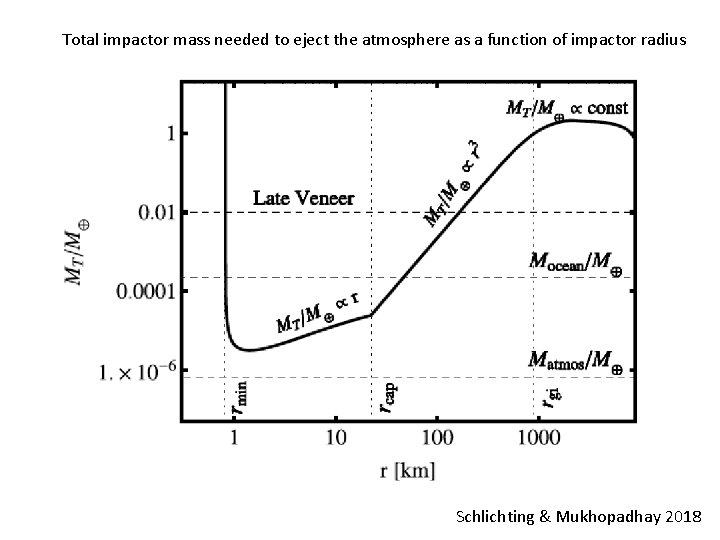
Total impactor mass needed to eject the atmosphere as a function of impactor radius Schlichting & Mukhopadhay 2018
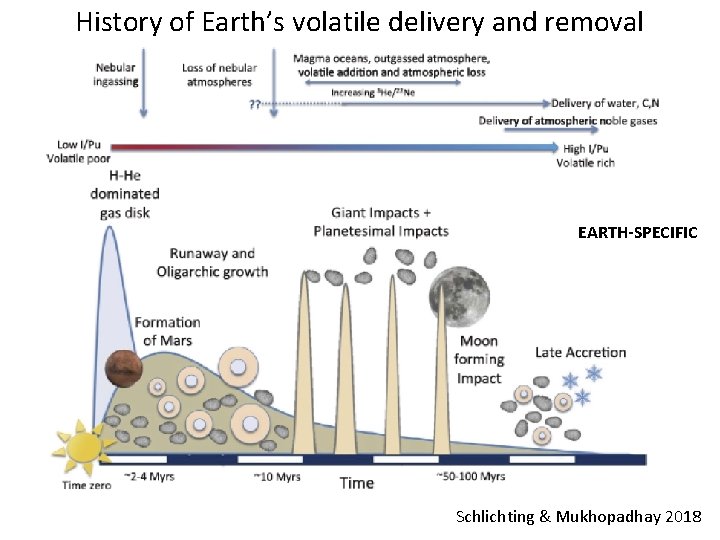
History of Earth’s volatile delivery and removal EARTH-SPECIFIC Schlichting & Mukhopadhay 2018
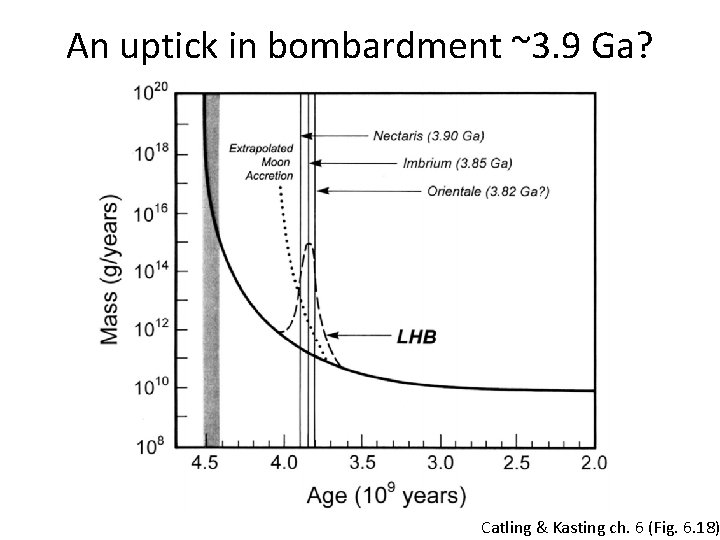
An uptick in bombardment ~3. 9 Ga? Catling & Kasting ch. 6 (Fig. 6. 18)
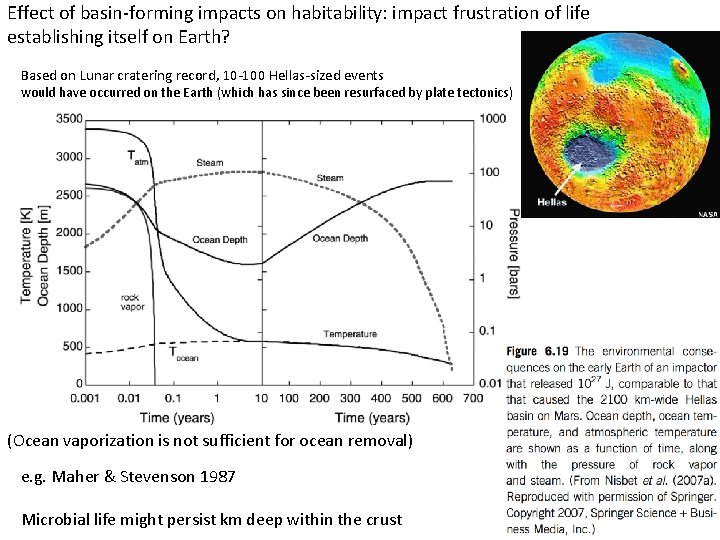
Effect of basin-forming impacts on habitability: impact frustration of life establishing itself on Earth? Based on Lunar cratering record, 10 -100 Hellas-sized events would have occurred on the Earth (which has since been resurfaced by plate tectonics) (Ocean vaporization is not sufficient for ocean removal) e. g. Maher & Stevenson 1987 Microbial life might persist km deep within the crust
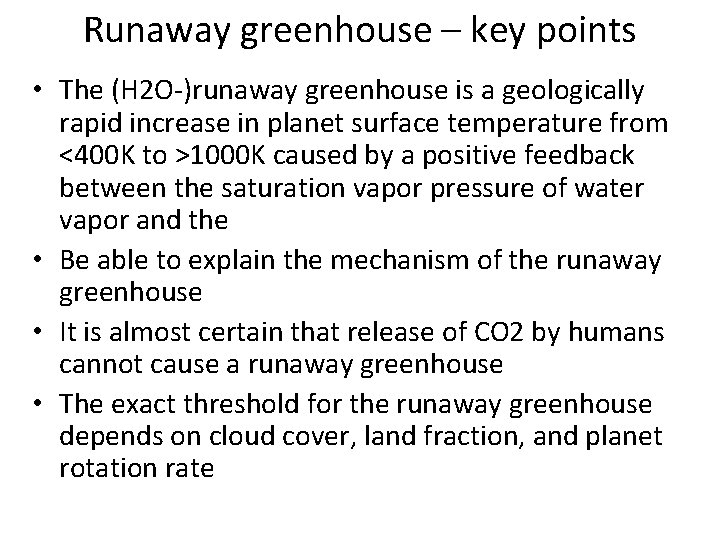
Runaway greenhouse – key points • The (H 2 O-)runaway greenhouse is a geologically rapid increase in planet surface temperature from <400 K to >1000 K caused by a positive feedback between the saturation vapor pressure of water vapor and the • Be able to explain the mechanism of the runaway greenhouse • It is almost certain that release of CO 2 by humans cannot cause a runaway greenhouse • The exact threshold for the runaway greenhouse depends on cloud cover, land fraction, and planet rotation rate
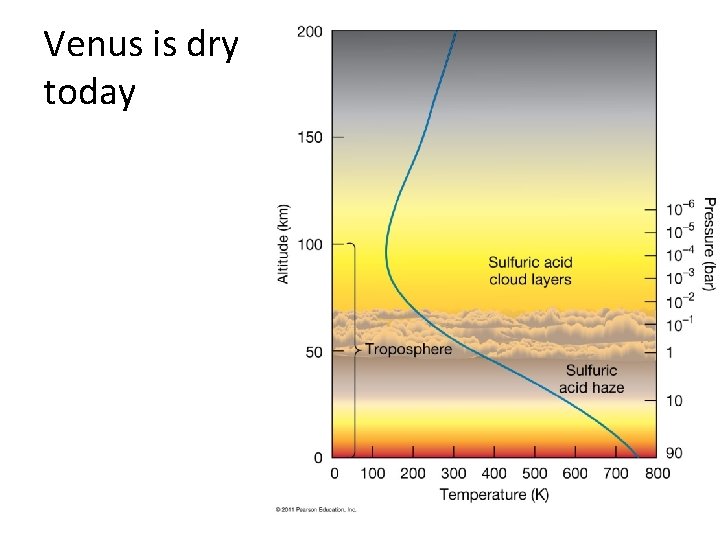
Venus is dry today
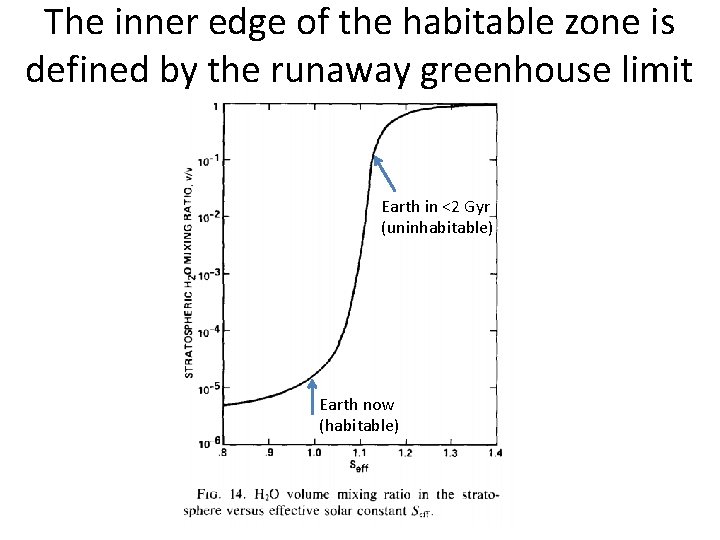
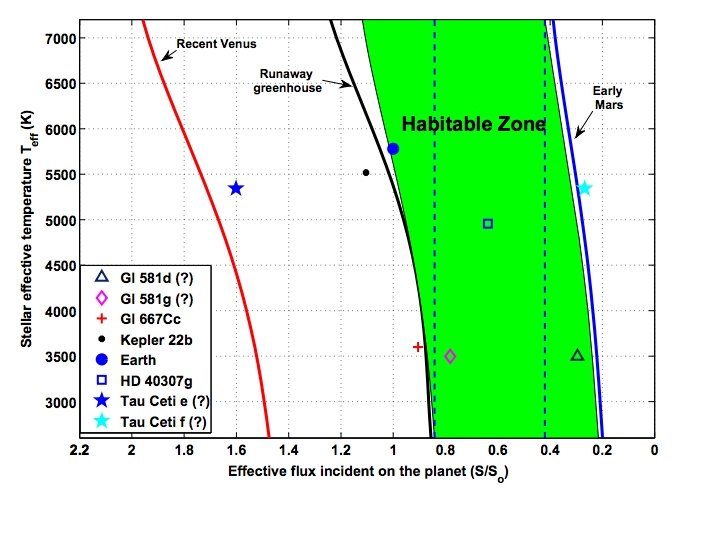
The inner edge of the habitable zone is defined by the runaway greenhouse limit Earth in <2 Gyr (uninhabitable) Earth now (habitable)
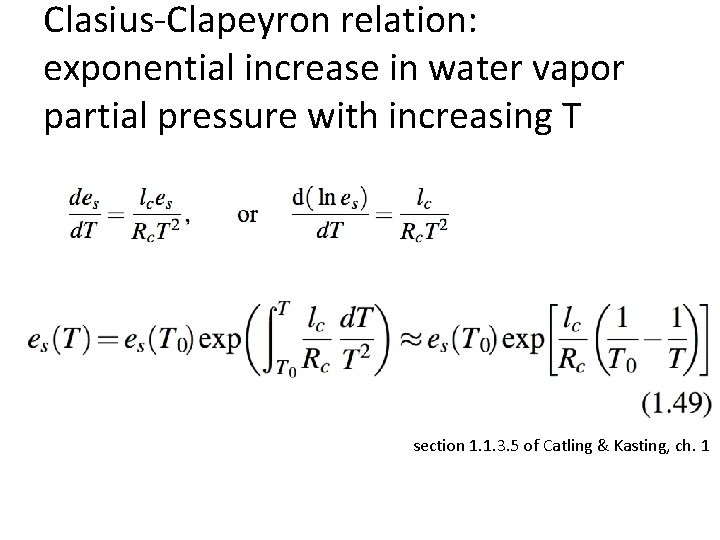
Clasius-Clapeyron relation: exponential increase in water vapor partial pressure with increasing T section 1. 1. 3. 5 of Catling & Kasting, ch. 1
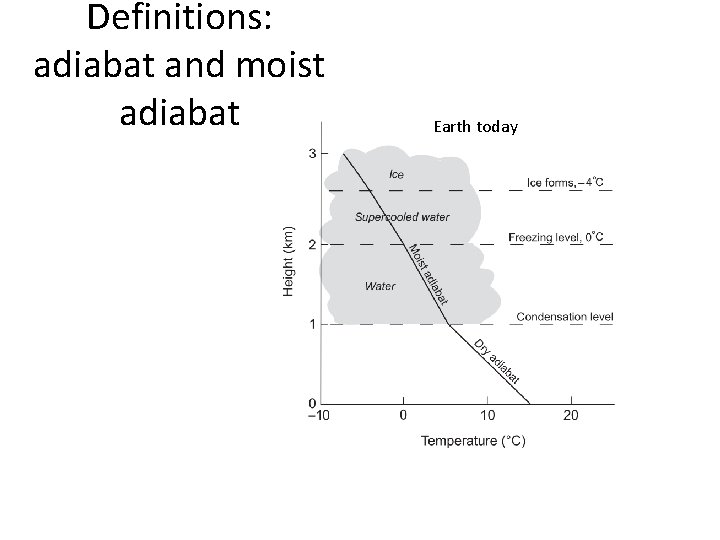
Definitions: adiabat and moist adiabat Earth today
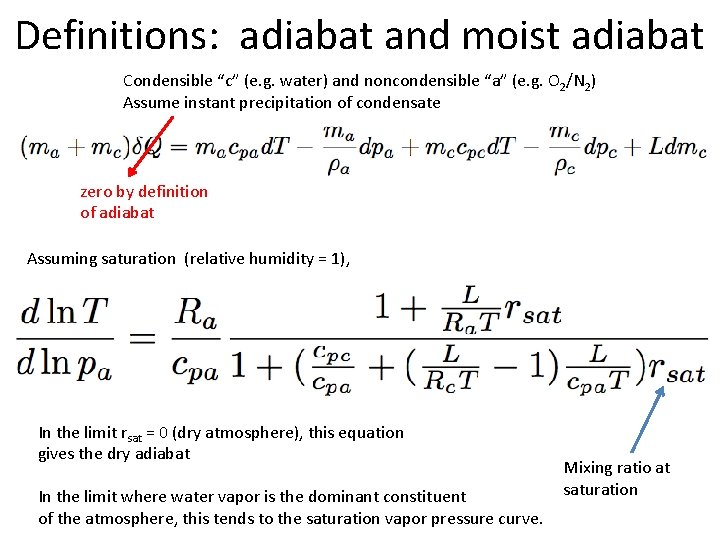
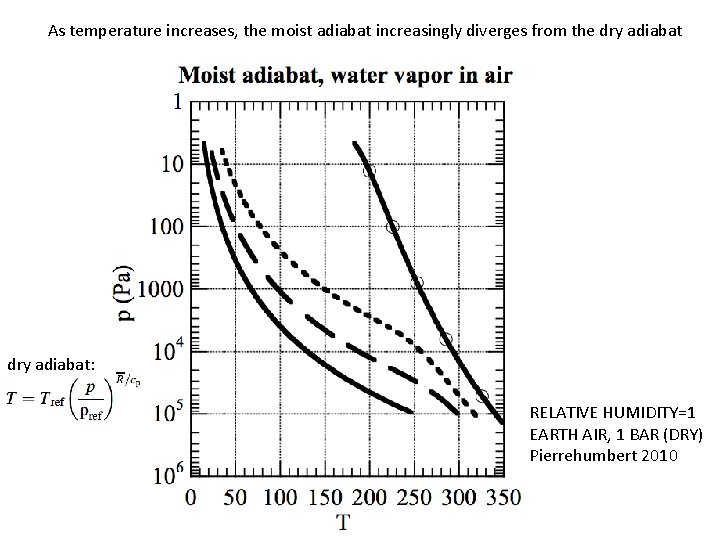
Definitions: adiabat and moist adiabat Condensible “c” (e. g. water) and noncondensible “a” (e. g. O 2/N 2) Assume instant precipitation of condensate zero by definition of adiabat Assuming saturation (relative humidity = 1), In the limit rsat = 0 (dry atmosphere), this equation gives the dry adiabat In the limit where water vapor is the dominant constituent of the atmosphere, this tends to the saturation vapor pressure curve. Mixing ratio at saturation
As temperature increases, the moist adiabat increasingly diverges from the dry adiabat: RELATIVE HUMIDITY=1 EARTH AIR, 1 BAR (DRY) Pierrehumbert 2010
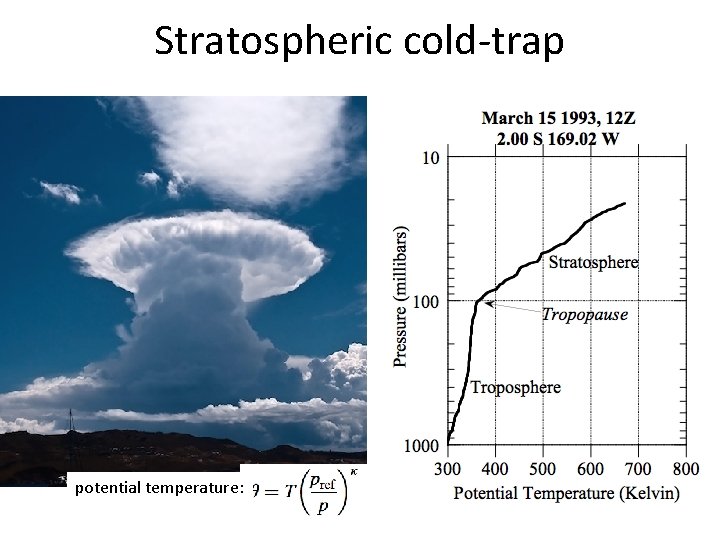
Stratospheric cold-trap potential temperature:
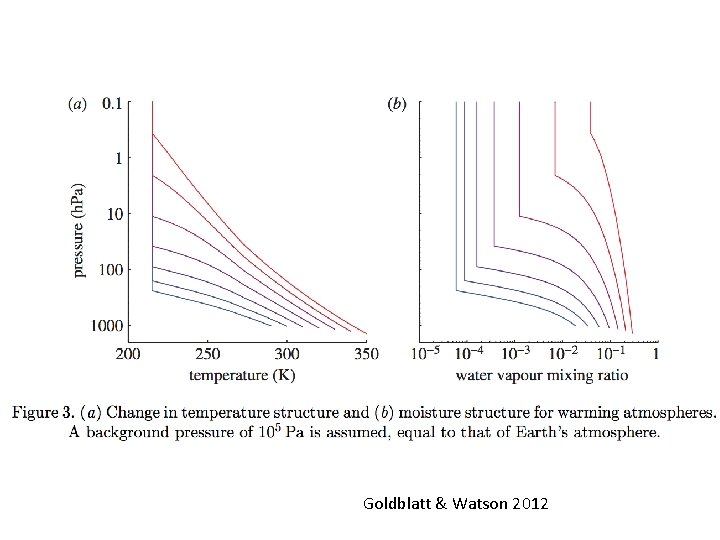
Goldblatt & Watson 2012, following Nakajima 1992 The runaway greenhouse leads to the end of habitability
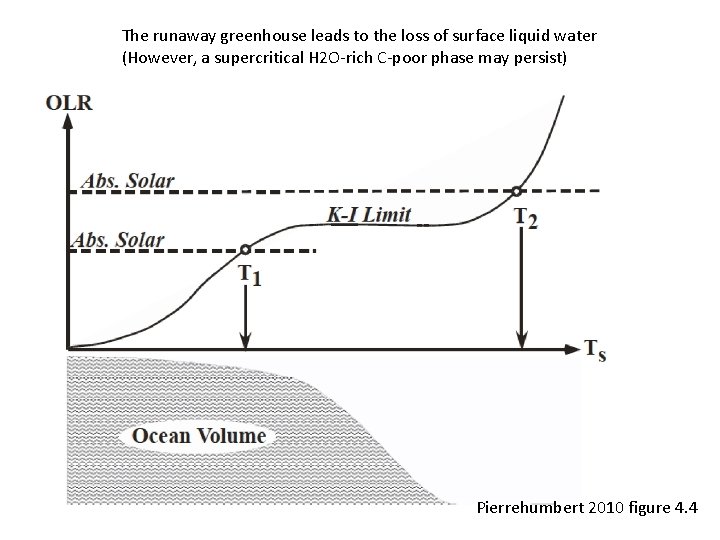
Condensable greenhouse gases lead to climate instability Assumptions: (Kombayashi-Ingersoll limit) z Constant RH (RH = relative humidity) Consequences: (all are important) H 2 O dissociation VNIR window Surface magma All water lost to space Carbonates decompose Pierrehumbert, Nature, 2002 T
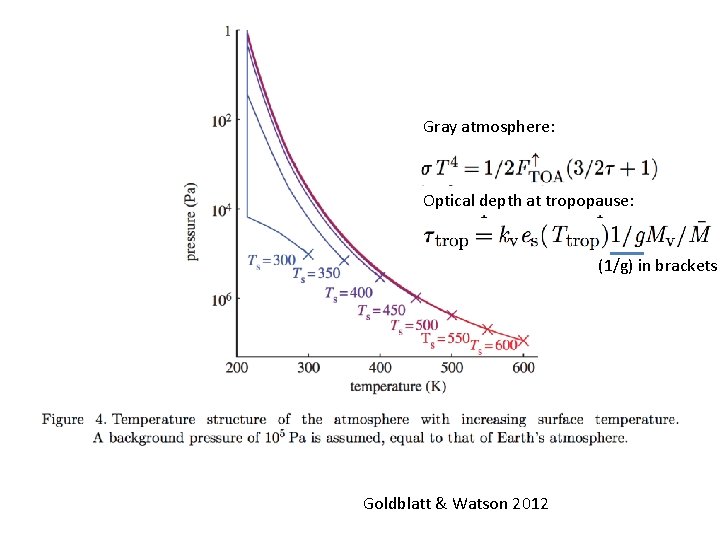
Gray atmosphere: Optical depth at tropopause: (1/g) in brackets Goldblatt & Watson 2012
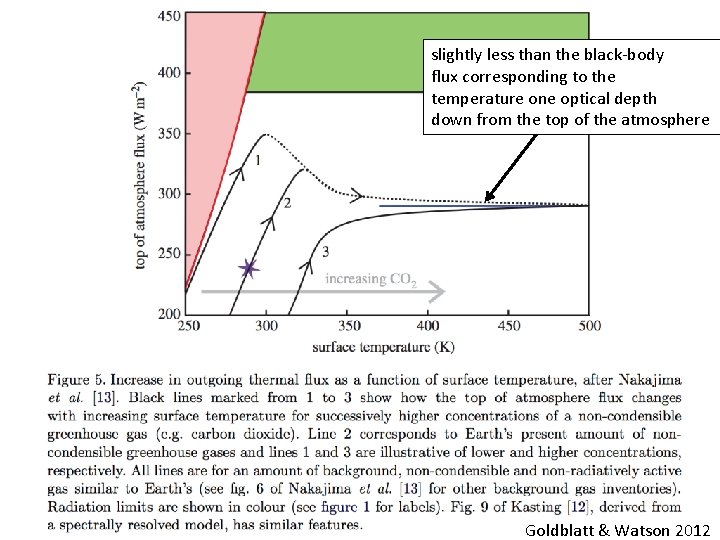
slightly less than the black-body flux corresponding to the temperature one optical depth down from the top of the atmosphere Goldblatt & Watson 2012
The runaway greenhouse leads to the loss of surface liquid water (However, a supercritical H 2 O-rich C-poor phase may persist) Pierrehumbert 2010 figure 4. 4
Two key windows in the water vapor absorption spectrum: 8 -12 microns and <~4 microns
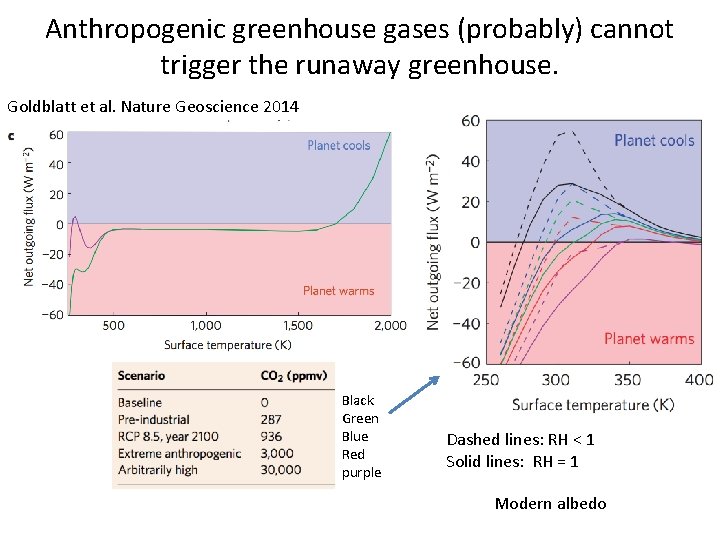
Anthropogenic greenhouse gases (probably) cannot trigger the runaway greenhouse. Goldblatt et al. Nature Geoscience 2014 Black Green Blue Red purple Dashed lines: RH < 1 Solid lines: RH = 1 Modern albedo
Earth today is close to the runaway greenhouse limit. The runaway greenhouse can be triggered by an increase in solar luminosity Time for loss (109 yr) water lost (bars) H loss flux (atoms cm-2 s-1) Leconte et al. 2013 Nature
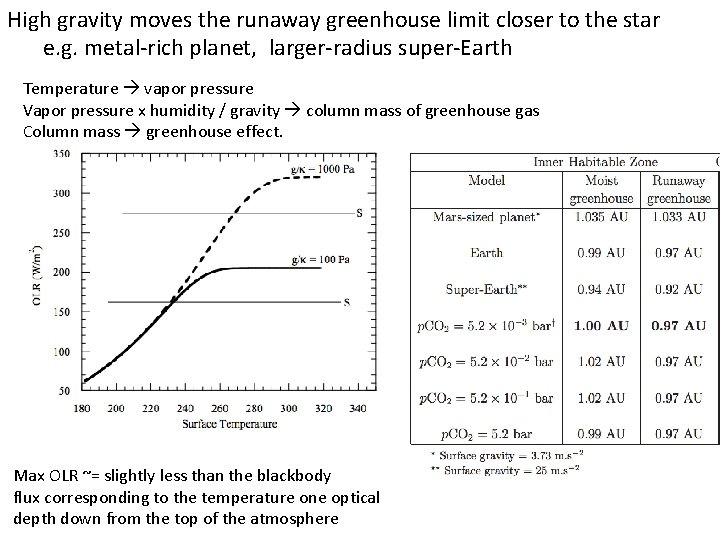
High gravity moves the runaway greenhouse limit closer to the star e. g. metal-rich planet, larger-radius super-Earth Temperature vapor pressure Vapor pressure x humidity / gravity column mass of greenhouse gas Column mass greenhouse effect. Max OLR ~= slightly less than the blackbody flux corresponding to the temperature one optical depth down from the top of the atmosphere
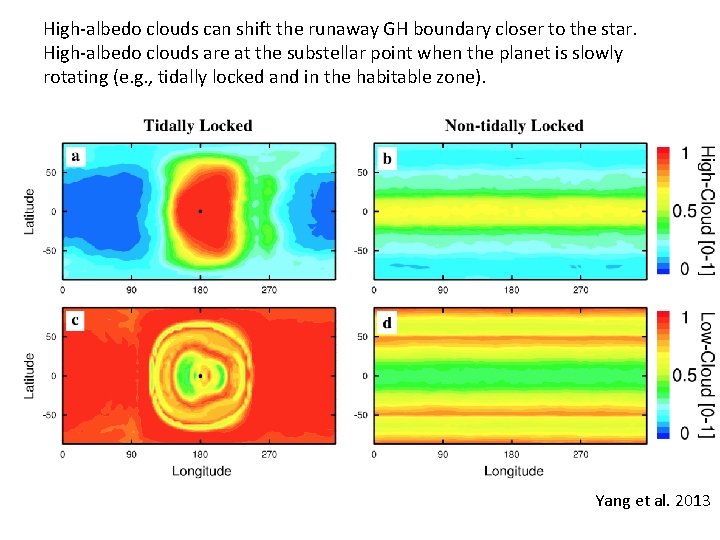
High-albedo clouds can shift the runaway GH boundary closer to the star. High-albedo clouds are at the substellar point when the planet is slowly rotating (e. g. , tidally locked and in the habitable zone). Yang et al. 2013
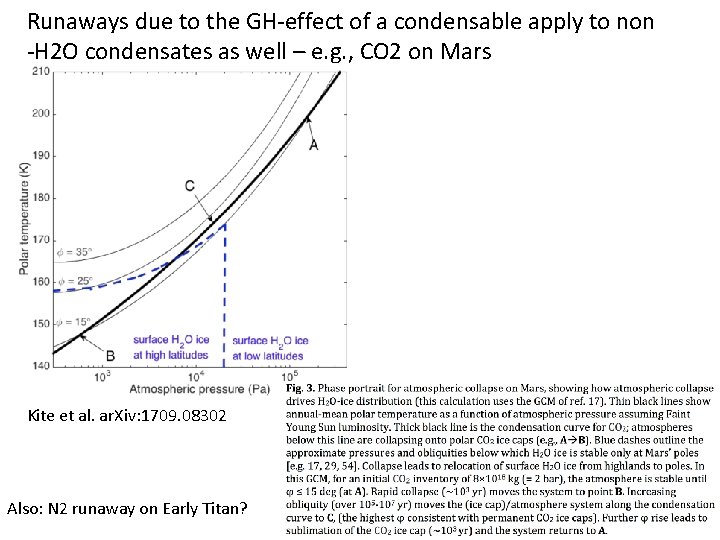
Runaways due to the GH-effect of a condensable apply to non -H 2 O condensates as well – e. g. , CO 2 on Mars Kite et al. ar. Xiv: 1709. 08302 Also: N 2 runaway on Early Titan?
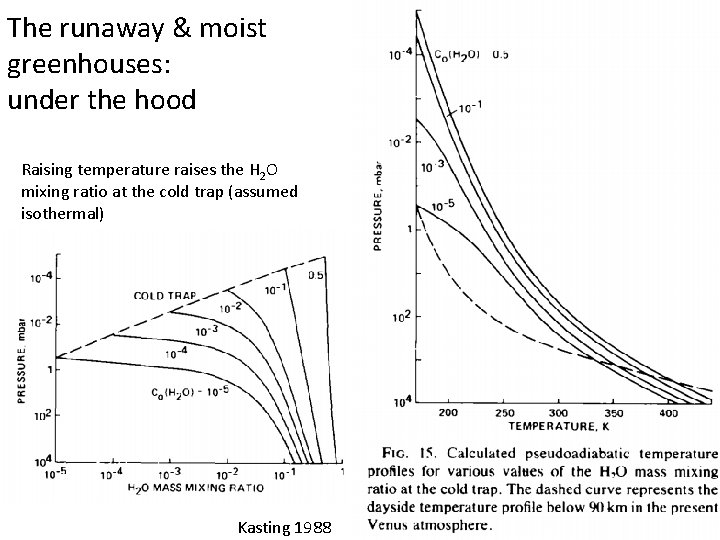
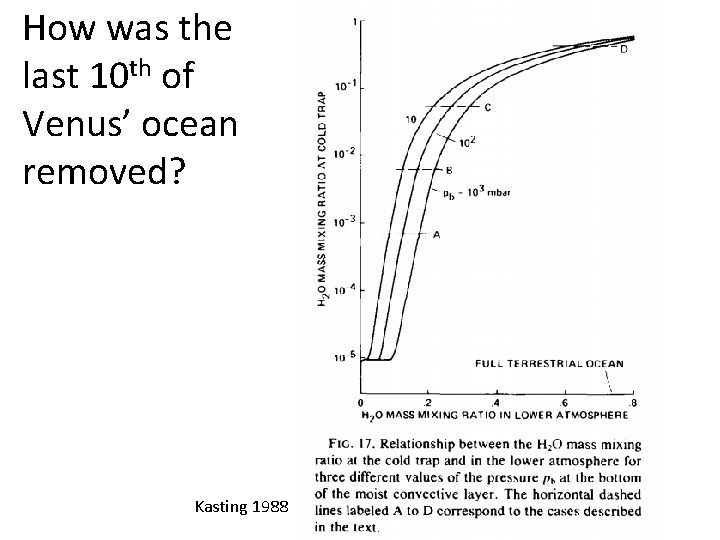
The runaway & moist greenhouses: under the hood Raising temperature raises the H 2 O mixing ratio at the cold trap (assumed isothermal) Kasting 1988
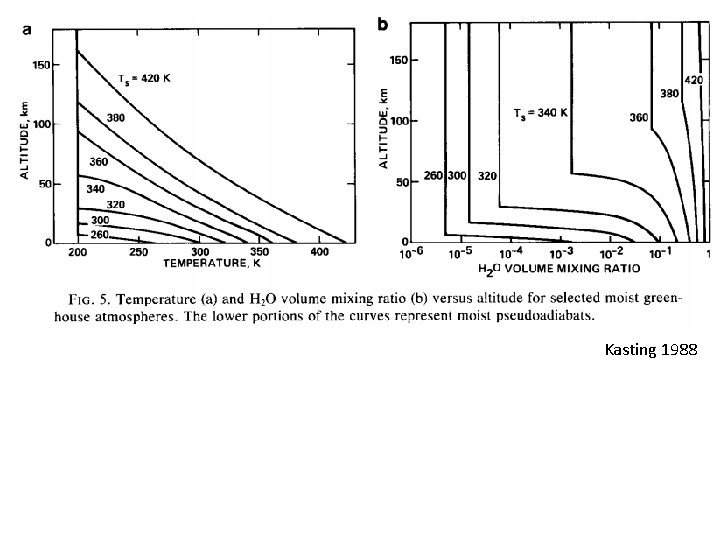
Kasting 1988
How was the last 10 th of Venus’ ocean removed? Kasting 1988
Runaway greenhouse – key points • The (H 2 O-)runaway greenhouse is a geologically rapid increase in planet surface temperature from <400 K to >1000 K caused by a positive feedback between the saturation vapor pressure of water vapor and the • Be able to explain the mechanism of the runaway greenhouse • It is almost certain that release of CO 2 by humans cannot cause a runaway greenhouse • The exact threshold for the runaway greenhouse depends on cloud cover, land fraction, and planet rotation rate
Backup/additional slides
Goldblatt & Watson 2012