Geopolitical issues Part III Population displacements and migration

- Slides: 50
Geopolitical issues Part III
Population displacements and migration Session 5
Introduction Throughout history, men have always migrated for environmental reasons But that’s also a reason largely ignored by researchers and policy makers. Despite growing concerns Linkage between environment and migration still controversial
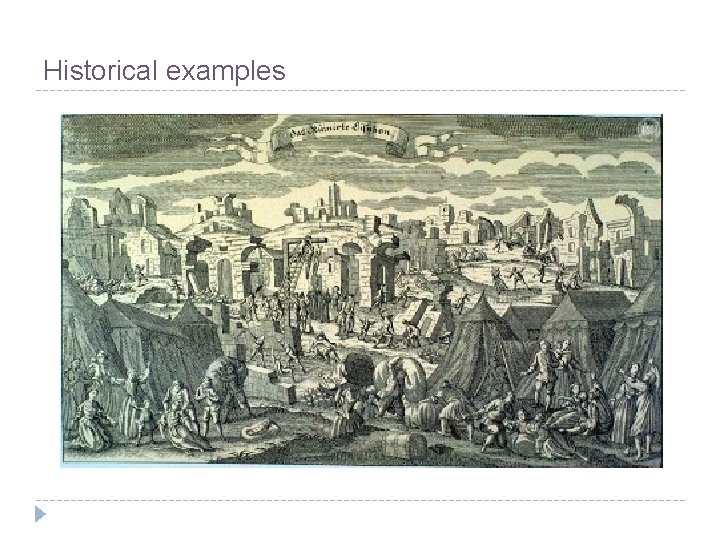
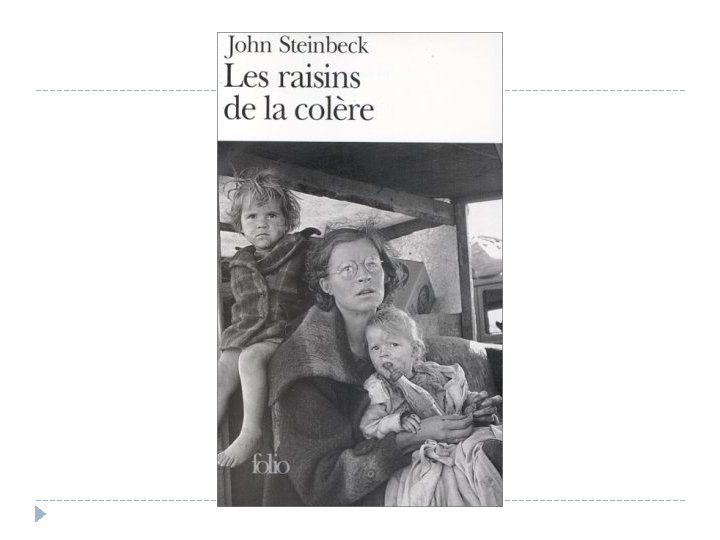
Historical examples
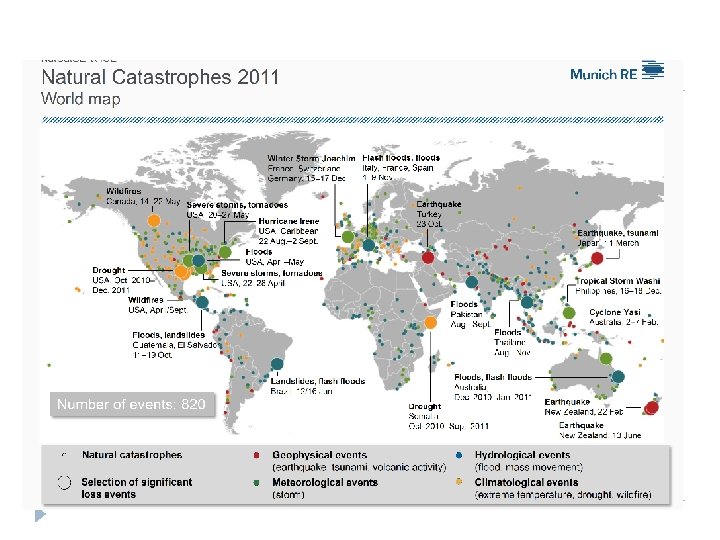
The emergence of the concept First mentioned in the 1970 s First UNEP report in 1985 Growing interest in the mid-2000 s: Realisation of the impacts of climate change Major natural disasters Tsunami 2004 Katrina 2005 Pakistan earthquake 2005 > Confusion between displacements linked to climate change and other environmental degradation.
A complex relationship Migration itself is a very complex process Involves a wide array of factors, individual decision Environmental factors are linked with economic, social and political factors When is environmental pressure the primary factor? Environmental disruption can be a cause and a consequence of migration Resource scarcity, ‘green’ conflicts, . . . Migration can also help to reduce the presure on resources
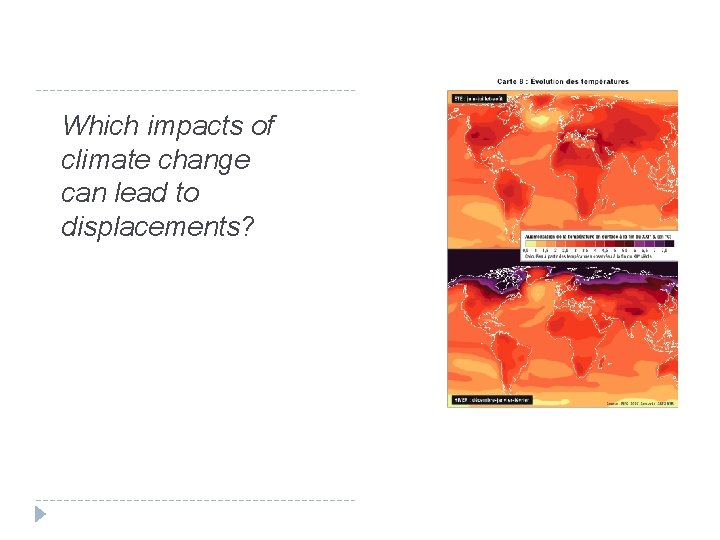
Which impacts of climate change can lead to displacements?
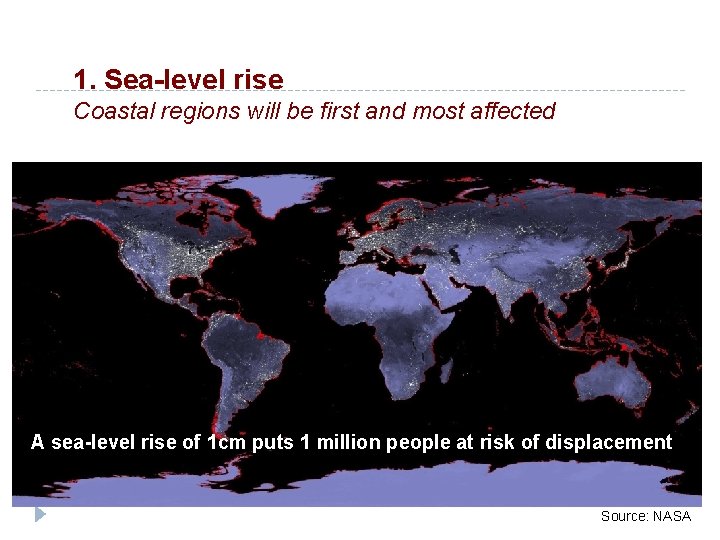
1. Sea-level rise Coastal regions will be first and most affected A sea-level rise of 1 cm puts 1 million people at risk of displacement Source: NASA
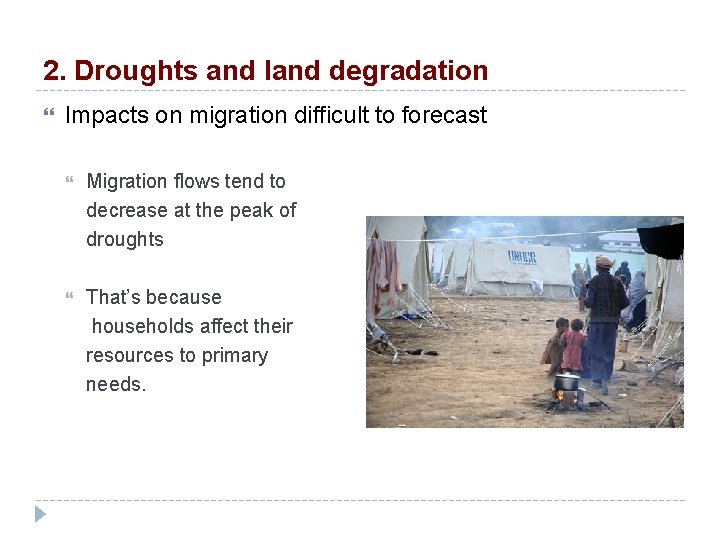
2. Droughts and land degradation Impacts on migration difficult to forecast Migration flows tend to decrease at the peak of droughts That’s because households affect their resources to primary needs.
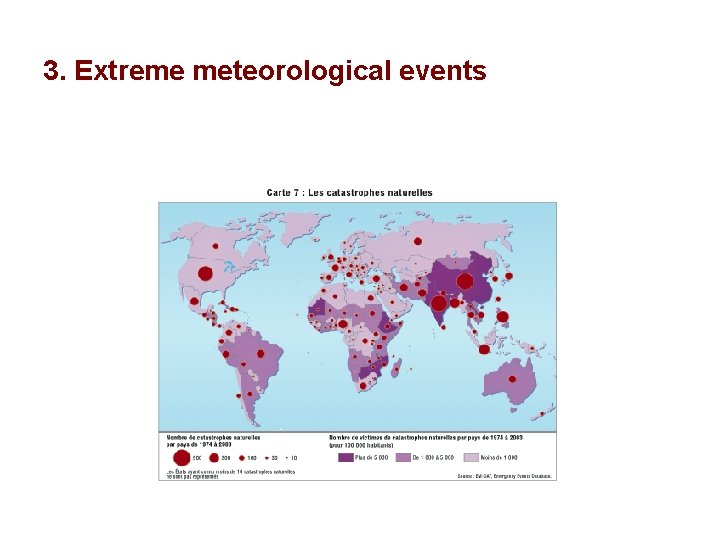
3. Extreme meteorological events
Characteristics of the migrants Positive relationship between environmental degradation and migration. Different factors intermingle, but environmental factors are of growing importance. These factors increase the constraints to migration Rise in forced migration Migration flows are often internal, and happening on short distances Definitional issue Affected countries bear all the burden of migration. The most vulnerable are often unable to migrate. Migration is expensive
Issue of the definition Difficult Controversial Mostly internal migration Mingles with other factors Alarmists vs sceptics A broad definition invites large numbers Different agendas Wide variety of terms (often misnomers) Important Policy-wise Allows to forecast numbers
A disconnection from the realities of migration Migrants are seen as expiatory, resourceless victims of climate change. Migration is perceived as an adaptation failure In many cases, it can be an adaptation strategy We assume a direct, causal relationship between climate change and migration. We expect that these displacements will be forced and international. We assume that the nature and extent of the migration flows will depend upon the impacts of climate change. Many of them don’t consider themselves as victims, or don’t want to be considered as such. Migrants are resourceful agents – they are not the most vulnerable Environmental determinism Climate-induced migration often perceived as a threat to security. In many cases, it can actually improve human security.
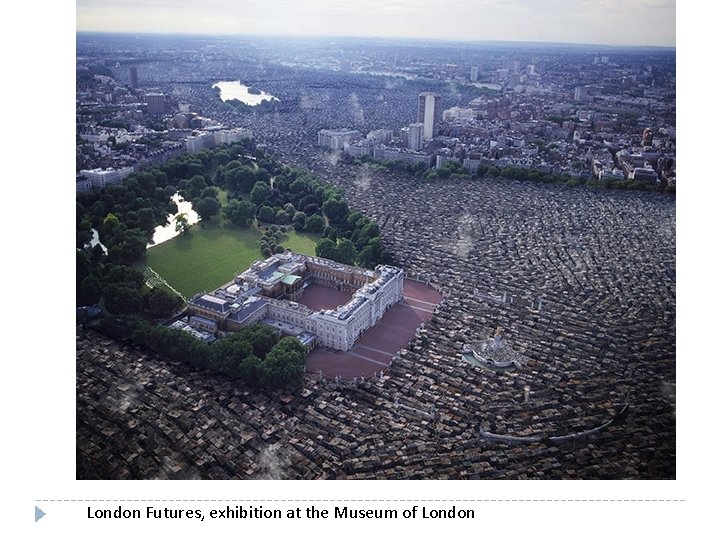
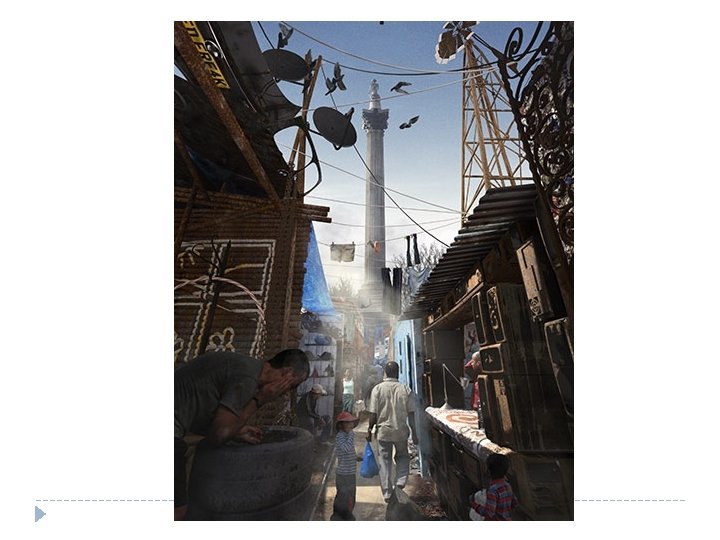
London Futures, exhibition at the Museum of London
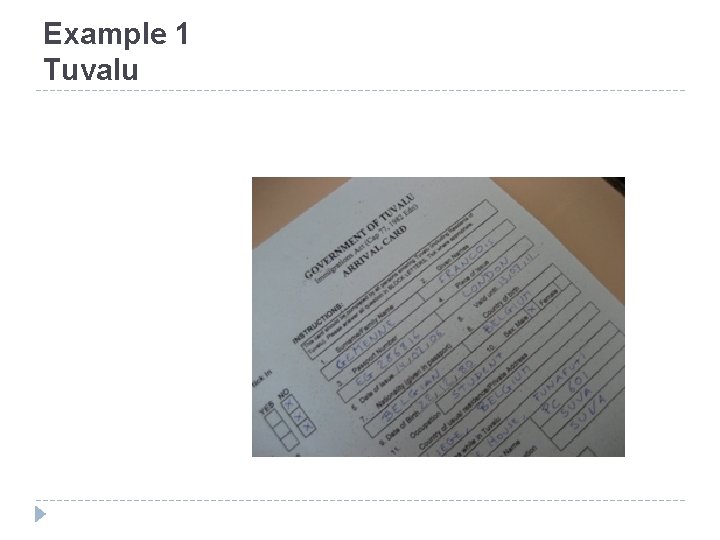
Example 1 Tuvalu
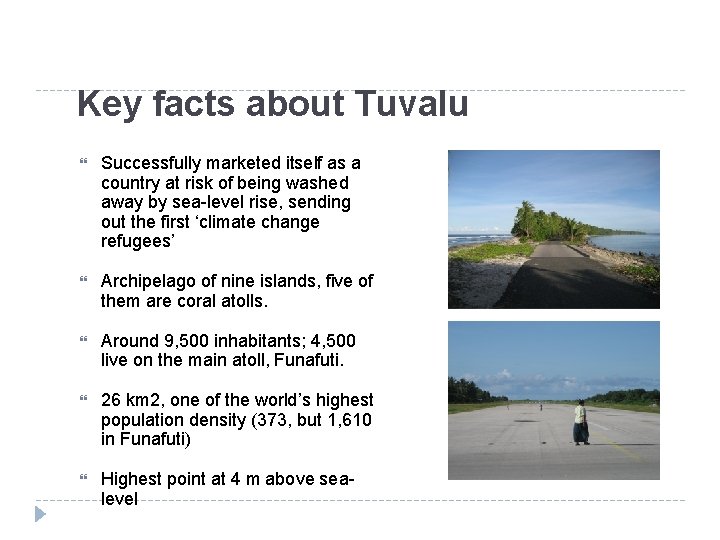
Key facts about Tuvalu Successfully marketed itself as a country at risk of being washed away by sea-level rise, sending out the first ‘climate change refugees’ Archipelago of nine islands, five of them are coral atolls. Around 9, 500 inhabitants; 4, 500 live on the main atoll, Funafuti. 26 km 2, one of the world’s highest population density (373, but 1, 610 in Funafuti) Highest point at 4 m above sealevel
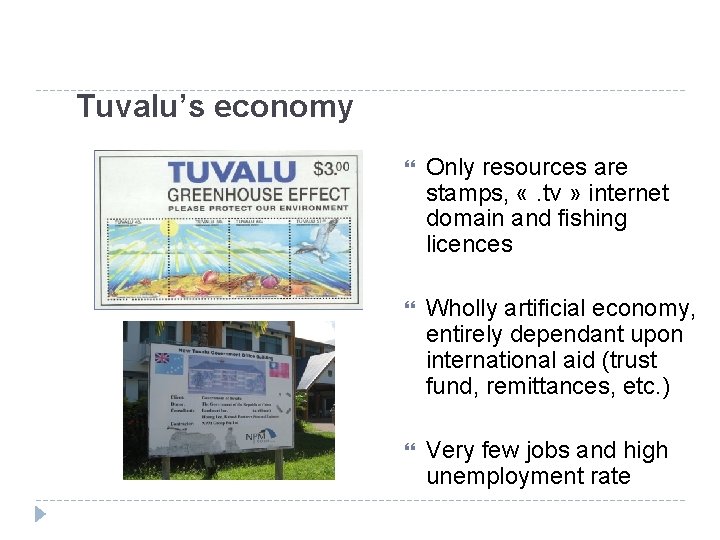
Tuvalu’s economy Only resources are stamps, «. tv » internet domain and fishing licences Wholly artificial economy, entirely dependant upon international aid (trust fund, remittances, etc. ) Very few jobs and high unemployment rate
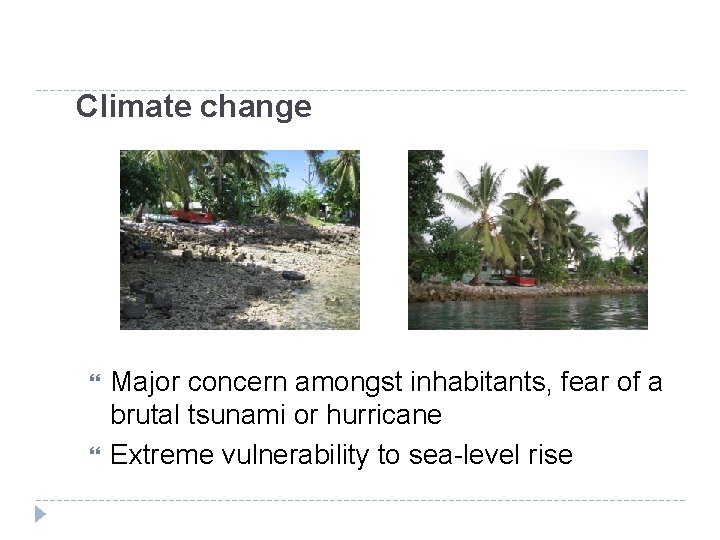
Climate change Major concern amongst inhabitants, fear of a brutal tsunami or hurricane Extreme vulnerability to sea-level rise
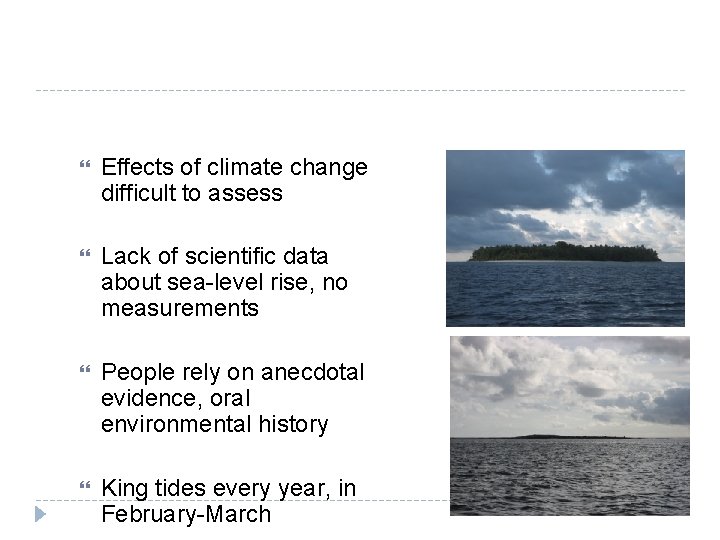
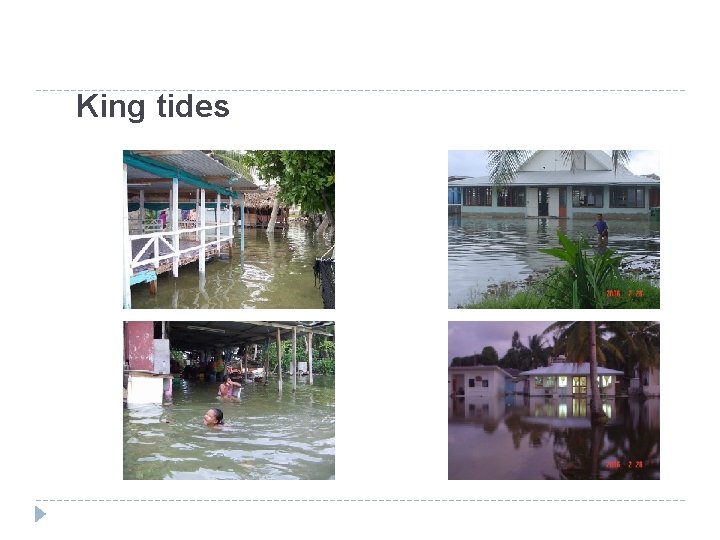
Effects of climate change difficult to assess Lack of scientific data about sea-level rise, no measurements People rely on anecdotal evidence, oral environmental history King tides every year, in February-March
King tides
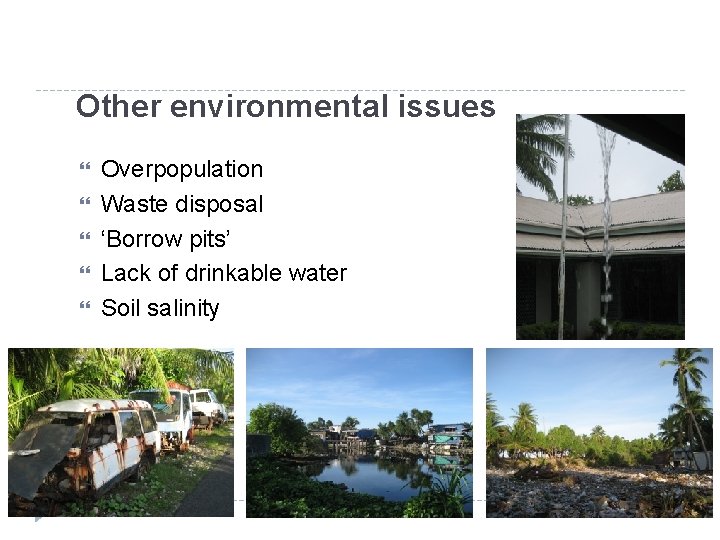
Other environmental issues Overpopulation Waste disposal ‘Borrow pits’ Lack of drinkable water Soil salinity
Migration � Important internal migration, from outer islands to Funafuti � About 3, 000 Tuvaluans living in Auckland � Forced or voluntary migration? Issue of timescale � The whole region is highly prone to migration, part of Polynesian lifestyle � New Zealand is the only possible destination: Pacific Access Category � Seasonal labour scheme �
Resettlement �Considered many times in Tuvalu’s history � In 1890 s, suggested as a solution to overpopulation problem � Population of Funafuti relocated on an outer island by Americans during WWII � Purchase of the island of Kioa in 1951 � Repeated plea by the government, in relation to climate change � However, works by John Campbell (Waikato U. ) show difficulties in community relocation
Expatriates in Auckland � About 3, 000 Tuvaluans living in West Auckland � NZ Government supporting some aspects of cultural life � Some weight in national and local politics � ‘Pull’ factor of migration
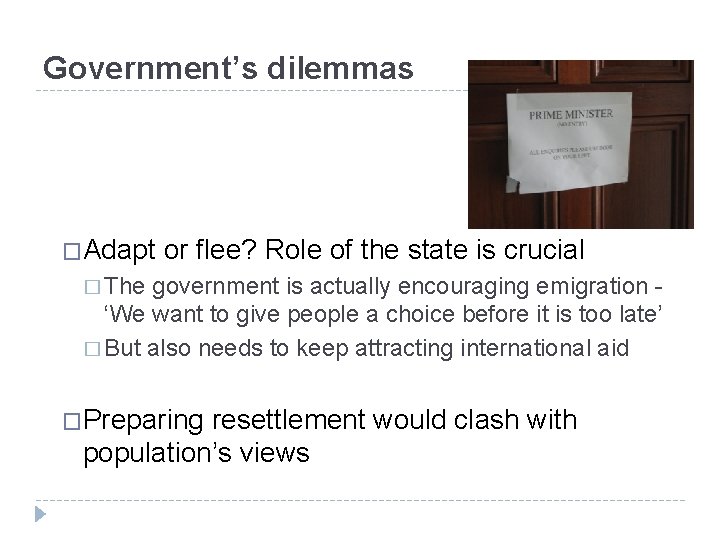
Government’s dilemmas �Adapt or flee? Role of the state is crucial � The government is actually encouraging emigration - ‘We want to give people a choice before it is too late’ � But also needs to keep attracting international aid �Preparing resettlement would clash with population’s views
Do people move because of climate change? � Wide range of factors: Family and social networks in New Zealand � Job opportunities, better wages � Only the wealthier can afford to migrate �. . . And concerns about sea-level rise � � Key factor: uncertainty about the future, that acts as a trigger.
Uncertainty and futurity � People do not migrate for themselves, but for their children - some of them born in New Zealand � Concerns about the future of Tuvalu seem more important than actual degradations of the environment � Issue of uncertainty and futurity � Migration as a risk-reduction strategy for the family
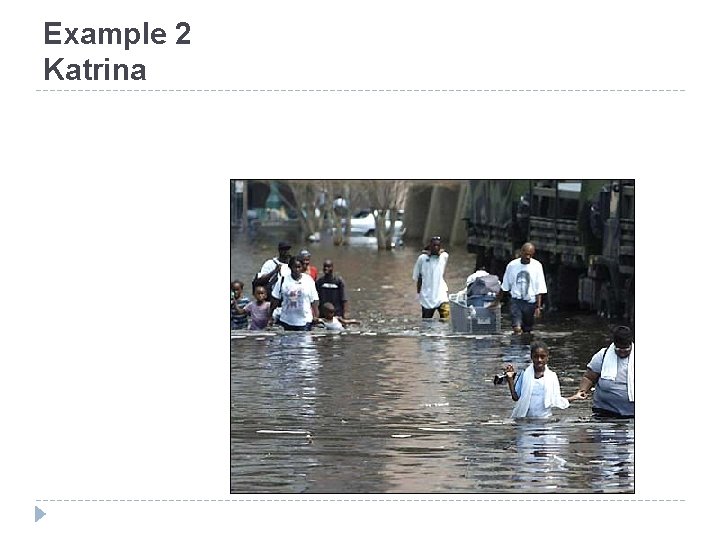
Example 2 Katrina
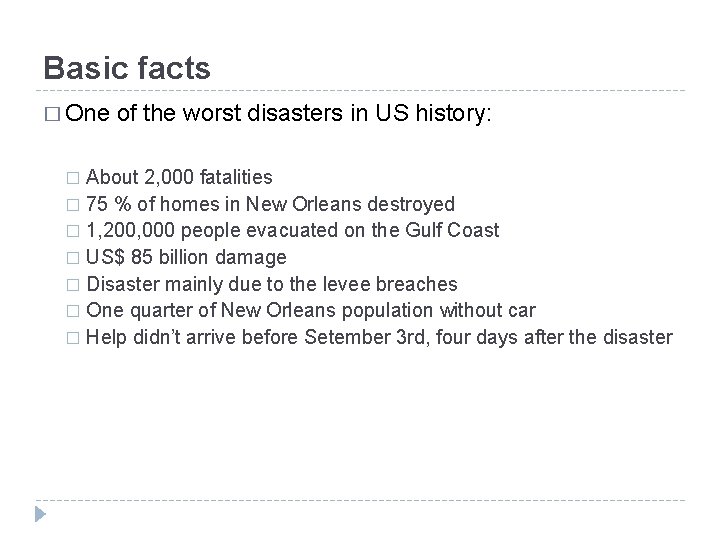
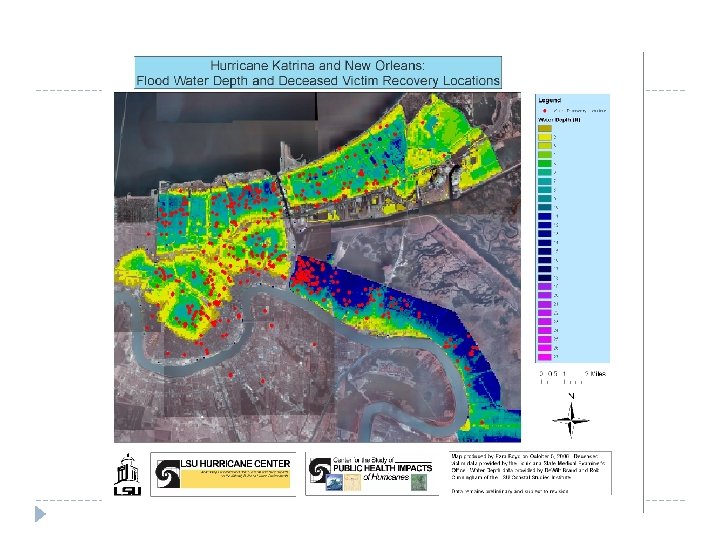
Basic facts � One of the worst disasters in US history: About 2, 000 fatalities � 75 % of homes in New Orleans destroyed � 1, 200, 000 people evacuated on the Gulf Coast � US$ 85 billion damage � Disaster mainly due to the levee breaches � One quarter of New Orleans population without car � Help didn’t arrive before Setember 3 rd, four days after the disaster �
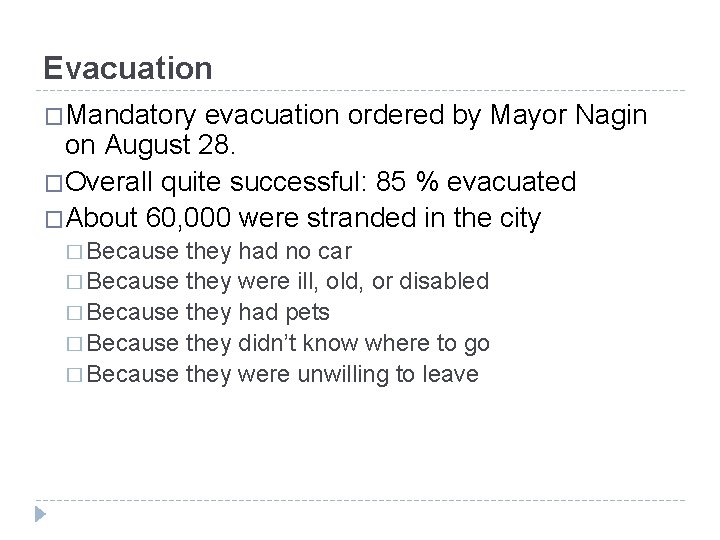
Evacuation �Mandatory evacuation ordered by Mayor Nagin on August 28. �Overall quite successful: 85 % evacuated �About 60, 000 were stranded in the city � Because they had no car � Because they were ill, old, or disabled � Because they had pets � Because they didn’t know where to go � Because they were unwilling to leave
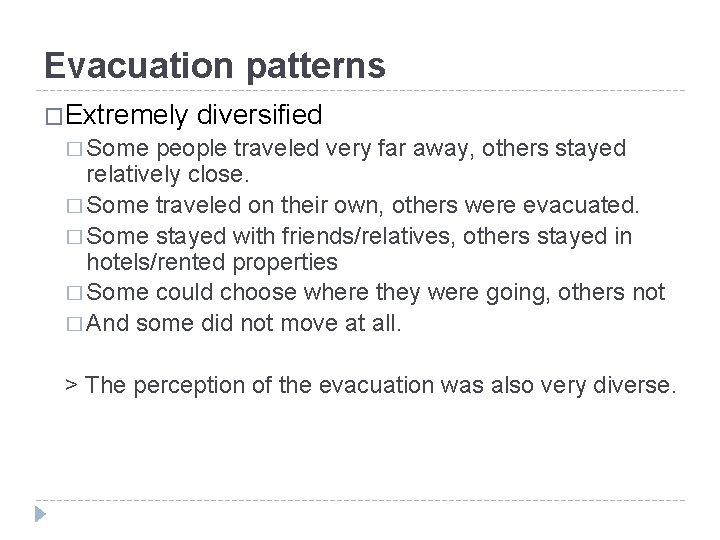
Evacuation patterns �Extremely diversified � Some people traveled very far away, others stayed relatively close. � Some traveled on their own, others were evacuated. � Some stayed with friends/relatives, others stayed in hotels/rented properties � Some could choose where they were going, others not � And some did not move at all. > The perception of the evacuation was also very diverse.
Three conclusions > Despite the collective dimension of the tragedy, the evacuation process was an individual process. > Forced or voluntary migration? People’s perceptions are very different. > The most vulnerable were far less off
Most vulnerable were far less off � Many were stranded in the city. � Those evacuated had no choice of their destination � This affected their ability to cope while away � Tend to blame Government and FEMA more severely. � Issue of adaptability > Katrina was also, and maybe most of all, a social disaster.
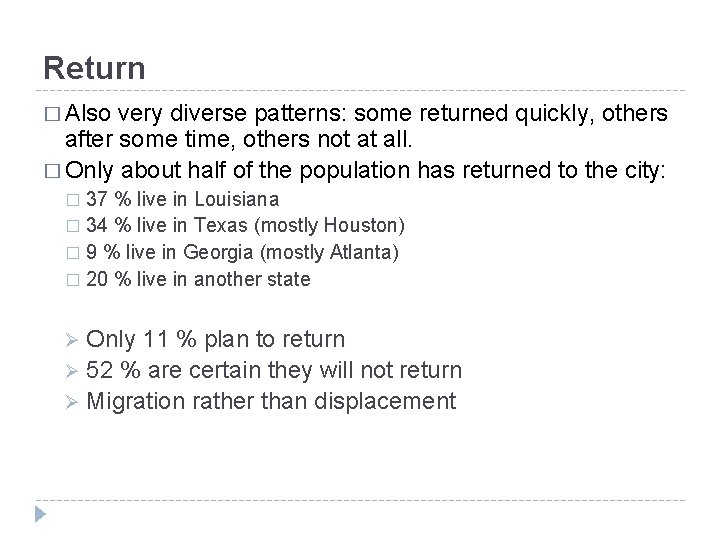
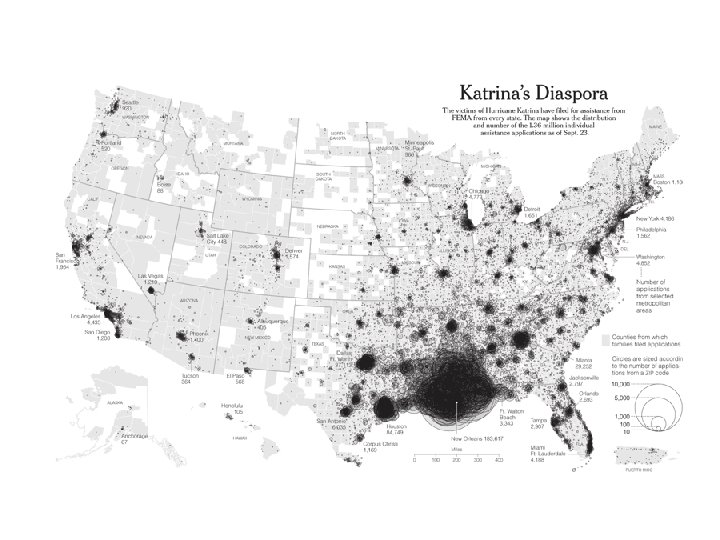
Return � Also very diverse patterns: some returned quickly, others after some time, others not at all. � Only about half of the population has returned to the city: 37 % live in Louisiana � 34 % live in Texas (mostly Houston) � 9 % live in Georgia (mostly Atlanta) � 20 % live in another state � Only 11 % plan to return Ø 52 % are certain they will not return Ø Migration rather than displacement Ø
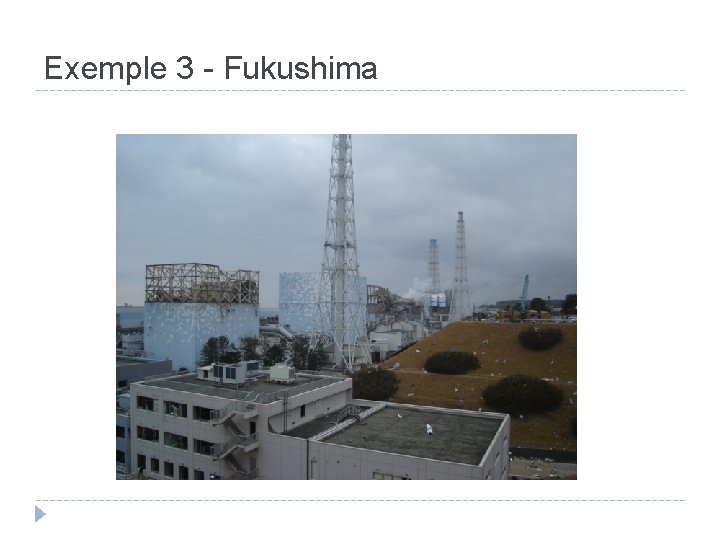
Exemple 3 - Fukushima
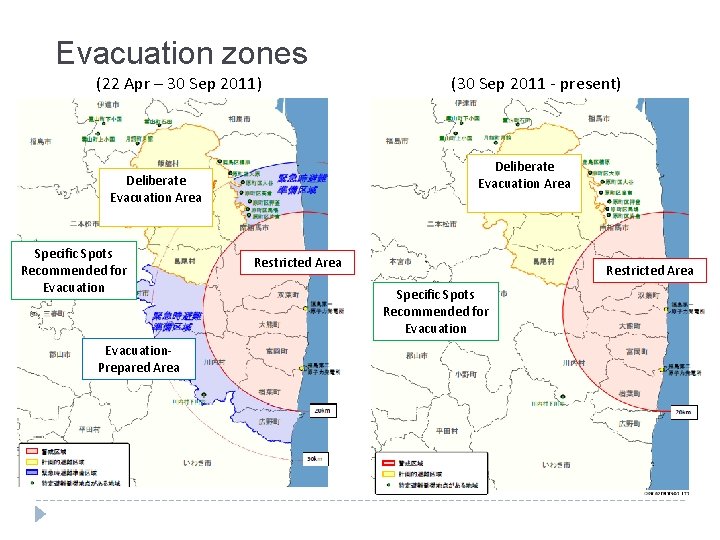
Evacuation zones (22 Apr – 30 Sep 2011) Deliberate Evacuation Area Specific Spots Recommended for Evacuation. Prepared Area (30 Sep 2011 - present) Restricted Area Specific Spots Recommended for Evacuation
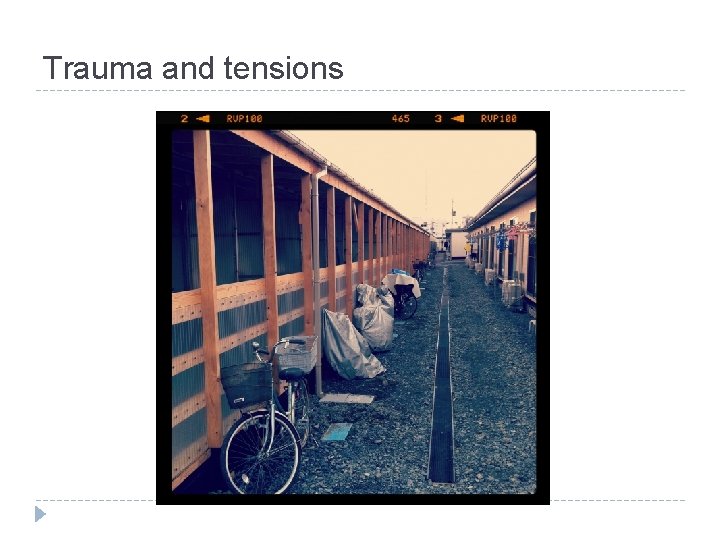
Trauma and tensions
http: //www. devast-project. org
Policy responses: Different directions Environmental policies Rapid evolution since the 1990 s People displaced by natural disasters and/or climate change increasingly taken into account New actors and structures: IASC, CCEMA, rise of adaptation in climate talks New instruments: Hyogo Framework Operational Guidelines on Human Rights and Natural Disasters Adaptation Funds > Climate negotiations often considered as the central policy forum with regard to environmental migration
Migration and asylum policies Have not really taken into account environmental factors so far Very little progress in the governance of migration, no new instruments Exception: temporary protection status Two points to consider: Traditional theories of migration are environmentally-blind Migration scholars have a lesser impact on policy design than environmental scholars
Legal matters People displaced by climate change are not refugees, according to the 1951 Geneva Convention: No political persecution But isn’t climate change a violent, political persecution to the most vulnerable? Not always a border crossing The displaced people flee their livelihood, not always their country Forced migration? Climate change adds a new dimension to the traditional distinction between forced and voluntary migration.
Two key policy issues Enabling the right to leave Enabling the right to choose This will require different policy shifts: Going beyond humanitarian aid Not discriminating between displacements associated with climate change and those that are not. Not restricting oneself to refugee law (Hyogo Framework, etc. ) Not focusing only on those who leave, but also one those who stay, sometimes forcibly.
Enabling the right to leave A challenge of migration policy The right to leave is the key condition of asylum, originating after the Peace of Westphalia. This right is currently jeopardised by environmental change. The most vulnerable often find themselves unable to leave Because they don’t have the resources to do so Because of barriers to migration Their life, health and livelihood are directly exposed to danger Migration as a risk-reduction strategy Issue of pro-active population displacements
Enabling the right to choose A challenge of adaptation policy Many of the migrants are forced migrants, and many of the stayers are forced stayers. Adaptation In the origin region, adaptation will reduce the environmental constraints to migration. Migration itself can be an adaptation strategy. Adaptation will also be needed in the destination regions. Adaptation and disaster-risk reduction Burden-sharing and internationalisation of the costs. No discrimination between climate change and other disasters.