Friendly Alert Listening Quiz 2 Tuesday 16 April
- Slides: 40
Friendly Alert: Listening Quiz # 2 Tuesday, 16 April 2019 Written Test # 2 Thursday, 18 April 2019 both cover Indonesia and Africa
Friendly Alert # 2: FINAL EXAM (written) Thursday, 25 April 2019 7: 00 am - 9: 50 pm Includes LISTENING QUIZ # 3 Comprehensive (anything studied this semester)
Titon – Chapter 3 Africa / Ewe, Mande, Dagbamba, Shona, Ba. Aka (cont’d)
General African Music Traits • • Emphasis on Rhythm Use of Percussion Density of Timbre (“buzzy sound”) Use of Ostinato Use of interlocking parts Call and Response Controlled Improvisation
Drums • Most important African Instrument (perhaps) • Multiple types, performance techniques, etc. - unique to broad regions, tribal groups • Cross cultural influences and usages - especially w/ “West” (Europe, US, etc. )
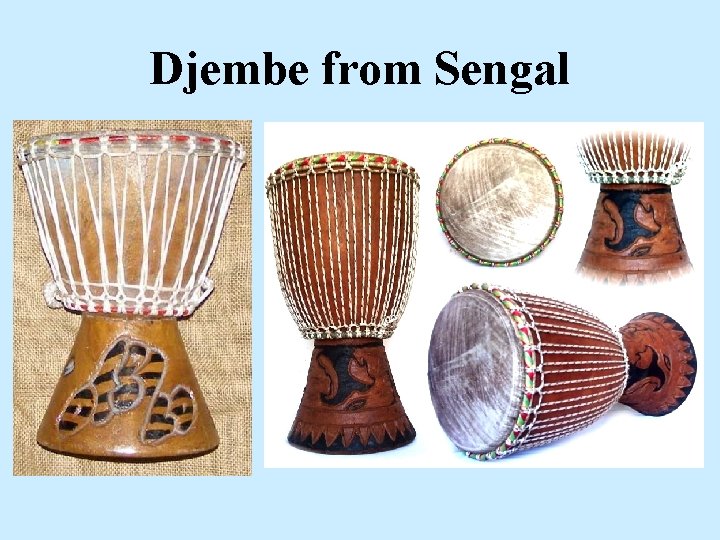
Djembe from Sengal
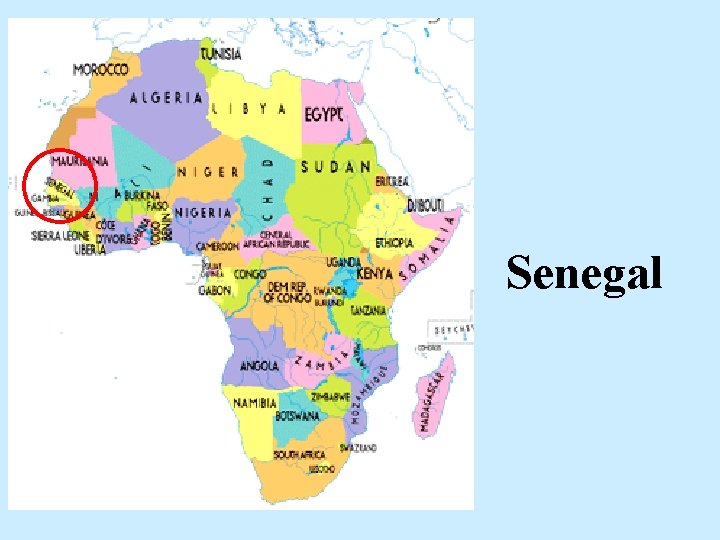
Senegal
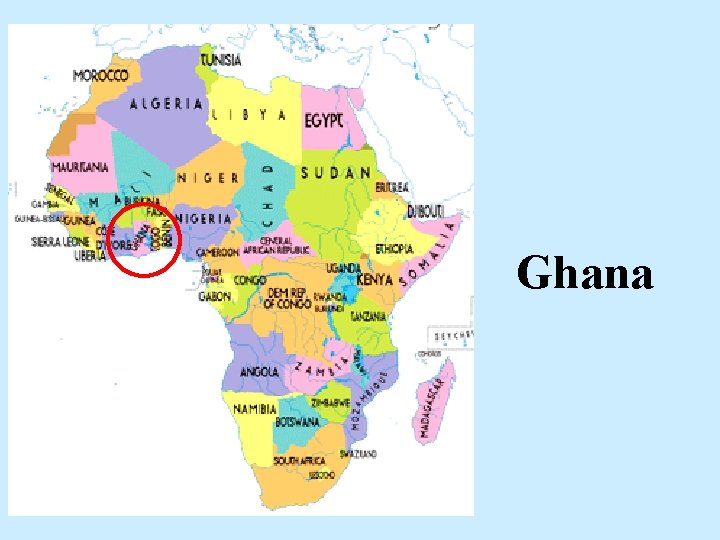
Ghana
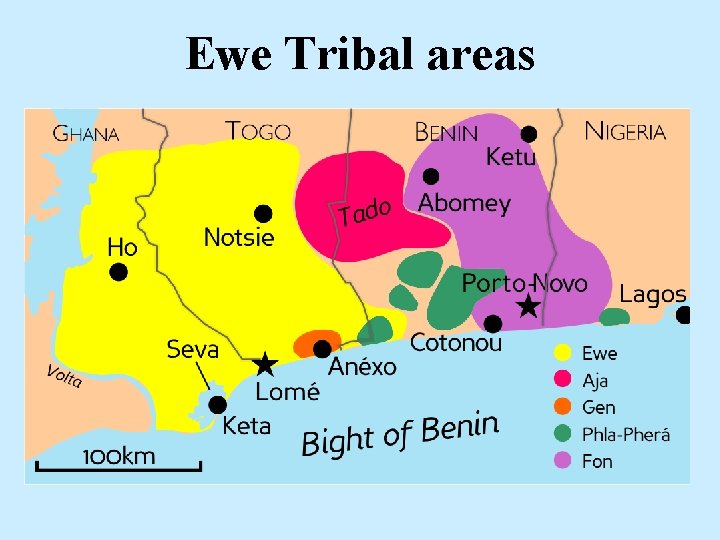
Ewe Tribal areas
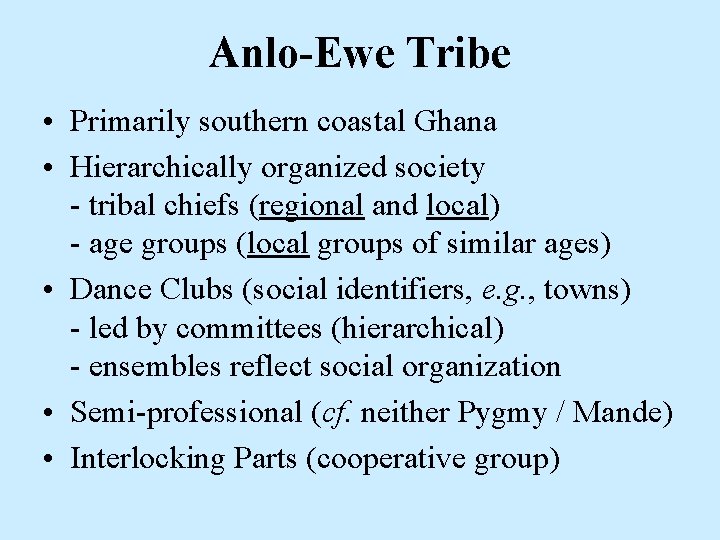
Anlo-Ewe Tribe • Primarily southern coastal Ghana • Hierarchically organized society - tribal chiefs (regional and local) - age groups (local groups of similar ages) • Dance Clubs (social identifiers, e. g. , towns) - led by committees (hierarchical) - ensembles reflect social organization • Semi-professional (cf. neither Pygmy / Mande) • Interlocking Parts (cooperative group)
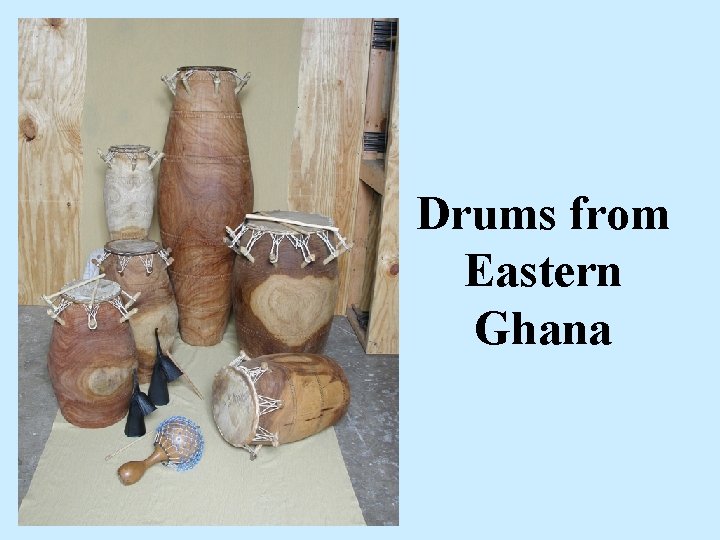
Drums from Eastern Ghana
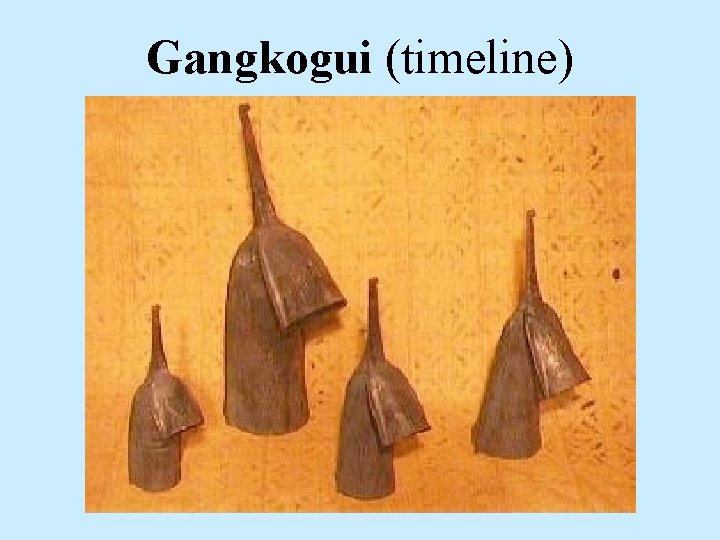
Gangkogui (timeline)
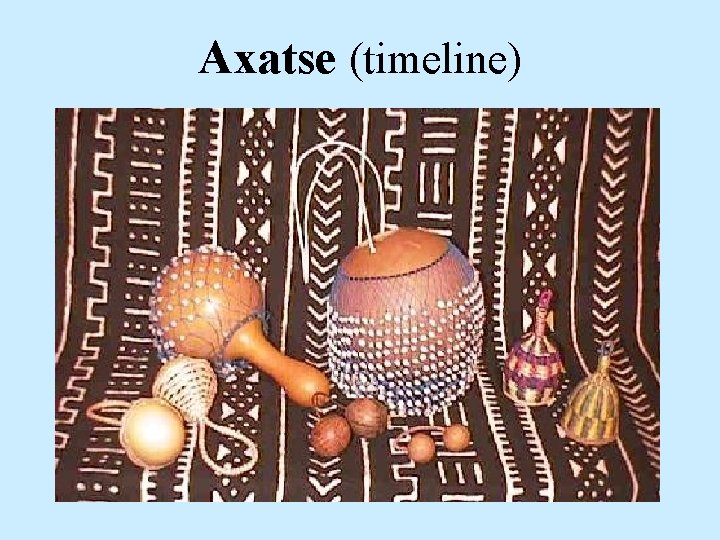
Axatse (timeline)
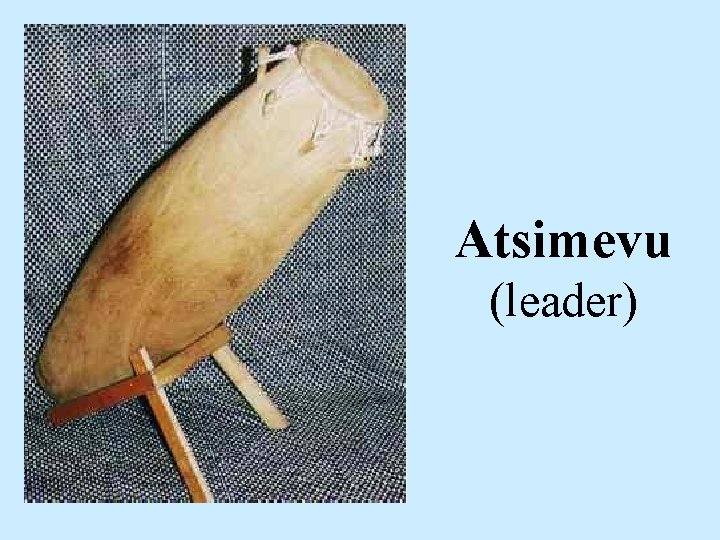
Atsimevu (leader)
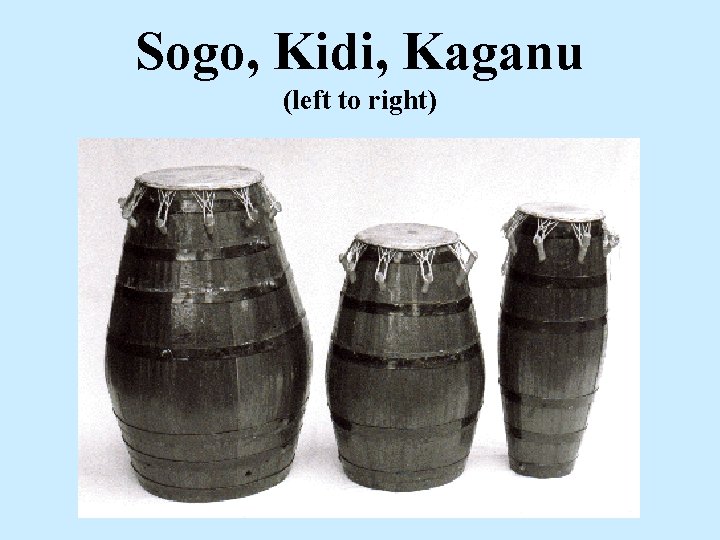
Sogo, Kidi, Kaganu (left to right)
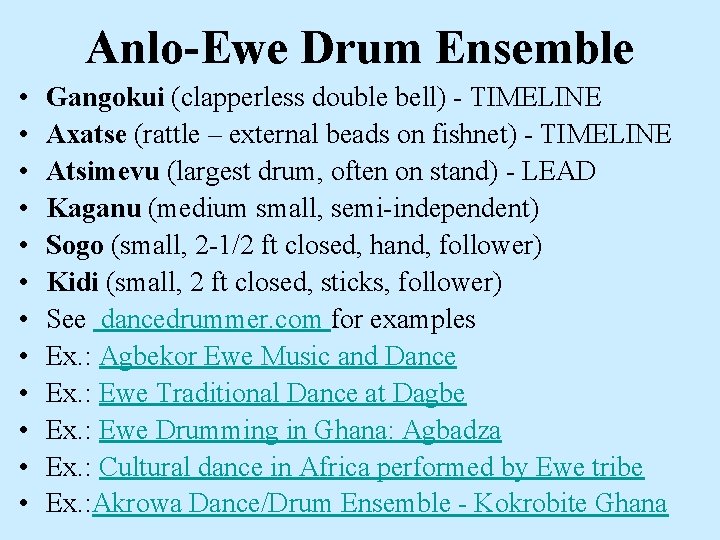
Anlo-Ewe Drum Ensemble • • • Gangokui (clapperless double bell) - TIMELINE Axatse (rattle – external beads on fishnet) - TIMELINE Atsimevu (largest drum, often on stand) - LEAD Kaganu (medium small, semi-independent) Sogo (small, 2 -1/2 ft closed, hand, follower) Kidi (small, 2 ft closed, sticks, follower) See dancedrummer. com for examples Ex. : Agbekor Ewe Music and Dance Ex. : Ewe Traditional Dance at Dagbe Ex. : Ewe Drumming in Ghana: Agbadza Ex. : Cultural dance in Africa performed by Ewe tribe Ex. : Akrowa Dance/Drum Ensemble - Kokrobite Ghana
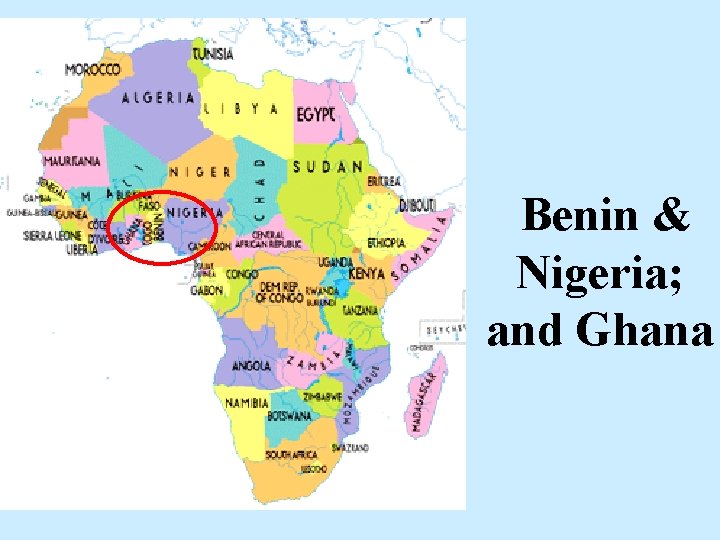
Benin & Nigeria; and Ghana
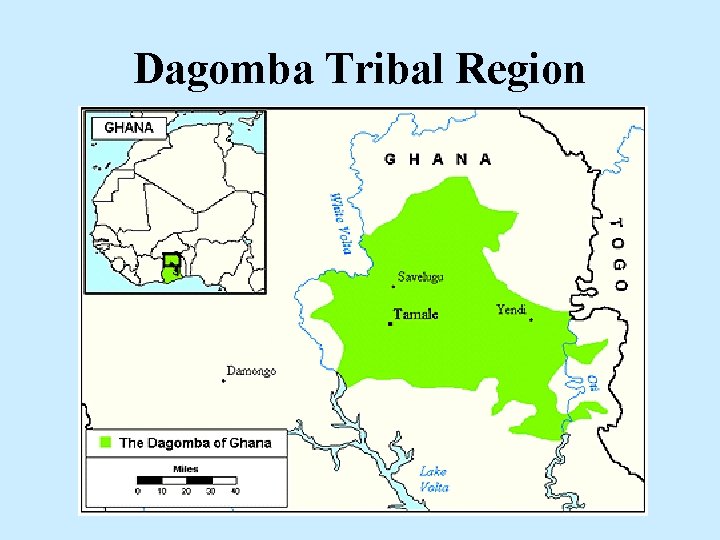
Dagomba Tribal Region
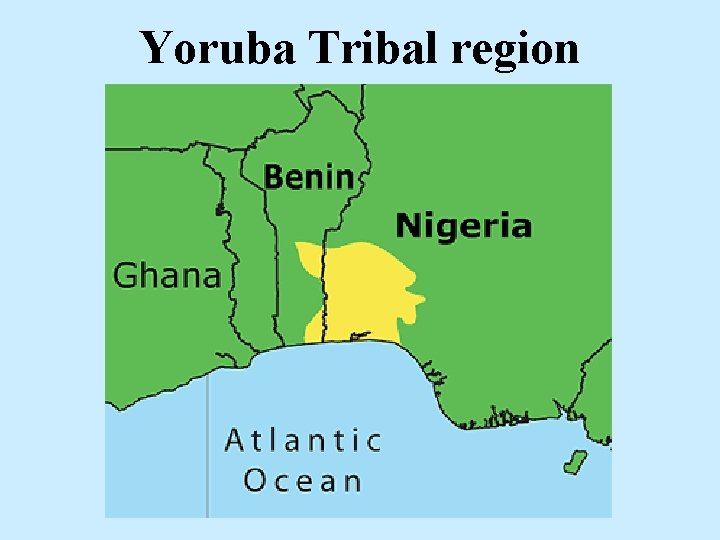
Yoruba Tribal region
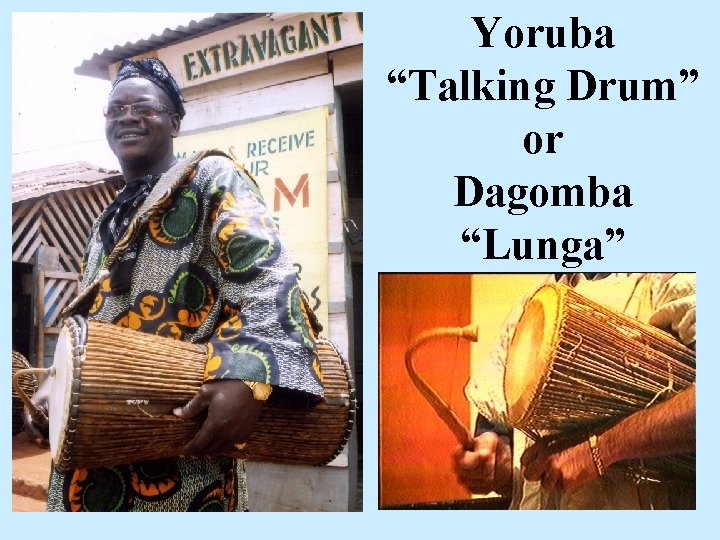
Yoruba “Talking Drum” or Dagomba “Lunga”
“Talking Drums” • Ayan Bisi Adeleke - Master talking drummer • The talking drum-Donno. mpg-Kwame Ansah. Brew • Drums of Dagbon Pt. 2 - Ghana, West Africa
General African Music Traits • • Emphasis on Rhythm Use of Percussion Density of Timbre (“buzzy sound”) Use of Ostinato Use of interlocking parts Call and Response Controlled Improvisation
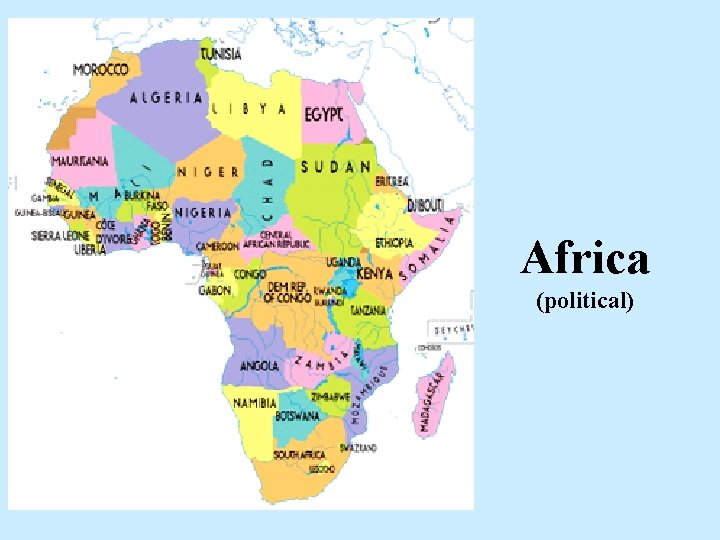
Africa (political)
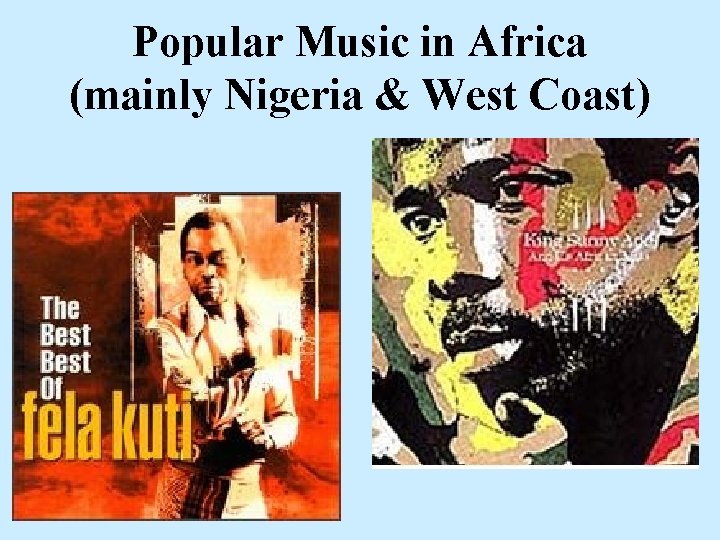
Popular Music in Africa (mainly Nigeria & West Coast)
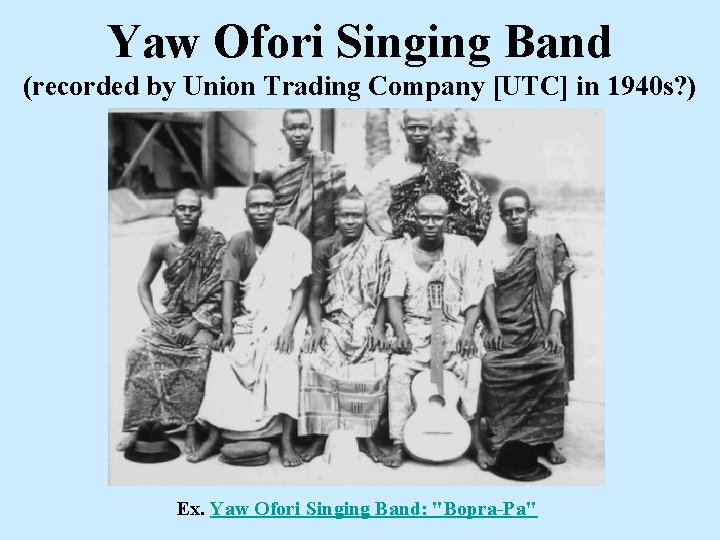
Yaw Ofori Singing Band (recorded by Union Trading Company [UTC] in 1940 s? ) Ex. Yaw Ofori Singing Band: "Bopra-Pa"
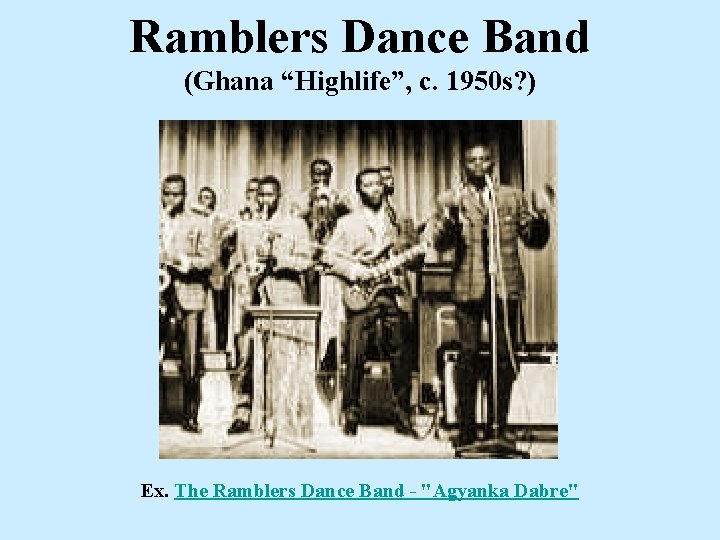
Ramblers Dance Band (Ghana “Highlife”, c. 1950 s? ) Ex. The Ramblers Dance Band - "Agyanka Dabre"
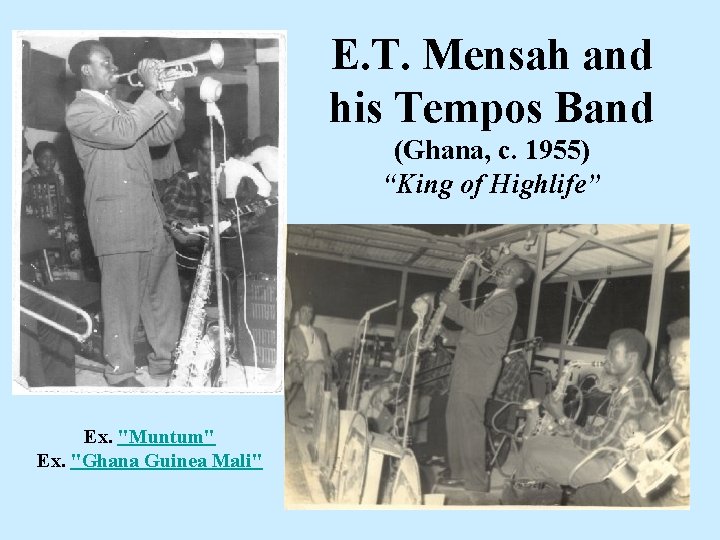
E. T. Mensah and his Tempos Band (Ghana, c. 1955) “King of Highlife” Ex. "Muntum" Ex. "Ghana Guinea Mali"
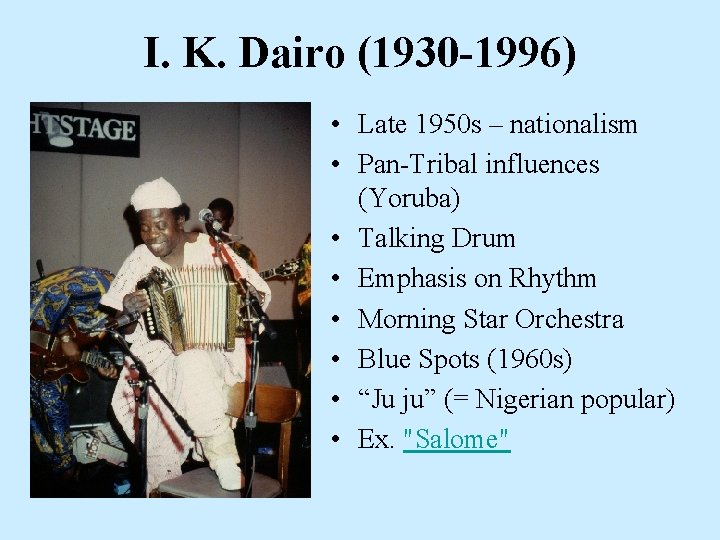
I. K. Dairo (1930 -1996) • Late 1950 s – nationalism • Pan-Tribal influences (Yoruba) • Talking Drum • Emphasis on Rhythm • Morning Star Orchestra • Blue Spots (1960 s) • “Ju ju” (= Nigerian popular) • Ex. "Salome"
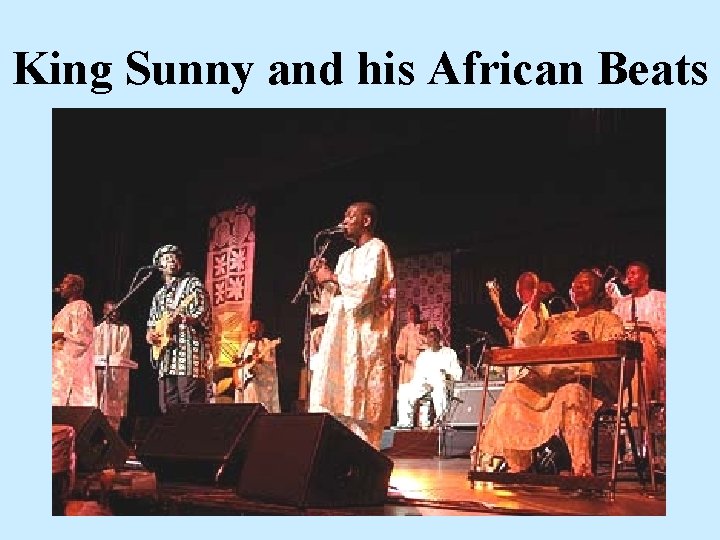
Jújú • Yoruba-based music (tribe of SW Nigeria) • Emerges in 1930 s w/ trios - a leader who sang and played the banjo - a shekere bottle-gourd rattle player - a jùjú (tambourine) drummer • 1948 – addition of Yoruba talking drum • King Sunny’s Band (large lineup, up to 16+) 5 -8 guitars, 2+ Talking drums, synthesizer(s), pedal steel guitar, miscellaneous percussion, 4 or more backup singers • “Jújú Music” (Island Records, 1982) -200, 000 copies sold [replacement for Bob Marley]
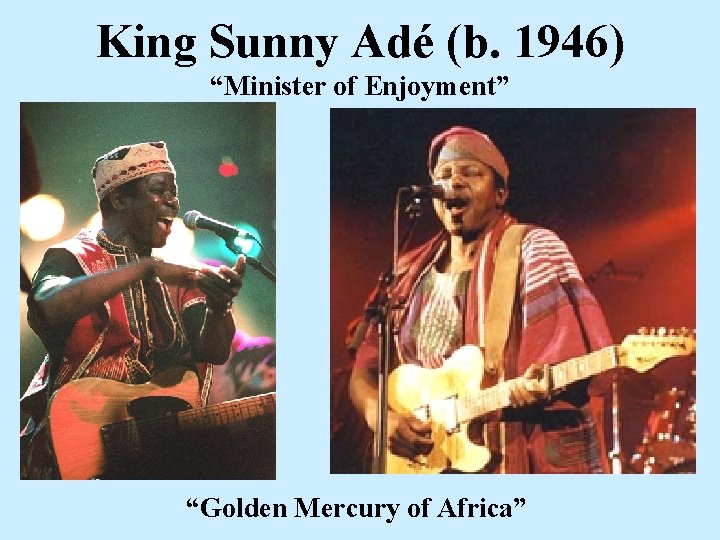
King Sunny Adé (b. 1946) “Minister of Enjoyment” “Golden Mercury of Africa”
King Sunny and his African Beats
Highlife, Ju. Ju, Afrobeat (Nigerian Pop) • • "Taxi Driver" - A Highlife Classic West African Highlife Band / Nigerian Brothers Juju Tempo Tola Osumare I. K. Dairo MBE (documentary clip) King Sunny Ade (60 th Birthday celebration) Sunny Ade - "Ja Funmi" King Sunny Ade - "Ja Funmi" (Waka Version)
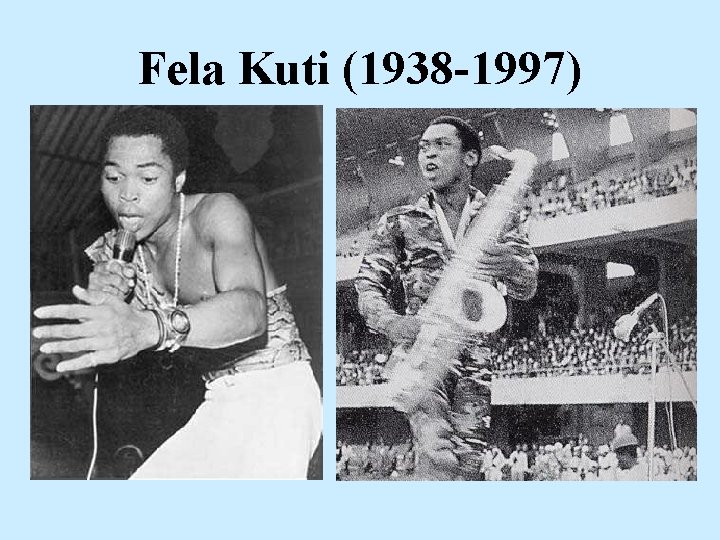
Fela Kuti (1938 -1997)
Fela’s life • Middle-Class Nigerian family - Mother – Feminist & Anti-colonialist - Father – Minister & Teacher (Union Pres. ) • London (1958) to study medicine, then music • Koola Lobitos (mixes jazz, funk, highlife) • Nigeria (1963 -69) radio producer • United States (1969) – influenced by Black Power movement • Bands: Nigeria ’ 70, Africa ‘ 70
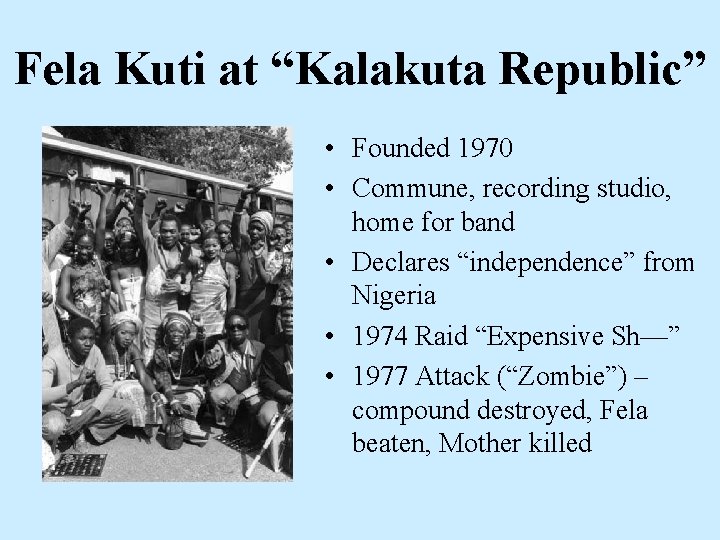
Fela Kuti at “Kalakuta Republic” • Founded 1970 • Commune, recording studio, home for band • Declares “independence” from Nigeria • 1974 Raid “Expensive Sh—” • 1977 Attack (“Zombie”) – compound destroyed, Fela beaten, Mother killed
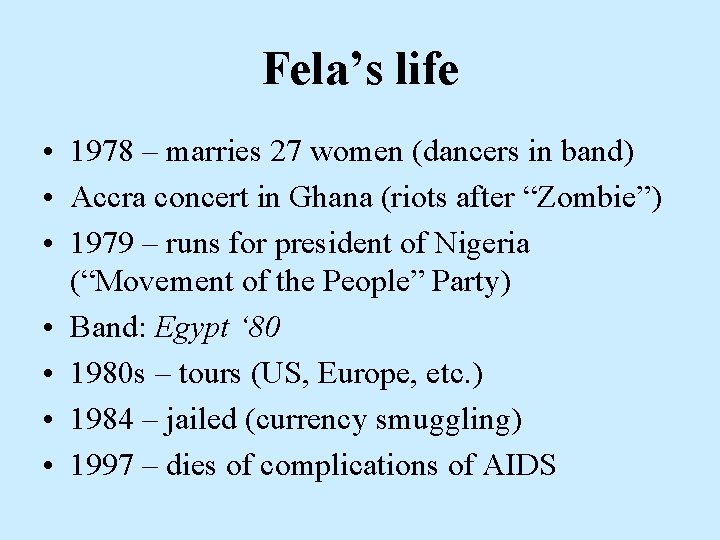
Fela’s life • 1978 – marries 27 women (dancers in band) • Accra concert in Ghana (riots after “Zombie”) • 1979 – runs for president of Nigeria (“Movement of the People” Party) • Band: Egypt ‘ 80 • 1980 s – tours (US, Europe, etc. ) • 1984 – jailed (currency smuggling) • 1997 – dies of complications of AIDS
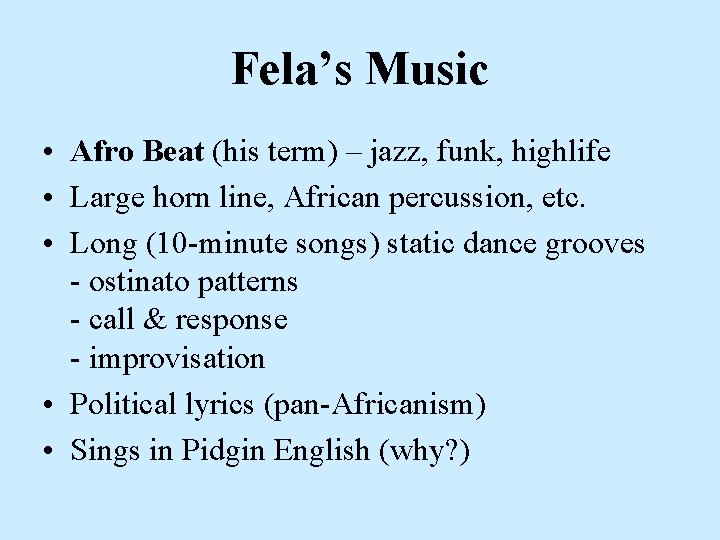
Fela’s Music • Afro Beat (his term) – jazz, funk, highlife • Large horn line, African percussion, etc. • Long (10 -minute songs) static dance grooves - ostinato patterns - call & response - improvisation • Political lyrics (pan-Africanism) • Sings in Pidgin English (why? )
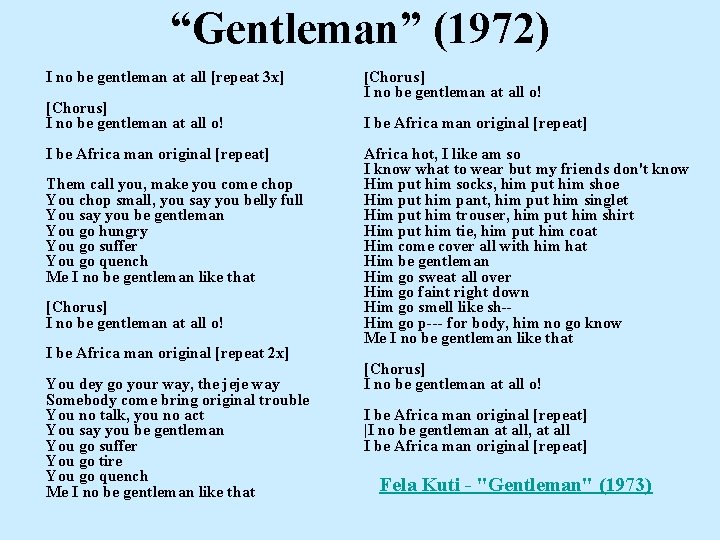
“Gentleman” (1972) I no be gentleman at all [repeat 3 x] [Chorus] I no be gentleman at all o! I be Africa man original [repeat] Them call you, make you come chop You chop small, you say you belly full You say you be gentleman You go hungry You go suffer You go quench Me I no be gentleman like that [Chorus] I no be gentleman at all o! I be Africa man original [repeat 2 x] You dey go your way, the jeje way Somebody come bring original trouble You no talk, you no act You say you be gentleman You go suffer You go tire You go quench Me I no be gentleman like that I no be gentleman at all o! Africa hot, I like am so I know what to wear but my friends don't know Him put him socks, him put him shoe Him put him pant, him put him singlet Him put him trouser, him put him shirt Him put him tie, him put him coat Him come cover all with him hat Him be gentleman Him go sweat all over Him go faint right down Him go smell like sh-Him go p--- for body, him no go know Me I no be gentleman like that [Chorus] I no be gentleman at all o! I be Africa man original [repeat] |I no be gentleman at all, at all I be Africa man original [repeat] Fela Kuti - "Gentleman" (1973)
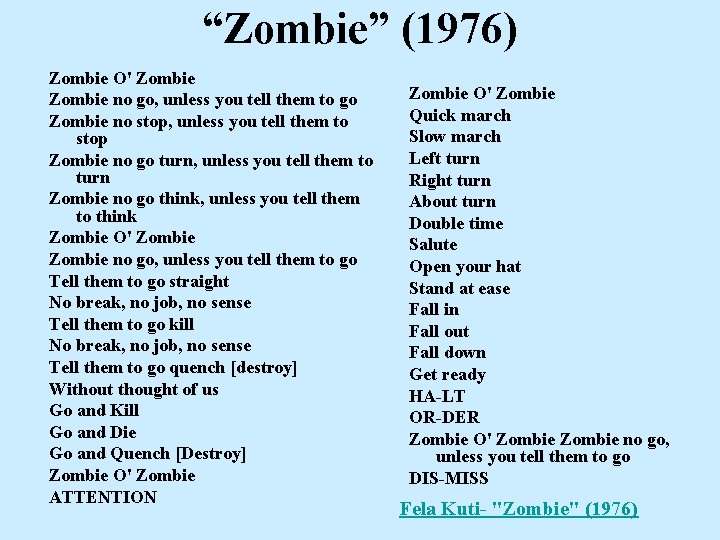
“Zombie” (1976) Zombie O' Zombie no go, unless you tell them to go Zombie no stop, unless you tell them to stop Zombie no go turn, unless you tell them to turn Zombie no go think, unless you tell them to think Zombie O' Zombie no go, unless you tell them to go Tell them to go straight No break, no job, no sense Tell them to go kill No break, no job, no sense Tell them to go quench [destroy] Without thought of us Go and Kill Go and Die Go and Quench [Destroy] Zombie O' Zombie ATTENTION Zombie O' Zombie Quick march Slow march Left turn Right turn About turn Double time Salute Open your hat Stand at ease Fall in Fall out Fall down Get ready HA-LT OR-DER Zombie O' Zombie no go, unless you tell them to go DIS-MISS Fela Kuti- "Zombie" (1976)
Fela on You. Tube • • • Fela Kuti - Lady Fela Kuti - Gentleman Fela Kuti - Zombie – You. Tube Fela in performance (1971) Fela Kuti & Africa 70 - Pansa - FULL HD (Berlin 1978) Compare to James Brown (1970 s: “Funk”) “Hardest Working Man in Show Business” - Hardest Working Man in Show Business. . . James Brown! – You. Tube - JAMES BROWN GREATEST DANCE MOVES EVERTHERE WAS A TIME LIVE - You. Tube - james brown, say it loud i'm black and i'm proud