Happy Tuesday PLEASE WRITE DOWN YOUR HOMEWORK IN
- Slides: 14
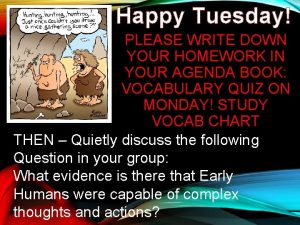
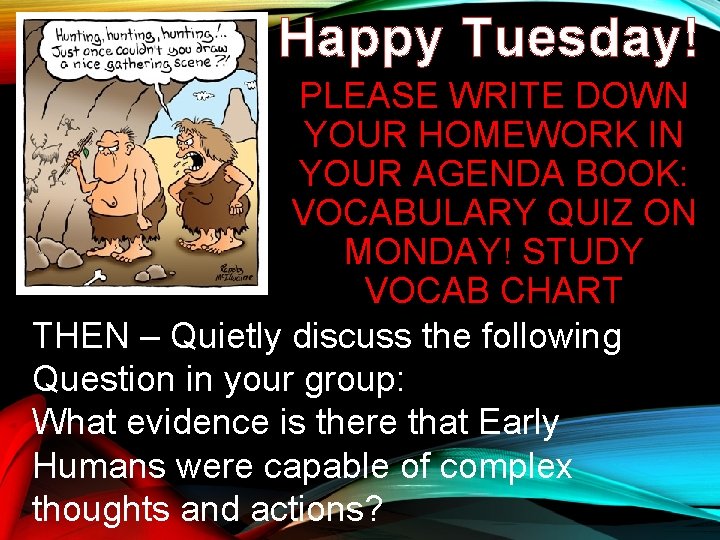
Happy Tuesday! PLEASE WRITE DOWN YOUR HOMEWORK IN YOUR AGENDA BOOK: VOCABULARY QUIZ ON MONDAY! STUDY VOCAB CHART THEN – Quietly discuss the following Question in your group: What evidence is there that Early Humans were capable of complex thoughts and actions?
How do we know that Early Humans were capable of complex thought? • Cave Art • Technology usage like making fire and tools • Development of language
EARLY AGRICULTURE GUIDED NOTES Pages 82 - 89
Key Ideas (p. 82) : Human life changed dramatically when people learned to farm and to domesticate animals. Farming allowed people to settle in one place and develop. specialized skills
1. During the Old Stone Age, why couldn’t people settle in one place for long? They had to follow herds of animals hunt food. 2. to Why do historians call the New Stone Age the Neolithic Agricultural Revolution? It is called ‘new’ because people began to farm and life changed.
3. Others learned to modify or environment change their so that it would provide more food.
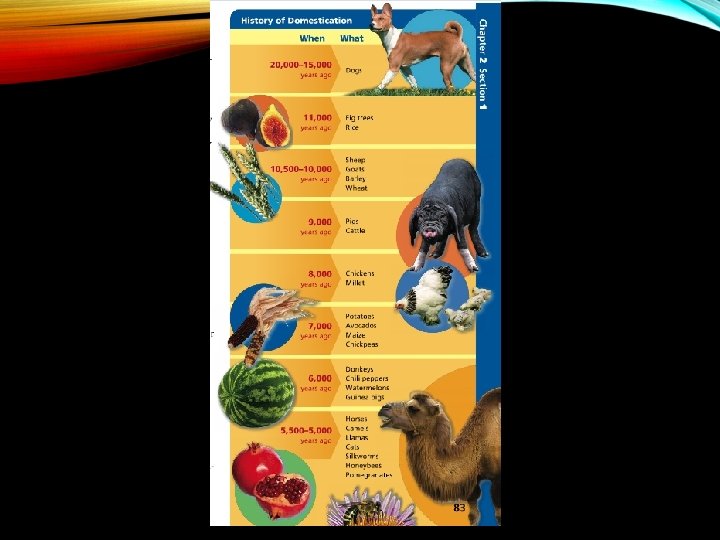
4. People learned to domesticate plants and animals, especially those they used for food. Domesticate means: to change the growth of plants or behavior of animals in ways that are useful fortwo humans 5. List domesticated plants animals: or see chart on page 83
6. Farmers invented new tools in order to make farming easier. These were first made of stone, and eventually farmers used bronze, then iron.
The Spread of Farming (p. 85 -86) 7. What were two costs of shifting from hunting-gathering to farming? • Planting crops/herding animals took a lot of time and energy • Farming could be unpredictable and uncertain • Farming could be dangerous
8. What were two benefits of farming? • Farming produced more food and required less land • People were able to build permanent homes • Farming provided new sources of materials for clothes and shelter
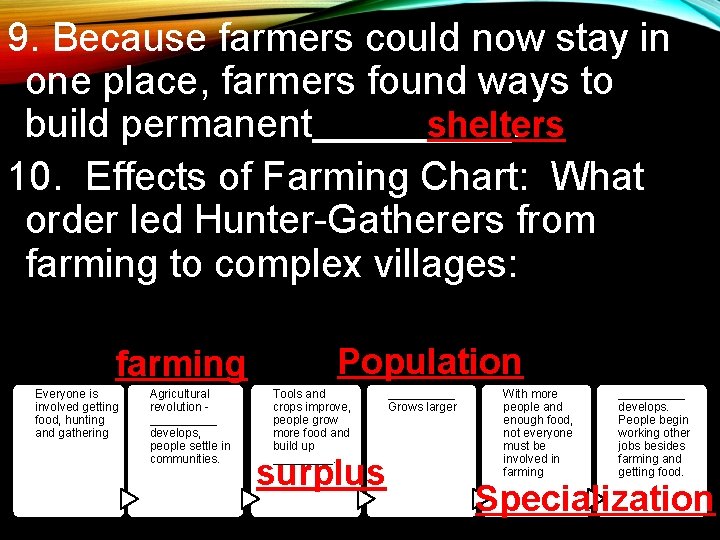
9. Because farmers could now stay in one place, farmers found ways to shelters build permanent. 10. Effects of Farming Chart: What order led Hunter-Gatherers from farming to complex villages: farming Everyone is involved getting food, hunting and gathering Agricultural revolution _____ develops, people settle in communities. Population Tools and crops improve, people grow more food and build up _____. surplus _____ Grows larger With more people and enough food, not everyone must be involved in farming _____ develops. People begin working other jobs besides farming and getting food. Specialization
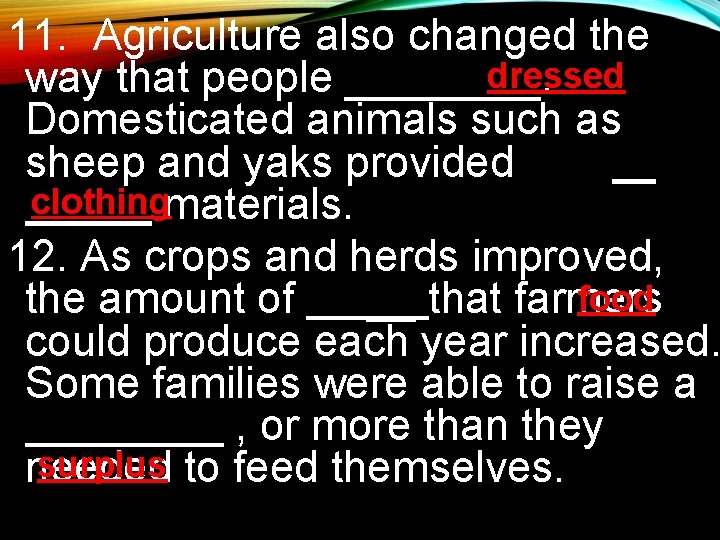
11. Agriculture also changed the dressed way that people ____. Domesticated animals such as sheep and yaks provided clothingmaterials. 12. As crops and herds improved, food the amount of __ that farmers could produce each year increased. Some families were able to raise a , or more than they surplus to feed themselves. needed
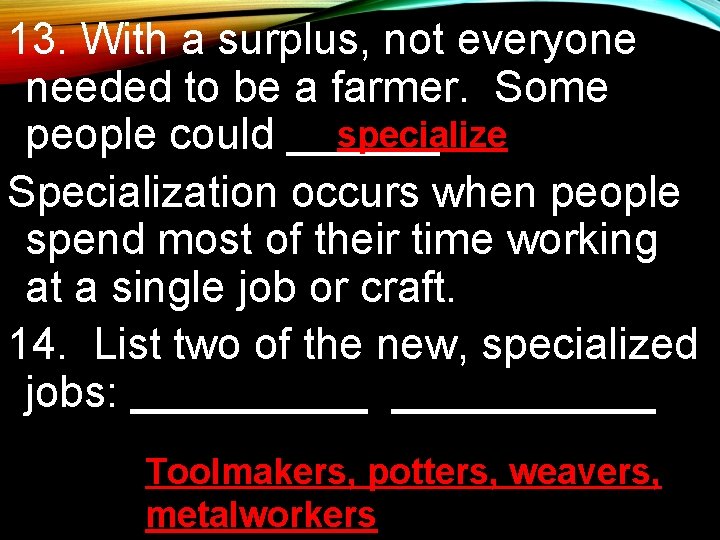
13. With a surplus, not everyone needed to be a farmer. Some people could specialize Specialization occurs when people spend most of their time working at a single job or craft. 14. List two of the new, specialized jobs: Toolmakers, potters, weavers, metalworkers