Franchising Familiness and Institutions Ilan Alon Ph D









- Slides: 38
Franchising, Familiness and Institutions Ilan Alon, Ph. D Ilan. alon@uia. no
Agenda • Quick introduction • Franchising research – Domestic – International • “Familiness” and Franchising • Institutions and Franchising • Some testable hypotheses
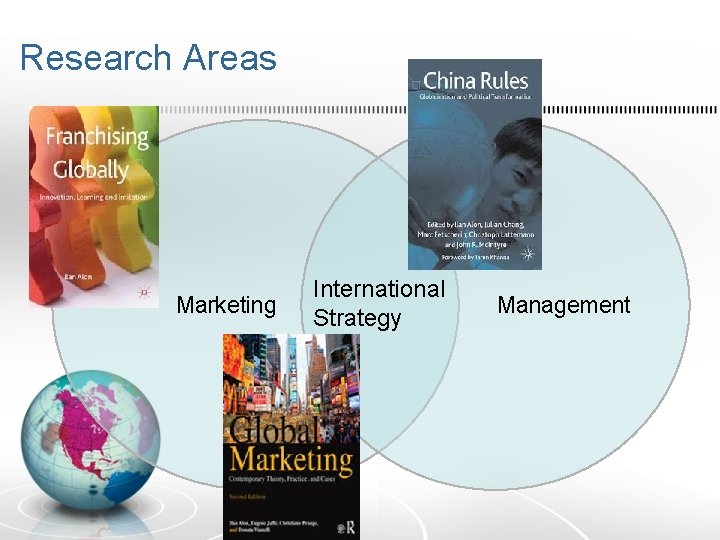
Research Areas Marketing International Strategy Management
Editor-in-Chief
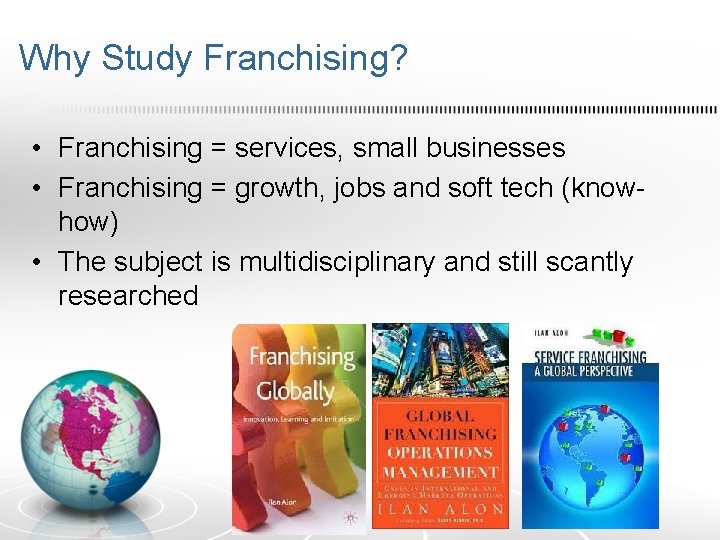
Why Study Franchising? • Franchising = services, small businesses • Franchising = growth, jobs and soft tech (knowhow) • The subject is multidisciplinary and still scantly researched
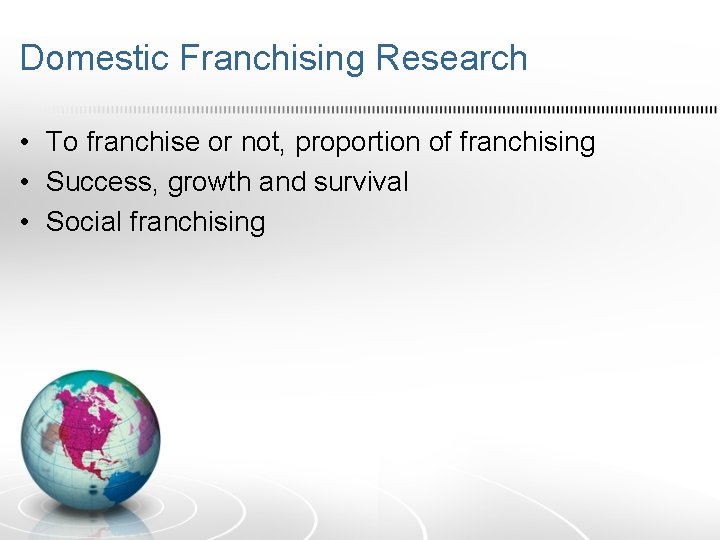
Domestic Franchising Research • To franchise or not, proportion of franchising • Success, growth and survival • Social franchising
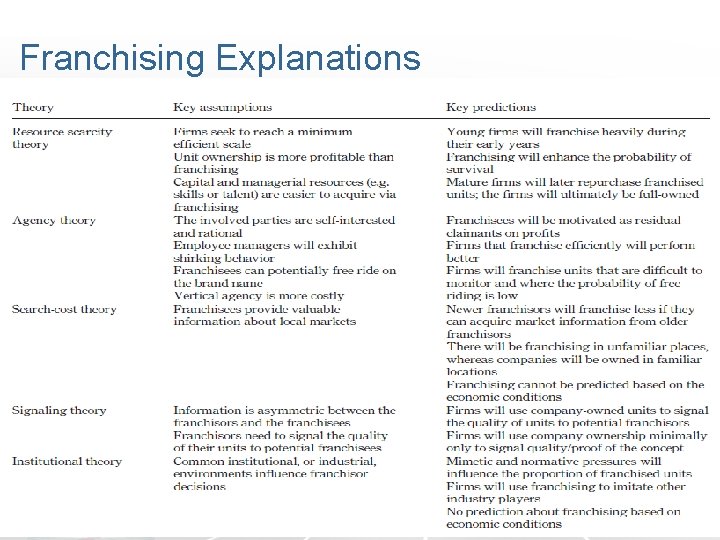
Franchising Explanations
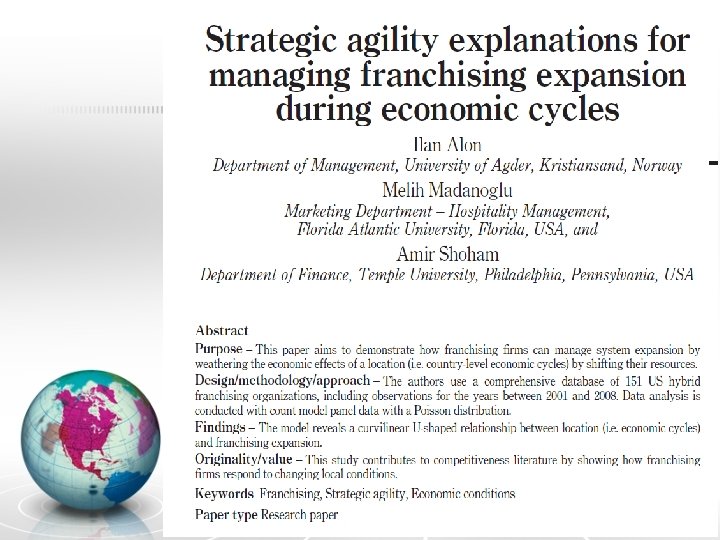
Strategic Agility Explanation
Signaling Theory (J of Service Mrkt, 2014)
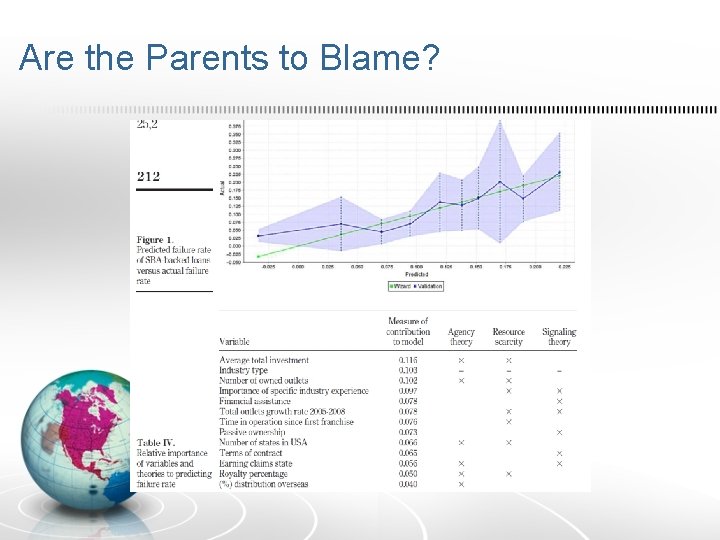
Are the Parents to Blame?
Determinants of Franchising IPOs
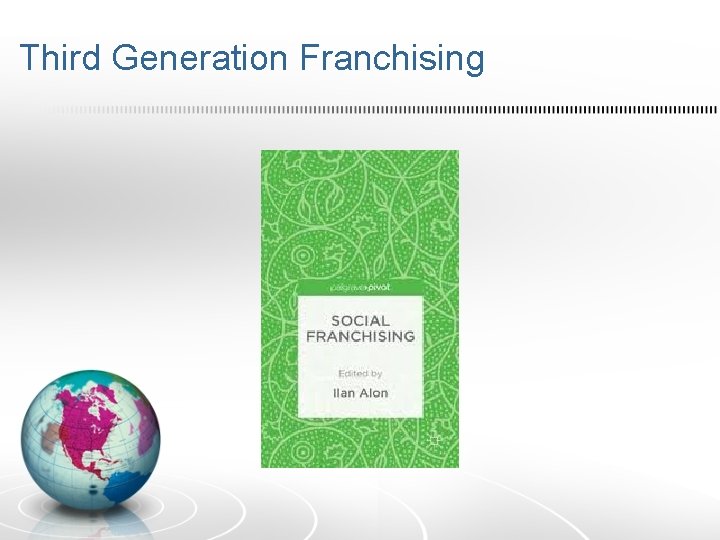
Third Generation Franchising
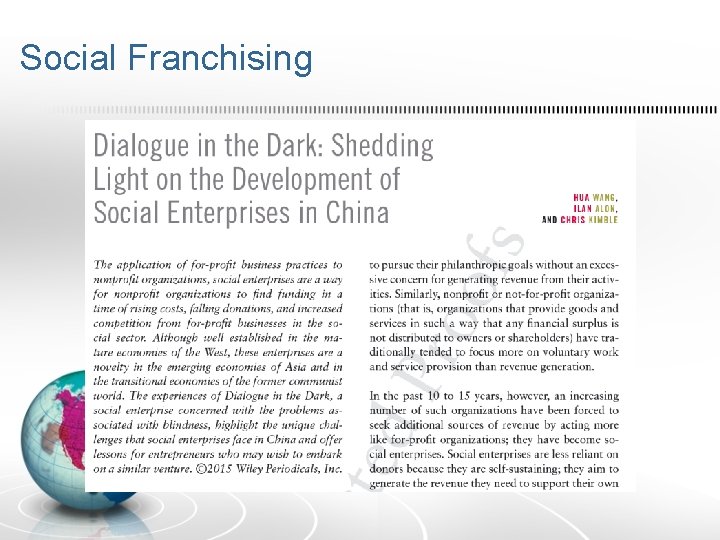
Social Franchising
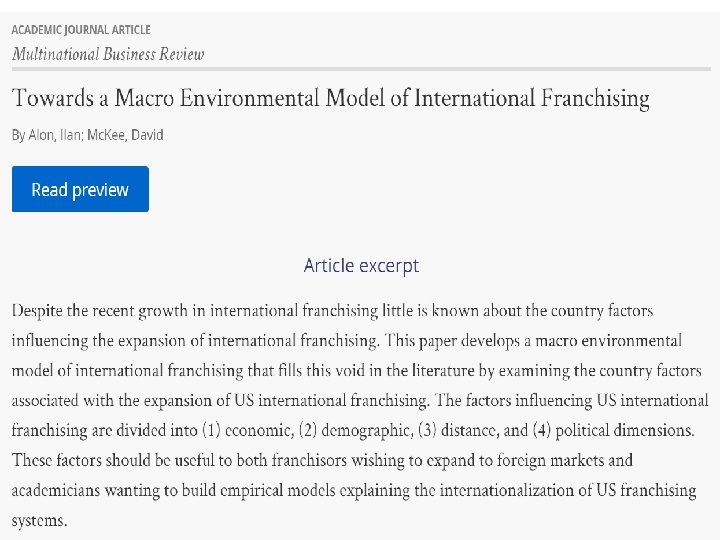
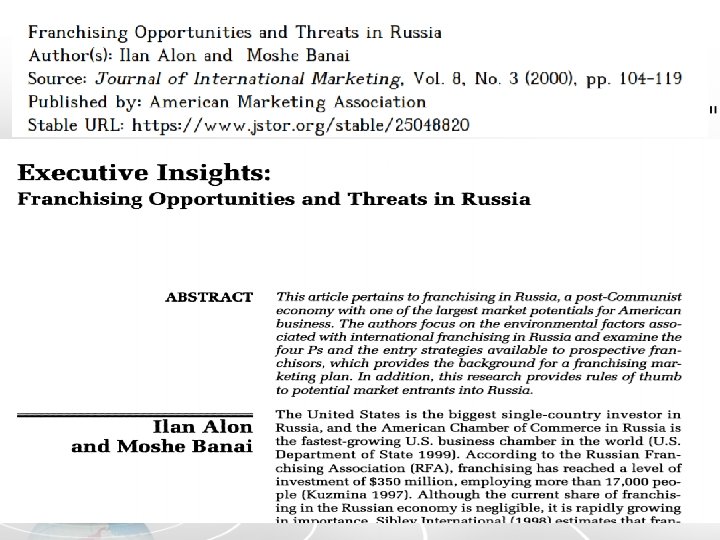
International Franchising Research • • • Internationalization Mode of entry International market selection Country specific studies (institutions matter) Impact of franchising
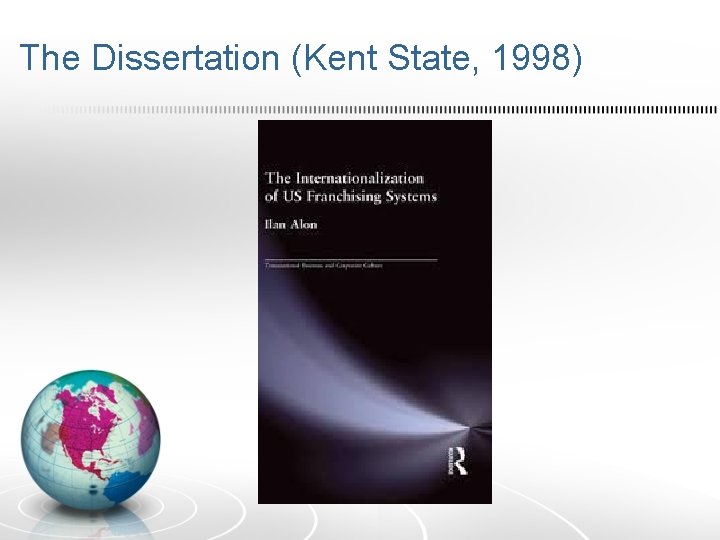
The Dissertation (Kent State, 1998)
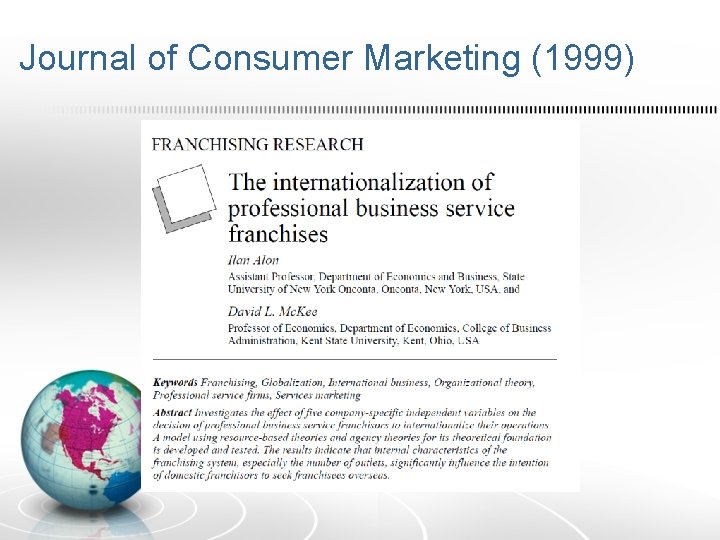
Journal of Consumer Marketing (1999)
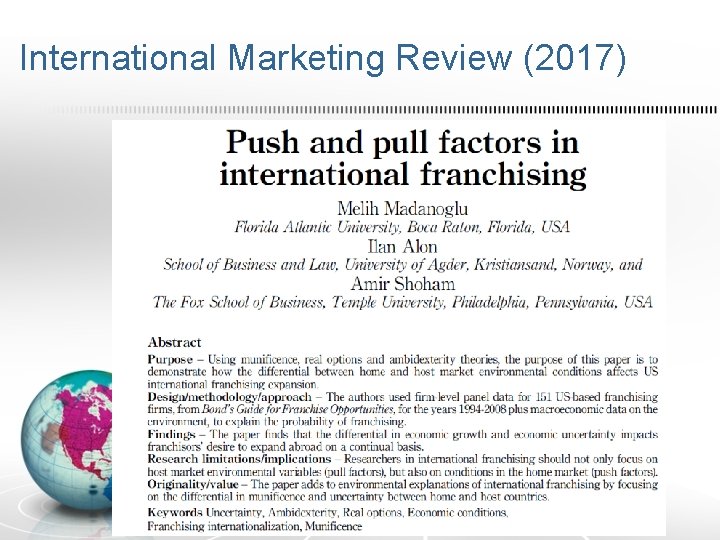
International Marketing Review (2017)
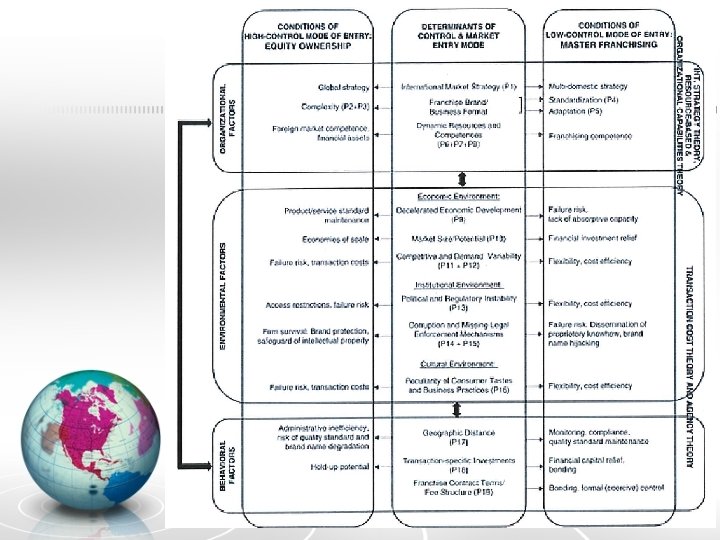
International Franchising Modes of Entry
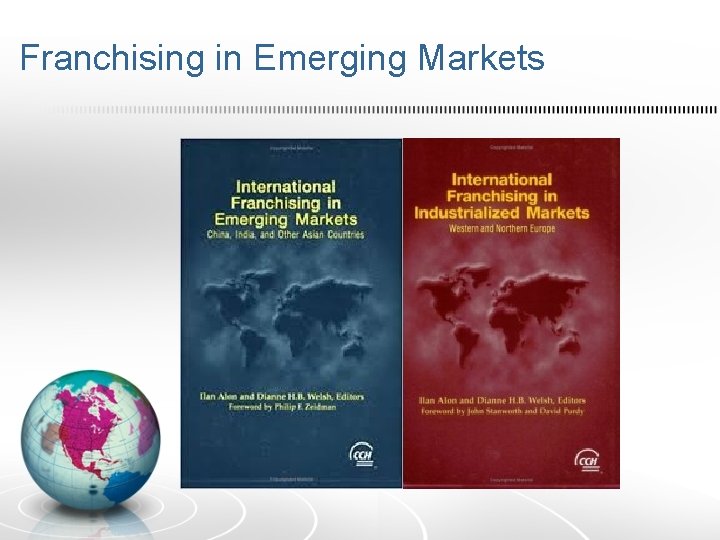
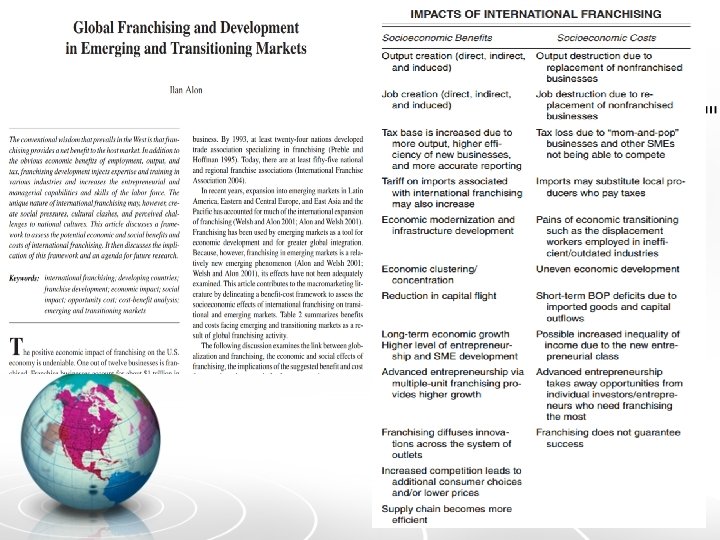
Franchising in Emerging Markets
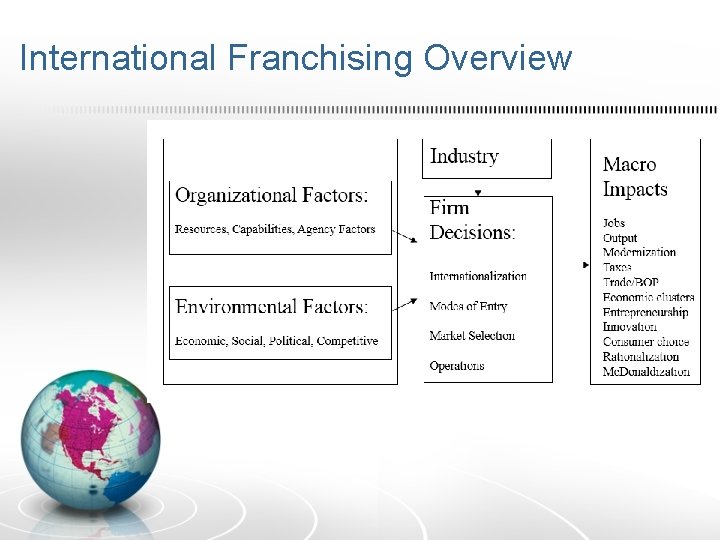
International Franchising Overview
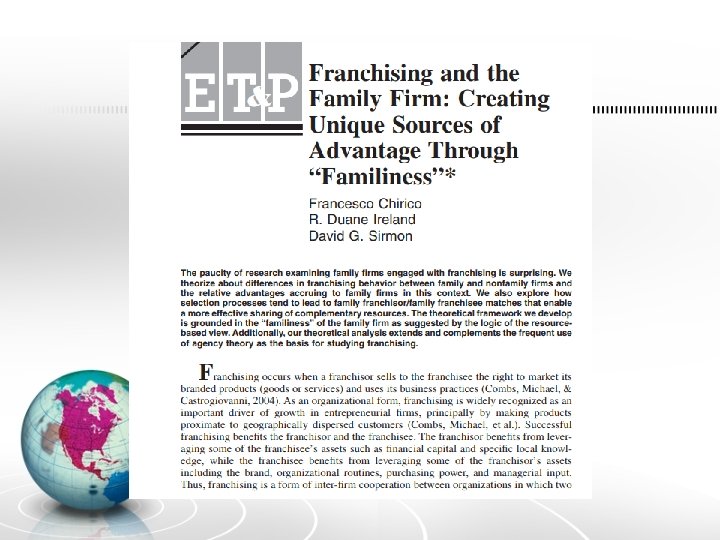
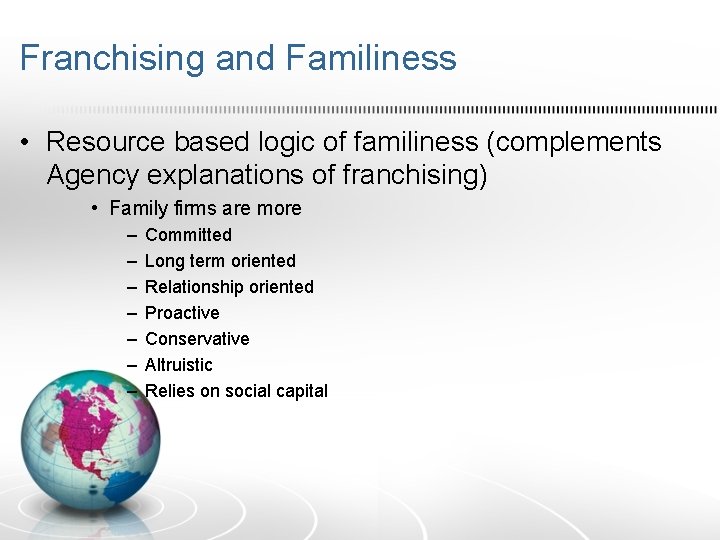
Franchising and Familiness • Resource based logic of familiness (complements Agency explanations of franchising) • Family firms are more – – – – Committed Long term oriented Relationship oriented Proactive Conservative Altruistic Relies on social capital
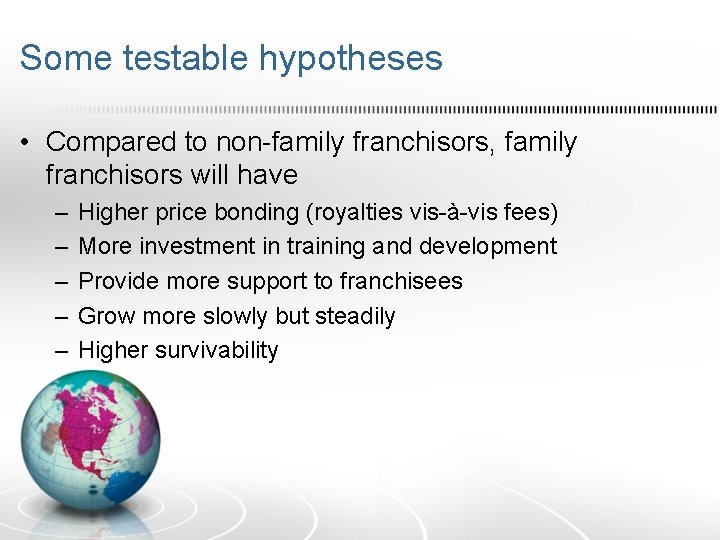
Some testable hypotheses • Compared to non-family franchisors, family franchisors will have – – – Higher price bonding (royalties vis-à-vis fees) More investment in training and development Provide more support to franchisees Grow more slowly but steadily Higher survivability
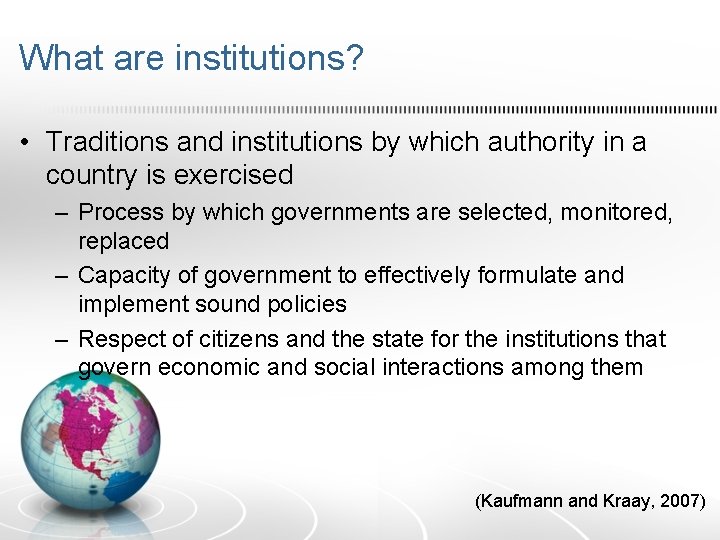
What are institutions? • Traditions and institutions by which authority in a country is exercised – Process by which governments are selected, monitored, replaced – Capacity of government to effectively formulate and implement sound policies – Respect of citizens and the state for the institutions that govern economic and social interactions among them (Kaufmann and Kraay, 2007)
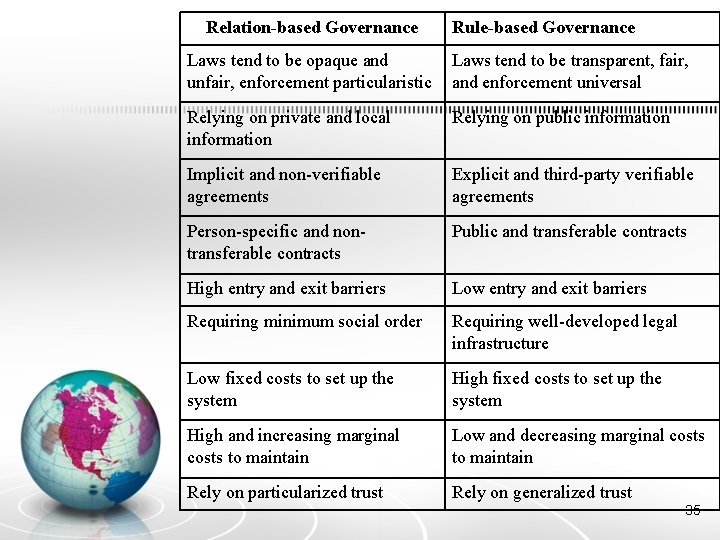
Relation-based Governance Rule-based Governance Laws tend to be opaque and unfair, enforcement particularistic Laws tend to be transparent, fair, and enforcement universal Relying on private and local information Relying on public information Implicit and non-verifiable agreements Explicit and third-party verifiable agreements Person-specific and nontransferable contracts Public and transferable contracts High entry and exit barriers Low entry and exit barriers Requiring minimum social order Requiring well-developed legal infrastructure Low fixed costs to set up the system High and increasing marginal costs to maintain Low and decreasing marginal costs to maintain Rely on particularized trust Rely on generalized trust 35
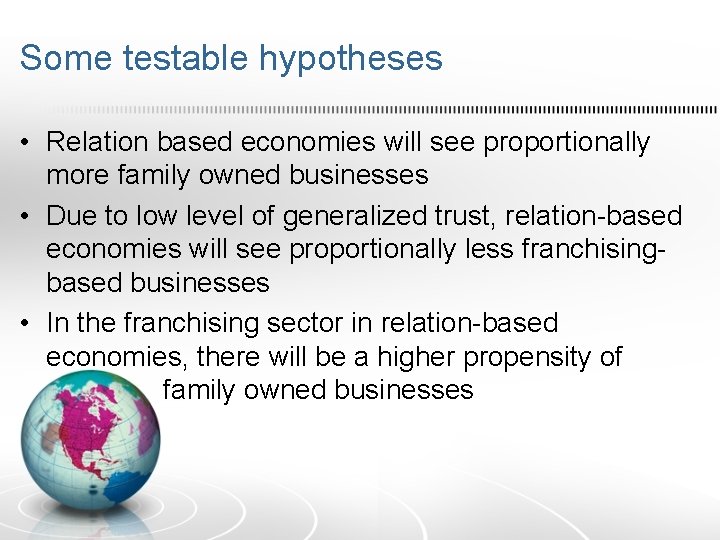
Some testable hypotheses • Relation based economies will see proportionally more family owned businesses • Due to low level of generalized trust, relation-based economies will see proportionally less franchisingbased businesses • In the franchising sector in relation-based economies, there will be a higher propensity of family owned businesses
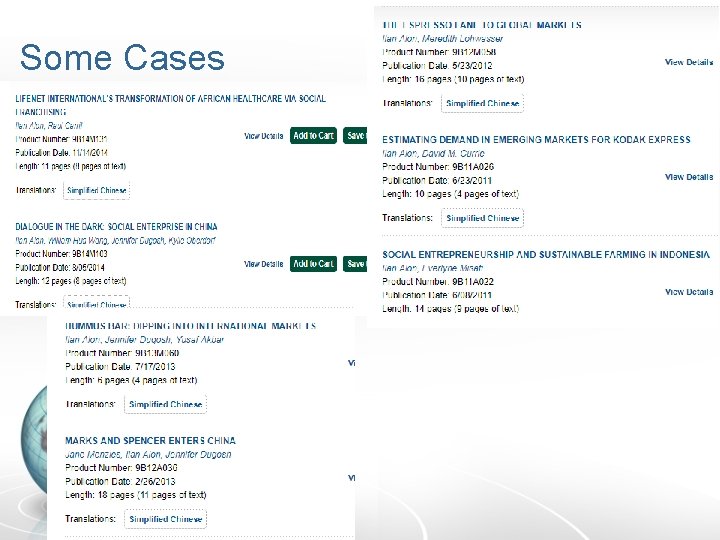
Some Cases
Thank You Q&A