ENCODE Analysis Workshop Ian Dunham Analysis Threads and
- Slides: 34
ENCODE Analysis Workshop Ian Dunham
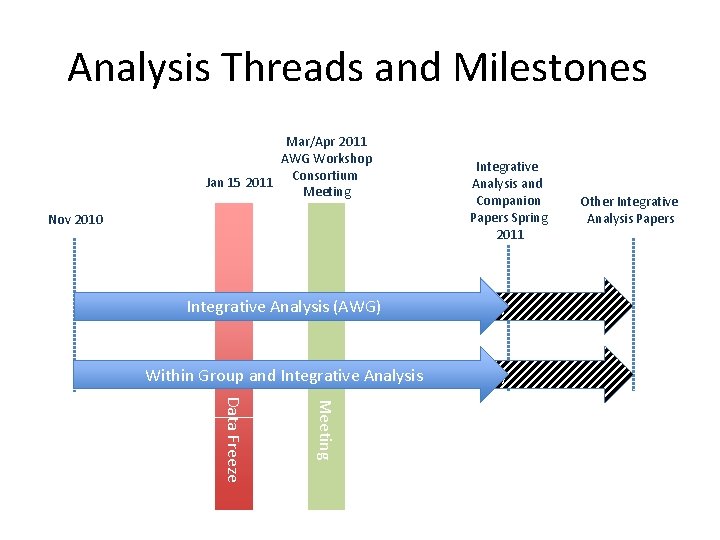
Analysis Threads and Milestones Mar/Apr 2011 AWG Workshop Jan 15 2011 Consortium Meeting Nov 2010 Meeting Data Freeze Integrative Analysis and Companion Papers Spring 2011 Integrative Analysis (AWG) Within Group and Integrative Analysis (AWG) Other Integrative Analysis Papers
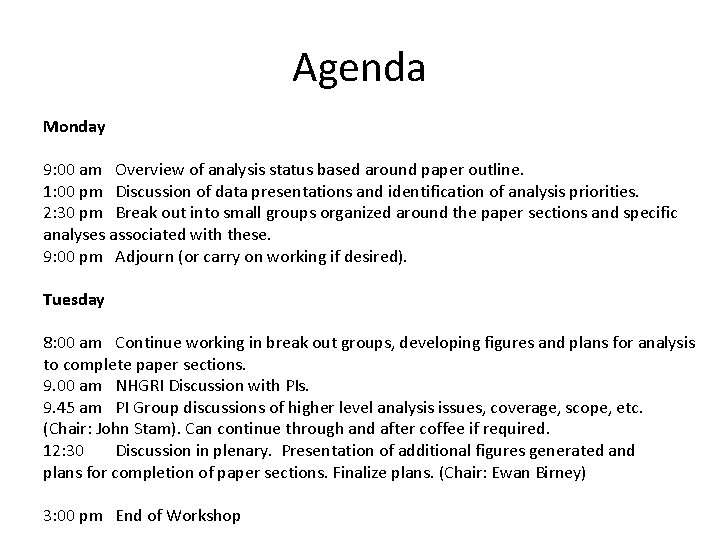
Agenda Monday 9: 00 am Overview of analysis status based around paper outline. 1: 00 pm Discussion of data presentations and identification of analysis priorities. 2: 30 pm Break out into small groups organized around the paper sections and specific analyses associated with these. 9: 00 pm Adjourn (or carry on working if desired). Tuesday 8: 00 am Continue working in break out groups, developing figures and plans for analysis to complete paper sections. 9. 00 am NHGRI Discussion with PIs. 9. 45 am PI Group discussions of higher level analysis issues, coverage, scope, etc. (Chair: John Stam). Can continue through and after coffee if required. 12: 30 Discussion in plenary. Presentation of additional figures generated and plans for completion of paper sections. Finalize plans. (Chair: Ewan Birney) 3: 00 pm End of Workshop
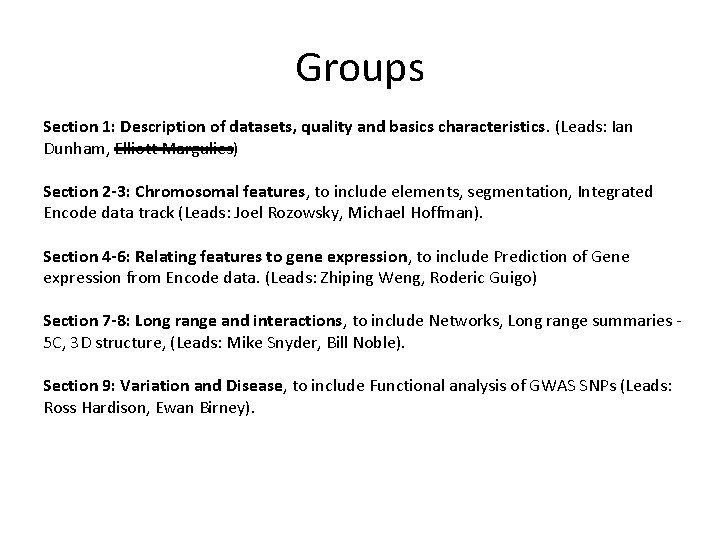
Groups Section 1: Description of datasets, quality and basics characteristics. (Leads: Ian Dunham, Elliott Margulies) Section 2 -3: Chromosomal features, to include elements, segmentation, Integrated Encode data track (Leads: Joel Rozowsky, Michael Hoffman). Section 4 -6: Relating features to gene expression, to include Prediction of Gene expression from Encode data. (Leads: Zhiping Weng, Roderic Guigo) Section 7 -8: Long range and interactions, to include Networks, Long range summaries - 5 C, 3 D structure, (Leads: Mike Snyder, Bill Noble). Section 9: Variation and Disease, to include Functional analysis of GWAS SNPs (Leads: Ross Hardison, Ewan Birney).
Section 1: Description of datasets, quality and basics characteristics The boring bits © © Mike Snyder
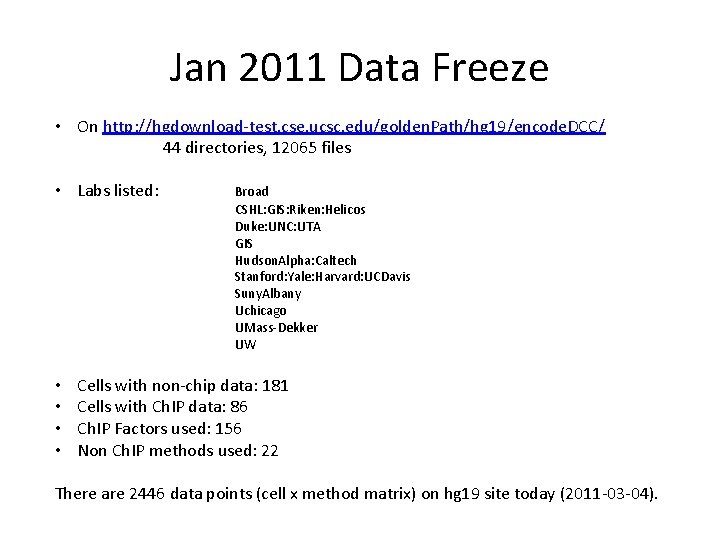
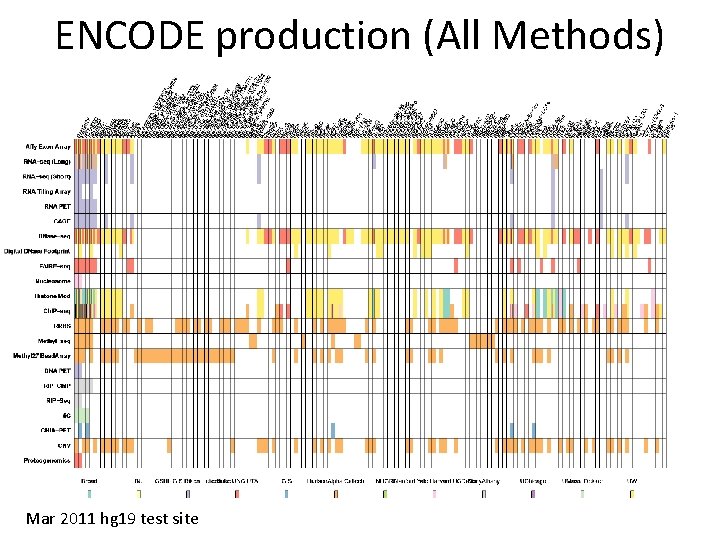
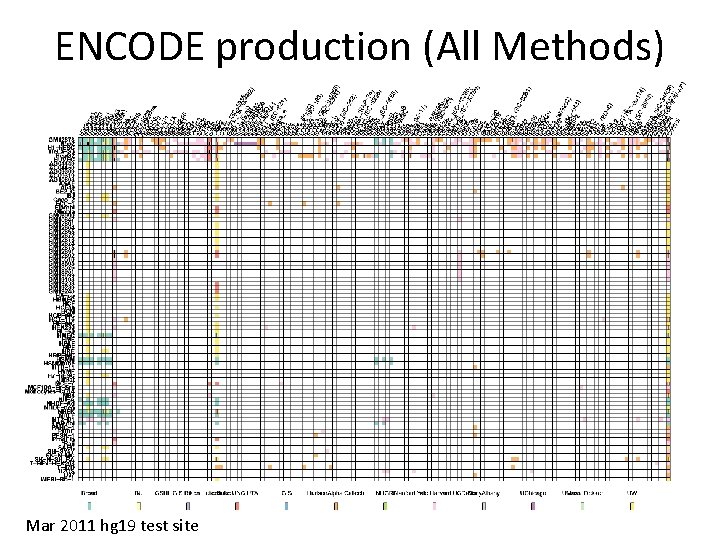
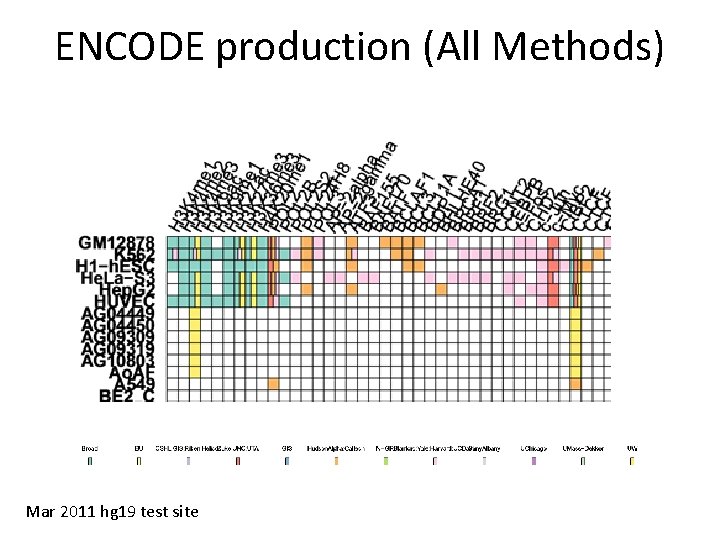
Jan 2011 Data Freeze • On http: //hgdownload-test. cse. ucsc. edu/golden. Path/hg 19/encode. DCC/ 44 directories, 12065 files • Labs listed: • • Broad CSHL: GIS: Riken: Helicos Duke: UNC: UTA GIS Hudson. Alpha: Caltech Stanford: Yale: Harvard: UCDavis Suny. Albany Uchicago UMass-Dekker UW Cells with non-chip data: 181 Cells with Ch. IP data: 86 Ch. IP Factors used: 156 Non Ch. IP methods used: 22 There are 2446 data points (cell x method matrix) on hg 19 site today (2011 -03 -04).
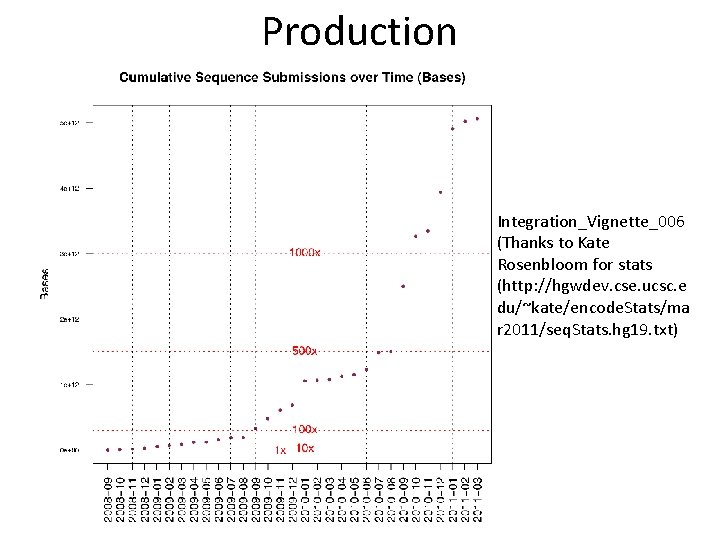
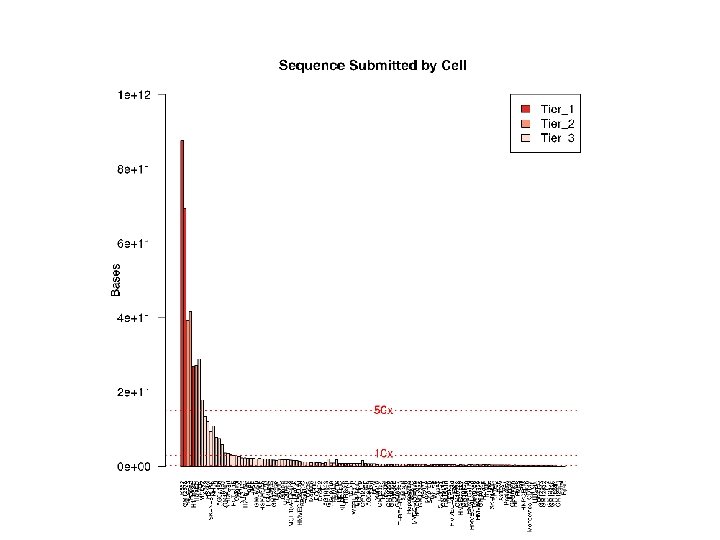
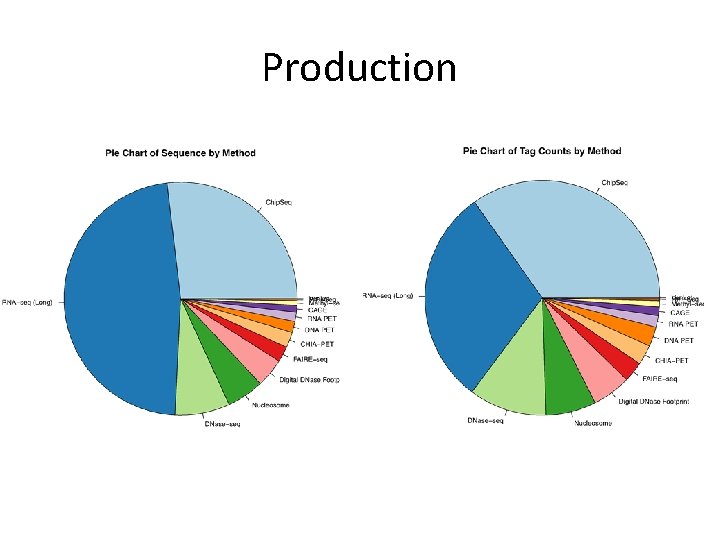
Production Integration_Vignette_006 (Thanks to Kate Rosenbloom for stats (http: //hgwdev. cse. ucsc. e du/~kate/encode. Stats/ma r 2011/seq. Stats. hg 19. txt)
Production
ENCODE production (All Methods) Mar 2011 hg 19 test site
ENCODE production (All Methods) Mar 2011 hg 19 test site
ENCODE production (All Methods) Mar 2011 hg 19 test site
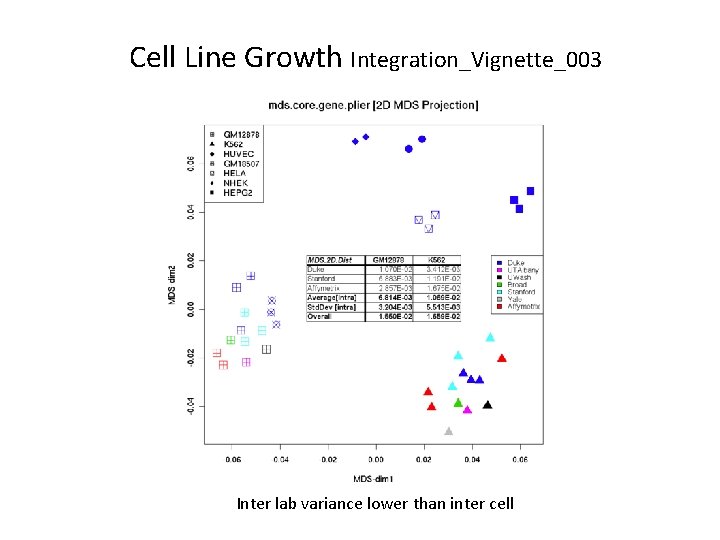
Cell Line Growth Integration_Vignette_003 Inter lab variance lower than inter cell
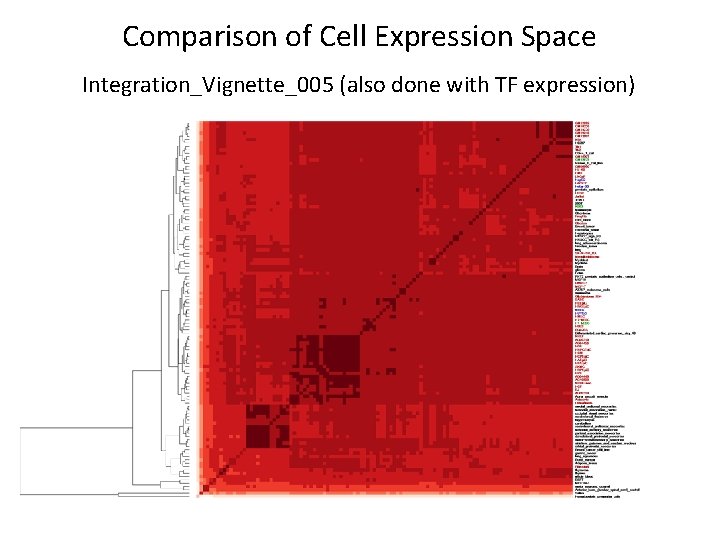
Comparison of Cell Expression Space Integration_Vignette_005 (also done with TF expression)
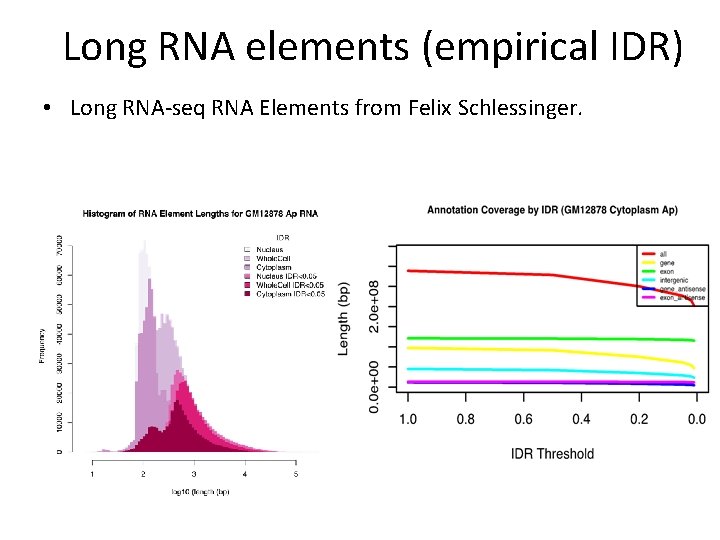
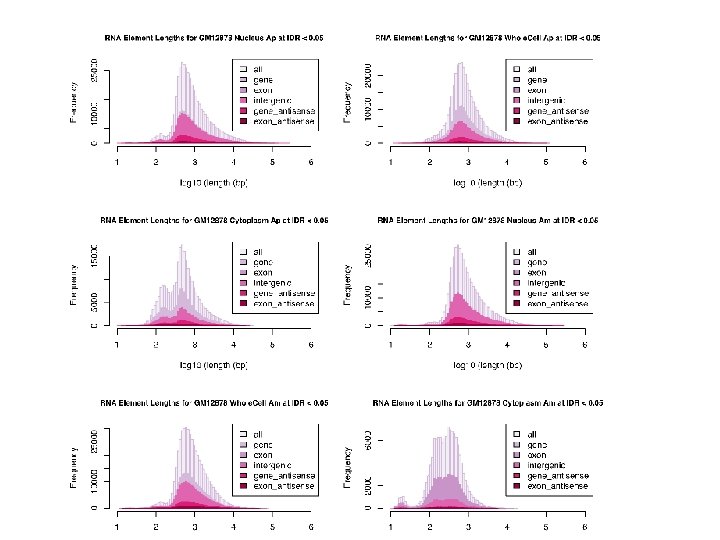
Standardised Methods and Elements • SPP and Peak-seq pipeline with IDR thresholding, blacklist filtering and “data rescue”. • Signal processing. • IDR on relaxed calls on Dnase, FAIRE data (IN PROGRESS). • RNA elements (long. RNA-seq), with empirical IDR • Motif prediction pipeline (Pouya Kheradpour) • Locations of Data can be found on http: //genomewiki. ucsc. edu/Encode. DCC/index. php/Locations _of_ENCODE_Data • EBI Aspera and ftp site (details are on the wiki page) has all the uniform processed files, except some of RNA.
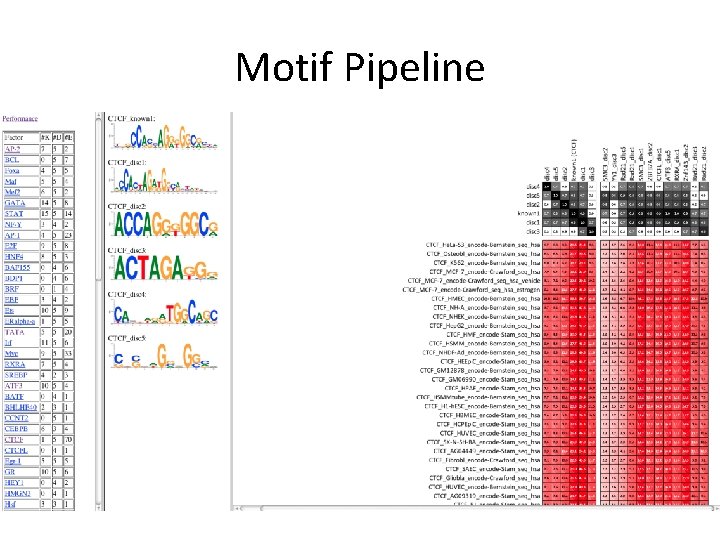
Motif Pipeline • http: //www. broadinstitute. org/~pouyak/encode-motif-disc/
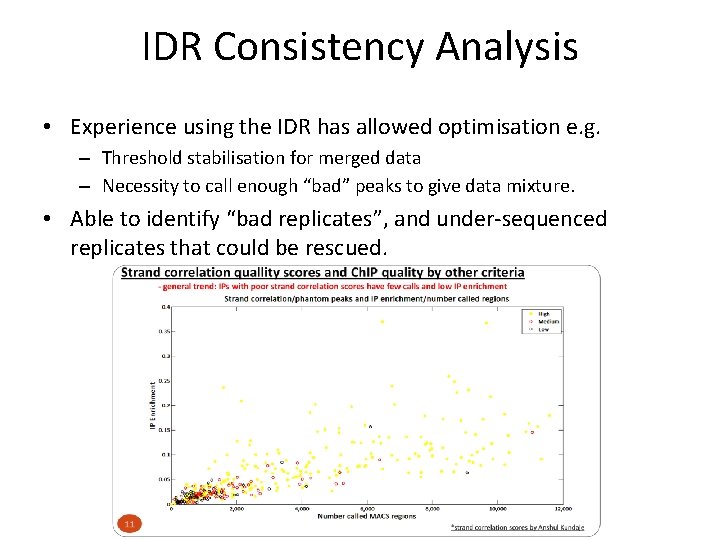
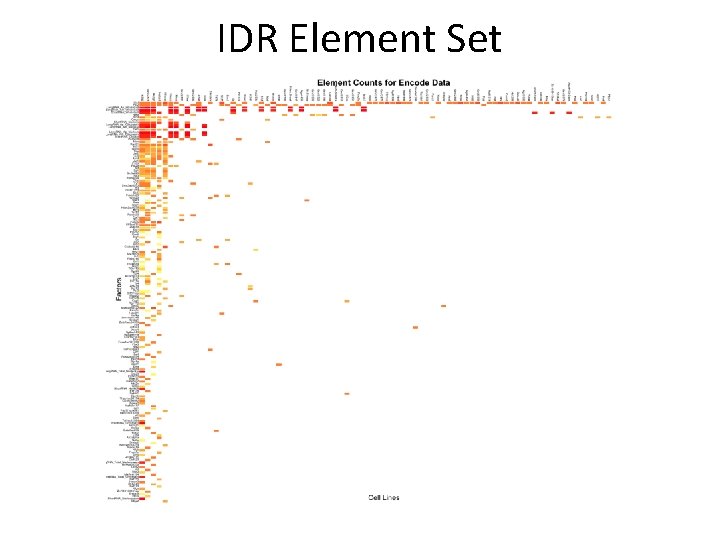
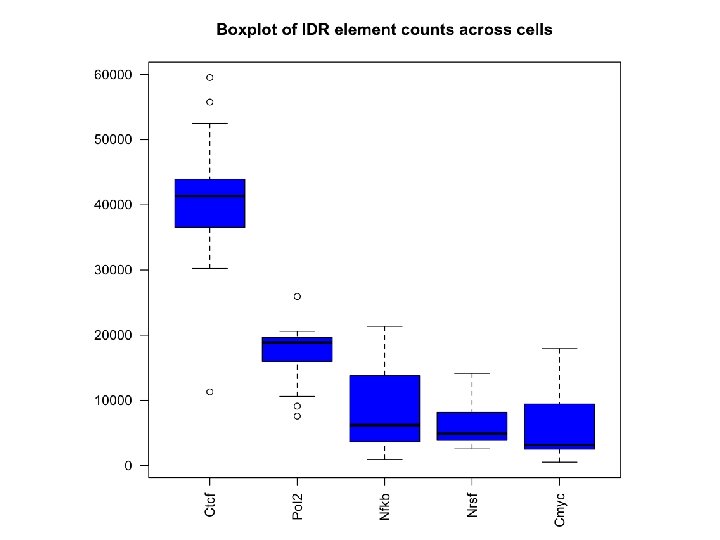
IDR Consistency Analysis • Experience using the IDR has allowed optimisation e. g. – Threshold stabilisation for merged data – Necessity to call enough “bad” peaks to give data mixture. • Able to identify “bad replicates”, and under-sequenced replicates that could be rescued.
IDR Element Set
IDR Element Set
Long RNA elements (empirical IDR) • Long RNA-seq RNA Elements from Felix Schlessinger.
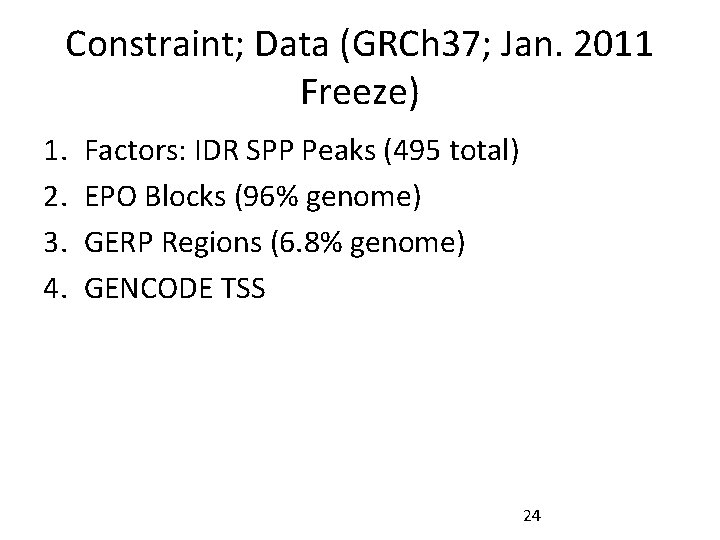
Constraint; Data (GRCh 37; Jan. 2011 Freeze) 1. 2. 3. 4. Factors: IDR SPP Peaks (495 total) EPO Blocks (96% genome) GERP Regions (6. 8% genome) GENCODE TSS 24
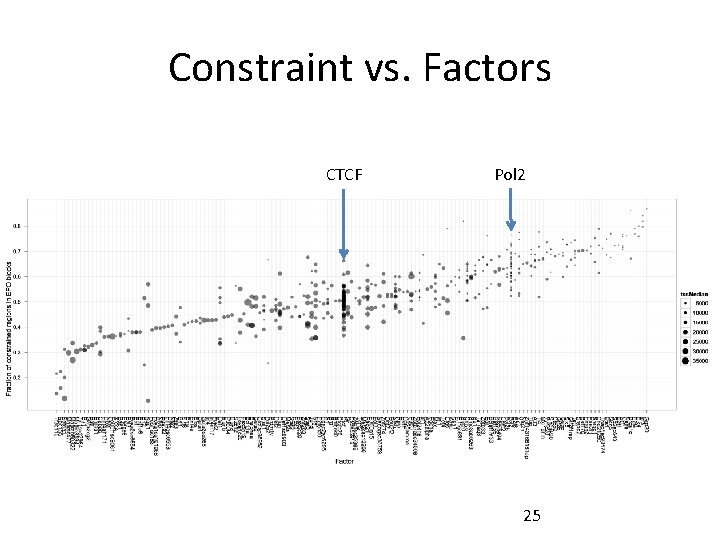
Constraint vs. Factors CTCF Pol 2 25
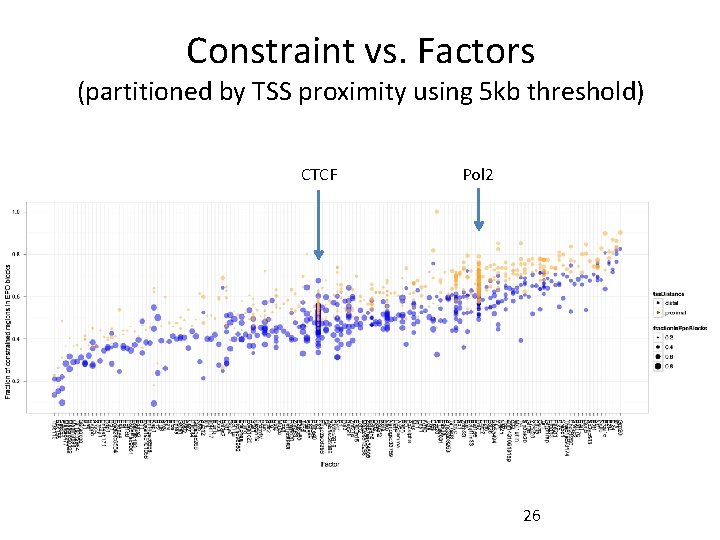
Constraint vs. Factors (partitioned by TSS proximity using 5 kb threshold) CTCF Pol 2 26
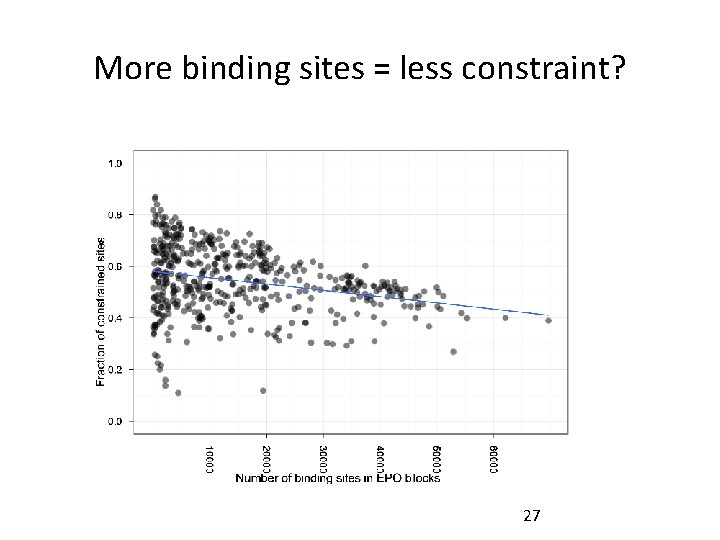
More binding sites = less constraint? 27
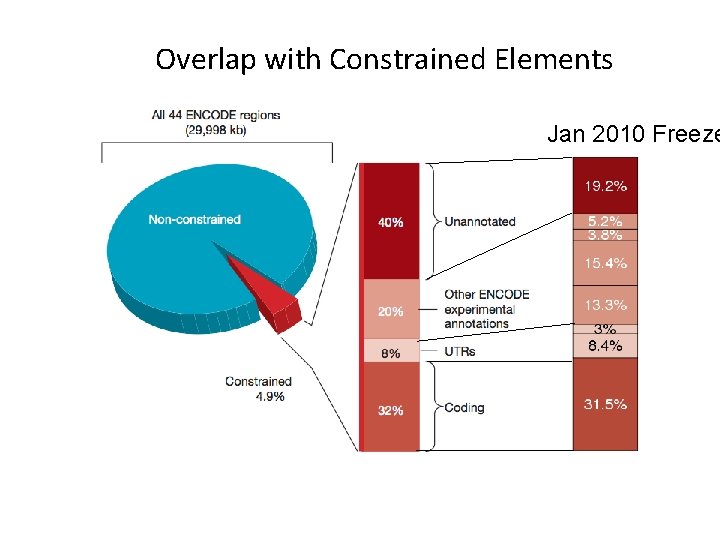
Overlap with Constrained Elements Jan 2010 Freeze
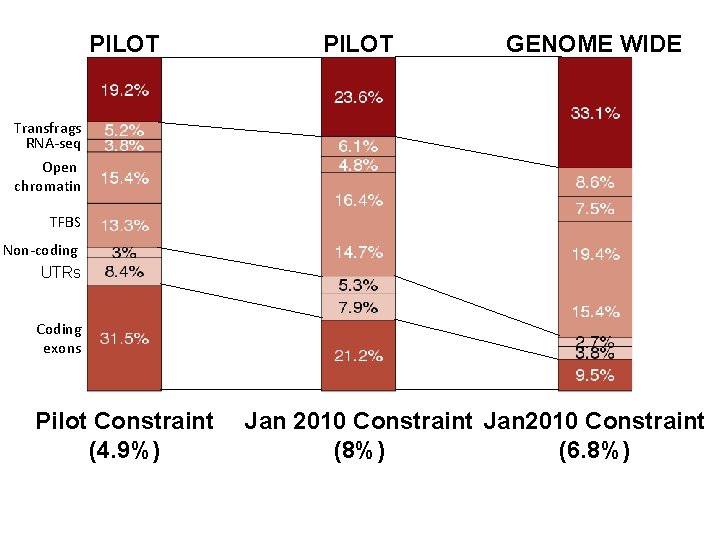
PILOT GENOME WIDE Transfrags RNA-seq Open chromatin TFBS Non-coding UTRs Coding exons Pilot Constraint (4. 9%) Jan 2010 Constraint (8%) (6. 8%)
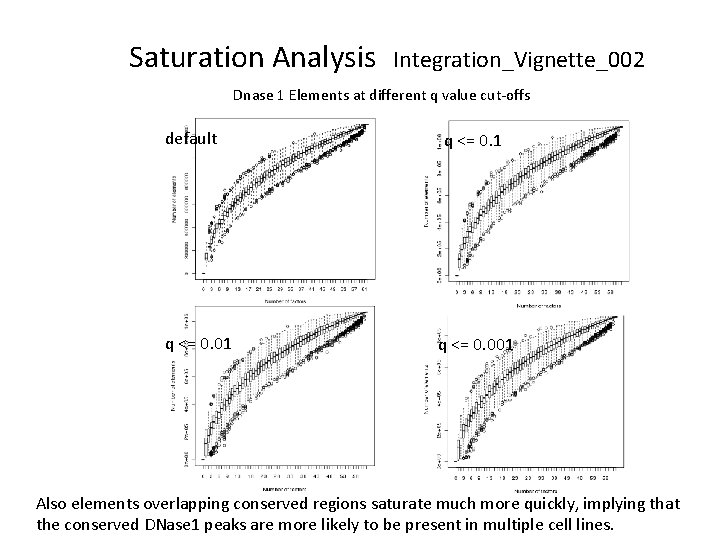
Saturation Analysis Integration_Vignette_002 Dnase 1 Elements at different q value cut-offs default q <= 0. 01 q <= 0. 001 Also elements overlapping conserved regions saturate much more quickly, implying that the conserved DNase 1 peaks are more likely to be present in multiple cell lines.
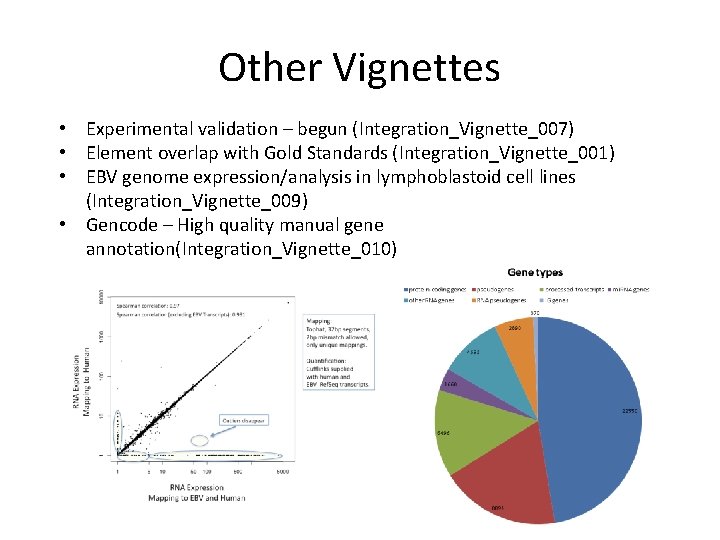
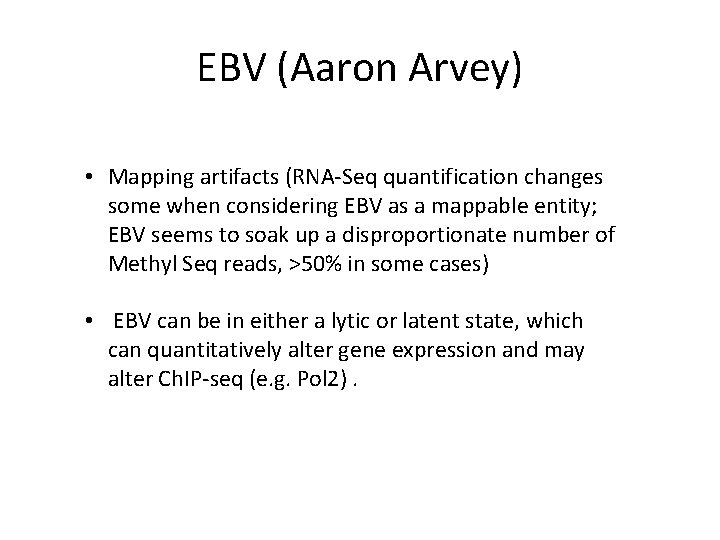
Other Vignettes • Experimental validation – begun (Integration_Vignette_007) • Element overlap with Gold Standards (Integration_Vignette_001) • EBV genome expression/analysis in lymphoblastoid cell lines (Integration_Vignette_009) • Gencode – High quality manual gene annotation(Integration_Vignette_010)
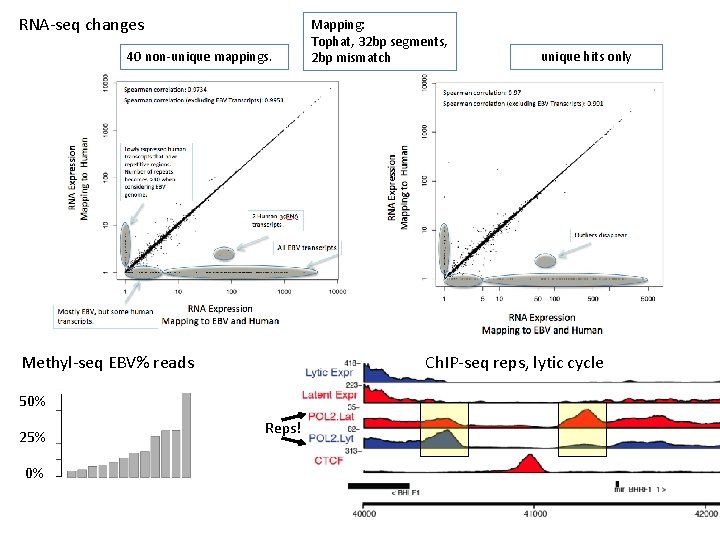
EBV (Aaron Arvey) • Mapping artifacts (RNA-Seq quantification changes some when considering EBV as a mappable entity; EBV seems to soak up a disproportionate number of Methyl Seq reads, >50% in some cases) • EBV can be in either a lytic or latent state, which can quantitatively alter gene expression and may alter Ch. IP-seq (e. g. Pol 2).
RNA-seq changes 40 non-unique mappings. Methyl-seq EBV% reads 0% unique hits only Ch. IP-seq reps, lytic cycle 50% 25% Mapping: Tophat, 32 bp segments, 2 bp mismatch Reps!
What to do at the workshop? • • Complete uniform processing of data. Generate summary stats on the “peaky stuff” Summary stats on RNA elements Generate “Element clusters” • by data type • By cell line • By tier • Saturation stats on these clusters • Comparative analysis on clusters and combinations