EMPOWERING YOUR MENTORING PROGRAM WITH TRAINING FOR MENTORSHIP




- Slides: 42
EMPOWERING YOUR MENTORING PROGRAM WITH TRAINING FOR MENTORSHIP JOAN M. LAKOSKI, PH. D. JML 27@PITT. EDU ASSOCIATE VICE CHANCELLOR FOR SCIENCE EDUCATION OUTREACH UNIVERSITY OF PITTSBURGH, HEALTH SCIENCES MARCH 28, 2012 USC Mellon Mentoring Forum
WHAT IS THE BEST WAY TO STIMULATE GOOD MENTEE – MENTOR RELATIONSHIPS? 2012 USC Mellon Mentoring Forum
WHAT ARE EFFECTIVE APPROACHES TO STIMULATE AND SUSTAIN GOOD MENTEE – MENTOR RELATIONSHIPS? 2012 USC Mellon Mentoring Forum
What we hope you will learn from this session q q Consider the importance of “setting the stage” in a new mentoring relationship Discuss the role of providing training to mentees and mentors regarding their respective roles and responsibilities Explore the importance of establishing goals and expectations among all parties Consider strategies to encourage effective communication among all parties
Who are the parties in a mentoring program? Mentees Mentoring Program Director Program staff/administrators Departments/Centers/Institutes University Public
And why does mentoring matter? Careers in academic institution are increasingly difficult to navigate
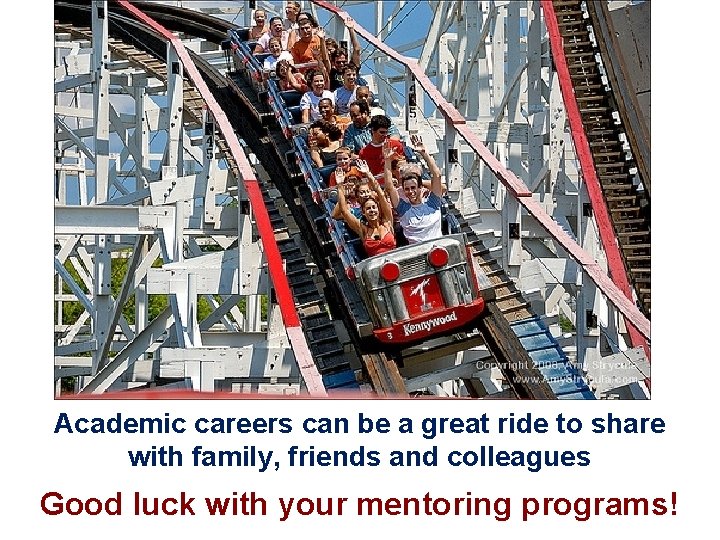
Careers as a exciting rollercoaster ride Highs, lows, twists and turns
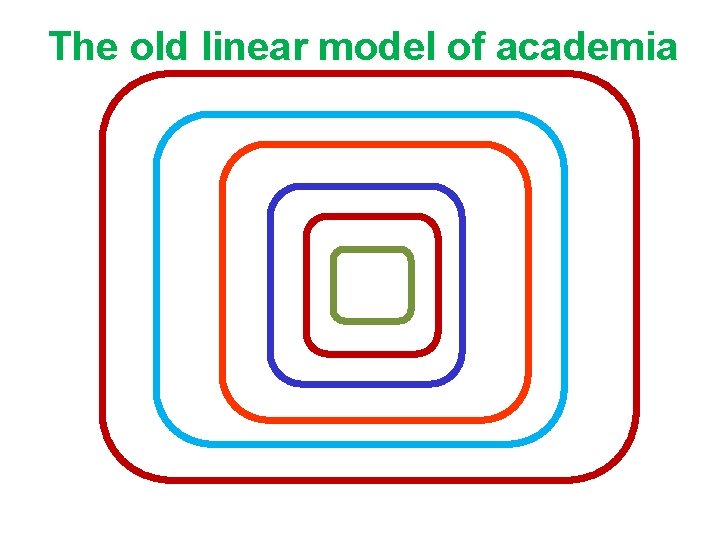
The old linear model of academia
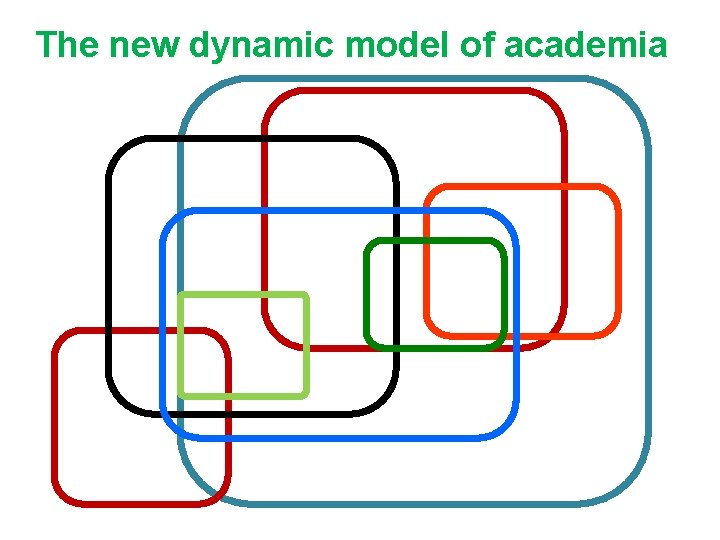
The new dynamic model of academia
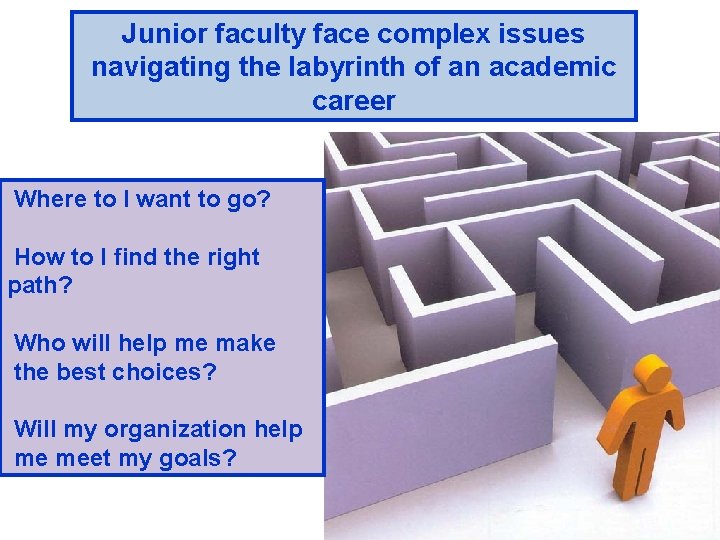
Junior faculty face complex issues navigating the labyrinth of an academic career Where to I want to go? How to I find the right path? Who will help me make the best choices? Will my organization help me meet my goals?
Mentoring is a partnership agreement between individuals sharing experiences and expertise to help with personal and professional growth ØA multidimensional social process ØEmpowers individuals to capitalize their personal and professional strengths ØGives support and guidance so individuals challenge themselves and take risks in their career paths
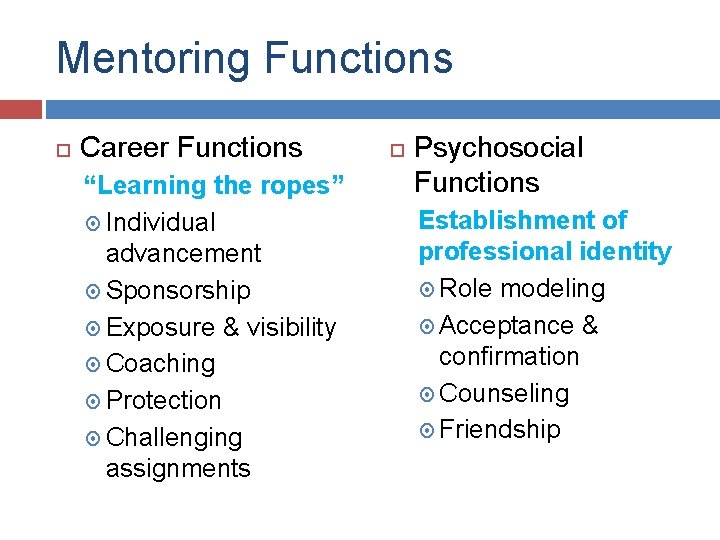
Mentoring Functions Career Functions “Learning the ropes” Individual advancement Sponsorship Exposure & visibility Coaching Protection Challenging assignments Psychosocial Functions Establishment of professional identity Role modeling Acceptance & confirmation Counseling Friendship
DON’T WE KNOW WHO TO TURN TO FOR ADVICE AND GUIDANCE? Mentor s
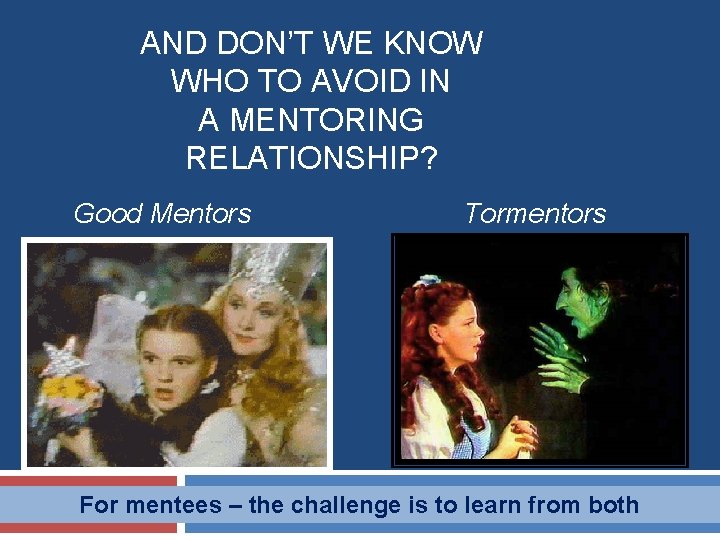
AND DON’T WE KNOW WHO TO AVOID IN A MENTORING RELATIONSHIP? Good Mentors Tormentors For mentees – the challenge is to learn from both
Caution: Mentoring is not a panacea Negative mentoring experiences are possible Mentoring versus “cloning” Unethical behavior Boundary violations Acknowledgement: Audrey J. Murrell, Ph. D. Associate Professor of Business Administration University of Pittsburgh
As your mentees establish their faculty identit Careers in academic institutions are increasingly difficult to navigate They may need multiple mentors
LAUNCHING A NEW MENTORING RELATIONSHIP THE IMPORTANCE OF “SETTING THE STAGE” 2012 USC Mellon Mentoring Forum
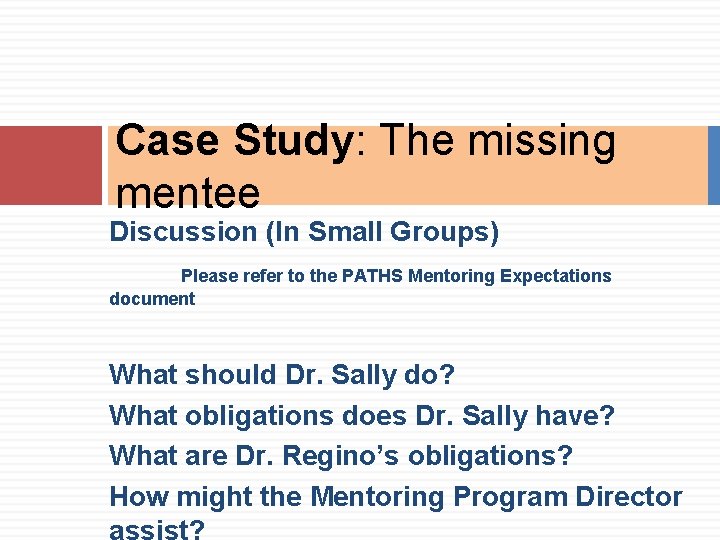
Case Study: The missing mentee Dr. Regino is a talented early stage career investigator in the field of aging research now going into his 3 rd year of his appointment as tenure track Assistant Professor. He joined the PATHS Mentoring Program (see handout) and met with his mentor Dr. Sally for the first several months. Lately, however, Dr. Sally has not seen or heard
Case Study: The missing mentee Discussion (In Small Groups) Please refer to the PATHS Mentoring Expectations document What should Dr. Sally do? What obligations does Dr. Sally have? What are Dr. Regino’s obligations? How might the Mentoring Program Director assist?
“Setting the stage” at the beginning As Directors of Mentoring Programs what activities are essential to launch a new mentee-mentor pair or mentoring team?
LAUNCHING A NEW MENTORING RELATIONSHIP HOW DO MENTEES AND MENTORS LEARN THEIR RESPECTIVE ROLES AND RESPONSIBILITIES? 2012 USC Mellon Mentoring Forum
Roles and responsibilities that contribute to an effective mentoring relationship Mentees Mentors - Facilitate mentee’s - Set goals and identify learning and growth needs - Provide skills and make - Seek guidance and needed resources feedback available - Accept feedback - Provide guidance - Be open to new skills and - Provide feedback approaches - Evaluate the mentee’s - Accept responsibility for plans actions - Maintain confidentiality - Maintain regular contact
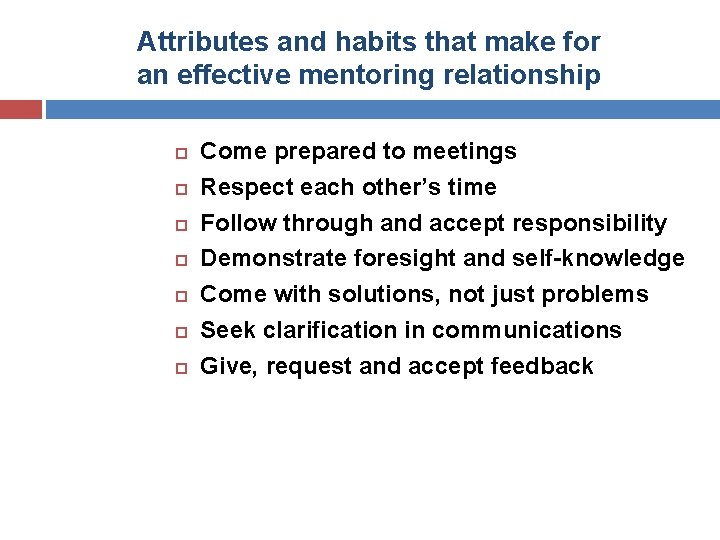
Attributes and habits that make for an effective mentoring relationship Come prepared to meetings Respect each other’s time Follow through and accept responsibility Demonstrate foresight and self-knowledge Come with solutions, not just problems Seek clarification in communications Give, request and accept feedback
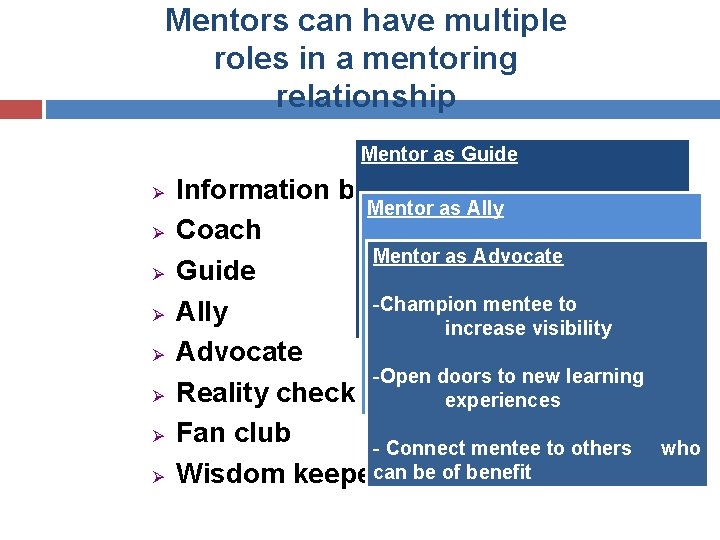
Mentors can have multiple roles in a mentoring relationship Mentor as Guide Ø Ø Ø Ø Information broker -Mentor Impartsas professional skills Ally - Encourages strategic thinking Coach --Mentor Helps mentee reflect as a. Advocate Provides safe placeon where Guide behaviors that or mentee can askhelp questions hinder success andto and Champion share difficulties mentee Ally tomentee learn from failures - how Helps see how other increase visibility perceive them Advocate --Offers Open doors specific to new feedback learning to Reality check supportexperiences mentee’s growth Fan club - Connect mentee to others who Wisdom keepercan be of benefit
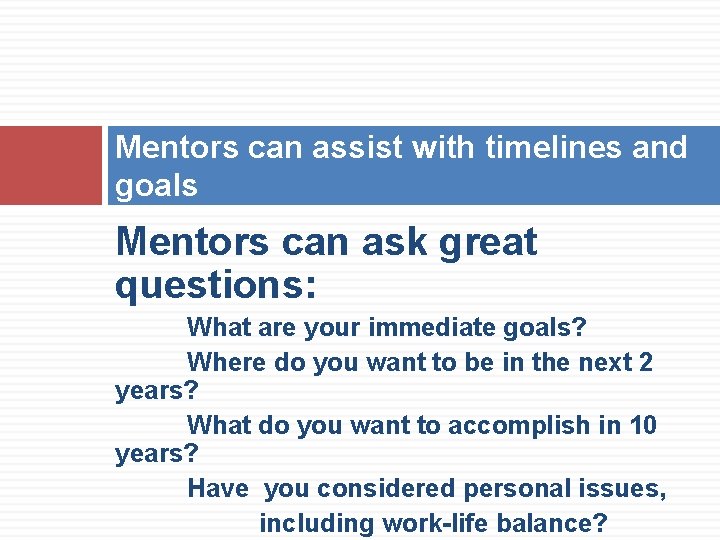
Mentors can assist with timelines and goals Mentors can ask great questions: What are your immediate goals? Where do you want to be in the next 2 years? What do you want to accomplish in 10 years? Have you considered personal issues, including work-life balance?
So how do we teach mentoring? Formal training for mentors is emerging - TEAM at University of Pittsburgh
Exercise: Learning to be mentor Ø Fill out the Mentoring Challenge Form Ø From TEAM at the University of Pittsburgh Ø Find a partner and compare results
Learning to be a mentor Discussion What worked well? What was difficult? Advantages to this form? Disadvantages to this form? How might this activity support your role as Director of a Mentoring Program? How might mentor training encourage and/or discourage new mentors?
LAUNCHING A NEW MENTORING RELATIONSHIP ESTABLISHING GOALS AND EXPECTATIONS 2012 USC Mellon Mentoring Forum
To Be Effective Mentees and Mentors. . . Build an understanding of your personal goals and expectations for this mentoring relationship Begin a dialogue to share goals and expectations
Exercise: Setting goals and expectations Ø Need a partner Ø One to be the mentee and one to the mentor Ø Each needs a 4 x 6” card
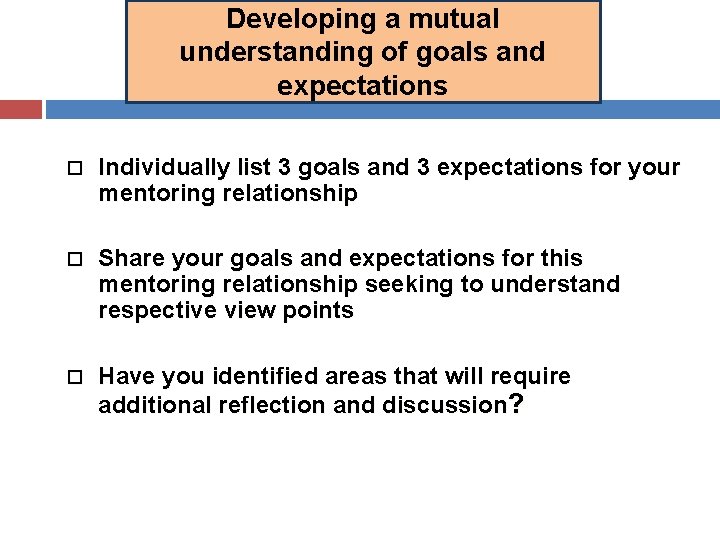
Developing a mutual understanding of goals and expectations Individually list 3 goals and 3 expectations for your mentoring relationship Share your goals and expectations for this mentoring relationship seeking to understand respective view points Have you identified areas that will require additional reflection and discussion?
Developing a mutual understanding of goals and expectations Discussion What worked well? What was difficult? Advantages to this interaction? Disadvantages to this interaction? How might this support your role as Director of a Mentoring Program?
Exercise: Use of mentoring agreement for setting goals and expectations Ø Need a partner (find a new partner) Ø One to be the mentee and one to the mentor Ø Each pair needs a Mentoring Agreement Form
Developing a mutual understanding of goals and expectations Discussion What worked well? What was difficult? Advantages to this interaction? Disadvantages to this interaction? How might this support your role as Director of a Mentoring Program? What is the impact of having a signed agreement?
SUSTAINING A NEW MENTORING RELATIONSHIP ENCOURAGING EFFECTIVE COMMUNICATION 2012 USC Mellon Mentoring Forum
Mentoring thrives on communication Clear communication is vital to keeping a mentoring relationship on track Consider a balance between virtual and face to face meetings Mentor Program Directors can review the frequency of meetings
To Be Effective Mentees and Mentors. . . Build trust and solve problems through effective interaction Effective listening and dialogue are essential
Develop a written action plan for your mentoring relationship Goal setting can be helpful Recognize short term versus longer term goals Establish milestones for future review Write it down Periodic review and assessment of the mentoring relationship can be useful
What can derail a mentoring relationship? Lack of effective communication Need to access frequency of interactions Types of communication Make time for face to face discussions when either party is not satisfied with progress Be patient but don’t wait….
So if your next career steps seem like a rollercoaster r
Academic careers can be a great ride to share with family, friends and colleagues Good luck with your mentoring programs!