Electrical Engineering Principles and Applications Fifth Edition Allan
- Slides: 28
Electrical Engineering: Principles and Applications, Fifth Edition Allan R. Hambley Copyright © 2011, © 2008, © 2005 by Pearson Education, Inc. Upper Saddle River, New Jersey 07458 All rights reserved.
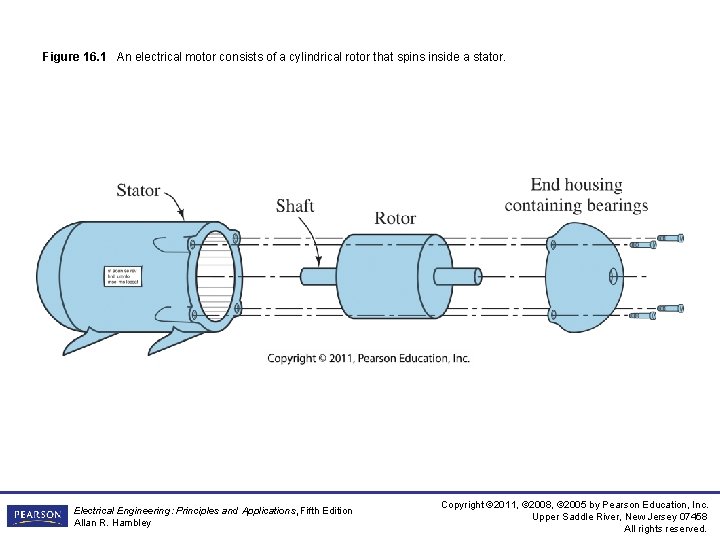
Figure 16. 1 An electrical motor consists of a cylindrical rotor that spins inside a stator. Electrical Engineering: Principles and Applications, Fifth Edition Allan R. Hambley Copyright © 2011, © 2008, © 2005 by Pearson Education, Inc. Upper Saddle River, New Jersey 07458 All rights reserved.
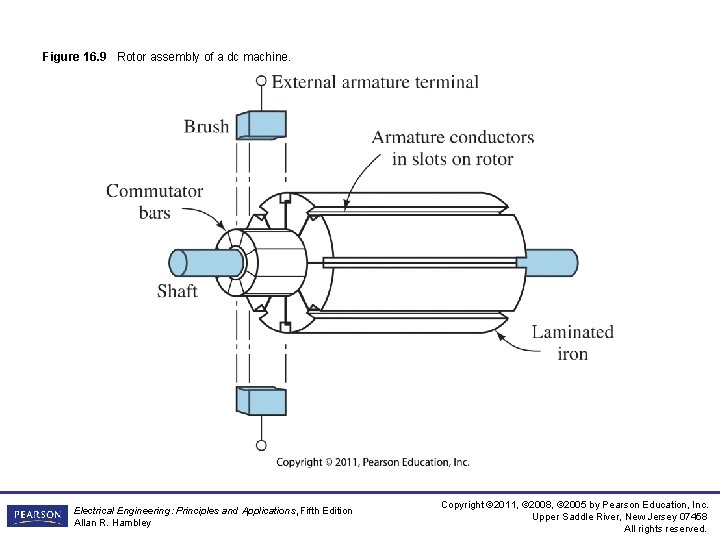
Figure 16. 9 Rotor assembly of a dc machine. Electrical Engineering: Principles and Applications, Fifth Edition Allan R. Hambley Copyright © 2011, © 2008, © 2005 by Pearson Education, Inc. Upper Saddle River, New Jersey 07458 All rights reserved.
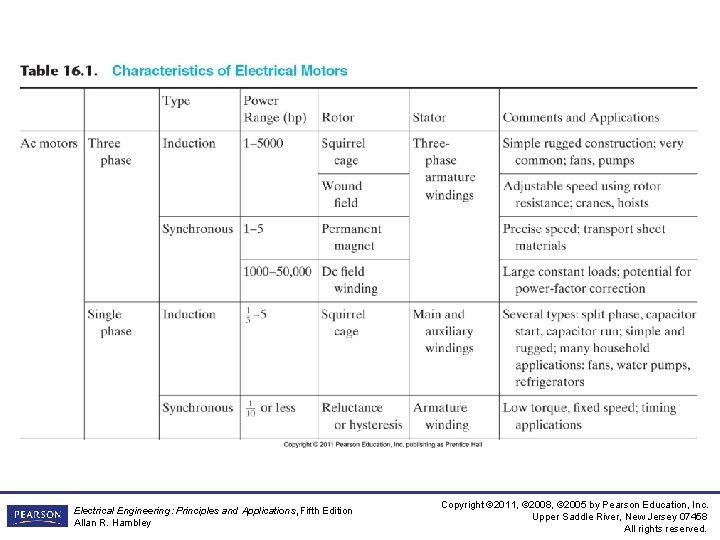
Electrical Engineering: Principles and Applications, Fifth Edition Allan R. Hambley Copyright © 2011, © 2008, © 2005 by Pearson Education, Inc. Upper Saddle River, New Jersey 07458 All rights reserved.
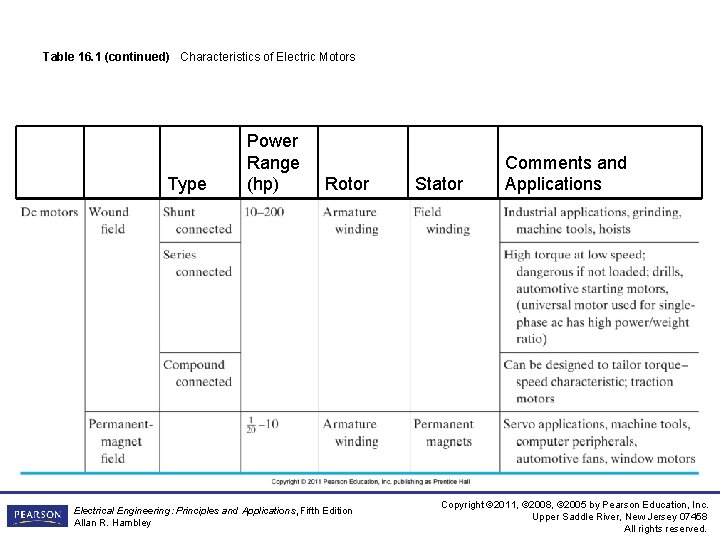
Table 16. 1 (continued) Characteristics of Electric Motors Type Power Range (hp) Rotor Electrical Engineering: Principles and Applications, Fifth Edition Allan R. Hambley Stator Comments and Applications Copyright © 2011, © 2008, © 2005 by Pearson Education, Inc. Upper Saddle River, New Jersey 07458 All rights reserved.
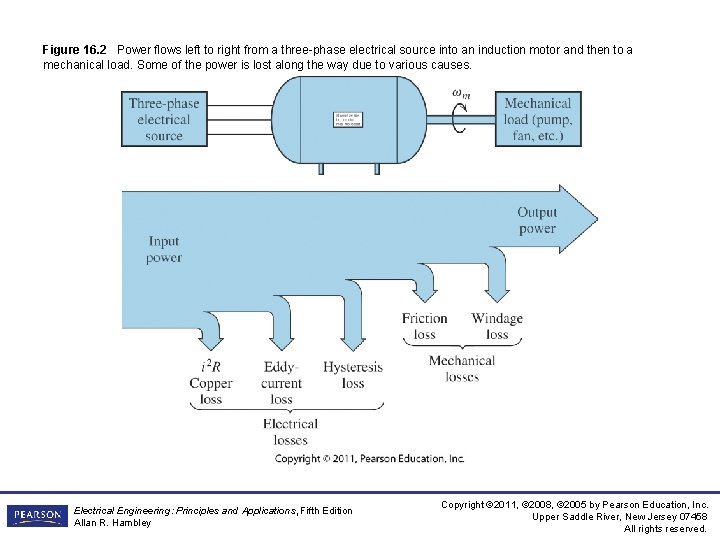
Figure 16. 2 Power flows left to right from a three-phase electrical source into an induction motor and then to a mechanical load. Some of the power is lost along the way due to various causes. Electrical Engineering: Principles and Applications, Fifth Edition Allan R. Hambley Copyright © 2011, © 2008, © 2005 by Pearson Education, Inc. Upper Saddle River, New Jersey 07458 All rights reserved.
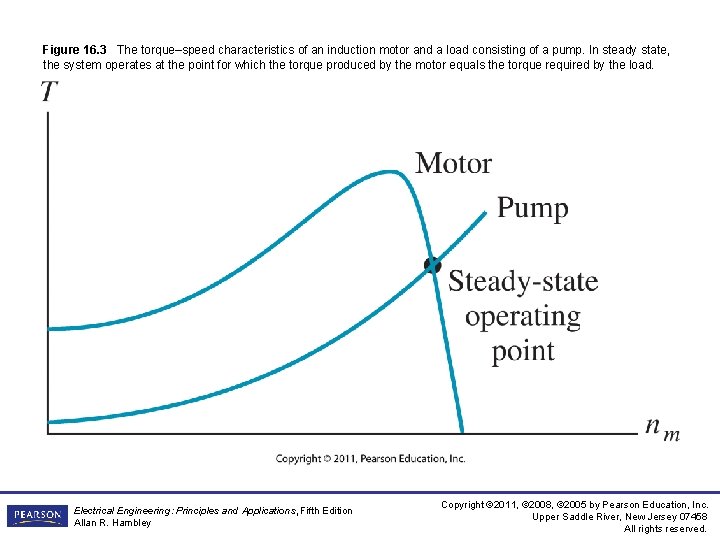
Figure 16. 3 The torque–speed characteristics of an induction motor and a load consisting of a pump. In steady state, the system operates at the point for which the torque produced by the motor equals the torque required by the load. Electrical Engineering: Principles and Applications, Fifth Edition Allan R. Hambley Copyright © 2011, © 2008, © 2005 by Pearson Education, Inc. Upper Saddle River, New Jersey 07458 All rights reserved.
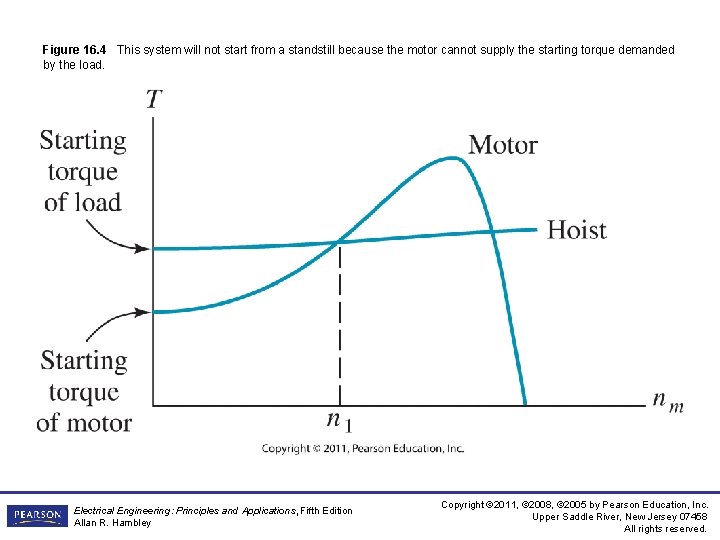
Figure 16. 4 This system will not start from a standstill because the motor cannot supply the starting torque demanded by the load. Electrical Engineering: Principles and Applications, Fifth Edition Allan R. Hambley Copyright © 2011, © 2008, © 2005 by Pearson Education, Inc. Upper Saddle River, New Jersey 07458 All rights reserved.
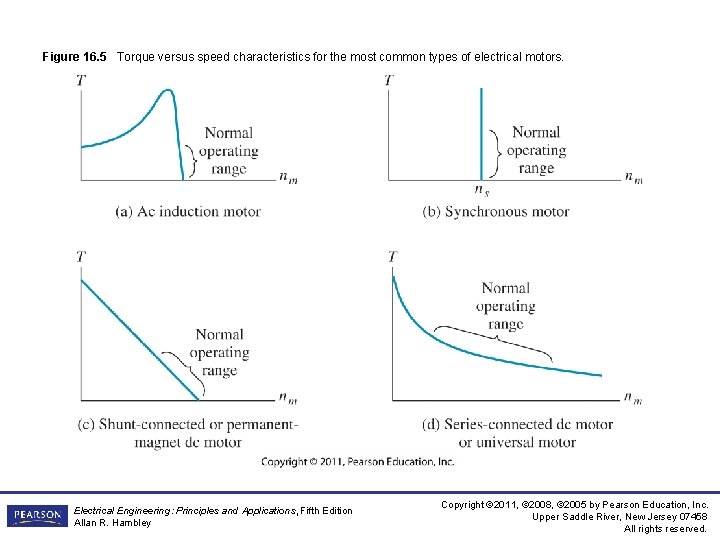
Figure 16. 5 Torque versus speed characteristics for the most common types of electrical motors. Electrical Engineering: Principles and Applications, Fifth Edition Allan R. Hambley Copyright © 2011, © 2008, © 2005 by Pearson Education, Inc. Upper Saddle River, New Jersey 07458 All rights reserved.
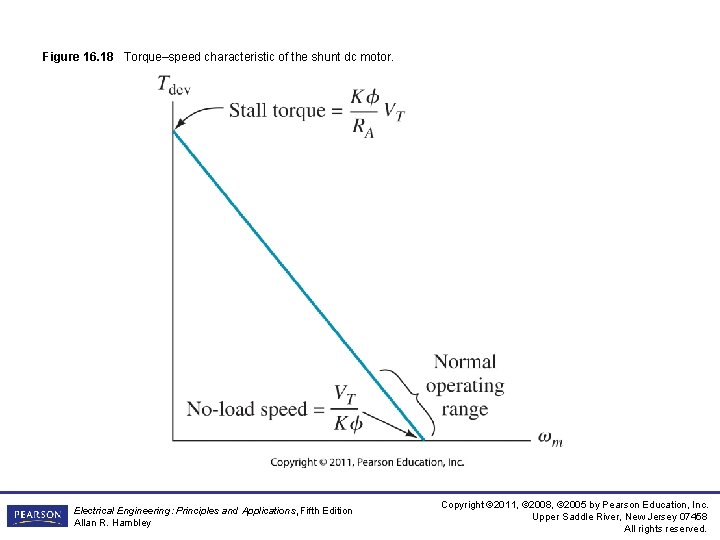
Figure 16. 18 Torque–speed characteristic of the shunt dc motor. Electrical Engineering: Principles and Applications, Fifth Edition Allan R. Hambley Copyright © 2011, © 2008, © 2005 by Pearson Education, Inc. Upper Saddle River, New Jersey 07458 All rights reserved.
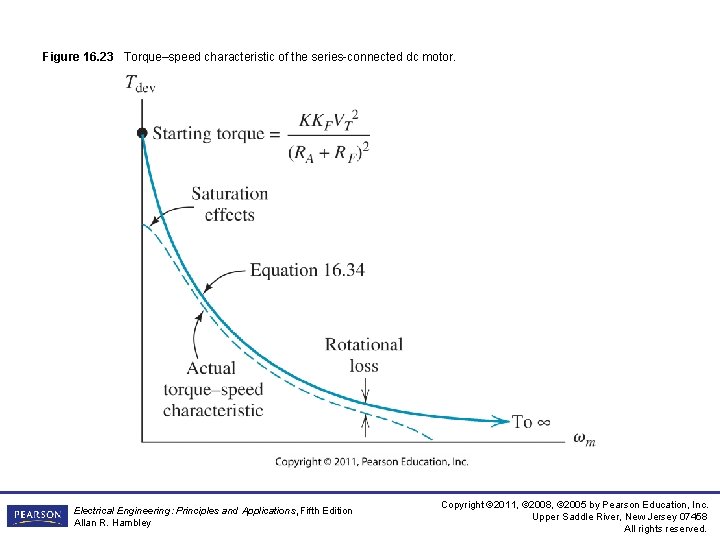
Figure 16. 23 Torque–speed characteristic of the series-connected dc motor. Electrical Engineering: Principles and Applications, Fifth Edition Allan R. Hambley Copyright © 2011, © 2008, © 2005 by Pearson Education, Inc. Upper Saddle River, New Jersey 07458 All rights reserved.
Characteristics of Series (Universal) Motors + power/weight ratio (hand tools) + good starting torque + power approx. constant over range of operation (slows down under load) + good for loads with wide range of torque + can operate at high speed - Brushes and commutators wear out - Poor speed control - If unloaded, may reach dangerously high speeds Electrical Engineering: Principles and Applications, Fifth Edition Allan R. Hambley Copyright © 2011, © 2008, © 2005 by Pearson Education, Inc. Upper Saddle River, New Jersey 07458 All rights reserved.
Electrical Engineering: Principles and Applications, Fifth Edition Allan R. Hambley Copyright © 2011, © 2008, © 2005 by Pearson Education, Inc. Upper Saddle River, New Jersey 07458 All rights reserved.
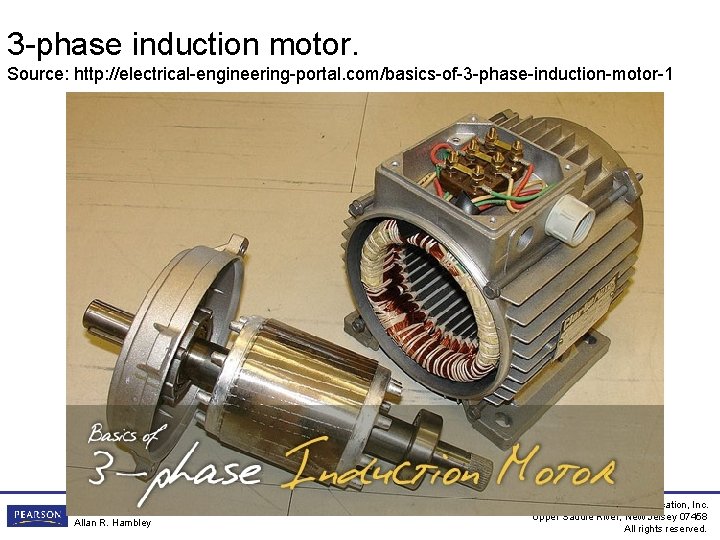
3 -phase induction motor. Source: http: //electrical-engineering-portal. com/basics-of-3 -phase-induction-motor-1 Electrical Engineering: Principles and Applications, Fifth Edition Allan R. Hambley Copyright © 2011, © 2008, © 2005 by Pearson Education, Inc. Upper Saddle River, New Jersey 07458 All rights reserved.
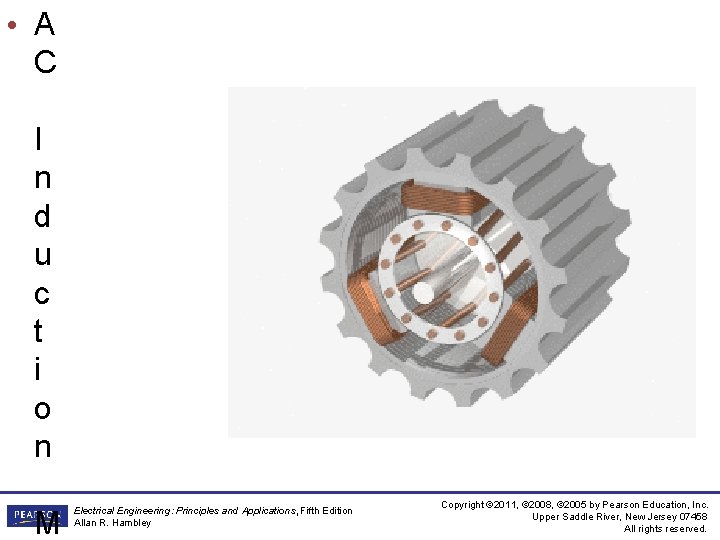
• A C I n d u c t i o n M Electrical Engineering: Principles and Applications, Fifth Edition Allan R. Hambley Copyright © 2011, © 2008, © 2005 by Pearson Education, Inc. Upper Saddle River, New Jersey 07458 All rights reserved.
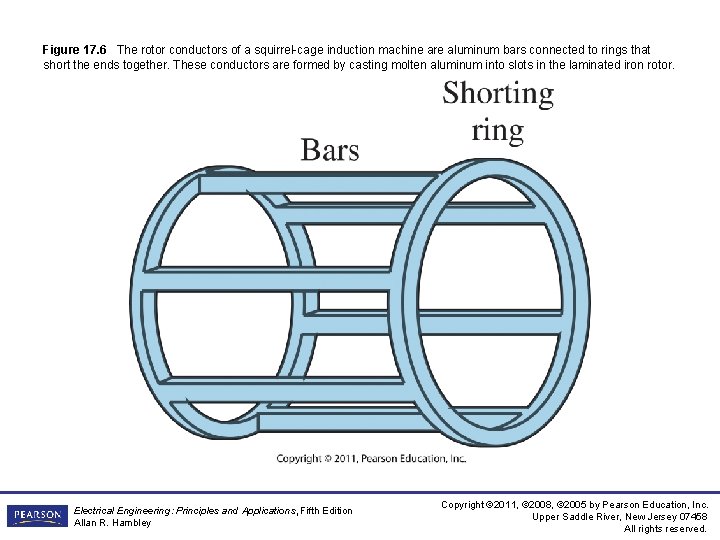
Figure 17. 6 The rotor conductors of a squirrel-cage induction machine are aluminum bars connected to rings that short the ends together. These conductors are formed by casting molten aluminum into slots in the laminated iron rotor. Electrical Engineering: Principles and Applications, Fifth Edition Allan R. Hambley Copyright © 2011, © 2008, © 2005 by Pearson Education, Inc. Upper Saddle River, New Jersey 07458 All rights reserved.
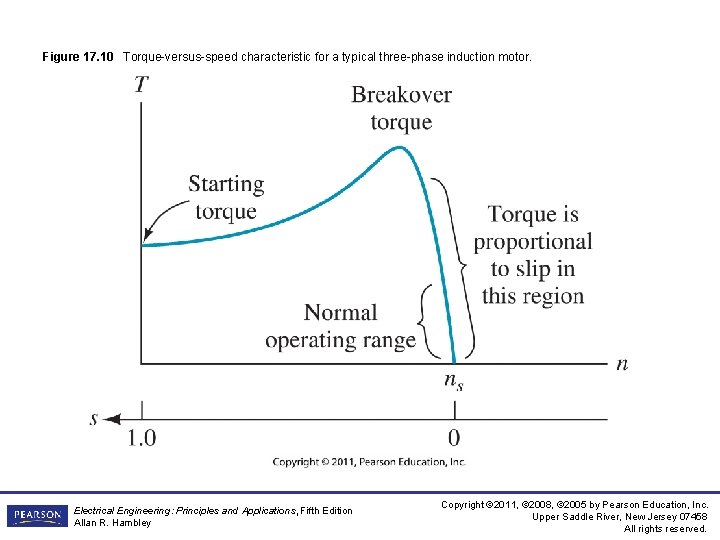
Figure 17. 10 Torque-versus-speed characteristic for a typical three-phase induction motor. Electrical Engineering: Principles and Applications, Fifth Edition Allan R. Hambley Copyright © 2011, © 2008, © 2005 by Pearson Education, Inc. Upper Saddle River, New Jersey 07458 All rights reserved.
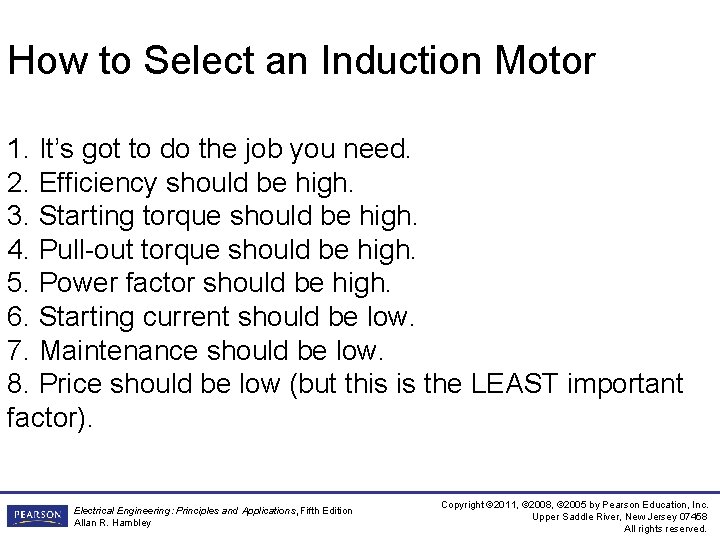
How to Select an Induction Motor 1. It’s got to do the job you need. 2. Efficiency should be high. 3. Starting torque should be high. 4. Pull-out torque should be high. 5. Power factor should be high. 6. Starting current should be low. 7. Maintenance should be low. 8. Price should be low (but this is the LEAST important factor). Electrical Engineering: Principles and Applications, Fifth Edition Allan R. Hambley Copyright © 2011, © 2008, © 2005 by Pearson Education, Inc. Upper Saddle River, New Jersey 07458 All rights reserved.
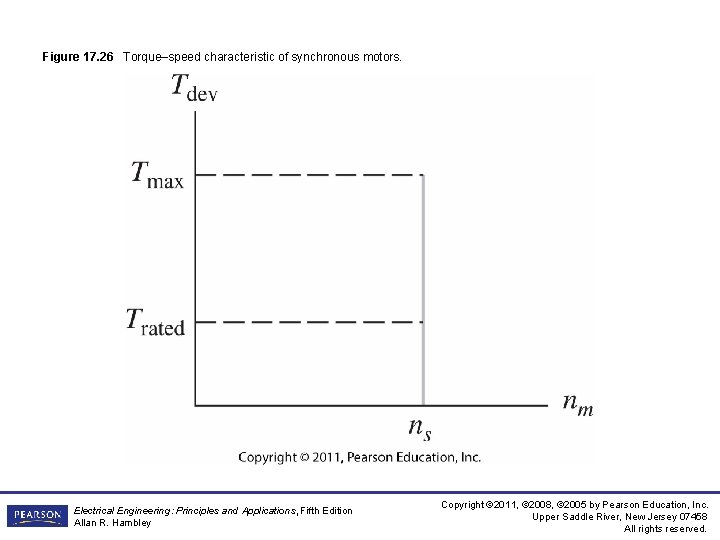
Figure 17. 26 Torque–speed characteristic of synchronous motors. Electrical Engineering: Principles and Applications, Fifth Edition Allan R. Hambley Copyright © 2011, © 2008, © 2005 by Pearson Education, Inc. Upper Saddle River, New Jersey 07458 All rights reserved.
How to Start a Three-phase Synchronous Motor Synchronous motors have zero starting torque, so they need some way to get them moving. Here are three methods: 1. Use a cycloconverter. This is a device that drives the motor at very low frequency (sub 1 Hz). Gradually increase the frequency to 60 Hz. 2. Use another motor to drive it up to speed. 3. Start the motor like an induction motor. When it gets up to speed, switch the rotor to DC for synchronous operation, and then connect the load. Electrical Engineering: Principles and Applications, Fifth Edition Allan R. Hambley Copyright © 2011, © 2008, © 2005 by Pearson Education, Inc. Upper Saddle River, New Jersey 07458 All rights reserved.
Electrical Engineering: Principles and Applications, Fifth Edition Allan R. Hambley Copyright © 2011, © 2008, © 2005 by Pearson Education, Inc. Upper Saddle River, New Jersey 07458 All rights reserved.
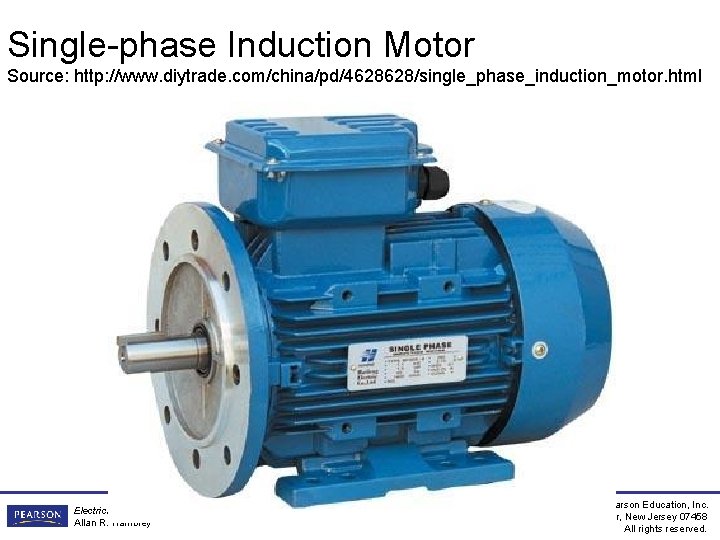
Single-phase Induction Motor Source: http: //www. diytrade. com/china/pd/4628628/single_phase_induction_motor. html Electrical Engineering: Principles and Applications, Fifth Edition Allan R. Hambley Copyright © 2011, © 2008, © 2005 by Pearson Education, Inc. Upper Saddle River, New Jersey 07458 All rights reserved.
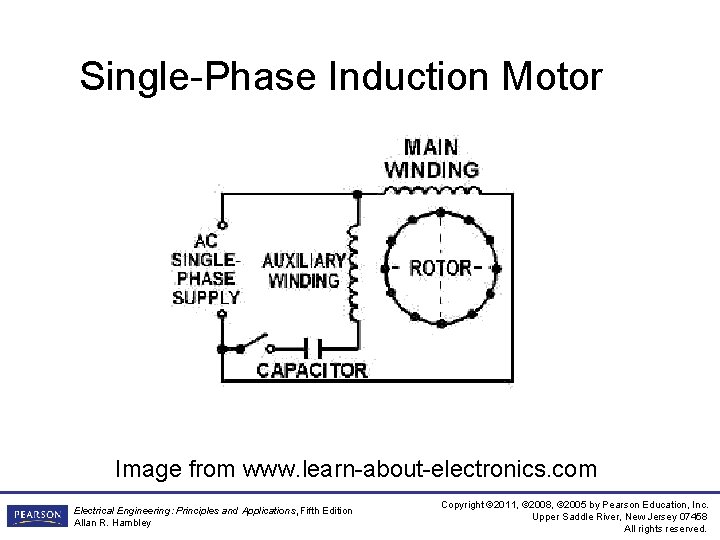
Single-Phase Induction Motor Image from www. learn-about-electronics. com Electrical Engineering: Principles and Applications, Fifth Edition Allan R. Hambley Copyright © 2011, © 2008, © 2005 by Pearson Education, Inc. Upper Saddle River, New Jersey 07458 All rights reserved.
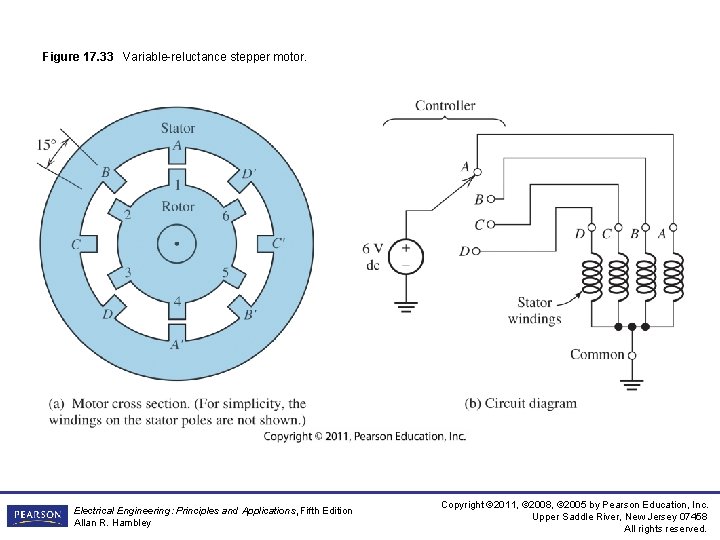
Figure 17. 33 Variable-reluctance stepper motor. Electrical Engineering: Principles and Applications, Fifth Edition Allan R. Hambley Copyright © 2011, © 2008, © 2005 by Pearson Education, Inc. Upper Saddle River, New Jersey 07458 All rights reserved.
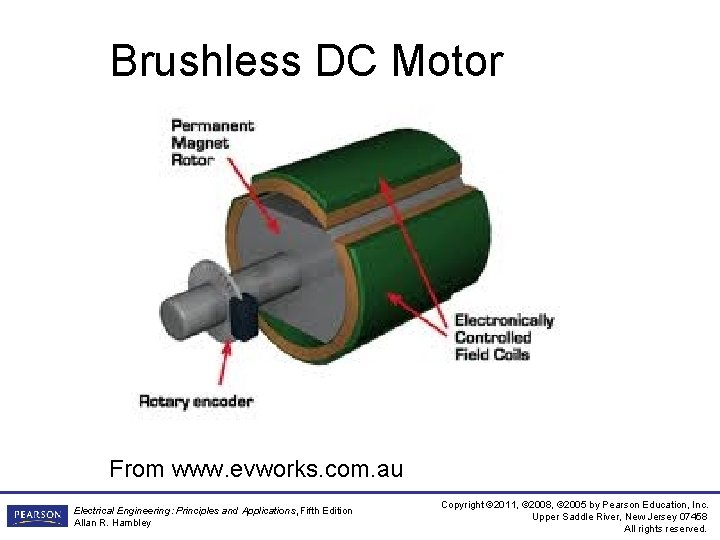
Brushless DC Motor From www. evworks. com. au Electrical Engineering: Principles and Applications, Fifth Edition Allan R. Hambley Copyright © 2011, © 2008, © 2005 by Pearson Education, Inc. Upper Saddle River, New Jersey 07458 All rights reserved.
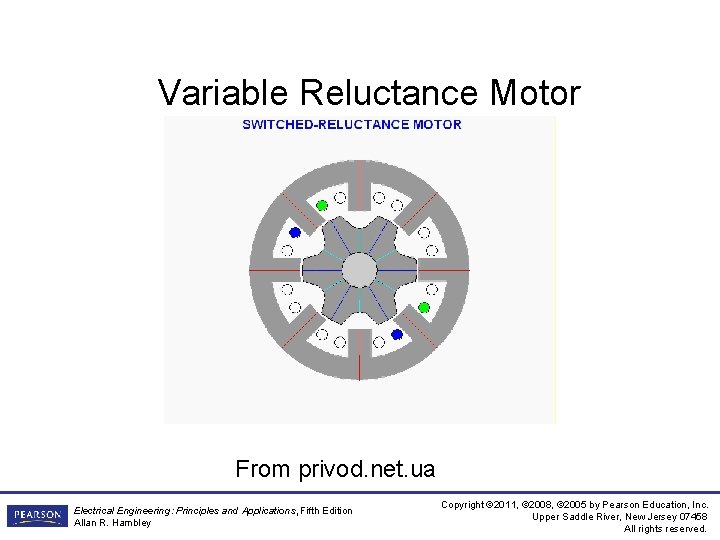
Variable Reluctance Motor From privod. net. ua Electrical Engineering: Principles and Applications, Fifth Edition Allan R. Hambley Copyright © 2011, © 2008, © 2005 by Pearson Education, Inc. Upper Saddle River, New Jersey 07458 All rights reserved.
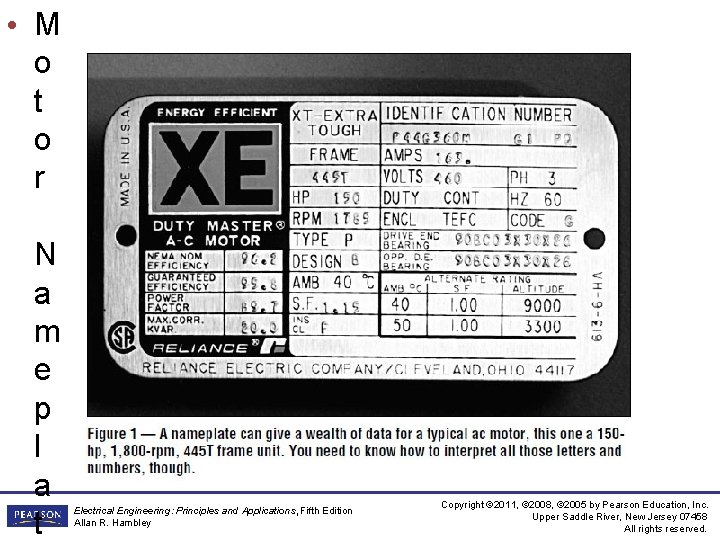
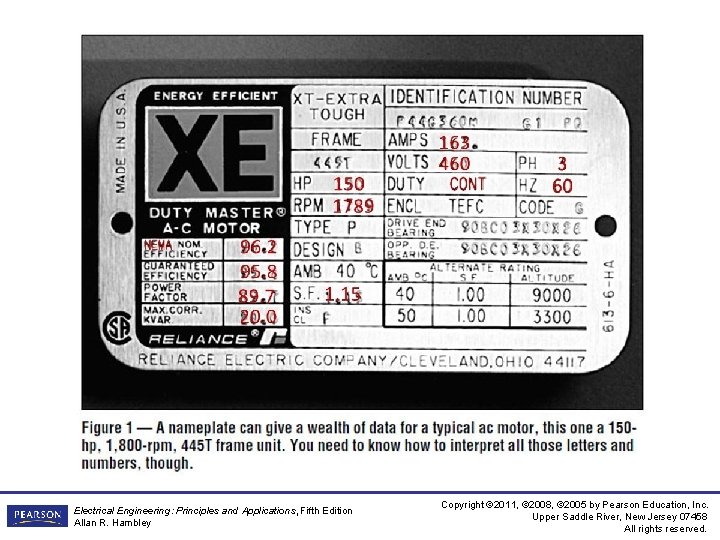
• M o t o r N a m e p l a t Electrical Engineering: Principles and Applications, Fifth Edition Allan R. Hambley Copyright © 2011, © 2008, © 2005 by Pearson Education, Inc. Upper Saddle River, New Jersey 07458 All rights reserved.
Electrical Engineering: Principles and Applications, Fifth Edition Allan R. Hambley Copyright © 2011, © 2008, © 2005 by Pearson Education, Inc. Upper Saddle River, New Jersey 07458 All rights reserved.