EGG INOCULATION Principles Practice and Vaccine Development 1


- Slides: 52
EGG INOCULATION Principles Practice and Vaccine Development 1
Towards Developing Better Skills in Microbiology Egg inoculation continues to be a Important Student Exercise in Several Post Graduate Examinations in Medical Microbiology for evaluation. The Students should develop the Necessary skills to be familiar with the exercise in Virology 2
Viruses are Different From Other Microbes Viruses are obligate intracellular parasites. They depend totally on their host cells for their existence. Their total host dependence makes it extremely difficult to get good insight of them natural conditions, because the internal characteristics of the host cells are likely to interfere with the observations. Due to these reasons, it has been found desirable that viruses are cultivated or grown in the laboratory itself. 3
Difficulties in Diagnosis of Viral Infections Can not be seen under light microscope Can not be cultivated easily Do not grow on culture media Treatment was not available Changed situation Rapid techniques have emerged Screening for Blood transfusion Treatment available 4
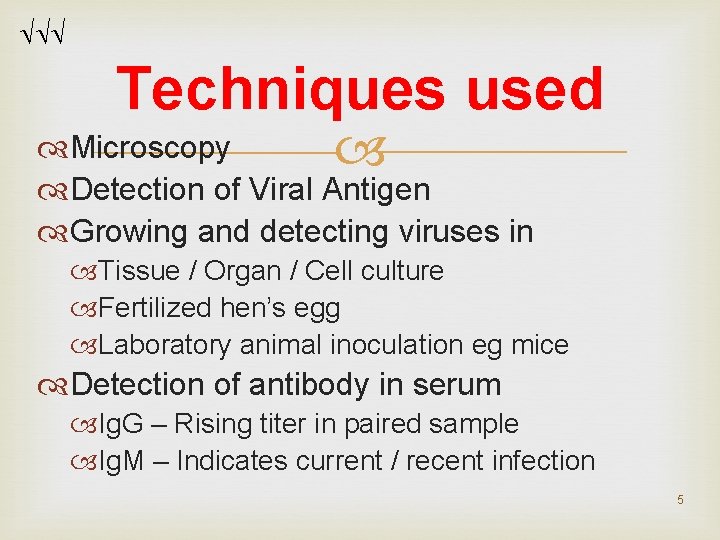
Techniques used Microscopy Detection of Viral Antigen Growing and detecting viruses in Tissue / Organ / Cell culture Fertilized hen’s egg Laboratory animal inoculation eg mice Detection of antibody in serum Ig. G – Rising titer in paired sample Ig. M – Indicates current / recent infection 5
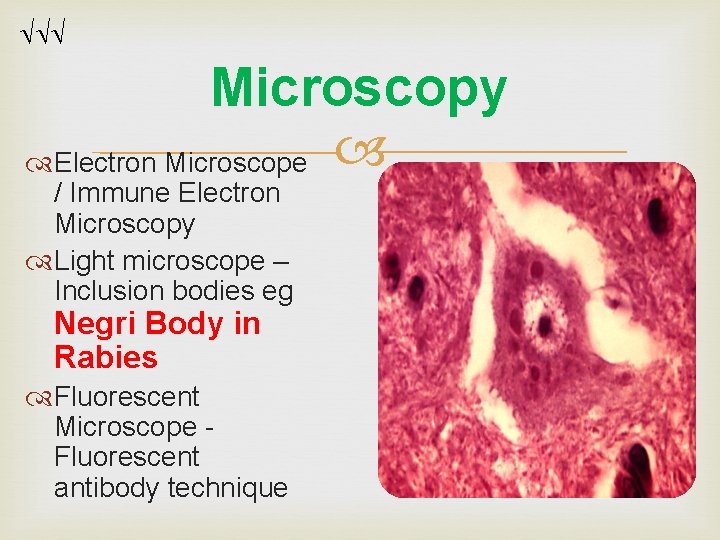
Microscopy Electron Microscope / Immune Electron Microscopy Light microscope – Inclusion bodies eg Negri Body in Rabies Fluorescent Microscope Fluorescent antibody technique
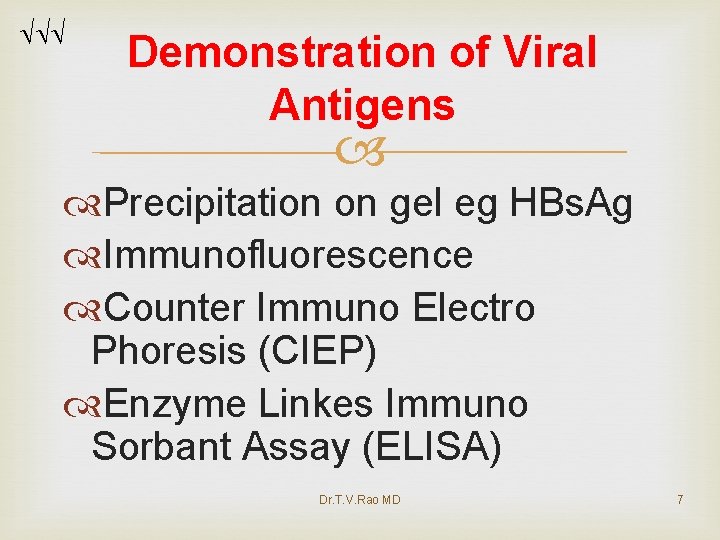
Demonstration of Viral Antigens Precipitation on gel eg HBs. Ag Immunofluorescence Counter Immuno Electro Phoresis (CIEP) Enzyme Linkes Immuno Sorbant Assay (ELISA) Dr. T. V. Rao MD 7
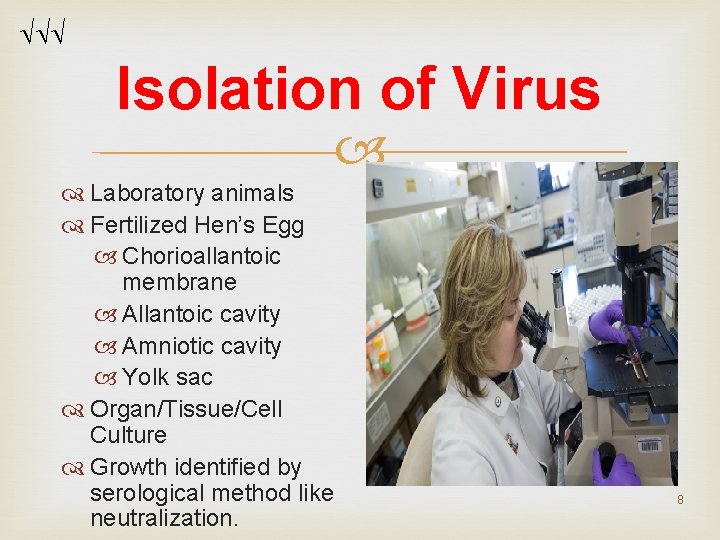
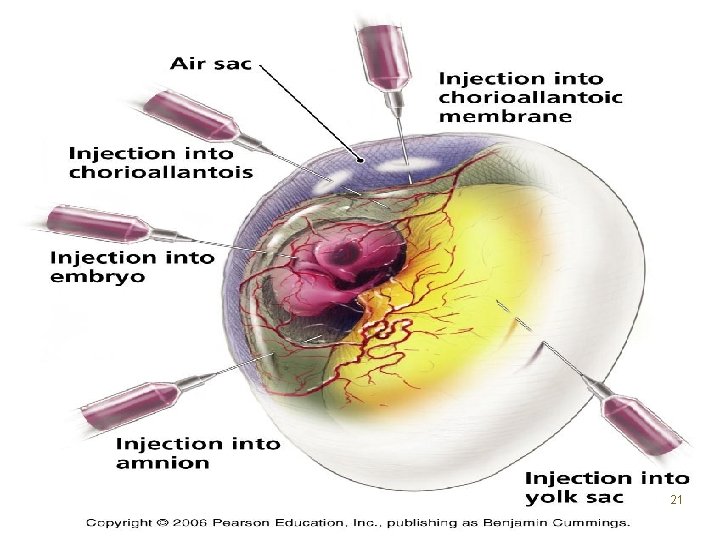
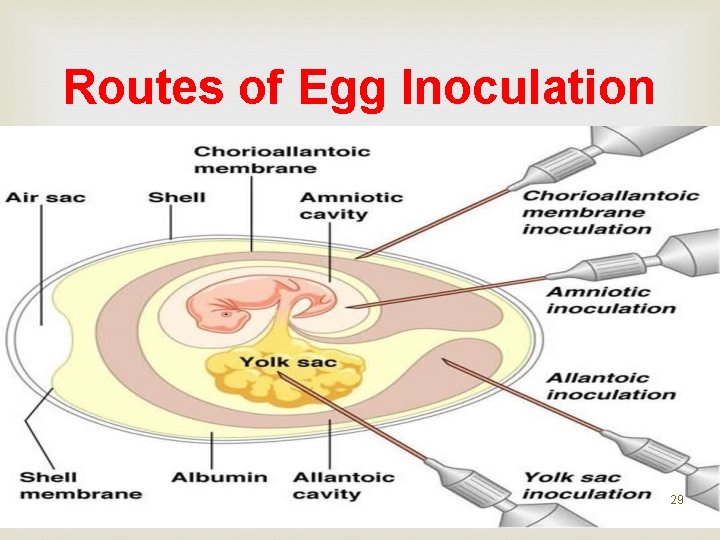
Isolation of Virus Laboratory animals Fertilized Hen’s Egg Chorioallantoic membrane Allantoic cavity Amniotic cavity Yolk sac Organ/Tissue/Cell Culture Growth identified by serological method like neutralization. 8
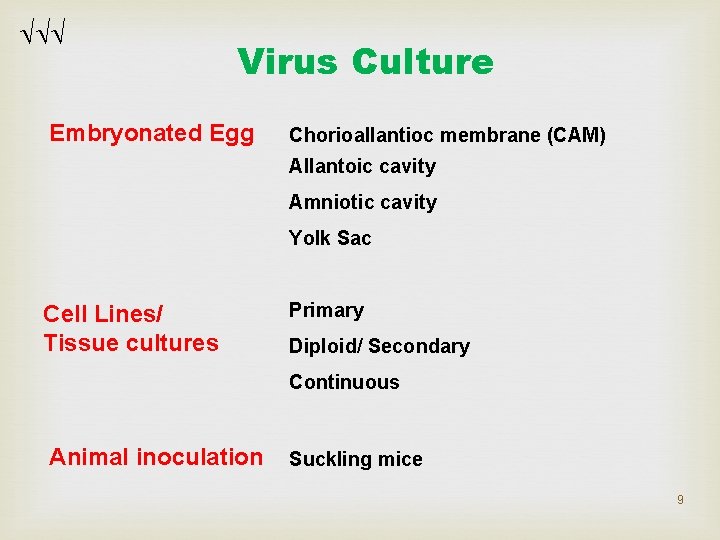
Virus Culture Embryonated Egg Chorioallantioc membrane (CAM) Allantoic cavity Amniotic cavity Yolk Sac Cell Lines/ Tissue cultures Primary Diploid/ Secondary Continuous Animal inoculation Suckling mice 9
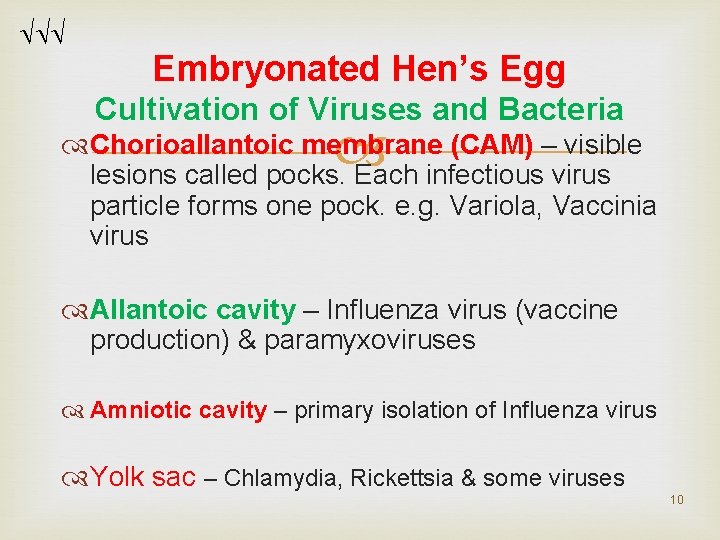
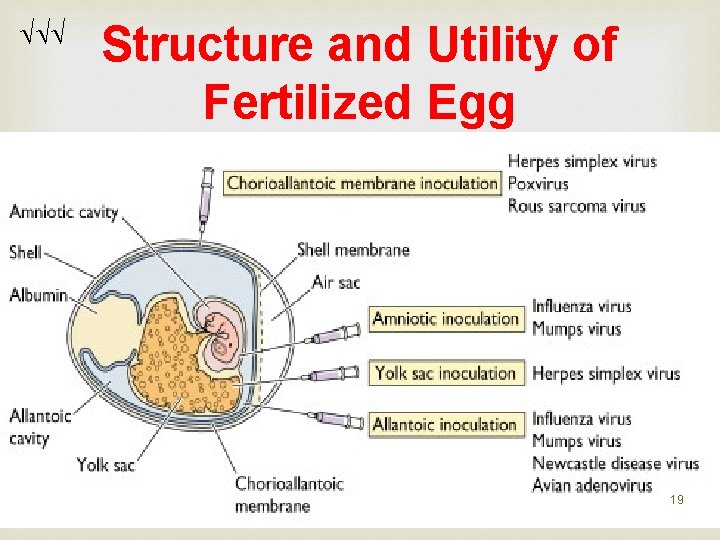
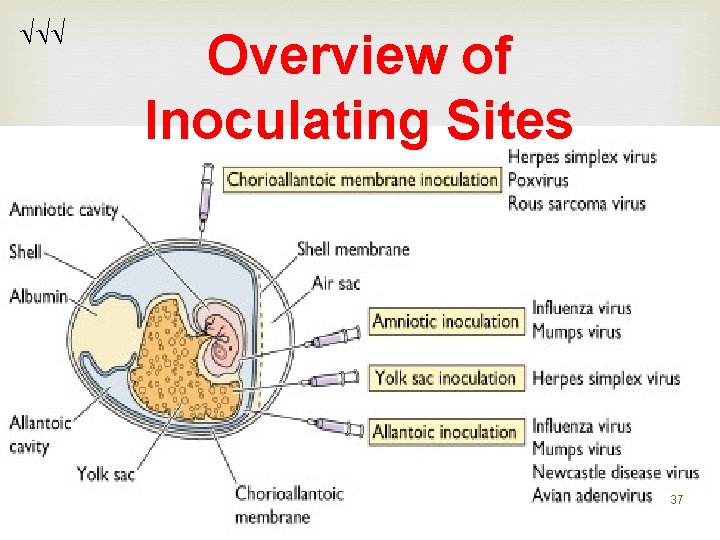
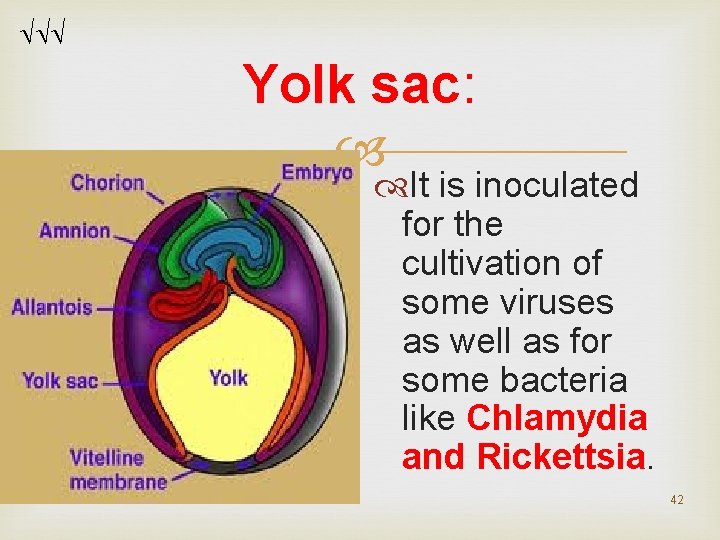
Embryonated Hen’s Egg Cultivation of Viruses and Bacteria Chorioallantoic membrane (CAM) – visible lesions called pocks. Each infectious virus particle forms one pock. e. g. Variola, Vaccinia virus Allantoic cavity – Influenza virus (vaccine production) & paramyxoviruses Amniotic cavity – primary isolation of Influenza virus Yolk sac – Chlamydia, Rickettsia & some viruses 10
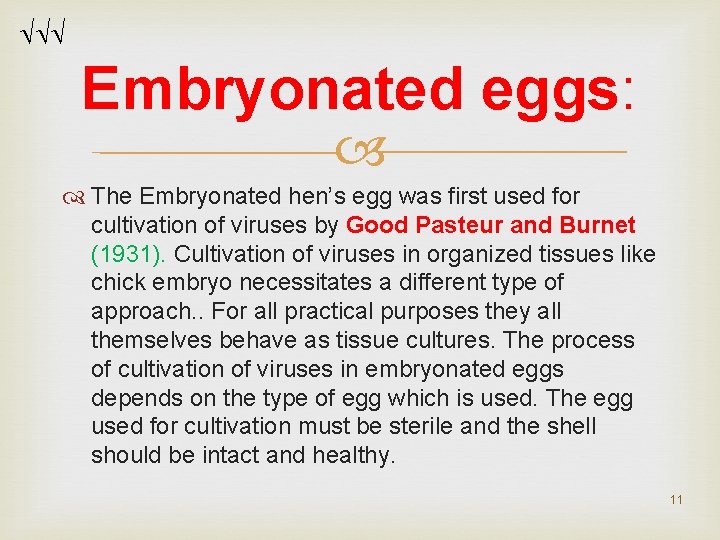
Embryonated eggs: The Embryonated hen’s egg was first used for cultivation of viruses by Good Pasteur and Burnet (1931). Cultivation of viruses in organized tissues like chick embryo necessitates a different type of approach. . For all practical purposes they all themselves behave as tissue cultures. The process of cultivation of viruses in embryonated eggs depends on the type of egg which is used. The egg used for cultivation must be sterile and the shell should be intact and healthy. 11
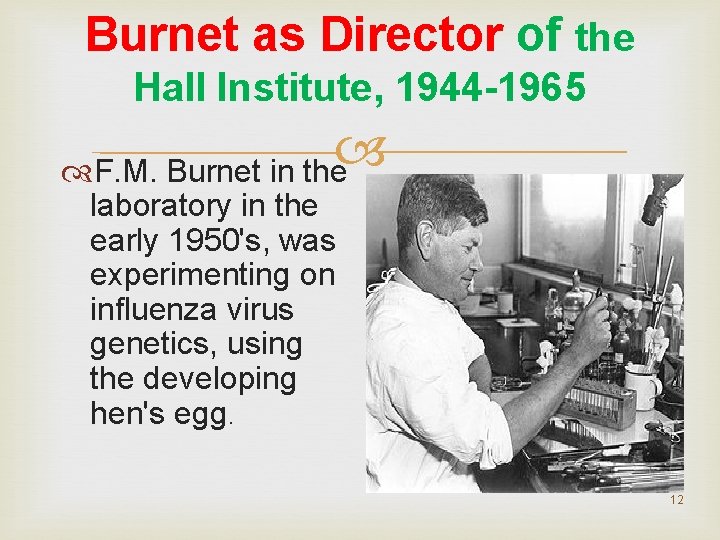
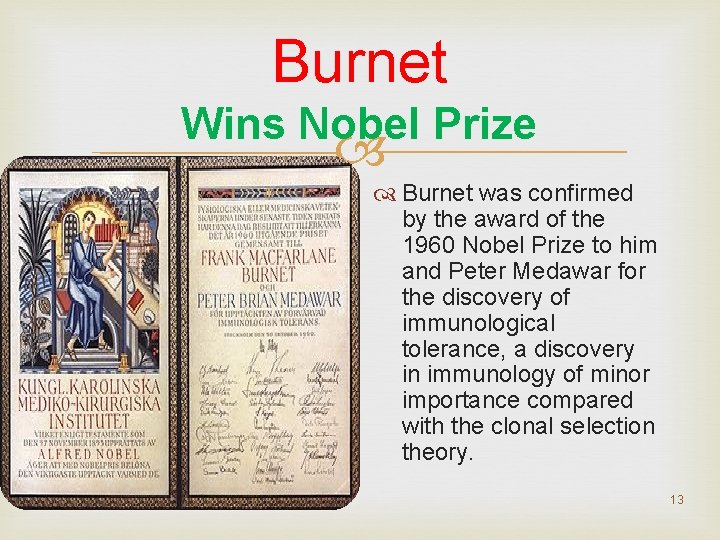
Burnet as Director of the Hall Institute, 1944 -1965 F. M. Burnet in the laboratory in the early 1950's, was experimenting on influenza virus genetics, using the developing hen's egg. 12
Burnet Wins Nobel Prize Burnet was confirmed by the award of the 1960 Nobel Prize to him and Peter Medawar for the discovery of immunological tolerance, a discovery in immunology of minor importance compared with the clonal selection theory. 13
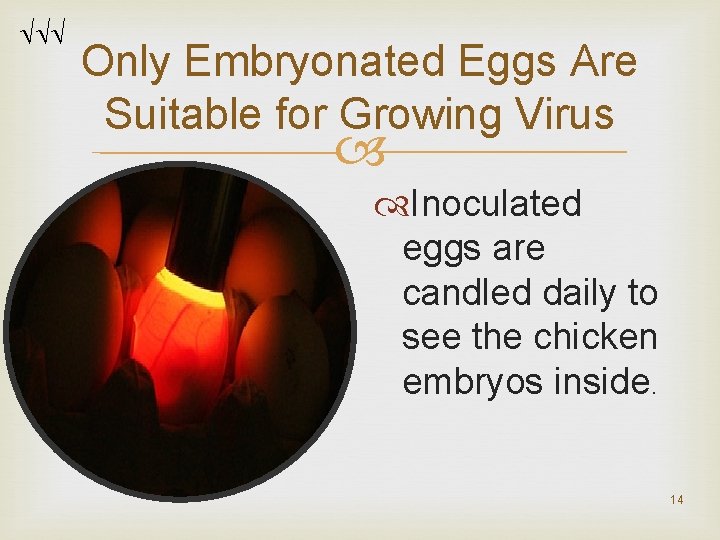
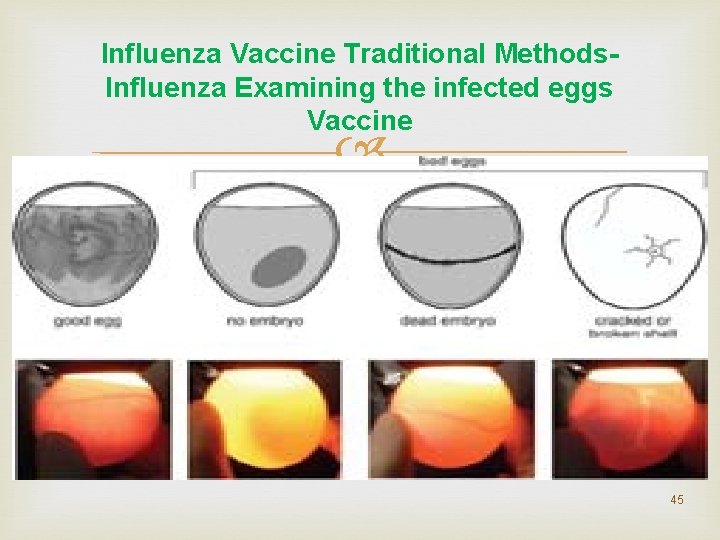
Only Embryonated Eggs Are Suitable for Growing Virus Inoculated eggs are candled daily to see the chicken embryos inside. 14
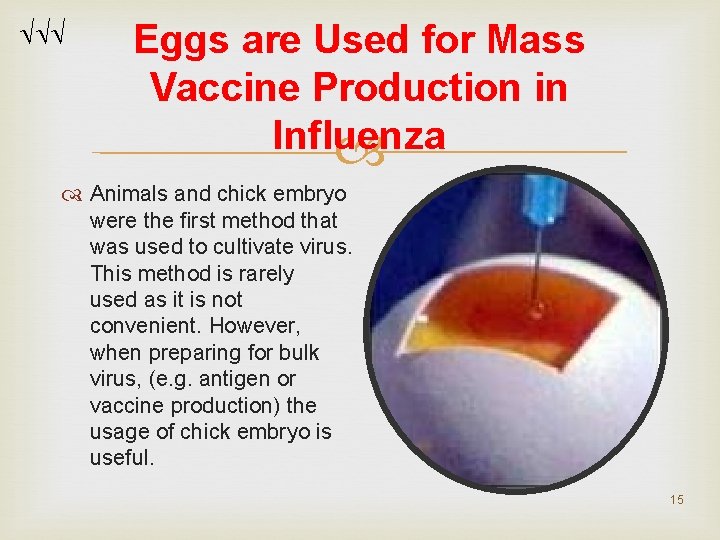
Eggs are Used for Mass Vaccine Production in Influenza Animals and chick embryo were the first method that was used to cultivate virus. This method is rarely used as it is not convenient. However, when preparing for bulk virus, (e. g. antigen or vaccine production) the usage of chick embryo is useful. 15
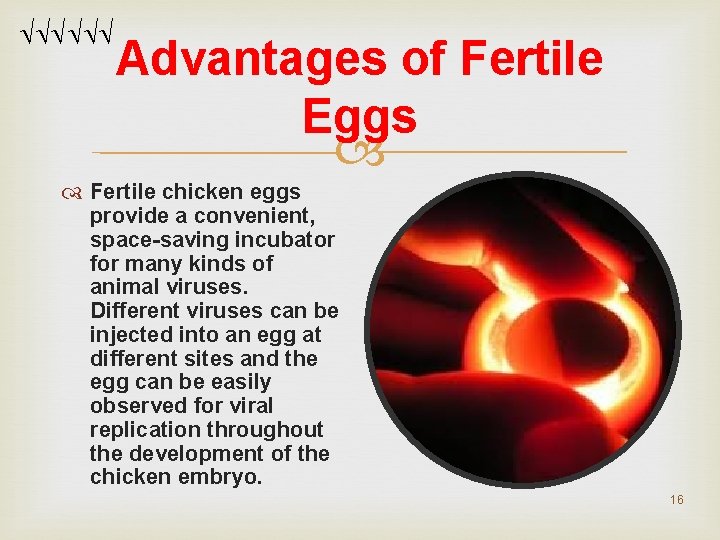
Advantages of Fertile Eggs Fertile chicken eggs provide a convenient, space-saving incubator for many kinds of animal viruses. Different viruses can be injected into an egg at different sites and the egg can be easily observed for viral replication throughout the development of the chicken embryo. 16
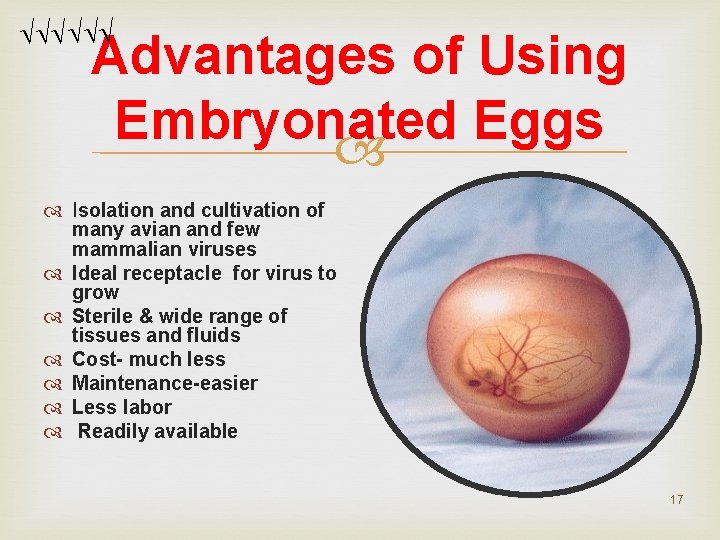
Advantages of Using Embryonated Eggs Isolation and cultivation of many avian and few mammalian viruses Ideal receptacle for virus to grow Sterile & wide range of tissues and fluids Cost- much less Maintenance-easier Less labor Readily available 17
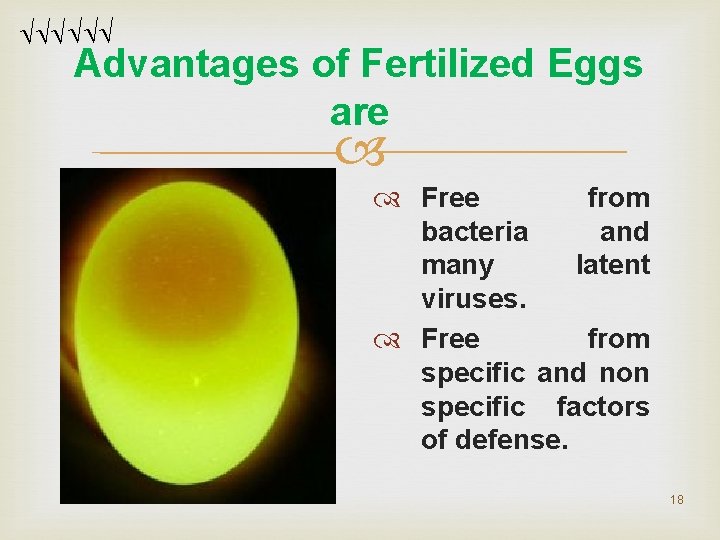
Advantages of Fertilized Eggs are Free from bacteria and many latent viruses. Free from specific and non specific factors of defense. 18
Structure and Utility of Fertilized Egg 19
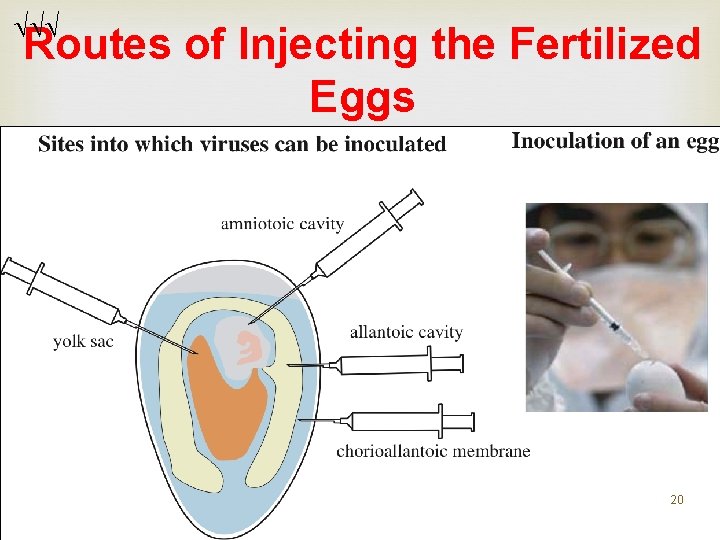
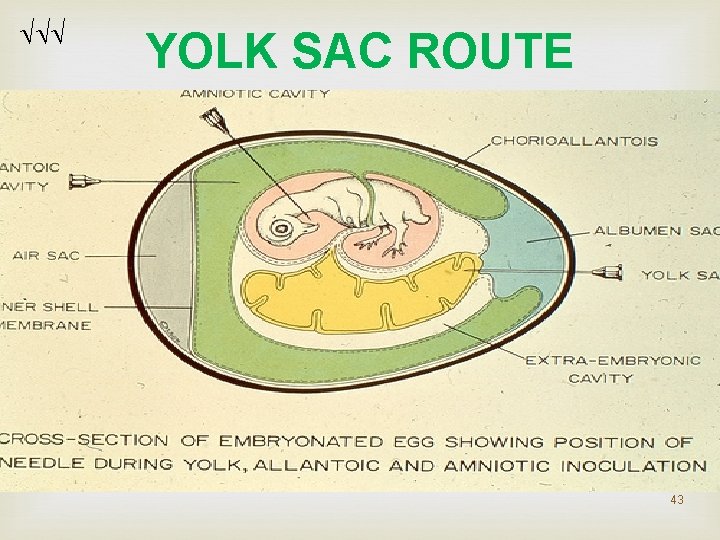
Routes of Injecting the Fertilized Eggs 20
21
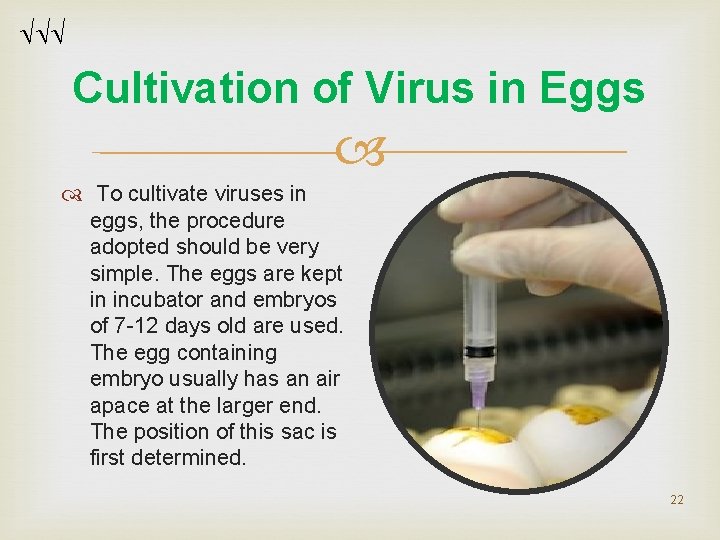
Cultivation of Virus in Eggs To cultivate viruses in eggs, the procedure adopted should be very simple. The eggs are kept in incubator and embryos of 7 -12 days old are used. The egg containing embryo usually has an air apace at the larger end. The position of this sac is first determined. 22
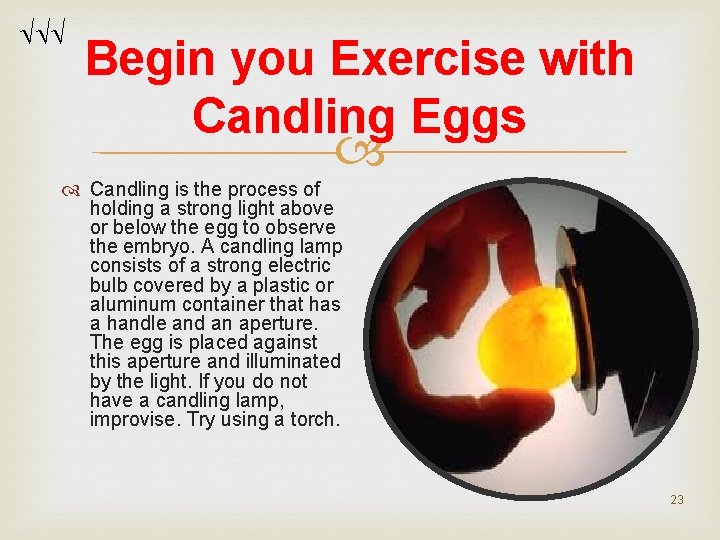
Begin you Exercise with Candling Eggs Candling is the process of holding a strong light above or below the egg to observe the embryo. A candling lamp consists of a strong electric bulb covered by a plastic or aluminum container that has a handle and an aperture. The egg is placed against this aperture and illuminated by the light. If you do not have a candling lamp, improvise. Try using a torch. 23
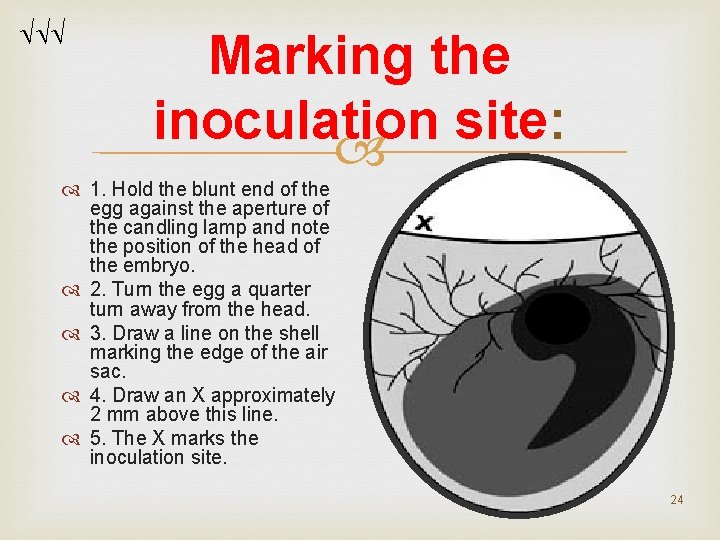
Marking the inoculation site: 1. Hold the blunt end of the egg against the aperture of the candling lamp and note the position of the head of the embryo. 2. Turn the egg a quarter turn away from the head. 3. Draw a line on the shell marking the edge of the air sac. 4. Draw an X approximately 2 mm above this line. 5. The X marks the inoculation site. 24
Materials Needed for Egg Inoculation Eggs: 9 -day old or 10 -day old embryonated eggs. Candle the eggs and mark the inoculation sites as described in Section 5. Eggs should be placed in an egg rack with the inoculation site uppermost. Egg shell punch. Cotton wool. A 70 percent alcohol solution in water. Syringe 1 m. L. Needles preferably 25 gauge, 16 mm. Stationery tape (also called cello or sticky tape) or melted wax to seal the inoculation site. Inoculum. This must be free of microbial contamination. Discard tray. 25
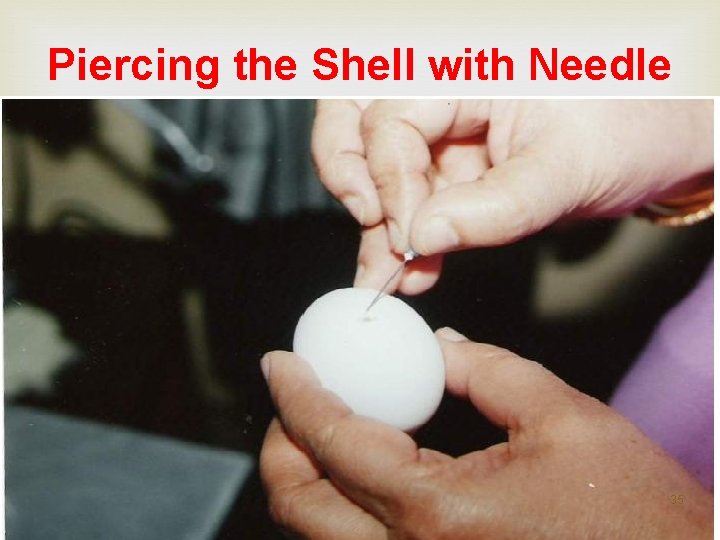
Inoculation of the Allantoic cavity 1. Use cotton wool and 70 percent alcohol to swab the end of the eggs to be inoculated. Allow the alcohol to evaporate. 2. Swab the eggshell punch with 70 percent alcohol solution. Place used cotton wool in discard tray. 3. Pierce a hole in the end of the egg at the marked inoculation site. 4. Attach needle to 1 m. L syringe. 5. Draw inoculum into 1 m. L syringe. 26
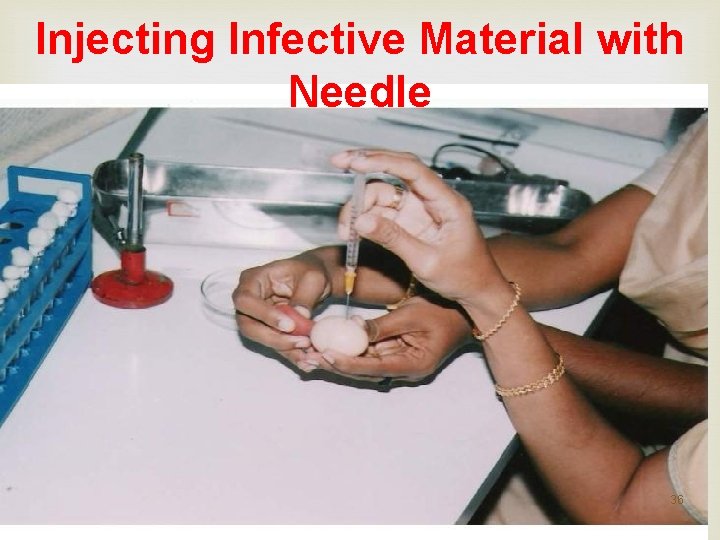
Inoculation of the Allantoic cavity 6 Keeping the needle and syringe vertical, place the needle through the hole in the eggshell. The needle will need to penetrate approximately 16 mm into the egg to reach the allantoic cavity. 7. Inject 0. 1 m. L of inoculum into the egg. 8. Withdraw the needle from the egg. 9. Seal the hole in the shell with stationery tape or melted wax. 10. Discard the used needles and syringes. 11. Place the inoculated eggs into a second incubator. Check the temperature and humidity of incubate 27
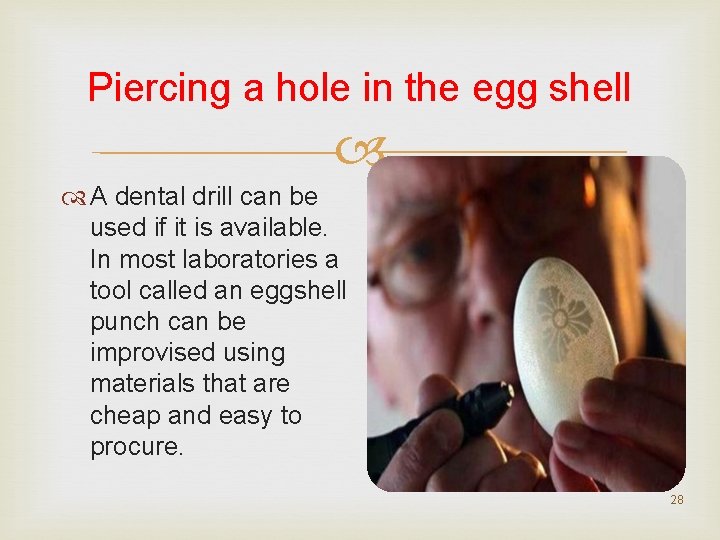
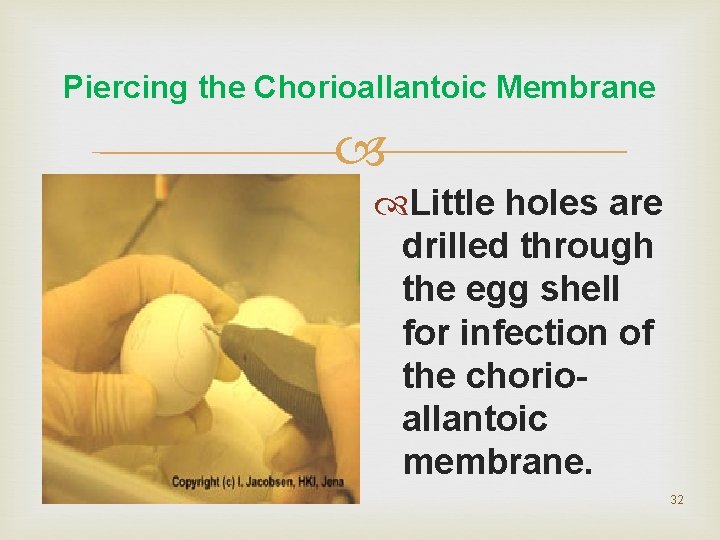
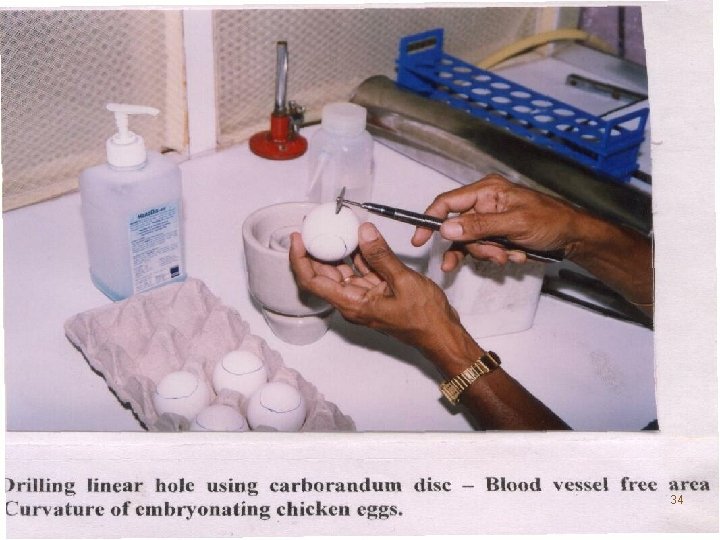
Piercing a hole in the egg shell A dental drill can be used if it is available. In most laboratories a tool called an eggshell punch can be improvised using materials that are cheap and easy to procure. 28
Routes of Egg Inoculation 29
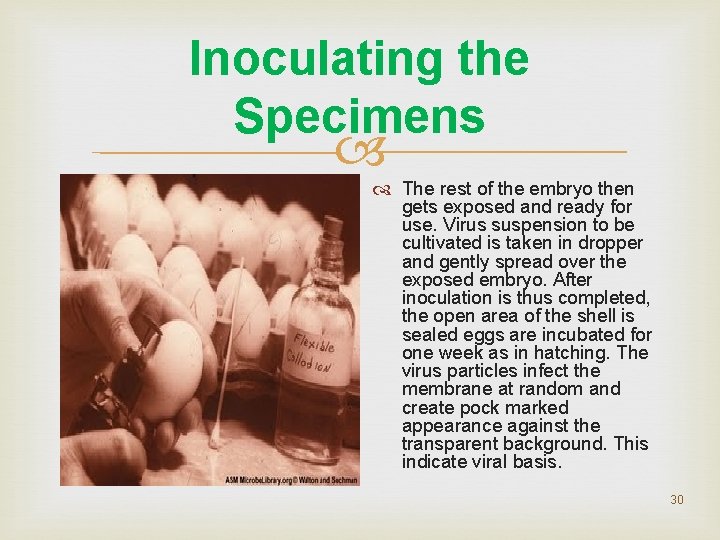
Inoculating the Specimens The rest of the embryo then gets exposed and ready for use. Virus suspension to be cultivated is taken in dropper and gently spread over the exposed embryo. After inoculation is thus completed, the open area of the shell is sealed eggs are incubated for one week as in hatching. The virus particles infect the membrane at random and create pock marked appearance against the transparent background. This indicate viral basis. 30
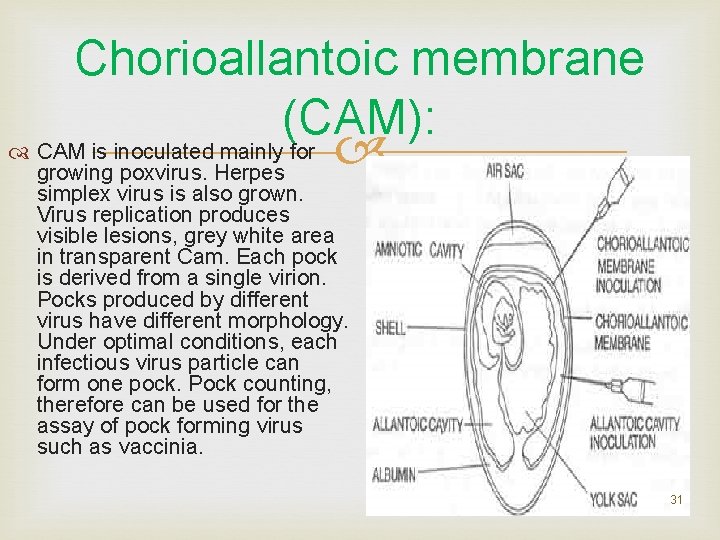
Chorioallantoic membrane (CAM): CAM is inoculated mainly for growing poxvirus. Herpes simplex virus is also grown. Virus replication produces visible lesions, grey white area in transparent Cam. Each pock is derived from a single virion. Pocks produced by different virus have different morphology. Under optimal conditions, each infectious virus particle can form one pock. Pock counting, therefore can be used for the assay of pock forming virus such as vaccinia. 31
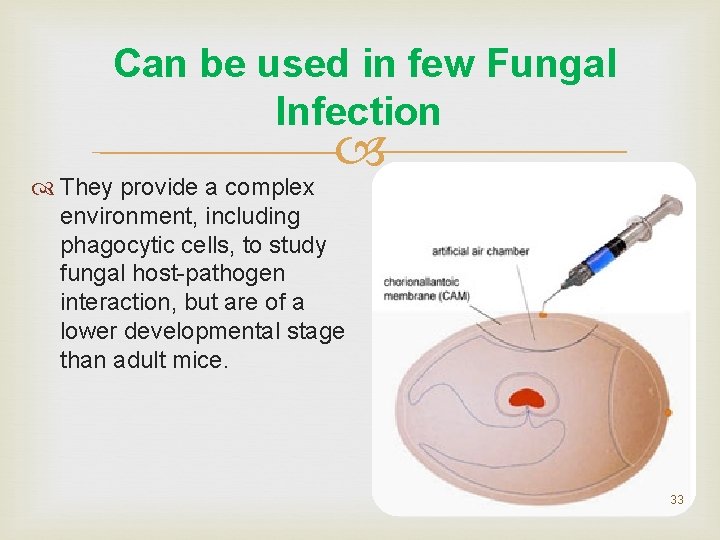
Piercing the Chorioallantoic Membrane Little holes are drilled through the egg shell for infection of the chorioallantoic membrane. 32
Can be used in few Fungal Infection They provide a complex environment, including phagocytic cells, to study fungal host-pathogen interaction, but are of a lower developmental stage than adult mice. 33
34
Piercing the Shell with Needle 35
Injecting Infective Material with Needle 36
Overview of Inoculating Sites 37
Allantoic cavity: Inoculation into the allantoic cavity provides a rich yield of influenza and some paramyxoviruses. Allantoic inoculation is employed for growing the influenza virus for vaccine production. Other allantoic vaccines include Yellow fever (17 D strain), and rabies vaccines. Duck eggs are bigger and have a longer incubation period then hen’s egg. They therefore provide a better yield of rabies virus and were used for the preparation of the inactivated nonneural rabies vaccines. 38
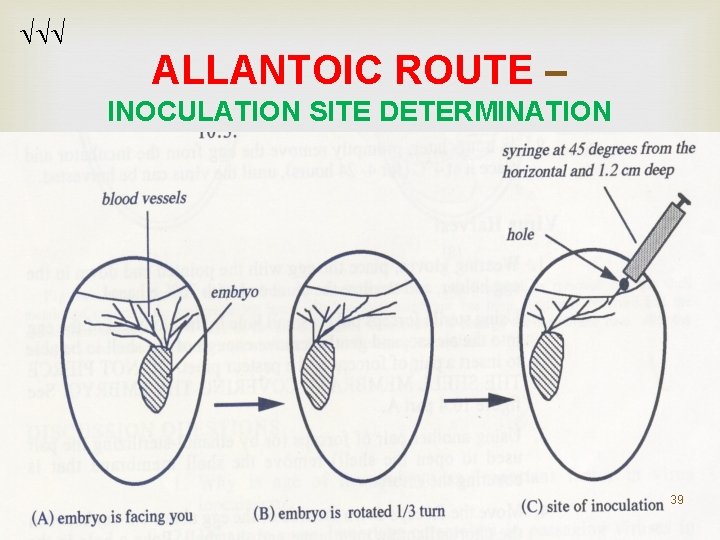
ALLANTOIC ROUTE – INOCULATION SITE DETERMINATION 39
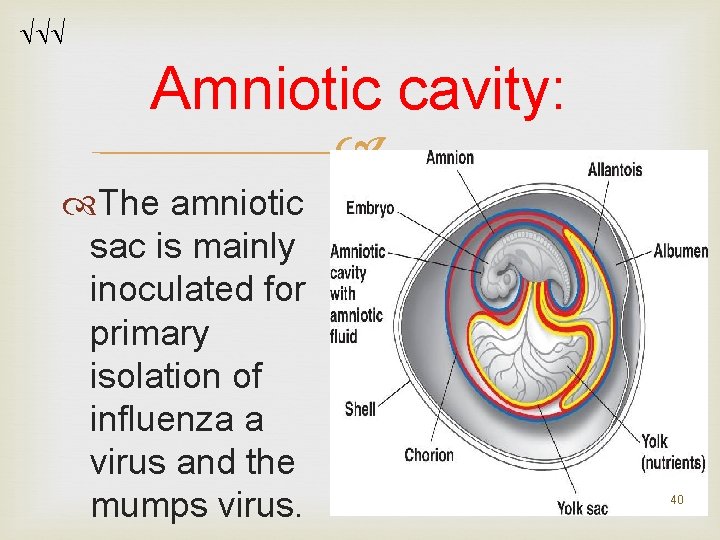
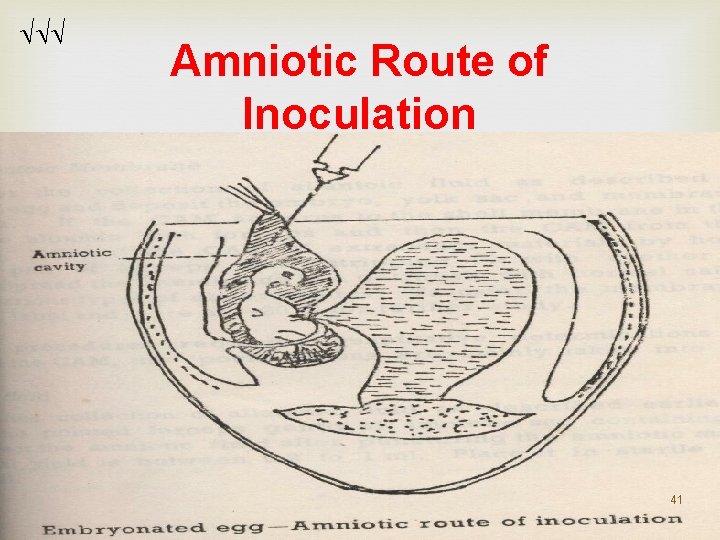
Amniotic cavity: The amniotic sac is mainly inoculated for primary isolation of influenza a virus and the mumps virus. 40
Amniotic Route of Inoculation 41
Yolk sac: It is inoculated for the cultivation of some viruses as well as for some bacteria like Chlamydia and Rickettsia. 42
YOLK SAC ROUTE 43
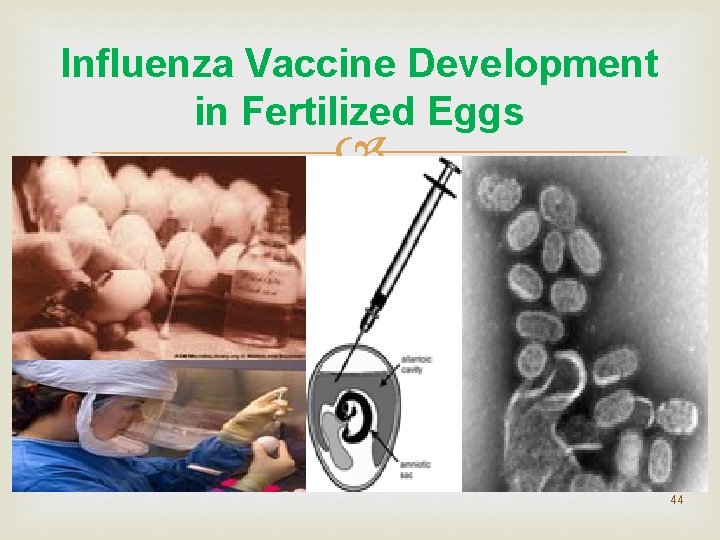
Influenza Vaccine Development in Fertilized Eggs 44
Influenza Vaccine Traditional Methods. Influenza Examining the infected eggs Vaccine 45
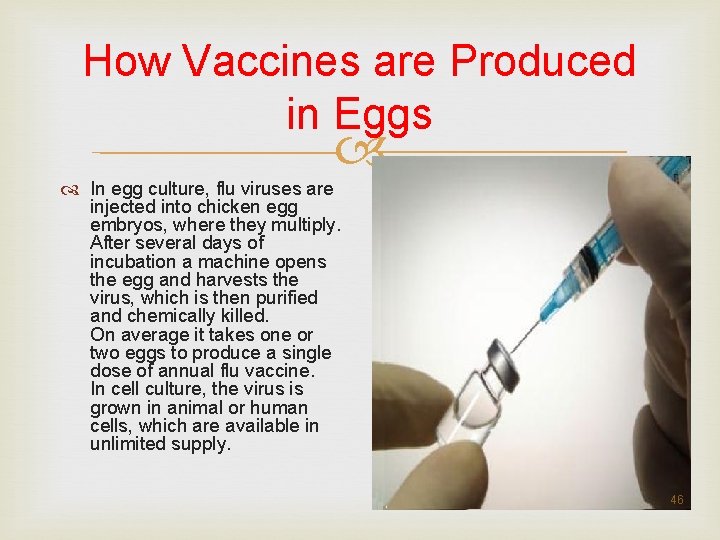
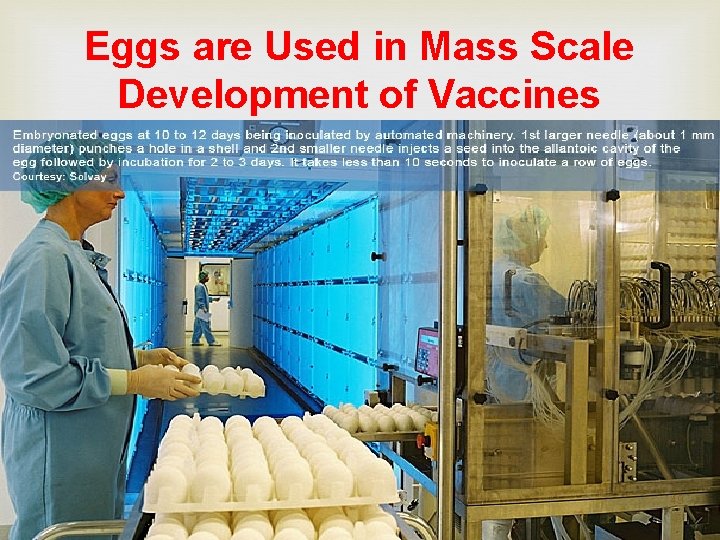
How Vaccines are Produced in Eggs In egg culture, flu viruses are injected into chicken egg embryos, where they multiply. After several days of incubation a machine opens the egg and harvests the virus, which is then purified and chemically killed. On average it takes one or two eggs to produce a single dose of annual flu vaccine. In cell culture, the virus is grown in animal or human cells, which are available in unlimited supply. 46
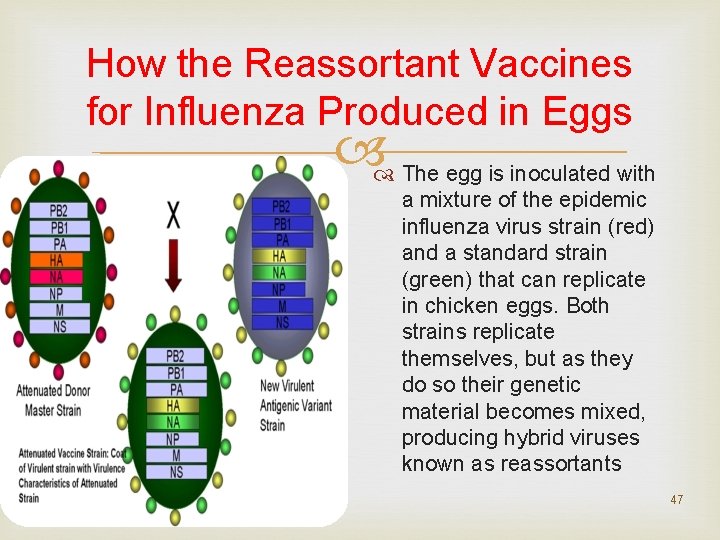
How the Reassortant Vaccines for Influenza Produced in Eggs The egg is inoculated with a mixture of the epidemic influenza virus strain (red) and a standard strain (green) that can replicate in chicken eggs. Both strains replicate themselves, but as they do so their genetic material becomes mixed, producing hybrid viruses known as reassortants 47
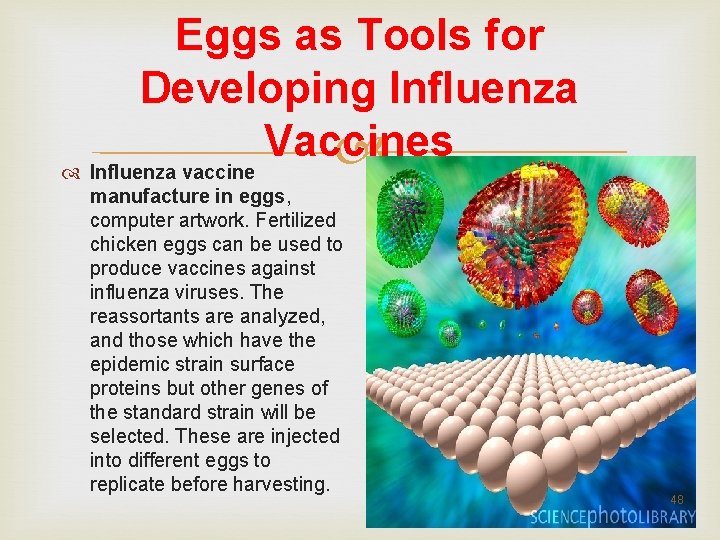
Eggs as Tools for Developing Influenza Vaccines Influenza vaccine manufacture in eggs, computer artwork. Fertilized chicken eggs can be used to produce vaccines against influenza viruses. The reassortants are analyzed, and those which have the epidemic strain surface proteins but other genes of the standard strain will be selected. These are injected into different eggs to replicate before harvesting. 48
Eggs are Used in Mass Scale Development of Vaccines 49
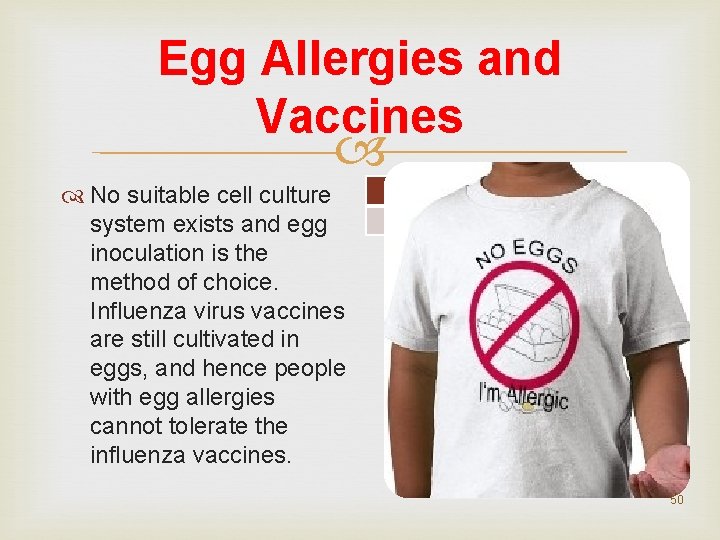
Egg Allergies and Vaccines No suitable cell culture system exists and egg inoculation is the method of choice. Influenza virus vaccines are still cultivated in eggs, and hence people with egg allergies cannot tolerate the influenza vaccines. 50
Follow all the Biosafety Considerations All procedures involving the manipulation of infectious materials are conducted within biological safety cabinets, specially designed hoods, or other physical containment devices, or by personnel wearing appropriate personal protective clothing and equipment. Dr. T. V. Rao MD 51
52