Dr Marty Auer Professor Civil Environmental Engineering Michigan








- Slides: 64
Dr. Marty Auer Professor Civil & Environmental Engineering Michigan Tech University
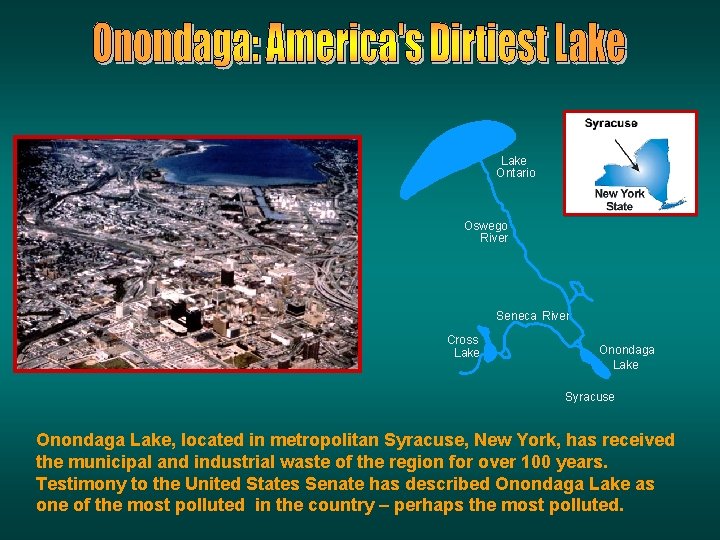
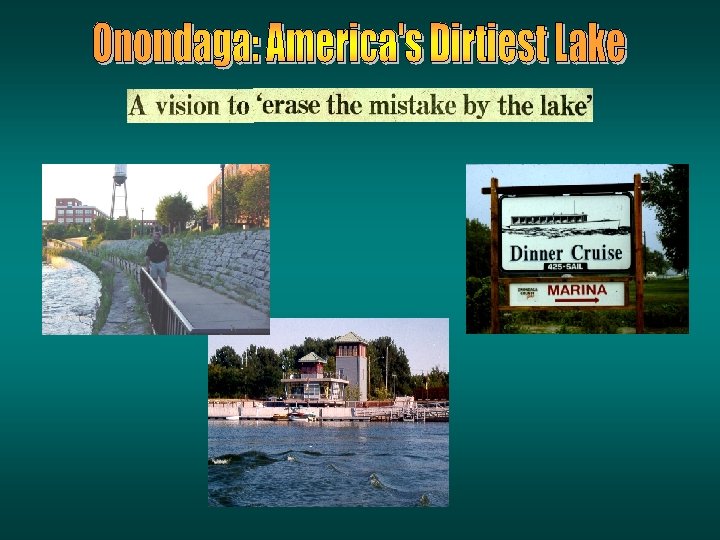
Lake Ontario Oswego River Seneca River Cross Lake Onondaga Lake Syracuse Onondaga Lake, located in metropolitan Syracuse, New York, has received the municipal and industrial waste of the region for over 100 years. Testimony to the United States Senate has described Onondaga Lake as one of the most polluted in the country – perhaps the most polluted.
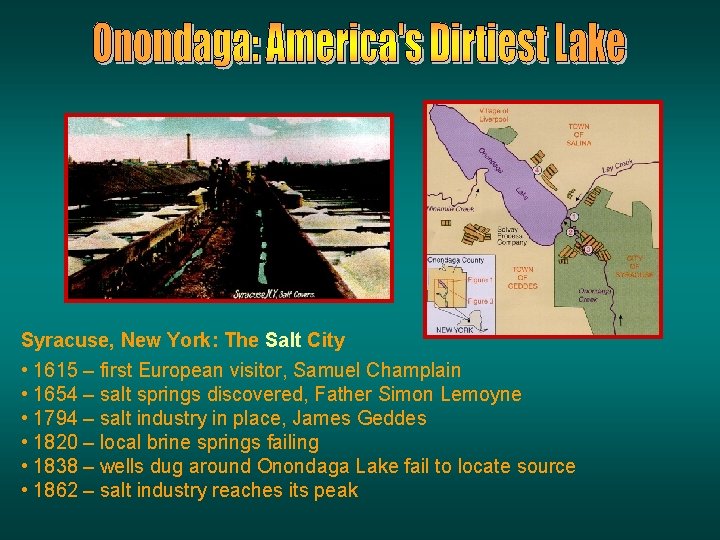
Syracuse, New York: The Salt City • 1615 – first European visitor, Samuel Champlain • 1654 – salt springs discovered, Father Simon Lemoyne • 1794 – salt industry in place, James Geddes • 1820 – local brine springs failing • 1838 – wells dug around Onondaga Lake fail to locate source • 1862 – salt industry reaches its peak
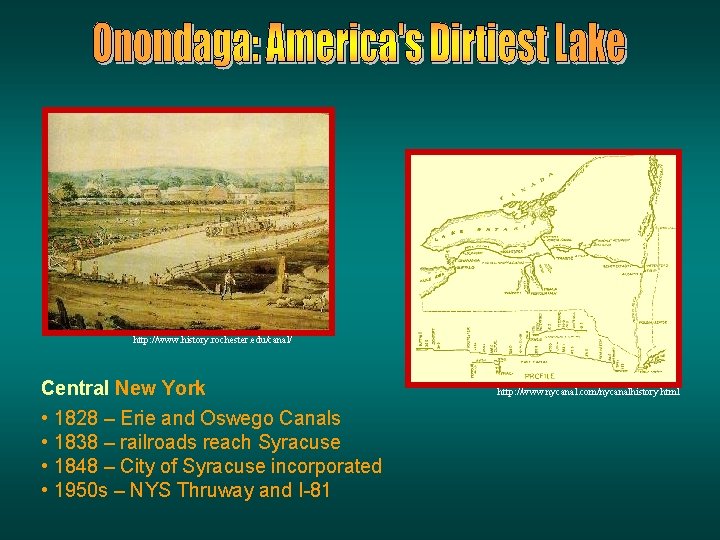
http: //www. history. rochester. edu/canal/ Central New York • 1828 – Erie and Oswego Canals • 1838 – railroads reach Syracuse • 1848 – City of Syracuse incorporated • 1950 s – NYS Thruway and I-81 http: //www. nycanal. com/nycanalhistory. html
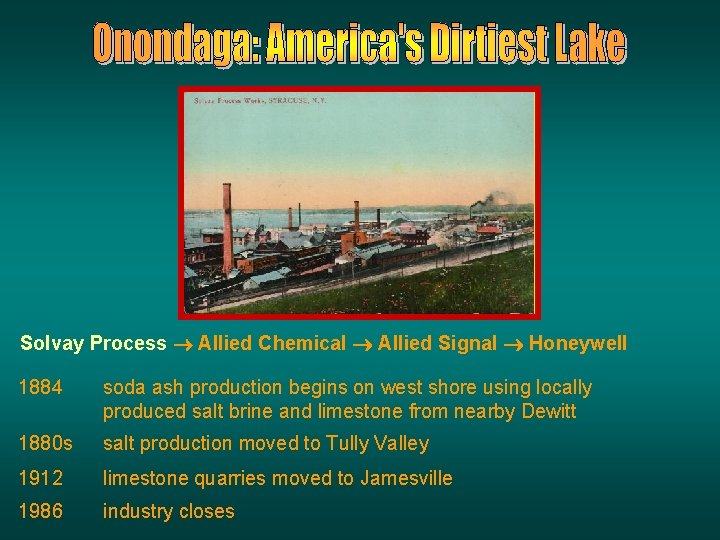
Solvay Process Allied Chemical Allied Signal Honeywell 1884 soda ash production begins on west shore using locally produced salt brine and limestone from nearby Dewitt 1880 s salt production moved to Tully Valley 1912 limestone quarries moved to Jamesville 1986 industry closes
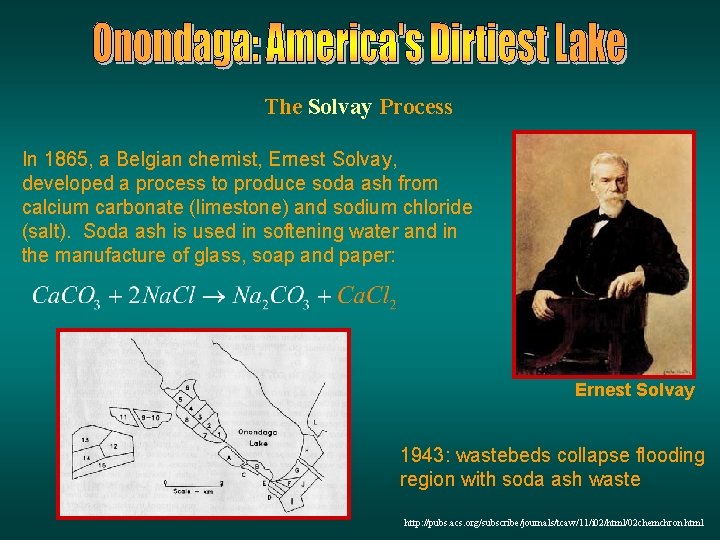
The Solvay Process In 1865, a Belgian chemist, Ernest Solvay, developed a process to produce soda ash from calcium carbonate (limestone) and sodium chloride (salt). Soda ash is used in softening water and in the manufacture of glass, soap and paper: Ernest Solvay 1943: wastebeds collapse flooding region with soda ash waste http: //pubs. acs. org/subscribe/journals/tcaw/11/i 02/html/02 chemchron. html
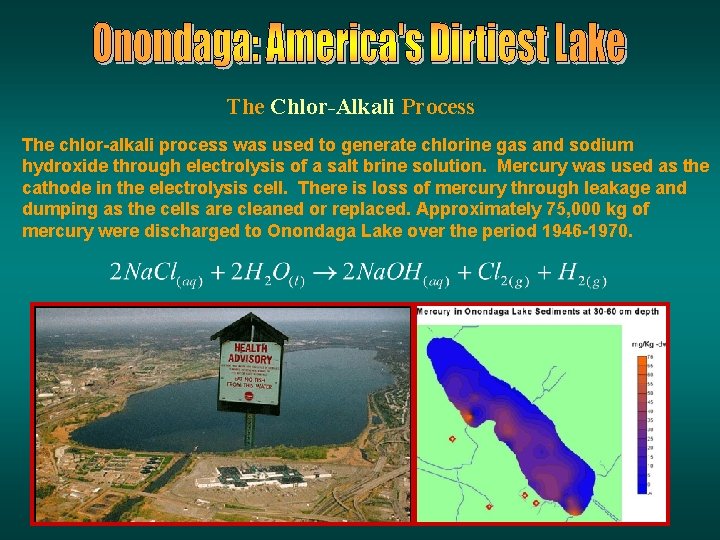
The Chlor-Alkali Process The chlor-alkali process was used to generate chlorine gas and sodium hydroxide through electrolysis of a salt brine solution. Mercury was used as the cathode in the electrolysis cell. There is loss of mercury through leakage and dumping as the cells are cleaned or replaced. Approximately 75, 000 kg of mercury were discharged to Onondaga Lake over the period 1946 -1970.
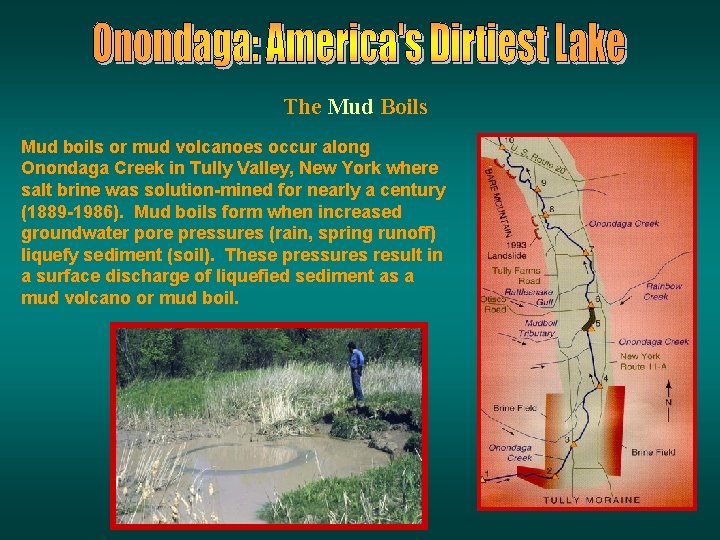
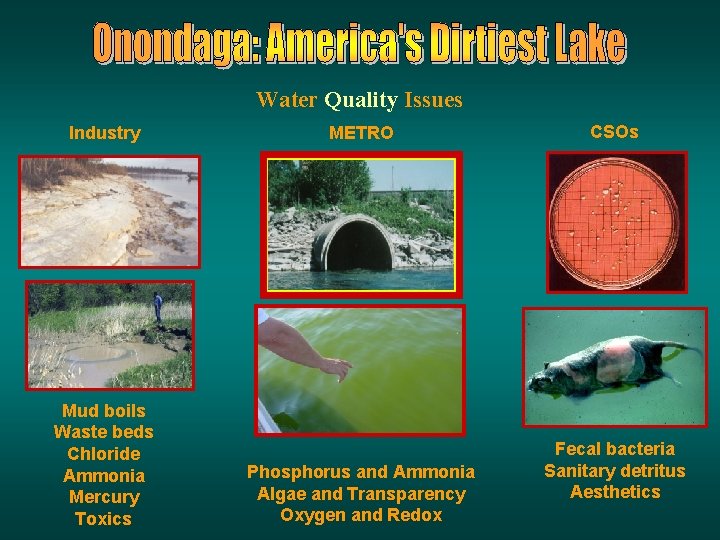
The Mud Boils Mud boils or mud volcanoes occur along Onondaga Creek in Tully Valley, New York where salt brine was solution-mined for nearly a century (1889 -1986). Mud boils form when increased groundwater pore pressures (rain, spring runoff) liquefy sediment (soil). These pressures result in a surface discharge of liquefied sediment as a mud volcano or mud boil.
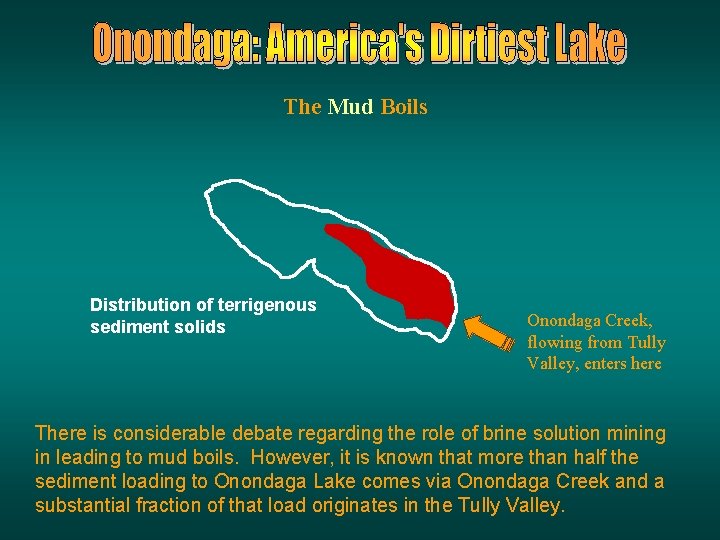
The Mud Boils Distribution of terrigenous sediment solids Onondaga Creek, flowing from Tully Valley, enters here There is considerable debate regarding the role of brine solution mining in leading to mud boils. However, it is known that more than half the sediment loading to Onondaga Lake comes via Onondaga Creek and a substantial fraction of that load originates in the Tully Valley.
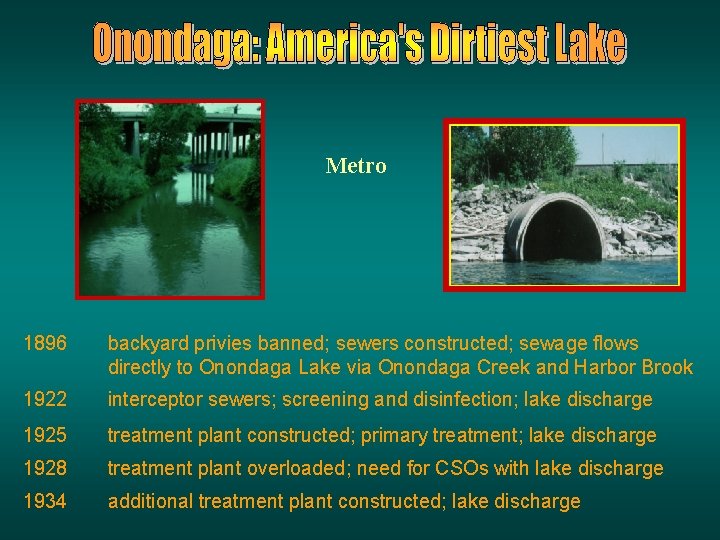
Metro 1896 backyard privies banned; sewers constructed; sewage flows directly to Onondaga Lake via Onondaga Creek and Harbor Brook 1922 interceptor sewers; screening and disinfection; lake discharge 1925 treatment plant constructed; primary treatment; lake discharge 1928 treatment plant overloaded; need for CSOs with lake discharge 1934 additional treatment plant constructed; lake discharge
Metro 1960 METRO plant completed; lake discharge 1974 METRO deemed overloaded 1979 METRO upgrade; secondary treatment; lake discharge 1981 METRO upgrade; tertiary treatment; lake discharge 1998 State calls for a 14 -year, $400 million treatment plant upgrade; lake discharge 2002 Scientific community questions technical feasibility of lake restoration plan
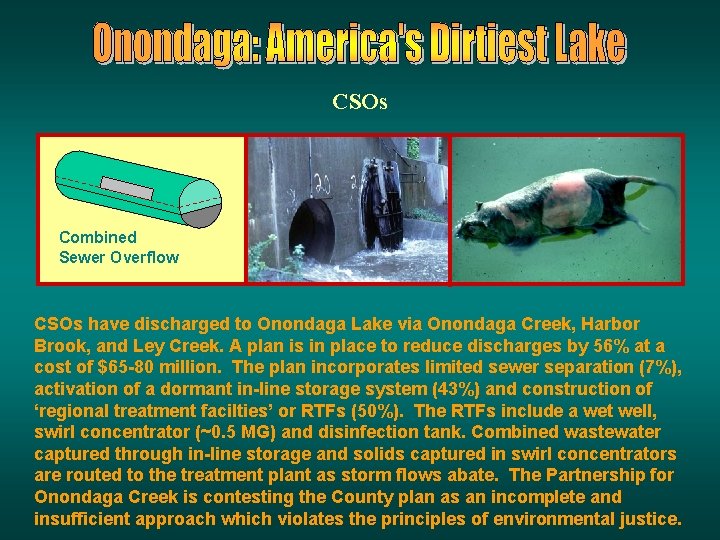
CSOs Combined Sewer Overflow CSOs have discharged to Onondaga Lake via Onondaga Creek, Harbor Brook, and Ley Creek. A plan is in place to reduce discharges by 56% at a cost of $65 -80 million. The plan incorporates limited sewer separation (7%), activation of a dormant in-line storage system (43%) and construction of ‘regional treatment facilties’ or RTFs (50%). The RTFs include a wet well, swirl concentrator (~0. 5 MG) and disinfection tank. Combined wastewater captured through in-line storage and solids captured in swirl concentrators are routed to the treatment plant as storm flows abate. The Partnership for Onondaga Creek is contesting the County plan as an incomplete and insufficient approach which violates the principles of environmental justice.
Water Quality Issues Industry Mud boils Waste beds Chloride Ammonia Mercury Toxics METRO Phosphorus and Ammonia Algae and Transparency Oxygen and Redox CSOs Fecal bacteria Sanitary detritus Aesthetics
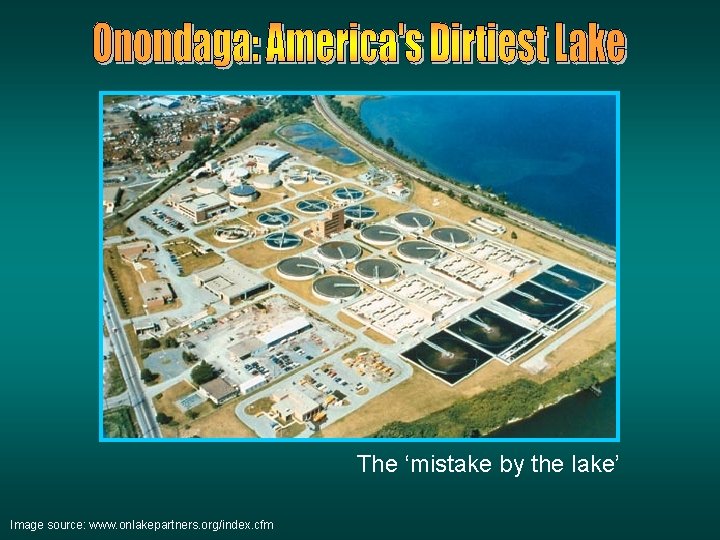
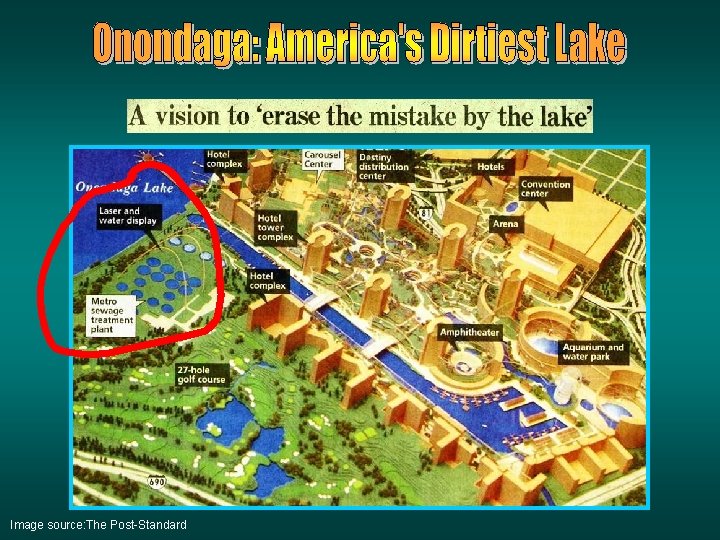
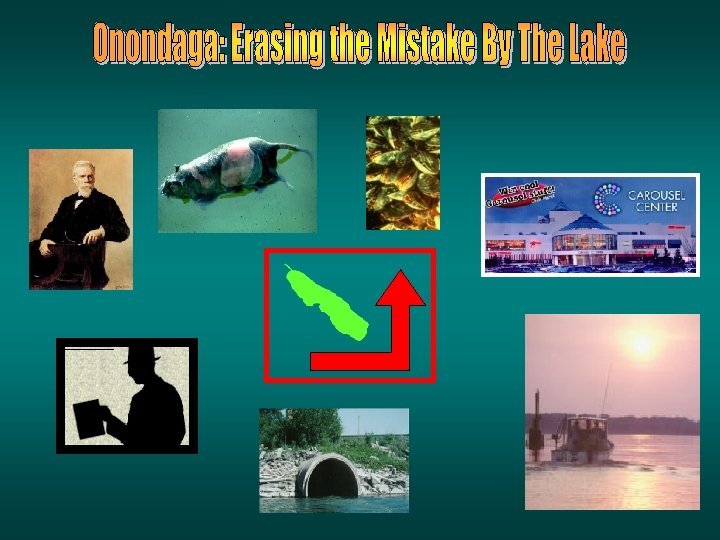
The ‘mistake by the lake’ Image source: www. onlakepartners. org/index. cfm
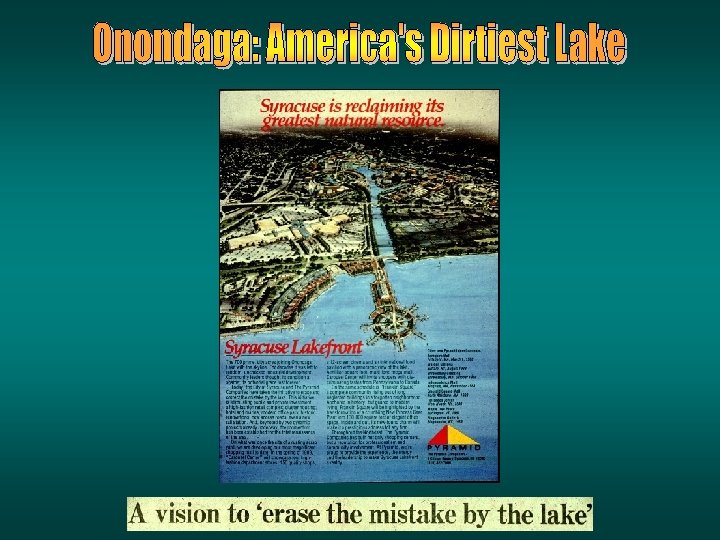
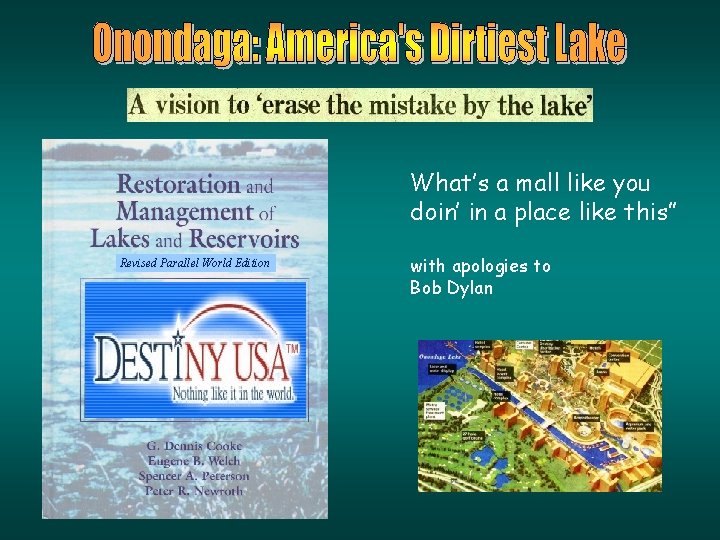
A Mall ?
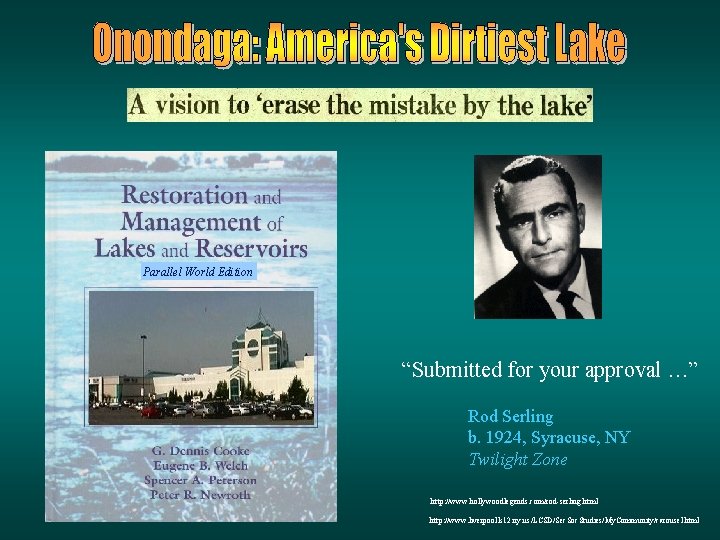
Parallel World Edition “Submitted for your approval …” Rod Serling b. 1924, Syracuse, NY Twilight Zone http: //www. hollywoodlegends. com/rod-serling. html http: //www. liverpool. k 12. ny. us/LCSD/Sec. Soc. Studies/My. Community/carousel. html
What’s a mall like you doin’ in a place like this” Revised Parallel World Edition with apologies to Bob Dylan
Image source: The Post-Standard
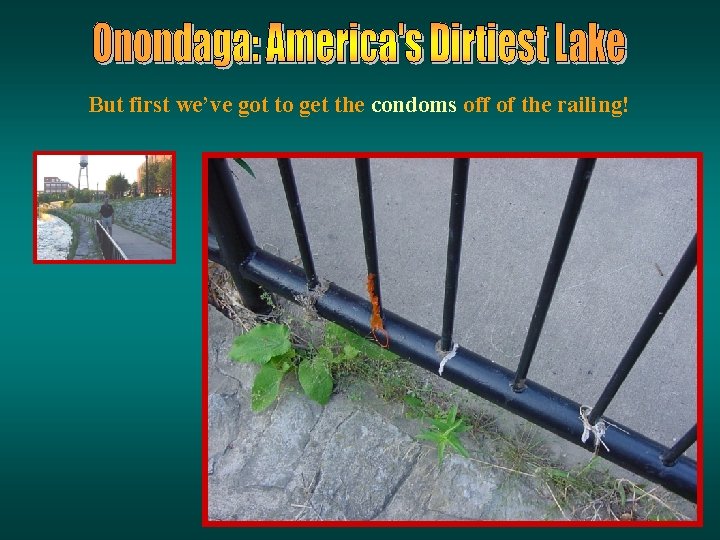
But first we’ve got to get the condoms off of the railing!
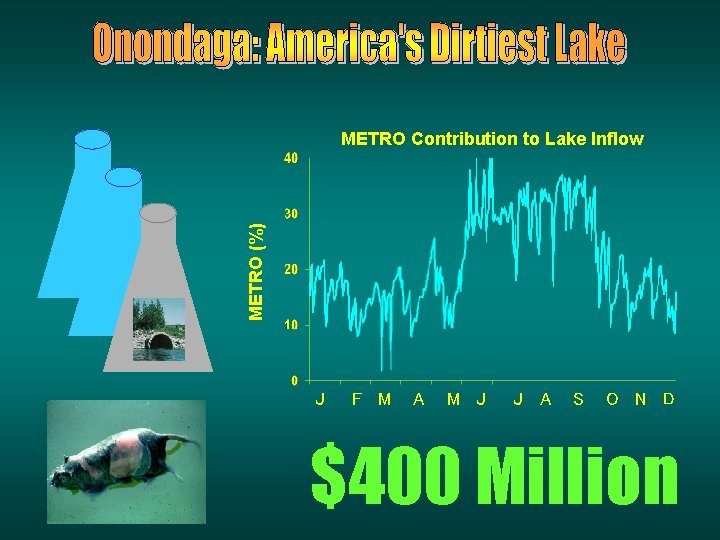
METRO (%) METRO Contribution to Lake Inflow J F M A M J J A S O N D $400 Million
http: //www. lake. onondaga. ny. us/ol 41206. htm#ol 50
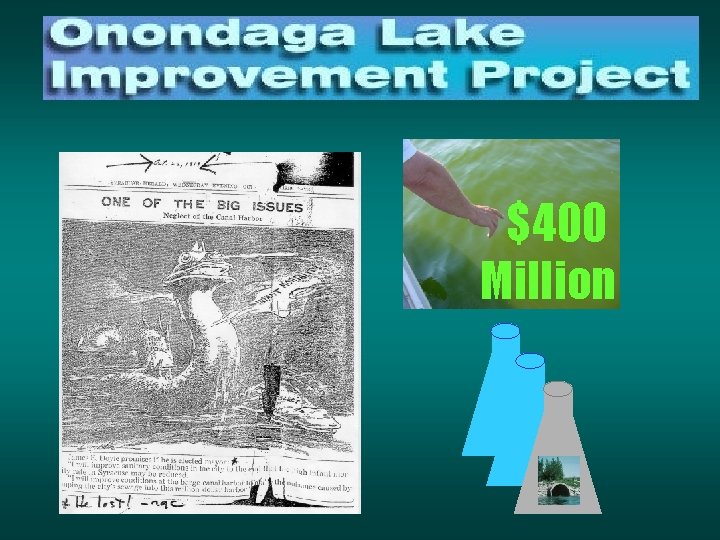
$400 Million
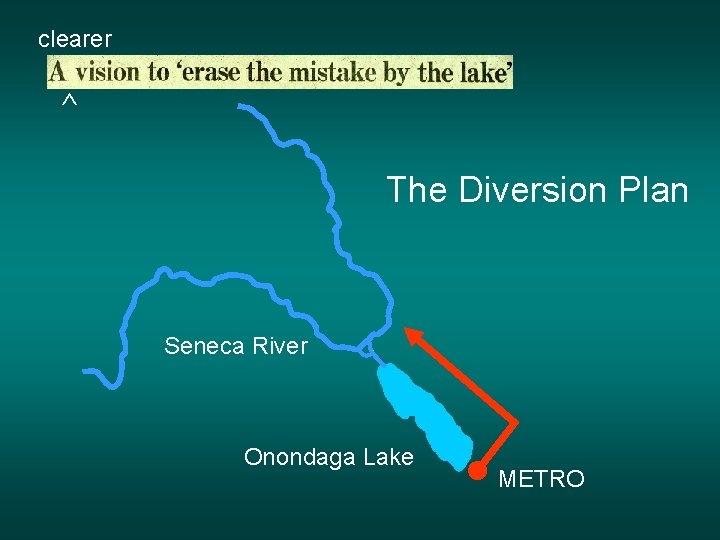
clearer ^ The Diversion Plan Seneca River Onondaga Lake METRO
Prior consideration of the diversion plan METRO Construction (ca. 1960) According to the original plans for the facility, the METRO effluent was to be pumped around the lake, combined with the Ley Creek plant effluent, and discharged to the Seneca River (Effler 1996). Needed for dilution. METRO Upgrades (ca. 1970 s) Discharge of the effluent to the Seneca River was dismissed because the river’s assimilative capacity was judged to be inadequate (USEPA 1974, as cited in Effler 1996). Never quantified. Rehabilitation Program (ca. 2003) Diversion remains on the table as an alternative if initial efforts do not achieve water quality standards (Effler et al. 2002). Zebra mussels. Never quantified.
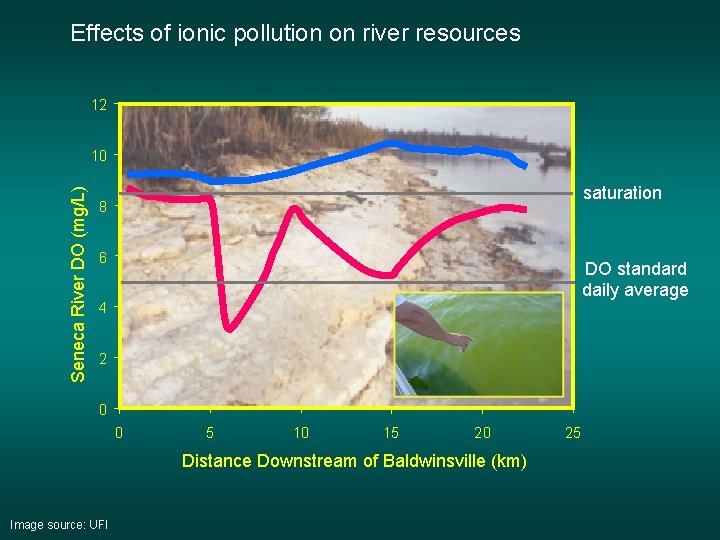
Effects of ionic pollution on river resources 12 Seneca River DO (mg/L) 10 saturation 8 6 DO standard daily average 4 2 0 0 5 10 15 20 Distance Downstream of Baldwinsville (km) Image source: UFI 25
Tonight … on City Confidential “Whatever Happened to the Diversion Plan? ” http: //www. cnn. com/ALLPOLITICS/1997/gen/resources/watergate/
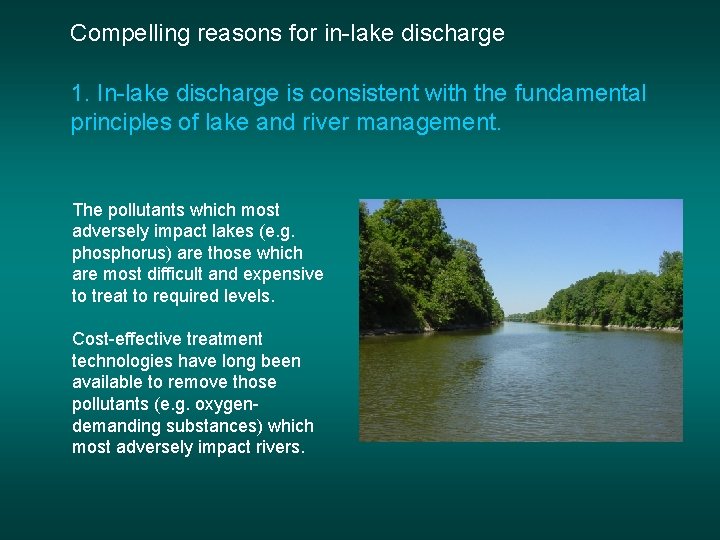
Compelling reasons for in-lake discharge 1. In-lake discharge is consistent with the fundamental principles of lake and river management. The pollutants which most adversely impact lakes (e. g. phosphorus) are those which are most difficult and expensive to treat to required levels. Cost-effective treatment technologies have long been available to remove those pollutants (e. g. oxygendemanding substances) which most adversely impact rivers.
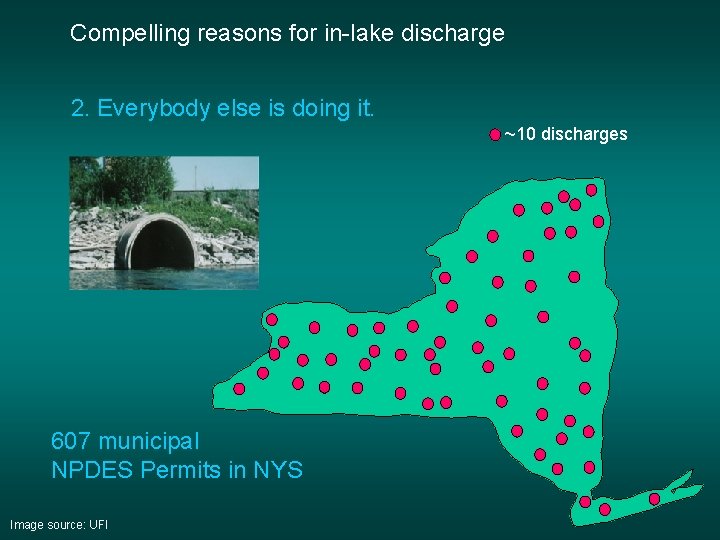
Compelling reasons for in-lake discharge 2. Everybody else is doing it. ~10 discharges 607 municipal NPDES Permits in NYS Image source: UFI
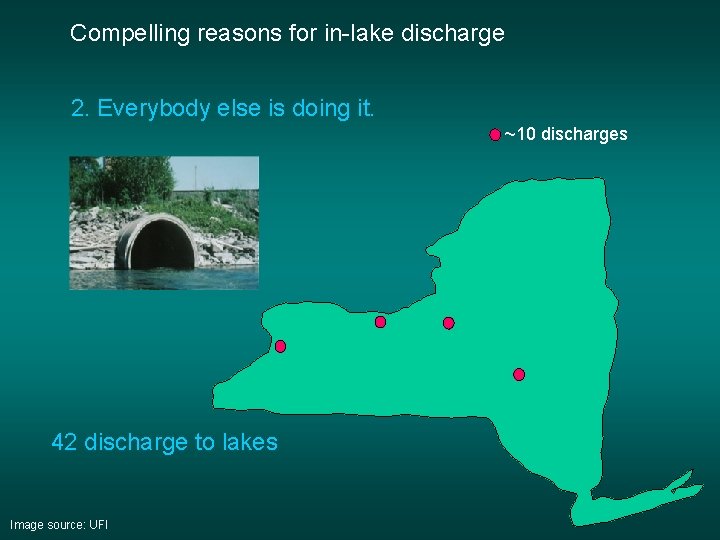
Compelling reasons for in-lake discharge 2. Everybody else is doing it. ~10 discharges 42 discharge to lakes Image source: UFI
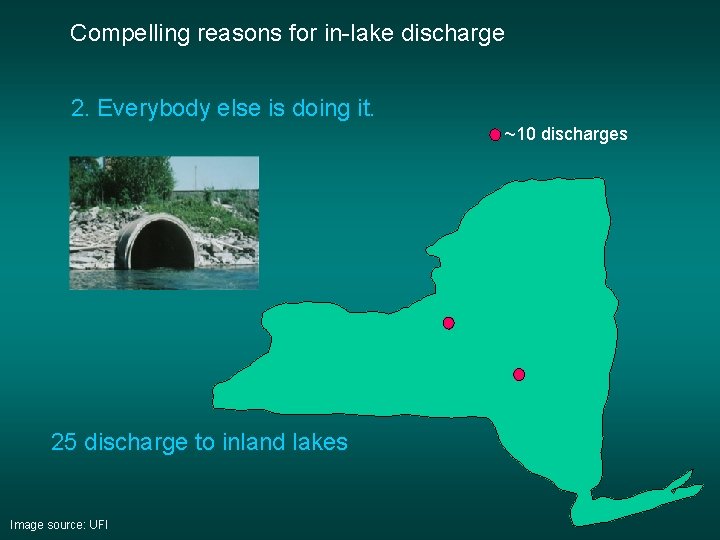
Compelling reasons for in-lake discharge 2. Everybody else is doing it. ~10 discharges 25 discharge to inland lakes Image source: UFI
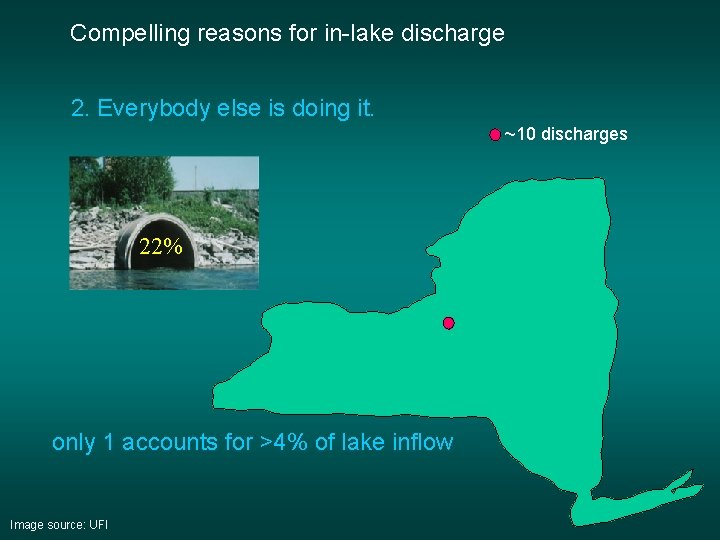
Compelling reasons for in-lake discharge 2. Everybody else is doing it. ~10 discharges 22% only 1 accounts for >4% of lake inflow Image source: UFI
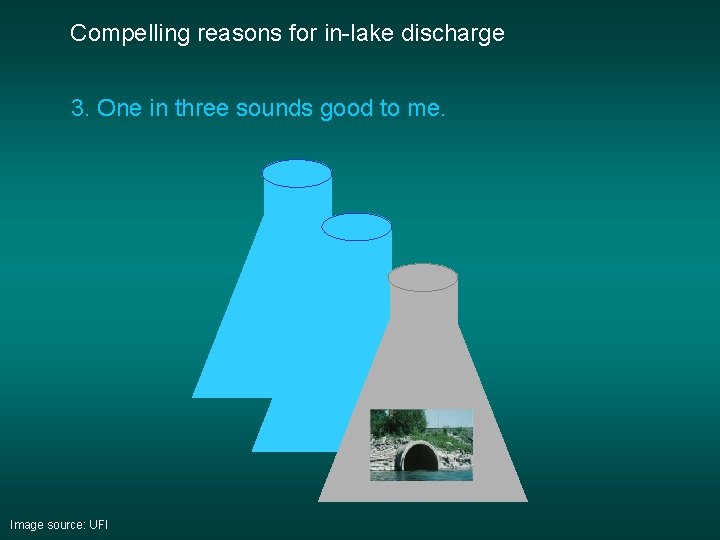
Compelling reasons for in-lake discharge 3. One in three sounds good to me. Image source: UFI
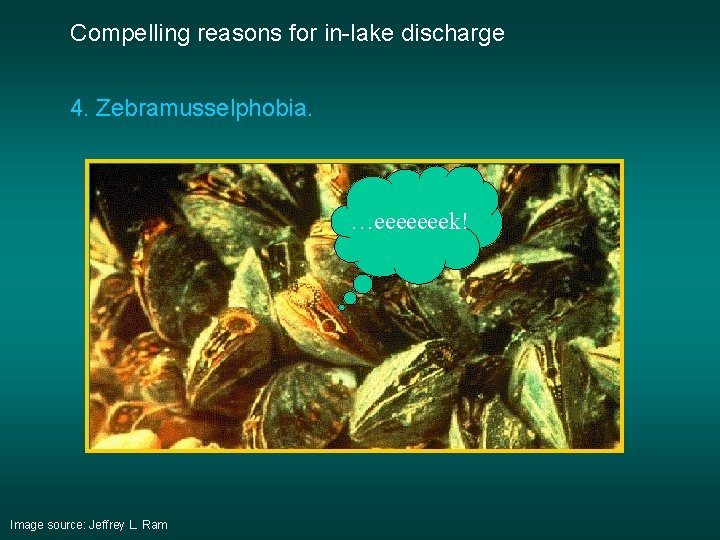
Compelling reasons for in-lake discharge 4. Zebramusselphobia. …eeeeeeek! Image source: Jeffrey L. Ram
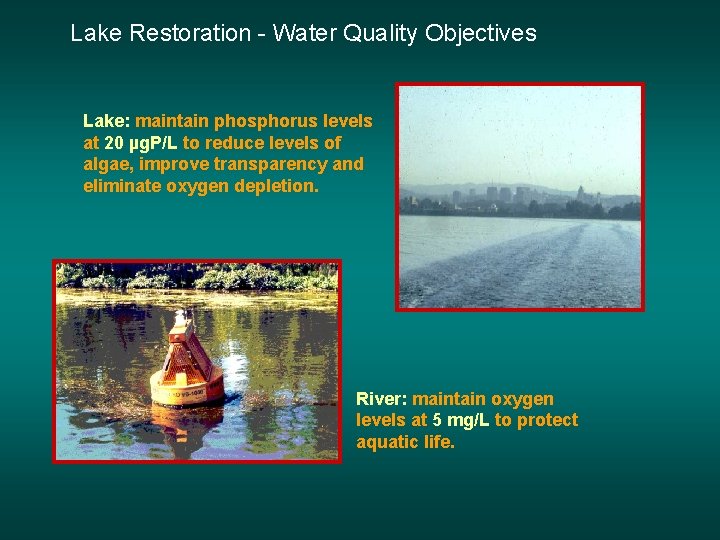
Lake Restoration - Water Quality Objectives Lake: maintain phosphorus levels at 20 µg. P/L to reduce levels of algae, improve transparency and eliminate oxygen depletion. River: maintain oxygen levels at 5 mg/L to protect aquatic life.
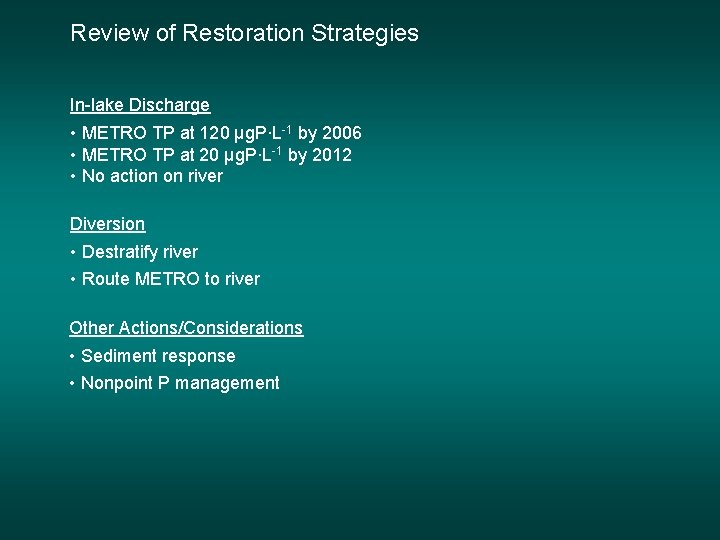
Review of Restoration Strategies In-lake Discharge • METRO TP at 120 µg. P∙L-1 by 2006 • METRO TP at 20 µg. P∙L-1 by 2012 • No action on river Diversion • Destratify river • Route METRO to river Other Actions/Considerations • Sediment response • Nonpoint P management
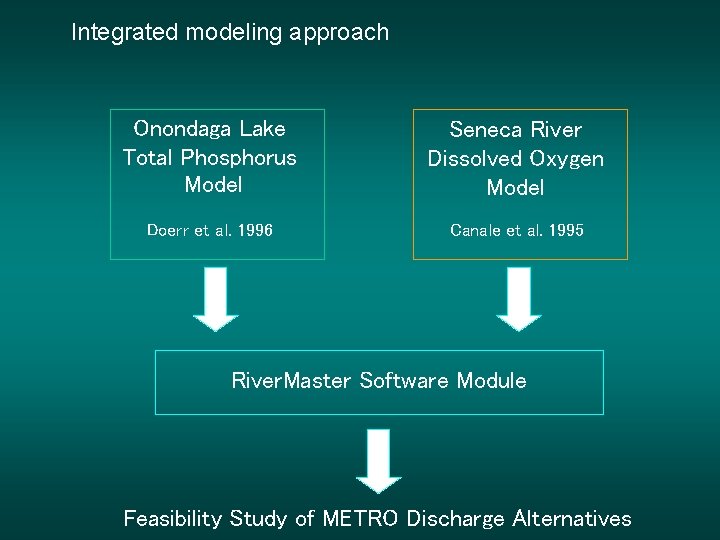
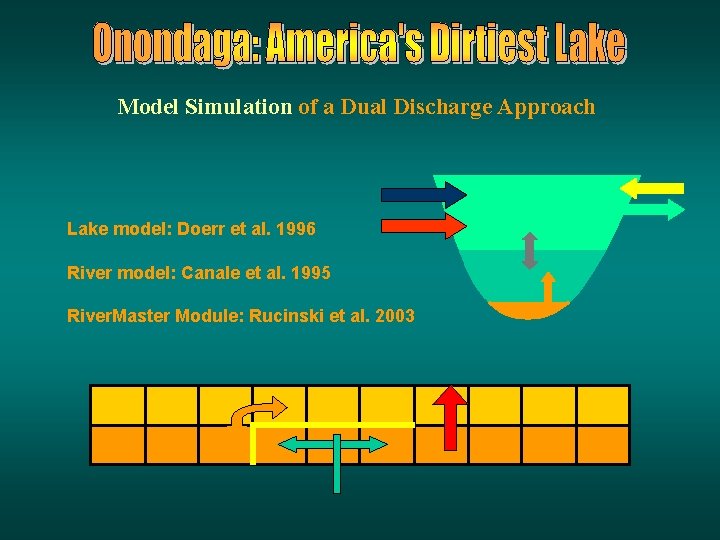
Integrated modeling approach Onondaga Lake Total Phosphorus Model Seneca River Dissolved Oxygen Model Doerr et al. 1996 Canale et al. 1995 River. Master Software Module Feasibility Study of METRO Discharge Alternatives
Model Simulation of a Dual Discharge Approach Lake model: Doerr et al. 1996 River model: Canale et al. 1995 River. Master Module: Rucinski et al. 2003
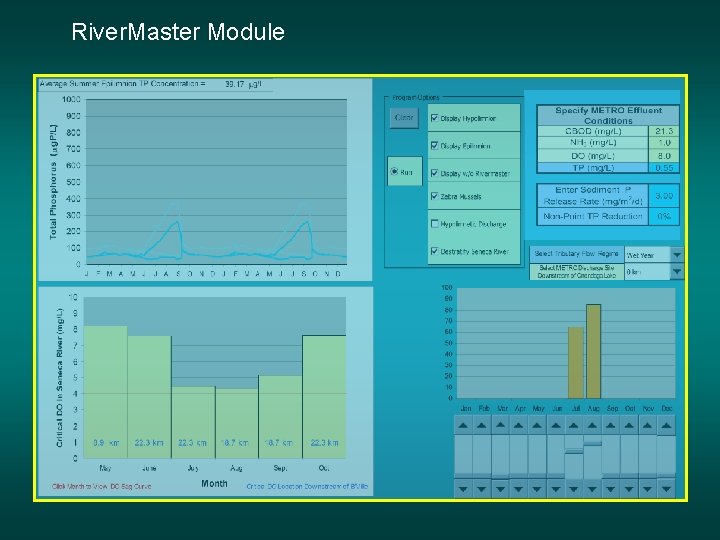
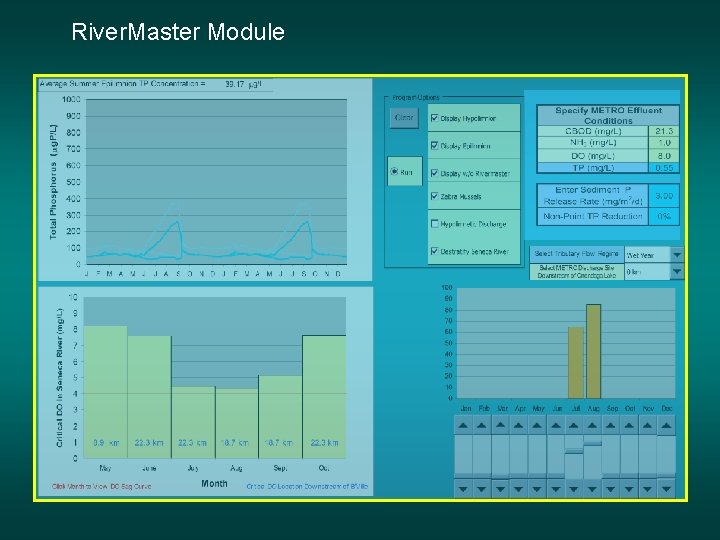
River. Master Module
Diversion with Fixed Discharge
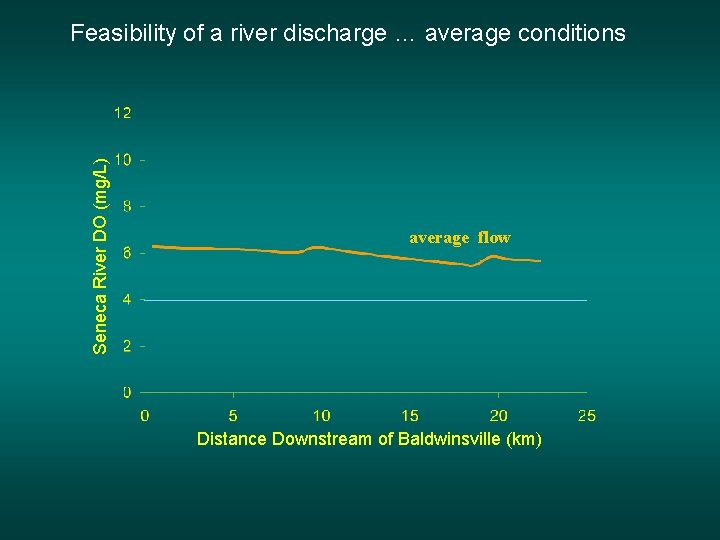
Seneca River DO (mg/L) Feasibility of a river discharge … average conditions average flow Distance Downstream of Baldwinsville (km)
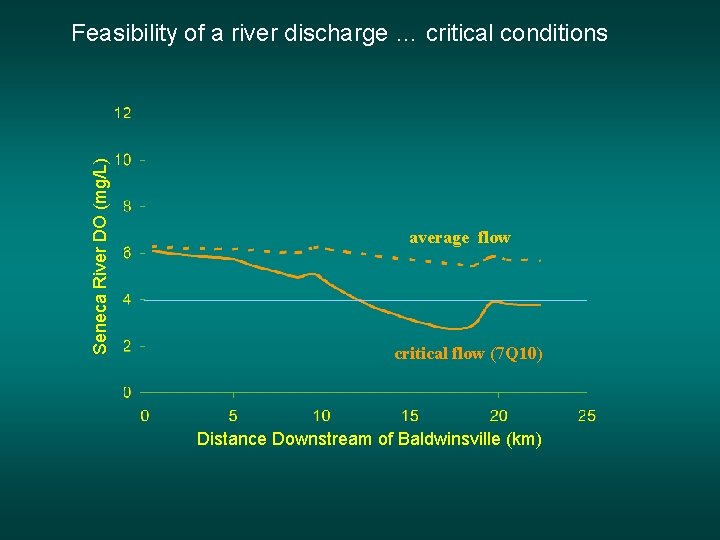
Seneca River DO (mg/L) Feasibility of a river discharge … critical conditions average flow critical flow (7 Q 10) Distance Downstream of Baldwinsville (km)
Conclusions of initial analysis • a comprehensive lake management plan, incorporating the diversion strategy, can achieve the phosphorus management goal; • implementation of a diversion strategy would eliminate the cost and uncertainty of seeking heroic levels of phosphorus removal at METRO; • the river possesses, under average flow conditions, the assimilative capacity to handle the METRO effluent without violation of oxygen standards; • there exist certain critical conditions under which the river cannot assimilate the METRO effluent and for which return to the lake would be necessary.
Conclusions of initial analysis • a comprehensive lake management plan, incorporating the diversion strategy, can achieve the phosphorus management goal; • implementation of a diversion strategy would eliminate the cost and uncertainty of seeking heroic levels of phosphorus removal at METRO; • the river possesses, under average flow conditions, the assimilative capacity to handle the METRO effluent without violation of oxygen standards; • there exist certain critical conditions under which the river cannot assimilate the METRO effluent and for which return to the lake would be necessary.
Conclusions of initial analysis • a comprehensive lake management plan, incorporating the diversion strategy, can achieve the phosphorus management goal; • implementation of a diversion strategy would eliminate the cost and uncertainty of seeking heroic levels of phosphorus removal at METRO; • the river possesses, under average flow conditions, the assimilative capacity to handle the METRO effluent without violation of oxygen standards; • there exist certain critical conditions under which the river cannot assimilate the METRO effluent and for which return to the lake would be necessary.
Conclusions of initial analysis • a comprehensive lake management plan, incorporating the diversion strategy, can achieve the phosphorus management goal; • implementation of a diversion strategy would eliminate the cost and uncertainty of seeking heroic levels of phosphorus removal at METRO; • the river possesses, under average flow conditions, the assimilative capacity to handle the METRO effluent without violation of oxygen standards; • there exist certain critical conditions under which the river cannot assimilate the METRO effluent.
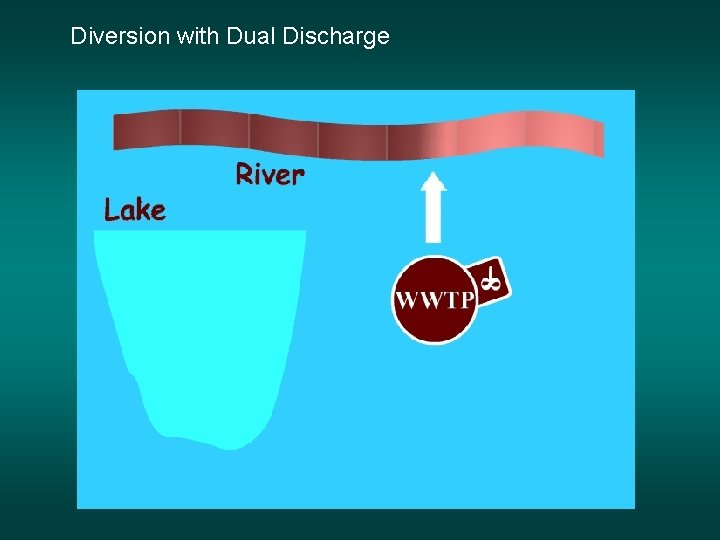
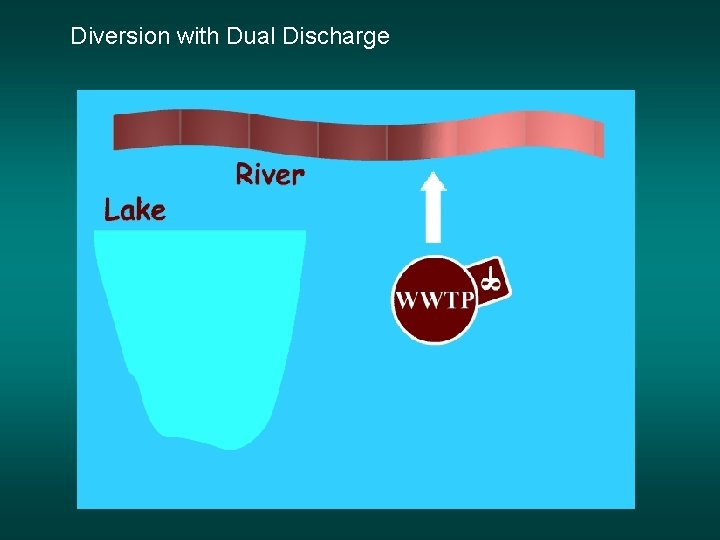
Diversion with Dual Discharge
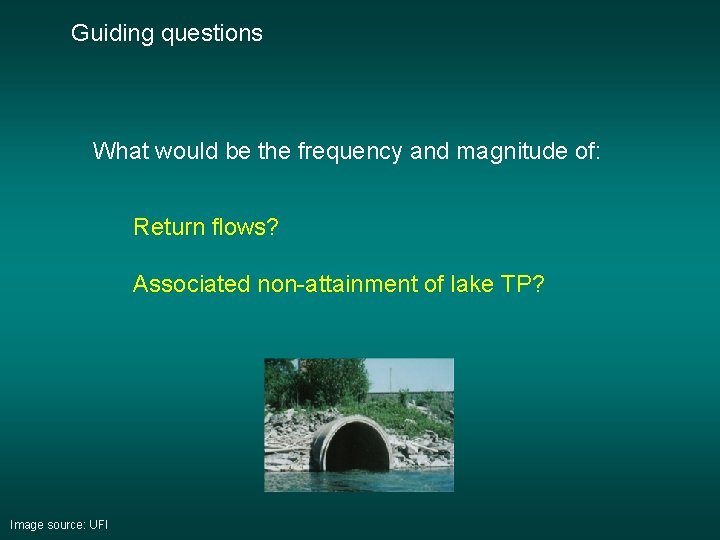
Guiding questions What would be the frequency and magnitude of: Return flows? Associated non-attainment of lake TP? Image source: UFI
River. Master Module
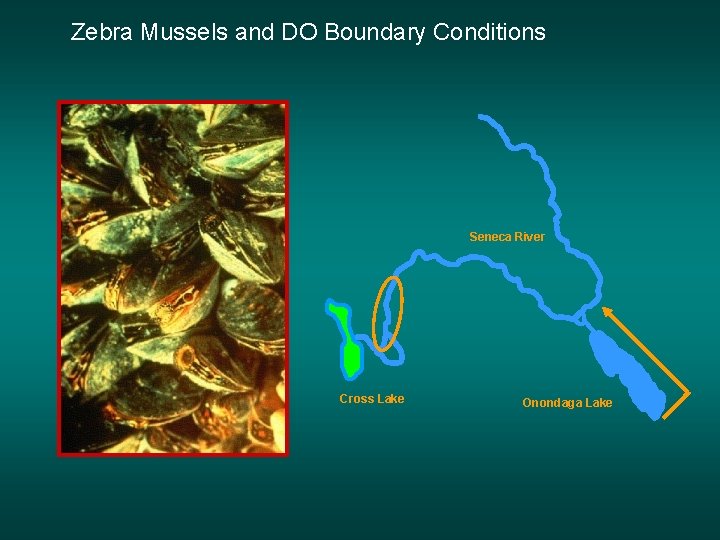
Zebra Mussels and DO Boundary Conditions Seneca River Cross Lake Onondaga Lake
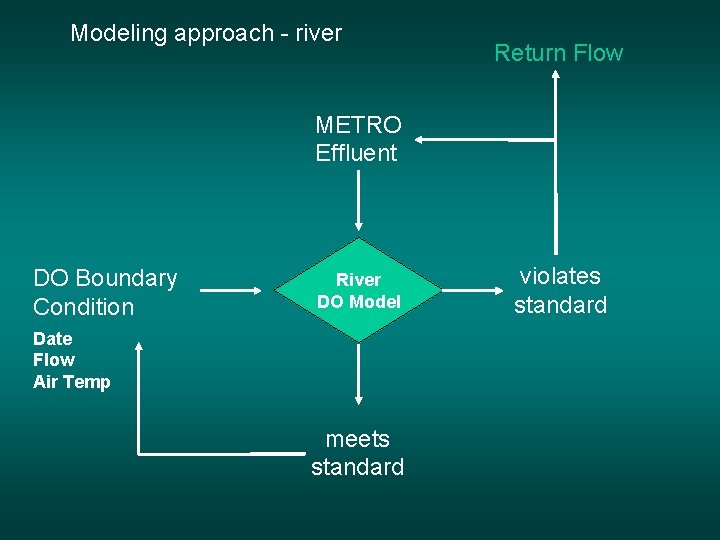
Modeling approach - river Return Flow METRO Effluent DO Boundary Condition River DO Model Date Flow Air Temp meets standard violates standard
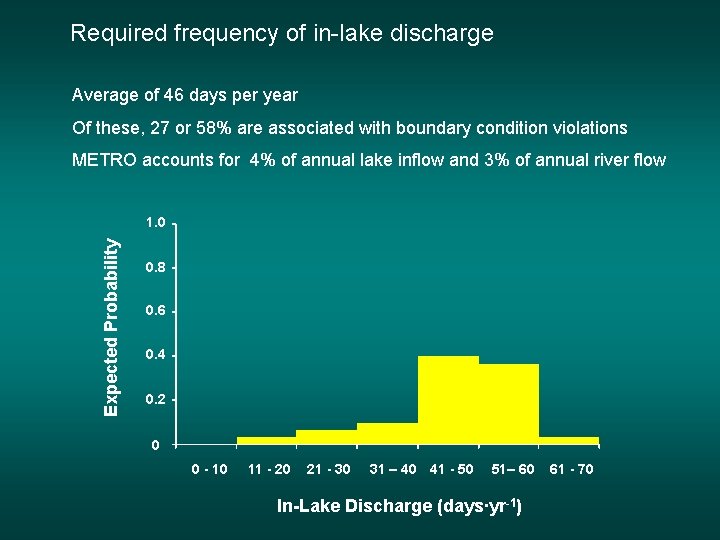
Required frequency of in-lake discharge Average of 46 days per year Of these, 27 or 58% are associated with boundary condition violations METRO accounts for 4% of annual lake inflow and 3% of annual river flow Expected Probability 1. 0 0. 8 0. 6 0. 4 0. 2 0 0 - 10 11 - 20 21 - 30 31 – 40 41 - 50 51– 60 In-Lake Discharge (days∙yr-1) 61 - 70
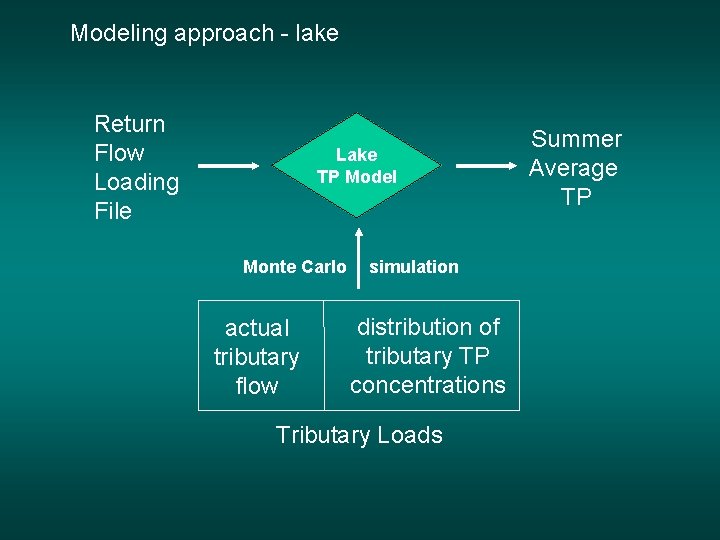
Modeling approach - lake Return Flow Loading File Lake TP Model Monte Carlo actual tributary flow simulation distribution of tributary TP concentrations Tributary Loads Summer Average TP
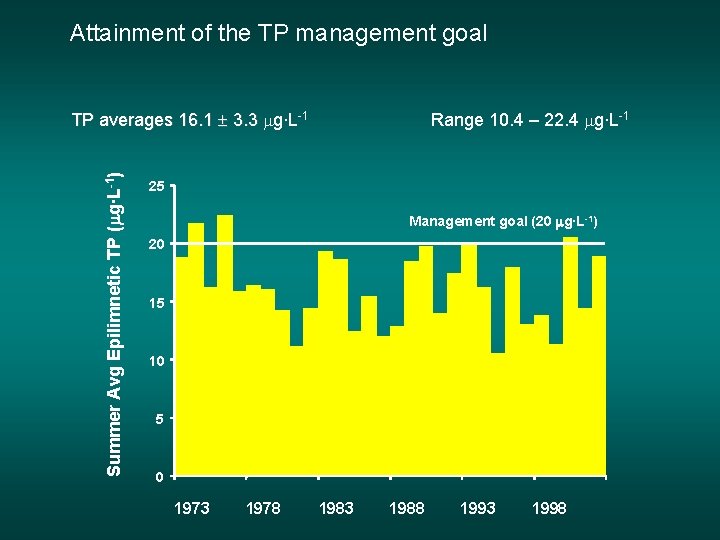
Attainment of the TP management goal Summer Avg Epilimnetic TP (mg∙L-1) TP averages 16. 1 3. 3 mg∙L-1 Range 10. 4 – 22. 4 mg∙L-1 25 Management goal (20 mg∙L-1) 20 15 10 5 0 1973 1978 1983 1988 1993 1998
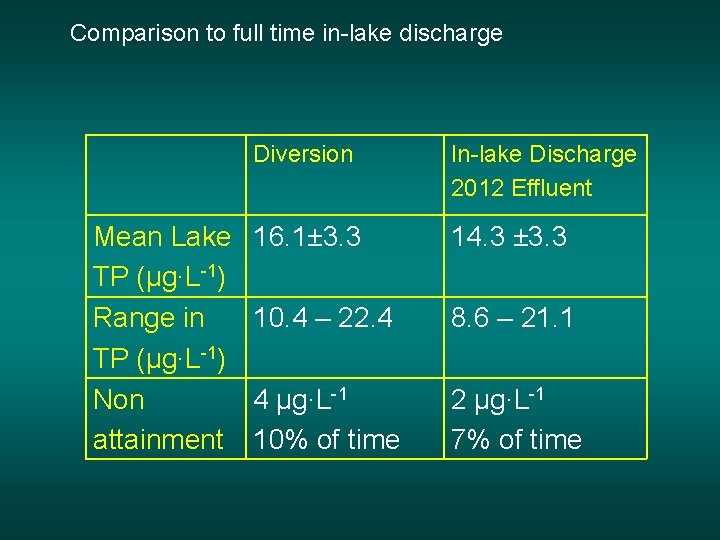
Comparison to full time in-lake discharge Mean Lake TP (µg∙L-1) Range in TP (µg∙L-1) Non attainment Diversion In-lake Discharge 2012 Effluent 16. 1± 3. 3 14. 3 ± 3. 3 10. 4 – 22. 4 8. 6 – 21. 1 4 µg∙L-1 10% of time 2 µg∙L-1 7% of time
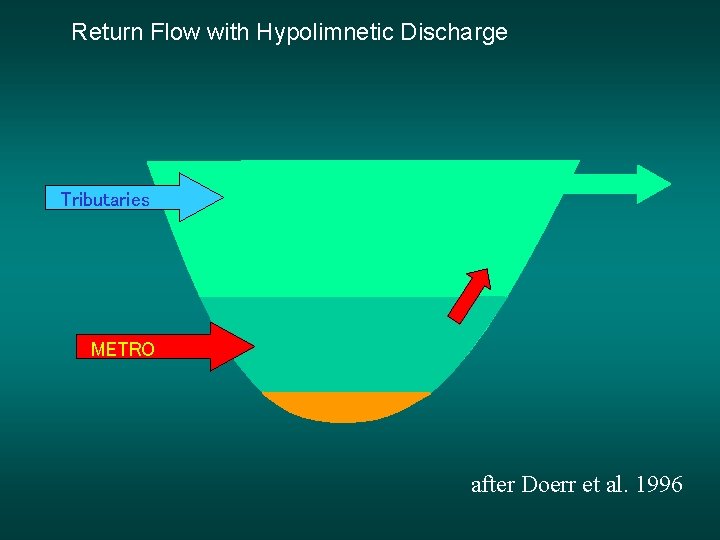
Return Flow with Hypolimnetic Discharge Tributaries METRO after Doerr et al. 1996
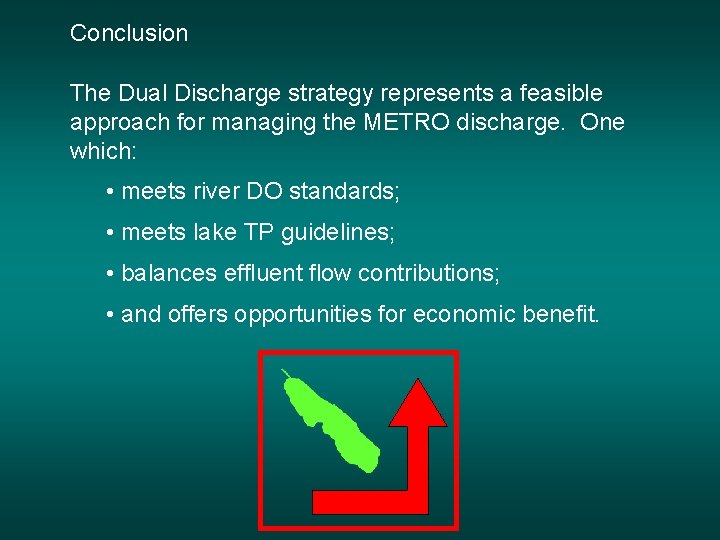
Conclusion The Dual Discharge strategy represents a feasible approach for managing the METRO discharge. One which: • meets river DO standards; • meets lake TP guidelines; • balances effluent flow contributions; • and offers opportunities for economic benefit.
Diversion with Dual Discharge
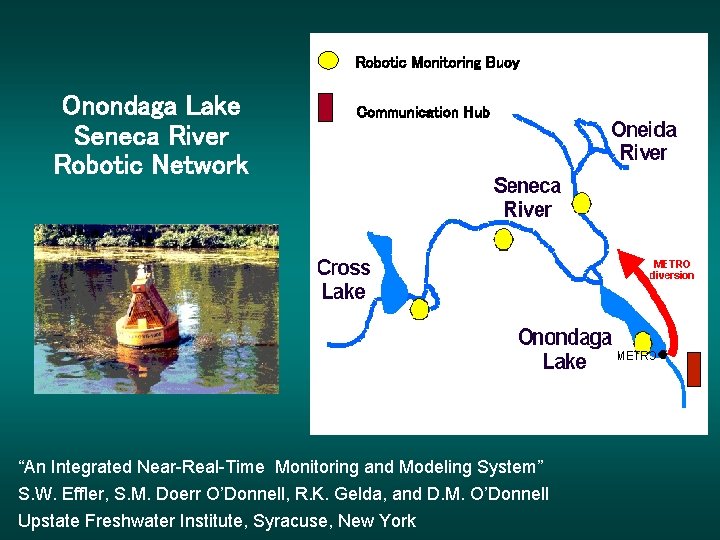
Robotic Monitoring Buoy Onondaga Lake Seneca River Robotic Network Communication Hub “An Integrated Near-Real-Time Monitoring and Modeling System” S. W. Effler, S. M. Doerr O’Donnell, R. K. Gelda, and D. M. O’Donnell Upstate Freshwater Institute, Syracuse, New York