Donor Family Experience Pauline Holmes Trish Collins Organ


- Slides: 49
Donor Family Experience Pauline Holmes & Trish Collins Organ Donation Past, Present and Future SOUTH CENTRAL
Can insert pictures or name of donor family being interviewed here – or delete slide Organ Donation Past, Present and Future
Another family’s story… “In 2011, my 16 year-old son Aaron was involved in a road crash, where he sustained fatal head injuries. He was hit at just after 5 pm and his life support machine was turned off at just after midnight. Aaron was a kind and loving child, who had often spoken about organ donation. Obviously we never expected in a million years to be faced with the situation that occurred on that night, but one thing that sticks out in my mind is that we were never asked about donation. ” Organ Donation Past, Present and Future 3
Another family’s story… “I raise this issue as a pointer to the service for the future. I utterly regret that I was not given the chance to “share” Aaron with someone else, to give life from his death. At the time, I needed someone to raise the issue. I simply didn’t have the fortitude to do so and in the context of difficult decisions that night, the decision to donate organs would have been the easiest of all. ” Organ Donation Past, Present and Future 4
Family Approach and Consent Dr Mark Haslam Dr Angus Vincent 11 th June 2013 Organ Donation Past, Present and Future SOUTH CENTRAL 5
Session Objectives SOUTH CENTRAL • Understanding the importance of consent in overall supply of organs for transplantation. • Understanding why families say no. • Why using a 1 st person consent model is often unhelpful. • A 3 stage approach – how best to inform and support families through their decision. • Understanding the role of the SNOD in the family approach. Organ Donation Past, Present and Future 6
Regional Data SOUTH CENTRAL Dr Mark Haslam Deputy Clinical Lead Organ Donation Cheltenham Hospital Organ Donation Past, Present and Future 7
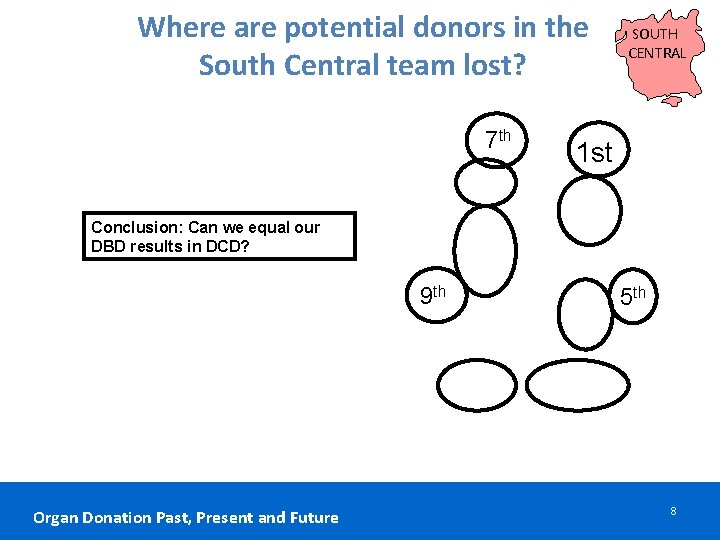
Where are potential donors in the South Central team lost? 7 th SOUTH CENTRAL 1 st Conclusion: Can we equal our DBD results in DCD? 9 th Organ Donation Past, Present and Future 5 th 8
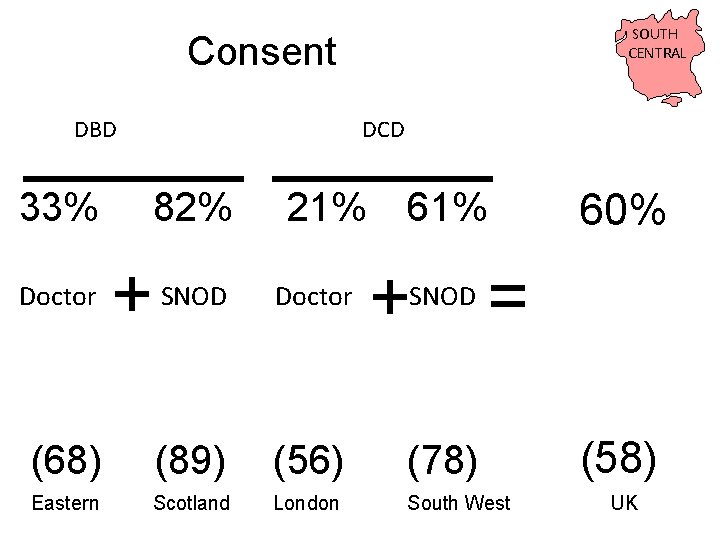
SOUTH CENTRAL Consent DBD 33% DCD 82% + 21% 61% + SNOD = SNOD Doctor (68) (89) (56) (78) Eastern Scotland London South West Doctor 60% (58) UK
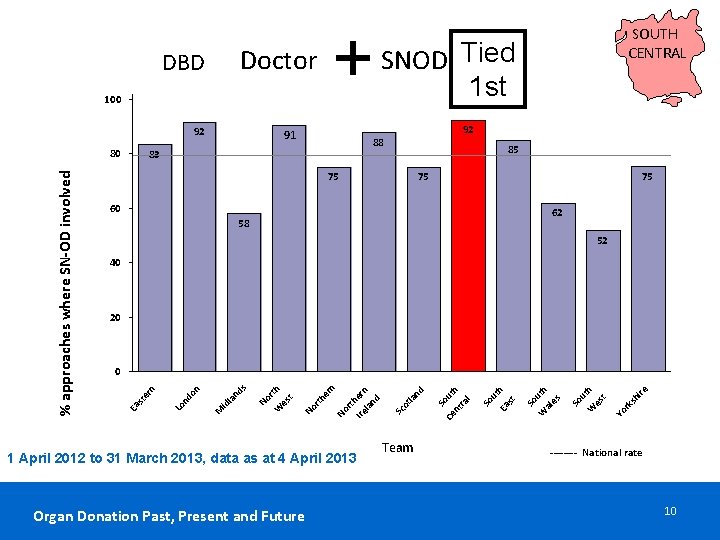
Doctor DBD 100 92 91 SNOD Tied 1 st 92 88 83 85 75 75 75 60 62 58 52 40 20 1 April 2012 to 31 March 2013, data as at 4 April 2013 Organ Donation Past, Present and Future Team re hi Yo rk s t es ut h So W es ut h al So W st ut h Ea So S Ce out nt h ra l nd la ot Sc rth er la n nd Ire No rth er n No es t rth W No an ds id l M nd on Lo st er n 0 Ea % approaches where SN-OD involved 80 + SOUTH CENTRAL ---- National rate 10
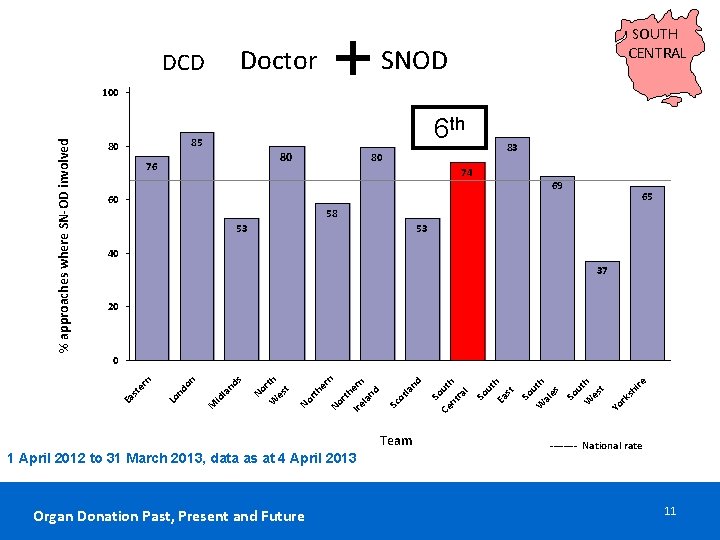
Doctor DCD SNOD 6 th 85 80 80 76 83 80 74 69 65 60 58 53 53 40 37 20 Team 1 April 2012 to 31 March 2013, data as at 4 April 2013 Organ Donation Past, Present and Future ire Yo rk sh So ut Ea h st So u W th al es So u W th es t S Ce out nt h ra l nd ot la Sc er n No rth Ire ern la nd rth No t rth es No W M id la nd on Lo nd er st Ea s 0 n % approaches where SN-OD involved 100 + SOUTH CENTRAL ---- National rate 11
SOUTH CENTRAL Best Practice in Family Approach and Consent Dr Angus Vincent Northern Regional CLOD Organ Donation Past, Present and Future 12
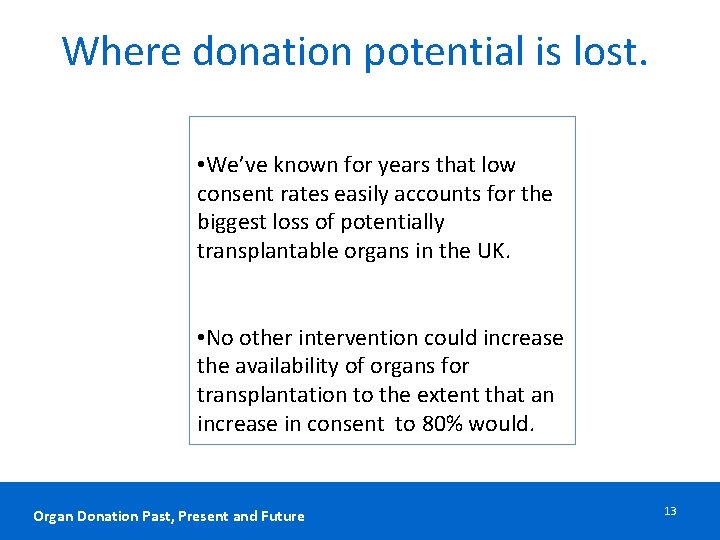
Where donation potential is lost. • We’ve known for years that low consent rates easily accounts for the biggest loss of potentially transplantable organs in the UK. • No other intervention could increase the availability of organs for transplantation to the extent that an increase in consent to 80% would. Organ Donation Past, Present and Future 13
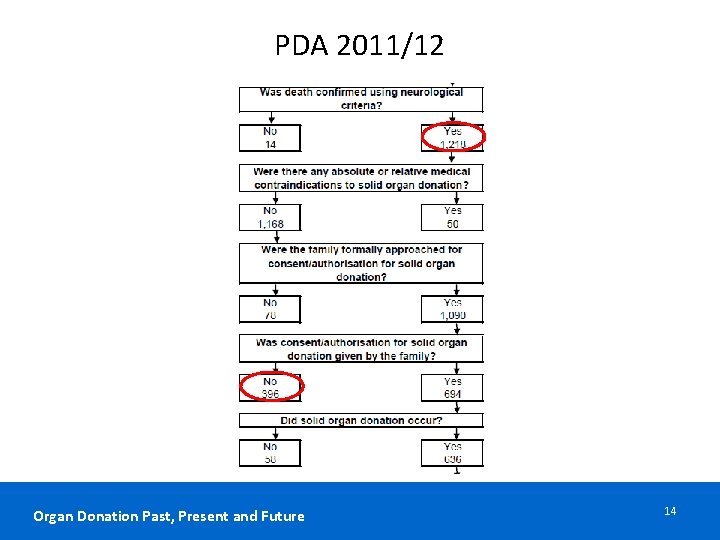
PDA 2011/12 Organ Donation Past, Present and Future 14
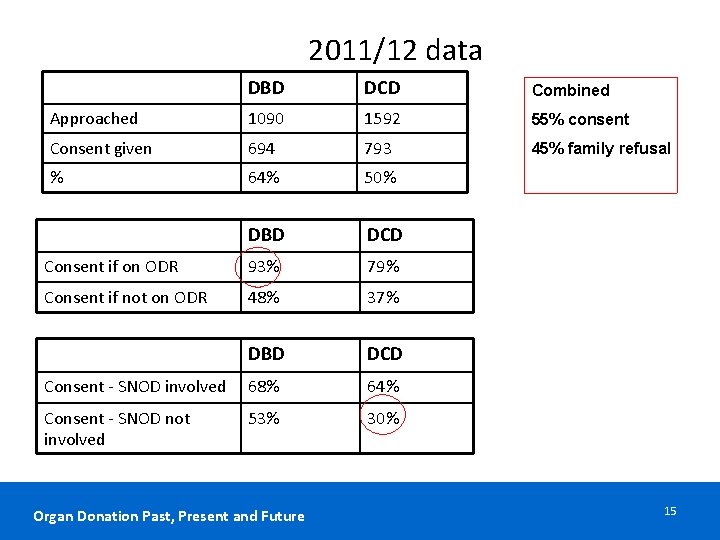
2011/12 data DBD DCD Combined Approached 1090 1592 55% consent Consent given 694 793 45% family refusal % 64% 50% DBD DCD Consent if on ODR 93% 79% Consent if not on ODR 48% 37% DBD DCD Consent - SNOD involved 68% 64% Consent - SNOD not involved 53% 30% Organ Donation Past, Present and Future 15
Poor DCD consent rates………… Organ Donation Past, Present and Future 16
Bottom line – UK Family Refusal Rate is 45% One of the highest family refusal rates in the world Organ Donation Past, Present and Future 17
Family refusal rates, 2010 Note – limited international data available on family refusal rates Organ Donation Past, Present and Future 18
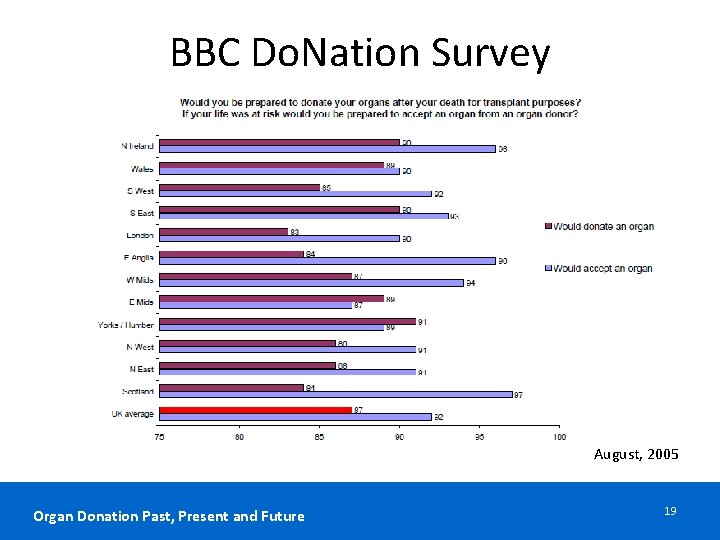
BBC Do. Nation Survey August, 2005 Organ Donation Past, Present and Future 19
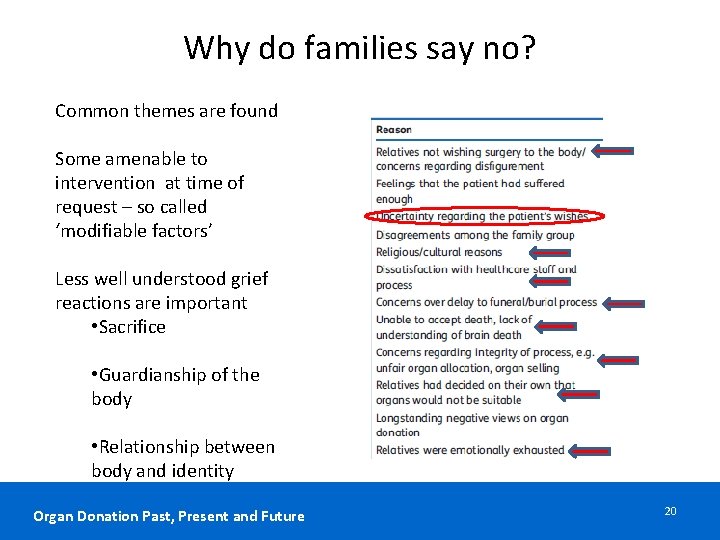
Why do families say no? Common themes are found Some amenable to intervention at time of request – so called ‘modifiable factors’ Less well understood grief reactions are important • Sacrifice • Guardianship of the body • Relationship between body and identity Organ Donation Past, Present and Future 20
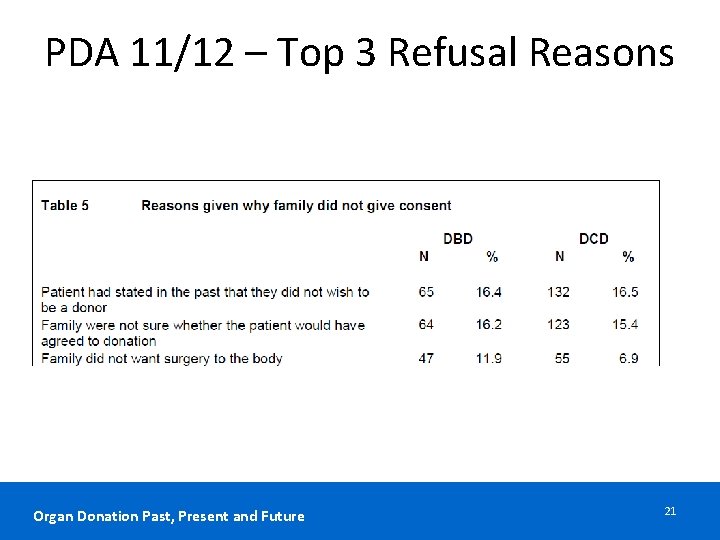
PDA 11/12 – Top 3 Refusal Reasons Organ Donation Past, Present and Future 21
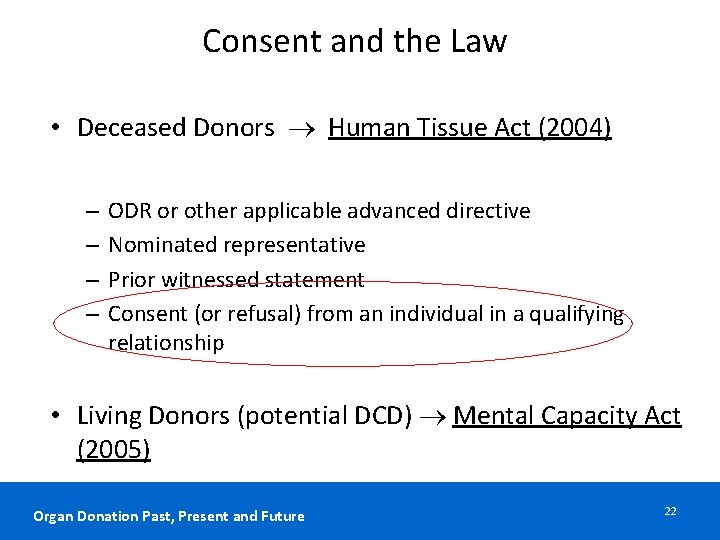
Consent and the Law • Deceased Donors Human Tissue Act (2004) – – ODR or other applicable advanced directive Nominated representative Prior witnessed statement Consent (or refusal) from an individual in a qualifying relationship • Living Donors (potential DCD) Mental Capacity Act (2005) Organ Donation Past, Present and Future 22
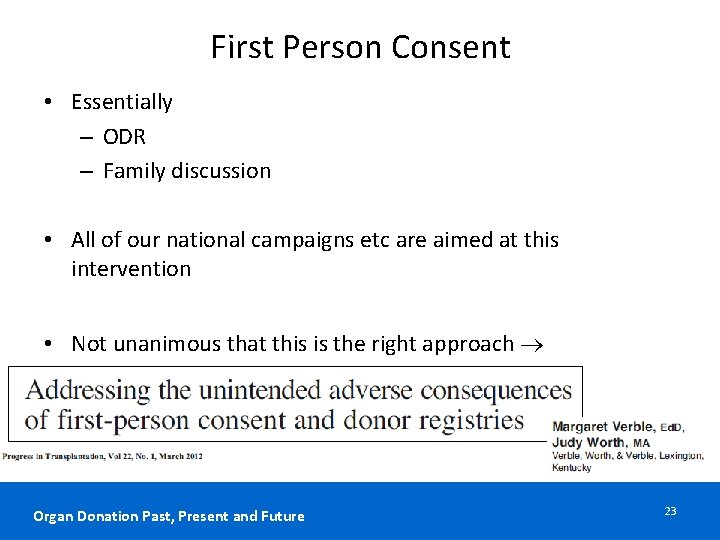
First Person Consent • Essentially – ODR – Family discussion • All of our national campaigns etc are aimed at this intervention • Not unanimous that this is the right approach Organ Donation Past, Present and Future 23
Problems with first person consent • “He said he didn’t want to be a donor” • “No we can’t be sure what he would have wanted” – Possibly up to 40% of refusals • The ODR is not informed consent • The process of being pressured to choose in life may lead to uniformed negative decisions too. • Registrants on the ODR are not representative of the donor pool ( 3 - 4 x more likely to not be on ODR). Organ Donation Past, Present and Future 24
Alternative to first person emphasis? Focus instead on supporting the family and their needs. • Compassion and care. • Understanding and acceptance. • The right information to make the right decision for them. Organ Donation Past, Present and Future 25
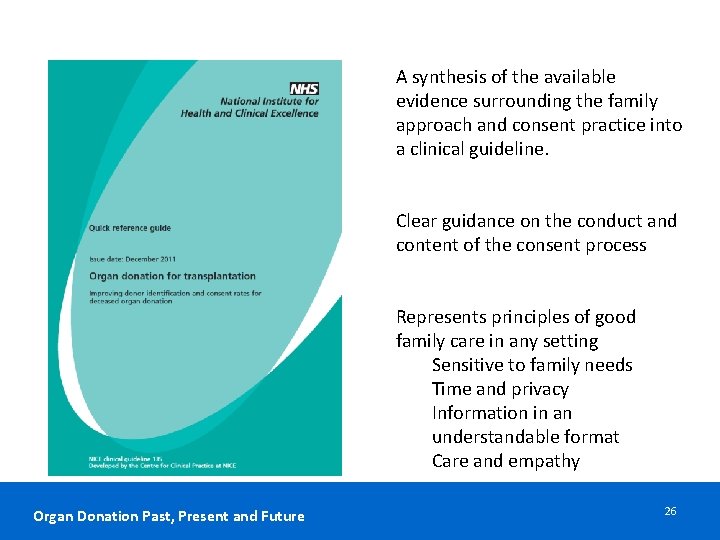
A synthesis of the available evidence surrounding the family approach and consent practice into a clinical guideline. Clear guidance on the conduct and content of the consent process Represents principles of good family care in any setting Sensitive to family needs Time and privacy Information in an understandable format Care and empathy Organ Donation Past, Present and Future 26
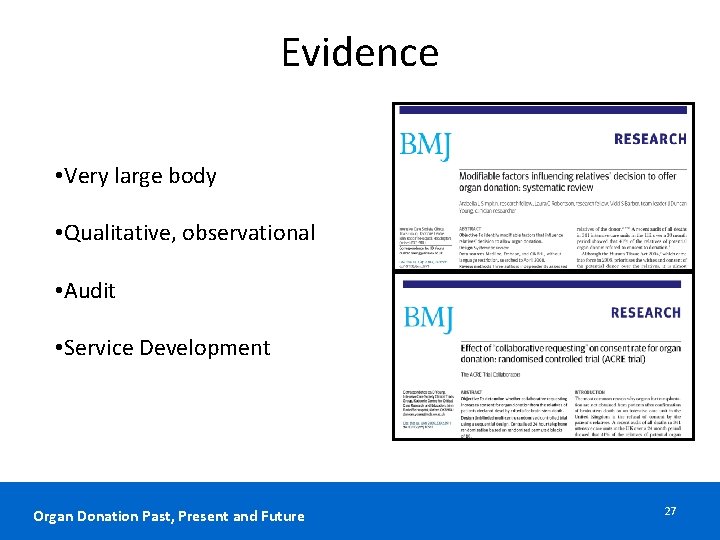
Evidence • Very large body • Qualitative, observational • Audit • Service Development Organ Donation Past, Present and Future 27
What does the evidence/guideline say about consent? Emphasises – Prior planning – A team approach – involvement of the SNOD and the importance of the presence of a trained individual – Ensuring understanding of death or its inevitability prior to discussion surrounding donation – Provision of the right information in the right way Organ Donation Past, Present and Future 28
Best Practice Guidance on the Family Approach Dr Angus Vincent Organ Donation Past, Present and Future 29
Short(ish), summary guidance. Endorsed by the professional bodies. ICS – (Kevin Gunning) FICM – (Julian Bion) Copy to every UK consultant (……. but we’re good at difficult conversations aren’t we? ) Organ Donation Past, Present and Future 30
Approaching the families of potential organ donors The premise of this guideline is simple…. . By looking after and supporting our families and providing them with the information they need to make the right decision for them, more of them will say “Yes” to organ donation. Organ Donation Past, Present and Future 31
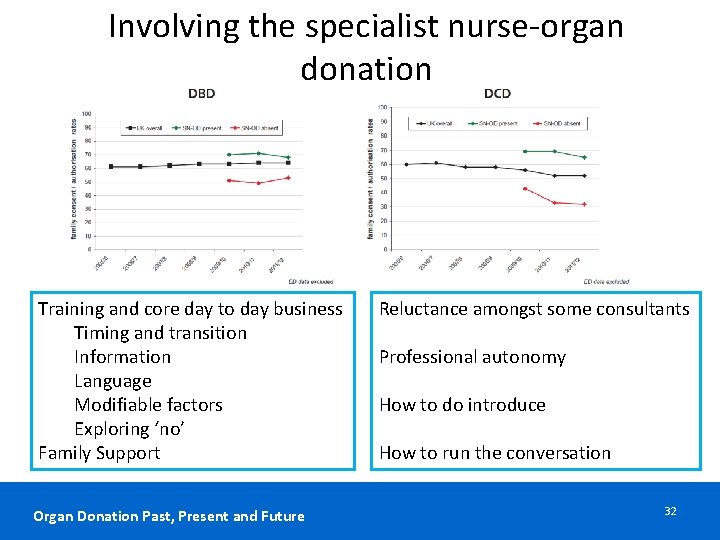
Involving the specialist nurse-organ donation Training and core day to day business Timing and transition Information Language Modifiable factors Exploring ‘no’ Family Support Organ Donation Past, Present and Future Reluctance amongst some consultants Professional autonomy How to do introduce How to run the conversation 32
Introducing the SN-OD How best to do this? Organ Donation Past, Present and Future 33
Introducing the specialist nurse Planning Clip 1 introducing SNOD. mp 4 Embed Clip 1 Or play from Video: Title 2, Ch 1 – 11: 40 – 12: 00 Organ Donation Past, Present and Future
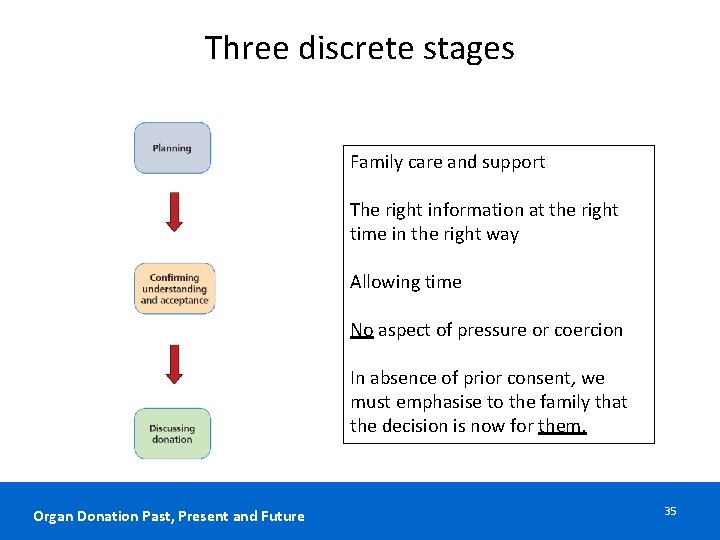
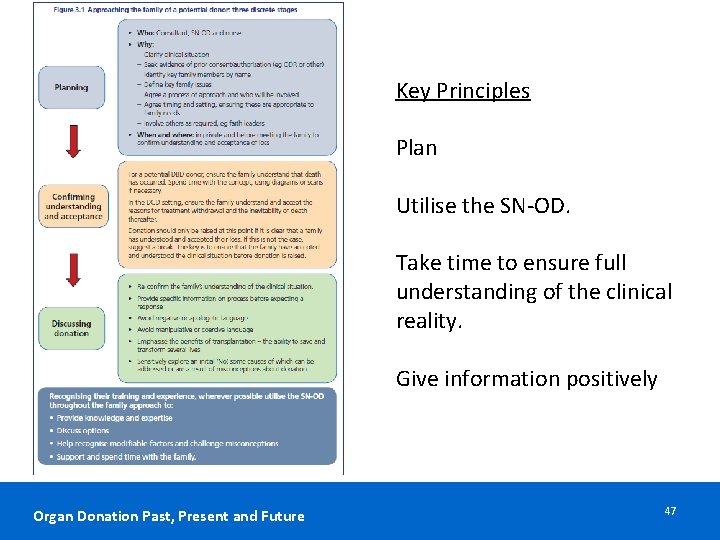
Three discrete stages Family care and support The right information at the right time in the right way Allowing time No aspect of pressure or coercion In absence of prior consent, we must emphasise to the family that the decision is now for them. Organ Donation Past, Present and Future 35
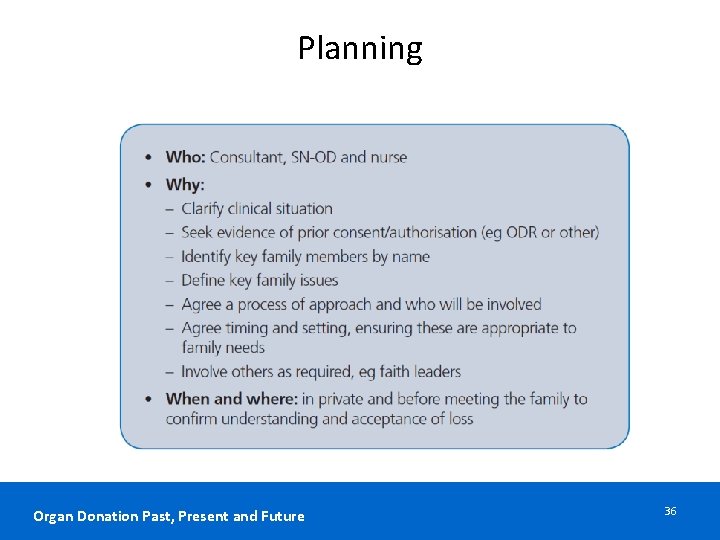
Planning Organ Donation Past, Present and Future 36
Planning Clip 2 Good planning. mov Embed Clip 2 Or play from video Title 2, Ch 1 – 04: 03 – 07: 13 Organ Donation Past, Present and Future
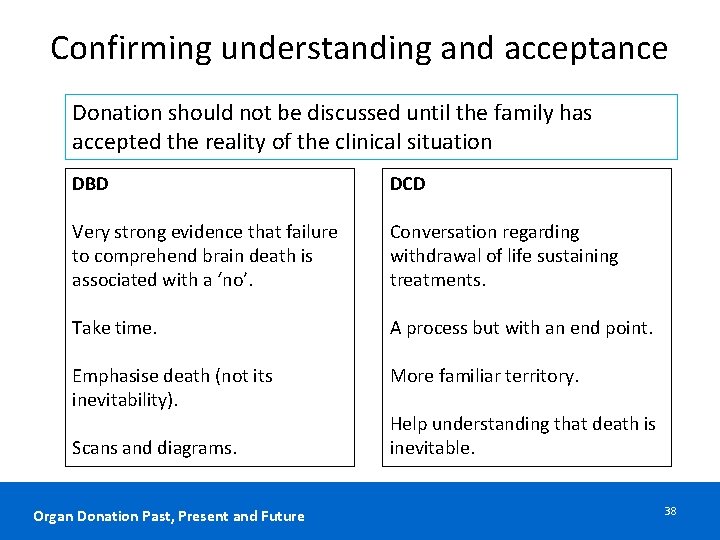
Confirming understanding and acceptance Donation should not be discussed until the family has accepted the reality of the clinical situation DBD DCD Very strong evidence that failure to comprehend brain death is associated with a ‘no’. Conversation regarding withdrawal of life sustaining treatments. Take time. A process but with an end point. Emphasise death (not its inevitability). More familiar territory. Scans and diagrams. Organ Donation Past, Present and Future Help understanding that death is inevitable. 38
Breaking bad news? Clip 3 Breaking Bad news poor. mov Embed Clip 3 Or play from video Title 2, Ch 1 – 08: 20 – 10: 07 Organ Donation Past, Present and Future
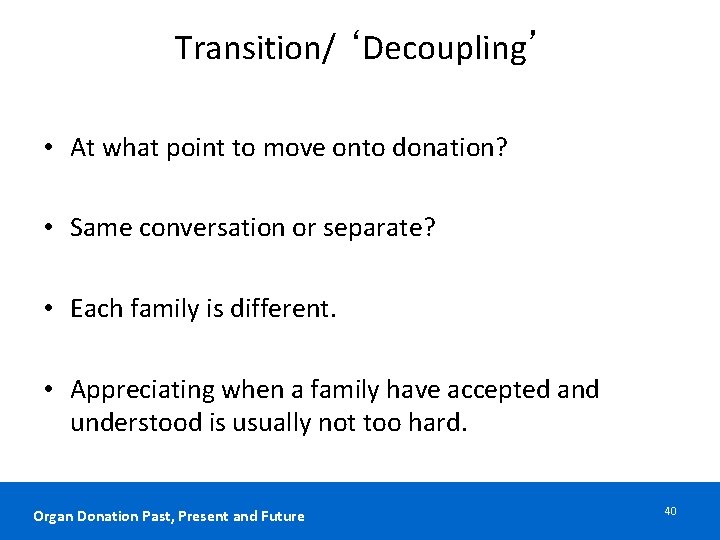
Transition/ ‘Decoupling’ • At what point to move onto donation? • Same conversation or separate? • Each family is different. • Appreciating when a family have accepted and understood is usually not too hard. Organ Donation Past, Present and Future 40
Ensuring understanding Clip 4 Breaking bad news good. mov Embed Clip 4 Or play from video Title 2, Ch 1 13: 20 – 15: 40 Organ Donation Past, Present and Future
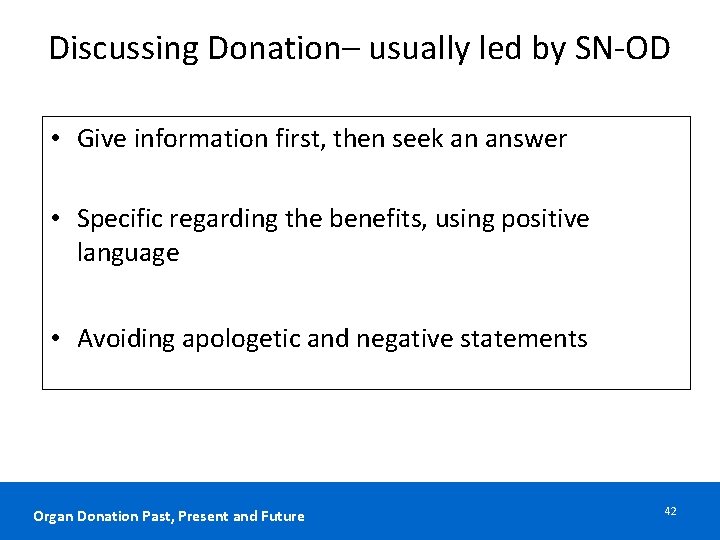
Discussing Donation– usually led by SN-OD • Give information first, then seek an answer • Specific regarding the benefits, using positive language • Avoiding apologetic and negative statements Organ Donation Past, Present and Future 42
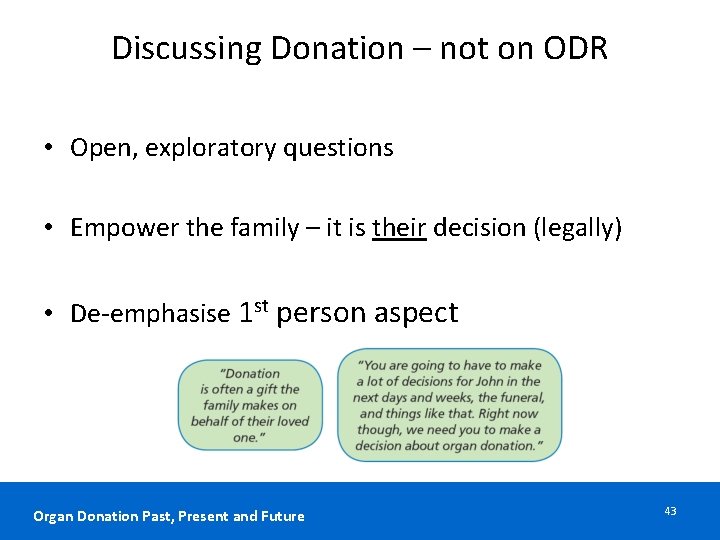
Discussing Donation – not on ODR • Open, exploratory questions • Empower the family – it is their decision (legally) • De-emphasise 1 st person aspect Organ Donation Past, Present and Future 43
Raising donation – not on ODR Clip 5 Transition to SNOD not on ODR. mov Embed Clip 5 Or play from video Title 2, Ch 1 17: 58 – 19: 38 Organ Donation Past, Present and Future
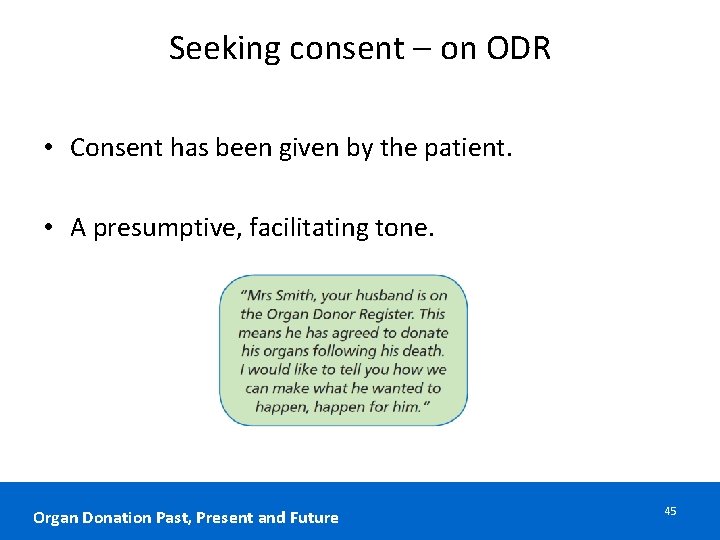
Seeking consent – on ODR • Consent has been given by the patient. • A presumptive, facilitating tone. Organ Donation Past, Present and Future 45
Registered on ODR Clip 6 Transition to SNOD on ODR. mov Embed Clip 6 Or play from video Title 8 Ch 1 05: 50 – 07: 21 Organ Donation Past, Present and Future
Key Principles Plan Utilise the SN-OD. Take time to ensure full understanding of the clinical reality. Give information positively Organ Donation Past, Present and Future 47
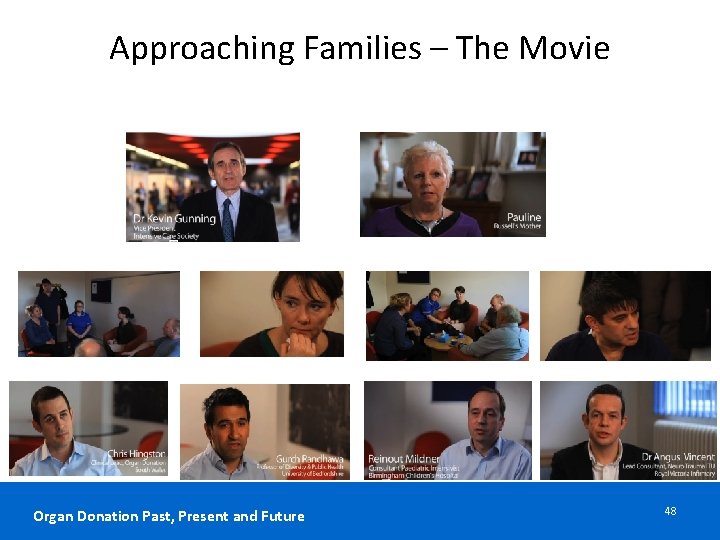
Approaching Families – The Movie Organ Donation Past, Present and Future 48
Summary • Our huge family refusal rate is the main reason patients don’t get the transplant they need. • Evidence would strongly suggest that many refusals are as a result of us failing to get key aspects of the approach right. • A simple 3 stage strategy can ensure our families are cared for and informed. We believe many more will say “Yes” to donation as a result. Organ Donation Past, Present and Future 49