
SWPBS IN THE CLASSROOM Trish Scardina North Carolina
SWPBS IN THE CLASSROOM Trish Scardina North Carolina Department of Public Instruction Trish. Scardina@dpi. nc. gov

Be Respectful Listen to others Follow the attention signal Be Responsible Ask questions Participate Be Kind Think with an open mind Use positive words EXPECTATIONS
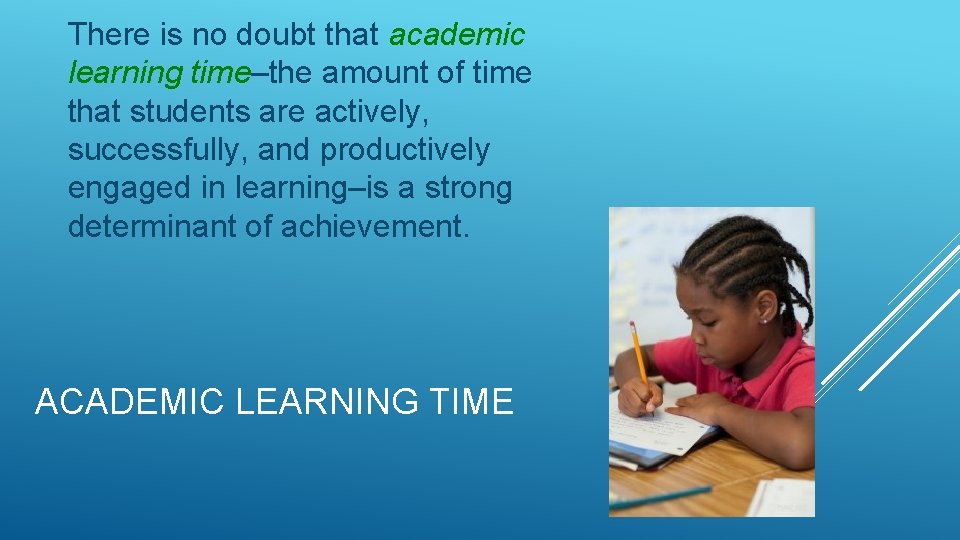
There is no doubt that academic learning time–the amount of time that students are actively, successfully, and productively engaged in learning–is a strong determinant of achievement. ACADEMIC LEARNING TIME
Instructional Time–the amount of the allocated time that actually results in teaching. Engaged Time–the amount of instructional time where students are actively engaged in learning. ACADEMIC LEARNING TIME
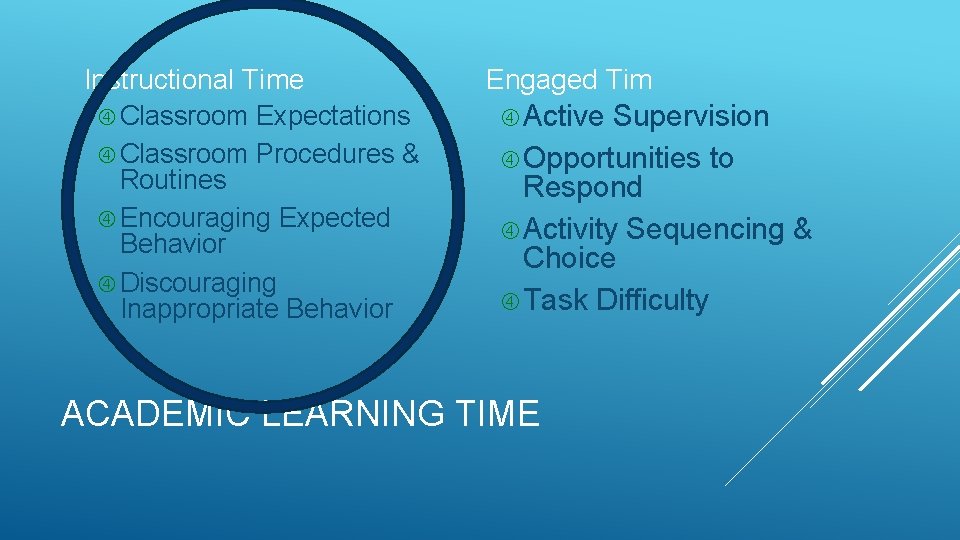
Instructional Time Classroom Expectations Classroom Procedures & Routines Encouraging Expected Behavior Discouraging Inappropriate Behavior Engaged Tim Active Supervision Opportunities to Respond Activity Sequencing & Choice Task Difficulty ACADEMIC LEARNING TIME
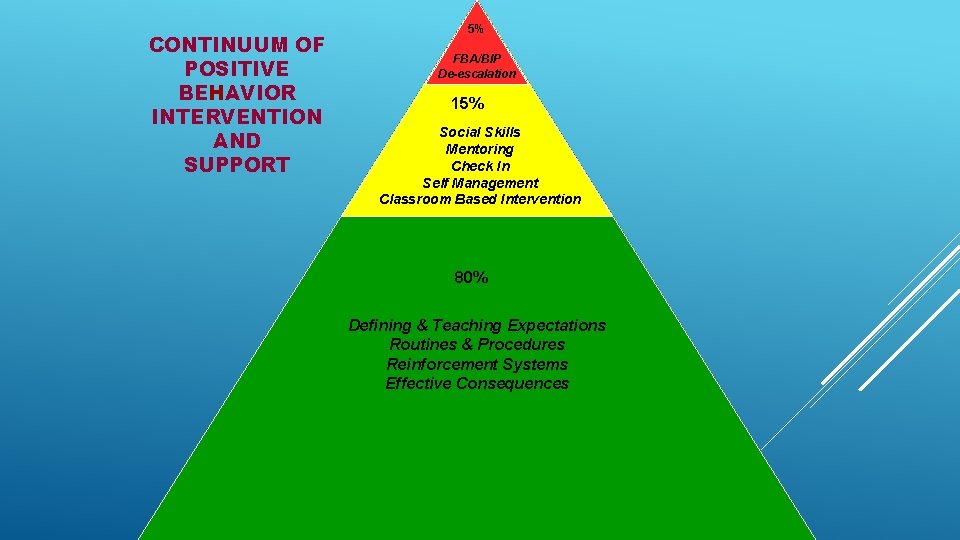
CONTINUUM OF POSITIVE BEHAVIOR INTERVENTION AND SUPPORT 5% FBA/BIP De-escalation 15% Social Skills Mentoring Check In Self Management Classroom Based Intervention 80% Defining & Teaching Expectations Routines & Procedures Reinforcement Systems Effective Consequences
CLASSROOM MANAGEMENT Classroom management refers to all of the things that an educator does to organize students, space, time, and materials, so that instruction in content and student learning can take place.
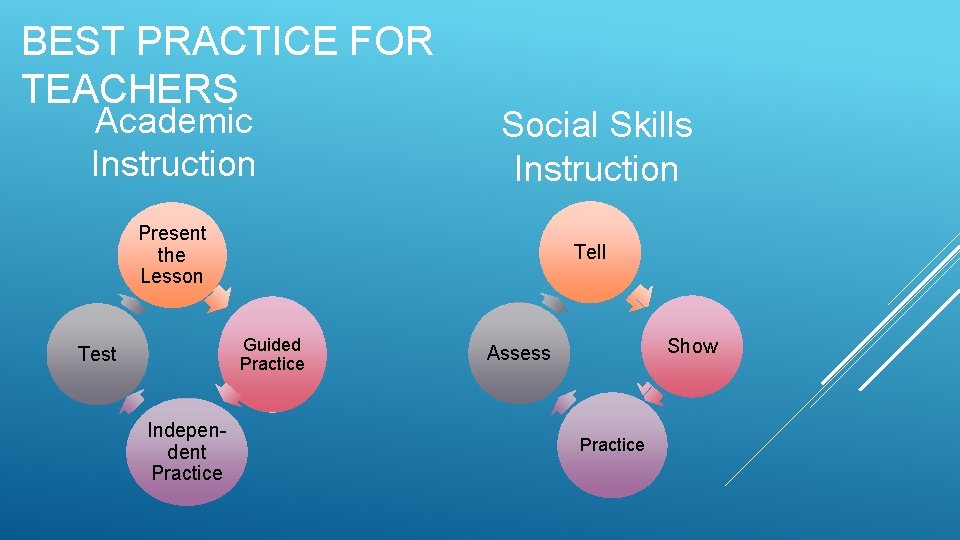
BEST PRACTICE FOR TEACHERS Academic Instruction Social Skills Instruction Present the Lesson Tell Guided Practice Test Independent Practice Show Assess Practice
CLASSROOM MANAGEMENT PLAN At the end of each component, you will be asked to apply learning to your own classroom management plan. Use the classroom management templates to guide you. Your overall plan should include: Routines and procedures Classroom expectations Methods for teaching expectations Procedures for encouraging positive behavior Procedures for responding to problem behavior
ROUTINES AND PROCEDURES
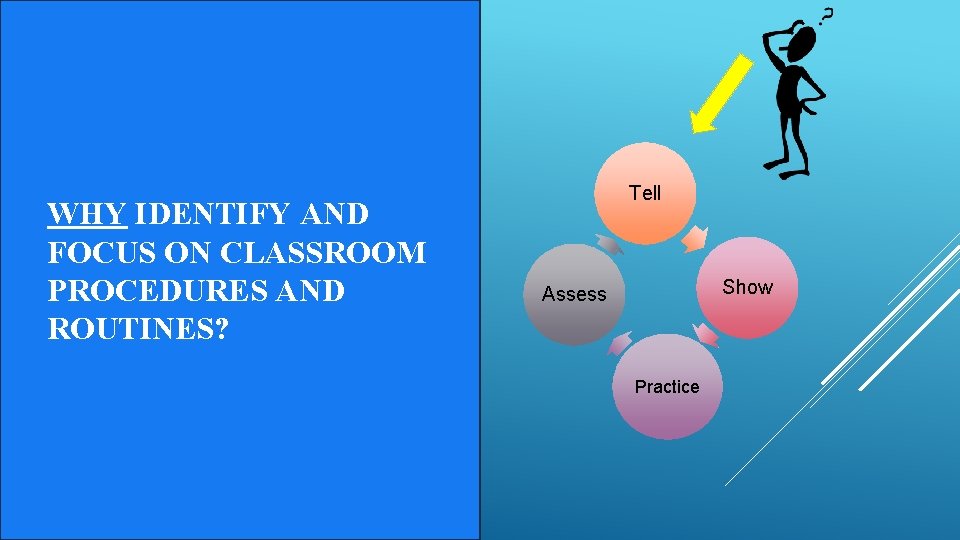
WHY IDENTIFY AND FOCUS ON CLASSROOM PROCEDURES AND ROUTINES? Tell Show Assess Practice
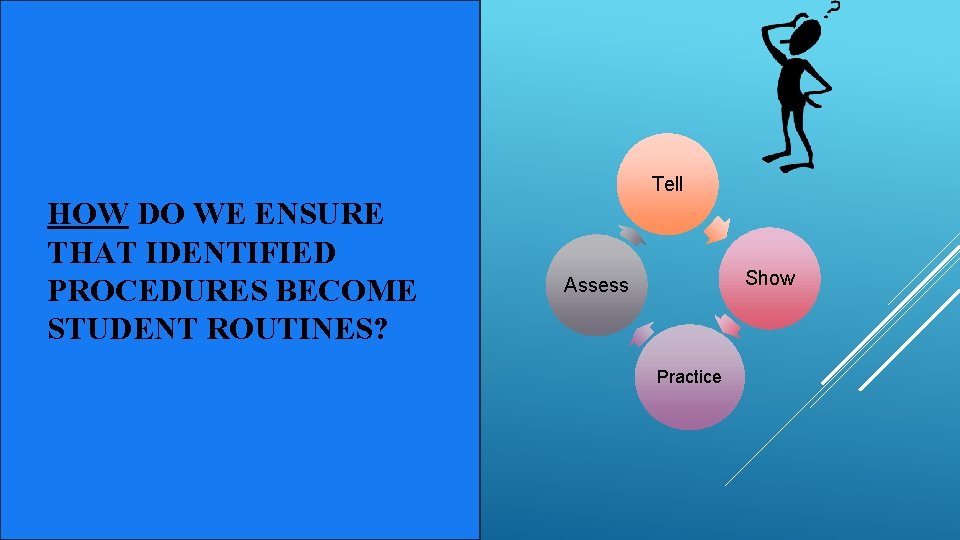
Tell HOW DO WE ENSURE THAT IDENTIFIED PROCEDURES BECOME STUDENT ROUTINES? Show Assess Practice
Attention signal Beginning of Day or Class Procedures Opening Activities Subroutines Student Participation in Whole Group Instruction Student Participation in Cooperative Group Instruction Student Participation in Independent Seatwork Managing Student Assignments Ending Routines PROCEDURES NEEDED BY MOST TEACHERS List of Procedures
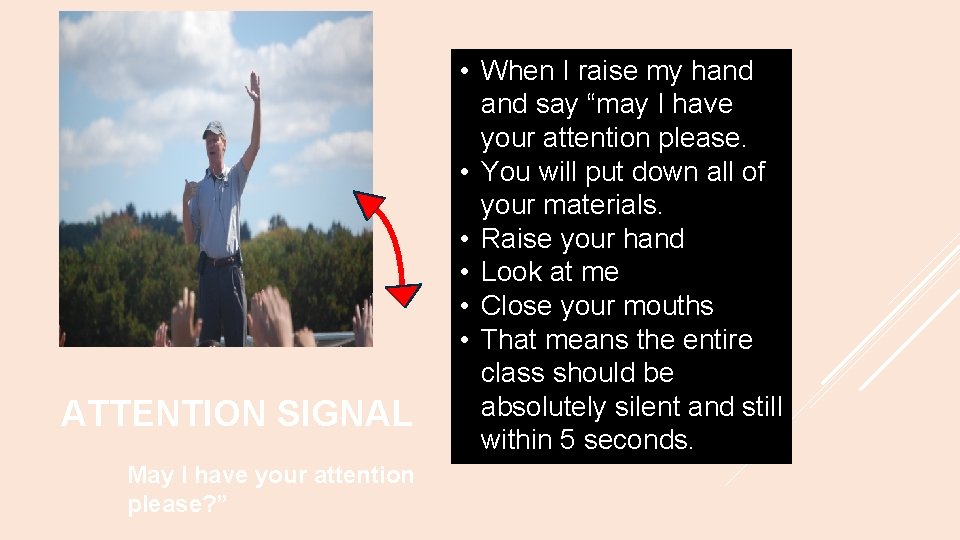
ATTENTION SIGNAL May I have your attention please? ” • When I raise my hand say “may I have your attention please. • You will put down all of your materials. • Raise your hand • Look at me • Close your mouths • That means the entire class should be absolutely silent and still within 5 seconds.
Bring out materials as instructed by your teacher. Stay in your seat unless instructed otherwise by your teacher. Listen carefully to the instruction from the teacher. Raise your hand to speak and speak only with teacher permission. Listen carefully to other students when they are speaking. PARTICIPATING IN WHOLE CLASS INSTRUCTION AT YOUR DESK/TABLE
DISCUSSION What are some reasons why this highly effective proactive approach to classroom discipline is under utilized? Do the teachers in your building have clear procedures for their classroom activities? Would having procedures for all classrooms serve your school well?
ACTIVITY: CREATING A LIST OF CLASSROOM PROCEDURES Think through the many activities of your day. Now, read through the lists of possible classroom procedures on Lists of Classroom Procedures handout. Put a Check Mark ✓ by any that you have applied in your classroom. Put an × by any that you think you need to develop. Add any that might be missing. Share with a partner.
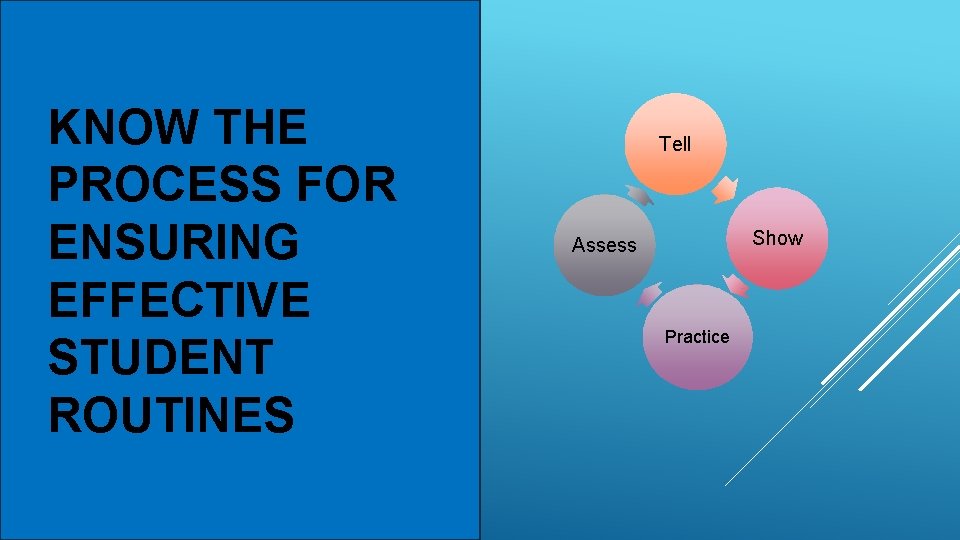
KNOW THE PROCESS FOR ENSURING EFFECTIVE STUDENT ROUTINES Tell Show Assess Practice
STEP 1: DEFINE PROCEDURE S Tell Show Assess Practice
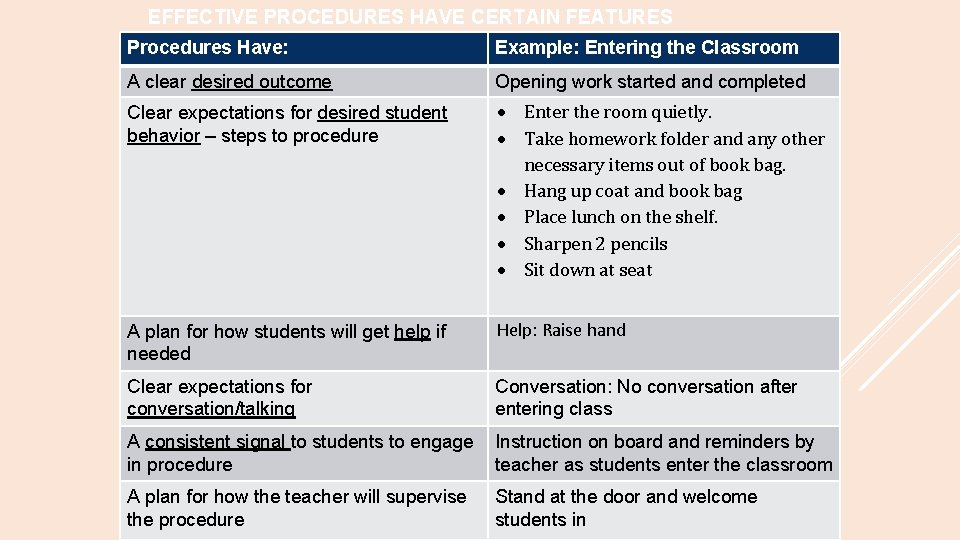
EFFECTIVE PROCEDURES HAVE CERTAIN FEATURES Procedures Have: Example: Entering the Classroom A clear desired outcome Opening work started and completed Clear expectations for desired student behavior – steps to procedure Enter the room quietly. Take homework folder and any other necessary items out of book bag. Hang up coat and book bag Place lunch on the shelf. Sharpen 2 pencils Sit down at seat A plan for how students will get help if needed Help: Raise hand Clear expectations for conversation/talking Conversation: No conversation after entering class A consistent signal to students to engage Instruction on board and reminders by in procedure teacher as students enter the classroom A plan for how the teacher will supervise the procedure Stand at the door and welcome students in
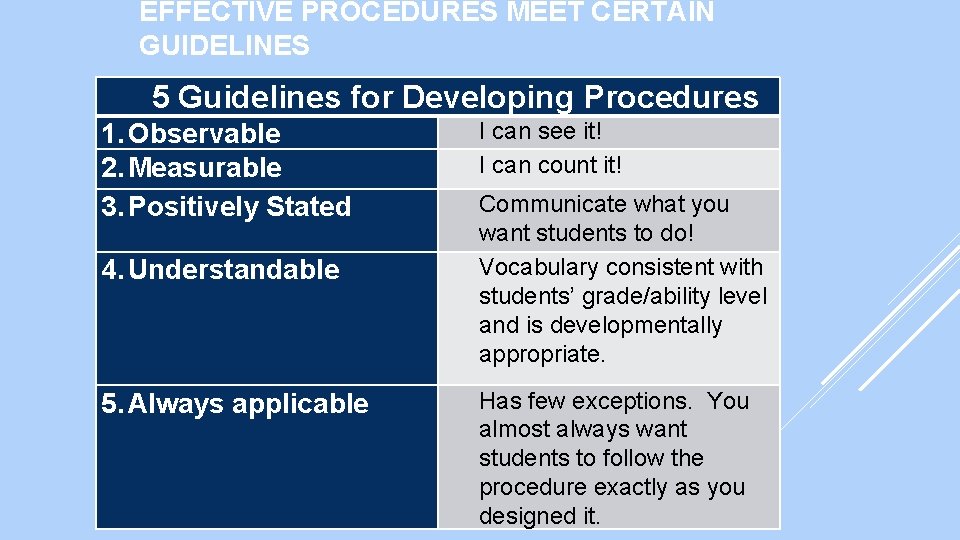
EFFECTIVE PROCEDURES MEET CERTAIN GUIDELINES 5 Guidelines for Developing Procedures 1. Observable 2. Measurable 3. Positively Stated 4. Understandable 5. Always applicable I can see it! I can count it! Communicate what you want students to do! Vocabulary consistent with students’ grade/ability level and is developmentally appropriate. Has few exceptions. You almost always want students to follow the procedure exactly as you designed it.
DISCUSSION: QUESTIONS? ? ? What questions do you have about creating clear, specific classroom procedures?
Select one procedure you put an × by during previous activity, one that you need to develop. Complete the chart for your procedure. When done, ask yourself: Do your steps meet OMPUA guidelines? Does the procedure create a vision of a successful student in that activity? Be prepared to share your procedure with the group. ACTIVITY: PROCEDURE WRITING
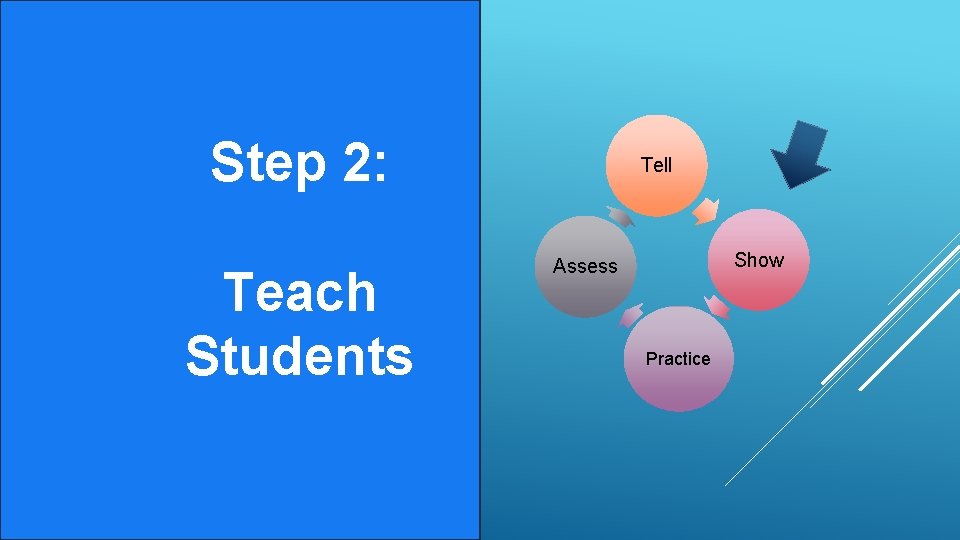
Step 2: Teach Students Tell Show Assess Practice
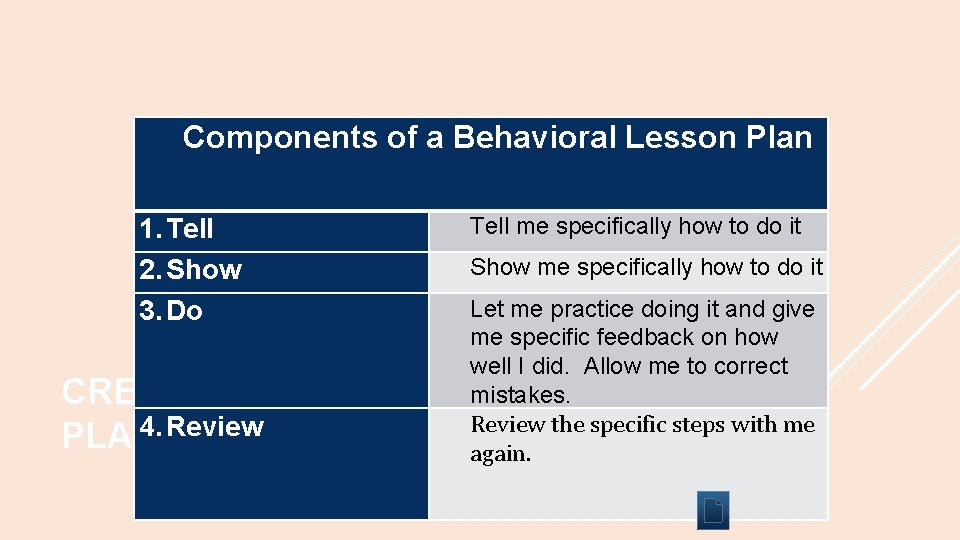
Components of a Behavioral Lesson Plan 1. Tell 2. Show 3. Do Tell me specifically how to do it Show me specifically how to do it Let me practice doing it and give me specific feedback on how well I did. Allow me to correct mistakes. CREATE A BEHAVIORAL LESSON Review the specific steps with me 4. Review PLAN again.
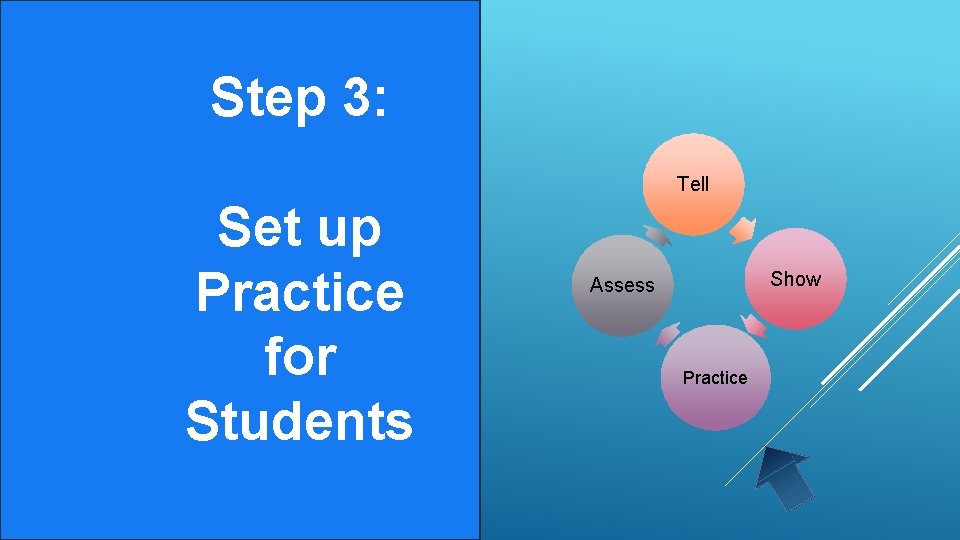
Step 3: Tell Set up Practice for Students Show Assess Practice
First Grading Period Teach rules and procedures for all areas of school, including individual classrooms, during first week of school Provide opportunities for review and practice Provide frequent reinforcement/acknowledgement After first week, review rules and procedures 2 or 3 times per week Rapid pace, oral review during first few minutes of class Surprise quizzes about procedures for extra credit points Divide into teams, ask questions about procedures, award points EXAMPLE SCHEDULE FOR TEACHING CLASSROOM PROCEDURES
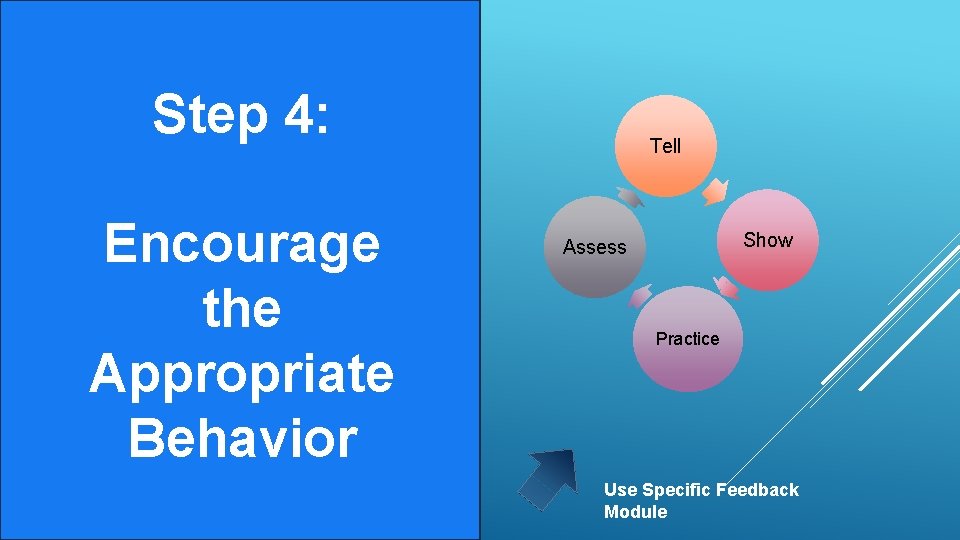
Step 4: Encourage the Appropriate Behavior Tell Show Assess Practice Use Specific Feedback Module
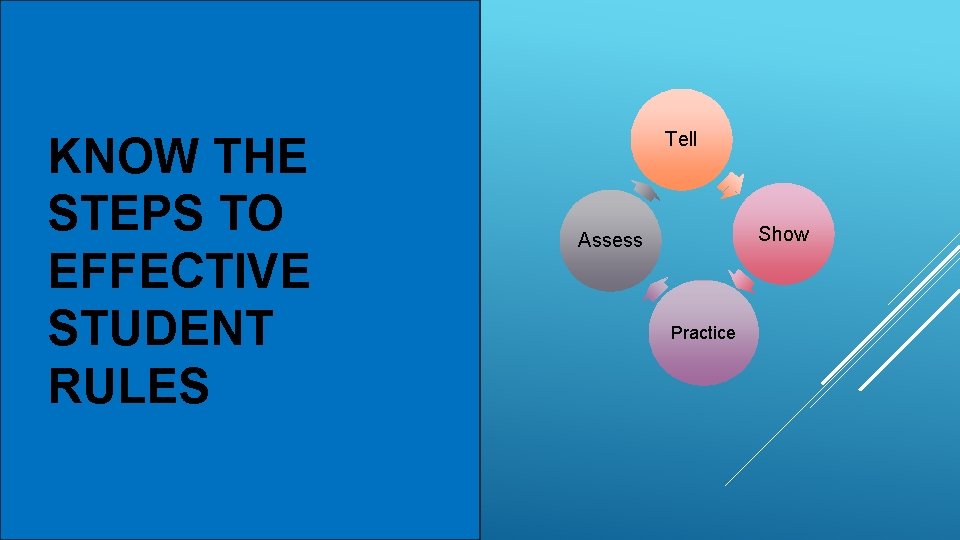
KNOW THE STEPS TO EFFECTIVE STUDENT RULES Tell Show Assess Practice
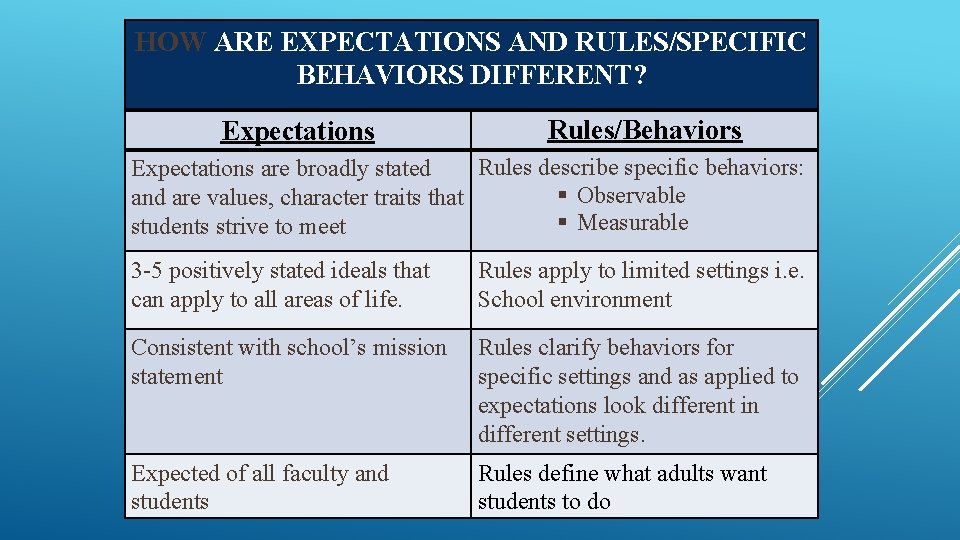
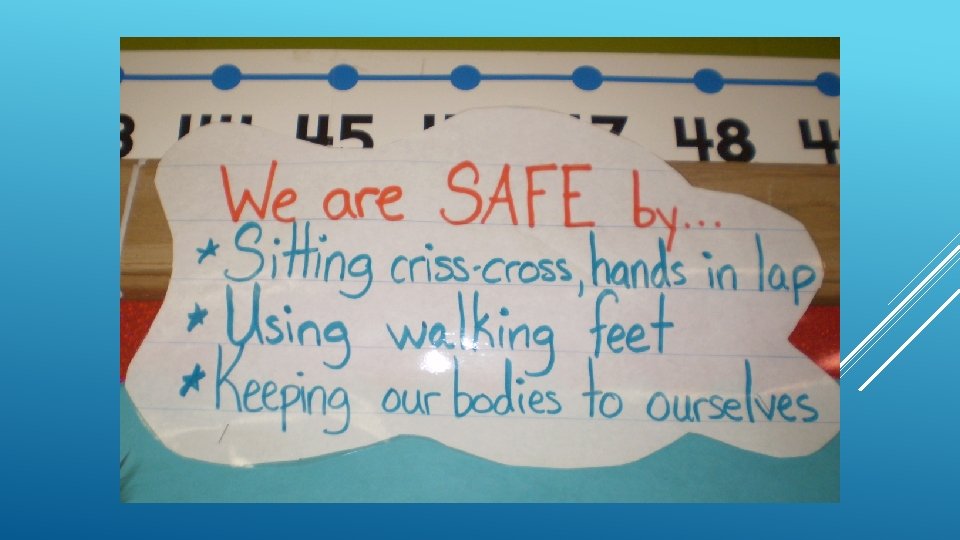
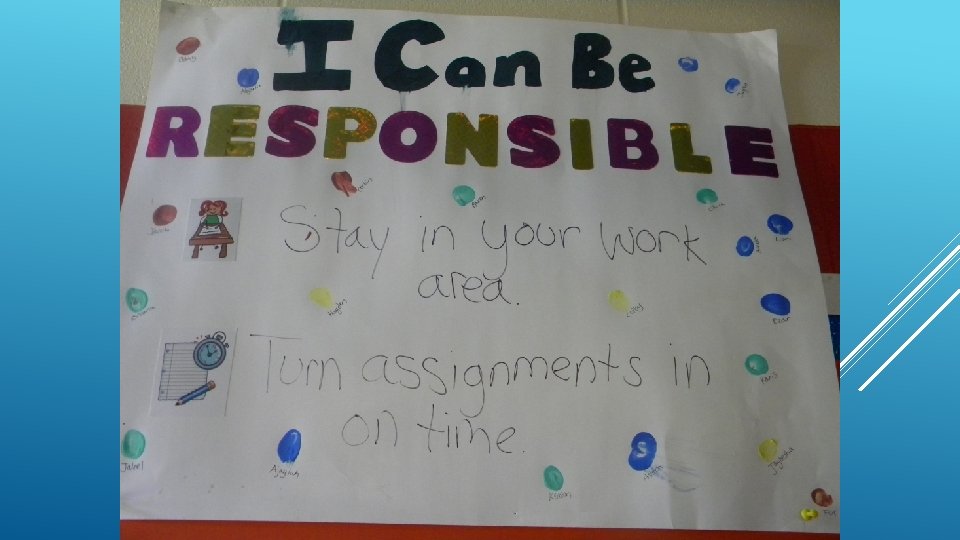
HOW ARE EXPECTATIONS AND RULES/SPECIFIC BEHAVIORS DIFFERENT? Expectations Rules/Behaviors Rules describe specific behaviors: Expectations are broadly stated § Observable and are values, character traits that § Measurable students strive to meet 3 -5 positively stated ideals that can apply to all areas of life. Rules apply to limited settings i. e. School environment Consistent with school’s mission statement Rules clarify behaviors for specific settings and as applied to expectations look different in different settings. Expected of all faculty and students Rules define what adults want students to do
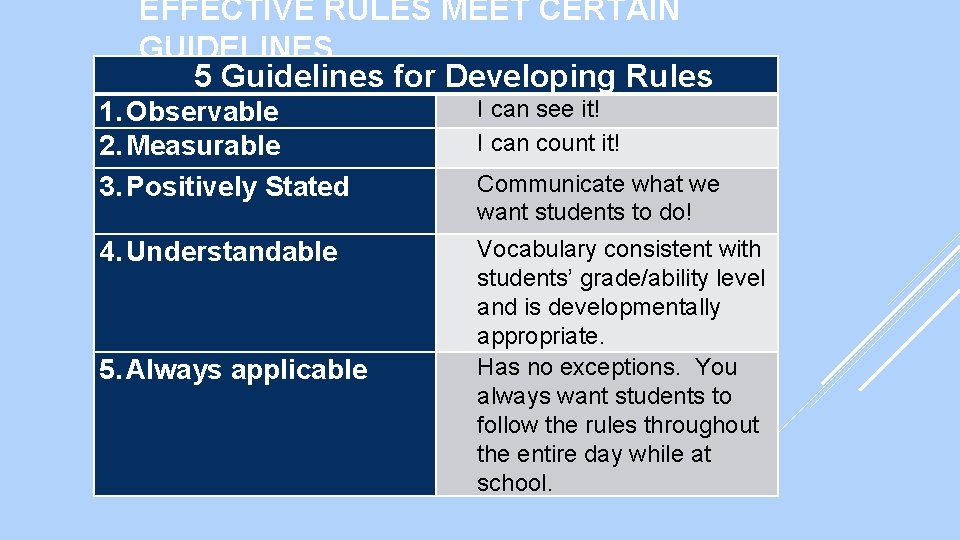
EFFECTIVE RULES MEET CERTAIN GUIDELINES 5 Guidelines for Developing Rules 1. Observable 2. Measurable 3. Positively Stated I can see it! I can count it! 4. Understandable Vocabulary consistent with students’ grade/ability level and is developmentally appropriate. Has no exceptions. You always want students to follow the rules throughout the entire day while at school. 5. Always applicable Communicate what we want students to do!
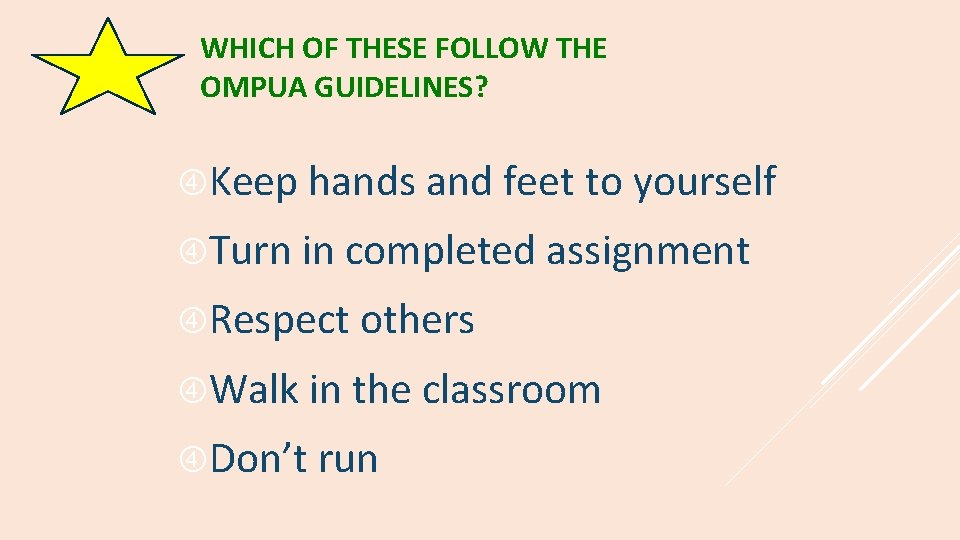
WHICH OF THESE FOLLOW THE OMPUA GUIDELINES? Keep hands and feet to yourself Turn in completed assignment Respect others Walk in the classroom Don’t run
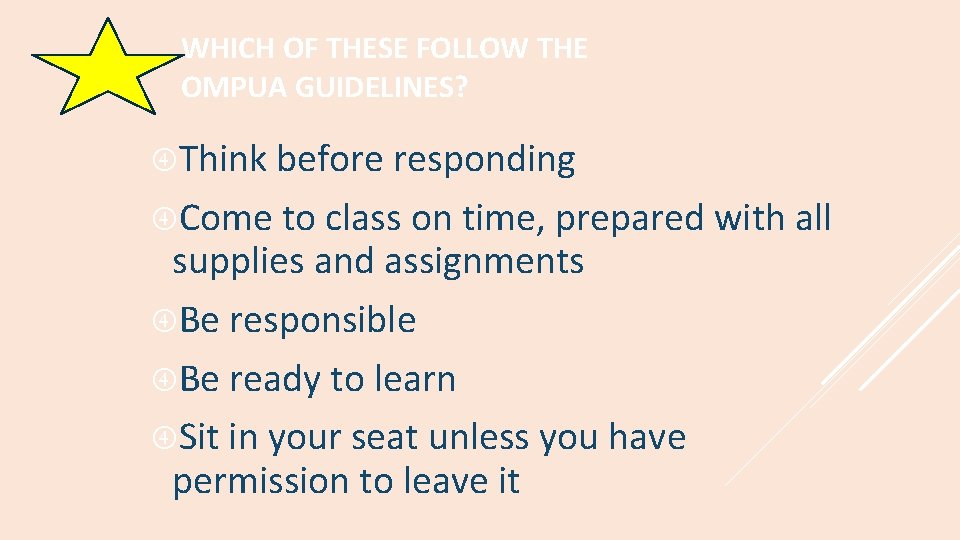
WHICH OF THESE FOLLOW THE OMPUA GUIDELINES? Think before responding Come to class on time, prepared with all supplies and assignments Be responsible Be ready to learn Sit in your seat unless you have permission to leave it
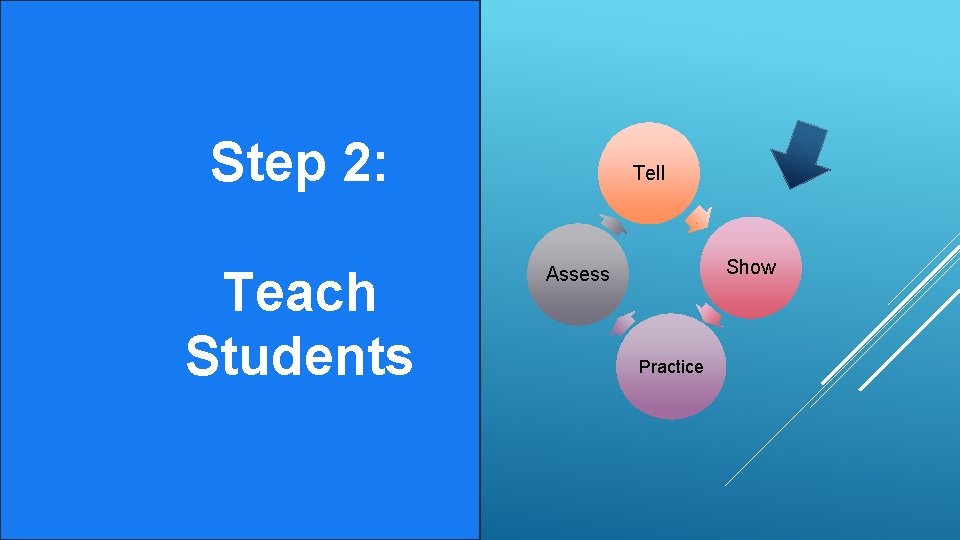
Step 2: Teach Students Tell Show Assess Practice
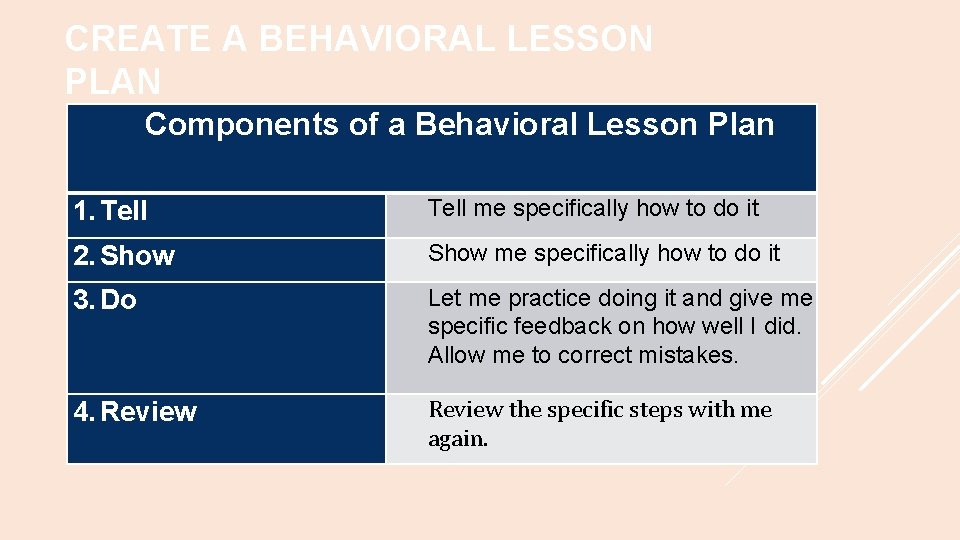
CREATE A BEHAVIORAL LESSON PLAN Components of a Behavioral Lesson Plan 1. Tell me specifically how to do it 2. Show me specifically how to do it 3. Do Let me practice doing it and give me specific feedback on how well I did. Allow me to correct mistakes. 4. Review the specific steps with me again.
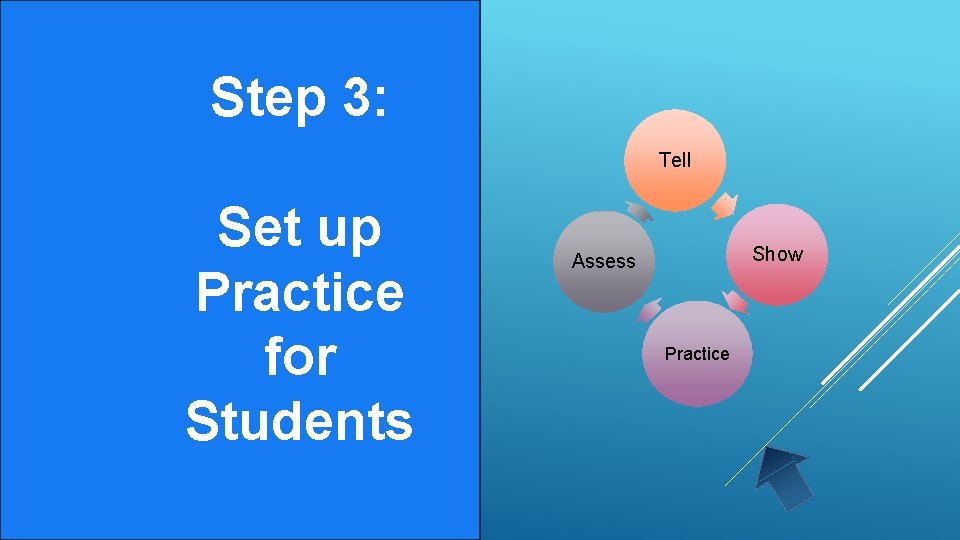
Step 3: Tell Set up Practice for Students Show Assess Practice
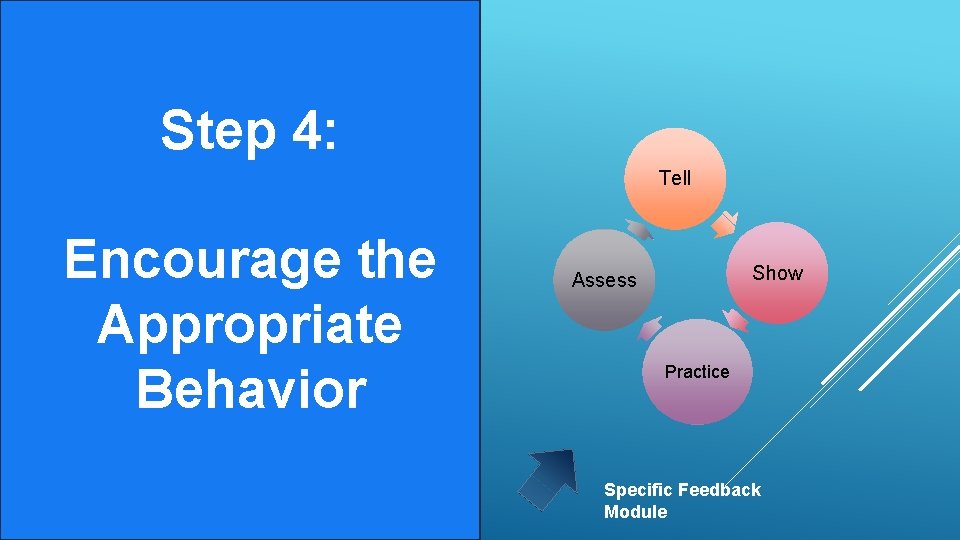
Step 4: Tell Encourage the Appropriate Behavior Show Assess Practice Specific Feedback Module
ENCOURAGING POSITIVE BEHAVIOR
Understand the Power of Adult Attention
UNDERSTAND HOW IT WORKS A–B–C
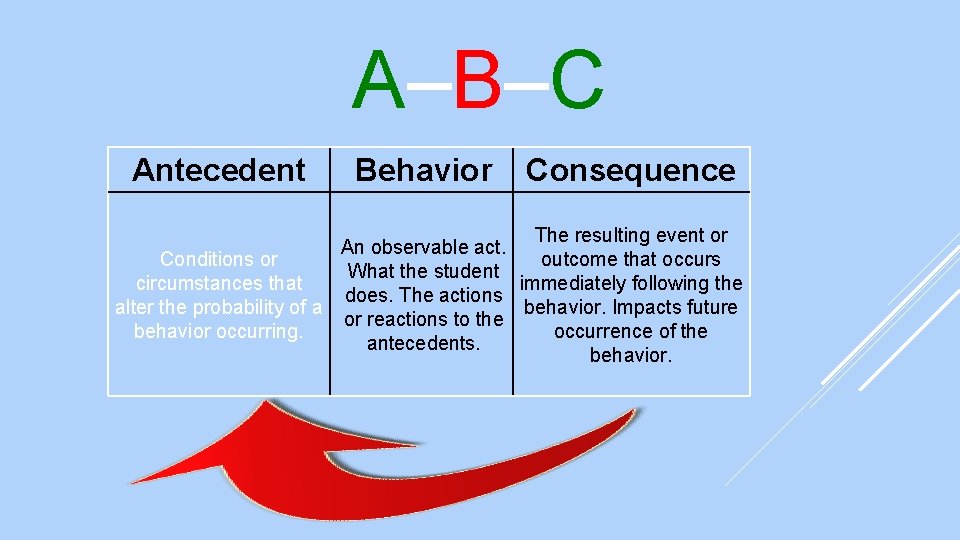
A–B–C Antecedent Behavior Consequence The resulting event or An observable act. Conditions or outcome that occurs What the student circumstances that immediately following the does. The actions alter the probability of a behavior. Impacts future or reactions to the behavior occurring. occurrence of the antecedents. behavior.
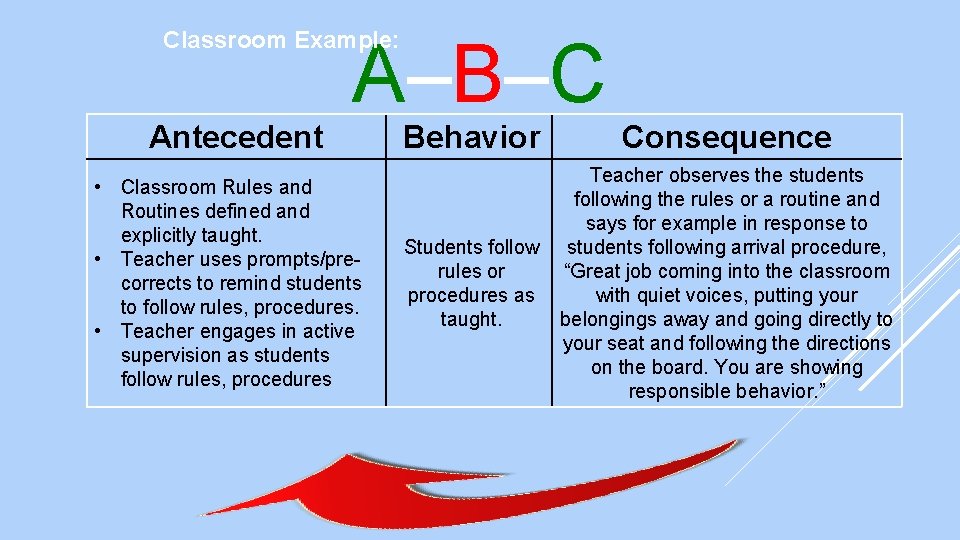
Classroom Example: A–B–C Antecedent • Classroom Rules and Routines defined and explicitly taught. • Teacher uses prompts/precorrects to remind students to follow rules, procedures. • Teacher engages in active supervision as students follow rules, procedures Behavior Consequence Teacher observes the students following the rules or a routine and says for example in response to Students follow students following arrival procedure, rules or “Great job coming into the classroom procedures as with quiet voices, putting your taught. belongings away and going directly to your seat and following the directions on the board. You are showing responsible behavior. ”
ACTIVITY: ENCOURAGING EXPECTED BEHAVIOR Think and Share Appoint a recorder for the whole group. Take one minute and individually think of ways you and your school reinforce academic behavior. Now, think of ways you and your school recognize social behavior. What do you notice?
Non. Contingent Attention: UNDERSTAND THE TYPES OF ADULT ATTENTION Continge nt
NONCONTINGEN T ATTENTION:
• • • Proximity Listening Eye Contact Pleasant Voice Smiles Touch Use of Student’s Name Showing interest in student Greeting students at door EXAMPLES OF NON-CONTINGENT ATTENTION – PREFERRED ADULT BEHAVIORS
CONTINGEN T ATTENTION:
Praise Positive feedback Reinforcement Tangible item EXAMPLES OF CONTINGENT ATTENTION
USE SPECIFIC POSITIVE FEEDBACK
KNOW THE IMPORTANCE OF SPECIFIC POSITIVE FEEDBACK
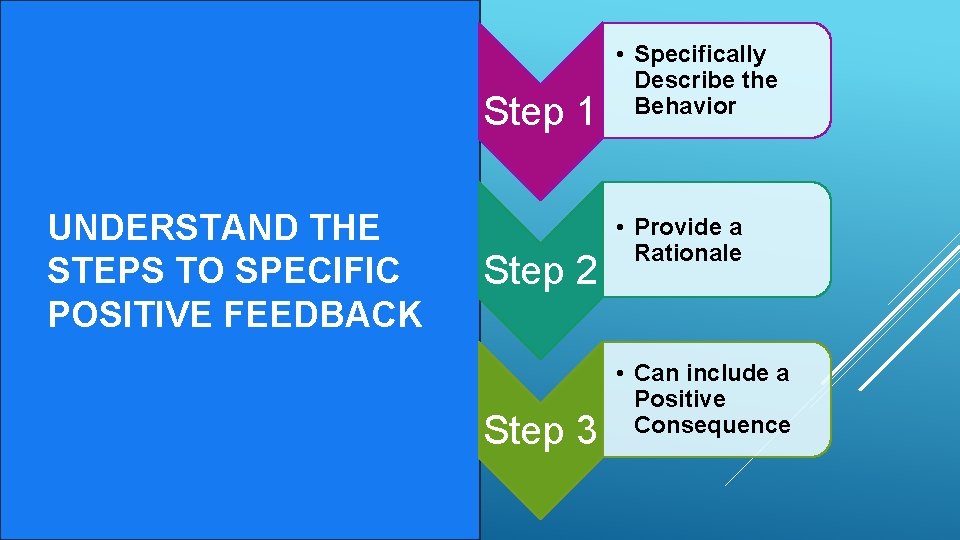
Step 1 UNDERSTAND THE STEPS TO SPECIFIC POSITIVE FEEDBACK Step 2 Step 3 • Specifically Describe the Behavior • Provide a Rationale • Can include a Positive Consequence
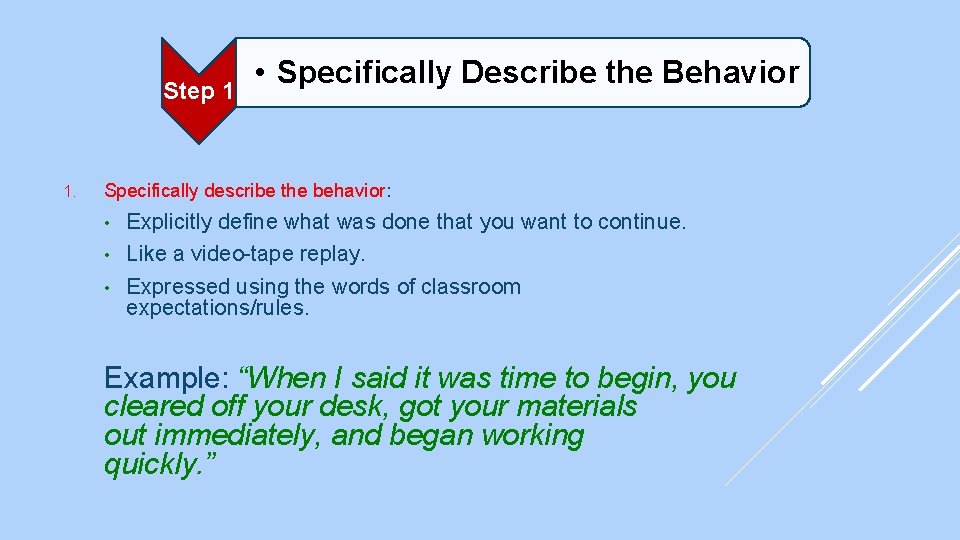
Step 1 1. • Specifically Describe the Behavior Specifically describe the behavior: Explicitly define what was done that you want to continue. • Like a video-tape replay. • Expressed using the words of classroom expectations/rules. • Example: “When I said it was time to begin, you cleared off your desk, got your materials out immediately, and began working quickly. ”
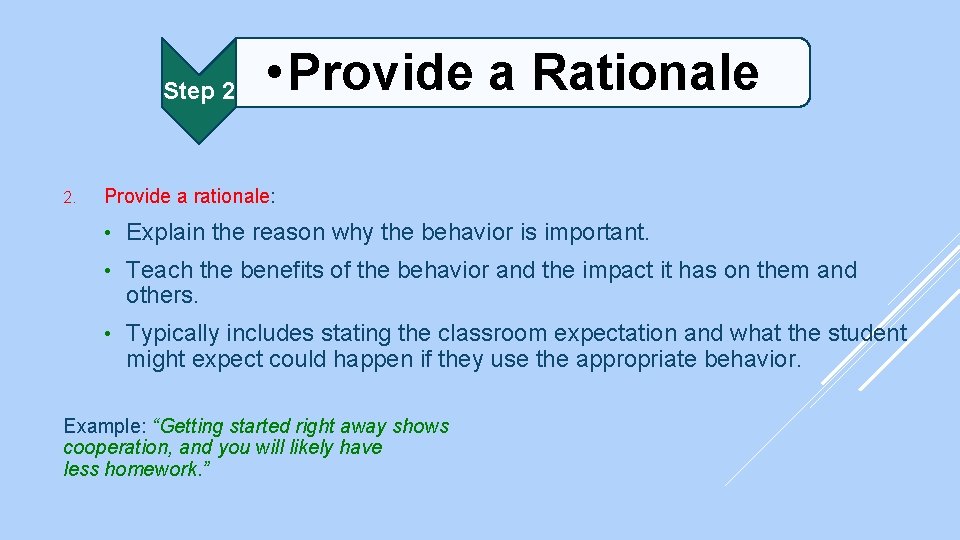
Step 2 2. • Provide a Rationale Provide a rationale: • Explain the reason why the behavior is important. • Teach the benefits of the behavior and the impact it has on them and others. • Typically includes stating the classroom expectation and what the student might expect could happen if they use the appropriate behavior. Example: “Getting started right away shows cooperation, and you will likely have less homework. ”
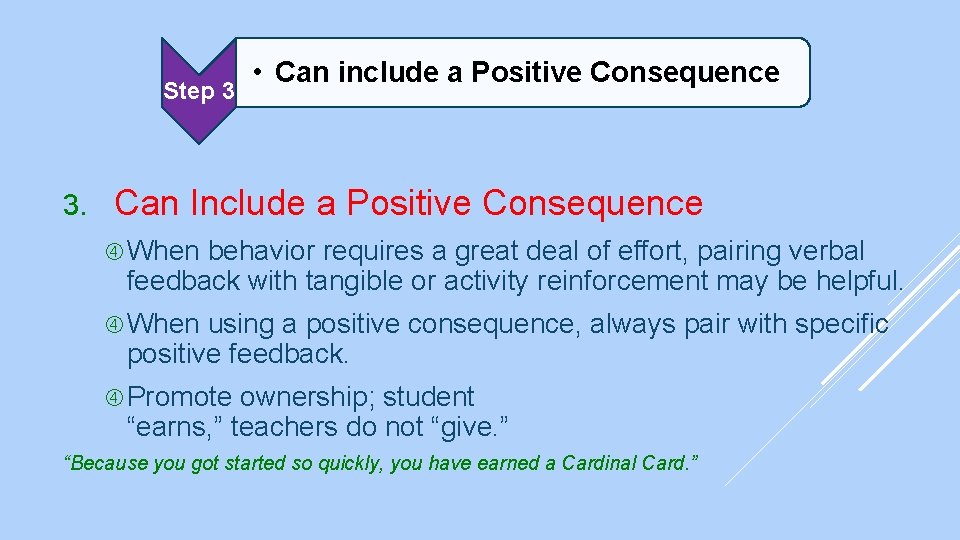
Step 3 3. • Can include a Positive Consequence Can Include a Positive Consequence When behavior requires a great deal of effort, pairing verbal feedback with tangible or activity reinforcement may be helpful. When using a positive consequence, always pair with specific positive feedback. Promote ownership; student “earns, ” teachers do not “give. ” “Because you got started so quickly, you have earned a Cardinal Card. ”
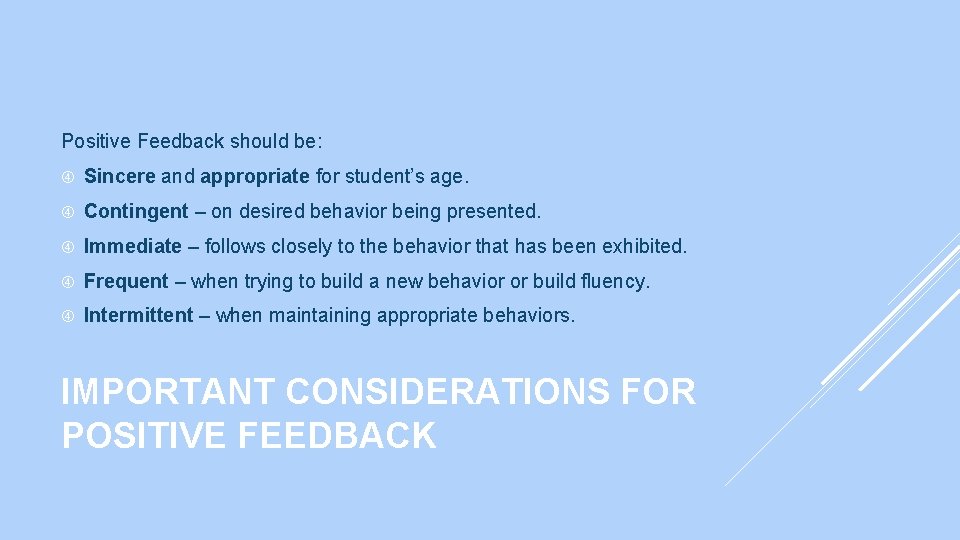
Positive Feedback should be: Sincere and appropriate for student’s age. Contingent – on desired behavior being presented. Immediate – follows closely to the behavior that has been exhibited. Frequent – when trying to build a new behavior or build fluency. Intermittent – when maintaining appropriate behaviors. IMPORTANT CONSIDERATIONS FOR POSITIVE FEEDBACK
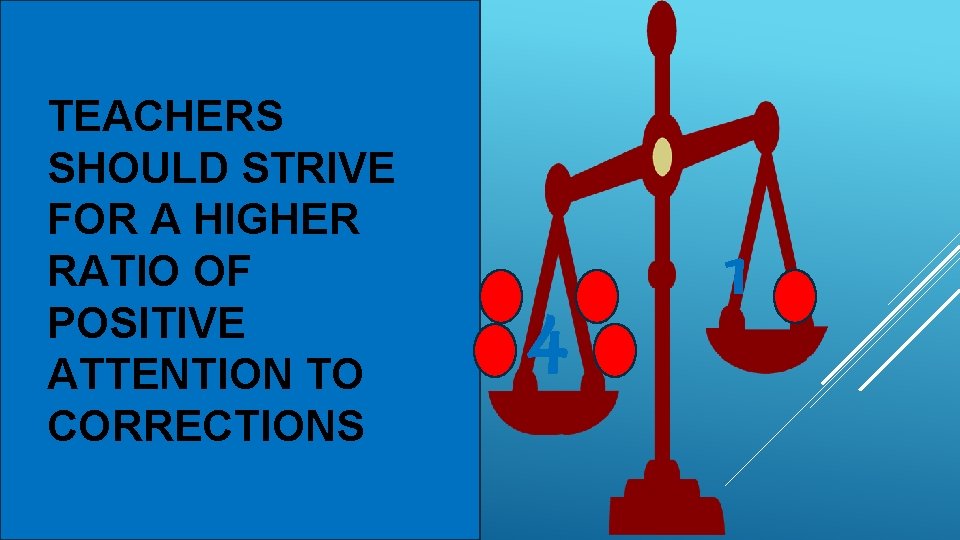
TEACHERS SHOULD STRIVE FOR A HIGHER RATIO OF POSITIVE ATTENTION TO CORRECTIONS 4 1
“Using a reward system is not the same as bribing a student to behave appropriately. A bribe is some-thing offered or given a person in a position of trust to influence or corrupt that person’s views or con-duct. SW-PBS acknowledges and rewards students for following school-wide (and classroom) expectations and rules. Appropriate behavior is acknowledged after it occurs. Rewards are earned, not offered as payoff in exchange for good behavior. ” Florida PBS
BUILD A MENU OF REINFORCERS
WHY BUILD A MENU OF REINFORCERS?
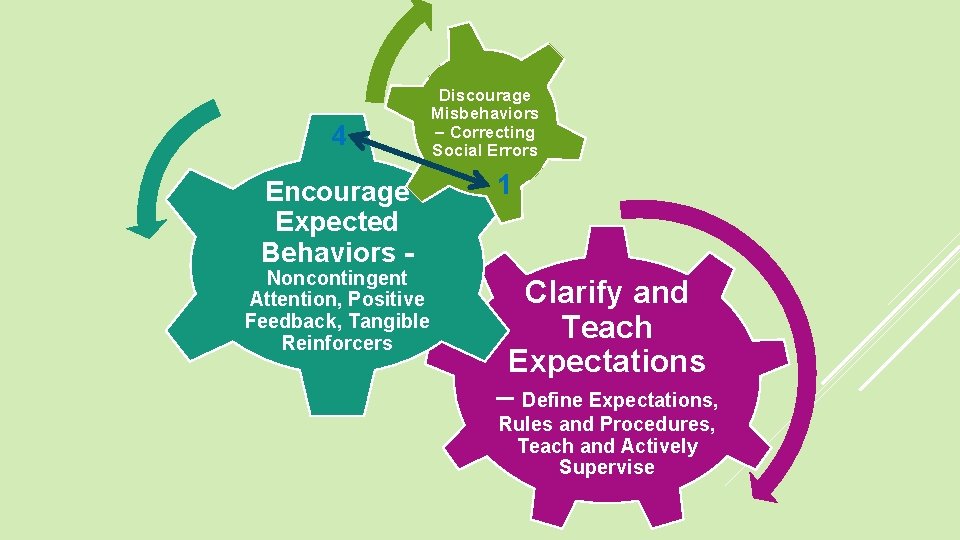
4 Encourage Expected Behaviors - Noncontingent Attention, Positive Feedback, Tangible Reinforcers Discourage Misbehaviors – Correcting Social Errors 1 Clarify and Teach Expectations – Define Expectations, Rules and Procedures, Teach and Actively Supervise
UNDERSTAND THE POWER OF CORRECTING SOCIAL ERRORS
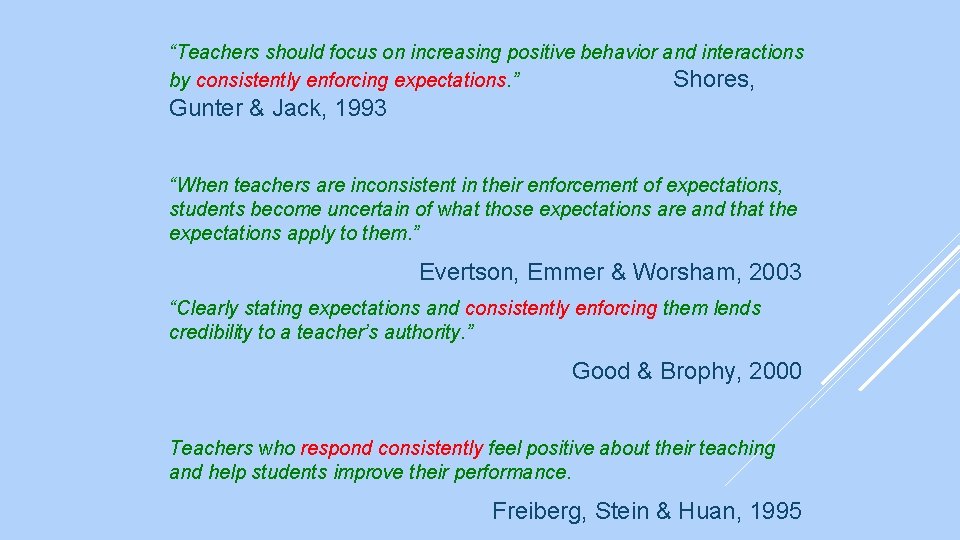
“Teachers should focus on increasing positive behavior and interactions by consistently enforcing expectations. ” Shores, Gunter & Jack, 1993 “When teachers are inconsistent in their enforcement of expectations, students become uncertain of what those expectations are and that the expectations apply to them. ” Evertson, Emmer & Worsham, 2003 “Clearly stating expectations and consistently enforcing them lends credibility to a teacher’s authority. ” Good & Brophy, 2000 Teachers who respond consistently feel positive about their teaching and help students improve their performance. Freiberg, Stein & Huan, 1995
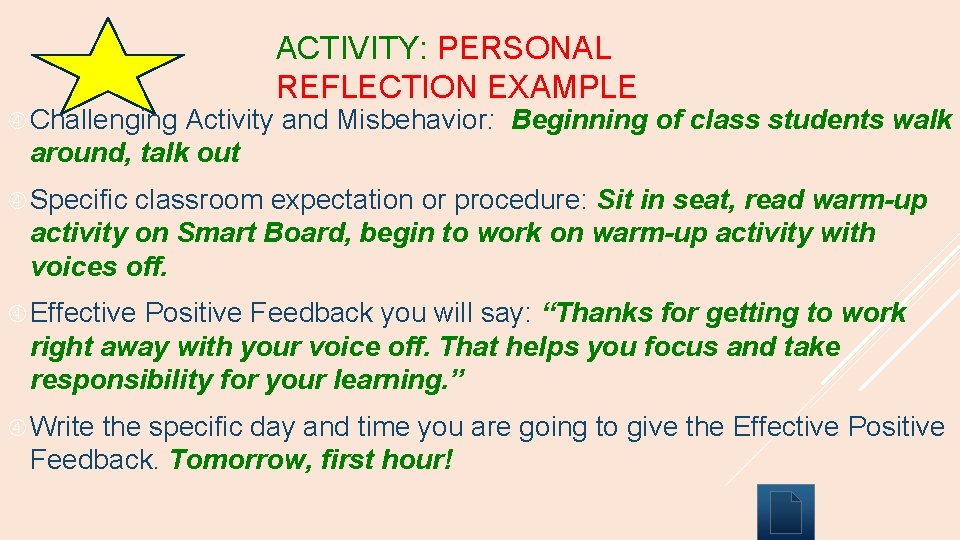
ACTIVITY: PERSONAL REFLECTION EXAMPLE Challenging Activity and Misbehavior: Beginning of class students walk around, talk out Specific classroom expectation or procedure: Sit in seat, read warm-up activity on Smart Board, begin to work on warm-up activity with voices off. Effective Positive Feedback you will say: “Thanks for getting to work right away with your voice off. That helps you focus and take responsibility for your learning. ” Write the specific day and time you are going to give the Effective Positive Feedback. Tomorrow, first hour!
RESPONDING TO PROBLEM BEHAVIOR Responses vs. Punishments
Think of 1 student who has displayed inappropriate behavior this week. How did you respond? How did the student respond? Do you continue to see the behavior occur? IDENTIFY THE NEED
RE-THINKING CONSEQUENCES In traditional discipline, the word consequence is often used to describe a punishment. A consequence is any thing that occurs after a problem behavior has occurred (positive or negative). Effective consequences, or responses to behavior, are those that result in the problem behavior changing over time. Ineffective consequences are those that may stop the behavior temporarily, but result in either no change or increase of the problem behavior over time.
THE ABCS Understanding the purpose of behavior comes from repeated observation of: Antecedent: stimulus before the behavior B: Behavior: observable and measurable act C: Consequence: what occurs after the behavior that serves to maintain or increase frequency of behavior
CONSEQUENCE S Consequences are: The outcome of the behavior The responses of adults and/or peers to the behavior Responses that reinforce behavior lead to repetition of the behavior.
CONSEQUENCE S To understand the consequences of a behavior, observe what happens in the environment immediately after the behavior. What is the pay-off? What does the student get? What does the student avoid?
Think of 1 student who has displayed inappropriate behavior this week. What was the antecedent? What was the specific behavior? What was the maintaining consequence? ABC: REVISIT THIS SITUATION
PREVENT/TEACH/RESPOND Problem behavior cannot be changed by the responses alone, because those only occur after the problem behavior and the possibility for intervention is reduced. Effective classroom managers should focus first on strategies designed to prevent and modify behavior before it occurs. Prevention through routines and procedures Replacement through teaching expectations Reinforcement of desired behavior through positive responses Effective, logical responses to problem behaviors
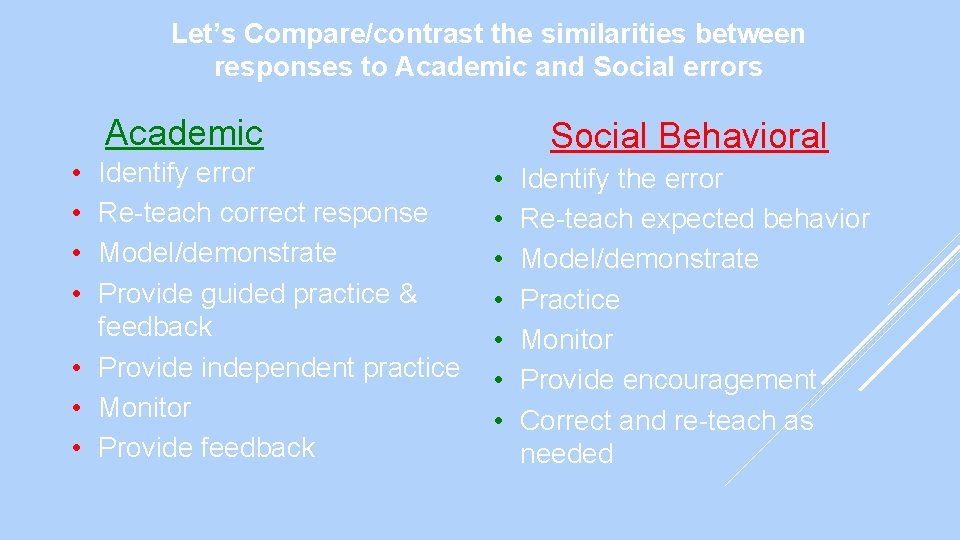
Let’s Compare/contrast the similarities between responses to Academic and Social errors Academic • • Identify error Re-teach correct response Model/demonstrate Provide guided practice & feedback • Provide independent practice • Monitor • Provide feedback Social Behavioral • • Identify the error Re-teach expected behavior Model/demonstrate Practice Monitor Provide encouragement Correct and re-teach as needed
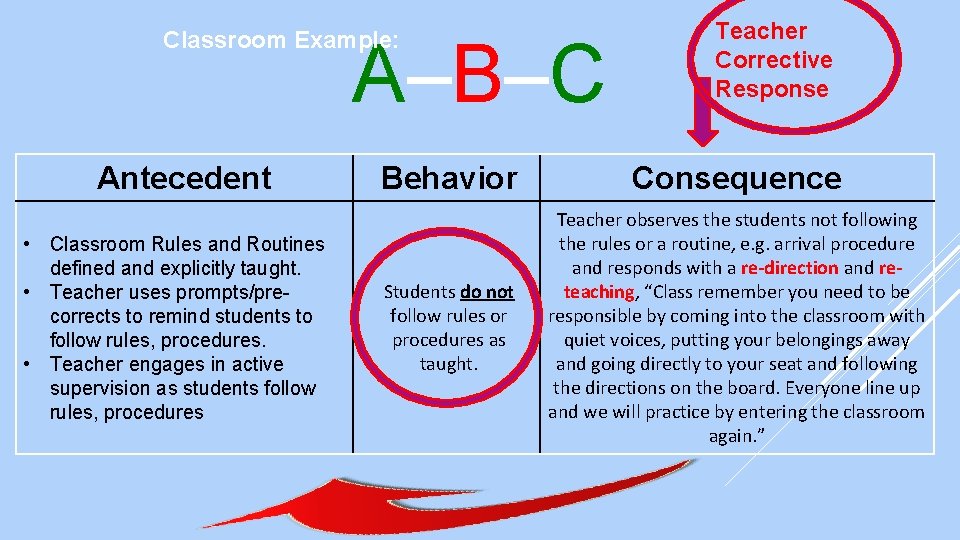
Classroom Example: A–B–C Antecedent • Classroom Rules and Routines defined and explicitly taught. • Teacher uses prompts/precorrects to remind students to follow rules, procedures. • Teacher engages in active supervision as students follow rules, procedures Teacher Corrective Response Behavior Consequence Students do not follow rules or procedures as taught. Teacher observes the students not following the rules or a routine, e. g. arrival procedure and responds with a re-direction and reteaching, “Class remember you need to be responsible by coming into the classroom with quiet voices, putting your belongings away and going directly to your seat and following the directions on the board. Everyone line up and we will practice by entering the classroom again. ”
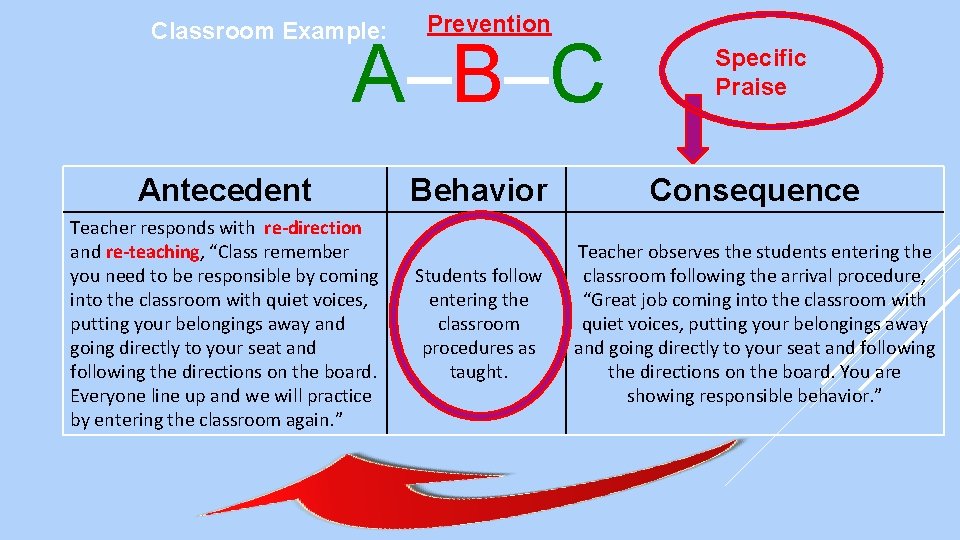
Classroom Example: Prevention A–B–C Specific Praise Behavior Consequence Students follow entering the classroom procedures as taught. Teacher observes the students entering the classroom following the arrival procedure, “Great job coming into the classroom with quiet voices, putting your belongings away and going directly to your seat and following the directions on the board. You are showing responsible behavior. ” Antecedent Teacher responds with re-direction and re-teaching, “Class remember you need to be responsible by coming into the classroom with quiet voices, putting your belongings away and going directly to your seat and following the directions on the board. Everyone line up and we will practice by entering the classroom again. ”
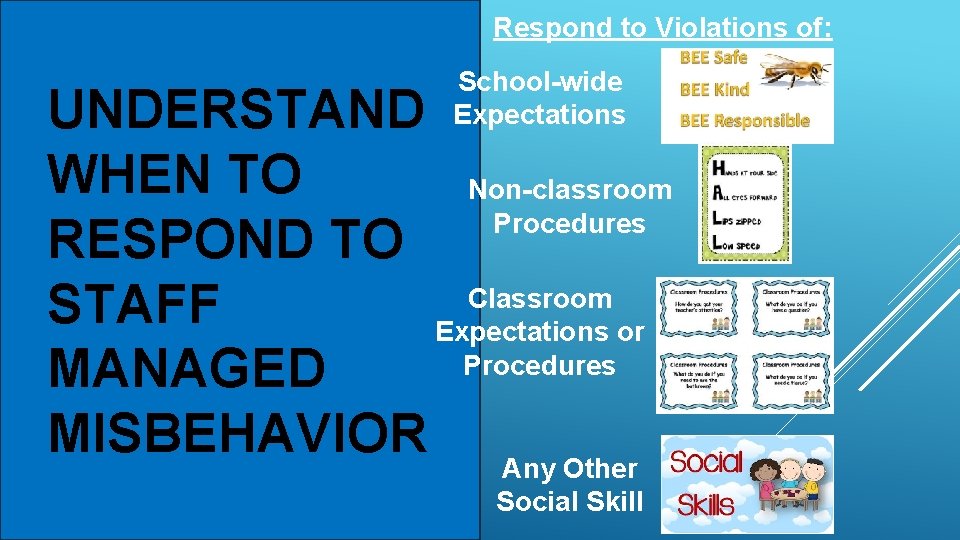
Respond to Violations of: School-wide Expectations UNDERSTAND WHEN TO Non-classroom Procedures RESPOND TO Classroom STAFF Expectations or Procedures MANAGED MISBEHAVIOR Any Other Social Skill
CONSIDER SOME GENERAL CONCEPTS FOR EFFECTIVE TEACHER RESPONSES TO STAFF MANAGED MISBEHAVIOR Active Supervision The Class
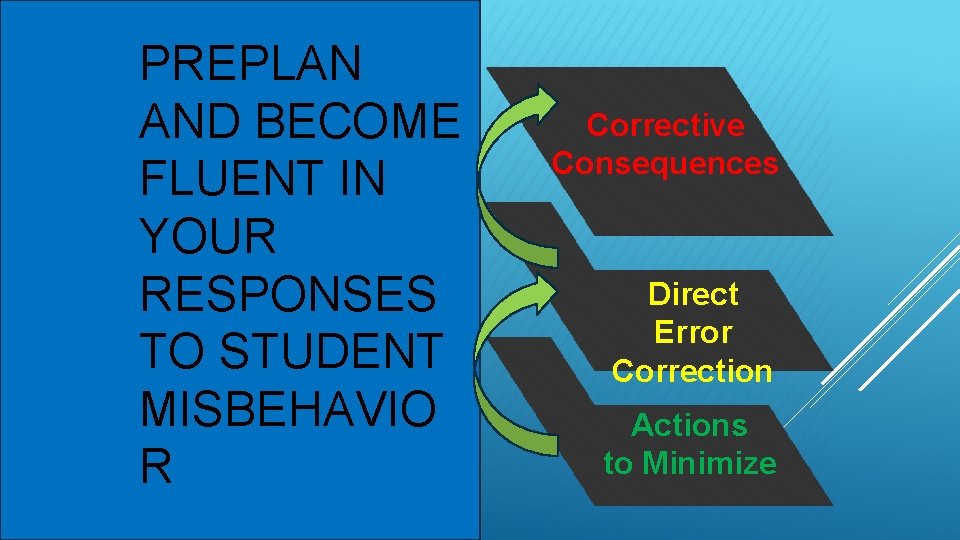
PREPLAN AND BECOME FLUENT IN YOUR RESPONSES TO STUDENT MISBEHAVIO R Corrective Consequences Direct Error Correction Actions to Minimize
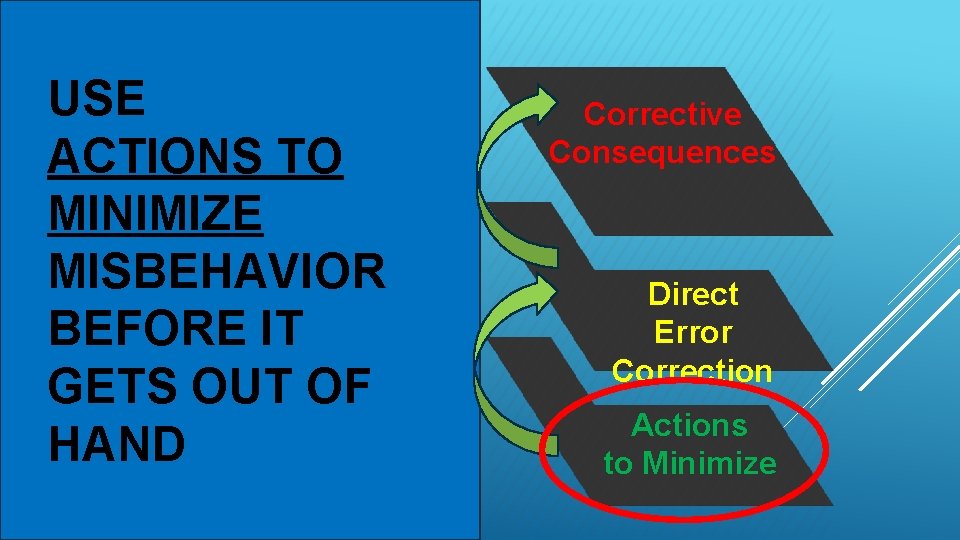
USE ACTIONS TO MINIMIZE MISBEHAVIOR BEFORE IT GETS OUT OF HAND Corrective Consequences Direct Error Correction Actions to Minimize
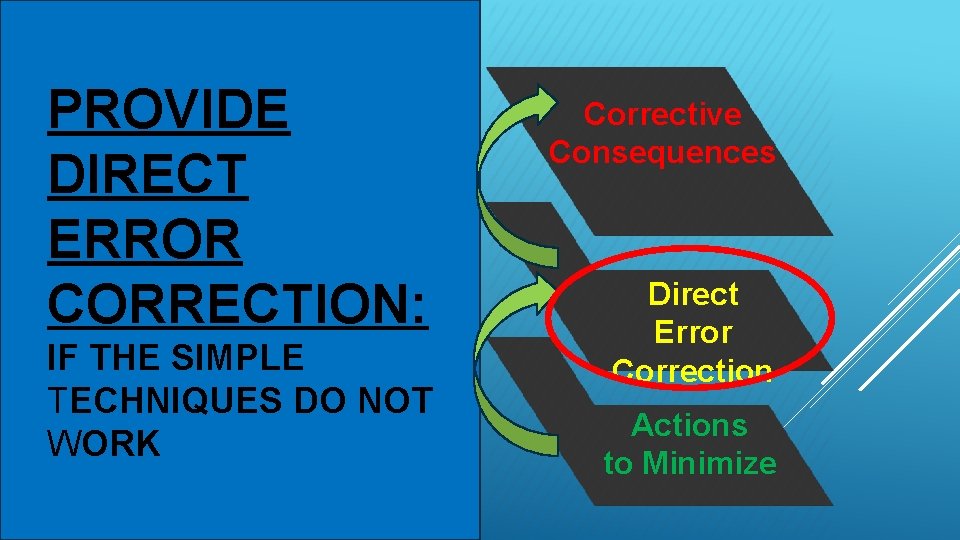
PROVIDE DIRECT ERROR CORRECTION: IF THE SIMPLE TECHNIQUES DO NOT WORK Corrective Consequences Direct Error Correction Actions to Minimize
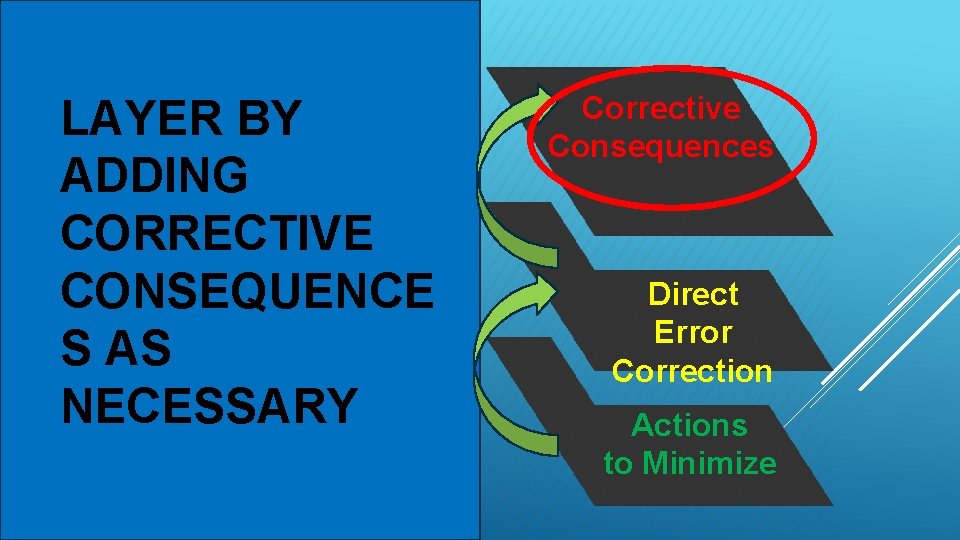
LAYER BY ADDING CORRECTIVE CONSEQUENCE S AS NECESSARY Corrective Consequences Direct Error Correction Actions to Minimize
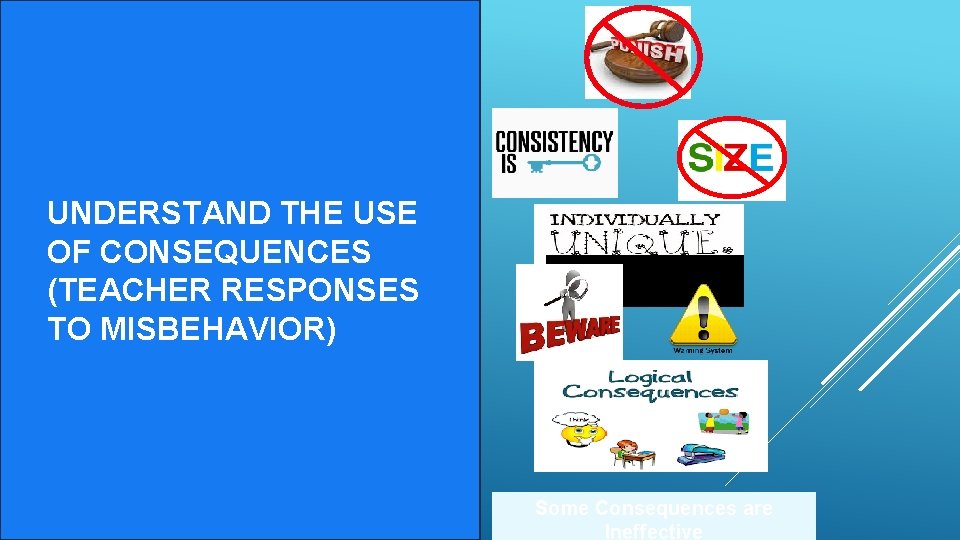
UNDERSTAND THE USE OF CONSEQUENCES (TEACHER RESPONSES TO MISBEHAVIOR) Some Consequences are Ineffective
Address misbehavior consistently and quickly, while still early. Use the strategy that is the least intrusive yet still appropriate for the frequency or severity of behavior. If efforts to re-teach are not resulting in behavior change, consider including an additional consequence. SUMMARY: RESPONDING TO STUDENT MISBEHAVIOR
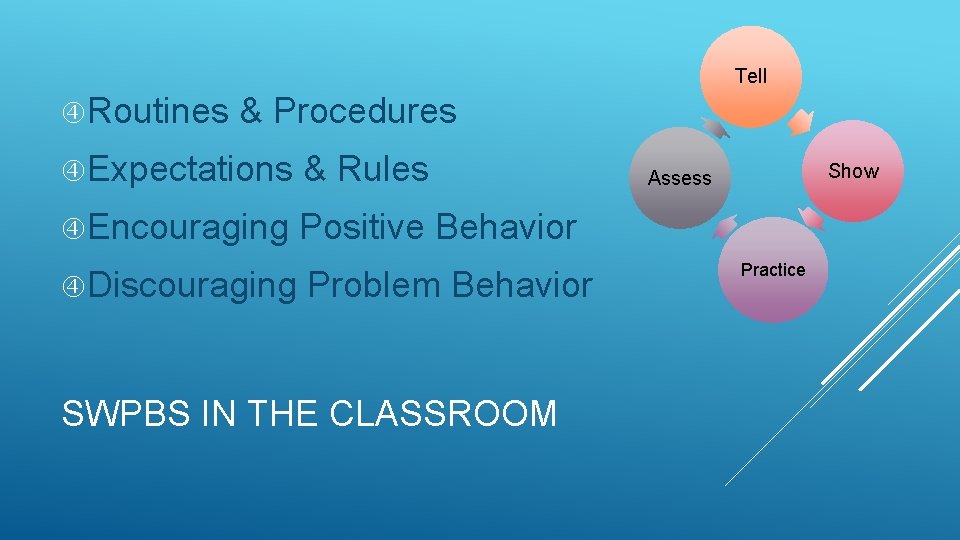
Tell Routines & Procedures Expectations & Rules Show Assess Encouraging Positive Behavior Discouraging Problem Behavior SWPBS IN THE CLASSROOM Practice
TURN & TALK How can establishing routines and procedures prevent inappropriate behavior? How can defining expectations and rules prevent inappropriate behavior? How can you encourage positive behavior? What is one way to discourage inappropriate behavior?

QUESTIONS & DISCUSSION?
REFERENCES Algozzine, B. , Wang, C. , & Violette, A. S. (2010). Reexamining the Relationship Between Academic Achievement and Social Behavior. Journal of Positive Behavior Interventions 13(1), 3 -16. Decker, D. M. , Dona, D. P. , & Christenson, S. L. (2007). Behaviorally at-risk African American students: The importance of student–teacher relationships for student outcomes. Journal of School Psychology 45, 83– 109 Good, C. E. , Eller, B. F. , Spangler, R. S. , & Stone, J. E. (1981). The effect of an operant intervention program on attending and other academic behavior with emotionally disturbed children. Journal of Instructional Psychology, 9(1), 25 -33. Jones, V. F. , & Jones, L. S. (1995). Comprehensive classroom management. Boston: Allyn and Bacon. Lane, K. L. , Kalberg, J. R. & Menzies, H. M. (2009). Developing schoolwide programs to prevent and manage problem behaviors: A step-by-step approach. New York: Guilford. Reavis, Jenson, Kukic & Morgan (1993). Utah's BEST project: Behavioral and educational strategies for teachers. Utah State Office of Education, Salt Lake City, UT. Sutherland, K. S. , Wehby, J. H. & Copeland, S. R. (2000). Effect of varying rates of behaviorspecific praise on the on-task behavior of students with EBD. Journal of Emotional and Behavior Disorders, 8, 2 -8.
Brophy, J. & Evertson, C. (1976). Learning from teaching: A developmental perspective. Boston, MA: Allyn and Bacon. Brophy, J. (1998). Motivating Students to Learn. Boston: Mc. Graw Hill. Evertson, C. , & Emmer, E. (1982). Preventive classroom management. In D. Duke (Ed. ), Helping teachers manage classrooms. Alexandria, VA: Association for Supervision and Curriculum Development. Evertson, C. M. , Emmer, E. T. & Worsham, M. E. (2003). Classroom Management for Elementary Teachers. Boston: Pearson Education. Freiberg, J. , Stein, T. , & Huan, S. (1995). Effects of a classroom management intervention on student achievement in inner-city elementary schools. Educational Research and Evaluation, 1, 36 -66. Good, T. & Brophy, J. (2000). Look Into Classrooms. Boston: Allyn & Bacon. IRIS Center, Research to Practice Instructional Strategies. Nashville: Vanderbilt University. Johnson, T. C. , Stoner, G. & Green, S. K. (1996). Demonstrating the experimenting society model with classwide behavior management interventions. School Psychology Review, 25(2), 199 -214. Kern, L. , Clemens, N. H. (2007). Antecedent strategies to promote appropriate classroom behavior. Psychology in the Schools, 44(1), 65 -75. Newcomer, L. (2007, 2008). Positive Behavior Support in the Classroom. Unpublished presentation. Shores, R. , Gunter, P. , & Jack, S. (1993). Classroom management strategies: Are they setting events for coercion? Behavioral Disorders, 18, 92 -102. Simonsen, B. , Fairbanks, S. , Briesch, A. , Myers, D. & Sugai, G. (2008). Evidence-based practices in classroom management: Considerations for Research to practice. Education and Treatment of Children, 31(3), pp. 351 -380.
De Pry, R. L. , & Sugai, G. (2002). The effect of active supervision and precorrection on minor behavioral incidents in a sixth grade general education classroom. Journal of Behavioral Education, 11(4), 255 -267. Lampi, A. R. , Fenti, N. S. , & Beaunae, C. (2005). Makin the three p’s easier: Praise proximity, and precorrection. Beyond Behavior, 15(1), 8 -12. Simonsen, B. , Fairbanks, S. , Briesch, A. , Myers, D. & Sugai, G. (2008). Evidence-based practices in classroom management: Considerations for research to practice. Education and Treatment of Children, 31(3), pp. 351 -380. Sprick, R. , Knight, J. , Reinke, W. & Mc. Kale, T. (2006). Coaching classroom management: Strategies and tools for administrators and coaches. Eugene, OR: Pacific Northwest Publishing.
- Slides: 90