Diasporas General Perspectives and Overview Kee Pookong Ritsumeikan
- Slides: 37
Diasporas: General Perspectives and Overview Kee Pookong Ritsumeikan Asia Pacific University kee@apu. ac. jp 5 th DIVERSITY MATTERS a Commonwealth forum on cultural diversity Diasporas in the Commonwealth Monash Malaysia 19 – 20 November 2008
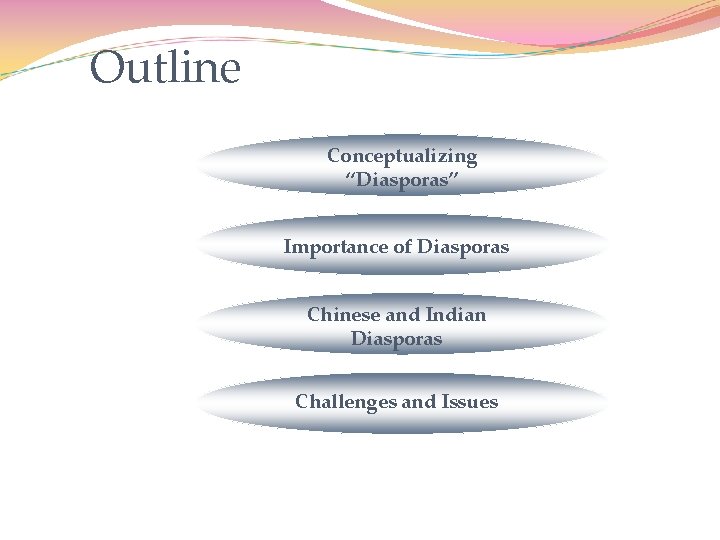
Outline Conceptualizing “Diasporas” Importance of Diasporas Chinese and Indian Diasporas Challenges and Issues
Evolution of the Concept Dia speiro (Greek) = to scatter seed Greek colonial expansion: 800 - 600 BC Jewish history = forced exile, victimization, myth of return 586 BC through Holocaust (1938 -1944), Israel state (1948) and Present African Diasporas 1960 s -Forced dispersion, homelands Recent liberal usages of the term Any form of real or imagined community
Some Essential Characteristics Dispersal in two or more countries Memory of original homeland Alienation, marginalisation or exclusion in host land Relationship with kin in other diasporic communities Preserve ethnic boundaries Ongoing relationship with ancestral land Idealization or discourse of return
Diasporas – Typologies Displacement by causes (Robin Cohen, 1997) Victim Diasporas Jews, African、Armenian Migratory Diasporas – Labor, Traders, Refugees Chinese, Indian, Palestinian, Italian, Greek, Japanese Ideological (Religious) Diasporas - Islam, Hindu, Sikhs Imperial Diasporas British, German
Importance of Diasporas • An analytical concept: – History of human experience: dispersion, identity, longing, and return • A practical concept: – Of interest to states – political, economic, or cultural mobilization – International organizations – development – International relations
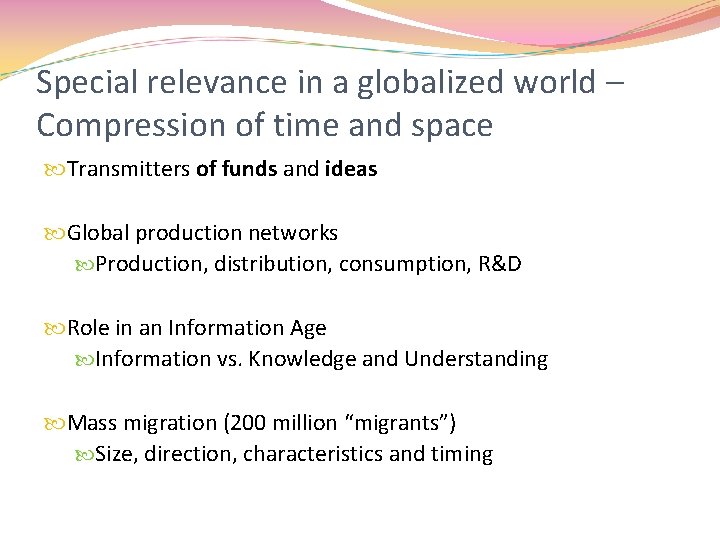
Special relevance in a globalized world – Compression of time and space Transmitters of funds and ideas Global production networks Production, distribution, consumption, R&D Role in an Information Age Information vs. Knowledge and Understanding Mass migration (200 million “migrants”) Size, direction, characteristics and timing
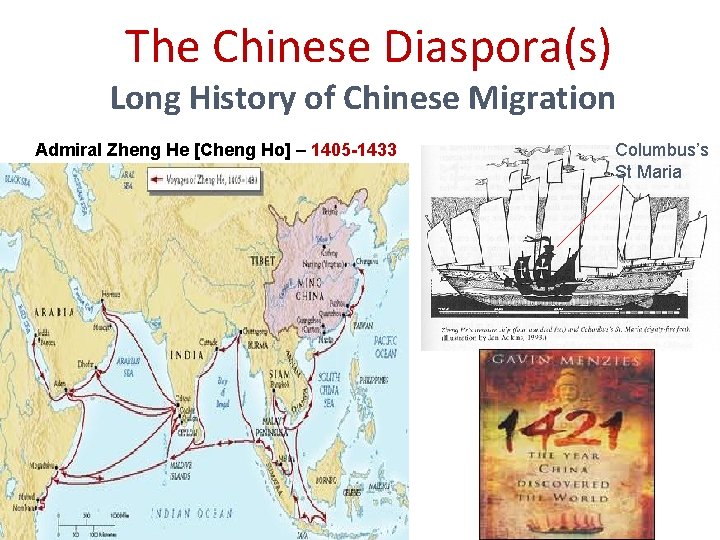
The Chinese Diaspora(s) Long History of Chinese Migration Admiral Zheng He [Cheng Ho] – 1405 -1433 Columbus’s St Maria
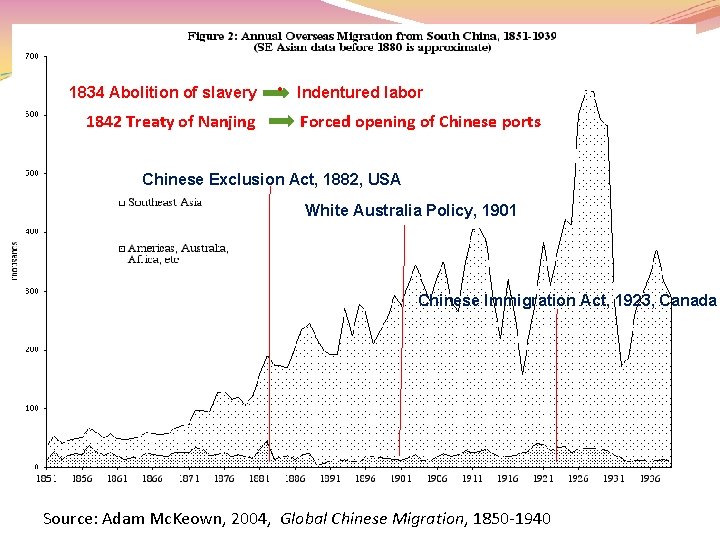
1834 Abolition of slavery 1842 Treaty of Nanjing • Indentured labor Forced opening of Chinese ports Chinese Exclusion Act, 1882, USA White Australia Policy, 1901 Chinese Immigration Act, 1923, Canada Source: Adam Mc. Keown, 2004, Global Chinese Migration, 1850 -1940
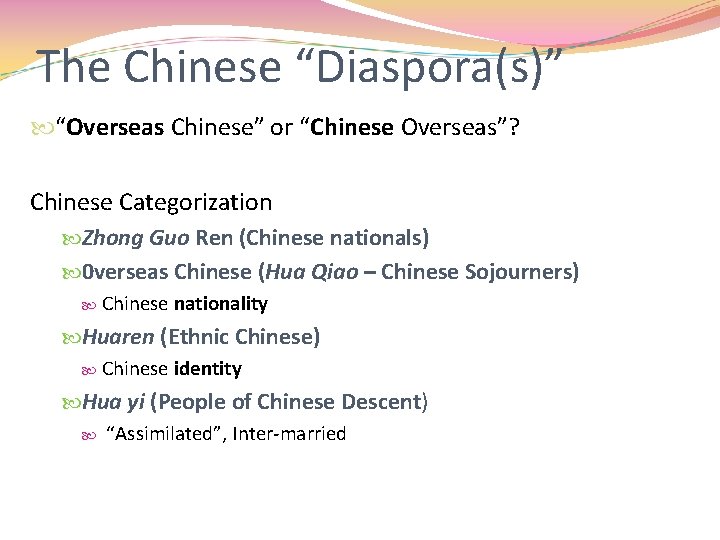
The Chinese “Diaspora(s)” “Overseas Chinese” or “Chinese Overseas”? Chinese Categorization Zhong Guo Ren (Chinese nationals) 0 verseas Chinese (Hua Qiao – Chinese Sojourners) Chinese nationality Huaren (Ethnic Chinese) Chinese identity Hua yi (People of Chinese Descent) “Assimilated”, Inter-married
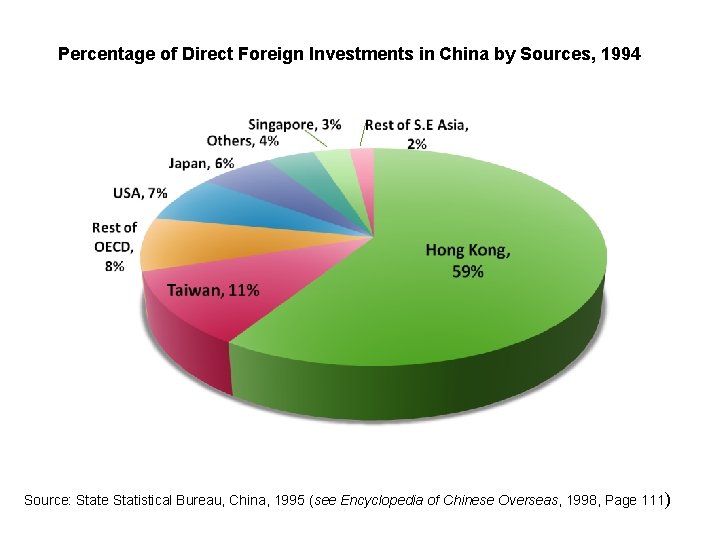
Percentage of Direct Foreign Investments in China by Sources, 1994 Source: State Statistical Bureau, China, 1995 (see Encyclopedia of Chinese Overseas, 1998, Page 111)
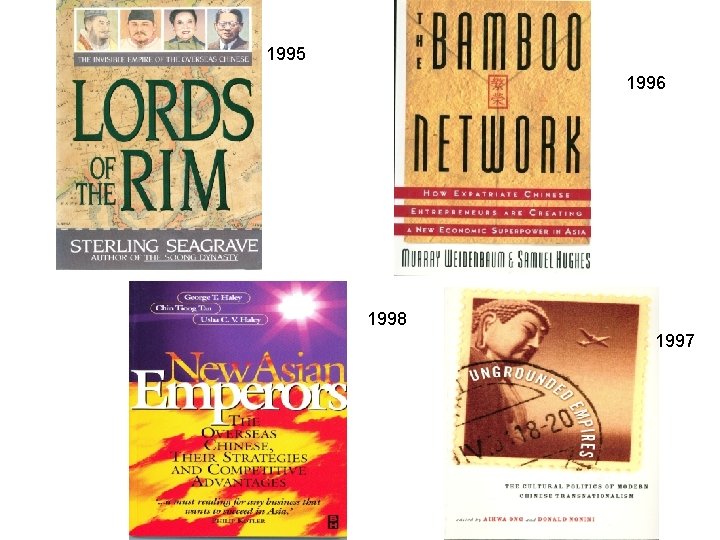
1995 1996 1998 1997
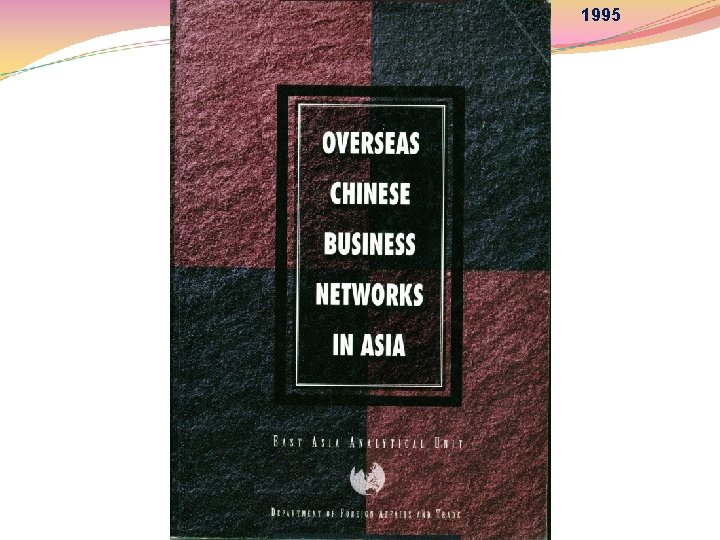
1995
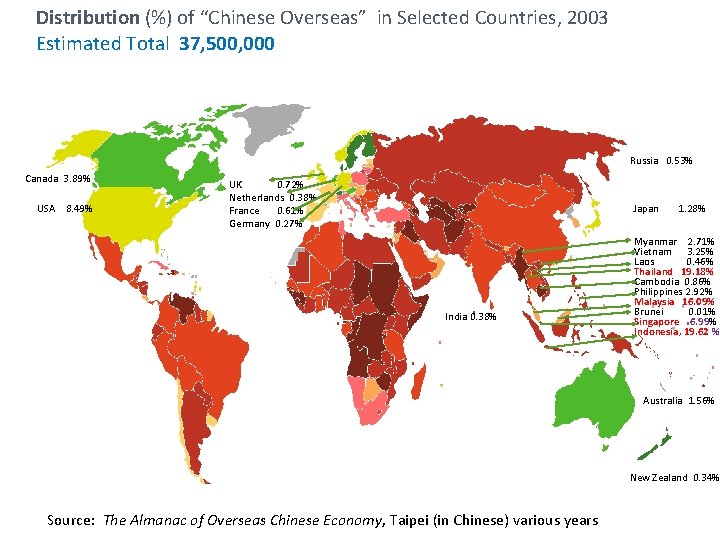
Distribution (%) of “Chinese Overseas” in Selected Countries, 2003 Estimated Total 37, 500, 000 Russia 0. 53% Canada 3. 89% USA 8. 49% UK 0. 72% Netherlands 0. 38% France 0. 61% Germany 0. 27% Japan India 0. 38% 1. 28% Myanmar 2. 71% Vietnam 3. 25% Laos 0. 46% Thailand 19. 18% Cambodia 0. 86% Philippines 2. 92% Malaysia 16. 09% Brunei 0. 01% Singapore 6. 99% Indonesia, 19. 62 % Australia 1. 56% New Zealand 0. 34% Source: The Almanac of Overseas Chinese Economy, Taipei (in Chinese) various years
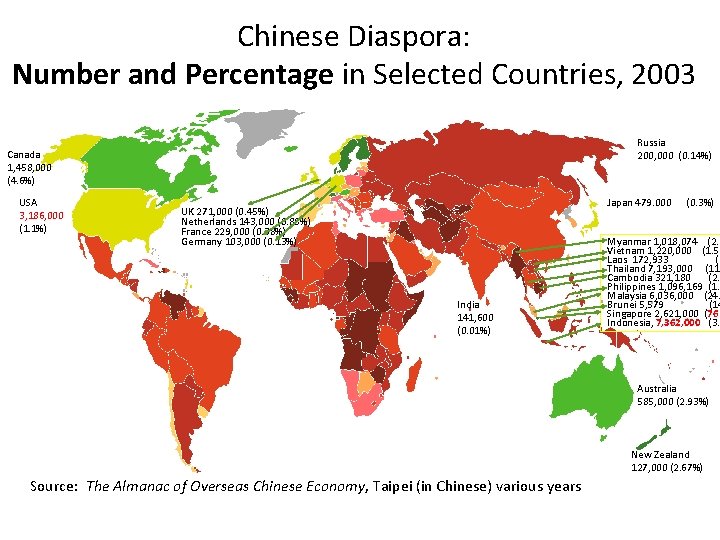
Chinese Diaspora: Number and Percentage in Selected Countries, 2003 Russia 200, 000 (0. 14%) Canada 1, 458, 000 (4. 6%) USA 3, 186, 000 (1. 1%) Japan 479. 000 UK 271, 000 (0. 45%) Netherlands 143, 000 (0. 88%) France 229, 000 (0. 38%) Germany 103, 000 (0. 13%) India 141, 600 (0. 01%) (0. 3%) Myanmar 1, 018, 074 (2. 1 Vietnam 1, 220, 000 (1. 53 Laos 172, 933 (3 Thailand 7, 193, 000 (11. Cambodia 321, 180 (2. 4 Philippines 1, 096, 169 (1. 3 Malaysia 6, 036, 000 (24. Brunei 5, 579 (14 Singapore 2, 621, 000 (76. Indonesia, 7, 362, 000 (3. 4 Australia 585, 000 (2. 93%) New Zealand 127, 000 (2. 67%) Source: The Almanac of Overseas Chinese Economy, Taipei (in Chinese) various years
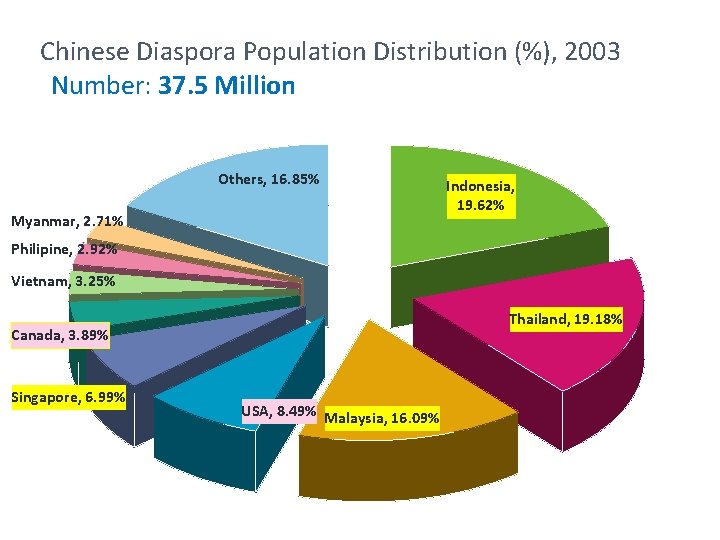
Chinese Diaspora Population Distribution (%), 2003 Number: 37. 5 Million Others, 16. 85% Myanmar, 2. 71% Indonesia, 19. 62% Philipine, 2. 92% Vietnam, 3. 25% Thailand, 19. 18% Canada, 3. 89% Singapore, 6. 99% USA, 8. 49% Malaysia, 16. 09%
Indians Diasporas Mass migration started with the colonial era in the 19 th century some 28 million Indians emigrated , 1846 -1932 some 4. 5 million settled in Malaya and Burma between 1882 and 1937 Mostly working class – coolie migration (plantation workers, labourers) Post-Independence: migration to Britain Since 1970 s: highly skilled migrants to the USA, Canada and Australia
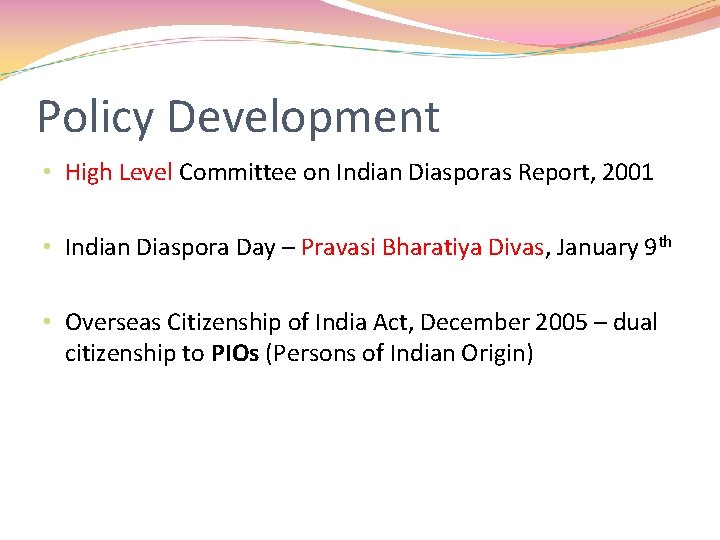
Policy Development • High Level Committee on Indian Diasporas Report, 2001 • Indian Diaspora Day – Pravasi Bharatiya Divas, January 9 th • Overseas Citizenship of India Act, December 2005 – dual citizenship to PIOs (Persons of Indian Origin)
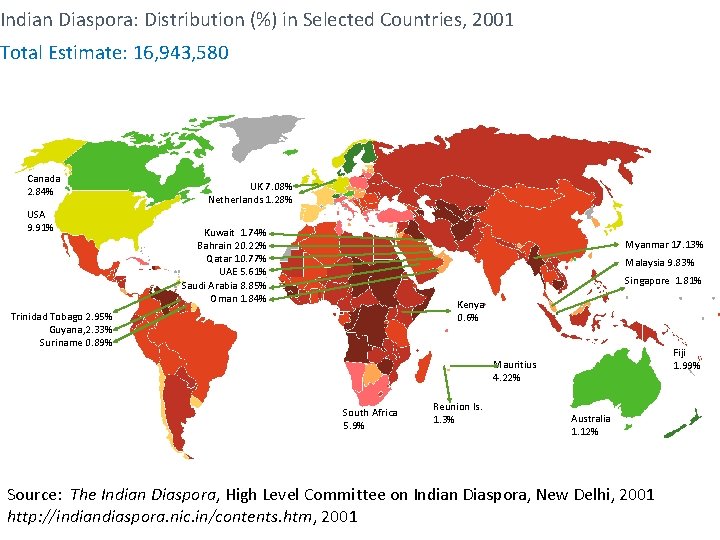
Indian Diaspora: Distribution (%) in Selected Countries, 2001 Total Estimate: 16, 943, 580 Canada 2. 84% USA 9. 91% UK 7. 08% Netherlands 1. 28% Kuwait 1. 74% Bahrain 20. 22% Qatar 10. 77% UAE 5. 61% Saudi Arabia 8. 85% Oman 1. 84% Myanmar 17. 13% Malaysia 9. 83% Singapore 1. 81% Kenya 0. 6% Trinidad Tobago 2. 95% Guyana, 2. 33% Suriname 0. 89% Fiji 1. 99% Mauritius 4. 22% South Africa 5. 9% Reunion Is. 1. 3% Australia 1. 12% Source: The Indian Diaspora, High Level Committee on Indian Diaspora, New Delhi, 2001 http: //indiaspora. nic. in/contents. htm, 2001
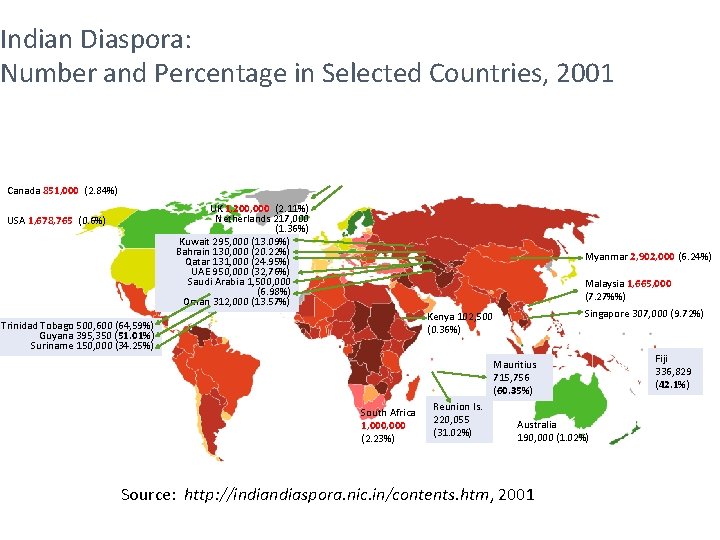
Indian Diaspora: Number and Percentage in Selected Countries, 2001 Canada 851, 000 (2. 84%) UK 1, 200, 000 (2. 11%) Netherlands 217, 000 (1. 36%) Kuwait 295, 000 (13. 09%) Bahrain 130, 000 (20. 22%) Qatar 131, 000 (24. 95%) UAE 950, 000 (32, 76%) Saudi Arabia 1, 500, 000 (6. 98%) Oman 312, 000 (13. 57%) USA 1, 678, 765 (0. 6%) Myanmar 2, 902, 000 (6. 24%) Malaysia 1, 665, 000 (7. 27%%) Singapore 307, 000 (9. 72%) Kenya 102, 500 (0. 36%) Trinidad Tobago 500, 600 (64, 59%) Guyana 395, 350 (51. 01%) Suriname 150, 000 (34. 25%) Mauritius 715, 756 (60. 35%) South Africa 1, 000 (2. 23%) Reunion Is. 220, 055 (31. 02%) Australia 190, 000 (1. 02%) Source: http: //indiaspora. nic. in/contents. htm, 2001 Fiji 336, 829 (42. 1%)
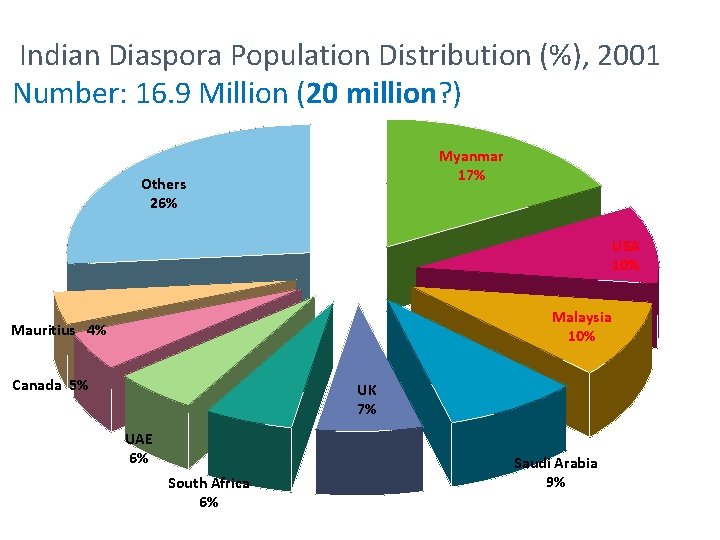
Indian Diaspora Population Distribution (%), 2001 Number: 16. 9 Million (20 million? ) Myanmar 17% Others 26% USA 10% Malaysia 10% Mauritius 4% Canada 5% UK 7% UAE 6% South Africa 6% Saudi Arabia 9%
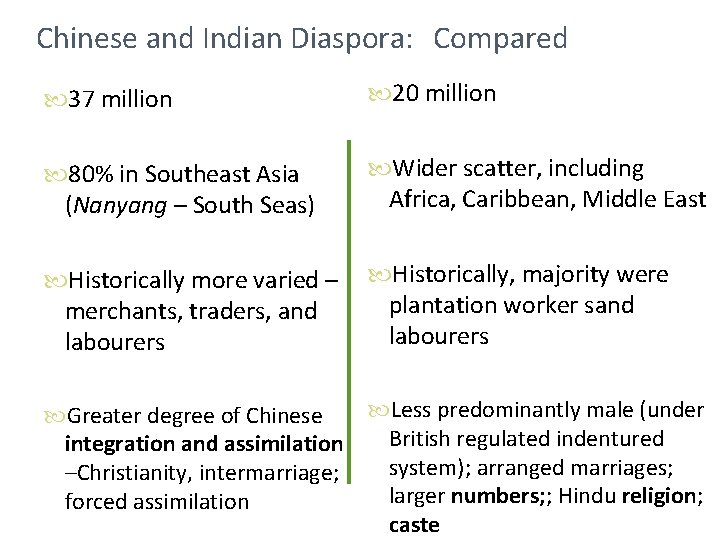
Chinese and Indian Diaspora: Compared 37 million 20 million 80% in Southeast Asia (Nanyang – South Seas) Wider scatter, including Africa, Caribbean, Middle East Historically more varied – merchants, traders, and labourers Historically, majority were plantation worker sand labourers Greater degree of Chinese integration and assimilation –Christianity, intermarriage; forced assimilation Less predominantly male (under British regulated indentured system); arranged marriages; larger numbers; ; Hindu religion; caste
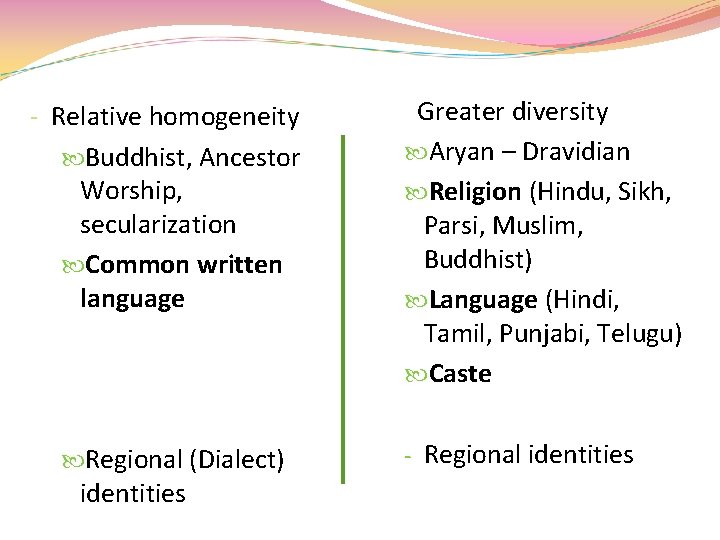
- Relative homogeneity Buddhist, Ancestor Worship, secularization Common written language Regional (Dialect) identities Greater diversity Aryan – Dravidian Religion (Hindu, Sikh, Parsi, Muslim, Buddhist) Language (Hindi, Tamil, Punjabi, Telugu) Caste - Regional identities
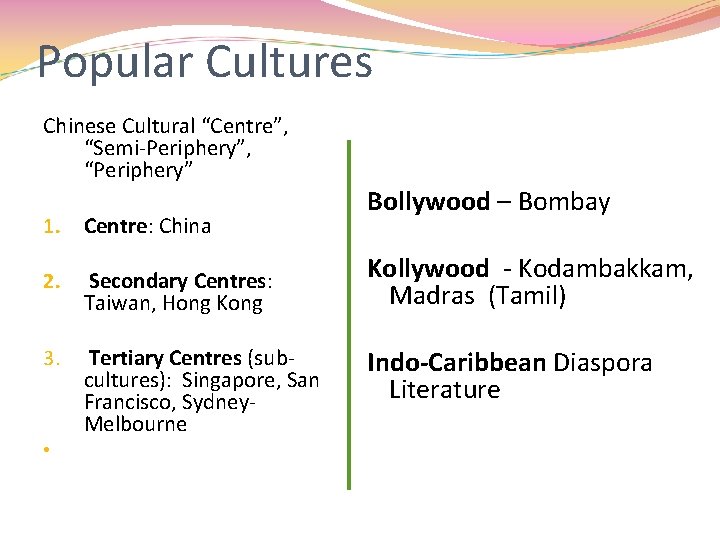
Popular Cultures Chinese Cultural “Centre”, “Semi-Periphery”, “Periphery” 1. Centre: China 2. Secondary Centres: Taiwan, Hong Kong 3. Tertiary Centres (subcultures): Singapore, San Francisco, Sydney. Melbourne • Bollywood – Bombay Kollywood - Kodambakkam, Madras (Tamil) Indo-Caribbean Diaspora Literature
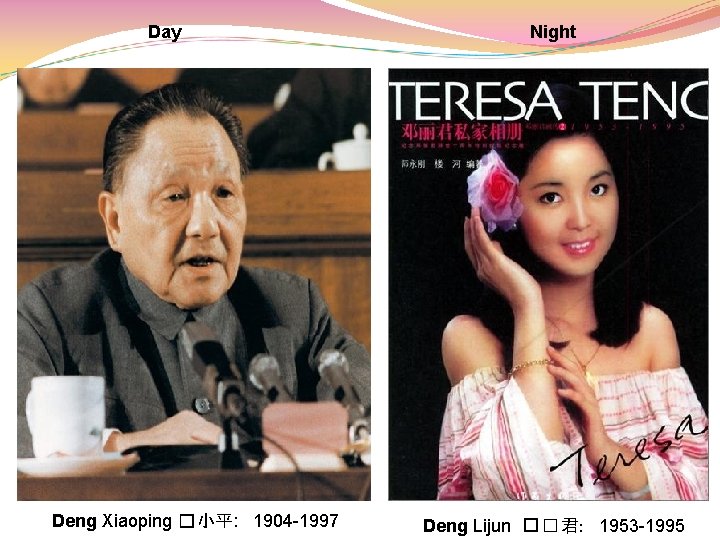
Day Deng Xiaoping � 小平: 1904 -1997 Night Deng Lijun � � 君: 1953 -1995
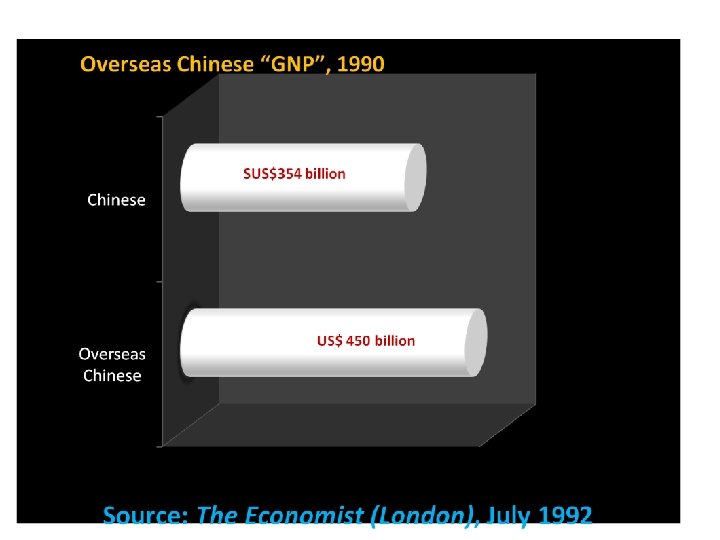
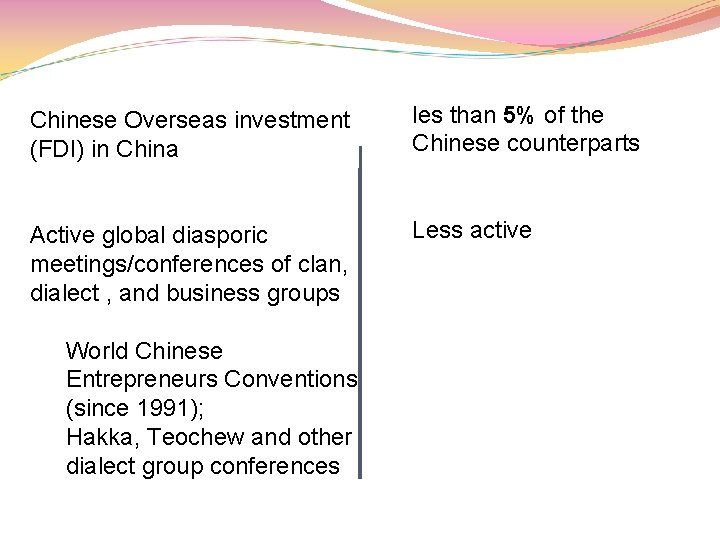
Chinese Overseas investment (FDI) in China les than 5% of the Chinese counterparts Active global diasporic meetings/conferences of clan, dialect , and business groups Less active World Chinese Entrepreneurs Conventions (since 1991); Hakka, Teochew and other dialect group conferences
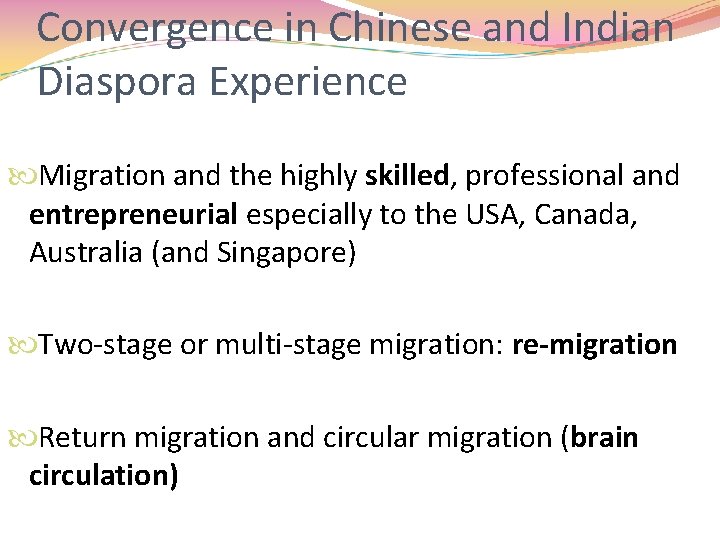
Convergence in Chinese and Indian Diaspora Experience Migration and the highly skilled, professional and entrepreneurial especially to the USA, Canada, Australia (and Singapore) Two-stage or multi-stage migration: re-migration Return migration and circular migration (brain circulation)
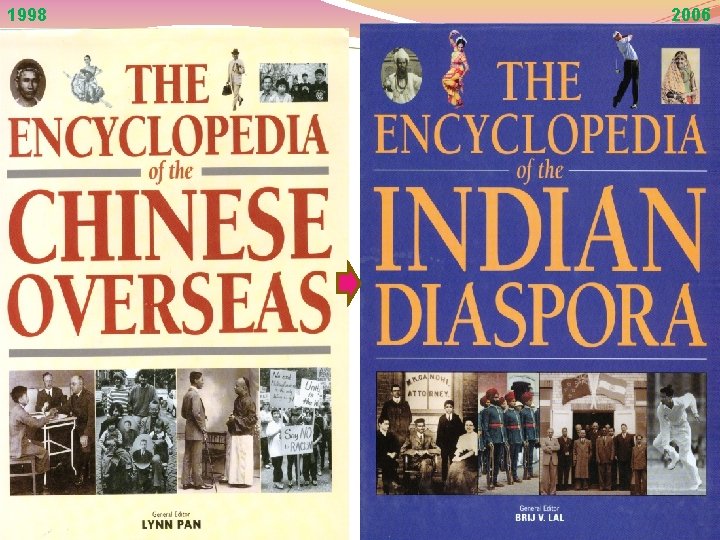
1998 2006
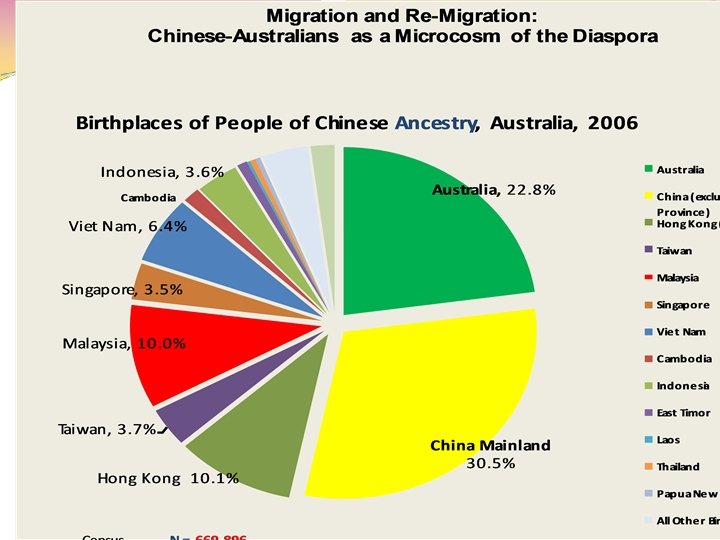
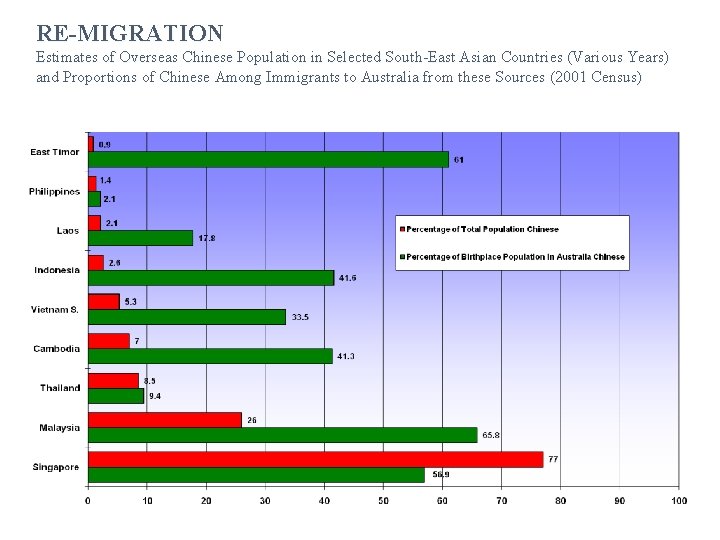
RE-MIGRATION Estimates of Overseas Chinese Population in Selected South-East Asian Countries (Various Years) and Proportions of Chinese Among Immigrants to Australia from these Sources (2001 Census)
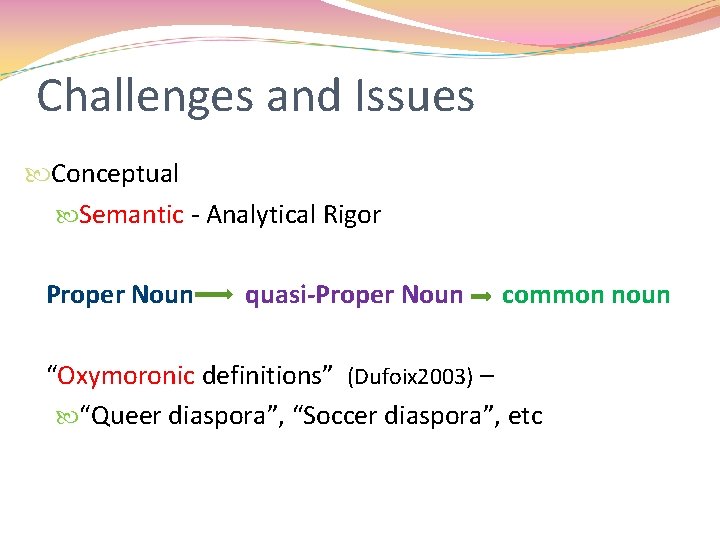
Challenges and Issues Conceptual Semantic - Analytical Rigor Proper Noun quasi-Proper Noun common noun “Oxymoronic definitions” (Dufoix 2003) – “Queer diaspora”, “Soccer diaspora”, etc
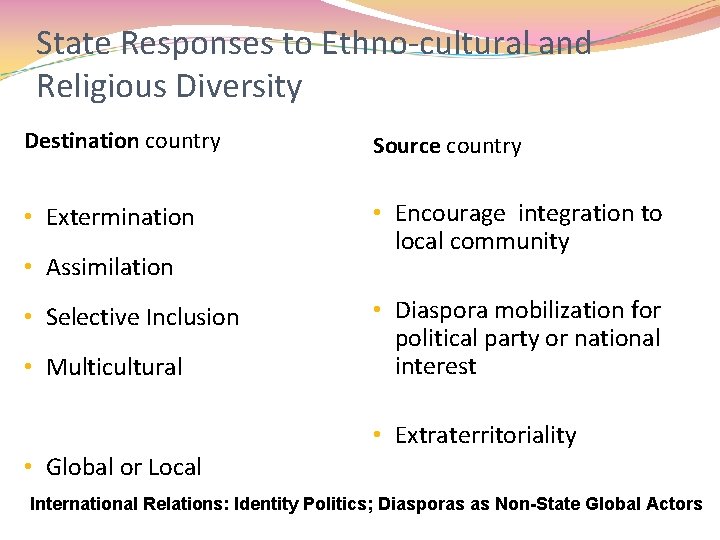
State Responses to Ethno-cultural and Religious Diversity Destination country Source country • Extermination • Encourage integration to local community • Assimilation • Selective Inclusion • Multicultural • Diaspora mobilization for political party or national interest • Extraterritoriality • Global or Local International Relations: Identity Politics; Diasporas as Non-State Global Actors
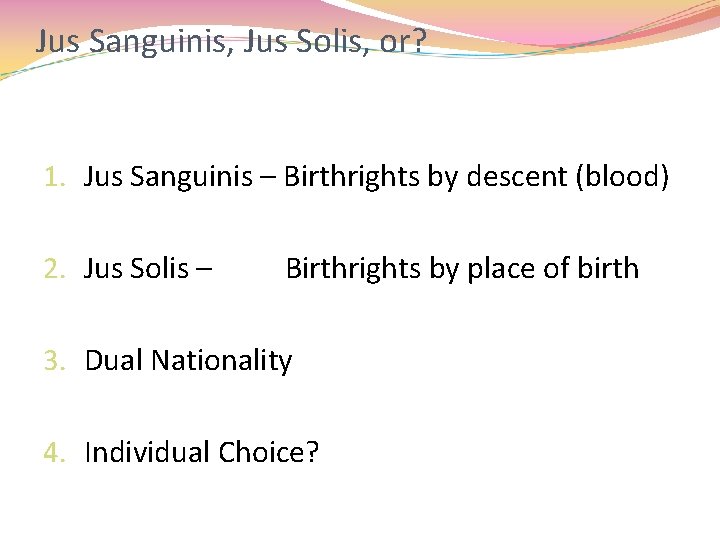
Jus Sanguinis, Jus Solis, or? 1. Jus Sanguinis – Birthrights by descent (blood) 2. Jus Solis – Birthrights by place of birth 3. Dual Nationality 4. Individual Choice?
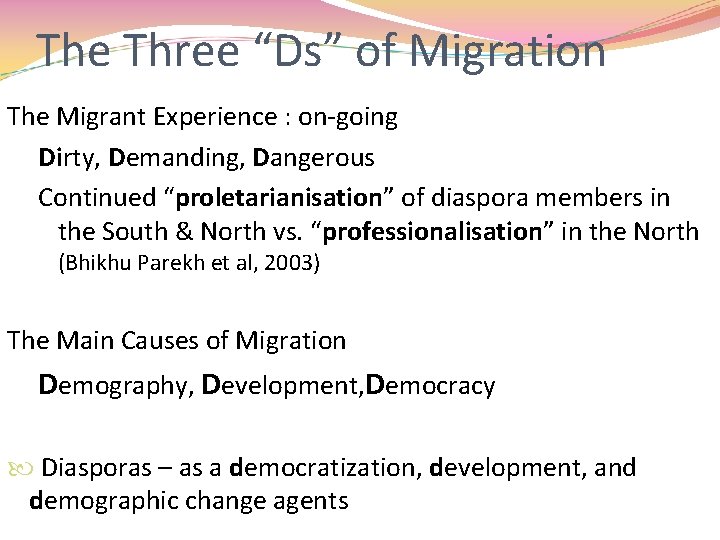
The Three “Ds” of Migration The Migrant Experience : on-going Dirty, Demanding, Dangerous Continued “proletarianisation” of diaspora members in the South & North vs. “professionalisation” in the North (Bhikhu Parekh et al, 2003) The Main Causes of Migration Demography, Development, Democracy Diasporas – as a democratization, development, and demographic change agents
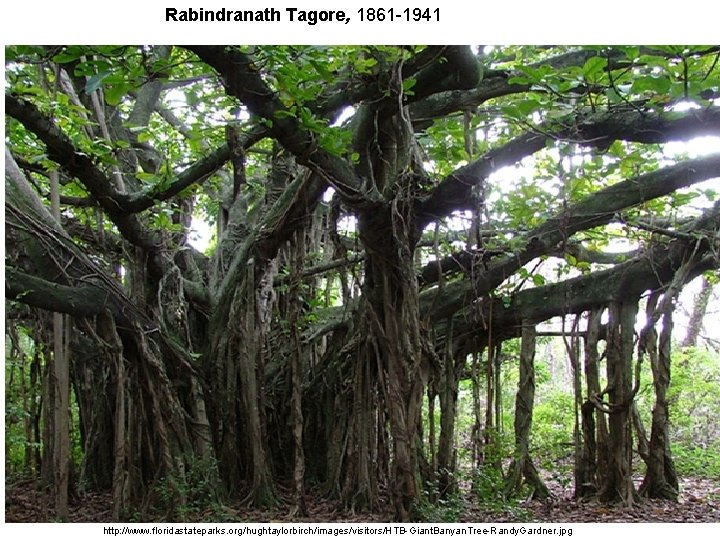
Rabindranath Tagore, 1861 -1941 http: //www. floridastateparks. org/hughtaylorbirch/images/visitors/HTB-Giant. Banyan. Tree-Randy. Gardner. jpg