Developing a Conditioning Regimen Calculator as Part of




- Slides: 24
Developing a Conditioning Regimen Calculator as Part of a Successful HCT Program Roger Williams Medical Center a Charter. Care Health Partner Presenter: Mark Curtis RPh Clinical Informatics Pharmacist
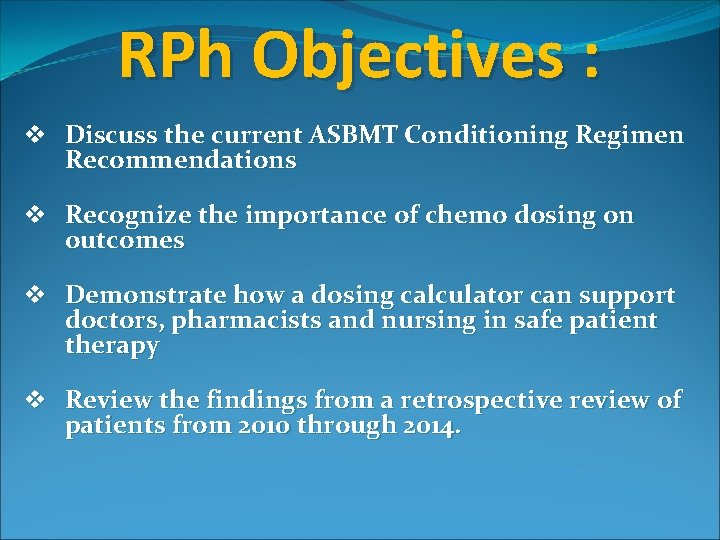
RPh Objectives : v Discuss the current ASBMT Conditioning Regimen Recommendations v Recognize the importance of chemo dosing on outcomes v Demonstrate how a dosing calculator can support doctors, pharmacists and nursing in safe patient therapy v Review the findings from a retrospective review of patients from 2010 through 2014.
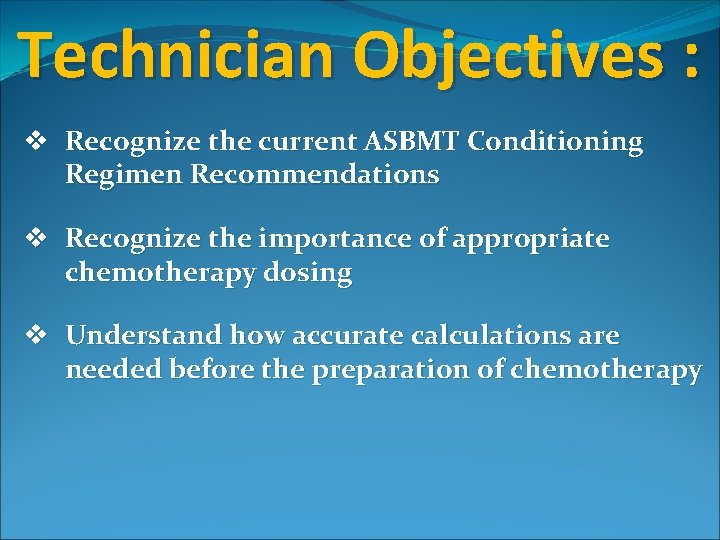
Technician Objectives : v Recognize the current ASBMT Conditioning Regimen Recommendations v Recognize the importance of appropriate chemotherapy dosing v Understand how accurate calculations are needed before the preparation of chemotherapy
Disclosures Presenter: Mark Curtis RPh Clinical Informatics Pharmacist Has no financial disclosures to report Roger Williams Medical Center a Charter. Care Health Partner
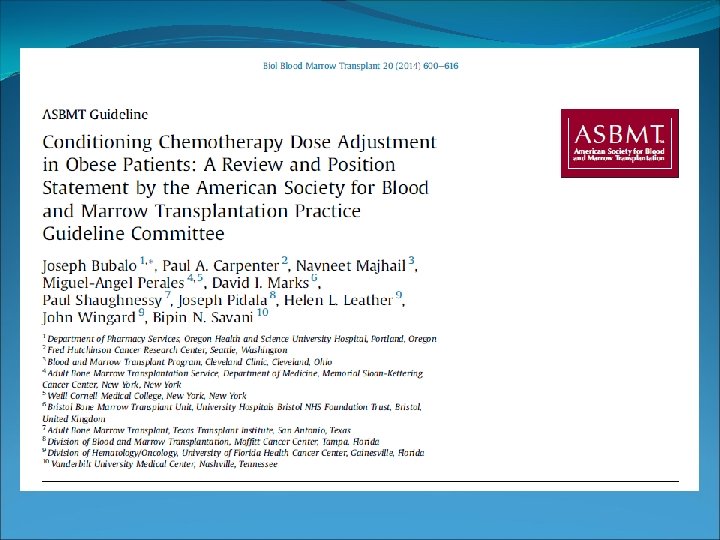
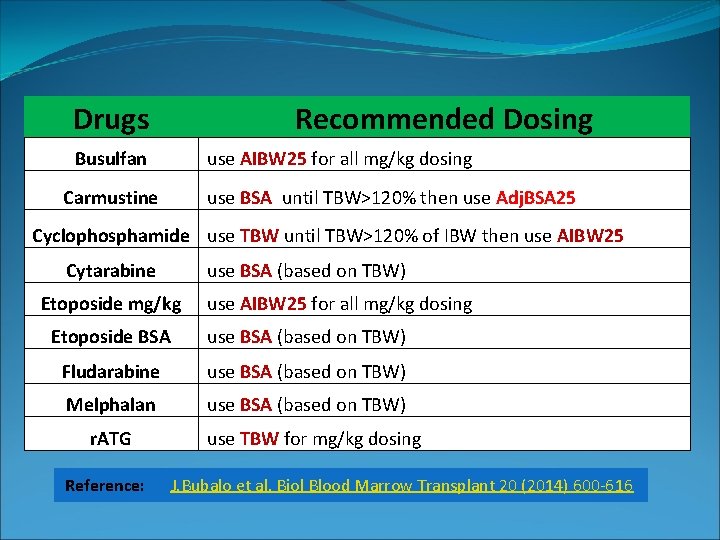
Drugs Recommended Dosing Busulfan use AIBW 25 for all mg/kg dosing Carmustine use BSA until TBW>120% then use Adj. BSA 25 Cyclophosphamide use TBW until TBW>120% of IBW then use AIBW 25 Cytarabine use BSA (based on TBW) Etoposide mg/kg use AIBW 25 for all mg/kg dosing Etoposide BSA use BSA (based on TBW) Fludarabine use BSA (based on TBW) Melphalan use BSA (based on TBW) r. ATG Reference: use TBW for mg/kg dosing J. Bubalo et al. Biol Blood Marrow Transplant 20 (2014) 600 -616
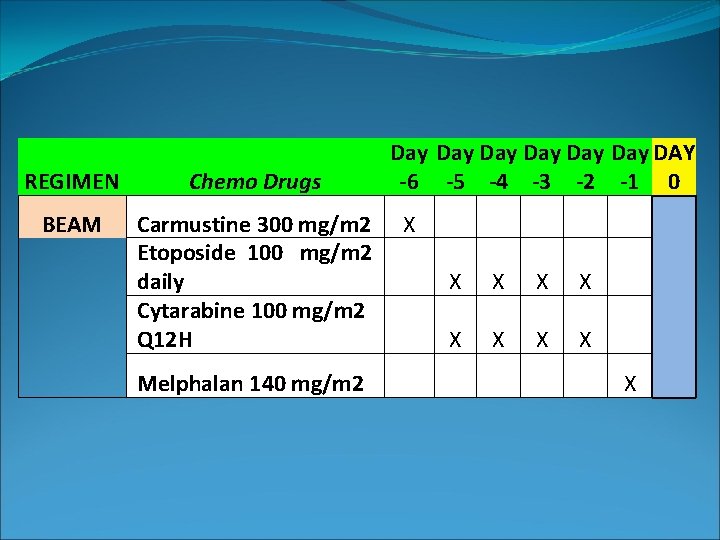
REGIMEN Chemo Drugs BEAM Carmustine 300 mg/m 2 Etoposide 100 mg/m 2 daily Cytarabine 100 mg/m 2 Q 12 H Melphalan 140 mg/m 2 Day Day Day DAY -6 -5 -4 -3 -2 -1 0 X X X X X
VALIDATION: v Doctors, Nurses, Pharmacists all helped test the calculator v Regimen selection, patient metrics, and dose calculations were all tested for accuracy v Over 80 different patient examples were used for testing v Any discrepancy between the calculator and the manual calculation were reviewed and reconciled
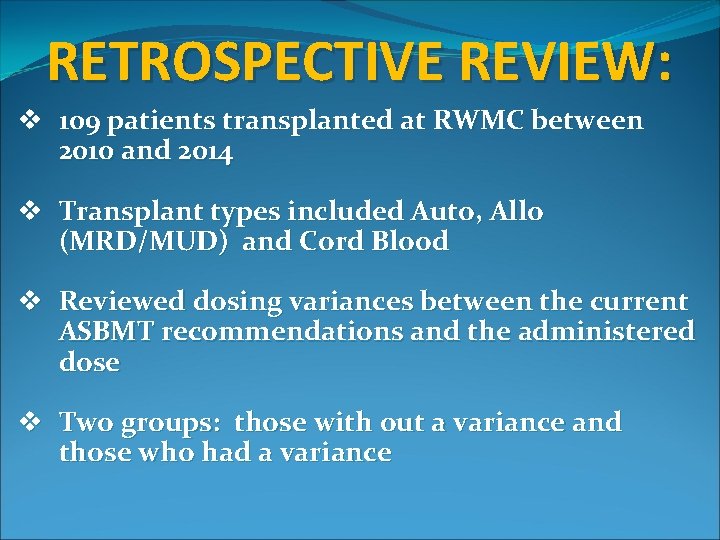
RETROSPECTIVE REVIEW: v 109 patients transplanted at RWMC between 2010 and 2014 v Transplant types included Auto, Allo (MRD/MUD) and Cord Blood v Reviewed dosing variances between the current ASBMT recommendations and the administered dose v Two groups: those with out a variance and those who had a variance
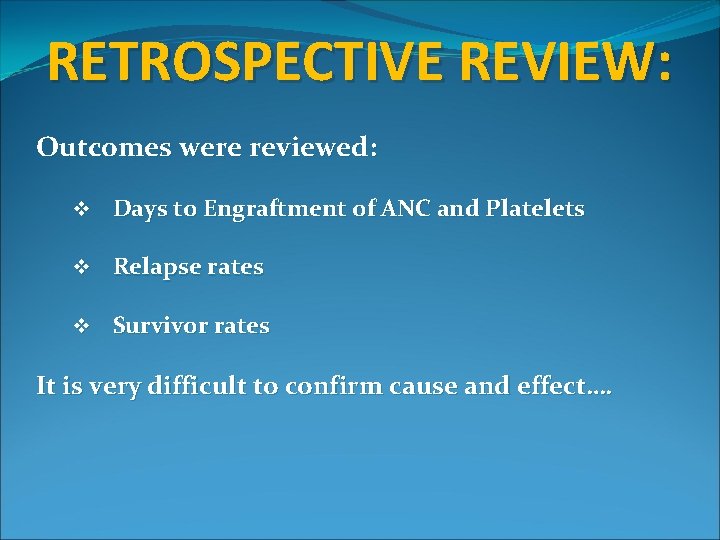
RETROSPECTIVE REVIEW: Outcomes were reviewed: v Days to Engraftment of ANC and Platelets v Relapse rates v Survivor rates It is very difficult to confirm cause and effect….
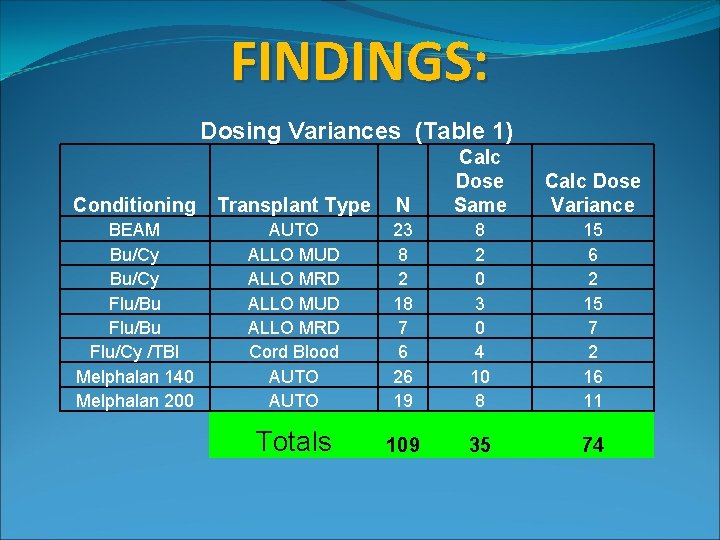
FINDINGS: Dosing Variances (Table 1) Conditioning Transplant Type N Calc Dose Same BEAM Bu/Cy Flu/Bu Flu/Cy /TBI Melphalan 140 Melphalan 200 AUTO ALLO MUD ALLO MRD Cord Blood AUTO 23 8 2 18 7 6 26 19 8 2 0 3 0 4 10 8 15 6 2 15 7 2 16 11 Totals 109 35 74 Calc Dose Variance
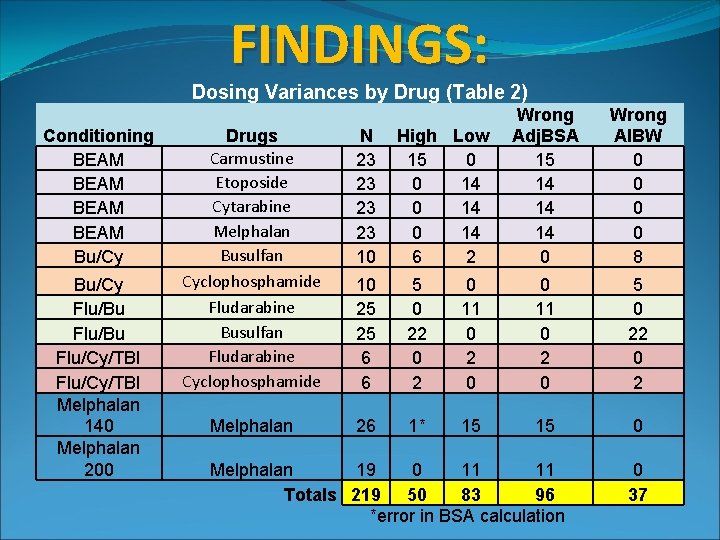
FINDINGS: Dosing Variances by Drug (Table 2) Conditioning BEAM Bu/Cy Flu/Bu Flu/Cy/TBI Melphalan 140 Melphalan 200 High Low 15 0 0 14 6 2 Wrong Adj. BSA 15 14 14 14 0 Wrong AIBW 0 0 8 Drugs Carmustine Etoposide Cytarabine Melphalan Busulfan Cyclophosphamide Fludarabine Busulfan Fludarabine Cyclophosphamide N 23 23 10 10 25 25 6 6 5 0 22 0 11 0 2 0 5 0 22 0 2 Melphalan 26 1* 15 15 0 Melphalan 19 0 11 11 Totals 219 50 83 96 *error in BSA calculation 0 37
FINDINGS: v Some regimen specific differences in time to engraftment between the two groups. v Possible some differences in relapse and survivor rates v Numbers are not enough in each group to be statistically significant
CONCLUSIONS: v The calculator supports consistent and accurate regimen dosing that follows the latest ASBMT recommendations. v There may be some Possible clinical benefit to strictly following the ASBMT recommendations
ACKNOWLEDGEMENTS Todd Roberts MD Medical Director of BMT RWMC Kimberly Loftus Transplant Coordinator RWMC Alejandro Carvajal, MD RWMC
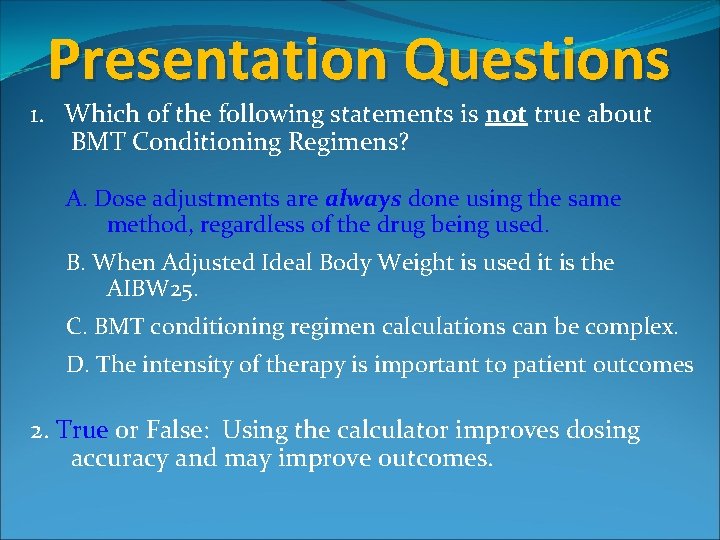
Presentation Questions 1. Which of the following statements is not true about BMT Conditioning Regimens? A. Dose adjustments are always done using the same method, regardless of the drug being used. B. When Adjusted Ideal Body Weight is used it is the AIBW 25. C. BMT conditioning regimen calculations can be complex. D. The intensity of therapy is important to patient outcomes 2. True or False: Using the calculator improves dosing accuracy and may improve outcomes.
Presentation Questions 1. Which of the following statements is not true about BMT Conditioning Regimens? A. Dose adjustments are always done using the same method, regardless of the drug being used. B. When Adjusted Ideal Body Weight is used it is the AIBW 25. C. BMT conditioning regimen calculations can be complex. D. The intensity of therapy is important to patient outcomes 2. True or False: Using the calculator improves dosing accuracy and may improve outcomes.