Systemic Drugs in Dermatology Retinoid n Topical n
- Slides: 35
Systemic Drugs in Dermatology 高雄長庚皮膚科
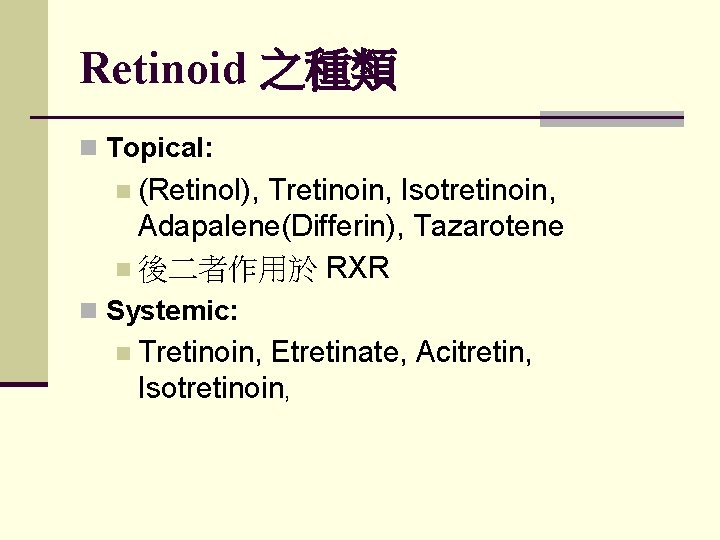
Retinoid 之種類 n Topical: n (Retinol), Tretinoin, Isotretinoin, Adapalene(Differin), Tazarotene n 後二者作用於 RXR n Systemic: n Tretinoin, Etretinate, Acitretin, Isotretinoin,
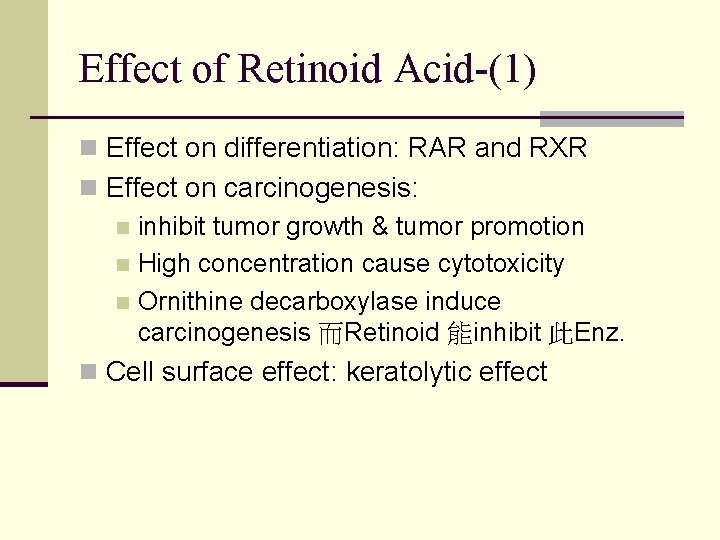
Effect of Retinoid Acid-(1) n Effect on differentiation: RAR and RXR n Effect on carcinogenesis: n inhibit tumor growth & tumor promotion n High concentration cause cytotoxicity n Ornithine decarboxylase induce carcinogenesis 而Retinoid 能inhibit 此Enz. n Cell surface effect: keratolytic effect
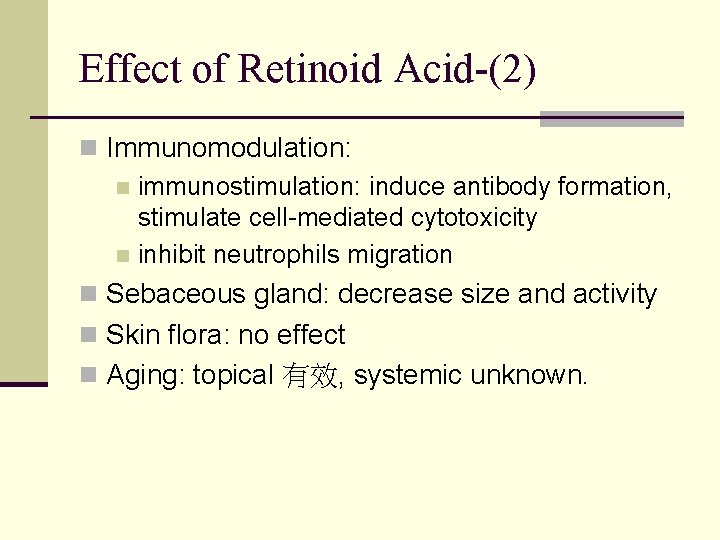
Effect of Retinoid Acid-(2) n Immunomodulation: n immunostimulation: induce antibody formation, stimulate cell-mediated cytotoxicity n inhibit neutrophils migration n Sebaceous gland: decrease size and activity n Skin flora: no effect n Aging: topical 有效, systemic unknown.
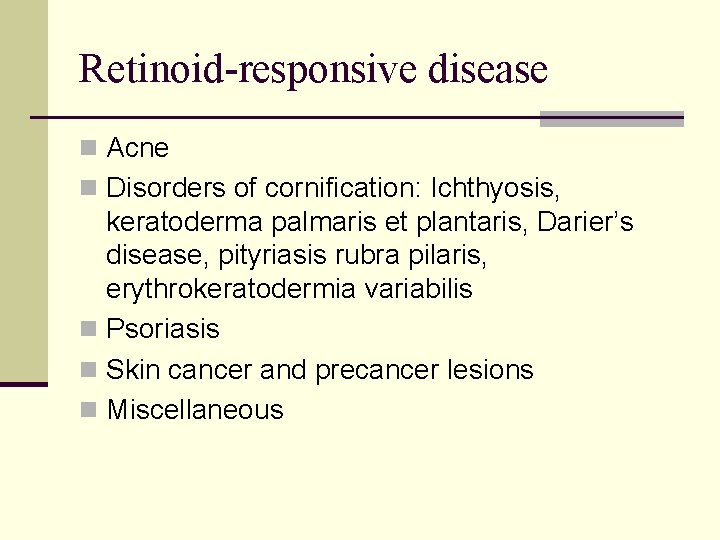
Retinoid-responsive disease n Acne n Disorders of cornification: Ichthyosis, keratoderma palmaris et plantaris, Darier’s disease, pityriasis rubra pilaris, erythrokeratodermia variabilis n Psoriasis n Skin cancer and precancer lesions n Miscellaneous
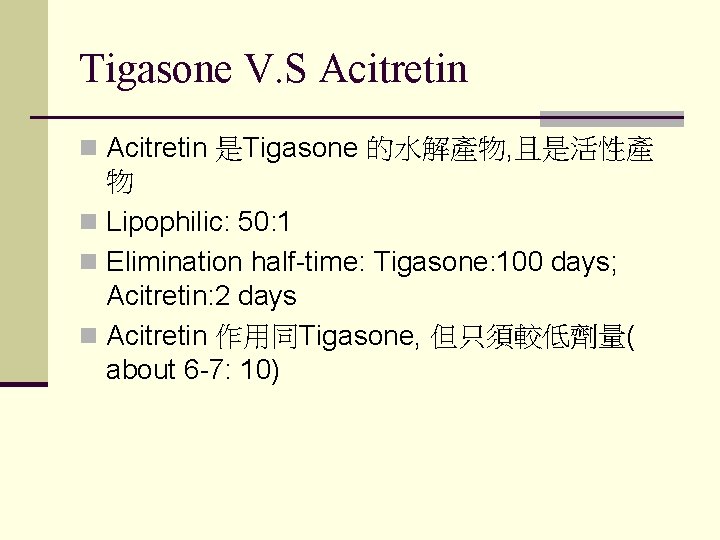
Tigasone V. S Acitretin n Acitretin 是Tigasone 的水解產物, 且是活性產 物 n Lipophilic: 50: 1 n Elimination half-time: Tigasone: 100 days; Acitretin: 2 days n Acitretin 作用同Tigasone, 但只須較低劑量( about 6 -7: 10)
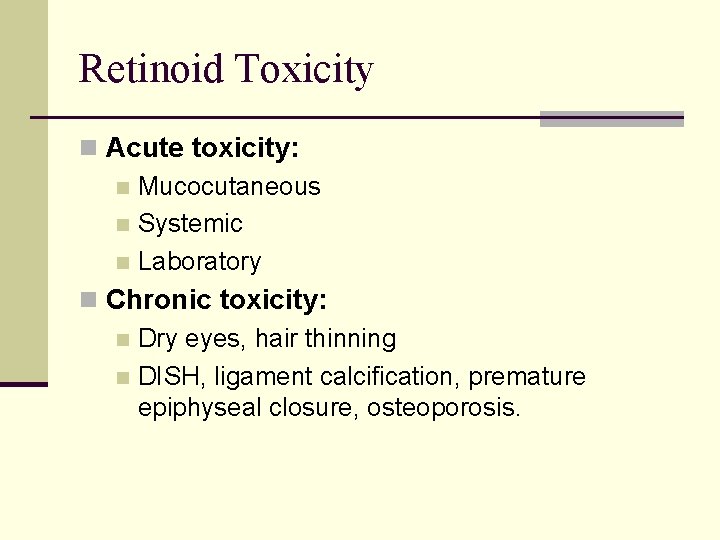
Retinoid Toxicity n Acute toxicity: n Mucocutaneous n Systemic n Laboratory n Chronic toxicity: n Dry eyes, hair thinning n DISH, ligament calcification, premature epiphyseal closure, osteoporosis.
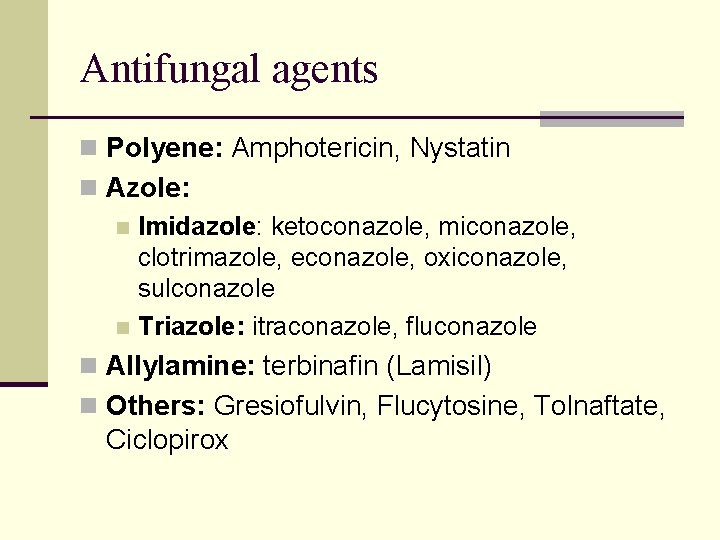
Antifungal agents n Polyene: Amphotericin, Nystatin n Azole: n Imidazole: ketoconazole, miconazole, clotrimazole, econazole, oxiconazole, sulconazole n Triazole: itraconazole, fluconazole n Allylamine: terbinafin (Lamisil) n Others: Gresiofulvin, Flucytosine, Tolnaftate, Ciclopirox
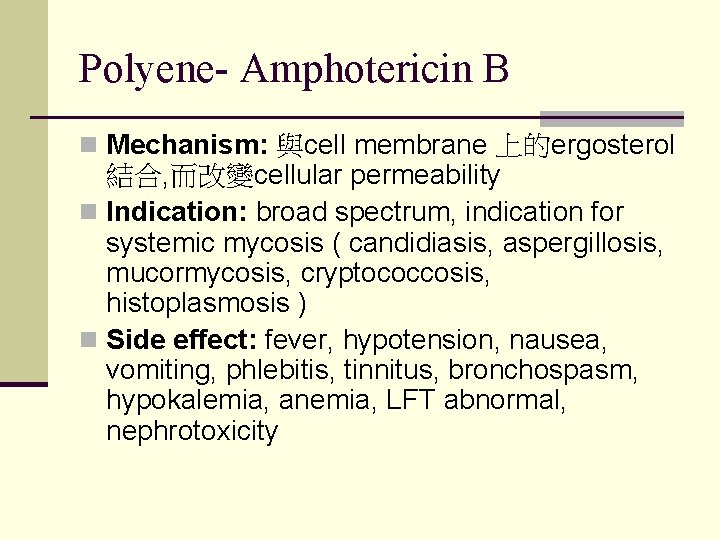
Polyene- Amphotericin B n Mechanism: 與cell membrane 上的ergosterol 結合, 而改變cellular permeability n Indication: broad spectrum, indication for systemic mycosis ( candidiasis, aspergillosis, mucormycosis, cryptococcosis, histoplasmosis ) n Side effect: fever, hypotension, nausea, vomiting, phlebitis, tinnitus, bronchospasm, hypokalemia, anemia, LFT abnormal, nephrotoxicity
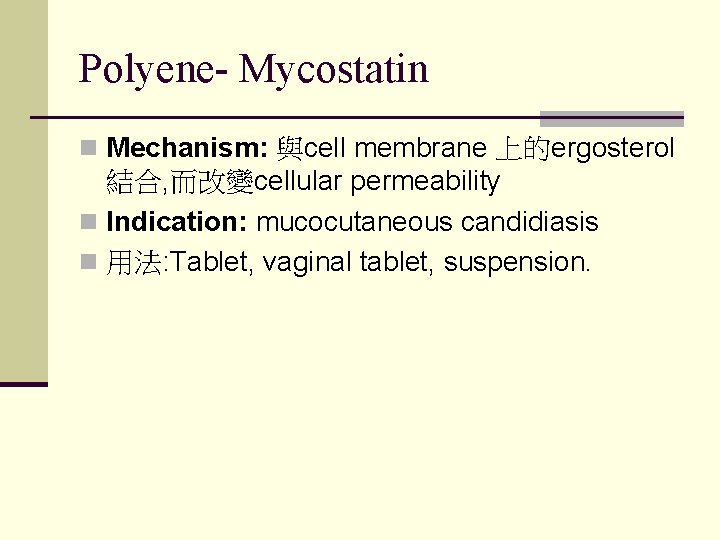
Polyene- Mycostatin n Mechanism: 與cell membrane 上的ergosterol 結合, 而改變cellular permeability n Indication: mucocutaneous candidiasis n 用法: Tablet, vaginal tablet, suspension.
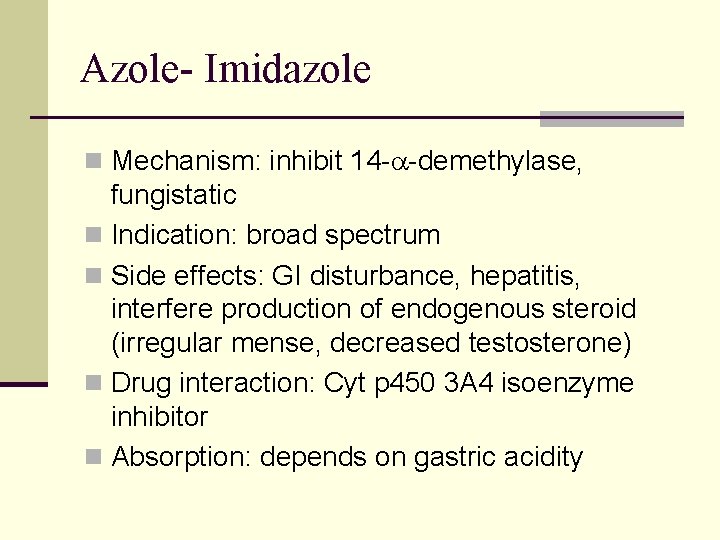
Azole- Imidazole n Mechanism: inhibit 14 - -demethylase, fungistatic n Indication: broad spectrum n Side effects: GI disturbance, hepatitis, interfere production of endogenous steroid (irregular mense, decreased testosterone) n Drug interaction: Cyt p 450 3 A 4 isoenzyme inhibitor n Absorption: depends on gastric acidity
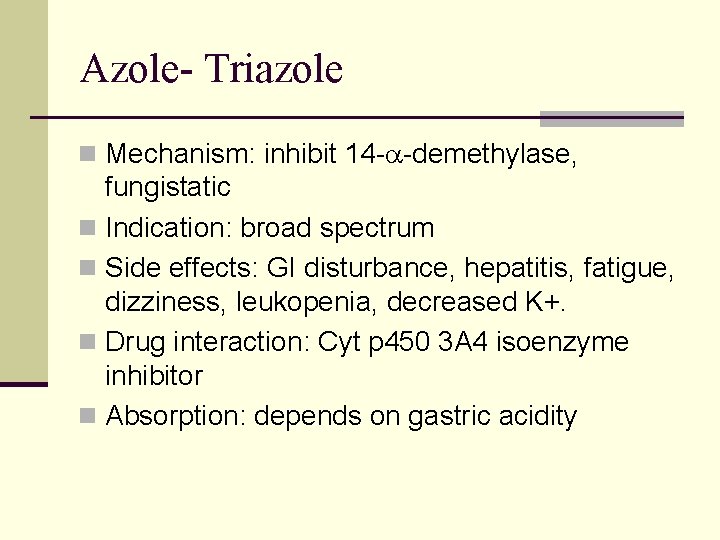
Azole- Triazole n Mechanism: inhibit 14 - -demethylase, fungistatic n Indication: broad spectrum n Side effects: GI disturbance, hepatitis, fatigue, dizziness, leukopenia, decreased K+. n Drug interaction: Cyt p 450 3 A 4 isoenzyme inhibitor n Absorption: depends on gastric acidity
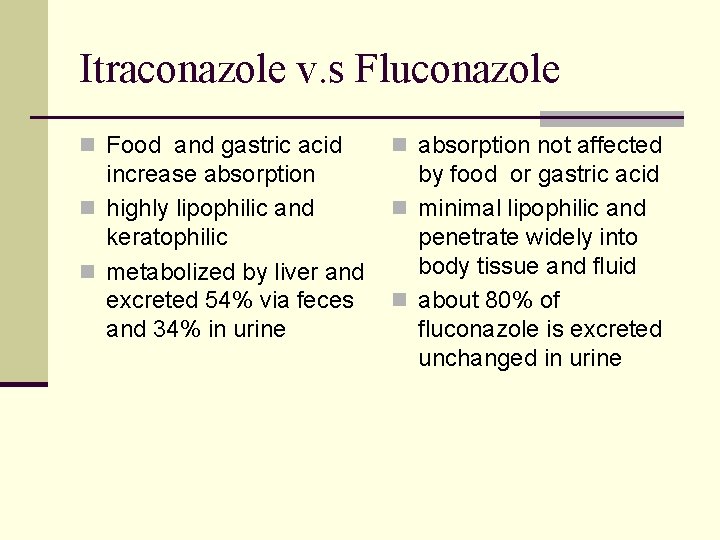
Itraconazole v. s Fluconazole n Food and gastric acid n absorption not affected increase absorption n highly lipophilic and keratophilic n metabolized by liver and excreted 54% via feces and 34% in urine by food or gastric acid n minimal lipophilic and penetrate widely into body tissue and fluid n about 80% of fluconazole is excreted unchanged in urine
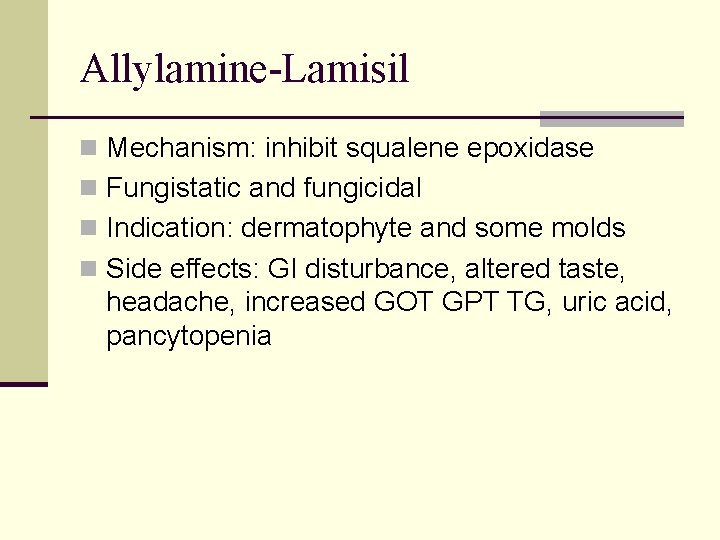
Allylamine-Lamisil n Mechanism: inhibit squalene epoxidase n Fungistatic and fungicidal n Indication: dermatophyte and some molds n Side effects: GI disturbance, altered taste, headache, increased GOT GPT TG, uric acid, pancytopenia
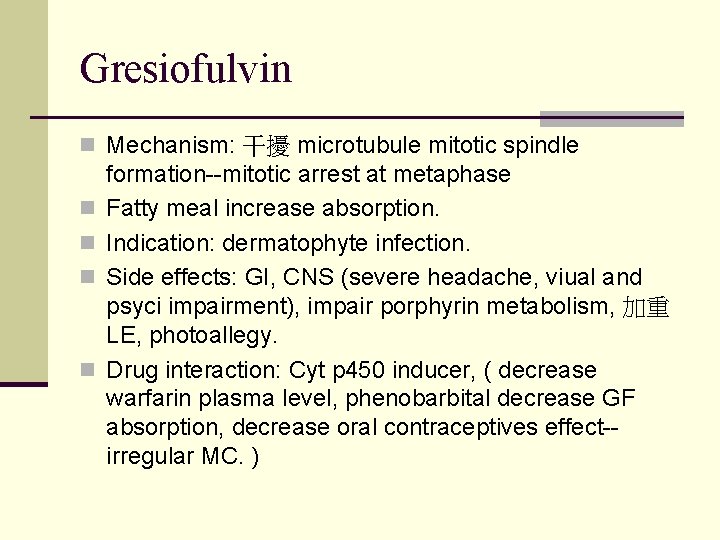
Gresiofulvin n Mechanism: 干擾 microtubule mitotic spindle n n formation--mitotic arrest at metaphase Fatty meal increase absorption. Indication: dermatophyte infection. Side effects: GI, CNS (severe headache, viual and psyci impairment), impair porphyrin metabolism, 加重 LE, photoallegy. Drug interaction: Cyt p 450 inducer, ( decrease warfarin plasma level, phenobarbital decrease GF absorption, decrease oral contraceptives effect-irregular MC. )
Immunosuppresant-cyclosporine n Indication: psoriasis n non-psoriasis: n n pyoderma gangrenosum, lichen planus, GVHD, atopic dermatitis, EBA, paraneoplastic pemphigus, dermatomyositis, alopecia areata, generalized morphea.
Cyclosporine n Mechanism of action: act primarily on T- cells prevent T cell activation n inhibition of T cell mediated potentiation of the immune response ( IL-2, INF- ) n
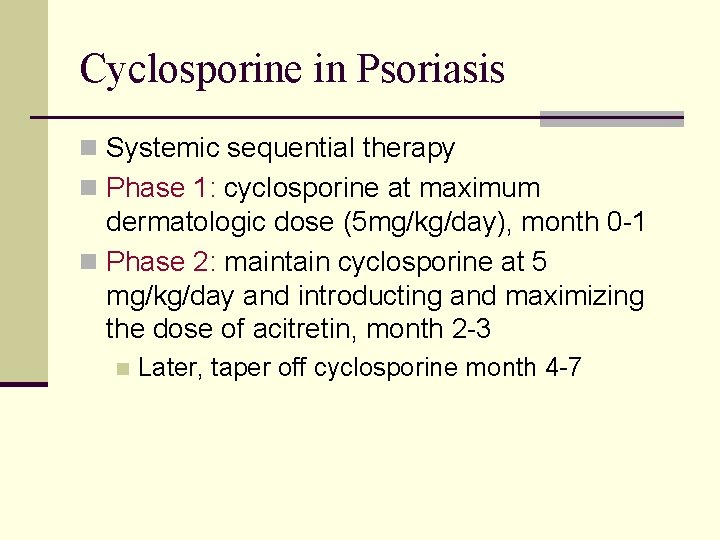
Cyclosporine in Psoriasis n Systemic sequential therapy n Phase 1: cyclosporine at maximum dermatologic dose (5 mg/kg/day), month 0 -1 n Phase 2: maintain cyclosporine at 5 mg/kg/day and introducting and maximizing the dose of acitretin, month 2 -3 n Later, taper off cyclosporine month 4 -7
Cyclosporine in Psoriasis n Phase 3 A: maintain with acitretin after month 7 n Phase 3 B: maintain with acitretin and NBUVB or PUVA
Side effects of cyclosporine n Nephrotoxicity n Hypertension n Hair growth n Hyperkalemia n Hypomagnesemia n Increase in lipids
Antimetabolic agent--Methotrexate n Indication: n Psoriasis: plaque type, erythroderma, pustular psoriasis, psoriatic arthritis. n Non-psoriasis: Reiter’s syndrome n Sarcoidosis n PLEVA, PRP, Vasculitis, dermatomyositis, LE, pemphigus, pyoderma gangrenosum n
Methotrexate n A synthetic analogue of folic acid n Inside the cell, MTX binds to dihydrofolate reductase and inactivates this enzyme. n Synthesis of thymidylate is most sensitive to MTX-mediated folate depletion. n Purine synthesis is somewhat more resistant.
Methotrexate--mechanism n Folate antagonisms/decreased cell proliferation n Suppression of inflammatory cell chemotaxis n Inhibition of monocyte/macrophage activation n Inhibition of histamine release from basophils (and mast cells? ) n Inhibition of lymphocyte function
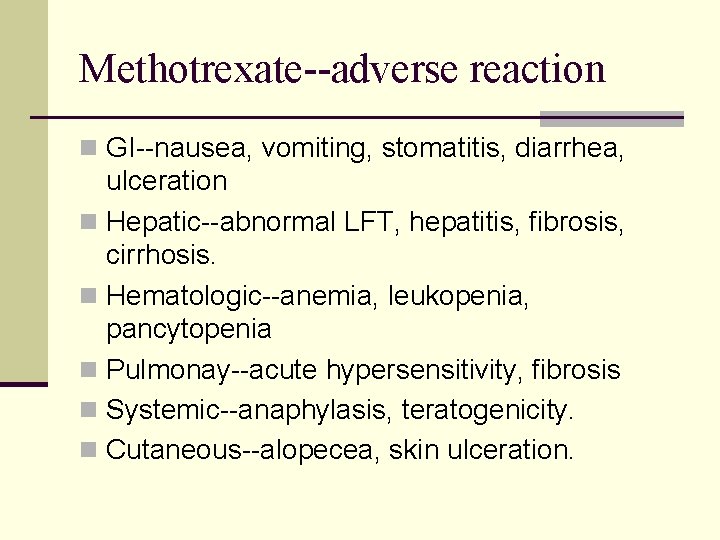
Methotrexate--adverse reaction n GI--nausea, vomiting, stomatitis, diarrhea, ulceration n Hepatic--abnormal LFT, hepatitis, fibrosis, cirrhosis. n Hematologic--anemia, leukopenia, pancytopenia n Pulmonay--acute hypersensitivity, fibrosis n Systemic--anaphylasis, teratogenicity. n Cutaneous--alopecea, skin ulceration.
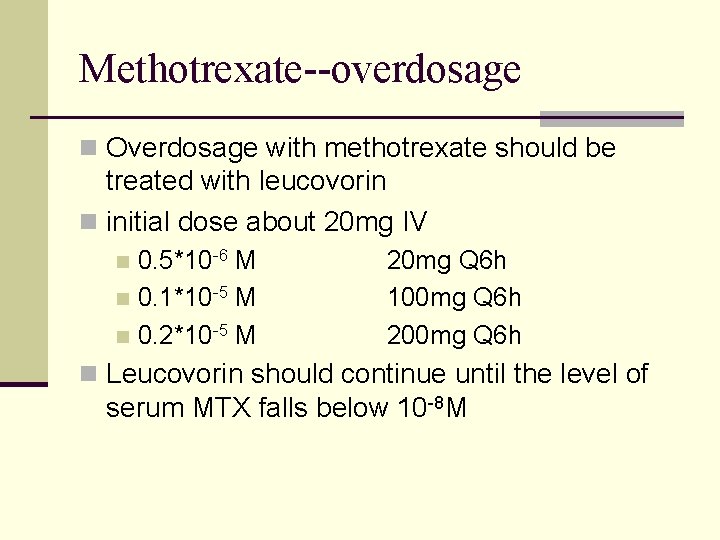
Methotrexate--overdosage n Overdosage with methotrexate should be treated with leucovorin n initial dose about 20 mg IV 0. 5*10 -6 M n 0. 1*10 -5 M n 0. 2*10 -5 M n 20 mg Q 6 h 100 mg Q 6 h 200 mg Q 6 h n Leucovorin should continue until the level of serum MTX falls below 10 -8 M
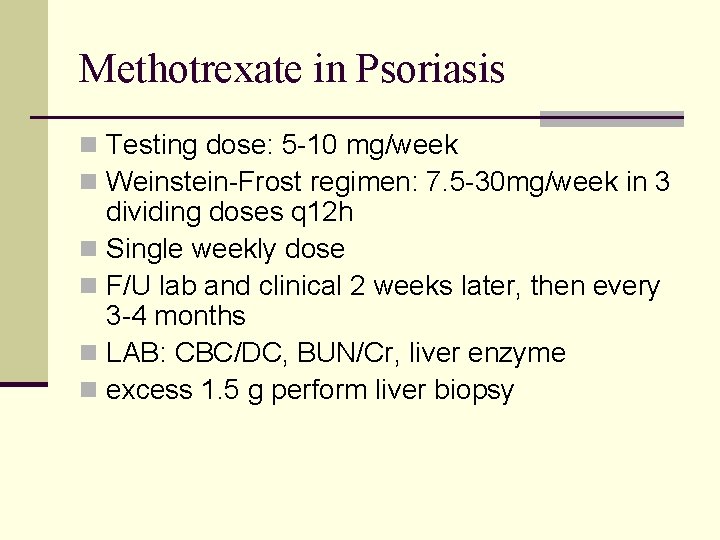
Methotrexate in Psoriasis n Testing dose: 5 -10 mg/week n Weinstein-Frost regimen: 7. 5 -30 mg/week in 3 dividing doses q 12 h n Single weekly dose n F/U lab and clinical 2 weeks later, then every 3 -4 months n LAB: CBC/DC, BUN/Cr, liver enzyme n excess 1. 5 g perform liver biopsy
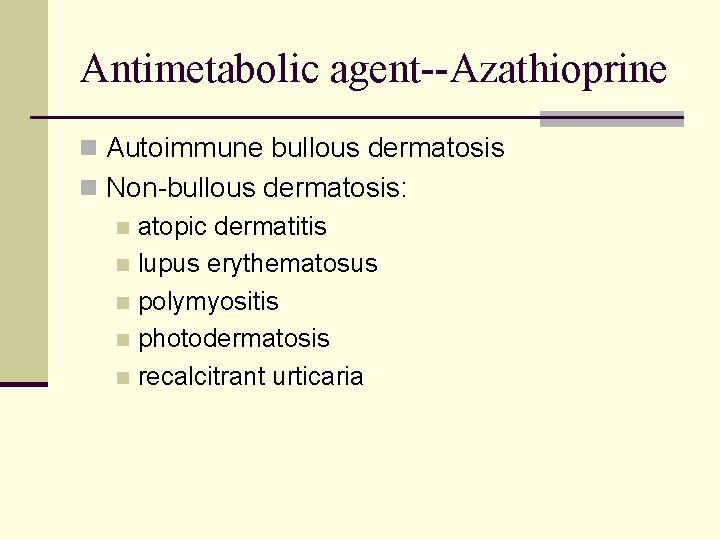
Antimetabolic agent--Azathioprine n Autoimmune bullous dermatosis n Non-bullous dermatosis: n atopic dermatitis n lupus erythematosus n polymyositis n photodermatosis n recalcitrant urticaria
Azathioprine--mechanism n A synthetic analogue of the nature purine base. Inhibit biosynthesis of purine bases in S -phase specific fashion. n Inhibition of RNA and DNA synthesis and function.
Azathioprine--Adverse reaction n Myelosuppression: TPMP (thiopurine methyltransferase) 濃度有關. n Infection n Drug fever n GI tract: nausea, vomiting, diarrhea, hepatitis, pancreatitis. n Induction of malignancy: hematologic. n Hypersensitivity reaction: n Birth defect, 但不影響生殖.
Azathioprine for bullous dermatosis n Starting dose: 1 -2 mg/kg/day n Therapeutic response occur in 6 -8 weeks. n After 6 -8 weeks the dose may be increased by 0. 5 mg/kg at 4 weeks interval n generally should not excess 3 mg/kg/day. n If no beneficial response after 12 -16 weeks treatment DC
Alkylating agent-Cyclophosphamide n Autoimmune diseases: pemphigus vulgaris, bullous pemphigoid, Wegener’s granulomatosis, polyarteritis nodosa, pyoderma gangrenosum, relapsing polychondritis, dermatomyositis, systemic scleroderma. n Others: TEN, Bechet’s disease, multicentric reticulohistiocytosis.
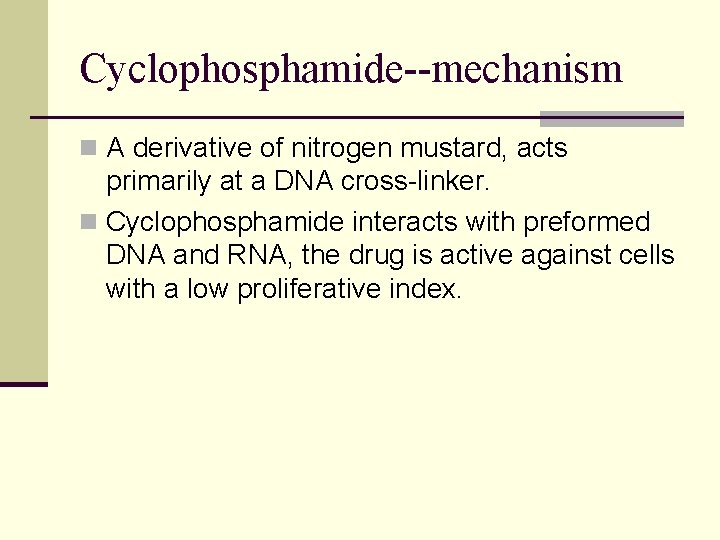
Cyclophosphamide--mechanism n A derivative of nitrogen mustard, acts primarily at a DNA cross-linker. n Cyclophosphamide interacts with preformed DNA and RNA, the drug is active against cells with a low proliferative index.
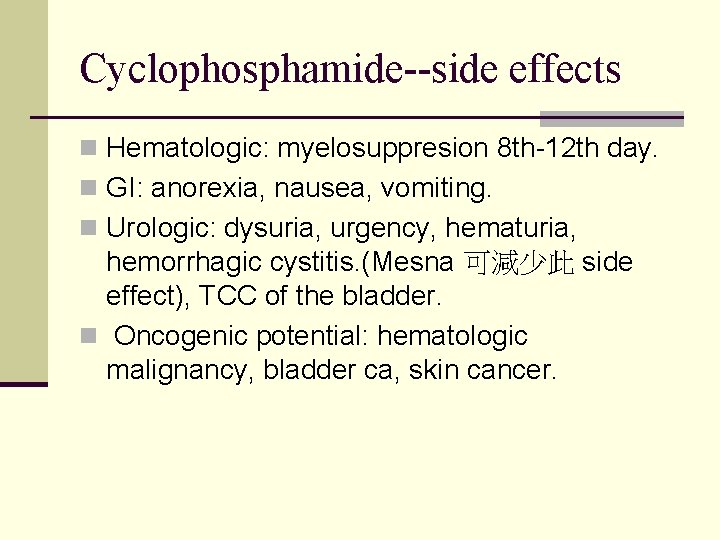
Cyclophosphamide--side effects n Hematologic: myelosuppresion 8 th-12 th day. n GI: anorexia, nausea, vomiting. n Urologic: dysuria, urgency, hematuria, hemorrhagic cystitis. (Mesna 可減少此 side effect), TCC of the bladder. n Oncogenic potential: hematologic malignancy, bladder ca, skin cancer.
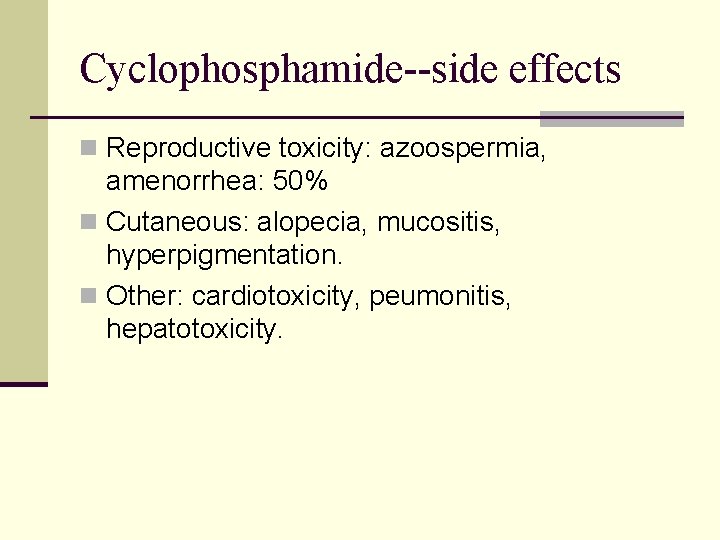
Cyclophosphamide--side effects n Reproductive toxicity: azoospermia, amenorrhea: 50% n Cutaneous: alopecia, mucositis, hyperpigmentation. n Other: cardiotoxicity, peumonitis, hepatotoxicity.
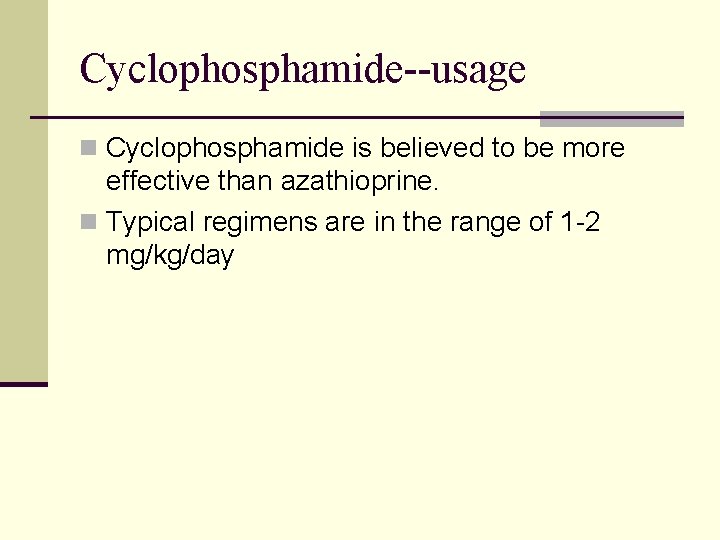
Cyclophosphamide--usage n Cyclophosphamide is believed to be more effective than azathioprine. n Typical regimens are in the range of 1 -2 mg/kg/day