Evaluation of topical dosage forms DR J DOMENECH


- Slides: 22
Evaluation of topical dosage forms DR. J. DOMENECH
Topical delivery includes two basic types of product: 1. External topicals that are spread, sprayed, or otherwise dispersed on to cutaneous tissues to cover the affected area. 2. Internal topicals that are applied to the mucous membrane orally, vaginally or on anorectal tissues for local activity.
Advantages of Topical Drug Delivery Systems üAvoidance of first pass metabolism. üConvenient and easy to apply. üAvoidance of the risks and inconveniences of intravenous therapy and of the varied conditions of absorption, like p. H changes, presence of enzymes, gastric emptying time etc. üAchievement of efficacy with lower total daily dosage of drug by continuous drug input. üAvoids fluctuation in drug levels, inter- and intrapatient variations.
ü Ability to easily terminate the medications, when needed. ü A relatively large area of application in comparison with buccal or nasal cavity ü Ability to deliver drug more selectively to a specific site. ü Avoidance of gastro-intestinal incompatibility. ü Providing utilization of drugs with short biological half-life, narrow therapeutic window. ü Improving physiological and pharmacological response. ü Improve patient compliance. ü Provide suitability for self-medication.
Disadvantages of Topical Drug Delivery Systems • Skin irritation of contact dermatitis may occur due to the drug and/or excipients. • Poor permeability of some drugs through the skin. • Possibility of allergenic reactions. • Can be used only for drugs which require very small plasma concentration for action • Enzyme in epidermis may denature the drugs • Drugs of larger particle size not easy to absorb through the skin
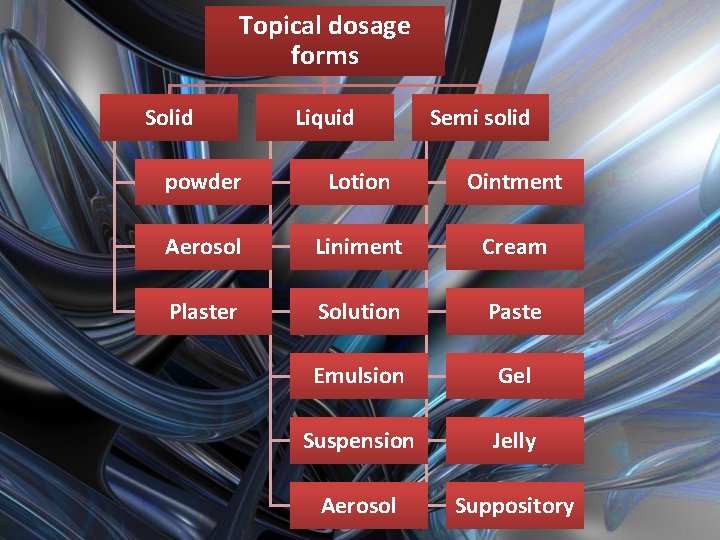
Topical dosage forms Solid Liquid Semi solid powder Lotion Ointment Aerosol Liniment Cream Plaster Solution Paste Emulsion Gel Suspension Jelly Aerosol Suppository
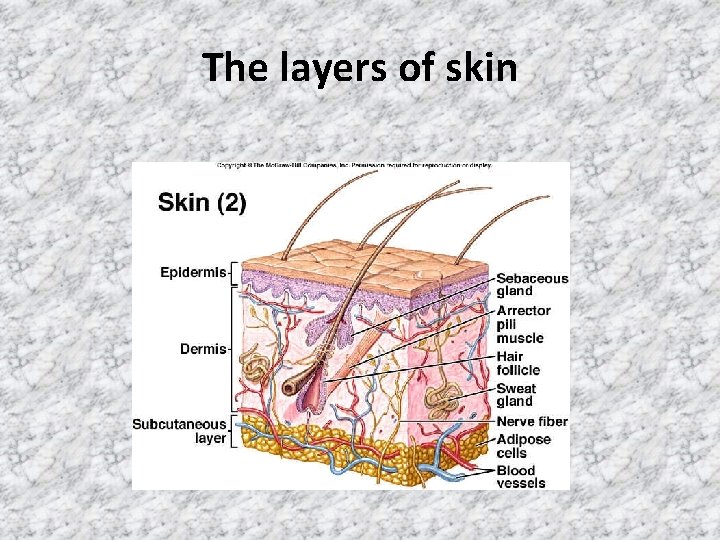
The layers of skin
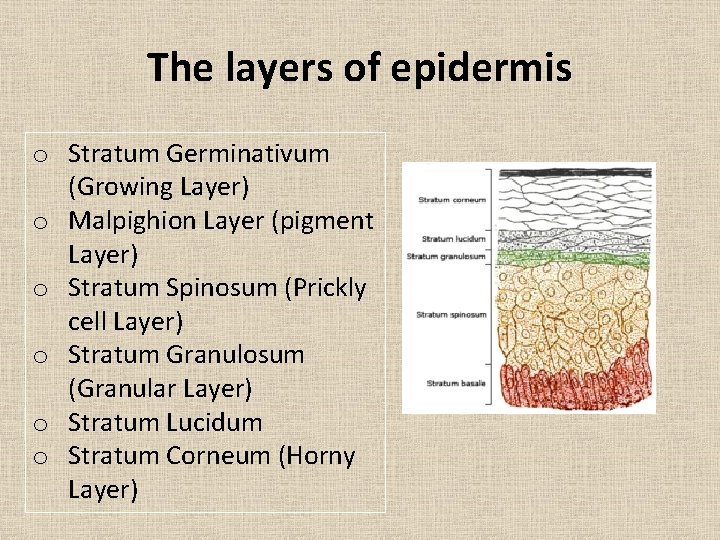
The layers of epidermis o Stratum Germinativum (Growing Layer) o Malpighion Layer (pigment Layer) o Stratum Spinosum (Prickly cell Layer) o Stratum Granulosum (Granular Layer) o Stratum Lucidum o Stratum Corneum (Horny Layer)
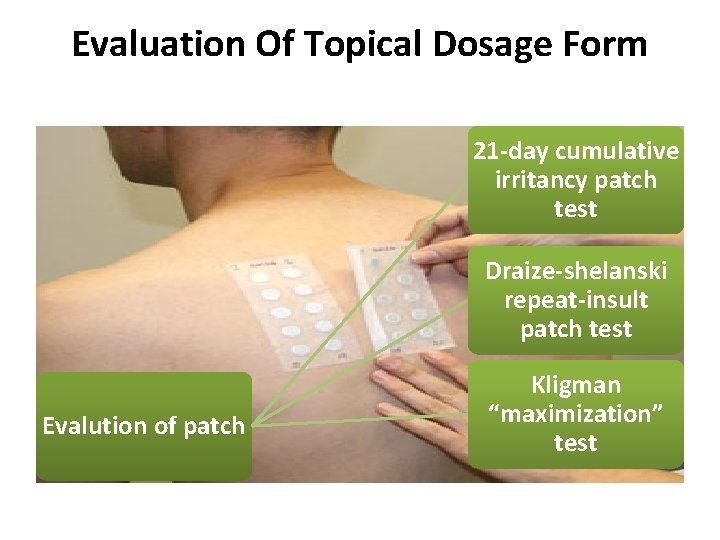
Evaluation Of Topical Dosage Form 21 -day cumulative irritancy patch test Draize-shelanski repeat-insult patch test Evalution of patch Kligman “maximization” test
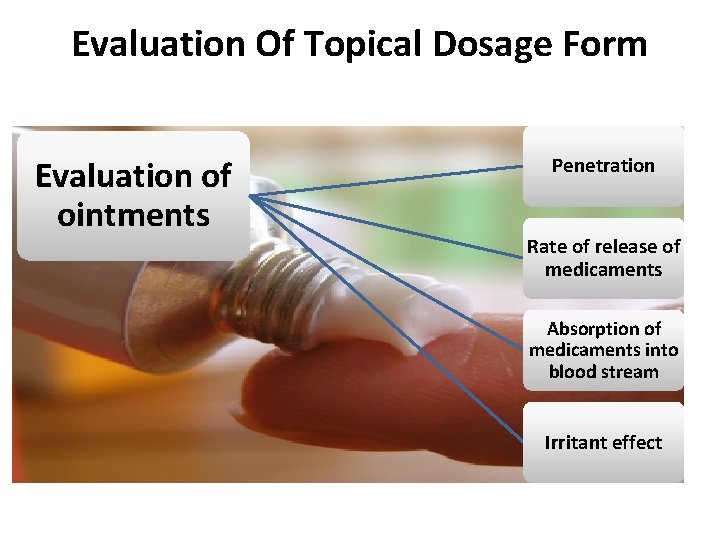
Evaluation Of Topical Dosage Form Evaluation of ointments Penetration Rate of release of medicaments Absorption of medicaments into blood stream Irritant effect
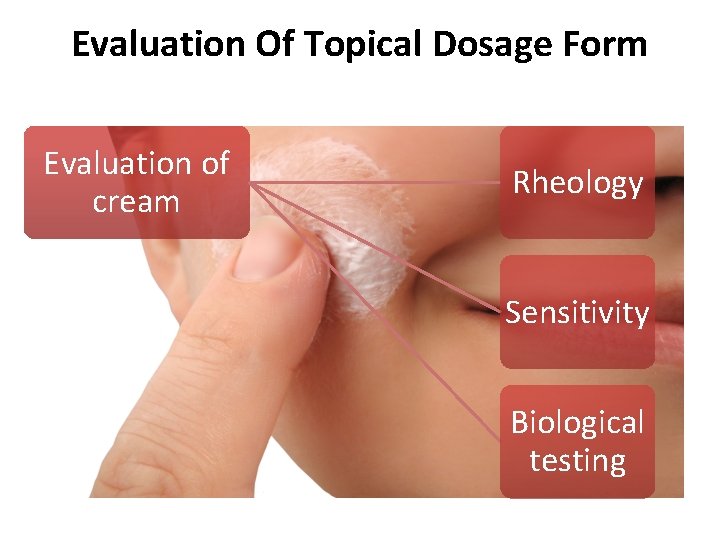
Evaluation Of Topical Dosage Form Evaluation of cream Rheology Sensitivity Biological testing
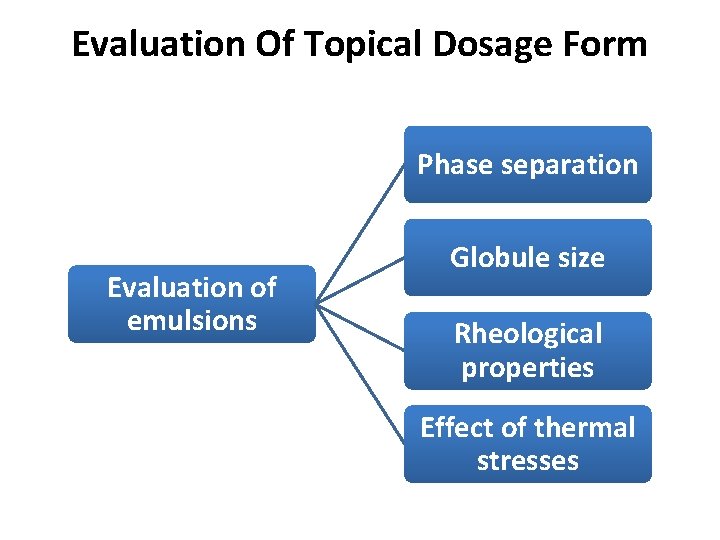
Evaluation Of Topical Dosage Form Phase separation Evaluation of emulsions Globule size Rheological properties Effect of thermal stresses
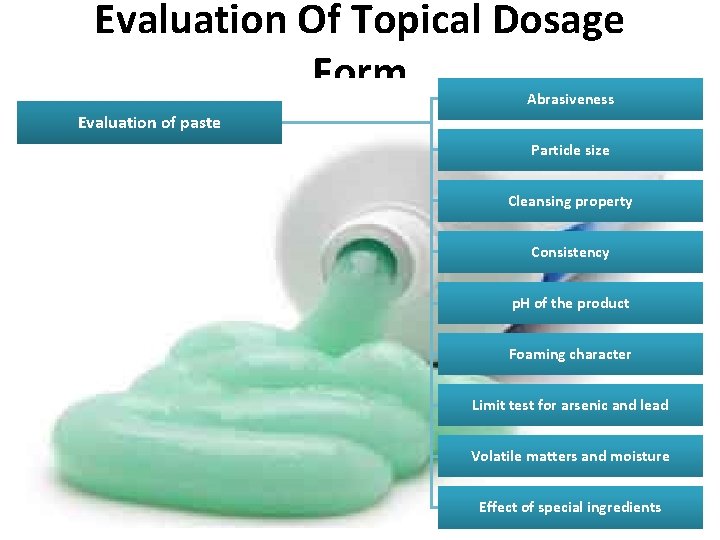
Evaluation Of Topical Dosage Form Abrasiveness Evaluation of paste Particle size Cleansing property Consistency p. H of the product Foaming character Limit test for arsenic and lead Volatile matters and moisture Effect of special ingredients
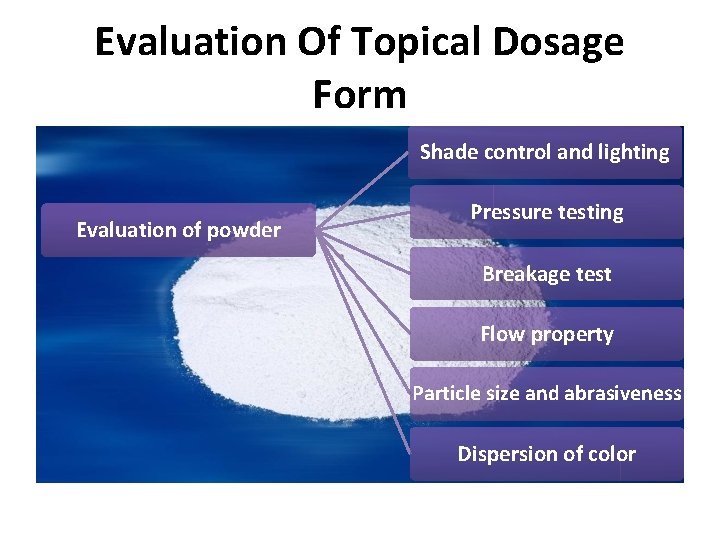
Evaluation Of Topical Dosage Form Shade control and lighting Evaluation of powder Pressure testing Breakage test Flow property Particle size and abrasiveness Dispersion of color
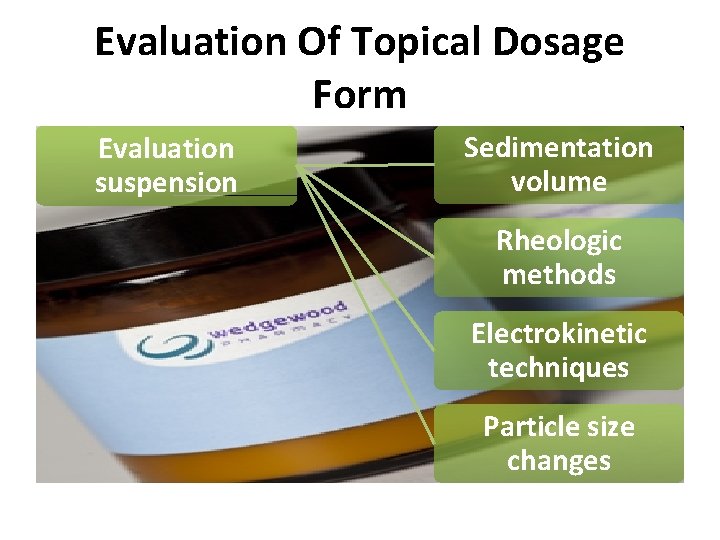
Evaluation Of Topical Dosage Form Evaluation suspension Sedimentation volume Rheologic methods Electrokinetic techniques Particle size changes
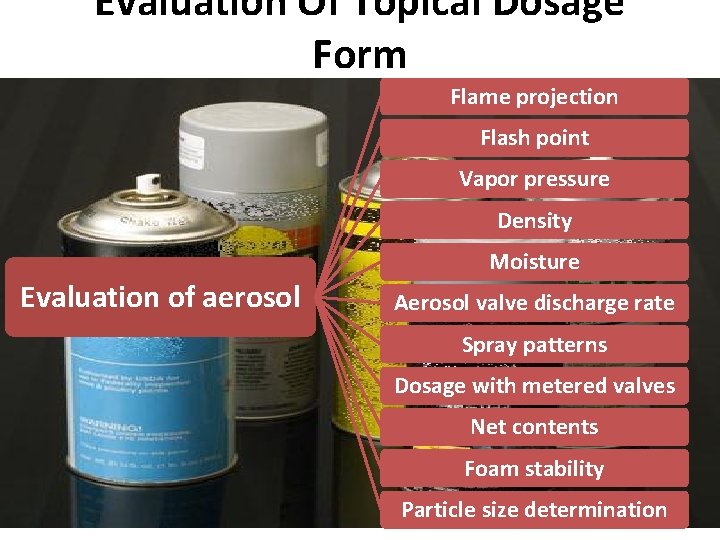
Evaluation Of Topical Dosage Form Flame projection Flash point Vapor pressure Density Moisture Evaluation of aerosol Aerosol valve discharge rate Spray patterns Dosage with metered valves Net contents Foam stability Particle size determination
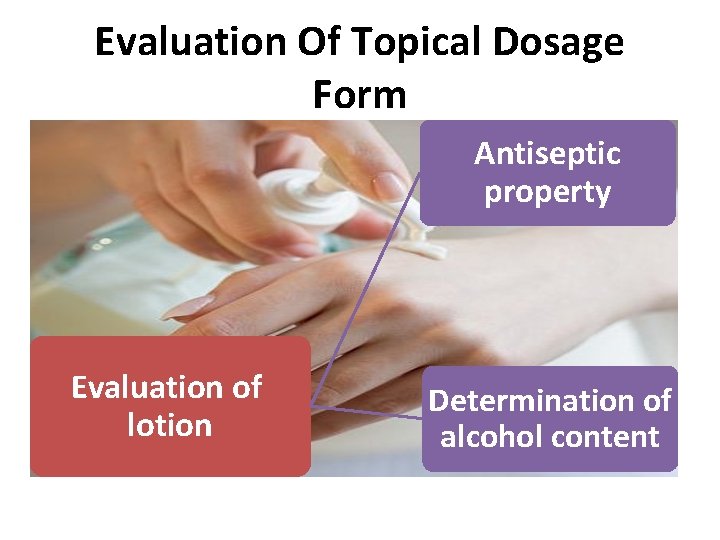
Evaluation Of Topical Dosage Form Antiseptic property Evaluation of lotion Determination of alcohol content
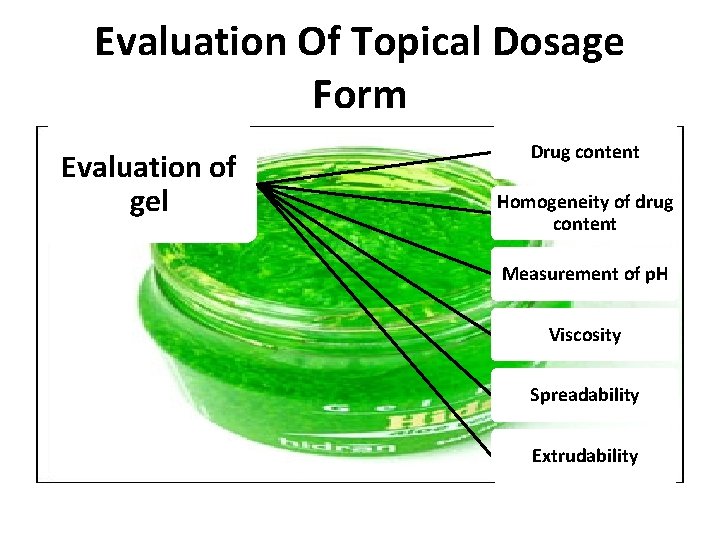
Evaluation Of Topical Dosage Form Evaluation of gel Drug content Homogeneity of drug content Measurement of p. H Viscosity Spreadability Extrudability
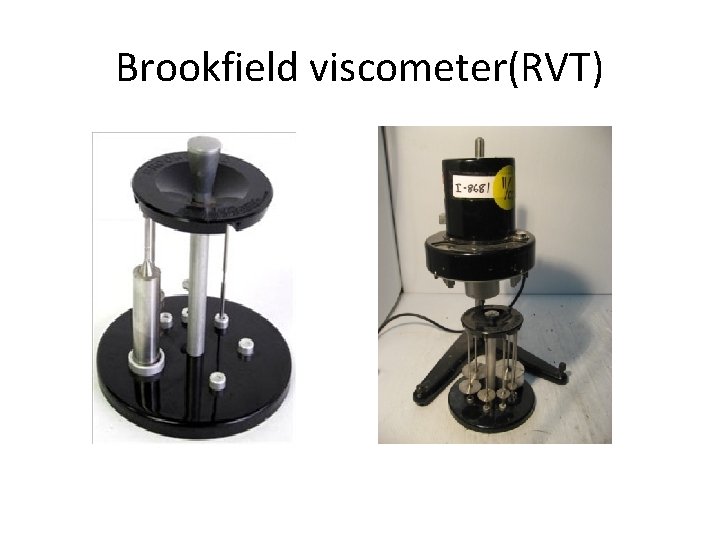
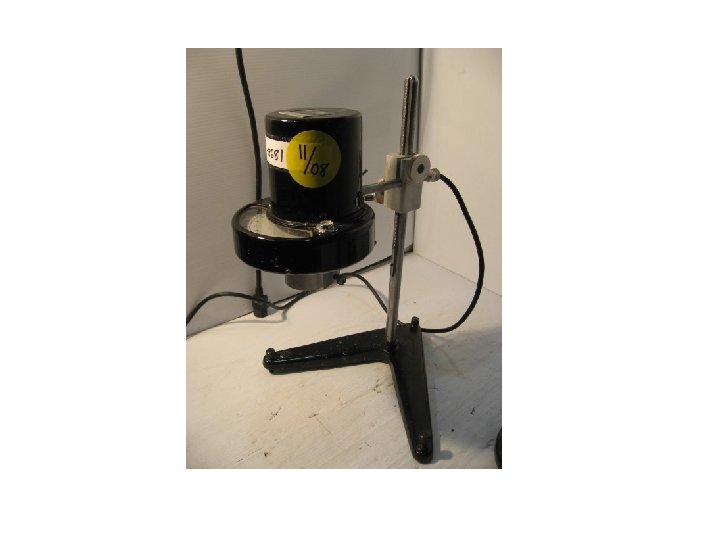
Brookfield viscometer(RVT)
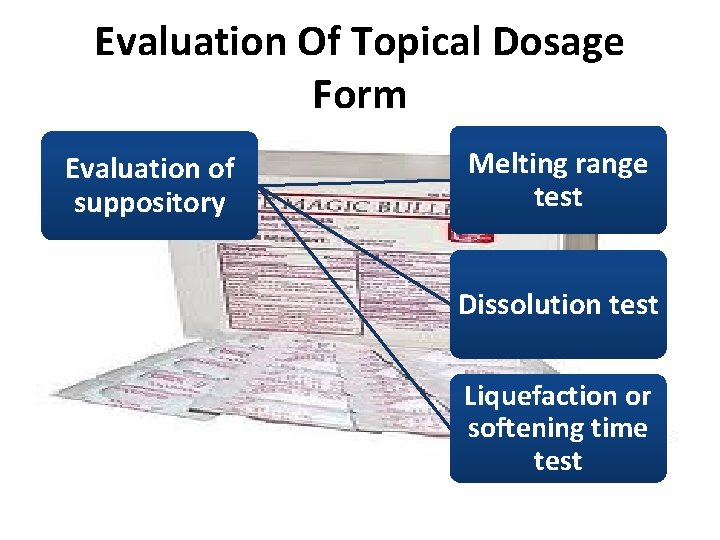
Evaluation Of Topical Dosage Form Evaluation of suppository Melting range test Dissolution test Liquefaction or softening time test
Thanks for your attention