CS 4670 Computer Vision Noah Snavely Lecture 2

- Slides: 19
CS 4670: Computer Vision Noah Snavely Lecture 2: Edge detection From Sandlot Science
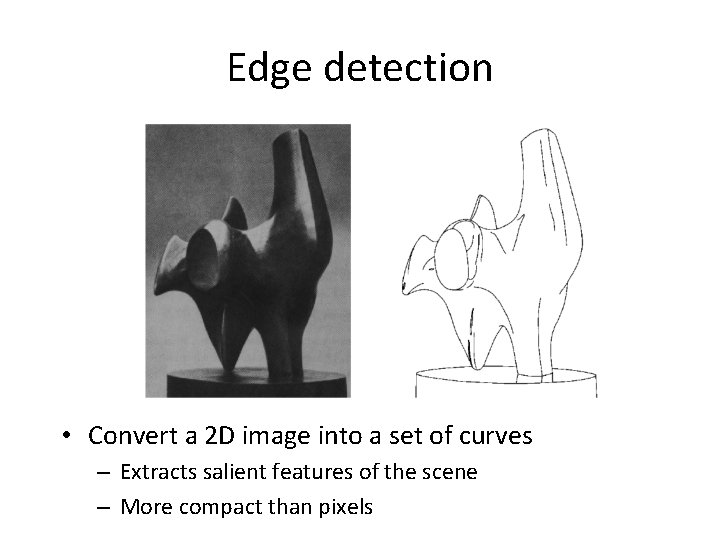
Edge detection • Convert a 2 D image into a set of curves – Extracts salient features of the scene – More compact than pixels
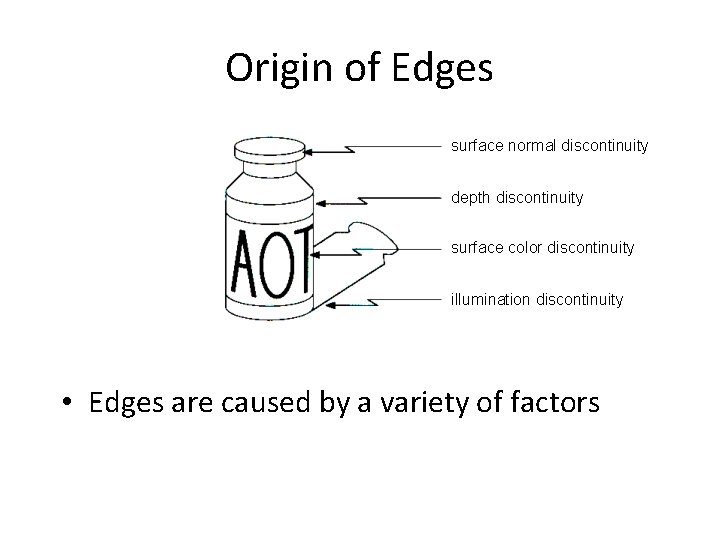
Origin of Edges surface normal discontinuity depth discontinuity surface color discontinuity illumination discontinuity • Edges are caused by a variety of factors
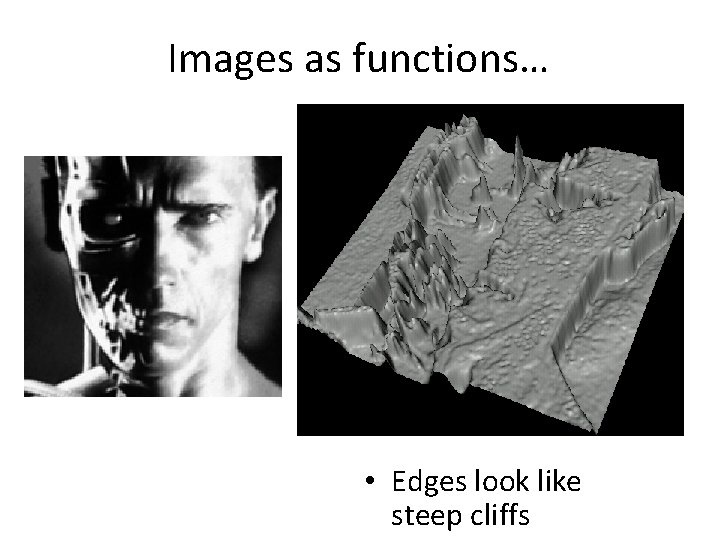
Images as functions… • Edges look like steep cliffs
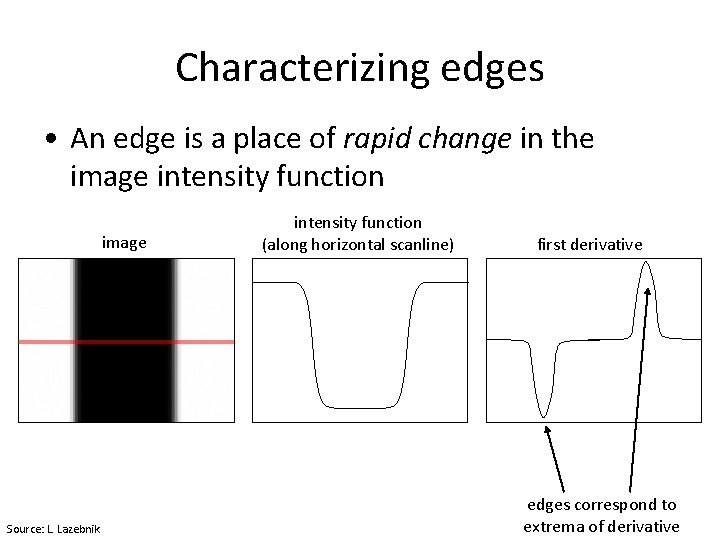
Characterizing edges • An edge is a place of rapid change in the image intensity function image Source: L. Lazebnik intensity function (along horizontal scanline) first derivative edges correspond to extrema of derivative
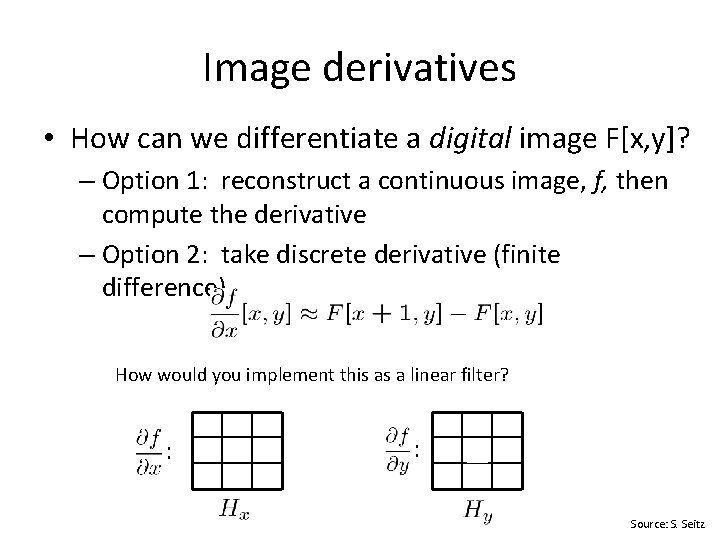
Image derivatives • How can we differentiate a digital image F[x, y]? – Option 1: reconstruct a continuous image, f, then compute the derivative – Option 2: take discrete derivative (finite difference) How would you implement this as a linear filter? : 1 -1 : -1 1 Source: S. Seitz
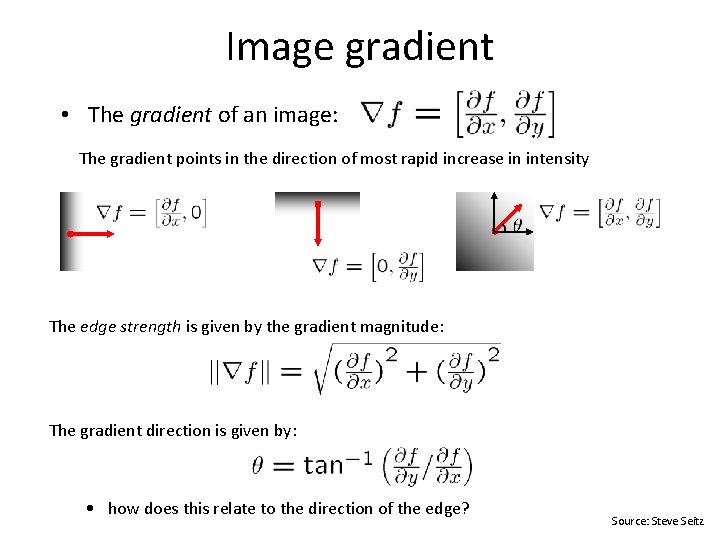
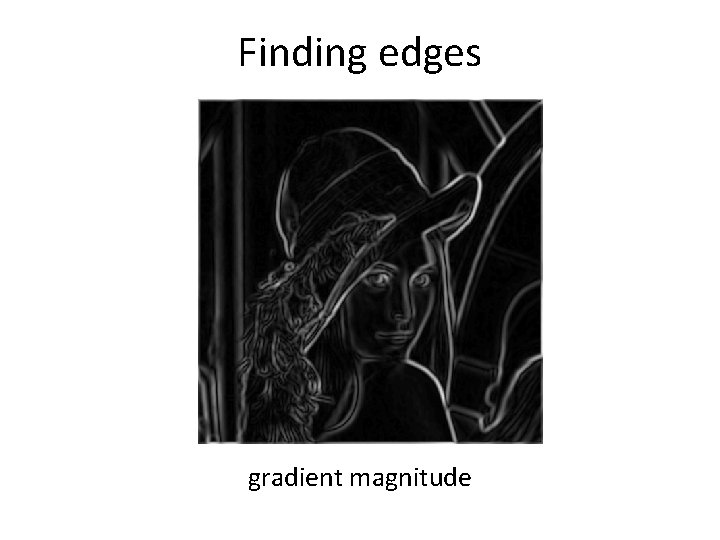
Image gradient • The gradient of an image: The gradient points in the direction of most rapid increase in intensity The edge strength is given by the gradient magnitude: The gradient direction is given by: • how does this relate to the direction of the edge? Source: Steve Seitz
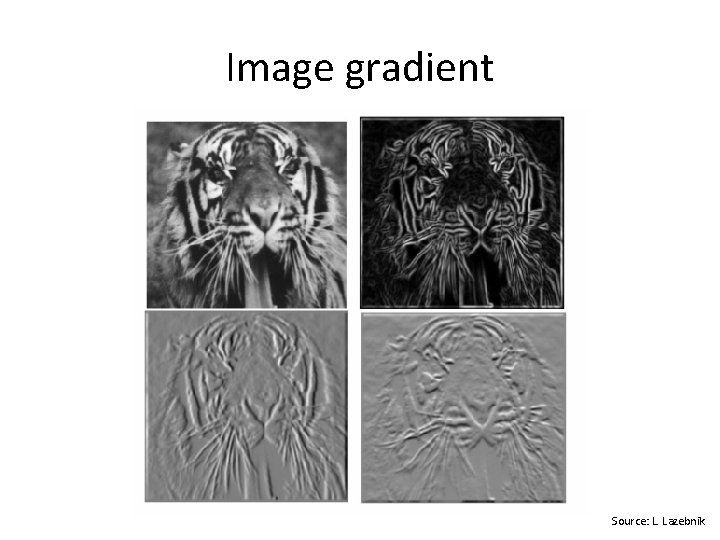
Image gradient Source: L. Lazebnik
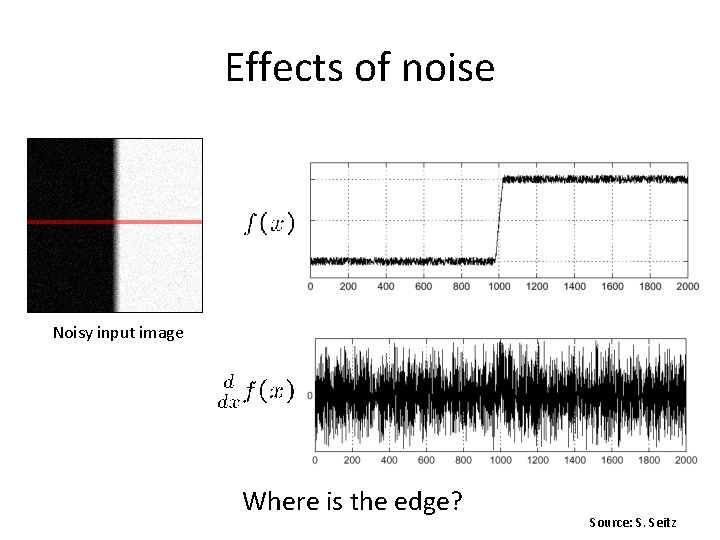
Effects of noise Noisy input image Where is the edge? Source: S. Seitz
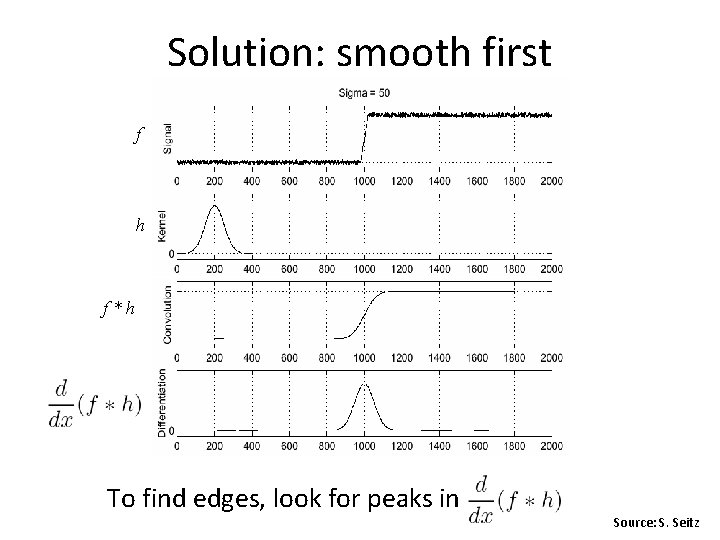
Solution: smooth first f h f*h To find edges, look for peaks in Source: S. Seitz
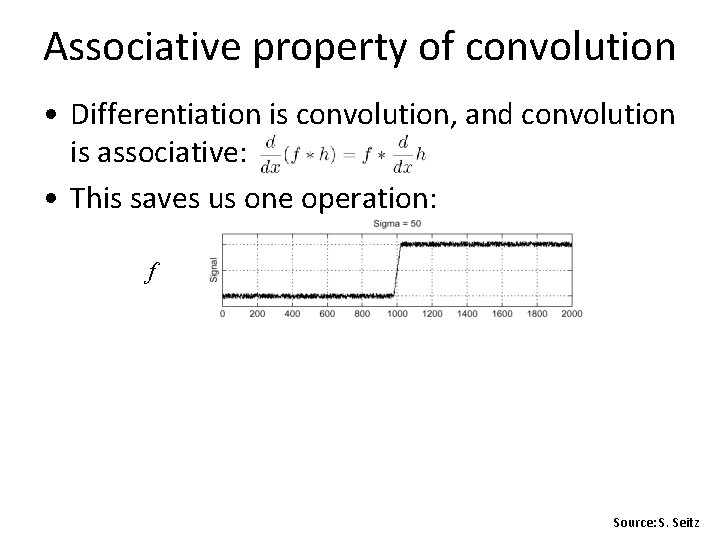
Associative property of convolution • Differentiation is convolution, and convolution is associative: • This saves us one operation: f Source: S. Seitz
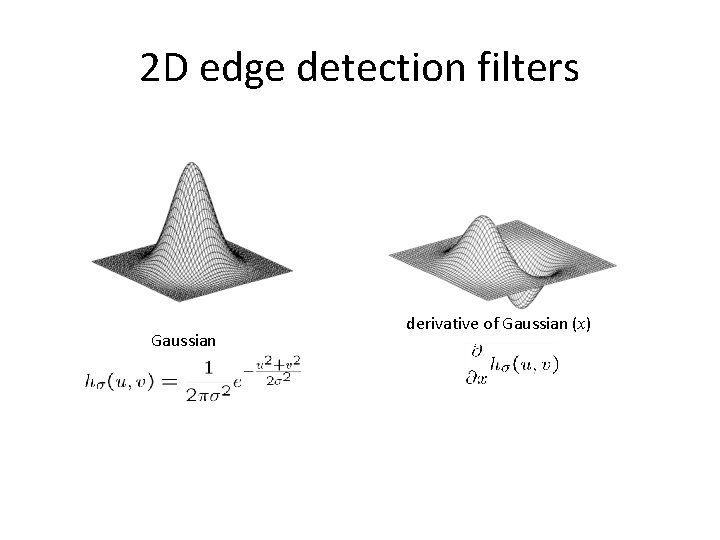
2 D edge detection filters Gaussian derivative of Gaussian (x)
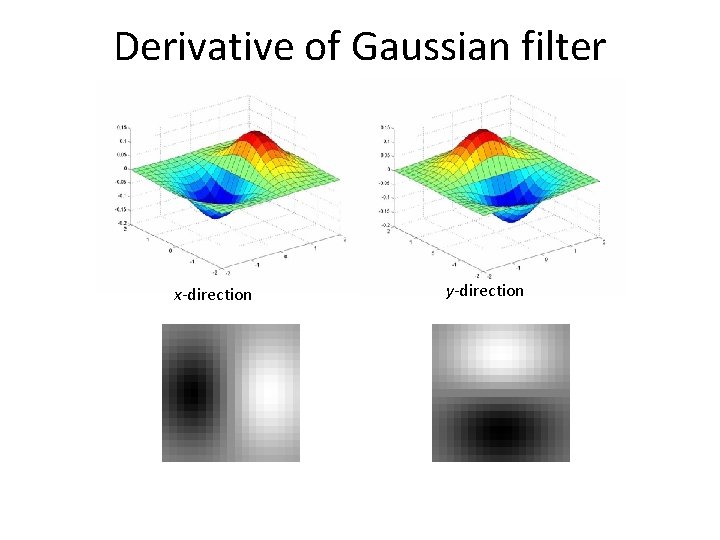
Derivative of Gaussian filter x-direction y-direction
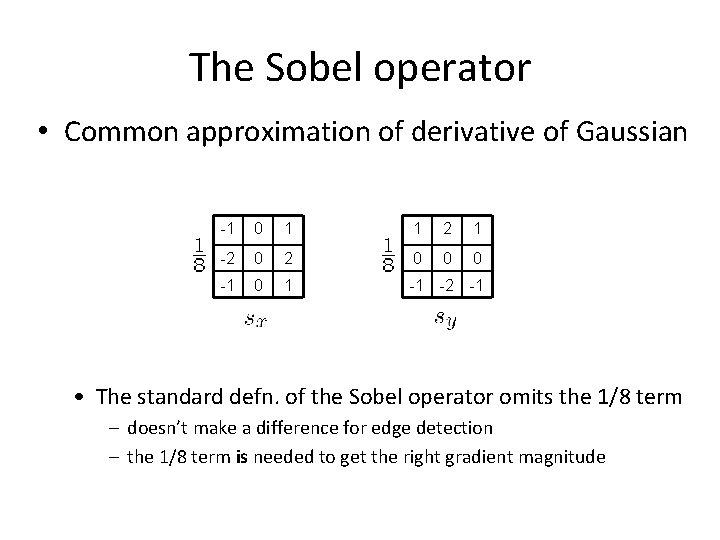
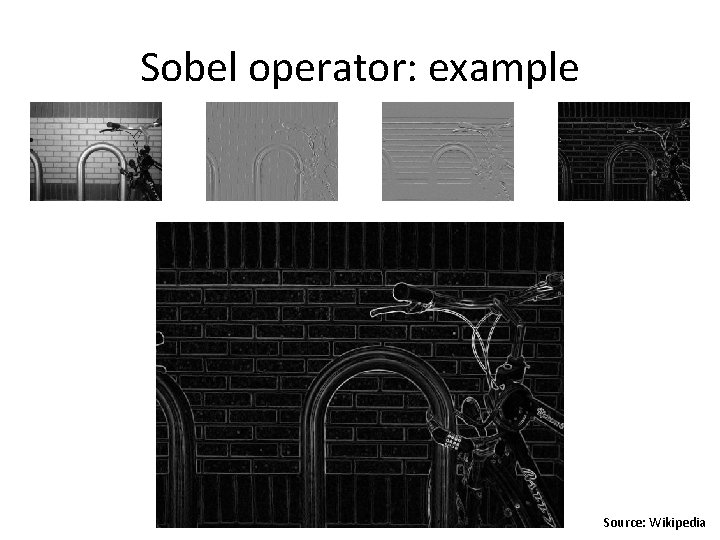
The Sobel operator • Common approximation of derivative of Gaussian -1 0 1 1 2 1 -2 0 0 0 -1 0 1 -1 -2 -1 • The standard defn. of the Sobel operator omits the 1/8 term – doesn’t make a difference for edge detection – the 1/8 term is needed to get the right gradient magnitude
Sobel operator: example Source: Wikipedia
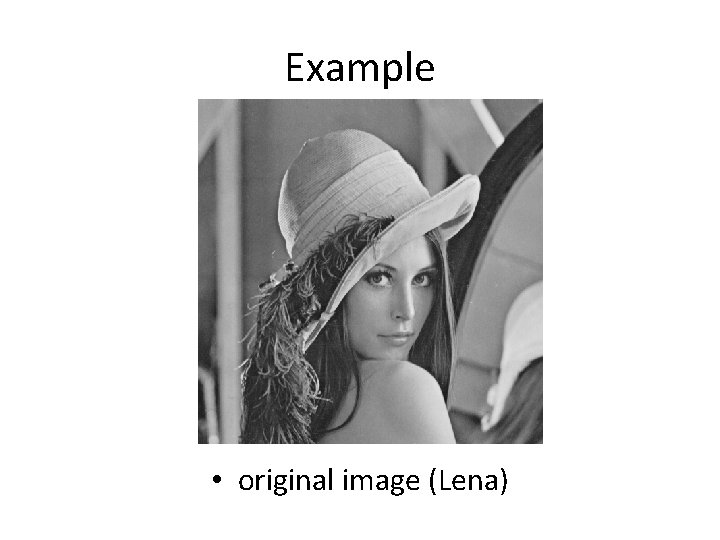
Example • original image (Lena)
Finding edges gradient magnitude
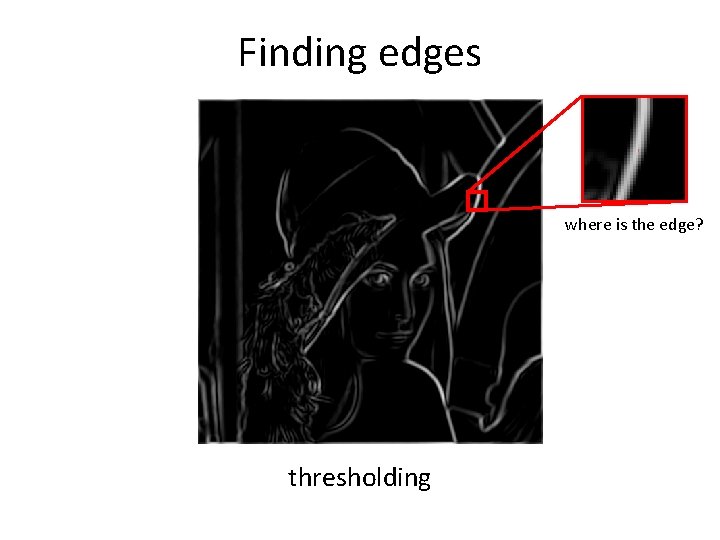
Finding edges where is the edge? thresholding
Questions?