COUGH HYPERSENSITIVE SYNDROME CHS Prof Hasan Hafizi FCCP

- Slides: 36
COUGH HYPERSENSITIVE SYNDROME (CHS) Prof. Hasan Hafizi. FCCP TIRANA UNIVERSITY HOSPITAL “SHEFQET NDROQI” TIRANA, ALBANIA
INSTEAD OF DISCLOSURE I am not a cough specialist !
CHRONIC COUGH • Chronic cough is a common medical problem and is estimated to affect approximately 10% of adults un the general population. • Chronic cough might impair the quality of life and could be associated with social, psychological and physical consequences. • Diagnosis and treatment of chronic cough have considerable economical cost and moreover 12% 42% of patients remain unex plained orrefractory to treatment.
PREVIOUS PARADIGMS OF COUGH • Our understanding of the diagnosis and treatment of chronic cough has undergone radical change over the years. • Chronic cough has previously have been considered to be a symptom of some other condition but during the 1970 s and 80 s, physicians become aware that some patients with chronic cough at first glance had no obvious underlying cause for their complaint.
CHRONIC COUGH • Chronic cough can persist for months and years and remains a difficult problem to manage. • The management of chronic cough presents a challenge for the clinician and current antitussives have limited efficacy and undesirable side effects. • Most subjects with chronic cough report that cough medication had limited or no effectiveness , 57% and 36%, respectively.
PREVIOUS PARADIGMS OF COUGH • After intensive investigation and therapeutic trials in patients with chronic cough, physicians concluded in one of three underlying conditions: – A form of the asthma, – Rhinitis which originally was called Post Nasal Drip Syndrome or more recently Upper Airways Cough Syndrome, and – Gastro Oesophageal Reflux Disease. • These three conditions were called the Triad of chronic cough or “three Rs. ”
PREVIOUS PARADIGMS OF COUGH • A fourth etiology that deserves mention is nonasthmatic eosinophilic bronchitis (NAEB), which is relatively common, easy to diagnose and should be considered early on in the diagnostic evaluation. • Prospective studies have shown that 3 conditions account for the etiologic cause of chronic cough in more than 90% of immunocompetent, nonsmoking patients with normal chest x ray.
NEW PARADIGM - COUGH HYPERSENSITIVITY SYNDROME • The classification based on three R was not enough and this classification was insufficient. • Firstly, when one of the three diagnoses is given to the patient further investigation frequently revealed an atypical pattern of disease.
NEW PARADIGM - COUGH HYPERSENSITIVITY SYNDROME • Secondly, there are patients whose predominant symptom is cough but clearly have conditions which are well known disease, such as pulmonary fibrosis or bronchiectasis. • To clarify this situations came the concept that the similarities in the clinical features of patients presenting with a chronic cough prevailed the differences, and cough became to be viewed in a completely different paradigm.
NEW PARADIGM - COUGH HYPERSENSITIVITY SYNDROME • There are several advantages to viewing cough hypersensitivity as the unifying diagnosis: – communication with patients is better, – aetiology is not restricted and – therapeutic opportunity is open.
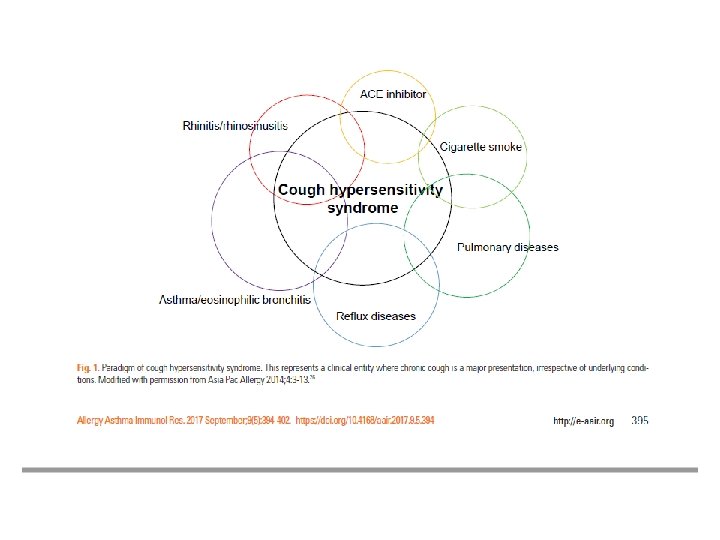
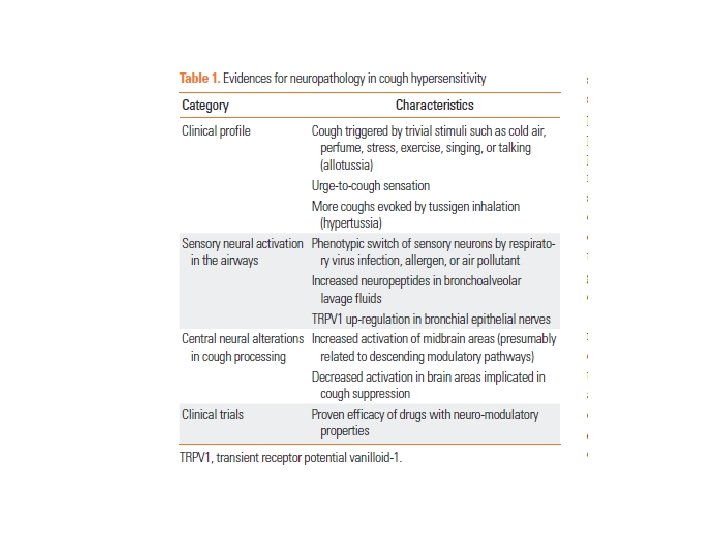
NEW PARADIGM - COUGH HYPERSENSITIVITY SYNDROME • CHS is defined as " characterized by cough as a major component which is often triggered by low level of thermal, mechanical, or chemical exposure. " • It is characterized by enhancement of the cough reflex through sensitization of afferent neuronal pathways of cough, both at the peripheral and central levels.
NEW PARADIGM - COUGH HYPERSENSITIVITY SYNDROME • It is an umbrella term to encompass various cough related conditions or unexplained cough. • Through this paradigm, we can interpret cough related disease phenomena from the viewpoint of the cough itself. Fig 1
EVIDENCE FOR COUGH HYPERSENSITIVITY • Hypersensitivity of the cough reflex occurs during an upper respiratory tract infection is a common experience. • During a cough/cold we all experience attacks of coughing as the result of minor environment insults, such as change in temperature or exposure to noxious stimuli like cigarette smoke. • It is assumed that cough reflex hypersensitivity induced by virus is a fundamental part of the pathogenesis of URTI
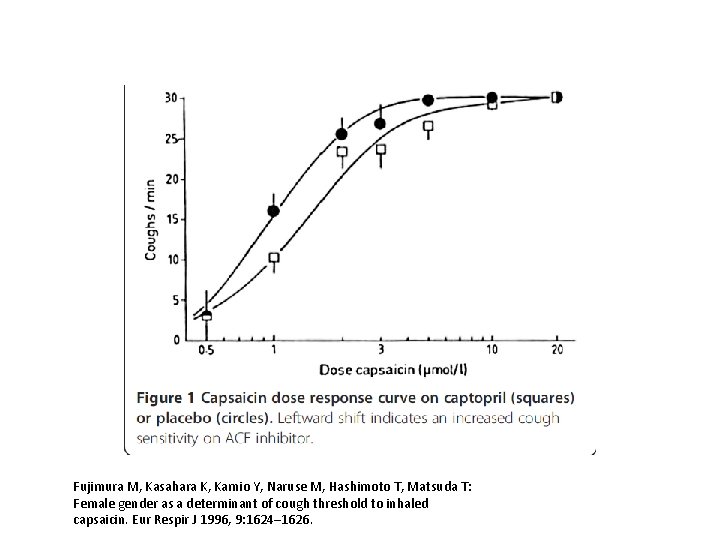
EVIDENCE FOR COUGH HYPERSENSITIVITY • A shift in the capsaicin sensitivity induced by ACE inhibitors is seen but the great majority of individuals remain within the broad population normal range. • In the clinic there is very limited utility in performing cough challenge to demonstrate cough hypersensitivity since it is of no value in diagnosis.
Fujimura M, Kasahara K, Kamio Y, Naruse M, Hashimoto T, Matsuda T: Female gender as a determinant of cough threshold to inhaled capsaicin. Eur Respir J 1996, 9: 1624– 1626.
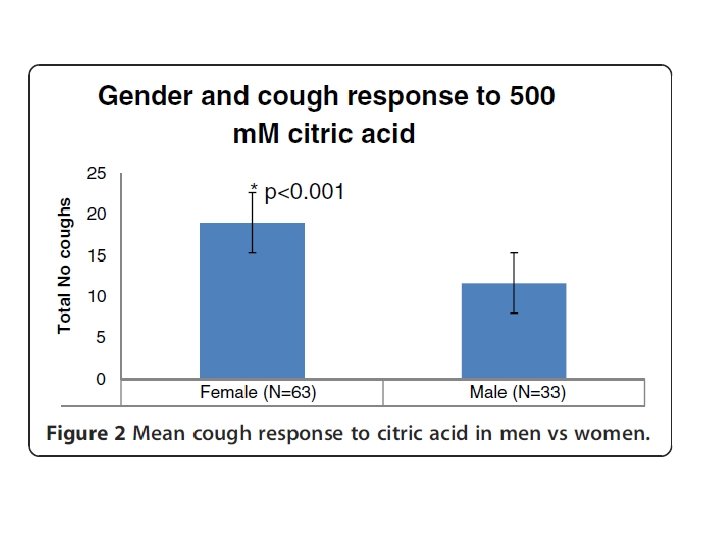
EPIDEMIOLOGICAL EVIDENCE • The association of cough hypersensitivity with clinically important chronic cough is perhaps best illustrated by the epidemiological evidence of cough hypersensitivity between sexes. • Several studies show that women have increased cough reflex to inhalation challenge with capsaicin, citric acid, and tartaric acid but this finding is not universal. • A study analyzing a population of normal volunteers of 39 males, mean age 31, and 63 females mean age 37 found a near doubling of cough evoked by inhalation of 500 m. M citric acid.
EPIDEMIOLOGICAL EVIDENCE • Whereas in a similar volunteer pool of 54 females, mean age 34 and 46 males, mean age 31 there was no significant difference found in capsaicin dose response with values respectively being similar between the sexes.
EPIDEMIOLOGICAL EVIDENCE • Female hypersensitivity appears to occur after puberty, since girls and boys have the same reflex sensitivity. • It has been suggested that cough hypersensitivity in women is an evolutionary mechanism to protect against aspiration during pregnancy. • Preliminary evidence from functional magnetic imaging studies suggests that cough centers are enlarged in women. • This sex difference in cough reflex sensitivity is also reflected in the population attending cough clinics.
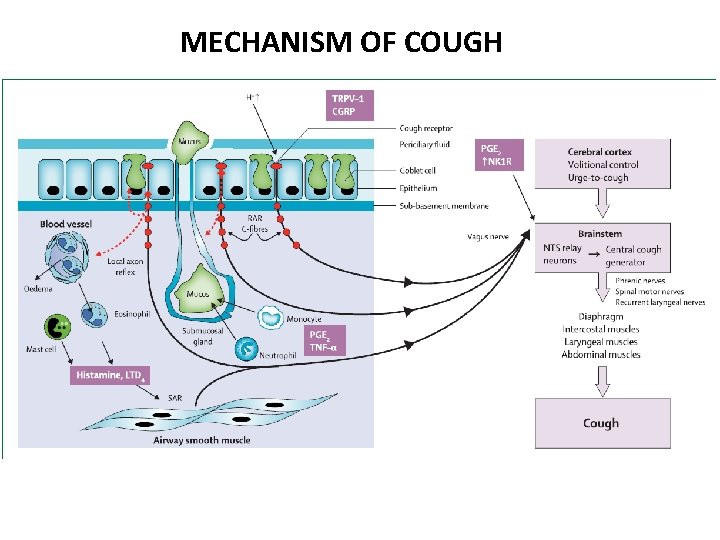
MECHANISM OF CHS • Cough is a protective reflex serving a normal physiologic function of clearing excessive secretions and debris from the pulmonary tract. • The cough reflex has 3 components: an afferent sensory limb, a central processing center, and an efferent limb. • The trigeminal, glossopharyngeal, and vagus nerves supply the afferent pathways for cough receptors; • Receptors are located throughout the airway from the pharynx to the terminal bronchioles, with the greatest concentration located in the larynx, carina, and the bifurcation of larger bronchi.
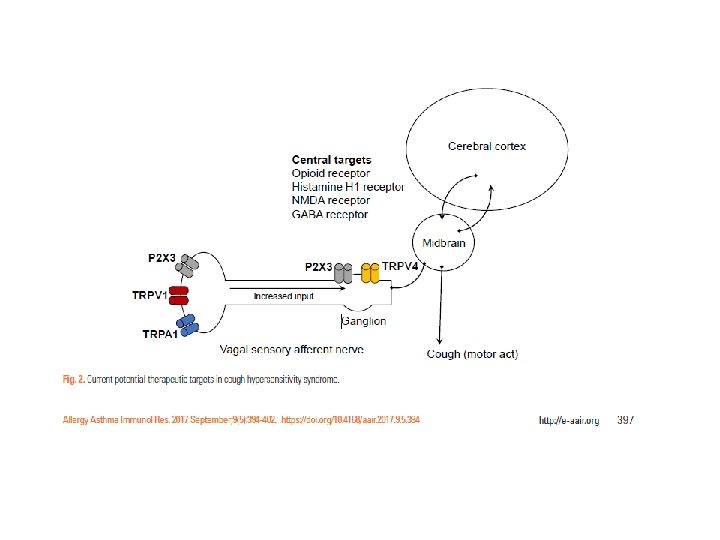
MECHANISM OF CHS • The term chronic cough hypersensitivity syndrome has been proposed as the new way to label chronic cough owing to the fact that the underlying abnormality leading to chronic coughing is an abnormally sensitive cough reflex. • Evidence suggests that members of the transient receptor potential (TRP) ion channel family, specifically the vanilloid 1 (TRPV 1) and ankyrin 1 (TRPA 1) channels, are receptors that mediate cough.
MECHANISM OF COUGH
PATHOGENESIS OF COUGH HYPERSENSITIVITY • The exact mechanism of the hypersensitivity state within the upper airways is unknown and several possible mechanisms have been hypothesized. • The main mechanism of cough hypersensitivity syndrome has been suggested to be dysregulated sensory neural path ways and central processing in cough reflex regulation (1, 2). • • 1. Niimi A, Chung KF. Evidence for neuropathic processes in chronic cough. Pulm Pharmacol Ther 2015; 35: 100 4. 2. Driessen AK, Mc. Govern AE, Narula M, Yang SK, Keller JA, Farrell MJ, et al. Central mechanisms of airway sensation and cough hypersensitivity. Pulm Pharmacol Ther. Forthcoming 2017.
COUGH HYPERSENSITIVITY AS A DISEASE • The paradigm shift from regarding cough as a symptom of various diseases into cough as a disease with different aspect allows for a number of advantages in both diagnosis and therapy of this condition. • Firstly, the idea of cough hypersensitivity as the disease removes the necessity to have a subgroup of chronic coughers who have idiopathic cough. • The patient does have a disease; it is just that its origin may be mysterious.
COUGH HYPERSENSITIVITY AS A DISEASE • The second great strength of cough hypersensitivity as a diagnosis is that by concentrating on a unifying pathological feature it points the way to possible therapeutic opportunity. • Thirdly, communicating with the patient is facilitated by the diagnosis of the cough hypersensitivity syndrome. Many patients in the clinic express their frustration in the lack of a diagnosis provided by the profession.
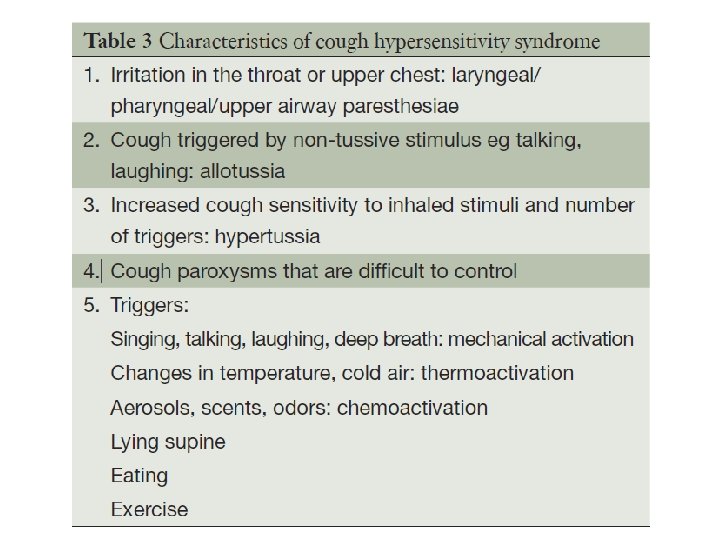
CLINICAL PROFILE • The profile of symptoms in patients with CHS is similar to neuropathic disorders such as pain in which patients experience exaggerated pain to painful stimuli (hyperalgesia) and non painful stimuli (allodynia). • CHS patients frequently report exaggerated coughing to known tussive stimuli, for example, strong odours and smoke (hypertussia) and to non tussive stimuli such as talking and laughing (allotussia). • Abnormal sensations in the throat, such as a tickle (laryngeal paraesthesia), occur frequently (94% of patients).
CLINICAL PROFILE • Enhanced cough reflex sensitivity can commonly be observed in various conditions presenting as cough, such as cough variant asthma, reflux associated cough, and idiopathic cough, but not observed in asthma without cough. • Furthermore, control of these factors (e. g. ACE inhibition or associated disease conditions) usually normalizes the hypersensitivity in the cough reflex.
Expert opinion on the cough hypersensitivity syndrome in respiratory medicine. Eur Respir J 2014 • In 2001 the ERS Scientific Committee approved a task force to characterise a new paradigms for the understanding of chronic cough which has been termed the CHS. • Key Opinion Leaders were identified and a questionnaire constructed from the topics identified with which to elicit their opinions. 44 opinion leaders from 14 countries were interviewed. • 2014 edition of the ERJ, CHS was defined as a clinical syndrome …. • All but one of the KOLs agreed with this concept. • Thus CHS appears to be a well recognized concept with a general acceptance.
TREATMENT CHS • Current antitussives have limited efficacy and undesirable side effects. • Antitussive agents are classified based on their location of action, as centrally acting or peripherally acting. • Possibly the most frequent class of antitussive agent is an opiate. • However, despite the long clinical experience, the exact roles of opiates have not been elucidated for cough therapy; the mechanisms are not clear, but have been just hypothesized to be sedation, or modulation of opioid receptors.
TREATMENT CHS • Neuromodulator therapies such as gabapentin, pregabalin and amitryptyline are effective in some patients with HSC. • Behavioural therapies as part of physiotherapy or speech therapy interventions are also effective in reducing the frequency of cough and improving quality of life.
NOVEL THERAPY • Selective blockade of specific receptors at periphery is expected to bring out therapeutic breakthroughs in the future. Several clinical trials are currently on the progress. • A more promising target appears to be the P 2 X 3 receptor and specific antagonists (phase 2 trial). The results suggested the significant role of this receptor in peripherally mediated cough hypersensitivity. • P 2 X 3 is one of purinergic receptors for adenosine 5’ triphosphate, located in peripheral C fibers but not in the brain, and has been known to be important for peripheral nociception.
CONCLUSION • The introduction of ‘cough hypersensitivity’ concept is expected to fill a gap in the relationships between previous ‘common etiologies’ and un explained chronic cough. • CHS is a disorder gaining increasing recognition amongst healthcare professionals. • There are currently promising therapies in clinical trials.