Respiratory Disorders Module 1 Common Respiratory Symptoms and

- Slides: 26
Respiratory Disorders Module 1. Common Respiratory Symptoms and Complaints
Process • Step 1. Complete Module #1 with voice overlay • Step 2. Answer the question following Module #1 • Step 3. Complete further modules or take a break.
Respiratory Unit Overview • Module 1. Common Respiratory Symptoms and Complaints • Module 2 Chronic Obstructive Pulmonary Disease • Module 3. Asthma and Pulmonary Thromboembolism
Module #1 Learning Objectives • Describe the common causes of rhinitis, dyspnea and cough • Describe the evaluation and treatment of these common respiratory symptoms and complaints
Common Symptoms and Complaints • Allergic rhinitis (may be perennial) • Cough • Dyspnea
Allergic Rhinitis • The most common atopic disorder • Symptoms: rhinorrhea, sneezing • Also often: irritated eyes, nose, mucous membranes. • Post nasal drip is the most common cause of chronic cough
Therapy: Nonpharmacologic • Irrigate sinuses with saline or saline/bicarbonate solution once or more per day.
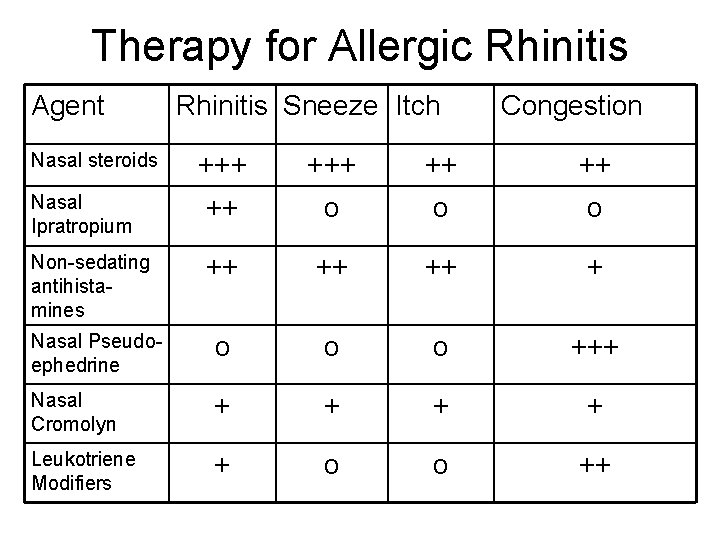
Therapy for Allergic Rhinitis Agent Nasal steroids Rhinitis Sneeze Itch Congestion +++ ++ ++ Nasal Ipratropium ++ o o o Non-sedating antihistamines ++ ++ ++ + Nasal Pseudoephedrine o o o +++ Nasal Cromolyn + + Leukotriene Modifiers + o o ++
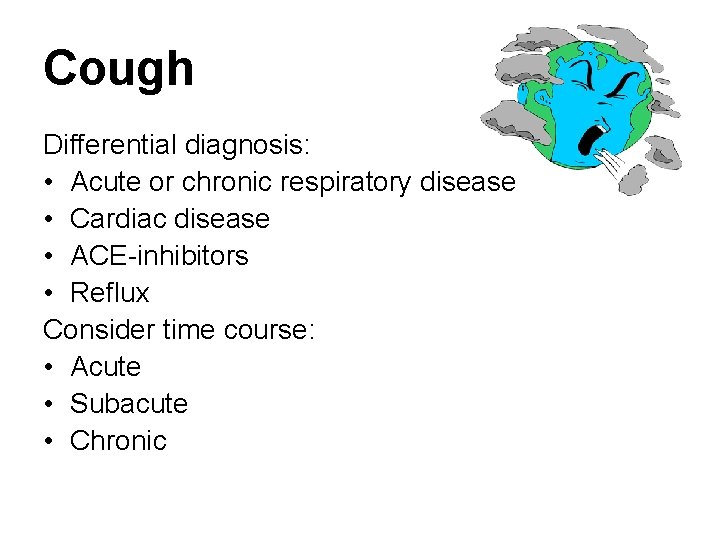
Cough Differential diagnosis: • Acute or chronic respiratory disease • Cardiac disease • ACE-inhibitors • Reflux Consider time course: • Acute • Subacute • Chronic
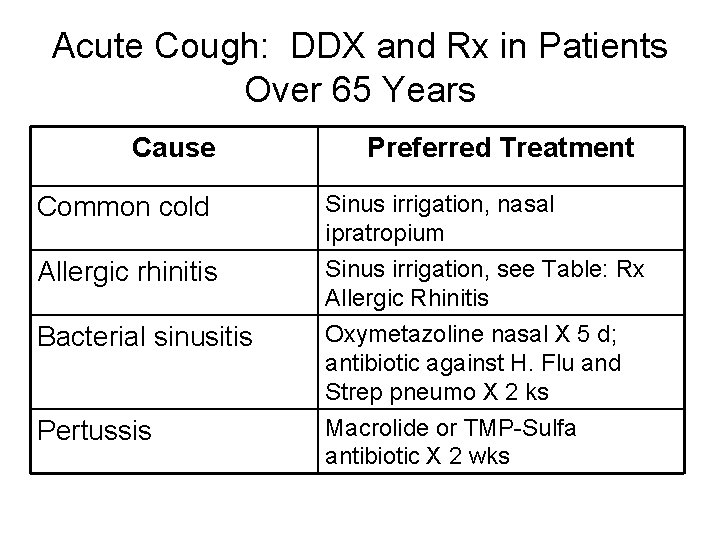
Acute Cough: DDX and Rx in Patients Over 65 Years Cause Preferred Treatment Common cold Sinus irrigation, nasal ipratropium Allergic rhinitis Bacterial sinusitis Sinus irrigation, see Table: Rx Allergic Rhinitis Oxymetazoline nasal X 5 d; antibiotic against H. Flu and Strep pneumo X 2 ks Pertussis Macrolide or TMP-Sulfa antibiotic X 2 wks
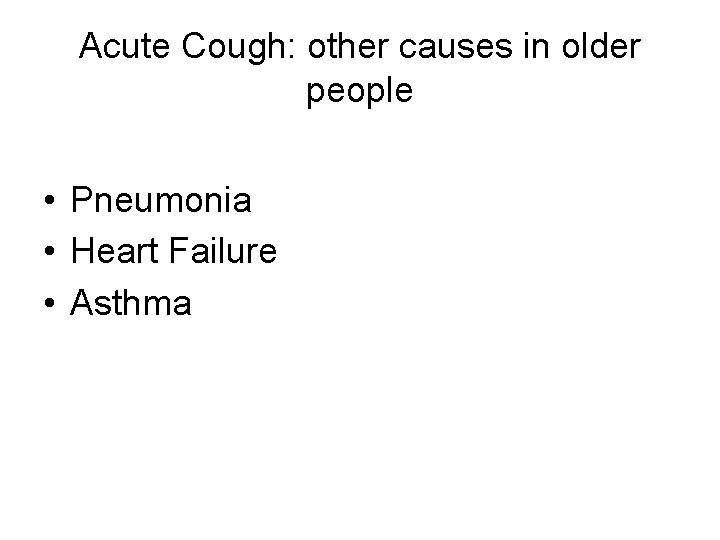
Acute Cough: other causes in older people • Pneumonia • Heart Failure • Asthma
Subacute Cough: DDX and Rx in Patients Over 65 Years Cause Post-infectious Treatment Inhaled ipratropium; systemic steroids tapered over 2 -3 weeks; if protracted guaifenesin with codeine As for acute sinusitis, but treat for 3 Subacute bacterial sinusitis weeks Inhaled steroids and inhaled albuterol Asthma Further discussed in Module 3 Pertussis Macrolide or TMP-Sulfa antibiotic X 2 wks; may need to treat as above in post -infectious cough
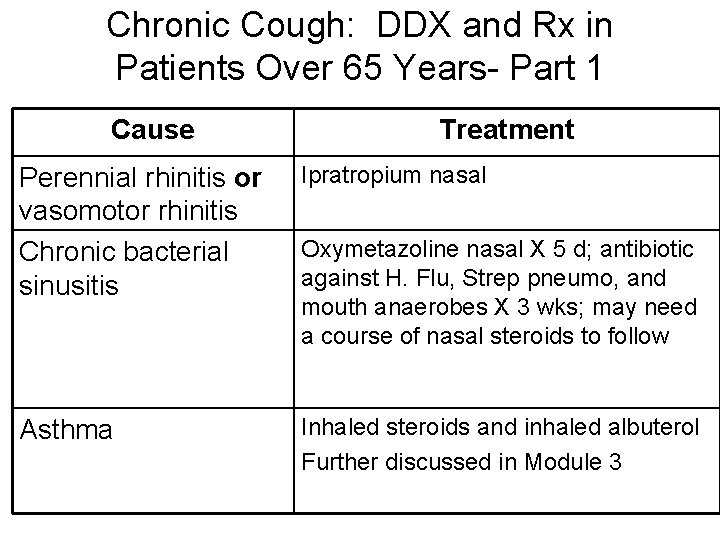
Chronic Cough: DDX and Rx in Patients Over 65 Years- Part 1 Cause Treatment Perennial rhinitis or vasomotor rhinitis Chronic bacterial sinusitis Ipratropium nasal Asthma Inhaled steroids and inhaled albuterol Further discussed in Module 3 Oxymetazoline nasal X 5 d; antibiotic against H. Flu, Strep pneumo, and mouth anaerobes X 3 wks; may need a course of nasal steroids to follow
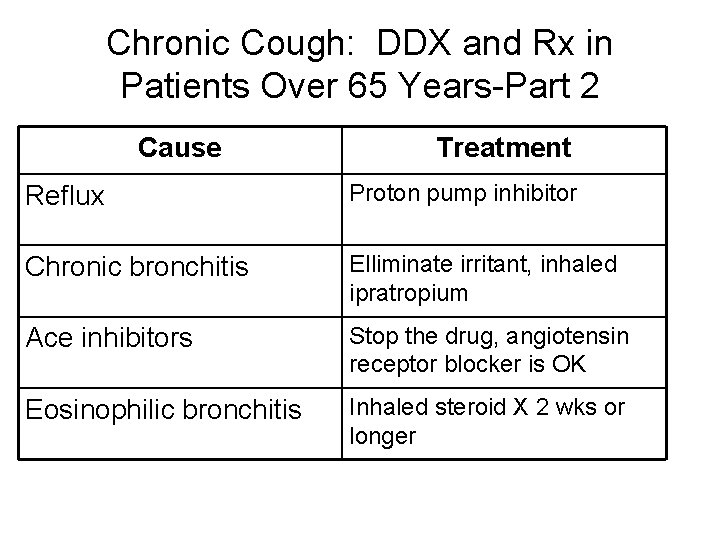
Chronic Cough: DDX and Rx in Patients Over 65 Years-Part 2 Cause Treatment Reflux Proton pump inhibitor Chronic bronchitis Elliminate irritant, inhaled ipratropium Ace inhibitors Stop the drug, angiotensin receptor blocker is OK Eosinophilic bronchitis Inhaled steroid X 2 wks or longer
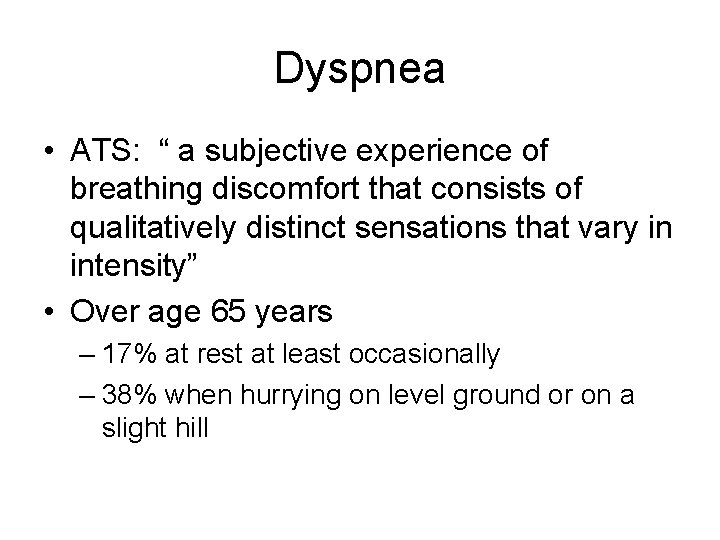
Dyspnea • ATS: “ a subjective experience of breathing discomfort that consists of qualitatively distinct sensations that vary in intensity” • Over age 65 years – 17% at rest at least occasionally – 38% when hurrying on level ground or on a slight hill
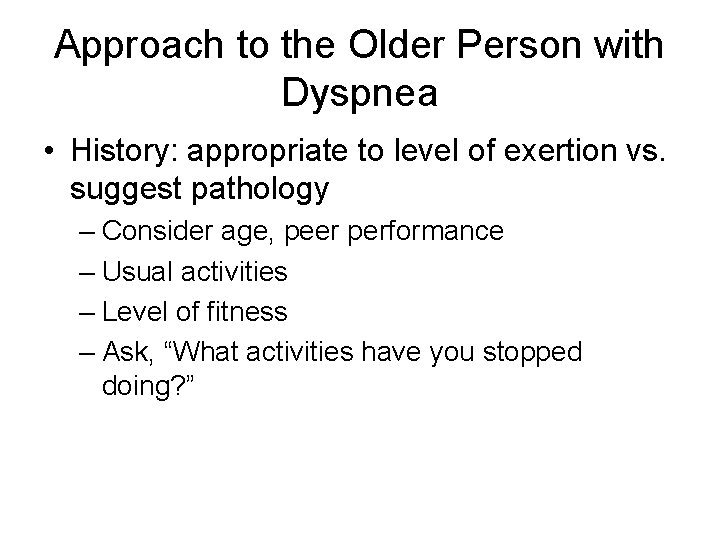
Approach to the Older Person with Dyspnea • History: appropriate to level of exertion vs. suggest pathology – Consider age, peer performance – Usual activities – Level of fitness – Ask, “What activities have you stopped doing? ”
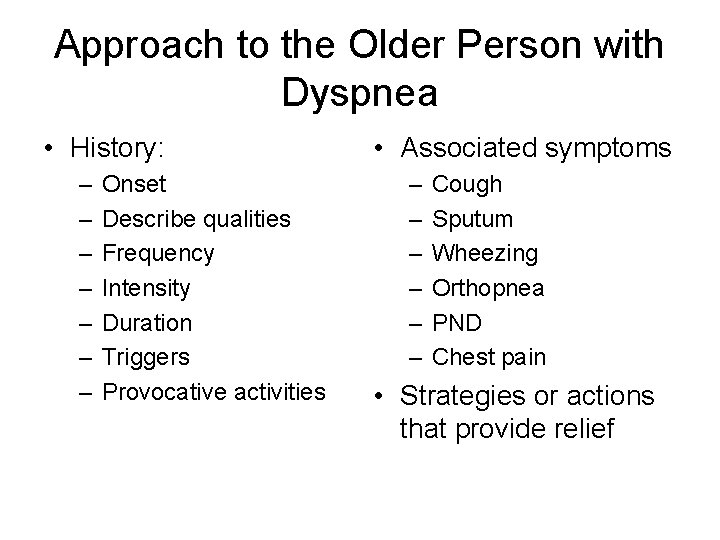
Approach to the Older Person with Dyspnea • History: – – – – Onset Describe qualities Frequency Intensity Duration Triggers Provocative activities • Associated symptoms – – – Cough Sputum Wheezing Orthopnea PND Chest pain • Strategies or actions that provide relief
Approach to the Older Person with Dyspnea • Physical – Heart – Lungs – Neck – Thorax – Extremities
Causes of Dyspnea • • • Cardiac disease Respiratory disease Deconditioning/Obesity Respiratory muscle dysfunction Psychological disorders
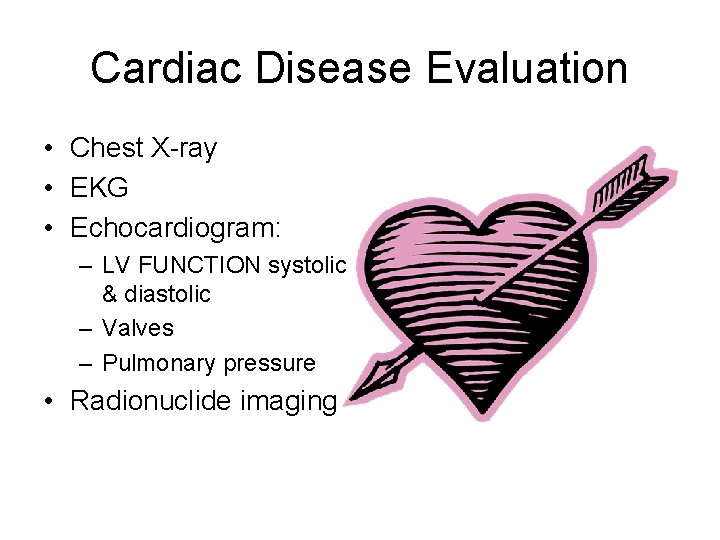
Cardiac Disease Evaluation • Chest X-ray • EKG • Echocardiogram: – LV FUNCTION systolic & diastolic – Valves – Pulmonary pressure • Radionuclide imaging
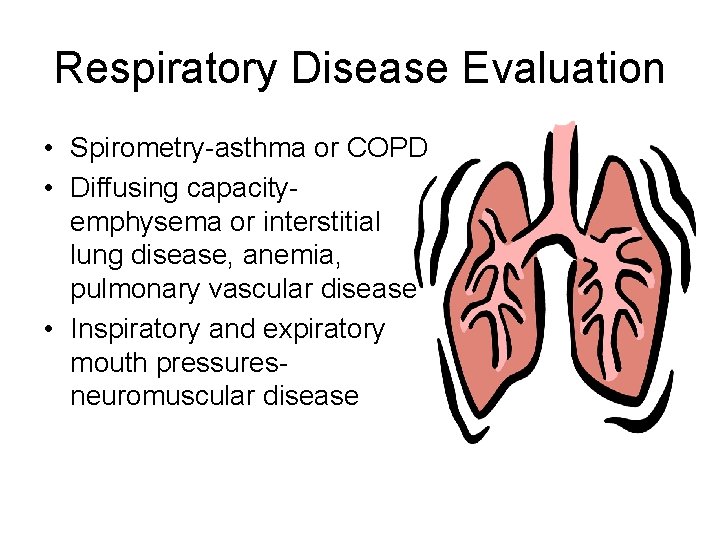
Respiratory Disease Evaluation • Spirometry-asthma or COPD • Diffusing capacityemphysema or interstitial lung disease, anemia, pulmonary vascular disease • Inspiratory and expiratory mouth pressuresneuromuscular disease
Unexplained Chronic Dyspnea • Spirometry and diffusing capacity • Chest X-ray • EKG • O 2 saturation
Deconditioning and Respiratory Muscle Weakness • Peak inspiration and expiration mouth pressures • Cardiopulmonary exercise test
Therapy For Deconditioning • Physical conditioning – Low impact – Indoor modality • Intensity? – Follow heart rate – Or base on symptom of dyspnea • Duration: 20 -30 minutes • Frequency: most days
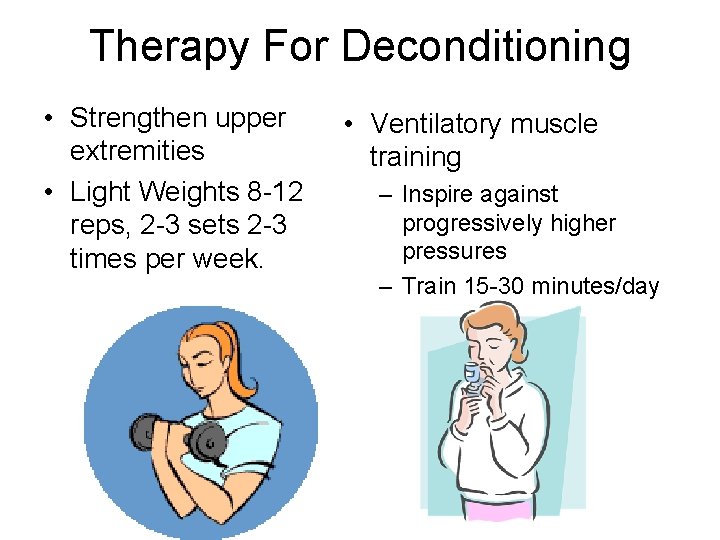
Therapy For Deconditioning • Strengthen upper extremities • Light Weights 8 -12 reps, 2 -3 sets 2 -3 times per week. • Ventilatory muscle training – Inspire against progressively higher pressures – Train 15 -30 minutes/day
REFERENCES AND READINGS • De Martinis M. , Timaris PS. The Pulmonary Respiration, Hematopoiesis and Erythrocytes In Physiological Basis of Aging and Geriatrics. Paola Timiras (Ed. ), CRC Press, 2003. • Irwin, Richard S. , Madison, J. Mark. The Diagnosis and Treatment of Cough N Engl J Med 2000 343: 1715 -1721 • Mahler DA, Fierro-Carrion G, Baird JC. Evaluation of dyspnea in the elderly. Clin Geriatr Med 2003 19: 19 -33. • Canto JG, Shlipak MG et al. Prevalence, clinical characteristics, and mortality among patients with myocardial infarction presenting without chest pain. JAMA June 28 2000, Vol. 283, No 24 pp 3223 -3229 • Harver A, Mahler DA, Daubenspeck. Targeted inspiratory muscle trainingimproves respiratorymuscle function and reduces dyspnea in COPD. ]Ann Intern Med 1989; 111: 117 -24.