
TREATMENT OF COUGH TREATMENT OF COUGH l l

- Slides: 28
TREATMENT OF COUGH
TREATMENT OF COUGH l l l Cough is a useful physiological mechanism that serves to clear the respiratory passages of foreign material and excess secretions. It should not be suppressed ﺗﻤﻨﻊ - ﺗﻜﺒﺖ indiscriminately. There are, however, many situations in which cough does not serve any useful purpose but may, instead only annoy the patient or prevent rest and sleep.
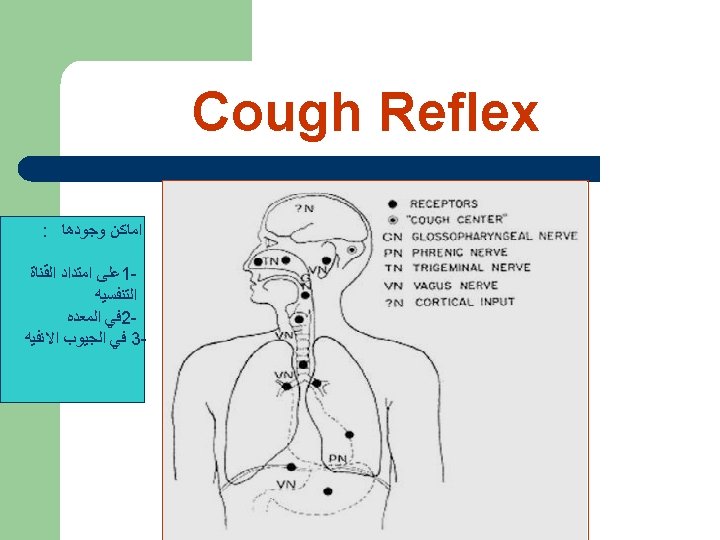
TREATMENT OF COUGH l l Chronic cough can contribute ﻳﺴﺎﻫﻢ ﻓﻲ to fatigue, especially in elderly patients, in such situations the physicians should use a drug that will reduce the frequency or intensity ﺷﺪﻩ of the coughing. Cough reflex ﺍﻗﺮﺍ ﺍﻟﻔﻴﺴﻴﻮ ﻟﻠﺸﺮﺡ is complex, involving the central and peripheral nervous systems as well as the smooth muscle of the bronchial tree.
TREATMENT OF COUGH l It has been suggested that irritation of the bronchial mucosa causes bronchoconstriction, which in turn, stimulates cough receptors( which probably represent a specialized type of stretch receptor) located in the tracheobronchial passages.
TREATMENT OF COUGH l Afferent ﻧﺎﻗﻞ ﻟﻼﺷﺎﺭﻩ ﻧﺤﻮ ﺍﻟﻤﺮﻛﺰ ) ﺍﻟﻤﺦ ﺍﻭ ﺍﻟﺤﺒﻞ ﺍﻟﺸﻜﻮﻛﻲ ( ﻣﻬﻤﻪ conduction from these receptors is via fibers in the vagus nerve; central components of the reflex probably involve several mechanisms or centres that are distinct ﺗﺨﺘﻠﻒ ﻋﻦ from the mechanisms involved in the regulation of respiration.
TREATMENT OF COUGH l l The drugs that directly or indirectly can affect this complex mechanism are diverse ﻣﺘﻨﻮﻉ. ﻣﻬﻤﻪ For example , cough may be the first or only symptom in bronchial asthma or allergy, and in such cases bronchodilators(e. g. , 2 – adrenergic receptor agonists have been shown to reduce cough without having any significant central effects, other drugs act primarily on the central or the peripheral nervous system components of the cough reflex.
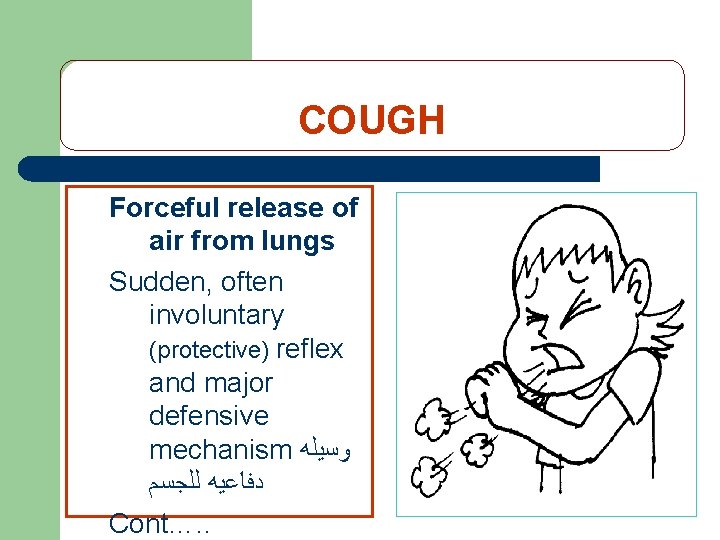
COUGH Forceful release of air from lungs Sudden, often involuntary (protective) reflex and major defensive mechanism ﻭﺳﻴﻠﻪ ﺩﻓﺎﻋﻴﻪ ﻟﻠﺠﺴﻢ Cont…. .
Causes of cough : Ø Expulsion ﺍﺧﺮﺍﺝ - ﻃﺮﺩ of respiratory secretion or foreign particles or irritant or excessive mucus from air passages § Symptom ﻋﺮﺽ ﻟﻤﺮﺽ ﻗﻠﺒﻲ ﺍﻭ ﺭﺋﻮﻱ of an underlying respiratory and/or cardiovascular pathology ﻣﻬﻤﻪ ( ﺍﺫﺍ ﺑﺘﻨﺒﻪ ﻭﺍﺣﺪ ﺗﻜﺢ ﻋﺸﺎﻥ ﻳﻨﺘﺒﻪ ) ﺍﻫﻢ ﻭﺣﺪﻩ : ﺍﻟﺴﺒﺐ ﺍﻻﺧﻴﺮ §
Mechanism of cough Stimulation of mechano-or chemoreceptors (throat, respiratory passages or stretch receptors in lungs) Afferent impulses to cough centre (medulla) Efferent impulses via parasympathetic & motor nerves to diaphragm, intercostal muscles & lung Increased contraction of diaghramatic, abdominal & intercostal (ribs) muscles noisy expiration (cough)
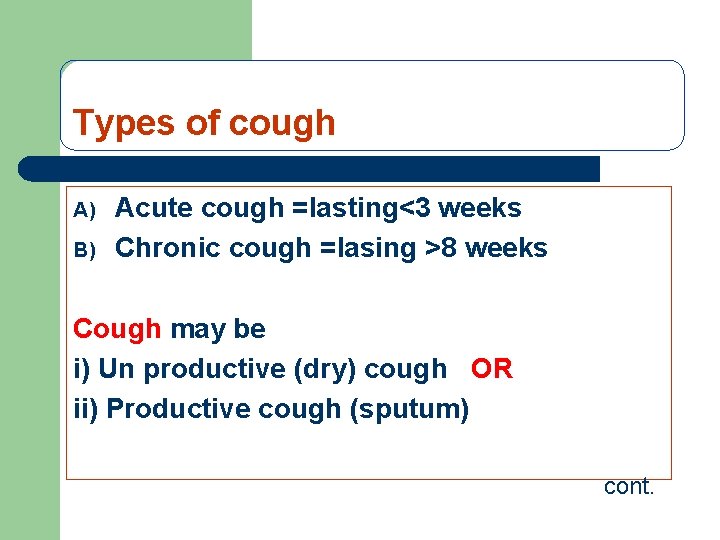
Types of cough A) B) Acute cough =lasting<3 weeks Chronic cough =lasing >8 weeks Cough may be i) Un productive (dry) cough OR ii) Productive cough (sputum) cont.
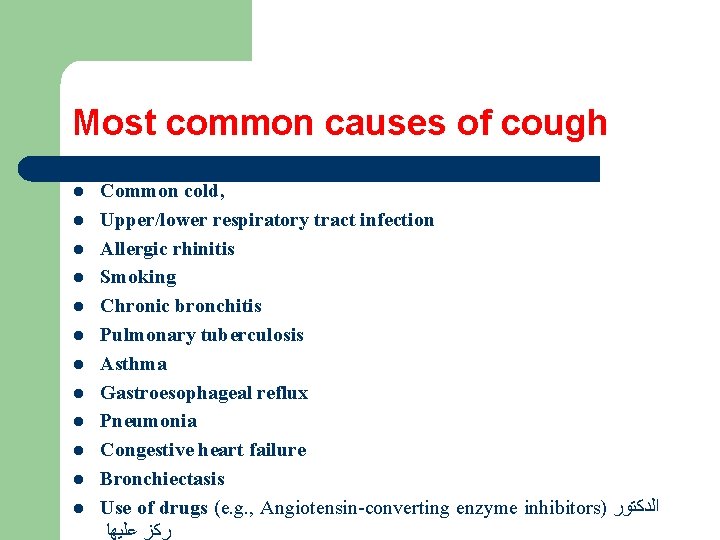
Most common causes of cough l l l Common cold, Upper/lower respiratory tract infection Allergic rhinitis Smoking Chronic bronchitis Pulmonary tuberculosis Asthma Gastroesophageal reflux Pneumonia Congestive heart failure Bronchiectasis Use of drugs (e. g. , Angiotensin-converting enzyme inhibitors) ﺍﻟﺪﻛﺘﻮﺭ ﺭﻛﺰ ﻋﻠﻴﻬﺎ
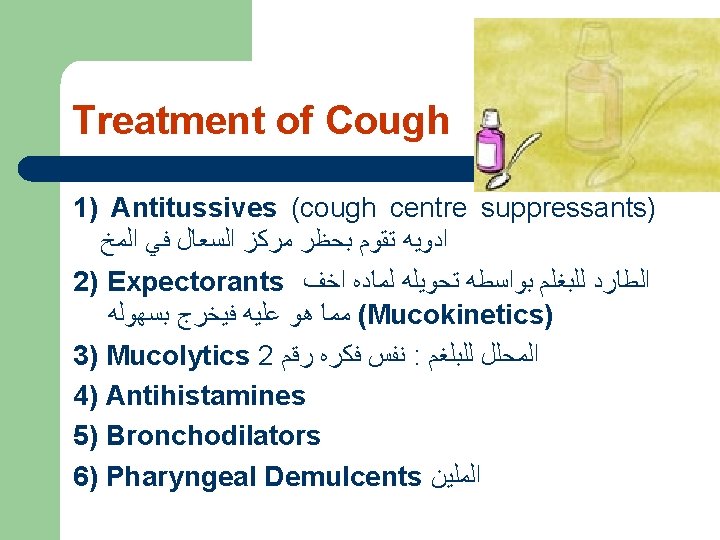
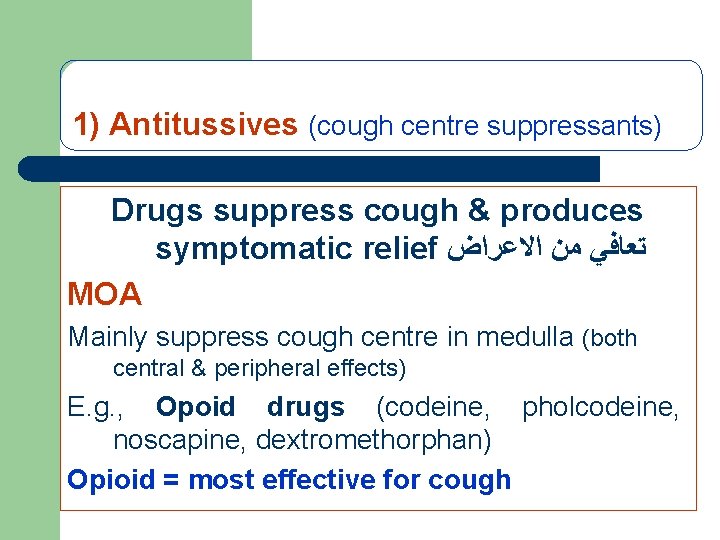
1) Antitussives (cough centre suppressants) Drugs suppress cough & produces symptomatic relief ﺗﻌﺎﻓﻲ ﻣﻦ ﺍﻻﻋﺮﺍﺽ MOA Mainly suppress cough centre in medulla (both central & peripheral effects) E. g. , Opoid drugs (codeine, pholcodeine, noscapine, dextromethorphan) Opioid = most effective for cough
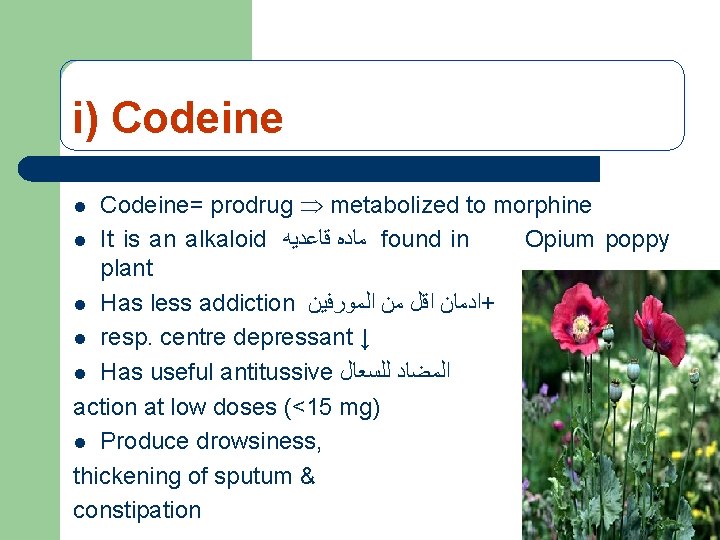
i) Codeine= prodrug metabolized to morphine l It is an alkaloid ﻣﺎﺩﻩ ﻗﺎﻋﺪﻳﻪ found in Opium poppy plant l Has less addiction ﺍﺩﻣﺎﻥ ﺍﻗﻞ ﻣﻦ ﺍﻟﻤﻮﺭﻓﻴﻦ + l resp. centre depressant ↓ l Has useful antitussive ﺍﻟﻤﻀﺎﺩ ﻟﻠﺴﻌﺎﻝ action at low doses (<15 mg) l Produce drowsiness, thickening of sputum & constipation l
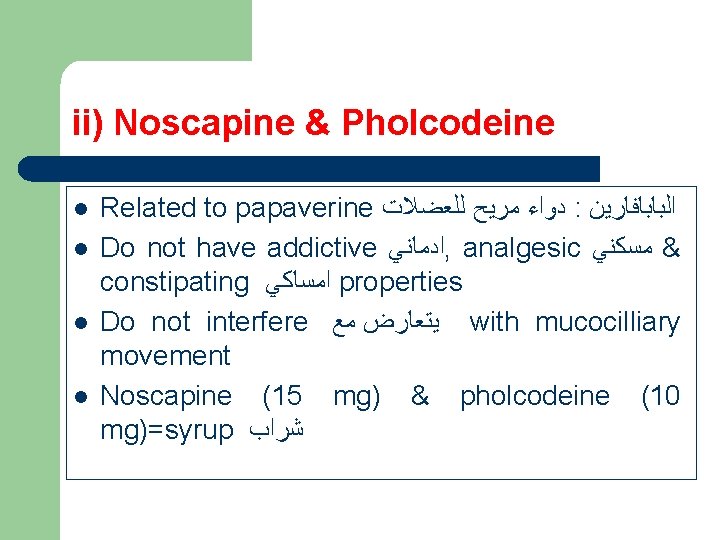
ii) Noscapine & Pholcodeine l l Related to papaverine ﺩﻭﺍﺀ ﻣﺮﻳﺢ ﻟﻠﻌﻀﻼﺕ : ﺍﻟﺒﺎﺑﺎﻓﺎﺭﻳﻦ Do not have addictive ﺍﺩﻣﺎﻧﻲ , analgesic & ﻣﺴﻜﻨﻲ constipating ﺍﻣﺴﺎﻛﻲ properties Do not interfere ﻳﺘﻌﺎﺭﺽ ﻣﻊ with mucocilliary movement Noscapine (15 mg) & pholcodeine (10 mg)=syrup ﺷﺮﺍﺏ
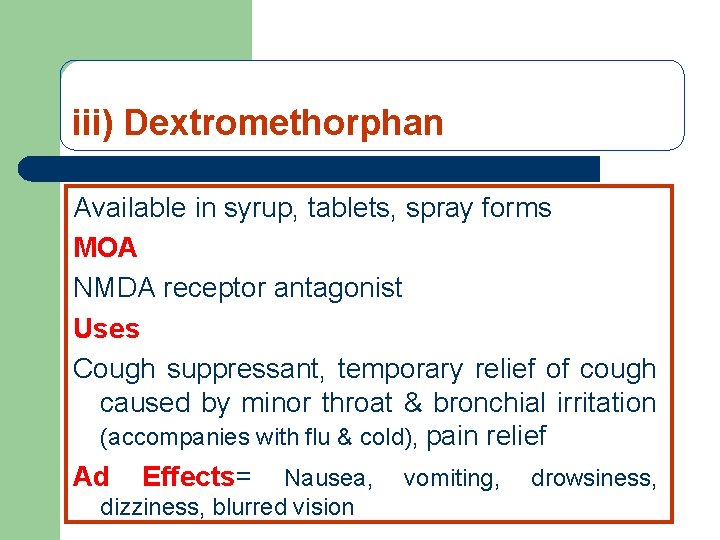
iii) Dextromethorphan Available in syrup, tablets, spray forms MOA NMDA receptor antagonist Uses Cough suppressant, temporary relief of cough caused by minor throat & bronchial irritation (accompanies with flu & cold), pain relief Ad Effects= Nausea, vomiting, drowsiness, dizziness, blurred vision
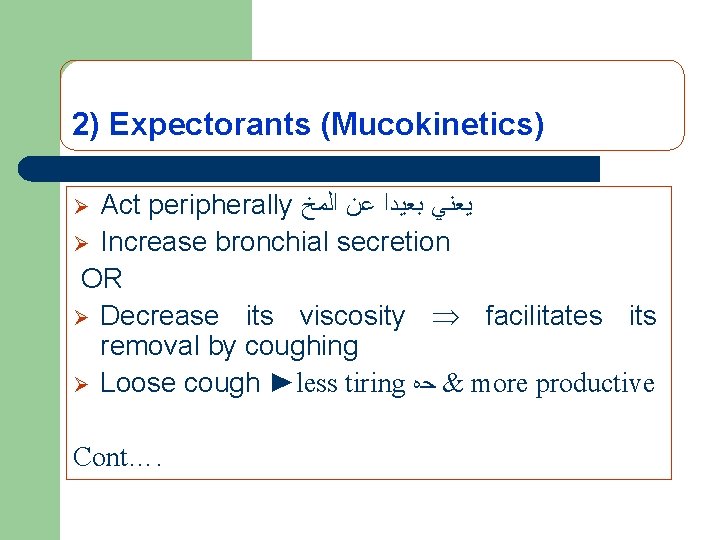
2) Expectorants (Mucokinetics) Act peripherally ﻳﻌﻨﻲ ﺑﻌﻴﺪﺍ ﻋﻦ ﺍﻟﻤﺦ Ø Increase bronchial secretion OR Ø Decrease its viscosity facilitates its removal by coughing Ø Loose cough ►less tiring & ﺣﻩ more productive Ø Cont….
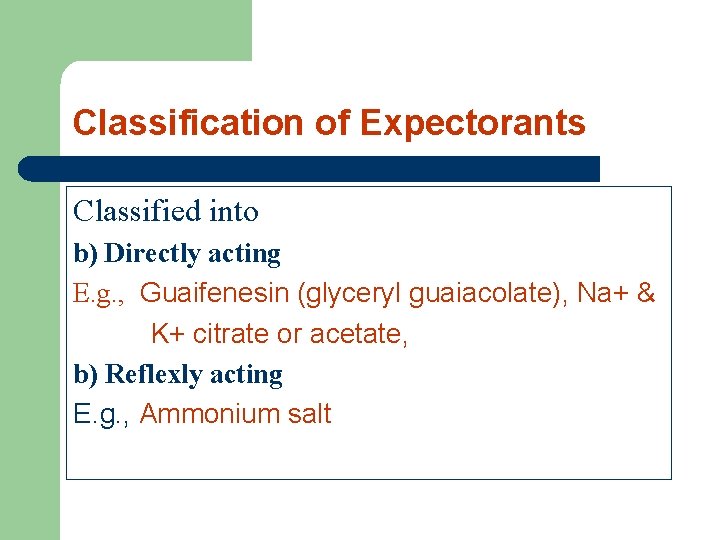
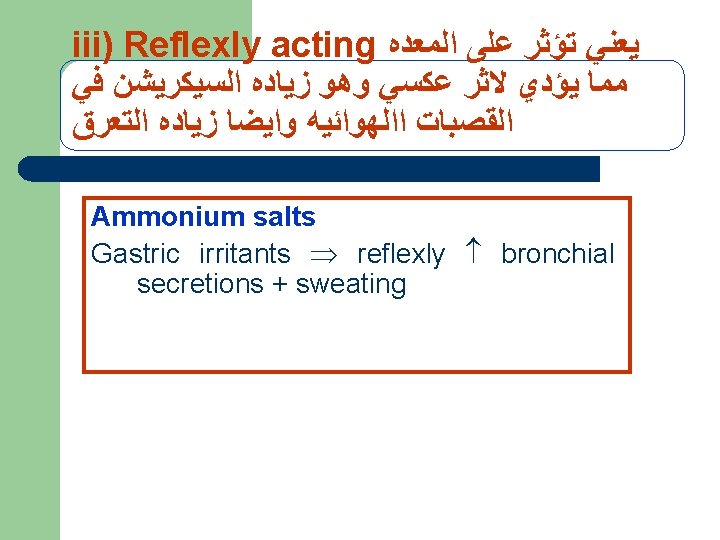
Classification of Expectorants Classified into b) Directly acting E. g. , Guaifenesin (glyceryl guaiacolate), Na+ & K+ citrate or acetate, b) Reflexly acting E. g. , Ammonium salt
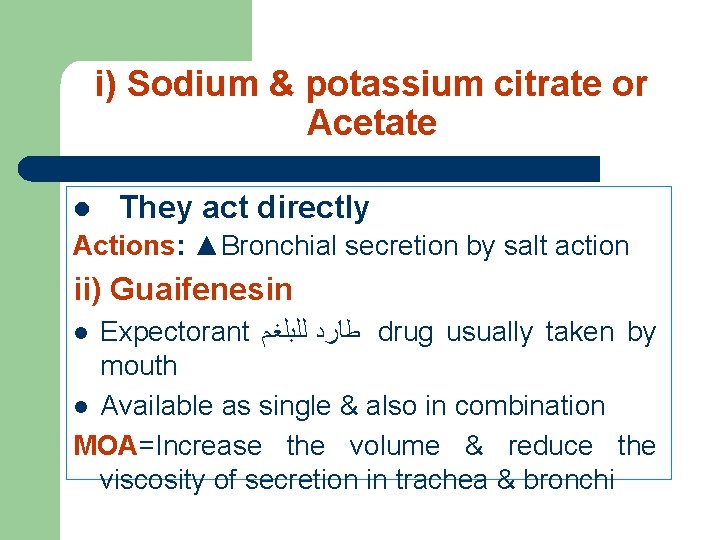
i) Sodium & potassium citrate or Acetate l They act directly Actions: ▲Bronchial secretion by salt action ii) Guaifenesin Expectorant ﻃﺎﺭﺩ ﻟﻠﺒﻠﻐﻢ drug usually taken by mouth l Available as single & also in combination MOA=Increase the volume & reduce the viscosity of secretion in trachea & bronchi l
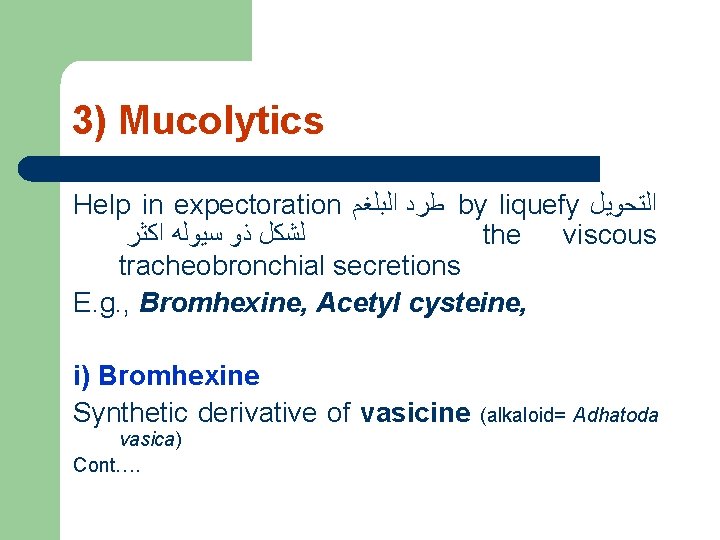
3) Mucolytics Help in expectoration ﻃﺮﺩ ﺍﻟﺒﻠﻐﻢ by liquefy ﺍﻟﺘﺤﻮﻳﻞ ﻟﺸﻜﻞ ﺫﻭ ﺳﻴﻮﻟﻪ ﺍﻛﺜﺮ the viscous tracheobronchial secretions E. g. , Bromhexine, Acetyl cysteine, i) Bromhexine Synthetic derivative of vasicine vasica) Cont…. (alkaloid= Adhatoda
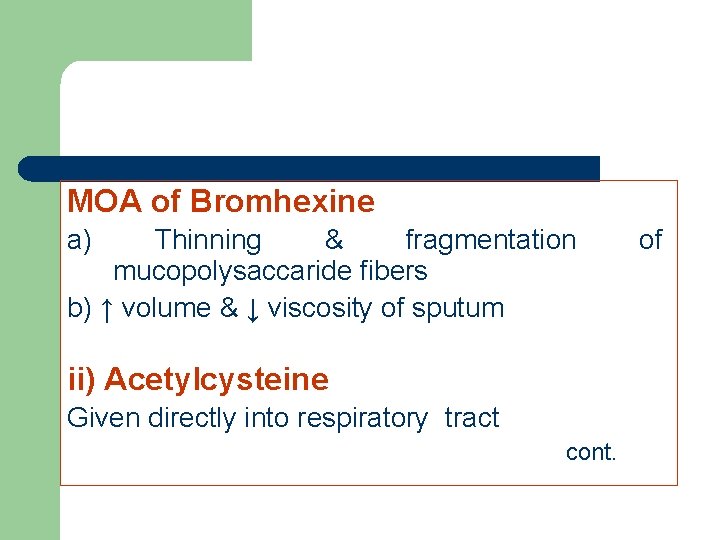
MOA of Bromhexine a) Thinning & fragmentation mucopolysaccaride fibers b) ↑ volume & ↓ viscosity of sputum ii) Acetylcysteine Given directly into respiratory tract cont. of
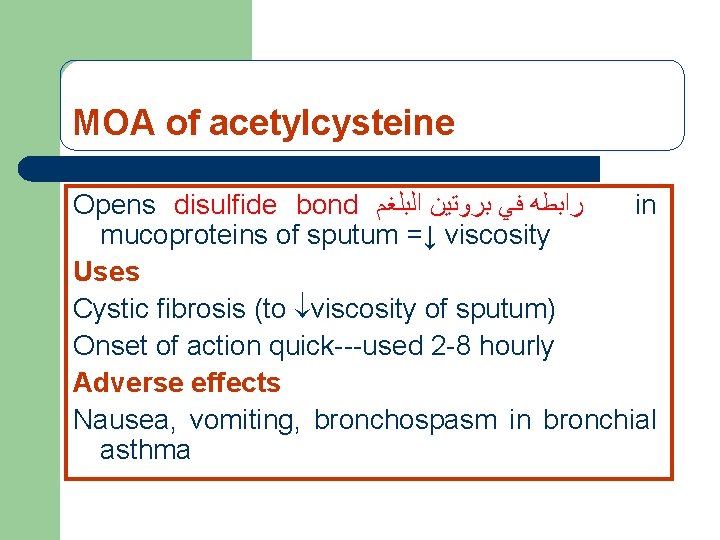
MOA of acetylcysteine Opens disulfide bond ﺭﺍﺑﻄﻪ ﻓﻲ ﺑﺮﻭﺗﻴﻦ ﺍﻟﺒﻠﻐﻢ in mucoproteins of sputum =↓ viscosity Uses Cystic fibrosis (to viscosity of sputum) Onset of action quick---used 2 -8 hourly Adverse effects Nausea, vomiting, bronchospasm in bronchial asthma
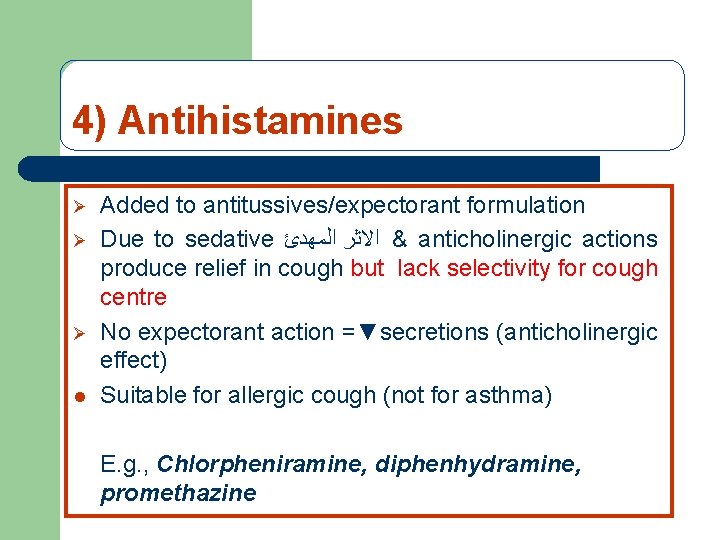
4) Antihistamines Ø Ø Ø l Added to antitussives/expectorant formulation Due to sedative & ﺍﻻﺛﺮ ﺍﻟﻤﻬﺪﺉ anticholinergic actions produce relief in cough but lack selectivity for cough centre No expectorant action =▼secretions (anticholinergic effect) Suitable for allergic cough (not for asthma) E. g. , Chlorpheniramine, diphenhydramine, promethazine
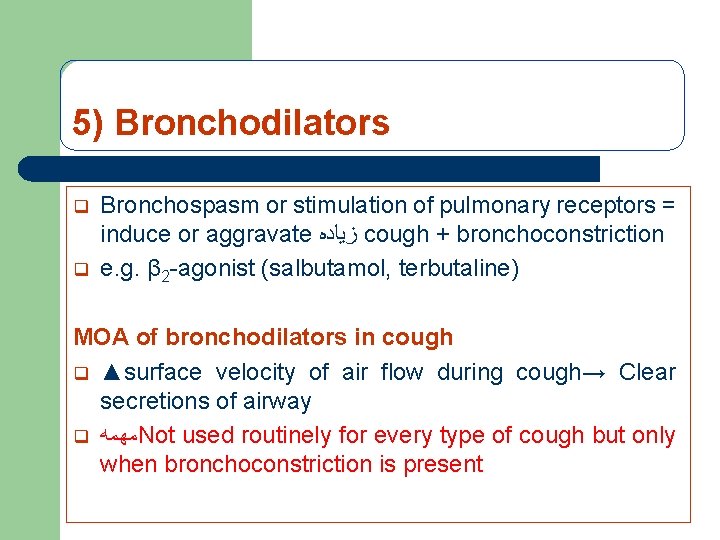
5) Bronchodilators q q Bronchospasm or stimulation of pulmonary receptors = induce or aggravate ﺯﻳﺎﺩﻩ cough + bronchoconstriction e. g. β 2 -agonist (salbutamol, terbutaline) MOA of bronchodilators in cough q ▲surface velocity of air flow during cough→ Clear secretions of airway q ﻣﻬﻤﻪ Not used routinely for every type of cough but only when bronchoconstriction is present
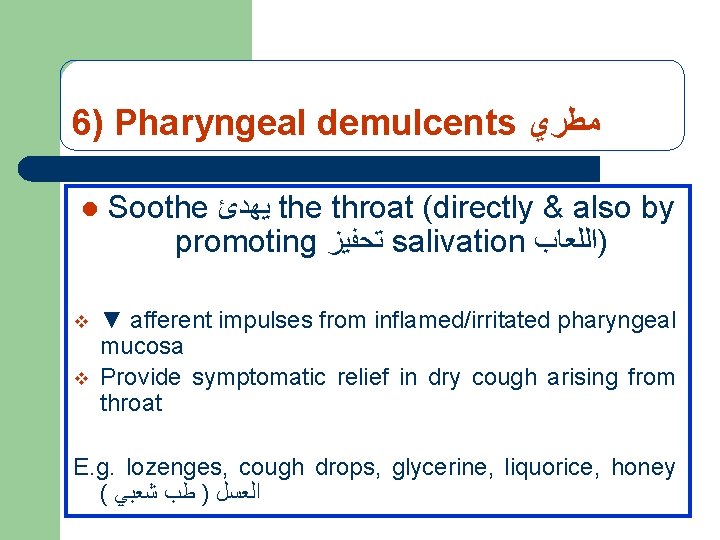
6) Pharyngeal demulcents ﻣﻄﺮﻱ l v v Soothe ﻳﻬﺪﺉ the throat (directly & also by promoting ﺗﺤﻔﻴﺰ salivation )ﺍﻟﻠﻌﺎﺏ ▼ afferent impulses from inflamed/irritated pharyngeal mucosa Provide symptomatic relief in dry cough arising from throat E. g. lozenges, cough drops, glycerine, liquorice, honey ( ﺍﻟﻌﺴﻞ ) ﻃﺐ ﺷﻌﺒﻲ
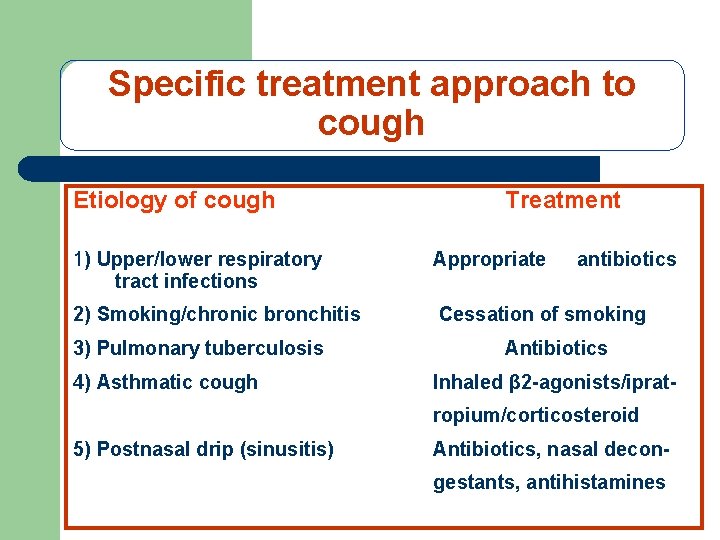
Specific treatment approach to cough Etiology of cough Treatment 1) Upper/lower respiratory tract infections Appropriate 2) Smoking/chronic bronchitis Cessation of smoking 3) Pulmonary tuberculosis 4) Asthmatic cough antibiotics Antibiotics Inhaled β 2 -agonists/ipratropium/corticosteroid 5) Postnasal drip (sinusitis) Antibiotics, nasal decongestants, antihistamines