Correcting TEOM Measurements using the KCL Volatile Correction

- Slides: 27
Correcting TEOM Measurements using the KCL Volatile Correction Model David Green, Gary Fuller & Timothy Baker
Contents • • • 2 Model Development Context UK PM Monitoring Problem Model derivation Model testing Proposed monitoring strategy for the UK Presented by David Green
Model Development Context • January LAQN Seminar – London FDMS • Defra funded work early 2007 – Grounded in statistics used to demonstrate equivalence – UK wide applicability • Named it: “Volatile Correction Model” • Future steps 3 Presented by David Green
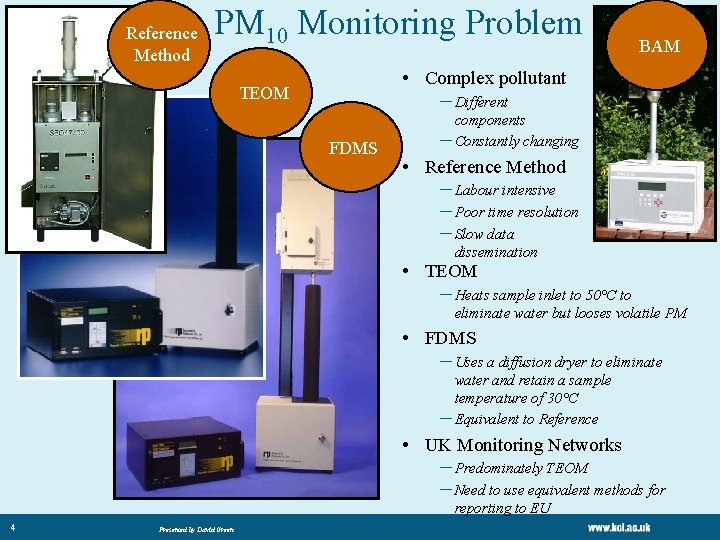
Reference Method PM 10 Monitoring Problem BAM • Complex pollutant TEOM – Different FDMS components – Constantly changing • Reference Method – Labour intensive – Poor time resolution – Slow data dissemination • TEOM – Heats sample inlet to 50°C to eliminate water but looses volatile PM • FDMS – Uses a diffusion dryer to eliminate water and retain a sample temperature of 30°C – Equivalent to Reference • UK Monitoring Networks – Predominately TEOM – Need to use equivalent methods for reporting to EU 4 Presented by David Green
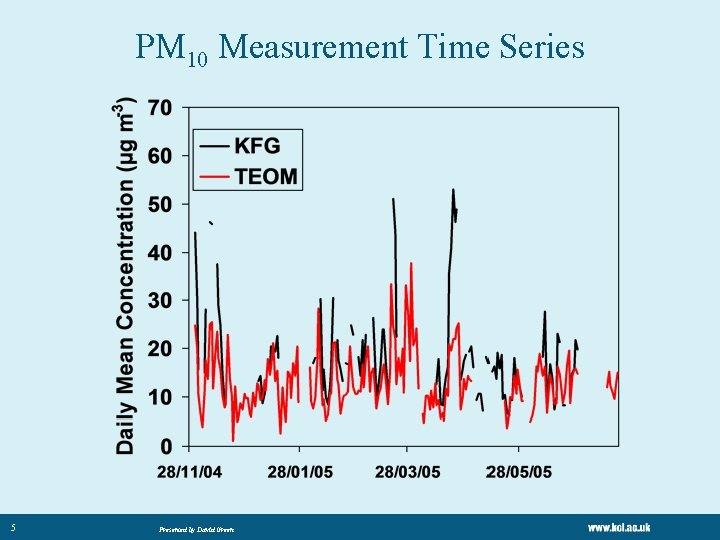
PM 10 Measurement Time Series 5 Presented by David Green
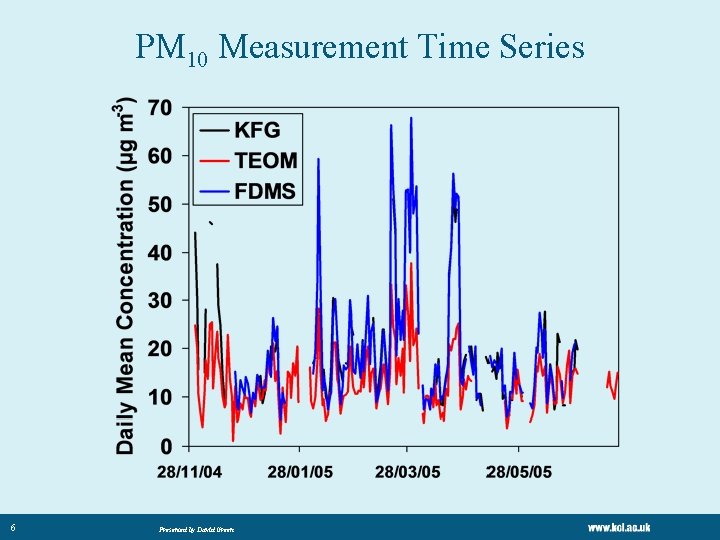
PM 10 Measurement Time Series 6 Presented by David Green
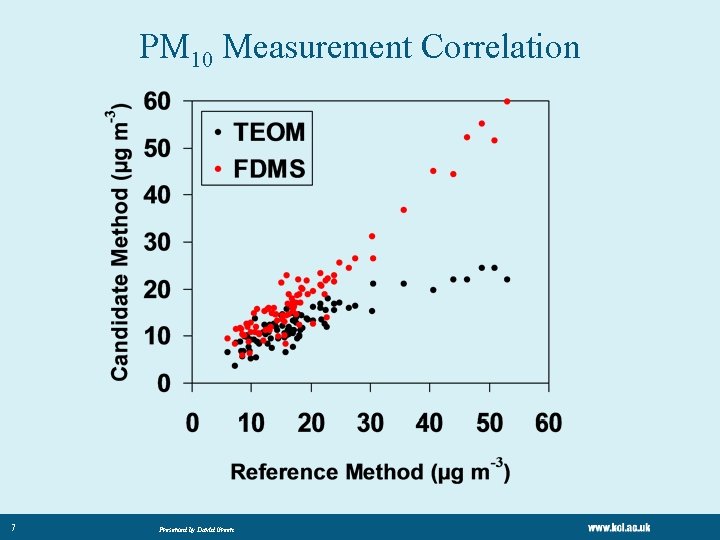
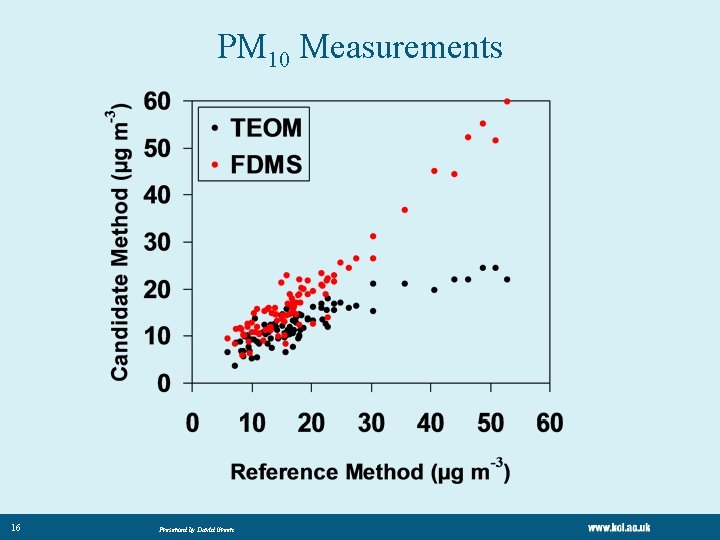
PM 10 Measurement Correlation 7 Presented by David Green
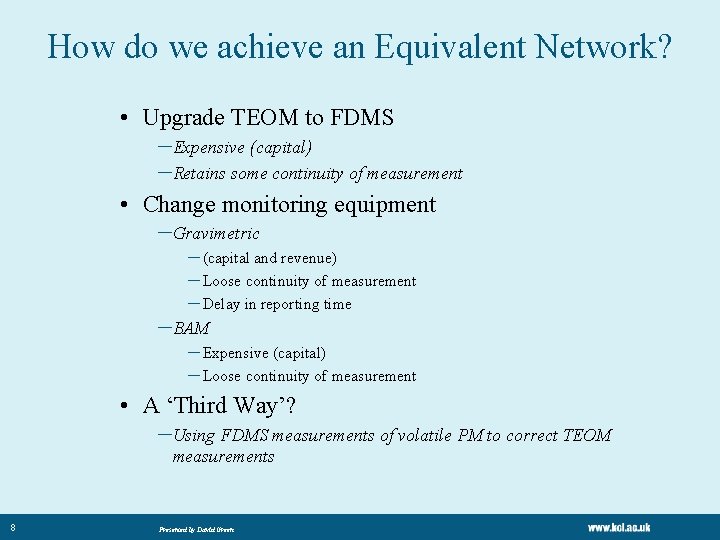
How do we achieve an Equivalent Network? • Upgrade TEOM to FDMS – Expensive (capital) – Retains some continuity of measurement • Change monitoring equipment – Gravimetric – (capital and revenue) – Loose continuity of measurement – Delay in reporting time – BAM – Expensive (capital) – Loose continuity of measurement • A ‘Third Way’? – Using FDMS measurements of volatile PM to correct TEOM measurements 8 Presented by David Green
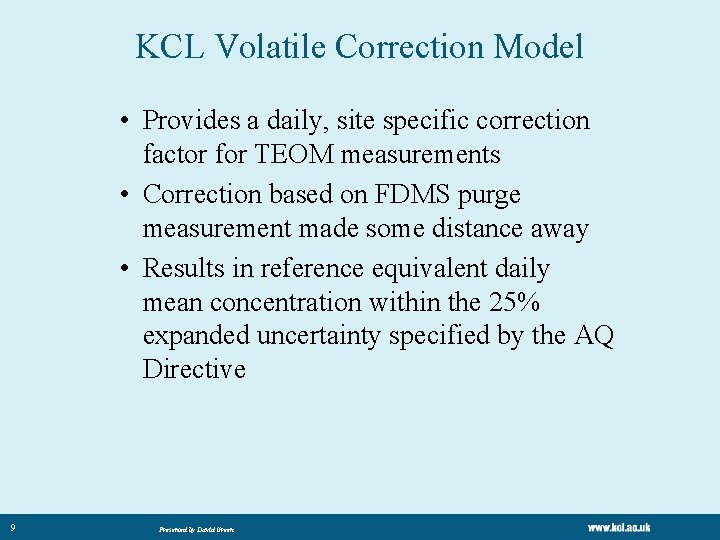
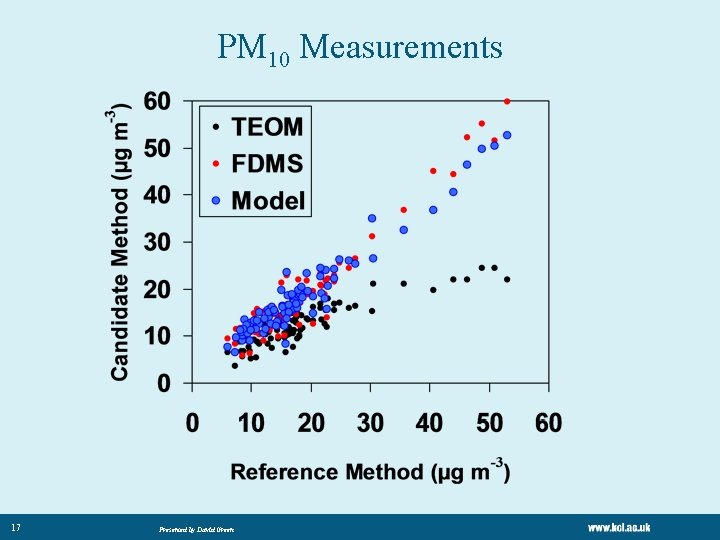
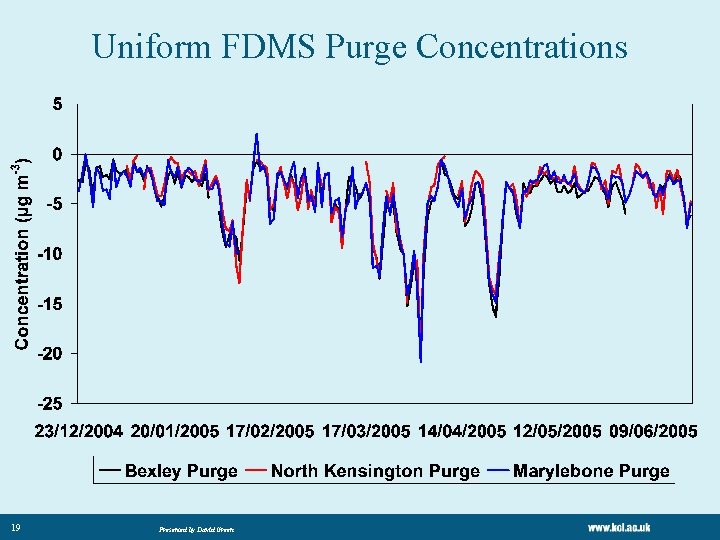
KCL Volatile Correction Model • Provides a daily, site specific correction factor for TEOM measurements • Correction based on FDMS purge measurement made some distance away • Results in reference equivalent daily mean concentration within the 25% expanded uncertainty specified by the AQ Directive 9 Presented by David Green
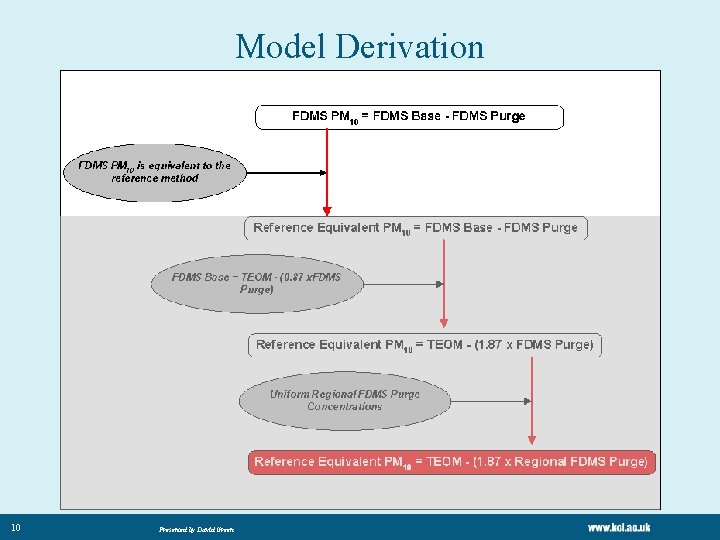
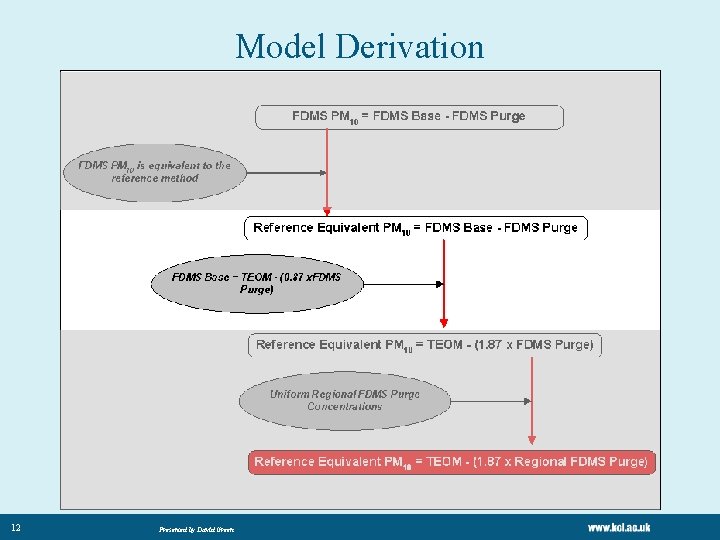
Model Derivation 10 Presented by David Green
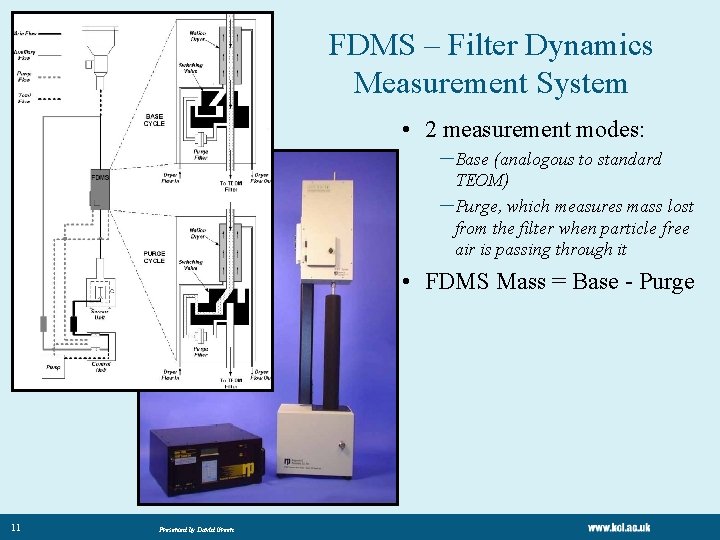
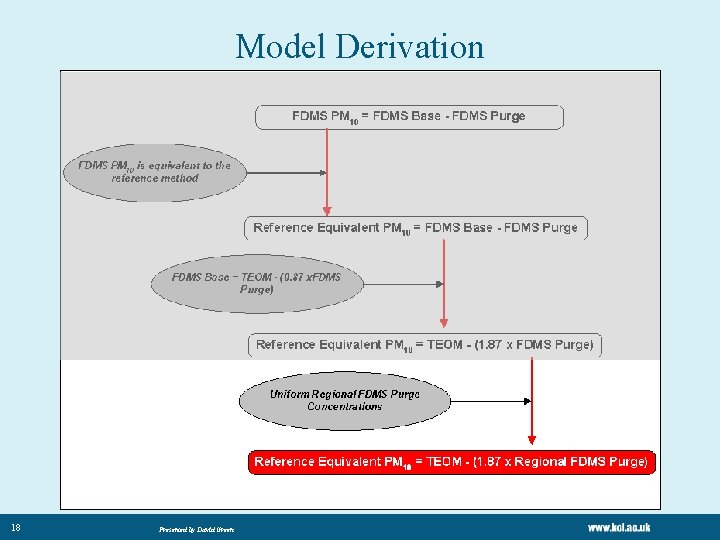
FDMS – Filter Dynamics Measurement System • 2 measurement modes: – Base (analogous to standard TEOM) – Purge, which measures mass lost from the filter when particle free air is passing through it • FDMS Mass = Base - Purge 11 Presented by David Green
Model Derivation 12 Presented by David Green
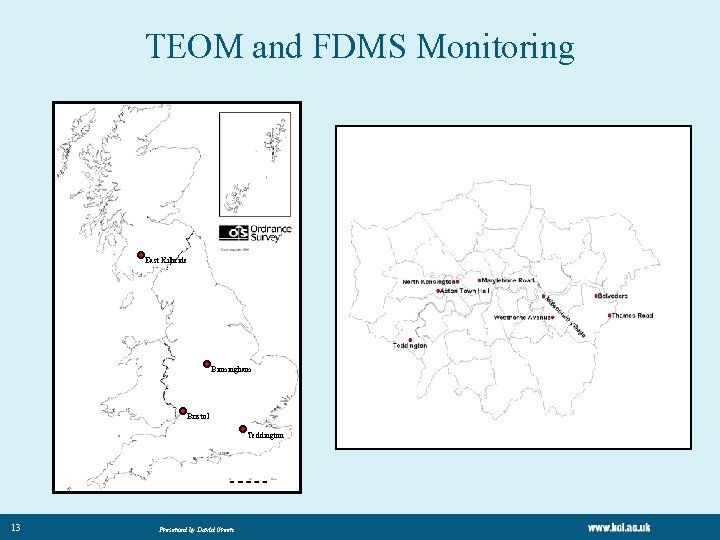
TEOM and FDMS Monitoring East Kilbride Birmingham Bristol Teddington 13 Presented by David Green
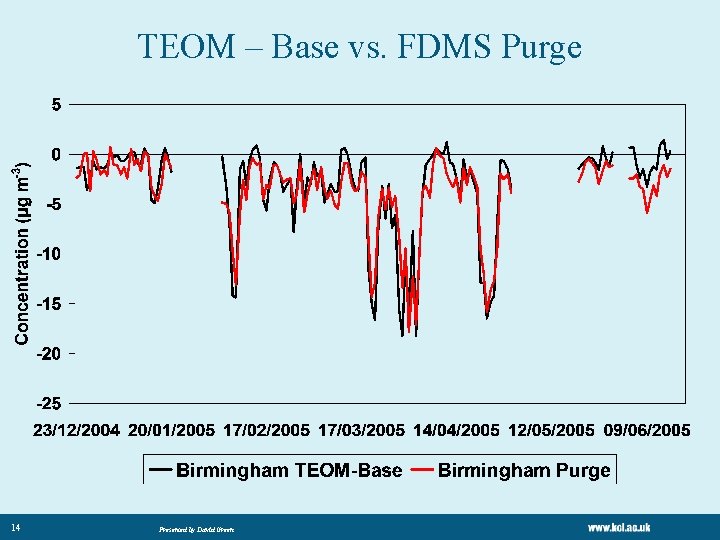
TEOM – Base vs. FDMS Purge 14 Presented by David Green
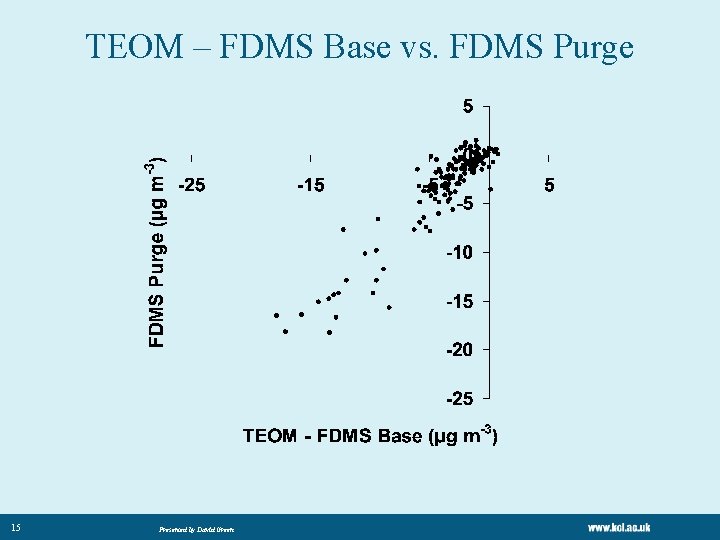
TEOM – FDMS Base vs. FDMS Purge 15 Presented by David Green
PM 10 Measurements 16 Presented by David Green
PM 10 Measurements 17 Presented by David Green
Model Derivation 18 Presented by David Green
Uniform FDMS Purge Concentrations 19 Presented by David Green
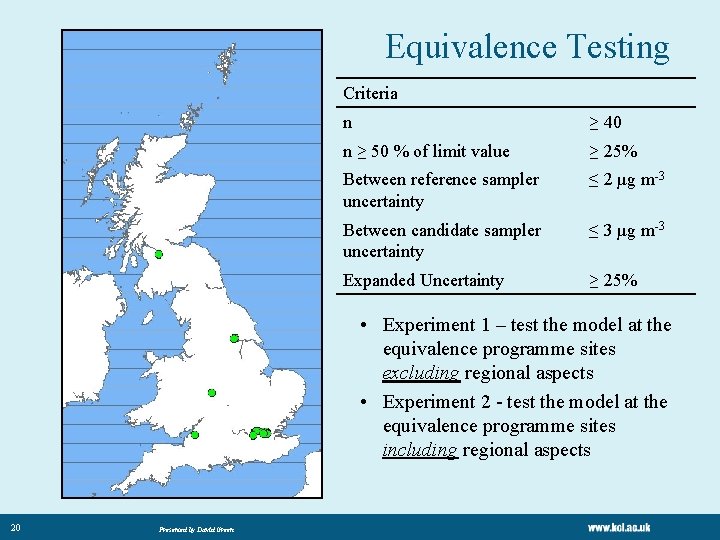
Equivalence Testing Criteria n ≥ 40 n ≥ 50 % of limit value ≥ 25% Between reference sampler uncertainty ≤ 2 µg m-3 Between candidate sampler uncertainty ≤ 3 µg m-3 Expanded Uncertainty ≥ 25% • Experiment 1 – test the model at the equivalence programme sites excluding regional aspects • Experiment 2 - test the model at the equivalence programme sites including regional aspects 20 Presented by David Green
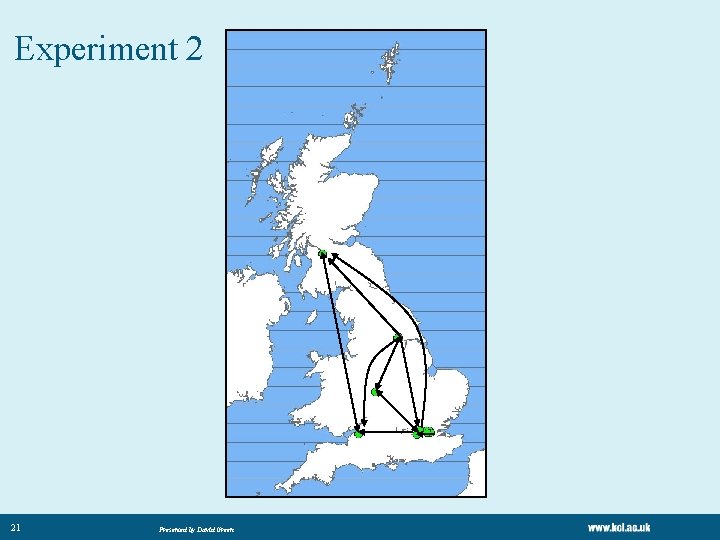
Experiment 2 21 Presented by David Green
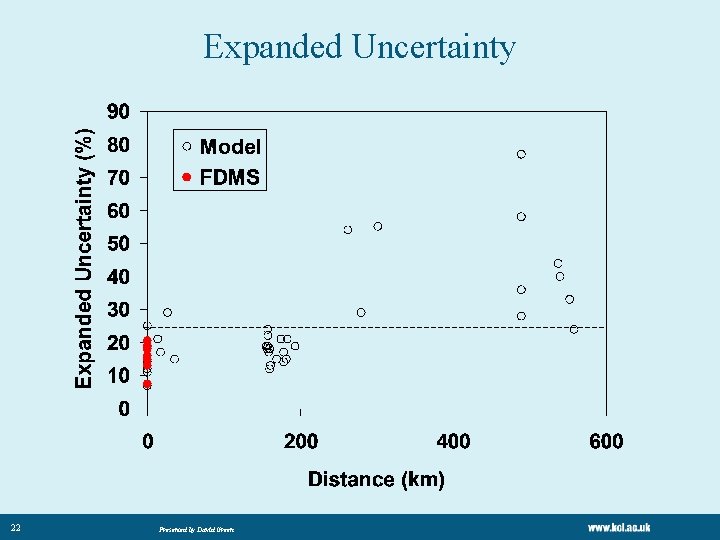
Expanded Uncertainty 22 Presented by David Green
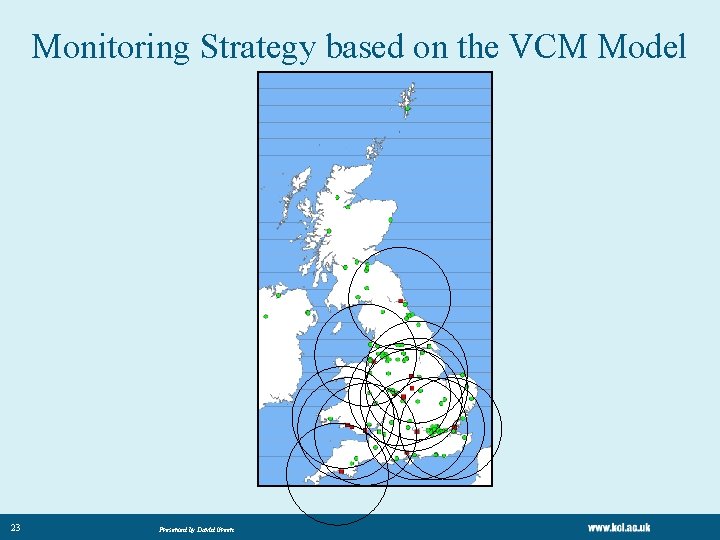
Monitoring Strategy based on the VCM Model 23 Presented by David Green
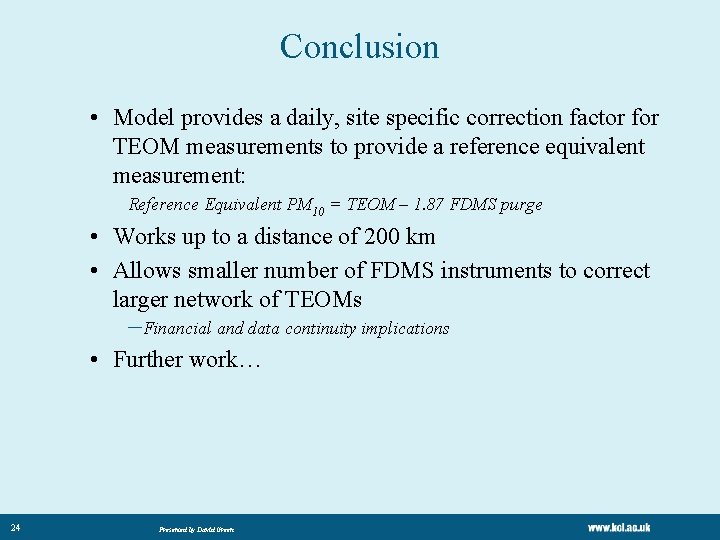
Conclusion • Model provides a daily, site specific correction factor for TEOM measurements to provide a reference equivalent measurement: Reference Equivalent PM 10 = TEOM – 1. 87 FDMS purge • Works up to a distance of 200 km • Allows smaller number of FDMS instruments to correct larger network of TEOMs – Financial and data continuity implications • Further work… 24 Presented by David Green
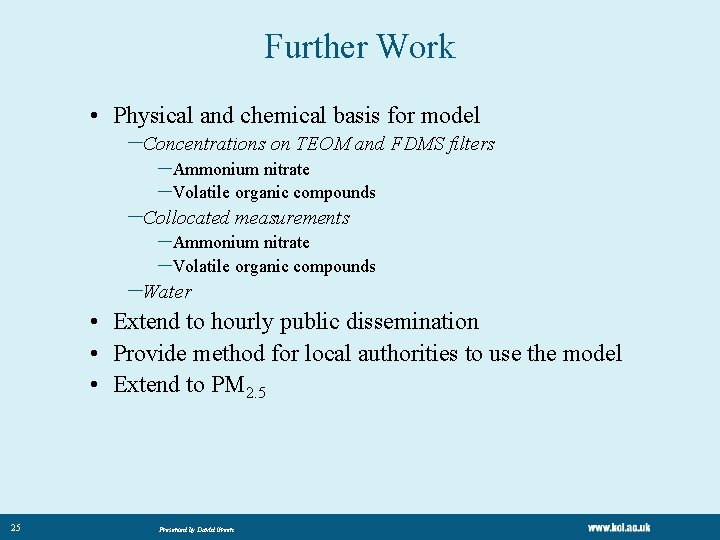
Further Work • Physical and chemical basis for model –Concentrations on TEOM and FDMS filters – Ammonium nitrate – Volatile organic compounds –Collocated measurements – Ammonium nitrate – Volatile organic compounds –Water • Extend to hourly public dissemination • Provide method for local authorities to use the model • Extend to PM 2. 5 25 Presented by David Green
Acknowledgements • • 26 Defra London Borough of Bexley London Borough of Greenwich London Borough of Ealing City of Westminster Royal Borough of Kensington and Chelsea Air Monitors Presented by David Green
Thank you for you attention! 27 Presented by David Green