
Constraints on minimal Z models from SO10 GUTs
- Slides: 22
Constraints on minimal Z' models from SO(10) GUTs Paweł Pachołek IFT UW Scalars 2011 Warsaw 27. 08. 2011
Outline �Motivation �Z’ models as low energy limits of GUT models �Parametrization in Z’ models �RGE’s for gauge couplings in models with more than one U(1) group �Constraints from gauge coupling unification(s) �Adding experimental constraints �Summary and conclusions
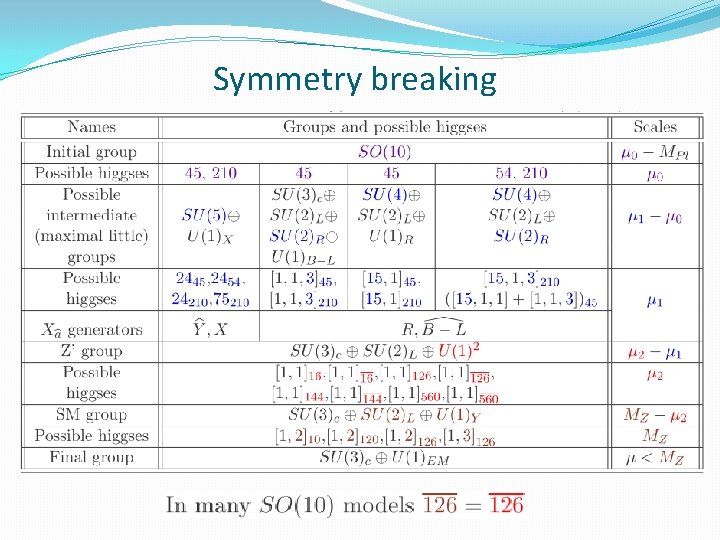
Motivation �Additional U(1) group can naturally appear after breaking a GUT group of rank greater than 4. This is always the case except for the minimal unification to SU(5) (rank 4). SO(10) has rank 5 and E 6 has rank 6. �It’s worth to know what region in parameter-space of Z’ models is consistent with Grand Unification. �For minimal Z’ models the smallest possible simple unification gauge group is SO(10). �Can we embedd a minimal Z’ model with relatively light Z’ boson into SO(10) GUT model? �Treshold corrections are included in a general, potentialindependent analysis of such an embedding.
What is a minimal Z’ model ? �The gauge group is SM x U(1) �Additional U(1) gauge group is related to B-L. �Only in this case no additional fermions (except for righthanded neutrinos) are needed for anomaly cancelation. �Z’ boson is the gauge boson of additional U(1).
Symmetry breaking
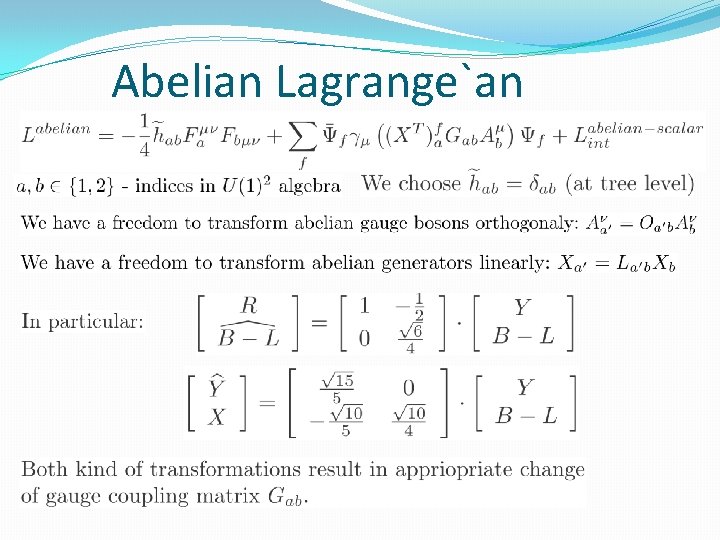
Abelian Lagrange`an
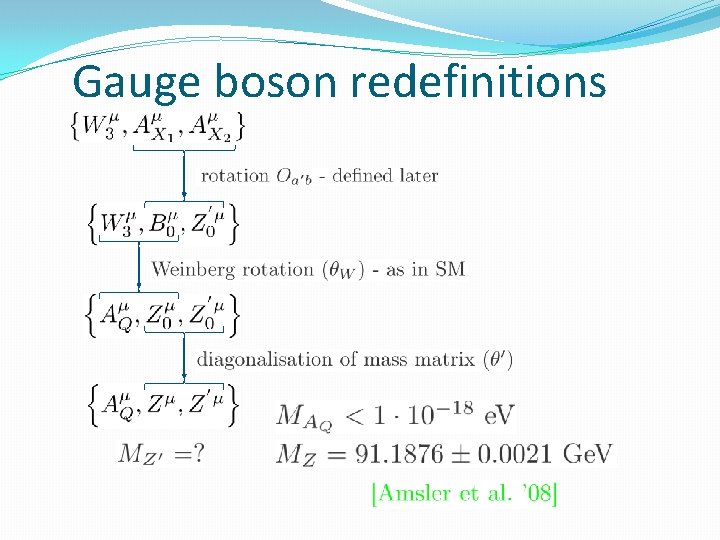
Gauge boson redefinitions
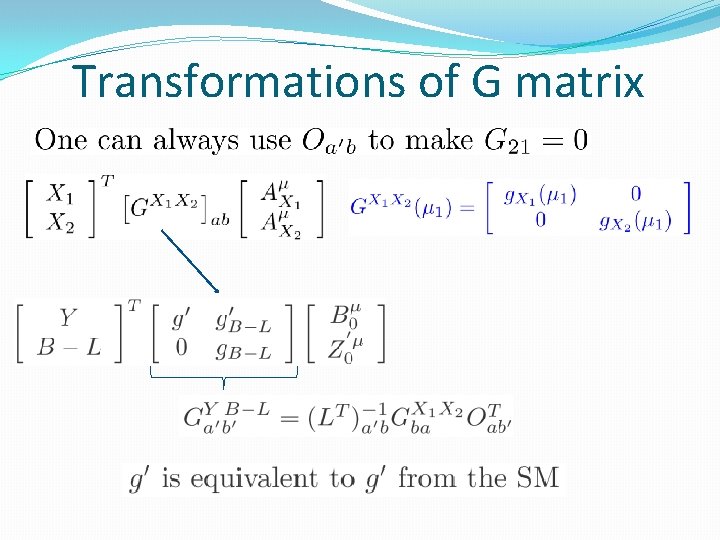
Transformations of G matrix
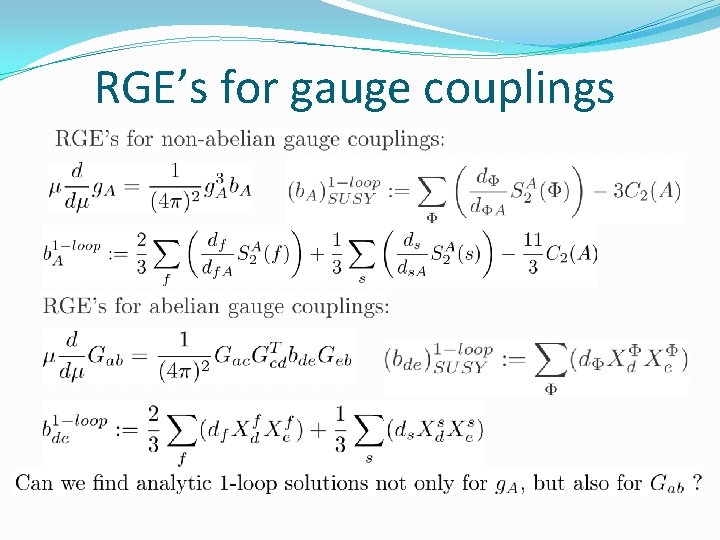
RGE’s for gauge couplings
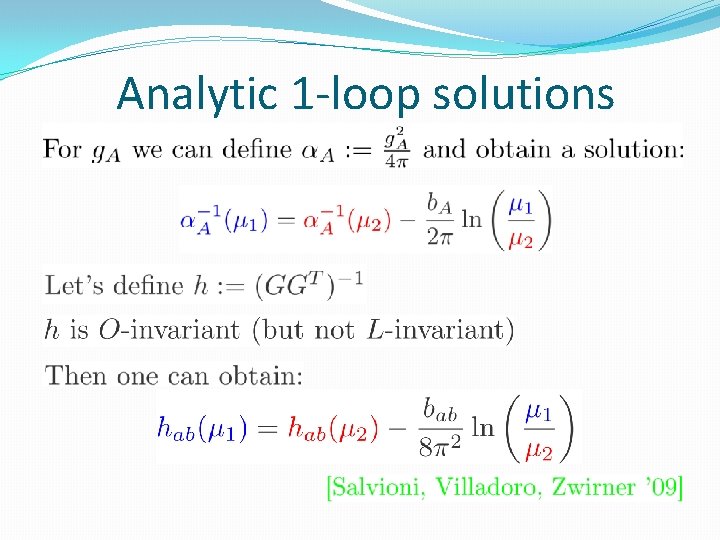
Analytic 1 -loop solutions
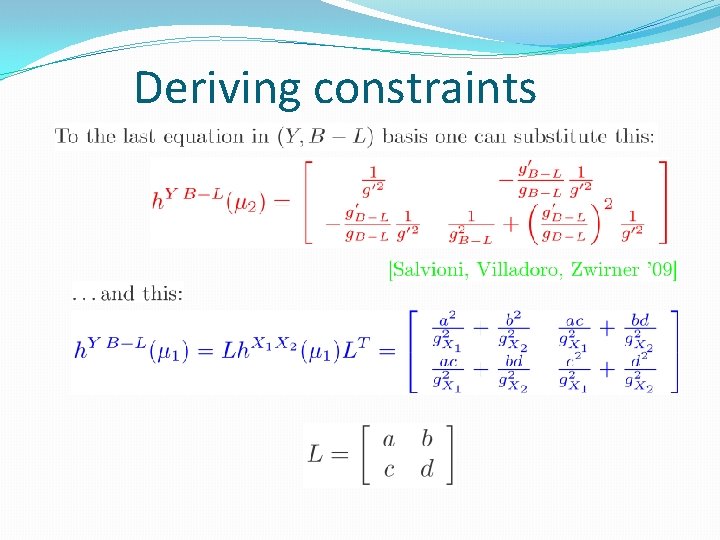
Deriving constraints
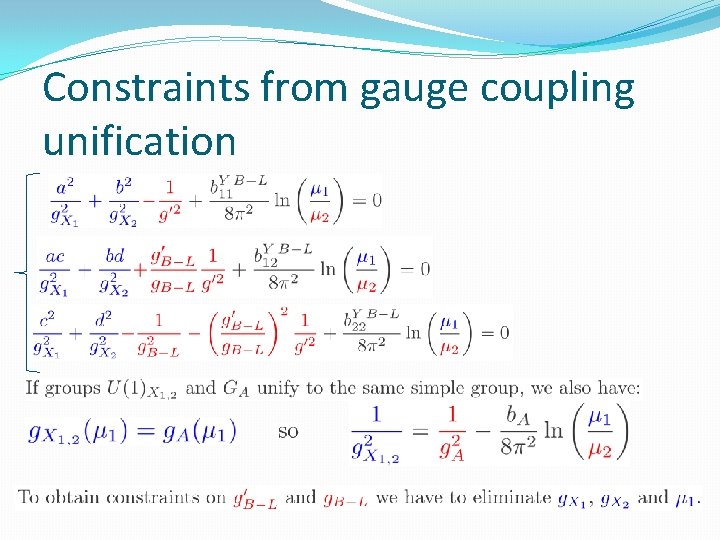
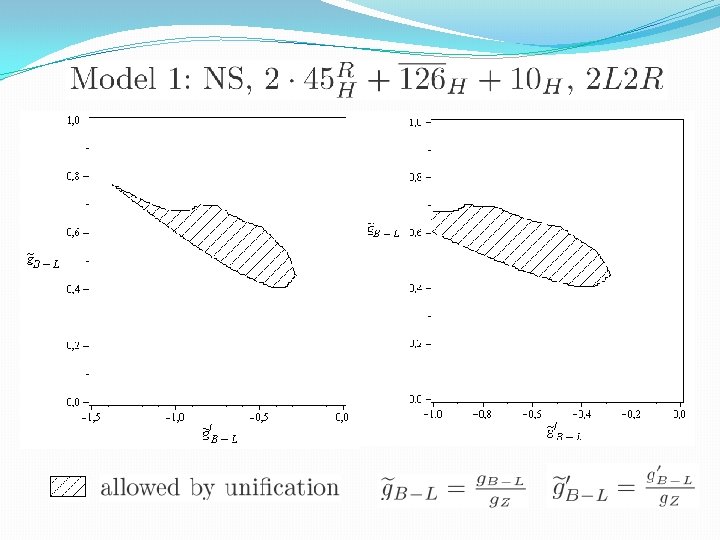
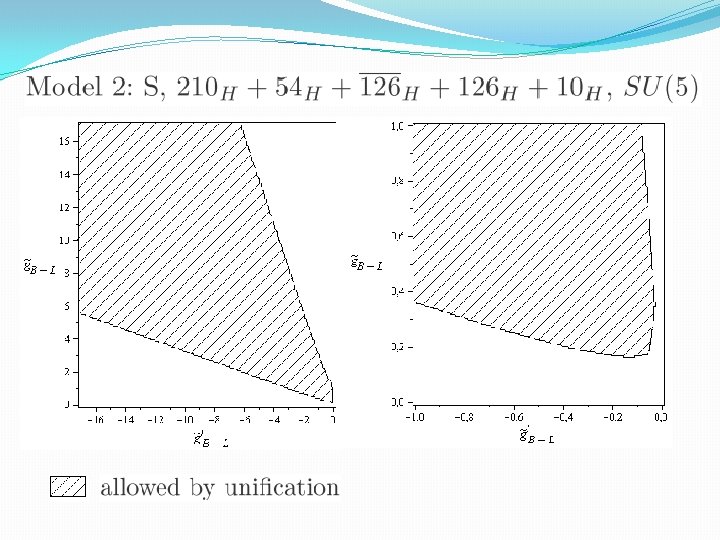
Constraints from gauge coupling unification
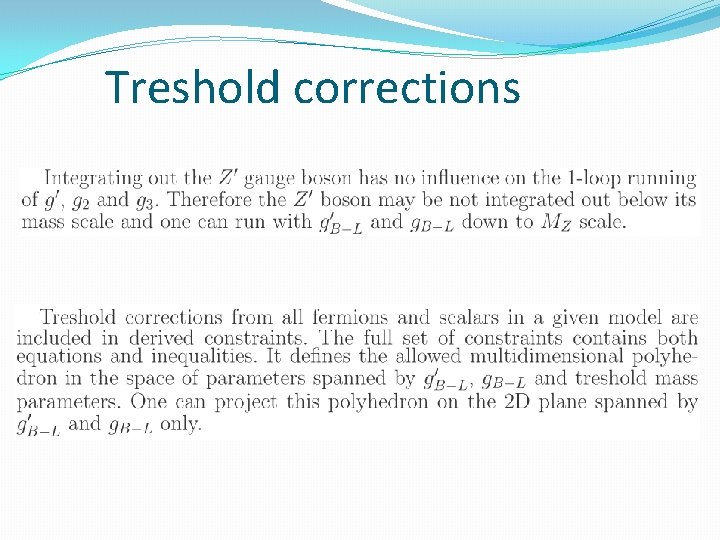
Treshold corrections
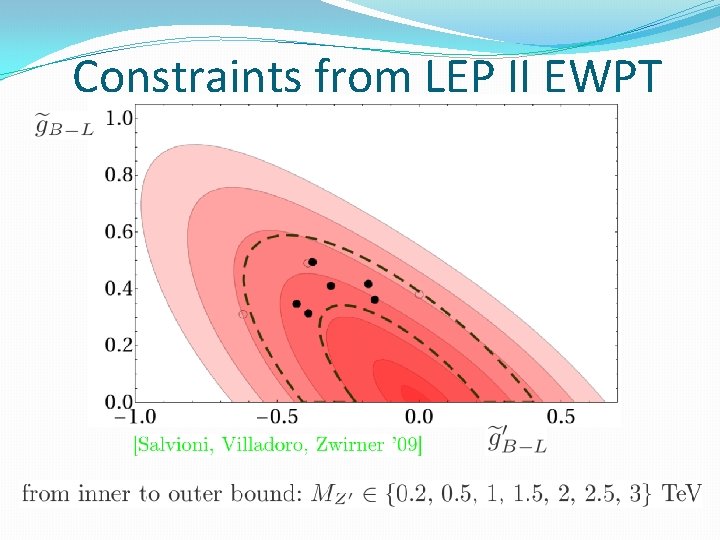
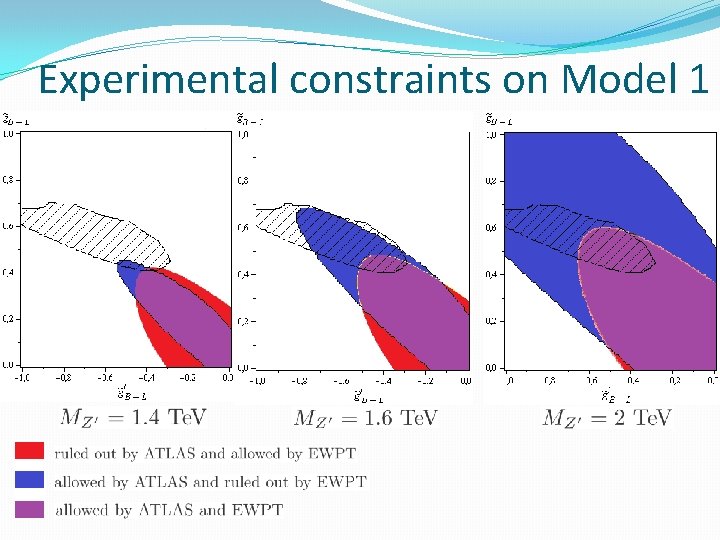
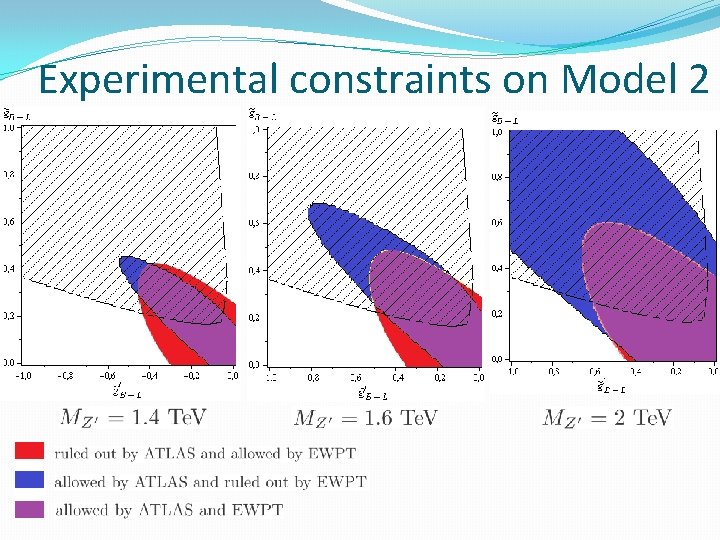
Constraints from LEP II EWPT
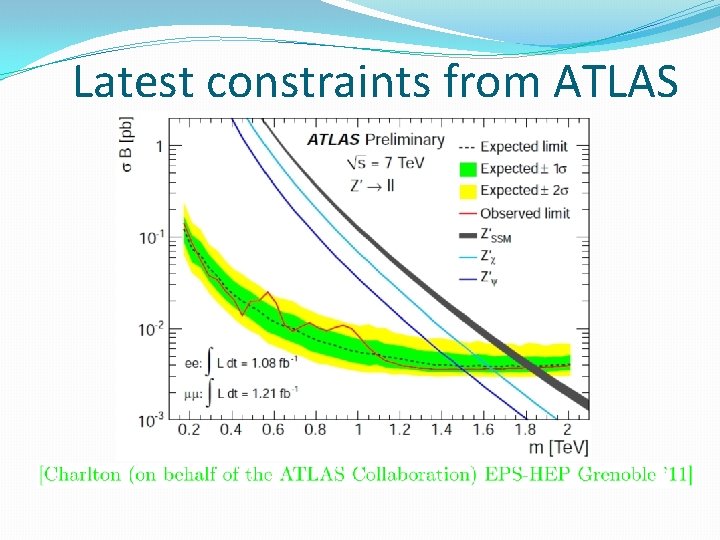
Latest constraints from ATLAS
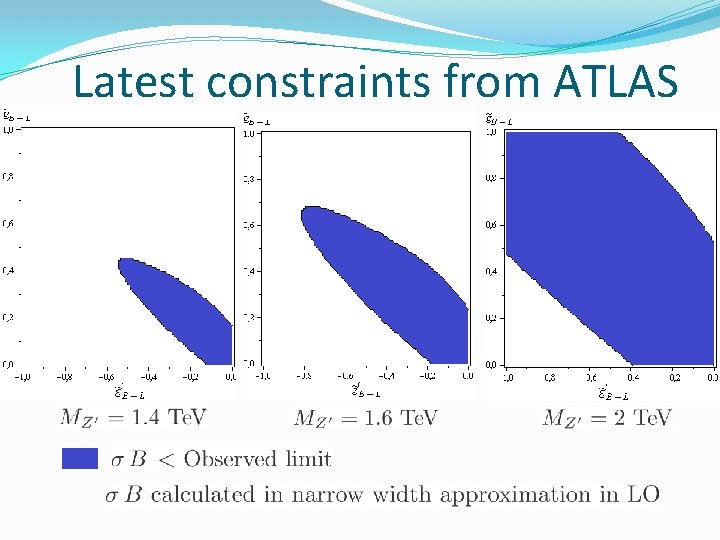
Latest constraints from ATLAS
Experimental constraints on Model 1
Experimental constraints on Model 2
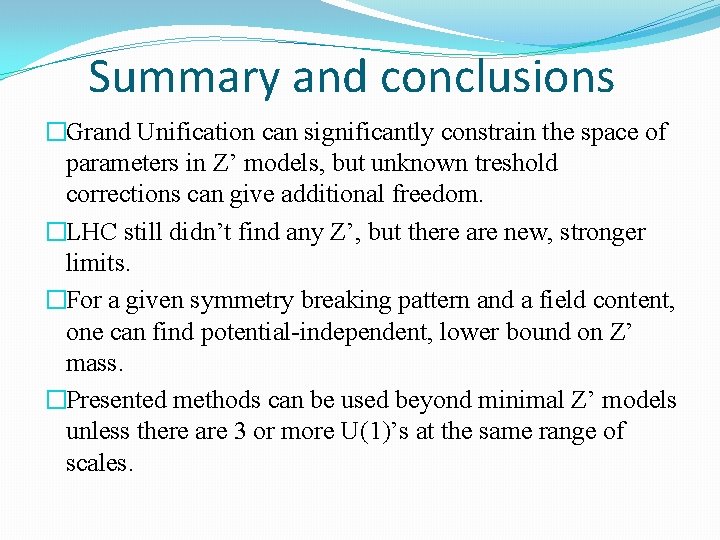
Summary and conclusions �Grand Unification can significantly constrain the space of parameters in Z’ models, but unknown treshold corrections can give additional freedom. �LHC still didn’t find any Z’, but there are new, stronger limits. �For a given symmetry breaking pattern and a field content, one can find potential-independent, lower bound on Z’ mass. �Presented methods can be used beyond minimal Z’ models unless there are 3 or more U(1)’s at the same range of scales.
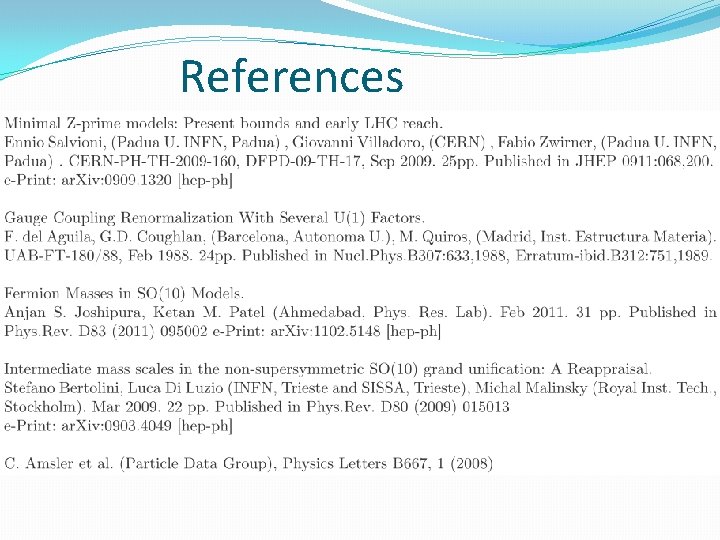
References