Communityled Total Sanitation CLTS Fast tracking an ODF
- Slides: 52
Community-led Total Sanitation (CLTS): Fast tracking an ODF world of healthy and prosperous communities Water and Health Conference 2015 University of North Carolina October 27 th, 2015 Dr. Kamal Kar Chairman, CLTS Foundation
Sanitation and the MDGs The recognition of sanitation as a key element in health outcomes started fairly late in international development Focus was largely on individual hygiene and sanitation. The understanding of “total sanitation” spanning full communities came much later Many countries have achieved their MDG water targets yet lag far behind in sanitation. In fact the progress on Goal no 7 (sanitation) has been very poor by most countries in Africa and Asia, which is one of the worst performing goal during the MDGs. Why is this ?
Global Sanitation Scenario is still Pathetic • Though 2. 1 billion people have gained access to improved sanitation since 1990 and • Estimated access to improved sanitation increased from 54% to 68 % during MDG, yet MDG target is far from being achieved. • In 2015, 2. 4 billion people still lack improved sanitation facilities § In Southern Asia, 953 million people lack access to improved sanitation facilities § The number in Sub-Saharan Africa is 695 million people § And Eastern Asia has 337 million lacking these facilities § Out of this 1 billion practice OD § Southern Asia – 610 million ( 60%) § Sub Saharan Africa – 229 million (23%) Top priority is to ensure that these 2. 4 billion get access to sanitation
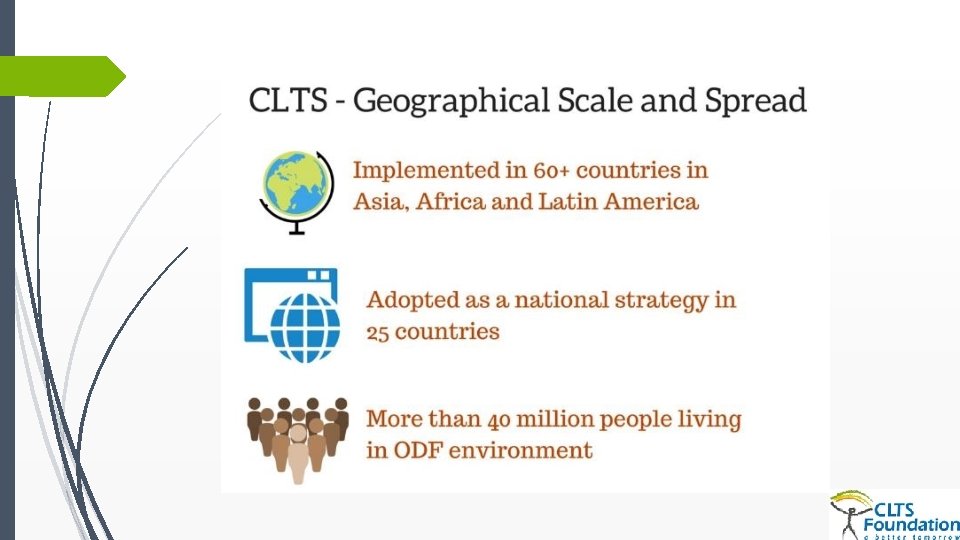
Sanitation and the MDGs Through most of the MDG period especially at the beginning, a compartmentalised and traditional approach to water and sanitation continued to prevail. In the mid/latter part of the MDG period the global sanitation community and national leaders started realising that the top down traditional approach of providing toilet as infrastructure to individual households was not yielding the desired results. This shift in thinking was triggered by the emergence of CLTS Pioneered in 2000 in Bangladesh Spread exponentially throughout countries in Africa, Asia and Latin America.
Sanitation and the MDGs Led to shift in policy thinking and practice. Towards the middle of the MDG period many countries started adopting CLTS. Outcome : 40 million people gained access to sanitation through CLTS and experienced first hand improvements in basic sanitation reflected in distinct health outcomes. Some patches of the high endemic zones of cholera, diarrhoea and other enteric diseases started declaring ODF and reported total eradication of these diseases in villages and districts etc. There has also been a reported case of absence of Ebola in 69 ODF zones in Liberia ( this needs more scientific investigation though).
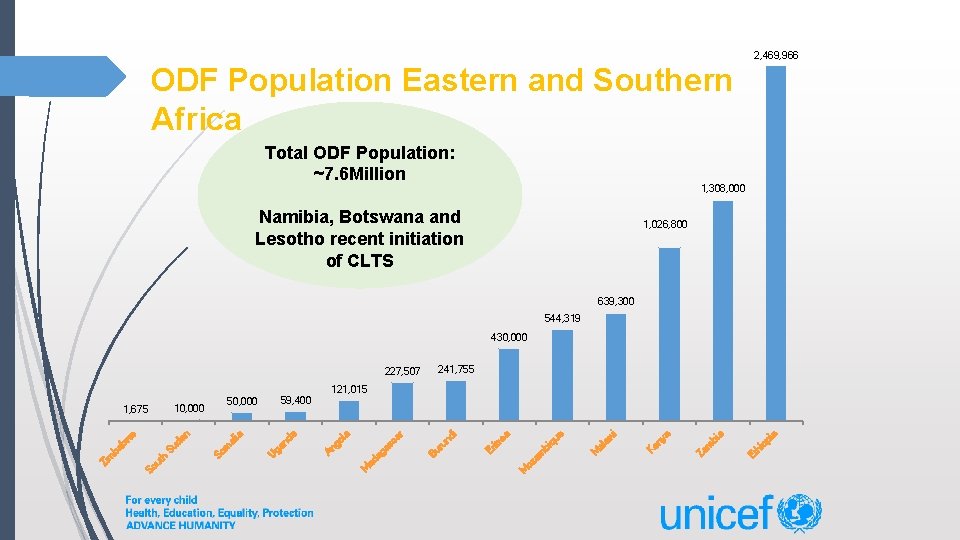
2, 469, 966 ODF Population Eastern and Southern Africa Total ODF Population: ~7. 6 Million 1, 308, 000 Namibia, Botswana and Lesotho recent initiation of CLTS 1, 026, 800 639, 300 544, 319 430, 000 227, 507 ia hi op Et bi a m Za ny a Ke M al aw i ue M oz am Er bi q itr e a i Bu ru nd r ca ag as M ad go la da 121, 015 An m ga n U ut h So So n Su da e bw ba m Zi al ia 10, 000 1, 675 59, 400 50, 000 241, 755
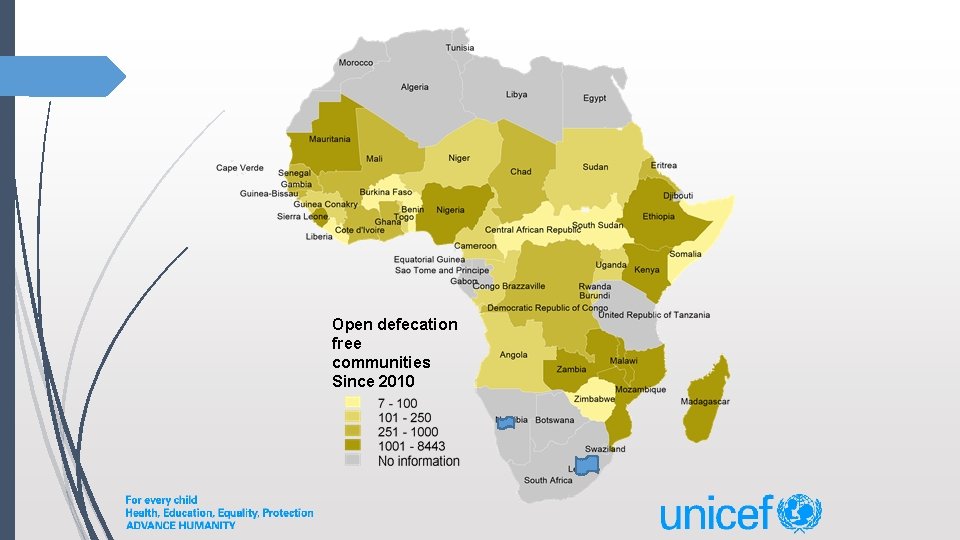
Open defecation free communities Since 2010
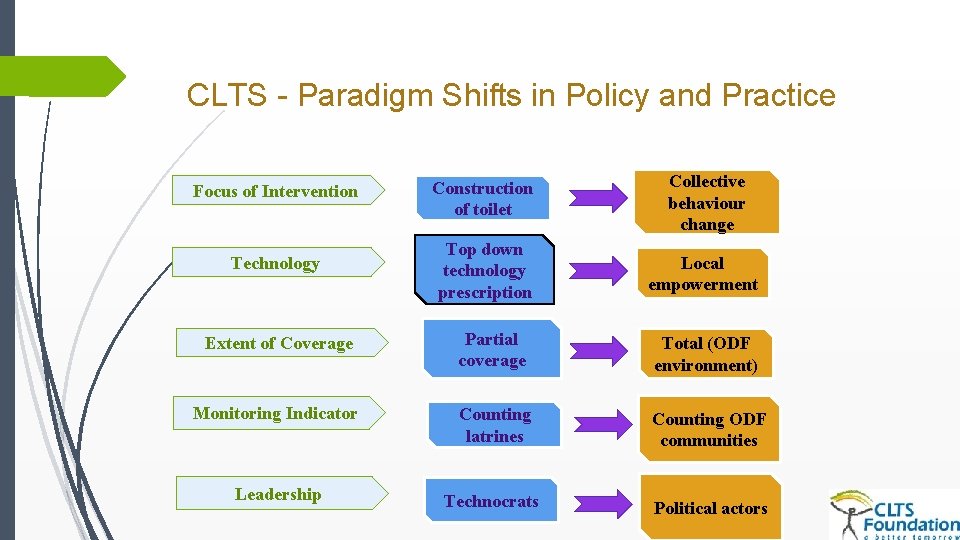
CLTS - Paradigm Shifts in Policy and Practice Focus of Intervention Construction of toilet Collective behaviour change Technology Top down technology prescription Local empowerment Extent of Coverage Partial coverage Total (ODF environment) Monitoring Indicator Counting latrines Counting ODF communities Leadership Technocrats Political actors
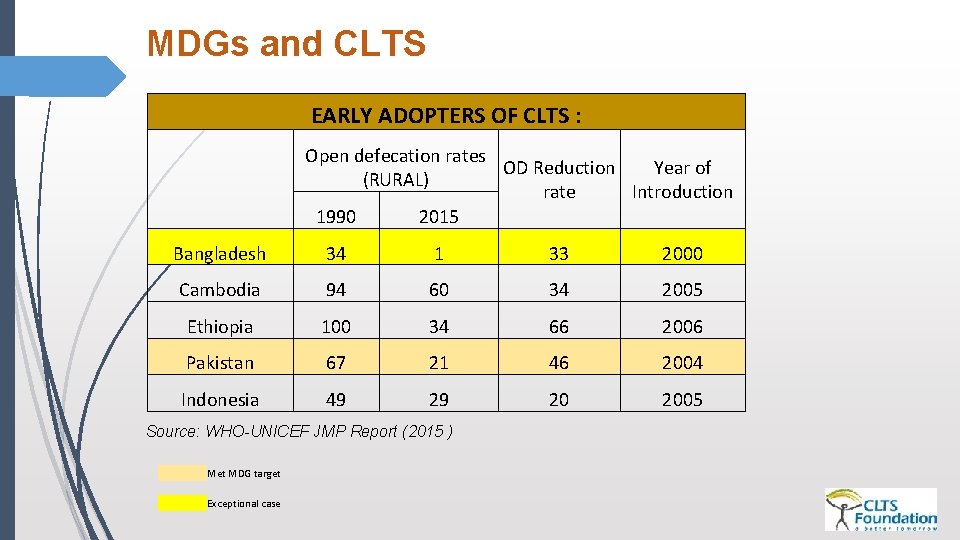
MDGs and CLTS EARLY ADOPTERS OF CLTS : Open defecation rates OD Reduction Year of (RURAL) rate Introduction 1990 2015 Bangladesh 34 1 33 2000 Cambodia 94 60 34 2005 Ethiopia 100 34 66 2006 Pakistan 67 21 46 2004 Indonesia 49 29 20 2005 Source: WHO-UNICEF JMP Report (2015 ) Met MDG target Exceptional case
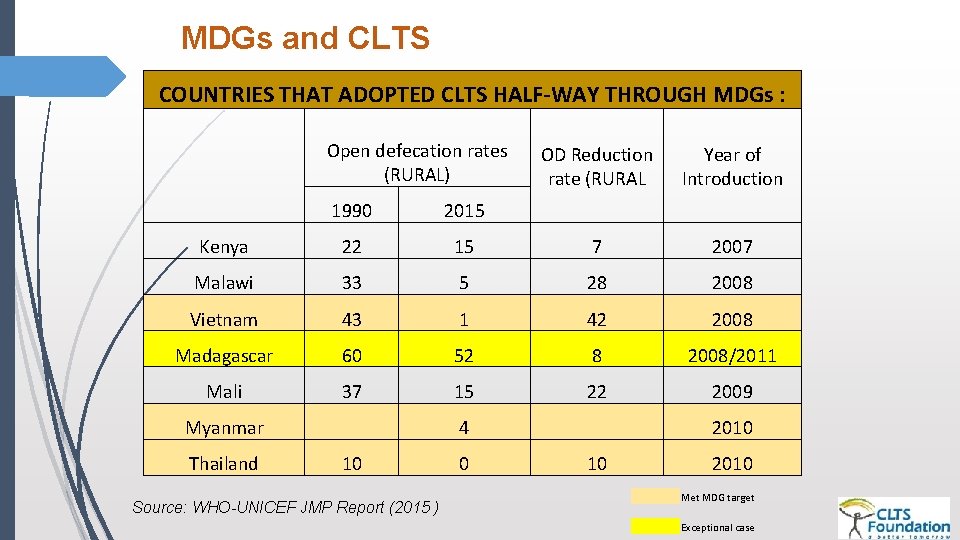
MDGs and CLTS COUNTRIES THAT ADOPTED CLTS HALF-WAY THROUGH MDGs : Open defecation rates (RURAL) OD Reduction rate (RURAL Year of Introduction 1990 2015 Kenya 22 15 7 2007 Malawi 33 5 28 2008 Vietnam 43 1 42 2008 Madagascar 60 52 8 2008/2011 Mali 37 15 22 2009 Myanmar 4 2010 Thailand 10 0 10 2010 Source: WHO-UNICEF JMP Report (2015 ) Met MDG target Exceptional case
CLTS in Asia First introduced in Bangladesh in 2000 Countries that have made notable progress with CLTS : Bangladesh – sanitation access increased from 34% in 2003 to 97% in 2013 Nepal – reduced open defecation from 84% in 1990 to 40% in 2012 Others include Pakistan, Indonesia, Cambodia and to an extent India.
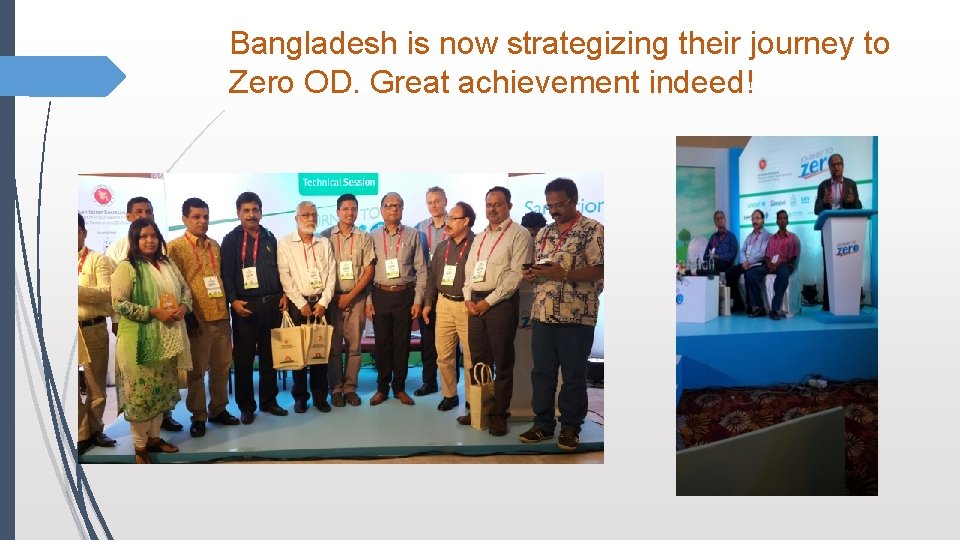
Bangladesh is now strategizing their journey to Zero OD. Great achievement indeed!
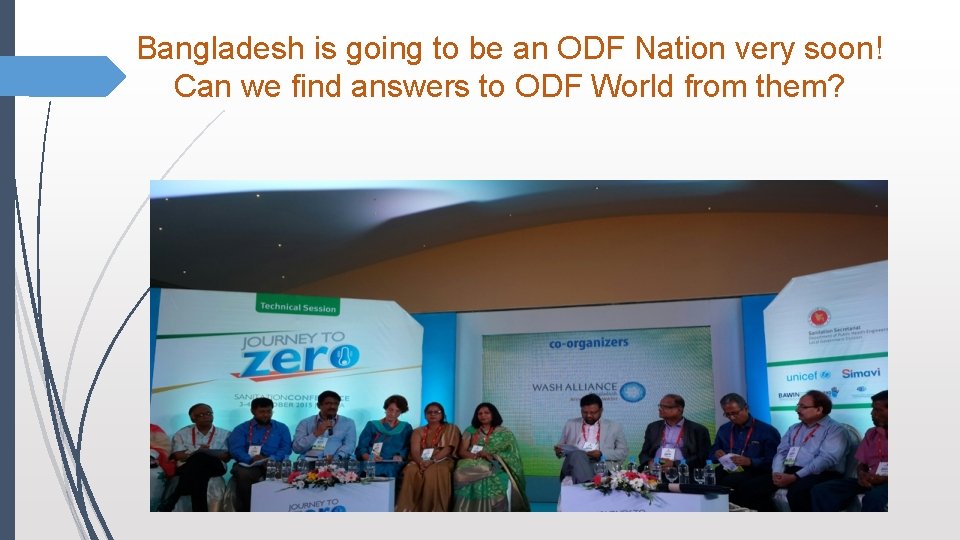
Bangladesh is going to be an ODF Nation very soon! Can we find answers to ODF World from them?
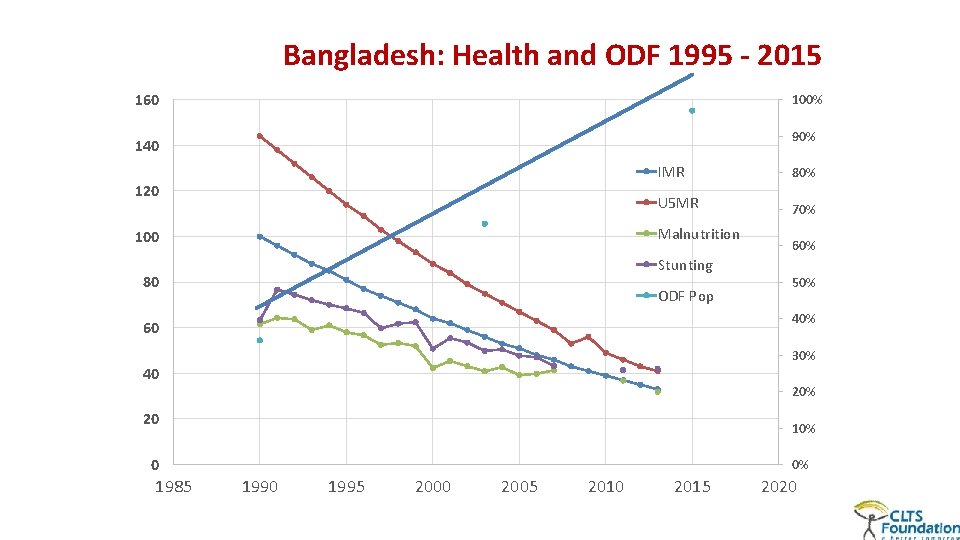
Bangladesh: Health and ODF 1995 - 2015 160 100% 90% 140 120 IMR 80% U 5 MR 70% Malnutrition 100 Stunting 80 ODF Pop 50% 40% 60 30% 40 20% 20 10% 0 1985 60% 0% 1990 1995 2000 2005 2010 2015 2020
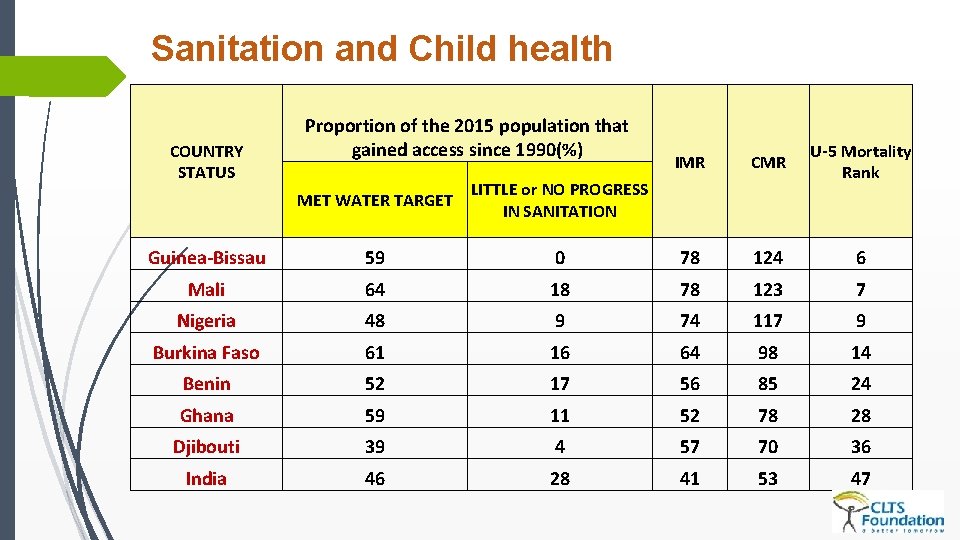
Sanitation and Child health COUNTRY STATUS Proportion of the 2015 population that gained access since 1990(%) IMR CMR U-5 Mortality Rank MET WATER TARGET LITTLE or NO PROGRESS IN SANITATION Guinea-Bissau 59 0 78 124 6 Mali 64 18 78 123 7 Nigeria 48 9 74 117 9 Burkina Faso 61 16 64 98 14 Benin 52 17 56 85 24 Ghana 59 11 52 78 28 Djibouti 39 4 57 70 36 India 46 28 41 53 47
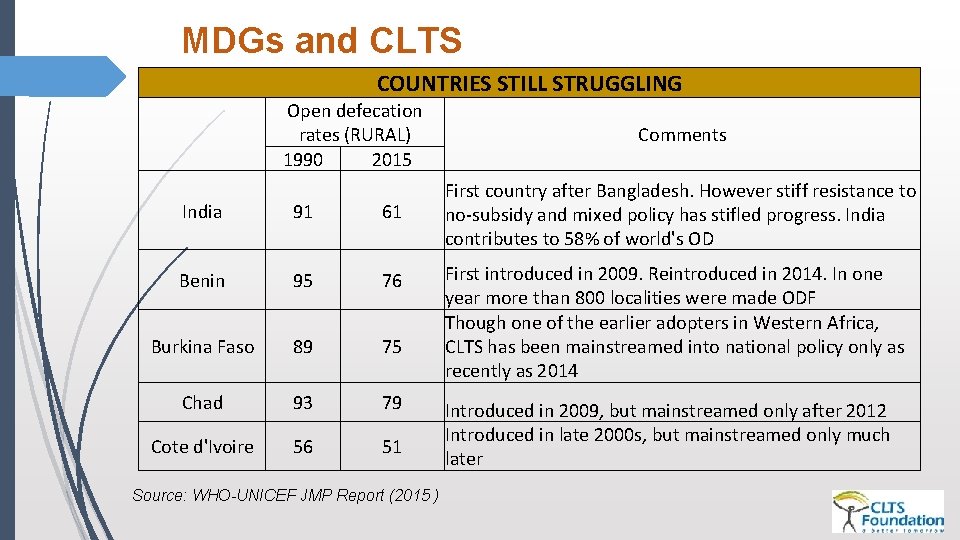
MDGs and CLTS COUNTRIES STILL STRUGGLING Open defecation rates (RURAL) 1990 2015 India 91 61 Benin 95 76 Burkina Faso 89 75 Chad 93 79 Cote d'Ivoire 56 51 Source: WHO-UNICEF JMP Report (2015 ) Comments First country after Bangladesh. However stiff resistance to no-subsidy and mixed policy has stifled progress. India contributes to 58% of world's OD First introduced in 2009. Reintroduced in 2014. In one year more than 800 localities were made ODF Though one of the earlier adopters in Western Africa, CLTS has been mainstreamed into national policy only as recently as 2014 Introduced in 2009, but mainstreamed only after 2012 Introduced in late 2000 s, but mainstreamed only much later
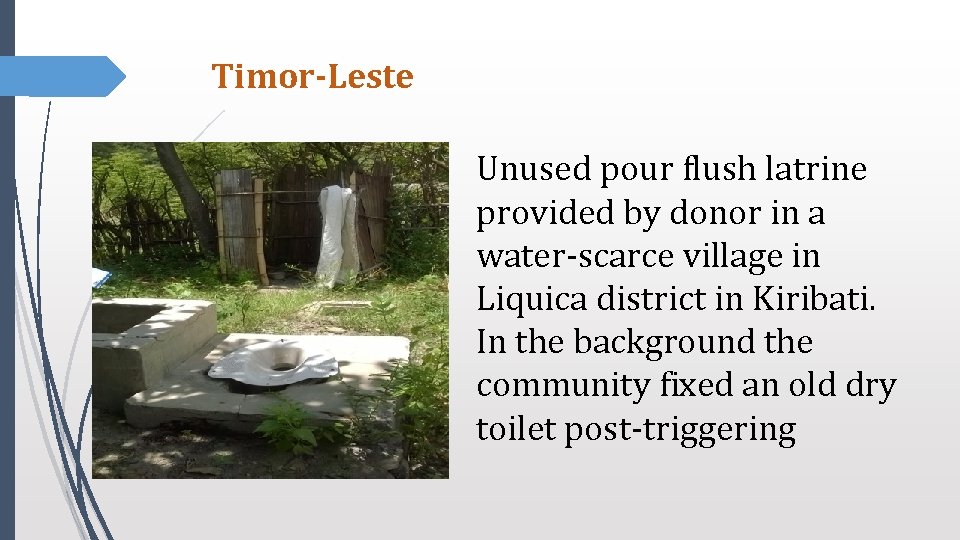
Timor-Leste Unused pour flush latrine provided by donor in a water-scarce village in Liquica district in Kiribati. In the background the community fixed an old dry toilet post-triggering
MDG and CLTS in Africa Institutionalization and scaling up became more challenging than introduction From a few hundred ODF villages to ODF districts, ODF regions and ODF nation demanded involvement of another set of actors, triggering and advocacy at a different level Community’s success on CLTS established and reemphasized that without collective behaviour change improvement in sanitation was not possible. This challenged the national level policy and decision makers who believed in top-down, prescriptive and subsidized/free toilet construction
Challenges While some nations started realizing the need for behaviour change for sustained health outcomes, changing the mind-set of some donors to modify/correct funding guidelines to accommodate collective behaviour change for sustained health outcome Weak inter and intra-institutional coordination and lack of functional linkages between organisations and departments blocked effective convergence of efforts among different actors which was needed for large scaling up.
Challenges Governments used to subsidy driven approach resisted making the policy shift towards community empowerment Without policy and a nation wide strategy with roadmap and adequate resources, institutionalisation and large-scale scaling up was not possible Mandate for sanitation/WASH rested with ministries focused on infrastructure creation rather than measuring health outcomes Focus on toilet construction continued
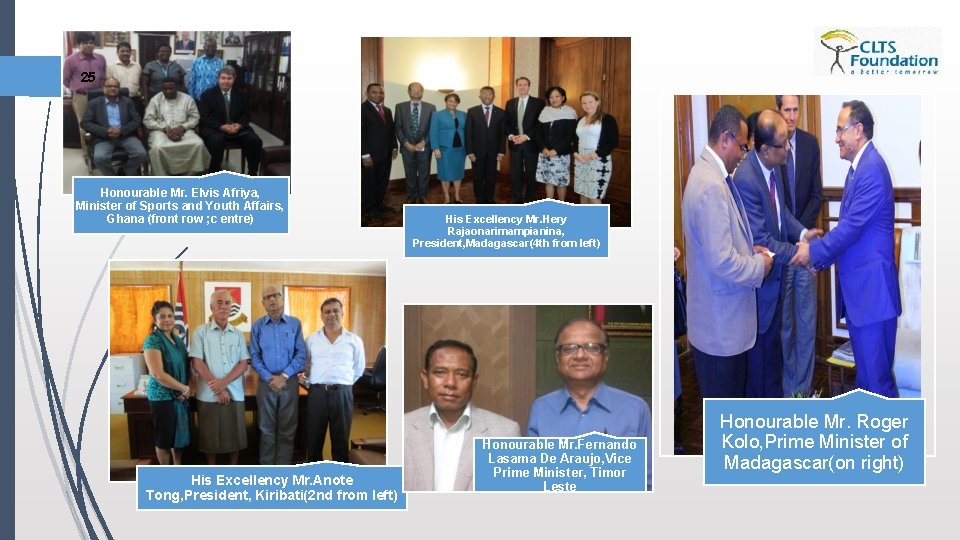
Innovative scaling up strategies Need for abolishing the practice of OD is being stressed by set of new champions emerged at the highest levels of national political leadership ( President, Prime Minister of Madagascar, Timor Leste, Kiribati, Ministers of Ghana, Cote De Ivory, Malawi, Kenya, etc. ) Established organic scaling-up mechanisms Widening network with Natural leaders and Community Consultants
Innovative scaling up strategies Emergence of CLTS champions at highest leadership level As the success of communities attracted the attention of local government, the national level political leadership became interested to show case the success at the country level and emerge as champion at the region. E. g. Malawi, Madagascar, Zambia
25 Honourable Mr. Elvis Afriya, Minister of Sports and Youth Affairs, Ghana (front row ; c entre) His Excellency Mr. Anote Tong, President, Kiribati(2 nd from left) His Excellency Mr. Hery Rajaonarimampianina, President, Madagascar(4 th from left) Honourable Mr. Fernando Lasama De Araujo, Vice Prime Minister, Timor Leste Honourable Mr. Roger Kolo, Prime Minister of Madagascar(on right)
Innovative scaling up strategies Sanitation led by Ministry of Health/Public Health focusing on health outcomes rather than infrastructure creation Kenya, Ethiopia, Indonesia Clear national sanitation strategy with ODF target and roadmap Achieved ODF communes, sub-districts, districts Successfully created a healthy competition amongst the local governments within the country which triggered national ODF campaign. E. g. Madagascar, Kenya
Innovative scaling up strategies Establishing appropriate enabling environment helped in converging the efforts of multiple actors towards realizing the national goal rather than disconnected and piecemeal success on CLTS
Innovative scaling up strategies Innovative funding mechanisms Emergence of new financing mechanisms like GSF Institutional Triggering
What is institutional triggering? Institutional triggering is a methodology that has been developed and used by the CLTS Foundation in a number of contexts, and at various different levels to bring about institutional change for improved coordination and greater speed of implementation of CLTS. It has been successfully used at district level during earlier visits to Ghana and has also been used effectively in Madagascar, Timor Leste, Mozambique (recently) and a few other countries.
What is institutional triggering? Institutional triggering is a methodology that has been developed and used by the CLTS Foundation in a number of contexts, and at various different levels to bring about institutional change for improved coordination and greater speed of implementation of CLTS. It has been successfully used at district level during earlier visits to Ghana and has also been used effectively in Madagascar, Timor Leste, Mozambique (recently) and a few other countries.
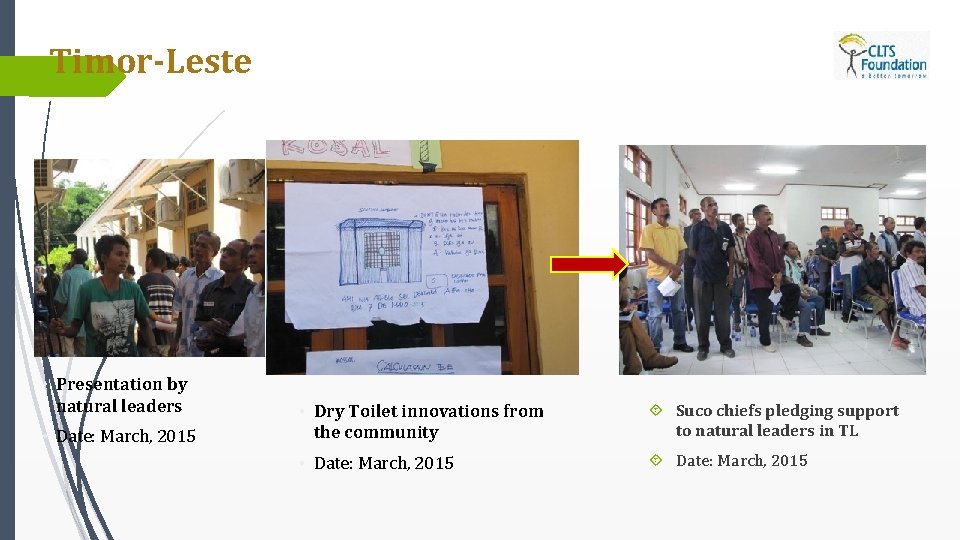
Timor-Leste • Presentation by natural leaders • Date: March, 2015 • Dry Toilet innovations from the community Suco chiefs pledging support to natural leaders in TL • Date: March, 2015
What is Institutional Triggering? Triggering of the highest political and decision making leadership of a nation/organization What stops the spread and scaling up of a few hundreds of successful ODF communities from spreading all over the nation? Who’s responsibility to spread the success to the entire reging, district or nation? Who is to be blamed? Is there a clear road map, implementation plan and a budget protocol for achieving an ODF Nation?
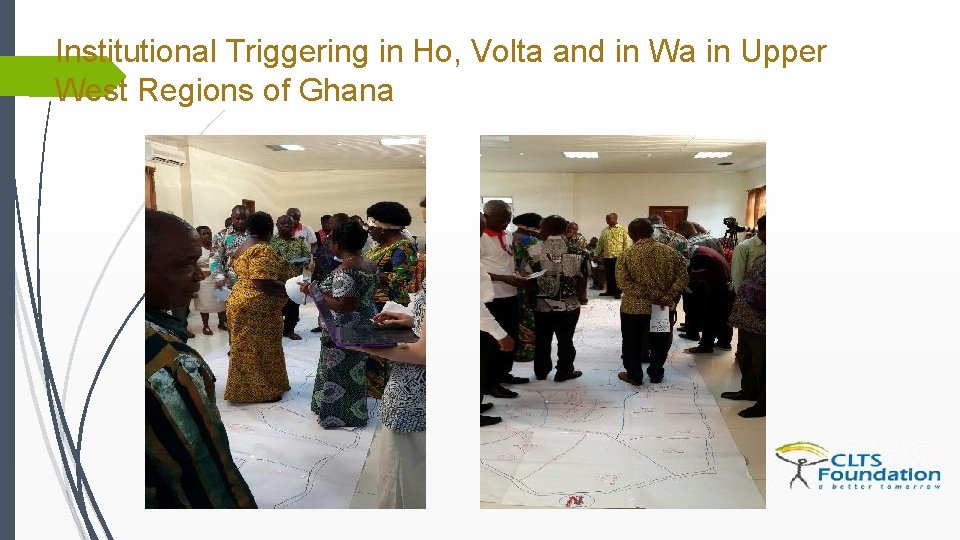
Institutional Triggering in Ho, Volta and in Wa in Upper West Regions of Ghana
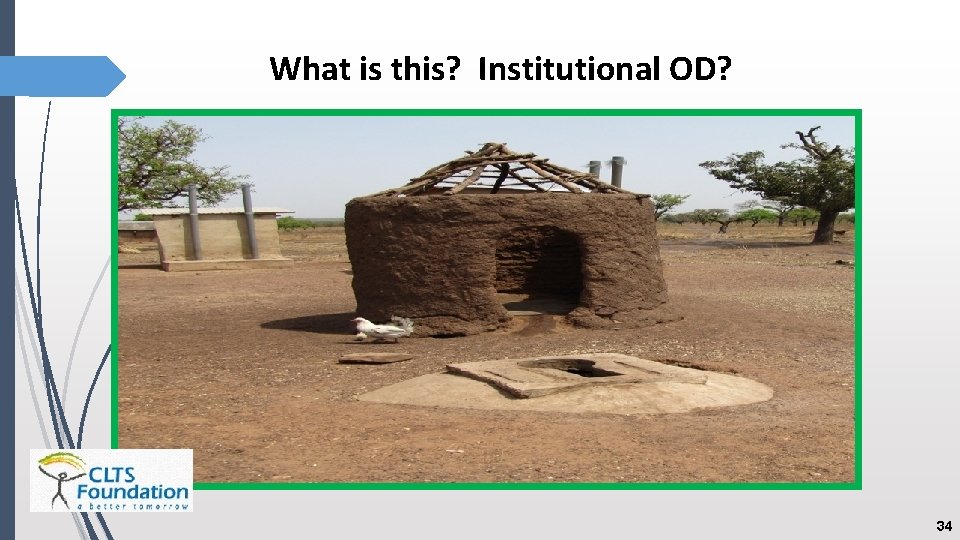
Can we ensure a better coordination than What is this? Institutional OD? 34
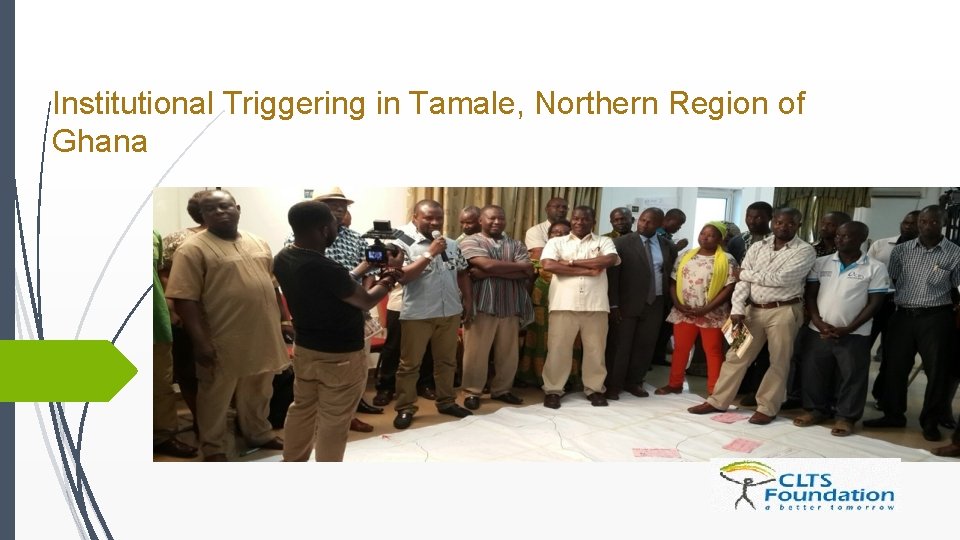
Institutional Triggering in Tamale, Northern Region of Ghana
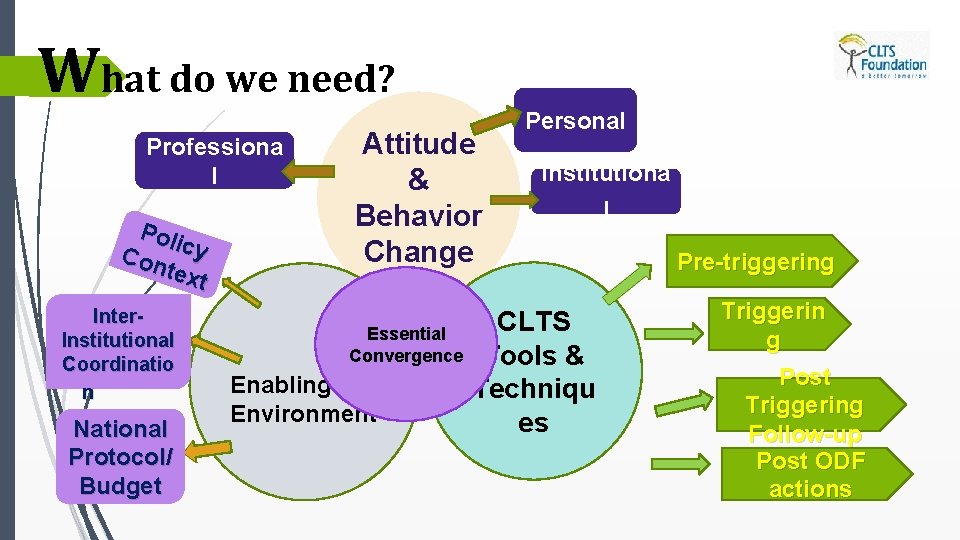
What do we need? Professiona l Pol i Con cy text Inter. Institutional Coordinatio n National Protocol/ Budget Attitude & Behavior Change Essential Convergence Enabling Environment Personal Institutiona CLTS Tools & Techniqu es l Pre-triggering Triggerin g Post Triggering Follow-up Post ODF actions
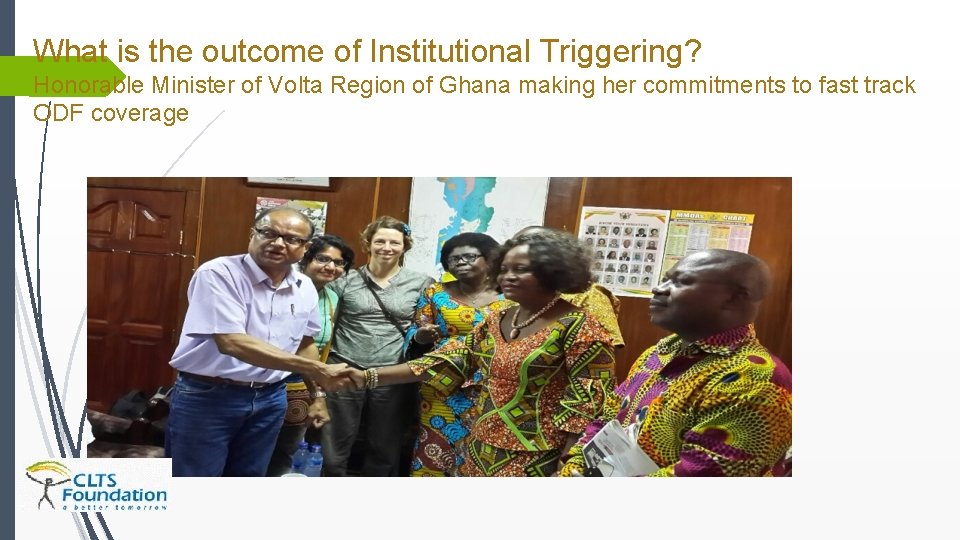
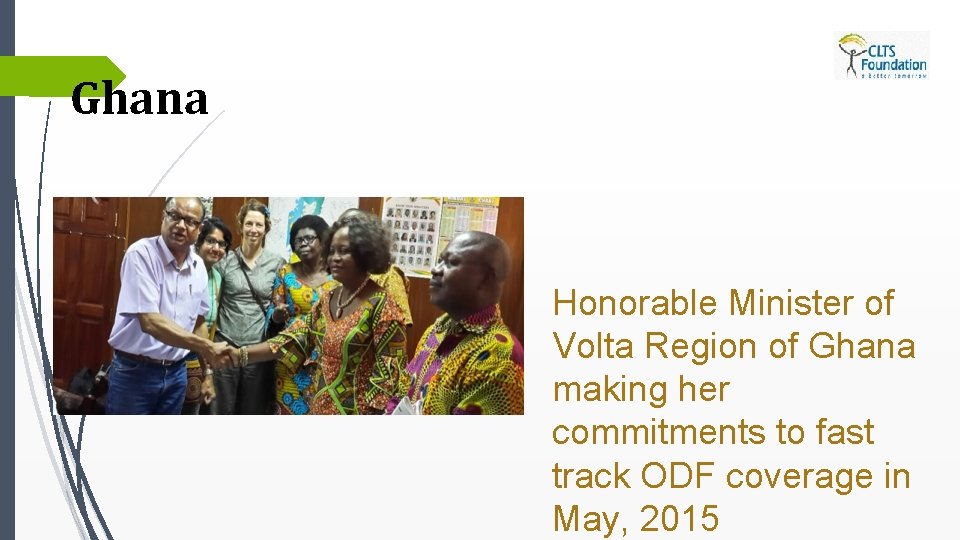
What is the outcome of Institutional Triggering? Honorable Minister of Volta Region of Ghana making her commitments to fast track ODF coverage
Ghana Honorable Minister of Volta Region of Ghana making her commitments to fast track ODF coverage in May, 2015
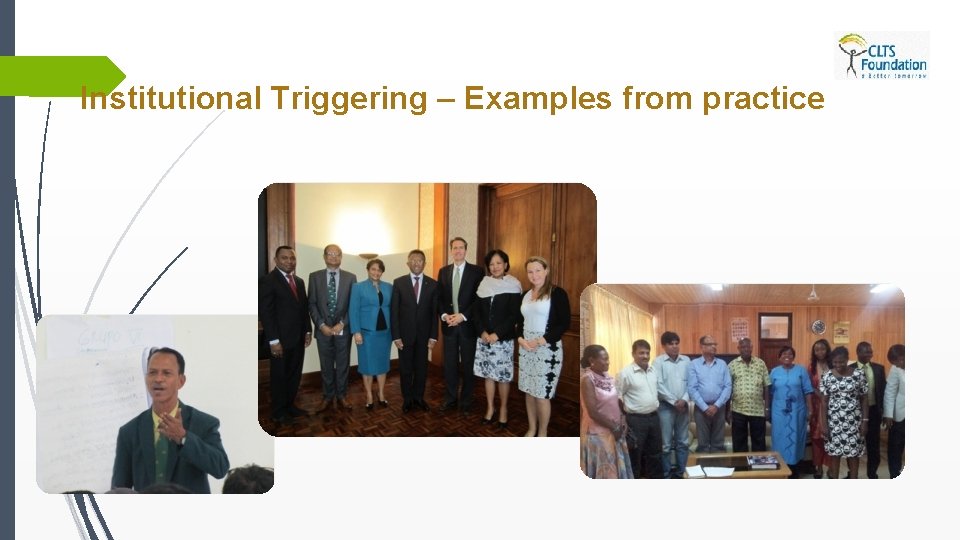
Institutional Triggering – Examples from practice
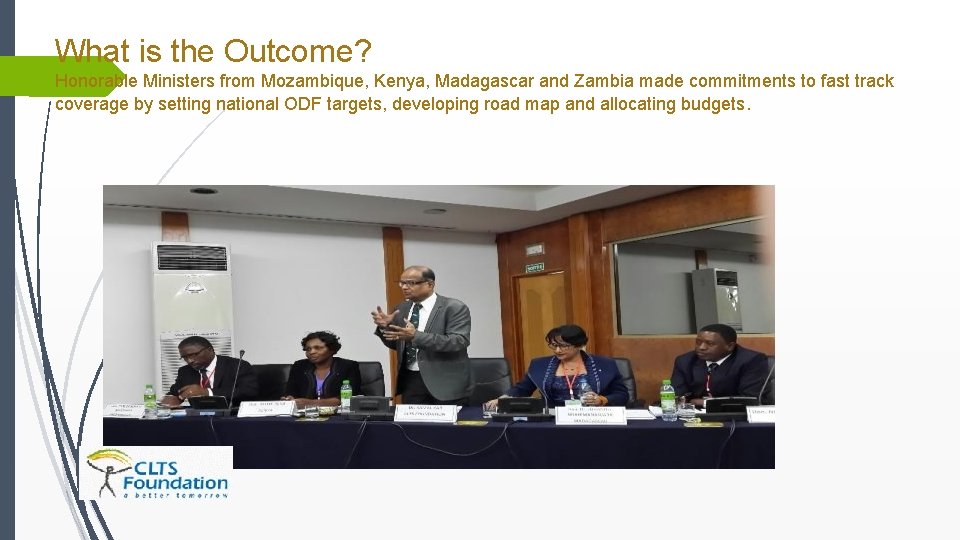
What is the Outcome? Honorable Ministers from Mozambique, Kenya, Madagascar and Zambia made commitments to fast track coverage by setting national ODF targets, developing road map and allocating budgets.
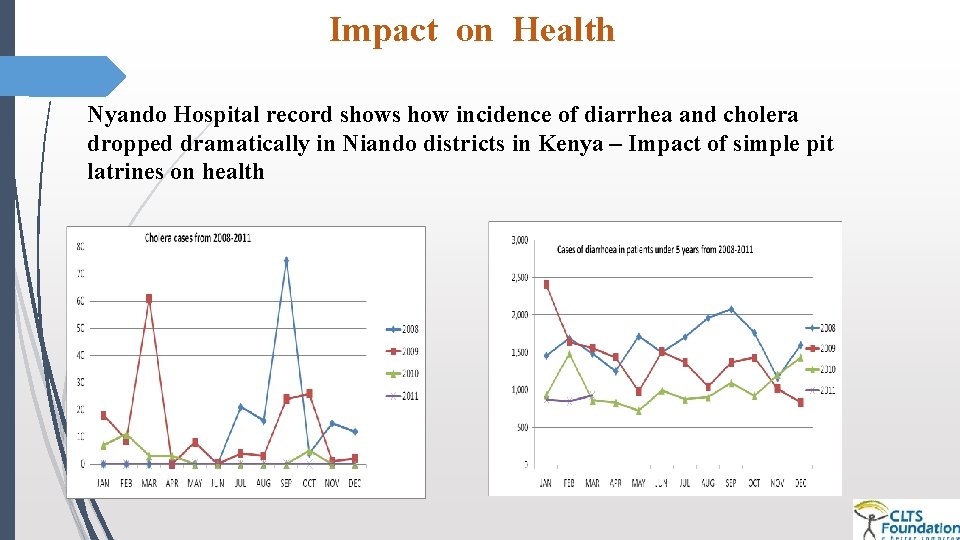
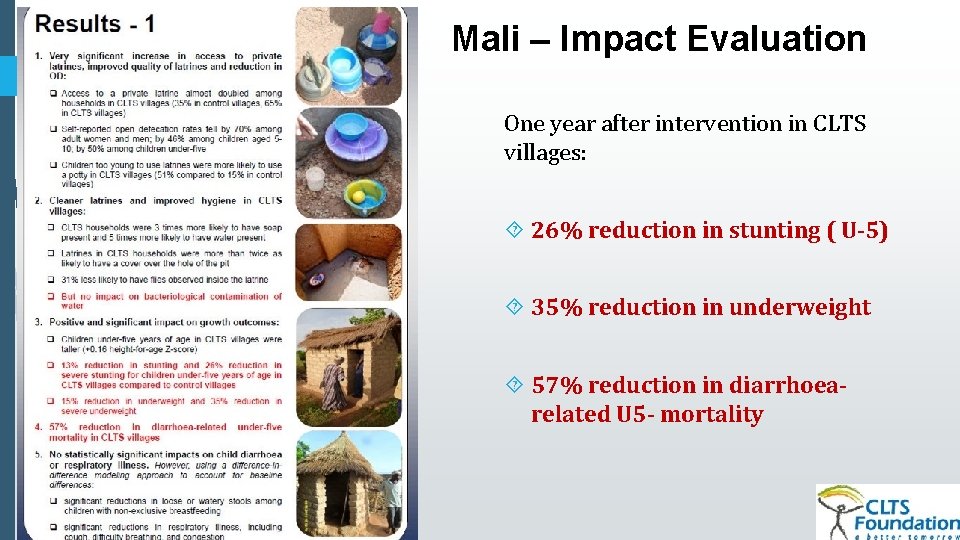
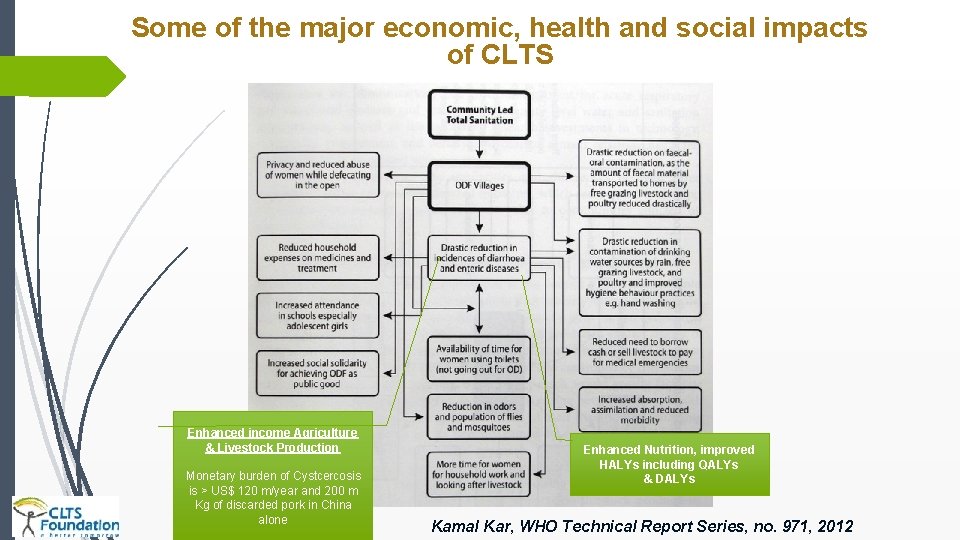
Impact of CLTS on Health outcomes CLTS has demonstrated success in increasing access to sanitation enhancing greater coverage, faster uptake by the community due to internalised behaviour change leading to more sustainable outcomes. CLTS through better sanitation outcomes have led to better health and reduced medical expenditure and more productivity of ODF communities Evidence of global health impacts of CLTS is fast emerging. Cases of reduced stunting/wasting ( Mali), reduction in cholera ( Kenya, Ghana) are a few examples.
Impact of CLTS on Health outcomes Additionally the knock on effects of CLTS leads to collective gains for the community in terms of health greater collective consciousness of people towards health care environmental cleanliness activating health services and institutions. People start thinking about their overall wellbeing. In the SDGs it is important to see that policy and practice is geared towards achieving ODF nations For this institutions and governance have to become responsive greater political will and commitment Increase budget allocation to sanitation
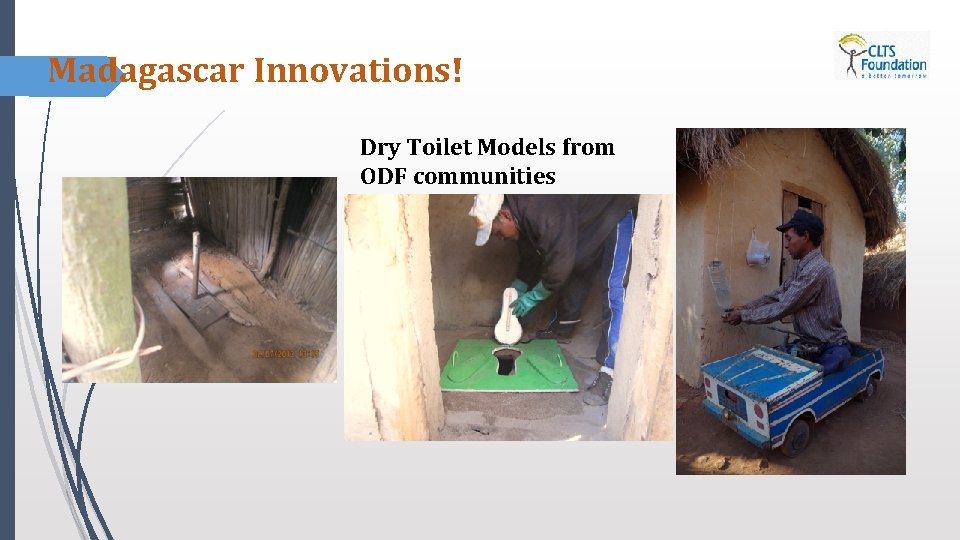
Madagascar Innovations! Dry Toilet Models from ODF communities
How do we approach the SDGs? What can we lean from the successes of countries that have done well? What lessons can we apply to address the newly emerging challenges ? How do we scale up CLTS with quality in the next ten years? How can countries in Africa support each other?
Impact on Health Nyando Hospital record shows how incidence of diarrhea and cholera dropped dramatically in Niando districts in Kenya – Impact of simple pit latrines on health
Mali – Impact Evaluation 46 One year after intervention in CLTS villages: 26% reduction in stunting ( U-5) 35% reduction in underweight 57% reduction in diarrhoearelated U 5 - mortality
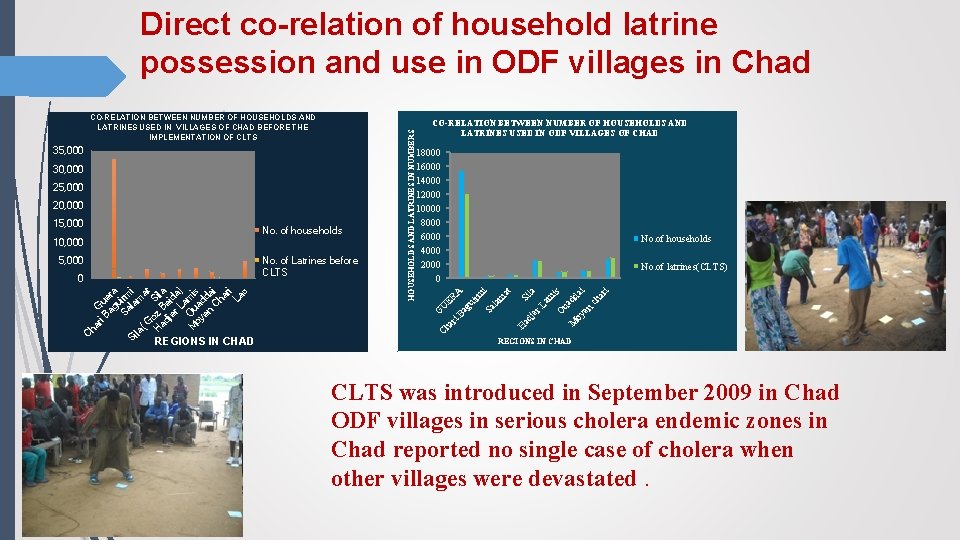
REGIONS IN CHAD ch ar i ai oy en dd is ua M je ad O am Si la r. L at H ar am i No. of latrines(CLTS) Ch C ha ri G Ba ue gu ra Sa irm Si la m (G at H oz B Sila ad e je id r L a) a O M u mis oy ad en da C i ha ri La c 0 G U No. of Latrines before CLTS 5, 000 No. of households rm No. of households 10, 000 Sa l 15, 000 ui 20, 000 A 25, 000 ag 30, 000 18000 16000 14000 12000 10000 8000 6000 4000 2000 0 ER 35, 000 CO-RELATION BETWEEN NUMBER OF HOUSEHOLDS AND LATRINES USED IN ODF VILLAGES OF CHAD i. B CO-RELATION BETWEEN NUMBER OF HOUSEHOLDS AND LATRINES USED IN VILLAGES OF CHAD BEFORE THE IMPLEMENTATION OF CLTS HOUSEHOLDS AND LATRINES IN NUMBERS Direct co-relation of household latrine possession and use in ODF villages in Chad REGIONS IN CHAD CLTS was introduced in September 2009 in Chad ODF villages in serious cholera endemic zones in Chad reported no single case of cholera when other villages were devastated.
Initiatives for Way Forward • Ministerial dialogue on CLTS at Africasan on lessons learnt and way forward for SDGs • Pan-African Ministerial Forum to open CLTS dialogue for identifying common ground for strategic action going forward • CRAP – CLTS Rapid Appraisal Protocol - Tool to assess the CLTS health in different countries and devise national scaling up strategies • Institutional Triggering – Tool for nation wide scaling up : From ODF village to ODF district/region/nation
Some of the major economic, health and social impacts of CLTS Enhanced income Agriculture & Livestock Production Monetary burden of Cystcercosis is > US$ 120 m/year and 200 m Kg of discarded pork in China alone Enhanced Nutrition, improved HALYs including QALYs & DALYs Kamal Kar, WHO Technical Report Series, no. 971, 2012
As we go into SDGs what can we do differently? More holistic approach to sanitation - in policy making, in programming, in implementation Sanitation outcomes have to be measured in terms of health outcomes and not by counting toilets Make sanitation everyone's business - involvement of diverse stakeholders is required Who implements sanitation in nations is important - E. g. in Kenya it is the health ministry Integration of sanitation in health policies/programmes How to help, advocate and capacitate nations and governments interested to move ahead and learn from the success and failures of MDG?
Conclusion Strong linkage of sanitation outcomes on health outcomes is a scientific fact By 2030, even if all other development targets are achieved , lack of attention to sanitation will not yield desired outcomes on health Infant and child mortality will continue to be high How can we change this ? And who will change this ? Are we ready to create an ODF world by 2030 ? - The way we choose to approach the sanitation question in SDGs is critical
Thank You After 2030 would people of our planet be able to say “once up on a time people used to defecate in the open and there were diseases called cholera and diarrhea” Visit www. cltsfoundation. org for updates and news