CMGNuclear Chromosome Disease Single Chromosome Disorders 1 Deletion


- Slides: 64
CMG-Nuclear Chromosome Disease
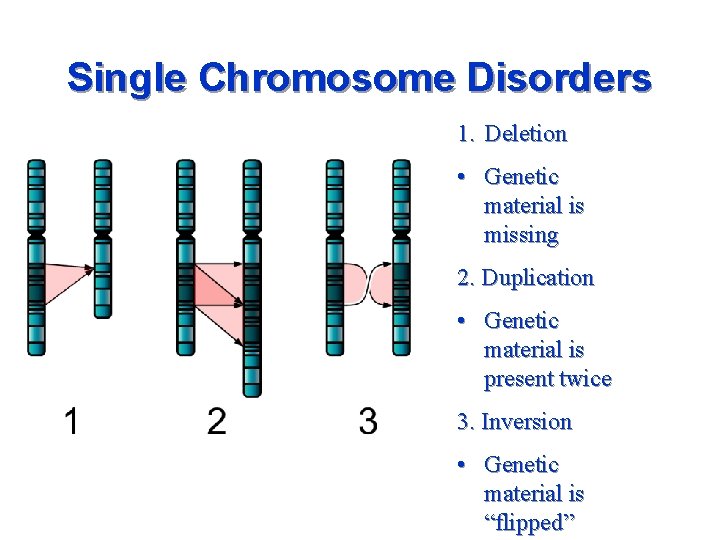
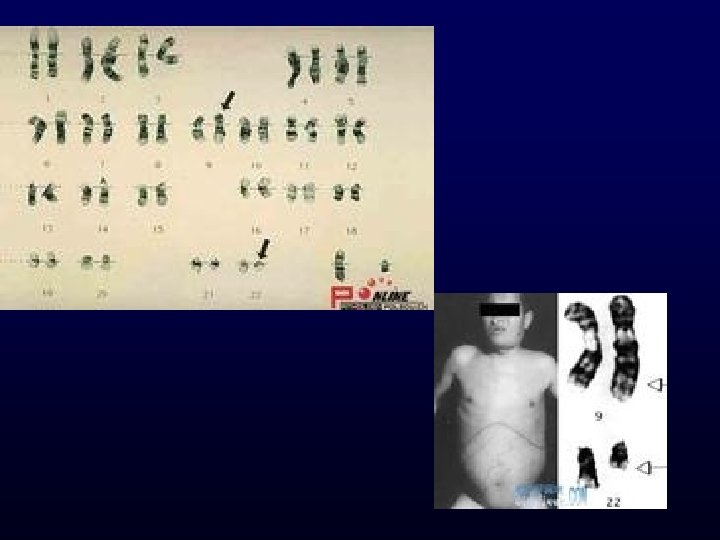
Single Chromosome Disorders 1. Deletion • Genetic material is missing 2. Duplication • Genetic material is present twice 3. Inversion • Genetic material is “flipped”
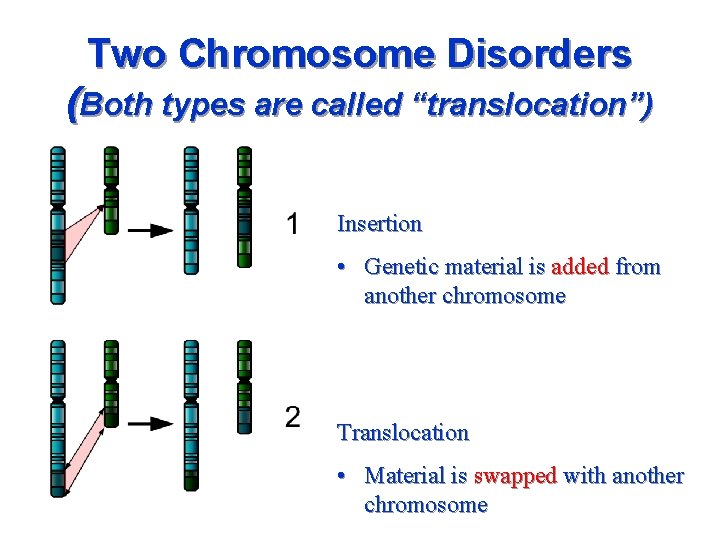
Two Chromosome Disorders (Both types are called “translocation”) Insertion • Genetic material is added from another chromosome Translocation • Material is swapped with another chromosome
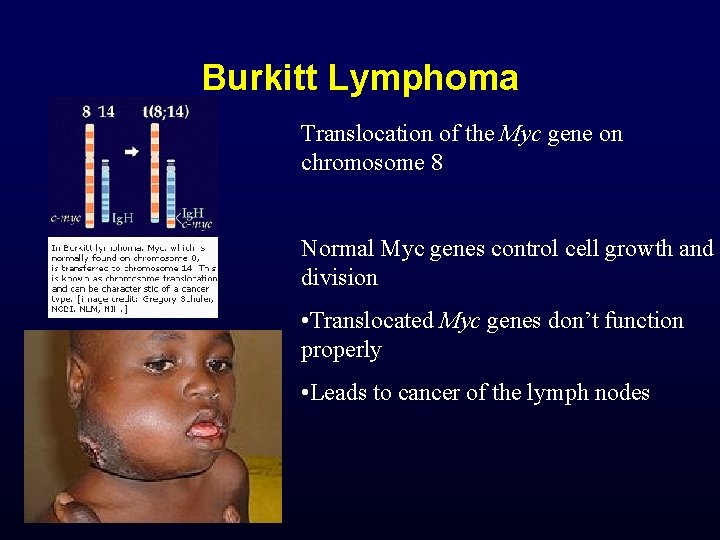
Burkitt Lymphoma Translocation of the Myc gene on chromosome 8 Normal Myc genes control cell growth and division • Translocated Myc genes don’t function properly • Leads to cancer of the lymph nodes
Chromosome Disease in Clinical feature Ø The general features in autosome abnormalities are a triad of growth retardation, mental retardation, and specific somatic abnormalities. Ø Change of sex chromosome also have the abnormalities and malformations of internal or external genital organs.
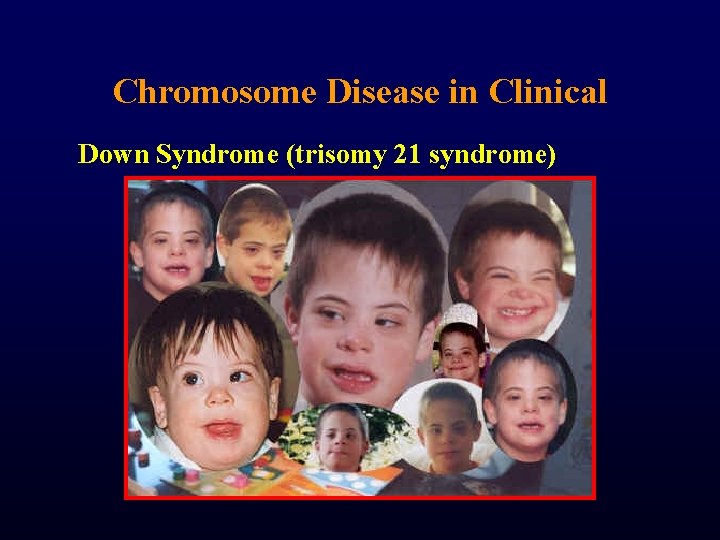
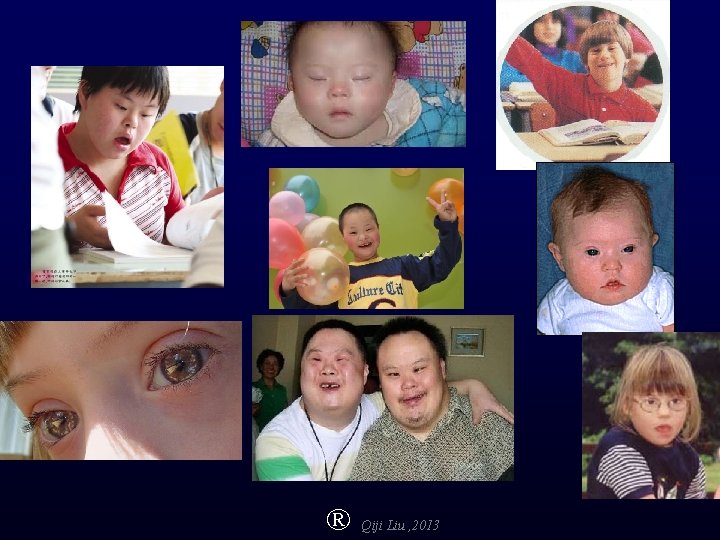
Chromosome Disease in Clinical Down Syndrome (trisomy 21 syndrome)
® Qiji Liu , 2013
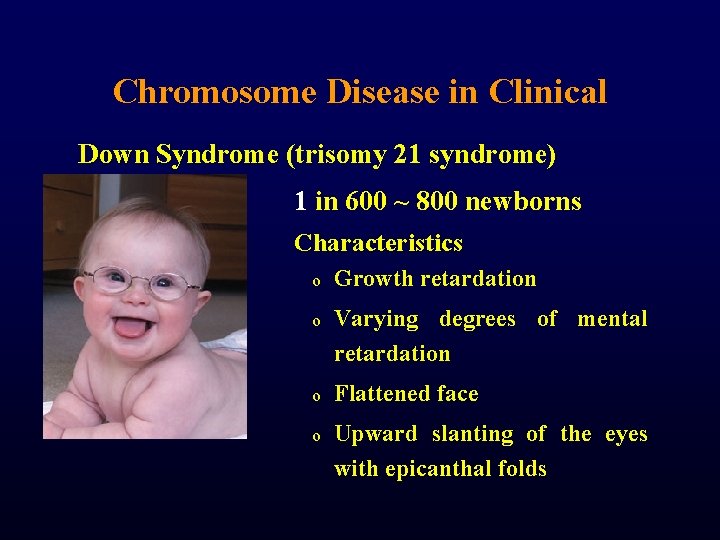
Chromosome Disease in Clinical Down Syndrome (trisomy 21 syndrome) 1 in 600 ~ 800 newborns Characteristics o Growth retardation o Varying degrees of mental retardation o Flattened face o Upward slanting of the eyes with epicanthal folds
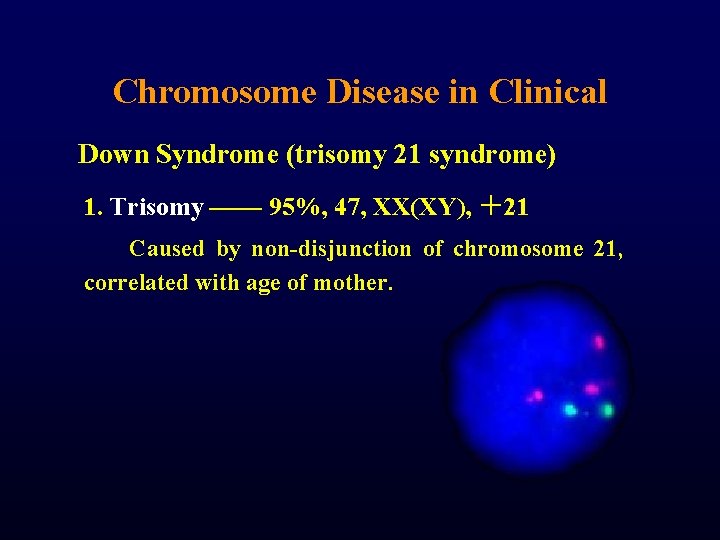
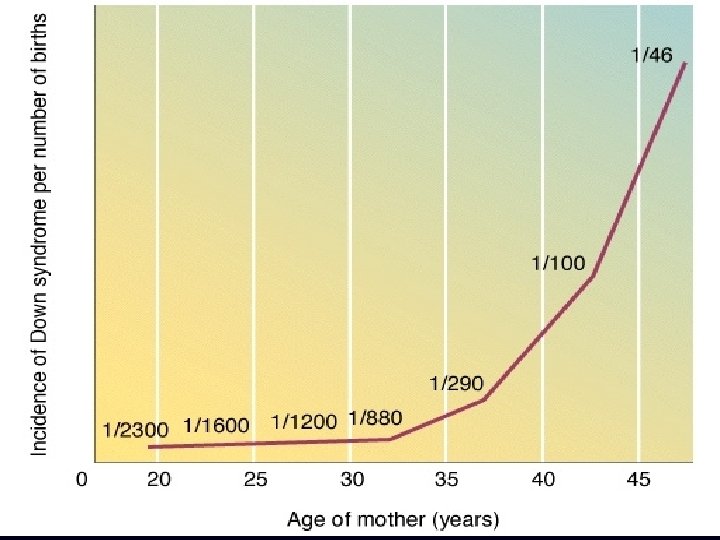
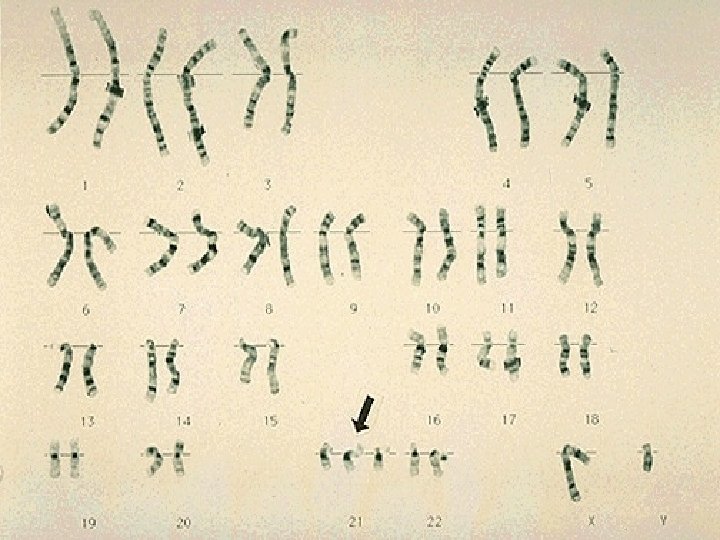
Chromosome Disease in Clinical Down Syndrome (trisomy 21 syndrome) 1. Trisomy —— 95%, 47, XX(XY), +21 Caused by non-disjunction of chromosome 21, correlated with age of mother.
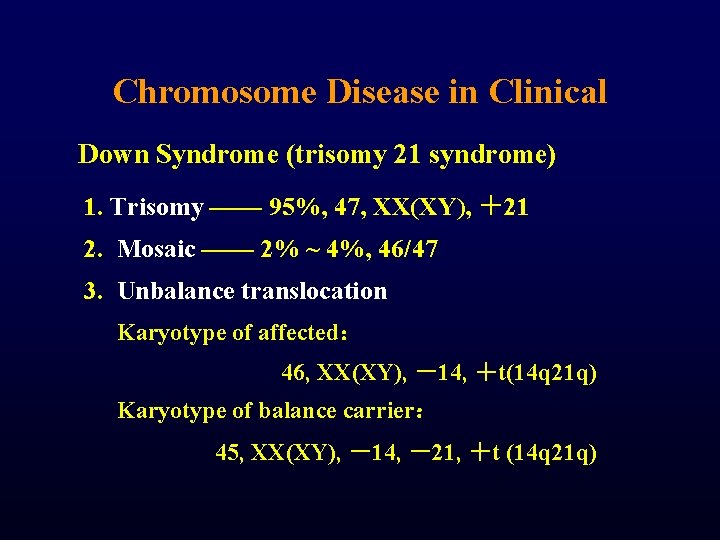
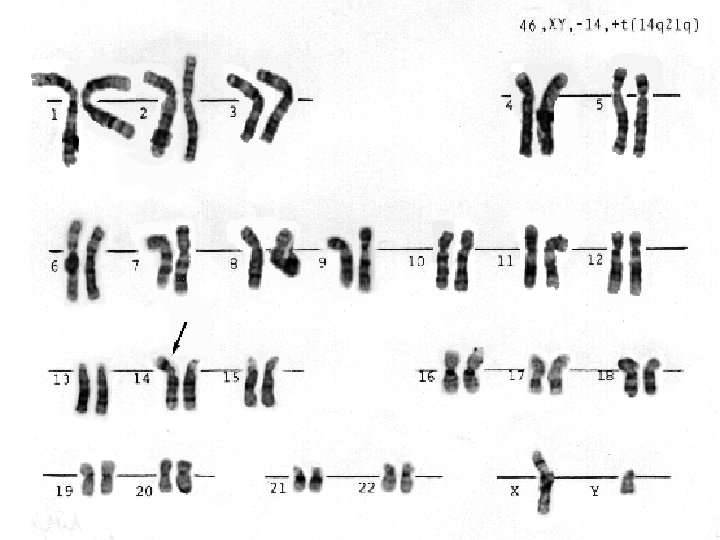
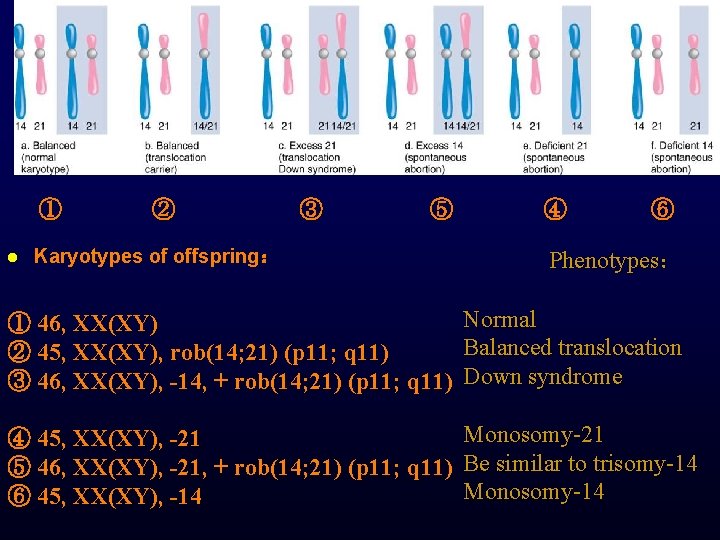
Chromosome Disease in Clinical Down Syndrome (trisomy 21 syndrome) 1. Trisomy —— 95%, 47, XX(XY), +21 2. Mosaic —— 2% ~ 4%, 46/47 3. Unbalance translocation Karyotype of affected: 46, XX(XY), -14, +t(14 q 21 q) Karyotype of balance carrier: 45, XX(XY), -14, -21, +t (14 q 21 q)
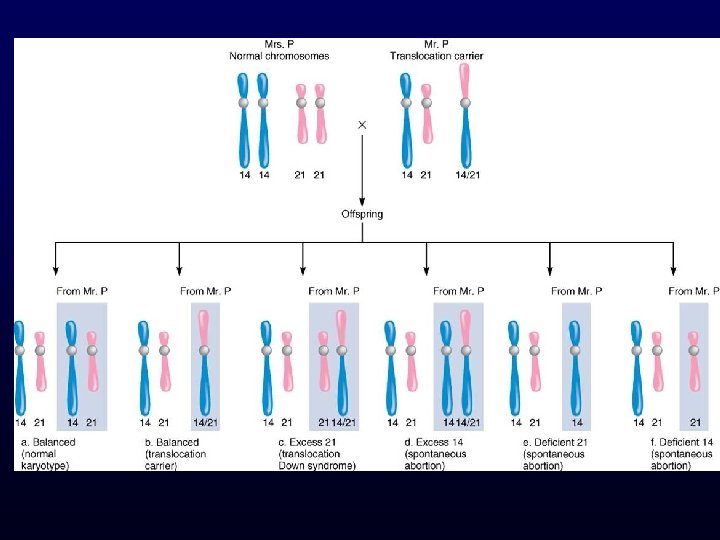
① l ② ③ ⑤ Karyotypes of offspring: ④ ⑥ Phenotypes: ① 46, XX(XY) ② 45, XX(XY), rob(14; 21) (p 11; q 11) ③ 46, XX(XY), -14, + rob(14; 21) (p 11; q 11) Normal Balanced translocation Down syndrome ④ 45, XX(XY), -21 ⑤ 46, XX(XY), -21, + rob(14; 21) (p 11; q 11) ⑥ 45, XX(XY), -14 Monosomy-21 Be similar to trisomy-14 Monosomy-14
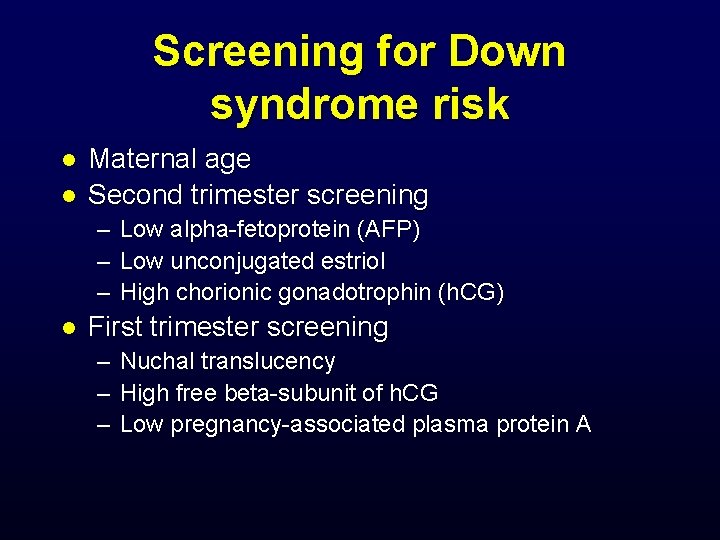
Screening for Down syndrome risk l l Maternal age Second trimester screening – Low alpha-fetoprotein (AFP) – Low unconjugated estriol – High chorionic gonadotrophin (h. CG) l First trimester screening – Nuchal translucency – High free beta-subunit of h. CG – Low pregnancy-associated plasma protein A
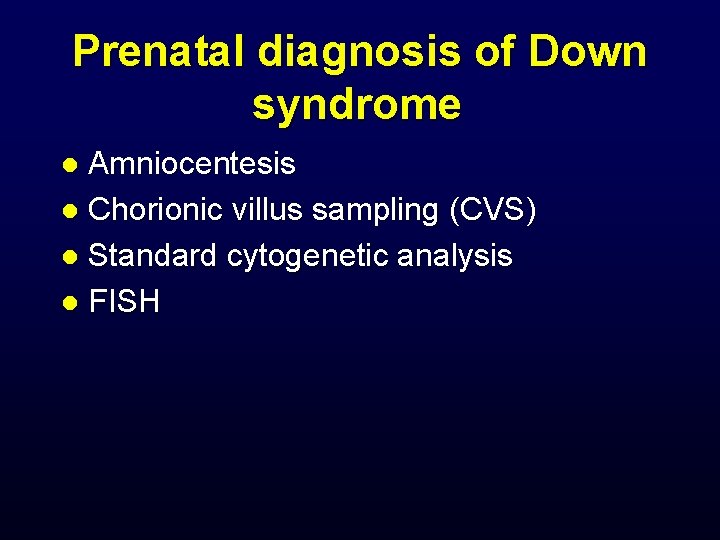
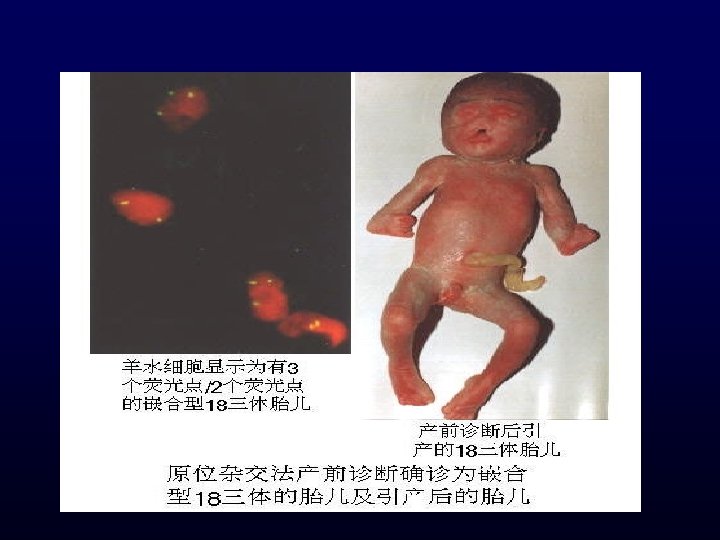
Prenatal diagnosis of Down syndrome Amniocentesis l Chorionic villus sampling (CVS) l Standard cytogenetic analysis l FISH l
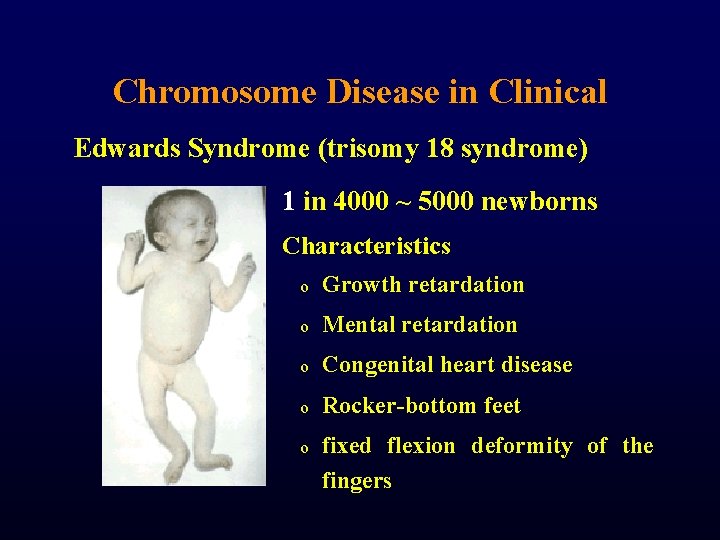
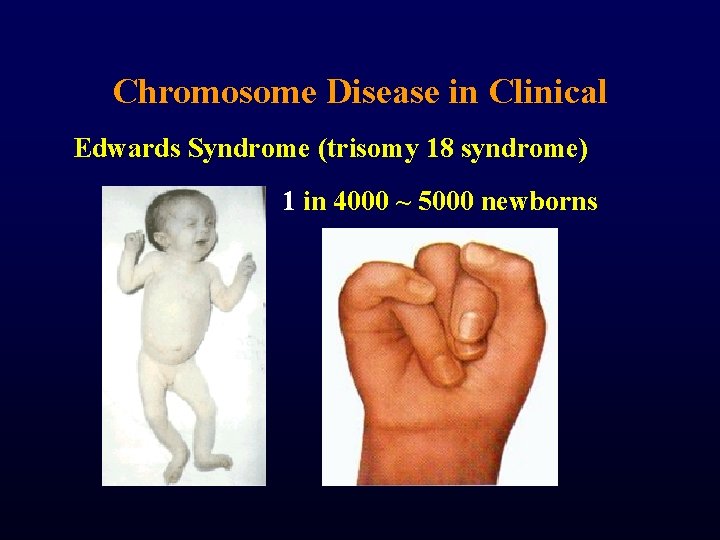
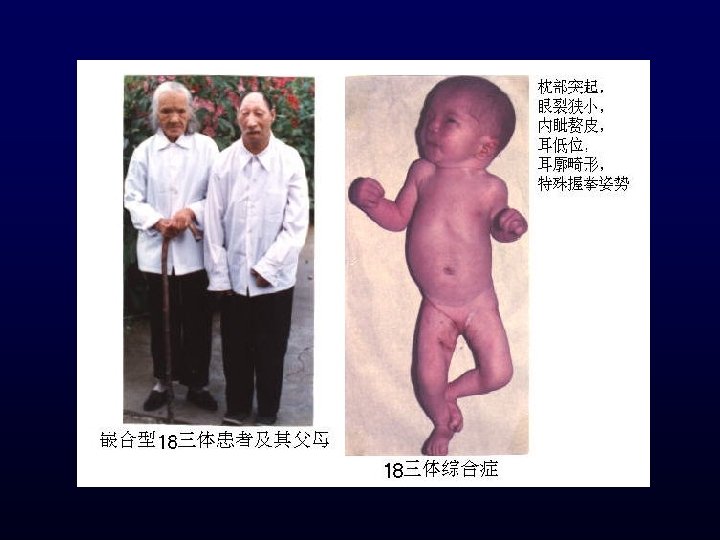
Chromosome Disease in Clinical Edwards Syndrome (trisomy 18 syndrome) 1 in 4000 ~ 5000 newborns Characteristics o Growth retardation o Mental retardation o Congenital heart disease o Rocker-bottom feet o fixed flexion deformity of the fingers
Chromosome Disease in Clinical Edwards Syndrome (trisomy 18 syndrome) 1 in 4000 ~ 5000 newborns
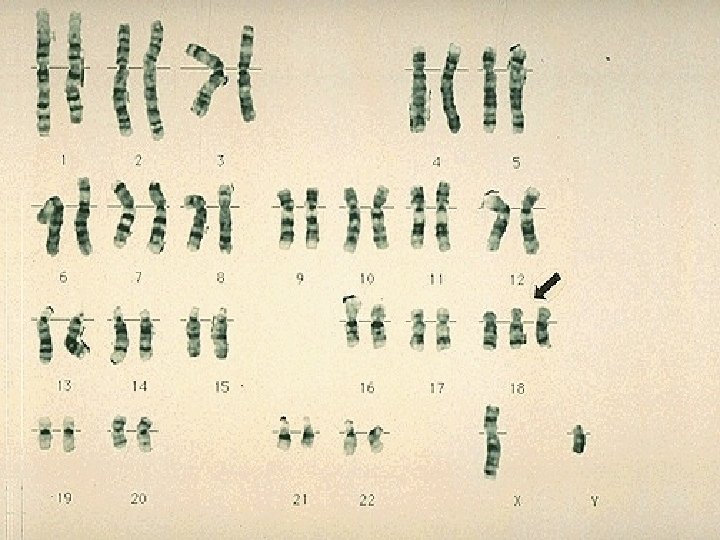
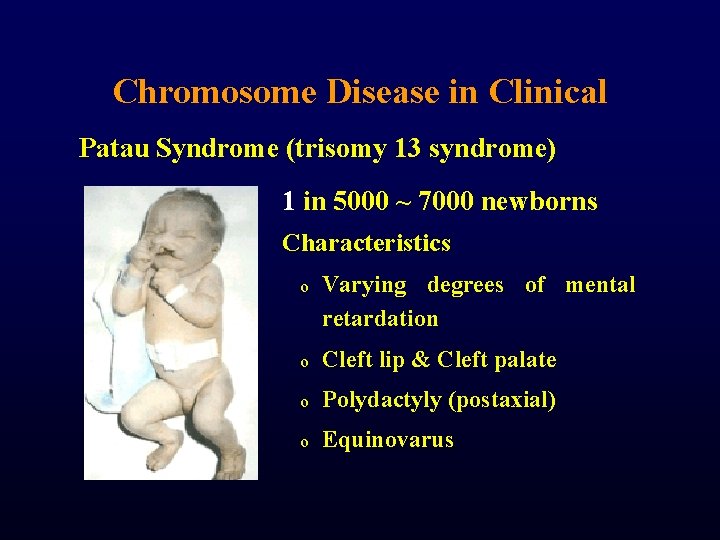
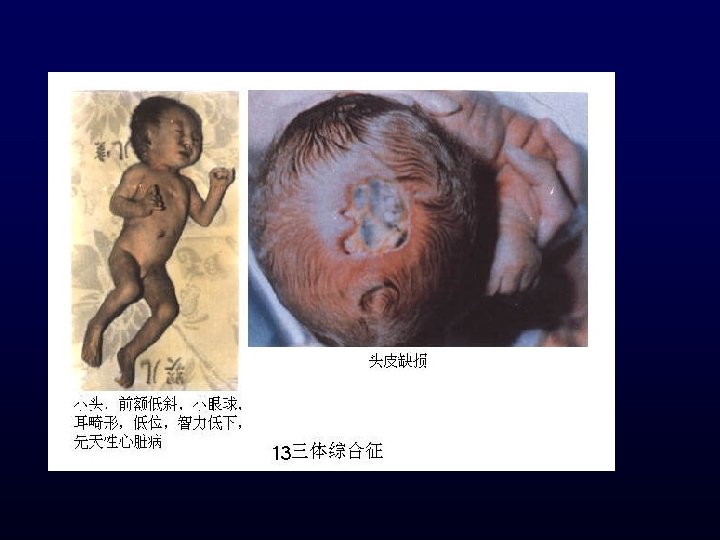
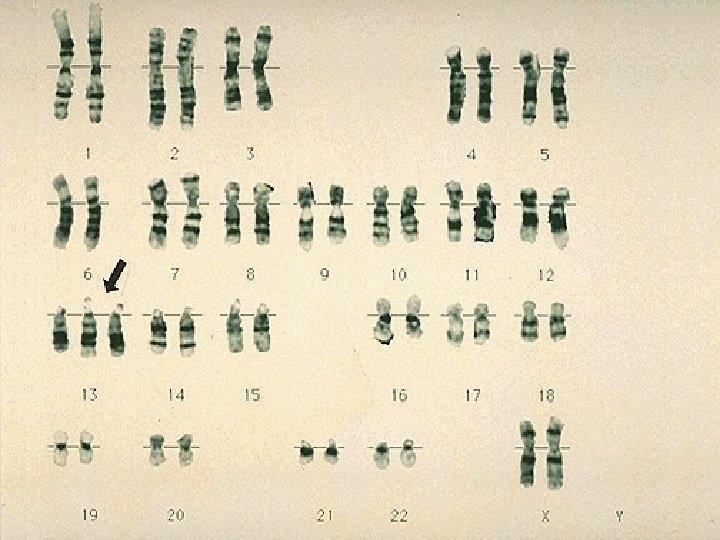
Chromosome Disease in Clinical Patau Syndrome (trisomy 13 syndrome) 1 in 5000 ~ 7000 newborns Characteristics o Varying degrees of mental retardation o Cleft lip & Cleft palate o Polydactyly (postaxial) o Equinovarus
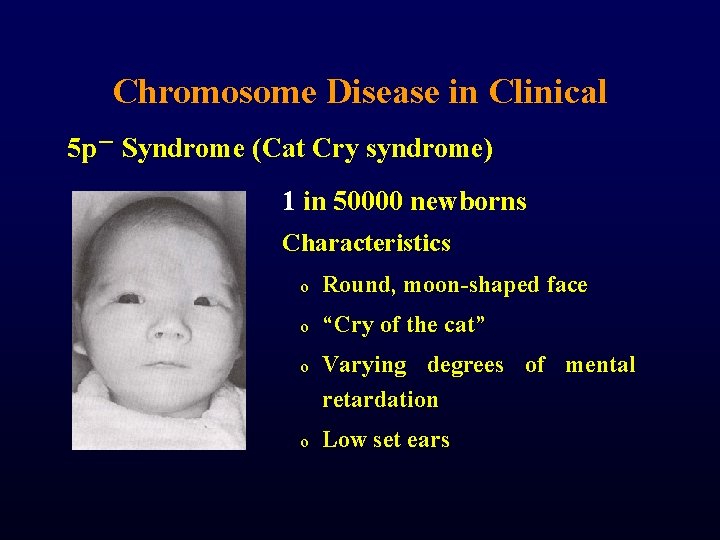
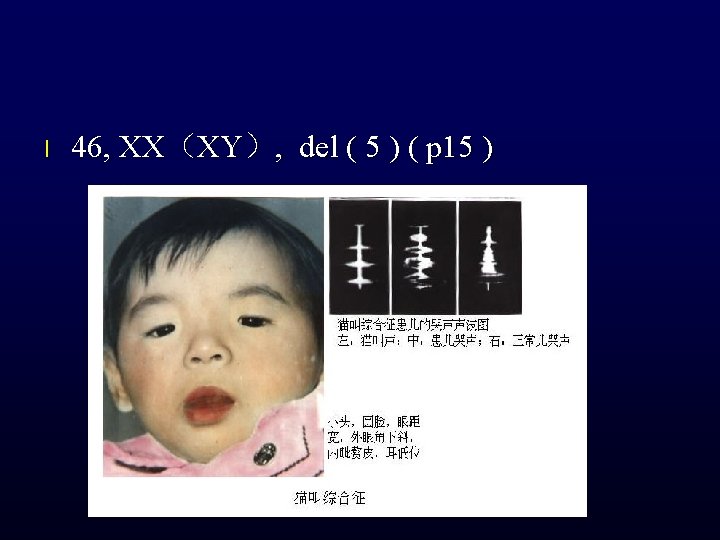
Chromosome Disease in Clinical 5 p- Syndrome (Cat Cry syndrome) 1 in 50000 newborns Characteristics o Round, moon-shaped face o “Cry of the cat” o Varying degrees of mental retardation o Low set ears
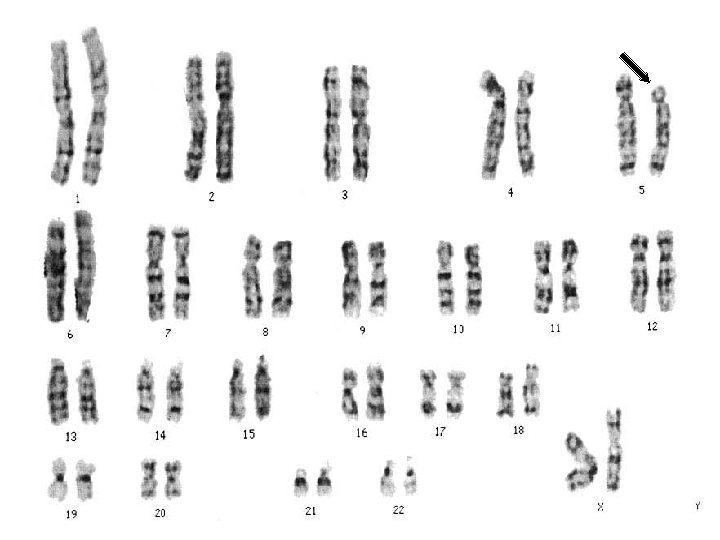
l 46, XX(XY), del ( 5 ) ( p 15 )
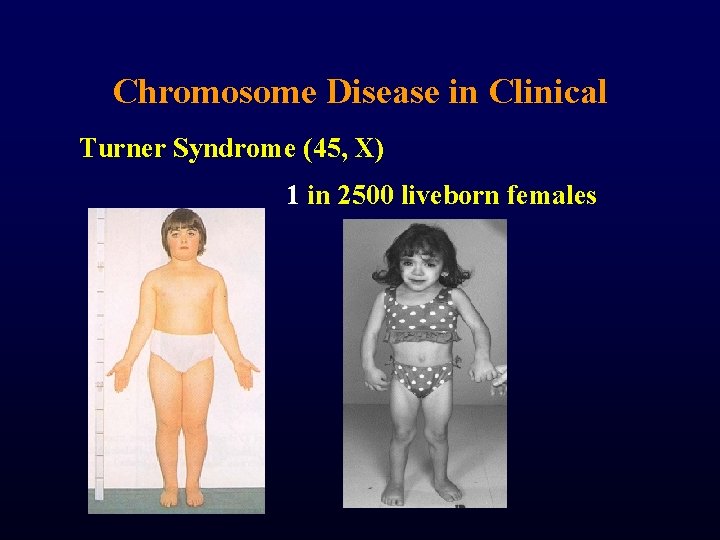
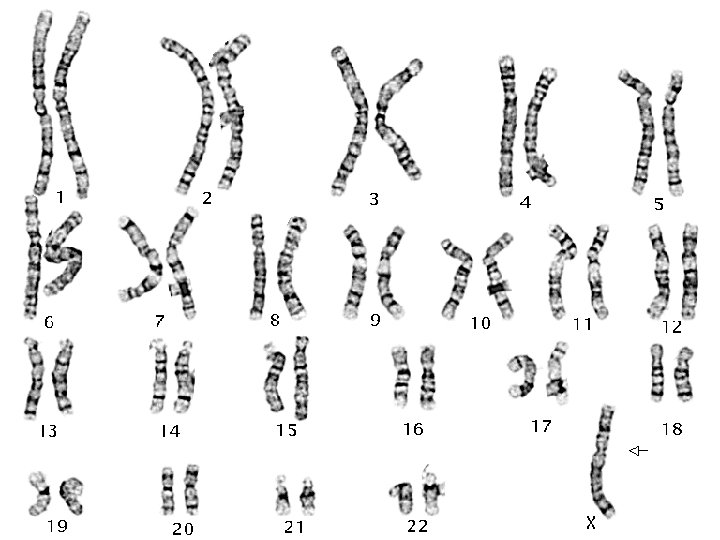
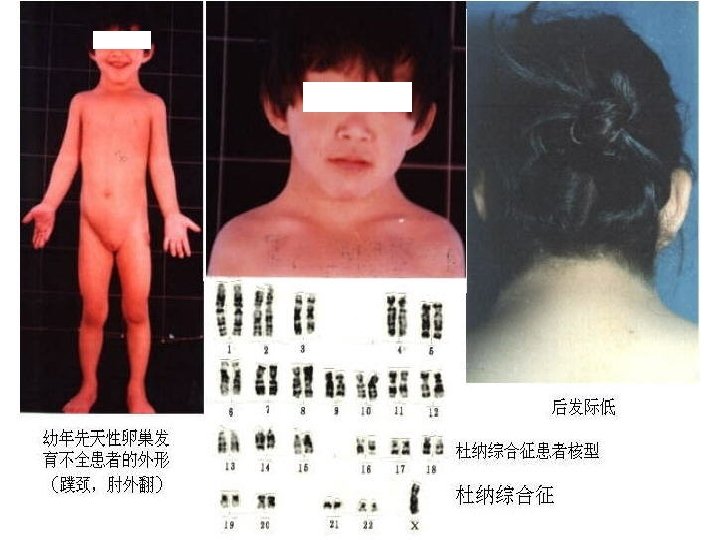
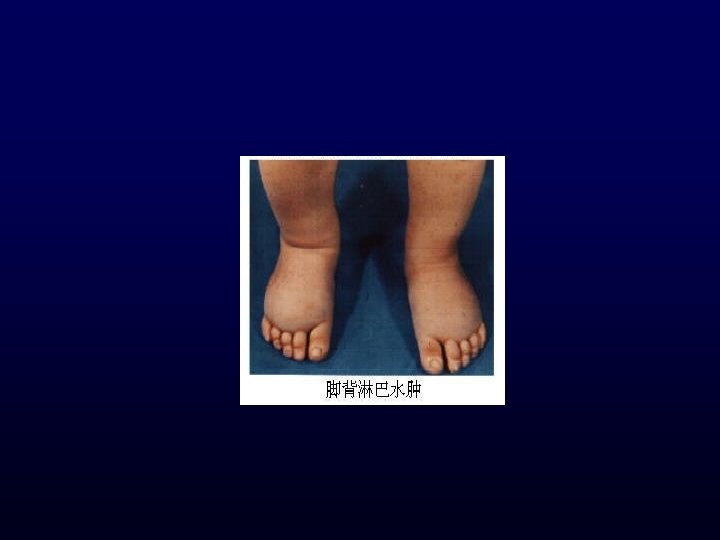
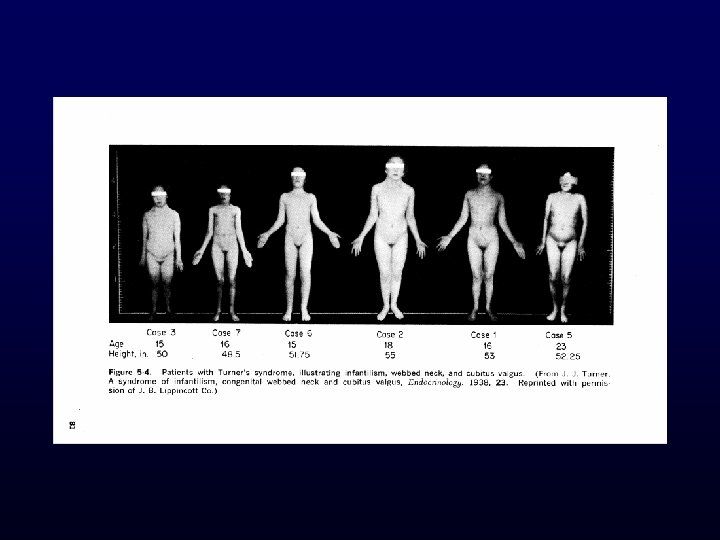
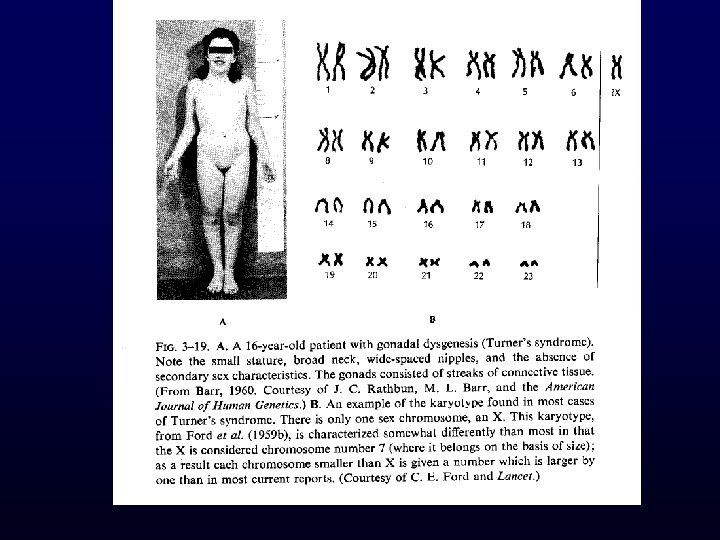
Chromosome Disease in Clinical Turner Syndrome (45, X) 1 in 2500 liveborn females
Characteristics o Short stature & Webbed neck o Ovarian dysgenesis, infertility o Absence of secondary sex characteristics o Underdeveloped breasts; wide nipples o 96 -98% do not survive to birth o No menstruation
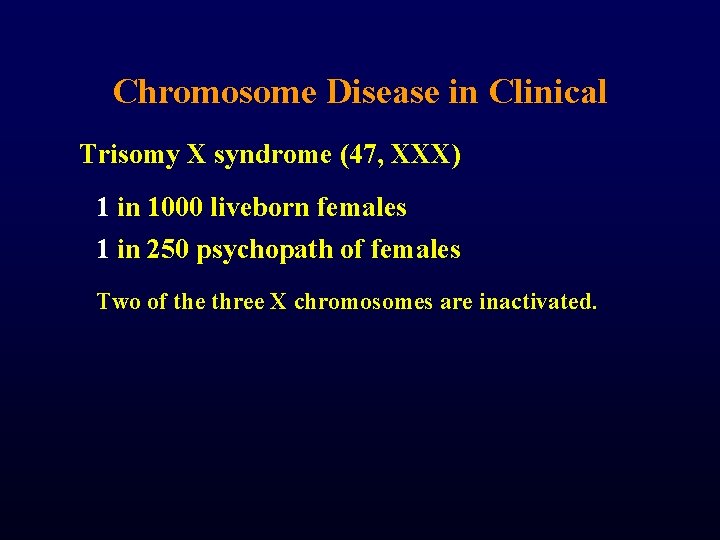
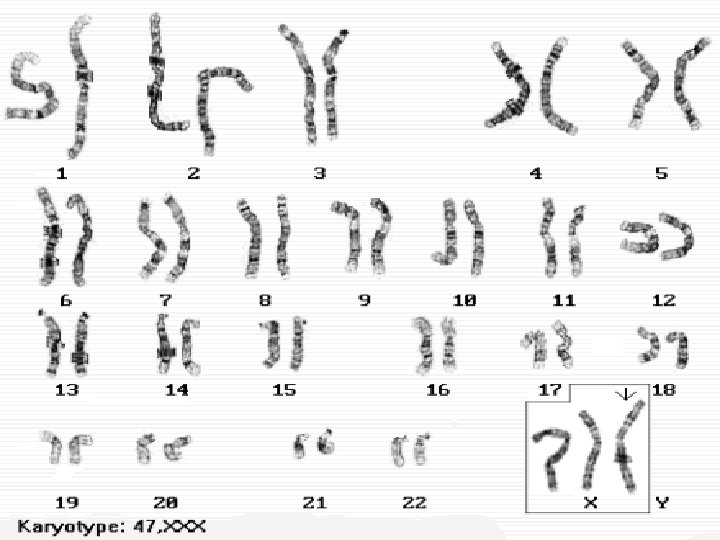
Chromosome Disease in Clinical Trisomy X syndrome (47, XXX) 1 in 1000 liveborn females 1 in 250 psychopath of females Two of the three X chromosomes are inactivated.
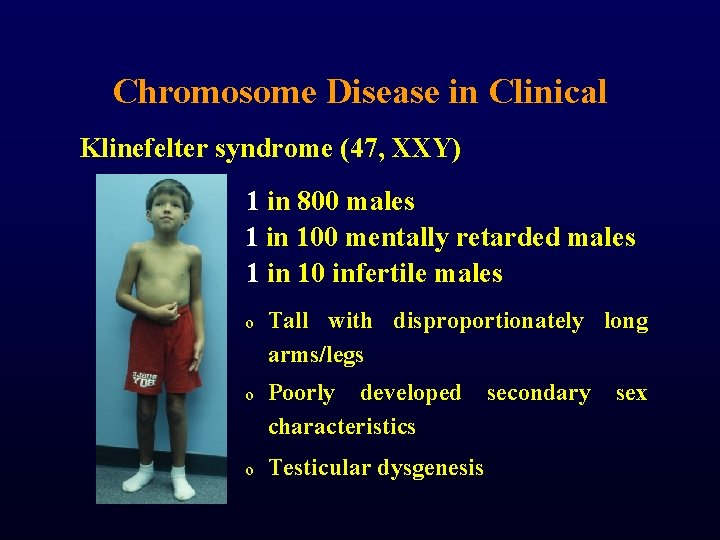
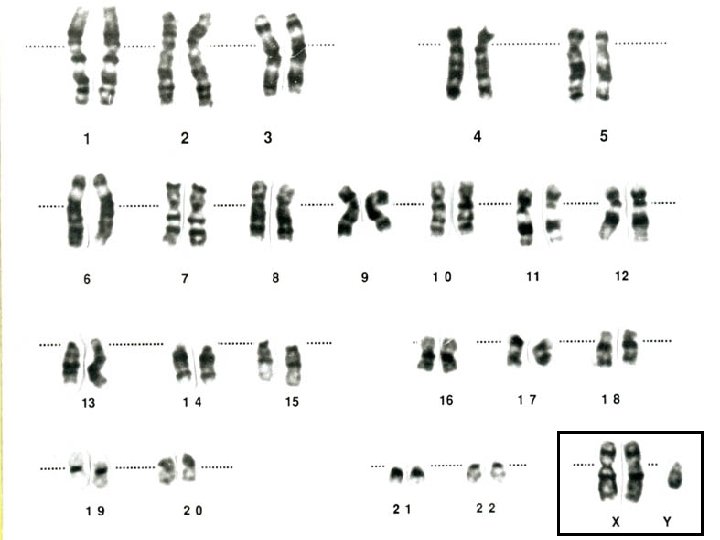
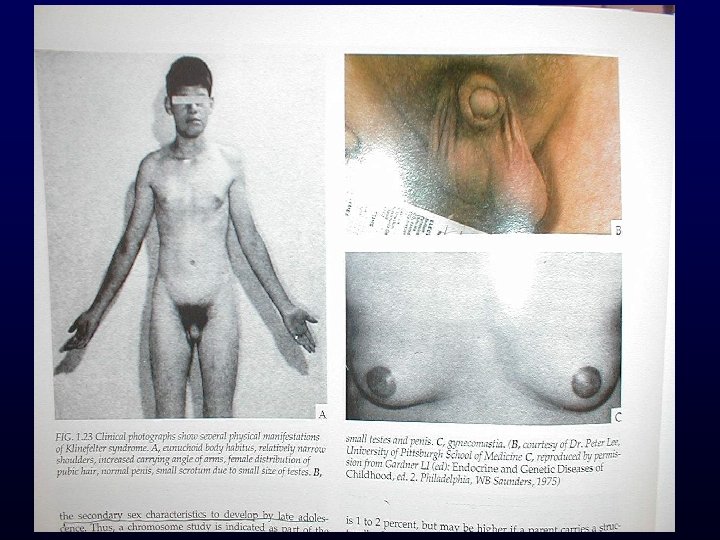
Chromosome Disease in Clinical Klinefelter syndrome (47, XXY) 1 in 800 males 1 in 100 mentally retarded males 1 in 10 infertile males o Tall with disproportionately long arms/legs o Poorly developed characteristics o Testicular dysgenesis secondary sex
Klinefelter syndrome 20% of aspermic adult male (blocked spermatogenesis l 47 XXY in 80% and mosaic in 20% l IQ is 98 (normal) with mild decrease in verbal IQ l
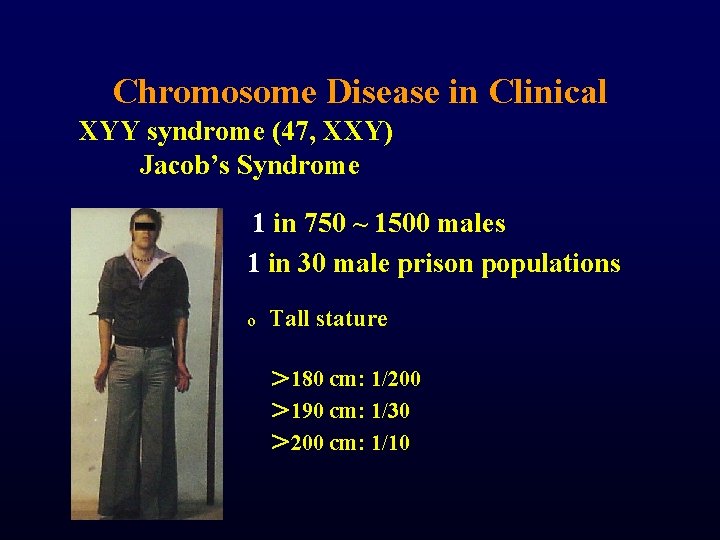
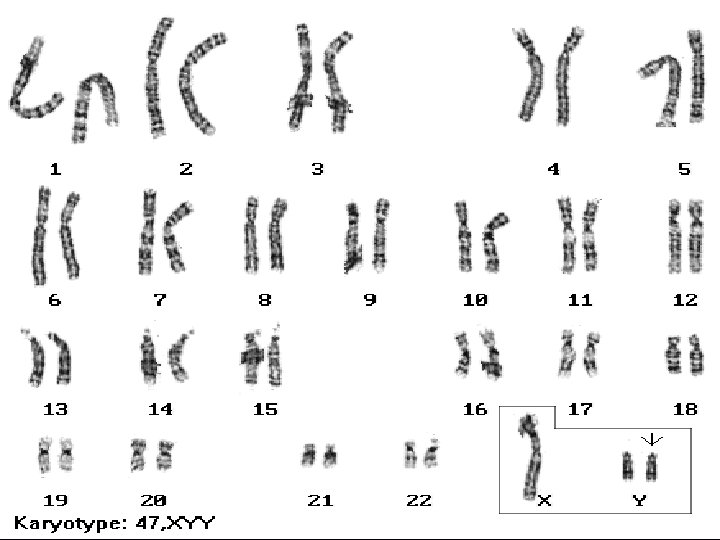
Chromosome Disease in Clinical XYY syndrome (47, XXY) Jacob’s Syndrome 1 in 750 ~ 1500 males 1 in 30 male prison populations o Tall stature > 180 cm: 1/200 > 190 cm: 1/30 > 200 cm: 1/10
Normal physically Normal mentally Increase in testosterone More aggressive Predisposition to violent, criminal behavior Normal lifespan
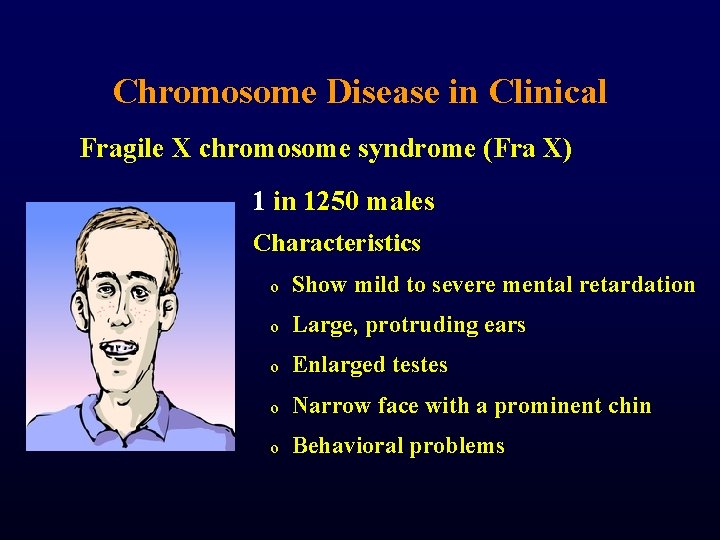
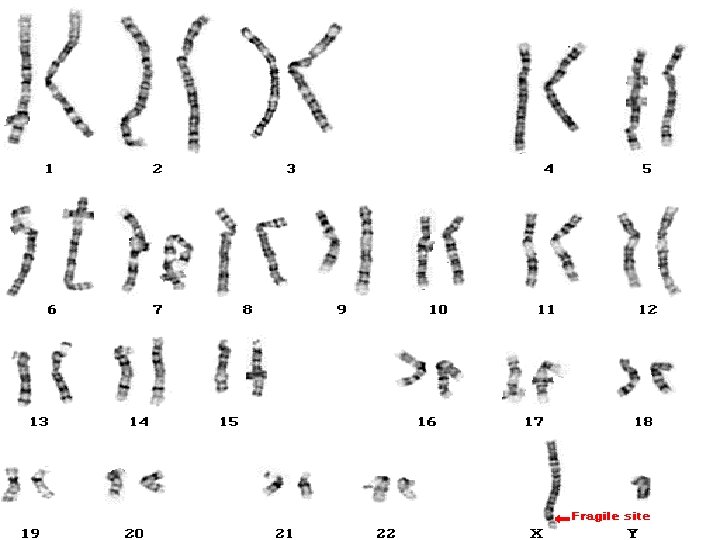
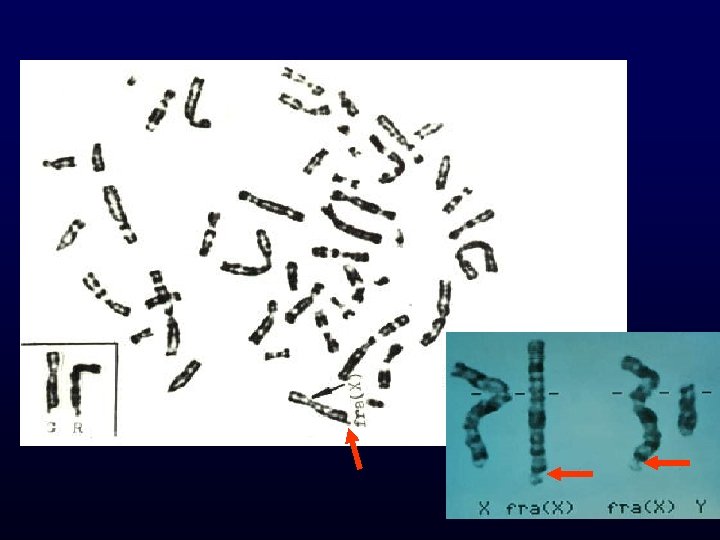
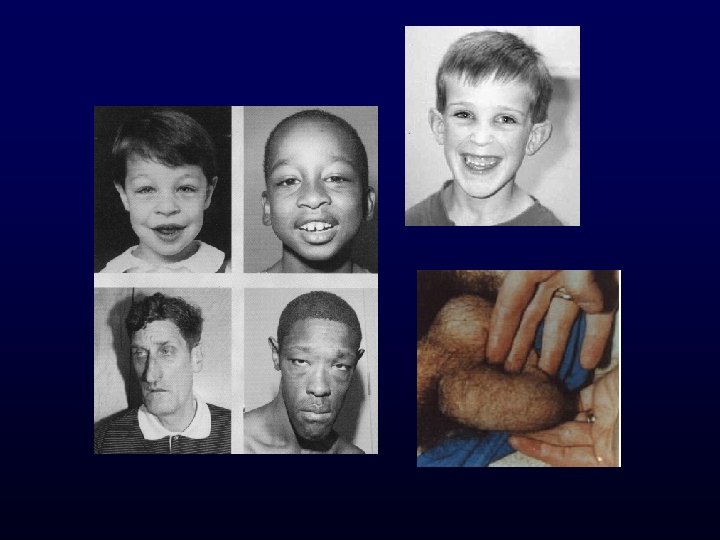
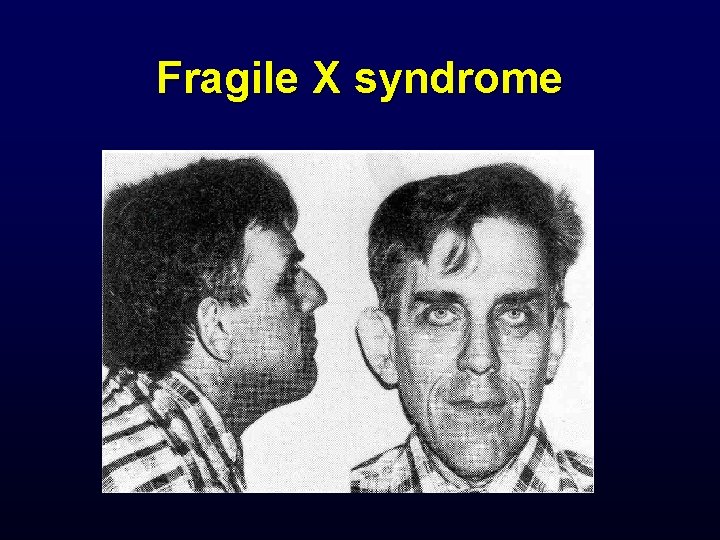
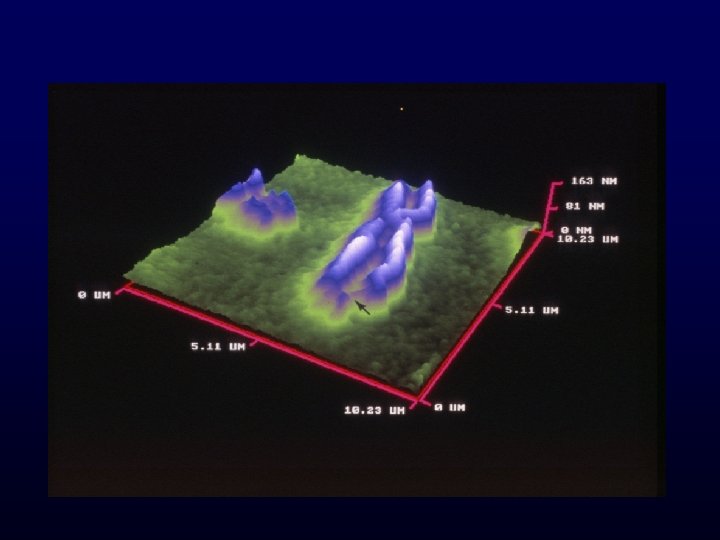
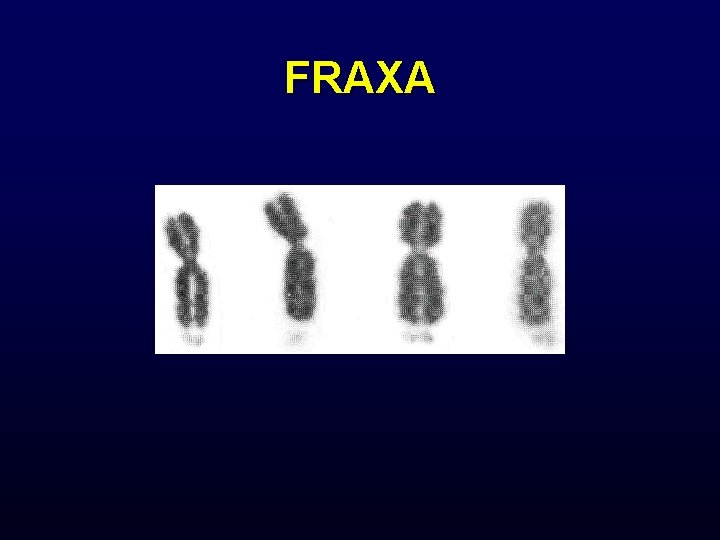
Chromosome Disease in Clinical Fragile X chromosome syndrome (Fra X) 1 in 1250 males Characteristics o Show mild to severe mental retardation o Large, protruding ears o Enlarged testes o Narrow face with a prominent chin o Behavioral problems
Fragile X syndrome
FRAXA
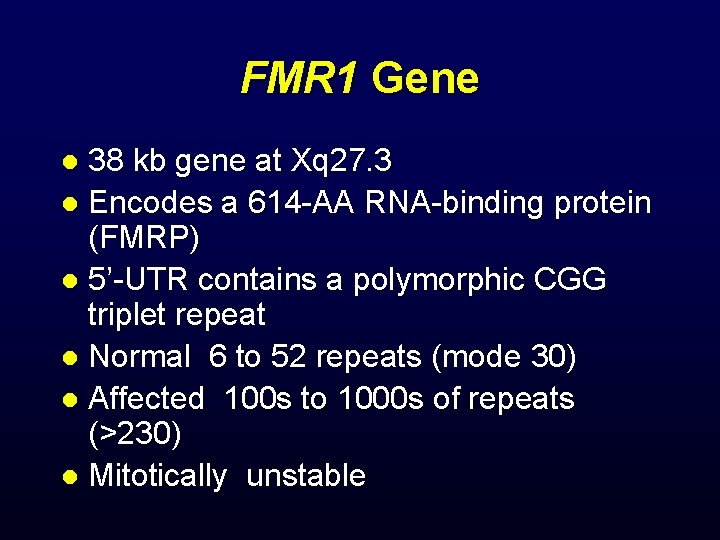
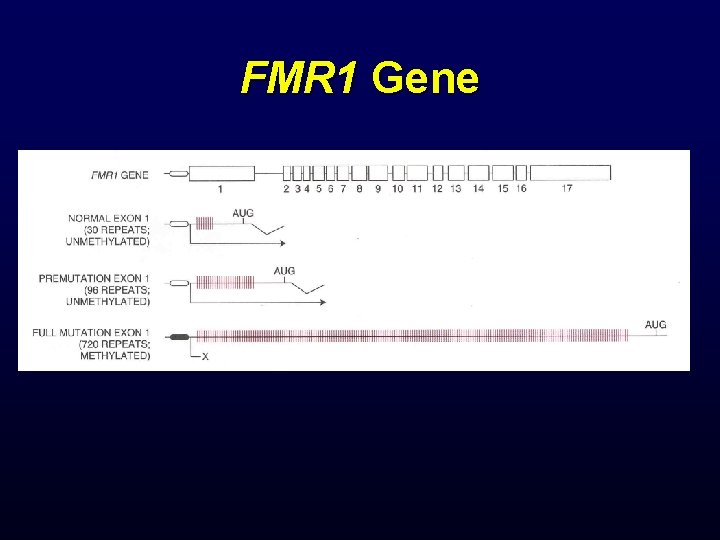
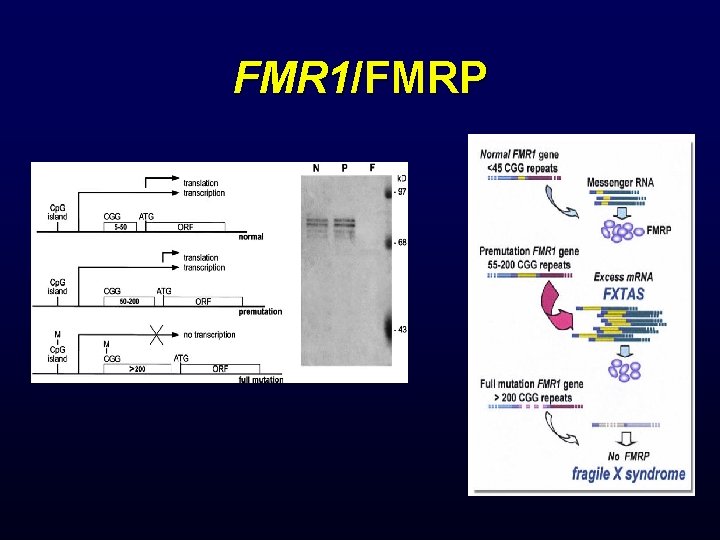
FMR 1 Gene 38 kb gene at Xq 27. 3 l Encodes a 614 -AA RNA-binding protein (FMRP) l 5’-UTR contains a polymorphic CGG triplet repeat l Normal 6 to 52 repeats (mode 30) l Affected 100 s to 1000 s of repeats (>230) l Mitotically unstable l
FMR 1 Gene
FMR 1/FMRP
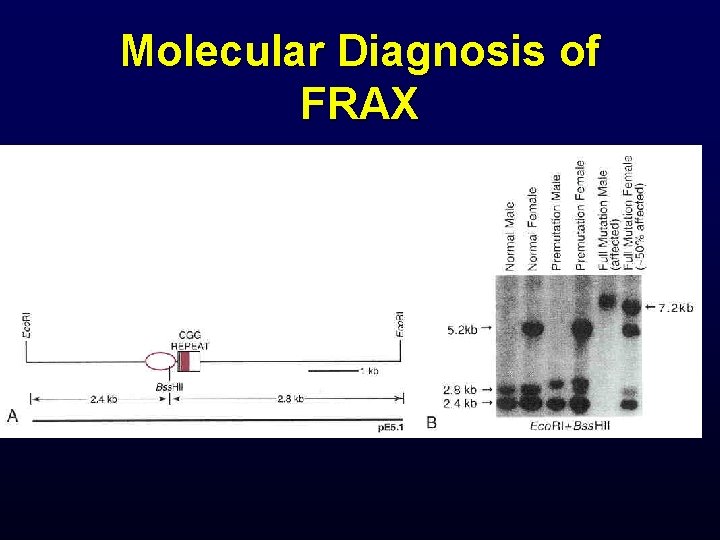
Molecular Diagnosis of FRAX
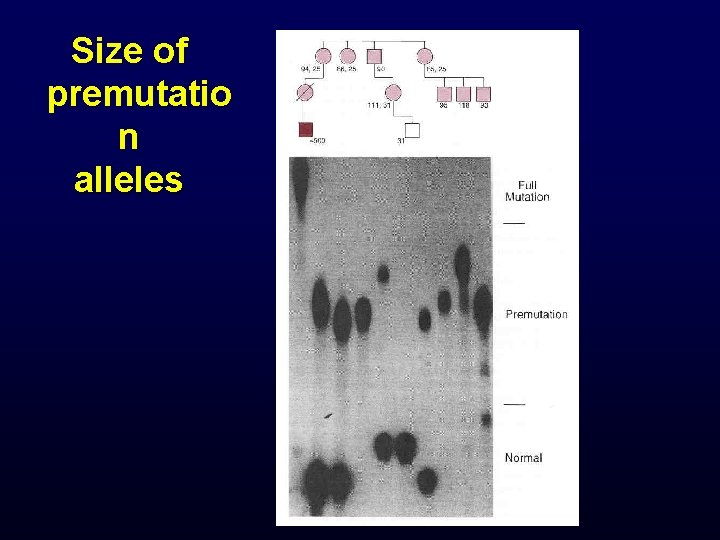
Size of premutatio n alleles
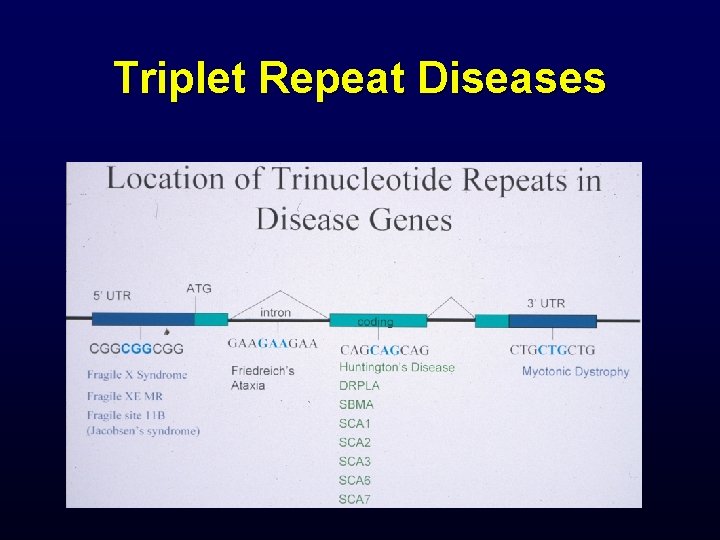
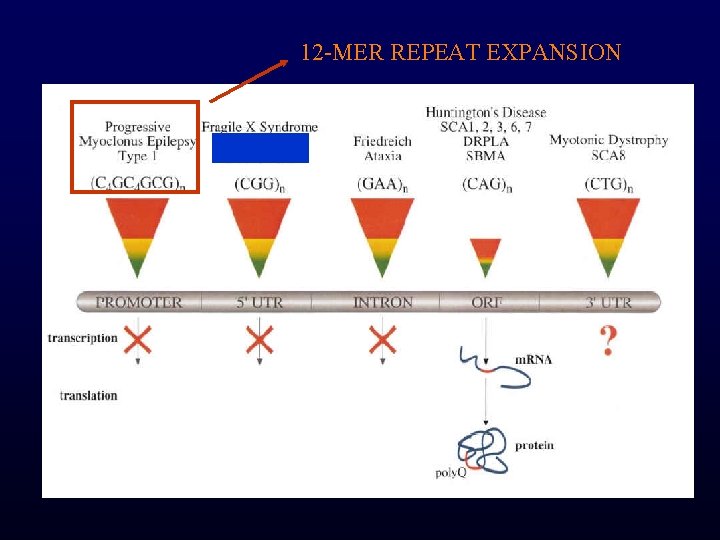
Triplet Repeat Diseases
12 -MER REPEAT EXPANSION
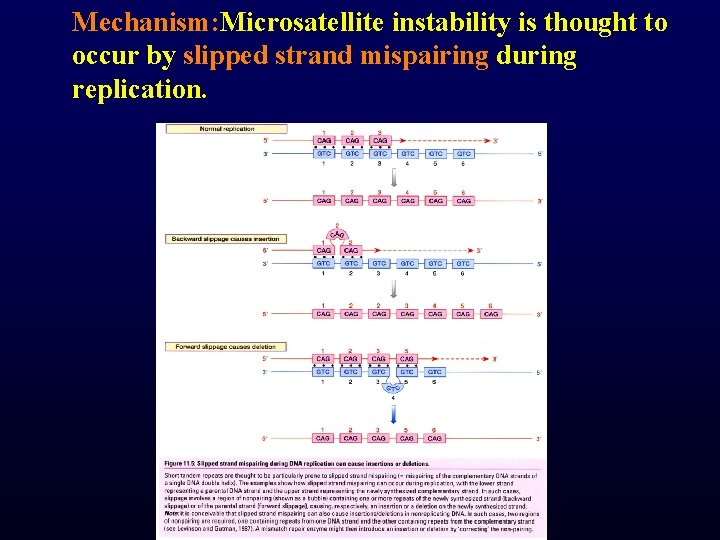
Mechanism: Microsatellite instability is thought to occur by slipped strand mispairing during replication.
The End