Closing the Gap in Perth and Kinross Through

- Slides: 31
Closing the Gap in Perth and Kinross Through Action Research Julie Martin, Depute Principal Educational Psychologist
Why Action Research?
Action Research in Perth & Kinross § School Engagement Action Research § Self Regulation § Closing the Gap § Pupil Equity Funding Our approach to research will. . . include working with all 32 local authorities to develop local action research based projects on closing the gap led by educational psychologists from August 2016 Delivering Excellence and Equity in Scottish Education: A Delivery Plan for Scotland
EEF: Closing the Gap (2017) § There does not appear to be a direct relationship between increased school funding and increased pupil attainment – what matters most is how schools can effectively and efficiently use the resources they have (both financial and human) for maximum impact. § There is huge variability in outcomes for disadvantaged pupils between schools with similar levels of disadvantage. § Targeted small group and one-to-one interventions have the potential for the largest immediate impact on attainment. § Evidence is a crucial tool to inform senior leaders’ decision-making and help them identify ‘best bets’ for spending. Time and money is too scarce to stick with approaches and programmes which do not make a real difference. The effective use of evidence means strategically abandoning ineffective approaches, as well as implementing new ones with positive evidence behind them.
EEF: A School’s Guide to Implementation (2018) § Recommendation 1: Treat implementation as a process, not an event; plan and execute it in stages. § Recommendation 2: Create a leadership environment and school climate that is conducive to good implementation. § Recommendation 3: Define the problem you want to solve and identify appropriate programmes or practices to implement. § Recommendation 4: Create a clear implementation plan, judge the readiness of the school to deliver that plan, then prepare staff and resources. § Recommendation 5: Support staff, monitor progress, solve problems, and adapt strategies as the approach is used for the first time. § Recommendation 6: Plan for sustaining and scaling an intervention from the outset and continuously acknowledge and nurture its use.
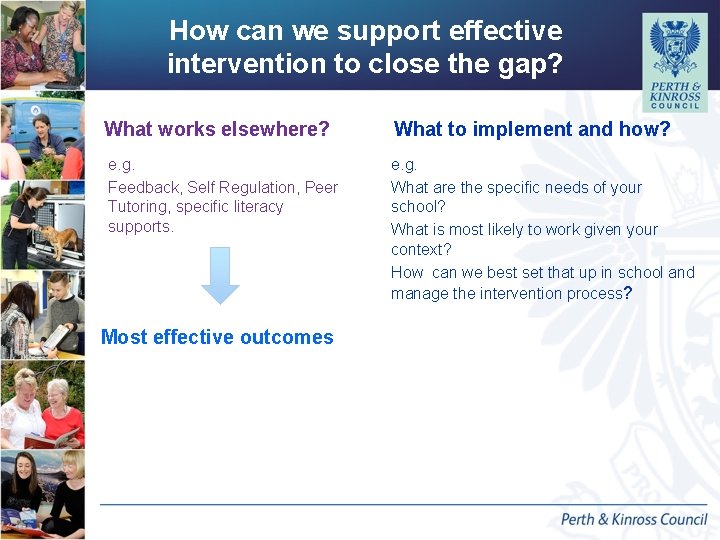
How can we support effective intervention to close the gap? What works elsewhere? What to implement and how? e. g. Feedback, Self Regulation, Peer Tutoring, specific literacy supports. e. g. What are the specific needs of your school? What is most likely to work given your context? How can we best set that up in school and manage the intervention process? Most effective outcomes
Closing the Gap Using Action Research “Effective action research is a process of clarification” (Fullan, 2007)
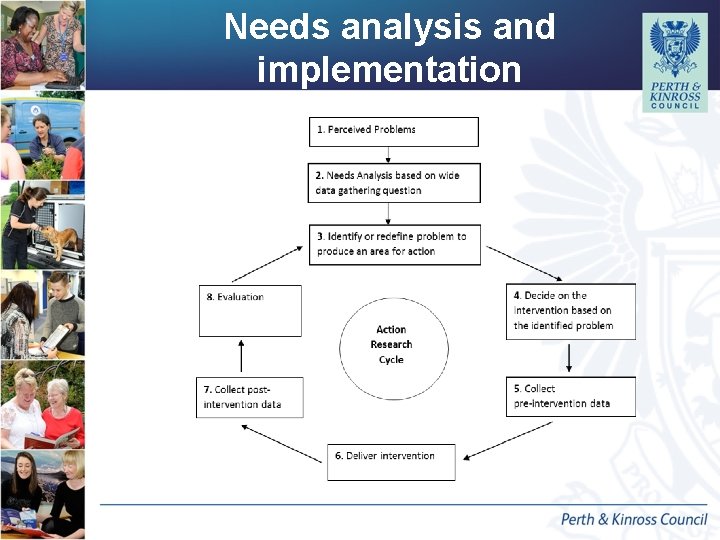
Needs analysis and implementation
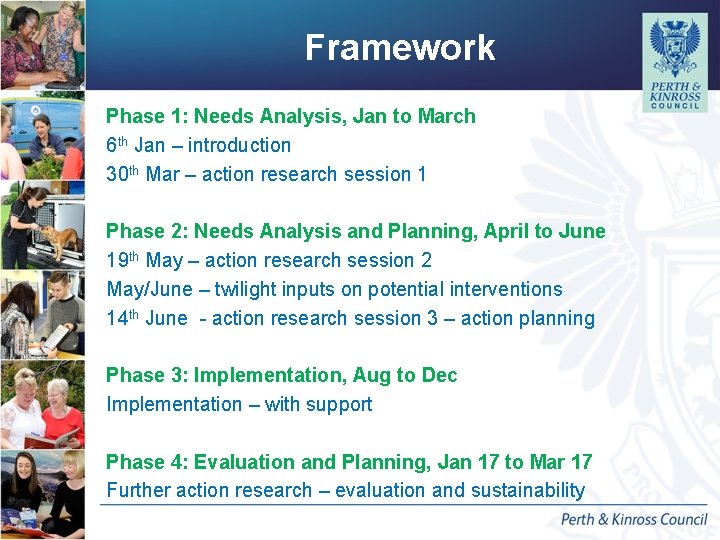
Framework Phase 1: Needs Analysis, Jan to March 6 th Jan – introduction 30 th Mar – action research session 1 Phase 2: Needs Analysis and Planning, April to June 19 th May – action research session 2 May/June – twilight inputs on potential interventions 14 th June - action research session 3 – action planning Phase 3: Implementation, Aug to Dec Implementation – with support Phase 4: Evaluation and Planning, Jan 17 to Mar 17 Further action research – evaluation and sustainability
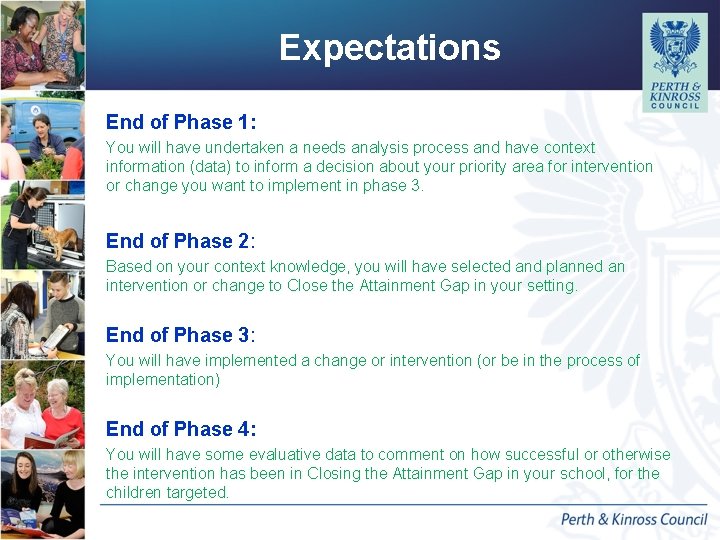
Expectations End of Phase 1: You will have undertaken a needs analysis process and have context information (data) to inform a decision about your priority area for intervention or change you want to implement in phase 3. End of Phase 2: Based on your context knowledge, you will have selected and planned an intervention or change to Close the Attainment Gap in your setting. End of Phase 3: You will have implemented a change or intervention (or be in the process of implementation) End of Phase 4: You will have some evaluative data to comment on how successful or otherwise the intervention has been in Closing the Attainment Gap in your school, for the children targeted.
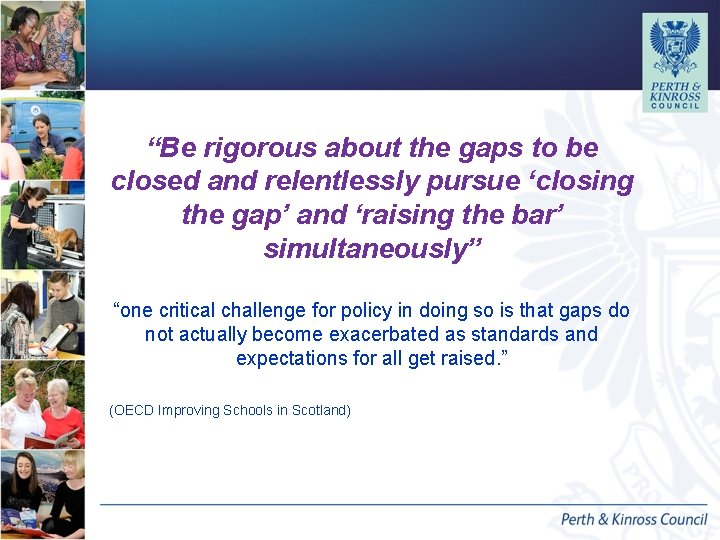
“Be rigorous about the gaps to be closed and relentlessly pursue ‘closing the gap’ and ‘raising the bar’ simultaneously” “one critical challenge for policy in doing so is that gaps do not actually become exacerbated as standards and expectations for all get raised. ” (OECD Improving Schools in Scotland)
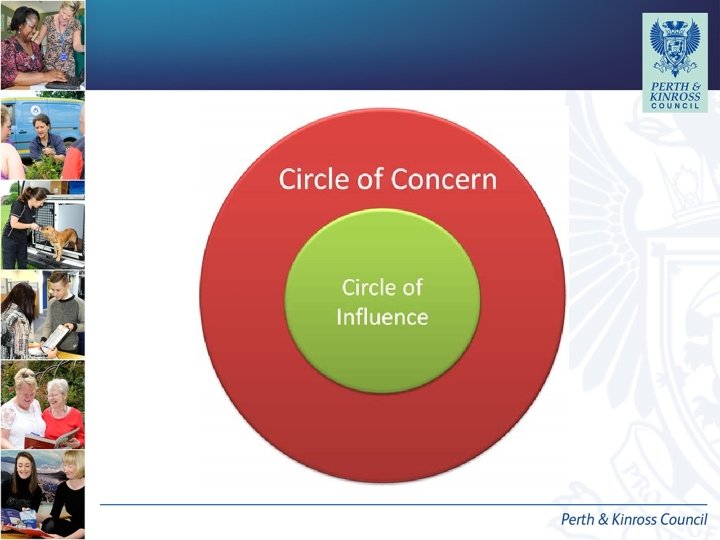
CHALLENGE § Use basic research methods to find out more about our area of concern and circle of influence to help select intervention that will make the most difference for the target group QUESTIONS § What data do you have already relating to the area of enquiry? § Where are the gaps in the data? What do we not know about? § How do we fill these gaps in knowledge? How do we choose what method to use? What kind of data do we want? How do we ensure data is representative?
Needs Analysis: from “felt” to “real” knowledge § Real life problem § Attendance is not as good as it could be in our school. § “Felt Knowledge” § There are groups of young people who skip school with their friends and get away with it. We need to take a firmer approach. § This was not the real issue in this context § Action § New attendance policy, series of consequences for non-attendance § Outcome § Young people become increasingly disaffected with school. For some, attendance drops even further, others skip classes rather than full days at school
§ Real life problem § Attendance is not as good as it could be in our school. § Gathering context knowledge § Focus group with young people who are at risk of poor attendance § Questionnaire to young people below a certain % attendance § Questionnaire to parents of above yp § Refined problem – “real knowledge” § A minority of young people have a low sense of belonging to the school community. § Outcome § Improved attendance over time, following efforts to increase pupil connectedness
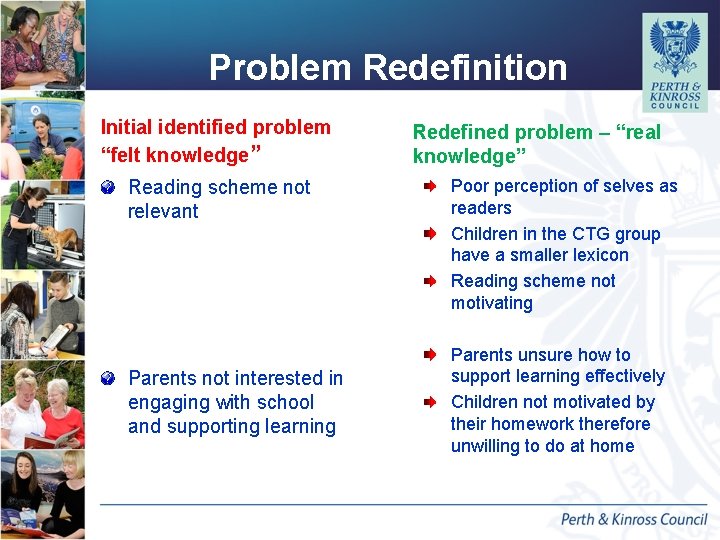
Problem Redefinition Initial identified problem “felt knowledge” Reading scheme not relevant Parents not interested in engaging with school and supporting learning Redefined problem – “real knowledge” Poor perception of selves as readers Children in the CTG group have a smaller lexicon Reading scheme not motivating Parents unsure how to support learning effectively Children not motivated by their homework therefore unwilling to do at home
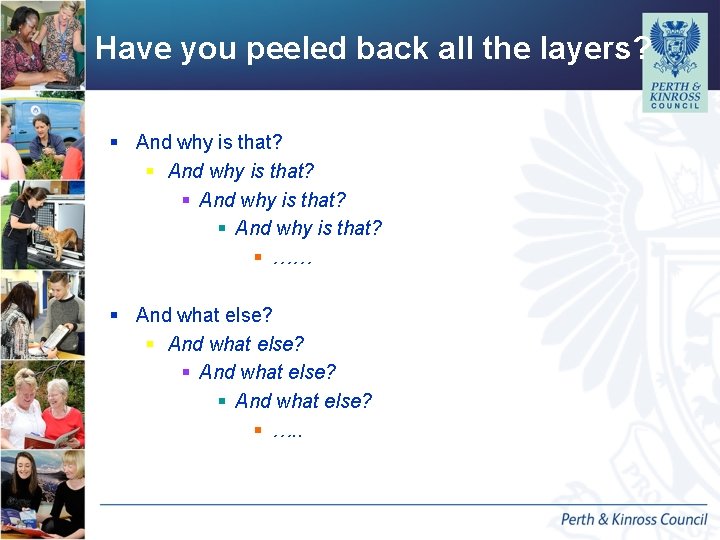
Have you peeled back all the layers? § And why is that? § …… § And what else? § …. .
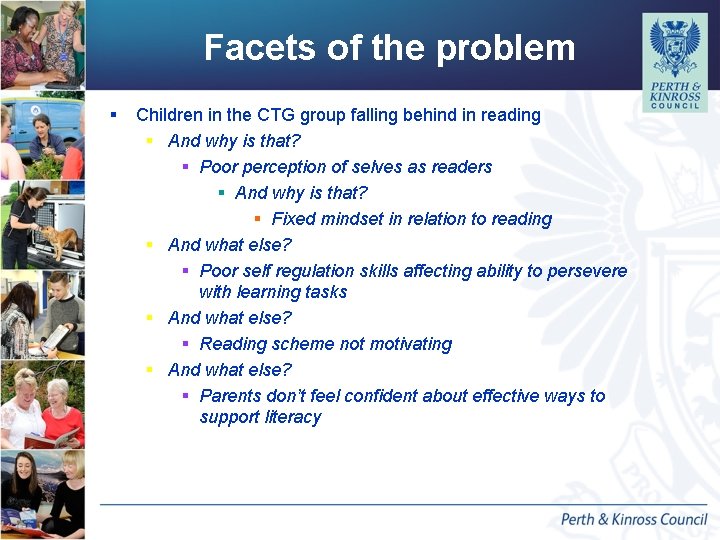
Facets of the problem § Children in the CTG group falling behind in reading § And why is that? § Poor perception of selves as readers § And why is that? § Fixed mindset in relation to reading § And what else? § Poor self regulation skills affecting ability to persevere with learning tasks § And what else? § Reading scheme not motivating § And what else? § Parents don’t feel confident about effective ways to support literacy
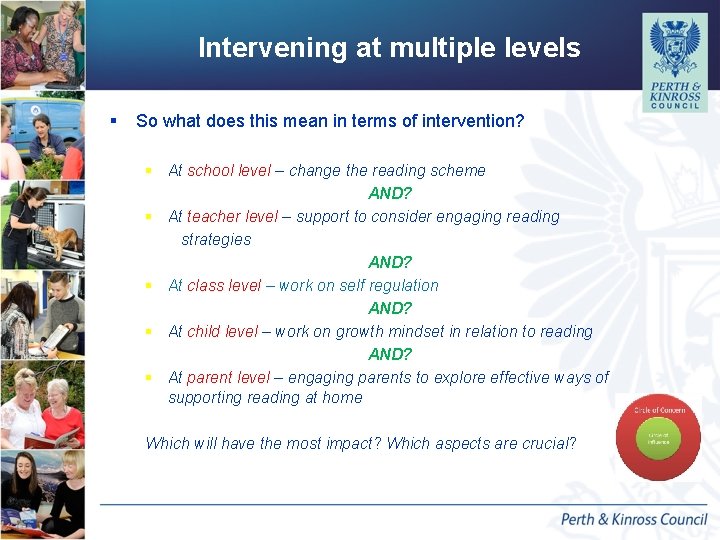
Intervening at multiple levels § So what does this mean in terms of intervention? § At school level – change the reading scheme AND? § At teacher level – support to consider engaging reading strategies AND? § At class level – work on self regulation AND? § At child level – work on growth mindset in relation to reading AND? § At parent level – engaging parents to explore effective ways of supporting reading at home Which will have the most impact? Which aspects are crucial?
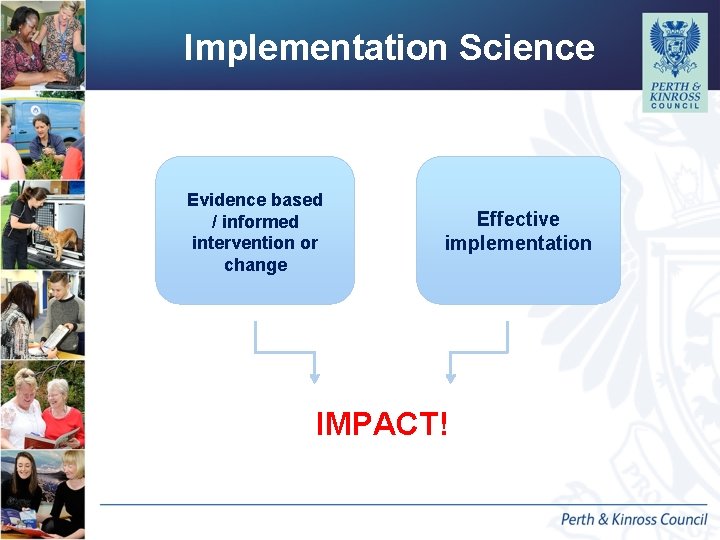
Implementation Science Evidence based / informed intervention or change Effective implementation IMPACT!
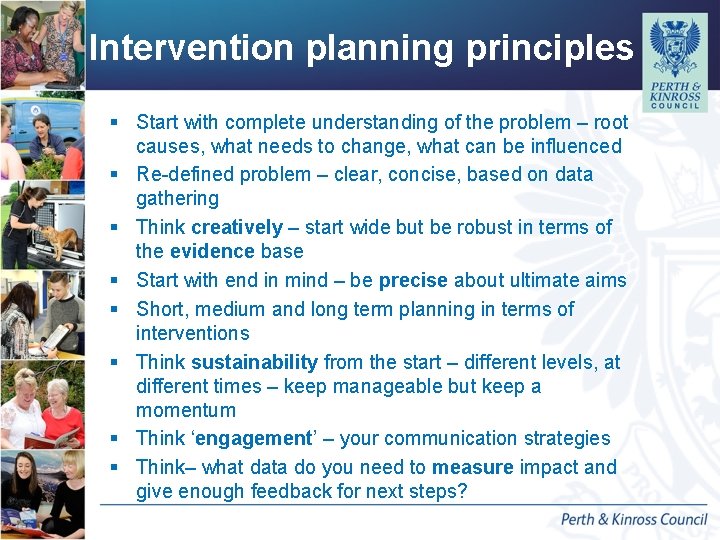
Intervention planning principles § Start with complete understanding of the problem – root causes, what needs to change, what can be influenced § Re-defined problem – clear, concise, based on data gathering § Think creatively – start wide but be robust in terms of the evidence base § Start with end in mind – be precise about ultimate aims § Short, medium and long term planning in terms of interventions § Think sustainability from the start – different levels, at different times – keep manageable but keep a momentum § Think ‘engagement’ – your communication strategies § Think– what data do you need to measure impact and give enough feedback for next steps?
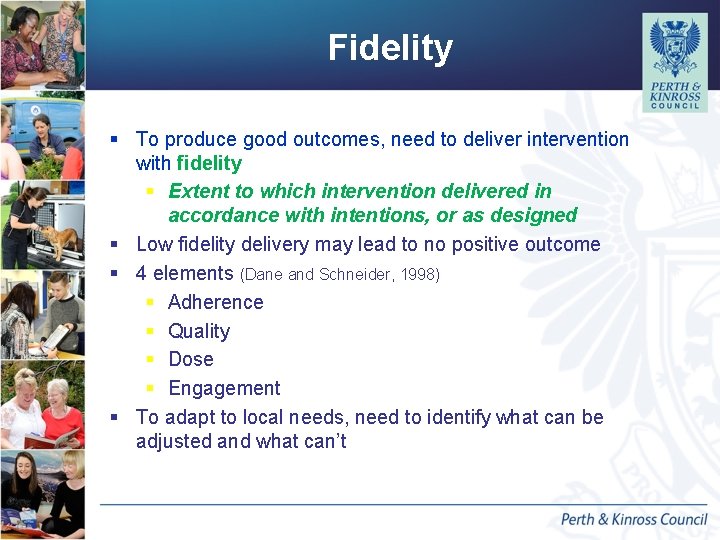
Fidelity § To produce good outcomes, need to deliver intervention with fidelity § Extent to which intervention delivered in accordance with intentions, or as designed § Low fidelity delivery may lead to no positive outcome § 4 elements (Dane and Schneider, 1998) § Adherence § Quality § Dose § Engagement § To adapt to local needs, need to identify what can be adjusted and what can’t
Using Action Research to Close the Gap Real Life Examples
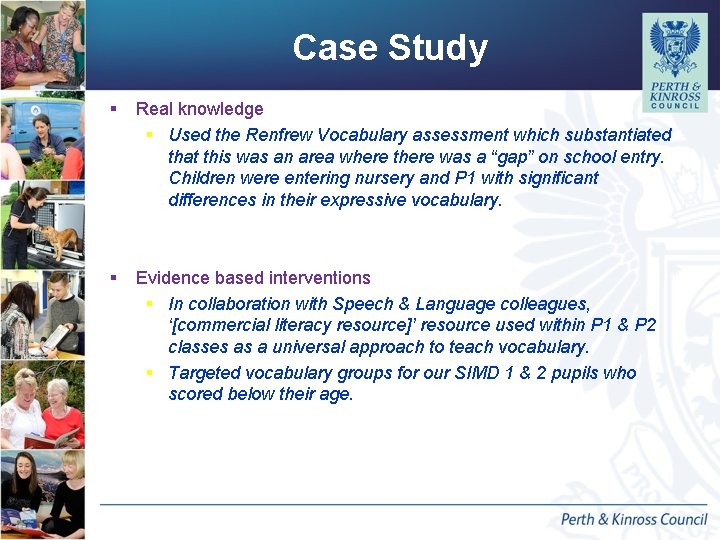
Case Study § Real knowledge § Used the Renfrew Vocabulary assessment which substantiated that this was an area where there was a “gap” on school entry. Children were entering nursery and P 1 with significant differences in their expressive vocabulary. § Evidence based interventions § In collaboration with Speech & Language colleagues, ‘[commercial literacy resource]’ resource used within P 1 & P 2 classes as a universal approach to teach vocabulary. § Targeted vocabulary groups for our SIMD 1 & 2 pupils who scored below their age.
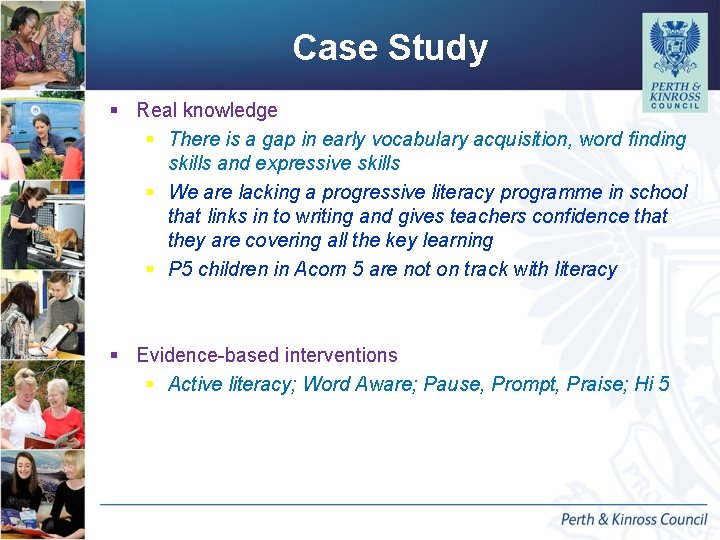
Case Study § Real knowledge § There is a gap in early vocabulary acquisition, word finding skills and expressive skills § We are lacking a progressive literacy programme in school that links in to writing and gives teachers confidence that they are covering all the key learning § P 5 children in Acorn 5 are not on track with literacy § Evidence-based interventions § Active literacy; Word Aware; Pause, Prompt, Praise; Hi 5
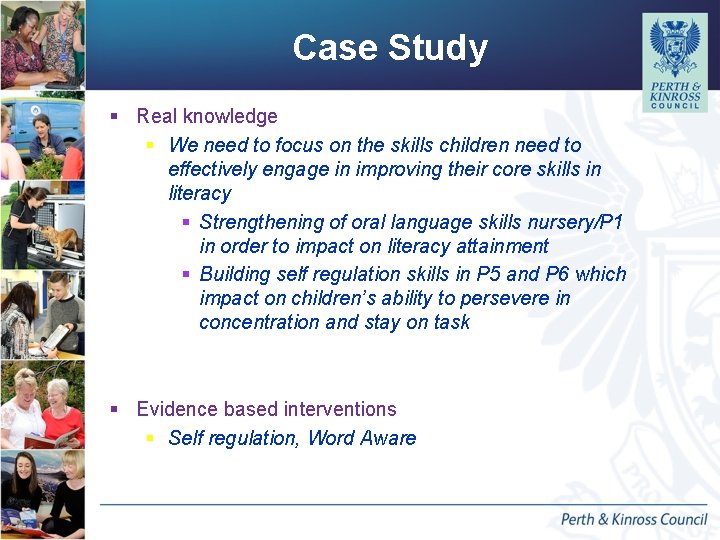
Case Study § Real knowledge § We need to focus on the skills children need to effectively engage in improving their core skills in literacy § Strengthening of oral language skills nursery/P 1 in order to impact on literacy attainment § Building self regulation skills in P 5 and P 6 which impact on children’s ability to persevere in concentration and stay on task § Evidence based interventions § Self regulation, Word Aware
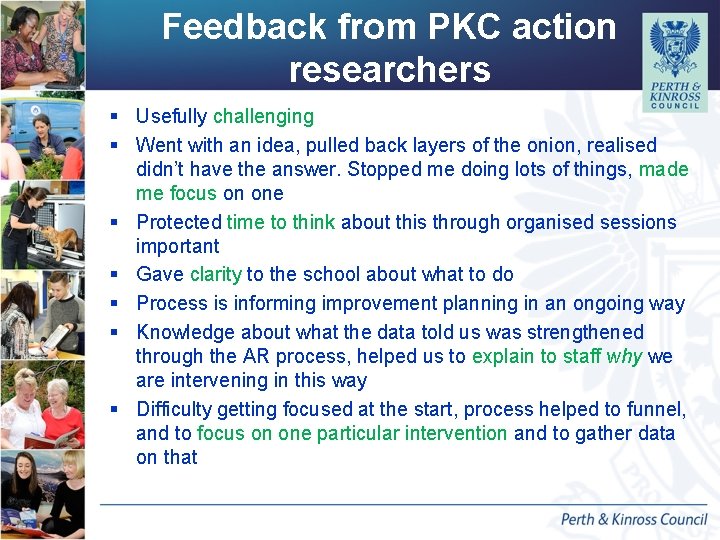
Feedback from PKC action researchers § Usefully challenging § Went with an idea, pulled back layers of the onion, realised didn’t have the answer. Stopped me doing lots of things, made me focus on one § Protected time to think about this through organised sessions important § Gave clarity to the school about what to do § Process is informing improvement planning in an ongoing way § Knowledge about what the data told us was strengthened through the AR process, helped us to explain to staff why we are intervening in this way § Difficulty getting focused at the start, process helped to funnel, and to focus on one particular intervention and to gather data on that
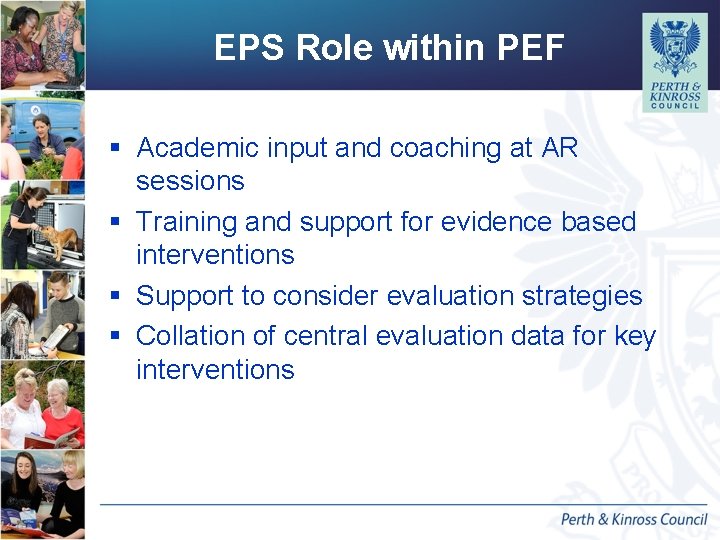
EPS Role within PEF § Academic input and coaching at AR sessions § Training and support for evidence based interventions § Support to consider evaluation strategies § Collation of central evaluation data for key interventions
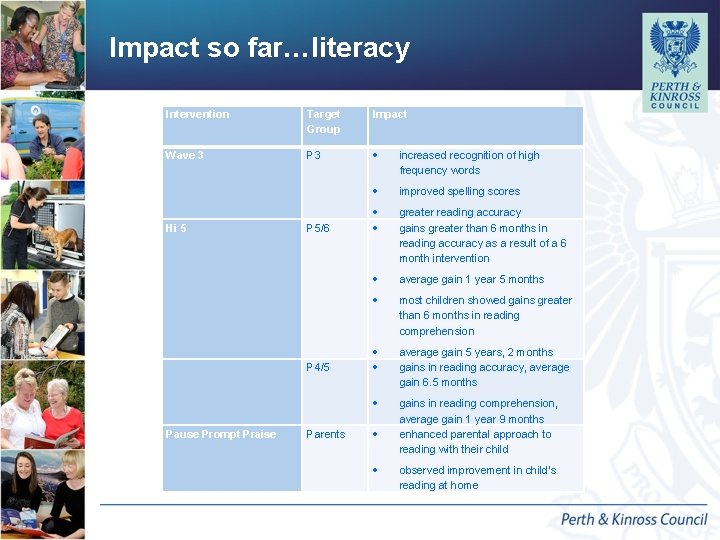
Impact so far…literacy Intervention Target Group Impact Wave 3 P 3 increased recognition of high frequency words improved spelling scores greater reading accuracy gains greater than 6 months in reading accuracy as a result of a 6 month intervention average gain 1 year 5 months most children showed gains greater than 6 months in reading comprehension average gain 5 years, 2 months gains in reading accuracy, average gain 6. 5 months gains in reading comprehension, average gain 1 year 9 months enhanced parental approach to reading with their child Hi 5 Pause Prompt Praise P 5/6 P 4/5 Parents observed improvement in child’s reading at home
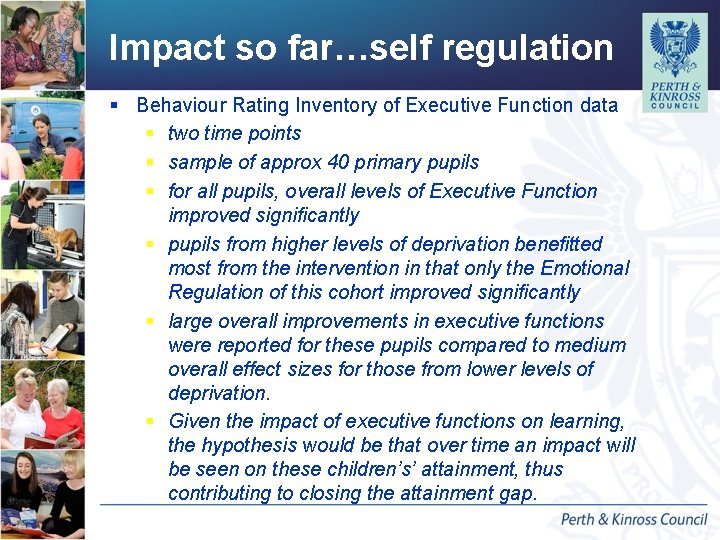
Impact so far…self regulation § Behaviour Rating Inventory of Executive Function data § two time points § sample of approx 40 primary pupils § for all pupils, overall levels of Executive Function improved significantly § pupils from higher levels of deprivation benefitted most from the intervention in that only the Emotional Regulation of this cohort improved significantly § large overall improvements in executive functions were reported for these pupils compared to medium overall effect sizes for those from lower levels of deprivation. § Given the impact of executive functions on learning, the hypothesis would be that over time an impact will be seen on these children’s’ attainment, thus contributing to closing the attainment gap.
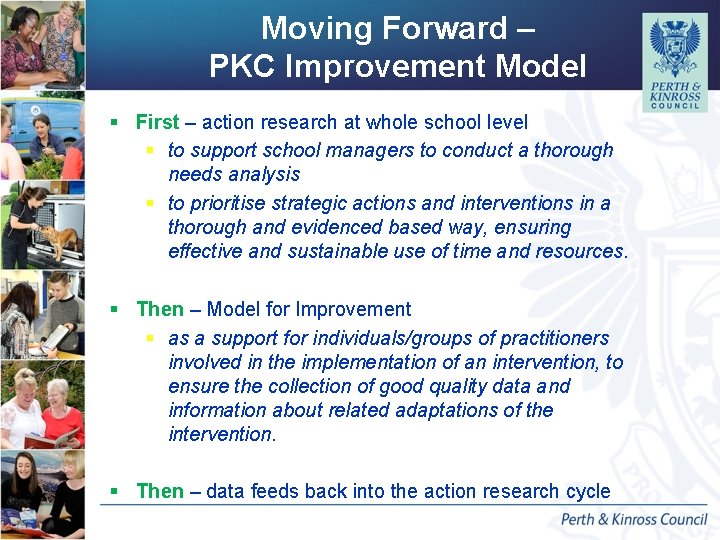
Moving Forward – PKC Improvement Model § First – action research at whole school level § to support school managers to conduct a thorough needs analysis § to prioritise strategic actions and interventions in a thorough and evidenced based way, ensuring effective and sustainable use of time and resources. § Then – Model for Improvement § as a support for individuals/groups of practitioners involved in the implementation of an intervention, to ensure the collection of good quality data and information about related adaptations of the intervention. § Then – data feeds back into the action research cycle