
Child Safe Training South Perth Church of Christ


- Slides: 58
Child. Safe Training South Perth Church of Christ Sunday 20 th May 2007 Child. Safe Training Module TL 1: The Child. Safe Team Leader
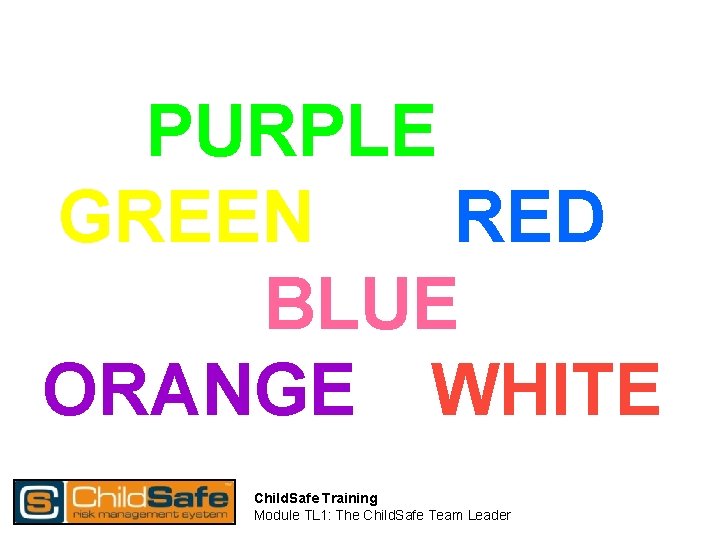
PURPLE GREEN RED BLUE ORANGE WHITE Child. Safe Training Module TL 1: The Child. Safe Team Leader
Child. Safe Training Module TL 1: The Child. Safe Team Leader
Introduction Child. Safe Training Module TL 1: The Child. Safe Team Leader
Introducing Child. Safe Why do we want to implement Childsafe? • We want to ensure a safe and welcoming environment for children and young people in the name of Jesus. • We want to protect kids, young people and the church from damage. Child. Safe Training Module TL 1: The Child. Safe Team Leader
Why a system of safety and care? Excuses, excuses! • We never had these worries before. Children didn’t matter as much. • We don’t have a problem. Problems only happen to others. • We always use common sense. We’ll worry about problems when they happen. Child. Safe Training Module TL 1: The Child. Safe Team Leader
And more excuses! • We didn’t know. We didn’t check. • The kids just love the way he throws them around. Ouch! • I know she was 16 and it was 1 am, but she needed me. Who needed whom? • We haven’t the time. Tell that to the magistrate. • I know what I’m doing. She’ll be right. Now I’m worried. Child. Safe Training Module TL 1: The Child. Safe Team Leader
Definitions For our purposes, a child is any person below 18 years of age. We realise that this does include teenagers & young people. The intention is to include all who are minors where we have a particular duty of care. Child. Safe Training Module TL 1: The Child. Safe Team Leader
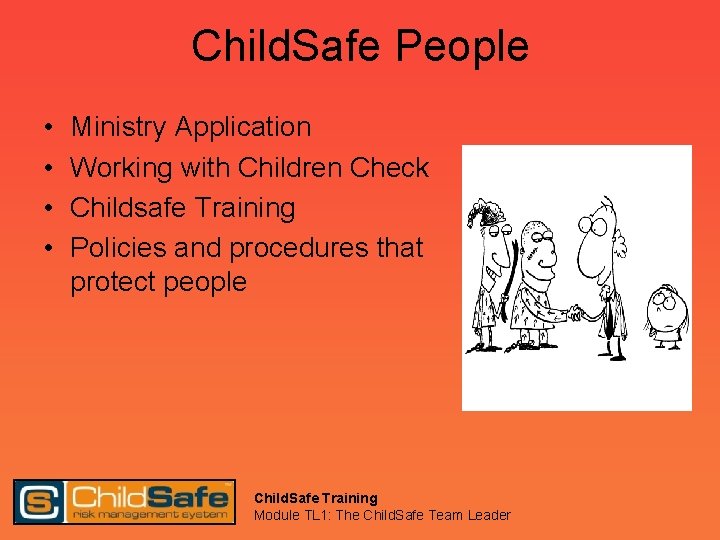
Child. Safe People • • Ministry Application Working with Children Check Childsafe Training Policies and procedures that protect people Child. Safe Training Module TL 1: The Child. Safe Team Leader
Scenarios At a water based activity, a 14 year old girl wearing a bikini is hoisted onto the shoulders of a male leader who plans to initiate a water fight. What issues are raised here? Child. Safe Training Module TL 1: The Child. Safe Team Leader
Scenarios You are on a ministry team involved in Sparklers (4 & 5 year olds). During the session, one of the children comes and sits in your lap putting an arm around your neck. What issues are raised here? Child. Safe Training Module TL 1: The Child. Safe Team Leader
Part 1 Keeping People Safe Child. Safe Training Module TL 1: The Child. Safe Team Leader
Child Protection: Understanding the Issues • • • Abuse Indicators of abuse Facts and myths The impact of sexual abuse Our reactions Child. Safe Training Module TL 1: The Child. Safe Team Leader
Abuse • An act that endangers the physical or emotional health or development of a child or young person. Child. Safe Training Module TL 1: The Child. Safe Team Leader
Types of Abuse Emotional Abuse • a situation in which a caregiver repeatedly rejects the child/teen or uses threats to frighten them • eg name-calling, put-downs or continual coldness to the extent that it significantly damages the child/teen’s physical, social, intellectual or emotional development Child. Safe Training Module TL 1: The Child. Safe Team Leader
Types of Abuse Neglect • a situation in which a caregiver fails to provide the child/teen with the basic necessities of life to the extent that the child/teen’s health and development is, or is likely to be significantly harmed Child. Safe Training Module TL 1: The Child. Safe Team Leader
Types of Abuse Physical Abuse • a situation in which a child/teen suffers or is likely to suffer significant harm from an injury inflicted by a caregiver Child. Safe Training Module TL 1: The Child. Safe Team Leader
Types of Abuse Sexual Abuse • a situation in which a person uses power or authority over a child to involve the child/teen in sexual activity • can involve an adult, an adolescent or an older child/teen Child. Safe Training Module TL 1: The Child. Safe Team Leader
Indicators of Abuse Please look at the indicators of abuse on pages 60 -64 of your Team Member Book Child. Safe Training Module TL 1: The Child. Safe Team Leader
Facts and Myths 1. Child sexual abuse only happens in poor and dysfunctional families. 2. Most children are abused by people they know well. 3. Sex offenders are older men. 4. Children often lie about sexual assault. 5. Men who sexually abuse boys are homosexual. 6. Most sexual abuse continues over a long period of time and not as a single isolated event. 7. It is only abuse when physical violence is involved. 8. A child only has to tell someone for the abuse to be stopped. Child. Safe Training Module TL 1: The Child. Safe Team Leader
Why Children Don’t Speak up Children may not tell someone about abuse because they want to protect others, such as a parent, or they want to protect themselves. Perpetrators often threaten to harm the child. Child. Safe Training Module TL 1: The Child. Safe Team Leader
Why Children Don’t Speak up Sometimes a child may be embarrassed or ashamed because they think the abuse is their fault. A child may tell an adult who does not believe them or who does nothing to stop the abuse. They are unlikely to tell again. Child. Safe Training Module TL 1: The Child. Safe Team Leader
The Impact of Child Sexual Abuse on an individual is influenced by: • Age/developmental stage at which abuse began/continued • Duration and frequency of abuse • Nature of the abuse • Closeness of the relationship with the offender • Presence or absence of other significant relationships with caring adults • Reaction of significant others to the abuse • Type and responsiveness of the intervention Child. Safe Training Module TL 1: The Child. Safe Team Leader
Effects of child sexual abuse include: • • Low self esteem Self hatred Guilt Sense of helplessness Shame Grief Anger Damaged capacity to trust others Child. Safe Training Module TL 1: The Child. Safe Team Leader
Short-term effects of child sexual abuse • Younger children may demonstrate inappropriate sexual behaviour including sexual play with dolls. • Preschoolers tend to show increased withdrawn behaviour • Older children are more likely to show depression. Child. Safe Training Module TL 1: The Child. Safe Team Leader
Short-term effects of child sexual abuse • Adolescents engage in acting-out behaviours including running away, truanting, drug/alcohol abuse, promiscuity, delinquent behaviour. • There is an increased incidence of suicide. • Learning difficulties and behaviour problems are common. Child. Safe Training Module TL 1: The Child. Safe Team Leader
Long-term effects of child sexual abuse • • • Sexual dysfunction Higher incidence of homosexuality Chronic anxiety, fear and depression Sleep disturbances Suicide Obesity Eating disorders Alcohol/drug abuse Self harm Child. Safe Training Module TL 1: The Child. Safe Team Leader
Our Reaction What feelings does the subject of child abuse arouse in you? Child. Safe Training Module TL 1: The Child. Safe Team Leader
Our Reaction How do you think you would feel if a child disclosed abuse to you? What would your immediate reaction be? Child. Safe Training Module TL 1: The Child. Safe Team Leader
Our reactions • Shock • Denial • Sympathy, pity, desire to help • Frustration • Anger • Distress and anxiety • Guilt and selfrecrimination • Blame • Sadness or depression • Revulsion, horror, disgust • Revenge Child. Safe Training Module TL 1: The Child. Safe Team Leader
Child Protection: Responding to Child Abuse • • • Recognising abuse Responding sensitively to a child How children disclose Reporting abuse Mandatory reporting Child. Safe Training Module TL 1: The Child. Safe Team Leader
Responding Sensitively You are concerned about Stephen aged 8. He seems to know plenty about sexual behaviour but you attribute that to the fact that he lives on a farm. In casual conversation Stephen reveals that his teenage stepbrother often comes into his bed at night. Child. Safe Training Module TL 1: The Child. Safe Team Leader
Responding Sensitively Zac is a very active 10 year old. You see him regularly at church and he likes to talk to you. He tells you that one of the leaders has hit him across the ear because he didn’t do as he was told. He asks you not to tell anyone because he fears he will not be allowed to come back to church anymore. Child. Safe Training Module TL 1: The Child. Safe Team Leader
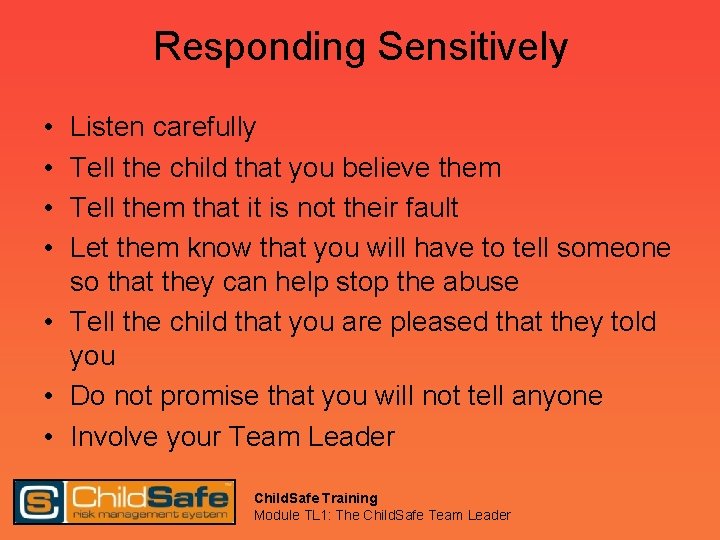
Responding Sensitively • • Listen carefully Tell the child that you believe them Tell them that it is not their fault Let them know that you will have to tell someone so that they can help stop the abuse • Tell the child that you are pleased that they told you • Do not promise that you will not tell anyone • Involve your Team Leader Child. Safe Training Module TL 1: The Child. Safe Team Leader
Example Disclosure in a group setting: • Protect the child sensitively • Protect the group sensitively Child. Safe Training Module TL 1: The Child. Safe Team Leader
Responding to Disclosure or Suspected Abuse. As a team member you have a moral responsibility to inform a ministry leader if you know or suspect of abuse. Do not raise your concerns with another person. Speak directly to your Ministry Team Leader Child. Safe Training Module TL 1: The Child. Safe Team Leader
Responding to Disclosure or Suspected Abuse. Speak directly to your Ministry Team Leader for further action. At SPCC these people are: • Tania – Children’s Ministry • Rod & Emily - Youth • David & Keren – Pastoral Care Child. Safe Training Module TL 1: The Child. Safe Team Leader
Barriers to Reporting • • • Fear of recrimination Want to give the benefit of the doubt Fear that the allegation could be wrong Fear of getting involved Feel it is too difficult Feel it will involve more work Feel haven’t enough training to deal with it Responsibility of parents Don’t know what to do Don’t trust the ‘system’ Thinking that reporting is optional Child. Safe Training Module TL 1: The Child. Safe Team Leader
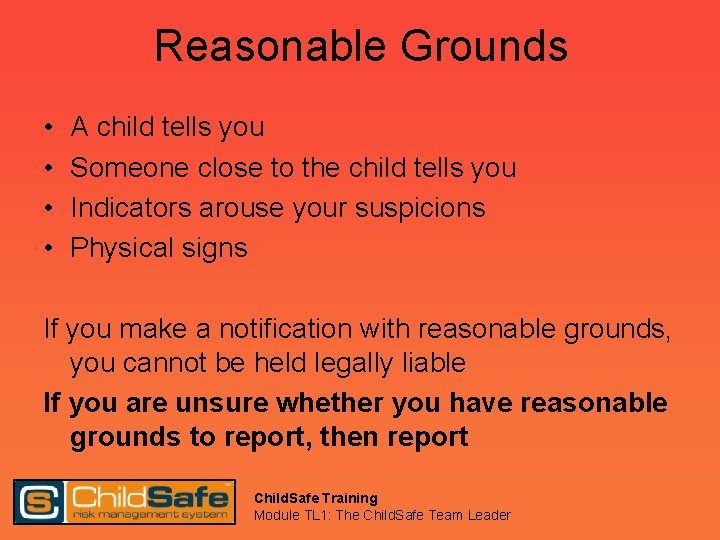
Reasonable Grounds • • A child tells you Someone close to the child tells you Indicators arouse your suspicions Physical signs If you make a notification with reasonable grounds, you cannot be held legally liable If you are unsure whether you have reasonable grounds to report, then report Child. Safe Training Module TL 1: The Child. Safe Team Leader
Questions? This probably has raised questions for you. Take a couple of minutes and jot any questions you have on the question cards. Child. Safe Training Module TL 1: The Child. Safe Team Leader
Part 2 Safe Environments Child. Safe Training Module TL 1: The Child. Safe Team Leader
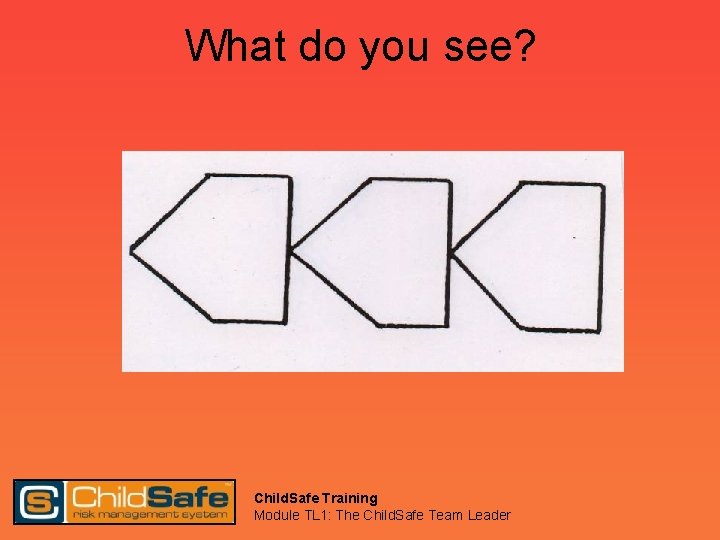
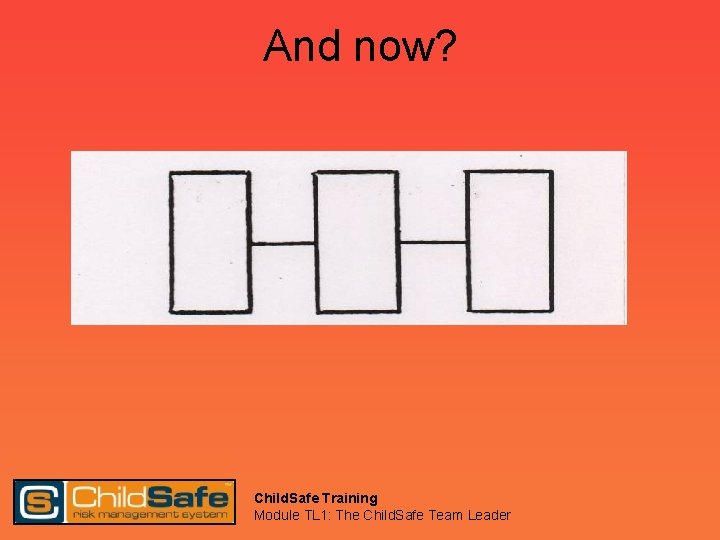
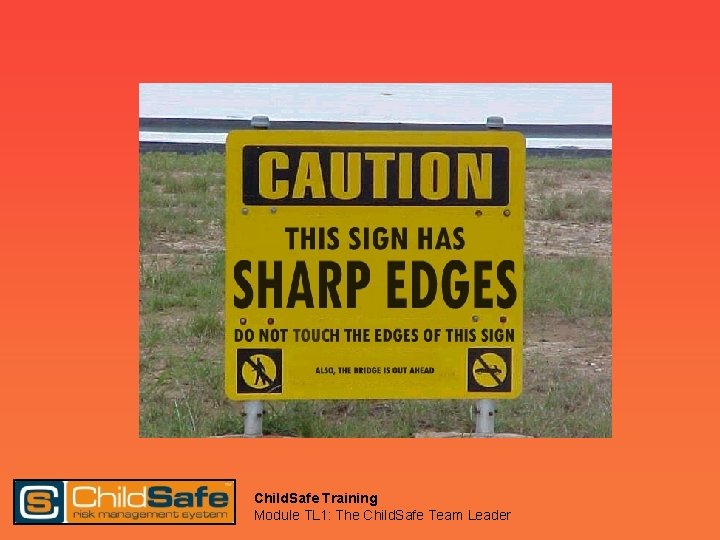
Safe Environments Accidents and Incidents do happen! As a Team Member you are encouraged to keep your eyes and ears open! Child. Safe Training Module TL 1: The Child. Safe Team Leader
What do you see? Child. Safe Training Module TL 1: The Child. Safe Team Leader
And now? Child. Safe Training Module TL 1: The Child. Safe Team Leader
Child. Safe Training Module TL 1: The Child. Safe Team Leader
Accidents and Incidents Accident • An undesired event that results in harm • People are hurt, property is damaged, program is disrupted. Incident • An undesired event which could have resulted in harm or damage • A near miss Child. Safe Training Module TL 1: The Child. Safe Team Leader
Blood & Bodily Fluids • Pages 44 onwards • Wear disposable gloves • Use paper towels • Use disinfectants and wash areas • Dispose of waste materials appropriately Child. Safe Training Module TL 1: The Child. Safe Team Leader
Blood & Bodily Fluids Any blood spill should be washed with lots of cold water. ALWAYS wash your hands! Child. Safe Training Module TL 1: The Child. Safe Team Leader
First Aid Kits A First aid kit is located in the kitchen and the demountable. A portable First Aid kit is always taken to outside events. Child. Safe Training Module TL 1: The Child. Safe Team Leader
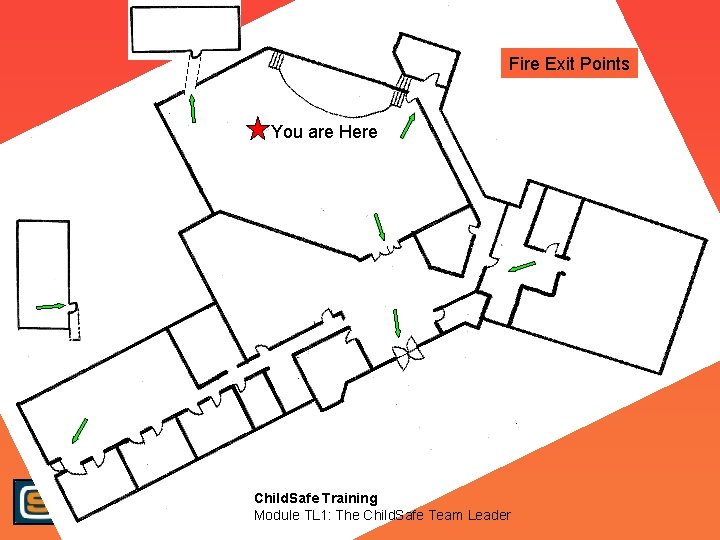
Fire Exits Muster Point: Top of the church carpark (near tennis court) Child. Safe Training Module TL 1: The Child. Safe Team Leader
Fire Exit Points You are Here Child. Safe Training Module TL 1: The Child. Safe Team Leader
Medical Emergencies On Sunday mornings – locate Julie Bond or Graham Faulkner who will alert medical professionals. There will always be someone in the vicinity who has been First Aid trained. Call for help! Child. Safe Training Module TL 1: The Child. Safe Team Leader
How can you help a child through an accident or incident? • • Ensure that the child feels safe Provide for the child’s immediate needs Reunite the child with their family Communicate with the child Involve the child Accept regressive behaviour Protect the child from exposure (media, people, danger) Child. Safe Training Module TL 1: The Child. Safe Team Leader
Where to from here? Child. Safe Training Module TL 1: The Child. Safe Team Leader
Read your Team Member Book Sign the Training Acknowledgement Form Child. Safe Training Module TL 1: The Child. Safe Team Leader
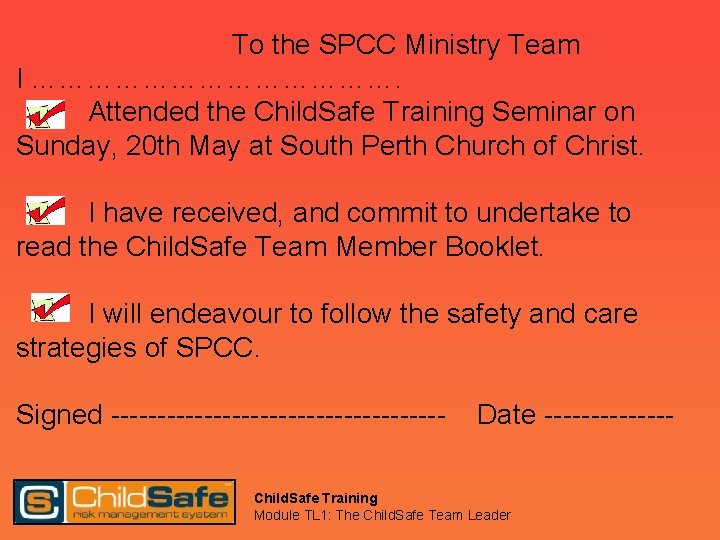
To the SPCC Ministry Team I …………………. Attended the Child. Safe Training Seminar on Sunday, 20 th May at South Perth Church of Christ. I have received, and commit to undertake to read the Child. Safe Team Member Booklet. I will endeavour to follow the safety and care strategies of SPCC. Signed ------------------ Date ------- Child. Safe Training Module TL 1: The Child. Safe Team Leader
Questions? Child. Safe Training Module TL 1: The Child. Safe Team Leader
Enjoy the café! Thank you for being here tonight. Child. Safe Training Module TL 1: The Child. Safe Team Leader